Thursday 22
September
Manchester City
Football Academy
The Essential role of trees and green infrastructure (GI)
Supported by:
Steve Connor, CEO of Creative Concern
Welcome by the Chair
Join in the
conversation! Tweet
#CoTseminar
@cityoftrees
City of Trees is an innovative and exciting
movement set to re-invigorate Greater
Manchester’s landscape by transforming
underused, unloved woodland and planting a
tree for every man, woman and child who lives
there, within a generation.
City of Trees – who are we?
We plan to plant 3m trees
over the next generation
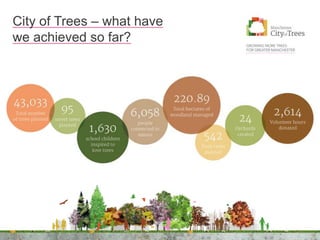
City of Trees – what have
we achieved so far?
At it’s heart City of Trees is a movement and in
order to realise our vision and ambitious goals
we need companies, organisations, community
groups and public sector bodies from across
Greater Manchester to come together.
City of Trees – you can be part of it
Dr Kathy Wolf, University of Washington
Trees and Nearby Nature: Essential for place-
making and vital for prosperous cities
Keynote speaker
Trees & Nearby Nature: essential for
place-making and vital, prosperous cities
Kathleen Wolf, Ph.D.
Research Social Scientist
University of Washington (Seattle)
School of Environmental and Forest Sciences
Place Making and Prosperous Cities Seminar
Manchester City Training Academy
22 September 2016
Landscape
Community
Garden
credit: American Planning Association
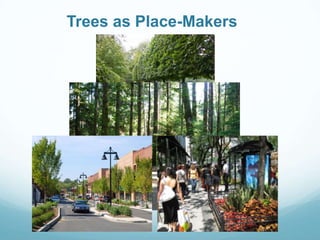
Trees as Place-Makers
urban forestry and urban greening
‘metro nature’
economic values to communities
property values
Forest/Resource
Economics 101
Economic Value of Metro Nature
Methods Challenges
Forest Products
= market goods
excludable
identifiable ownership
expenses-revenues
= profits
Trees/Green in Cities
= public goods
non-excludable
multiple “owners”
expenses-returns?
-profits?
Yard & Street Trees
Value
Increase Condition
2% mature yard trees (greater than 9-inch dbh)
3% larger street trees (up to 100’ away)
3-5% trees in front yard landscaping
6-9% good tree cover in a neighborhood
10-15% mature trees in high-income
neighborhoods
multiple studies:
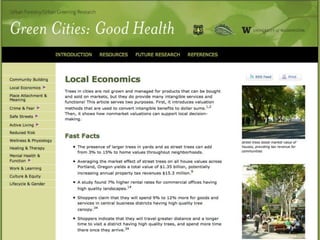
Green Cities: Good Health > Local Economics
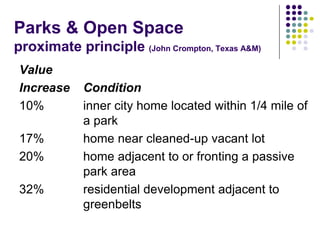
Parks & Open Space
proximate principle (John Crompton, Texas A&M)
Value
Increase Condition
10% inner city home located within 1/4 mile of
a park
17% home near cleaned-up vacant lot
20% home adjacent to or fronting a passive
park area
32% residential development adjacent to
greenbelts
Local Government Benefits
Civic Investment – Public Goods
like schools, emergency response, roads
 street trees average positive effect
on house values
 added up across Portland, Oregon
 yields a total value of $1.35 billion
 potentially increasing annual
property tax revenues $15.3 million
Donovan & Butry. 2010. Landscape and Urban Planning
urban forestry and urban greening
‘metro nature’
economic values to communities
retail centers
Trees & Retail Environments Research
Wolf, K.L. 2005. Business District Streetscapes, Trees, and
Consumer Response. Journal of Forestry 103, 8: 396-400.
• Research Questions •
trees and visual quality?
trees and consumer behavior?
trees and product pricing?
• Methods:
mail out/in surveys
national or local sample
residents/nearby city residents
partners: U of Washington, NGOs, business organizations
funded by USDA Forest Service
Trees & Shopper Environments Research
Image Categories (sorted by ratings)
Full Canopy
mean 3.63
Pocket Parks
mean 3.72
(highest)
Scale : 1=not at all,
5=like very much, 26
images
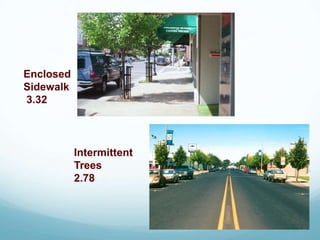
Intermittent
Trees
2.78
Enclosed
Sidewalk
3.32
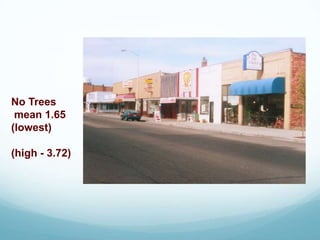
No Trees
mean 1.65
(lowest)
(high - 3.72)
Place Marketing
Relationship
Marketing3. Product Pricing
• higher willingness to pay for all
types of goods
• higher in districts with trees – 9-12%
1. Place Perceptions
• Place Character
• Interaction with Merchants
• Quality of Products
2. Patronage Behavior
• travel time, travel distance
• duration & frequency of visits
• willingness to pay for parking
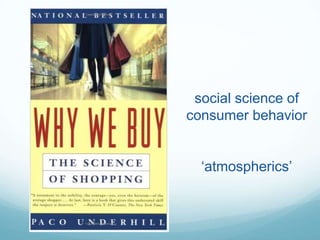
social science of
consumer behavior
‘atmospherics’
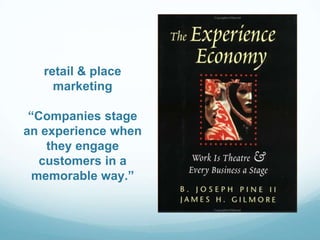
retail & place
marketing
“Companies stage
an experience when
they engage
customers in a
memorable way.”
summary
urban forests =
human habitat
studies of trees in business districts
perception, preference & behavior
design & place messaging/identity
customer relationships
deeproot.com
urban forestry and urban greening
‘metro nature’
economic values to communities
human health & wellness
WHO health definition
a state of complete
physical, mental, and social well-being
and not merely the absence
of disease or infirmity (1946)
science & evidence re: environment
role of ‘metro nature’?
not a panacea, but important!
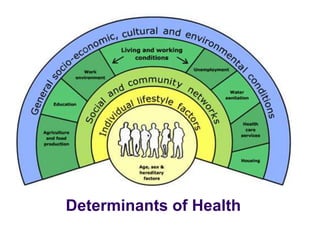
Determinants of Health
evidence about
human wellness & ‘nearby nature’
Green Cities: Good Health
Sponsors:
USDA Forest Service, U&CF Program
University of Washington
NGO partners
thanks!
to U of WA students:
Katrina Flora
Mary Ann Rozance
Sarah Krueger
www.greenhealth.washington.edu
research review & summaries
32
urban nature & health benefits across the life cycle
33
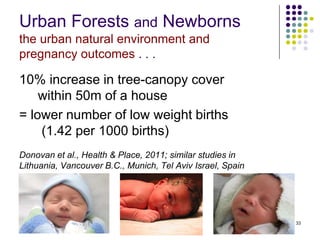
Urban Forests and Newborns
the urban natural environment and
pregnancy outcomes . . .
10% increase in tree-canopy cover
within 50m of a house
= lower number of low weight births
(1.42 per 1000 births)
Donovan et al., Health & Place, 2011; similar studies in
Lithuania, Vancouver B.C., Munich, Tel Aviv Israel, Spain
34
America’s State of Mind, Medco Health Solutions, Inc
Change in % Population on
ADHD Treatments
2001 - 2010
35
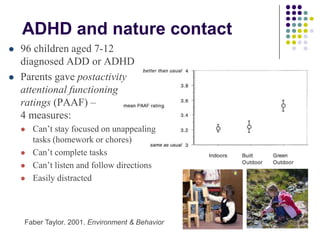
ADHD and nature contact
 96 children aged 7-12
diagnosed ADD or ADHD
 Parents gave postactivity
attentional functioning
ratings (PAAF) –
4 measures:
 Can’t stay focused on unappealing
tasks (homework or chores)
 Can’t complete tasks
 Can’t listen and follow directions
 Easily distracted
Faber Taylor. 2001. Environment & Behavior
36
Trees & Crime Reduction
 trees in the public right of
way are associated with
lower crime rates
 smaller, view obstructing
trees are associated with
increased crime
 larger trees are associated
with reduced crime
Donovan & Prestemon. 2012.
Environment and Behavior
10% increase in tree canopy
~ 12% decrease in crime
Troy, et al. 2011. The relationship between tree canopy and
crime rates across an urban–rural gradient in the greater
Baltimore region. Landscape and Urban Planning
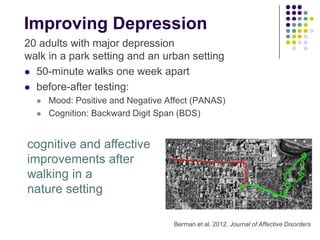
Improving Depression
20 adults with major depression
walk in a park setting and an urban setting
 50-minute walks one week apart
 before-after testing:
 Mood: Positive and Negative Affect (PANAS)
 Cognition: Backward Digit Span (BDS)
Berman et al. 2012. Journal of Affective Disorders
cognitive and affective
improvements after
walking in a
nature setting
• Shorter stays
• Less pain
• Fewer minor
complications
• Better emotional
well-being
Effects of nature window view
on recovery from surgery (Roger Ulrich, 1984)
Massachusetts
General Hospital
credit: Frank Oudeman
• What are the benefits?
• Who experiences nature and gets benefits?
• What is the green condition or situation that
provides benefits?
• Scale of value question (i.e., community,
province/state, nation)
• What are the costs/income gained/lost
associated with these benefits?
Economic Valuation of
Health Outcomes
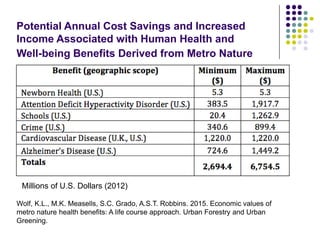
Potential Annual Cost Savings and Increased
Income Associated with Human Health and
Well-being Benefits Derived from Metro Nature
Millions of U.S. Dollars (2012)
Wolf, K.L., M.K. Measells, S.C. Grado, A.S.T. Robbins. 2015. Economic values of
metro nature health benefits: A life course approach. Urban Forestry and Urban
Greening.
Conclusions
• Nearby trees & nature in cities & towns
is essential!
• Economic benefits – property value &
retail behavior
• Nature supports disease prevention &
health promotion for people of all ages
• Evidence? Green Cities: Good Health
• Many more studies underway . . . . .
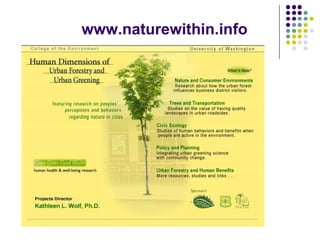
www.naturewithin.info
Stephen O’Malley, Director, Civil Engineers
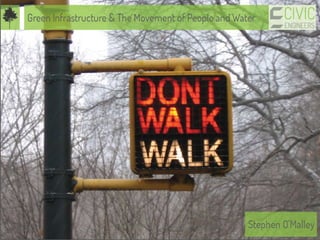
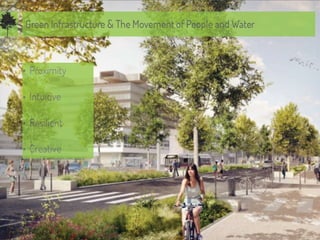
Green Infrastructure & The movement of people
and water
Speaker
Question time
?
?
?
?
?
Don’t forget to join in
the conversation
online too!
Tweet #CoTseminar
@cityoftrees
This seminar is supported by:
Break
Please return and be seated by 11am
Dean Bowie, CEO, GreenBlue Urban
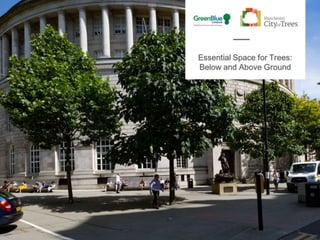
Essential Space for Trees below and above ground
Speaker
Soil
Compaction
and Utilities
Soil Volume
and Quality
Tree
Aeration
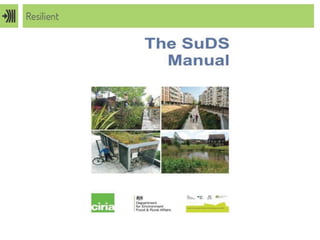
WSUDS
Arborflow
Tree Irrigation Case Studies
Root
Management
RootSpace
Areas covered:
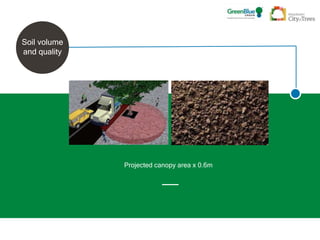
Projected canopy area x 0.6m
Soil volume
and quality
Soil
compaction
“Soil compaction - the biggest issue with landscape soils”
Tim O'Hare – soil scientist
Utilities
Make the
impossible
possible
with cells
RootSpace
THE NEXT GENERATION SOIL
SUPPORT SYSTEM
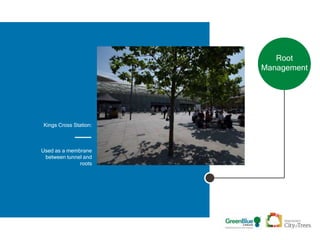
Root
Management
Kings Cross Station:
Used as a membrane
between tunnel and
roots
Tree
irrigation
Sainsbury’s
laboratory:
Evenly distributed
water around the
rootball
Tree
aeration
Anaerobism:
“Immediate and major
problem that can cause tree
failure”
The Landscape Journal –
Fundamentals of tree pit soils
WSUDS
Arborflow
Arborflow 100
Series
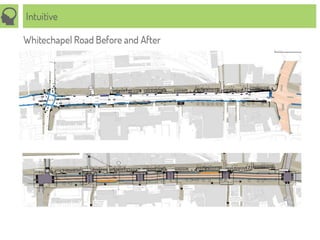
WSUDS Case Study:
Goldhawk Road,
London
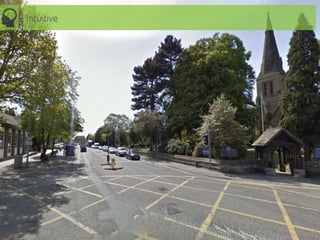
Shared Space Case Study:
Leonard Circus,
Shoreditch
Thank you.
Pete Bradshaw, Director of Estate Development
at Manchester City Football Club
Why a world class sporting facility needed world
class infrastructure
Speaker
Pete Bradshaw
Director of Estates Development
Any Wintry Afternoon in England
CRW Nevinson
Courtesy: Manchester City Art Gallery
THE ESSENTIAL ROLE OF TREES AND GREEN INFRASTRUCTURE (GI)
City of Trees seminar
City Football Academy
22 September 2016
© Manchester City
Planning for City
Football Academy
began in 2008
creating:
• A positive
working and
training
environment
• A major
regenerative
project
• Building on the
theme of Street
to Stadium
Initial layout plan : 2008
Planning for our new academy
Initial Plan : 2008
© Manchester City
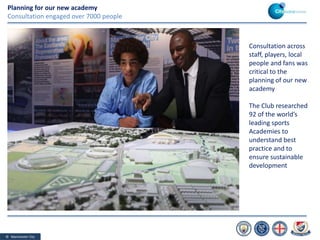
Consultation across
staff, players, local
people and fans was
critical to the
planning of our new
academy
The Club researched
92 of the world’s
leading sports
Academies to
understand best
practice and to
ensure sustainable
development
Planning for our new academy
Consultation engaged over 7000 people
© Manchester City
Planning for our new academy
The site in its former life
Over 200 years of
industry had
occupied the site
prior to City Football
Academy
The last major
occupation was
heavy industry and
chemicals (dye
stuffs) production –
mainly via Clayton
Aniline
At its height, over
60,000 people
worked in east
Manchester industry
© Manchester City
Planning for our new academy
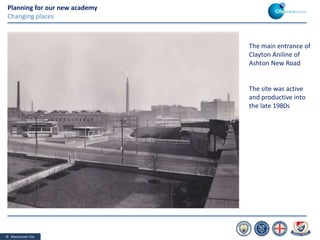
Changing places
The main entrance of
Clayton Aniline of
Ashton New Road
The site was active
and productive into
the late 1980s
© Manchester City
Planning for our new academy
All but gone…
By the early years of
the new century,
Clayton Aniline and
much of the local
industry had gone –
and with it most of
the local
employment
The area was left
with challenging
ground conditions
and the scars of
former buildings and
industry
© Manchester City
Planning for our new academy
Remediation
A major programme
of remediation
began
Some 84 acres of
heavy and varied
pollution
All remediation was
addressed on site
with reuse central to
the programme
© Manchester City
Planning for our new academy
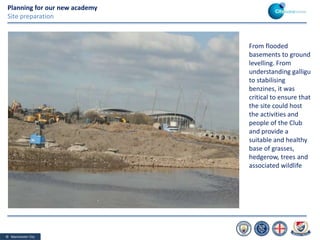
Site preparation
From flooded
basements to ground
levelling. From
understanding galligu
to stabilising
benzines, it was
critical to ensure that
the site could host
the activities and
people of the Club
and provide a
suitable and healthy
base of grasses,
hedgerow, trees and
associated wildlife
© Manchester City
Developing our new academy
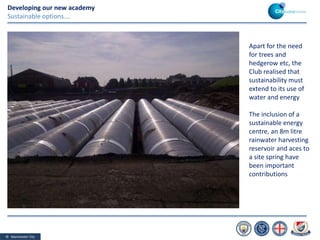
Sustainable options….
Apart for the need
for trees and
hedgerow etc, the
Club realised that
sustainability must
extend to its use of
water and energy
The inclusion of a
sustainable energy
centre, an 8m litre
rainwater harvesting
reservoir and aces to
a site spring have
been important
contributions
© Manchester City
Developing our new academy
Local engagement
The importance of
local people is critical
in all out planning
and actions
• 86% local
procurement
• 70% local
employment
• 96 apprentices
• all with onward
options
• 14,000 hours of
training
• Engaged local
schools and colleges
© Manchester City
Developing our new academy
The green edges
Appointing Planit IE,
the Club sought to
make a significant
local environmental
and regenerative
boundary change for
east Manchester and
the city
It was critical to
replace brick walls
and concrete with
green routes and
avenues
• 2000 mature trees
• 3km of hedgerow
• c60 acres of grasses
© Manchester City
Developing our new academy
Public realm
Alongside the need
to create secure
boundaries, ensure
privacy and create
noise barriers, the
softer, public-facing
edges are important
too
© Manchester City
Developing our new academy
A new home for more than just football…
In line with
Manchester City
Council’s biodiversity
strategy – and
Manchester Green
Corridor – it has
been important to
create spaces and
places where wildlife
can thrive
• Moths
• Butterflies
• Bats
• Bees
• Birds
• Dormice (?)
• …..
© Manchester City
Living in our new academy
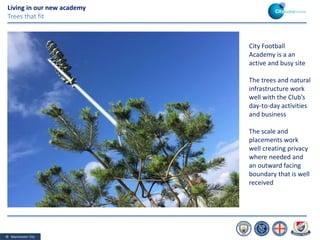
Trees that fit
City Football
Academy is a an
active and busy site
The trees and natural
infrastructure work
well with the Club’s
day-to-day activities
and business
The scale and
placements work
well creating privacy
where needed and
an outward facing
boundary that is well
received
© Manchester City
Living in our new academy
Forming new habitats
Albeit early days, the
regular sighting of a
wide variety of bird
life, insects and
colourful creatures
provides confidence
in the investment
and in the future of
the site and Campus
© Manchester City
Living in our new academy
The academy has
realised some major
buildings to provide
a practical and
functioning home for
the Club’s players,
scholars and staff
Managed grass,
natural boundaries
and wild grasses are
thriving side-by-side
© Manchester City
Living in our new academy
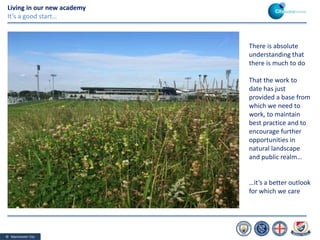
It’s a good start…
There is absolute
understanding that
there is much to do
That the work to
date has just
provided a base from
which we need to
work, to maintain
best practice and to
encourage further
opportunities in
natural landscape
and public realm…
…it’s a better outlook
for which we care
© Manchester City
Living in our new academy
Initial Plan : 2008
Our core business is
football
We need to manage
our pitches and grass
in the best possible
way – for high
quality, for maximum
use and to achieve
best practice in
sustainability
We continue to learn
and to share
knowledge and we
have dedicated and
committed
professionals in
Grounds and
Landscape
© Manchester City
Our academy
2016
City Football
Academy in 2016
provides a base for
over 800 scholars,
first team and EDS
for a leading
women’s team and a
working base for the
Club and Group
There is a thriving
community leisure
and education hub
and the Campus is
one of the world’s
leading sports
districts seen by
millions week-in
week-out
© Manchester City
Question time
?
?
?
Don’t forget to join
in the conversation
online too!
Tweet
#CoTseminar
@cityoftrees
Steve Connor, Chair
Closing remarks
Tweet your thoughts!
#CoTseminar
@cityoftrees
12:00 – 12:30pm – Visit to Manchester City Football Academy’s
impressive landscape scheme (pre-booked people ONLY)
Thankyou
This seminar has been supported by:

Place-making and Prosperous Cities

  • 1.
    Thursday 22 September Manchester City FootballAcademy The Essential role of trees and green infrastructure (GI) Supported by:
  • 2.
    Steve Connor, CEOof Creative Concern Welcome by the Chair Join in the conversation! Tweet #CoTseminar @cityoftrees
  • 3.
    City of Treesis an innovative and exciting movement set to re-invigorate Greater Manchester’s landscape by transforming underused, unloved woodland and planting a tree for every man, woman and child who lives there, within a generation. City of Trees – who are we? We plan to plant 3m trees over the next generation
  • 4.
    City of Trees– what have we achieved so far?
  • 5.
    At it’s heartCity of Trees is a movement and in order to realise our vision and ambitious goals we need companies, organisations, community groups and public sector bodies from across Greater Manchester to come together. City of Trees – you can be part of it
  • 6.
    Dr Kathy Wolf,University of Washington Trees and Nearby Nature: Essential for place- making and vital for prosperous cities Keynote speaker
  • 7.
    Trees & NearbyNature: essential for place-making and vital, prosperous cities Kathleen Wolf, Ph.D. Research Social Scientist University of Washington (Seattle) School of Environmental and Forest Sciences Place Making and Prosperous Cities Seminar Manchester City Training Academy 22 September 2016
  • 8.
  • 9.
  • 10.
    urban forestry andurban greening ‘metro nature’ economic values to communities property values
  • 11.
  • 12.
    Economic Value ofMetro Nature Methods Challenges Forest Products = market goods excludable identifiable ownership expenses-revenues = profits Trees/Green in Cities = public goods non-excludable multiple “owners” expenses-returns? -profits?
  • 13.
    Yard & StreetTrees Value Increase Condition 2% mature yard trees (greater than 9-inch dbh) 3% larger street trees (up to 100’ away) 3-5% trees in front yard landscaping 6-9% good tree cover in a neighborhood 10-15% mature trees in high-income neighborhoods multiple studies: Green Cities: Good Health > Local Economics
  • 14.
    Parks & OpenSpace proximate principle (John Crompton, Texas A&M) Value Increase Condition 10% inner city home located within 1/4 mile of a park 17% home near cleaned-up vacant lot 20% home adjacent to or fronting a passive park area 32% residential development adjacent to greenbelts
  • 15.
    Local Government Benefits CivicInvestment – Public Goods like schools, emergency response, roads  street trees average positive effect on house values  added up across Portland, Oregon  yields a total value of $1.35 billion  potentially increasing annual property tax revenues $15.3 million Donovan & Butry. 2010. Landscape and Urban Planning
  • 16.
    urban forestry andurban greening ‘metro nature’ economic values to communities retail centers
  • 17.
    Trees & RetailEnvironments Research Wolf, K.L. 2005. Business District Streetscapes, Trees, and Consumer Response. Journal of Forestry 103, 8: 396-400.
  • 18.
    • Research Questions• trees and visual quality? trees and consumer behavior? trees and product pricing? • Methods: mail out/in surveys national or local sample residents/nearby city residents partners: U of Washington, NGOs, business organizations funded by USDA Forest Service Trees & Shopper Environments Research
  • 19.
    Image Categories (sortedby ratings) Full Canopy mean 3.63 Pocket Parks mean 3.72 (highest) Scale : 1=not at all, 5=like very much, 26 images
  • 20.
  • 21.
  • 22.
    Place Marketing Relationship Marketing3. ProductPricing • higher willingness to pay for all types of goods • higher in districts with trees – 9-12% 1. Place Perceptions • Place Character • Interaction with Merchants • Quality of Products 2. Patronage Behavior • travel time, travel distance • duration & frequency of visits • willingness to pay for parking
  • 23.
    social science of consumerbehavior ‘atmospherics’
  • 24.
    retail & place marketing “Companiesstage an experience when they engage customers in a memorable way.”
  • 25.
    summary urban forests = humanhabitat studies of trees in business districts perception, preference & behavior design & place messaging/identity customer relationships deeproot.com
  • 26.
    urban forestry andurban greening ‘metro nature’ economic values to communities human health & wellness
  • 27.
    WHO health definition astate of complete physical, mental, and social well-being and not merely the absence of disease or infirmity (1946) science & evidence re: environment role of ‘metro nature’? not a panacea, but important!
  • 28.
  • 29.
    evidence about human wellness& ‘nearby nature’
  • 30.
    Green Cities: GoodHealth Sponsors: USDA Forest Service, U&CF Program University of Washington NGO partners thanks! to U of WA students: Katrina Flora Mary Ann Rozance Sarah Krueger www.greenhealth.washington.edu research review & summaries
  • 32.
    32 urban nature &health benefits across the life cycle
  • 33.
    33 Urban Forests andNewborns the urban natural environment and pregnancy outcomes . . . 10% increase in tree-canopy cover within 50m of a house = lower number of low weight births (1.42 per 1000 births) Donovan et al., Health & Place, 2011; similar studies in Lithuania, Vancouver B.C., Munich, Tel Aviv Israel, Spain
  • 34.
    34 America’s State ofMind, Medco Health Solutions, Inc Change in % Population on ADHD Treatments 2001 - 2010
  • 35.
    35 ADHD and naturecontact  96 children aged 7-12 diagnosed ADD or ADHD  Parents gave postactivity attentional functioning ratings (PAAF) – 4 measures:  Can’t stay focused on unappealing tasks (homework or chores)  Can’t complete tasks  Can’t listen and follow directions  Easily distracted Faber Taylor. 2001. Environment & Behavior
  • 36.
    36 Trees & CrimeReduction  trees in the public right of way are associated with lower crime rates  smaller, view obstructing trees are associated with increased crime  larger trees are associated with reduced crime Donovan & Prestemon. 2012. Environment and Behavior
  • 37.
    10% increase intree canopy ~ 12% decrease in crime Troy, et al. 2011. The relationship between tree canopy and crime rates across an urban–rural gradient in the greater Baltimore region. Landscape and Urban Planning
  • 38.
    Improving Depression 20 adultswith major depression walk in a park setting and an urban setting  50-minute walks one week apart  before-after testing:  Mood: Positive and Negative Affect (PANAS)  Cognition: Backward Digit Span (BDS) Berman et al. 2012. Journal of Affective Disorders cognitive and affective improvements after walking in a nature setting
  • 39.
    • Shorter stays •Less pain • Fewer minor complications • Better emotional well-being Effects of nature window view on recovery from surgery (Roger Ulrich, 1984)
  • 40.
  • 41.
    • What arethe benefits? • Who experiences nature and gets benefits? • What is the green condition or situation that provides benefits? • Scale of value question (i.e., community, province/state, nation) • What are the costs/income gained/lost associated with these benefits? Economic Valuation of Health Outcomes
  • 42.
    Potential Annual CostSavings and Increased Income Associated with Human Health and Well-being Benefits Derived from Metro Nature Millions of U.S. Dollars (2012) Wolf, K.L., M.K. Measells, S.C. Grado, A.S.T. Robbins. 2015. Economic values of metro nature health benefits: A life course approach. Urban Forestry and Urban Greening.
  • 43.
    Conclusions • Nearby trees& nature in cities & towns is essential! • Economic benefits – property value & retail behavior • Nature supports disease prevention & health promotion for people of all ages • Evidence? Green Cities: Good Health • Many more studies underway . . . . .
  • 44.
  • 45.
    Stephen O’Malley, Director,Civil Engineers Green Infrastructure & The movement of people and water Speaker
  • 139.
    Question time ? ? ? ? ? Don’t forgetto join in the conversation online too! Tweet #CoTseminar @cityoftrees
  • 140.
    This seminar issupported by: Break Please return and be seated by 11am
  • 141.
    Dean Bowie, CEO,GreenBlue Urban Essential Space for Trees below and above ground Speaker
  • 143.
    Soil Compaction and Utilities Soil Volume andQuality Tree Aeration WSUDS Arborflow Tree Irrigation Case Studies Root Management RootSpace Areas covered:
  • 144.
    Projected canopy areax 0.6m Soil volume and quality
  • 145.
    Soil compaction “Soil compaction -the biggest issue with landscape soils” Tim O'Hare – soil scientist
  • 146.
  • 147.
    RootSpace THE NEXT GENERATIONSOIL SUPPORT SYSTEM
  • 148.
    Root Management Kings Cross Station: Usedas a membrane between tunnel and roots
  • 149.
  • 150.
    Tree aeration Anaerobism: “Immediate and major problemthat can cause tree failure” The Landscape Journal – Fundamentals of tree pit soils
  • 151.
  • 152.
  • 153.
    Shared Space CaseStudy: Leonard Circus, Shoreditch
  • 154.
  • 155.
    Pete Bradshaw, Directorof Estate Development at Manchester City Football Club Why a world class sporting facility needed world class infrastructure Speaker
  • 156.
    Pete Bradshaw Director ofEstates Development Any Wintry Afternoon in England CRW Nevinson Courtesy: Manchester City Art Gallery THE ESSENTIAL ROLE OF TREES AND GREEN INFRASTRUCTURE (GI) City of Trees seminar City Football Academy 22 September 2016
  • 157.
    © Manchester City Planningfor City Football Academy began in 2008 creating: • A positive working and training environment • A major regenerative project • Building on the theme of Street to Stadium Initial layout plan : 2008 Planning for our new academy Initial Plan : 2008
  • 158.
    © Manchester City Consultationacross staff, players, local people and fans was critical to the planning of our new academy The Club researched 92 of the world’s leading sports Academies to understand best practice and to ensure sustainable development Planning for our new academy Consultation engaged over 7000 people
  • 159.
    © Manchester City Planningfor our new academy The site in its former life Over 200 years of industry had occupied the site prior to City Football Academy The last major occupation was heavy industry and chemicals (dye stuffs) production – mainly via Clayton Aniline At its height, over 60,000 people worked in east Manchester industry
  • 160.
    © Manchester City Planningfor our new academy Changing places The main entrance of Clayton Aniline of Ashton New Road The site was active and productive into the late 1980s
  • 161.
    © Manchester City Planningfor our new academy All but gone… By the early years of the new century, Clayton Aniline and much of the local industry had gone – and with it most of the local employment The area was left with challenging ground conditions and the scars of former buildings and industry
  • 162.
    © Manchester City Planningfor our new academy Remediation A major programme of remediation began Some 84 acres of heavy and varied pollution All remediation was addressed on site with reuse central to the programme
  • 163.
    © Manchester City Planningfor our new academy Site preparation From flooded basements to ground levelling. From understanding galligu to stabilising benzines, it was critical to ensure that the site could host the activities and people of the Club and provide a suitable and healthy base of grasses, hedgerow, trees and associated wildlife
  • 164.
    © Manchester City Developingour new academy Sustainable options…. Apart for the need for trees and hedgerow etc, the Club realised that sustainability must extend to its use of water and energy The inclusion of a sustainable energy centre, an 8m litre rainwater harvesting reservoir and aces to a site spring have been important contributions
  • 165.
    © Manchester City Developingour new academy Local engagement The importance of local people is critical in all out planning and actions • 86% local procurement • 70% local employment • 96 apprentices • all with onward options • 14,000 hours of training • Engaged local schools and colleges
  • 166.
    © Manchester City Developingour new academy The green edges Appointing Planit IE, the Club sought to make a significant local environmental and regenerative boundary change for east Manchester and the city It was critical to replace brick walls and concrete with green routes and avenues • 2000 mature trees • 3km of hedgerow • c60 acres of grasses
  • 167.
    © Manchester City Developingour new academy Public realm Alongside the need to create secure boundaries, ensure privacy and create noise barriers, the softer, public-facing edges are important too
  • 168.
    © Manchester City Developingour new academy A new home for more than just football… In line with Manchester City Council’s biodiversity strategy – and Manchester Green Corridor – it has been important to create spaces and places where wildlife can thrive • Moths • Butterflies • Bats • Bees • Birds • Dormice (?) • …..
  • 169.
    © Manchester City Livingin our new academy Trees that fit City Football Academy is a an active and busy site The trees and natural infrastructure work well with the Club’s day-to-day activities and business The scale and placements work well creating privacy where needed and an outward facing boundary that is well received
  • 170.
    © Manchester City Livingin our new academy Forming new habitats Albeit early days, the regular sighting of a wide variety of bird life, insects and colourful creatures provides confidence in the investment and in the future of the site and Campus
  • 171.
    © Manchester City Livingin our new academy The academy has realised some major buildings to provide a practical and functioning home for the Club’s players, scholars and staff Managed grass, natural boundaries and wild grasses are thriving side-by-side
  • 172.
    © Manchester City Livingin our new academy It’s a good start… There is absolute understanding that there is much to do That the work to date has just provided a base from which we need to work, to maintain best practice and to encourage further opportunities in natural landscape and public realm… …it’s a better outlook for which we care
  • 173.
    © Manchester City Livingin our new academy Initial Plan : 2008 Our core business is football We need to manage our pitches and grass in the best possible way – for high quality, for maximum use and to achieve best practice in sustainability We continue to learn and to share knowledge and we have dedicated and committed professionals in Grounds and Landscape
  • 174.
    © Manchester City Ouracademy 2016 City Football Academy in 2016 provides a base for over 800 scholars, first team and EDS for a leading women’s team and a working base for the Club and Group There is a thriving community leisure and education hub and the Campus is one of the world’s leading sports districts seen by millions week-in week-out
  • 175.
  • 176.
    Question time ? ? ? Don’t forgetto join in the conversation online too! Tweet #CoTseminar @cityoftrees
  • 177.
    Steve Connor, Chair Closingremarks Tweet your thoughts! #CoTseminar @cityoftrees
  • 178.
    12:00 – 12:30pm– Visit to Manchester City Football Academy’s impressive landscape scheme (pre-booked people ONLY) Thankyou
  • 179.
    This seminar hasbeen supported by: