ROLE OF THE DROSOPHILA MELANOGASTER INDIRECT FLIGHT MUSCLES IN
FLIGHT AND MALE COURTSHIP SONG: STUDIES ON FLIGHTIN AND MYOSIN
LIGHT CHAIN-2
A Dissertation Presented
by
Samya Chakravorty
to
The Faculty of the Graduate College
of
The University of Vermont
In Partial Fulfillment of the Requirements
for the Degree of Doctor of Philosophy
Specializing in Biology
May, 2013
Accepted by the Faculty of the Graduate College, The University of Vermont, in
partial fulfillment of the requirements for the degree of Doctor of Philosophy,
specializing in Biology.
Thesis Examination Committee:
____________________________________ Advisor
Jim O. Vigoreaux, Ph.D.
____________________________________
Bryan A. Ballif, Ph.D.
____________________________________
Sara Helms-Cahan, Ph.D.
____________________________________ Chairperson
Mark S. Miller, Ph. D.
____________________________________ Dean, Graduate College
Domenico Grasso, Ph.D.
Date: March 28, 2013
ABSTRACT
Complex behaviors using wings have facilitated the insect evolutionary success
and diversification. The Drosophila indirect flight muscles (IFM) have evolved a highly
ordered myofilament lattice structure and uses oscillatory contractions by pronounced
stretch activation mechanism to drive the wings for high powered flight subject to natural
selection. Moreover, the IFM is also utilized during small amplitude wing vibrations for
species-specific male courtship song (sine and pulse), an important Drosophila mating
behavior subject to sexual selection. Unlike flight, the contractile mechanism and
contribution of any muscle gene in courtship song is not known. To gain insight into how
separate selection regimes are manifested at the molecular level, we investigated the
effect on flight and mating behaviors of mutations in two contractile proteins essential for
IFM functions: an IFM-specific protein, flightin (FLN), known to be essential for
structural and mechanical integrity of the IFM, and a ubiquitous muscle protein, myosin
regulatory light chain (MLC2), known to enhance IFM stretch activation.
Comparison of FLN sequences across Drosophila spp., reveal a dual nature with
the N-terminal region (63 aa) evolving faster (dN/dS=0.4) than the rest of the protein
(dN/dS=0.08). A deletion of the N-terminal region (flnΔN62
) resulted in reduced IFM fiber
stiffness, oscillatory work and power output leading to a decreased flight ability (flight
score: 2.8±0.1 vs 4.2±0.4 for fln+
rescued control) despite a normal wing beat frequency.
Interestingly, the FLN N-terminal deletion reduced myofilament lattice spacing and order
suggesting that this region is required to improve IFM lattice for enhancing power output
and flight performance. Moreover, flnΔN62
males sing the pulse song abnormally with a
longer interpulse interval (IPI, 56±2.5 vs 37±0.7 ms for fln+
) and a reduced pulse duty
cycle (PDC, 2.6±0.2 vs 7.3±0.2 % for fln+
) resulting in a 92% reduction in their courtship
success. This suggested that FLN N-terminal region fine-tunes sexually selected song
parameters in D. melanogaster, possibly explaining its hypervariability under positive
selection. That FLN N-terminal region is not essential but required to optimize IFM
functions of both flight and song, indicate that FLN could be an evolutionary innovation
for IFM-driven behaviors, possibly through its role in lattice improvement.
Mutations of the highly conserved MLC2 [N-terminal 46 aa deletion (Ext),
disruption of myosin light chain kinase phosphorylations (Phos), and the two mutations
put together (Dual)] are known to impair or abolish flight through severe reductions in
acto-myosin contractile kinetics and magnitude of the stretch activation response. Unlike
FLN, these MLC2 mutations do not show a pleitropic effect on flight and song. Flight
abolished Phos and Dual mutants are capable of singing suggesting that these mutations
affect song minimally compared to flight. Moreover, unlike FLN, none of these
mutations affect interpulse interval, the most critical sexually selected song parameter in
Drosophila. Also, in contrary to the known additive effects of Ext and Phos in the Dual
mutant on flight wing beat frequency, a subtractive effect on sine song frequency is found
in this study. That mutations in MLC2 are manifested differently for song and flight
suggest that stretch activation plays a minimal or no role in song production.
The results in this study suggest that the conserved regions of FLN and MLC2 are
essential to support underlying IFM contractile structure and function necessary for
flight, whereas the fast evolving FLN N-terminal region optimizes IFM’s biological
performance in flight and species-specific song possibly under positive selection regime.
ii
ACKNOWLEDGEMENTS
I am grateful to my advisor Dr. Jim O. Vigoreaux for believing in me and his
unstinted support for my scientific development throughout and for the completion
of my PhD work. I am also grateful to my committee members, Dr. Mark Miller,
Dr. Bryan Ballif, and Dr. Sara Helms-Cahan, for sharing their scientific knowledge
and experience with me. Special thanks to Dr. Bertrand Tanner, Dr. Teresa Ruiz,
Mr. Pedro Alvarez-Ortiz, and Dr. David Maughan for their guidance and
constructive criticisms. I sincerely thank all the other members of the Vigoreaux
and Maughan labs for all their assistance and for providing a wonderful working
experience. I would also like to acknowledge the hard-working undergraduate
students, namely Matthew Rosenthal, Mathew Wajda, Veronica Foelber, and Hien
Vu, whome I mentored and who helped me generate quality data for this work.
Last but not least, I am indebted to my family, friends and teachers back home,
especially my parents. Their support, encouragement, and sacrifice for me gave me
the strength and courage to move forward in this journey and to carry out all my
endeavors.
iii
CITATIONS
Material from this dissertation has been published in the following form:
Chakravorty, S., Wajda, M.P., and Vigoreaux, J.O., (2012) Courtship song
analysis of Drosophila muscle mutants. Methods, 56(1): 87-94.
iv
TABLE OF CONTENTS
Page
ACKNOWLEDGEMENTS ............................................................................................. ii
CITATIONS……………………………………………………………………………..iii
LIST OF TABLES.........................................................................................................viii
LIST OF FIGURES......................................................................................................... ix
CHAPTER 1 INTRODUCTION..................................................................................... 1
Overview....................................................................................................................... 1
Evolution of Flight and Insect Diversification………………………………………...9
Evolution of Flight Muscles: Classification…………………………………………11
Drosophila Adult Flight Musculature………………………………………………..16
Flight Muscle Adaptations…………………………………………………………...21
The Role of Calcium in Flight……………………………………………………….24
Flight Muscle Thick Filaments……………………………………………………....25
Flightin……………………………………………………………………………….26
Myosin Light Chain 2………………………………………………………………..32
Drosophila Male Courtship Song……………………………………………………37
References……………………………………………………………………………45
CHAPTER 2 JOURNAL ARTICLE………………………………………………….61
Courtship Song Analysis of Drosophila Muscle Mutants…………………………….61
ABSTRACT………………………………………………………………………….62
INTRODUCTION…………………………………………………………………...63
v
MATERIALS………………………………………………………………………...68
DESCRIPTION OF METHOD……………………………………………………...70
TROUBLESHOOTING / NOTES…………………………………………………....80
CONCLUSIONS…………………………………………………………………….83
SUPPLEMENTARY DATA………………………………………………………...84
FIGURE LEGENDS………………………………………………………………....85
FIGURES…………………………………………………………………………….87
TABLES……………………………………………………………………………..89
REFERENCES………………………………………………………………………92
CHAPTER 3 JOURNAL ARTICLE………………………………………………...100
An N-terminal Deletion of the Orphan Gene Flightin Reduces Myofilament Lattice
Spacing: Implications for Flight and Mating Behaviors in Drosophila……………100
ABSTRACT………………………………………………………………………...101
AUTHOR SUMMARY…………………………………………………………….102
INTRODUCTION …………………………………………………………………103
RESULTS…………………………………………………………………………..108
DISCUSSION………………………………………………………………………114
MATERIALS AND METHODS…………………………………………………...130
FIGURE LEGENDS……………………………………………………………......138
TABLES……………………………………………………………………………143
FIGURES…………………………………………………………………………...147
SUPPORTING INFORMATION…………………………………………………..158
REFERENCES……………………………………………………………………..189
CHAPTER 4 JOURNAL ARTICLE………………………………………………...204
Differential Effects of Drosophila Flight Muscle Myosin Regulatory Light Chain
Mutations on Flight and Male Courtship Song: Evidence of Distinct Contractile
vi
Mechanisms for Flight Muscle Driven Behaviors…………………………………...204
ABSTRACT………………………………………………………………………...205
INTRODUCTION …………………………………………………………………206
RESULTS…………………………………………………………………………..211
DISCUSSION………………………………………………………………………214
CONCLUSION……………………………………………………………………..228
MATERIALS AND METHODS…………………………………………………...229
FIGURE LEGENDS………………………………………………………………..233
TABLES……………………………………………………………………………237
FIGURES…………………………………………………………………………...238
SUPPORTING INFORMATION…………………………………………………. 244
REFERENCES……………………………………………………………………..249
CHAPTER 5 JOURNAL ARTICLE………………………………………………...258
To Sing or To Fly: A View of Two Flight Muscle Genes in Drosophila
Courtship Song and Flight Behaviors…………………………………………..……258
SUMMARY……………………………………………………………………….. 259
MUTATIONS OF FLN AND MLC2 AFFECT FLIGHT AND SONG
DIFFERENTLY……………………………………………………………………261
COMPARISON BETWEEN FLN AND MLC2 N-TERMINAL REGIONS:
EVOLUTIONARY IMPLICATIONS……………………………………………..263
FACTS AND PERSPECTIVES ON FLN MOLECULAR FUNCTIONS…….......268
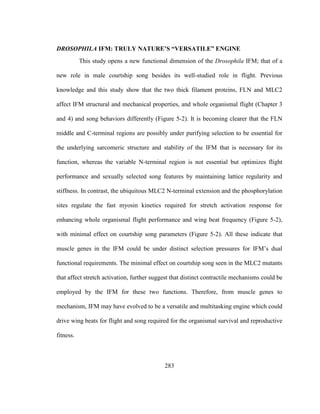
DROSOPHILA IFM: TRULY NATURE'S "VERSATILE" ENGINE…………….283
REFERENCES……………………………………………………………………..284
APPENDIX 1
Functional Characterization of a Drosophila expressing a Chimeric Flightin:
Implications on Muscle Lattice, Flightin, and Male Courtship Song……………...289
vii
APPENDIX 2
Flight and Mating Behavior of a Dual Heterozygote Drosophila expressing
Flightin NH2-Terminal and COOH-Terminal Truncated Proteins……………….309
APPENDIX 3
Skinned Muscle Fiber Mechanics by Sinusoidal Analysis and Isometric Tension
Measurements…………………………………………………………………………323
COMPREHENSIVE BIBLIOGRAPHY…………………………………………….329
viii
LIST OF TABLES
Table Page
Chapter Tables
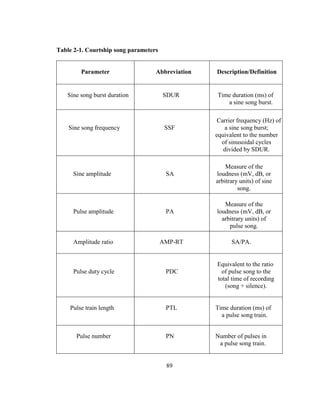
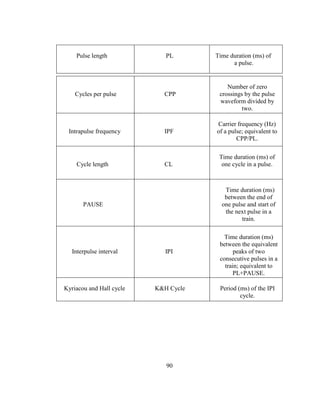
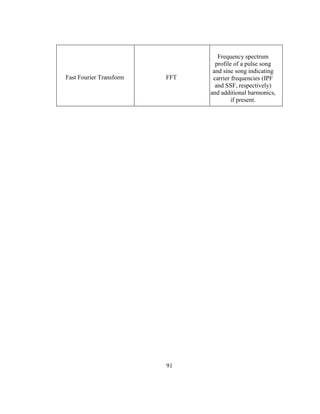
Table 2-1. Courtship song parameters…………………………………………………...89
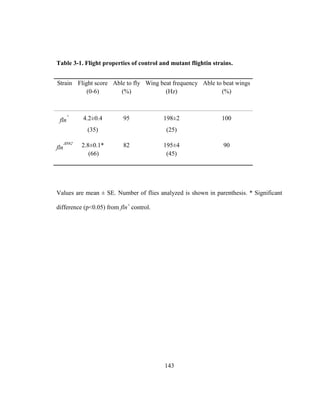
Table 3-1. Flight properties of control and mutant flightin strains…………………….143
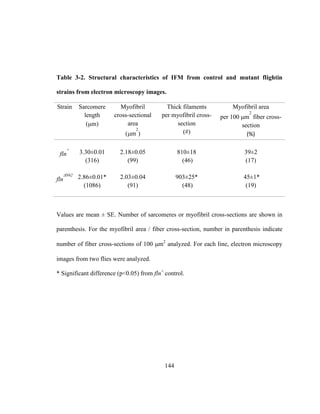
Table 3-2. Structural characteristics of IFM from control and mutant flightin strains
from electron microscopy images………………………………………………………144
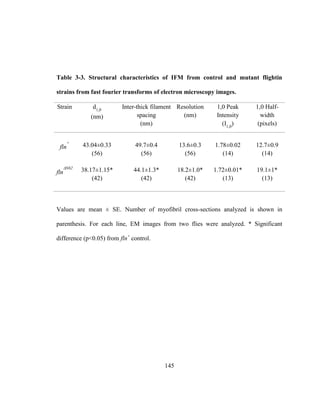
Table 3-3. Structural characteristics of IFM from control and mutant flightin strains
from fast fourier transforms of electron microscopy images…………………………...145
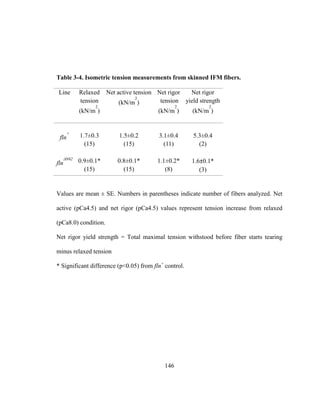
Table 3-4. Isometric tension measurements from skinned IFM fibers………………...146
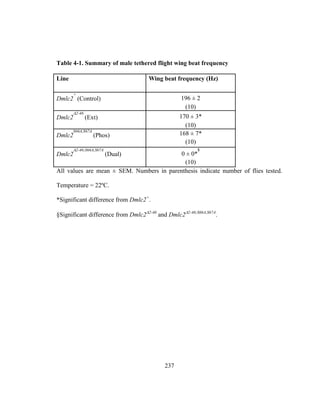
Table 4-1. Summary of male tethered flight wing beat frequency……………………..237
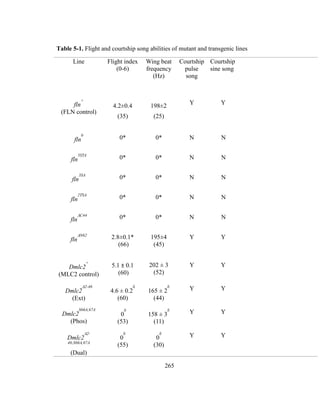
Table 5-1. Flight and courtship song abilities of mutant and transgenic lines…………265
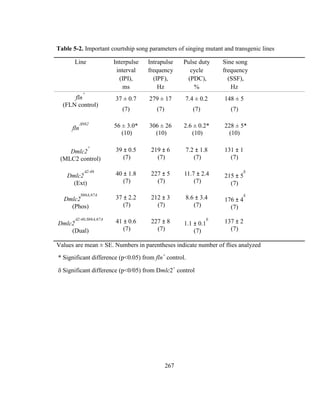
Table 5-2. Important courtship song parameters of singing mutant and transgenic
lines……………………………………………………………………………………..267
Appendix Tables
Appendix 1 Table 1. Tethered wing beat frequency and male courtship song properties
of D. melanogaster (Oregon R strain) and D. virilis species…………………………...300
Appendix 1 Table 2. Chimeric flightin parental lines in wild type (+) and corresponding
daughter lines in fln0
background………………………………………………………301
Appendix 1 Table 3. Flight properties of control and mutant flightin
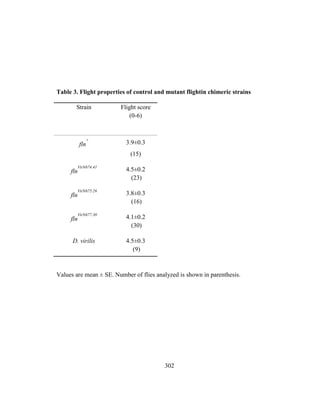
chimeric strains…………………………………………………………………………302
Appendix 3 Table 1. Isometric tension measurements from skinned IFM fibers……..326
ix
LIST OF FIGURES
Figure Page
Chapter Figures
Figure 1-1. Cross-bridge detachment rates of Drosophila IFM, mammalian cardiac and
skeletal muscles…………………………………………………………………………...3
Figure 1-2. End-on X-ray microdiffraction patterns of adult Drosophila IFM, and rabbit
psoas skeletal muscle myofibrils………………………………………………………….4
Figure 1-3. Tension vs sarcomere extension curves of Drosophila IFM, mammalian
cardiac and skeletal muscle fibers…………………………………………………………5
Figure 1-4. Direct and indirect flight muscles diagram…………………………………15
Figure 1-5. Adult Drosophila thoracic muscular system………………………………..18
Figure 1-6. Electron micrograph of a Drosophila IFM sarcomere
longitudinal section………………………………………………………………………19
Figure 1-7. Electron micrograph of Drosophila IFM myofibril cross-section………….20
Figure 1-8. Schematic of proposed model of DMLC2 mutational effects on myosin head
position…………………………………………………………………………………...36
Figure 1-9. Courtship ritual of Drosophila melanogaster………………………………41
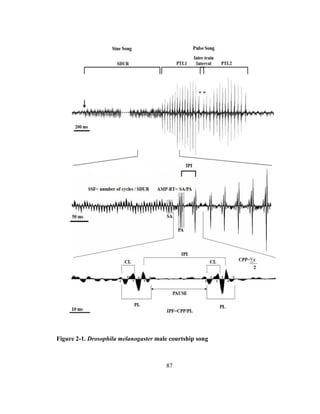
Figure 2-1. Drosophila melanogaster male courtship song……………………………..87
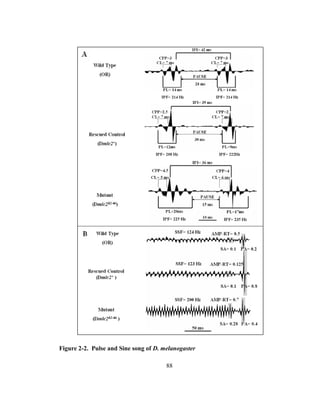
Figure 2-2. Pulse and sine song of D. melanogaster……………………………………88
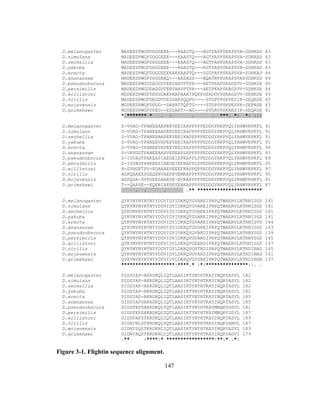
Figure 3-1. Flightin sequence alignment……………………………………………….147
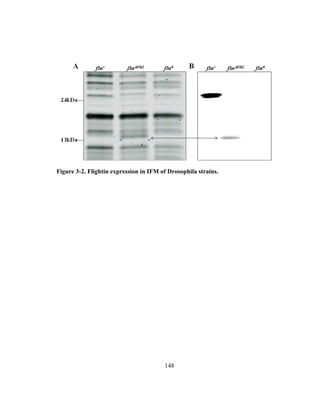
Figure 3-2. Flightin expression in IFM of Drosophila strains…………………………148
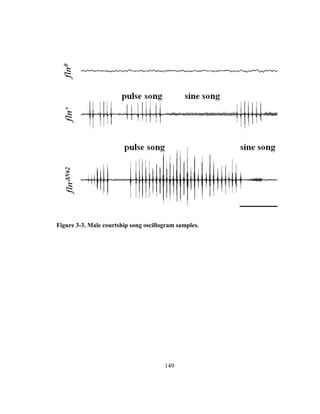
Figure 3-3. Male courtship song oscillogram sample………………………………….149
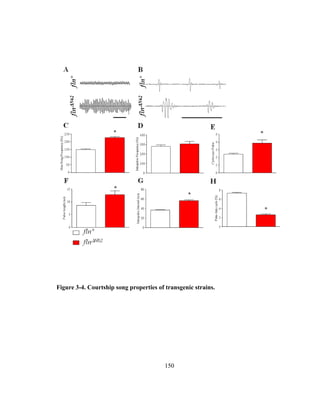
Figure 3-4. Courtship song properties of transgenic strains…………………………...150
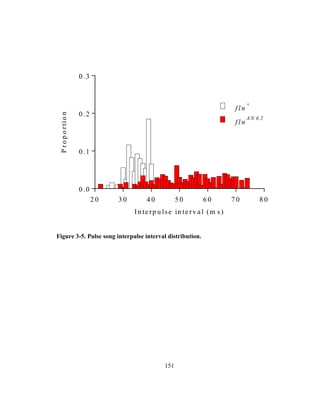
Figure 3-5. Pulse song interpulse interval distribution………………………………...151
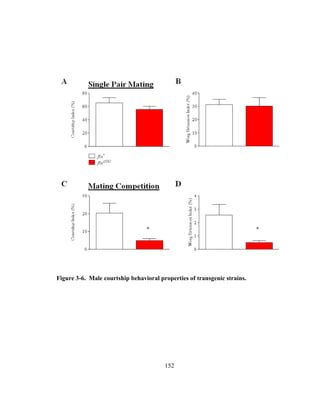
x
Figure 3-6. Male courtship behavioral properties of transgenic strains………………..152
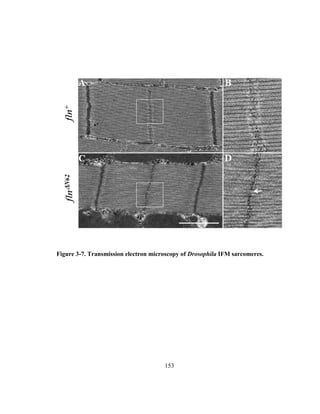
Figure 3-7. Transmission electron microscopy of Drosophila IFM sarcomeres………153
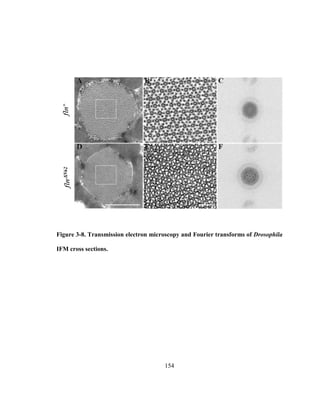
Figure 3-8. Transmission electron microscopy and fourier transforms of Drosophila IFM
cross sections…………………………………………………………………………...154
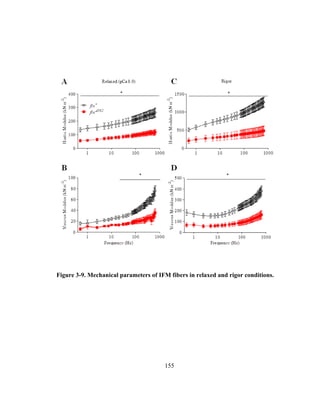
Figure 3-9. Mechanical parameters of IFM fibers in relaxed and rigor conditions……155
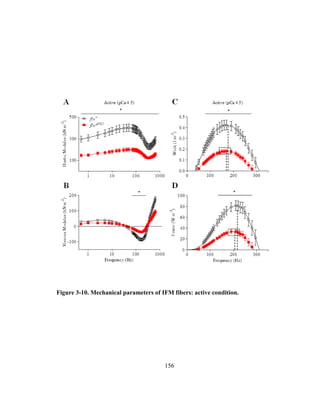
Figure 3-10. Mechanical parameters of IFM fibers: active condition…………………156
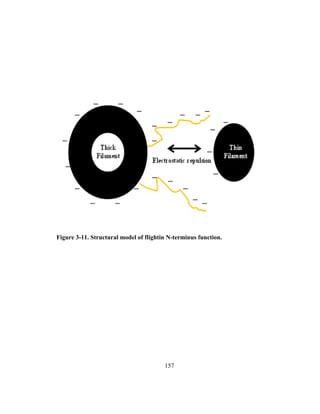
Figure 3-11. Structural model of flightin N-terminus function………………………..157
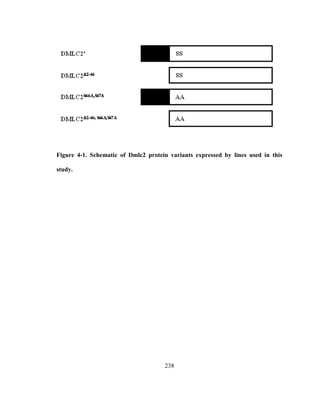
Figure 4-1. Schematic of Dmlc2 protein variants expressed by lines used……………236
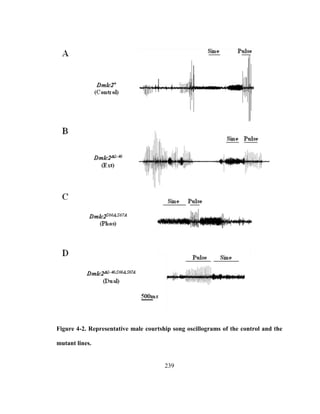
Figure 4-2. Representative male courtship song oscillograms of the control and the
mutant lines……………………………………………………………………………..238
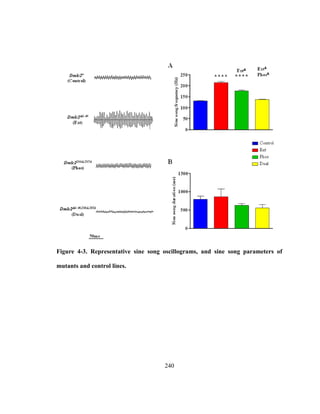
Figure 4-3. Representative sine song oscillograms, and sine song parameters of mutant
and control lines………………………………………………………………………...239
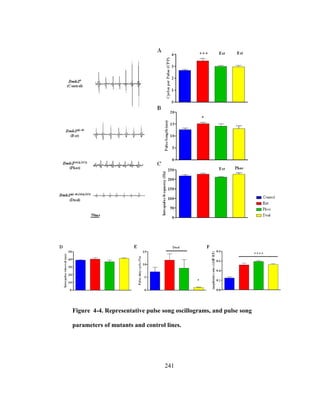
Figure 4-4. Representative pulse song oscillograms, and pulse song parameters of mutant
and control lines………………………………………………………………………...240
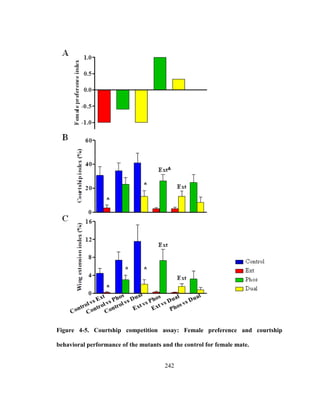
Figure 4-5. Courtship competition assay: Female preference and courtship behavioral
performance of the mutants and the control for female mate…………………………..241
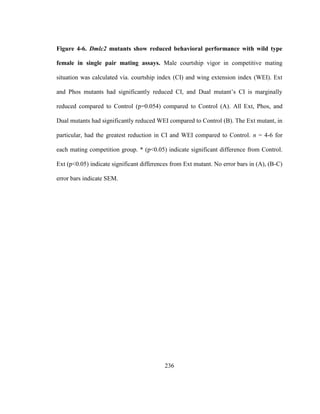
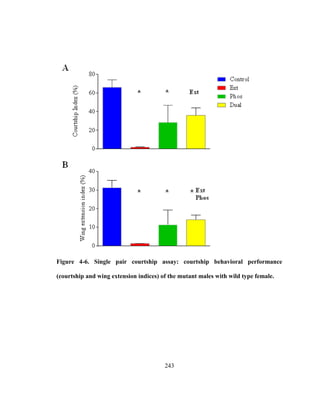
Figure 4-6. Single pair courtship assays: courtship behavioral performance (courtship
and wing extension indices) of the mutant males with wild type females……………...242
Figure 5-1. Possible model for FLN molecular function in thick filament…………….280
Figure 5-2. Schematic showing effects of FLN N-terminal region and MLC2 regions in
courtship song parameters……………………………………………………………....282
Appendix Figures
Appendix 1 Figure 1. Flightin amino acid sequence alignment between D. melanogaster
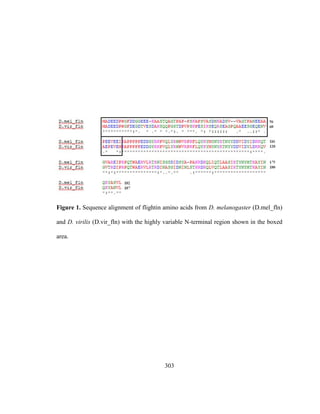
and D. virilis…………………………………………………………………………….303
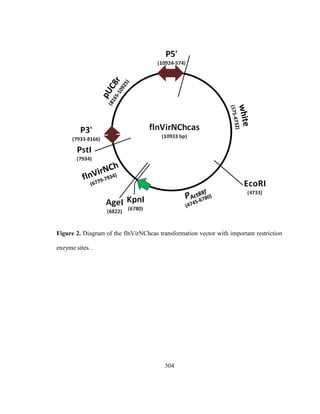
Appendix 1 Figure 2. Diagram of flnVirNChcas transformation vector……………...304
xi
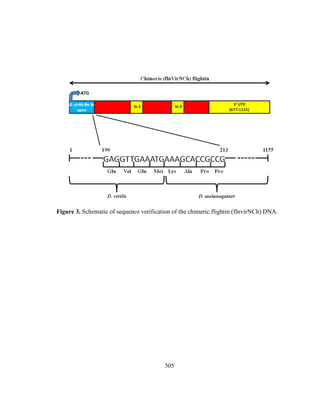
Appendix 1 Figure 3. Schematic of sequence verification of the chimeric flightin
(flnvirNCh) DNA……………………………………………………………………….305
Appendix 1 Figure 4. Male courtship song snapshot of flnvirN677.30
male……………..306
Appendix 2 Figure 1. Flight properties of transgenic lines used……………………...317
Appendix 2 Figure 2. Tethered wing beat freqeuncy of the transgenic lines used……318
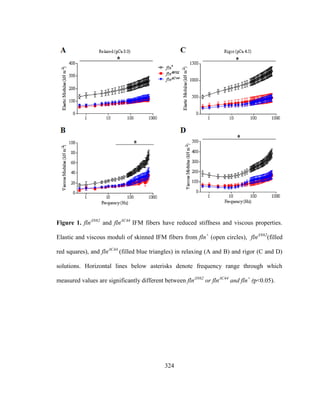
Appendix 3 Figure 1. Relaxed and rigor viscoelastic properties of flnN62
and flnC44
IFM fibers in 4% dextran T-500 containing solution……………………………..........324
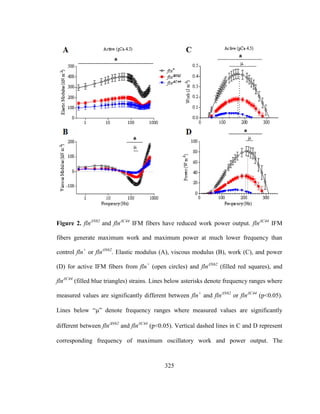
Appendix 3 Figure 2. Active viscoelastic propertiees and oscillatory work and power
output of flnN62
and flnC44
IFM fibers in 4% dextran T-500 containing solution ……325
Appendix 3 Figure 3. Oscillatory work and power output of flnN62
and flnC44
IFM
fibers in solution without dextran……………………………………………........……327
1
CHAPTER 1 INTRODUCTION
Overview
Structure and form of biological systems give function. Among them, muscle is
the primary tool by which living systems act to produce diverse and complex behavioral
outputs. The structure of muscle tissue is critical since some muscles have to produce
force, and some bear force based on power and control needed for distinct behaviors.
Hence, muscle is a highly structured biological material composed of ordered
organization of thick and thin filaments composed of contractile proteins, and the
connecting filaments that inter-connect them. This arrangement, in turn, follows a
hierarchical organization into sarcomeres, myofibrils, fibers, and fiber bundles. In almost
every muscle tissue system, the contractile proteins actin and myosin form the majority of
the thin and thick filaments, respectively, which generate the force and power required
for any behavior or movement. Even though the basic actin and myosin contractile
functions are conserved throughout various muscle systems, yet, based on the power
requirements of various performances, muscle tissues show great variations in acto-
myosin contractile kinetics, myofibrillar structural, and fiber mechanical properties, as
well as in types of accessory proteins. For example, the Drosophila indirect flight muscle
(IFM)s have evolved one of the fastest myosin kinetics known, with a very high
detachment rate of myosin motor domain from its actin target (cross-bridge detachment
rate) compared to mammalian cardiac or skeletal muscle myosins (Figure 1-1) [2]. Also,
at the myofibrillar level, there is a great diversity in the regularity of the myofilament
2
arrangement (lattice). For example, The Drosophila adult IFM myofibril shows highly
regular myofilament lattice organization indicated by the higher order X-ray diffraction
patterns compared to mammalian skeletal (Figure 1-2) or cardiac muscles [4]. At the
whole fiber level as well, different muscles show diverse stiffness properties. For
example, Drosophila IFM shows a higher passive stiffness compared to mammalian
skeletal or cardiac muscles (Figure 1-3) [5].
3
Figure 1-1. Cross-bridge detachment rate (in 1/seconds or s-1
) of Drosophila IFM,
mammalian cardiac and mammalian skeletal muscles. The cross-bridge detachment rate
shown here is the forward rate constant (k+2) which characterizes the forward reaction of
the work-absorbing actin-myosin-ATP isomerization associated with cross-bridge
detachment [2]. Drosophila IFM has a much higher cross-bridge detachment rate
indicative of a much faster myosin kinetics compared to mammalian cardiac or skeletal
muscles. (Redrawn from [1,2])
4
Figure 1-2. End-on X-ray microdiffraction patterns of adult Drosophila IFM myofibril
(A) and rabbit psoas skeletal muscle myofibril (B). Arrows in (A) are examples of
diffraction spots from a single myofibril of Drosophila IFM. No regular diffraction
pattern indicated by spots could be seen in (B). Clearly, Drosophila IFM myofibril has
more regular or crystalline myofilament organization than rabbit psoas skeletal muscle
indicated by the regular and higher-order diffraction spots. (Redrawn (A) from [3], and
(B) taken from [4]).
5
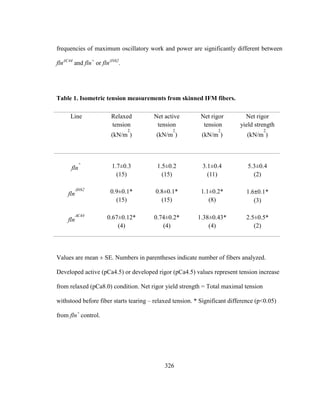
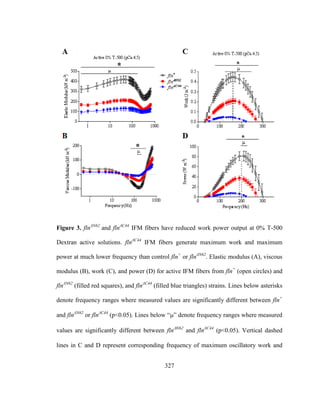
Figure 1-3. Tension (force per muscle fiber cross-sectional area) response (in
milliNewton per millimeter square or mN/mm2
) vs sarcomere extension (due to stretch)
curve of relaxed Drosophila IFM, mammalian cardiac and mammalian skeletal muscle
fibers. Passive stiffness (=stress/strain i.e., tension/sarcomere extension) slope of
Drosophila IFM is higher than that of mammalian cardiac or skeletal muscles. (Redrawn
from [5]).
6
Moreover, accessory proteins that are associated with the myofilaments show
great diversity based on functional requirements of the muscle. For example, flightin in
Drosophila IFM [6,7] and vertebrate cardiac myosin binding protein C [8-10] are
required to stabilize and stiffen the corresponding thick filaments. Whereas, an N-
terminal extension (46 amino acids) of Drosophila IFM thick filament associated myosin
regulatory light chain, not found in the vertebrate homolog [11], and is known to be
required for IFM stretch activation response [12]. Diversities in accessory protein do not
exclude the thin filaments as well. Drosophila IFM, in addition to normal tropomyosins,
consists of two unique tropomyosins (TmH-33 and TmH-34), that are not present in the
vertebrate thin filaments [13-15].
Therefore, to understand the diverse nature of complex behaviors actuated by the
muscle systems, it is critical to understand the functions of these diverse accessory thick
or thin filament associated proteins and their special properties. Moreover, it is the
specialized adaptation of the basic contractile mechanism that creates this great diversity
and versatility in muscle function. For example, even though all muscles show some level
of stretch activation, the vertebrate cardiac and the insect flight muscles use oscillatory
contraction modes in order to sustain power production via pronounced stretch activation
mechanism, whereas the vertebrate skeletal muscles do not (reviewed in [5]). One of the
fundamental aspects in muscle biology is how the versatility in function of the muscle
tissue system emerged and how it evolved to enable the enormous diversity of muscle
driven behaviors in nature. In particular, it is of notable interest to understand the
7
different innovations in muscle genes and their specific contributions to the different
structural and mechanical properties of muscles.
Drosophila flight musculature has been a model for muscle research for decades
[16], and has been used to elucidate functions of muscle genes from the molecular to the
organismal level [17-19], especially with the numerous advances in tools for genetic
manipulations [20,21] in this model system. There are two different types of muscles in
the Drosophila thoracic musculature. The direct flight muscles (DFM), which are
involved in the steering control of the wings during flight, are directly attached to the
wing hinge and act as active springs rather than as force producing elements [22]. The
indirect flight muscles (IFM), the major power producing muscles for flight, are attached
to the thoracic exoskeleton, rather than directly to the wing hinge as the DFM. The IFM
consist of two sets of muscles aligned transversely to one another. These muscle provide
the power through oscillatory contractions driving the high frequency of wing flapping (~
200 Hz) during flight, by alternately deforming the thoracic cuticle and setting it up as a
resonant system with a frequency similar to the flight wing flapping frequency. The
resonant cuticular movement drives the movement of the wings indirectly through the
DFM that controls the wing kinematics. IFM achieves this oscillatory contraction
myogenically since the contractions and nervous impulses are not in concert to each other
at a 1:1 ratio (asynchronous mode), unlike the vertebrate skeletal muscle (synchronous
mode) [23], where nervous system directly controls each contractile cycle through
calcium activation of muscle regulatory units [24]. The oscillatory contraction of the
8
IFM, as well as vertebrate cardiac muscles, is powered by stretch activation where
tension rises gradually, after a delay, in response to a stretch when fully activated by
calcium through the neural drive. The stretch activation response is highly pronounced in
the IFM compared to vertebrate cardiac or skeletal muscles (reviewed in [5]). Mutations
in both Drosophila and humans that affect stretch activation response impair flight
abilities in flies and cause cardiomyopathies in humans [16,17,19,25]. Hence, the
Drosophila IFM allows us to test the maximum limits of what muscles can accomplish
and to study the underlying factor and constraints that determine the limits of successful
performances such as the high energy consuming, power requiring, and aerodynamically
costly flight behavior.
Interestingly, like many other insects, Drosophila uses their flight muscles not
only for flight, but also for other behaviors. The males generate a courtship song, as part
of a mating ritual that is under sexual selection pressure and is highly variable across
Drosophila spp. D. melanogaster males sing by generating low amplitude vibration of
one wing to produce a temporally rhythmic pulse song and a sinusoidal humming sine
song (reviewed in [26]). The IFM and the DFM are both neurally activated during
courtship song [27,28], but their exact contributions to, and the contractile mechanism
used for sound production is not known. It is known that wing movements for both pulse
and sine songs are of much lower amplitude than flight wing movements [29], suggestive
of much lower power requirement for singing. Therefore, the Drosophila IFM provides
an excellent model system to understand the relative contributions of the various muscle
9
proteins for power generation and control during states of high (flight) and low (song)
muscle mechanical power output. Moreover, numerous mutational genetics studies have
been conducted throughout decades to understand the functions of contractile genes using
Drosophila IFM as a model (reviewed in [19]). These muscle mutants present a goldmine
for elucidating the role of the IFM in courtship song and, importantly, for establishing the
extent to which genetic and physiological pathways are shared between these two distinct
behaviors of flight and courtship.
The goal of this thesis is to study the contributions of specific contractile genes to
the Drosophila IFM’s unique structural and mechanical properties, and ultimately the
behavioral outputs of flight and courtship song as a way to 1) understand how different
muscle genes could be utilized by this tissue system for different functions, 2) gain
insights into the contractile mechanism of courtship song in the flight musculature.
Evolution of Flight and Insect Diversification
More than half of all living species identified to date are insects making Insecta
the most diverse class on Earth and arguably among the most successful metazoans in
natural history [30,31]. The ability to fly is present in >70% of extant insect species, and
is generally considered one of the main driving forces in the evolutionary success of
insects [32]. Insects were the first to acquire flight abilities in evolution, about 90-170
million years before the earliest winged vertebrates [33], that possibly led to their
enormous diversification. Along with an early start, flight acquisition gave insects the
10
opportunity for finding new niches and better habitats to colonize, by dispersing more
easily. This dispersal possibly also facilitated in finding new food sources which
increased their survival fitness. Similarly, powered flight allowed directionality in escape
responses to avoid predators quickly, which would not have been so efficiently possible
with simple quick jumps or leaps [34]. Therefore, flight increased the probability of
survival fitness of the insects with all these factors, and ultimately got fixed in evolution
under purifying selection forces. In some cases though, flight facilitated the aerial
combats between males fighting for female mates under sexual selection [35]. But
overall, flight is one of the major factors for insects success in survival and hence mostly
subject to natural selection.
Although the precursors and origin of insects wings and hence flight is still
debatable, there are two major alternative hypotheses based on fossil records, structure of
current forms and molecular data: (i) wings derived from paranotal outgrowths of the
thorax which could have facilitated gliding behavior giving rise to active flight [32], or
(ii) wings evolved from aquatic gills from mayfly-like ancestors [36]. It has been
proposed that gliding could have evolved many times in different taxa due to its
simplistic way to develop a structure that can support flight without investing lot of
energy [32]. A potential functionality for developing the gliding behavior is for avoiding
predation by using gliding as an escape mechanism. The presence of the gliding behavior
in different taxa possibly allows the different organisms to have controlled aerial descent
even in the complete absence of wings, giving us clues that this type of behavior could be
11
precursor for flight [32]. Aerodynamic theory supports this as it postulates some form of
gliding as the first step in the evolution of flight [37], with some evidences in wingless
insect structures [38]. In contrast, molecular data and genetic signatures support the gill
hypothesis that insect wings could have evolved from gill-like appendages, probably
from a crustacean aquatic ancestor, having a common inherited gene expression pattern
[39]. Water surface skimming and sailing performances by stoneflies support the
hypothesis that insect wings evolved from articulated gill plates of aquatic ancestors
through an intermediate semi-aquatic stage with small protowings and low muscle power
output [40,41]. Whatever the origin of the wings and flight, it gave the insects an
opportunity for wide foraging and dispersion. Aside from the acquisition of wings,
striking modifications in muscle physiology represent key milestones in the evolutionary
history of insects, like the emergence of asynchronous muscles with the ability to contract
multiple times with every neural input [23]. It is certain; that flight muscles are
precursors of flight and that this tissue system must have gone through an evolutionary
trajectory to improve performance during flight among insects facilitating insect
diversification, especially since variables affecting flight performance depend on the
muscle themselves.
Evolution of Flight Muscles: Classifications
Since some of the variables that affect flight performance should ultimately
depend on the flight muscles, the evolution of flight muscles is inter-twined to the
12
evolution of flight and insect diversification. It can be predicted that a high muscle
mass/body mass ratio would be required for high power output that might be required for
rapid escapes from predators [42], which would enhance the insect’s fitness under natural
selection, or for fighting with males in aerial combats for female mates under sexual
selection [35]. But, a larger muscle mass could lead to heavier and larger body mass,
which ultimately could increase travelling time of oxygen and sugars around the body,
and the power required for takeoff will be proportionally greater. Therefore,
miniaturization of insects opened to them many niches to diversify. But it posed a
problem: too small a body size would force insects to flap their wings faster to stay in the
air according to aerodynamic theory, not to mention the more air resistance that they
would have to overcome. In this respect, flight muscle evolution, especially that of
asynchronous muscles, gave way for insects to perform fast motor action for high
frequency operations and higher power outputs economically in order to sustain efficient
flight counter-balancing air resistance.
Insect flight muscles can be classified in various ways based on morphological
characteristics, features of anatomical attachments, and physiological functions. On both
morphological and physiological grounds, insect flight muscle is classified as
synchronous, the ancestral type in which the rate of contraction matches the rate of
motorneuron firing, or asynchronous, the derived form in which multiple muscle twitches
can occur for every neuronal activation (reviewed in [23,43]). Asynchronous muscle is
characterized by its distinctly circular myofibrils of large diameter (2-5 m vs 0.05-0.1
13
m in synchronous), and also by the scarcity of sarcoplasmic reticulum (SR). This is
because the asynchronous muscles are mostly myogenic using stretch activation
mechanism, and hence calcium does not have to diffuse as often to the myofibrils to
activate and do not have to be taken back into the SR quickly during relaxation.
Therefore, given less need for repeated diffusion of calcium to and from myoplasm to
SR, a large and extensive SR network is not required for this type of muscles. This is
relevant, in particular, since the muscle action potentials release calcium from the SR to a
priming level in the myofibrils sufficient enough for stretch activation to take over. This
leads the asynchronous muscles to contract in an oscillatory manner if they are connected
to an appropriate resonant load like the wings or thorax of the insects. The absence of an
extensive SR network allows the myofibrils to be easily dissociated, a feature that lead to
the term ‘fibrillar’ being used to describe these muscles [44].
Asynchronous muscles are known to exist only in insects [43]. Using the above
morphological criteria, Cullen [45] and Smith [46] used electron microscopy to examine
the distribution of asynchronous muscle in insect orders. These studies indicated that
asynchronous flight muscles represent a derived character, being derived possibly from
synchronous muscle types. Based on Cullen’s work, fibrillar asynchronous muscles have
evolved 9 or 10 times overall with possible multiple independent origins [45,47], yet a
remarkable innovation.
On the basis of anatomical attachments, insect flight muscles can be classified
into direct and indirect flight muscles (Figure 1-4). The direct flight muscles (DFM)
14
insert directly on the base of a wing or on cuticular patches in the wing articulation that
are in turn attached to the wings. The DFM lie ventral to the wings, contraction of which
produces ventral movement of the wings and therefore are wing depressors. The indirect
flight muscles (IFM) are comprised of the dorsal longitudinal muscles (DLM) that are
wing depressors, and the dorsal ventral muscles (DVM) that are the wing elevators. The
IFM induce wing movements by changing the position and shape of the tergum, the
dorsal plate of the thorax [47,48].
Flight is a metabolically expensive, yet a voluntary controlled behavior which not
only requires high mechanical power output from the flight muscles [49], but also
demands control maneuverability. Another classification that could be made based on
physiological output is power and control muscles. Power muscles can generally be
distinguished from other muscles in the thorax like the control muscles from their
pinkish-brown coloration which mostly comes from the high concentration of
mitochondria [23]. This high concentration of mitochondria is required to support the
high metabolic rates of the flight power muscles, since metabolism of flight muscles is
mostly aerobic [50]. In addition to providing the power for driving the oscillation of the
wings, insect flight systems include control muscles, contraction of which continuously
adjusts wing stroke amplitude, stroke frequency, angle of attack for stable directed flight,
and for flight turning or yaw movements [51,52]. For example, control muscles in locusts
have been shown to control the twisting of the edges of the wings during upward and
downward strokes [53].
15
Figure 1-4. Direct and indirect flight muscles in a cross-section of a half-thorax
(modified from [48]). The dorsal longitudinal and the dorsal ventral muscle constitute the
indirect flight muscles, and the basalar muscles are part of the direct flight muscles.
16
Drosophila Adult Flight Musculature
There are two major types of adult musculature in Drosophila: the majority is
made up of tubular muscles which include the leg, jump and the direct flight muscles
[16], and the fibrillar muscles which are asynchronous and indirect and provide the power
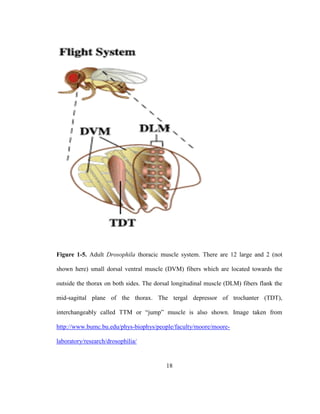
required for flight (Figure 1-5).
Tubular Muscles
The nomenclature of these muscles comes from their distinctive structural
characteristic of rectangular myofibrils that are radially oriented surrounding a centrally
located nucleus. The other critical features of this muscle are few mitochondria and
abundant SR. The tergal depressor of trochanter (TDT), or jump muscle, is the largest in
this group (Figure 1-5). This muscle gets activated by the giant fiber (GF) neural pathway
through the tergotrochanteral motoroneuron (TTMn) (reviewed in [54]). The TDT
initiates the escape response by powering the jump that starts the flight resonant system.
Fibrillar Muscles
Adult Drosophila fibrillar muscles include the major power generating indirect
flight muscle (IFM). They can be divided into 12 fibers oriented dorsal longitudinally
(DLMs) and 12 large and 2 small fibers oriented dorsal ventrally (DVMs). The thousands
of myofibrils that constitute the fibers are circular with a ~1.8 m diameter. In order to
supply the high demand of metabolic energy for flight power, these flight muscle fibers
are densely packed with mitochondria which have direct access to the myofibrils. The
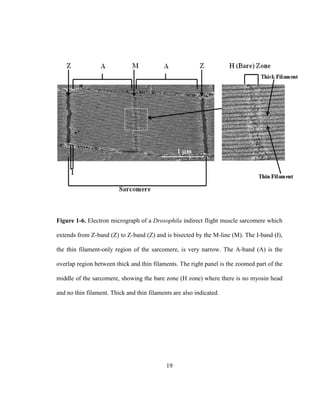
sarcomeres of the Drosophila fibrillar muscles are about 3.0-3.6 m long with a very
17
short I-band (Figure 1-6) compared to tubular muscle sarcomeres. Moreover, the thick
filaments occupy about 90% of the entire length of the sarcomere which allows for very
little shortening. Also, the Z-bands of the fibrillar muscle sarcomeres are wider than
tubular muscle which is indicative of their unique architecture [55,56]. The uniqueness in
architecture can be seen in the myofibrillar cross sections as well, where a thick filament
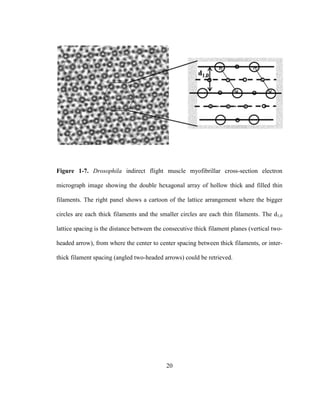
of the flight muscles is surrounded by six thin filaments with a thin to thick filament ratio
of 3:1 [57,58] (Figure 1-7) as opposed to 2:1 in tubular muscle. Electron microscopic and
live fly X-ray diffraction studies indicated that the flight muscle lattice arrangement of
thick and thin filaments are highly regular and ordered compared to vertebrate skeletal
muscle or other tubular flight muscles, possibly indicating an evolutionary advantage of
having ordered lattice for enhancing flight power [4]. As shown in Figure 1-7, the IFM
myofilament arrangement is a double hexagonal array of hollow thick filaments, each of
which is surrounded by six thin filaments. This lattice arrangement has a highly regular
spacing between consecutive thick filaments or, inter-planar distance (d1,0), from which
inter-thick filament spacing (center-to-center distance between thick filaments, Figure 4
oblique arrows) could be calculated. The flight muscle myofilament lattice spacing is
generally measured using X-ray diffraction of live flies [59].
18
Figure 1-5. Adult Drosophila thoracic muscle system. There are 12 large and 2 (not
shown here) small dorsal ventral muscle (DVM) fibers which are located towards the
outside the thorax on both sides. The dorsal longitudinal muscle (DLM) fibers flank the
mid-sagittal plane of the thorax. The tergal depressor of trochanter (TDT),
interchangeably called TTM or “jump” muscle is also shown. Image taken from
http://www.bumc.bu.edu/phys-biophys/people/faculty/moore/moore-
laboratory/research/drosophilia/
19
Figure 1-6. Electron micrograph of a Drosophila indirect flight muscle sarcomere which
extends from Z-band (Z) to Z-band (Z) and is bisected by the M-line (M). The I-band (I),
the thin filament-only region of the sarcomere, is very narrow. The A-band (A) is the
overlap region between thick and thin filaments. The right panel is the zoomed part of the
middle of the sarcomere, showing the bare zone (H zone) where there is no myosin head
and no thin filament. Thick and thin filaments are also indicated.
20
Figure 1-7. Drosophila indirect flight muscle myofibrillar cross-section electron
micrograph image showing the double hexagonal array of hollow thick and filled thin
filaments. The right panel shows a cartoon of the lattice arrangement where the bigger
circles are each thick filaments and the smaller circles are each thin filaments. The d1,0
lattice spacing is the distance between the consecutive thick filament planes (vertical two-
headed arrow), from where the center to center spacing between thick filaments, or inter-
thick filament spacing (angled two-headed arrows) could be retrieved.
21
Flight Muscle Adaptations
The flight muscles have gone through various adaptations to enhance flight
performance. The evolution of asynchronous muscles in insects is probably one of the
major adaptations of flight muscle throughout insect evolution.
Structural Adaptations: Lattice
Asynchronous flight muscles made hovering and various other aerodynamic feats
easier to achieve and sustain for many flying insects. This type of muscle system enabled
the wings to create pressure gradients that give added uplift to the insects [60]. Micro-X-
ray analysis of frozen flight muscles of bumblebees showed that the myofibrils are
extraordinarily symmetrical with successive sarcomeres in such a precise alignment [61]
that the myofibrils are in effect giant protein crystals. Later, it was found out that this
long-range myofilament lattice regularity is almost exclusive to asynchronous flight
muscles [4]. In that study [4], there are very few exceptions, like the hummingbird
hawkmoth, having synchronous flight muscles, yet the myofibrils showing higher order
X-ray spot-like diffractions indicative of some local lattice register, but might not be for
long-range. Since the asynchrony feature of flight muscles has evolved multiple times
throughout insect evolution, it is easy to envision that the highly crystalline or regular
lattice structure too has evolved independently multiple times. Bees (order
Hymenoptera), flies (order Diptera), beetles (order Coleoptera), and true bugs (order
Heteroptera) show similar regular hexagonal lattice array and long-range regularity.
Iwamoto et al [4] found that the crystalline myofibrillar lattice structure is not only
22
exclusive to asynchronous muscles, but also restricted to only asynchronous “flight”
muscles, suggesting that lattice regularity in muscles is required for flight. Moreover,
Iwamoto et al [4] also found that skilled flyers have better registered or more crystalline
myofibrillar structure than medium skilled or poor flyers. This indicated that the crystal
nature of the myofilament lattice possibly is required for fast wing flapping and
maneuvering for skilled flight. Although, it is definitely not clear how this lattice
regularity could drive skilled flight. Some of the possibilities are that a well-registered or
regular lattice enables force to be transmitted more efficiently along the length of the
myofibrils and hence muscle fibers, leading to more efficient power output for skilled
flying. Computational modeling studies have shown that sarcomeric geometry, in
particular the arrangement of myofilaments in the lattice structure, could influence the
coordinated cross-bridge binding and rate or amplitude of force development [62].
Therefore, it could be possible that the well registered asynchronous muscle lattice could
allow better transmission of force along its filaments which in turn could lead to
enhanced rate and amplitude of force development, and power output.
Mechanical and Physiological Adaptations
The hallmark of asynchronous muscle is pronounced stretch activation and its
counterpart shortening deactivation [43]. This feature allows the muscle to produce force
at constant strain after a stretch through a delayed rise in tension, and likewise, allows
force to drop at constant strain after shortening (reviewed in [5,23]), the end result of
23
which is net positive work output. The underlying molecular mechanism of stretch
activation remains elusive and is still under scrutiny. Several models have been proposed
to explain stretch activation (reviewed in [5]) and recent evidence highlights that calcium
activation plays an active part in the magnitude of stretch activation [1,63], with results
differing in some way between species. More recent X-ray diffraction studies provide
evidence that troponin-myosin bridges are key to the stretch activation response since
these bridges could move tropomyosin away from the blocked state to enhance cross-
bridge binding during stretch [64]. While all striated muscles exhibit stretch activation
when stimulated experimentally, this mechanism is believed to be of physiological
relevance only among muscles that power oscillatory systems, namely insect flight
muscle and vertebrate cardiac muscle. A characteristic feature of stretch activated
muscles is their high resting or passive stiffness which is contributed mostly by the
connecting filaments (kettin and projectin in Drosophila IFM), the magnitude of which is
proportional to the amplitude of stretch activation [5], and to a lesser degree by the thick
or thin filament stiffness [reviewed in 65]. Stretch activated muscles operate at low
strains (e.g., 3-5% for Drosophila IFM [67]), a condition almost forced by the nearly
complete overlap of thick filaments and thin filaments due to the narrow I bands (Figure
1-3). The combination of these two factors, high stiffness and low strain, is probably
interrelated and necessary for efficient force transmission conducive to oscillatory work
output [5,23,66]. Moreover, the Drosophila IFM has the fastest known myosin kinetics,
24
in particular, a very fast cross-bridge detachment rate which could also be critical in the
stretch activation response for fast oscillatory contraction cycles (Figure 1-1, [2]).
Interestingly, another model used to explain stretch activation is that
asynchronous muscles have alternative troponin C (TnC) isoforms for calcium or stretch
activation in the troponin-tropomyosin (Tn-Tm) complex; which is the major thin
filament regulatory unit for striated muscle contraction. Indeed, in Lethocerus IFM, it
was found that there are two TnC isforoms, one (F1) to regulate stretch activated tension
and the other (F2) to regulate calcium activated tension [67] with a molar ratio of 5:1
(F1:F2) distributed on the thin filament [68]. Based on the findings of Agianan et al [67],
it is suggested that even in low calcium concentration, regions of the thin filament
containing F1 would more readily be able to transition to the open state and able to
activate the cross-bridges, acting as a regulatory mechanism for stretch activation, while
at higher calcium concentration, F2 is used for regulating thin filament activation and
produce isometric tension.
The Role of Calcium in Flight
The Drosophila giant fiber neural system (GF) facilitates the signal transmission
from the brain to the tergotrochanteral motoneuron (TTMn) and peripherally synapsing
interneuron (PSI) in the thoracic ganglia to drive escape response and flight (reviewed in
[54]). The neuronal firing releases calcium and subsequently controls IFM activation
regulated through calcium-sensing units of Tn-Tm [24]. Acto-myosin cross-bridges start
25
to get recruited in the DLM, contraction of which stretches the DVM and therefore
stretch activation takes over. Hence, calcium was regarded to have only a permissive role
to maintain stretch activation during flight [69]. This notion was recently revised owing
to the finding that calcium plays an active role in the IFM for modulating power during
flight by both in vitro muscle mechanical [1] and in vivo [70] studies. Recently, Lehmann
et al. [71] found that during flight maneuvering and turning movements in Drosophila,
power adjustments occur through bilateral control of calcium levels between the muscles
(both IFM and DFM) of the two thoracic segments. This further suggests that rather than
differential recruitment of fibers, the calcium levels and gradients through the differential
neural drive could modulate thin filament activation, and the number of cycling cross-
bridges for power modulations.
Flight Muscle Thick Filaments
While paramyosin is the major constituent of large diameter thick filaments like
those in molluscs (reviewed in [72]), myosin heavy chain (MHC) is the major constituent
protein of most invertebrate thick filaments. The entire myosin molecule is a hexamer
consisting of two MHC subunits, and four light chain subunits. The two light chains are
the essential light chain (ELC or MLC1) and the regulatory light chain (RLC or MLC2).
Moreover, there are other thick filament associated proteins, some which bind myosin.
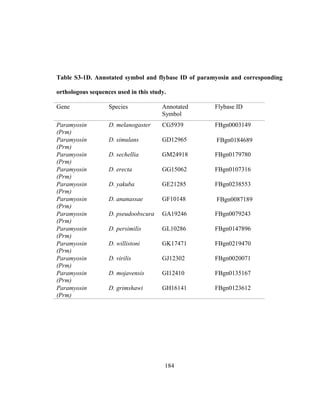
Paramyosin is one of them, which forms the wall of the hollow core of the thick filament
around which myosin molecules assemble [73,74], and it is required for normal muscle
26
development and contractile function [75]. A spliced variant of it, miniparamyosin is
suggested to maintain the pre-positioning of myosin heads through an interaction with the
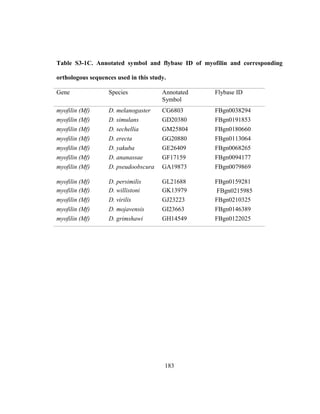
paramyosin scaffold [76]. Myofilin (20kDa) is another thick filament associated protein
which is proposed to play a role in thick filament assembly [77]. The IFM thick filament
contains a number of structural components that are likely to contribute to the stretch
activation property [78], among which flightin and myosin regulatory light chain, have
been studied previously and are described in detail in the following sections. In addition
to the structural elements, the IFM thick filament and also thin filaments have a net
negative electrostatic charge which has been known to influence myofilament lattice
spacing and organization during myofibrillogenesis [79]. Moreover, along with the
myosin’s contractile function, the thick filament’s mechanical properties, in particular
stiffness, could play a significant role in contractility (reviewed in [65]). The mechanical
properties of the filaments may influence how they align during myofibrillogenesis, and
whether the resulting structure of the myofibril is a simple lattice or a superlattice [80].
Therefore, thick filament structural and mechanical properties play a significant role in
overall muscle structure and contractile function.
Flightin
Gene Structure and Expression
Drosophila melanogaster flightin is a ~ 20kDa protein expressed exclusively in
the adult IFM, as evidenced by its onset of expression from late pupal stages [81,82].
27
Flightin is encoded by a single gene located in the polytene region 76 D/E of the 3rd
chromosome [82]. The first intron of the gene separates a small exon from the open
reading frame and two small introns (66 bp and 62 bp) interrupt the coding region. There
are two transcripts that originate due to alternative start sites that differ in their 5' non-
coding region [82]. Alternative expression patterns of flightin are seen at the post-
translational level with multiple isoelectric variants generated by differential
phosphorylations [83]. By performing LC-MSMS, a cluster of seven phosphorylation
sites were found in the flightin amino terminal region (Vigoreaux JO and Ballif BA
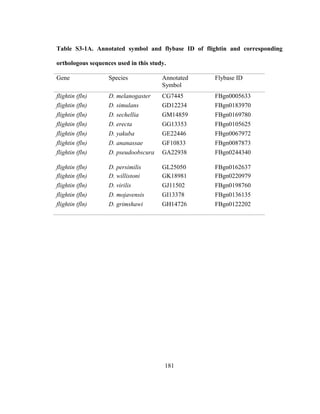
unpublished data). The flightin gene from some insects, including the twelve sequenced
Drosophila species (see Chapter 3), and some crustaceans reveal that the gene structure is
similar among these species, with the middle coding region having highest sequence
conservation. This conserved middle region is named WYR based on the most prevalent
conserved amino acids present (Tryptophan, W; Tyrosine, Y; Arginine, R) (unpublished
results [Soto-Adams F, Alvarez P, and Vigoreaux JO]).
Sequence Features
Flightin bears no sequence homology to any known protein or protein domains,
and its presence is restricted to some arthropods (unpublished results [Soto-Adams F,
Vigoreaux JO]). Although arthropods are a big group consisting of chelicerates,
myriapods, crustaceans, and hexapods, flightin’s absence in other phyla including
vertebrates could possibly designate it to be a taxonomically restricted gene. Fulfilling
the criteria of unique sequence and taxonomically restricted expression could possibly
28
assign flightin as a taxonomically restricted or an orphan gene with no known ancestral or
related gene sequence as mentioned in [84].
There are interesting features in the flightin amino acid sequence that could be
relevant to its function in Drosophila IFM. The N-terminal one-third of the protein is
composed mostly of acidic residues whereas the rest of the sequence is composed mostly
of basic residues possibly indicating that the N-terminal region could have a distinct
function.
Relationship to IFM Mechanical and Structural Properties
Flightin is a hyper-phosphorylated protein that binds to the light meromyosin
(LMM) region of the myosin rod [83,85]. It is distributed homogeneously throughout the
A-band of the sarcomere except at the M-line and the edge of the A/I junction [86].
Flightin is known to be essential for thick filament assembly, sarcomere stability, and
normal contractile activity of Drosophila IFM [7,83,85-88]. Drosophila with a null
mutation in the flightin gene (fln0
), are viable but flightless due to age-dependent
degeneration of their flight musculature and adult muscle hypercontraction [86]. fln0
IFM
thick filaments and sarcomeres from late stage pupa are, on average, ~30% longer than
that in wild-type IFM [86] suggesting that flightin plays a major role in thick filament
assembly during myofibrillogenesis. Also, fln0
thick filaments are about 30-45% more
compliant than normal [89] suggesting that flightin is required for normal thick filament
stiffness. However, it is not clear how flightin’s contribution to thick filament stiffness is
related to its role in thick filament assembly process in vivo. As described in [90], one
29
likely possibility is that flightin binding to the LMM of an inner myosin molecule in the
subfilament interacts with the S2 hinge region of a neighboring outer myosin reinforcing
or “welding” them laterally giving stability and normal stiffness to the thick filament (see
Figure 5-1 of Chapter 5). Moreover, more recent studies suggest that flightin binding
restricts myosin molecule incorporation / dissociation during the assembly process [91],
as originally proposed [86]. It is still not clear though how flightin i) stiffens the thick
filament and also ii) maintains normal myosin incorporation during thick filament
assembly. It is also not known if there is any relationship between these two functions of
flightin at the molecular level. One hypothesis is that by laterally reinforcing adjacent
myosin molecules in a subfilament, flightin stiffens the thick filament, which in turn
stabilizes the thick filament by resisting abnormal myosin incorporation or dissociation
leading to normal thick filament assembly. fln0
sarcomeres are structurally compromised,
since its fibers are unable to withstand contractile forces, resulting in sarcomere breakage
and fiber hypercontraction [86,92]. These structural and functional abnormalities in fln0
are fully rescued with the introduction of a full length normal fln+
transgene [88]. Overall,
the results show that flightin is an important protein for Drosophila IFM structure and
function.
Muscle mechanical studies using small amplitude sinusoidal length perturbation
analysis of skinned IFM fibers from three flightless mutants that affect flightin
expression: (i) fln0
, a flightin null mutant [86] (ii) Mhc13
, a myosin rod point mutant with
reduced levels of flightin and (iii) Mhc6
, a second myosin rod point mutant with reduced
30
levels of phosphorylated flightin [93], revealed that normal expression levels and
phophorylation of flightin is required for IFM stretch activation response. IFM fibers
from all three mutants showed marked reductions in passive and dynamic viscoelastic
properties that resulted in significant lower oscillatory work and power output. Passive
tension and passive stiffness, important pre-requisites for stretch activation, were
significantly reduced in fln0
and Mhc13
but not in Mhc6
. Interestingly, fln0
fibers could
generate normal calcium activated tension under isometric conditions, suggesting that
calcium activation of thin filament regulatory components and number of cross-bridge
recruitment for force production was unaltered due to the absence of flightin. However,
when subjected to sinusoidal length perturbations, the fln0
fibers absorbed work instead
of producing, resulting in no net positive work output, rendering the flies unable to beat
their wings for flight. Since flightin’s absence has no effect on isometric tension indicate
the mutant fibers are capable of producing and transmitting normal level of force in
isometric conditions only. Therefore, the reduced oscialltory work and power output
could possibly arise due to defects in force production or transmission by the heads in
small amplitude length perturbation conditions (non-isometric conditions). This possibly
could arise due to the ultrastructural abnormalities in the absence of flightin. From these
studies, it was concluded that flightin is a major contributor to myofilament stiffness, and
to the in vivo stretch activation response for oscillatory power output in Drosophila IFM
[7].
31
More recently, truncation of the 44 amino acids from the flightin COOH-terminus
(flnC44
) abolished flight even with some partial rescue in IFM structural and mechanical
properties, compared to that in complete absence of flightin [94]. flnC44
IFM fibers
generated significantly reduced oscillatory work and power output with reduced
underlying cross-bridge kinetics compared to fln+
rescued control null fibers. This
suggested that the partial rescue in flnC44
sarcomere structure was not sufficient enough
for myofibrillar stability and normal contractile kinetics. Since flnC44
IFM sarcomeric
structure is not normal enough for flight, the marked reduction in cross-bridge kinetics
could be due to the sarcomeric structural aberrations like abnormalities in M- and Z-lines,
and A-band breaks. Moreover, adult flnC44
myofilament lattice is highly disordered [94],
indicating that the COOH-terminal region is required for normal lattice organization.
From this study, it can be concluded that flightin COOH-terminal region is required for
IFM’s sarcomeric and myofibrillar structural stability, that in turn, is required for normal
cross-bridge behavior during oscillatory contractions.
Relationship to Myofilament Lattice Stability
The mutational studies discussed above do indicate that flightin is an important
structural component of the IFM thick filaments contributing to the overall myofilament
and sarcomeric stability, which gets portrayed in the whole fiber mechanical behavior
[86,89,94]. These studies also indicate that flightin is essential for proper IFM
development and function. Previously it was observed that phosphorylation patterns of
32
flightin get affected by unlinked mutations in either thick or thin filaments [95]. This
shows that flightin expression pattern is sensitive to either thick or thin filament
mutations suggesting that it could play a role in inter-filament interactions. Drosophila
heterozygous for a genetic deficiency spanning the flightin gene, Df(3L)fln1
, show a 20%
reduction in flightin expression which impairs flight ability and causes slight defects in
the myofibrillar structure [87]. These myofibrils have an intact normal central core, but
the peripheral myofilaments are loosely organized. These loose myofilaments get washed
away on treatment with non-ionic detergent suggesting that they were not optimally
connected to the core lattice [87]. This finding suggests that flightin is essential for
maintaining the overall myofilament lattice integrity, either by inter-filament interaction,
or by stabilizing the thick filaments. Moreover, as discussed above, flightin COOH-
terminal region is shown to be required for normal lattice order as evidenced by X-ray
diffraction on live flnC44
flies. Electron microscopy revealed that flnC44
myofibrils have
frequent breaks in the lattice and are less regular in shape than normal. All of these
indicate that flightin contributes to maintaining normal myofilament lattice order and
stability.
Myosin Light Chain 2
Gene Structure and Expression
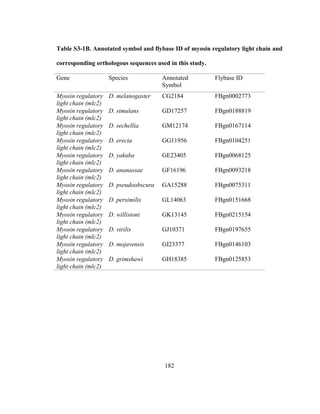
The Drosophila myosin regulatory light chain (DMLC2) is encoded by a single
gene (Dmlc2) located in the region 99E1-3 on the chromosome 3 right arm. Two
33
transcripts differing in polyadenylation sites are encoded by the gene, both of which code
for a ~ 20kDa protein. The DMLC2 is homologous to vertebrate MLC2s [11], except that
the DMLC2 has an additional 46 amino acid N-terminal extension. This extension is
characterized by a stretch of basic amino acids towards the N-terminus followed by a
proline-alanine rich sequence, similar to the extension found in vertebrate MLC1.
Moreover, this unique N-terminal extension pushes the myosin light chain kinase
phophorylation sites (2 Serines) to residue 66 and 67 in DMLC2 compared to residues 18
and 19 for vertebrate smooth muscle and residues 11 and 12 for vertebrate skeletal
muscle, respectively. Comparison of DMLC2 with vertebrate MLC2s revealed three
conserved regions [11]. This comparison confirmed DMLC2 as a member of the troponin
C super family [96] due to the presence of an EF-hand calcium binding motif surrounding
residue 80.
Molecular Function in IFM
There has been a substantial amount of work done to understand the function of
the unique N-terminal extension and the conserved phosphorylation sites (Serines 66 and
67). Mutations of the DMLC2 are known to have a large effect on stretch activation
response, myosin kinetics and flight performance [12], but have no major effect on
calcium activation response of muscle fibers [97-99]. Two such mutations in the
DMLC2, have been extensively characterized for their roles in IFM structure, cross-
bridge kinetics, stretch activation response and power output for maximal wing flapping
34
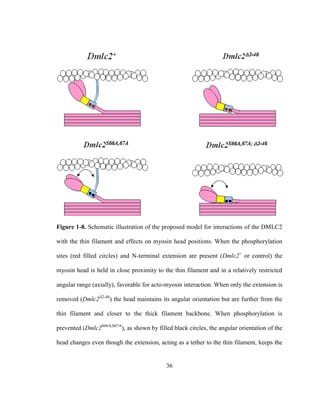
frequency and flight performance [12,97-101]. X-ray diffraction of IFM in living
Drosophila at rest and electron microscopic studies showed that truncation of the 46
amino acids N-terminal extension (Dmlc22-46
or Ext) move the myosin heads towards
the thick filament backbone away from their actin target zones [101] as evidenced by an
increase in myosin mass associated with thick filaments (Figure 1-8). These studies also
showed that alanine substitutions of the two myosin light chain kinase phosphorylation
sites (Dmlc2S66A,S67A
or Phos) increased the spread of the axial distribution of the myosin
heads along the thick filament indicating that the heads are less oriented towards the actin
target and are spread at larger angles (Figure 1-8). Moreover, in a dual mutant Drosophila
having both the above single mutations (Dmlc22-46;S66A,67A
or Dual), the results are
additive with the myosin heads moving further away and less oriented towards the actin
target zones compared to the single mutations [101] (Figure 1-8). This indicated that both
the N-terminal extension and the normal DMLC2 phosphorylation are required to pre-
position (alignment and orientation) the myosin heads towards actin target zone to
increase their probability of strong binding. Small amplitude length perturbations of
skinned IFM fibers by sinusoidal analysis revealed that all the mutations attenuated the
stretch activation response [12], concomitant with the structural data with myosin heads
moving away from and/or less oriented towards actin target zones. The Phos and the Ext
mutants do not show any major IFM structural abnormality [12,97,99] suggesting that the
myosin positional and contractile defects to be direct effect of the mutations, and not due
to other structural damage. However, the Dual mutant showed slight but significant
35
peripheral myofibril defects [101]. The movement of the myosin heads away from the
thin filament and towards the thick filament backbone [101] reduced cross-bridge
kinetics in the mutants leading to decreased number of strongly bound cross-bridges.
This, in turn, significantly attenuated muscle fiber oscillatory work and power output
[80]. These structural and mechanical effects were reflected in the whole fly where the
Ext mutant was flight impaired and the Phos mutant was almost flightless with large
reductions in wing beat frequency compared to control flies [12]. In accord with the
structural and mechanical data, the Dual mutant showed an additive effect of the single
mutations, with the flies completely unable to beat their wings for flight. This indicated
further that both the DMLC2 N-terminal extension and the phoshorylation sites are
required for stretch activation response of the IFM to maximize power output for
fulfilling flight requirements. The findings led to a proposed model for stretch activation.
Given the similarity with the vertebrate MLC1 N-terminal extension [102,103], the
DMLC2 N-terminal extension could act as a short tether to the thin filament [97] as has
been shown for vertebrate MLC1. Upon stretch, this tether could bring the myosin heads
in close proximity to their actin target zones. Additionally, structural data from X-ray
diffraction of live flies suggested that the DMLC2 phosphorylations could stiffen the
myosin head so as to orient it optimally towards actin target [101]. It was suggested that
these two effects thereby could additively cause delayed activation by increasing the
number of strongly bound active cross-bridges.
36
Figure 1-8. Schematic illustration of the proposed model for interactions of the DMLC2
with the thin filament and effects on myosin head positions. When the phosphorylation
sites (red filled circles) and N-terminal extension are present (Dmlc2+
or control) the
myosin head is held in close proximity to the thin filament and in a relatively restricted
angular range (axially), favorable for acto-myosin interaction. When only the extension is
removed (Dmlc2Δ2-46
) the head maintains its angular orientation but are further from the
thin filament and closer to the thick filament backbone. When phosphorylation is
prevented (Dmlc2S66A,S67A
), as shown by filled black circles, the angular orientation of the
head changes even though the extension, acting as a tether to the thin filament, keeps the
37
head in close proximity to the thin filament. When both phosphorylation and the
extension are removed in the dual mutant (Dmlc2Δ2-46;S66A,S67A
), the range of myosin head
angular movements increases and proximity to the thin filament decreases, so that acto-
myosin interaction is decreased. (Picture modified from [101]).
Drosophila Male Courtship Song
Survival and reproduction are two of the major goals of living organisms. As
discussed above, insect flight is subject to purifying natural selection since it increased
the survival fitness of the insects that led to their speciation and diversification [104].
Yet, the stronger force is regarded to be sexual selection which drives speciation stronger
and at a faster time scale than natural selection due to its direct effect in reproductive
isolation (inter-specific sexual selection), and then subsequent selection pressure within
species (intra-specific sexual selection) (reviewed in [105]). Among the different sexually
selected traits and behaviors, courtship behaviors (pre-copulatory behaviors) are one of
the major factors for pre-mating isolation, con-specific mating and subsequent speciation.
Moreover, courtship behaviors arising due to intra-specific sexual selection through
female mate choice and male-male competition could drive intra-specific diversity and
subsequence emergence of varieties of strains that could be geographically isolated [105].
Drosophila spp. is not an exception, where depending on species, both sexes engage in
elaborate courtship rituals with most of the behavioral aspects having evolutionary
implications (reviewed in [106,107]). Among sexually selected courtship behaviors in
38
nature, acoustic communication or courtship song is one of the major ones among
different species, including frogs, birds or insects (reviewed in [108]). Males of most
Drosophila species also generate a courtship song for species recognition and con-
specific mating as well as female stimulation [106]. This trait of courtship song is highly
species-specific and has been shown to be used for both species recognition (inter-
specific sexual selection) and female male choice (intra-specific sexual selection)
facilitating Drosophila speciation (reviewed in [106,107]). Drosophila male courtship
song is an important part of a structured courtship ritual. For example, D. melanogaster
males (Figure 1-9) engage in sequential steps of courtship ritual which includes: the male
chasing the female and orienting towards her, then tapping with the foreleg, followed by
courtship singing by unilateral wing extension, licking, and curling the abdomen to
attempt copulation. Finally the receptive female generally spreads its two wings to allow
the male to mount and copulate, the final outcome of a successful courtship.
As mentioned before, Drosophila male courtship song is species-specific with
great variability. For example, in some Drosophila lineages like willistoni species group,
there is higher courtship song type and number variability than in some others like
melanogaster and virilis species groups [106]. The diversity in male courtship song
among Drosophila is such that it is difficult to find any particular song parameter
variation to be indicative of any pattern across lineages [106,109]. The D. melanogaster
male courtship song consists of rhythmic pulses called pulse song, and sinusoidal hums
called sine song (details of song types and parameters reviewed in [110], see Figure 2-1
39
of Chapter 2). These songs are generated by small amplitude wing vibrations using the
thoracic musculature (reviewed in [26]). Each Drosophila species within the
melanogaster subgroup have unique song characteristics including varying carrier
frequencies and temporal patterns of the song waveforms [111]. This variability in song
characteristics, in particular, facilitates con-specific (same species) mating, reproductive
isolation and female sexual stimulation. For example, the interpulse interval (IPI) of the
pulse song is highly variable and carries the most salient species-specific signal
throughout Drosophila, specifically in the melanogaster subgroup [112] facilitating pre-
mating isolation and con-specific mating. Other parameters like pulse singing vigor and
sine song frequency is known to stimulate D. melanogaster females [113] implicated in
mate choice. Recently, it has been shown that male’s choice of the courtship song
structure depends on the proximity of the female to the male [114]. This study showed
that the courting males dynamically adjust the relative proportions of the song
components, pulse song or sine song, by assessing female locomotion and position. In
particular, the male sings more pulses than sines when females are moving fast or further
away, possibly to communicate con-specific signals. The male shifts to a singing mode of
equal proportions of pulse song and sine song as the female moves closer. This indicates
possibly that the pulse song evolved as a species-recognition system in Drosophila
whereas sine song has a more stimulatory role. Pulse song is present in all singing species
of Drosophila whereas sine song is mostly restricted to the melanogaster subgroup
40
(reviewed in [110]). Ubiquitous presence of pulse song supports the statement above that
pulse song could be critical for con-specific mating and inter-specific sexual selection.
Many genes have been shown to be influencing courtship song (reviewed in [115-
117]), among which some are highly variable and shown to be under positive selection
with fast evolutionary rates across Drosophila (nonA gene: [118,119]; period gene:
[120,121]). This is not surprising, since most fast evolving genes in Drosophila are
involved in adaptive functions like reproduction (pre-mating or post-mating) that should
be under sexual selection [122-124]. Moreover, it is also known that Drosophila genes
that are involved in speciation process by acting in reproductive isolation under sexual
selection are typically very rapidly evolving (reviewed in [125]).
41
Figure 1-9. Courtship ritual of Drosophila melanogaster. A male chases the female and
then orient himself towards her (a), then taps with its foreleg to transfer male pheromones
(b). This is followed by small amplitude single wing vibration for generating courtship
song to stimulate the females (c) followed by licking the female genitalia with its
proboscis (d) for further stimulation. Then the male tries to copulate by curling its
abdomen (e). Thereafter, if the female is responsive to the male’s trial, it spreads both
wings to allow the male to mount and copulate. (Figure taken from [116])
42
Role of Flight Musculature in Courtship Song
Along with the emergence of wings, the flight muscles are obviously the other
major innovation for flight to evolve and hence this tissue system requires specializations
for high power output. Interestingly, in nature, the same flight muscle system is
commonly used for different functions with specific requirements other than flight by
many insects, some of which require much less power and potentially different
mechanisms. For example, the honeybee antagonistic flight muscles contract
simultaneously for warmup behavior and alternately for flight [126], whereas different
firing patterns from same motor neurons can cause stridulations or flight in crickets
[127]. Drosophila flight musculature (both IFM and DFM) also gets neurally activated
during both pulse and sine courtship song generation [27,28] as evidenced by electrical
recordings. However, the contractile mechanism utilized and the contributions of the
different muscle types or genes to courtship song production are not known. Ewing [27]
showed that muscle potentials in the IFM during pulse song are related to subsequent and
not the preceding sound pulses. IFM gets stimulated at a much lower frequency during
sine song compared to flight or pulse song, with some motor units in the thorax
remaining inactive. In vivo power output during wing vibrations for courtship song has
not been measured yet, as has been done in flight [49]. Given, the lower frequency and
amplitude of wing beats, and slower neuronal firing rate during sine sing compared to
that of flight or pulse song, it is possible that sine song production probably does not
require much power. Ewing [28] also recorded muscle potentials in the DFM during both
43
pulse and sine song. In this study, electrophysiological recordings revealed that the motor
units of axillary muscles fire during the interpulse interval in the pulse song. Also, it was
found that the basalar muscles fire almost synchronously with each up-stroke wing
movements during both pulse and sine song, similar to that shown in flight, and that the
sternobasalar muscles’ motorunits also fire on each up-stroke but only during pulse song
and not sine song.
Even though the DFM is activated during singing, it is less likely that it could be
the major power generator for wing movements for this behavior. This could be because
it has been previously shown that the control DFM muscles act as springs, rather than
force producing elements. In fact, some of the DFM muscle like the b1 basalar muscle
has been shown to produce net negative work during its contraction [22], although this
study was on blowfly Calliphora, not Drosophila. The b1 basalar muscle along with the
sternobasalar (SB) muscles has been shown to be continuously neurally activated during
Drosophila flight with a frequency equal to or slightly below one spike per wing beat
cycle [128], with the SB muscles having lower activity. But, during courtship song, not
all DFMs are active; with the SB muscles completely inactive during the sine song.
Whereas, all the IFM motor units are active during Drosophila courtship song [27].
Therefore, relatively speaking, it could be possible that DFM is not the major power
generator during singing. Most likely, the major contractile unit for courtship song is the
IFM.
44
Therefore, studies spanning several decades examining a large number of IFM
mutant and transgenic strains present a golden opportunity for elucidating the role of the
IFM in courtship song and, importantly, for establishing the extent to which genetic and
physiological pathways are shared between these two distinct behaviors.
This thesis is the first attempt to understand the role of muscle genes in courtship
song and to understand the relationship of flight and song in the Drosophila IFM.
Therefore, to introduce this novel research aspect to the Drosophila muscle community,
detailed courtship song and behavioral analyses methodology is described in Chapter 2.
Chapter 3 describes the function of flightin, specifically its N-terminal region in IFM
structure, mechanics and behavioral outputs. Chapter 4 describes the effects of myosin
regulatory light chain mutations on Drosophila courtship song behavior and compared to
their effects on flight. Chapter 5 concludes this thesis with the major findings from
previous chapters, interpretations, broader perspectives, and future goals of this work.
45
REFERENCES
1. Wang Q, Zhao C, Swank D M (2011) Calcium and stretch activation modulate power
generation in Drosophila flight muscle. Biophys. J. 101:2207-13.
2. Swank DM, Vishnudas VK, Maughan DW (2006) An exceptionally fast actomyosin
reaction powers insect flight muscle. Proc Natl Acad Sci USA 103(46):17543-7.
3. Iwamoto H, Inoue K, Matsuo T, Yagi N (2007) Flight muscle myofibrillogenesis in
the pupal stage of Drosophila as examined by X-ray microdiffraction and
conventional diffraction. Proc Biol Sci 274(1623):2297-305.
4. Iwamoto H, Inoue K, Yagi, N (2006) Evolution of long-range myofibrillar
crystallinity in insect flight muscle as examined by X-ray cryomicrodiffraction. Proc
Biol Sci 273:677-685.
5. Moore JR (2006) Stretch activation: Toward a molecular mechanism. in Nature's
versatile engine: Insect flight muscle inside and out, J.O. Vigoreaux, Editor.
Springer/Landes Bioscience: New York. p. 44-60.
6. Contompasis JL, Nyland LR, Maughan DW, Vigoreaux JO (2010) Flightin is
necessary for length determination, structural integrity, and large bending stiffness of
insect flight muscle thick filaments. J Mol Biol 395(2):340-8.
7. Henkin JA, Maughan DW and Vigoreaux JO (2004) Mutations that affect flightin
expression in Drosophila alter the viscoelastic properties of flight muscle fibers. Am J
Physiol Cell Physiol 286:C65-C72.
8. Winegrad S (1999) Cardiac myosin binding protein C. Circ Res 84:1117–1126.
46
9. Oakley CE, Chamoun J, Brown LJ, Hambly BD (2007) Myosin binding protein-C:
enigmatic regulator of cardiac contraction. Int J Biochem Cell Biol 39:2161–2166.
10. McClellan G, Kulikovskaya I, Flavigny J, Carrier L, Winegrad S (2004) Effect of
cardiac myosin-binding protein C on stability of the thick filament. J. Mol. Cell.
Cardiol. 37:823–835.
11. Parker VP, Falkenthal S, Davidson N (1985) Characterization of the myosin light-
chain-2 gene of Drosophila melanogaster. Mol Cell Biol 5:3058-68.
12. Miller MS, Farman GP, Braddock JM, Soto-Adames FN, Irving TC, Vigoreaux JO,
Maughan DW (2011) Regulatory light chain phosphorylation and N-terminal
extension increase cross-bridge binding and power output in Drosophila at in vivo
myofilament lattice spacing. Biophys J. 100(7):1737-46.
13. Bullard B, Leonard K, Larkins A, Butcher G, Karlik C, Fyrberg E (1988) Troponin of
asynchronous flight muscle. J Mol Biol 204:621-37.
14. Kreuz AJ, Simcox A, Maughan D (1996) Alterations in flight muscle ultrastructure
and fucntion in Drosophila tropomyosin mutants. J Cell Biol 135:673-87.
15. Mateos J, Herranz R, Domingo A, Sparrow J, Marco R (2006) The structural role of
high molecular weight tropomyosins in dipteran indirect flight muscle and the effect
of phosphorylation. J Muscle Res Cell Motil 27:189-201.
16. Bernstein SI, O'Donnell PT, Cripps RM. (1993) Molecular genetic analysis of muscle
development, structure and function in Drosophila. Int Rev Cytol 143:63-152.
47
17. Maughan DW, Vigoreaux JO. (1999) An integrated view of insect flight muscle:
Genes, motor molecules, and motion. News Physiol Sci 14:87-92.
18. Dickinson MH, Farley CT, Full RJ, Koehl MA, Kram R, Lehman S. (2000) How
animals move: an integrative view. Science 288:100-106.
19. Vigoreaux JO (2001) Genetics of the Drosophila flight muscle myofibril: a window
into the biology of complex systems. Bioessays 23(11): 1047-63.
20. Rubin GM, Lewis EV (2000) A brief history of Drosophila’s contributions to genome
research. Science 287 (5461): 2216-18.
21. Orfanos Z. (2008) Transgenic tools for Drosophila muscle research. J Muscle Res
Cell Motil. 29(6-8):185-8.
22. Tu MS, Dickinson MH (1994) Modulation of negative work out from a steering
muscle of the blowfly Calliphora vicina. J Exp Biol 192:207-224.
23. Josephson RK, Malamud JG, Stokes DR (2000) Asynchronous muscle: a primer. J
Exp Biol 203(Pt 18): p. 2713-22.
24. Gordon, A. M., E. Homsher and M. Regnier. (2000). Regulation of contraction in
striated muscle. Physiol. Rev. 80:853-924.
25. Redwood CS, Moolman-Smook JC, Watkins H (1999) Properties of mutant
contractile proteins that cause hypertrophic cardiomyopathy. Cardiovasc Res
44(1):20-36.
26. Hall JC (1994) The mating of a fly. Science 264(5166):1702-14.
48
27. Ewing AW (1977) The Neuromuscular Basis of Courtship Song in Drosophila: The
Role of the Indirect Flight Muscles. J. Comp. Physiol. 119, 249-265.
28. Ewing AW. (1979) Neuromuscular basis of courtship song in Drosophila: the role of
the direct and axillary wing muscles. Journal of Comparative Physiology. 130:87–93.
29. Bennet-Clark HC, Ewing AW (1968) The wing mechanism involved in the courtship
of Drosophila. J. Exp. Biol. 49: 117-128.
30. Erwin, Terry L (1982) Tropical forests: their richness in Coleoptera and other
arthropod species. Coleopt. Bull 36: 74–75.
31. Chapman AD (2006) Numbers of living species in Australia and the World.
Canberra: Australian Biological Resources Study. pp. 60pp.
32. Dudley R, Byrnes G, Yanoviak SP, Borrell B, Brown RM, McGuire JA (2007)
Gliding and the functional origin of flight: biomechanical novelty or necessity? Annu
Rev Ecol Syst 38:179-201.
33. Engel MS, Grimaldi DA (2004) New Light shed on the oldest insect. Nature 427:627-
30.
34. Grimaldi D and Engel MS (2005) Insects take to the skies. In: Evolution of the insects
Cambridge University Press pp:155-87.
35. Marden JH (1989) Bodybuilding dragonflies: Costs and benefits of maximizing flight
muscle. Physiol Zool 62:505-521.
36. Kukalova-Peck J (1978) Origin and evolution of insect wings and their relation to
metamorphosis, as documented by the fossil records. J Morphol 156:53-126.
49
37. Ellington CP (1991) Aerodynamics and the origin of insect flight. Adv Insect Physiol
23:171-210.
38. Hasenfuss I (2002) A possible evolutionary pathway to insect flight starting from
lepismatid organization. J Zool Syst Evol Research 40:65-81.
39. Averof M, Cohen SM (1997) Evolutionary origin of insect wings from ancestral gills.
Nature 385(6617):627-30.
40. Marden JH, Kramer MG (1994) Surface-skimming stoneflies: a possible intermediate
stage in insect flight evolution Science 266:427-430.
41. Marden JH, Kramer MG (1995) Locomotor performance of insects with rudimentary
wings. Nature 377:332-334.
42. Chai P, Srygley RB (1989) Predation and the flight morphology and the temperature
of neotropical butterflies. Am Natur 135:748-765.
43. Josephson, R.K., (2006) Comparative physiology of insect flight muscle, in Nature's
versatile engine: Insect flight muscle inside and out, J.O. Vigoreaux, Editor.
Springer/Landes Bioscience: New York. p. 34-43.
44. Pringle, J.W.S., (1978) Stretch activation of muscle: function and mechanism. Proc.
R. Soc. Lond. B. 201: p. 107-130.
45. Cullen, M.J., (1974) The distribution of asynchronous muscle in insects with special
reference to the Hemiptera: an electron microscope study. J. Ent. 49A: p. 17-41.
46. Smith, D.S., (1984) The structure of insect muscles, in Insect ultrastructure, R.C.
King and H. Akai, Editors. Academic Press: New York. p. 111-150.
50
47. Dudley, R., (2000) The biomechanics of insect flight. Princeton: Princeton University
Press.
48. Snodgrass RE (1935) Principles of Insect Morphology. New York: McGraw-Hill
Book Co.
49. Lehmann, F.-O. & Dickinson, M. H. (1997) The changes in power requirements and
muscle efficiency during elevated force production in the fruit fly, Drosophila
melanogaster. J. Exp. Biol. 200:1133-1143.
50. Beenakkers AMT (1984) Insect flight metabolism. Insect Biochem 14:243-260.
51. Dickinson, M. H., Tu, M. S. (1997) The function of Dipteran flight muscle. Comp.
Biochem. Physiol. A 116A:223-238.
52. Dickinson, M. H., Lehmann, F.-O., Sane, S. (1999) Wing rotation and the
aerodynamic basis of insect flight. Science 284:1954-1960.
53. Wolf H (1990) On the function of a locust flight steering muscle and its inhibitory
innervations. J Exp Biol 150:55-80.
54. Allen MJ, Godenschwege TA. (2006) Making an escape: development and function
of the Drosophila giant fibre system. Semin Cell Dev Biol. 17:31–41.
55. Ashhurst DE, Cullen MJ (1977) The structure of fibrillar flight muscle. In Insect
Flight Muscle. Tregear RT editor. Elsevier north Holland Biomedical Press,
Amsterdam. pp:9-15.
56. Vigoreaux, J. O. (1994) The muscle Z band: Lessons in stress management. J. Muscle
Res. Cell Motil. 15, 237-255.
51
57. Heuser JE. (1983) Structure of the myosin crossbridge lattice in insect flight muscle.
J. Mol. Biol. 169: 123–154.
58. Reedy, M. K. (1968) Ultrastructure of insect flight muscle. I. Screw sense and
structural grouping in the rigor cross-bridge lattice. J. Mol. Biol. 31: 155–176, 1968.
59. Irving TC (2006) X-ray diffraction of indirect flight muscle from Drosophila in vivo.
in Nature's versatile engine: Insect flight muscle inside and out, J.O. Vigoreaux,
Editor. Springer/Landes Bioscience: New York. p. 197-213.
60. Dickinson MH, Lehmann FO, Chan WP (1998) The control of mechanical power in
insect flight. Am Zool 38:718-728.
61. Iwamoto H, Nishikawa Y, Wakayama J, Fujisawa T (2002) Direct X-ray observation
of a single hexagonal myofilament lattice in native myofibrils of striated muscle.
Biophys J 83:1074-1081.
62. Tanner, B.C., Daniel, T.L., Regnier, M. (2007) Sarcomere lattice geometry influences
cooperative myosin binding in muscle. PLoS Comput Biol, 3(7): p. e115.
63. Linari M, Reedy MK, Reedy MC, Lombardi V, Piazzesi G (2004) Ca-activation and
stretch-activation in insect flight muscle. Biophys J 87(2):1101-1111.
64. Perz-Edwards RT, Irving TC, Baumann BA, Hutchinson DC, Krzic U, Porter RL,
Ward AB, Reedy MK (2011) X-ray diffraction evidence for myosin-troponin
connections and tropomyosin movement during stretch activation of insect flight
muscle. Proc Natl Acad Sci USA 108(1):120-5.
52
65. Miller MS, Tanner BCW, Nyland LR, Vigoreaux JO (2010) Comparative
biomechanics of thick filaments and thin filaments with functional consequences for
muscle contraction. J Biomed Biotechnol Article ID 473423 doi:
10.1155/2010/473423
66. Chan, W. P. & Dickinson, M. H. (1996) In vivo length oscillations of indirect flight
muscles in the fruit fly Drosophila virilis. J. Exp. Biol. 199, 2767-2774.
67. Agianian B, Krzic U, Qiu F, Linke WA, Leonard K, Bullard B (2004) A troponin
switch that regulates muscle contraction by stretch instead of calcium. Embo J
23:772-779.
68. Qiu F, Lakey A, Agianan B, Hutchings A, Butcher GW, Labeit S, Bullard B (2003)
Troponin C in different insect muscle types: identification of an isoform in
Lethocerus, Drosophila and Anopheles that is specific to asynchronous flight muscle
in the adult insect. Biochem J 371:811-821.
69. Machin, K. E., Pringle, J. W. S. (1960). The physiology of insect fibrillar muscle. III.
The effect of sinusoidal changes of length on a beetle flight muscle. Proc. R. Soc.
Lond. B 152, 311–330.
70. Gordon, S. & Dickinson, M. H. (2006) Role of calcium in the regulation of
mechanical power in insect flight. PNAS 103, 4311-4315.
71. Lehmann FO, Dimitri S, Berthe R (2013) Calcium signaling indicates bilateral power
balancing in the Drosophila flight muscle during maneuvering flight. J R Soc
Interface (in press).
53
72. Hooper SL, Hobbs KH, Thuma JB (2008) Prog Neurobiol 86(2):72-127.
73. Becker KD, O’Donnel PT, Heitz JM, Vito M, Bernstein SI (1992) Analysis of
Drosophila paramyosin: Identification of novel isoform which is restricted to a subset
of adult muscles. J Cell Biol 116:669-81.
74. Epstein HF, Miller DM 3rd
, Ortiz I, Berlinger GC (1985) Myosin and paramyosin are
organized about a newly identified core structure. J Cell Biol 100:904-915.
75. Liu H, Mardahl-Dumesnil M, Sweeney ST, O’Kane C, Bernstein SI (2003)
Drosophila paramyosin is important for myoblast fusion and essential for myofibril
formation. J Cell Biol 160:899-908.
76. Arredondo JJ, Mardahl-Dumesnil M, Cripps RM, Cervera M, Bernstein SI (2001)
Overexpression of miniparamyosin causes muscle dysfunction and age-dependent
myofibril degeneration in the indirect flight muscles of Drosophila melanogaster. J
Muscle Res Cell Motil 22:287-99.
77. Qiu F, Brendel S, Cunha PM, Astola N, Song B, Furlong FE, Leonard KR, Bullard B
(2005) Myofilin, a protein in the thick filaments of insect muscle. J Cell Sci
118:1527-36.
78. Maughan D, Vigoreaux J (2004) Nature's strategy for optimizing power generation in
insect flight muscle, in Mysteries about the sliding filament mechanism: Fifty years
after its proposal, H. Sugi, Editor. Plenum Press.
79. Millman BM (1998) The filament lattice of striated muscle. Physiol Review 78:359-
91.
54
80. Squire, J.M., Bekyarova, T., Farman, G., Gore, D., Rajkumar, G., Knupp, C.,
Lucaveche, C., Reedy, M.C., Reedy, M.K., Irving, T.C. (2006) The myosin filament
superlattice in the flight muscles of flies: A-band lattice optimisation for stretch-
activation? J Mol Biol, 361(5): 823-38.
81. Arbeitman MN, Furlong EE, Imam F, Johnson E, Null BH, Baker BS, Krasnow MA,
Scott MP, Davis RW, White KP (2002) Gene expression during the life cycle of
Drosophila melanogaster. Science 297:2270-5.
82. Vigoreaux JO, Saide JD, Valgeirsdottir K, Pardue ML (1993) Flightin, a novel
myofibrillar protein of Drosophila stretch-activated muscles. J Cell Biol 121:587-598.
83. Vigoreaux, J.O., Perry, LM (1994) Multiple isoelectric variants of flightin in
Drosophila stretch-activated muscles are generated by temporally regulated
phosphorylations. J. Muscle Res. Cell Motil., 15:607-616.
84. Domazet-Loso T, Diethard T (2003) An evolutionary analysis of orphan genes in
Drosophila. Genome Res. 13: 2213-2219.
85. Ayer G, Vigoreaux JO (2003) Flightin is a myosin rod binding protein. Cell Biochem
Biophys. 38(1):41-54.
86. Reedy MC, Bullard B, Vigoreaux JO (2000) Flightin is essential for thick filament
assembly and sarcomere stability in Drosophila flight muscles. J Cell Biol.
151(7):1483-500.
55
87. Vigoreaux, J.O., C. Hernandez, J. Moore, Ayer, G, Maughan D, (1998) A genetic
deficiency that spans the flightin gene of Drosophila melanogaster affects the
ultrastructure and function of the flight muscles. J. Exp. Biol., 201:2033-2044.
88. Barton, B., Ayer, G., Heymann, N., Maughan, D.W., Lehmann, F.O., Vigoreaux, J.O.
(2005) Flight muscle properties and aerodynamic performance of Drosophila
expressing a flightin transgene. J Exp Biol, 208(Pt 3):549-560.
89. Contompasis JL, Nyland LR, Maughan DW, Vigoreaux JO (2010) Flightin is
necessary for length determination, structural integrity, and large bending stiffness of
insect flight muscle thick filaments. J Mol Biol. 395(2):340-8.
90. Barton, B., Vigoreaux, J (2006) Novel myosin associated proteins, in Nature's
versatile engine: Insect flight muscle inside and out, J.O. Vigoreaux, Editor., Springer
/ Landes Bioscience: New York. p. 86-96.
91. Orfanos Z, Sparrow JC (2012) Myosin isoform switching during assembly of the
Drosophila flight muscle thick filament lattice. J Cell Sci. 2012 Nov 23. [Epub ahead
of print]
92. Nongthomba U, Cummins M, Clark S, Vigoreaux JO, Sparrow JC (2003)
Suppression of muscle hypercontraction by mutations in the myosin heavy chain gene
of Drosophila melanogaster. Genetics. 164(1):209-22.
93. Kronert WA, O'Donnell PT, Fieck A, Lawn A, Vigoreaux JO, Sparrow JC, Bernstein
SI (1995) Defects in the Drosophila myosin rod permit sarcomere assembly but cause
flight muscle degeneration. J Mol Biol. 249(1):111-25.
56
94. Tanner BC, Miller MS, Miller BM, Lekkas P, Irving TC, Maughan DW, Vigoreaux
JO (2011) COOH-terminal truncation of flightin decreases myofilament lattice
organization, cross-bridge binding, and power output in Drosophila indirect flight
muscle. Am J Physiol Cell Physiol. 301(2):C383-91.
95. Vigoreaux JO (1994) Alterations in flightin phosphorylation in Drosophila flight
muscles are associated with myofibrillar defects engendered by actin and myosin
heavy chain mutant alleles. Biochem Genet 32:301-14.
96. Collins JH (1991) Myosin light chains and troponin C: structural and evolutionary
relationships revealed by amino acid sequence comparisons. J Muscle Res Cell Motil
12:3-25.
97. Tohtong R, Yamashita H, Grahan M, Haeberle J, Simcox A, Maughan D (1995)
Impairment of muscle functions caused by mutations of phosphorylation sites in
myosin regulatory light chain. Nature 374:650-53.
98. Dickinson MH, Hyatt CJ, Lehmann F, Moore JR, Reedy MC, Simcox A, Tohtong R,
Vigoreaux JO, Yamashita H, Maughan DW (1997) Phosphorylation dependent power
output of transgenic flies: an integrated study. Biophys J 73:3122-34.
99. Moore, J.R., Dickinson, M.H., Vigoreaux, J.O., Maughan, D.W. (2000) The effect of
removing the N-terminal extension of the Drosophila myosin regulatory light chain
upon flight ability and the contractile dynamics of indirect flight muscle. Biophys. J.
78(3): 1431--1440.
57
100. Irving T, Bhattacharya S, Tesic I, Moore J, Farman G, Simcox A, Vigoreaux J,
Maughan D (2001) Changes in myofibrillar structure and function produced by N-
terminal deletion of the regulatory light chain in Drosophila. J Muscle Res Cell Motil.
22(8):675-83.
101. Farman GP, Miller MS, Reedy MC, Soto-Adames FN, Vigoreaux JO, Maughan
DW, Irving TC (2009) Phosphorylation and the N-terminal extension of the
regulatory light chain help orient and align the myosin heads in Drosophila flight
muscle. J Struct Biol. 168(2):240-9.
102. Sutoh K. (1982) Identification of myosin binding sites on the actin sequence.
Am.Chem.Soc. 21: 3654-61.
103. Trayer I. P., Trayer, H. R., Levine, B. A. (1987) Evidence that the N-terminal
region of A1-light chain of myosin interacts directly with the C-terminal region of
actin: A proton magnetic resonance study. Eur.J.Biochem. 164:259-66.
104. Darwin C. (1859) On the origin of species by means of natural selection
London, UK: John Murray.
105. Ritchie MG (2007) Sexual selection and speciation. Annu Rev Ecol Evol
Syst38:70-102.
106. Markow, T.A., O.Grady, P.M. (2005) Evolutionary genetics of reproductive
behavior in Drosophila. Annual Review of Genetics 39:263-291.
107. Greenspan RJ, Ferveur J-F (2000) Courtship in Drosophila. Annu Rev Genet
34:205-32.
58
108. Searcy WA, Andersson M (1986) Sexual selection and the evolution of song.
Annu Rev Ecol Syst 17:507-33.
109. Ewing A.W., Miyan, J.A. (1986) Sexual selection, sexual isolation and the
evolution of song in the Drosophila repleta group of species. Anim. Behav. 34: 421-
429.
110. Chakravorty, S., Wajda M.P., and Vigoreaux J.O., Courtship song analysis of
Drosophila muscle mutants. Methods, 2012. 56(1): p. 87-94.
111. Ritchie MG, Halsey EJ, Gleason JM (1999) Drosophila song as a species-
specific mating signal and the behavioral importance of Kyriacou & Hall cycles in D.
melanogaster song. Anim Behav 58(3):649-657.
112. Bennet-Clark H.C., Ewing, A.W. (1969) Pulse interval as a critical parameter in
the courtship song of Drosophila melanogaster. Anim. Behav. 17:755-759.
113. Talyn B.C., Dowse, H.B. (2004) The role of courtship song in sexual selection
and species recognition by female Drosophila melanogaster. Anim. Behav. 68:1165-
1180.
114. Trott AR, Doneslson NC, Griffith LC, Ejima A (2012) Song choice is
modulated by female movement in Drosophila males. PLoS ONE 7(9): e46025.
doi:10.1371/journal.pone.0046025.
115. Gleason, J. M. (2005) Mutations and natural genetic variation in the courtship
song of Drosophila. Behav Genet 35(3):265-77.
59
116. Sokolowski MB (2001) Drosophila: Genetics meets behaviour. Nature Review
Genetics 2:879-90.
117. Kyriacou CP (2002) Single gene mutations in Drosophila: what can they tell us
about the evolution of sexual behavior? Genetica 116(2-3):1547-56.
118. Campesan, S., Dubrova, Y, Hall JC, Kyriacou CP (2001) The nonA gene in
Drosophila conveys species-specific behavioral characteristics.Genetics 158(4):1535-
43.
119. Huttunen, S., J. Vieira, J, Hoikkala A (2002). Nucleotide and repeat length
variation at the nonA gene of the Drosophila virilis group species and its effects on
male courtship song. Genetica 115(2):159-67.
120. Wheeler, DA., Kyriacou, CP, Greenacre ML, Yu Q, Rutila JE, Rosbash M, Hall
JC (1991) Molecular transfer of a species-specific behavior from Drosophila simulans
to Drosophila melanogaster. Science 251(4997):1082-5.
121. Yu, Q., Colot, HV, Kyriacou, CP, Hall JC, Rosbash M (1987) Behaviour
modification by in vitro mutagenesis of a variable region within the period gene of
Drosophila. Nature 326(6115):765-9.
122. Swanson WJ, Wong A, Wolfner MF, Aquadro CF (2004) Evolutionary
expressed sequence tag analysis of Drosophila female reproductive tracts identifies
genes subjected to positive selection. Genetics 168(3):1457-65.
60
123. Jagadeeshan S, Singh RS (2005) Rapidly evolving genes of Drosophila:
differing levels of selective pressure in testis, ovary, and head tissues between sibling
species. Mol Biol Evol 22(9):1793-801.
124. Haerty W, Jagadeeshan S, Kulathinal RJ, et al. (11 co-authors) (2007) Evolution
in the fast lane: rapidly evolving sex-related genes in Drosophila. Genetics
177(3):1321-35.
125. Orr HA (2005) Genetic basis of reproductive isolation: insights from
Drosophila. Proc Natl Acad Sci 102:6522-26.
126. Heinrich, B. (1987). Thermoregulation by individual honeybees. In Menzel, R.,
and Mercer, A. (ed.), Neurobiology and Behavior of Honeybees, Springer-Verlag,
New York, pp. 102-111.
127. Mulloney, B. (1976). Control of flight and related behaviour by the central
nervous systems of insects. In Rainey, R. C. (ed.), Insect Flight, John Wiley & Sons,
New York, pp. 16-30.
128. Heide G and Gotz KG (1996) Optometer control of course and altitude of
Drosophila melanogaster is correlated with distinct activities of at least three pairs
flight steering muscles J Exp Biol 199:1711-26.
61
CHAPTER 2 JOURNAL ARTICLE
Courtship Song Analysis of Drosophila Muscle Mutants
Samya Chakravorty, Mathew P. Wajda and Jim O. Vigoreaux*
Department of Biology
The University of Vermont
* Corresponding author. Address:
Department of Biology,
University of Vermont,
120 Marsh Life Science Bldg,
109 Carrigan Drive, Burlington, VT 05405,
USA.
Fax: +1 802 656 2914.
E-mail address: jvigorea@uvm.edu (J.O. Vigoreaux).
Keywords: Acoustic communication, Courtship song analysis, Muscle mutants, Indirect
flight muscles, Drosophila, Myosin regulatory light chain
62
ABSTRACT
As part of the mating ritual, males of Drosophila species produce species-specific
courtship songs through wing vibrations generated by the thoracic musculature. While
previous studies have shown that indirect flight muscles (IFM) are neurally activated
during courtship song production, the precise role of these muscles in song production
has not been investigated. Fortunately, IFM mutants abound in Drosophila melanogaster
and studies spanning several decades have shed light on the role of muscle proteins in
IFM-powered flight. Analysis of courtship songs in these mutants offers the opportunity
to uncover the role of the IFM in a behavior distinct than flight and subject to different
evolutionary selection regimes. Here, we describe protocols for the recording and
analysis of courtship behavior and mating song of D. melanogaster muscle transgenic
and mutant strains. To record faint acoustic signal of courtship songs, an insulated mating
compartment was used inside a recording device (INSECTAVOX) equipped with a
modified electret microphone, a low-noise power supply, and noise filters. Songs
recorded in the INSECTAVOX are digitized using Goldwave, whose several features
enable extraction of critical song parameters, including carrier frequencies for pulse song
and sine song. We demonstrate the utility of this approach by showing that deletion of the
N-terminal region of the myosin regulatory light chain, a mutation known to decrease
wing beat frequency and flight power, affects courtship song parameters.
63
1. INTRODUCTION
Animals rely on acoustic communication to convey information about their
physiology, ecology, and behavior. Acoustic communication has evolved to provide
conspecific signals to prospective mates [1-3] and as mechanisms for premating
reproductive isolation and subsequent speciation [4]. Insects produce a variety of
acoustic signals, most notably the “mating song” that is a key component of the
courtship ritual in many species. For example, Drosophila males produce a courtship
song through wing vibrations, a behavior that is under sexual selection and plays a
major role in species recognition and speciation [5-12]. Thus, studies of the genes
involved and the mechanisms responsible for Drosophila male courtship song
production will uncover the molecular basis of sexual selection and speciation, and
provide information about the physiological basis of acoustic communication.
Electrical recording of the Drosophila melanogaster (D. melanogaster) indirect flight
muscles (IFM), the major power producing muscles for flight, revealed that these
muscles are neurally activated during the courtship song [13]. However, the precise role
of the IFM in courtship song production has not been examined. Additionally, many
genes that affect courtship song have been identified through mutational and
quantitative analyses [14, 15], but none of them are muscle protein genes.
Interestingly, none of the genes identified through classical genetic approaches are
among the candidates identified by quantitative genetic approaches [14]
suggesting that our understanding of the genetic basis of mating song is still in its
64
infancy.
The D. melanogaster IFM has been studied extensively for its role in flight and,
in general, as a model system for muscle function, development, and disease [for
reviews, see 16-21]. These studies, spanning several decades, have examined a large
number of IFM mutant and transgenic strains many of which have been analyzed in
great detail, from the molecular to the organismal level [20, 22, 23, and 24]. These
mutants thus present a golden opportunity for elucidating the role of the IFM in
courtship song and, importantly, for establishing the extent to which genetic and
physiological pathways are shared between the two distinct behaviors of flight and
courtship. As an example of this approach, we show here that deletion of the N-terminal
extension of the myosin regulatory light chain, a mutation that alters myosin
kinetics and impairs flight performance [25, 26], affects the courtship song.
D. melanogaster readily engages in courtship behavior and mating in
standard laboratory settings. Specialized instrumentation has been devised to capture
the acoustic signals generated by males during courtship [e.g. 27]. Here we describe
detailed methodology for setting up courtship assays that include recording the male
courtship song of D. melanogaster. We present an analysis of the spectra generated
from these recordings with an emphasis on identifying song parameters, including
frequencies that may reveal the contributions of muscle genes to this important
behavior.
65
D. melanogaster Male Courtship Song
Drosophila males produce a courtship song that is part of an elaborate, species-
specific mating ritual [28-30]. A sequence of behaviors that culminate in copulation has
been documented for D. melanogaster. A male that perceives the presence of a female
prospective mate (through visual and other cues) reacts by chasing and orienting itself
towards the female. This is followed by tapping the female with its foreleg, vibrating
one wing to produce a song (see below), licking of the female genitalia, and grabbing
the female body with its foreleg to attempt copulation. If the female is receptive, she
will spread both wings to allow the male to mount [30]. The acoustic signal produced
by the wing vibrations is critical for stimulating the female, and therefore, for courtship
success [9].
To produce the song, a D. melanogaster male extends one wing, normally the
one nearest to the female head, about 90o
to its body axes and generates small amplitude
vibrations [13, 28, and 29]. There are two types of songs, pulse song and sine song [Fig.
2-1; 28, 29, and 31]. The pulse song is characterized by a train of pulses [32], each of
which is a strongly modified tone consisting of one to three cycles [33] occurring at
intervals of about 35 ms [34, 35]. The amplitude of the pulse song is about twice as
high as that of the sine song [12]. The pulse song is characterized by several
components (Table 2-1 and Fig. 2-1), some which play a defining role in species
recognition and mating [28, 34, and 36]. For example, in D. melanogaster the
interpulse interval (IPI) is an important parameter in mate recognition [36]. The sine
66
song is characterized by a continuous sinusoidal hum with a fundamental carrier
frequency, along with presence of higher-order harmonics [37]. The duration of the sine
song burst, like its carrier frequency, is influenced by temperature and can vary within a
range of 125-250 ms [35]. The sine song has been proposed to be essential for female
stimulation [7, 8]. The range of intrapulse frequency (IPF) and sine song frequency
(SSF) produced by a wild-type male is broad: 200 Hz to 400 Hz [37] and 130 Hz to 185
Hz [35], respectively.
Theoretical Basis of Song Recording and Analysis
The ability to rear Drosophila in the lab has facilitated the study of courtship
song, which would otherwise require sophisticated equipment to capture insect calls in
the wild [38]. Drosophila courtship songs have been routinely recorded using a custom-
made instrument known as an INSECTAVOX. A detailed description of the design
of the INSECTAVOX is provided elsewhere [27]; some of the essential features are
summarized here. The INSECTAVOX is a recording box encased in metal plates at
least ¼ inch thick to dampen environmental noise and stray 60 Hz electronic noise. The
flies are placed inside a sound insulated chamber that allows recording of the low
amplitude song produced by the vibrating wings. The chamber has a clear window on
top with a magnifying glass, to allow direct visualization of flies, and is equipped with
an internal light source and a modified electret condenser microphone that is
highly sensitive to particle velocity, the major component of wing beat vibrations [28].
The INSECTAVOX consists of a microphone compartment, an electronics
67
compartment, and a compartment for the transformer and battery. The design places two
walls separating the microphone compartment from the transformer to shield acoustic
recordings from electronic and magnetic interference. Power to the microphone is fed by
a low noise 9 volt battery to avoid interference that would result from DC power. The
microphone output passes through a large capacitor and an attenuator before reaching a
high gain and low noise pre-amplifier. The circuit branches in two directions preceded
by operational amplifiers; one an audio output (e.g., headphones) and the other an
instrument output (e.g., computer).
The analog signal from the microphone is digitized with Goldwave (v5.58) on a
computer with an A/D converter sound card. After recording, the song files are stored
in uncompressed PCM “wav” file format. This is preferable than compressed formats
like MP3. In this process of digital sampling, the A/D converter samples the
instantaneous voltage amplitude of an input signal at a particular sampling rate. The
precision of the digitization process depends on the rate at which amplitude
measurements are made (the sampling rate or sampling frequency), and the number of
bits used to represent each amplitude measurement (the sample size). The higher the
sampling rate, the wider the frequency response of the recording. The upper frequency
limit is slightly less than half of the sampling rate. A sampling rate of 44.1 kHz with 16
bits of resolution and a bit rate of 705.5 kbps per channel are adequate for good
reproduction of up to 20 kHz frequency signal.
68
2. MATERIALS
2.1. Fly stocks
The wild-type D. melanogaster stock is a laboratory strain of Oregon R. The
generation of the two transgenic strains studied here has been previously described: the
rescued myosin regulatory light chain (MLC2) null, Dmlc2+
[39] used here as the control
strain, and the truncated N-terminal extension of myosin regulatory light chain Dmlc2Δ2-
46
[40], used here as the mutant strain. The flies were fed standard corn meal food (see
http://stockcenter.ucsd.edu/info/food_cornmeal.php for ingredients and recipe).
2.2. Courtship song assay
2.2.1. Fly rearing and collecting for song assay
(i) 25o
C incubator.
(ii) 20o
C, 65% humidity environmental room with 12:12 light:dark cycles.
(iii) 25 × 95 mm polypropylene fly vials (Fisher Scientific).
(iv) Six oz. square bottom polypropylene bottles (Genesse Scientific).
(v) Agar and yeast (SciMart).
(vi) Propionic acid (Fisher).
(vii) Custom-made aspirator: An aspirator is a mouth suction device used for the
transfer of flies into the mating chamber. It is made of a 10-15 cm. long, 1 ml
graduated disposable pipette attached to a 20 inch long aquarium airline tubing,
which in turn is fitted into the wide end of a plastic pipette tip (250 l wide-
bore tip without aerosol barrier). A small piece of fine fabric (e.g., a polyester
69
silk-screen fabric) two times wider than the wide end of the pipette tip is
placed over the pipette tip wide end before tightly fitting the tip into the tubing.
2.2.2. Sound proofing of song assay set up
(i) One inch thick soft foam (Michaels Store, http://www.michaels.com/ ).
(ii) Anechoic foam mat (Aircraft Spruce & Specialty Co.)
2.2.3. Courtship song recording apparatus
(i) Mating chamber: small plexiglass chamber (1cm diameter × 4mm height)
with a nylon mesh bottom and a small sealable side entry hole to insert
flies [41].
(ii) Filter paper (Whatman, ashless, grade 42).
(iii) Kimwipes (Kimberly-Clark).
(iv) 70% Ethanol (Pharmco-AAPER).
(v) INSECTAVOX [27].
2.2.4. Analysis of courtship song
(i) Computer (Intel® Core™ 2; 2.66 GHz processor with 1.99 GB RAM and a 32
bit operating system).
(ii) Audio lead to connect INSECTAVOX to a computer.
(iii) Goldwave v5.58 software [42].
2.3. Courtship behavior assay (optional)
(i) 65X SD camcorder (Samsung).
(ii) Tripod (Vanguard).
70
3. DESCRIPTION OF METHOD
3.1. Fly rearing and collection conditions for courtship song behavioral assay
Flies are raised in standard corn meal food at 22o
C and 70% humidity in a room
with 12:12 light:dark cycles. Disturbance of the circadian rhythm may affect the
courtship song and should be avoided [37, 41, 43, and 44]. Virgin males and females are
collected using CO2; however, subsequent use of CO2 should be avoided and other forms
of immobilization, such as aspiration, should be used [45]. Males are aged 3-5 days after
eclosion (see 4.1), the typical age at which they reach full sexual maturity [46]. Females
are aged for approximately 24 hrs after eclosion. Virgin females 24 hrs old or less, while
not receptive to copulation, stimulate the males to produce more songs (see 4.2). After
collecting, the males and females are kept in separate vials in small groups of 5 to 10
[37]. To nullify any grouping effect, the males are aspirated into single vials and kept
isolated for about 24 hrs before testing. The isolation also helps to increase the amount of
song production [8, 37, 45 and 46]. On the day of testing, a male and a female are
aspirated into the mating chamber for courtship song assay. Aspiration avoids any
residual effects of CO2 (or other forms of immobilization) on mating behavior.
3.2 Courtship song assay
3.2.1. Fly strains used
When examining the effect of mutations on mating song, careful consideration
must be given to the choice of a control strain to minimize the effect of within-strain
71
variability in some of the song parameters. For example, for a P-element mediated
imprecise excision mutant, a precise excision strain provides the best control [30]. In the
case of an experimental male generated by the GAL4-UAS system, uni-transgenic flies
(Gal4/+ and UAS/+ heterozygotes) must be tested for each assay [30]. The muscle
mutant strain used here expresses a mutant DMLC2 transgene in a DMLC2 null
background (Dmlc2Δ2-46
). As a control, we used a strain with a wild-type DMLC2
transgene in the same DMLC2 null background (Dmlc2+
). For transgenics expressing
mini-white (w+), as is the case here, testing for courtship behavior in dark or dim light is
preferable as w+ has effects on visual system and courtship behavior [30, 47 and 48].
Flies expressing mutations in ebony should be avoided as they produce pulse song with
different frequency and less sine song [49].
3.2.2. Instrumentation and room set up
The courtship song recording is carried out in an INSECTAVOX [27], a
custom-made instrument equipped with a particle velocity sensitive microphone that
gives a high signal to noise ratio (see 4.3). Certain precautions are taken to reduce noise
interference. The song assay is best performed in an anechoic room. Here, a quiet
basement room away from the elevators was selected to minimize vibrations.
Electrostatic and magnetic interference from sources like central heating/air conditioning
units should also be avoided. The room should be devoid of pumps and refrigerators.
The INSECTAVOX is placed inside an anechoic foam wall with soft foam placed
underneath it as a further barrier to vibrations (see 4.4 and 4.5). Courtship song assay are
72
done at 20
O
C and 65% humidity.
3.2.3. Courtship song recording and video
Recordings are best done between 7:00 AM and 9:00 AM shortly after flies are
first exposed to light [45]. The mating chamber is rinsed with 70% ethanol to remove
residual odor cues. Wet filter paper is put inside the INSECTAVOX chamber to
maintain humidity during the experiment [9]. Using an aspirator, one male fly is
introduced in the dried mating chamber first and allowed to recover alone for 2-3
minutes. The female fly is then introduced in the chamber, the entry way is plugged with
cork and the chamber placed inside the INSECTAVOX as quickly as possible as males
may begin to sing instantly. Throughout the sound recording, the room is not occupied
and is kept dark except for the small and relatively cool light source inside the
INSECTAVOX (see 4.6). A camcorder mounted on a tripod is used to obtain
video documentation of the courtship ritual. Videos are synchronized to audio and used
to confirm that the sounds recorded correspond to wing vibrations. The synchronization
is done in a PC using Windows Movie Maker software.
To record the song, select “New Sound” from the menu in Goldwave and then
select “mono” for the number of channels, “44100” or 44.1 kHz for sampling rate and
“30 mins” for initial file length. Mono provides a larger window to examine the song
oscillogram and also produces a smaller file size. Mating sessions are recorded for at
least five minutes but extend for as long as 30 minutes.
73
3.2.4. Courtship song analysis
Table 2-1 lists all the characteristic parameters of the courtship song,
their corresponding abbreviations and definitions. All of the parameters can be
measured manually from Goldwave.
3.2.4.1. The recorded song file is opened in Goldwave v5.58.
3.2.4.2. Use the automatic offset feature to scan and correct the balance of the song
waveform until the peaks and the troughs are approximately of the same height relative
to the zero line.
3.2.4.3. Individual pulse song and sine song trains are detected manually by listening to
the sound while examining the waveform of the recorded oscillogram [see 4.7 and
Supplementary Data]. A pulse song is identified by the characteristic sound of a train of
pulses, a sound easily distinguished from background noises (e.g., walking, wing flicks)
and the humming sound of sine song [35]. The beginning pulse in a train is considered to
be the first peak that exceeds three times the absolute amplitude of the background
sound level that precedes it [46]. Similarly, the signal at which the amplitude either
decreases to the level of the background noise or stops completely is taken as the end
of the pulse. A sine song is identified as a tracing with a constant sinusoidal waveform
lasting at least 175 ms and accompanied by a humming sound of constant frequency.
The sine song has lower amplitude than the pulse song.
3.2.4.4. We select for analysis pulse trains and sine song bursts (Fig. 2-1) from the
beginning, middle and end of a song oscillogram that add up to at least 500 pulses. Each
74
train must consist of at least three pulses [50]. Oscillograms with less than 40 pulses are
excluded [51].
3.2.4.5. Pulse Song: A description of the pulse song parameters and their calculations
follows (Table 2-1 and Fig. 2-1):
(i) Cycles per pulse (CPP): A pulse is defined as a voltage signal with a distinct
repetitive frequency [37; see 4.8]. To determine CPP, identify the beginning and end of
the pulse (as defined above), count the number of “zero crossings” from the beginning to
the end of the pulse and divide by two [46; but see 4.9]. Fig. 2-1 shows the zero
crossings counted per pulse represented by “c” markings. Fig. 2-2A shows one example
of CPP values calculated for two consecutive pulses produced by wild type OR (CPP= 3,
3), Dmlc2+
(CPP= 2, 2.5) and Dmlc2Δ2-46
(CPP= 4, 4.5) males. The difference between
the mutant and controls is visually evident.
(ii) Pulse length (PL): PL is defined as the time span from the beginning to the end of a
pulse. Normally for a wild type D. melanogaster male (Canton S), the duration of one
pulse is about 10 ms [35]. In the example shown here in Fig. 2-2A, both pulses produced
by an OR male have PL values of 14 ms, comparable to PL value of 12 ms and 9 ms
pulses produced by a Dmlc2+
male. In contrast, the Dmlc2Δ2-46
male produces noticeably
longer pulses of 17 and 20 ms (Fig. 2-2A).
(iii) Intrapulse frequency (IPF): IPF is the carrier frequency of a pulse train. IPF can
vary broadly within and among flies with a normal range of 200 Hz to 400 Hz in wild
type D. melanogaster flies [35, 37]. It is calculated manually by dividing CPP by PL
75
[Fig. 2-1]. IPF also can be obtained automatically in Goldwave, by selecting the entire
pulse for Fast Fourier Transform (FFT), which converts the time varying waveform into
a frequency spectrum with amplitude (decibels) in the y-axis. The frequency of the
highest peak in the FFT spectrum is noted as the carrier frequency or IPF (see 4.10). Fig.
2-2 shows examples of IPFs for OR, Dmlc2+
and Dmlc2Δ2-46
. IPF for the mutant is in the
same range as the wild-type and rescued control due to its proportional increase in CPP
and PL.
(iv) Interpulse interval (IPI): IPI is the time interval between the start of two
consecutive pulses and is calculated directly from the waveform tracing by
measuring the distance between equivalent peaks in two successive pulses (Fig. 2-1). At
25o
C, the modal IPI of D. melanogaster is 35 ms [28, 34, and 37]. Mean IPI can be
affected by temperature [31, 45 and 52]. Since pulses occur in trains which themselves
have a broad range of length, it is important to set minimum and maximum cut-off
values for IPI to determine the starts and ends of trains. The minimum and maximum
cut-off values used for IPI are assigned somewhat arbitrarily at 15 ms and 80 ms
(100 ms in [37]), respectively, based on empirical examination of many song files.
Silence or noise between two pulses exceeding the maximum cut-off is considered a
break between trains (i.e., intertrain interval) and the two pulses are considered to be in
different trains [Fig. 2-1; 35, 37, 46 and 50]. Mean of means of pulse trains for IPI is
calculated with the above cut-offs [50]. The IPI also cycles in a sinusoidal fashion by
increasing and then decreasing to the starting value over a span of 50-60 s in D.
76
melanogaster. This is commonly referred to as the Kyriacou and Hall (K&H) cycle [43,
44 and 53]. Calculating the K&H cycle in 10 s time bins reduces the variability in the
mean IPI [54]. The example shown in Fig. 2A indicates that truncating the myosin
regulatory light chain (Dmlc2Δ2-46
) has little to no effect on IPI.
(v) Pulse number (PN): Number of pulses are manually counted from each train of
pulses and averaged over one song oscillogram (Fig. 2-1).
(vi) Pulse train length (PTL): Refers to the time interval from the start of the first pulse
to the end of the last pulse in a train (Fig. 2-1). The IPI maximum cut-off criterion (80
ms in the examples provided here) is used to decide if two consecutive pulses are
in the same or different trains. Fig. 2-1 show two successive pulses separated by 84 ms
and therefore assigned to different trains, PTL1 and PTL2.
(vii) Pulse amplitude (PA): PA measurements are attempts to quantify a song’s loudness
[51]. This is calculated by measuring the waveform levels or states of the pulse in a
pulse train. Amplitude is a relative measurement where a baseline value would need to
be determined. The amplitude scale in the waveform tracing in Goldwave is unitless and
maps the sound states to a linear range of -1 to +1, where zero is silence. With Goldwave
it is possible to measure sounds up to 0 dB (– infinity dB is silence), or they can be
measured in percentage scale where 100% is the maximum amplitude [42]. Amplitude
can also be measured in millivolts. PA is influenced by the proximity of the male fly to
the microphone and thus is difficult to measure reliably. Hence, absolute PA is not an
accurate measure of pulse song loudness. The amplitude ratio, described next, provides a
77
more reliable indicator of song loudness. To determine PA, select the cycle with the
highest amplitude within a pulse and measure the full height from peak to trough
(shaded area in Fig 2-1, middle panel).
(viii) Amplitude ratio (AMP-RT): This parameter is a measure of the relative amplitude
(loudness) of the sine song to the pulse song. Similar to PA, sine amplitude (SA) is
measured from peak to trough. AMP-RT is then calculated by dividing SA by PA (Fig.
2-1). Events at the transition between a sine song and a pulse song should be chosen for
calculation of AMP-RT, as indicated in Figure 2-1, as events separated in time may
have occurred at different distances from the microphone [55]. The example in Fig. 2-2
shows that the AMP-RT of Dmlc2Δ2-46
(AMP-RT= 0.7) is greater than that of Dmlc2+
(AMP-RT= 0.125) and the wild type strain (AMP-RT= 0.5), most likely resulting from a
louder sine song.
(ix) PAUSE: This is the time interval between the end of one pulse and the start of the
following pulse in a train, corresponding to a period of silence (Fig. 2-1). As seen in Fig.
2-2A, N-terminal truncation of the myosin regulatory light chain shortens PAUSE by
50%.
3.2.4.6. Sine Song: The sine song consists of a humming sound that oscillates
sinusoidally and usually precedes the pulse song [Fig. 2-1; 7 and 8]. What follows is a
description of sine song parameters and their calculations (Table 2-1 and Fig. 2-1):
(i) Sine song frequency (SSF): To measure SSF, first the sine song trains are identified
manually by simultaneously listening to the soundtrack and examining the waveform
78
recording and using the method of “zero crossing rate” of the voltage signal [35, 50]. The
portion of the recorded waveform with a constant rate and lasting a minimum of 175 ms
is denoted as a sine song train [37]. This minimum time limitation is set to discard
false positives [see 4.11; and 37]. For wild-type males, an additional criterion for scoring
sine song is that the frequency is between 100 and 200 Hz [37]. After the sine song train
is detected, the SSF is estimated by manually counting the number of cycles per second.
The cycles are counted by noting the number of zero line crossings for a given time
interval, then dividing by the time using 150-250 msec sample segments [34, 50]. To
verify the fundamental frequency of the sine train, the entire train is selected and FFT
spectrum is created automatically in Goldwave (see 4.12). FFT analysis reliably identifies
the fundamental frequency among songs with variable frequency content (see 4.12) or
with a noisy signal. Fig. 2-2B shows examples of SSFs, where the value for the mutant is
considerably higher than that of the rescued control.
(ii) Sine song burst duration (SDUR): The beginning and end of a sine song are
established from changes in the waveform as sine song are generally preceded and
followed by a pulse. Examination of the waveform with playback audio
provides further confirmation of the beginning and the end. Sine songs of short duration
(see above) or low amplitude are not considered for SDUR calculation.
(iii) Sine amplitude (SA): SA is determined from peak to trough, as described above for
PA.
79
3.2.5. Software options
Goldwave (v5.58) [42] contains many features that facilitate recording and
analysis of courtship song, including real time graphic visuals of oscillograms. The
oscillogram pictures are clear, allowing selection of waveform and easy retrieval of song
parameters. Carrier frequencies are retrieved automatically on selected images by
clicking on the “spectrum filter” option. The program also provides filters for noise
reduction to clean up unwanted sounds (hiss, hums, pops or clicks) from the oscillogram.
Noise filtering can reduce the overall sound quality and alter the waveform of the pulse
and sine song, which may result in inaccurate song parameter values. We avoid noise
filtering by recording songs in a noise-free environment following the conditions outlined
in 3.2.2. Application of noise filters, if necessary, should be reported to ensure
reproducibility.
Goldwave supports a variety of audio file formats, including WAV and MP3, and
has user friendly file format conversion features and multiple undo levels. Goldwave is
available only for Windows PC.
Any sound analysis software that provides clear waveforms of courtship songs
and generates FFT spectrum can be used for analysis. Two other programs that have been
used for analyzing Drosophila male courtship are Raven and Lifesong. Raven can
perform similar functions as Goldwave but is more expensive. It produces crisp
oscillograms with good resolution and has the ability to generate spectrograms [56].
Compressed file formats like MP3 are not well supported resulting in poor sound quality.
80
Raven can run in Windows, Linux, and MAC operating systems. Examples of its use in
song analysis can be found in [57, 58]. Lifesong [46] and Lifesong X were specifically
developed for use in Drosophila courtship behavior and song analysis. Lifesong X is a
MAC operating system X-based program that can be obtained from Brandeis University
(http://lifesong.bio.brandeis.edu/). An example of its use is found in reference [59].
4. TROUBLESHOOTING / NOTES:
4.1. Aging flies for 5-9 days have been reported to increase the amount of courtship song
produced by mutant strains (e.g., fruitless) that normally produce less song [37].
Drosophila species other than D. melanogaster may require longer time to reach sexual
maturity. For example, males of the obscura group species, specifically D. persimilis and
D. pseudoobscura, should be aged for 8 days before testing [45].
4.2. D. melanogaster males perform several behaviors as part of the courtship ritual, the
courtship song being an important one [29]. Virgin females aged 24 hrs or less have not
reached sexual maturity and will not copulate, resulting in longer bouts of courtship
behavior. If the experimental design requires copulation as an endpoint, then virgin
females aged 3-5 days should be used.
4.3. An alternative approach for eliminating background noise would be to use
two microphones, one for recording the song signal and the noise, and the other for
recording the ambient noise only. This setup minimizes the need for sound insulation
[60].
81
4.4. The INSECTAVOX gain should be set initially at 50%. If the noise level is too
high, the gain level should be adjusted at a lower setting. If the noise persists, the
external wiring of the INSECTAVOX should be checked for loose connections. Loose
wiring may result in static or “pop” sounds, overdriving the microphone setup. Use of an
additional external amplifier besides the in-built amplifier in the INSECTAVOX is not
necessary and could lead to noise amplification.
4.5. Soundproofing can be achieved by noise reduction or absorption. Soft objects tend
to absorb sound, and hard objects tend to reflect sound. To eliminate noise interference
from a source inside the recording room, soundproofing the INSECTAVOX (or the
object generating the noise) is often sufficient. This can be achieved by lining or
encasing the INSECTAVOX in soundproof foam. A less cost-effective solution would
be soundproofing the room if the noise source is outside the recording room. Methods
for sound proofing a room are: barrier methods where the walls are lined with a thick,
solid substance to reflect the external noise away from the room; absorbing methods
where the walls are lined with a thick, soft substance to dampen and absorb noise. Egg
carton shaped foam tiles can be used for this purpose.
4.6. Temperature increase due to the small light source at the microphone surface inside
the INSECTAVOX was reported as less than 1o
C during a 30 minute session [27].
4.7. Fly walking or falling can have similar waveform tracing as a pulse train, but will
invariably have different sound and frequency. A program that detects the signal peak
amplitude and time that each pulse occurs has been described [35]. Sine song can be
82
detected by a program which measures the “zero crossing rate” of the waveform per unit
time [37].
4.8. There can be three types of pulses based on number of cycles present: “normal
pulses have ≤ 3 CPP and have a smooth amplitude envelope; “polycyclic” pulses have
greater than 3 CPPs and are without severe intrapulse oscillation breaks; “broken” pulses
have severe breaks in intrapulse oscillation denoted by their FFT spectrum showing
multiple frequency peaks [37].
4.9. We followed the established approach of including the first and last “zero crossings”
in calculating the CPP as this permits comparison of new results with published data.
The correct number of cycles per pulse is obtained by subtracting one from the number
of zero crossings (“c” markings in Fig. 2-1) divided by 2.
4.10. The pulse FFT spectrum refers to pulse attributes like the nature of the cycles
within the pulse, IPF and a number of subjective qualities like general shape and
symmetry of the pulse envelope [37]. Mutants such as dissonance and cacophony have
been shown to have multiple peaks in their pulse FFT spectrum, interpreted as broken
cycles due to a failure to control pulse wing beats [37]. Peaks in the spectrum with an
amplitude of less than 20% of the highest amplitude spectral peak are not included in the
analysis [37].
4.11. A high rate of false positives has been documented among short segments (< 150
ms) of waveform that generally fit sine song criteria [35].
4.12. Histogram plots of individual male SSF sometimes revealed events at frequencies
83
between 200 Hz and 250 Hz, i.e., within the range of the flight wing beat. These events
are generally of low amplitude and often occur at the beginning and/or end of the main
sine song event [35].
5. CONCLUSIONS
Techniques to document and quantify courtship song and mating behavior add a
new dimension to the study of D. melanogaster flight muscle mutants and contribute to
understanding the functional dichotomy of the IFM. Among Drosophila adult tissues,
the IFM is one of the largest contributors to total body mass and a major consumer of
metabolic energy. The energetic cost is justified given the IFM’s contribution to
behavioral strategies that affect individual fitness and life history traits, namely
reproductive effort (mating song), and foraging and territorial behavior (flight). The
well-established genetics of the IFM can be put to good use for dissecting the
contributions of muscle proteins to the evolution of mating and flight, and to examine
the trade- offs between two essential and distinct behaviors. The example presented
here demonstrates that a mutation in the myosin regulatory light chain affects mating
song parameters in addition to its well established effects on flight mechanics.
Protocols such as the ones described here can be combined with other experimental
paradigms (e.g., mate competition) to validate the effect of muscle mutations on mate
selection and reproductive isolation.
84
6. SUPPLEMENTARY DATA
Supplementary files 1, 2 and 3 are representative male courtship song audio
recordings with corresponding waveforms from wild type (OR), rescued null control
(Dmlc2+
) and the mutant (Dmlc22-46
) strains and is linked to the online version of this
paper http://www.sciencedirect.com/science/article/pii/S1046202311001721 . The
original audios are 2.6 s (OR), 2.4 s (Dmlc2+
) and 3.1 s (Dmlc22-46
). The recordings
were done at a sampling rate of 44.1 kHz with 16 bits of resolution and a bit rate of
705.5 kbps per channel.
85
FIGURE LEGENDS
Figure 2-1: Example of male courtship song of wild type D. melanogaster Oregon R
strain. The top oscillogram shows one sine song burst and two pulse trains (PTL1 and
PTL2) with PN equal to 15 and 13, respectively. The arrow indicates the beginning of the
sine song. The asterisks mark two successive pulses assigned to separate trains because
the interval separating them is greater than 80 msec. The middle panel is an expanded
view of the section of the oscillogram marking the end of a sine burst and the beginning
of a pulse train. The first two pulses of the first train are expanded on the bottom panel
and the different parameters extracted from this information are indicated. The “c”
markings in the bottom panel indicate zero-crossing points of the waveform within a
pulse. See Table 2-1 for a list of abbreviations.
Figure 2-2: Comparison of pulse song (A) and sine song (B) parameters from the wild
type strain (OR), the rescued myosin regulatory light chain strain (Dmlc2+
), and
the mutant strain expressing truncated N-terminal myosin regulatory light chain
extension (Dmlc22-46
). Evident differences are found in this example between the
control rescued null and the mutant with regard to the following parameters: SSF,
SA, PA, AMP-RT, PL, CPP, and PAUSE. See Table 2-1 for a list of abbreviations.
86
ACKNOWLEDGEMENTS
This work has been supported by the National Science Foundation grant IOS
0718417 and MCB1050834 to JOV. We are grateful to Dr. Charalambos P. Kyriacou
(University of Leicester), Dr. Harold B. Dowse (University of Maine) and Mr. Dave
Dryden for helpful suggestions on INSECTAVOX, song recording and software
analysis. We thank Veronica Foelber for helpful comments on the manuscript.
87
Figure 2-1. Drosophila melanogaster male courtship song
88
Figure 2-2. Pulse and Sine song of D. melanogaster
89
Table 2-1. Courtship song parameters
Parameter Abbreviation Description/Definition
Sine song burst duration SDUR Time duration (ms) of
a sine song burst.
Sine song frequency SSF
Carrier frequency (Hz) of
a sine song burst;
equivalent to the number
of sinusoidal cycles
divided by SDUR.
Sine amplitude SA
Measure of the
loudness (mV, dB, or
arbitrary units) of sine
song.
Pulse amplitude PA
Measure of the
loudness (mV, dB, or
arbitrary units) of
pulse song.
Amplitude ratio AMP-RT SA/PA.
Pulse duty cycle PDC
Equivalent to the ratio
of pulse song to the
total time of recording
(song + silence).
Pulse train length PTL Time duration (ms) of
a pulse song train.
Pulse number PN Number of pulses in
a pulse song train.
90
Pulse length PL Time duration (ms) of
a pulse.
Cycles per pulse CPP
Number of zero
crossings by the pulse
waveform divided by
two.
Intrapulse frequency IPF
Carrier frequency (Hz)
of a pulse; equivalent to
CPP/PL.
Cycle length CL
Time duration (ms) of
one cycle in a pulse.
PAUSE
Time duration (ms)
between the end of
one pulse and start of
the next pulse in a
train.
Interpulse interval IPI
Time duration (ms)
between the equivalent
peaks of two
consecutive pulses in a
train; equivalent to
PL+PAUSE.
Kyriacou and Hall cycle K&H Cycle Period (ms) of the IPI
cycle.
91
Fast Fourier Transform FFT
Frequency spectrum
profile of a pulse song
and sine song indicating
carrier frequencies (IPF
and SSF, respectively)
and additional harmonics,
if present.
92
REFERENCES
[1] H. Römer, W. Bailey, I. Dadour, Insect hearing in the field. III. Masking by
noise, J. Comp. Physiol. A. 164 (1989) 609-620.
[2] M.H.D. Greenfield, Cooperation and conflict in the evolution of signal
interactions, Annu. Rev. Ecol. Syst. 25 (1994) 97-126.
[3] J.J. Schwartz, Male advertisement and female choice in frogs: recent findings
and new approaches to the study of communication in a dynamic acoustic
environment, Am. Zool. 34 (1994) 616-624.
[4] M.G. Ritchie, S.D.F. Phillips, The genetics of sexual isolation, in: D.J. Howard,
S.H. Berlocher (Eds.), Endless Forms: Species and Speciation, Oxford
University Press, Oxford, 1998, pp. 291-308.
[5] M. Saarikettu, J.O. Liimatainen, A. Hoikkala, The role of male courtship song
in species recognition in Drosophila montana,, Behav. Genet. 35 (2005) 257-
263.
[6] R.R. Snook, A. Robertson, H.S. Crudgington, M.G. Ritchie, Experimental
manipulation of sexual selection and the evolution of courtship song in
Drosophila pseudoobscura, Behav. Genet. 35 (2005) 245-255.
[7] C.P. Kyriacou, J.C. Hall, Learning and memory mutations impair acoustic
priming of mating behaviour in Drosophila, Nature 308 (1984) 62-65.
[8] F.V. Schilcher, The function of pulse song and sine song in the courtship of
Drosophila melanogaster, Anim. Behav. 24 (1976) 622-625.
[9] A. Ejima, L.C. Griffith, Courtship initiation is stimulated by acoustic signals in
93
Drosophila melanogaster, PLoS. One 3 (2008) e3246.
[10] C.P. Kyriacou, J.C. Hall, Interspecific genetic control of courtship song
production and reception in Drosophila, Science 232 (1986) 494-497.
[11] M.G. Ritchie, E.J. Halsey, J.M. Gleason, Drosophila song as a species-
specific mating signal and the behavioural importance of Kyriacou & Hall
cycles in D. melanogaster song, Anim. Behav. 58 (1999) 649-657.
[12] B.C. Talyn, H.B. Dowse, The role of courtship song in sexual selection and
species recognition by female Drosophila melanogaster, Anim. Behav. 68
(2004) 1165-1180.
[13] A.W. Ewing, The neuromuscular basis of courtship song in Drosophila: the
role of the indirect flight muscles, J. Comp. Physiol. 119 (1977) 249-265.
[14] J.M. Gleason, Mutations and natural genetic variation in the courtship song of
Drosophila, Behav. Genet. 35 (2005) 265-277.
[15] C.P. Kyriacou, Single gene mutations in Drosophila: what can they tell us
about the evolution of sexual behaviour?, Genetica. 116 (2002) 197-203.
[16] S.I. Bernstein, P.T. O'Donnell, R.M. Cripps, Molecular genetic analysis of
muscle development, structure, and function in Drosophila, Int. Rev. Cytol.
143 (1993) 63-152.
[17] J.O. Vigoreaux, Genetics of the Drosophila flight muscle myofibril: a
window into the biology of complex systems, Bioessays, 23 (2001) 1047-
1063.
[18] J.O. Vigoreaux, D. M. Swank, The development of the flight and leg muscle, in:
94
L. I. Gilbert, K. Iatrou, S. Gill (Eds.), Comprehensive Molecular Insect Science,
Oxford, Elsevier, 2 (2004) 45-84.
[19] J.O. Vigoreaux, Muscle development in Drosophila, in: H. Sink (Ed.),
Molecular basis of muscle structure, Springer/ Landes Bioscience, New York,
2006, 143-156.
[20] J.O. Vigoreaux, Nature's versatile engine: Insect flight muscle inside and out,
Landes Bioscience / Eurekah.com, Georgetown, Texas and Springer Science +
Business Media Inc., New York, NY, 2006.
[21] Z. Orfanos, Transgenic tools for Drosophila muscle research, J. Muscle Res. Cell
Motil. 29 (2008) 185-188.
[22] M.H. Dickinson, C.J. Hyatt, F.O. Lehmann, J.R. Moore, M.C. Reedy, A.
Simcox, R. Tohtong, J.O. Vigoreaux, H. Yamashita, D.W. Maughan,
Phosphorylation-dependent power output of transgenic flies: an integrated study,
Biophys. J. 73 (1997) 3122-3134.
[23] D.W. Maughan, J. O. Vigoreaux, An integrated view of insect flight
muscle: Genes, motor molecules, and motion, News Physiol. Sci. 14
(1999) 87-92.
[24] B. Barton, G. Ayer, N. Heymann, D.W. Maughan, F.O. Lehmann, J.O.
Vigoreaux, Flight muscle properties and aerodynamic performance of
Drosophila expressing a flightin transgene, J. Exp. Biol. 208 (2005) 549-560.
[25] J.R. Moore, M. H. Dickinson, J.O. Vigoreaux, D.W. Maughan, The effect of
removing the N-terminal extension of the Drosophila myosin regulatory light
95
chain upon flight ability and the contractile dynamics of indirect flight
muscles, Biophys. J. 78 (2000) 1431-1440.
[26] M.S. Miller, G. P. Farman, J.M. Braddock, F.N. Soto-Adames, T.C. Irving, J.O.
Vigoreaux, D.W. Maughan, Regulatory light chain phosphorylation and
N-terminal extension increase cross-bridge binding and power output in
Drosophila at in vivo myofilament lattice spacing, Biophys. J. 100 (2001)
1737-1746.
[27] M. Gorczyca, J.C. Hall, The INSECTAVOX, an integrated device for
recording and amplifying courtship songs, Drosophila Information Service
66 (1987) 157-160.
[28] A.W. Ewing, H.C. Bennet-Clark, The courtship songs of Drosophila,
Behaviour. 31 (1968) 288-301.
[29] J.C. Hall, The mating of a fly, Science 264 (1994) 1702-1714.
[30] A. Ejima, L.C. Griffith, Measurement of Courtship Behavior in Drosophila
melanogaster, CSH Protoc, 2007. 2007: p. pdb prot4847.
[31] H.H. Shorey, Nature of the sound produced by Drosophila
melanogaster during courtship, Science 137 (1962) 677-678.
[32] S.J. Kulkarni, A.F. Steinlauf, J.C. Hall, The dissonance mutant of courtship song
In Drosophila melanogaster: isolation, behavior and cytogenetics, Genetics 118
(1988) 267-85.
[33] S.J. Kulkarni, J.C. Hall, Behavioral and cytogenetic analysis of the cacophony
courtship song mutant and interacting genetic variants in Drosophila
96
melanogaster, Genetics 115 (1987) 461-475.
[34] D.E. Cowling, R. Burnet, Courtship songs and genetic control of their acoustic
characteristics in sibling species of the Drosophila melanogaster subgroup,
Anim. Behav. 29 (1981) 924-935.
[35] D.A. Wheeler, W. L. Fields, J.C. Hall, Spectral analysis of Drosophila
courtship songs: D. melanogaster, D. simulans, and their interspecific hybrid,
Behav. Genet. 18 (1988) 675-703.
[36] H.C, Bennet-Clark, A.W. Ewing, Pulse Interval as a critical parameter in the
courtship song of Drosophila melanogaster, Anim. Behav. 17 (1969) 755-759.
[37] D.A. Wheeler, S. J. Kulkarni, D.A. Gailey, J.C. Hall, Spectral analysis of
courtship songs in behavioral mutants of Drosophila melanogaster, Behav.
Genet. 19 (1989) 503-28.
[38] E. Eliopoulos, Sound and Techniques in Sound Analysis, in: S. Drosopoulos and
M. Claridge (Eds.), Insect Sounds and Communication- Physiology, Behavior,
Ecology and Evolution, CRC Press, Taylor and Francis Group, LLC, Florida,
2006, pp. 11-34.
[39] J. Warmke, M. Yamakawa, J. Molloy, S. Falkenthal, D.W. Maughan, Myosin
light chain-2 mutation affects flight, wing beat frequency, and indirect flight
muscle contraction kinetics in Drosophila, J. Cell Biol. 119 (1992) 1523-39.
[40] J.R. Moore, M.H. Dickinson, J.O. Vigoreaux, D.W. Maughan, The effect of
removing the N-terminal extension of the Drosophila myosin regulatory light
97
chain upon flight ability and the contractile dynamics of indirect flight muscle,
Biophys. J. 78 (2000) 1431-1440.
[41] C.P. Kyriacou, J.C. Hall, Circadian rhythm mutations in Drosophila
melanogaster affect short-term fluctuations in the male's courtship song, Proc.
Natl. Acad. Sci. U S A, 77 (1980) 6729-6733.
[42] Goldwave v5.58, Goldwave Inc., St. John’s, Newfoundland, Canada, 2010,
http://www.goldwave.com/ .
[43] S. Alt, J. Ringo, B.C. Talyn, W. Bray, H.B. Dowse, The period gene controls
courtship song cycles in Drosophila melanogaster, Anim. Behav. 56 (1998)
87-97.
[44] C.P. Kyriacou, M.J. van den Berg, J.C. Hall, Drosophila courtship song cycles
in normal and period mutant males revisited, Behav. Genet. 20 (1990) 617-
644.
[45] M.A.F. Noor, C.F. Aquadro, Courtship songs of Drosophila
pseudoobscura and D. persimilis: analysis of variation, Anim. Behav. 56
(1998) 115-125.
[46] A.S. Bernstein, E.K. Neumann, J.C. Hall, Temporal analysis of tone
pulses within courtship songs of two sibling Drosophila species, their
interspecific hybrid, and behavioral mutants of D. melanogaster (Diptera:
Drosophilidae), J. Insect. Behav. 5 (1992) 15-36.
[47] S.D. Zhang, W.F. Odenwald, Misexpression of the white (w) gene triggers
male-male courtship in Drosophila, Proc. Natl. Acad. Sci. U S A, 92 (1995)
98
5525-5529.
[48] A.L. Hing, J.R. Carlson, Male-male courtship behavior induced by ectopic
expression of the Drosophila white gene: role of sensory function and age, J.
Neurobiol. 30 (1996) 454-464.
[49] C.P. Kyriacou, B. Burnet, K. Connolly, The behavioural basis of
overdominance in competitive mating success at the ebony locus of Drosophila
melanogaster, Anim. Behav.
26 (1978) 1195-1206.
[50] A. Villella, D. A. Gailey, B. Berwald, S. Ohshima, P.T. Barnes, J.C. Hall,
Extended reproductive roles of the fruitless gene in Drosophila
melanogaster revealed by behavioral analysis of new fru mutants,
Genetics 147 (1997) 1107-1130.
[51] A.A. Peixoto, J. C. Hall, Analysis of temperature-sensitive mutants reveals
new genes involved in the courtship song of Drosophila, Genetics 148
(1998) 827-838.
[52] M.G. Ritchie, C.P. Kyriacou, Artificial selection for a courtship signal in
Drosophila melanogaster, Anim. Behav. 52 (1996) 603-611.
[53] C.P. Kyriacou, J.C. Hall, The function of courtship song rhythms in Drosophila,
Anim. Behav. 30 (1982) 794-801.
[54] C.P. Kyriacou, J.C. Hall, Spectral analysis of Drosophila courtship song
rhythms, Anim. Behav. 37 (1989) 850-859.
[55] E. Tauber, D.F. Eberl, Song production in auditory mutants of Drosophila:
99
the role of sensory feedback, J. Comp. Physiol. A. 187 (2001) 341-348.
[56] Raven Interactive Sound Analysis Software: http://www.birds.cornell.edu/raven
[57] M. Zuk, D. Rebar, S.P. Scott, Courtship song is more variable than calling song
in the field cricket Teleogryllus oceanicus, Anim. Behav. 76 (2008) 1065-1071.
[58] R.D. Briceño, M. del Refugio Hernández, D. Orozco, P. Hanson, Acoustic
courtship songs in males of the fruit fly Anastrepha ludens (Diptera:
Tephritidae) associated with geography, mass rearing and courtship success,
Int. J. Trop. Biol. 57 (2009) 257-265.
[59] H. Lin, K.J. Mann, E. Starostina, R.D. Kinser, C.W. Pikielny, A Drosophila
DEG/ENaC channel subunit is required for male response to female
pheromones, Proc. Natl. Acad. Sci. U S A, 102 (2005) 12831-12836.
[60] T. Aubin, F. Rybak, B. Moulin, A simple method for recording low-
amplitude sounds: application to the study of the courtship song of the fruit
fly Drosophila melanogaster, Bioacoustics 11 (2000) 51-67.
100
CHAPTER 3 JOURNAL ARTICLE
An N-terminal Deletion of the Orphan Gene Flightin Reduces Myofilament Lattice
Spacing: Implications for Flight and Mating Behaviors in Drosophila
Samya Chakravorty1
, Bertrand C.W. Tanner2
, Veronica Lee Foelber1
, Hien Vu1
, Matthew
Rosenthal1
, Teresa Ruiz2
and Jim O. Vigoreaux1,2,
*
1
Department of Biology, University of Vermont, Burlington, VT 05405
2
Department of Molecular Physiology and Biophysics, University of Vermont,
Burlington, VT 05405
* To whom correspondence should be addressed:
Jim O. Vigoreaux
Department of Biology
University of Vermont,
120 Marsh Life Science Bldg.
109 Carrigan Drive
Burlington, VT 05405, USA
voice: (802) 656-4627
fax: (802) 656-2914.
e-mail address: jvigorea@uvm.edu
101
ABSTRACT
As with most flying insects, the asynchronous, indirect flight muscles (IFM) of
Drosophila are characterized by their remarkable crystalline myofilament lattice structure
that has evolved for powering skilled flight to survive. Also the IFM, gets neurally
stimulated for male courtship song, a sexually selected pre-mating behavior for
reproduction. It is not known how physiologically and genetically IFM generates two
distinct behaviors under separate evolutionary schemes. Flightin, a 20kDa orphan
myosin-binding protein that in Drosophila is exclusively expressed in the IFM, is
required for muscle structural integrity and flight. The flightin amino (N)-terminal
sequence (~63 aa in D. melanogaster) is highly variable, unlike the rest of the Drosophila
protein. Given the fast evolutionary trajectory and functional contribution of orphan
genes in novel adaptive species-specific traits, here we explore the hypothesis that the
flightin N-terminal region is highly variable to optimize the two distinct IFM driven
behavioral performances. We investigated the function of the flightin N-terminal region
by creating transgenic Drosophila expressing a truncated flightin missing first 62 aa
(flnN62
). By electron microscopy, fourier image analyses, muscle fiber mechanics and
behavioral studies, we show that the flightin N-terminal region is not essential for IFM
function, but critically required for maintaining myofilament lattice spacing and
crystallinity for optimal force transmission required for skilled flight. Moreover, we
found that the maintenance of the lattice structure by flightin N-terminal region is
required for tuning the muscle for sexually selected timely rhythms of courtship song,
notably interpulse interval (IPI) implicated in male reproductive success. Together these
102
results suggest that flightin N-terminal region is required for optimizing the biological
performance of IFM in both flight and song. This signifies the importance of orphan
genes like flightin in the diversification of flying insects and to be incorporated in
versatile systems like Drosophila IFM to fulfill its adaptive functions.
AUTHOR SUMMARY
Structural form gives function in biological systems. Elucidating the function of motor
proteins critical for optimizing muscle structural properties will not only help us to
understand contractile mechanism and evolution of muscle-driven complex behaviors,
but also develops our knowledge in the pursuit for creating biologically-inspired
materials for the future. The majority of flying insects, by far the major species in our
planet, has evolved to have a highly regular muscle lattice structure for their
asynchronous mode of flight muscle contractions for powering flight to survive.
Moreover, among them in the Drosophila spp., a more derived group, the asynchronous
indirect flight muscles (IFM) are further utilized for producing male courtship song by
wing vibrations, a reproductive behavior distinct from flight. Here we show that a highly
variable potentially fast evolving region of an orphan gene flightin optimizes the
Drosophila IFM lattice regularity required for normal stiffness and power output which
optimizes both flight and species-specific courtship song parameters, explaining its
hypervariability possibly due to evolutionary positive selection. This work signifies the
importance of orphan genes to be incorporated in tissue systems for their versatile
functions as in IFM. This work also reinforces the importance of thick filament
103
associated proteins like flightin in filament stiffness and myofilament lattice regularity
for optimal performance of muscel tissue systems.
Blurb
Structural, physiological and behavioral studies reveal a possible fast evolving domain of
an orphan gene flightin, as an evolutionary innovation for dictating Drosophila indirect
flight muscle structural regularity for optimizing flight and courtship behaviors.
INTRODUCTION
Understanding how complex behaviors for distinct organismal needs are
manifested mechanistically and at the molecular level is fundamental to biology.
Organisms perform complex behaviors that could be subject to opposing evolutionary
selection pressures (natural and sexual selection) [1,2]. Moreover, to fulfill species-
specific behavioral requirements, molecular innovations like the “orphan” or
taxonomically restricted genes with species-specific functions have evolved [3,4].
Therefore, it is important to understand these molecular innovations and functions by
which distinct behaviors could be generated for species-specific survival and
reproduction.
Flight is one of the major innovations in species survival and diversification in the history
of life subject to natural selection. The evolution of flight has facilitated the survival and
diversification of insect species including Drosophila, which has involved integration of
metabolic, morphological and complex behavioral adaptive evolutions [5,6]. Skilled
104
flying insects including Drosophila spp. have been shown to have evolved a crystalline,
highly regular thick and thin filament lattice organization in the asynchronous indirect
flight muscles (IFM) responsible for powering flight [7-9]. With the fastest kinetics of
any acto-myosin cross-bridge cycle [10], the Drosophila asynchronous IFM twitching is
synchronized to high wing beat frequencies of ~200 Hz, even with a much lower rate (~
5Hz) of motor neuron activation [11,12]. The IFM fulfills this by using the mechanism of
stretch activation and shortening deactivation at a relatively constant [Ca2+
] [13]. The
IFM consists of two antagonistic sets of muscles, the dorsal longitudinal and dorsal
ventral muscles (DLM and DVM), connected to the thoracic exoskeleton rather than the
wing hinge [14,15]. These muscles function together to create a reciprocally activating
resonant thoracic box [16,17] driving the large sweeping motion of the wings [18-20].
This impressive system has evolved multiple times in insects and is correlated with
adaptive radiation of body miniaturization [20].
For reproductive behaviors, species-specific acoustic communication signals are
critically important [21-29], facilitating pre-mating reproductive isolation and subsequent
speciation [30] of both vertebrates and insects. Drosophila spp. speciation has occurred
through various mechanisms [6]. One of them is sexual isolation via male courtship song
consisting of rhythmic pulses and sinusoidal hums generated by small amplitude wing
vibrations using the thoracic musculature [31-35]. Each Drosophila species has unique
song characteristics [35-37]. Courtship song is immensely variable across Drosophila
spp. from very high frequency (>6 kHz) pulses of the exotic Hawaiian grimshawi
subgroup [38] to low frequency sine songs (~150 Hz) of some melanogaster subgroup
105
members. This variability in song characteristics facilitates con-specific mating,
reproductive isolation and female sexual stimulation. For example, the interpulse interval
(IPI) of the pulse song is highly variable carrying the most salient species-specific signal
throughout Drosophila [35,39,40], whereas pulse singing vigor [40] and sine song
frequency [41,42] stimulates D. melanogaster females.
The common tissue system involved in both these complex behaviors of flight to
survive and courtship song in Drosophila is the IFM. Along with the IFM’s role in flight
(see above), it is neurally activated during male singing [43], indicating that it is involved
in courtship song generation. Although Drosophila male courtship song has been an ideal
system for extensive studies on the neuronal basis of complex behaviors [44-51], how the
song generation is controlled by the IFM and its constituent motor proteins has not been
previously attempted. In addition, none of the genes affecting courtship song identified
through classical genetic approaches are among the ones identified by quantitative
genetic approaches [37], indicating that our understanding of genetic basis of courtship
song has still a long way to go.
Therefore it is not known how genetically and physiologically the same tissue
system (IFM) generates high power for flight and wing vibrations for courtship song. As
a step towards understanding this, the questions that arise are: What genetic evolutionary
innovations IFM has utilized to fulfill its dual functionality? How do the innovations in
the genetic level modulate the structural order and mechanical properties of the IFM to
optimize its functions in flight and song? In nature, muscle tissues from different species
have been previously shown to have dual functionality with distinct mechanisms. For
106
example, honeybee antagonistic flight muscles contract simultaneously for warmup
behavior and alternately for flight [52], whereas different firing patterns from same motor
neurons can cause stridulations or flight in crickets [53]. Given the roles of orphan genes
in species-specific functions and evolution [4,54], here we investigated the role of
flightin, an orphan gene [54] that in Drosophila is expressed exclusively in the IFM [55],
in muscle structure, function and IFM driven complex behaviors (flight and courtship
song).
Flightin is a ~20 kDa (182 amino acids) protein binding the myosin rod as
shown in vitro [56] and as suggested by in vivo studies [57-60]. Genetic ablation of
flightin expression causes >30% longer and 30-45% more compliant thick filaments than
normal [61]. These result in severe sarcomere degradation, fiber hypercontraction, and
structurally and mechanically compromised IFM unable to generate force and power,
rendering the fln0
flies flightless but viable [59,62]. The extreme hypercontractions due to
compromised IFM structural and mechanical properties with flightin’s absence or
reduced expression [57,59,62,63] suggests that flightin is crucial for normal thick
filament assembly during development and for myofilament lattice integrity, manifested
from the filament to the whole fiber level. All of the structural, physiological and
flightless phenotypes are completely rescued by a full length flightin transgene under an
IFM-specific Act88F promoter [64] indicating that flightin is essential for IFM structure
and function. Moreover, truncation of the flightin COOH-terminus also abolishes flight
even with partial rescue in IFM structural and mechanical properties compared to that in
complete absence of flightin [65].
107
Comparative flightin sequence analysis of 12 Drosophila species encompassing
about 42 million years of evolution, reveals a dual organization (Figure 3-1). The flightin
N-terminal region (amino acids 1-63 in D. melanogaster) is highly variable having only
20-23% identity (14 identical positions out of 61 or 71), which is in stark contrast to the
rest of the protein with about 79% identity (93 identical positions out of 118). Moreover,
the flightin N-terminal region appears to be under distinct selection pressure with
potential signatures of positive selection and a higher average rate of evolution compared
to the rest of the gene (Figure S3-1). The variability in the N-terminal region is intriguing
given that no other muscle genes have been reported to be fast evolving or having
putative signatures of positive selection. It is known that most genes involved in
reproductive processes are fast evolving [66-68] and given the extensive variability in
courtship song among Drosophilids, it is not unreasonable for genes that determine
muscle contractility to be under positive or sexual selection. This led to our hypothesis
that IFM utilizes flightin as an evolutionary innovation i.e., the flightin N-terminal region
is evolving fast due to positive selection to fine-tune the IFM for species-specific
courtship song generation, whereas the conserved rest of the protein is under purifying
selection to fulfill the essential function of flight. To test our hypothesis, we generated a
new transgenic line expressing flightin with the 62 N-terminal amino acids removed
(highlighted region of Figure 3-1) and characterized the line from the level of
myofilament structure to whole organismal behavioral performance. The findings show
that flightin N-terminal region is not essential for IFM function, but required to optimize
the muscle structural lattice and biological performance of IFM for flight and song. This
108
could possibly suggest a dual selection pressure on the flightin gene used as an
evolutionary innovation for IFM function.
RESULTS
Generation of Drosophila Transgenic Lines Expressing an N-terminal Truncated
Flightin
To investigate the functional properties of the N-terminal region of flightin, we
generated transgenic lines expressing a flightin construct missing amino acids 2 through
63 (Figure 3-1). Five lines with independent second chromosome insertions were tested
for their flight ability and wing beat frequency. All of the lines behaved similarly to full
length flightin rescued control null strain, fln+
flies [64] indicating that the mutated
transgene does not have a dominant negative effect (data not shown). We next crossed
each transgenic to fln0
to generate lines expressing an N-terminal truncated flightin in the
absence of endogenous flightin (see Materials & Methods). The lines were found not to
differ significantly from each other in protein expression and flight performance (data not
shown). Two lines, flnN62A
and flnN62B
, were chosen for this study and the data
combined (herein referred to as flnN62
) when the muscle structural and mechanical
analyses (described below) showed they did not differ from one another.
The mutant flightin construct codes for a 120 amino acid protein with a
predicted molecular mass of 14,381 Da, compared to 20,656 Da for the full-length
flightin [55]. One dimensional SDS-PAGE (Figure 3-2A) and western blot analysis
(Figure 3-2B) of proteins extracted from skinned IFM fibers from flnN62
and fln
flies
109
show that the truncated flightin is expressed and incorporated in the myofibril. As
predicted from its theoretical molecular mass, the truncated protein migrates further (~15
kDa) than full-length flightin, which typically migrates at ~26 kDa [55]. The N-terminal
truncated flightin is recognized by an anti-flightin polyclonal antibody, albeit not as
strongly as the full length flightin (Figure 3-2B). This is not unexpected given that the
truncation removed ~1/3 of the flightin sequence.
flnN62
Flies are Flight Compromised
flnN62
flies are capable of flight indicating that an N-terminal truncated flightin
is sufficient to restore flight ability of fln0
flies [59]. Compared to fln+
, flnN62
flies show
a ~33% decrease in flight ability (flight score: 2.8±0.1 vs 4.2±0.4 for fln+
; Table 3-1).
That the mutant flightin is not capable of fully restoring flight ability is also evident in the
decreased proportion of flies that are able to fly, 82% vs 95% for fln+
. The flight
impairment is not due to a change in wing beat frequency as it was found to be similar
between flnN62
and fln+
flies (195 ± 4 Hz vs 198 ± 2 Hz, respectively). However, 10% of
the flnN62
flies tested did not produce a wing beat, while 100% of fln+
flies did (Table 3-
1).
flnN62
Males Produce Abnormal Courtship Song Characteristics.
Single male-female pair courtship song recordings revealed that flightin mutant
male flies produce no song (fln0
) or an abnormal song (flnΔN62
) when compared to control,
flightin null rescued male flies (fln+
; Figure 3-3 and Audios S3-1 and S3-2). Closer
examination of the oscillograms revealed that the N-terminal deletion affects the sine
110
song as well as the pulse song (Figure 3-4A,B). The frequency of the sine song produced
by flnN62
is significantly higher than that produced by control males (228 ± 5.5 Hz vs
148 ± 5.2 Hz for fln
; Figures 3-4C). In contrast, the intrapulse frequency is not affected
by the mutation (Figure 3-4D). However, other aspects of the pulse song produced by
flnN62
males are abnormal including a greater number of cycles per pulse (3.9 ± 0.4 vs
2.4 ± 0.1 for fln
Figure 3-4E), longer pulse length (12.8 ± 1.5 ms vs 8.6 ± 1.2 ms for
fln
; Figure 3-4F), longer average interpulse intervals (56.1 ± 2.5 ms vs 36.7 ± 0.7 ms for
fln
Figure 3-4G), and lower pulse duty cycle (2.5 ± 0.4 % vs 7.3 ± 0.4 % for
fln
Figure 3-4H). In addition, pulse songs produced by flnN62
males are characterized
by a wider range of interpulse intervals (IPI) than pulse songs produced by fln
males
(Figure 3-5), indicating that flnN62
males are unable to maintain the proper timing of
their pulses across trains.
Mutant Flightin Reduces Mating Competitiveness in Males
We performed mating assays to determine if the song abnormalities observed in
the flnN62
males affect their courtship behavior and mating success. In single pair mating
assays (see Materials and Methods), flnN62
males were able to perform the courtship
ritual with the same efficiency as control fln
males, as determined by the courtship index
and wing extension index (Figure 3-6A,B and Videos S3-1 and S3-2). In contrast, flnN62
male courtship efficiency decreases markedly in the presence of a fln
male in mating
competition assays (see Materials and Methods). When presented with a choice of flnN62
and fln
males, a wild-type (OR) female chose the fln
male 92% of the time. The female
111
moved away and displayed aggressive rejection behaviors towards the flnN62
male such
as kicking with hind and mid legs (Video S3-3). The reduced courtship success of flnN62
males may result from a significant (~75%) reduction in the courtship index (0.049 ±
0.01 vs 0.2 ± 0.05 for fln
) and wing extension index (0.005 ± 0.001 vs 0.025 ± 0.007 for
fln
Figure 3-6C,D and Video S3-3).
Mutant Flightin Affects Sarcomere Structure and Myofilament Lattice Properties
IFM sarcomeres in adult fln0
flies are highly disrupted, with no discernible Z
bands or M lines [59]. All sarcomeric defects are completely reversed by re-introducing
the full-length flightin transgene (fln+
) [65, and Figures 3-7A,B and 3-8A-C]. Expression
of an N-terminal truncated flightin also results in substantial improvement in sarcomere
structure, but the rescue is not complete. Sarcomeres in flnN62
IFM are ~13% shorter
than in fln+
(2.86 ± 0.01 m vs 3.30 ± 0.01 m, respectively; Figure 3-7A vs 3-7C; Table
3-2). They are also characterized by the absence of the H-zone and a narrower M-line that
shows occasional gaps (Figure 3-7B vs 3-7D). The average cross sectional area of the
myofibril is similar compared to fln+
(Table 3-2). However, flnN62
myofibril cross-
sections are characterized by an ~11% increase in the number of thick filaments 
±
25 vs 810 ± 18 for fln+
; able 3-2. The myofilament lattice organization appears to be
more compact and less regular than that of fln+
, which shows the characteristic double
hexagonal arrays of evenly spaced thick and thin filaments typical of wild-type IFM
(Figure 3-8B vs 3-8E). The myofibrillar area per fiber cross-section is higher in the
flnN62
fibers compared to fln
fibers (45 ± 1 % vs 39 ± 2 % for fln+
; Table 3-2).
112
To quantify the difference in myofilament lattice structure, we conducted digital
two-dimensional fourier transform of the cross section EM images. The corresponding
power spectra (Figure 3-8C,F) show reflections that are of lower intensity in the mutant
than in the control. Harmonics of the lattice reflections in the fourier power spectrum that
are clearly resolved in fln+
are absent in flnN62
(see also Table 3-3). By indexing the
reflections to those of an hexagonal lattice, we obtained d1,0 and calculated the inter-thick
filament distance (see Materials & Methods, Method MS2 and MS3). The results,
summarized in Table 3-3, show that the flightin mutation decreases d1,0 and inter-thick
filament spacing by ~ 11%. Moreover, the standard errors of means are three to four
times higher in the mutant suggestive of greater heterogeneity in the myofilament lattice.
To gain further insight into the regularity of myofilament lattice, we measured the peak
intensity and the half width of the 1,0 plane spots. flnN62
myofilament lattice fourier
spectrum 1,0 spots were of lower intensities with wider half-width compared to control
fln+
(Table 3-3). Altogether, the myofilament lattice structural organization and order are
reduced in the flnN62
myofibrils compared to that of fln+
.
Mutant Flightin Affects Mechanical Performance of IFM Fibers
Deletion of the flightin N-terminal region resulted in a nearly 50% reduction in
passive and active isometric tension and more than 60% reduction in rigor tension (Table
3-4). The elastic modulus for flnN62
fibers in relaxed and rigor conditions were decreased
at all frequencies tested compared to fln
(Figure 3-9A,B). The viscous modulus for
flnN62
fibers was decreased at frequencies between 40 Hz and 650 Hz in relaxed
113
condition (Figure 3-9C), whereas decreased at all frequencies tested in rigor condition
(Figure 3-9D), compared to fln
In addition, compared to fln+
fibers, a slightly larger
proportion of the flnN62
fibers were unable to withstand tension in rigor conditions (20%
vs 13% for fln+
), resulting in tearing or complete breakage of the fiber. The mutant fibers
exhibited significantly lower net rigor yield strength before onset of breakage compared
to that withstood by control fibers (1.6 ± 0.1 kN/m2
vs 5.3 ± 0.4 kN/m2
for fln+
; Table 3-
4).
To gain insight into the structural flaws that may underlie fiber failure in rigor,
we examined fibers by electron microscopy to compare the structure of sarcomeres from
normal and mutant fibers at and away from the breakage site. The breakage site
sarcomeres in flnN62
fibers exhibited greater distortions in the Z bands and M lines than
breakage site sarcomeres in control fibers (Figure S3-4). Additionally, thick filaments in
the mutant sarcomeres tended to buckle, a feature not seen in control sarcomeres. These
features are unique to the breakage site as they were not detected in mutant or control
sarcomeres away from the breakage site (Figure S3-4).
At maximal calcium activation (pCa 4.5), the flnN62
fibers had a smaller elastic
moduli at all frequencies tested and a smaller viscous moduli from 75-280 Hz (Figure 3-
10A,B). Figures 3-10C,D show that flnN62
fibers had reduced maximum oscillatory work
(0.2±0.02 Joules/m3
vs 0.45±0.05 Joules/m3
for fln
) and power (38±4.6 Watts/m3
vs
89±9.5 Watts/m3
for fln
) output, while the corresponding frequencies of maximum work
114
and power were similar (171±8 Hz, 205±7 Hz for flnΔN62
, and 179±8 Hz, 217±7 Hz for
fln+
, respectively).
DISCUSSION
This study demonstrates that a hypervariable N-terminal region of flightin, a
taxonomically restricted (orphan) thick filament associated protein, is required for
optimal myofilament lattice organization typical of asynchronous muscles, which in turn
dictates i) muscle fiber mechanical performance to generate optimal power output for
normal flight independent of myosin kinetics, and ii) timely rhythmic contractions to
produce species-specific male courtship song. Moreover, to our knowledge this is the first
study where the role of a muscle gene on courtship song generation has been
investigated, opening up a new area of study. The findings exemplify how biological
tissue systems like the Drosophila IFM might incorporate species-specific orphan protein
or protein domains that could possibly be under distinct selection regimes, in order to
perform complex behavioral needs like flight and courtship song. As will be discussed
below, we hypothesize that, in order to fulfill IFM’s need to perform two distinct
behaviors, the orphan gene flightin is under dual selection pressure for it to be used as a
behavioral innovation. We also discuss the possible evolutionary trajectory of the flightin
N-terminus in relationship with its function for flight and song behaviors based on the
implications of the findings in this study.
115
Flightin N-terminus is Not Essential for Myosin Binding, Basic IFM Structure and
Flight
The N-terminal region of flightin is not essential for flightin expression or
incorporation into the thick filaments of the sarcomere (Figure 3-2). The reduced
intensity of the lower molecular mass N-terminal truncated flightin band compared to that
of full length flightin band in the western blot (Figure 3-2B) is possibly due to 34%
truncation of the protein resulting in lower affinity of the antibody, but not due to lower
functional expression. Previously, a flightin deficiency heterozygote mutant [Df(3L)fln1]
showed ~20% reduction in flightin expression due to presence of only a single copy of
the gene [69]. IFM structural and mechanical properties are different between these two
lines, with the flnΔN62
fibers showing much improved myofilament organization, reduced
peak power output without change in myosin kinetics unlike that of Df(3L)fln1 fibers
which show disorganized myofilaments, unchanged peak power output with increased
myosin kinetics. Also, the indices of the flight ability of the two lines are different. If the
flightin N-terminal region truncation phenotypes are result of lower functional expression
rather than the truncation per se, the flnΔN62
line phenotype should have been similar to
that of the Df(3L)fln1, which is not the case. Hence, it is a fair conclusion that the N-
terminal truncation of flightin does not reduce protein expression.
Previously, it has been shown that the COOH-terminal truncated flightin was
expressed and incorporated in the sarcomeric thick filaments in a fln0
background
[flnC44
: 65], suggesting that both N-terminus and COOH-terminus of flightin do not
possess critical amino acid sequences for binding the myosin rod. Together, this suggests
116
that the overlap sequence (amino acids 64-137 in D. melanogaster) of the two mutants is
the site for thick filament incorporation of flightin.
flnN62
is the first flightin mutation where flight is not abolished (Table 3-1)
most likely due to a substantial structural rescue (Figures 3-7 and 3-8) , suggesting that
the N-terminus is not an essential region for flightin’s basic role in structure and stretch
activated contractile function for flight. Previously, fln0
flies, created by genetic ablation,
were unable to fly due to severely disrupted sarcomeres having Z-band breakdown and
complete loss of M-line [59]. Moreover, flnC44
flies were also unable to fly with only
partial rescue of the fln0
aberrant structural phenotypes [65]. Although flnN62
muscle
ultrastructure has subtle aberrations compared to fln+
(discussed below: Figures 3-7 and
3-8, Tables 3-2 and 3-3), the overall muscle integrity and sarcomere stability is greatly
improved over that of fln0
(1.5-3 days old) and flnC44
. This structural rescue is evident in
the ability of flnN62
flies to generate wing beat frequency similar to fln+
control flies
(Table 3-1) suggestive of similar myosin kinetics (Figures 3-10C-D dotted lines) and
hence they fly albeit with some impairment (Table 3-1).
Flightin N-terminus is Required to Maintain Sarcomere Geometry
During development, IFM thin filaments have been shown to stop growing once
the H-zone is reached [70], consistent with the dynamic model of IFM filament assembly
[71]. Hence in this study, a faint to no discernible H-zone in the mutant (Figure 3-7D)
could indicate that it is the thick filaments that have grown into the H-zone area driving
thin filament growth as well, since thick-to-thin filament interaction possibly through
117
myosin heads is required for defining filament length [72]. Additionally, the data also
indicate that the overlap of the anti-parallel thick filament rod-only region in the
sarcomere is shorter in the mutant, leading to a possibly very short H-zone that we are not
been able to detect (Figure 3-7D). Alternatively, since the mutant sarcomeres are shorter
compared to the control (Table 3-2, Figure 3-7), the thin filaments could have grown into
the H-zone in the mutant independent of the thick filaments. A wavy, inconsistent M-line
(Figure 3-7D) along with no detectable H-zone indicates that the thick filaments are not
in optimal alignment in the middle of the mutant sarcomere and that the flightin N-
terminus maintains the normal inter-filament overlap. An alternative possibility is that the
flightin N-terminus interacts with an M-line component. Hence, without this interaction
in the mutant, the M-lines would be wavy and inconsistent causing misaligned, less stable
thick filaments affecting their length. However since flightin has been shown to be
excluded from the M-line region and the bare zone [73], we consider this possibility
unlikely.
Assuming no change from a normal IFM fiber length in the flnN62
thorax, the
shorter sarcomeric length (Figure 3-7 and Table 3-2) indicates a lesser number of myosin
molecules (≡ number of myosin heads) per sarcomeric unit in the mutant (since IFM
sarcomere length is determined primarily by thick filament length). But image analysis
revealed that flnN62
have ~11% greater number of thick filaments (≡ number of myosin
heads) per myofibril cross-section (Table 3-2) which is comparable to the extent at which
sarcomere length is reduced (13%, Table 3-2). This attractive correlation indicates that
flightin N-terminus has no effect on the incorporation of the final number of possible
118
heads or myosin motors per sarcomeric unit, but is involved in the nature of the thick
filament assembly process in the developing muscle. Sarcomere shortening and greater
thick filament number per myofibril cross-section (Figure 3-7, 3-8 and Table 3-2) of the
mutant and their correlation suggest that flightin N-terminus maintains the normal
geometry of the sarcomere by influencing the nature of the thick filament assembly. This
interpretation agrees well with the previous findings that flightin regulates thick filament
assembly process [59,73].
Flightin N-terminus Maintains Normal IFM Myofilament Lattice Spacing and
Regularity Possibly by Facilitating Inter-Filament Electrostatic Interaction
How does flightin N-terminus regulate normal filament assembly and
sarcomeric geometry? We found here that flightin N-terminus establishes or maintains
d1,0 as suggested by their ~11% decrease in the mutant (Figures 3-8B,C and E,F, Table 3-
3). The inter-thick filament spacing value for the control fln+
obtained here is 11.56%
smaller than previously reported from in vivo X-ray diffraction measurements of live flies
(56.2 ± 0.1 nm in [65] vs 49.7±0.4 nm, Table 3-3). This is due to lattice shrinking by
dehydration steps performed for electron microcopy sample preparation (see Materials
and Methods). There is also a greater lattice spacing heterogeneity in the mutant
compared to control (SEM of d1,0 and inter-thick filament spacing in Table 3-3)
indicating further that the filaments are not in optimal alignment. Moreover, the reduced
lattice regularity in the mutant (Table 3-3 resolution and sharpness, also see Materials and
Methods) indicates further that the myofilament lattice spacing is heterogeneous with the
regularity (or crystallinity) being compromised. We hypothesize that by maintaining
119
normal lattice spacing and regularity, the flightin N-terminus regulates thick filament
assembly process and hence overall sarcomere geometry.
Thick and thin filaments are known to polymerize separately at the start of the
sarcomerogenesis process, before they incorporate into a structural lattice that aligns
them into an ordered double hexagonal array [74,75]. As an exception to other muscle
genes, flightin expression [57] and its phosphorylation pattern [60] is highly affected by
mutations in genes coding for proteins in both filament types, indicating it possibly
interacts with both filaments. Moreover, the flightin N-terminal region (63 aa) is highly
acidic (Asp/Glu rich) compared to the rest of the protein which is highly basic (Arg/Lys
rich). Additionally, the flightin N-terminus (63 aa) is predicted to be an intrinsically
disordered region compared to rest of the protein (Figure S3-3) indicating that potentially
this region could be extending out of the thick filament backbone surface with a high
negative charge for an estimated 27 nm maximal length (theoretical bond length
calculation: C-N= 0.145 nm × 63 amino acids + C-C= 0.153 × 63 amino acids + C-N=
0.133 × 62 amino acids) sufficient enough to reach thin filament surface (thick filament
surface-to-thin filament surface distance ~ 18 nm, [76]). We propose a structural model
(Figure 3-11), where the flightin N-terminus containing acidic residues with high
negative charge (pI 3.78; [55]) could be extending out from the thick filament backbone
and enhancing the charge distribution field of the thick filaments, and possibly interacting
with the corresponding thin filament through electrostatic repulsive force (since actin is
negatively charged). This inter-filament electrostatic interaction could potentially
maintain normal lattice spacing between thick and thin filaments (and hence inter-thick
120
filament spacing). This in turn could regulate the normal nature of thick filament
assembly and the overall geometry of the sarcomere. The highly acidic nature and
marked similarity of the extreme N-terminal end of flightin with actin [55] supports the
above model in that electrostatic charges of similar amino acids repel each other strongly.
Taken together, these suggest that flightin N-terminus is important for maintaining
normal IFM lattice spacing and regularity (crystallinity) for optimal sarcomere geometry,
possibly by facilitating inter-filament electrostatic interaction.
Flightin N-terminus Maintains Normal IFM Myofilament Lattice Stiffness for
Optimal Force Transmission
Previous measurements on fln0
fibers indicated that the reduction of filament
stiffness [61] could possibly lower the rate of force development [62]. Here, we observe
that without the flightin N-terminal region, reduced lattice spacing and lack of lattice
regularity compromises uniform and timely transmission of force either radially across or
longitudinally through myofibrils causing a marked reduction in maximum work and
power production at single IFM fiber level (Figures 3-10C,D), affecting normal flight
(Table 3-1). The question arises as to how abnormal sarcomeric geometry and lattice
irregularity causes compromised underlying fiber performance? The effect of flightin N-
terminus truncation on myofilament lattice organization is reflected physiologically in
single IFM fibers in that a proportionally similar (~50-60%) reduction in passive, active
and rigor isometric tensions (Table 3-4) and viscoelastic properties (Figures 3-9 and 3-
10A,B) is observed. Since the mutation affects isometric tension and moduli by similar
levels regardless of whether cross-bridges are strongly attached (active and rigor
121
conditions) or weakly attached (passive condition) without affecting myosin kinetics
(Figures 3-10C,D dotted lines), the mutation has minimal effect on the number or
stiffness of cross-bridges and is possibly affecting some passive structural element(s).
Since Drosophila IFM thick filaments are reported to be about 17 times stiffer than the
more easily stretched connecting filaments [77,78] and hence their contribution to
stiffness is difficult to retrieve from passive measurements, a reduced passive moduli in
the flnN62
(Figure 5A-B) reflects mechanical properties of the passive elements
(connecting filaments) being compromised. During mechanics experiments, before
passive measurements, to maximize work production in active condition, the mutant
fibers, albeit not significantly, were stretched further (~16%) compared to control fibers
(27.8 ± 2.7 % vs 23.9 ± 1.3 % stretch for control) from initial length at just taut. This
additional stretch could compensate for the shorter (~13%) length of the mutant
sarcomere (Table 3-2) and the connecting filaments should be completely unfolded to
sustain passive tension. Moreover, flightin homologue from giant water bug Lethocerus,
has been shown to be absent from the A-I junction region of the sarcomere where the
connecting filaments are located [79]. Additionally, in the null mutant Act88FKM88
lacking sarcomeric Z-discs and an organized connecting filament, flightin is found to be
normally present in the sarcomeric A-band [59], indicating that flightin (or its N-
terminus) do not interact with the connecting filaments for its primary location and
function. Hence, the marked reduction in passive tension and moduli reflects a
compromised or missing passive structural element other than the connecting filaments.
We propose that the flightin N-terminus is the missing element which enhances the
122
passive stiffness of the IFM myofilament lattice by maintaining normal myofilament
lattice spacing and regularity, possibly by enhancing the normal inter-filament
electrostatic interactions, as described above in the structural model (Figure 3-11).
Moreover, the active mutant fibers have a heterogenous population of heads
with possible broad range of cycling kinetics, as seen in the broader range of the
frequencies of maximum work and maximum power than control fibers (boxed regions in
figures 3-10C,D). This is most likely due to the lack of lattice regularity and
heterogeneous lattice spacing in the mutant (Figure 3-8E,F). The broader range of myosin
kinetics is indicative of lesser cooperativity between myosin heads and thin filament
regulatory units, which could lead to abnormal transmission of force production as have
been demonstrated by computer modeling studies [80-83].
In rigor condition, the slightly greater number of flnΔN62
fibers break compared
to control (see Results), reminiscent of fln0
fibers [62], but without any in vivo IFM
hypercontraction characteristics of fln0
[59]. Electron microscopy revealed that the
overall sarcomeric underlying lattice structure is weaker in the mutant torn-zone fibers as
seen by the wavy Z-line and the M-line (Figure S3-4D arrows) and buckling up of A-
bands (Figure S3-4D circles), compared to the few torn-zone fibers of the control (Figure
S3-4B). The net rigor yield strength of the mutant fibers is 50% less than control fibers
before breakage (Table 3-4) indicating that the mutant fibers are incapable of either
generating enough force or transmitting force optimally. Thus, it is evident that the
flightin N-terminus contributes to the myofilament lattice organization possibly
facilitating in an inter-filament interaction, to optimize the viscoelastic mechanical
123
performance of the underlying structure to transmit force efficiently in order to produce
sufficient work and power for normal flight.
Flightin N-terminus is required to Fine-tune the IFM for Species-Specific Pulse
Song for Male Reproductive Success
Observation from sequence analysis indicates that flightin N-terminus could be
evolving faster than the rest of the protein across Drosophila with putative positively
selected sites (Figure S3-1), unlike the pattern seen in some other IFM genes for thick
filament proteins like myosin regulatory light chain, myofilin, and paramyosin (Figure
S3-2). What explains the flightin N-terminal sequence high variability?
Similar to flight, the flightin N-terminus is not an essential protein region for
courtship song generation, since the flnN62
male is capable of producing both pulse and
sine songs (Figure 3-3 bottom panel, Audio S3-2). Moreover, we show here for the first
time that IFM is required for both pulse and sine song since singing is completely
abolished in males of the IFM-specific mutant, fln0
(Figure 3-3 top panel), and is
completely rescued in fln+
(Figure 3-3 middle panel, Audio S3-1).
Interestingly, we find that flightin N-terminus is required for generating species-
specific D. melanogaster male courtship song parameters (namely interpulse interval,
cycles per pulse, pulse length, pulse duty cycle and sine song frequency) during mating
ritual (Figures 3-4,3-5) reducing the mutant males’ courtship behavioral success (Figure
3-6). Ewing (1977) [43] had shown that during pulse song, muscle potentials in IFM
motor units are functionally related to a subsequent sound pulse with a 1:1 ratio, which is
indicative of a more Ca2+
activated dependency for start of a pulse contraction. The
124
reduced lattice organization and stiffness and a potentially heterogeneous cross-bridge
population (Figure 3-8, Table 3-3) in the mutant could lead to a slower rate of force
development and decay due to lower mechanical cooperativity among cross-bridges and
between thin filament’s Ca2+
sensing regulatory units. This interpretation is in agreement
with computer modeling studies which predicts that reduced myofilament lattice
organization [83], and reduced lattice stiffness [82] contribute to reduced dynamics of
force production and decay due to lower cooperativity between myosin motors and also
between thin filament regulatory units. Thus, in the mutant, after a Ca2+
spike just before
a pulse, slower rate of force development could delay the precisely timed start of a pulse
contraction leading to a longer interpulse interval or IPI (Table S3-3, Figures 3-4B,G).
Once the pulse starts, flnN62
male song possibly has a lesser dampening effect due to
more compliant lattice and reduced cross-bridge cooperativity, causing greater CPP and
PL (Table S3-3, Figures 3-4B,E,F). Moreover, due to the lattice compliance and possibly
lesser dampening effect, song energy in the mutant could not be maintained to a confined
narrow band leading to a much broader distribution of IPI than control (Figure 3-5). Also,
the greater mean IPI and its broader distribution in the mutant than the control (Figures 3-
4B,G and 3-5) are due to the truncated mutation of flightin, not due to natural variations,
since the IPI effects seen here are greater than the shifts seen in natural variations in the
longitudinal study by Turner and Miller 2012 [84]. flnN62
males were also not able to
sustain their pulse singing for long due to reduced mechanical properties of IFM (Figures
3-9,3-10, Table 3-4) as reflected in their reduced PDC (Table S1, Figure 3-4H), which is
taken as a measure of the male’s singing vigor and quality by the female [40]. This
125
possibly contributes to the mutant male’s lower reproductive success (Figures 3-6C,D,
Video S3-3) compared to control.
The higher sine song frequency (SSF) in the mutant (Figures 3-4A,C) is
surprising to find, in contrast to similar flight wing beat frequency (Table 3-1) and IPF
(Figure 3-4D). This suggests that different populations of cross-bridges could be utilized
for sine song, flight and pulse song. Power requirement for normal sine singing should be
lower than that of flight or pulse, given lower wing beat amplitude, frequency and motor
neuron firing rate for this behavior [43]. Potentially this can be fulfilled by low force
producing Ca2+
activated cross-bridge subsets undergoing force generating
conformational changes while remaining attached throughout the cycle. Motor neuron
firing rate in direct flight muscles (DFM) during sine song has 1:1 correlation with wing
movements [85] tempting us to speculate that sine could be generated entirely by the
DFM contractions. But our finding that sine song is abolished in an IFM-specific mutant,
fln0
(Figure 3-3 top panel) argues against this possibility. Previously, it was shown that
IFM projectin muscle mutant, bent(D)+ [86] and paramyosin mutant, pmS18A [87] had
increased flight wing beat frequency even with reduced muscle stiffness and power
output. It was proposed to be an over-compensatory mechanism by the fly to increase the
optimum resonant frequency of power output of the flight system to bring it in line with
that of the myofilaments [88]. In addition, the thoracic box movement of flies has been
shown to synchronously modulate with sine song sound modulations [43]. We propose
here that the higher SSF in the mutant is due to similar over-tuning of resonant frequency
of the thoracic box to compensate for low stiffness and power of the IFM lattice.
126
With these song parameters being affected in the flnN62
, the mutant males have
a lower courtship success (both for female preference and for performing courtship
behavior: Figure 3-6C,D, Video S3-3), in a more natural competitive situation [89] with
the control fln
, than in single pair mating (Figure 3-6A,B, Videos S3-1 and S3-2).
Evidence of wild type female rejecting the mutant’s courtship song and mounting
attempts (Video S3-3) in close proximity, is further suggestive of lower female
preference for the aberrant mutant song. The flightin N-terminal region is specifically
required to fine-tune the IFM lattice structure for dictating the critical song parameters
important for species recognition (IPI: [90]) and female receptivity (PDC: [40]) in D.
melanogaster, possibly explaining its hypervariability in Drosophila. Experimental
evidence showed that courtship song frequencies are not important for species
recognition, female mate choice in D. melanoagster [91]. Hence, no effect of flightin N-
terminus on the carrier frequency of pulses (Figure 3-4D) in addition to its effect on IPI
and PDC suggests that flightin N-terminus could be required in Drosophila to to optimize
muscle structural and mechanical properties for species-specific sexually selected
courtship song signals.
Flightin N-terminus Effect on Myofilament Lattice Structure: Evolutionary
Adaptation by IFM for Biological Performance
Flightin is an “orphan” [54], to our knowledge the only known IFM-specific
protein in Drosophila melanogaster having no sequence homology to any known protein
domain, and is taxonomically restricted to hexapods and crustaceans [Soto-Adams FN et
al. 2013, unpublished data]. Orphan genes are regarded to be important for lineage or
127
species-specific adaptive functions and play critical role in speciation process [3,4,54]. In
this study, we show that the flightin N-terminus dictates myofilament lattice regularity
fulfilling the IFM’s behavioral functions of flight to survive and courtship song to
reproduce, respectively.
The flightin N-terminus (63 aa) is similar in length to another thick filament
extension of 46 amino acids found in Drosophila myosin regulatory light chain (RLC),
proposed to reach out and act as a tether on the thin filament to fulfill the stretch
activation response for flight [92-95]. Given the similar possibility of the flightin N-
terminal region to extend out of the thick filament backbone with high negative charge
based on its amino acid composition, a comparison of the effect of this region to that of
the RLC N-terminal extension could potentially lead us to the specific functional
contribution of this region. Intriguingly, the functional effects on IFM underlying
structure, mechanics and whole organismal flight seen by truncating these two regions
from RLC and flightin are similar. Both mutations do not have a drastic effect on IFM
sarcomeric structure and mechanical properties and do not abolish flight. But there are
some critical differences in their effects that are almost exactly opposite to each other.
RLC N-terminal truncation reduces fPmax (frequency of maximum power) slowing down
myosin kinetics, which in turn lowers fly wing beat frequency and flight ability, but
without any major effect on myofilament lattice organization, maximum work, maximum
power and active viscoelastic moduli [95]. In contrast, flightin N-terminus truncation has
no effect on myosin kinetics, fPmax, fly wing beat frequency, but causes reduced inter-
thick filament spacing and lattice regularity, lowering work and power output and
128
compromised active viscoelastic moduli, suggestive of this region’s specific role in
optimizing lattice organization, rather than the fast contractile kinetics known to power
flight muscles [10] as in the case of the RLC N-terminal extension. Importantly, this
indicates that the flightin N-terminal region is really one of the critical links in the IFM
for better registered and crystalline lattices, which has been shown to be an indispensable
requirement for asynchronous flight muscles in Drosophila and other flying insects [7-9].
Additionally, the lattice organizational defects of the mutant also influence courtship
song properties which are subject to distinct and opposing selection pressure (sexual
selection) than flight subject to natural selection ([96], reviewed in [1],[97]). This reflects
on the versatility of IFM in using the N-terminal sequence of the “orphan” flightin as one
of the potential evolutionary innovation for asynchronous high-power producing
oscillatory contractions as well as rhythmic wing vibrations for male courtship song.
Given the importance of flightin N-terminus in optimizing myofilament lattice spacing
and crystallinity, this highly variable region is possibly under adaptive positive selection
for fine-tuning lattice structural features in order to fulfill species-specific flight muscle
biological performance.
Yet, the evolutionary conundrum is that how a highly variable region of an
orphan gene does influences distinct behaviors of the tissue system that are under
opposing selection pressures? Flight is one of the most energy consuming, high power
requiring and aerodynamically costly behaviors, with the flight muscles of skilled flying
insects having highly regular lattice organization of thick and thin filaments. On the other
hand, courtship singing in D. melanogaster possibly requires much less power than flight.
129
Given mechanical power is proportional to cubed product of wing stroke frequency and
amplitude, this is due to much smaller (1/4th
) wing beat amplitude [98] with only one
wing usage at a time [33] during singing, loading only half of the thoracic musculature
[discussed in 98]. Given that sexual selection generally acts at a faster time scale [99-
101] than natural selection, it is easy to envisage how flightin N-terminus may have
evolved fast under sexual selection for a less physiologically demanding behavior i.e.,
species-specific courtship song, and in the process fortuitously improved IFM
myofilament lattice regularity for enhancing power output of the more physiologically
demanding flight behavior in Drosophila. This proposal, if true, agrees well with the
orphan gene evolutionary model [54] of a fast evolution of the gene due to strong positive
selection followed by slow evolution due to functional conservation.
In summary, the flightin N-terminal region optimizes myofilament lattice
spacing and regularity, sarcomeric geometry, enabling normal force transmission to
power flight and fine-tunes the sexually selected temporal rhythms of the male love song.
This study exemplifies the importance of thick filament associated proteins in promoting
normal myofilament lattice structure, muscle function and whole organismal behavior.
Furthermore, this work emphasizes the versatility and adaptability of IFM as a system to
be able to incorporate “orphan” genes like flightin in its repertoire and to utilize for its
functional needs. Evidences of adaptive functional evolution acting on flightin N-
terminus sequence found in this study will be interesting to pursue further by creating
transgenic lines expressing chimeric flightin with its N-terminal region from a different
species than D. melanogaster, and testing structural and behavioral outcomes. Moreover,
130
to our knowledge, the transgenic system (flnN62
) created in this study is the first IFM-
specific mutant to date having flight impairment without affecting acto-myosin cross-
bridge kinetics but with subtle myofilament lattice disorder. We anticipate that this
system will prove valuable for understanding further the link between muscle lattice
structural order and contractile function.
MATERIALS AND METHODS
Sequence Analysis
Flightin and its orthologous amino acid sequences from twelve Drosophila
species (D. melanogaster, D. simulans, D. sechellia, D. yakuba, D. erecta, D. ananassae,
D. pseudoobscura, D. persimilis, D. willistoni, D. virilis, D. mojavensis, D. grimshawi)
were retrieved from flybase (http://www.flybase.org). For a list of annotated symbols and
flybase ID of the sequences see Table S3-1A. Amino acid sequences were aligned using
ClustalW.
Drosophila Strains
Drosophila melanogaster w1118
, and w*; T(2;3) apXa
, apXa
/ CyO; TM3, Sb1
(used for linkage group analysis) were obtained from the Bloomington Stock Center
(Bloomington, IN). w1118
was used as host for generating the transgenic strains. w1118
;
P{w+
, Act88Ffln+
}; flno
, e, the transgenic strain expressing the wild-type flightin gene in
a fln0
background [64], was used as the control line and henceforth will be referred to as
131
fln+
. The flightin null mutant line (fln0
) used here was previously made [59]. All fly lines
were maintained in a constant temperature and humidity (21±1°C, 70%) environmental
room on a 12:12 light:dark cycle.
Construction of the Transformation Vector
The N-terminal 62 amino acids deletion was engineered in a P-element
transformation vector pCaSpeR (Flybase ID: FBmc0000168) containing the full-length
flightin gene and the actin Act88F promoter [64] by using primers:
Forward: 5' TTTTTGGTACCATGAAAGCACCGCCGCCTCCG 3' and
Reverse: 5' GCACTAGCTGCAGAACCCCTCATACCTGCCG 3' with underlined bases
representing KpnI and PstI restriction enzyme sites in the forward and reverse primer
sequences, respectively. The forward primer was designed to amplify from the 189th
base
of the coding sequence of the flightin gene with ATG start site and KpnI site in
overhangs so as to delete the 62 amino acids after Methionine (see Figure 3-2). The
reverse primer was the same as designed for the 3' end of the 1.14 kb flightin genomic
fragment previously cloned into pCaSpeR [64]. The 1.14 kb flightin gene was excised
from the vector and replaced by the 954 bp flightin N-terminal deleted fragment using
KpnI and PstI restriction endonucleases. The same aforementioned primers were used for
sequencing verification of the N-terminal deleted construct.
Generation of the P{flnN62
} Strains
Microinjection of the transformation vector into w1118
host strain was carried out
by Genetic Services, Inc., Sudbury, MA. Linkage group was determined by standard
132
crosses to w*; T(2;3) apXa
, apXa
/ CyO; TM3, Sb1
. Five parental strains were created in a
fln+
background, each with a second chromosome insertion, and were subsequently
crossed into the flightin null background (fln0
) [59] to generate homozygous transgenic
strains with no endogenous flightin expression. All the transformed strains have the
genotype w1118
; P{w+
, Act88FflnN62
}; fln0
, e and herein will be referred to as flnN62X
where X is a letter from A through E (Table S3-2). Expression of the transgene was
confirmed by RT- PCR analysis via RNA isolated from 30 two-day old flies (data not
shown), using the forward and reverse primers described in the previous section. Based
on protein expression of the transgene and flight ability, two lines, flnN62A
and flnN62B
were selected for subsequent analyses.
Gel Electrophoresis and Western Blot Analysis
One dimensional gel electrophoresis and western blot analysis were done as
previously described [64], with the following modifications. IFM fibers from three flies,
each from control, fln0
and N-terminal deletion lines were dissected in skinning solution
(pCa 8.0; 20 mM N,N-bis[2-hydroxyethyl]-2-aminoethanesulfonic acid (BES), 10 mM
DTT, 5 mM EGTA, 1 mM Mg2+
, 5 mM MgATP, 0.25 mM Pi, protease inhibitor cocktail
(Roche; Indianapolis, IN), ionic strength of 175 mEq adjusted with sodium methane
sulfate, pH 7.0, 50% w/v glycerol, and 0.25% v/v Triton X-100.)and incubated in the
same skinning solution overnight at -20o
C. The following morning the fibers were
collected by a brief spin on a table top microfuge, the skinning solution was removed and
the fibers rinsed five times for 3 minutes each in relaxing solution (pCa 8, 20 mM BES,
20 mM CP, 450 U/mL CPK, 1 mM DTT, 5 mM EGTA, 1 mM Mg2+
, 12 mM MgATP, 2
133
mM Pi, protease inhibitor cocktail, 200 mEq ionic strength, pH 7.0) to remove the
glycerol and Triton X-100 completely. The fibers were then dissolved in SDS gel sample
buffer (62.5 mM Tris-HCL, 100 mM DTT, 4% w/v SDS, and 20% w/v Glycerol with
protease inhibitor cocktail). 10 L of each sample was loaded per lane of 10-20%
gradient SDS-PAGE gels (Criterion Bio-Rad, Catalogue # 567-1114) in duplicate; one
gel was stained with Krypton (Pierce, Rockford, IL) infrared protein stain and the other
gel was blotted onto PVDF membrane (0.2 µm pore size, Bio-Rad Catalog # 162-0174)
at 65V for 1 hr using a Tris-Glycine buffer (National Diagnostics, Atlanta, GA). For
krypton staining, the gel was fixed with 50% v/v ethanol, 15% v/v acetic acid, stained
overnight, destained with 5% v/v acetic acid, 0.1% v/v Tween-20 for 5 mins, and scanned
in an Odyssey Imaging System (LI-COR Biosciences, Lincoln, NE). For western blots,
PVDF membranes were blocked using a 1:1 Aquablock-PBS solution (Aquablock: East
Coast Biologics, North Berwick, ME) and incubated with a 1:3000 dilution of anti-
flightin polyclonal antibody [59]. After primary antibody incubation, the membrane was
washed two times for 5 mins each and then three times for 15 mins each with PBST (1X
PBS with 0.1% Tween-20). The membrane was then incubated for one hour in a 1:7500
dilution of secondary antibody, Alexafluor 680 goat anti-rabbit IgG (Invitrogen,
Carlsbad, CA). The membrane was washed again with PBST two times for 5 mins each,
and then three times for 10 mins each, and a final wash with 1X PBS (without Tween-20)
two times for 20 mins each. The blot was allowed to dry overnight in the dark and then
scanned in an Odyssey Imaging System.
134
Flight Performance
Flight tests and wing-beat frequency analysis were performed as previously
described [69].
Courtship Song Recording and Analysis
Virgin males and females were anesthetized and collected using CO2; however
CO2 was not used for any subsequent process. Males were aspirated gently into single
vials with standard cornmeal food and kept isolated for 24 hrs before testing to nullify
grouping effect and to increase amount of song production [41,102-104]. Males aged 3
days and females aged 24 hrs or less were used for courtship song assays to stimulate the
males to produce more song. A male and a female were aspirated into a small plexiglass
mating chamber (1cm diameter × 4 mm height) and placed inside an INSECTAVOX
[105] for song recording for upto 30 mins. For details, see (Chapter 2 or [106]).
The recorded songs were digitized and analyzed using Goldwave v5.58 [107],
Table S3-3 lists the song parameters studied here. Representative song oscillograms were
generated with Audacity 2.0 [http://audacity.sourceforge.net/]. For additional details of
courtship song analysis, see (Chapter 2 or [106]).
Single Pair Mating Assay
Three to five day old virgin males and females were used. Each assay consisted
of one male of a transgenic strain and one wild type (Oregon R) female introduced into a
plexiglass mating chamber (1.7 cm diameter × 5 mm height). The courtship activities
were video recorded until successful copulation, or longer (30-50 mins) in the absence of
copulation, using a 65X SD camcorder (Samsung) mounted on a tripod. The assays were
135
done under room light at 22o
C temperature and 70% humidity. From the videos,
courtship index (CI) and wing extension index (WEI) were calculated for each male as
described in [34]. Briefly, CI is the fraction of the total recording time the male displayed
courtship behaviors (orienting, chasing, tapping, licking, singing, copulation attempts),
and WEI is the fraction of the total recording time the male extends and vibrates a wing.
Courtship Competition Assay
Courtship competition mating assays were performed exactly similarly as in
single pair mating assays described above, but with only two transgenic males of
different genotypes. Each assay consisted of two males of different transgenic strains and
one wild type (Oregon R) female. To distinguish the males, one of them was marked on
its thorax with a neon-yellow acrylic paint using a fine point paintbrush. The marking
was done 24 hours before testing to allow the fly full recovery from CO2. The strain of
the marked male was alternated between trials to avoid a marking effect on female
selection.
Transmission Electron Microscopy
Fly thoraces were bisected, fixed, dehydrated, infiltrated, embedded, and
sectioned as previously described [64], and imaged at 8000x magnification, 1.426 nm
pixel size.
Images were analyzed using NIH ImageJ [108] and Metamorph Software
(Molecular Devices, LLC, California, USA). Values reported for the myofibril area and
myofibril area per 100 m2
fiber cross-section (Table 3-2) were measured using
Metamorph software. All other measurements (in Tables 3-2 and 3-3) were performed in
136
ImageJ. The distance between the thick filament planes, d1,0 [109], was quantified using
two-dimensional fast Fourier transform power spectra from cross sectional images of the
myofibrils that were divided into boxes of 512 × 512 or 1024 × 1024 pixels (for detailed
protocol and validation of this method see Method MS2 and MS3, respectively). The
theoretical resolution of an image is equal to twice the pixel size of the image. Each pixel
in the FFT is inversely proportional to the real space pixel in the corresponding image
multiplied by FFT dimensions. Distances in FFT space are inversely related to distances
in real space. Thus, d1,0 in real space can be obtained by multiplying the FFT space
distance in number of pixels with value of pixel size in FFT space and then calculating
the inverse of it. Or, in other words, distance in FFT corresponds to one half of real space
in pixels. Hence, the total number of pixels in the FFT multiplied by the distance per
pixel in the original image should be constant. Using this correlation, d1,0 was measured
from the center to the 1st
order reflection spots in the FFT. The inter-thick filament
spacing was calculated as 2/√3 multiplied by d1,0 [109].
Structural Regularity: This was quantified by processing the following structural
informations:
i) Resolutions to which the filaments in the myofibrillar lattice diffract by
measuring the distance of the farthest away spot visible from the center of the
fourier transform.
ii) Sharpness by which the filaments across the myofibrillar lattice diffract by
measuring the quality of the intensity peaks (log10 peak and half-width) at the
reflection plane (1,0). The FFT of the original myofibrillar cross-sectional
137
images were transformed to polar coordinates in Image J and the intensity
profile across the reflection planes was plotted. The sharpness of the intensity
profile is a measure of the log10 peak and half width of the intensities.
Single Muscle Fiber Mechanics by Sinusoidal Analysis
Solutions for muscle fiber mechanics were prepared according to a computer
program that solves the ionic equilibria [110]. Concentrations are expressed in mmol/L.
Unless listed otherwise, all chemicals were purchased from Sigma-Aldrich (St. Louis,
MO). Skinning solution was same as the one used for the skinning fibers for gel
electrophoresis. Storage solution was skinning solution without Triton X-100. Activating
solution was pCa 4.5, 20 BES, 20 CP, 450 U/mL CPK, 1 DTT, 5 EGTA, 1 Mg2+
, 12
MgATP, 2 Pi, 200 mEq ionic strength, pH 7.0. Relaxing solution was the same as
activating solution except pCa adjusted to 8.0. Rigor solution was like activating solution
without CP, CPK and MgATP. Dextran T-500 (Pharmacosmos, Holbaek, Denmark) was
added to activating, relaxing and rigor solutions to a final concentration of 4% w/v to
compress the myofilament lattice spacing to near in vivo values [95].
Fiber preparation, mechanical measurements and curve fitting were carried out
as in previous studies [65,95] with the following modifications. Briefly, fibers from 2-3
days old female flies were mounted in Dextran-free relaxing solution, then activated, and
shortened until slack. After 5 minutes fibers were re-stretched and then sequentially
stretched in 3% increments until oscillatory work reached a stable maximum, as
measured by sinusoidal length-perturbation analysis. Fibers were then washed in
138
Dextran-free relaxing solution, then returned to relaxing solution with 4% w/v Dextran T-
500, and finally placed in rigor solution.
Statistical Analysis
All values are mean ± SE. Statistical analyses were performed using SPSS
(v.20.0, SPSS, Chicago, IL) and Matlab, with values considered significant at p<0.05.
Student’s t-test was used to examine differences between fln+
and flnN62
for most
variables except for the elastic modulus-, viscous modulus-, work-, and power-frequency
relationships. For these measurements, we applied a linear mixed model using frequency
as the repeated measure, followed by Fischer’s LSD pairwise comparisons between the
two groups at each frequency. For statistical analysis on courtship song data, the average
value of each song parameter was calculated for each fly; hence the number of statistical
samples is the number of flies.
FIGURE LEGENDS
Figure 3-1. Flightin sequence alignment reveals two conservation patterns. Clustal W
alignment of flightin amino acid sequences from 12 Drosophila species of the sub-genus
Drosophila and Sophophora reveals differences in sequence conservation, with the N-
terminal region (63 aa in D. melanogaster) having much lower conservation compared to
the rest of the protein. Identities are marked by asterisks (*). Colon (:) indicates residues
at that position are very similar based on their properties, and dot (.) indicates residues at
that position are more or less similar. The region deleted in this study (shaded grey) is
amino acids 2 through 63 (D. melanogaster numbering).
139
Figure 3-2. flnΔN62
expresses flightin of lower molecular mass. One dimensional SDS-
PAGE (A) and western blot (B) of IFM skinned fibers from control (fln+
) and mutant
(flnΔN62
and fln0
) flightin strains. The double arrowhead showing band of ~15 kDa only in
the flnΔN62
sample in the gel stained with Krypton (A) and a corresponding band of similar
size as detected by western blot with an anti-flightin polyclonal antibody (B),
respectively. The band detected in the fln+
sample corresponds to full length flightin.
Figure 3-3. flnΔN62
males can sing. Representative male courtship song oscillograms of
flightin null (fln0
) mutant (top panel), control fln+
(middle panel) and flnΔN62
(bottom
panel) males. fln0
males were unable to produce courtship song, while fln+
control males
and flnΔN62
mutant males produce sine song and pulse song. Scale bar represents 500 ms.
Figure 3-4. flnΔN62
males sing an abnormal courtship song. Courtship sine song (A)
and pulse song (B) of fln+
and flnΔN62
males (scale bar = 50 ms). flnΔN62
males produce a
higher frequency sine song (C) and impaired pulse song with longer cycles per pulse (E),
longer pulse length (F), longer interpulse interval (G), and reduced pulse duty cycle (H)
but similar intrapulse frequency (D), compared to the fln+
control males. N= 7-8 thirty
minute fly song recordings. * Significant difference (p<0.05) from fln+
control.
Figure 3-5. flnΔN62
pulse song has a broader interpulse interval distribution.
Distribution of interpulse interval (IPI) of fln+
(open) and flnΔN62
(filled) male pulse songs.
Each bar represents the frequency at which IPIs occur among different fly songs. N= 7-8
thirty minute fly song recordings.
Figure 3-6. Courtship behavior of flnΔN62
males. Courtship behavior during single pair
mating (A and B) and competition mating between fln+
and flnΔN62
males (C and D). fln+
140
and flnΔN62
males have similar courtship index (A) and wing extension index (B) when
paired singly with a wild type (Oregon R strain) female. When competing with fln+
males,
flnΔN62
males have significantly reduced courtship index (C) and wing extension index
(D). Courtship index = total time duration of courtship behavior by a male / total time of
video recording or until courtship success; Wing extension index= total time duration of
wing extension to produce courtship song by a male / total time of video recording or
until courtship success [34,106]. N=25 and 10 for mating competition assays and single
pair mating assays, respectively. *Significant difference (p<0.05) from fln+
control.
Figure 3-7. Sarcomeric structure of flnΔN62
IFM fibers. Transmission electron
microscopy images of longitudinal sections of IFM from fln+
(A and B) and flnΔN62
(C
and D) transgenic fly lines. Note that the sarcomere in flnΔN62
is shorter than the
sarcomere in the control strain. B and D are magnified views of the boxed regions in A
and C, respectively. The mutant sarcomere lacks an H zone and the M line is often
interrupted by gaps (arrow). Note also that the M line is narrower and not as straight
compared to the control. Scale bar = 1μm for A-D.
Figure 3-8. flnΔN62
IFM fibers have reduced myofilament lattice organization.
Transmission electron microscopy images of cross-sections of IFM from fln+
(A and B)
and flnΔN62
(D and E) transgenic fly lines. Note that myofibrils show the characteristic
cylindrical shape of normal IFM, and have similar diameters. Region within white boxes
in A and D are magnified in B and E, respectively. (E) shows a more compact and less
ordered hexagonal lattice than (B). This is reflected in the power spectra (C and F) from
141
the fourier transform of B and E, respectively. Scale bars = 1μm (for A and D) and 0.1μm
(for B and E).
Figure 3-9. flnΔN62
IFM fibers have reduced stiffness and viscous properties. Elastic
and viscous moduli of skinned IFM fibers from fln+
(open circles) and flnΔN62
(filled
squares) in relaxing (A and B) and rigor (C and D) solutions. Horizontal lines below
asterisks denote frequency range through which measured values are significantly
different between fln+
and flnΔN62
(p<0.05).
Figure 3-10. flnΔN62
IFM fibers have reduced power output at nearly normal
frequency. Elastic modulus (A), viscous modulus (B), work (C), and power (D) for
active IFM fibers from fln+
(open circles) and flnΔN62
(filled squares) strains. Lines below
asterisks denote frequency ranges where measured values are significantly different
between fln+
and flnΔN62
(p<0.05). Vertical dashed lines in C and D represent frequency of
maximum oscillatory work and power, occurring at 171 ± 8 Hz and 205 ± 7 Hz for flnΔN62
compared to 179 ± 8 Hz and 217 ± 7 Hz for fln+
. The frequencies of maximum
oscillatory work and power are not significantly different between control and mutant
strains. Boxes in (C) and (D) possibly indicate a broader range of the frequencies of
maximum oscillatory work and power respectively in the mutant fibers compared to that
of control.
Figure 3-11. Structural model of flightin N-terminus function. Cross-sectional
schematic of a thick filament (hollow circle) and a thin filament (closed circle), both
having negative charges (-) on their surface. For simplicity, only two flightin N-terminus
(yellow floppy string) having acidic residues with high negative charge (pI:3.78)
142
extending out of the thick filament is shown. The flightin N-terminal region is proposed
here to extend out enhancing the charge field of the thick filament and is involved in an
electrostatic repulsive force with negatively charged thin filament surface. The flightin N-
terminus could maintain myofilament lattice spacing by the electrostatic interaction with
thin filament surface leading to a normal sarcomeric organization and geometry.
143
Table 3-1. Flight properties of control and mutant flightin strains.
Values are mean ± SE. Number of flies analyzed is shown in parenthesis. * Significant
difference (p<0.05) from fln+
control.
Strain Flight score
(0-6)
Able to fly
(%)
Wing beat frequency
(Hz)
Able to beat wings
(%)
fln
+
4.2±0.4
(35)
95 198±2
(25)
100
fln
N62
2.8±0.1*
(66)
82 195±4
(45)
90
144
Table 3-2. Structural characteristics of IFM from control and mutant flightin
strains from electron microscopy images.
Strain Sarcomere
length
(m)
Myofibril
cross-sectional
area
(m
2
)
Thick filaments
per myofibril cross-
section
(#)
Myofibril area
per 100 m
2
fiber cross-
section
(%)
fln
+
3.30±0.01
(316)
2.18±0.05
(99)
810±18
(46)
39±2
(17)
fln
N62
2.86±0.01*
(1086)
2.03±0.04
(91)
903±25*
(48)
45±1*
(19)
Values are mean ± SE. Number of sarcomeres or myofibril cross-sections are shown in
parenthesis. For the myofibril area / fiber cross-section, number in parenthesis indicate
number of fiber cross-sections of 100 m2
analyzed. For each line, electron microscopy
images from two flies were analyzed.
* Significant difference (p<0.05) from fln+
control.
145
Table 3-3. Structural characteristics of IFM from control and mutant flightin
strains from fast fourier transforms of electron microscopy images.
Strain d1,0
(nm)
Inter-thick filament
spacing
(nm)
Resolution
(nm)
1,0 Peak
Intensity
(I1,0
)
1,0 Half-
width
(pixels)
fln
+
43.04±0.33
(56)
49.7±0.4
(56)
13.6±0.3
(56)
1.78±0.02
(14)
12.7±0.9
(14)
fln
N62
38.17±1.15*
(42)
44.1±1.3*
(42)
18.2±1.0*
(42)
1.72±0.01*
(13)
19.1±1*
(13)
Values are mean ± SE. Number of myofibril cross-sections analyzed is shown in
parenthesis. For each line, EM images from two flies were analyzed. * Significant
difference (p<0.05) from fln+
control.
146
Table 3-4. Isometric tension measurements from skinned IFM fibers.
Line Relaxed
tension
(kN/m
2
)
Net active tension
(kN/m
2
)
Net rigor
tension
(kN/m
2
)
Net rigor
yield strength
(kN/m
2
)
fln
+
1.7±0.3
(15)
1.5±0.2
(15)
3.1±0.4
(11)
5.3±0.4
(2)
fln
N62
0.9±0.1*
(15)
0.8±0.1*
(15)
1.1±0.2*
(8)
1.6±0.1*
(3)
Values are mean ± SE. Numbers in parentheses indicate number of fibers analyzed. Net
active (pCa4.5) and net rigor (pCa4.5) values represent tension increase from relaxed
(pCa8.0) condition.
Net rigor yield strength = Total maximal tension withstood before fiber starts tearing
minus relaxed tension
* Significant difference (p<0.05) from fln+
control.
147
Figure 3-1. Flightin sequence alignment.
D.melanogaster MADEEDPWGFDDGGEEE---KAASTQ---AGTPAPPSKAPSVA-SDHKAD 43
D.simulans MADEEDPWGFDDGGEEE---KAASTQ---AGTPAPPSKAPSVA-SDHKAD 43
D.sechellia MADEEDPWGFDDGGEEE---KAASTQ---AGTPAPPSKAPSVA-SDHKAD 43
D.yakuba MADEEDPWGFDDGGEEE---KAASTQ---AGTPAPPSKAPSVA-SDHKAD 43
D.erecta MADEEDPWGFDDGGEEEKAEKAASTQ---SGTPAPPSKAPSVA-SDHKAD 46
D.ananassae MADEEDPWGFDDGGEEQ---AASASS---NQATNPPSKAPSVAPSDHKSD 44
D.pseudoobscura MADEEDPWGDDAGGDTEEVAAVPTPA---AETPKAPSKAGSVV-SDHKSE 40
D.persimilis MADEEDPWGDDAGGDTEEVAAVPTPA---AETPKAPSKAGSVV-SDHKSE 46
D.willistoni MGDEEDPWGFDDGGDAEPAAPAAATPQPPGSADGVPSKAGSVV-SEHRSE 49
D.virilis MADEEDPWGFDEGDTVESDAKSQQPG----STDPVPSKPESIK-SEQRSE 45
D.mojavensis MGDEEDPWGFDDGG--DAEATTQPTG----STDPVPSKPESVK-SEPRSE 43
D.grimshawi MGDEEDPWGFDDEG--ESDAKT--AG----SVDAVPSKAESIK-SEQRSE 41
* ******* * . : . . ***. *: *: :::
D.melanogaster S-VVAG-TPANEEAAPEEVEEIKAPPPPPEDDGYRKPVQLYRHWVRPKFL 91
D.simulans S-VVAG-TPANEEAAPEEVEEIKAPPPPPEDDGYRKPVQLYRHWVRPKFL 91
D.sechellia S-VVAG-TPANEEAAPEEVEEIKAPPPPPEDDGYRKPVQLYRHWVRPKFL 91
D.yakuba S-VVAG-TPANEEVAPEEVEEIKAPPPPPEDDGYRKPVQLYRHWVRPKFL 91
D.erecta S-VVAG-TPANEEVAPEEVEEIKAPPPPPEDDGYRKPVQLYRHWVRPKFL 94
D.ananassae S-VAVGGTPANEEAAPVEEEAPLPPPPPPEDDGYRKPVQLYRHWVRPKFL 93
D.pseudoobscura S-IGVAGTPAKEASIAEGEIEFKAPPLPPEDDGYRKPVQLYRHWVRPKFL 89
D.persimilis S-IGVAGTPAKEASIAEGEIEFKAPPLPPEDDGYRKPVQLYRHWVRPKFL 95
D.willistoni R-SVHGETPV-EGAAAEPEEEFKAPPQPPEDDGYRKPVQLYRHWVRPKFL 97
D.virilis AGPQAAEESGEQENVAEPEVEMKAPPPPPEDDGYRKPVQLYRHWVRPKFL 95
D.mojavensis AGPQGA-DVPGEESAAEPE-EVKAPPPPPEDDGYRKPVQLYRHWVRPKFL 91
D.grimshawi T--QAAPE--EQENIAEPEVEAKAPPPPPEDDGYRKPVQLYRHWVRPKFL 87
. . . .** ***********************
D.melanogaster QYKYMYNYRTNYYDDVIDYIDKKQTGVAREIPRPQTWAERVLRTRNISGS 141
D.simulans QYKYMYNYRTNYYDDVIDYIDKKQTGVAREIPRPQTWAERVLRTRNISGS 141
D.sechellia QYKYMYNYRTNYYDDVIDYIDKKQTGVAREIPRPQTWAERVLRTRNISGS 141
D.yakuba QYKYMYNYRTNYYDDVIDYIDKKQTGVAREIPRPQTWAERVLRTRNISGS 141
D.erecta QYKYMYNYRTNYYDDVIDYIDKKQTGVAREIPRPQTWAERVLRTRNISVG 144
D.ananassae QYKYMYNYRTNYYDDVIDYIDKKQTGVSREIPRPQTWAERVLRTRNISGS 143
D.pseudoobscura QYKYMYNYRTNYYDDVIDYIDKKQVGVARDIPRPQTWAERVLRTRNVSGS 139
D.persimilis QYKYMYNYRTNYYDDVIDYIDKKQVGVARDIPRPQTWAERVLRTRNVSGS 145
D.willistoni QYKYMYNYRTNYYDDVIDYLDKKQVGEARDIPRPQTWAERVLRTRNISGS 147
D.virilis QYKYMYNYRTNYYDDVIDYLDKKQVGVTRDIPRPQTWAERVLRTRDINAS 145
D.mojavensis QYKYMYNYRTNYYDDVIDYLDKKQVGVARDIPRPQTWAERVLRTRDINAG 141
D.grimshawi QYKYMYNYRTNYYDDVIDYLDKKQVGVSREIPRPQTWAERVLRTRDINGN 137
*******************:****.* :*:***************::. .
D.melanogaster DIDSYAP-AKRDKQLIQTLAASIRTYNYHTKAYINQRYASVL 182
D.simulans DIDSYAP-AKRDKQLIQTLAASIRTYNYHTKAYINQRYASVL 182
D.sechellia DIDSYAP-AKRDKQLIQTLAASIRTYNYHTKAYINQRYASVL 182
D.yakuba DIDSYAP-AKRDKQLIQTLAASIRTYNYHTKAYINQRYASVL 182
D.erecta DIDSYAP-AKRDKQLIQTLAASIRTYNYHTKAYINQRYASVL 185
D.ananassae GIDSYAPSAKRDKQLIQTLAASIRTYNYHTKAYINQRYASVL 185
D.pseudoobscura GIDSFEPSAKRDKQLTQTLAASIRTYNYHTKAYMNQKYGSVL 181
D.persimilis GIDSFEPSAKRDKQLTQTLAASIRTYNYHTKAYMNQKYGSVL 187
D.willistoni GIDSFAPSTKRDKQLIQTLAASIRTYNYHTKAYINQKYASVL 189
D.virilis GIDHINLSTKRDKQLVQTLAASIRTYNYHTKAYINQKYANVL 187
D.mojavensis GIDNYSQSTKRDKHLIQTLAASIRTYNYHTKAYINQKYASVL 183
D.grimshawi GIDNYAQSTKRDKHLIQTLAASIRTYNYHTKAYINQKYAGVI 179
.** :****:* *****************:**:*..*:
148
Figure 3-2. Flightin expression in IFM of Drosophila strains.
149
Figure 3-3. Male courtship song oscillogram samples.
150
Figure 3-4. Courtship song properties of transgenic strains.
151
Figure 3-5. Pulse song interpulse interval distribution.
In te rp u lse in te rv a l (m s)
Proportion
2 0 3 0 4 0 5 0 6 0 7 0 8 0
0 .0
0 .1
0 .2
0 .3
fl n
+
fl n
 N 6 2
152
Figure 3-6. Male courtship behavioral properties of transgenic strains.
153
Figure 3-7. Transmission electron microscopy of Drosophila IFM sarcomeres.
154
Figure 3-8. Transmission electron microscopy and Fourier transforms of Drosophila
IFM cross sections.
155
Figure 3-9. Mechanical parameters of IFM fibers in relaxed and rigor conditions.
156
Figure 3-10. Mechanical parameters of IFM fibers: active condition.
157
Figure 3-11. Structural model of flightin N-terminus function.
158
SUPPORTING INFORMATION
Method MS1. Sequence Analysis.
Sequence analysis for putative positively selected sites and average rate of
evolution were performed on codon sequences of 12 Drosophila species retrieved from
flybase (see Materials and Methods), leading to D. melanogaster using the Selecton
server [111,112] with a combined mechanistic and empirical codon (MEC) evolutionary
model [113] and M8a null model [114] which do not allow for positive selection.
Average rate of evolution was calculated for each region of the protein sequence in D.
melanogaster taking evolutionary rate of individual amino acid positions. Coding
sequences in D. melanoagster and orthologs in other eleven Drosophila species for
myosin regulatory light chain, myofilin, and paramyosin were retrieved from flybase
(http://www.flybase.org/). For a list of annotated symbols and flybase ID of the
sequences, see Table S3-1B-D.
Protein primary sequence disorder prediction and net charge calculation were performed
in PONDR VL-XT server [115-117].
159
Figure S3-1. Selection regimes acting on flightin amino acid sequence.
A
B
160
C
Figure S3-2. Selection regimes acting on myosin regulatory light chain (A), myofilin
(B) and paramyosin (C) amino acid sequence.
161
Figure S3-3. Structural disorder prediction of D. melanogaster flightin amino acid
sequence.
162
Method MS2. Procedure for Fourier processing of EM Myofibrillar Cross-sections
to Quantify Myofilament Lattice Spacing and Regularity.
FFT processing of EM cross-sectional images:
All cross section images with same magnification were selected without contrast
enhancement, brightness modification and/or changing image size. Full cross-section of a
single myofibril was selected (Figure MS2A left image) and copied to a new image with
512×512 or 1024×1024 pixel size to make sure only myofilaments are included in the
image as shown below in the snapshot (Figure MS2A right image).
Figure MS2A
163
ImageJ FFT option was used to process the fourier transform of the image as shown
below (Figure MS2B).
Figure MS2B
164
FFT analysis to quantify inter-filament distance measurements:
Pixel size (eg.: 14.26Å) in the original image EM image was noted down. FFT
image was scaled (yellow horizontal line in figure MS2C) arbitrarily as shown below in
the snapshot (eg.: 512 pixels in length in Figure MS2C).
Figure MS2C
The distance from the center to the 1st
order reflection in the FFT was measured. For
accuracy, the distance in pixels on a drawn line (passing through the center) was
measured (Figure MS2D) and was divided by the number of inter-spot distances included
165
in the line. In this example (figure MS2D), the length of the line is 114.242 pixels and the
number of spots passing through the line is seven.
Figure MS2D
There is a strict correlation between real and fourier space. Total number of pixels of FFT
× distance / pixel (from the original image) should be constant. Therefore, 512 × 14.26 Å
= 19.04 × inter-filament distance (d1,0).
Example: d1,0 = 512 × 14.26 Å / 19.04 = 383.46 Å or 38.35 nm. Therefore, inter-thick
filament distance = 2/√3 × d1,0 = 38.35 × 2/√3 = 44.28 nm.
166
Order or regularity of the lattice as a measure of resolution of the fourier power spectrum
and the sharpness of the 1,0 FFT spot intensities:
Resolution:
FFT image was scaled. A line was drawn connecting as many spots as can be
seen across both sides of the center of the FFT (Figure MS2E). The distance in pixels of
the line was measured and divided by 2 (eg. 138.593/2 spots= 69.3 pixel resolution in
Fourier space). Resolution of the myofilament lattice was calculated as the total number
of pixels of FFT × distance per pixel (from the original image) divided by pixel
resolution in fourier space. In this example, 512 × 1.426 nm / 69.3 = 10.54 nm resolution.
167
Figure MS2E
Sharpness:
FFT images were transformed from Cartesian coordinate to polar coordinate
using “Polar Transform” plugin in ImageJ.
168
Figure MS2F
A line along the (1,0) spots were drawn and intensity profile was plotted.
169
Figure MS2G
From the intensity profile plot, the log of peak height of the spot intensities and the width
at half maximum of the intensity peaks were measured from a baseline as shown in
Figure MS2H (the double headed arrows), for each of the 6 spots in the 1,0 reflection
plane and then averaged.
170
Figure MS2H
The log of peak height and the width at the half maximum of the intensities are a measure
of the spot sharpness and provide an estimate of the regularity of the lattice. Lower peak
intensities and broader half width will indicate more variability in the spacing between
lattice planes across the cross section of the myofibril.
Method S3. Validation of the EM Fourier Power Spectrum Analysis to Measure
Myofilament Lattice Spacing.
To validate the EM fourier power spectrum analysis to measure lattice spacing, we
used the following strategies:
i) Pre-setting d1,0 values on EM images, we measured the lattice spacing values by
fourier analysis and compared with the pre-set values.
ii) Measurement of the d1,0 spacing values by fourier analysis on EM images of
myofibril cross-sections of the M-line region, and comparing it with that of
the A-band region myofibrillar fourier analysis.
171
iii) Measurement of d1,0 values by fourier analysis on EM images of unskinned
myofibril cross-sections from flies of different ages [118] and comparing with
that of the previously reported values by in vivo X-ray diffraction
measurements [118].
iv) Pre-setting d1,0 values on model myofibrils, we measured the lattice spacing
values by fourier analysis and compared with the pre-set values.
Validation on real myofibrillar EM images:
i) To validate if the distance between the center and the 1,0 spots in the FFT of
EM myofibril images are d1,0 spacings [109], the d1,0 values in the fln+
control
cross-sectional images were pre-set in the EM images to 45nm, 50nm and
55nm. The FFT measurements were done and correlated with the pre-set
values as shown below in Table MS3A.
Table MS3A. FFT measurement validation by pre-set d1,0 values in the EM
myofibrillar images of the control fln+
strain. All values mean±SEM, number
in parenthesis indicate number of image measurements carried out.
Strain Pre-set
d1,0
(nm)
FFT inter-spot
distance measured
(nm)
fln+
45 44.67±0.2 (30)
fln+
50 49.49±0.2 (30)
fln+
55 55.01±0.2 (30)
172
Results in Table MS3A indicates that the FFT measurements were very similar to the pre-
set d1,0 values in the images.
ii) The method was further validated on M-line regions of the fln+
myofibril cross-
sections (Figure MS3A). The d1,0 spacing values were 43.7±0.78 nm (5),
where the value is mean±SEM and number in parenthesis indicate number of
measurements performed. This value is similar to the control line d1,0 value
calculated on cross-section at the A-band region with both thick and thin
filaments (compare with Table 3-3), and are similarly ~11% smaller compared
to previously reported in vivo values in X-ray diffraction measurements of
live flies [65]. This is due to lattice shrinking by dehydration steps performed
for electron microcopy sample preparation (see Materials and Methods, and
[64]).
173
Figure MS3A
iii) To further validate the novel FFT analysis, using the young, median aged and
old fly IFM myofibrillar cross-sectional images taken in Miller MS et al.
Biophys J (2008) [118], the d1,0 spacings were measured and corresponding
inter-thick filament spacings were calculated by multiplying d1,0 with 2/√3.
The analysis result is shown below in Table MS3B.
174
Table MS3B. FFT analysis on myofibrillar cross-sectional EM images from flies of
different ages as used for in vivo X-ray diffraction experiments done in Miller MS et al
Biophys J (2008) [118]. All values are mean±SEM, numbers in parenthesis indicate
number of myofibrillar cross-sections analyzed. * p<0.05 vs Young and Median aged
flies.
Fly
age
d1,0
(nm)
Inter-thick
filament
spacing
(nm)
Inter-thick
filament
spacing
of live flies
(nm)
[118]
Young
(1-3 days)
43.51±0.37
(22)
50.24±0.43
(22)
55.63±0.12
(19)
Median
(7 weeks)
42.69±0.22
(75)
49.29±0.25
(75)
55.54±0.43
(8)
Old
(8 weeks)
46.84±0.51*
(20)
54.08±0.60*
(20)
57.41±0.45 *
(13)
175
The inter-thick filament spacing in our FFT measurements (Table MS3B) are ~ 6-11%
smaller compared to in vivo X-ray diffraction measurements [118] due to lattice
shrinkage by dehydration steps during EM preparation. The lattice spacing in the
myofibrils of old (8 weeks) flies are significantly greater compared to that of young or
median aged flies (Table MS3B), which is in accordance with the in vivo X-ray
diffraction data [118]. This is a further validation of the FFT analysis for measuring d1,0
lattice spacing.
iv) Validation on myofilament lattice models:
To validate the findings of the FFT analysis on real EM myofibrillar cross-section
images, model myofibrils were created. Figure MS3B shows a model myofibril with the
double hexagonal lattice of hollow thick and filled thin filaments (MyAc model), and its
corresponding FFT spectrum whose brightness and contrast adjusted for clarity (not
adjusted in real image FFTs, Table 3-3 data).
Figure MS3B. Myofibril cross-section model and corresponding FFT (brightness and
contrast adjusted).
176
Figure MS3C shows a model myofibril with only hollow thick filaments (M model) and
its corresponding FFT spectrum (brightness and contrast adjusted).
Figure MS3C. Only hollow thick filament cross-section model and corresponding FFT
(brightness and contrast adjusted).
Both Figures MS3B and C have similar FFT spectrum spot patterns after brightness and
contrast adjusting. This indicates that the FFT spots are representative of the thick
filament planes in the myofilament lattice of the model.
177
Table MS3C. FFT measurement validation by pre-set d1,0 values on myofibillar models.
All values are mean±SEM, number in parenthesis indicate number of measurements
carried out.
Model Pre-set d1,0
(nm)
FFT inter-spot distance
measured
(nm)
MyAc 45 44.75±0.06 (30)
MyAc 50 49.59±0.05 (31)
MyAc
M
M
M
55
45
50
55
54.70±0.08 (30)
44.98±0.02 (30)
49.86±0.05 (31)
55.08±0.08 (30)
Table MS3C shows the FFT analyzed values for the different myofibrillar models (Figure
MS3B and C), where the measured values are similar to the pre-set d1,0 spacing values in
each model tested. Moreover, there was no significant difference between FFT analyzed
values of the myofibril models and the real myofibril cross-section of fln+
control strain
(compare Table MS3C vs MS3A).
Overall, real and model myofibril FFT analyses using pre-set d1,0 spacing values
indicated that the FFT spots of the real myofibril cross-sections (Figure 3-4C and F) are
representative of the thick filament (1,0) planar diffraction and subsequent harmonics of
178
it. This further indicated that the distance from the center of the fourier space to the 1,0
reflection spots is d1,0 spacing in the myofilament lattice real space.
Method MS4. Transmission electron microscopy on fibers torn in rigor
Individual skinned muscle fibers with aluminum T-clips on both ends that tore
in rigor during fiber mechanics experiments were removed from the strain gauge and
motor after the completion of the mechanics protocol (see Materials and Methods), fixed
overnight in Karnovsky’s fixative (2.5% v/v glutaraldehyde, 1% v/v paraformaldehyde in
0.1M Cacodylate buffer), embedded in a small block of agarose (for ease of handling and
visualizing single fibers), and prepared for imaging like the bisected fly thoraces as
previously described [64]. Images were at 8000x magnification, 1.426 nm pixel size.
Figure S3-1. Putative positive selection in flightin N-terminal region. Evolutionary
selective forces acting on individual amino acid positions in the D. melanogaster
(reference species) flightin sequence (aa positions denoted by numbers) using 12
Drosophila flightin coding sequences as query in the Selecton server ([111,112], and see
Method MS1). The rate of evolution (dN/dS) i.e. the ratio of the rate of non-synonymous
(amino acid altering) to synonymous (silent) substitutions of each amino acid position of
D. melanogaster flightin was retrieved. The D. melanogaster flightin N-terminus
sequence (boxed region) has signatures of positive selection sites (dN/dS>1) compared to
rest of the protein which is under purifying selections (dN/dS≤1). The average
evolutionary rate (average dN/dS) of the lineage leading D. melanogaster flightin N-
terminal region is 0.4 compared to 0.08 of the rest of the protein.
179
Figure S3-2. No evidence of positive selection on some other IFM genes. Evolutionary
selective forces acting on individual amino acid positions in the D. melanogaster
(reference species) myosin regulatory light chain (A), myofilin (B) and paramyosin (C)
sequences (some sequence positions denoted by numbers) using respective coding
sequences of 12 Drosophila species as query in the Selecton server ([111,112], and see
Method MS1).
Figure S3-3. Flightin N-terminal sequence predicted to be disordered. PONDR VL-
XT server [115-117] prediction of structural disorder of D. melanogaster flightin amino
acid primary sequence. Flightin sequence residue number is shown in the x-axis and the
PONDR prediction score for disorder is in y-axis. The cutoff score is 0.5 above which the
amino acid sequence is predicted to be disordered. Flightin N-terminal region is predicted
to be highly disordered compared to the rest of the protein.
Figure S3-4. Electron microscopy of fibers torn during rigor measurements.
Transmission electron microscopy images showing longitudinal sections of fln+
(A and
B) and flnΔN62
(C and D) IFM fibers following sinusoidal length perturbation analysis.
Shown are representative sarcomeres from two fibers that tore when placed in rigor
solution. (A and C) sarcomeres away from the torn zone and (B and D) sarcomeres close
to the torn zone. Note that Z bands in (D) are thin and perforated (black arrows), the M
line is nearly vanished (white arrow) and thick filaments appear to buckle (circles). These
features are unique to mutant sarcomeres in the torn zone. Scale bars represent 1μm (A-
D).
180
Figure S3-4. Electron microscopy showing longitudinal sections of IFM fibers torn
in rigor.
181
Table S3-1A. Annotated symbol and flybase ID of flightin and corresponding
orthologous sequences used in this study.
Gene Species Annotated
Symbol
Flybase ID
flightin (fln) D. melanogaster CG7445 FBgn0005633
flightin (fln) D. simulans GD12234 FBgn0183970
flightin (fln) D. sechellia GM14859 FBgn0169780
flightin (fln) D. erecta GG13353 FBgn0105625
flightin (fln) D. yakuba GE22446 FBgn0067972
flightin (fln) D. ananassae GF10833 FBgn0087873
flightin (fln) D. pseudoobscura GA22938 FBgn0244340
flightin (fln) D. persimilis GL25050 FBgn0162637
flightin (fln) D. willistoni GK18981 FBgn0220979
flightin (fln) D. virilis GJ11502 FBgn0198760
flightin (fln) D. mojavensis GI13378 FBgn0136135
flightin (fln) D. grimshawi GH14726 FBgn0122202
182
Table S3-1B. Annotated symbol and flybase ID of myosin regulatory light chain and
corresponding orthologous sequences used in this study.
Gene Species Annotated
Symbol
Flybase ID
Myosin regulatory
light chain (mlc2)
D. melanogaster CG2184 FBgn0002773
Myosin regulatory
light chain (mlc2)
D. simulans GD17257 FBgn0188819
Myosin regulatory
light chain (mlc2)
D. sechellia GM12174 FBgn0167114
Myosin regulatory
light chain (mlc2)
D. erecta GG11956 FBgn0104251
Myosin regulatory
light chain (mlc2)
D. yakuba GE23405 FBgn0068125
Myosin regulatory
light chain (mlc2)
D. ananassae GF16196 FBgn0093218
Myosin regulatory
light chain (mlc2)
D. pseudoobscura GA15288 FBgn0075311
Myosin regulatory
light chain (mlc2)
D. persimilis GL14063 FBgn0151668
Myosin regulatory
light chain (mlc2)
D. willistoni GK13145 FBgn0215154
Myosin regulatory
light chain (mlc2)
D. virilis GJ10371 FBgn0197655
Myosin regulatory
light chain (mlc2)
D. mojavensis GI23377 FBgn0146103
Myosin regulatory
light chain (mlc2)
D. grimshawi GH18385 FBgn0125853
183
Table S3-1C. Annotated symbol and flybase ID of myofilin and corresponding
orthologous sequences used in this study.
Gene Species Annotated
Symbol
Flybase ID
myofilin (Mf) D. melanogaster CG6803 FBgn0038294
myofilin (Mf) D. simulans GD20380 FBgn0191853
myofilin (Mf) D. sechellia GM25804 FBgn0180660
myofilin (Mf) D. erecta GG20880 FBgn0113064
myofilin (Mf) D. yakuba GE26409 FBgn0068265
myofilin (Mf) D. ananassae GF17159 FBgn0094177
myofilin (Mf) D. pseudoobscura GA19873 FBgn0079869
myofilin (Mf) D. persimilis GL21688 FBgn0159281
myofilin (Mf) D. willistoni GK13979 FBgn0215985
myofilin (Mf) D. virilis GJ23223 FBgn0210325
myofilin (Mf) D. mojavensis GI23663 FBgn0146389
myofilin (Mf) D. grimshawi GH14549 FBgn0122025
184
Table S3-1D. Annotated symbol and flybase ID of paramyosin and corresponding
orthologous sequences used in this study.
Gene Species Annotated
Symbol
Flybase ID
Paramyosin
(Prm)
D. melanogaster CG5939 FBgn0003149
Paramyosin
(Prm)
D. simulans GD12965 FBgn0184689
Paramyosin
(Prm)
D. sechellia GM24918 FBgn0179780
Paramyosin
(Prm)
D. erecta GG15062 FBgn0107316
Paramyosin
(Prm)
D. yakuba GE21285 FBgn0238553
Paramyosin
(Prm)
D. ananassae GF10148 FBgn0087189
Paramyosin
(Prm)
D. pseudoobscura GA19246 FBgn0079243
Paramyosin
(Prm)
D. persimilis GL10286 FBgn0147896
Paramyosin
(Prm)
D. willistoni GK17471 FBgn0219470
Paramyosin
(Prm)
D. virilis GJ12302 FBgn0020071
Paramyosin
(Prm)
D. mojavensis GI12410 FBgn0135167
Paramyosin
(Prm)
D. grimshawi GH16141 FBgn0123612
185
Table S3-2. Flightin N-terminal truncation parental lines in wild type (+)
background and corresponding daughter lines in fln0
background
Parental Lines
(code)
Genotype Daughter Lines Genotype
flnN62A
/+ w1118
;P{w+
,
Act88FflnN62
};
+, e
flnN62A
/fln0
(fln-ndl4.26)
w1118
;P{w+
,
Act88FflnN62
};
fln0
, e
flnN62B
/+ w1118
;P{w+
,
Act88FflnN62
};
+, e
flnN62B
/fln0
(fln-ndl5.21)
w1118
;P{w+
,
Act88FflnN62
};
fln0
, e
flnN62C
/+ w1118
;P{w+
,
Act88FflnN62
};
+, e
flnN62C
/fln0
(fln-ndl4.27)
w1118
;P{w+
,
Act88FflnN62
};
fln0
, e
flnN62D
/+ w1118
;P{w+
,
Act88FflnN62
};
+, e
flnN62D
/fln0
(fln-ndl7.14)
w1118
;P{w+
,
Act88FflnN62
};
fln0
, e
flnN62E
/+ w1118
;P{w+
,
Act88FflnN62
};
+, e
flnN62E
/fln0
(fln-ndl8.21)
w1118
;P{w+
,
Act88FflnN62
};
fln0
, e
186
Table S3-3. Courtship song parameters used in this study (see also Chapter 2 or
[106])
Parameter Abbreviation Description
Sine song
frequency
SSF Carrier frequency (Hz) of sine song
Pulse duty
cycle
PDC Equivalent to the ratio of the length
of pulse song to the total time of
recording
Pulse length PL Time duration (ms) of a pulse
Cycles per
pulse
CPP Number of zero crossings by the
pulse waveform divided by two
Intrapulse
frequency
IPF Carrier frequency (Hz) of a pulse
Interpulse
interval
IPI Time duration (ms) between the
equivalent peaks of two
consecutive pulses in a train
187
Audio S3-1. Male courtship song (sine and pulse) sample of fln+
male (Figure 3-3 middle
panel) in the presence of a wild type (Oregon R) strain female mate. File can be
downloaded from the following weblink:
https://www.researchgate.net/publication/236123369_Audio_S3-1?ev=prf_pub
Audio S3-2. Male courtship song (sine and pulse) sample of flnN62
male (Figure 3-3
bottom panel) in the presence of a wild type (Oregon R) strain female mate. File can be
downloaded from the following weblink:
https://www.researchgate.net/publication/236123733_Audio_S3-2?ev=prf_pub
Video S3-1. Male courtship success of fln+
male with wild type (Oregon R strain) female
mate in a single pair mating assay (see Materials and Methods). File can be downloaded
from the following weblink:
https://www.researchgate.net/publication/236123738_Video_S3-1?ev=prf_pub
Video S3-2. flnN62
male gets courtship success for wild type (Oregon R strain) female
mate in a single pair mating assay (see Materials and Methods). File can be downloaded
from the following weblink:
https://www.researchgate.net/publication/236123741_Video_S3-2?ev=prf_pub
Video S3-3. flnN62
male gets outcompeted by fln+
control male for wild type (Oregon R
strain) female mate choice. File can be downloaded from the following weblink:
https://www.researchgate.net/publication/236123745_Video_S3-3?ev=prf_pub
188
ACKNOWLEDGEMENTS
We thank Dr. David Maughan and Dr. Bradley Palmer for access to their muscle
fiber mechanics experimental set-up. We thank Dr. Mark Miller, Dr. Bryan Ballif and Dr.
Sara Helms-Cahan for helpful comments on the manuscript. We thank Mr. Pedro
Alvarez-Ortiz for helpful suggestions on fly genetic crosses. We are grateful to Dr.
Charalambos P. Kyriacou (University of Leicester), Dr. Harold B. Dowse (University of
Maine) and Mr. Dave Dryden for helpful suggestions on INSECTAVOX, song recording
and software analysis.
AUTHOR CONTRIBUTIONS
The author(s) have made the following declarations about their contributions:
Conceived and designed all experiments: SC JOV. Designed and supervised the fiber
mechanics experiments: BCWT. Performed the experiments: SC VLF HV MR. Analyzed
the data: SC BCWT. Wrote the paper: SC JOV.
FINANCIAL DISCLOSURE
This work has been supported by the National Science Foundation grant IOS
0718417 and MCB 1050834 to JOV. The funders had no role in study design, data
collection and analysis, decision to publish, or preparation of the manuscript.
189
COMPETING INTEREST
No conflicts of interest, financial or otherwise, are declared by the author(s).
REFERENCES
1. Hunt J, Breuker CJ, Sadowski JA, Moore AJ (2009) Male–male competition, female
mate choice and their interaction: determining total sexual selection. J Evol Biol 22:
13–26.
2. Partridge L, Hurst LD (1998) Sex and conflict. Science 281(5385):2003-8.
3. Khalturin K, Hemmrich G, Fraune S, Augustin R, Bosch TCG (2009) More than just
orphans: are taxonomically-restricted genes important in evolution? Trends Genet
25(9): p. 404-13.
4. Khalturin K, Anton-Erxleben F, Sassmann S, Wittlieb J, Hemmrich G, Bosch TCG
(2008) A novel gene family controls species-specific morphological traits in Hydra.
PLoS Biol 2008 6(11): p. e278.
5. Brodsky AK (1994) The Evolution of Insect Flight. Oxford Univ. Press. 248pp.
6. Markow TA, O'Grady PM (2007) Drosophila biology in the genomic age. Genetics
177:1269-1276.
7. Tregear RT, Edwards RJ, Irving TC, Poole KJV, Reedy MC, Schmitz H, Towns-
Andrews E, Reedy MK (1998) X-ray diffraction indicates that active crossbridges
bind to actin target zones in insect flight muscle. Biophys J 74:1439-1451.
190
8. Iwamoto H, Inoue K, Yagi N (2006) Evolution of long-range myofibrillar
crystallinity in insect flight muscle as examined by X-ray cryomicrodiffraction. Proc
Biol Sci 273(1587): p. 677-85.
9. Iwamoto H, Nishikawa Y, Wakayama J, Fujisawa T (2002) Direct x-ray observation
of a single myofilament hexagonal lattice in native myofibrils of striated muscle.
Biophys J 83(2):1074-81.
10. Swank DM, Vishnudas VK, Maughan DW (2006) An exceptionally fast actomyosin
reaction powers insect flight muscle. Proc Natl Acad Sci USA 103(46): p. 17543-7.
11. Boettiger EG, Furshpan E (1952) The mechanics of flight movements in Diptera. Biol
Bull Mar biol Lab Woods Hole 102: 200–211.
12. Pringle JWS (1949) The excitation and contraction of the flight muscles of insects. J
Physiol 108(2):226–232.
13. Josephson RK, Malamud JG, Stokes DR (2000) Asynchronous muscle: a primer. J
Exp Biol 203(Pt 18): p. 2713-22.
14. Pringle JWS, (1957) “Insect Flight” 132 pp. Cambridge University Press.
15. Snodgrass, R. E. (1993). Principles of Insect Morphology. Ithaca: Cornell University
Press. Machin, K. E., Pringle, J. W. S. (1960). The physiology of insect fibrillar
muscle. III. The effect of sinusoidal changes of length on a beetle flight muscle. Proc.
R. Soc. Lond. B 152, 311–330.
16. Aidley, D. J. (1985). Muscular contraction. In Comprehensive Insect Physiology,
Biochemistry and Pharmacology, vol. 5 (ed. G. A. Kerkut and L. I. Gilbert), pp. 407–
437. New York: Pergamon Press.
191
17. Wisser, A., Nachtigall, W. (1984). Functional–morphological investigations on the
flight muscles and their insertion points in the blowfly Calliphora erythrocephala
(Insecta, Diptera). Zoomorphology 104, 188–195.
18. Miyan, J. A., Ewing, A. W. (1985). How Diptera move their wings: a re-examination
of the wing base articulation and muscle systems concerned with flight. Phil. Trans.
R. Soc. Lond. B 311, 271–302.
19. Wisser, A. (1988). Wing beat of Calliphora erythrocephala: turning axis and gearbox
of the wing base (Insecta, Diptera). Zoomorphology 107, 359–369.
20. Dudley, R., (2000) The evolutionary physiology of animal flight: paleobiological and
present perspectives. Annu Rev Physiol, 62: p. 135-55.
21. Römer, H., Bailey, W.J., Dadour I (1989) Insect hearing in the field. III. Masking by
noise. J Comp Physiol 164:609-620.
22. Greenfield MHD (1994) Cooperation and conflict in the evolution of signal
interactions. Annu. Rev. Ecol. Syst. 25: 97–126
23. Schwartz, J. J. (1994) Male advertisement and female choice in frogs: new findings
and recent approaches to the study of communication in a dynamic acoustic
environment. Amer. Zool. 34:616-624.
24. Ryna MJ, Rand AS (1993) Species recognition and sexual selection as a unitary
problem in animal communication. Evolution 47(2): pp. 647-657.
25. Gerhardt HC (1994) The evolution of vocalization in frogs and toads. Annu Rev Ecol
Syst 25:293-324.
192
26. Hedwig B (2006) Pulses, patterns and paths: neurobiology of acoustic behaviour in
crickets. J Comp Physiol A Neuroethol Sens Neural Behav Physiol, 192(7): p. 677-
89.
27. Bennet-Clark HC (1971) Acoustics of insect song. Nature 234, 255 – 259.
28. Grant BR, Grant PR (1996) Cultural inheritance in song and its role in the evolution
of Darwin’s finches. Evolution 50(6): 2471-2487.
29. Searcy WA and Andersson M (1986) Sexual selection and the evolution of song.
Annu Rev Ecol Syst 17:507-533.
30. Ritchie MG, Phillips SDF (1998) The genetics of sexual isolation. In: Mindless
Forms: Species and Speciation. Howard, D. A. & Berlocher, S. (eds.). Oxford
University Press, p. 291-308.
31. Spieth H.T. (1952) Mating behaviour within the genus Drosophila (Diptera). Bull.
Am. Mus. Nat. Hist. 99: 401–474.
32. Ewing, A.W., Bennet-Clark, H.C. (1968). The courtship songs of Drosophila.
Behaviour 31: 288--301.
33. Hall JC (1994) The mating of a fly. Science 264(5166):1702-14.
34. Ejima A, Griffith LC (2007) Measurement of courtship behavior in Drosophila
melanogaster. Cold Spring Harb Protoc doi:10.1101/pdb.prot4847.
35. Markow, T.A., O.Grady, P.M. (2005) Evolutionary genetics of reproductive behavior
in Drosophila. Annual Review of Genetics 39:263-291.
193
36. Yamada H, Sakai T, Tomaru M, Doi M, Matsuda M, Oguma Y (2002) Search for
species-specific mating signal in courtship songs of sympatric sibling species,
Drosophila ananassae and D. pallidosa. Genes Genet Syst 77(2):97-106.
37. Gleason JM (2005) Mutations and natural genetic variation in the courtship song of
Drosophila. Behav Genet. 35(3):265-77.
38. Hoy, R.R., Hoikkala A., Kaneshiro K. (1988) Hawaiian courtship songs: evolutionary
innovation in communication signals of Drosophila. Science. 240(4849): p. 217-9.
39. Bennet-Clark, H.C., et al. (1976) Letter: Courtship stimuli in Drosophila
melanogaster. Behav Genet. 6(1): p. 93-5.
40. Talyn, B. C. & Dowse, H. B. (2004) The role of courtship song in sexual selection
and species recognition by female Drosophila melanogaster. Anim. Behav. 68, 1165-
1180.
41. Schilcher, F. v. (1976) The function of pulse song and sine song in the courtship of
Drosophila melanogaster. Anim. Behav. 24, 622-625.
42. Kyriacou CP, Hall JC (1984) Learning and memory mutants impairs acoustic priming
of mating behaviour in Drosophila. Nature 308:62-65.
43. Ewing AW (1977) The Neuromuscular Basis of Courtship Song in Drosophila: The
Role of the Indirect Flight Muscles. J. Comp. Physiol. 119, 249-265.
44. Dornan AJ, Goodwin SF. (2008) Fly courtship song: triggering the light fantastic.
Cell. 133(2):210-2.
45. von Philipsborn AC, Liu T, Yu JY, Masser C, Bidaye SS, Dickson BJ (2011)
Neuronal control of Drosophila courtship song. Neuron 69:509–522.
194
46. Pan Y, Robinett CC, Baker BS (2011) Turning males on: Activation of male
courtship behavior in Drosophila melanogaster. PLoS ONE 6:e21144.
47. Greenspan RJ, Ferveur JF (2000) Courtship in Drosophila. Annu Rev Genet 34:205–
232.
48. Baker BS, Taylor BJ, Hall JC (2001) Are complex behaviors specified by dedicated
regulatory genes? Reasoning from Drosophila. Cell 105:13–24.
49. Manoli DS, Meissner GW, Baker BS (2006) Blueprints for behavior: Genetic
specification of neural circuitry for innate behaviors. Trends Neurosci 29:444–451.
50. Dickson BJ (2008) Wired for sex: The neurobiology of Drosophila mating decisions.
Science 322:904–909.
51. Villella A, Hall JC (2008) Neurogenetics of courtship and mating in Drosophila. Adv
Genet. 62:67-184.
52. Heinrich, B. (1987). Thermoregulation by individual honeybees. In Menzel, R., and
Mercer, A. (ed.), Neurobiology and Behavior of Honeybees, Springer-Verlag, New
York, pp. 102-111.
53. Mulloney, B. (1976). Control of flight and related behaviour by the central nervous
systems of insects. In Rainey, R. C. (ed.), Insect Flight, John Wiley & Sons, New
York, pp. 16-30.
54. Domazet-Loso T, Diethard T (2003) An evolutionary analysis of orphan genes in
Drosophila. Genome Res. 13: 2213-2219.
195
55. Vigoreaux JO, Saide JD, Valgeirsdottir K, Pardue ML (1993) Flightin, a novel
myofibrillar protein of Drosophila stretch-activated muscles. J Cell Biol. 121(3):587-
98.
56. Ayer G, Vigoreaux JO (2003) Flightin is a myosin rod binding protein. Cell Biochem
Biophys. 38(1):41-54.
57. Kronert WA, O'Donnell PT, Fieck A, Lawn A, Vigoreaux JO, Sparrow JC, Bernstein
SI (1995) Defects in the Drosophila myosin rod permit sarcomere assembly but cause
flight muscle degeneration. J Mol Biol. 249(1):111-25.
58. Qiu F, Brendel S, Cunha PM, Astola N, Song B, Furlong EE, Leonard KR, Bullard B
(2005) Myofilin, a protein in the thick filaments of insect muscle. J Cell Sci. 118(Pt
7):1527-36.
59. Reedy MC, Bullard B, Vigoreaux JO (2000) Flightin is essential for thick filament
assembly and sarcomere stability in Drosophila flight muscles. J Cell Biol.
151(7):1483-500.
60. Vigoreaux JO (1994) Alterations in flightin phosphorylation in Drosophila flight
muscles are associated with myofibrillar defects engendered by actin and myosin
heavy-chain mutant alleles. Biochem Genet. 32(7-8):301-14.
61. Contompasis JL, Nyland LR, Maughan DW, Vigoreaux JO (2010) Flightin is
necessary for length determination, structural integrity, and large bending stiffness of
insect flight muscle thick filaments. J Mol Biol. 395(2):340-8.
196
62. Henkin JA, Maughan DW, Vigoreaux JO (2004) Mutations that affect flightin
expression in Drosophila alter the viscoelastic properties of flight muscle fibers. Am J
Physiol Cell Physiol. 286(1):C65-72.
63. Nongthomba U, Cummins M, Clark S, Vigoreaux JO, Sparrow JC (2003)
Suppression of muscle hypercontraction by mutations in the myosin heavy chain gene
of Drosophila melanogaster. Genetics. 164(1):209-22.
64. Barton B, Ayer G, Heymann N, Maughan DW, Lehmann FO, Vigoreaux JO (2005)
Flight muscle properties and aerodynamic performance of Drosophila expressing a
flightin transgene. J Exp Biol. 208(Pt 3):549-60.
65. Tanner BC, Miller MS, Miller BM, Lekkas P, Irving TC, Maughan DW, Vigoreaux
JO (2011) COOH-terminal truncation of flightin decreases myofilament lattice
organization, cross-bridge binding, and power output in Drosophila indirect flight
muscle. Am J Physiol Cell Physiol. 301(2):C383-91.
66. Swanson WJ, Wong A, Wolfner MF, Aquadro CF (2004). Evolutionary expressed
sequence tag analysis of Drosophila female reproductive tracts identifies genes
subjected to positive selection. Genetics 168(3): 1457-65.
67. Jagadeeshan, S. and Singh R.S. (2005) Rapidly evolving genes of Drosophila:
differing levels of selective pressure in testis, ovary, and head tissues between sibling
species. Mol Biol Evol 22(9): 1793-801.
68. Haerty, W., Jagadeeshan, S. et al. (11 co-authors) (2007) Evolution in the fast lane:
rapidly evolving sex-related genes in Drosophila. Genetics 177(3): 1321-35.
197
69. Vigoreaux JO, Hernandez C, Moore J, Ayer G, Maughan D (1998) A genetic
deficiency that spans the flightin gene of Drosophila melanogaster affects the
ultrastructure and function of the flight muscles. J Exp Biol. 201(Pt 13):2033-44.
70. Katzemich A, Kreisköther N, Alexandrovich A, Elliott C, Schöck F, Leonard K,
Sparrow J, Bullard B. (2012) The function of the M-line protein obscurin in
controlling the symmetry of the sarcomere in the flight muscle of Drosophila. J Cell
Sci. 125(Pt 14):3367-79.
71. Mardahl–Dumesnil, M. and Fowler, V. M. (2001) Thin filaments elongate from their
pointed ends during myofibril assembly in Drosophila indirect flight muscle. J. Cell
Biol. 155, 1043–1054.
72. Cripps RM, Suggs JA, Bernstein SI (1999) Assembly of thick filaments and
myofibrils occurs in the absence of the myosin head. The EMBO Journal 18, 1793 –
1804.
73. Orfanos Z, Sparrow JC (2012) Myosin isoform switching during assembly of the
Drosophila flight muscle thick filament lattice. J Cell Sci. 2012 Nov 23. [Epub ahead
of print]
74. Fyrberg E, Beall C (1990) Genetic approaches to myofibril form and function in
Drosophila. Trends Genet. 6(4):126-31.
75. Bernstein, SI, O'Donnell, PT and Cripps, RM (1993) Molecular genetic analysis of
muscle development, structure and function in Drosophila. Int. Rev. Cytol. 43: 63-
152.
198
76. Tanner BC, Farman GP, Irving TC, Maughan DW, Palmer BM, Miller MS (2012)
Thick-to-thin filament surface distance modulates cross-bridge kinetics in Drosophila
flight muscle. Biophys J. 103(6):1275-84.
77. White DC (1983) The elasticity of relaxed insect fibrillar flight muscle. J Physiol 343:
31–57.
78. Hao Y, Miller MS, Swank DM, Liu H, Bernstein SI, Maughan D, Pollack GH (2006)
Passive stiffness in Drosophila indirect flight muscle reduced by disrupting
paramyosin phosphorylation, but not by embryonic myosin S2 hinge substitution.
Biophys J 91: 4500–4506.
79. Ferguson C, Lakey A, Hutchings A, Butcher GW, Leonard KR, Bullard B (1994)
Cytoskeletal proteins of insect muscle: location of zeelins in Lethocerus flight and leg
muscle. J Cell Sci. 107 (Pt 5):1115-29.
80. Campbell K (2006) Filament compliance effects can explain tension overshoots
during force development. Biophys J 91: 4102–4109.
81. Luo Y, Cooke R, Pate E (1993) A model of stress relaxation in cross-bridge systems:
effect of a series elastic element. Am J Physiol. 265(1 Pt 1):C279-88.
82. Tanner BC, Daniel TL, Regnier M (2012) Filament compliance influences
cooperative activation of thin filaments and the dynamics of force production in
skeletal muscle. PLoS Comput Biol. 8(5):e1002506.
83. Tanner BCW, Daniel TL, Regnier M (2007) Sarcomere lattice geometry influences
cooperative myosin binding in muscle. PLoS Comput Biol 3: e115.
199
84. Turner TL, Miller PM (2012) Investigating natural variation in Drosophila courtship
song by the evolve and resequence approach. Genetics. 191(2):633-42.
85. Ewing AW. (1979) Neuromuscular basis of courtship song in Drosophila: the role of
the direct and axillary wing muscles. Journal of Comparative Physiology. 130:87–93.
86. Moore, J.R., Vigoreaux, J.O., Maughan, D.W. (1999) The Drosophila projectin
mutant, bentD, has reduced stretch activation and altered flight muscle kinetics. J.
Musc. Res. Cell Motil. 20: 797-806.
87. Liu H, Miller MS, Swank DM, Kronert WA, Maughan DW, Bernstein SI (2005)
Paramyosin phosphorylation site disruption affects indirect flight muscle stiffness and
power generation in Drosophila melanogaster. Proc Natl Acad Sci U S A.
102(30):10522-7.
88. Maughan D, Vigoreaux J (2005) Nature's strategy for optimizing power generation in
insect flight muscle. Adv Exp Med Biol. 65:157-66; discussion 167, 371-7.
89. Tauber, E., Eberl D.F. (2002) The effect of male competition on the courtship song of
Drosophila melanogaster. J. Insect Behav. 15:109-120.
90. Bennet-Clark, H.C., Ewing, A.W. (1969). Pulse interval as a critical parameter in the
courtship song of Drosophila melanogaster. Anim. Behav. 17: 755--759.
91. Rybak F, Aubin T, Moulin B, Jallon JM (2002) Acoustic communication in
Drosophila melanogaster courtship: are pulse- and sine-song frequencies important
for courtship success? Canadian Journal of Zoology 80: 987-996.
92. Moore, J.R., Dickinson, M.H., Vigoreaux, J.O., Maughan, D.W. (2000) The effect of
removing the N-terminal extension of the Drosophila myosin regulatory light chain
200
upon flight ability and the contractile dynamics of indirect flight muscle. Biophys. J.
78(3): 1431--1440.
93. Irving T, Bhattacharya S, Tesic I, Moore J, Farman G, Simcox A, Vigoreaux J,
Maughan D (2001) Changes in myofibrillar structure and function produced by N-
terminal deletion of the regulatory light chain in Drosophila. J Muscle Res Cell Motil.
22(8):675-83.
94. Farman GP, Miller MS, Reedy MC, Soto-Adames FN, Vigoreaux JO, Maughan DW,
Irving TC (2009) Phosphorylation and the N-terminal extension of the regulatory
light chain help orient and align the myosin heads in Drosophila flight muscle. J
Struct Biol. 168(2):240-9.
95. Miller MS, Farman GP, Braddock JM, Soto-Adames FN, Irving TC, Vigoreaux JO,
Maughan DW (2011) Regulatory light chain phosphorylation and N-terminal
extension increase cross-bridge binding and power output in Drosophila at in vivo
myofilament lattice spacing. Biophys J. 100(7):1737-46.
96. Darwin, C. (1987) The Descent of Man, and Selection in Relation to Sex. London:
Murray. 475 pp.
97. Boake, C.R.B. (2002) Sexual signaling and speciation, a microevolutionary
perspective. Genetica 116: 205-214.
98. Bennet-Clark HC, Ewing AW (1968) The wing mechanism involved in the courtship
of Drosophila. J. Exp. Biol. 49: 117-128.
201
99. Van Doorn GS, Luttikhuizen PC, Weissing FJ. (2001) Sexual selection at the protein
level drives the extraordinary divergence of sex related genes during sympatric
speciation. Proc. R. Soc. Lond. Ser. B 268:2155–61.
100. SwansonWJ, Vacquier VD. (2002) The rapid evolution of reproductive proteins.
Nat. Rev. Genet. 3:137–44.
101. Shirangi TR, Dufour HD, Williams TM, Carroll SB. (2009) Rapid evolution of
sex pheromone-producing enzyme expression in Drosophila. PLoS Biol. 7:e1000168.
102. Wheeler, D.A., Kulkarni, S.J., Gailey, D.A., Hall, J.C. (1989) Spectral analysis
of courtship songs in behavioral mutants of Drosophila melanogaster. Behav Genet,
19(4): p. 503-28.
103. Noor MAF, Aquadro CF (1998) Courtship songs of Drosophila pseudoobscura
and D. persimilis: analysis of variation. 56(1):115-25.
104. Bernstein, A.S., Neumann, E.K., Hall, J.C. (1992). Temporal analysis of tone
pulses within the courtship songs of two sibling Drosophila species, their interspecific
hybrid, and behavioral mutants of Drosophila melanogaster (Diptera: Drosophilidae).
J. Insect Behav. 5(1): 15--36.
105. Gorczyca M, Hall JC (1987) The INSECTAVOX, an integrated device for
recording and amplifying courtship songs, Drosophila Information Service 66:157-
160.
106. Chakravorty, S., Wajda M.P., and Vigoreaux J.O., Courtship song analysis of
Drosophila muscle mutants. Methods, 2012. 56(1): p. 87-94.
202
107. Goldwave Inc., St. John’s, Newfoundland, Canada, 2010,
http://www.goldwave.com/
108. Rasband, W.S., ImageJ, U. S. National Institutes of Health, Bethesda, Maryland,
USA, http://imagej.nih.gov/ij/, 1997-2012.
109. Irving, T. C. (2006) X-ray diffraction of indirect flight muscle from Drosophila
in vivo. In Nature’s Versatile Engine: Insect Flight Muscle Inside and Out. J. O.
Vigoreaux, editor. Landes Bioscience, Georgetown, TX. 197–213.
110. Godt, R.E., Lindley, B.D., (1982) Influence of temperature upon contractile
activation and isometric force production in mechanically skinned muscle fibers of
the frog. J Gen Physiol, 80(2): p. 279-97.
111. Stern, A., Doron-Faigenboim, A., Erez, E., Martz, E., Bacharach, E., Pupko, T.
(2007) Selecton 2007: advanced models for detecting positive and purifying selection
using a Bayesian inference approach. Nucleic Acids Research. 35: W506-W511.
112. Doron-Faigenboim, A., Stern, A., Mayrose, I., Bacharach, E., and Pupko, T.
(2005) Selecton: a server for detecting evolutionary forces at a single amino-acid site.
Bioinformatics. 21(9): 2101-2103.
113. Doron-Faigenboim, A. and Pupko, T. (2006) A Combined Empirical and
Mechanistic Codon Model. Mol Biol Evol, 24, 388-397.
114. Swanson, W.J., Nielsen, R. and Yang, Q. (2003) Pervasive adaptive evolution in
mammalian fertilization proteins. Mol Biol Evol, 20, 18-20.
203
115. Li X, Romero P, Rani M, Dunker AK, Obradovic Z (1999) Predicting Protein
Disorder for N-, C-, and Internal Regions. Genome Inform Ser Workshop Genome
Inform. 10:30-40.
116. Romero P, Obradovic Z, and Dunker AK. (1997) Sequence data analysis for
long disordered regions prediction in the calcineurin family, Genome Informatics, 8,
110-124.
117. Romero P, Obradovic Z, Li X, Garner E, Brown C, Dunker AK. (2001)
Sequence complexity of disordered protein, Proteins: Struct. Funct. Gen., 42, 38-48.
118. Miller MS, Lekkas P, Braddock JM, Farman GP, Ballif BA, Irving TC,
Maughan DW, Vigoreaux JO (2008) Aging enhances indirect flight muscle fiber
performance yet decreases flight ability in Drosophila. Biophys J. 95(5):2391-401.
204
CHAPTER 4 JOURNAL ARTICLE
Differential Effects of Drosophila Flight Muscle Myosin Regulatory Light Chain
Mutations on Flight and Male Courtship Song: Evidence of Distinct Contractile
Mechanisms for Flight Muscle Driven Behaviors
Samya Chakravorty1
, Hien Vu1
, Veronica Foelber1
and Jim O. Vigoreaux1,2,
*
1
Department of Biology, University of Vermont, Burlington, VT 05405
2
Department of Molecular Physiology and Biophysics, University of Vermont,
Burlington, VT 05405
* To whom correspondence should be addressed:
Jim O. Vigoreaux
Department of Biology
University of Vermont,
120 Marsh Life Science Bldg.
109 Carrigan Drive
Burlington, VT 05405, USA
voice: (802) 656-4627
fax: (802) 656-2914
e-mail address: jvigorea@uvm.edu
205
ABSTRACT
The Drosophila asynchronous indirect flight muscles (IFM) is a versatile machine
driving the high power requiring flight behavior necessary for survival, and is utilized
during the male courtship song enhancing reproductive success. IFM powers flight by the
stretch activation mechanism, but its contractile mechanism and the role of muscle genes
in song production is not known. The function of thick filament associated protein,
myosin regulatory light chain (Dmlc2) has been studied extensively for its role in stretch
activation and flight using the following mutants: Dmlc2Δ2-46
(Ext) with the N-terminal
extension truncation, Dmlc2S66A,S67A
(Phos) with disruption of myosin light chain kinase
phosphorylation sites, and Dmlc2Δ2-46;S66A,S67A
(Dual) with both the above mutations.
These mutants are known to have an IFM compromised in stretch activation response and
myosin kinetics leading to reduced wing beat frequency and flight performance. By
performing behavioral assays and analyzing the courtship song characteristics, this study
aims to elucidate if these Dmlc2 mutations affect courtship song as a way to understand
the contractile mechanism of IFM during singing. Results show that Dmlc2 mutations do
not have a pleiotropic effect on flight and song. Flightless mutants Phos and Dual are
capable of both pulse and sine singing suggesting that these mutations affect song
minimally compared to flight. Pulse song is least affected with none of these mutations
affecting interpulse interval (IPI), the most critical sexually selected pulse song parameter
in Drosophila, especially in the melanogaster subgroup, as well as the intrapulse
frequency (IPF) compared to rescued control null, Dmlc2+
(Control). Also, sine song
frequency (SSF) was higher in the Ext and Phos mutants compared to Control but have a
206
subtractive effect in the Dual mutant male which sings with a normal SSF. This is the
opposite of the known additive effects of Ext and Phos in the Dual mutant on flight wing
beat frequency, suggesting a possible distinct population of myosin cross-bridges used for
sine song compared to flight. That mutations in Dmlc2 are manifested differently for
song and flight suggest that stretch activation plays a minimal or no role in song
production.
INTRODUCTION
One of the fundamental interests in muscle biology is to understand what
contractile mechanisms are utilized for power modulations in order to perform distinct
power requiring behaviors used for different contexts by the same musculature. The
ability to fly, present in a majority of insect species including Drosophila, is generally
considered one of the main driving forces in the evolutionary success of insects subject to
natural selection and subsequent speciation [1,2]. Flight is an aerodynamically costly
behavior requiring high mechanical power output provided by its flight musculature [3].
Species-specific acoustic communication signals are also critically important [4-12] for
facilitating pre-mating reproductive isolation under sexual selection and subsequent
speciation [13] of both vertebrates and insects. For example, in Drosophila, males
generate species-specific courtship songs of rhythmic pulses and sinusoidal hums
generated by small amplitude wing vibrations [14-18] using the thoracic flight
musculature that gets neurally activated during singing [19,20]. The elevated power from
the flight musculature for wing flapping during flight in Drosophila has evolved to
207
overcome the high aerodynamic drag associated with lift production at relatively low
Reynolds numbers (Drosophila, Re=134, [21]), that facilitated in the evolution of
exceptionally high wing flapping frequencies of up to 1000 Hz [22]. Given that
Drosophila males remain grounded while beating one wing at a time during courtship
song (reviewed in [16]) with an amplitude that is 1/4th
of that during normal flight [23],
suggests that song production requires much less power than flight. However, it is not
known what contractile mechanism is utilized or the contribution of muscle genes in the
flight musculature during courtship song production. Undertstanding the role of muscle
genes for song and flight, will pave the way to understand the contractile mechanism of
muscle tissue systems to modulate power separate behaviors.
Drosophila uses their thoracic asynchronous indirect flight muscles (IFM) to
generate the high wing flapping frequencies of ~200Hz, even with a much lower rate (~
5Hz) of motor neuron activation [24, 25]. The IFM fulfills this myogenically by using the
mechanism of stretch activation and shortening deactivation at a relatively constant
[Ca2+
] [22]. The IFM accomplishes this with the help of its two antagonistic sets of
muscles, the dorsal longitudinal and dorsal ventral muscles (DLM and DVM), connected
to the thoracic exoskeleton rather than the wing hinge [26]. These muscles function
together to create a reciprocally activating resonant thoracic box [27,28] driving the large
sweeping motion of the wings during flight [29,30].
Courtship song carrier frequencies have broad distributions with the D.
melanogaster pulse song frequency (IPF, Table S4-1) ranging from 200-400 Hz [31], and
the sine song frequency (SSF, Table S4-1) ranging from 130-185 Hz [32], whereas the
208
wing beat frequency during flight also varies from 180-240 Hz. Even though the IFM, the
main power generating muscles for flight, has been shown to be neurally activated [19]
and directly involved [Chapter 3] during song, it is not known how the different and
broad frequency ranges of wing beats for the two behaviors are controlled in the same
system. In contrast, Drosophila mating does not occur aerially and therefore the males do
not need to overcome drag forces for lift production indicating that courtship singing by
the wing might require much less muscle mechanical power than flight. Therefore, IFM
provides an excellent system to understand the contractile mechanisms of behavioral
outputs with separate power requirements, especially with song being much distinct from
flight from the point of view of ecology, evolution, physiology and aerodynamics.
In order understand how muscle genes are being utilized for the two behaviors
in the IFM, and the contractile mechanism during singing, we tested for the effect on
courtship song generation of mutations of the highly conserved [33] Drosophila thick
filament protein myosin regulatory light chain (Dmlc2) (Figure 4-1). These mutants did
not have any major IFM structural abnormality [34,36,39] which enable us to understand
the influence of Dmlc2 on courtship song, rather than being masked by the effect of any
underlying structural defect. The mutations are known to have a large effect on stretch
activation, myosin kinetics and flight performance [39], without having any major effect
on calcium activated isometric tension [34-36]. Two such mutations in the Dmlc2, have
been extensively characterized for their roles in IFM structure, cross-bridge kinetics,
stretch activation response and power output for maximal wing flapping frequency and
flight performance [34-38]. Truncation of the 46 amino acids N-terminal extension
209
(Dmlc22-46
or Ext) results in attenuation of stretch activation response with myosin heads
moving away from actin target zones. The alanine substitutions of two myosin light chain
kinase phosphorylation sites (Dmlc2S66A,S67A
or Phos) results in even further attenuation
of stretch activation response compared to the Ext mutant, with myosin heads less
oriented towards actin target zones for strong binding [38,39]. This movement of the
myosin heads away from the thin filament and towards the thick filament backbone due
to these individual mutations [38] lowered cross-bridge kinetics in the mutants leading to
reduced number of strongly bound cross-bridges. These further led to significantly
lowering of fly wing beat frequency, work and power output [39]. The myosin head
positional and mechanical effects were reflected in the whole fly where the Ext mutant
was flight impaired and the Phos mutant was almost flightless compared to control flies
[39]. The single mutations, when put together had an additive effect in the dual mutant
(Dmlc22-46;S66A,67A
or Dual) Drosophila which carry both of the above mutations. In the
Dual mutant, there was a much further impairment in normal myosin head pre-position
towards actin target along with a marked decrease in maximum power output and no
detectable wing beats for flying [39]. This indicated that both the Dmlc2 N-terminal
extension and the phoshorylation sites are required for stretch activation response of the
IFM to maximize power output for fulfilling flight requirement.
The above findings on the Dmlc2 mutations further led to a model for stretch
activation. Similar to the N-terminal extension of the vertebrate essential light chain
[40,41], the Dmlc2 N-terminal extension could act as a short tether to the thin filament
[34] and upon stretch could bring the myosin heads in close proximity to their actin target
210
zones. Structural data drawn from X-ray diffraction of live flies suggested that the Dmlc2
phosphorylations could stiffen the myosin head so as to orient it optimally to increase the
probability of its strong binding to the actin target [38,39]. Hence, it was suggested that
these two (alignment and orientation) effects thereby could additively enhance stretch
activation response by increasing the number of strongly bound active cross-bridges upon
stretch.
These studies indicated that the Dmlc2 N-terminal extension and
phosphorylations affect myosin motor position and function to enhance stretch activation
for fulfilling high power requirement for flight [39]. Since IFM is required for courtship
song, and given that courtship song potentially requires much less power than flight, we
hypothesized that mutations of the Dmlc2 will affect courtship singing to a lesser extent
than flight. In other words, we hypothesized that flight abolished Dmlc2 mutants will be
able to generate wing beats for courtship singing. To test this hypothesis, we recorded
male courtship songs of the afore-mentioned Ext, Phos and Dual mutants, analyzed the
song parameters (see Table S4-1), and compared the with those of a full length Dmlc2
control rescued null (Dmlc2+
or Control) male. Moreover, we tested if there is any song
abnormality that has any biological significance, that is, if it affects the mutant males’
mating success in competition with control males for wild type female mate. Here we
report that the Dmlc2 mutations do not have a major effect on courtship song parameters,
unlike effect on flight mechanics. We find here that the mutants which are unable beat
their wings for flying completely due to severely reduced stretch activation response of
the IFM fibers, are able to generate courtship song. We also find evidence of a
211
subtractive effect of the Dmlc2 single mutations (Ext and Phos) in the Dual mutant during
sine song, contrary to their additive effects seen during flight. We conclude with
implications of a separate contractile mechanism for singing based on our findings that
Dmlc2 mutations affecting stretch activation have minimal to no effect on courtship song
parameters.
RESULTS
Dmlc2 Mutant Males are Flight Compromised and Unable to Generate Normal
Wing Beat Frequency
Miller et al. [39] had shown that the females of the single mutants (Ext, Phos)
and the Dual mutant are flight impaired and flightless, respectively, compared to the
Control females with reduced or no wing beat frequencies (Table S4-2). Since this study
focuses on understanding whether these mutations affect male courtship song, we first
tested the mutant males’ wing beat frequency during flight. No significant difference was
found in comparing the tethered wing beat frequencies of the males (Table 4-1) with the
females (Table S4-2). This suggests that similar to the finding on females [39], the single
mutant (Ext, Phos) males are flight impaired and show reduced wing beat frequencies
compared to the Control males, with Phos mutation having a larger effect than Ext
mutation. As with the females, the male Dual mutant is unable to generate wing beats for
flying.
212
Flight Compromised Dmlc2 Mutant Males are Capable of Generating Courtship
Song
All the mutants (Ext, Phos and Dual) are capable of generating both courtship
pulse and sine songs as shown by representative oscillograms (Figure 4-2) and the song
audio clips [Audio S4-1, S4-2, S4-3, and S4-4].
Dmlc2 Single Mutations increase Sine Song frequency
During sine song, the Ext mutant has an abnormally high SSF (215±4.6 Hz)
followed by Phos (176±4.0 Hz) compared to the Control male (131±0.7 Hz).
Interestingly, even with the abnormal sine song in the single mutants, the Dual mutant
sings a sine song with a similar SSF (137±1.7 Hz) as the Control male indicating that the
single mutations are masking each other’s effect (Figure 4-3A). There was no significant
difference in sine song burst duration (SDUR, Figure 4-3B) between the mutants and the
control, suggesting that the single mutations do not affect the sine singing vigor. The
amplitudes of the sine songs of the control and the mutants are not important as
differences could arise due to position of the singing male fly in the mating arena and the
distance from the microphone set-up.
Dmlc2 Mutations have Minimal Effect on Pulse Song
Only the Ext mutant male shows longer cycles per pulse (CPP, Figure 4-4A) and
a concomitant increase in pulse length (PL, Figure 4-4B) compared to Control and other
mutants. In contrast to the reduced or abolished flight wing beat frequencies in the Dmlc2
213
mutant males (Table 4-1), the carrier frequency of the pulse song or intrapulse frequency
(IPF, Figure 4-4C) is similar in all three mutants compared to control. The Phos mutant
shows slightly lower IPF than Ext or Dual mutants, but not compared to the Control
(Figure 4-4C). None of the Dmlc2 mutations have an effect on inter-pulse interval (IPI,
Figure 4-4D), one of the salient parameters under sexual selection in the melanogaster
subgroup [42-44].
Interestingly, the Dual mutant could not sustain pulse singing as long as the
Control and the single mutants, reflected by its lower (~ 85%) pulse duty cycle (PDC,
Table S4-1) (Figure 4-4E). The amplitude ratio of sine to pulse song (AMP-RT, Table
S4-1) is higher for the single (Ext and Phos) mutants as well as the Dual mutant
compared to Control male (Figure 4-4F) indicating either the mutants sing with a louder
sine song or a softer pulse song.
The Courtship Song Aberrations affect Male Courtship Success
We tested males in single pair mating assays with wild type (OR) females and
found that all the mutant males are successful at courtship, albeit showing much reduced
courtship performance compared to the Control line (Figure 4-6). Both courtship index
(CI) and wing extension index (WEI) of all the mutants, especially the Ext mutant, in
particular showed severe reduction compared to Control line. To understand if the subtle
song aberrations found in the mutants affect their courtship success in competition with a
Control male for an OR female, we performed courtship competition assays and
calculated the female preference index (FPI), courtship index (CI) and wing extension
214
index (WEI) (see Materials and Methods for details). All the mutant males were
outcompeted by the Control male for female preference (Video S4-1, S4-2, S4-3, Figure
4-5A) due to lower courtship performance, indicated by a lower CI and WEI for the Ext
male and Dual male, and lower WEI for the Phos male compared to the Control male
respectively (Figure 4-5B,C). The Ext mutant gets outcompeted for female preference
(Video S4-4, Figure 3-5A) by both Phos and Dual mutants due to its lower CI and
(Figure 4-5B,C). The Dual mutant males, which show the least song aberrations
compared to other mutants based on the number of parameters affected (Figure 4-4E,F),
were able to outcompete the Ext mutant males for female preference (Video S4-5, Figure
4-5A) due to their higher CI and WEI (Figure 4-5 B,C). There is no female preference
between the Dual and the Phos mutant males (Figure 4-5A), most likely as a result of
their similar CI and WEI in the courtship competition assays (Figure 4-5B,C).
DISCUSSION
We show strong evidence here that muscle genes can be utilized differently
possibly via distinct contractile mechanisms for separate behaviors that shaped the
evolution of a species through natural and sexual selection. The Dmlc2 mutations used
here had been extensively studied for their effect on IFM structure, muscle mechanical
properties and whole organismal flight performance for more than a decade [34, 36-39].
Hence, these mutants present a great opportunity for elucidating the role of the IFM in
courtship song and, importantly, for establishing the extent to which genetic and
physiological pathways are shared between the two distinct behaviors of flight and
215
courtship. This opens up a new functional area of study, that is, to understand the
function of IFM muscle genes in courtship song mechanics, contractile function and its
correlation to that of flight mechanics.
Dmlc2 N-terminal Extension and Phoshorylation Sites are Minimally Utilized for
Courtship Song: Evidence of Distinct Genetic Control for Singing in the IFM
The Ext mutant male is flight impaired with reduced wing beat frequency,
whereas the Phos and Dual mutants are flightless (Tables 4-1, S4-2), Yet, our finding that
all the Dmlc2 mutants are capable of singing both pulse and sine songs (Figure 4-2)
indicate that these mutations have minimal effect on courtship song generation compared
to flight. Given that the Dmlc2 mutations do not affect the underlying IFM structure from
the sarcomere to the myofibril level [34,36], yet affecting flight and courtship song
differently, suggests that the IFM is used differentially for these behaviors, and that the
major use of Dmlc2 in the IFM is in flight mechanics. The finding that the mutations do
not have any major effect on the important traits of pulse song, notably intrapulse
frequency (IPF; Figure 4-4C) and interpulse interval (IPI; Figure 4-4D), suggests the
minimal effect compared to the drastic effect on flight. Albeit, it is evident that the pulse
song vigor given by the traits of pulse duty cycle or PDC [44] and amplitude ratio or
AMP-RT [45] are somewhat affected, notably the lower PDC of the Dual mutant
compared to all other lines. This reduced pulse singing could be due to some locomotory
defects in the mutants, especially the Dual mutant (data not shown) as the Dmlc2
mutations are ubiquitous, and not only IFM-specific [34,36,38,46]. This is due to the
reason that courtship song can be affected by any part of the entire sequential mating
216
ritual (for details of the sequential ritual see Chapter 1, [17]). The results on the
parameters of the pulse song (CPP, PL, IPF, IPI, Table S4-1, and Figure 4-4) indicate that
the mutations, whether single or dual, have no major effect on them, comparing to the
marked and major effect on flight. This opens up the possibility that IFM could use
muscle genes differentially for flight and song, two behaviors under competing selection
regimes. Previously, unannotated flightless mutants with severely reduced or abolished
wing beat frequency have been shown to have no major effect on courtship song
production [47]. That study speculated that the mutations affected physiological control
systems (neuronal or muscular) that are not common elements shared by the wing
movements of flight and male courtship song. But it is not known what gene(s) are
affected in those mutants, as well as whether the mutations affected neuronal or muscular
sytem and to what extent. To our knowledge, this is the first study on the role of specific,
known, and well characterized (for flight) muscle gene mutations of IFM in courtship
song and its comparison with the effect on flight mechanics. Our results indicate that the
Dmlc2 mutations have differential effects on flight and courtship song. This minimal
effect of Dmlc2 mutations on courtship song compared to that in flight, possibly explains
the gene’s high conservation across Drosophila (see Chapter 3 Supporting Information
Figure S3-2A) under natural selection for the basic contractile function for flight
behavior. Moreover, the N-terminal extension of the Drosophila Dmlc2 is not present in
the vertebrate homolog [33]. Our finding that the N-terminal truncated Ext mutant can
produce courtship song even with impairment in flight and wing beat frequency, indicate
that this Dmlc2 extension is specifically an innovation for IFM for flight mechanics and
217
function. This study is the first evidence of possible dichotomy in the IFM’s genetic
control for flight and courtship.
Evidence of Distinct Mechanism and Acto-Myosin Cross-Bridges used for Flight
and Pulse Song
Our finding that, in contrast to the reduced or abolished wing beat frequencies in
the Dmlc2 mutants, the carrier frequency of the pulse or intrapulse frequency (IPF, Table
S4-1, Figure 4-4C) is similar in all three mutants compared to control possibly indicates
that contractile mechanism other than stretch activation could be utilized for pulse song.
Moreover, the Ext and Phos mutations render the movement of myosin heads away and
less oriented from the thin filament target zones [38,39] reducing the myosin kinetics and
wing beat frequency impairing flight. In the Dual mutant, these single mutations have an
additive effect in further reducing the cross-bridge kinetics and wing beat frequency of
the fly [39]. Given these mutations do not affect the IPF of pulse song (Figure 4-4C),
could potentially indicate that pulse singing utilizes a distinct population of acto-myosin
cross-bridges which gets minimally affected by the Dmlc2 mutations and do not move the
myosin heads towards the thick filament backbone away from actin target. But this
possibility is less likely since the mutations are ubiquitoes and have been shown to affect
pre-position of the entire IFM ensemble of myosin heads [38,39]. Alternatively, the
myosin target zones on the thin filament for contractile function for pulse song
production could be distinct from flight. In this case, the pre-position of the same
population of myosin heads used for stretch activation might not be comparatively far
218
away from the actin targets used for song, even though the mutations severely affect their
pre-positions to bind actin targets for flight.
In addition, none of the Dmlc2 mutations have an effect on the interval between
successive pulses (IPI, Table S4-1, Figure 4-4D) indicating that start of pulses do not
depend on the stretch activation mechanism, and may possibly “entirely” be driven by
calcium activation. Ewing 1977 [19] had shown that muscle potentials during pulse song
are more closely spaced than during sine song or flight with i) the activities of all the IFM
motor units are correlated with the timing of sound pulses, and that ii) muscle potentials
in the IFM are functionally related to the subsequent but not the preceding sound pulses
during the pulse song. This potentially indicated that pulses are initiated entirely in a
calcium-activated manner which agrees well with the interpretation of our data. By
performing in vitro muscle fiber mechanical studies at an in vivo myofilament lattice
condition using osmotic compression by 4% Dextran T-500, it was found that the calcium
activated isometric tensions of all the Dmlc2 mutant fibers were normal [Miller et al 2013
by personal communication] indicative of a normal calcium activated response.
Therefore, since calcium activation of the Dmlc2 mutant IFM fibers are normal, no
change in IPF and IPI of the Dmlc2 mutant males compared to Control further supports
the interpretation that pulse song could potentially be generated by entirely calcium
activation without utilizing stretch activation.
Among the mutants, only the Ext mutant shows a greater number of cycles per
pulse (CPP) and a longer pulse length (PL) compared to Control male (Figure 4-4A,B).
Calcium sensitivity has been shown to be slightly decreased in the Ext mutant IFM fibers
219
[37]. Assuming that contraction during pulse singing is driven entirely by calcium
activation (as discussed above), the lower calcium sensitivity of Ext mutant fibers
explains the greater CPP and longer PL in its pulse song. This is since lower calcium
sensitivity can reduce the cooperativity between myosin heads and thin filament
regulatory units slowing down rate of contractile force development and decay, as
demonstrated by computer modeling studies [48-51]. Overall the minimal effect of
Dmlc2 mutations on pulse song suggests that pulses are initiated and driven by “entirely”
calcium activated manner possibly using distinct actin target zones for myosin binding
which is least affected by the mutations during singing.
Sine Song could be driven by Stretch Activation using Cross-Bridge Population
Distinct from Flight
The ability to generate sine song (Figure 4-2) with normal durations (Figure 4-
3B) by all the Dmlc2 mutants, even with major or complete impairment in flight
performance or wing beat frequency (Tables 4-1, S4-1) suggests that sine song too could
be driven by a mechanism other than stretch activation, using mode of cross-bridge
function (possible distinct actin targets) distinct from flight, as discussed in case of pulse
song. The Dmlc2 single mutants (Ext and Phos) that show aberrant stretch activation,
have a higher sine song frequency (SSF; Figure 4-3A) compared to control. Given the
finding that these mutations do affect SSF, suggest that stretch activation may play some
role in sine song production. Moreover, in contrast to the additive effects of the single
mutations (Ext and Phos) on the Dual mutant on cross-bridge kinetics, wing beat
220
frequency and power output during flight (Tables 4-1, S4-1, [39]), sine song frequency
(SSF, Table S4-2) data suggests a rather subtractive effect (Figure 4-3A), indicating a
distinct cross-bridge population for sine singing.
Ewing (1977) [19] had shown that the Drosophila thorax shows small
oscillatory movements that modulate synchronously with sine song sound modulations,
suggesting that some thoracic resonant properties are being used during sine song, similar
to that during flight but at a smaller magnitude. During stretch activation of IFM for
flight, in vivo muscle strain amplitude is ~ 3.5% of resting muscle length [52]. The wing
stroke amplitude during courtship song is much lower than that in flight [23]. Given that
wing stroke amplitude correlates well with both force [53,54] and power output [55] of
the flight system, it is thus reasonable to suppose that if potentially low power-requiring
sine song is driven by stretch activation, then the strain amplitude of IFM during sine
song must be lower than 3.5% that occurs during flight. Therefore, sine song generation
might need very small oscillatory contraction using stretch activation compared to flight
as was observed in the throacic movements by Ewing (1977) [19]. It could be possible for
the IFM to use the resonant frequency of the thoracic flight system via smaller magnitude
of stretch activation during sine song.
Our results show that the Dmlc2 mutations which affect stretch activation
response in flight additively, do affect SSF as well, but in a subtractive way (Figure 4-
3A). This indicates that even though with the possible use of stretch activation, a different
population of cross-bridges behaving differently is being utilized for sine song. If SSF
would have been driven entirely by calcium activation, we might not have seen any effect
221
on SSF due to the Dmlc2 mutations as seen in similar IPF of pulse song of the mutants
(Figure 4-4C). Therefore, it is likely that sine song is driven by stretch activation using
the resonant frequency of the thoracic flight system, albeit using different cross-bridge
populations compared to flight. Important thing to note here is that the Dmlc2 mutations
are not IFM-specific but are present in all muscles of the fly. Therefore, the higher SSF
seen in the Ext and the Phos mutant males could be an effect of the direct flight muscles
(DFM) enhancing the frequency of the wing beats and amplitude ratio of sine to pulse
song (AMP-RT, Table S4-2, Figure 4-4F). This could happen in response to a lower
power generating IFM due to the mutations in order to bring back the resonant frequency
of the thoracic box by changing the stiffness and shape of it, as has been shown
previously [56]. In case of the Ext and Phos mutants whose IFM’s are compromised in
the ability to maximize power generation [39], the DFM might be over-compensating and
hence increasing the SSF compared to Control, similar to projectin mutant previously
described [36]. But this possibility is less likely since in this case, the Dual mutant’s SSF
would have been higher as well due to the much reduced power output of the Dual
mutant’s IFM [39]. Clearly, this is not the case, since the Dual mutant sings a normal sine
song with normal SSF (Figure 4-3A).
Alternatively, it has been shown that the N-terminal extension in the vertebrate
myosin essential light chain, which is similar to that of the Dmlc2, acts as a tether to actin
to give an internal load slowing down cross-bridge kinetics [57]. Hence, if in the distinct
cross-bridges used for sine song, the Dmlc2 N-terminal extension has a similar effect,
then Ext mutant’s SSF will be increased due to the extension’s truncation, as seen in
222
figure 4-4A. The Phos mutant is expected to have a reduced effect (Figure 4-4A) since it
contains the Dmlc2 N-terminal extension. In the possible distinct cross-bridges used for
sine song, the two single mutations are probably interacting to mask each other’s effect,
as a result of which the Dual mutant could sing sine song with normal SSF (Figure 4-4A).
This subtractive effect is another indication that sine song is driven by cross-bridge
population distinct from flight, where the Dmlc2 mutations have almost an opposite
effect. Alternatively, the same populations of cross-bridges are used for sine song and
flight, but the actin target zones differ. But this alternative is less likely since we observe
an exactly subtractive effect of the single mutations (Ext and Phos) in the Dual mutant’s
sine song frequency, rather than an additive effect of the mutations on cross-bridges
utilized for flight. Overall, our data indicate that sine song is driven by stretch activation
at a smaller magnitude and possibly using cross-bridge population in the IFM distinct
from flight.
Normal Pulse Duty Cycle and Sine Song Frequency is required for Female
Preference and Male Courtship Success
Even though the Dmlc2 mutants have no major defect in courtship song, the
mutant males do not perform well in single pair matings with wild type OR females
showing differences in their courtship index and wing extension index compared to
Control males (Figure 4-6). This is most likely due to locomotor defects since the
mutations are ubiquitous which could affect courtship rituals other than song and lower
courtship index [17]. Therefore, it is difficult to figure out the abnormalities of courtship
223
song parameters that influence mating competitiveness and female preference of the
mutants. Nevertheless, in the courtship competition assays two significant patterns
emerge which are as follows:
1) All the mutants are outcompeted for female preference by the Control male, including
the Dual mutant male which shows the least abnormal courtship song. This indicates that
the lower pulse duty cycle (PDC) of the Dual mutant (Figure 4-4E) reduces its mating
competitiveness, and female preference against a Control male (Figure 4-5A-C), since
higher PDC has been shown to be involved in female stimulation [44], especially at
longer distances between male and the female [58].
2) Among the Dmlc2 mutations, Phos mutation had the greatest effect on flight. In
contrary, the Ext mutation has the greatest effect in both courtship song and courtship
competition assays (Figures 4-3,4-4) reducing mating competitiveness and female
preference against all other lines (Figure 4-5A-C). The most notable song abnormality in
the Ext mutant is the much higher sine song frequency (SSF) compared to Control and
other mutant lines (Figure 4-3A), suggesting that this SSF aberration could possibly have
a large effect in copulatory priming of females and its mating success, as has been shown
previously [59-61]. SSF abnormality of Ext mutant is the most likely cause for the lack of
mating success since at closer distances between the male and the female sine song plays
a critical role to stimulate females [58].
224
Possible Model of Contractile Mechanism during Courtship song in the IFM
Based on our data on the effects of Dmlc2 mutations in courtship song and
observations from others’ work, we interpret here that i) pulse song is most likely driven
by “entirely” calcium activation, unlike flight, ii) sine song is most likely driven by
stretch activation but at a smaller magnitude than that during flight, iii) IFM possibly
utilizes actin target zones for myosin binding or uses population of cross-bridges for both
pulse and sine songs that are distinct from flight.
Pulse song carrier frequencies are of broad range with the IPF ranging from 200-
400 Hz, whereas the wing beat frequency during flight ranges from 180-240 Hz. One of
the conundram is how IFM controls wing beats of differing frequencies for separate
behaviors. Wang et al. (2011) [62] has shown that varying [Ca2+
] in vitro not only
modulates IFM power, but also increasing [Ca2+
] can increase cross-bridge kinetics. This
gives a clue that possibly calcium modulation is one of the key mechanism by which
distinct cross-bridge kinetics could be fulfilled for differential frequencies of wing beats.
Additionally, at the start of Drosophila flight, a synchronous burst of muscle potentials
occur in the IFM motor units [63] after which the firing rate slows down with stretch
activation taking over. This indicates that myoplasmic synchronous burst of calcium
release plays a major role in the start of flight. Interestingly, the time interval between the
starter jump and the first recorded flight wing beat is ~ 12 ms which is similar to ~ 16 ms
interval between a muscle potential and a sound pulse [19], suggesting that start of a
pulse could be driven entirely by calcium activation.
225
Another plausible alternative is that the nervous system could be differentially
recruiting IFM muscle fibers for modulating power for courtship song generation. IFM
could accomplish this by sequentially recruiting few motor units (motor neuron and
muscle fiber that it innervates), since courtship song potentially requires much less power
than flight (as discussed above). There is evidence that flight muscles of insects are
innervated by only fast axons [64], suggesting that in a mononeuronal system like
Drosophila IFM, different impulse patterns and rate of neuronal firing most likely be
modulating myoplasmic calcium levels, rather than differential fiber recruitment. During
flight, calcium was regarded to have only a permissive role to maintain stretch activation
[27]. But this notion is revived now due to the finding that calcium plays an active role in
the IFM for modulating power during flight by both in vitro muscle mechanical [62] and
in vivo [65] studies. Recently, Lehman et al. (2013) [66] found that during flight
maneuvering and turning movements, IFM power adjustments occur through bilateral
control of calcium levels between the two thoracic segments. This further suggests that
rather than differential recruitment of fibers, the calcium levels and gradients through the
differential neural drive could modulate thin filament activation, and number of cycling
cross-bridges for power modulations in order to perform distinct power requiring
behaviors. Therefore, courtship song, in particular pulse song, potentially requiring the
minimum power range by the IFM compared to flight, could be modulated by the
nervous system through calcium levels and activation.
Additionally, in nature, muscle tissues from different species have been
previously shown to have multiple functions with distinct mechanisms. For example, pre-
226
flight thermogenic (warm-up) behaviors of honeybees, bumblebees and other larger
insects have been accomplished by antagonistic IFM contracting simultaneously using
entirely calcium activated isometric tetanic contractions driven by faster neural drive, and
alternately for flight using stretch activation while the neural drive slows down [67].
Another example of modulations under nervous system control is the different firing
patterns from same motor neurons that can cause stridulations or flight in crickets [68].
Therefore, our findings of minimal effect of Dmlc2 mutations in pulse song, notably IPF
and IPI (Figure 4-4), lead us to favor the model that courtship song, pulse song in
particular, could be driven by contractile mechanism other than stretch activation,
possibly “entirely” by calcium activation.
For sine song, it is suggested that the carrier frequency, SSF (~ 150-160 Hz) is
near to the resonant frequency of the entire thoracic flight system [19]. Ewing (1977) [19]
discussed that during Drosophila flight termination, the wing beat frequency probably
goes down to the level of the flight thoracic system’s resonant frequency of ~ 150-160 Hz
from ~ 200-250 Hz (during flight), similar to what is known in Muscina [63]. Therefore,
it could be possible for the IFM to use the resonant frequency of the thoracic flight
system via smaller magnitude of stretch activation during sine song. This model is
supported by the finding that during sine song, the intervals between muscle potentials
are consistently greater than in flight or pulse, and that muscle potentials are not in
synchrony with wing beats for sine song cycles [19], indicating that the stretch activation
and resonant frequency of the thoracic system is being used. Alternatively, since sine
song amplitude is 25% of that of pulse song [31,45], and given calcium’s active role in
227
modulating IFM power in flight [62,65,66], a lower calcium spike facilitated by lower
rate of muscle potentials in the IFM might be sufficient enough for sine song generation.
In the latter case, sine song can be fulfilled by the IFM through entirely calcium
activation with the cross-bridges ratcheting back and forth of the same actin target as
shown in Lethocerus isometrically actively contracting IFM [69]. But this possibility is
less likely, based on our finding that the SSF gets affected due to the Dmlc2 mutations
(Figure 4-3A) indicating some level of stretch activation must be used for sine song.
Thirdly, it is known that only 7-23 % of all the myosin heads available are used
during stretch activation in Lethocerus IFM [69] indicating that there are other head
populations that can be available for contractile function. These other myosin head
population could be readly used for distinct behavioral requirements like courtship song.
Interestingly, the Drosophila IFM consists of two isoforms of troponin C (TnC), one
postulated to be stretch activated (DmTnC4 or TnC4; symbol: CG12408; flybase ID:
FBgn0033027) and other to be calcium activated (DmTnC1 or TnC41C; symbol:
CG2981; flybase ID: FBgn0013348) [70], similar to the F1 and F2 isoforms in
Lethocerus flight muscles at a molar ratio of ~ 10:1 respectively in the same myofibril
[71,72]. The presence of both stretch-sensing and calcium-sensing TnCs in the same
muscle potentially indicates an evolutionary advantage of this hybrid expression pattern
for IFM’s fulfillment of dual contractile behavioral needs. Albeit, the contractile
mechanism of courtship song is not clear, our data indicate that IFM could potentially
utilize an entirely calcium activated mechanism for pulse song. This could possibly be
accomplished by recruiting a subset of myosin heads through these calcium-activated
228
TnC isoforms (DmTnC1 or TnC41C) instead of stretch activation, potentially using actin
target zones for myosin binding distinct from flight. For sine song, a subset of myosin
and a small subset of the stretch activated TnC isoforms could be utilized for the possible
low amplitude strains and power for singing.
CONCLUSION
Execution of muscle-driven behaviors with diverse power requirements demand
muscle activation in proper sequence and precise timing, changes in either of which could
result in altered behavioral output [73]. Here we show evidence that Drosophila IFM is a
versatile machine using muscle genes distinctly for flight and courtship song, behaviors
with possibly distinct power requirements and under separate selection regimes. In
particular, we show that mutations of Drosophila myosin regulatory light chain (Dmlc2)
known to markedly reduce stretch activation of IFM, rendering flies incapable to generate
enough power for normal flight, can sing male courtship song with no major aberrations.
To our knowledge, this is the first study to understand the function of muscle genes on
courtship song, a behavior distinct from flight, in the IFM, opening a new area of study.
Our findings have interesting implications which are as follows: 1) Muscle genes in the
IFM could be separately utilized for distinct functions of flight and courtship song
indicating that these genes could be under specific or dual selection regimes. 2)
Contractile mechanism for flight and courtship song in the IFM could be distinct and that
mechanism other than stretch activation is used during pulse singing. 3) To fulfill flight
and song, two distinct power requiring behaviors, the IFM might be using entirely
calcium activated mechanism (at least for pulse song) under nervous system control,
229
rather than stretch activation. 4) For courtship song behavior, IFM might be using a
population of heads distinct from flight to fulfill its dual functionality, pointing us
towards the reason of the need for both calcium sensing and stretch sensing troponin C
isoforms in the thin filament of IFM. Therefore, in future, it will be interesting to
understand in greater detail the contractile mechanism of courtship song using live
physiological experiments on behaving fly as well as using the powerful Drosophila
genetic tools to understand the function of muscle genes, troponin C isoforms in
particular, on song and flight behaviors. This will enable us to understand how a complex
muscle tissue system evolve genetically and physiolgically to carry out important
multiple functions.
MATERIALS AND METHODS
Drosophila Lines Used
The wild type D. melanogaster stock is a laboratory strain of Oregon R (OR). The
generation of the following transgenic strains used in this study has been previously
described (Figure 4-1): one with the rescued myosin regulatory light chain (Dmlc2+
) or
Control [46], one with the truncated N-terminal extension of myosin regulatory light
chain (Dmlc22-46
) or Ext [36], one with the disrupted myosin light chain kinase
phosphorylation sites (Dmlc2S66A,S67A
) or Phos [34], and one with both the
phosphorylation and the N-terminal truncation mutations (Dmlc22-46; S66A,S67A
) or Dual
230
mutant [38 ]. The mutant proteins are expressed for each the above-mentioned lines. The
flies were raised in standard corn meal food.
(see http://stockcenter.ucsd.edu/info/food_cornmeal.php for ingredients and recipe)
Flight Performance
Flight tests and wing-beat frequency analysis were performed as previously
described [74].
Courtship Song Recording
Flies of all strains were reared at 22o
C and 70% humidity in a room with 12:12
hr light:dark cycles. Virgin males and females were collected using CO2; however CO2
was not used for any subsequent process. Males were aspirated into single vials and kept
isolated for 24 hrs before testing so as to nullify any grouping effect and to increase
amount of song production [41, 75]. Males aged 3 days and females aged 24 hrs or less
were used for courtship song assays to stimulate the males to produce more songs. A
male and a female were aspirated into a small plexiglass mating chamber (1cm diameter
× 4 mm height) and placed inside an INSECTAVOX [76] for song recording for 30 mins
duration. For details, see [77].
Courtship Song Analysis
The recorded songs from the INSECTAVOX were directly digitized using
Goldwave v5.58 software [78]. The digitized waveform of the recorded songs were then
231
logged and analyzed in Goldwave v5.58 manually to extract the courtship song
parameters, which are listed in Table S4-2. For details of courtship song analysis
procedure, see [77]. The average value of each song parameter was calculated for each
fly for statistics; hence the number of statistical samples is the number of flies.
Courtship Competition Assay
3-5 day old virgin males and females were used. 24 hrs before testing, the males
were anesthetized with CO2 and one of them was marked on its thorax with a neon-
orange paint using a fine point paintbrush. Two males (one marked and one unmarked) of
different transgenic strains and one wild type female were introduced into a rectangular
mating chamber (1.3 cm length × 1 cm width × 4 mm height) and courtship activities
were video recorded for 30-50 mins using a 65X SD camcorder (Samsung) mounted on a
tripod (Vanguard). The assays were done under light at 22o
C temperature and 70%
humidity. The competition videos were observed and the strain of the male that succeded
in courting and and copulating with the wild type female was noted. Female preference
index (FPI) was calculated as the relative advantage of the mutant male over the Control
male (i.e., the excess copulations with the mutant male divided by the total number of
copulations, [79]. Courtship index (CI) and wing extension index (WEI) were also
calculated for each male as described in [17] to note the strain of the male that
outcompeted the other in performing the courtship rituals.
232
Single Pair Mating Assay
Three to five day old virgin males and females were used. Each assay consisted
of one male of a transgenic strain and one wild type (Oregon R) female introduced into a
plexiglass mating chamber (1.7 cm diameter × 5 mm height). The courtship activities
were video recorded until successful copulation, or longer (30-50 mins) in the absence of
copulation, using a 65X SD camcorder (Samsung) mounted on a tripod. The assays were
done under room light at 22o
C temperature and 70% humidity. From the videos,
courtship index (CI) and wing extension index (WEI) were calculated for each male as
described in [17]. Briefly, CI is the fraction of the total recording time the male displayed
courtship behaviors (orienting, chasing, tapping, licking, singing, copulation attempts),
and WEI is the fraction of the total recording time the male extends and vibrates a wing.
Statistical Analysis
All values are mean ± SE. Statistical analyses were performed using SPSS
(v.20.0, SPSS, Chicago, IL), with values considered significant at p<0.05. One-way
ANOVA followed by a post-hoc test by Fischer’s LSD pairwise comparisons between
any two groups was used to examine differences between the Ext, Phos, Dual and Control
for all variables. For statistical analysis on courtship song data, the average value of each
song parameter was calculated for each fly; hence the number of statistical samples is the
number of flies.
233
FIGURE LEGENDS
Figure 4-1. Schematic representation of expressed myosin regulatory light chain
proteins of Drosophila indirect flight muscles (DMLC2) by the transgenic strains
used. All representations are aligned with N-terminus to the left and C-terminus to the
right. DMLC2+
= full length Dmlc2 rescued control null or control; DMLC22-46
=
truncated N-terminal extension; DMLCS66A,S67A
= disrupted phosphorylation sites, and
DMLC22-46;S66A,S67A
= truncated N-terminal extension and disrupted phosphorylation
sites. S = serine, A = alanine. The transgenic flies expressing the proteins shown here are
Dmlc2+
, Dmlc22-46
, Dmlc2S66A,S67A
and Dmlc22-46;S66A,S67A
and will be denoted as
Control, Ext, Phos and Dual lines respectively. The figure is modified from Miller et al.
2011 [39].
Figure 4-2. Courtship song oscillogram samples of control and mutant lines.
Courtship song samples from transgenic males (A) Dmlc2+
(Control) or , (B) Dmlc22-46
(Ext) or, (C) Dmlc2S66A,S67A
(Phos) , and (D) Dmlc22-46;S66A,S67A
(Dual) . In all cases,
male courtship song was induced by providing wild type (Oregon R) virgin female D.
melanogaster (WT). Both sine and pulse components of the song are shown in each of
the panels (A-D). Song recording was done at 22o
C and 70% humidity in a dark room
with the only light source in the song recording chamber inside the INSECTAVOX
[76,77]. The samples here were retrieved from Audacity software
(http://audacity.sourceforge.net/).
234
Figure 4-3. Mutations of Dmlc2 affect sine song frequency. Representative sine song
oscillograms from Control, Ext, Phos and Dual males are shown here (top to bottom
panels, respectively). (A) Compared to Control (blue), Sine song frequency is
significantly higher in Ext (red) and Phos (green) mutants but similar for the Dual mutant
(yellow). Also note that Ext mutant sings with a significantly higher sine song frequency
compared to Ext and Dual mutants. (B) Sine song burst duration (SDUR, Table S4-1) is
similar for all the lines. See Materials and Methods, Table S1 for details and retrieval
method of the sine song parameters. n = 7-8 males for each line. **** (p<0.0001), Ext
(p<0.0001) and Phos
(p<0.0001) indicate significant difference from Control, Ext, and
Phos respectively. Error bars indicate SEM.
Figure 4-4. Pulse song parameters are minimally affected by mutations in Dmlc2.
Representative pulse song oscillograms from Control, Ext, Phos and Dual males shown
here (top to bottom panels, respectively). All mutant males sing with similar cycles per
pulse (CPP, Table S4-1) (A), and pulse length (PL, Table S4-1) (B) compared to Control
males, except the Ext mutant which sings with a greater CPP and longer PL. All the
mutant males sing the pulse song with normal carrier frequency (IPF, Table S4-1), with
only the Phos mutants’ IPF is slightly reduced compared to the Ext or Dual mutant but
not compared to Control (C). None of the mutations affect interpulse interval (D). The
Dual mutant has significantly reduced pulse duty cycle compared to Control, Ext, and
Phos. (F) Amplitude ratio (AMP-RT) of consecutive sine to pulse song is significantly
higher in individual (Ext, Phos) and Dual mutants compared to Control. See Materials
and Methods, Table S1 for details and retrieval method of the pulse song parameters. n =
235
7-8 males for each line. * (p<0.05), *** (p<0.001), **** (p<0.0001) indicate significant
differences from Control. Ext (p<0.05) and Phos (p<0.05) indicate significant difference
from Ext and Phos mutants respectively. Error bars indicate SEM.
Figure 4-5. Dmlc2 mutations induced courtship song aberrations affect female
preference and male courtship vigor. (A) Female preference index is the relative
advantage of a male of specific genotype over a male of a different genotype, i.e., the
excess number of copulations with a male of specific genotype divided by the total
number of copulations [79]; Ext (red), Phos (green) and Dual (yellow) males were
outcompeted by the Control (blue) male for female preference respectively. In
competition between mutants, Phos and Dual mutants individually outcompeted the Ext
mutant. There is no female preference between the Phos and Dual mutants (index= 0).
(B-C) Male courtship vigor in competitive mating situation was calculated via. courtship
index (CI) and wing extension index (WEI). Ext and Dual mutants had significantly
reduced CI and WEI but Phos mutant had only significantly reduced WEI compared to
Control. In competition between mutants, Phos and Dual mutants have significantly
higher CI and WEI compared to the Ext mutant while there is no difference between Phos
and Dual. n = 20-30 for each mating competition group. * (p<0.05) indicate significant
difference from Control. Ext (p<0.05) and Ext
(p<0.0001) indicate significant
differences from Ext mutant. No error bars in (A), (B-C) error bars indicate SEM.
236
Figure 4-6. Dmlc2 mutants show reduced behavioral performance with wild type
female in single pair mating assays. Male courtship vigor in competitive mating
situation was calculated via. courtship index (CI) and wing extension index (WEI). Ext
and Phos mutants had significantly reduced CI, and Dual mutant’s CI is marginally
reduced compared to Control (p=0.054) compared to Control (A). All Ext, Phos, and
Dual mutants had significantly reduced WEI compared to Control (B). The Ext mutant, in
particular, had the greatest reduction in CI and WEI compared to Control. n = 4-6 for
each mating competition group. * (p<0.05) indicate significant difference from Control.
Ext (p<0.05) indicate significant differences from Ext mutant. No error bars in (A), (B-C)
error bars indicate SEM.
237
Table 4-1. Summary of male tethered flight wing beat frequency
Line Wing beat frequency (Hz)
Dmlc2
+
(Control) 196 ± 2
(10)
Dmlc2
2-46
(Ext) 170 ± 3*
(10)
Dmlc2
S66A,S67A
(Phos) 168 ± 7*
(10)
Dmlc2
2-46;S66A,S67A
(Dual) 0 ± 0*
§
(10)
All values are mean ± SEM. Numbers in parenthesis indicate number of flies tested.
Temperature = 22ºC.
*Significant difference from Dmlc2+
.
§Significant difference from Dmlc22-46
and Dmlc22-46;S66A,S67A
.
238
Figure 4-1. Schematic of Dmlc2 protein variants expressed by lines used in this
study.
239
Figure 4-2. Representative male courtship song oscillograms of the control and the
mutant lines.
240
Figure 4-3. Representative sine song oscillograms, and sine song parameters of
mutants and control lines.
241
Figure 4-4. Representative pulse song oscillograms, and pulse song
parameters of mutants and control lines.
242
Figure 4-5. Courtship competition assay: Female preference and courtship
behavioral performance of the mutants and the control for female mate.
243
Figure 4-6. Single pair courtship assay: courtship behavioral performance
(courtship and wing extension indices) of the mutant males with wild type female.
244
SUPPORTING INFORMATION
Table S4-1: Courtship song parameters
Parameter Abbreviation Description
Sine song burst
duration
SDUR Time duration (ms) of a sine
song burst
Sine song
frequency
SSF Carrier frequency (Hz) of sine
song
Amplitude ratio AMP-RT Ratio of amplitudes of sine song
to pulse song
Pulse duty cycle PDC Equivalent to the ratio of the
length of pulse song to the total
time of recording
Pulse length PL Time duration (ms) of a pulse
Cycles per pulse CPP Number of zero crossings by the
pulse waveform divided by two
Intrapulse
frequency
IPF Carrier frequency (Hz) of a pulse
Interpulse
interval
IPI Time duration (ms) between the
equivalent peaks of two
consecutive pulses in a train
245
Table S4-2. Summary of female flight characteristics (taken from [39])
All values are mean ± SEM. Numbers in parenthesis indicate number of flies tested.
Temperature = 22ºC.
*Significant difference from Dmlc2+
.
§Significant difference from Dmlc22-46
and Dmlc22-46;S66A,S67A
.
Line Flight index
(0-6)
Able to fly
(%)
Wing beat
frequency
(Hz)
Able to
beat
wings
(%)
Dmlc2
+
5.1 ± 0.1
(60)
100 202 ± 3
(52)
100
Dmlc2
2-46
4.6 ± 0.2*
(60)
98 165 ± 2*
(44)
100
Dmlc2
S66A,S67A
0.1 ± 0.1*
(53)
10 158 ± 3*
(11)
20
Dmlc2
2-46;S66A,S67A
0.0 ± 0.0*
(55)
0 0 ± 0*
§
(30)
0
246
Audio S4-1. Male courtship song (sine and pulse) sample of Dmlc2+
or Control male
(Figure 4-2A) in the presence of a wild type (Oregon R) female mate. File can be
downloaded from the following weblink:
https://www.researchgate.net/publication/236123747_Audio_S4-1?ev=prf_pub
Audio S4-2. Male courtship song (sine and pulse) sample of Dmlc22-46
or Ext male
(Figure 4-2B) in the presence of a wild type (Oregon R) female mate. File can be
downloaded from the following weblink:
https://www.researchgate.net/publication/236123748_Audio_S4-2?ev=prf_pub
Audio S4-3. Male courtship song (sine and pulse) sample of Dmlc2S6A6,67A
or Phos male
(Figure 4-2C) in the presence of a wild type (Oregon R) female mate. File can be
downloaded from the following weblink:
https://www.researchgate.net/publication/236123750_Audio_S4-3?ev=prf_pub
Audio S4-4. Male courtship song (sine and pulse) sample of Dmlc22-46;S66,67A
or Dual
male (Figure 4-2D) in the presence of a wild type (Oregon R) female mate. File can be
downloaded from the following weblink:
https://www.researchgate.net/publication/236123752_Audio_S4-4?ev=prf_pub
Video S4-1. Courtship success of Control male over Ext male for wild type (Oregon R)
female mate in a courtship competition assay (see Materials and Methods). File can be
downloaded from the following weblink:
https://www.researchgate.net/publication/236123754_Video_S4-1?ev=prf_pub
247
Video S4-2. Courtship success of Control male over Phos male for wild type (Oregon R)
female mate in a courtship competition assay (see Materials and Methods). File can be
downloaded from the following weblink:
https://www.researchgate.net/publication/236123756_Video_S4-2?ev=prf_pub
Video S4-3. Courtship success of Control male over Dual male for wild type (Oregon R)
female mate in a courtship competition assay (see Materials and Methods). File can be
downloaded from the following weblink:
https://www.researchgate.net/publication/236123758_Video_S4-3?ev=prf_pub
Video S4-4. Courtship success of Phos male over Ext male for wild type (Oregon R)
female mate in a courtship competition assay (see Materials and Methods). File can be
downloaded from the following weblink:
https://www.researchgate.net/publication/236123761_Video_S4-4?ev=prf_pub
Video S4-5. Courtship success of Dual male over Ext male for wild type (Oregon R)
female mate in a courtship competition assay (see Materials and Methods). File can be
downloaded from the following weblink:
https://www.researchgate.net/publication/236123763_Video_S4-5?ev=prf_pub
248
ACKNOWLEDGEMENTS
We thank Dr. Mark Miller, Dr. Bryan Ballif and Dr. Sara Helms-Cahan for
helpful comments on the manuscript. We are grateful to Dr. Charalambos P. Kyriacou
(University of Leicester, UK), Dr. Harold B. Dowse (University of Maine) and Mr. Dave
Dryden for helpful suggestions on INSECTAVOX, song recording and software analysis.
AUTHOR CONTRIBUTIONS
The author(s) have made the following declarations about their contributions:
Conceived and designed all experiments: SC JOV. Performed the experiments: SC (most)
HV (in part), VF (in part). Analyzed the data: SC. Wrote the paper: SC JOV.
FINANCIAL DISCLOSURE
This work has been supported by the National Science Foundation grant IOS
0718417 and MCB 1050834 to JOV. The funders had no role in study design, data
collection and analysis, decision to publish, or preparation of the manuscript.
COMPETING INTEREST
No conflicts of interest, financial or otherwise, are declared by the author(s).
249
REFERENCES
1. Brodsky AK (1994) The Evolution of Insect Flight. Oxford Univ. Press. 248pp.
2. Dudley R, (2000) The evolutionary physiology of animal flight: paleobiological and
present perspectives. Annu Rev Physiol 62: p. 135-55.
3. Lehmann F-O, Dickinson, MH (1997) The changes in power requirements and
muscle efficiency during elevated force production in the fruit fly, Drosophila
melanogaster. J. Exp. Biol. 200, 1133-1143.
4. Römer, H., Bailey, W.J., Dadour I (1989) Insect hearing in the field. III. Masking by
noise. J Comp Physiol 164:609-620.
5. Greenfield MHD (1994) Cooperation and conflict in the evolution of signal
interactions. Annu. Rev. Ecol. Syst. 25: 97–126.
6. Schwartz, J. J. (1994) Male advertisement and female choice in frogs: new findings
and recent approaches to the study of communication in a dynamic acoustic
environment. Amer. Zool. 34:616-624.
7. Ryna MJ, Rand AS (1993) Species recognition and sexual selection as a unitary
problem in animal communication. Evolution 47(2): pp. 647-657.
8. Gerhardt HC (1994) The evolution of vocalization in frogs and toads. Annu Rev Ecol
Syst 25:293-324.
9. Hedwig B (2006) Pulses, patterns and paths: neurobiology of acoustic behaviour in
crickets. J Comp Physiol A Neuroethol Sens Neural Behav Physiol, 192(7): p. 677-
89.
10. Bennet-Clark HC (1971) Acoustics of insect song. Nature 234, 255 – 259.
250
11. Grant BR, Grant PR (1996) Cultural inheritance in song and its role in the evolution
of Darwin’s finches. Evolution 50(6): 2471-2487.
12. Searcy WA and Andersson M (1986) Sexual selection and the evolution of song.
Annu Rev Ecol Syst 17:507-533.
13. Ritchie MG, Phillips SDF (1998) The genetics of sexual isolation. In: Mindless
Forms: Species and Speciation. Howard, D. A. & Berlocher, S. (eds.). Oxford
University Press, p. 291-308.
14. Spieth H.T. (1952) Mating behaviour within the genus Drosophila (Diptera). Bull.
Am. Mus. Nat. Hist. 99: 401–474.
15. Ewing, A.W., Bennet-Clark, H.C. (1968). The courtship songs of Drosophila.
Behaviour 31: 288--301.
16. Hall JC (1994) The mating of a fly. Science 264(5166):1702-14.
17. Ejima A, Griffith LC (2007) Measurement of courtship behavior in Drosophila
melanogaster. Cold Spring Harb Protoc doi:10.1101/pdb.prot4847.
18. Markow, T.A., O.Grady, P.M. (2005) Evolutionary genetics of reproductive behavior
in Drosophila. Annual Review of Genetics 39:263-291.
19. Ewing AW (1977) The Neuromuscular Basis of Courtship Song in Drosophila: The
Role of the Indirect Flight Muscles. J. Comp. Physiol. 119, 249-265.
20. Ewing AW. (1979) Neuromuscular basis of courtship song in Drosophila: the role of
the direct and axillary wing muscles. Journal of Comparative Physiology. 130:87–93.
21. Dickinson, M. H., Lehmann, F.-O. & Sane, S. (1999) Wing rotation and the
aerodynamic basis of insect flight. Science 284, 1954-1960.
251
22. Josephson RK, Malamud JG, Stokes DR (2000) Asynchronous muscle: a primer. J
Exp Biol 203(Pt 18): p. 2713-22.
23. Bennet-Clark HC, Ewing AW (1968) The wing mechanism involved in the courtship
of Drosophila. J. Exp. Biol. 49: 117-128.
24. Boettiger EG, Furshpan E (1952) The mechanics of flight movements in Diptera. Biol
Bull Mar biol Lab Woods Hole 102: 200–211.
25. Pringle JWS (1949) The excitation and contraction of the flight muscles of insects. J
Physiol 108(2):226–232.
26. Pringle JWS, (1957) “Insect Flight” 132 pp. Cambridge University Press.
27. Machin, K. E., Pringle, J. W. S. (1960). The physiology of insect fibrillar muscle. III.
The effect of sinusoidal changes of length on a beetle flight muscle. Proc. R. Soc.
Lond. B 152, 311–330.
28. Aidley, D. J. (1985). Muscular contraction. In Comprehensive Insect Physiology,
Biochemistry and Pharmacology, vol. 5 (ed. G. A. Kerkut and L. I. Gilbert), pp. 407–
437. New York: Pergamon Press.
29. Wisser, A., Nachtigall, W. (1984). Functional–morphological investigations on the
flight muscles and their insertion points in the blowfly Calliphora erythrocephala
(Insecta, Diptera). Zoomorphology 104, 188–195.
30. Miyan, J. A., Ewing, A. W. (1985). How Diptera move their wings: a re-examination
of the wing base articulation and muscle systems concerned with flight. Phil. Trans.
R. Soc. Lond. B 311, 271–302.
252
31. Wheeler DA, Kulkarni SJ, Gailey DA, Hall JC. (1989) Spectral analysis of courtship
songs in behavioral mutants of Drosophila melanogaster. Behav. Genet. 19:503–28.
32. Wheeler D a, Fields WL, Hall JC (1988) Spectral analysis of Drosophila courtship
songs: D. melanogaster, D. simulans, and their interspecific hybrid. Behavior genetics
18: 675–703.
33. Parker VP, Falkenthal S, Davidson N (1985) Characterization of the myosin light-
chain-2 gene of Drosophila melanogaster. Mol Cell Biol 5:3058-68.
34. Tohtong R, Yamashita H, Grahan M, Haeberle J, Simcox A, Maughan D (1995)
Impairment of muscle functions caused by mutations of phosphorylation sites in
myosin regulatory light chain. Nature 374:650-53.
35. Dickinson MH, Hyatt CJ, Lehmann F, Moore JR, Reedy MC, Simcox A, Tohtong R,
Vigoreaux JO, Yamashita H, Maughan DW (1997) Phosphorylation dependent power
output of transgenic flies: an integrated study. Biophys J 73:3122-34.
36. Moore, J.R., Dickinson, M.H., Vigoreaux, J.O., Maughan, D.W. (2000) The effect of
removing the N-terminal extension of the Drosophila myosin regulatory light chain
upon flight ability and the contractile dynamics of indirect flight muscle. Biophys. J.
78(3):1431--1440.
37. Irving T, Bhattacharya S, Tesic I, Moore J, Farman G, Simcox A, Vigoreaux J,
Maughan D (2001) Changes in myofibrillar structure and function produced by N-
terminal deletion of the regulatory light chain in Drosophila. J Muscle Res Cell Motil.
22(8):675-83.
253
38. Farman GP, Miller MS, Reedy MC, Soto-Adames FN, Vigoreaux JO, Maughan DW,
Irving TC (2009) Phosphorylation and the N-terminal extension of the regulatory
light chain help orient and align the myosin heads in Drosophila flight muscle. J
Struct Biol. 168(2):240-9.
39. Miller MS, Farman GP, Braddock JM, Soto-Adames FN, Irving TC, Vigoreaux JO,
Maughan DW (2011) Regulatory light chain phosphorylation and N-terminal
extension increase cross-bridge binding and power output in Drosophila at in vivo
myofilament lattice spacing. Biophys J. 100(7):1737-46.
40. Sutoh K. (1982) Identification of myosin binding sites on the actin sequence.
Am.Chem.Soc. 21: 3654-61.
41. Trayer I. P., Trayer, H. R., Levine, B. A. (1987) Evidence that the N-terminal region
of A1-light chain of myosin interacts directly with the C-terminal region of actin: A
proton magnetic resonance study. Eur.J.Biochem. 164:259-66.
42. Markow, T.A., O.Grady, P.M. (2005) Evolutionary genetics of reproductive behavior
in Drosophila. Annual Review of Genetics 39:263-291.
43. Bennet-Clark, H.C., et al. (1976) Letter: Courtship stimuli in Drosophila
melanogaster. Behav Genet. 6(1): p. 93-5.
44. Talyn, B. C. & Dowse, H. B. (2004) The role of courtship song in sexual selection
and species recognition by female Drosophila melanogaster. Anim. Behav. 68, 1165-
1180.
45. Tauber, E., Eberl D.F. (2002) The effect of male competition on the courtship song of
Drosophila melanogaster. J. Insect Behav. 15:109-120.
254
46. Warmke, J., Yamakawa, M., Molloy, J., Falkenthal, S., Maughan, D., (1992) Myosin
light chain-2 mutation affects flight, wing beat frequency, and indirect flight muscle
contraction kinetics in Drosophila. J. Cell Biol. 119:1523-1539.
47. Barnes PT, Sullivan L, Villella A (1998) Wing-beat frequency mutants and courtship
behavior in Drosophila melanogaster males. Behav Genet 28(2):137-51.
48. Campbell K (2006) Filament compliance effects can explain tension overshoots
during force development. Biophys J 91: 4102–4109.
49. Luo Y, Cooke R, Pate E (1993) A model of stress relaxation in cross-bridge systems:
effect of a series elastic element. Am J Physiol. 265(1 Pt 1):C279-88.
50. Tanner BC, Daniel TL, Regnier M (2012) Filament compliance influences
cooperative activation of thin filaments and the dynamics of force production in
skeletal muscle. PLoS Comput Biol. 8(5):e1002506.
51. Tanner BCW, Daniel TL, Regnier M (2007) Sarcomere lattice geometry influences
cooperative myosin binding in muscle. PLoS Comput Biol 3: e115.
52. Chan, W. P. & Dickinson, M. H. 1996 In vivo length oscillations of indirect flight
muscles in the fruit fly Drosophila virilis. J. Exp. Biol. 199, 2767-2774.
53. Gotz, K. G., Hengstenberg B, Biesinger R (1979) Optomotor control of wing beat and
body posture in Drosophila. Biol. Cybernetics 35, 101–112.
54. Gotz, K. G., Wandel, U. (1984) Optomotor control of the force of flight in Drosophila
and Musca. II. Covariance of lift and thrust in still air. Biol. Cybernetics 51, 135–139.
55. Dickinson, M. H., Lighton, J. R. B. (1995). Muscle efficiency and elastic storage in
the flight motor of Drosophila. Science 128, 87–89.
255
56. Tu MS, Dickinson MH (1994) Modulation of negative work out from a steering
muscle of the blowfly Calliphora vicina. J Exp Biol 192:207-224.
57. Sweeney HL (1995) Function of the N terminus of the myosin essential light chain.
Biophys J 68:112s-19s.
58. Trott AR, Doneslson NC, Griffith LC, Ejima A (2012) Song choice is modulated by
female movement in Drosophila males. PLoS ONE 7(9): e46025.
doi:10.1371/journal.pone.0046025.
59. Kowalski S, Aubin T, Martin J-R (2004) Courtship song in Drosophila melanogaster:
a differential effect on male–female locomotor activity. Can J Zool 82: 1258–1266.
60. Schilcher, F. v. (1976) The function of pulse song and sine song in the courtship of
Drosophila melanogaster. Anim. Behav. 24, 622-625.
61. Crossley SA, Bennet-Clark HC, Evert HT (1995) Courtship song components affect
male and female Drosophila differently. Animal Behaviour 50: 827–839.
62. Wang, Q., Zhao, C. & Swank, D. M. (2011) Calcium and stretch activation modulate
power generation in Drosophila flight muscle. Biophys. J. 101, 2207-2213.
63. Nachtigall, W., Wilson, D. M. (1967) Neuromuscular control of dipteran flight. J.
Exp. Biol. 47:77-97.
64. Chapman, R. F. (1982). The Insects: Structure and Function, Ed. 3. Harvard
University Press, Cambridge, MA.
65. Gordon, S., Dickinson, M. H. (2006) Role of calcium in the regulation of mechanical
power in insect flight. PNAS 103, 4311-4315.
256
66. Lehmann FO, Dimitri S, Berthe R (2013) Calcium signaling indicates bilateral power
balancing in the Drosophila flight muscle during maneuvering flight. J R Soc
Interface (in press).
67. Heinrich, B. (1987). Thermoregulation by individual honeybees. In Menzel, R., and
Mercer, A. (ed.), Neurobiology and Behavior of Honeybees, Springer-Verlag, New
York, pp. 102-111.
68. Mulloney, B. (1976). Control of flight and related behaviour by the central nervous
systems of insects. In Rainey, R. C. (ed.), Insect Flight, John Wiley & Sons, New
York, pp. 16-30.
69. Tregear RT, Edwards RJ, Irving TC, Poole KJV, Reedy MC, Schmitz H, Towns-
Andrews E, Reedy MK (1998) X-ray diffraction indicates that active crossbridges
bind to actin target zones in insect flight muscle. Biophys J 74:1439-1451.
70. Qiu, F., Lakey, A., Agianian, B., Hutchings, A., Butcher, G.W., Labeit, S., Leonard,
K., Bullard, B., (2003) Troponin C in different insect muscle types: identification of
two isoforms in Lethocerus, Drosophila and Anopheles that are specific to
asynchronous flight muscle in the adult insect. Biochem. J. 371: 811–821.
71. Qiu F, Brendel S, Cunha PM, Astola N, Song B, Furlong EE, Leonard KR, Bullard B
(2005) Myofilin, a protein in the thick filaments of insect muscle. J Cell Sci. 118(Pt
7):1527-36.
72. Krzic U, Rybin V, Leonard KR, Linke WA, Bullard B. (2010) Regulation of
oscillatory contraction in insect flight muscle by troponin. J Mol Biol 397(1):110-8.
257
73. Trimarchi, J. R., Schneiderman, A. M. (1995) Flight initiations in Drosophila
melanogaster are mediated by several distinct motor patterns. J. Comp. Physiol. A
176(3):355–364.
74. Vigoreaux JO, Hernandez C, Moore J, Ayer G, Maughan D (1998) A genetic
deficiency that spans the flightin gene of Drosophila melanogaster affects the
ultrastructure and function of the flight muscles. J Exp Biol. 201(Pt 13):2033-44.
75. Noor MAF, Aquadro CF (1998) Courtship songs of Drosophila pseudoobscura and D.
persimilis: analysis of variation. 56(1):115-25.
76. Gorczyca M, Hall JC (1987) The INSECTAVOX, an integrated device for recording
and amplifying courtship songs, Drosophila Information Service 66:157-160.
77. Chakravorty, S., Wajda M.P., Vigoreaux J.O., (2012) Courtship song analysis of
Drosophila muscle mutants. Methods 56(1): p. 87-94.
78. Goldwave Inc., St. John’s, Newfoundland, Canada, 2010, http://www.goldwave.com/
79. Demir, E., Dickson, B.J. (2005) Fruitless splicing specifies male courtship behavior
in Drosophila. Cell 121, 785–794.
258
CHAPTER 5 PERSPECTIVE
To Sing or To Fly: A View of Two Flight Muscle Genes in Drosophila Courtship
Song and Flight Behaviors
Samya Chakravorty1
and Jim O. Vigoreaux1,2,
*
1
Department of Biology, University of Vermont, Burlington, VT 05405
2
Department of Molecular Physiology and Biophysics, University of Vermont,
Burlington, VT 05405
* To whom correspondence should be addressed:
Jim O. Vigoreaux
Department of Biology
University of Vermont,
120 Marsh Life Science Bldg.
109 Carrigan Drive
Burlington, VT 05405, USA
voice: (802) 656-4627
fax: (802) 656-2914.
e-mail address: jvigorea@uvm.edu
259
SUMMARY
Flight and male courtship song are the two important biological performances of
Drosophila indirect flight muscles (IFM) for flies to enhance survival and reproduction,
subject to natural and sexual selection, respectively. Deletion of a fast evolving N-
terminal region of a Drosophila IFM-specific protein, flightin (FLN), impairs both flight
ability and sexually selected courtship song parameters reducing biological performance.
In contrast, deletion of a similar N-terminal extension of a ubiquitous muscle protein,
Drosophila myosin regulatory light chain (MLC2), impairs flight ability and courtship
song, but with no effect on sexually selected song parameters. Moreover, the conserved
sequence of FLN is essential for the underlying IFM sarcomeric structure, and therefore
both for flight and song. Contrary to this, the conserved phosphorylation sites of MLC2
are not essential for the underlying structure, but are required for enhancement of IFM
contractile kinetics and stretch activation response for flight, with minimal effect on
courtship song. These findings suggest differential utilization of muscle genes or gene
sequences by the IFM for flight and courtship song, possibly explaining different
selection pressures acting at the molecular level. Moreover, the finding that MLC2
mutations significantly affecting stretch activation mechanism of IFM during flight do
not have a large effect on courtship song, possibly indicate distinct contractile mechanism
utilized for courtship song generation. Therefore, these results refine our understanding
of the versatility of IFM to be a power generator for flight and a sound generator for
song, potentially by using distinct contractile mechanisms.
260
Drosophila indirect flight muscles (IFM) are the engines generating the power
required for flight behavior necessary for the survival of the species, subject to natural
selection (see Chapter 1). IFM drives the high power requiring flight behavior using
pronounced stretch activation response. For this purpose, it has adapted the features of
fast myosin kinetics [1], high passive stiffness [2], and a highly regular myofilament
lattice with long-range crystallinity [3,4]. Throughout decades, Drosophila IFM has been
a subject of study to understand flight mechanics and the role of the constituent proteins
in the structural and mechanical adaptations of IFM [5-9]. But the thoracic musculature
including IFM is not used solely for flight. It was known that male Drosophila uses their
thoracic musculature for generating species-specific courtship song by unilateral wing
vibration for con-specific mating and female stimulation, a behavior for reproduction
subject to both inter- and intra-specific sexual selection (see Chapter 2). To our
knowledge this thesis (in particular Chapters 3 and 4) is the first study which shows that
the IFM is possibly the major unit for courtship song generation and that it is required for
normal species-specific courtship song in D. melanogaster. These findings raise the
possibility that IFM could be under dual selection pressure for performing flight and song
behaviors. It also raises the possibility that the IFM muscle genes could be under distinct
evolutionary pressures based on their contributing role for flight or song. Therefore, our
studies of the two thick filament associated proteins, flightin (FLN) which in Drosophila
is an exclusively IFM-specific protein, and a ubiquitous muscle protein myosin
regulatory light chain (MLC2) on flight and song performance, gives us important clues
on how the muscle genes are evolving to fulfill IFM’s dual behavioral needs.
261
FLN has a dual conservation pattern (Chapter 3) with its N-terminal region (63
aa) highly variable across Drosophila spp. compared to the well conserved rest of the
protein. This could suggest that FLN could be under dual selection pressure and that the
N-terminal region is possibly evolving fast to fine-tune species-specific courtship song in
D. melanogaster, whereas the rest of the protein is under purifying selection for
maintaining underlying IFM sarcomeric structure and flight, an hypothesis that we tested
in this work (Chapter 3). In contrast, the entire sequence of the Drosophila MLC2,
despite its N-terminal extension not present in vertebrate homologs, is highly conserved
across Drosophila spp. (Chapter 4), suggesting that its sequence is under purifying
selection, possibly for its function in flight. We tested several mutations of FLN and
MLC2 genes for their effect on flight and song behaviors in order to understand if the
sequence conservation patterns explain the functional involvement of these genes and
gene sequences in these two behaviors.
MUTATIONS OF FLN AND MLC2 AFFECT FLIGHT AND SONG
DIFFERENTLY
Table 5-1 shows a summary of all the FLN and MLC2 mutants tested for flight
and song in this study and some from previous studies. Based on these results, it is clear
that FLN has a pleiotropic effect on flight and song. In absence of FLN (fln0
), the IFM
structure gets disrupted abolishing the ability to fly and sing, that is completely rescued
by the full length FLN rescued control line, indicating that IFM is directly involved and is
indispensable in generating both behaviors. fln5STA
, fln3SA
, and fln2TSA
lines carry
262
mutations in the conserved C-terminal region of FLN [10] and flnC44
is a deletion of the
C-terminal region [11]. All of these FLN C-terminal mutations have severely disrupted
IFM sarcomeric structure, and as a result are completely flightless [10,11] and unable to
generate courtship song. These results indicate that the middle and C-terminal region of
FLN are essential for IFM’s underlying sarcomeric structure critical for IFM’s function,
possibly explaining the high amino acid conservation. A similar pleiotropic effect is seen
in the FLN N-terminal truncated mutant (flnN62
), which is both flight and song capable.
These results indicate that FLN is a critical gene in the IFM for its both flight and singing
functions. The finding that the N-terminal region of FLN is not essential for flight or
song, whereas the middle and C-terminal regions are, suggests dual functionality possibly
due to dual selection pressures.
In contrast, none of the MLC2 mutations, except the Ext mutant, show a
pleiotropic effect on flight and song. In particular, the Phos and the Dual mutant, albeit
completely flightless, are capable of generating courtship song. This dichotomy reflects
that IFM could potentially utilize distinct protein or protein domains differently for the
two behaviors. It could be possible that distinct evolutionary selection could be forcing
muscle genes to be involved in either of two behaviors, enabling IFM an efficient route
for biological performance.
263
COMPARISON BETWEEN FLN AND MLC2 N-TERMINAL REGIONS:
EVOLUTONARY IMPLICATIONS
Table 5-2 shows the courtship song parameters (for details on song parameters see
[12]) of FLN and MLC2 mutants used in this study that are capable of singing. Pulse
song parameters include interpulse interval (IPI), intrapulse frequency (IPF), and pulse
duty cycle (PDC), among which IPI is the most salient feature for con-specific mating
and partly female stimulation, whereas PDC is shown to be involved in only female
stimulation, both parameters being under sexual selection (reviewed in [12]). Sine song
frequency (SSF) is also known to stimulate females (reviewed in [12]). Results of the
table 5-2 reflect the pattern that FLN N-terminal region is required for normal IPI, the
most important sexually selected parameter, whereas none of the MLC2 regions have any
role in IPI. To understand if the FLN N-terminal region’s effect on IPI is specific or not,
here we compare the effects of a similar N-terminal region in MLC2. The N-terminal
region of FLN has a similar length to that of MLC2 (63 aa vs 46 aa for MLC2 N-terminal
region). Moreover, FLN is IFM-specific in Drosophila and has no vertebrate homolog.
Similarly, MLC2 N-terminal region is also unique to Drosophila and not present in the
vertebrate regulatory light chain. The MLC2 N-terminal region has been postulated to be
extending out of the thick filament backbone ([13]). Similarly, in this study, the FLN N-
terminal region is postulated to be extending out of the thick filament backbone (see
Chapter 3), based on its amino acid composition. Deletion of each region (flnN62
vs Ext
mutants) do not have any major effect on the underlying IFM sarcomeric organization, as
264
seen by electron micrographs ([14], Chapter 3). Moreover, both flnN62
and Ext mutants
are capable of flying and singing, with some impairment compared to their respective
controls (Table 5-1,5-2). Therefore, these two N-terminal regions of FLN and MLC2 are
similar in some aspects in their contribution to IFM structure and function. Comparing
the song parameters of the FLN N-terminal deletion mutant and the MLC2 N-terminal
deletion mutants (either single: Ext, or not: Dual) (Table 5-2), reveal the pattern that both
mutations affect SSF, and PDC, but only the FLN N-terminal region affects the salient
feature of IPI, required for con-specific mating and female preference. From this
particular analysis, it could possibly be concluded that the FLN N-terminal region’s
effect on IPI is specifically due to the mutation. Therefore, it is possible that FLN N-
terminal region started to evolve fast under sexual selection in Drosophila for fine-tuning
species-specific IPI, and later in evolution acquired conserved sites under purifying
selection that enhanced flight performance This could be tested further by creating
transgenic flies with natural variation in the N-terminal region of FLN and testing song
and flight properties, similar to the ongoing approach described in Appendix 1. Overall,
our data suggest that FLN could be a key evolutionary innovation for the IFM that could
be under dual selection pressure for enhancing flight and song performance. Therefore,
based on previous knowledge and this study, in the next section, we attempt to
understand the molecular function of the different regions of FLN (N-Terminal, middle,
and C-terminal), that have different conservation patterns, in the IFM thick filament.
265
Table 5-1. Flight and courtship song abilities of mutant and transgenic lines
Line Flight index
(0-6)
Wing beat
frequency
(Hz)
Courtship
pulse
song
Courtship
sine song
fln
+
(FLN control)
4.2±0.4
(35)
198±2
(25)
Y Y
fln
0
0* 0* N N
fln
5STA
0* 0* N N
fln
3SA
0* 0* N N
fln
2TSA
0* 0* N N
fln
C44
0* 0* N N
fln
N62
2.8±0.1*
(66)
195±4
(45)
Y Y
Dmlc2
+
(MLC2 control)
5.1 ± 0.1
(60)
202 ± 3
(52)
Y Y
Dmlc2
2-46
(Ext)
4.6 ± 0.2

(60)
165 ± 2

(44)
Y Y
Dmlc2
S66A,67A
(Phos)
0

(53)
158 ± 3

(11)
Y Y
Dmlc2
2-
46;S66A,67A
(Dual)
0

(55)
0

(30)
Y Y
266
Values are mean ± SE. Numbers in parentheses indicate number of flies analyzed
* Significant difference (p<0.05) from fln+
control.
 Significant difference (p<0/05) from Dmlc2+
control
Y Capable of courtship song
N Unable to generate courtship song
Flight index and wing beat frequency data of fln0
taken from [9].
Flight index and wing beat frequency data of fln5STA
, fln3SA
, fln2TSA
taken from [5]
Flight index and wing beat frequency data of flnC44
taken from [6].
Flight index and wing beat frequency data of Dmlc2+
, Dmlc22-46
, Dmlc2S66A,67A
,
Dmlc22-46;S66A,67A
taken from [10].
267
Table 5-2. Important courtship song parameters of singing mutant and transgenic lines
Line Interpulse
interval
(IPI),
ms
Intrapulse
frequency
(IPF),
Hz
Pulse duty
cycle
(PDC),
%
Sine song
frequency
(SSF),
Hz
fln
+
(FLN control)
37 ± 0.7
(7)
279 ± 17
(7)
7.4 ± 0.2
(7)
148 ± 5
(7)
fln
N62
56 ± 3.0*
(10)
306 ± 26
(10)
2.6 ± 0.2*
(10)
228 ± 5*
(10)
Dmlc2
+
(MLC2 control)
39 ± 0.5
(7)
219 ± 6
(7)
7.2 ± 1.8
(7)
131 ± 1
(7)
Dmlc2
2-46
(Ext)
40 ± 1.8
(7)
227 ± 5
(7)
11.7 ± 2.4
(7)
215 ± 5

(7)
Dmlc2
S66A,67A
(Phos)
37 ± 2.2
(7)
212 ± 3
(7)
8.6 ± 3.4
(7)
176 ± 4

(7)
Dmlc2
2-46;S66A,67A
(Dual)
41 ± 0.6
(7)
227 ± 8
(7)
1.1 ± 0.1

(7)
137 ± 2
(7)
Values are mean ± SE. Numbers in parentheses indicate number of flies analyzed
* Significant difference (p<0.05) from fln+
control.
 Significant difference (p<0/05) from Dmlc2+
control
268
FACTS AND PERSPECTIVES ON FLN MOLECULAR FUNCTION
FLN has been shown to be required for the stiffness, structural integrity and
normal length determination of IFM thick filament by both in vitro native filament [17]
and in vivo mutagenesis [10,15,18] studies. In the absence of FLN, late stage pupal IFM
sarcomeres are longer with compromised integrity [15] indicating that FLN plays a key
role in maintaining the normal number of myosin incorporation during development
determining filament length and stability. This is further supported by the recent finding
suggesting that FLN regulates thick filament assembly kinetics by reducing both
association and dissociation rates of myosin molecules in the thick filament [19]. Given
that FLN increases thick filament stiffness [17,18], one possible way it can regulate thick
filament assembly kinetics (length determination) is by enhancement of the packing of
incorporated myosins which could stiffen the filament. This could lead to increased
stability of the filament during development as the filament grows and FLN decorates it.
This possibility is supported by the observation that in the weeP26 flies devoid of FLN
and with GFP exonic insertion into myosin heavy chain (MHC) gene, assembled
filaments are less stable with diffusion of MHC molecules along the filament [19].
Moreover, study on native filaments devoid of FLN suggests too that FLN enhances thick
filament stability and stiffness while regulating their length [17].
Role of the FLN C-terminal region (44 amino acids)
Skinned IFM fibers from transgenic flies expressing FLN with its C-terminal
region truncated, (flnC44
: [11]) show proportionally similar (50-60%) reduction in
269
relaxed (weakly bound cross-bridges), active, and rigor (strongly bound cross-bridges)
elastic modulus and isometric tension (Figures 1,2 of Appendix 3) in fiber mechanics
experiments. This is indicative of lower passive stiffness due to some compromised
passive structural element(s), rather than due to any cross-bridge dependent effect. Since
FLN is mostly restricted to the core of the A-band [15], it is possible that the C-terminal
region is required for normal thick filament stiffness. Important to note here that this
result is in contrast to the unchanged relaxed and rigor moduli of the flnC44
IFM fibers
compared to control, observed in a previous study indicating that FLN C-terminal region
does not play a role in fiber passive stiffness [11]. This disagreement could possibly arise
due to the difference in experimental conditions, with Tanner et al [11] using skinned
(swollen) fibers without 4% Dextran T-500 in solution, whereas this study uses lattice
compression by dextran (4%) to mimic in vivo conditions, as has been done before [16].
There has been substantial evidence that fiber mechanical properties like stiffness, power
output and frequency of maximum power output differ from 0% to 4% dextran data
(14,16,20). One limitation of this interpretation is that it is not clear how dextran could
influence stiffness properties of the lattice, in addition to its effect on lattice spacing. One
way to test this is to measure the mutant fiber stiffness at different dextran
concentrations, in order to understand the effect of lattice compression on lattice stiffness.
Moreover, the flnC44
sarcomeric structure and myofibrillar organization is highly
disorganized compared to control, reflected in abnormal sarcomeric Z and M-lines, A-
band breaks and high lattice disorder [11]. Although, X-ray diffraction estimates a small
270
(0.7%) decrease in inter-thick filament spacing that could reduce cross-bridge kinetics
[11], yet the I2,0/I1,0 intensity ratio (for details of this parameter see [21]) in the mutant is
greatly increased (67%) [11], indicating that the mutant myosin heads are moving away
from thick filament backbone towards thin filament target sites increasing the probability
of strongly bound cross-bridges and increased kinetics. Therefore, this myosin head
movement towards thin filament could not only potentially mask the mutation’s effect on
comparatively smaller lattice shrinking (reduction in inter-thick filament spacing), but
also could enhance cross-bridge kinetics. Instead, a lowering of the underlying cross-
bridge kinetics and power output is observed in the flnC44
fibers ([11], Figure 2 of
Appendix 3). Thus, it is likely that the structural instability of the flnC44
sarcomere (A-
band, Z and M-line aberrations) could be the root cause of lower cross-bridge kinetics
and power output, rendering the flies completely flightless. Also, due to this abnormal
passive structural elements (unstable Z-line, M-line and A-band) in the flnC44
sarcomere,
fiber passive stiffness could be compromised, which is what we observe in this study
(Figure 1 of Appendix 3). The sarcomeric A-band instability in the flnC44
fibers could
result from lower thick filament stiffness, given FLN is known to stiffen the thick
filaments (17,18). This, in turn, potentially could lower the stiffness of the sarcomeric
unit and the fiber in relaxed conditions. Therefore, our mechanics data of flnC44
fibers
with lattice compression using dextran, showing reduced fiber stiffness, in particular
resting (passive) stiffness, could possibly arise due to decreased thick filament stiffness,
271
and better matches whole fly flightlessness and gives a clearer understanding of the in
vivo role of the FLN C-terminal region.
Interestingly, unlike in the complete absence of FLN, the C-terminal truncation
does not have a major effect on sarcomere length, with a slight shortening effect [11].
This might indicate that the FLN C-terminal region do not play a major role in
sarcomeric or thick filament length determination, but most likely is solely required for
thick filament stiffness. Inspite of the above interpretation, it is still possible that this
region could affect thick filament length determination during development. This could
be possible if due to the lack of stability of the thick filaments as a result of the
truncation, the thick filaments could lose myosin molecules through age-dependent
degeneration during development and the sarcomere length could get shortened. This
possibility could be tested by investigating on the sarcomeric structure and length of the
truncated mutant at different developmental stages of the fly before adulthood.
Role of the FLN middle region (75 amino acids)
Both N-terminal (63 aa) and C-terminal (44 aa) truncated FLN variants are
expressed normally in the skinned IFM fibers of flnN62
(Chapter 3) and flnC44
flies [11],
respectively. This indicates that the common middle region (75 aa) is essential for FLN
incorporation into the thick filament of the IFM sarcomeres. Biochemically though, it is
not tested whether the middle region of the FLN protein binds the LMM region of the
myosin rod, as shown with full length FLN [22]. Therefore, it is not certain that truncated
versions of FLN bind to myosin rod with normal affinity and at the normal location.
272
Nevertheless, it is safe to envisage that the FLN middle region is the most likely possible
region to directly interact with myosin. Immuno-EMs could be performed on the flnN62
and flnC44
IFM sarcomeres to understand the localization of expression of the truncated
variants and compare to that in the control.
Since in absence of FLN expression and binding to myosin, the thick filaments
are longer and less stiff [15,17,18], the middle region of FLN could be involved in not
only binding myosin rod, but could also be involved in both length determination and
stiffness enhancement of the thick filament. In the absence of FLN C-terminal region, the
sarcomeres and hence the thick filaments are not longer but are structurally less stable
[11] with lower fiber passive stiffness (Appendix 3) indicative of lower thick filament
stiffness (as discussed above). Therefore, it could be possible that both middle and C-
terminal region of FLN play an important role in stiffening the thick filament, whereas
the myosin binding by the middle region is critical for the underlying stability of the
filaments that could facilitate in normal myosin incorporation kinetics and length
determination. We propose here that the thick filament stabilizing and stiffening effect of
the FLN middle and C-terminal region could be through their role in packing the myosin
molecules in the filament during assembly process. As suggested previously [15], FLN
middle and C-terminal region could interact inter-molecularly with the hinge-LMM
junction of the myosin rod welding the myosins together in the subfilament, stabilizing
the thick filament during and after assembly.
273
Role of the FLN N-terminal region (63 amino acids)
The study described in Chapter 3 in this thesis is the first mutational study on
the FLN N-terminal region whose amino acid composition is distinct from the rest of the
protein giving it a theoretical high net negative charge (vs. net positive charge of the rest
of the protein, see Chapter 3). The N-terminal region is also predicted to be disordered
compared to the rest of the protein (Figure S3-3 of Chapter 3). Additionally, a cluster of
phosphorylation sites (7 sites) have been found in the FLN N-terminal region (Vigoreaux
JO and Ballif BA unpublished data). Our mechanics experimental results of the FLN N-
terminal truncated mutant (flnN62
) skinned IFM fibers reveal that FLN N-terminal region
is required for normal fiber stiffness, in particular passive stiffness, through its effect on
some passive structural element, without any major effect on myosin motor function
(Figures 3-9,3-10 of Chapter 3). Electron micrographs reveal that the mutant sarcomeres
have no discernible bare zone and the M-line is thinner and wavy compared to control.
Moreover, cross-sections of myofibrils reveal more number of thick filaments
incorporated, with the myofilament lattice spacing being reduced. Importantly, due to the
truncated mutation, the lattice regularity is highly compromised indicating that the lattice
spacing is heterogeneous across cross-section of the mutant myofibrils. Since, FLN N-
terminal region is predicted to be disordered with high negative charge; it could
potentially extend out of the thick filament backbone and is possibly expanding the
electrostatic field of the thick filament surface. It is known that the myofilament surface
charge and inter-filament electrostatic interactions influence in maintaining lattice
274
spacing possibly through aligning the thick and thin filaments [23]. Therefore, the
truncation of the FLN N-terminal region could potentially reduce the electrostatic
interaction between the myofilaments (possibly between thick and thin filaments), which
compromise the alignment of the filaments during myofibril assembly. This explains the
lower lattice spacing and regularity that was observed in the mutant myofilament
arrangement. We propose that the FLN N-terminal region, by maintaining the lattice
spacing through the proposed electrostatic inter-filament interaction, facilitates in
maintaining the normal number of thick filament incorporation in the myofibrils which
could maintain normal lattice regularity. This abnormal thick filament incorporation and
irregular A-band lattice, in turn, could affect normal M-line formation, which is observed
in our data. This abnormal M-line formation (a secondary effect of the mutation) could
lower the stiffness, stability and the symmetry of the mutant sarcomere A-band, as shown
previously [24], that could reduce the passive stiffness of the sarcomere and ultimately
the mutant fiber, as have been observed (Figure 3-9 of Chapter 3). Therefore, according
to this proposal, FLN N-terminal region’s function is to maintain lattice spacing that lead
to normal thick filament incorporation per sarcomere and overall lattice regularity, but
does not directly affect thick filament stiffness property per se. If this proposal is true,
then it adds a distinctly important knowledge about the function of FLN, that is, FLN not
only could stabilize thick filaments with its middle and C-terminal region, but also with
its N-terminal region it regulates inter-filament interaction during assembly, influencing
myofibrillar organization. This inter-filament interaction proposal gains support from
findings that unlinked mutations on both thick and thin filament influences FLN
275
expressional pattern [25]. This proposal could be tested further by investigating the
myofilament lattice and sarcomeric arrangement at different developmental stages in the
flnN62
line and comparing to that in the control. This approach could possibly elucidate
the relationship of A-band lattice organization and M-line formation during myofilament
assembly, and give us clues about the role of the N-terminal region. Moreover, it would
be informative to test if expression levels of M-line proteins like Obscurin are reduced in
the mutant fibers, which could potentially explain M-line abnormality, as an additional
support of this model. Interestingly, the flnN62
mutant sarcomeres are ~13% shorter
which is proportionally similar to the greater number of thick filament incorporation
(Table 3-2 of Chapter 3). This sarcomere shortening could be a compensatory mechanism
in the IFM during development in order to maintain normal number of myosin heads per
sarcomeric unit.
Alternatively to the above proposal, the reduction in relaxed fiber elastic
modulus due to FLN N-terminal truncation (Figure 3-9 of Chapter 3) could indeed be due
to the direct influence of the FLN N-terminal region on thick filament stiffness. The
plausible reasoning is as follows. It is known that roughly 50% of FLN is phosphorylated
whereas the rest ~ 50% is the unphosphorylated form in adult flies [26]. Therefore, it
could be possible that the phosphorylating kinase(s) might have reduced access to the N-
terminal region of FLN bound to the inner (“i”, see Figure 5-1A) myosin in a subfilament
of the thick filament, whereas the N-terminal region of FLN bound to the outer (“o”, see
Figure 5-1A) myosin on the surface of the thick filament is easily accessible to kinases
276
and is phosphorylated. It is also known that phosphorylation of proteins could facilitate in
the protein structural transition from an disordered to an ordered form or vice versa which
are functionally significant processes like in smooth muscle myosin regulatory light chain
phosphorylation domain and phospholamban protein respectively [27,28]. Thus, N-
terminal regions of 50% of FLN, that are bound to the inner myosin of the subfilament
might have a different conformation and function than that of the other 50% of FLN
bound to the outer myosin. In this case, the unphosphorylated N-terminal region of the
inner FLN population could possibly contribute in the packing of the myosin molecules
enhancing the stability of the filament, similar to and in concert with the possible
function of middle and C-terminal regions described above. This possibility could lower
thick filament stiffness due to the FLN N-terminal truncation, at an extent similar to the
effect of FLN C-terminal truncation, which indeed what we observe (Appendix 3 Figure
1). Also, the underlying cross-bridge kinetics, fiber power output (Appendix 3 Figure 2)
and sarcomeric structural organization (Chapter 3 Figure 3-7, [11]) are more
compromised in the flnC44
line than flnN62
line, indicating that the N-terminal region
could possibly play a lesser role in thick filament stiffness and stability than the C-
terminal region. Moreover, computational simulation studies indicate that a less stiff
thick filament could potentially increase cross-bridge kinetics [29,30]. Thus,
theoretically, a less stiff thick filament in the flnN62
fibers could lead to increased cross-
bridge kinetics. Additonally, smaller inter-thick filament lattice spacing in the IFM has
been shown to reduce cross-bridge kinetics [31]. Therefore, normal underlying cross-
bridge kinetics in the flnN62
line (Chapter 3 Figure 3-10) could be due to the masking
277
(compensatory) effect of less stiff thick filament and reduction in lattice spacing. In other
words, the truncation effects of the N-terminal regions of the two FLN population bound
to outer and inner myosins in the subfilament respectively, compensate for each other.
Another related possibility is that FLN N-terminal region function is specifically
restricted towards the tip of growing thick filaments, where it provides stability during
assembly. It has been shown that FLN progressively binds growing thick filaments tips
during thick filament assembly [19]. Therefore, it is possible that due to the N-terminal
truncation, the filaments are less stable towards the growing tip, and hence undergoes
progressive age-dependent degeneration from the ends, leading to shorter sarcomeres in
the flnN62
fibers, as observed (Table 3-2 of Chapter 3). This thick filament end instability
could hamper the formation of normal M-line rendering the entire A-band region of the
sarcomere compromised. There is no evidence though that FLN N-terminal region could
specifically act in the growing thick filament tips, hence making this model weaker.
Thus, it would be informative to know the developmental progression of the mutant
sarcomeres.
Possible model of functions of the FLN regions
In an attempt to combine our knowledge about FLN function in order to
understand the three different regions’ roles in the thick filament; we propose the most
likely model (Figure 5-1). Figure 5-1A top panel shows the cross section of the insect
IFM thick filament consisting of twelve subfilaments surrounding a paramyosin (pm)
core. Each subfilament consists of two myosin molecules, one outer facing the thin
278
filament, and one inner. Each circle represents a myosin rod region. The bottom panel
shows a zoomed subfilament with an outer and an inner myosin and the FLN N-terminal
region (red) is shown only for simplicity. We propose two populations of the FLN N-
terminal region: the N-terminal region of FLN bound to the inner myosin does not get
phosphorylated and has different conformation compared to that of the FLN bound to the
outer myosin which extends out and gets phosphorylated (P). We also propose that the
FLN middle region binds myosin at the LMM region. Similar to previous suggestion
[15], we propose that FLN middle region bound to the inner myosin together with the N-
terminal region and C-terminal region enhances thick filament stiffness by interacting
with the hinge-LMM junction region of the outer myosin of the same subfilament (Figure
5-1B). This interaction increases the packing of the myosin molecules in the subfilament
and enhances stiffness. The stiffness enhancement stabilizes the thick filament during
assembly which facilitates in restricting abnormal myosin association or dissociation
along the growing filament, thus maintaining the assembly dynamics for normal thick
filament length determination. The N-terminal region of FLN bound to the outer myosin,
with its high negative charge, phosphorylations and disordered structure, extends out of
the thick filament backbone (Figure 5-1A,B) and thus enhances the electrostatic field of
the thick filament surface charge. This enhancement of charge field in turn facilitates the
inter-filament electrostatic interaction for maintenance of proper and homogenenous
lattice spacing between the myofilaments. We propose that this maintenance of normal
lattice spacing during myofibrillogenesis resists abnormal thick filament incorporation so
as to maintain the lattice regularity and geometry.
279
Our and previous findings and interpretations strongly indicate that FLN is
composed of possibly three independent functional domains (N-terminal, middle, and C-
terminal regions) acting in concert to maintain thick filament stiffness, normal length and
also the myofilament lattice spacing and regularity.
280
Figure 5-1. Possible model for FLN molecular function in thick filament. The top panel
of (A) (modified from [15]) shows schematic cross-section of an insect flight muscle
thick filament according to Beinbrech et al [32,33]. Each circle represents the rod region
of a myosin molecule. There are twelve subfilaments surrounding a paramyosin (pm)
core, with each subfilament consisting of two myosin molecules, an inner (denoted by
“i”) myosin and an outer (denoted by “o”) myosin facing the thin filament. The bottom
panel figure in (A) shows the zoomed view of a subfilament with an inner (i) and outer
(o) myosin rod (boxed pair). We propose that the N-terminal region (red) of FLN binding
281
the inner myosin does not get phosphorylated and has a different conformation, compared
to the N-terminal region of FLN binding the outer myosin which is hyperphosphorylated
(P; only 5 phosphorylations shown for simplicity) and extends out of the thick filament
backbone with high negative charge. According to this model, FLN middle region binds
the myosin rod at the LMM region. FLN along with the N-terminal region (red) binding
the inner (i) myosin shown as a longitudinal view in (B), interacts with the hinge-LMM
junction of its outer (o) myosin partner in the subfilament so as to laterally “weld” and
stabilize the two myosins together. These interactions stabilize and stiffen the
subfilament. This in turn stiffens the thick filament which facilitates in maintaining
normal myosin incorporation and thick filament length determination during
development. The thick filament and thin filament surfaces are negatively charged [23].
Charges on thick filament surface are denoted by “-” and drawn in a simplistic manner
(A). The N-terminal region (red) of FLN binding to the outer (“o”) myosin (B), being
predicted to be disordered with high negative charge and hyperphosphorylated (P),
extends out of the thick filament backbone enhancing the electrostatic field of the thick
filament. This enhancement of thick filament surface charge field maintains the thick-to-
thin filament lattice spacing by electrostatic interactions aligning the thick and thin
filaments (not shown in figure). The maintenance of lattice spacing and alignment of
myofilaments influences in maintaining proper number of thick filament incorporation
into the myofibril so as to maintain the geometry of each sarcomeric unit and the
regularity of the myofilament lattice. For simplicity, myosin heads are not shown in (A).
(Figure not drawn to scale or volume)
282
Figure 5-2. A schematic showing the effect of FLN N-terminal region and MLC2 regions
on courtship song parameters. For details of parameters, see [12]. Arrows indicate a role
in the parameter. For example, the FLN N-terminal region has a role in IPI, PDC and
SSF. Red broken arrow denotes only the Dual MLC2 mutant gets affected in the PDC
parameter. The green broken arrow indicates that only the single (Ext and Phos) MLC2
mutants get affected in the SSF parameter, but not the Dual mutant.
283
DROSOPHILA IFM: TRULY NATURE’S “VERSATILE” ENGINE
This study opens a new functional dimension of the Drosophila IFM; that of a
new role in male courtship song besides its well-studied role in flight. Previous
knowledge and this study show that the two thick filament proteins, FLN and MLC2
affect IFM structural and mechanical properties, and whole organismal flight (Chapter 3
and 4) and song behaviors differently (Figure 5-2). It is becoming clearer that the FLN
middle and C-terminal regions are possibly under purifying selection to be essential for
the underlying sarcomeric structure and stability of the IFM that is necessary for its
function, whereas the variable N-terminal region is not essential but optimizes flight
performance and sexually selected song features by maintaining lattice regularity and
stiffness. In contrast, the ubiquitous MLC2 N-terminal extension and the phosphorylation
sites regulate the fast myosin kinetics required for stretch activation response for
enhancing whole organismal flight performance and wing beat frequency (Figure 5-2),
with minimal effect on courtship song parameters (Figure 5-2). All these indicate that
muscle genes in the IFM could be under distinct selection pressures for IFM’s dual
functional requirements. The minimal effect on courtship song seen in the MLC2 mutants
that affect stretch activation, further suggest that distinct contractile mechanisms could be
employed by the IFM for these two functions. Therefore, from muscle genes to
mechanism, IFM may have evolved to be a versatile and multitasking engine which could
drive wing beats for flight and song required for the organismal survival and reproductive
fitness.
284
REFERENCES
1. Swank DM, Vishnudas VK, Maughan DW (2006) An exceptionally fast actomyosin
reaction powers insect flight muscle. Proc Natl Acad Sci USA 103(46): p. 17543-7.
2. Moore JR (2006) Stretch activation: Toward a molecular mechanism. in Nature's
versatile engine: Insect flight muscle inside and out, J.O. Vigoreaux, Editor.
Springer/Landes Bioscience: New York. p. 44-60.
3. Iwamoto H, Inoue K, Matsuo T, Yagi N (2007) Flight muscle myofibrillogenesis in
the pupal stage of Drosophila as examined by X-ray microdiffraction and
conventional diffraction. Proc Biol Sci 274(1623):2297-305.
4. Iwamoto H, Inoue K, Yagi, N (2006) Evolution of long-range myofibrillar
crystallinity in insect flight muscle as examined by X-ray cryomicrodiffraction. Proc
Biol Sci 273:677-685.
5. Bernstein SI, O'Donnell OT, Cripps RM, (1993) Molecular genetic analysis of muscle
development, structure, and function in Drosophila, Int. Rev. Cytol. 143:63-152.
6. Vigoreaux JO, (2001) Genetics of the Drosophila flight muscle myofibril: a window
into the biology of complex systems, Bioessays, 23:1047-1063.
7. Vigoreaux JO, Swank DM, (2004) The development of the flight and leg muscle, in:
L. I. Gilbert, K. Iatrou, S. Gill (Eds.), Comprehensive Molecular Insect Science,
Oxford, Elsevier, 2:45-84.
8. Vigoreaux JO, (2006) Muscle development in Drosophila, in: H. Sink (Ed.),
Molecular basis of muscle structure, Springer/ Landes Bioscience, New York, 143-
156.
285
9. Vigoreaux JO, (2006) Nature's versatile engine: Insect flight muscle inside and out,
Landes Bioscience / Eurekah.com, Georgetown, Texas and Springer Science +
Business Media Inc., New York, NY.
10. Barton B, Ayer G, Maughan DW, Vigoreaux JO (2007) Site directed mutagenesis of
Drosophila flightin disrupts phosphorylation and impairs flight muscle structure and
mechanics. J Muscle Res Cell Motil 28(4-5):219-30.
11. Tanner BC, Miller MS, Miller BM, Lekkas P, Irving TC, Maughan DW, Vigoreaux
JO (2011) COOH-terminal truncation of flightin decreases myofilament lattice
organization, cross-bridge binding, and power output in Drosophila indirect flight
muscle. Am J Physiol Cell Physiol. 301(2):C383-91.
12. Chakravorty, S., Wajda M.P., and Vigoreaux J.O., (2012) Courtship song analysis of
Drosophila muscle mutants. Methods, 56(1): p. 87-94.
13. Farman GP, Miller MS, Reedy MC, Soto-Adames FN, Vigoreaux JO, Maughan DW,
Irving TC (2009) Phosphorylation and the N-terminal extension of the regulatory
light chain help orient and align the myosin heads in Drosophila flight muscle. J
Struct Biol. 168(2):240-9.
14. Moore, J.R., Dickinson, M.H., Vigoreaux, J.O., Maughan, D.W. (2000) The effect of
removing the N-terminal extension of the Drosophila myosin regulatory light chain
upon flight ability and the contractile dynamics of indirect flight muscle. Biophys. J.
78(3): 1431-1440.
286
15. Reedy MC, Bullard B, Vigoreaux JO (2000) Flightin is essential for thick filament
assembly and sarcomere stability in Drosophila flight muscles. J Cell Biol.
151(7):1483-500.
16. Miller MS, Farman GP, Braddock JM, Soto-Adames FN, Irving TC, Vigoreaux JO,
Maughan DW (2011) Regulatory light chain phosphorylation and N-terminal
extension increase cross-bridge binding and power output in Drosophila at in vivo
myofilament lattice spacing. Biophys J. 100(7):1737-46.
17. Contompasis JL, Nyland LR, Maughan DW, Vigoreaux JO (2010) Flightin is
necessary for length determination, structural integrity, and large bending stiffness of
insect flight muscle thick filaments. J Mol Biol. 395(2):340-8.
18. Henkin JA, Maughan DW and Vigoreaux JO (2004) Mutations that affect flightin
expression in Drosophila alter the viscoelastic properties of flight muscle fibers. Am J
Physiol Cell Physiol 286: C65-72.
19. Orfanos Z, Sparrow JC (2012) Myosin isoform switching during assembly of the
Drosophila flight muscle thick filament lattice. J Cell Sci. 126(1):139-148.
20. Irving T, Bhattacharya S, Tesic I, Moore J, Farman G, Simcox A, Vigoreaux J,
Maughan D (2001) Changes in myofibrillar structure and function produced by N-
terminal deletion of the regulatory light chain in Drosophila. J Muscle Res Cell Motil.
22(8):675-83.
21. Irving, T. C. (2006) X-ray diffraction of indirect flight muscle from Drosophila in
vivo. In Nature’s Versatile Engine: Insect Flight Muscle Inside and Out. J. O.
Vigoreaux, editor. Landes Bioscience, Georgetown, TX. 197–213.
287
22. Ayer G, Vigoreaux JO (2003) Flightin is a myosin rod binding protein. Cell Biochem
Biophys. 38(1):41-54.
23. Millman BM (1998) The filament lattice of striated muscle. Physiol Review 78:359-
91.
24. Katzemich A, Kreisköther N, Alexandrovich A, Elliott C, Schöck F, Leonard K,
Sparrow J, Bullard B. (2012) The function of the M-line protein obscurin in
controlling the symmetry of the sarcomere in the flight muscle of Drosophila. J Cell
Sci. 125(Pt 14):3367-79.
25. Vigoreaux JO (1994) Alterations in flightin phosphorylation in Drosophila flight
muscles are associated with myofibrillar defects engendered by actin and myosin
heavy chain mutant alleles. Biochem Genet 32:301-14.
26. Vigoreaux, J.O., Perry, LM (1994) Multiple isoelectric variants of flightin in
Drosophila stretch-activated muscles are generated by temporally regulated
phosphorylations. J. Muscle Res. Cell Motil., 15:607-616.
27. Kast D, Espinoza-fonseca LM, Yi C, Thomas DD (2010) Phosphorylation-induced
structural changes in smooth muscle myosin regulatory light chain. PNAS 107(18):
8207-8212.
28. Paterlini MG, Thomas DD (2005) The alpha-helical propensity of the cytoplasmic
domain of phospholamban: A molecular dynamics simulation of the effect of
phosphorylation and mutation. Biophys J. 88: 3243-3251.
29. Tanner BC, Daniel TL, Regnier M (2007) Sarcomere lattice geometry influences
cooperative myosin binding in muscle. PLoS Comput Biol 3(7): p. e115.
288
30. Tanner BC, Daniel TL, Regnier M (2012) Filament compliance influences
cooperative activation of thin filaments and the dynamics of force production in
skeletal muscle. PLoS Comput Biol 8(5):e1002506.
31. Tanner BC, Farman GP, Irving TC, Maughan DW, Palmer BM, Miller MS (2012)
Thick-to-thin filament surface distance modulates cross-bridge kinetics in Drosophila
flight muscle. Biophys J 103(6):1275-84.
32. Beinbrech, G., Ashton, F.T., Pepe, F., (1988) The invertebrate myosin filament:
subfilament arrangement in the wall of tubular filaments of insect flight muscles. J.
Mol. Biol. 201:557–565.
33. Beinbrech, G., Ashton, F.T., Pepe, F.A., (1990) Orientation of the backbone structure
of myosin filaments in relaxed and rigor muscles of the housefly: evidence for non-
equivalent crossbridge positions at the surface of thick filaments. Tissue Cell.
22:803–810.
289
APPENDIX 1
Functional Characterization of a Drosophila expressing a Chimeric Flightin:
Implications on Muscle Lattice, Flight, and Male Courtship Song
Samya Chakravorty1
, Matthew Rosenthal1
, Joseph Allario1
, and Jim O. Vigoreaux1,2,
*
1
Department of Biology, University of Vermont, Burlington, VT 05405
2
Department of Molecular Physiology and Biophysics, University of Vermont,
Burlington, VT 05405
* To whom correspondence should be addressed:
Jim O. Vigoreaux
Department of Biology
University of Vermont,
120 Marsh Life Science Bldg.
109 Carrigan Drive
Burlington, VT 05405, USA
voice: (802) 656-4627
fax: (802) 656-2914.
e-mail address: jvigorea@uvm.edu
290
BACKGROUND AND GOAL
Flightin sequence analysis across 12 Drosophila revealed a highly variable N-
terminal region (amino acids 1 through 63 in D. melanogaster) compared to the rest of
the protein that exhibits ~70% conservation (Figure 3-1, Chapter 3). Given that most
muscle structural genes are highly conserved, the hypervariability of the flightin N-
terminal region is notable and could possibly indicate that either the region is under
positive selection to fine-tune an adaptive function of the indirect flight muscles (IFM),
or evolving by random genetic drift. Our findings that flightin N-terminal region has a
critical role in myofilament lattice spacing, flight, and species-specific courtship song
(Chapter 3) indicate that the region has an important functional role. The finding that the
flightin N-terminal region is required for normal species-specific male courtship song
parameters (Figures 3-4, 3-5 of Chapter 3) and courtship success (Figure 3-6 of Chapter
3), raise the possibility that the flightin N-terminal region is under sexual selection to
fine-tune species-specific courtship song across Drosophila. To test this hypothesis, we
created chimeric flightin transgenic lines that express a flightin whose N-terminal
sequence (amino acids 1 through 67) derives from D. virilis and amino acids 68 through
182 derives from D. melanogaster.
Transgenic male fly expressing the flightin N-terminal truncated flightin (flnN62
)
sings an abnormal courtship song with aberrations in species-specific, sexually selected
parameters (Chapter 3). The most notable aberrations are longer interpulse interval (IPI),
greater cycles per pulse (CPP), longer pulse length (PL) and a higher sine song frequency
(SSF) (Table S3-3, Figure 3-4 in Chapter 3) of which the IPI is a highly variable trait
291
carrying the most salient species-specific signal throughout Drosophila, whereas normal
SSF is required to stimulate females [1-3]. Based on our hypothesis that the flightin N-
terminal region is under sexual selection to fine-tune species-specific courtship song
parameters, we selected D. virilis which show the most divergent IPI (parameter most
affected in flnN62
male song) from D. melanogaster and produces no sine song [4-7], to
create a transgenic line expressing a chimeric flightin. Table 1 show the different song
parameters and tethered wing beat frequency of the two species. The D. virilis pulse song
IPI and the PL values are same (both ~ 19.7 ms) indicating that there is no pause between
two consecutive pulses, the most divergent from that of the D. melanogaster pulse song
structure across Drosophila. Moreover, among the 12 Drosophila sequences (Figure 3-1
of Chapter 3), D. virilis shows the least flightin N-terminal region amino acid sequence
similarity (~ 43% identity, Figure 1) with that of D. melanogaster, which led us to choose
D. virilis flightin N-terminal region (67 aa) sequence to create the chimeric flightin
transgenic. Based on our results on the flnN62
male, we hypothesize that the D. virilis
flightin N-terminal sequence will rescue the flnN62
song abnormalities of IPI, CPP and
PL and SSF to D. melanogaster type and enhance mating competitiveness and success.
We do not expect the transgenic male expressing the chimeric flightin with flightin N-
terminal region from D. virilis, to sing virilis-type of song, especially the IPI, due to the
following reasons:
1) We know that entire flightin N-terminal region is required for fine-tuning species-
specific song in D. melangaster (Chapter 3), but whether the entire or specific
292
sequence or some specific amino acids are the functional parts of this region for
this effect on song is not known. Moreover, it is not known what role some other
features like predicted disorder, high negative charge of the flightin N-terminal
region (discussed in Chapter 3) play in maintaining species-specific song.
Therefore, since in the chimeric flightin transgenic, we swap the entire N-terminal
sequence which introduces the whole region but with changes in some amino
acids keeping the predicted disorder and high negative charge intact, we expect
the song changes that are observed in the flnN62
male to be rescued.
2) Drosophila male courtship song is a polygenic behavior [8]. Therefore, we do not
expect the inter-specific swap of the flightin N-terminal sequence to change the
song completely to virilis-type, rather rescue the song to melanogaster-like. This
will indicate whether the flightin N-terminal region is under positive selection in
order to facilitate in the fine-tuning of critical courtship song parameters required
for reproductive success.
MATERIALS AND METHODS
Drosophila Strains
Drosophila melanogaster w1118
, and w*; T(2;3) apXa
, apXa
/ CyO; TM3, Sb1
(used for linkage group analysis) were obtained from the Bloomington Stock Center
(Bloomington, IN). w1118
was used as host for generating the transgenic strains. w1118
;
P{w+
, Act88Ffln+
}; flno
, e, the transgenic strain expressing the wild-type flightin gene in
293
a fln0
background [9], was used as the control line and henceforth will be referred to as
fln+
. The flightin null mutant line (fln0
) used here was previously made [10]. Wild type D.
virilis flies were obtained from the Drosophila Species Stock Center, UCSD (Stock
Number 15010-1051.00). All fly lines were maintained in a constant temperature and
humidity (21±1°C, 70%) environmental room on a 12:12 light:dark cycle.
Construction of the Transformation Vector (flnVirNChcas)
The flightin N-terminal 67 amino acids (201 bp) from D. virilis was engineered
into a P-element transformation vector pCaSpeR (Flybase ID: FBmc0000168) containing
the 954 bp flightin gene with its N-terminal region deleted and the actin Act88F promoter
(see Materials and Methods of Chapter 3) by using the following approach:
Using the following primers, the D. virilis flightin N-terminal region (201 bp, amino
acids 1 through 67) was amplified.
Forward1: 5' TTTTTGGTACCATGGCGGACGAAGAAGATCCTTGG 3'
Reverse1: 5' TTCTGGCGGAGGCGGCGGTGCTTTCATTTCAACCTCAGG 3'
Nucleotides shown in red in the reverse primer is the D. melanogaster sequence
corresponding to amino acids 64 through 71. The underlined bases represent a KpnI
restriction enzyme site in the forward primer. The above primers were designed to
amplify 236 bp fragment comprising the D. virilis flightin N-terminal region along with
24 bp of the D. melanogaster tail sequence (from D. melanogaster flightin 64th
to 71st
amino acid position). The amplified PCR product (236 bp fragment) was used as template
for a nested PCR reaction in order to include an AgeI restriction site (the only Age I site
294
which is not present in the 201 bp N-terminal flightin region of D. virilis nor in the
pCaSpeR vector containing Act88F promoter sequence) present in the D. melanogaster
flightin sequence at the 3’end of the product. The Forward1 primer was used as the
forward primer with the reverse primer as follows:
Reverse2: 5' CTGCACCGGTTTCCTGTAACCATCGTCTTCTGGCGGAGG 3'
with the underlined bases representing AgeI restriction enzyme site. The resulting 263 bp
fragment was TA-cloned into the pGEM-T Easy vector (Promega A1360). The pCaSpeR
vector containing 954 bp N-terminal truncated flightin gene with the actin Act88F
promoter sequence (see Chapter 3), and the pGEM-T Easy vector containing the above-
mentioned 263 bp fragment, both were digested with KpnI and AgeI restriction
endonucleases. This prepared the pCaSpeR vector and pops-out the 263 bp fragment,
both with KpnI and PstI digestions, for directional subcloning. Then the 263 bp fragment
was subcloned into the pCaSpeR vector. The Forward1 with either Reverse1 or Reverse2
or the only reverse primer (Reverse) having a PstI site (mentioned in Chapter 3) were
used for sequencing verifications of the N-terminal chimeric flightin construct. Figure 2
shows a diagram of the transformation vector (flnVirNChcas) indicating the KpnI, AgeI
and PstI sites, along with the PAct88f promoter and the flnVirNCh gene. Figure 3 shows
the sequence verification of the chimeric flightin construct showing the junction area with
the D. virilis N-terminal sequence ending at nucleotide position 201 (amino acid 67th
position) after which the D. melanogaster sequence starts from the nucleotide position
202 (amino acid 68th
position i.e., 64th
aa position of D. melanoagster flightin sequence).
295
Generation of the P{flnVir
} Strains
Microinjection of the transformation vector into w1118
host strain was carried out
by Genetic Services, Inc., Sudbury, MA. Linkage group was determined by standard
crosses to w*; T(2;3) apXa
, apXa
/ CyO; TM3, Sb1
. Five parental strains were created in a
fln+
background, four of them with a second chromosome insertion and one of them with
an X chromosome insertion, and were subsequently crossed into the flightin null
background (fln0
) [8] to generate homozygous transgenic strains with no endogenous
flightin expression. All the second chromosome transformed strains have the genotype
w1118
; P{w+
, Act88FflnVirN67
}; fln0
, e and herein will be referred to as flnVirN67X
where X is
a letter or a number to denote individual lines. The X chromosome transformed strain has
the genotype w1118
, P{w+
, Act88FflnVirN67
}; + ; fln0
, e. All the parental (fln+
background)
and the daughter (fln0
) lines with corresponding genotypes are listed in Table 2.
Expression of the transgene was confirmed by RT- PCR analysis via RNA isolated from
30 two-day old flies (data not shown), using the Forward1 and Reverse primers described
in the previous section. We will report here the preliminary results of three of the
transgenic lines (2nd
chromosome insertions), flnVirN67:4.41
, flnVirN67:5.26
, flnVirN67:47.30
(Table
2) namely expressing the chimeric flightin without endogenous flightin expression.
Flight Performance
Flight tests and wing-beat frequency analysis were performed as previously
described [3].
296
Courtship Song Assays
Male courtship song assays are performed as described in Chapter 2.
Statistical Analysis
All values are mean ± SE. One-way ANOVA was performed using SPSS
(v.20.0, SPSS, Chicago, IL) followed by Fischer’s LSD pairwise comparisons as a post-
hoc test, with values considered significant at p<0.05.
PRELIMINARY RESULTS AND INTERPRETATIONS
Chimeric Flightin Rescues Flight Ability Completely
Our preliminary flight tests show that the parental lines (Table 2) i.e., the
flnVirN67X
flies in a wild type (+) background had similar flight capability as D.
melanogaster (OR) wild type flies (data not shown) indicative of no dominant negative
effect by the transgene. flnVirN67X
flies in a fln0
background were similar in flight
capability among themselves as well as compared to fln+
full length rescued null control
line and D. virilis wild type flies (Table 3). This indicates that the chimeric flightin
protein is able to rescue completely the flight impairment of the fln
flies (Table 3-1 of
Chapter 3) as seen by a similar flight score between the flnVirN67X
and fln+
lines (Table 3),
compared to only partial rescue by the flnN62
flies (Table 3-1 of Chapter 3). This
suggests that the flightin N-terminal region’s amino acid variance between D.
297
melanogaster and D. virilis have no effect on flight performance. Moreover, the chimeric
flightin mutant and the control lines have similar flight abilities as the wild type D. virilis
flies.
Chimeric Flightin Mutant Males are Able to Sing Courtship Song
Preliminary courtship song assays (for methods see Chapter 2 and Chapter 3)
reveal that fln
VirN67
males are capable of generating courtship song (Figure 4) to attract
wild type D. melanogaster (Oregon R) female mate.
ONGOING AND FUTURE WORK
Ongoing and future work will be focused on characterizing the chimeric flightin
transgenic lines by extending the tethered wing beat frequency analysis and comparing to
fln+
, flnN62
, and D. virilis. Moreover, we will perform courtship song assays to analyze
the effect of the chimeric fligthin on song parameters in comparison to those of fln+
,
flnN62
, and D. virilis. We will also perform courtship competition assays between i)
flnVirN67
male and fln+
male for OR female, ii) flnVirN67
male and fln+
male for D. virilis
female, and iii) flnVirN67
male and D. virilis male for D. virilis female. This will enable us
to understand if the chimeric flightin transgenic line sings a more virilis-type of song and
whether the flightin N-terminal region is indeed under sexual selection or not. Along with
that, we will perform, muscle structural and mechanical studies on the chimeric flightin
298
line. Hence, by taking an inter-disciplinary approach from muscle structural to behavioral
output in characterizing the fly lines, we hope to understand further the function of the
flightin N-terminal region and the reason for its low amino acid conservation.
FIGURE LENGENDS
Figure 1. D. melanogaster and D. virilis flightin amino acid sequence alignment.
Clustal W alignment of flightin amino acid sequences from D. melanogaster and D.
virilis reveals differences in sequence conservation, with the N-terminal region (63 aa in
D. melanogaster and 67 aa in D. virilis) denoted by the box region, having much lower
conservation (~ 43% identity) compared to the rest of the protein (~ 87% identity).
Identities are marked by asterisks (*). Colon (:) indicates residues at that position are very
similar based on their properties, and dot (.) indicates residues at that position are more or
less similar. The region swapped in this study (boxed region) is amino acids 2 through 63
as per D. melanogaster numbering with amino acids 2 through 67 as per D. virilis
numbering.
Figure 2. Diagram of the flnVirNChcas P-element transformation vector. The PAct88f is
the Actin88F promoter ending in the green arrow head (3' end), and flnVirNCh is the
DNA cloned (see Figure 3). P-element ends are shown in brown. Also, the ampicillin
resistance marker pUC8r and the eye-color marker white gene are shown. The
corresponding coordinates in basepairs (bp) in parenthesis for each segment, and the
important restriction enzyme sites are also shown.
299
Figure 3. Schematic of the sequence verification of the chimeric flightin (flnVirNCh)
DNA used for cloning into the transformation vector. The first 201 bp segment is from D.
virilis flightin N-terminal region (67 aa) in blue and the rest of the sequence is from D.
melanogaster with the entire DNA to be of 1155 bp size. In 2 and In3 indicate the 2nd
and
3rd
intron sequences, and 3’ UTR is the untranslated region seuqnece present in D.
melanogaster flightin gene. The junction of the two species sequence in the chimeric
flightin DNA is zoomed in the bottom panel in which the N-terminal D. virilis part of the
seuquence ending at 201st
position of the DNA, from where D. melanogaster part of the
sequence starts (202nd
position). Corresponding amino acids of codons in the junction are
shown.
Figure 4. Example of courtship song oscillogram generated by the flnVirN677.30
male for a
wild type D. melanogaster (OR) female showing that it is capable of singing both sine
and pulse songs. Scale bar = 1 second.
300
Table 1. Tethered wing beat frequency and male courtship song properties of D.
melanogaster (Oregon R strain) and D. virilis species
Species Tethered
Wing beat
frequency,
Hz
Mean
Interpulse
interval
(IPI), ms
Mean
Intrapulse
frequency
(IPF),
Hz
Cycles
per
pulse
(CPP),
#
Pulse
length
(PL),
Ms
Mean
sine song
frequency
(SSF),
Hz
D.
melanogaster
219±3.3
(10)
34 280 2 3 130
D.
virilis
143±3.0*
(10)
19.7 273 5.4 19.7 NA
Values are mean ± SE. Number of flies analyzed are shown in parenthesis. Wing beat
frequency data is courtesy Panos Lekkas. Courtship song parameters are retrieved from
[4-7].
* Significant difference (p<0.05) between strains.
301
Table 2. Chimeric flightin parental lines in wild type (+) background and
corresponding daughter lines in fln0
background
Parental Lines Genotype Daughter Lines Genotype
flnVirN672.26
/+ w1118
;P{w+
,
Act88FflnVirN67
};
+, e
flnVirN67A
/fln0
w1118
;P{w+
,
Act88FflnVirN67
};
fln0
, e
flnVirN672.27
/+ w1118
, P{w+
,
Act88FflnVirN67
};
+; +, e
flnVirN67B
/fln0
w1118
,P{w+
,
Act88FflnVirN67
};
+; fln0
, e
flnVirN674.37
/+ w1118
;P{w+
,
Act88FflnVirN67
};
+, e
flnVirN674.41
/fln0
w1118
;P{w+
,
Act88FflnVirN67
};
fln0
, e
flnVirN675.21
/+ w1118
;P{w+
,
Act88FflnVirN67
};
+, e
flnVirN675.26
/fln0
w1118
;P{w+
,
Act88FflnVirN67
};
fln0
, e
flnVirN676.53
/+ w1118
;P{w+
,
Act88FflnVirN67
};
+, e
flnVirN677.30
/fln0
w1118
;P{w+
,
Act88FflnVirN67
};
fln0
, e
302
Table 3. Flight properties of control and mutant flightin chimeric strains
Strain Flight score
(0-6)
fln
+
3.9±0.3
(15)
fln
VirN674.41
4.5±0.2
(23)
fln
VirN675.26
3.8±0.3
(16)
fln
VirN677.30
4.1±0.2
(30)
D. virilis 4.5±0.3
(9)
Values are mean ± SE. Number of flies analyzed is shown in parenthesis.
303
Figure 1. Sequence alignment of flightin amino acids from D. melanogaster (D.mel_fln)
and D. virilis (D.vir_fln) with the highly variable N-terminal region shown in the boxed
area.
304
Figure 2. Diagram of the flnVirNChcas transformation vector with important restriction
enzyme sites. .
305
Figure 3. Schematic of sequence verification of the chimeric flightin (flnvirNCh) DNA.
306
Figure 4. Male courtship song snapshot of flnvirN677.30
male.
307
REFERENCES
1. Markow, T.A., O.Grady, P.M. (2005) Evolutionary genetics of reproductive behavior
in Drosophila. Annual Review of Genetics 39:263-291.
2. Bennet-Clark, H.C., et al. (1976) Letter: Courtship stimuli in Drosophila
melanogaster. Behav Genet. 6(1): p. 93-5.
3. Talyn, B. C. & Dowse, H. B. (2004) The role of courtship song in sexual selection
and species recognition by female Drosophila melanogaster. Anim. Behav. 68, 1165-
1180.
4. Bennet-Clark, H.C., Ewing, A.W. (1969). Pulse interval as a critical parameter in the
courtship song of Drosophila melanogaster. Anim. Behav. 17: 755--759.
5. Ewing AW, Bennet-Clark HC (1968). The courtship songs of Drosophila. Behaviour
31: 288--301.
6. Huttunen S and Aspi J (2003) Complex inheritance of male courtship song characters
in Drosophila virilis. Behav Genet 33(1):17-24
7. Huttunen S, Aspi J, Schlo¨tterer C, Routtu J, Hoikkala A (2008) Variation in Male
Courtship Song Traits in Drosophila virilis: The Effects of Selection and Drift on
Song Divergence at the Intraspecific Level. Behav Genet 38(1):82-92.
8. Kyriacou CP (2002) Single gene mutations in Drosophila: what can they tell us about
the evolution of sexual behaviour? Genetica 116(2-3):197–203.
308
9. Barton B, Ayer G, Heymann N, Maughan DW, Lehmann FO, Vigoreaux JO (2005)
Flight muscle properties and aerodynamic performance of Drosophila expressing a
flightin transgene. J Exp Biol. 208(Pt 3):549-60.
10. Reedy MC, Bullard B, Vigoreaux JO (2000) Flightin is essential for thick filament
assembly and sarcomere stability in Drosophila flight muscles. J Cell Biol.
151(7):1483-500.
11. Vigoreaux JO, Hernandez C, Moore J, Ayer G, Maughan D (1998) A genetic
deficiency that spans the flightin gene of Drosophila melanogaster affects the
ultrastructure and function of the flight muscles. J Exp Biol. 201(Pt 13):2033-44.
309
APPENDIX 2
Flight and Mating Behavior of a Dual Heterozygote Drosophila expressing Flightin
NH2-Terminal and COOH-Terminal Truncated Proteins
Samya Chakravorty1
, Matthew Rosenthal1
, Netsha Santiago3
and Jim O. Vigoreaux1,2,
*
1
Department of Biology, University of Vermont, Burlington, VT 05405
2
Department of Molecular Physiology and Biophysics, University of Vermont,
Burlington, VT 05405
3
Caguas Private School, Puerto Rico
* To whom correspondence should be addressed:
Jim O. Vigoreaux
Department of Biology
University of Vermont,
120 Marsh Life Science Bldg.
109 Carrigan Drive
Burlington, VT 05405, USA
voice: (802) 656-4627
fax: (802) 656-2914.
e-mail address: jvigorea@uvm.edu
310
BACKGROUND AND GOAL
Muscle contraction is driven by the cyclic interaction between the myosin heads
in the thick filament and the actin targets in thin filament. With the numerous advances in
tools for genetic manipulations [1,2], D. melanogaster indirect flight muscles (IFM) has
been a model for muscle research for decades [3], and has been used to elucidate
functions of muscle genes from the molecular to the organismal level [4,5,6]. By using
the thoracic musculature, Drosophila fly for survival (foraging, escaping predators etc),
and the males sing by vibrating one wing to attract the females for con-specific mating
and reproduction. The mechanism of stretch activation [7,8] is utilized in the Drosophila
IFM along with exceptionally fast myosin cycling kinetics to power flight [9], a behavior
subject to natural selection. Moreover, IFM gets neurally activated and is utilized during
the male courtship song generation [10,11], which is an important component of a
complex behavioral ritual under sexual selection [12].
Flightin is a ~20 kDa (182 amino acids) thick filament associated, myosin rod
binding protein [13,14] that in Drosophila is exclusively expressed in the IFM [15]. It is
essential for the structural and mechanical integrity of the IFM, and for flight [16-18].
Moreover, flightin null mutant (fln0/0
) males cannot sing (Chapter 3) suggesting that the
IFM is directly involved in song generation since this mutation is IFM-specific. A
comparison of the flightin amino acid sequences from twelve Drosophila species
revealed a tripartite organization [19]: a hypervariable amino (N) terminus region (amino
acids 1 through 63; D. melanogaster numbering) with only about 20% identity, a highly
conserved middle region (amino acids 64 through 137) with ~ 92% identity, and a
311
somewhat conserved carboxy (C) terminus region (amino acids 138 through 182) with ~
59% identity. The differential conservation of these three regions of flightin suggests that
they are separate protein domains under distinct evolutionary selection regimes [19], and
possibly with distinct functions like flight and courtship song. Our previous findings
suggest that there could be substantial dichotomy in the type of muscle genes and gene
regions being used for flight and courtship song in the IFM (Chapters 3 and 4). For
example, N-terminal extension (46 aa) and the two critical phosphorylation sites (Serines
66 and 67) of myosin regulatory light chain (Dmlc2), a thick filament associated protein,
do not have a major effect in courtship song generation while having a large effect in
IFM power enhancement for maximal flight (Chapter 4, [20]). In contrary, the highly
variable N-terminal region (63 aa) of flightin is not essential but required for both fine-
tuning species-specific courtship song enhancing courtship success, and optimizing flight
performance (Chapter 3), as evidenced in a transgenic fly expressing N-terminal
truncated flightin (flnN62/N62
). On the other hand, the more conserved C-terminal region
(44 aa) of flightin is essential for basic IFM structural integrity, contractile function, as
seen in a mutant expressing C-terminal truncated flightin (flnC44/C44
) that are completely
unable to fly [19] or sing (data not shown) due to major muscle structural defects.
Therefore, our data suggest that one ubiquitous thick filament protein (Dmlc2) is being
used by the IFM to specifically maximize flight behavior subject to natural selection,
whereas, an IFM-specific thick filament protein (flightin) is possibly under dual selection
pressure: being used for both basic and optimizing functions for the two behaviors
through conserved (C-terminal) and highly variable (N-terminal) regions, respectively.
312
The pleitropic effect of flightin on both flight and song, and that it’s two terminal regions
(N-terminal and C-terminal) showing separate conservation patterns and behavioral
effects, indicate that flightin is under dual evolutionary selection regimes and probably
incorporated by the IFM in its repertoire as an evolutionary innovation to fulfill its two
distinct behavioral needs. As a step towards testing this further, we hypothesized that the
two truncated variants of the flightin gene, i.e., the N-terminal truncated gene and the C-
terminal truncated gene (denoted from now on as N62 and C44 respectively), when
expressed together having the common well-conserved middle region (74 aa), will
genetically complement each other to fully rescue maximal flight performance and
species-specific courtship song to enhance male mating success. This hypothesis is
derived since flightin could possibly function as a dimer in vivo binding myosin rod
facilitating the genetic complementation between N62 and C44, given that zeelin 2, a
flightin homologue in Lethocerus has been shown to form filaments in vitro at low ionic
strength solutions [21] indicative of dimerization capacity. Therefore, this strategy will
elucidate: i) the extent of the role of the N-terminal and C-terminal regions of flightin in
flight and courtship song as a way to understand the possible dual selection, ii) any
genetic preference for IFM to incorporate more a specific truncated variant, iii) possible
genetic interaction between the two truncated variants, and iv) since previous mutational
genetics studies ([19], Chapter 3) suggested that the middle region is required for thick
filament incorporation of flightin, this strategy will help us to understand if the two
variants having the common middle region, genetically compensate for each other. For
this purpose, we created a dual heterozygote line expressing both the flightin N-terminus
313
(63 aa) truncated and C-terminus (44 aa) truncated proteins, flnN62/C44
, to test its flight
abilities and male courtship success rates.
Previously, flnC44/C44
flies were found to be completely flightless [19], and
cannot produce a mating song, while the flnN62/N62
flies can fly (Chapter 3, flight score:
2.82±0.1 vs 4.2±0.36 for fln
) and sing, but with some impairments compared to the
rescued control null (fln
) strain (Chapter 3). Our goal is to understand that the two
truncated flightin proteins, if co-expressed in the dual heterozygote (flnN62/C44
), could
complement each other. Both truncated flightin proteins in the two homozygote
transgenic lines (flnN62/N62
, flnC44/C44
) were expressed normally in the IFM (Chapter 3,
[19]) suggesting that the N-terminal and C-terminal regions are not required for normal
expression and incorporation of flightin into thick filaments. We tested the flight
properties (flight score and the tethered wing beat frequency) of the flnN62/C44
flies,
compared them with several homozygote and heterozygote control lines, and currently
testing for courtship song and courtship success rates in mating competition situations.
PRELIMINARY RESULTS AND INTERPRETATIONS
The flnN62/C44
line is able to fly but only as good as the flnN62/N62
line (flight
score: 2.89±0.13 vs 2.82±0.1 or 0 for flnN62/N62
or flnC44/C44
respectively, Figure 1),
indicating that a single copy of the N62 gene is able to rescue the flightlessness of the
flnC44/C44
, but could not completely rescue compared to the fln+/+
control (flight score:
4.14±0.37) line. This also indicates that the effect on the flight ability is independent of
314
copy number of the N62 gene. This is further supported by similar flight abilities of the
flnN62/
to the flnN62/C44
or the flnN62/N62
lines (Figure 1). Moreover, the dual
heterozygote flnN62/C44
line’s flight ability is similar to but not reduced than flnN62/N62
line (Figure 1) indicating that the N62 allele is dominant over C44 allele. In other
words, the above results suggest that flightin C-terminal region seems to be more
involved in facilitating flight ability than the N-terminal region.
flnN62/N62
line’s flight impairment is completely rescued by a single full length
flightin gene in the flnN62/
line (Figure 1), suggesting that full length flightin (+) is
dominant over the N62 gene. In contrary, flight abolishment seen in flnC44/C44
is only
partially rescued by a single full length flightin gene in the flnC44/
line (Figure 1),
suggesting that full length flightin (+) is only partially dominant over the C44 gene.
This indicates that the presence of two copies of the flightin C-terminal region (in
flnN62/
) facilitates complete rescue of flight, whereas the presence of two copies of the
N-terminal region (in flnC44/
) could only partially rescue. From these data, we can infer
that at least one copy of the flightin C-terminal region is necessary for flight whereas two
copies are essential for maximal flight levels. On the other hand, the N-terminal region is
neither essential nor necessary for flight, but is required for normal flight where only one
copy of it will be sufficient. This further indicates that flightin C-terminal region is
probably more critical for imparting maximal flight performance than the N-terminal
region in the IFM.
315
Does the N62 and C44 complement each other in the dual heterozygote
flnN62/C44
?
The wing beat frequency of the dual heterozygote flnN62/C44
line is slightly, but
significantly reduced compared to flnN62/N62
or fln+/+
lines (180.8±2.7 Hz vs 195.0±0.6
Hz or 197.8±0.4 Hz for flnN62/N62
or fln+/+
respectively, Figure 2). Our finding that the
flnN62/C44
could not achieve maximal flight performance or maximal wing beat
frequency similar to fln
suggest that the two truncated flightin genes do not genetically
complement each other, otherwise a full rescue could have been observed. As discussed
above, one of the ways that the N62 and C44 genes could complement is the molecular
situation where flightin functions as a dimer, in case of which the two copies of middle
region from the two truncated proteins could have been binding the myosin rod (possibly
at the same location). Data suggestive of non-complementation indicate that flightin does
not function as a dimer. Given that flnN62/C44
flies could only fly as good as the
flnN62/N62
line but with a lower wing beat frequency, suggest that the flightin protein
with the C-terminal region but without the N-terminal region (product of N62) could be
incorporating into the thick filament more than protein with the N-terminal region and the
without C-terminal region (product of C44). This again indicates that the C-terminal
region is more critical for flightin function in the IFM for flight.
Overall, the data on flight properties suggest that a) the two truncated mutant
flightin proteins are unable to genetically complement each other indicating flightin does
not function as a dimer, b) the C-terminal region is essential for flight, whereas the N-
316
terminal region is required for maximal flight performance d) the N-terminal and C-
terminal regions of flightin have distinct conservation patterns potentially due to distinct
selection regimes for separate IFM functions.
317
Figure 1. Flight properties of the transgenic lines tested in this study. Numbers below the
bars represent numbers of flies tested. flnC44C44
has a flight index of zero (data from
[19]). N=8 for flnC44/0
with flight index of zero. One-way ANOVA: * p<0.05 vs fln+
,
flnC44/C44
, flnN62/+,
and flnC44/0
318
Figure 2. Tethered wing beat frequency of the transgenic lines tested in this study.
Numbers below the bars represent numbers of flies tested. flnC44C44
has no wing beat
(data from [19]). N=10 for flnC44/0
with no wing beat. One-way ANOVA: * p<0.05 vs all
lines.
319
ONGOING AND FUTURE WORK
Our preliminary work on flight properties of the dual heterozygote line and the
control lines indicate that the flightin C-terminal region is more essentially used by the
IFM than the N-terminal, for optimal flight performance which possibly explains the
region’s higher conservation pattern. Therefore, we will be testing for courtship song and
courtship behavioral outcomes of this line to understand the effect these two regions of
flightin have in IFM-driven courtship behavior, distinct from flight. Future studies will
focus on a) testing the flight properties of the fln+/0
line which has only one copy of a full
length flightin gene to understand further the effect of flightin gene copy number on
function, b) quantifying the relative expression levels of the flightin N-terminal truncated
and C-terminal truncated proteins in the flnN62/C44
line, b) flnN62/C44
courtship song
recording and analysis, c) mating competition between the flnN62/C44
and the
homozygote lines for wild type female mate. This inter-disciplinary approach of
understanding the level of protein expression and the extent of the role of flightin regions
in flight, male courtship song and mating success will elucidate the functional
significance of distinct conservation patterns of flightin sequence. This study re-
emphasizes the importance and requirement of thick filament associated muscle proteins
in the muscle structural and functional integrity, physiology and behavior of the whole
organism.
320
REFERENCES
1. Rubin GM, Lewis EV (2000) A brief history of Drosophila’s contributions to genome
research. Science 287 (5461): 2216-18.
2. Orfanos Z. (2008) Transgenic tools for Drosophila muscle research. J Muscle Res
Cell Motil. 29(6-8):185-8.
3. Bernstein SI, O'Donnell PT, Cripps RM. (1993) Molecular genetic analysis of muscle
development, structure and function in Drosophila. Int Rev Cytol 143:63-152.
4. Maughan DW, Vigoreaux JO. (1999) An integrated view of insect flight muscle:
Genes, motor molecules, and motion. News Physiol Sci 14:87-92.
5. Dickinson MH, Farley CT, Full RJ, Koehl MA, Kram R, Lehman S. (2000) How
animals move: an integrative view. Science 288:100-106.
6. Vigoreaux JO (2001) Genetics of the Drosophila flight muscle myofibril: a window
into the biology of complex systems. Bioessays 23(11): 1047-63.
7. Pringle JWS (1978) Stretch activation of muscle: function and mechanism. Proc R
Soc Lond B 201: 107-30.
8. Moore J (2005) Stretch activation: Toward a molecular mechanism. in “Nature’s
Versatile engine: Insect flight muscle Inside and Out”, Vigoreaux J, ed., Landes
Bioscience Publishers pp:44-60.
9. Swank D, Vishnudas V and Maughan D (2006) An exceptionally fast actomyosin
reaction powers insect flight muscle. Proc Natl Acad Sci USA 103:17543-47.
10. A.W. Ewing (1977) The neuromuscular basis of courtship song in Drosophila: the
role of the indirect flight muscles. J Comp Physiol 119: 249–265.
321
11. Chakravorty S, Wajda MP and Vigoreaux JO (2012) Courtship song analysis of
Drosophila muscle mutants. Methods 56(1): 87-94.
12. Ritchie MG, Halsey EJ and Gleason JM (1999) Drosophila song as a species-specific
mating signal and the behavioural importance of Kyriacou & Hall cycles in D.
melanogaster song. Anim Behav 58: 649-57.
13. Ayer G and Vigoreaux JO (2003) Flightin is a myosin rod binding protein. Cell
Biochem Biophys 38: 1483-99.
14. Kronert WA, O’Donnet PT, Fieck A, Lawn A, Vigoreaux JO, Sparrow JC and
Bernstein SI (1995) Defects in the Drosophila myosin rod permit sarcomere assembly
but cause flight muscle degeneration. J Mol Biol 249:111-25.
15. Vigoreaux JO, Saide JD, Valgeirsdottir K and Pardue ML (1993) Flightin, a novel
myofibrillar protein of Drosophila stretch-activated muscles. J Cell Biol 121:587-98.
16. Reedy MC, Bullard B and Vigoreaux JO (2000) Flightin is essential for thick filament
assembly and sarcomere stability in Drosophila flight muscle. J Cell Biol 151: 1483-
99.
17. Henkin JA, Maughan DW and Vigoreaux JO (2004) Mutations that affect flightin
expression in Drosophila alter the viscoelastic properties of flight muscle fibers. Am J
Physiol Cell Physiol 286: C65-72.
18. Contompasis JL, Nyland LR, Maughan DW and Vigoreaux JO (2010) Flightin is
necessary for length determination, structural integrity and large bending stiffness of
insect flight muscle thick filaments. J Mol Biol 395: 340-48.
322
19. Tanner BCW, Miller MS, Miller BM, Lekkas P, Irving TC, Maughan DW and
Vigoreaux JO (2011) COOH-terminal truncation of flightin decreases myofilament
lattice organization, cross-bridge binding, and power output in Drosophila indirect
flight muscle. Am J Physiol Cell Physiol 301: C383-C391.
20. Miller MS, Farman GP, Braddock JM, Soto-Adames FN, Irving TC, Vigoreaux JO,
Maughan DW (2011) Regulatory light chain phosphorylation and N-terminal
extension increase cross-bridge binding and power output in Drosophila at in vivo
myofilament lattice spacing. Biophys J. 100(7):1737-46.
21. Ferguson C, Lakey A, Hutchings A, Butcher GW, Leonard KR, Bullard B (1994)
Cytoskeletal proteins of insect muscle: location of zeelins in Lethocerus flight and leg
muscle. J Cell Sci 107(Pt 5):1115-11129.
323
APPENDIX 3
Skinned Muscle Fiber Mechanics by Sinusoidal Analysis and Isometric Tension
Measurements
In chapter 3, all fiber mechanics experiments were done in solutions containing
4% T-500 dextran in order to osmotically compress the myofilament lattice spacing to
bring it to in vivo spacing, as had been previously done [1]. As described in Chapter 3
Materials and Methods, skinned fiber mechanics by sinusoidal analysis was performed on
flnC44
line [2] IFM fibers. Moreover, fiber mechanics without 4% T-500 dextran was
performed on all three transgenic and mutant line IFMs, namely fln
, flnN62
, and flnC44
.
In 4% T-500 dextran solutions, the active, relaxed and rigor viscoelastic moduli of flnC44
fibers were reduced at a similar extent as fln
compared to fln
fibers Figure 1, 2A-
BThe maximum work and power output of the flnC44
fibers were severely reduced than
both the fln
and flnN62
fibers, with a greatly reduced frequency of maximum work and
power indicative of much reduced underlying cross-bridge kinetics (Figure 2C-D).
Isoemtric tension for flnC44
fibers were reduced compared to fln
control fibers (Table 1).
Data patterns without dextran were similar to with dextran, except that the frequencies of
maximum work and maximum power were slightly reduced for all lines (Figure 3).
324
Figure 1. flnΔN62
and flnΔC44
IFM fibers have reduced stiffness and viscous properties.
Elastic and viscous moduli of skinned IFM fibers from fln+
(open circles), flnΔN62
(filled
red squares), and flnΔC44
(filled blue triangles) in relaxing (A and B) and rigor (C and D)
solutions. Horizontal lines below asterisks denote frequency range through which
measured values are significantly different between flnΔN62
or flnΔC44
and fln+
(p<0.05).
325
Figure 2. flnΔN62
and flnΔC44
IFM fibers have reduced work power output. flnΔC44
IFM
fibers generate maximum work and maximum power at much lower frequency than
control fln+
or flnΔN62
. Elastic modulus (A), viscous modulus (B), work (C), and power
(D) for active IFM fibers from fln+
(open circles) and flnΔN62
(filled red squares), and
flnΔC44
(filled blue triangles) strains. Lines below asterisks denote frequency ranges where
measured values are significantly different between fln+
and flnΔN62
or flnΔC44
(p<0.05).
Lines below “” denote frequency ranges where measured values are significantly
different between flnN62
and flnΔC44
(p<0.05). Vertical dashed lines in C and D represent
corresponding frequency of maximum oscillatory work and power output. The
326
frequencies of maximum oscillatory work and power are significantly different between
flnΔC44
and fln+
or flnΔN62
.
Table 1. Isometric tension measurements from skinned IFM fibers.
Line Relaxed
tension
(kN/m
2
)
Net active
tension
(kN/m
2
)
Net rigor
tension
(kN/m
2
)
Net rigor
yield strength
(kN/m
2
)
fln
+
1.7±0.3
(15)
1.5±0.2
(15)
3.1±0.4
(11)
5.3±0.4
(2)
fln
N62
0.9±0.1*
(15)
0.8±0.1*
(15)
1.1±0.2*
(8)
1.6±0.1*
(3)
fln
C44
0.67±0.12*
(4)
0.74±0.2*
(4)
1.38±0.43*
(4)
2.5±0.5*
(2)
Values are mean ± SE. Numbers in parentheses indicate number of fibers analyzed.
Developed active (pCa4.5) or developed rigor (pCa4.5) values represent tension increase
from relaxed (pCa8.0) condition. Net rigor yield strength = Total maximal tension
withstood before fiber starts tearing – relaxed tension. * Significant difference (p<0.05)
from fln+
control.
327
Figure 3. flnΔN62
and flnΔC44
IFM fibers have reduced work power output at 0% T-500
Dextran active solutions. flnΔC44
IFM fibers generate maximum work and maximum
power at much lower frequency than control fln+
or flnΔN62
. Elastic modulus (A), viscous
modulus (B), work (C), and power (D) for active IFM fibers from fln+
(open circles) and
flnΔN62
(filled red squares), and flnΔC44
(filled blue triangles) strains. Lines below asterisks
denote frequency ranges where measured values are significantly different between fln+
and flnΔN62
or flnΔC44
(p<0.05). Lines below “” denote frequency ranges where measured
values are significantly different between flnN62
and flnΔC44
(p<0.05). Vertical dashed
lines in C and D represent corresponding frequency of maximum oscillatory work and
328
power output. The frequencies of maximum oscillatory work and power are significantly
different between flnΔC44
and fln+
or flnΔN62
.
REFERENCES
1. Miller MS, Lekkas P, Braddock JM, Farman GP, Ballif BA, Irving TC, Maughan
DW, Vigoreaux JO (2008) Aging enhances indirect flight muscle fiber performance
yet decreases flight ability in Drosophila. Biophys J. 95(5):2391-401.
2. Tanner BC, Miller MS, Miller BM, Lekkas P, Irving TC, Maughan DW, Vigoreaux
JO (2011) COOH-terminal truncation of flightin decreases myofilament lattice
organization, cross-bridge binding, and power output in Drosophila indirect flight
muscle. Am J Physiol Cell Physiol. 301(2):C383-91.
329
COMPREHENSIVE BIBLIOGRAPHY
1. Agianian B, krzic U, Qiu F, Linke WA, Leonard K, Bullard B (2004) A troponin
switch that regulates muscle contraction by stretch instead of calcium. Embo J
23:772-779.
2. Aidley, D. J. (1985). Muscular contraction. In Comprehensive Insect Physiology,
Biochemistry and Pharmacology, vol. 5 (ed. G. A. Kerkut and L. I. Gilbert), pp. 407–
437. New York: Pergamon Press.
3. Allen MJ, Godenschwege TA. (2006) Making an escape: development and function
of the Drosophila giant fibre system. Semin Cell Dev Biol. 17:31–4 Arbeitman MN,
Furlong EE, Imam F, Johnson E, Null BH, Baker BS, Krasnow MA, Scott MP, Davis
RW, White KP (2002) Gene expression during the life cycle of Drosophila
melanogaster. Science 297:2270-5.
4. Arredondo JJ, Mardahl-Dumesnil M, Cripps RM, Cervera M, Bernstein SI (2001)
Overexpression of miniparamyosin causes muscle dysfunction and age-dependent
myofibril degeneration in the indirect flight muscles of Drosophila melanogaster. J
Muscle Res Cell Motil 22:287-99.
5. Ashhurst DE, Cullen MJ (1977) The structure of fibrillar flight muscle. In Insect
Flight Muscle. tregear RT editor. Elsevier north Holland Biomedical Press,
Amsterdam. pp:9-15.
6. Averof M, Cohen SM (1997) Evolutionary origin of insect wings from ancestral gills.
Nature 385(6617):627-30.
7. Ayer G, Vigoreaux JO (2003) Flightin is a myosin rod binding protein. Cell Biochem
Biophys. 38(1):41-54.
8. Baker BS, Taylor BJ, Hall JC (2001) Are complex behaviors specified by dedicated
regulatory genes? Reasoning from Drosophila. Cell 105:13–24.
9. Barnes PT, Sullivan L, Villella A (1998) Wing-beat frequency mutants and courtship
behavior in Drosophila melanogaster males. Behav Genet 28(2):137-51.
10. Barton, B., G. Ayer, N. Heymann, D.W. Maughan, F.O. Lehmann, Vigoreaux, J.O.
(2005) Flight muscle properties and aerodynamic performance of Drosophila
expressing a flightin transgene. J Exp Biol, 208(Pt 3):549-560.
11. Barton, B., Vigoreaux, J (2006) Novel myosin associated proteins, in Nature's
versatile engine: Insect flight muscle inside and out, J.O. Vigoreaux, Editor., Springer
/ Landes Bioscience: New York. p. 86-96.
12. Becker KD, O’Donnel PT, Heitz JM, Vito M, Bernstein SI (1992) Analysis of
Drosophila paramyosin: Identification of novel isoform which is restricted to a subset
of adult muscles. J Cell Biol 116:669-81.
13. Beenakkers AMT (1984) Insect flight metabolism. Insect Biochem 14:243-260.
14. Bennet-Clark HC, Ewing AW (1968) The wing mechanism involved in the courtship
of Drosophila. J. Exp. Biol. 49: 117-128.
15. Bennet-Clark H.C. and A.W. Ewing (1969) Pulse interval as a critical parameter in
the courtship song of Drosophila melanogaster. Anim. Behav. 17:755-759.
16. Bennet-Clark HC (1971) Acoustics of insect song. Nature 234, 255 – 259.
330
17. Bennet-Clark, H.C., et al. (1976) Letter: Courtship stimuli in Drosophila
melanogaster. Behav Genet. 6(1): p. 93-5.
18. Bennet-Clark HC, Ewing AW (1968) The wing mechanism involved in the courtship
of Drosophila. J. Exp. Biol. 49: 117-128.
19. Bernstein SI, O'Donnell PT, Cripps RM. (1993) Molecular genetic analysis of muscle
development, structure and function in Drosophila. Int Rev Cytol 143:63-152.
20. Bernstein, A.S., Neumann, E.K., Hall, J.C. (1992). Temporal analysis of tone pulses
within the courtship songs of two sibling Drosophila species, their interspecific
hybrid, and behavioral mutants of Drosophila melanogaster (Diptera: Drosophilidae).
J. Insect Behav. 5(1): 15--36.
21. Boake, C.R.B. (2002) Sexual signaling and speciation, a microevolutionary
perspective. Genetica 116: 205-214.
22. Boettiger EG, Furshpan E (1952) The mechanics of flight movements in Diptera. Biol
Bull Mar biol Lab Woods Hole 102: 200–211.
23. Brodsky AK (1994) The Evolution of Insect Flight. Oxford Univ. Press. 248pp.
24. Bullard B, Leonard K, Larkins A, Butcher G, Karlik C, Fyrberg E (1988) Troponin of
asynchronous flight muscle. J Mol Biol 204:621-37.
25. Campbell K (2006) Filament compliance effects can explain tension overshoots
during force development. Biophys J 91: 4102–4109.
26. Campesan, S., Dubrova, Y, Hall JC, Kyriacou CP (2001) The nonA gene in
Drosophila conveys species-specific behavioral characteristics.Genetics 158(4):1535-
43.
27. Chai P, Srygley RB (1989) Predation and the flight morphology and the temperature
of neotropical butterflies. Am Natur 135:748-765.
28. Chakravorty, S., Wajda M.P., and Vigoreaux J.O., Courtship song analysis of
Drosophila muscle mutants. Methods, 2012. 56(1): p. 87-94.
29. Chan, W. P. & Dickinson, M. H. 1996 In vivo length oscillations of indirect flight
muscles in the fruit fly Drosophila virilis. J. Exp. Biol. 199, 2767-2774.
30. Chapman, A. D. (2006). Numbers of living species in Australia and the World.
Canberra: Australian Biological Resources Study. pp. 60pp.
31. Chapman, R. F. (1982). The Insects: Structure and Function, Ed. 3. Harvard
University Press, Cambridge, MA.
32. Cullen, M.J., (1974) The distribution of asynchronous muscle in insects with special
reference to the Hemiptera: an electron microscope study. J. Ent. 49A: p. 17-41.
33. Collins JH (1991) Myosin light chains and troponin C: structural and evolutionary
relationships revealed by amino acid sequence comparisons. J Muscle Res Cell Motil
12:3-25.
34. Contompasis JL, Nyland LR, Maughan DW, Vigoreaux JO (2010) Flightin is
necessary for length determination, structural integrity, and large bending stiffness of
insect flight muscle thick filaments. J Mol Biol. 395(2):340-8.
35. Crossley SA, Bennet-Clark HC, Evert HT (1995) Courtship song components affect
male and female Drosophila differently. Animal Behaviour 50: 827–839.
331
36. Darwin C. (1859) On the origin of species by means of natural selection London, UK:
John Murray.
37. Demir, E., Dickson, B.J. (2005) fruitless splicing specifies male courtship behavior in
Drosophila. Cell 121, 785–794.
38. Dickson BJ (2008) Wired for sex: The neurobiology of Drosophila mating decisions.
Science 322:904–909.
39. Dickinson MH, Farley CT, Full RJ, Koehl MA, Kram R, Lehman S. (2000) How
animals move: an integrative view. Science 288:100-106.
40. Dickinson, M. H., Tu, M. S. (1997) The function of Dipteran flight muscle. Comp.
Biochem. Physiol. A 116A:223-238.
41. Dickinson, M. H., Lehmann, F.-O., Sane, S. (1999) Wing rotation and the
aerodynamic basis of insect flight. Science 284:1954-1960.
42. Dickinson MH, Lehmann FO, Chan WP (1998) The control of mechanical power in
insect flight. Am Zool 38:718-728.
43. Dickinson MH, Hyatt CJ, Lehmann F, Moore JR, Reedy MC, Simcox A, Tohtong R,
Vigoreaux JO, Yamashita H, Maughan DW (1997) Phosphorylation dependent power
output of transgenic flies: an integrated study. Biophys J 73:3122-34.
44. Dickinson, M. H., Lighton, J. R. B. (1995). Muscle efficiency and elastic storage in
the flight motor of Drosophila. Science 128, 87–89.
45. Domazet-Loso T, Diethard T (2003) An evolutionary analysis of orphan genes in
Drosophila. Genome Res. 13: 2213-2219.
46. Dornan AJ, Goodwin SF. (2008) Fly courtship song: triggering the light fantastic.
Cell. 133(2):210-2.
47. Doron-Faigenboim, A., Stern, A., Mayrose, I., Bacharach, E., and Pupko, T. (2005)
Selecton: a server for detecting evolutionary forces at a single amino-acid site.
Bioinformatics. 21(9): 2101-2103.
48. Doron-Faigenboim, A. and Pupko, T. (2006) A Combined Empirical and Mechanistic
Codon Model. Mol Biol Evol, 24, 388-397.
49. Dudley R, Byrnes G, Yanoviak SP, Borrell B, Brown RM, McGuire JA (2007)
Gliding and the functional origin of flight: biomechanical novelty or necessity? Annu
Rev Ecol Syst 38:179-201.
50. Dudley, R., (2000) The biomechanics of insect flight. Princeton: Princeton University
Press.
51. Dudley, R., (2000) The evolutionary physiology of animal flight: paleobiological and
present perspectives. Annu Rev Physiol, 62: p. 135-55.
52. Ejima A, Griffith LC (2007) Measurement of courtship behavior in Drosophila
melanogaster. Cold Spring Harb Protoc doi:10.1101/pdb.prot4847.
53. Ejima, A., L.C. Griffith, Courtship initiation is stimulated by acoustic signals in
Drosophila melanogaster, PLoS. One 3 (2008) e3246.
54. Ellington CP (1991) Aerodynamics and the origin of insect flight. Adv Insect Physiol
23:171-210.
55. Engel MS, Grimaldi DA (2004) New Light shed on the oldest insect. Nature 427:627-
30.
332
56. Epstein HF, Miller DM 3rd
, Ortiz I, Berlinger GC (1985) Myosin and paramyosin are
organized about a newly identified core structure. J Cell Biol 100:904-915.
57. Erwin, Terry L (1982) Tropical forests: their richness in Coleoptera and other
arthropod species. Coleopt. Bull 36: 74–75.
58. Ewing AW (1977) The Neuromuscular Basis of Courtship Song in Drosophila: The
Role of the Indirect Flight Muscles. J. Comp. Physiol. 119, 249-265.
59. Ewing AW. (1979) Neuromuscular basis of courtship song in Drosophila: the role of
the direct and axillary wing muscles. Journal of Comparative Physiology. 130:87–93.
60. Ewing A.W. and J.A. Miyan (1986) Sexual selection, sexual isolation and the
evolution of song in the Drosophila repleta group of species. Anim. Behav. 34: 421-
429.
61. Ewing, A.W., Bennet-Clark, H.C. (1968). The courtship songs of Drosophila.
Behaviour 31: 288--301.
62. Farman GP, Miller MS, Reedy MC, Soto-Adames FN, Vigoreaux JO, Maughan DW,
Irving TC (2009) Phosphorylation and the N-terminal extension of the regulatory
light chain help orient and align the myosin heads in Drosophila flight muscle. J
Struct Biol. 168(2):240-9.
63. Ferguson C, Lakey A, Hutchings A, Butcher GW, Leonard KR, Bullard B (1994)
Cytoskeletal proteins of insect muscle: location of zeelins in Lethocerus flight and leg
muscle. J Cell Sci. 107 (Pt 5):1115-29.
64. Fyrberg E, Beall C (1990) Genetic approaches to myofibril form and function in
Drosophila. Trends Genet. 6(4):126-31.
65. Gerhardt HC (1994) The evolution of vocalization in frogs and toads. Annu Rev Ecol
Syst 25:293-324.
66. Gleason, J. M. (2005) Mutations and natural genetic variation in the courtship song of
Drosophila. Behav Genet 35(3):265-77.
67. Godt, R.E. and B.D. Lindley (1982) Influence of temperature upon contractile
activation and isometric force production in mechanically skinned muscle fibers of
the frog. J Gen Physiol, 80(2): p. 279-97.
68. Goldwave Inc., St. John’s, Newfoundland, Canada, 2010, http://www.goldwave.com/
69. Gorczyca, M, Hall, JC (1987) The INSECTAVOX, an integrated device for recording
and amplifying courtship songs, Drosophila Information Service 66:157-160.
70. Gordon, A. M., E. Homsher and M. Regnier. (2000). Regulation of contraction in
striated muscle. Physiol. Rev. 80:853-924.
71. Gordon, S. & Dickinson, M. H. (2006) Role of calcium in the regulation of
mechanical power in insect flight. PNAS 103, 4311-4315.
72. Gotz, K. G., Wandel, U. (1984) Optomotor control of the force of flight in Drosophila
and Musca. II. Covariance of lift and thrust in still air. Biol. Cybernetics 51, 135–139.
73. Grant BR, Grant PR (1996) Cultural inheritance in song and its role in the evolution
of Darwin’s finches. Evolution 50(6): 2471-2487.
74. Greenfield MHD (1994) Cooperation and conflict in the evolution of signal
interactions. Annu. Rev. Ecol. Syst. 25: 97–126.
333
75. Greenspan RJ, Ferveur J-F (2000) Courtship in Drosophila. Annu Rev Genet 34:205-
32.
76. Grimaldi D and Engel MS (2005) Insects take to the skies. In: Evolution of the insects
Cambridge University Press pp:155-87.
77. Haerty W, Jagadeeshan S, Kulathinal RJ, et al. (11 co-authors) (2007) Evolution in
the fast lane: rapidly evolving sex-related genes in Drosophila. Genetics 177(3):1321-
35.
78. Hall JC (1994) The mating of a fly. Science 264(5166):1702-14.
79. Hao Y, Miller MS, Swank DM, Liu H, Bernstein SI, Maughan D, Pollack GH (2006)
Passive stiffness in Drosophila indirect flight muscle reduced by disrupting
paramyosin phosphorylation, but not by embryonic myosin S2 hinge substitution.
Biophys J 91: 4500–4506.
80. Hasenfuss I (2002) A possible evolutionary pathway to insect flight starting from
lepismatid organization. J Zool Syst Evol Research 40:65-81.
81. Hedwig B (2006) Pulses, patterns and paths: neurobiology of acoustic behaviour in
crickets. J Comp Physiol A Neuroethol Sens Neural Behav Physiol, 192(7): p. 677-
89.
82. Heide G and Gotz KG (1996) Optometer control of course and altitude of Drosophila
melanogaster is correlated with distinct activities of at least three pairs flight steering
muscles J Exp Biol 199:1711-26.
83. Heinrich, B. (1987). Thermoregulation by individual honeybees. In Menzel, R., and
Mercer, A. (ed.), Neurobiology and Behavior of Honeybees, Springer-Verlag, New
York, pp. 102-111.
84. Henkin, J.A., D.W. Maughan, and Vigoreaux, J.O. (2004) Mutations that affect
flightin expression in Drosophila alter the viscoelastic properties of flight muscle
fibers. Am J Physiol Cell Physiol, 286:C65-C72.
85. Heuser JE. (1983) Structure of the myosin crossbridge lattice in insect flight muscle.
J. Mol. Biol. 169: 123–154.
86. Hooper SL, Hobbs KH, Thuma JB (2008) Prog Neurobiol 86(2):72-127.
87. Hoy, R.R., Hoikkala A., Kaneshiro K. (1988) Hawaiian courtship songs: evolutionary
innovation in communication signals of Drosophila. Science. 240(4849): p. 217-9.
88. Hunt J, Breuker CJ, Sadowski JA, Moore AJ (2009). Male–male competition, female
mate choice and their interaction: determining total sexual selection. J Evol Biol 22:
13–26.
89. Huttunen, S., J. Vieira, J, Hoikkala A (2002). Nucleotide and repeat length variation
at the nonA gene of the Drosophila virilis group species and its effects on male
courtship song. Genetica 115(2):159-67.
90. Huttunen S and Aspi J (2003) Complex inheritance of male courtship song characters
in Drosophila virilis. Behav Genet 33(1):17-24
91. Huttunen S, Aspi J, Schlo¨tterer C, Routtu J, Hoikkala A (2008) Variation in Male
Courtship Song Traits in Drosophila virilis: The Effects of Selection and Drift on
Song Divergence at the Intraspecific Level. Behav Genet 38(1):82-92.
334
92. Irving T, Bhattacharya S, Tesic I, Moore J, Farman G, Simcox A, Vigoreaux J,
Maughan D (2001) Changes in myofibrillar structure and function produced by N-
terminal deletion of the regulatory light chain in Drosophila. J Muscle Res Cell Motil.
22(8):675-83.
93. Irving TC (2006) X-ray diffraction of indirect flight muscle from Drosophila in vivo.
in Nature's versatile engine: Insect flight muscle inside and out, J.O. Vigoreaux,
Editor. Springer/Landes Bioscience: New York. p. 197-213.
94. Iwamoto H, Inoue K, Matsuo T, Yagi N (2007) Flight muscle myofibrillogenesis in
the pupal stage of Drosophila as examined by X-ray microdiffraction and
conventional diffraction. Proc Biol Sci 274(1623):2297-305.
95. Iwamoto H, Nishikawa Y, Wakayama J, Fujisawa T (2002) Direct X-ray observation
of a single hexagonal myofilament lattice in native myofibrils of striated muscle.
Biophys J 83:1074-1081.
96. Iwamoto H, Inoue K, Yagi, N (2006) Evolution of long-range myofibrillar
crystallinity in insect flight muscle as examined by X-ray cryomicrodiffraction. Proc
Biol Sci 273:677-685.
97. Jagadeeshan S, Singh RS (2005) Rapidly evolving genes of Drosophila: differing
levels of selective pressure in testis, ovary, and head tissues between sibling species.
Mol Biol Evol 22(9):1793-801.
98. Josephson RK, Malamud JG, Stokes DR (2000) Asynchronous muscle: a primer. J
Exp Biol 203(Pt 18): p. 2713-22.
99. Josephson, R.K., (2006) Comparative physiology of insect flight muscle, in Nature's
versatile engine: Insect flight muscle inside and out, J.O. Vigoreaux, Editor.
Springer/Landes Bioscience: New York. p. 34-43.
100. Kast D, Espinoza-fonseca LM, Yi C, Thomas DD (2010) Phosphorylation-
induced structural changes in smooth muscle myosin regulatory light chain. PNAS
107(18): 8207-8212.
101. Katzemich A, Kreisköther N, Alexandrovich A, Elliott C, Schöck F, Leonard K,
Sparrow J, Bullard B. (2012) The function of the M-line protein obscurin in
controlling the symmetry of the sarcomere in the flight muscle of Drosophila. J Cell
Sci. 125(Pt 14):3367-79.
102. Khalturin K, Hemmrich G, Fraune S, Augustin R, Bosch TCG (2009) More than
just orphans: are taxonomically-restricted genes important in evolution? Trends Genet
25(9): p. 404-13.
103. Khalturin K, Anton-Erxleben F, Sassmann S, Wittlieb J, Hemmrich G, Bosch
TCG (2008) A novel gene family controls species-specific morphological traits in
Hydra. PLoS Biol 2008 6(11): p. e278.
104. Kowalski S, Aubin T, Martin J-R (2004) Courtship song in Drosophila
melanogaster: a differential effect on male–female locomotor activity. Can J Zool 82:
1258–1266.
105. Kreuz AJ, Simcox A, Maughan D (1996) Alterations in flight muscle
ultrastructure and fucntion in Drosophila tropomyosin mutants. J Cell Biol 135:673-
87.
335
106. Kronert WA, O'Donnell PT, Fieck A, Lawn A, Vigoreaux JO, Sparrow JC,
Bernstein SI (1995) Defects in the Drosophila myosin rod permit sarcomere assembly
but cause flight muscle degeneration. J Mol Biol. 249(1):111-25.
107. Krzic U, Rybin V, Leonard KR, Linke WA, Bullard B. (2010) Regulation of
oscillatory contraction in insect flight muscle by troponin. J Mol Biol 397(1):110-8.
108. Kukalova-Peck J (1978) Origin and evolution of insect wings and their relation
to metamorphosis, as documented by the fossil records. J Morphol 156:53-126.
109. Kyriacou CP (2002) Single gene mutations in Drosophila: what can they tell us
about the evolution of sexual behavior? Genetica 116(2-3):1547-56.
110. Kyriacou CP, Hall JC (1984) Learning and memory mutants impairs acoustic
priming of mating behaviour in Drosophila. Nature 308:62-65.
111. Lehmann, F.-O. & Dickinson, M. H. (1997) The changes in power requirements
and muscle efficiency during elevated force production in the fruit fly, Drosophila
melanogaster. J. Exp. Biol. 200:1133-1143.
112. Lehmann FO, Dimitri S, Berthe R (2013) Calcium signaling indicates bilateral
power balancing in the Drosophila flight muscle during maneuvering flight. J R Soc
Interface 10(82): doi: 10.1098/rsif.2012.1050.
113. Li X, Romero P, Rani M, Dunker AK, Obradovic Z (1999) Predicting Protein
Disorder for N-, C-, and Internal Regions. Genome Inform Ser Workshop Genome
Inform. 10:30-40.
114. Linari M, Reedy MK, Reedy MC, Lombardi V, Piazzesi G (2004) Ca-activation
and stretch-activation in insect flight muscle. Biophys J 87(2):1101-1111.
115. Liu H, Mardahl-Dumesnil M, Sweeney ST, O’Kane C, Bernstein SI (2003)
Drosophila paramyosin is important for myoblast fusion and essential for myofibril
formation. J Cell Biol 160:899-908.
116. Liu H, Miller MS, Swank DM, Kronert WA, Maughan DW, Bernstein SI (2005)
Paramyosin phosphorylation site disruption affects indirect flight muscle stiffness and
power generation in Drosophila melanogaster. Proc Natl Acad Sci U S A.
102(30):10522-7.
117. Luo Y, Cooke R, Pate E (1993) A model of stress relaxation in cross-bridge
systems: effect of a series elastic element. Am J Physiol. 265(1 Pt 1):C279-88.
118. Machin, K. E., Pringle, J. W. S. (1960). The physiology of insect fibrillar
muscle. III. The effect of sinusoidal changes of length on a beetle flight muscle. Proc.
R. Soc. Lond. B 152, 311–330.
119. Manoli DS, Meissner GW, Baker BS (2006) Blueprints for behavior: Genetic
specification of neural circuitry for innate behaviors. Trends Neurosci 29:444–451.
120. Mardahl–Dumesnil, M. and Fowler, V. M. (2001) Thin filaments elongate from
their pointed ends during myofibril assembly in Drosophila indirect flight muscle. J.
Cell Biol. 155, 1043–1054.
121. Marden JH (1989) Bodybuilding dragonflies: Costs and benefits of maximizing
flight muscle. Physiol Zool 62:505-521.
122. Marden JH, Kramer MG (1994) Surface-skimming stoneflies: a possible
intermediate stage in insect flight evolution Science 266:427-430.
336
123. Marden JH, Kramer MG (1995) Locomotor performance of insects with
rudimentary wings. Nature 377:332-334.
124. Markow, T.A., O.Grady, P.M. (2005) Evolutionary genetics of reproductive
behavior in Drosophila. Annual Review of Genetics 39:263-291.
125. Markow TA, O'grady PM (2007) Drosophila biology in the genomic age.
Genetics 177:1269-1276.
126. Mateos J, Herranz R, Domingo A, Sparrow J, Marco R (2006) The structural
role of high molecular weight tropomyosins in dipteran indirect flight muscle and the
effect of phosphorylation. J Muscle Res Cell Motil 27:189-201.
127. Maughan DW, Vigoreaux JO. (1999) An integrated view of insect flight muscle:
Genes, motor molecules, and motion. News Physiol Sci 14:87-92.
128. Maughan D, Vigoreaux J (2005) Nature's strategy for optimizing power
generation in insect flight muscle. Adv Exp Med Biol. 65:157-66; discussion 167,
371-7.
129. Maughan, D. , Vigoreaux J, (2004) Nature's strategy for optimizing power
generation in insect flight muscle, in Mysteries about the sliding filament mechanism:
Fifty years after its proposal, H. Sugi, Editor. Plenum Press.
130. McClellan G., Kulikovskaya I., Flavigny J., Carrier L., Winegrad S. (2004)
Effect of cardiac myosin-binding protein C on stability of the thick filament. J. Mol.
Cell. Cardiol. 37:823–835.
131. Miller MS, Tanner BCW, Nyland LR, Vigoreaux JO (2010) Comparative
biomechanics of thick filaments and thin filaments with functional consequences for
muscle contraction. J Biomed Biotechnol Article ID 473423 doi:
10.1155/2010/473423.
132. Miller MS, Farman GP, Braddock JM, Soto-Adames FN, Irving TC, Vigoreaux
JO, Maughan DW (2011) Regulatory light chain phosphorylation and N-terminal
extension increase cross-bridge binding and power output in Drosophila at in vivo
myofilament lattice spacing. Biophys J. 100(7):1737-46.
133. Miller MS, Lekkas P, Braddock JM, Farman GP, Ballif BA, Irving TC,
Maughan DW, Vigoreaux JO (2008) Aging enhances indirect flight muscle fiber
performance yet decreases flight ability in Drosophila. Biophys J. 95(5):2391-401.
134. Millman BM (1998) The filament lattice of striated muscle. Physiol Review
78:359-91.
135. Miyan, J. A., Ewing, A. W. (1985). How Diptera move their wings: a re-
examination of the wing base articulation and muscle systems concerned with flight.
Phil. Trans. R. Soc. Lond. B 311, 271–302.
136. Moore, J.R., Dickinson, M.H., Vigoreaux, J.O., Maughan, D.W. (2000) The
effect of removing the N-terminal extension of the Drosophila myosin regulatory
light chain upon flight ability and the contractile dynamics of indirect flight muscle.
Biophys. J. 78(3): 1431--1440.
137. Moore, J.R., Vigoreaux, J.O., Maughan, D.W. (1999) The Drosophila projectin
mutant, bentD, has reduced stretch activation and altered flight muscle kinetics. J.
Musc. Res. Cell Motil. 20: 797-806.
337
138. Moore JR (2006) Stretch activation: Toward a molecular mechanism. in Nature's
versatile engine: Insect flight muscle inside and out, J.O. Vigoreaux, Editor.
Springer/Landes Bioscience: New York. p. 44-60.
139. Mulloney, B. (1976). Control of flight and related behaviour by the central
nervous systems of insects. In Rainey, R. C. (ed.), Insect Flight, John Wiley & Sons,
New York, pp. 16-30.
140. Nachtigall, W., Wilson, D. M. (1967) Neuromuscular control of dipteran flight.
J. Exp. Biol. 47:77-97.
141. Nongthomba U, Cummins M, Clark S, Vigoreaux JO, Sparrow JC (2003)
Suppression of muscle hypercontraction by mutations in the myosin heavy chain gene
of Drosophila melanogaster. Genetics. 164(1):209-22.
142. Noor MAF, Aquadro CF (1998) Courtship songs of Drosophila pseudoobscura
and D. persimilis: analysis of variation. 56(1):115-25.
143. Oakley C.E., Chamoun J., Brown L.J., Hambly B.D. (2007) Myosin binding
protein-C: enigmatic regulator of cardiac contraction. Int. J. Biochem. Cell Biol.
39:2161–2166.
144. Orfanos Z. (2008) Transgenic tools for Drosophila muscle research. J Muscle
Res Cell Motil. 29(6-8):185-8.
145. Orfanos Z, Sparrow JC (2012) Myosin isoform switching during assembly of the
Drosophila flight muscle thick filament lattice. J Cell Sci. 2012 Nov 23. [Epub ahead
of print]
146. Orr HA (2005) Genetic basis of reproductive isolation: insights from
Drosophila. Proc Natl Acad Sci 102:6522-26.
147. Pan Y, Robinett CC, Baker BS (2011) Turning males on: Activation of male
courtship behavior in Drosophila melanogaster. PLoS ONE 6:e21144.
148. Parker VP, Falkenthal S, Davidson N (1985) Characterization of the myosin
light- chain-2 gene of Drosophila melanogaster. Mol Cell Biol 5:3058-68.
149. Partridge L, Hurst LD (1998) Sex and conflict. Science 281(5385):2003-8.
150. Paterlini MG, Thomas DD (2005) The alpha-helical propensity of the
cytoplasmic domain of phospholamban: A molecular dynamics simulation of the
effect of phosphorylation and mutation. Biophys J. 88: 3243-3251.
151. Perz-Edwards RT, Irving TC, Baumann BA, Hutchinson DC, Krzic U, Porter
RL, Ward AB, reedy MK (2011) X-ray diffraction evidence for myosin-troponin
connections and tropomyosin movement during stretch activation of insect flight
muscle. Proc Natl Acad Sci USA 108(1):120-5.
152. Pringle, J.W.S., (1978) Stretch activation of muscle: function and mechanism.
Proc. R. Soc. Lond. B. 201: p. 107-130.
153. Pringle JWS (1949) The excitation and contraction of the flight muscles of
insects. J Physiol 108(2):226–232.
154. Pringle JWS, (1957) “Insect Flight” 132 pp. Cambridge University Press.
155. Qiu F, Lakey A, Agianan B, Hutchings A, Butcher GW, Labeit S, Bullar B
(2003) Troponin C in different insect muscle types: identification of an isoform in
338
Lethocerus, Drosophila and Anopheles that is specific to asynchronous flight muscle
in the adult insect. Biochem J 371:811-821.
156. Qiu F, Brendel S, Cunha PM, Astola N, Song B, Furlong FE, Leonard KR,
Bullard B (2005) Myofilin, a protein in the thick filaments of insect muscle. J Cell Sci
118:1527-36.
157. Rasband, W.S., ImageJ, U. S. National Institutes of Health, Bethesda, Maryland,
USA, http://imagej.nih.gov/ij/, 1997-2012.
158. Redwood CS, Moolman-Smook JC, Watkins H (1999) Properties of mutant
contractile proteins that cause hypertrophic cardiomyopathy. Cardiovasc Res
44(1):20-36.
159. Reedy, M. K. (1968) Ultrastructure of insect flight muscle. I. Screw sense and
structural grouping in the rigor cross-bridge lattice. J. Mol. Biol. 31: 155–176, 1968.
160. Reedy MC, Bullard B, Vigoreaux JO (2000) Flightin is essential for thick
filament assembly and sarcomere stability in Drosophila flight muscles. J Cell Biol.
151(7):1483-500.
161. Ritchie MG (2007) Sexual selection and speciation. Annu Rev Ecol Evol
Syst38:70-102.
162. Ritchie MG, Halsey EJ, Gleason JM (1999) Drosophila song as a species-
specific mating signal and the behavioral importance of Kyriacou & Hall cycles in D.
melanogaster song. Anim Behav 58(3):649-657.
163. Ritchie MG, Phillips SDF (1998) The genetics of sexual isolation. In: Mindless
Forms: Species and Speciation. Howard, D. A. & Berlocher, S. (eds.). Oxford
University Press, p. 291-308.
164. Römer, H., Bailey, W.J., Dadour I (1989) Insect hearing in the field. III.
Masking by noise. J Comp Physiol 164:609-620.
165. Romero P, Obradovic Z, and Dunker AK. (1997) Sequence data analysis for
long disordered regions prediction in the calcineurin family, Genome Informatics, 8,
110-124.
166. Romero P, Obradovic Z, Li X, Garner E, Brown C, and Dunker AK. (2001)
Sequence complexity of disordered protein, Proteins: Struct. Funct. Gen., 42, 38-48.
167. Rubin GM, Lewis EV (2000) A brief history of Drosophila’s contributions to
genome research. Science 287 (5461): 2216-18.
168. Rybak F, Aubin T, Moulin B, Jallon JM (2002) Acoustic communication in
Drosophila melanogaster courtship: are pulse- and sine-song frequencies important
for courtship success? Canadian Journal of Zoology 80: 987-996.
169. Ryna MJ, Rand AS (1993) Species recognition and sexual selection as a unitary
problem in animal communication. Evolution 47(2): pp. 647-657.
170. Schilcher, F. v. (1976) The function of pulse song and sine song in the courtship
of Drosophila melanogaster. Anim. Behav. 24, 622-625.
171. Schwartz, J. J. (1994) Male advertisement and female choice in frogs: new
findings and recent approaches to the study of communication in a dynamic acoustic
environment. Amer. Zool. 34:616-624.
339
172. Searcy WA, Andersson M (1986) Sexual selection and the evolution of song.
Annu Rev Ecol Syst 17:507-33.
173. Shirangi TR, Dufour HD, Williams TM, Carroll SB. (2009) Rapid evolution of
sex pheromone-producing enzyme expression in Drosophila. PLoS Biol. 7:e1000168.
174. Smith, D.S., (1984) The structure of insect muscles, in Insect ultrastructure, R.C.
King and H. Akai, Editors. Academic Press: New York. p. 111-150.
175. Snodgrass RE (1935) Principles of Insect Morphology. New York: McGraw-
Hill Book Co.
176. Snodgrass, R. E. (1993). Principles of Insect Morphology. Ithaca: Cornell
University Press.
177. Sokolowski MB (2001) Drosophila: Genetics meets behaviour. Nature Review
Genetics 2:879-90.
178. Spieth H.T. (1952) Mating behaviour within the genus Drosophila (Diptera).
Bull. Am. Mus. Nat. Hist. 99: 401–474.
179. Squire, J.M., T. Bekyarova, G. Farman, D. Gore, G. Rajkumar, C. Knupp, C.
Lucaveche, M.C. Reedy, M.K. Reedy, T.C. Irving, (2006) The myosin filament
superlattice in the flight muscles of flies: A-band lattice optimisation for stretch-
activation? J Mol Biol, 361(5): 823-38.
180. Stern, A., Doron-Faigenboim, A., Erez, E., Martz, E., Bacharach, E., Pupko, T.
(2007) Selecton 2007: advanced models for detecting positive and purifying selection
using a Bayesian inference approach. Nucleic Acids Research. 35: W506-W511.
181. Sutoh K. (1982) Identification of myosin binding sites on the actin sequence.
Am.Chem.Soc. 21: 3654-61.
182. Swank DM, Vishnudas VK, Maughan DW (2006) An exceptionally fast
actomyosin reaction powers insect flight muscle. Proc Natl Acad Sci USA 103(46): p.
17543-7.
183. Swanson WJ, Wong A, Wolfner MF, Aquadro CF (2004) Evolutionary
expressed sequence tag analysis of Drosophila female reproductive tracts identifies
genes subjected to positive selection. Genetics 168(3):1457-65.
184. SwansonWJ, Vacquier VD. (2002) The rapid evolution of reproductive proteins.
Nat. Rev. Genet. 3:137–44.
185. Swanson, W.J., Nielsen, R. and Yang, Q. (2003) Pervasive adaptive evolution in
mammalian fertilization proteins. Mol Biol Evol, 20, 18-20.
186. Sweeney HL (1995) Function of the N terminus of the myosin essential light
chain. Biophys J 68:112s-19s.
187. Talyn B.C. and H.B. Dowse (2004) The role of courtship song in sexual
selection and species recognition by female Drosophila melanogaster. Anim. Behav.
68:1165-1180.
188. Tanner, B.C., T.L. Daniel, M. Regnier, (2007) Sarcomere lattice geometry
influences cooperative myosin binding in muscle. PLoS Comput Biol, 3(7): p. e115.
189. Tanner BC, Miller MS, Miller BM, Lekkas P, Irving TC, Maughan DW,
Vigoreaux JO (2011) COOH-terminal truncation of flightin decreases myofilament
340
lattice organization, cross-bridge binding, and power output in Drosophila indirect
flight muscle. Am J Physiol Cell Physiol. 301(2):C383-91.
190. Tanner BC, Farman GP, Irving TC, Maughan DW, Palmer BM, Miller MS
(2012) Thick-to-thin filament surface distance modulates cross-bridge kinetics in
Drosophila flight muscle. Biophys J. 103(6):1275-84.
191. Tanner BC, Daniel TL, Regnier M (2012) Filament compliance influences
cooperative activation of thin filaments and the dynamics of force production in
skeletal muscle. PLoS Comput Biol. 8(5):e1002506.
192. Tauber, E., Eberl D.F. (2002) The effect of male competition on the courtship
song of Drosophila melanogaster. J. Insect Behav. 15:109-120.
193. Tohtong R, Yamashita H, Grahan M, Haeberle J, Simcox A, Maughan D (1995)
Impairment of muscle functions caused by mutations of phosphorylation sites in
myosin regulatory light chain. Nature 374:650-53.
194. Trayer I. P., Trayer, H. R., Levine, B. A. (1987) Evidence that the N-terminal
region of A1-light chain of myosin interacts directly with the C-terminal region of
actin: A proton magnetic resonance study. Eur.J.Biochem. 164:259-66.
195. Tregear RT, Edwards RJ, Irving TC, Poole KJV, Reedy MC, Schmitz H,
Towns-Andrews E, Reedy MK (1998) X-ray diffraction indicates that active
crossbridges bind to actin target zones in insect flight muscle. Biophys J 74:1439-
1451.
196. Trimarchi, J. R., Sschneiderman, A. M. (1995) Flight initiations in Drosophila
melanogaster are mediated by several distinct motor patterns. J. Comp. Physiol. A
176(3):355–364.
197. Trott AR, Doneslson NC, Griffith LC, Ejima A (2012) Song choice is
modulated by female movement in Drosophila males. PLoS ONE 7(9): e46025.
doi:10.1371/journal.pone.0046025.
198. Tu MS, Dickinson MH (1994) Modulation of negative work out from a steering
muscle of the blowfly Calliphora vicina. J Exp Biol 192:207-224.
199. Turner TL, Miller PM (2012) Investigating natural variation in Drosophila
courtship song by the evolve and resequence approach. Genetics. 191(2):633-42.
200. Van Doorn GS, Luttikhuizen PC, Weissing FJ. (2001) Sexual selection at the
protein level drives the extraordinary divergence of sex related genes during
sympatric speciation. Proc. R. Soc. Lond. Ser. B 268:2155–61.
201. Vigoreaux JO (2001) Genetics of the Drosophila flight muscle myofibril: a
window into the biology of complex systems. Bioessays 23(11): 1047-63.
202. Vigoreaux, J. O. (1994) The muscle Z band: Lessons in stress management. J.
Muscle Res. Cell Motil. 15, 237-255.
203. Vigoreaux JO, Saide JD, Valgeirsdottir K, Pardue ML (1993) Flightin, a novel
myofibrillar protein of Drosophila stretch-activated muscles. J Cell Biol 121:587-598.
204. Vigoreaux, J.O., Perry, LM (1994) Multiple isoelectric variants of flightin in
Drosophila stretch-activated muscles are generated by temporally regulated
phosphorylations. J. Muscle Res. Cell Motil., 15:607-616.
341
205. Vigoreaux, J.O., C. Hernandez, J. Moore, Ayer, G, Maughan D, (1998) A
genetic deficiency that spans the flightin gene of Drosophila melanogaster affects the
ultrastructure and function of the flight muscles. J. Exp. Biol., 201:2033-2044.
206. Vigoreaux JO (1994) Alterations in flightin phosphorylation in Drosophila flight
muscles are associated with myofibrillar defects engendered by actin and myosin
heavy chain mutant alleles. Biochem Genet 32:301-14.
207. Villella A, Hall JC (2008) Neurogenetics of courtship and mating in Drosophila.
Adv Genet. 62:67-184.
208. von Philipsborn AC, et al. (2011) Neuronal control of Drosophila courtship
song. Neuron 69:509–522.
209. Wang, Q., Zhao, C. & Swank, D. M. (2011) Calcium and stretch activation
modulate power generation in Drosophila flight muscle. Biophys. J. 101, 2207-2213.
210. Warmke, J., M. Yamakawa, J. Molloy, S. Falkenthal, and D. Maughan. (1992)
Myosin light chain-2 mutation affects flight, wing beat frequency, and indirect flight
muscle contraction kinetics in Drosophila. J. Cell Biol. 119:1523-1539.
211. Wheeler, DA., Kyriacou, CP, Greenacre ML, Yu Q, Rutila JE, Rosbash M, Hall
JC (1991) Molecular transfer of a species-specific behavior from Drosophila simulans
to Drosophila melanogaster. Science 251(4997):1082-5.
212. Wheeler D a, Fields WL, Hall JC (1988) Spectral analysis of Drosophila
courtship songs: D. melanogaster, D. simulans, and their interspecific hybrid.
Behavior genetics 18: 675–703.
213. Wheeler, D.A., et al. (1989) Spectral analysis of courtship songs in behavioral
mutants of Drosophila melanogaster. Behav Genet, 19(4): p. 503-28.
214. White DC (1983) The elasticity of relaxed insect fibrillar flight muscle. J
Physiol 343: 31–57.
215. Winegrad S. (1999) Cardiac myosin binding protein C. Circ. Res. 84:1117–
1126.
216. Wisser, A., Nachtigall, W. (1984). Functional–morphological investigations on
the flight muscles and their insertion points in the blowfly Calliphora erythrocephala
(Insecta, Diptera). Zoomorphology 104, 188–195.
217. Wisser, A. (1988). Wing beat of Calliphora erythrocephala: turning axis and
gearbox of the wing base (Insecta, Diptera). Zoomorphology 107, 359–369.
218. Wolf H (1990) On the function of a locust flight steering muscle and its
inhibitory innervations. J Exp Biol 150:55-80.
219. Yamada H, Sakai T, Tomaru M, Doi M, Matsuda M, Oguma Y (2002) Search
for species-specific mating signal in courtship songs of sympatric sibling species,
Drosophila ananassae and D. pallidosa. Genes Genet Syst 77(2):97-106.
220. Yu, Q., Colot, HV, Kyriacou, CP, Hall JC, Rosbash M (1987) Behaviour
modification by in vitro mutagenesis of a variable region within the period gene of
Drosophila. Nature 326(6115):765-9.

PHD THESIS_SAMYA CHAKRAVORTY

  • 1.
    ROLE OF THEDROSOPHILA MELANOGASTER INDIRECT FLIGHT MUSCLES IN FLIGHT AND MALE COURTSHIP SONG: STUDIES ON FLIGHTIN AND MYOSIN LIGHT CHAIN-2 A Dissertation Presented by Samya Chakravorty to The Faculty of the Graduate College of The University of Vermont In Partial Fulfillment of the Requirements for the Degree of Doctor of Philosophy Specializing in Biology May, 2013
  • 2.
    Accepted by theFaculty of the Graduate College, The University of Vermont, in partial fulfillment of the requirements for the degree of Doctor of Philosophy, specializing in Biology. Thesis Examination Committee: ____________________________________ Advisor Jim O. Vigoreaux, Ph.D. ____________________________________ Bryan A. Ballif, Ph.D. ____________________________________ Sara Helms-Cahan, Ph.D. ____________________________________ Chairperson Mark S. Miller, Ph. D. ____________________________________ Dean, Graduate College Domenico Grasso, Ph.D. Date: March 28, 2013
  • 3.
    ABSTRACT Complex behaviors usingwings have facilitated the insect evolutionary success and diversification. The Drosophila indirect flight muscles (IFM) have evolved a highly ordered myofilament lattice structure and uses oscillatory contractions by pronounced stretch activation mechanism to drive the wings for high powered flight subject to natural selection. Moreover, the IFM is also utilized during small amplitude wing vibrations for species-specific male courtship song (sine and pulse), an important Drosophila mating behavior subject to sexual selection. Unlike flight, the contractile mechanism and contribution of any muscle gene in courtship song is not known. To gain insight into how separate selection regimes are manifested at the molecular level, we investigated the effect on flight and mating behaviors of mutations in two contractile proteins essential for IFM functions: an IFM-specific protein, flightin (FLN), known to be essential for structural and mechanical integrity of the IFM, and a ubiquitous muscle protein, myosin regulatory light chain (MLC2), known to enhance IFM stretch activation. Comparison of FLN sequences across Drosophila spp., reveal a dual nature with the N-terminal region (63 aa) evolving faster (dN/dS=0.4) than the rest of the protein (dN/dS=0.08). A deletion of the N-terminal region (flnΔN62 ) resulted in reduced IFM fiber stiffness, oscillatory work and power output leading to a decreased flight ability (flight score: 2.8±0.1 vs 4.2±0.4 for fln+ rescued control) despite a normal wing beat frequency. Interestingly, the FLN N-terminal deletion reduced myofilament lattice spacing and order suggesting that this region is required to improve IFM lattice for enhancing power output and flight performance. Moreover, flnΔN62 males sing the pulse song abnormally with a longer interpulse interval (IPI, 56±2.5 vs 37±0.7 ms for fln+ ) and a reduced pulse duty cycle (PDC, 2.6±0.2 vs 7.3±0.2 % for fln+ ) resulting in a 92% reduction in their courtship success. This suggested that FLN N-terminal region fine-tunes sexually selected song parameters in D. melanogaster, possibly explaining its hypervariability under positive selection. That FLN N-terminal region is not essential but required to optimize IFM functions of both flight and song, indicate that FLN could be an evolutionary innovation for IFM-driven behaviors, possibly through its role in lattice improvement. Mutations of the highly conserved MLC2 [N-terminal 46 aa deletion (Ext), disruption of myosin light chain kinase phosphorylations (Phos), and the two mutations put together (Dual)] are known to impair or abolish flight through severe reductions in acto-myosin contractile kinetics and magnitude of the stretch activation response. Unlike FLN, these MLC2 mutations do not show a pleitropic effect on flight and song. Flight abolished Phos and Dual mutants are capable of singing suggesting that these mutations affect song minimally compared to flight. Moreover, unlike FLN, none of these mutations affect interpulse interval, the most critical sexually selected song parameter in Drosophila. Also, in contrary to the known additive effects of Ext and Phos in the Dual mutant on flight wing beat frequency, a subtractive effect on sine song frequency is found in this study. That mutations in MLC2 are manifested differently for song and flight suggest that stretch activation plays a minimal or no role in song production. The results in this study suggest that the conserved regions of FLN and MLC2 are essential to support underlying IFM contractile structure and function necessary for flight, whereas the fast evolving FLN N-terminal region optimizes IFM’s biological performance in flight and species-specific song possibly under positive selection regime.
  • 4.
    ii ACKNOWLEDGEMENTS I am gratefulto my advisor Dr. Jim O. Vigoreaux for believing in me and his unstinted support for my scientific development throughout and for the completion of my PhD work. I am also grateful to my committee members, Dr. Mark Miller, Dr. Bryan Ballif, and Dr. Sara Helms-Cahan, for sharing their scientific knowledge and experience with me. Special thanks to Dr. Bertrand Tanner, Dr. Teresa Ruiz, Mr. Pedro Alvarez-Ortiz, and Dr. David Maughan for their guidance and constructive criticisms. I sincerely thank all the other members of the Vigoreaux and Maughan labs for all their assistance and for providing a wonderful working experience. I would also like to acknowledge the hard-working undergraduate students, namely Matthew Rosenthal, Mathew Wajda, Veronica Foelber, and Hien Vu, whome I mentored and who helped me generate quality data for this work. Last but not least, I am indebted to my family, friends and teachers back home, especially my parents. Their support, encouragement, and sacrifice for me gave me the strength and courage to move forward in this journey and to carry out all my endeavors.
  • 5.
    iii CITATIONS Material from thisdissertation has been published in the following form: Chakravorty, S., Wajda, M.P., and Vigoreaux, J.O., (2012) Courtship song analysis of Drosophila muscle mutants. Methods, 56(1): 87-94.
  • 6.
    iv TABLE OF CONTENTS Page ACKNOWLEDGEMENTS............................................................................................. ii CITATIONS……………………………………………………………………………..iii LIST OF TABLES.........................................................................................................viii LIST OF FIGURES......................................................................................................... ix CHAPTER 1 INTRODUCTION..................................................................................... 1 Overview....................................................................................................................... 1 Evolution of Flight and Insect Diversification………………………………………...9 Evolution of Flight Muscles: Classification…………………………………………11 Drosophila Adult Flight Musculature………………………………………………..16 Flight Muscle Adaptations…………………………………………………………...21 The Role of Calcium in Flight……………………………………………………….24 Flight Muscle Thick Filaments……………………………………………………....25 Flightin……………………………………………………………………………….26 Myosin Light Chain 2………………………………………………………………..32 Drosophila Male Courtship Song……………………………………………………37 References……………………………………………………………………………45 CHAPTER 2 JOURNAL ARTICLE………………………………………………….61 Courtship Song Analysis of Drosophila Muscle Mutants…………………………….61 ABSTRACT………………………………………………………………………….62 INTRODUCTION…………………………………………………………………...63
  • 7.
    v MATERIALS………………………………………………………………………...68 DESCRIPTION OF METHOD……………………………………………………...70 TROUBLESHOOTING/ NOTES…………………………………………………....80 CONCLUSIONS…………………………………………………………………….83 SUPPLEMENTARY DATA………………………………………………………...84 FIGURE LEGENDS………………………………………………………………....85 FIGURES…………………………………………………………………………….87 TABLES……………………………………………………………………………..89 REFERENCES………………………………………………………………………92 CHAPTER 3 JOURNAL ARTICLE………………………………………………...100 An N-terminal Deletion of the Orphan Gene Flightin Reduces Myofilament Lattice Spacing: Implications for Flight and Mating Behaviors in Drosophila……………100 ABSTRACT………………………………………………………………………...101 AUTHOR SUMMARY…………………………………………………………….102 INTRODUCTION …………………………………………………………………103 RESULTS…………………………………………………………………………..108 DISCUSSION………………………………………………………………………114 MATERIALS AND METHODS…………………………………………………...130 FIGURE LEGENDS……………………………………………………………......138 TABLES……………………………………………………………………………143 FIGURES…………………………………………………………………………...147 SUPPORTING INFORMATION…………………………………………………..158 REFERENCES……………………………………………………………………..189 CHAPTER 4 JOURNAL ARTICLE………………………………………………...204 Differential Effects of Drosophila Flight Muscle Myosin Regulatory Light Chain Mutations on Flight and Male Courtship Song: Evidence of Distinct Contractile
  • 8.
    vi Mechanisms for FlightMuscle Driven Behaviors…………………………………...204 ABSTRACT………………………………………………………………………...205 INTRODUCTION …………………………………………………………………206 RESULTS…………………………………………………………………………..211 DISCUSSION………………………………………………………………………214 CONCLUSION……………………………………………………………………..228 MATERIALS AND METHODS…………………………………………………...229 FIGURE LEGENDS………………………………………………………………..233 TABLES……………………………………………………………………………237 FIGURES…………………………………………………………………………...238 SUPPORTING INFORMATION…………………………………………………. 244 REFERENCES……………………………………………………………………..249 CHAPTER 5 JOURNAL ARTICLE………………………………………………...258 To Sing or To Fly: A View of Two Flight Muscle Genes in Drosophila Courtship Song and Flight Behaviors…………………………………………..……258 SUMMARY……………………………………………………………………….. 259 MUTATIONS OF FLN AND MLC2 AFFECT FLIGHT AND SONG DIFFERENTLY……………………………………………………………………261 COMPARISON BETWEEN FLN AND MLC2 N-TERMINAL REGIONS: EVOLUTIONARY IMPLICATIONS……………………………………………..263 FACTS AND PERSPECTIVES ON FLN MOLECULAR FUNCTIONS…….......268 DROSOPHILA IFM: TRULY NATURE'S "VERSATILE" ENGINE…………….283 REFERENCES……………………………………………………………………..284 APPENDIX 1 Functional Characterization of a Drosophila expressing a Chimeric Flightin: Implications on Muscle Lattice, Flightin, and Male Courtship Song……………...289
  • 9.
    vii APPENDIX 2 Flight andMating Behavior of a Dual Heterozygote Drosophila expressing Flightin NH2-Terminal and COOH-Terminal Truncated Proteins……………….309 APPENDIX 3 Skinned Muscle Fiber Mechanics by Sinusoidal Analysis and Isometric Tension Measurements…………………………………………………………………………323 COMPREHENSIVE BIBLIOGRAPHY…………………………………………….329
  • 10.
    viii LIST OF TABLES TablePage Chapter Tables Table 2-1. Courtship song parameters…………………………………………………...89 Table 3-1. Flight properties of control and mutant flightin strains…………………….143 Table 3-2. Structural characteristics of IFM from control and mutant flightin strains from electron microscopy images………………………………………………………144 Table 3-3. Structural characteristics of IFM from control and mutant flightin strains from fast fourier transforms of electron microscopy images…………………………...145 Table 3-4. Isometric tension measurements from skinned IFM fibers………………...146 Table 4-1. Summary of male tethered flight wing beat frequency……………………..237 Table 5-1. Flight and courtship song abilities of mutant and transgenic lines…………265 Table 5-2. Important courtship song parameters of singing mutant and transgenic lines……………………………………………………………………………………..267 Appendix Tables Appendix 1 Table 1. Tethered wing beat frequency and male courtship song properties of D. melanogaster (Oregon R strain) and D. virilis species…………………………...300 Appendix 1 Table 2. Chimeric flightin parental lines in wild type (+) and corresponding daughter lines in fln0 background………………………………………………………301 Appendix 1 Table 3. Flight properties of control and mutant flightin chimeric strains…………………………………………………………………………302 Appendix 3 Table 1. Isometric tension measurements from skinned IFM fibers……..326
  • 11.
    ix LIST OF FIGURES FigurePage Chapter Figures Figure 1-1. Cross-bridge detachment rates of Drosophila IFM, mammalian cardiac and skeletal muscles…………………………………………………………………………...3 Figure 1-2. End-on X-ray microdiffraction patterns of adult Drosophila IFM, and rabbit psoas skeletal muscle myofibrils………………………………………………………….4 Figure 1-3. Tension vs sarcomere extension curves of Drosophila IFM, mammalian cardiac and skeletal muscle fibers…………………………………………………………5 Figure 1-4. Direct and indirect flight muscles diagram…………………………………15 Figure 1-5. Adult Drosophila thoracic muscular system………………………………..18 Figure 1-6. Electron micrograph of a Drosophila IFM sarcomere longitudinal section………………………………………………………………………19 Figure 1-7. Electron micrograph of Drosophila IFM myofibril cross-section………….20 Figure 1-8. Schematic of proposed model of DMLC2 mutational effects on myosin head position…………………………………………………………………………………...36 Figure 1-9. Courtship ritual of Drosophila melanogaster………………………………41 Figure 2-1. Drosophila melanogaster male courtship song……………………………..87 Figure 2-2. Pulse and sine song of D. melanogaster……………………………………88 Figure 3-1. Flightin sequence alignment……………………………………………….147 Figure 3-2. Flightin expression in IFM of Drosophila strains…………………………148 Figure 3-3. Male courtship song oscillogram sample………………………………….149 Figure 3-4. Courtship song properties of transgenic strains…………………………...150 Figure 3-5. Pulse song interpulse interval distribution………………………………...151
  • 12.
    x Figure 3-6. Malecourtship behavioral properties of transgenic strains………………..152 Figure 3-7. Transmission electron microscopy of Drosophila IFM sarcomeres………153 Figure 3-8. Transmission electron microscopy and fourier transforms of Drosophila IFM cross sections…………………………………………………………………………...154 Figure 3-9. Mechanical parameters of IFM fibers in relaxed and rigor conditions……155 Figure 3-10. Mechanical parameters of IFM fibers: active condition…………………156 Figure 3-11. Structural model of flightin N-terminus function………………………..157 Figure 4-1. Schematic of Dmlc2 protein variants expressed by lines used……………236 Figure 4-2. Representative male courtship song oscillograms of the control and the mutant lines……………………………………………………………………………..238 Figure 4-3. Representative sine song oscillograms, and sine song parameters of mutant and control lines………………………………………………………………………...239 Figure 4-4. Representative pulse song oscillograms, and pulse song parameters of mutant and control lines………………………………………………………………………...240 Figure 4-5. Courtship competition assay: Female preference and courtship behavioral performance of the mutants and the control for female mate…………………………..241 Figure 4-6. Single pair courtship assays: courtship behavioral performance (courtship and wing extension indices) of the mutant males with wild type females……………...242 Figure 5-1. Possible model for FLN molecular function in thick filament…………….280 Figure 5-2. Schematic showing effects of FLN N-terminal region and MLC2 regions in courtship song parameters……………………………………………………………....282 Appendix Figures Appendix 1 Figure 1. Flightin amino acid sequence alignment between D. melanogaster and D. virilis…………………………………………………………………………….303 Appendix 1 Figure 2. Diagram of flnVirNChcas transformation vector……………...304
  • 13.
    xi Appendix 1 Figure3. Schematic of sequence verification of the chimeric flightin (flnvirNCh) DNA……………………………………………………………………….305 Appendix 1 Figure 4. Male courtship song snapshot of flnvirN677.30 male……………..306 Appendix 2 Figure 1. Flight properties of transgenic lines used……………………...317 Appendix 2 Figure 2. Tethered wing beat freqeuncy of the transgenic lines used……318 Appendix 3 Figure 1. Relaxed and rigor viscoelastic properties of flnN62 and flnC44 IFM fibers in 4% dextran T-500 containing solution……………………………..........324 Appendix 3 Figure 2. Active viscoelastic propertiees and oscillatory work and power output of flnN62 and flnC44 IFM fibers in 4% dextran T-500 containing solution ……325 Appendix 3 Figure 3. Oscillatory work and power output of flnN62 and flnC44 IFM fibers in solution without dextran……………………………………………........……327
  • 14.
    1 CHAPTER 1 INTRODUCTION Overview Structureand form of biological systems give function. Among them, muscle is the primary tool by which living systems act to produce diverse and complex behavioral outputs. The structure of muscle tissue is critical since some muscles have to produce force, and some bear force based on power and control needed for distinct behaviors. Hence, muscle is a highly structured biological material composed of ordered organization of thick and thin filaments composed of contractile proteins, and the connecting filaments that inter-connect them. This arrangement, in turn, follows a hierarchical organization into sarcomeres, myofibrils, fibers, and fiber bundles. In almost every muscle tissue system, the contractile proteins actin and myosin form the majority of the thin and thick filaments, respectively, which generate the force and power required for any behavior or movement. Even though the basic actin and myosin contractile functions are conserved throughout various muscle systems, yet, based on the power requirements of various performances, muscle tissues show great variations in acto- myosin contractile kinetics, myofibrillar structural, and fiber mechanical properties, as well as in types of accessory proteins. For example, the Drosophila indirect flight muscle (IFM)s have evolved one of the fastest myosin kinetics known, with a very high detachment rate of myosin motor domain from its actin target (cross-bridge detachment rate) compared to mammalian cardiac or skeletal muscle myosins (Figure 1-1) [2]. Also, at the myofibrillar level, there is a great diversity in the regularity of the myofilament
  • 15.
    2 arrangement (lattice). Forexample, The Drosophila adult IFM myofibril shows highly regular myofilament lattice organization indicated by the higher order X-ray diffraction patterns compared to mammalian skeletal (Figure 1-2) or cardiac muscles [4]. At the whole fiber level as well, different muscles show diverse stiffness properties. For example, Drosophila IFM shows a higher passive stiffness compared to mammalian skeletal or cardiac muscles (Figure 1-3) [5].
  • 16.
    3 Figure 1-1. Cross-bridgedetachment rate (in 1/seconds or s-1 ) of Drosophila IFM, mammalian cardiac and mammalian skeletal muscles. The cross-bridge detachment rate shown here is the forward rate constant (k+2) which characterizes the forward reaction of the work-absorbing actin-myosin-ATP isomerization associated with cross-bridge detachment [2]. Drosophila IFM has a much higher cross-bridge detachment rate indicative of a much faster myosin kinetics compared to mammalian cardiac or skeletal muscles. (Redrawn from [1,2])
  • 17.
    4 Figure 1-2. End-onX-ray microdiffraction patterns of adult Drosophila IFM myofibril (A) and rabbit psoas skeletal muscle myofibril (B). Arrows in (A) are examples of diffraction spots from a single myofibril of Drosophila IFM. No regular diffraction pattern indicated by spots could be seen in (B). Clearly, Drosophila IFM myofibril has more regular or crystalline myofilament organization than rabbit psoas skeletal muscle indicated by the regular and higher-order diffraction spots. (Redrawn (A) from [3], and (B) taken from [4]).
  • 18.
    5 Figure 1-3. Tension(force per muscle fiber cross-sectional area) response (in milliNewton per millimeter square or mN/mm2 ) vs sarcomere extension (due to stretch) curve of relaxed Drosophila IFM, mammalian cardiac and mammalian skeletal muscle fibers. Passive stiffness (=stress/strain i.e., tension/sarcomere extension) slope of Drosophila IFM is higher than that of mammalian cardiac or skeletal muscles. (Redrawn from [5]).
  • 19.
    6 Moreover, accessory proteinsthat are associated with the myofilaments show great diversity based on functional requirements of the muscle. For example, flightin in Drosophila IFM [6,7] and vertebrate cardiac myosin binding protein C [8-10] are required to stabilize and stiffen the corresponding thick filaments. Whereas, an N- terminal extension (46 amino acids) of Drosophila IFM thick filament associated myosin regulatory light chain, not found in the vertebrate homolog [11], and is known to be required for IFM stretch activation response [12]. Diversities in accessory protein do not exclude the thin filaments as well. Drosophila IFM, in addition to normal tropomyosins, consists of two unique tropomyosins (TmH-33 and TmH-34), that are not present in the vertebrate thin filaments [13-15]. Therefore, to understand the diverse nature of complex behaviors actuated by the muscle systems, it is critical to understand the functions of these diverse accessory thick or thin filament associated proteins and their special properties. Moreover, it is the specialized adaptation of the basic contractile mechanism that creates this great diversity and versatility in muscle function. For example, even though all muscles show some level of stretch activation, the vertebrate cardiac and the insect flight muscles use oscillatory contraction modes in order to sustain power production via pronounced stretch activation mechanism, whereas the vertebrate skeletal muscles do not (reviewed in [5]). One of the fundamental aspects in muscle biology is how the versatility in function of the muscle tissue system emerged and how it evolved to enable the enormous diversity of muscle driven behaviors in nature. In particular, it is of notable interest to understand the
  • 20.
    7 different innovations inmuscle genes and their specific contributions to the different structural and mechanical properties of muscles. Drosophila flight musculature has been a model for muscle research for decades [16], and has been used to elucidate functions of muscle genes from the molecular to the organismal level [17-19], especially with the numerous advances in tools for genetic manipulations [20,21] in this model system. There are two different types of muscles in the Drosophila thoracic musculature. The direct flight muscles (DFM), which are involved in the steering control of the wings during flight, are directly attached to the wing hinge and act as active springs rather than as force producing elements [22]. The indirect flight muscles (IFM), the major power producing muscles for flight, are attached to the thoracic exoskeleton, rather than directly to the wing hinge as the DFM. The IFM consist of two sets of muscles aligned transversely to one another. These muscle provide the power through oscillatory contractions driving the high frequency of wing flapping (~ 200 Hz) during flight, by alternately deforming the thoracic cuticle and setting it up as a resonant system with a frequency similar to the flight wing flapping frequency. The resonant cuticular movement drives the movement of the wings indirectly through the DFM that controls the wing kinematics. IFM achieves this oscillatory contraction myogenically since the contractions and nervous impulses are not in concert to each other at a 1:1 ratio (asynchronous mode), unlike the vertebrate skeletal muscle (synchronous mode) [23], where nervous system directly controls each contractile cycle through calcium activation of muscle regulatory units [24]. The oscillatory contraction of the
  • 21.
    8 IFM, as wellas vertebrate cardiac muscles, is powered by stretch activation where tension rises gradually, after a delay, in response to a stretch when fully activated by calcium through the neural drive. The stretch activation response is highly pronounced in the IFM compared to vertebrate cardiac or skeletal muscles (reviewed in [5]). Mutations in both Drosophila and humans that affect stretch activation response impair flight abilities in flies and cause cardiomyopathies in humans [16,17,19,25]. Hence, the Drosophila IFM allows us to test the maximum limits of what muscles can accomplish and to study the underlying factor and constraints that determine the limits of successful performances such as the high energy consuming, power requiring, and aerodynamically costly flight behavior. Interestingly, like many other insects, Drosophila uses their flight muscles not only for flight, but also for other behaviors. The males generate a courtship song, as part of a mating ritual that is under sexual selection pressure and is highly variable across Drosophila spp. D. melanogaster males sing by generating low amplitude vibration of one wing to produce a temporally rhythmic pulse song and a sinusoidal humming sine song (reviewed in [26]). The IFM and the DFM are both neurally activated during courtship song [27,28], but their exact contributions to, and the contractile mechanism used for sound production is not known. It is known that wing movements for both pulse and sine songs are of much lower amplitude than flight wing movements [29], suggestive of much lower power requirement for singing. Therefore, the Drosophila IFM provides an excellent model system to understand the relative contributions of the various muscle
  • 22.
    9 proteins for powergeneration and control during states of high (flight) and low (song) muscle mechanical power output. Moreover, numerous mutational genetics studies have been conducted throughout decades to understand the functions of contractile genes using Drosophila IFM as a model (reviewed in [19]). These muscle mutants present a goldmine for elucidating the role of the IFM in courtship song and, importantly, for establishing the extent to which genetic and physiological pathways are shared between these two distinct behaviors of flight and courtship. The goal of this thesis is to study the contributions of specific contractile genes to the Drosophila IFM’s unique structural and mechanical properties, and ultimately the behavioral outputs of flight and courtship song as a way to 1) understand how different muscle genes could be utilized by this tissue system for different functions, 2) gain insights into the contractile mechanism of courtship song in the flight musculature. Evolution of Flight and Insect Diversification More than half of all living species identified to date are insects making Insecta the most diverse class on Earth and arguably among the most successful metazoans in natural history [30,31]. The ability to fly is present in >70% of extant insect species, and is generally considered one of the main driving forces in the evolutionary success of insects [32]. Insects were the first to acquire flight abilities in evolution, about 90-170 million years before the earliest winged vertebrates [33], that possibly led to their enormous diversification. Along with an early start, flight acquisition gave insects the
  • 23.
    10 opportunity for findingnew niches and better habitats to colonize, by dispersing more easily. This dispersal possibly also facilitated in finding new food sources which increased their survival fitness. Similarly, powered flight allowed directionality in escape responses to avoid predators quickly, which would not have been so efficiently possible with simple quick jumps or leaps [34]. Therefore, flight increased the probability of survival fitness of the insects with all these factors, and ultimately got fixed in evolution under purifying selection forces. In some cases though, flight facilitated the aerial combats between males fighting for female mates under sexual selection [35]. But overall, flight is one of the major factors for insects success in survival and hence mostly subject to natural selection. Although the precursors and origin of insects wings and hence flight is still debatable, there are two major alternative hypotheses based on fossil records, structure of current forms and molecular data: (i) wings derived from paranotal outgrowths of the thorax which could have facilitated gliding behavior giving rise to active flight [32], or (ii) wings evolved from aquatic gills from mayfly-like ancestors [36]. It has been proposed that gliding could have evolved many times in different taxa due to its simplistic way to develop a structure that can support flight without investing lot of energy [32]. A potential functionality for developing the gliding behavior is for avoiding predation by using gliding as an escape mechanism. The presence of the gliding behavior in different taxa possibly allows the different organisms to have controlled aerial descent even in the complete absence of wings, giving us clues that this type of behavior could be
  • 24.
    11 precursor for flight[32]. Aerodynamic theory supports this as it postulates some form of gliding as the first step in the evolution of flight [37], with some evidences in wingless insect structures [38]. In contrast, molecular data and genetic signatures support the gill hypothesis that insect wings could have evolved from gill-like appendages, probably from a crustacean aquatic ancestor, having a common inherited gene expression pattern [39]. Water surface skimming and sailing performances by stoneflies support the hypothesis that insect wings evolved from articulated gill plates of aquatic ancestors through an intermediate semi-aquatic stage with small protowings and low muscle power output [40,41]. Whatever the origin of the wings and flight, it gave the insects an opportunity for wide foraging and dispersion. Aside from the acquisition of wings, striking modifications in muscle physiology represent key milestones in the evolutionary history of insects, like the emergence of asynchronous muscles with the ability to contract multiple times with every neural input [23]. It is certain; that flight muscles are precursors of flight and that this tissue system must have gone through an evolutionary trajectory to improve performance during flight among insects facilitating insect diversification, especially since variables affecting flight performance depend on the muscle themselves. Evolution of Flight Muscles: Classifications Since some of the variables that affect flight performance should ultimately depend on the flight muscles, the evolution of flight muscles is inter-twined to the
  • 25.
    12 evolution of flightand insect diversification. It can be predicted that a high muscle mass/body mass ratio would be required for high power output that might be required for rapid escapes from predators [42], which would enhance the insect’s fitness under natural selection, or for fighting with males in aerial combats for female mates under sexual selection [35]. But, a larger muscle mass could lead to heavier and larger body mass, which ultimately could increase travelling time of oxygen and sugars around the body, and the power required for takeoff will be proportionally greater. Therefore, miniaturization of insects opened to them many niches to diversify. But it posed a problem: too small a body size would force insects to flap their wings faster to stay in the air according to aerodynamic theory, not to mention the more air resistance that they would have to overcome. In this respect, flight muscle evolution, especially that of asynchronous muscles, gave way for insects to perform fast motor action for high frequency operations and higher power outputs economically in order to sustain efficient flight counter-balancing air resistance. Insect flight muscles can be classified in various ways based on morphological characteristics, features of anatomical attachments, and physiological functions. On both morphological and physiological grounds, insect flight muscle is classified as synchronous, the ancestral type in which the rate of contraction matches the rate of motorneuron firing, or asynchronous, the derived form in which multiple muscle twitches can occur for every neuronal activation (reviewed in [23,43]). Asynchronous muscle is characterized by its distinctly circular myofibrils of large diameter (2-5 m vs 0.05-0.1
  • 26.
    13 m in synchronous),and also by the scarcity of sarcoplasmic reticulum (SR). This is because the asynchronous muscles are mostly myogenic using stretch activation mechanism, and hence calcium does not have to diffuse as often to the myofibrils to activate and do not have to be taken back into the SR quickly during relaxation. Therefore, given less need for repeated diffusion of calcium to and from myoplasm to SR, a large and extensive SR network is not required for this type of muscles. This is relevant, in particular, since the muscle action potentials release calcium from the SR to a priming level in the myofibrils sufficient enough for stretch activation to take over. This leads the asynchronous muscles to contract in an oscillatory manner if they are connected to an appropriate resonant load like the wings or thorax of the insects. The absence of an extensive SR network allows the myofibrils to be easily dissociated, a feature that lead to the term ‘fibrillar’ being used to describe these muscles [44]. Asynchronous muscles are known to exist only in insects [43]. Using the above morphological criteria, Cullen [45] and Smith [46] used electron microscopy to examine the distribution of asynchronous muscle in insect orders. These studies indicated that asynchronous flight muscles represent a derived character, being derived possibly from synchronous muscle types. Based on Cullen’s work, fibrillar asynchronous muscles have evolved 9 or 10 times overall with possible multiple independent origins [45,47], yet a remarkable innovation. On the basis of anatomical attachments, insect flight muscles can be classified into direct and indirect flight muscles (Figure 1-4). The direct flight muscles (DFM)
  • 27.
    14 insert directly onthe base of a wing or on cuticular patches in the wing articulation that are in turn attached to the wings. The DFM lie ventral to the wings, contraction of which produces ventral movement of the wings and therefore are wing depressors. The indirect flight muscles (IFM) are comprised of the dorsal longitudinal muscles (DLM) that are wing depressors, and the dorsal ventral muscles (DVM) that are the wing elevators. The IFM induce wing movements by changing the position and shape of the tergum, the dorsal plate of the thorax [47,48]. Flight is a metabolically expensive, yet a voluntary controlled behavior which not only requires high mechanical power output from the flight muscles [49], but also demands control maneuverability. Another classification that could be made based on physiological output is power and control muscles. Power muscles can generally be distinguished from other muscles in the thorax like the control muscles from their pinkish-brown coloration which mostly comes from the high concentration of mitochondria [23]. This high concentration of mitochondria is required to support the high metabolic rates of the flight power muscles, since metabolism of flight muscles is mostly aerobic [50]. In addition to providing the power for driving the oscillation of the wings, insect flight systems include control muscles, contraction of which continuously adjusts wing stroke amplitude, stroke frequency, angle of attack for stable directed flight, and for flight turning or yaw movements [51,52]. For example, control muscles in locusts have been shown to control the twisting of the edges of the wings during upward and downward strokes [53].
  • 28.
    15 Figure 1-4. Directand indirect flight muscles in a cross-section of a half-thorax (modified from [48]). The dorsal longitudinal and the dorsal ventral muscle constitute the indirect flight muscles, and the basalar muscles are part of the direct flight muscles.
  • 29.
    16 Drosophila Adult FlightMusculature There are two major types of adult musculature in Drosophila: the majority is made up of tubular muscles which include the leg, jump and the direct flight muscles [16], and the fibrillar muscles which are asynchronous and indirect and provide the power required for flight (Figure 1-5). Tubular Muscles The nomenclature of these muscles comes from their distinctive structural characteristic of rectangular myofibrils that are radially oriented surrounding a centrally located nucleus. The other critical features of this muscle are few mitochondria and abundant SR. The tergal depressor of trochanter (TDT), or jump muscle, is the largest in this group (Figure 1-5). This muscle gets activated by the giant fiber (GF) neural pathway through the tergotrochanteral motoroneuron (TTMn) (reviewed in [54]). The TDT initiates the escape response by powering the jump that starts the flight resonant system. Fibrillar Muscles Adult Drosophila fibrillar muscles include the major power generating indirect flight muscle (IFM). They can be divided into 12 fibers oriented dorsal longitudinally (DLMs) and 12 large and 2 small fibers oriented dorsal ventrally (DVMs). The thousands of myofibrils that constitute the fibers are circular with a ~1.8 m diameter. In order to supply the high demand of metabolic energy for flight power, these flight muscle fibers are densely packed with mitochondria which have direct access to the myofibrils. The sarcomeres of the Drosophila fibrillar muscles are about 3.0-3.6 m long with a very
  • 30.
    17 short I-band (Figure1-6) compared to tubular muscle sarcomeres. Moreover, the thick filaments occupy about 90% of the entire length of the sarcomere which allows for very little shortening. Also, the Z-bands of the fibrillar muscle sarcomeres are wider than tubular muscle which is indicative of their unique architecture [55,56]. The uniqueness in architecture can be seen in the myofibrillar cross sections as well, where a thick filament of the flight muscles is surrounded by six thin filaments with a thin to thick filament ratio of 3:1 [57,58] (Figure 1-7) as opposed to 2:1 in tubular muscle. Electron microscopic and live fly X-ray diffraction studies indicated that the flight muscle lattice arrangement of thick and thin filaments are highly regular and ordered compared to vertebrate skeletal muscle or other tubular flight muscles, possibly indicating an evolutionary advantage of having ordered lattice for enhancing flight power [4]. As shown in Figure 1-7, the IFM myofilament arrangement is a double hexagonal array of hollow thick filaments, each of which is surrounded by six thin filaments. This lattice arrangement has a highly regular spacing between consecutive thick filaments or, inter-planar distance (d1,0), from which inter-thick filament spacing (center-to-center distance between thick filaments, Figure 4 oblique arrows) could be calculated. The flight muscle myofilament lattice spacing is generally measured using X-ray diffraction of live flies [59].
  • 31.
    18 Figure 1-5. AdultDrosophila thoracic muscle system. There are 12 large and 2 (not shown here) small dorsal ventral muscle (DVM) fibers which are located towards the outside the thorax on both sides. The dorsal longitudinal muscle (DLM) fibers flank the mid-sagittal plane of the thorax. The tergal depressor of trochanter (TDT), interchangeably called TTM or “jump” muscle is also shown. Image taken from http://www.bumc.bu.edu/phys-biophys/people/faculty/moore/moore- laboratory/research/drosophilia/
  • 32.
    19 Figure 1-6. Electronmicrograph of a Drosophila indirect flight muscle sarcomere which extends from Z-band (Z) to Z-band (Z) and is bisected by the M-line (M). The I-band (I), the thin filament-only region of the sarcomere, is very narrow. The A-band (A) is the overlap region between thick and thin filaments. The right panel is the zoomed part of the middle of the sarcomere, showing the bare zone (H zone) where there is no myosin head and no thin filament. Thick and thin filaments are also indicated.
  • 33.
    20 Figure 1-7. Drosophilaindirect flight muscle myofibrillar cross-section electron micrograph image showing the double hexagonal array of hollow thick and filled thin filaments. The right panel shows a cartoon of the lattice arrangement where the bigger circles are each thick filaments and the smaller circles are each thin filaments. The d1,0 lattice spacing is the distance between the consecutive thick filament planes (vertical two- headed arrow), from where the center to center spacing between thick filaments, or inter- thick filament spacing (angled two-headed arrows) could be retrieved.
  • 34.
    21 Flight Muscle Adaptations Theflight muscles have gone through various adaptations to enhance flight performance. The evolution of asynchronous muscles in insects is probably one of the major adaptations of flight muscle throughout insect evolution. Structural Adaptations: Lattice Asynchronous flight muscles made hovering and various other aerodynamic feats easier to achieve and sustain for many flying insects. This type of muscle system enabled the wings to create pressure gradients that give added uplift to the insects [60]. Micro-X- ray analysis of frozen flight muscles of bumblebees showed that the myofibrils are extraordinarily symmetrical with successive sarcomeres in such a precise alignment [61] that the myofibrils are in effect giant protein crystals. Later, it was found out that this long-range myofilament lattice regularity is almost exclusive to asynchronous flight muscles [4]. In that study [4], there are very few exceptions, like the hummingbird hawkmoth, having synchronous flight muscles, yet the myofibrils showing higher order X-ray spot-like diffractions indicative of some local lattice register, but might not be for long-range. Since the asynchrony feature of flight muscles has evolved multiple times throughout insect evolution, it is easy to envision that the highly crystalline or regular lattice structure too has evolved independently multiple times. Bees (order Hymenoptera), flies (order Diptera), beetles (order Coleoptera), and true bugs (order Heteroptera) show similar regular hexagonal lattice array and long-range regularity. Iwamoto et al [4] found that the crystalline myofibrillar lattice structure is not only
  • 35.
    22 exclusive to asynchronousmuscles, but also restricted to only asynchronous “flight” muscles, suggesting that lattice regularity in muscles is required for flight. Moreover, Iwamoto et al [4] also found that skilled flyers have better registered or more crystalline myofibrillar structure than medium skilled or poor flyers. This indicated that the crystal nature of the myofilament lattice possibly is required for fast wing flapping and maneuvering for skilled flight. Although, it is definitely not clear how this lattice regularity could drive skilled flight. Some of the possibilities are that a well-registered or regular lattice enables force to be transmitted more efficiently along the length of the myofibrils and hence muscle fibers, leading to more efficient power output for skilled flying. Computational modeling studies have shown that sarcomeric geometry, in particular the arrangement of myofilaments in the lattice structure, could influence the coordinated cross-bridge binding and rate or amplitude of force development [62]. Therefore, it could be possible that the well registered asynchronous muscle lattice could allow better transmission of force along its filaments which in turn could lead to enhanced rate and amplitude of force development, and power output. Mechanical and Physiological Adaptations The hallmark of asynchronous muscle is pronounced stretch activation and its counterpart shortening deactivation [43]. This feature allows the muscle to produce force at constant strain after a stretch through a delayed rise in tension, and likewise, allows force to drop at constant strain after shortening (reviewed in [5,23]), the end result of
  • 36.
    23 which is netpositive work output. The underlying molecular mechanism of stretch activation remains elusive and is still under scrutiny. Several models have been proposed to explain stretch activation (reviewed in [5]) and recent evidence highlights that calcium activation plays an active part in the magnitude of stretch activation [1,63], with results differing in some way between species. More recent X-ray diffraction studies provide evidence that troponin-myosin bridges are key to the stretch activation response since these bridges could move tropomyosin away from the blocked state to enhance cross- bridge binding during stretch [64]. While all striated muscles exhibit stretch activation when stimulated experimentally, this mechanism is believed to be of physiological relevance only among muscles that power oscillatory systems, namely insect flight muscle and vertebrate cardiac muscle. A characteristic feature of stretch activated muscles is their high resting or passive stiffness which is contributed mostly by the connecting filaments (kettin and projectin in Drosophila IFM), the magnitude of which is proportional to the amplitude of stretch activation [5], and to a lesser degree by the thick or thin filament stiffness [reviewed in 65]. Stretch activated muscles operate at low strains (e.g., 3-5% for Drosophila IFM [67]), a condition almost forced by the nearly complete overlap of thick filaments and thin filaments due to the narrow I bands (Figure 1-3). The combination of these two factors, high stiffness and low strain, is probably interrelated and necessary for efficient force transmission conducive to oscillatory work output [5,23,66]. Moreover, the Drosophila IFM has the fastest known myosin kinetics,
  • 37.
    24 in particular, avery fast cross-bridge detachment rate which could also be critical in the stretch activation response for fast oscillatory contraction cycles (Figure 1-1, [2]). Interestingly, another model used to explain stretch activation is that asynchronous muscles have alternative troponin C (TnC) isoforms for calcium or stretch activation in the troponin-tropomyosin (Tn-Tm) complex; which is the major thin filament regulatory unit for striated muscle contraction. Indeed, in Lethocerus IFM, it was found that there are two TnC isforoms, one (F1) to regulate stretch activated tension and the other (F2) to regulate calcium activated tension [67] with a molar ratio of 5:1 (F1:F2) distributed on the thin filament [68]. Based on the findings of Agianan et al [67], it is suggested that even in low calcium concentration, regions of the thin filament containing F1 would more readily be able to transition to the open state and able to activate the cross-bridges, acting as a regulatory mechanism for stretch activation, while at higher calcium concentration, F2 is used for regulating thin filament activation and produce isometric tension. The Role of Calcium in Flight The Drosophila giant fiber neural system (GF) facilitates the signal transmission from the brain to the tergotrochanteral motoneuron (TTMn) and peripherally synapsing interneuron (PSI) in the thoracic ganglia to drive escape response and flight (reviewed in [54]). The neuronal firing releases calcium and subsequently controls IFM activation regulated through calcium-sensing units of Tn-Tm [24]. Acto-myosin cross-bridges start
  • 38.
    25 to get recruitedin the DLM, contraction of which stretches the DVM and therefore stretch activation takes over. Hence, calcium was regarded to have only a permissive role to maintain stretch activation during flight [69]. This notion was recently revised owing to the finding that calcium plays an active role in the IFM for modulating power during flight by both in vitro muscle mechanical [1] and in vivo [70] studies. Recently, Lehmann et al. [71] found that during flight maneuvering and turning movements in Drosophila, power adjustments occur through bilateral control of calcium levels between the muscles (both IFM and DFM) of the two thoracic segments. This further suggests that rather than differential recruitment of fibers, the calcium levels and gradients through the differential neural drive could modulate thin filament activation, and the number of cycling cross- bridges for power modulations. Flight Muscle Thick Filaments While paramyosin is the major constituent of large diameter thick filaments like those in molluscs (reviewed in [72]), myosin heavy chain (MHC) is the major constituent protein of most invertebrate thick filaments. The entire myosin molecule is a hexamer consisting of two MHC subunits, and four light chain subunits. The two light chains are the essential light chain (ELC or MLC1) and the regulatory light chain (RLC or MLC2). Moreover, there are other thick filament associated proteins, some which bind myosin. Paramyosin is one of them, which forms the wall of the hollow core of the thick filament around which myosin molecules assemble [73,74], and it is required for normal muscle
  • 39.
    26 development and contractilefunction [75]. A spliced variant of it, miniparamyosin is suggested to maintain the pre-positioning of myosin heads through an interaction with the paramyosin scaffold [76]. Myofilin (20kDa) is another thick filament associated protein which is proposed to play a role in thick filament assembly [77]. The IFM thick filament contains a number of structural components that are likely to contribute to the stretch activation property [78], among which flightin and myosin regulatory light chain, have been studied previously and are described in detail in the following sections. In addition to the structural elements, the IFM thick filament and also thin filaments have a net negative electrostatic charge which has been known to influence myofilament lattice spacing and organization during myofibrillogenesis [79]. Moreover, along with the myosin’s contractile function, the thick filament’s mechanical properties, in particular stiffness, could play a significant role in contractility (reviewed in [65]). The mechanical properties of the filaments may influence how they align during myofibrillogenesis, and whether the resulting structure of the myofibril is a simple lattice or a superlattice [80]. Therefore, thick filament structural and mechanical properties play a significant role in overall muscle structure and contractile function. Flightin Gene Structure and Expression Drosophila melanogaster flightin is a ~ 20kDa protein expressed exclusively in the adult IFM, as evidenced by its onset of expression from late pupal stages [81,82].
  • 40.
    27 Flightin is encodedby a single gene located in the polytene region 76 D/E of the 3rd chromosome [82]. The first intron of the gene separates a small exon from the open reading frame and two small introns (66 bp and 62 bp) interrupt the coding region. There are two transcripts that originate due to alternative start sites that differ in their 5' non- coding region [82]. Alternative expression patterns of flightin are seen at the post- translational level with multiple isoelectric variants generated by differential phosphorylations [83]. By performing LC-MSMS, a cluster of seven phosphorylation sites were found in the flightin amino terminal region (Vigoreaux JO and Ballif BA unpublished data). The flightin gene from some insects, including the twelve sequenced Drosophila species (see Chapter 3), and some crustaceans reveal that the gene structure is similar among these species, with the middle coding region having highest sequence conservation. This conserved middle region is named WYR based on the most prevalent conserved amino acids present (Tryptophan, W; Tyrosine, Y; Arginine, R) (unpublished results [Soto-Adams F, Alvarez P, and Vigoreaux JO]). Sequence Features Flightin bears no sequence homology to any known protein or protein domains, and its presence is restricted to some arthropods (unpublished results [Soto-Adams F, Vigoreaux JO]). Although arthropods are a big group consisting of chelicerates, myriapods, crustaceans, and hexapods, flightin’s absence in other phyla including vertebrates could possibly designate it to be a taxonomically restricted gene. Fulfilling the criteria of unique sequence and taxonomically restricted expression could possibly
  • 41.
    28 assign flightin asa taxonomically restricted or an orphan gene with no known ancestral or related gene sequence as mentioned in [84]. There are interesting features in the flightin amino acid sequence that could be relevant to its function in Drosophila IFM. The N-terminal one-third of the protein is composed mostly of acidic residues whereas the rest of the sequence is composed mostly of basic residues possibly indicating that the N-terminal region could have a distinct function. Relationship to IFM Mechanical and Structural Properties Flightin is a hyper-phosphorylated protein that binds to the light meromyosin (LMM) region of the myosin rod [83,85]. It is distributed homogeneously throughout the A-band of the sarcomere except at the M-line and the edge of the A/I junction [86]. Flightin is known to be essential for thick filament assembly, sarcomere stability, and normal contractile activity of Drosophila IFM [7,83,85-88]. Drosophila with a null mutation in the flightin gene (fln0 ), are viable but flightless due to age-dependent degeneration of their flight musculature and adult muscle hypercontraction [86]. fln0 IFM thick filaments and sarcomeres from late stage pupa are, on average, ~30% longer than that in wild-type IFM [86] suggesting that flightin plays a major role in thick filament assembly during myofibrillogenesis. Also, fln0 thick filaments are about 30-45% more compliant than normal [89] suggesting that flightin is required for normal thick filament stiffness. However, it is not clear how flightin’s contribution to thick filament stiffness is related to its role in thick filament assembly process in vivo. As described in [90], one
  • 42.
    29 likely possibility isthat flightin binding to the LMM of an inner myosin molecule in the subfilament interacts with the S2 hinge region of a neighboring outer myosin reinforcing or “welding” them laterally giving stability and normal stiffness to the thick filament (see Figure 5-1 of Chapter 5). Moreover, more recent studies suggest that flightin binding restricts myosin molecule incorporation / dissociation during the assembly process [91], as originally proposed [86]. It is still not clear though how flightin i) stiffens the thick filament and also ii) maintains normal myosin incorporation during thick filament assembly. It is also not known if there is any relationship between these two functions of flightin at the molecular level. One hypothesis is that by laterally reinforcing adjacent myosin molecules in a subfilament, flightin stiffens the thick filament, which in turn stabilizes the thick filament by resisting abnormal myosin incorporation or dissociation leading to normal thick filament assembly. fln0 sarcomeres are structurally compromised, since its fibers are unable to withstand contractile forces, resulting in sarcomere breakage and fiber hypercontraction [86,92]. These structural and functional abnormalities in fln0 are fully rescued with the introduction of a full length normal fln+ transgene [88]. Overall, the results show that flightin is an important protein for Drosophila IFM structure and function. Muscle mechanical studies using small amplitude sinusoidal length perturbation analysis of skinned IFM fibers from three flightless mutants that affect flightin expression: (i) fln0 , a flightin null mutant [86] (ii) Mhc13 , a myosin rod point mutant with reduced levels of flightin and (iii) Mhc6 , a second myosin rod point mutant with reduced
  • 43.
    30 levels of phosphorylatedflightin [93], revealed that normal expression levels and phophorylation of flightin is required for IFM stretch activation response. IFM fibers from all three mutants showed marked reductions in passive and dynamic viscoelastic properties that resulted in significant lower oscillatory work and power output. Passive tension and passive stiffness, important pre-requisites for stretch activation, were significantly reduced in fln0 and Mhc13 but not in Mhc6 . Interestingly, fln0 fibers could generate normal calcium activated tension under isometric conditions, suggesting that calcium activation of thin filament regulatory components and number of cross-bridge recruitment for force production was unaltered due to the absence of flightin. However, when subjected to sinusoidal length perturbations, the fln0 fibers absorbed work instead of producing, resulting in no net positive work output, rendering the flies unable to beat their wings for flight. Since flightin’s absence has no effect on isometric tension indicate the mutant fibers are capable of producing and transmitting normal level of force in isometric conditions only. Therefore, the reduced oscialltory work and power output could possibly arise due to defects in force production or transmission by the heads in small amplitude length perturbation conditions (non-isometric conditions). This possibly could arise due to the ultrastructural abnormalities in the absence of flightin. From these studies, it was concluded that flightin is a major contributor to myofilament stiffness, and to the in vivo stretch activation response for oscillatory power output in Drosophila IFM [7].
  • 44.
    31 More recently, truncationof the 44 amino acids from the flightin COOH-terminus (flnC44 ) abolished flight even with some partial rescue in IFM structural and mechanical properties, compared to that in complete absence of flightin [94]. flnC44 IFM fibers generated significantly reduced oscillatory work and power output with reduced underlying cross-bridge kinetics compared to fln+ rescued control null fibers. This suggested that the partial rescue in flnC44 sarcomere structure was not sufficient enough for myofibrillar stability and normal contractile kinetics. Since flnC44 IFM sarcomeric structure is not normal enough for flight, the marked reduction in cross-bridge kinetics could be due to the sarcomeric structural aberrations like abnormalities in M- and Z-lines, and A-band breaks. Moreover, adult flnC44 myofilament lattice is highly disordered [94], indicating that the COOH-terminal region is required for normal lattice organization. From this study, it can be concluded that flightin COOH-terminal region is required for IFM’s sarcomeric and myofibrillar structural stability, that in turn, is required for normal cross-bridge behavior during oscillatory contractions. Relationship to Myofilament Lattice Stability The mutational studies discussed above do indicate that flightin is an important structural component of the IFM thick filaments contributing to the overall myofilament and sarcomeric stability, which gets portrayed in the whole fiber mechanical behavior [86,89,94]. These studies also indicate that flightin is essential for proper IFM development and function. Previously it was observed that phosphorylation patterns of
  • 45.
    32 flightin get affectedby unlinked mutations in either thick or thin filaments [95]. This shows that flightin expression pattern is sensitive to either thick or thin filament mutations suggesting that it could play a role in inter-filament interactions. Drosophila heterozygous for a genetic deficiency spanning the flightin gene, Df(3L)fln1 , show a 20% reduction in flightin expression which impairs flight ability and causes slight defects in the myofibrillar structure [87]. These myofibrils have an intact normal central core, but the peripheral myofilaments are loosely organized. These loose myofilaments get washed away on treatment with non-ionic detergent suggesting that they were not optimally connected to the core lattice [87]. This finding suggests that flightin is essential for maintaining the overall myofilament lattice integrity, either by inter-filament interaction, or by stabilizing the thick filaments. Moreover, as discussed above, flightin COOH- terminal region is shown to be required for normal lattice order as evidenced by X-ray diffraction on live flnC44 flies. Electron microscopy revealed that flnC44 myofibrils have frequent breaks in the lattice and are less regular in shape than normal. All of these indicate that flightin contributes to maintaining normal myofilament lattice order and stability. Myosin Light Chain 2 Gene Structure and Expression The Drosophila myosin regulatory light chain (DMLC2) is encoded by a single gene (Dmlc2) located in the region 99E1-3 on the chromosome 3 right arm. Two
  • 46.
    33 transcripts differing inpolyadenylation sites are encoded by the gene, both of which code for a ~ 20kDa protein. The DMLC2 is homologous to vertebrate MLC2s [11], except that the DMLC2 has an additional 46 amino acid N-terminal extension. This extension is characterized by a stretch of basic amino acids towards the N-terminus followed by a proline-alanine rich sequence, similar to the extension found in vertebrate MLC1. Moreover, this unique N-terminal extension pushes the myosin light chain kinase phophorylation sites (2 Serines) to residue 66 and 67 in DMLC2 compared to residues 18 and 19 for vertebrate smooth muscle and residues 11 and 12 for vertebrate skeletal muscle, respectively. Comparison of DMLC2 with vertebrate MLC2s revealed three conserved regions [11]. This comparison confirmed DMLC2 as a member of the troponin C super family [96] due to the presence of an EF-hand calcium binding motif surrounding residue 80. Molecular Function in IFM There has been a substantial amount of work done to understand the function of the unique N-terminal extension and the conserved phosphorylation sites (Serines 66 and 67). Mutations of the DMLC2 are known to have a large effect on stretch activation response, myosin kinetics and flight performance [12], but have no major effect on calcium activation response of muscle fibers [97-99]. Two such mutations in the DMLC2, have been extensively characterized for their roles in IFM structure, cross- bridge kinetics, stretch activation response and power output for maximal wing flapping
  • 47.
    34 frequency and flightperformance [12,97-101]. X-ray diffraction of IFM in living Drosophila at rest and electron microscopic studies showed that truncation of the 46 amino acids N-terminal extension (Dmlc22-46 or Ext) move the myosin heads towards the thick filament backbone away from their actin target zones [101] as evidenced by an increase in myosin mass associated with thick filaments (Figure 1-8). These studies also showed that alanine substitutions of the two myosin light chain kinase phosphorylation sites (Dmlc2S66A,S67A or Phos) increased the spread of the axial distribution of the myosin heads along the thick filament indicating that the heads are less oriented towards the actin target and are spread at larger angles (Figure 1-8). Moreover, in a dual mutant Drosophila having both the above single mutations (Dmlc22-46;S66A,67A or Dual), the results are additive with the myosin heads moving further away and less oriented towards the actin target zones compared to the single mutations [101] (Figure 1-8). This indicated that both the N-terminal extension and the normal DMLC2 phosphorylation are required to pre- position (alignment and orientation) the myosin heads towards actin target zone to increase their probability of strong binding. Small amplitude length perturbations of skinned IFM fibers by sinusoidal analysis revealed that all the mutations attenuated the stretch activation response [12], concomitant with the structural data with myosin heads moving away from and/or less oriented towards actin target zones. The Phos and the Ext mutants do not show any major IFM structural abnormality [12,97,99] suggesting that the myosin positional and contractile defects to be direct effect of the mutations, and not due to other structural damage. However, the Dual mutant showed slight but significant
  • 48.
    35 peripheral myofibril defects[101]. The movement of the myosin heads away from the thin filament and towards the thick filament backbone [101] reduced cross-bridge kinetics in the mutants leading to decreased number of strongly bound cross-bridges. This, in turn, significantly attenuated muscle fiber oscillatory work and power output [80]. These structural and mechanical effects were reflected in the whole fly where the Ext mutant was flight impaired and the Phos mutant was almost flightless with large reductions in wing beat frequency compared to control flies [12]. In accord with the structural and mechanical data, the Dual mutant showed an additive effect of the single mutations, with the flies completely unable to beat their wings for flight. This indicated further that both the DMLC2 N-terminal extension and the phoshorylation sites are required for stretch activation response of the IFM to maximize power output for fulfilling flight requirements. The findings led to a proposed model for stretch activation. Given the similarity with the vertebrate MLC1 N-terminal extension [102,103], the DMLC2 N-terminal extension could act as a short tether to the thin filament [97] as has been shown for vertebrate MLC1. Upon stretch, this tether could bring the myosin heads in close proximity to their actin target zones. Additionally, structural data from X-ray diffraction of live flies suggested that the DMLC2 phosphorylations could stiffen the myosin head so as to orient it optimally towards actin target [101]. It was suggested that these two effects thereby could additively cause delayed activation by increasing the number of strongly bound active cross-bridges.
  • 49.
    36 Figure 1-8. Schematicillustration of the proposed model for interactions of the DMLC2 with the thin filament and effects on myosin head positions. When the phosphorylation sites (red filled circles) and N-terminal extension are present (Dmlc2+ or control) the myosin head is held in close proximity to the thin filament and in a relatively restricted angular range (axially), favorable for acto-myosin interaction. When only the extension is removed (Dmlc2Δ2-46 ) the head maintains its angular orientation but are further from the thin filament and closer to the thick filament backbone. When phosphorylation is prevented (Dmlc2S66A,S67A ), as shown by filled black circles, the angular orientation of the head changes even though the extension, acting as a tether to the thin filament, keeps the
  • 50.
    37 head in closeproximity to the thin filament. When both phosphorylation and the extension are removed in the dual mutant (Dmlc2Δ2-46;S66A,S67A ), the range of myosin head angular movements increases and proximity to the thin filament decreases, so that acto- myosin interaction is decreased. (Picture modified from [101]). Drosophila Male Courtship Song Survival and reproduction are two of the major goals of living organisms. As discussed above, insect flight is subject to purifying natural selection since it increased the survival fitness of the insects that led to their speciation and diversification [104]. Yet, the stronger force is regarded to be sexual selection which drives speciation stronger and at a faster time scale than natural selection due to its direct effect in reproductive isolation (inter-specific sexual selection), and then subsequent selection pressure within species (intra-specific sexual selection) (reviewed in [105]). Among the different sexually selected traits and behaviors, courtship behaviors (pre-copulatory behaviors) are one of the major factors for pre-mating isolation, con-specific mating and subsequent speciation. Moreover, courtship behaviors arising due to intra-specific sexual selection through female mate choice and male-male competition could drive intra-specific diversity and subsequence emergence of varieties of strains that could be geographically isolated [105]. Drosophila spp. is not an exception, where depending on species, both sexes engage in elaborate courtship rituals with most of the behavioral aspects having evolutionary implications (reviewed in [106,107]). Among sexually selected courtship behaviors in
  • 51.
    38 nature, acoustic communicationor courtship song is one of the major ones among different species, including frogs, birds or insects (reviewed in [108]). Males of most Drosophila species also generate a courtship song for species recognition and con- specific mating as well as female stimulation [106]. This trait of courtship song is highly species-specific and has been shown to be used for both species recognition (inter- specific sexual selection) and female male choice (intra-specific sexual selection) facilitating Drosophila speciation (reviewed in [106,107]). Drosophila male courtship song is an important part of a structured courtship ritual. For example, D. melanogaster males (Figure 1-9) engage in sequential steps of courtship ritual which includes: the male chasing the female and orienting towards her, then tapping with the foreleg, followed by courtship singing by unilateral wing extension, licking, and curling the abdomen to attempt copulation. Finally the receptive female generally spreads its two wings to allow the male to mount and copulate, the final outcome of a successful courtship. As mentioned before, Drosophila male courtship song is species-specific with great variability. For example, in some Drosophila lineages like willistoni species group, there is higher courtship song type and number variability than in some others like melanogaster and virilis species groups [106]. The diversity in male courtship song among Drosophila is such that it is difficult to find any particular song parameter variation to be indicative of any pattern across lineages [106,109]. The D. melanogaster male courtship song consists of rhythmic pulses called pulse song, and sinusoidal hums called sine song (details of song types and parameters reviewed in [110], see Figure 2-1
  • 52.
    39 of Chapter 2).These songs are generated by small amplitude wing vibrations using the thoracic musculature (reviewed in [26]). Each Drosophila species within the melanogaster subgroup have unique song characteristics including varying carrier frequencies and temporal patterns of the song waveforms [111]. This variability in song characteristics, in particular, facilitates con-specific (same species) mating, reproductive isolation and female sexual stimulation. For example, the interpulse interval (IPI) of the pulse song is highly variable and carries the most salient species-specific signal throughout Drosophila, specifically in the melanogaster subgroup [112] facilitating pre- mating isolation and con-specific mating. Other parameters like pulse singing vigor and sine song frequency is known to stimulate D. melanogaster females [113] implicated in mate choice. Recently, it has been shown that male’s choice of the courtship song structure depends on the proximity of the female to the male [114]. This study showed that the courting males dynamically adjust the relative proportions of the song components, pulse song or sine song, by assessing female locomotion and position. In particular, the male sings more pulses than sines when females are moving fast or further away, possibly to communicate con-specific signals. The male shifts to a singing mode of equal proportions of pulse song and sine song as the female moves closer. This indicates possibly that the pulse song evolved as a species-recognition system in Drosophila whereas sine song has a more stimulatory role. Pulse song is present in all singing species of Drosophila whereas sine song is mostly restricted to the melanogaster subgroup
  • 53.
    40 (reviewed in [110]).Ubiquitous presence of pulse song supports the statement above that pulse song could be critical for con-specific mating and inter-specific sexual selection. Many genes have been shown to be influencing courtship song (reviewed in [115- 117]), among which some are highly variable and shown to be under positive selection with fast evolutionary rates across Drosophila (nonA gene: [118,119]; period gene: [120,121]). This is not surprising, since most fast evolving genes in Drosophila are involved in adaptive functions like reproduction (pre-mating or post-mating) that should be under sexual selection [122-124]. Moreover, it is also known that Drosophila genes that are involved in speciation process by acting in reproductive isolation under sexual selection are typically very rapidly evolving (reviewed in [125]).
  • 54.
    41 Figure 1-9. Courtshipritual of Drosophila melanogaster. A male chases the female and then orient himself towards her (a), then taps with its foreleg to transfer male pheromones (b). This is followed by small amplitude single wing vibration for generating courtship song to stimulate the females (c) followed by licking the female genitalia with its proboscis (d) for further stimulation. Then the male tries to copulate by curling its abdomen (e). Thereafter, if the female is responsive to the male’s trial, it spreads both wings to allow the male to mount and copulate. (Figure taken from [116])
  • 55.
    42 Role of FlightMusculature in Courtship Song Along with the emergence of wings, the flight muscles are obviously the other major innovation for flight to evolve and hence this tissue system requires specializations for high power output. Interestingly, in nature, the same flight muscle system is commonly used for different functions with specific requirements other than flight by many insects, some of which require much less power and potentially different mechanisms. For example, the honeybee antagonistic flight muscles contract simultaneously for warmup behavior and alternately for flight [126], whereas different firing patterns from same motor neurons can cause stridulations or flight in crickets [127]. Drosophila flight musculature (both IFM and DFM) also gets neurally activated during both pulse and sine courtship song generation [27,28] as evidenced by electrical recordings. However, the contractile mechanism utilized and the contributions of the different muscle types or genes to courtship song production are not known. Ewing [27] showed that muscle potentials in the IFM during pulse song are related to subsequent and not the preceding sound pulses. IFM gets stimulated at a much lower frequency during sine song compared to flight or pulse song, with some motor units in the thorax remaining inactive. In vivo power output during wing vibrations for courtship song has not been measured yet, as has been done in flight [49]. Given, the lower frequency and amplitude of wing beats, and slower neuronal firing rate during sine sing compared to that of flight or pulse song, it is possible that sine song production probably does not require much power. Ewing [28] also recorded muscle potentials in the DFM during both
  • 56.
    43 pulse and sinesong. In this study, electrophysiological recordings revealed that the motor units of axillary muscles fire during the interpulse interval in the pulse song. Also, it was found that the basalar muscles fire almost synchronously with each up-stroke wing movements during both pulse and sine song, similar to that shown in flight, and that the sternobasalar muscles’ motorunits also fire on each up-stroke but only during pulse song and not sine song. Even though the DFM is activated during singing, it is less likely that it could be the major power generator for wing movements for this behavior. This could be because it has been previously shown that the control DFM muscles act as springs, rather than force producing elements. In fact, some of the DFM muscle like the b1 basalar muscle has been shown to produce net negative work during its contraction [22], although this study was on blowfly Calliphora, not Drosophila. The b1 basalar muscle along with the sternobasalar (SB) muscles has been shown to be continuously neurally activated during Drosophila flight with a frequency equal to or slightly below one spike per wing beat cycle [128], with the SB muscles having lower activity. But, during courtship song, not all DFMs are active; with the SB muscles completely inactive during the sine song. Whereas, all the IFM motor units are active during Drosophila courtship song [27]. Therefore, relatively speaking, it could be possible that DFM is not the major power generator during singing. Most likely, the major contractile unit for courtship song is the IFM.
  • 57.
    44 Therefore, studies spanningseveral decades examining a large number of IFM mutant and transgenic strains present a golden opportunity for elucidating the role of the IFM in courtship song and, importantly, for establishing the extent to which genetic and physiological pathways are shared between these two distinct behaviors. This thesis is the first attempt to understand the role of muscle genes in courtship song and to understand the relationship of flight and song in the Drosophila IFM. Therefore, to introduce this novel research aspect to the Drosophila muscle community, detailed courtship song and behavioral analyses methodology is described in Chapter 2. Chapter 3 describes the function of flightin, specifically its N-terminal region in IFM structure, mechanics and behavioral outputs. Chapter 4 describes the effects of myosin regulatory light chain mutations on Drosophila courtship song behavior and compared to their effects on flight. Chapter 5 concludes this thesis with the major findings from previous chapters, interpretations, broader perspectives, and future goals of this work.
  • 58.
    45 REFERENCES 1. Wang Q,Zhao C, Swank D M (2011) Calcium and stretch activation modulate power generation in Drosophila flight muscle. Biophys. J. 101:2207-13. 2. Swank DM, Vishnudas VK, Maughan DW (2006) An exceptionally fast actomyosin reaction powers insect flight muscle. Proc Natl Acad Sci USA 103(46):17543-7. 3. Iwamoto H, Inoue K, Matsuo T, Yagi N (2007) Flight muscle myofibrillogenesis in the pupal stage of Drosophila as examined by X-ray microdiffraction and conventional diffraction. Proc Biol Sci 274(1623):2297-305. 4. Iwamoto H, Inoue K, Yagi, N (2006) Evolution of long-range myofibrillar crystallinity in insect flight muscle as examined by X-ray cryomicrodiffraction. Proc Biol Sci 273:677-685. 5. Moore JR (2006) Stretch activation: Toward a molecular mechanism. in Nature's versatile engine: Insect flight muscle inside and out, J.O. Vigoreaux, Editor. Springer/Landes Bioscience: New York. p. 44-60. 6. Contompasis JL, Nyland LR, Maughan DW, Vigoreaux JO (2010) Flightin is necessary for length determination, structural integrity, and large bending stiffness of insect flight muscle thick filaments. J Mol Biol 395(2):340-8. 7. Henkin JA, Maughan DW and Vigoreaux JO (2004) Mutations that affect flightin expression in Drosophila alter the viscoelastic properties of flight muscle fibers. Am J Physiol Cell Physiol 286:C65-C72. 8. Winegrad S (1999) Cardiac myosin binding protein C. Circ Res 84:1117–1126.
  • 59.
    46 9. Oakley CE,Chamoun J, Brown LJ, Hambly BD (2007) Myosin binding protein-C: enigmatic regulator of cardiac contraction. Int J Biochem Cell Biol 39:2161–2166. 10. McClellan G, Kulikovskaya I, Flavigny J, Carrier L, Winegrad S (2004) Effect of cardiac myosin-binding protein C on stability of the thick filament. J. Mol. Cell. Cardiol. 37:823–835. 11. Parker VP, Falkenthal S, Davidson N (1985) Characterization of the myosin light- chain-2 gene of Drosophila melanogaster. Mol Cell Biol 5:3058-68. 12. Miller MS, Farman GP, Braddock JM, Soto-Adames FN, Irving TC, Vigoreaux JO, Maughan DW (2011) Regulatory light chain phosphorylation and N-terminal extension increase cross-bridge binding and power output in Drosophila at in vivo myofilament lattice spacing. Biophys J. 100(7):1737-46. 13. Bullard B, Leonard K, Larkins A, Butcher G, Karlik C, Fyrberg E (1988) Troponin of asynchronous flight muscle. J Mol Biol 204:621-37. 14. Kreuz AJ, Simcox A, Maughan D (1996) Alterations in flight muscle ultrastructure and fucntion in Drosophila tropomyosin mutants. J Cell Biol 135:673-87. 15. Mateos J, Herranz R, Domingo A, Sparrow J, Marco R (2006) The structural role of high molecular weight tropomyosins in dipteran indirect flight muscle and the effect of phosphorylation. J Muscle Res Cell Motil 27:189-201. 16. Bernstein SI, O'Donnell PT, Cripps RM. (1993) Molecular genetic analysis of muscle development, structure and function in Drosophila. Int Rev Cytol 143:63-152.
  • 60.
    47 17. Maughan DW,Vigoreaux JO. (1999) An integrated view of insect flight muscle: Genes, motor molecules, and motion. News Physiol Sci 14:87-92. 18. Dickinson MH, Farley CT, Full RJ, Koehl MA, Kram R, Lehman S. (2000) How animals move: an integrative view. Science 288:100-106. 19. Vigoreaux JO (2001) Genetics of the Drosophila flight muscle myofibril: a window into the biology of complex systems. Bioessays 23(11): 1047-63. 20. Rubin GM, Lewis EV (2000) A brief history of Drosophila’s contributions to genome research. Science 287 (5461): 2216-18. 21. Orfanos Z. (2008) Transgenic tools for Drosophila muscle research. J Muscle Res Cell Motil. 29(6-8):185-8. 22. Tu MS, Dickinson MH (1994) Modulation of negative work out from a steering muscle of the blowfly Calliphora vicina. J Exp Biol 192:207-224. 23. Josephson RK, Malamud JG, Stokes DR (2000) Asynchronous muscle: a primer. J Exp Biol 203(Pt 18): p. 2713-22. 24. Gordon, A. M., E. Homsher and M. Regnier. (2000). Regulation of contraction in striated muscle. Physiol. Rev. 80:853-924. 25. Redwood CS, Moolman-Smook JC, Watkins H (1999) Properties of mutant contractile proteins that cause hypertrophic cardiomyopathy. Cardiovasc Res 44(1):20-36. 26. Hall JC (1994) The mating of a fly. Science 264(5166):1702-14.
  • 61.
    48 27. Ewing AW(1977) The Neuromuscular Basis of Courtship Song in Drosophila: The Role of the Indirect Flight Muscles. J. Comp. Physiol. 119, 249-265. 28. Ewing AW. (1979) Neuromuscular basis of courtship song in Drosophila: the role of the direct and axillary wing muscles. Journal of Comparative Physiology. 130:87–93. 29. Bennet-Clark HC, Ewing AW (1968) The wing mechanism involved in the courtship of Drosophila. J. Exp. Biol. 49: 117-128. 30. Erwin, Terry L (1982) Tropical forests: their richness in Coleoptera and other arthropod species. Coleopt. Bull 36: 74–75. 31. Chapman AD (2006) Numbers of living species in Australia and the World. Canberra: Australian Biological Resources Study. pp. 60pp. 32. Dudley R, Byrnes G, Yanoviak SP, Borrell B, Brown RM, McGuire JA (2007) Gliding and the functional origin of flight: biomechanical novelty or necessity? Annu Rev Ecol Syst 38:179-201. 33. Engel MS, Grimaldi DA (2004) New Light shed on the oldest insect. Nature 427:627- 30. 34. Grimaldi D and Engel MS (2005) Insects take to the skies. In: Evolution of the insects Cambridge University Press pp:155-87. 35. Marden JH (1989) Bodybuilding dragonflies: Costs and benefits of maximizing flight muscle. Physiol Zool 62:505-521. 36. Kukalova-Peck J (1978) Origin and evolution of insect wings and their relation to metamorphosis, as documented by the fossil records. J Morphol 156:53-126.
  • 62.
    49 37. Ellington CP(1991) Aerodynamics and the origin of insect flight. Adv Insect Physiol 23:171-210. 38. Hasenfuss I (2002) A possible evolutionary pathway to insect flight starting from lepismatid organization. J Zool Syst Evol Research 40:65-81. 39. Averof M, Cohen SM (1997) Evolutionary origin of insect wings from ancestral gills. Nature 385(6617):627-30. 40. Marden JH, Kramer MG (1994) Surface-skimming stoneflies: a possible intermediate stage in insect flight evolution Science 266:427-430. 41. Marden JH, Kramer MG (1995) Locomotor performance of insects with rudimentary wings. Nature 377:332-334. 42. Chai P, Srygley RB (1989) Predation and the flight morphology and the temperature of neotropical butterflies. Am Natur 135:748-765. 43. Josephson, R.K., (2006) Comparative physiology of insect flight muscle, in Nature's versatile engine: Insect flight muscle inside and out, J.O. Vigoreaux, Editor. Springer/Landes Bioscience: New York. p. 34-43. 44. Pringle, J.W.S., (1978) Stretch activation of muscle: function and mechanism. Proc. R. Soc. Lond. B. 201: p. 107-130. 45. Cullen, M.J., (1974) The distribution of asynchronous muscle in insects with special reference to the Hemiptera: an electron microscope study. J. Ent. 49A: p. 17-41. 46. Smith, D.S., (1984) The structure of insect muscles, in Insect ultrastructure, R.C. King and H. Akai, Editors. Academic Press: New York. p. 111-150.
  • 63.
    50 47. Dudley, R.,(2000) The biomechanics of insect flight. Princeton: Princeton University Press. 48. Snodgrass RE (1935) Principles of Insect Morphology. New York: McGraw-Hill Book Co. 49. Lehmann, F.-O. & Dickinson, M. H. (1997) The changes in power requirements and muscle efficiency during elevated force production in the fruit fly, Drosophila melanogaster. J. Exp. Biol. 200:1133-1143. 50. Beenakkers AMT (1984) Insect flight metabolism. Insect Biochem 14:243-260. 51. Dickinson, M. H., Tu, M. S. (1997) The function of Dipteran flight muscle. Comp. Biochem. Physiol. A 116A:223-238. 52. Dickinson, M. H., Lehmann, F.-O., Sane, S. (1999) Wing rotation and the aerodynamic basis of insect flight. Science 284:1954-1960. 53. Wolf H (1990) On the function of a locust flight steering muscle and its inhibitory innervations. J Exp Biol 150:55-80. 54. Allen MJ, Godenschwege TA. (2006) Making an escape: development and function of the Drosophila giant fibre system. Semin Cell Dev Biol. 17:31–41. 55. Ashhurst DE, Cullen MJ (1977) The structure of fibrillar flight muscle. In Insect Flight Muscle. Tregear RT editor. Elsevier north Holland Biomedical Press, Amsterdam. pp:9-15. 56. Vigoreaux, J. O. (1994) The muscle Z band: Lessons in stress management. J. Muscle Res. Cell Motil. 15, 237-255.
  • 64.
    51 57. Heuser JE.(1983) Structure of the myosin crossbridge lattice in insect flight muscle. J. Mol. Biol. 169: 123–154. 58. Reedy, M. K. (1968) Ultrastructure of insect flight muscle. I. Screw sense and structural grouping in the rigor cross-bridge lattice. J. Mol. Biol. 31: 155–176, 1968. 59. Irving TC (2006) X-ray diffraction of indirect flight muscle from Drosophila in vivo. in Nature's versatile engine: Insect flight muscle inside and out, J.O. Vigoreaux, Editor. Springer/Landes Bioscience: New York. p. 197-213. 60. Dickinson MH, Lehmann FO, Chan WP (1998) The control of mechanical power in insect flight. Am Zool 38:718-728. 61. Iwamoto H, Nishikawa Y, Wakayama J, Fujisawa T (2002) Direct X-ray observation of a single hexagonal myofilament lattice in native myofibrils of striated muscle. Biophys J 83:1074-1081. 62. Tanner, B.C., Daniel, T.L., Regnier, M. (2007) Sarcomere lattice geometry influences cooperative myosin binding in muscle. PLoS Comput Biol, 3(7): p. e115. 63. Linari M, Reedy MK, Reedy MC, Lombardi V, Piazzesi G (2004) Ca-activation and stretch-activation in insect flight muscle. Biophys J 87(2):1101-1111. 64. Perz-Edwards RT, Irving TC, Baumann BA, Hutchinson DC, Krzic U, Porter RL, Ward AB, Reedy MK (2011) X-ray diffraction evidence for myosin-troponin connections and tropomyosin movement during stretch activation of insect flight muscle. Proc Natl Acad Sci USA 108(1):120-5.
  • 65.
    52 65. Miller MS,Tanner BCW, Nyland LR, Vigoreaux JO (2010) Comparative biomechanics of thick filaments and thin filaments with functional consequences for muscle contraction. J Biomed Biotechnol Article ID 473423 doi: 10.1155/2010/473423 66. Chan, W. P. & Dickinson, M. H. (1996) In vivo length oscillations of indirect flight muscles in the fruit fly Drosophila virilis. J. Exp. Biol. 199, 2767-2774. 67. Agianian B, Krzic U, Qiu F, Linke WA, Leonard K, Bullard B (2004) A troponin switch that regulates muscle contraction by stretch instead of calcium. Embo J 23:772-779. 68. Qiu F, Lakey A, Agianan B, Hutchings A, Butcher GW, Labeit S, Bullard B (2003) Troponin C in different insect muscle types: identification of an isoform in Lethocerus, Drosophila and Anopheles that is specific to asynchronous flight muscle in the adult insect. Biochem J 371:811-821. 69. Machin, K. E., Pringle, J. W. S. (1960). The physiology of insect fibrillar muscle. III. The effect of sinusoidal changes of length on a beetle flight muscle. Proc. R. Soc. Lond. B 152, 311–330. 70. Gordon, S. & Dickinson, M. H. (2006) Role of calcium in the regulation of mechanical power in insect flight. PNAS 103, 4311-4315. 71. Lehmann FO, Dimitri S, Berthe R (2013) Calcium signaling indicates bilateral power balancing in the Drosophila flight muscle during maneuvering flight. J R Soc Interface (in press).
  • 66.
    53 72. Hooper SL,Hobbs KH, Thuma JB (2008) Prog Neurobiol 86(2):72-127. 73. Becker KD, O’Donnel PT, Heitz JM, Vito M, Bernstein SI (1992) Analysis of Drosophila paramyosin: Identification of novel isoform which is restricted to a subset of adult muscles. J Cell Biol 116:669-81. 74. Epstein HF, Miller DM 3rd , Ortiz I, Berlinger GC (1985) Myosin and paramyosin are organized about a newly identified core structure. J Cell Biol 100:904-915. 75. Liu H, Mardahl-Dumesnil M, Sweeney ST, O’Kane C, Bernstein SI (2003) Drosophila paramyosin is important for myoblast fusion and essential for myofibril formation. J Cell Biol 160:899-908. 76. Arredondo JJ, Mardahl-Dumesnil M, Cripps RM, Cervera M, Bernstein SI (2001) Overexpression of miniparamyosin causes muscle dysfunction and age-dependent myofibril degeneration in the indirect flight muscles of Drosophila melanogaster. J Muscle Res Cell Motil 22:287-99. 77. Qiu F, Brendel S, Cunha PM, Astola N, Song B, Furlong FE, Leonard KR, Bullard B (2005) Myofilin, a protein in the thick filaments of insect muscle. J Cell Sci 118:1527-36. 78. Maughan D, Vigoreaux J (2004) Nature's strategy for optimizing power generation in insect flight muscle, in Mysteries about the sliding filament mechanism: Fifty years after its proposal, H. Sugi, Editor. Plenum Press. 79. Millman BM (1998) The filament lattice of striated muscle. Physiol Review 78:359- 91.
  • 67.
    54 80. Squire, J.M.,Bekyarova, T., Farman, G., Gore, D., Rajkumar, G., Knupp, C., Lucaveche, C., Reedy, M.C., Reedy, M.K., Irving, T.C. (2006) The myosin filament superlattice in the flight muscles of flies: A-band lattice optimisation for stretch- activation? J Mol Biol, 361(5): 823-38. 81. Arbeitman MN, Furlong EE, Imam F, Johnson E, Null BH, Baker BS, Krasnow MA, Scott MP, Davis RW, White KP (2002) Gene expression during the life cycle of Drosophila melanogaster. Science 297:2270-5. 82. Vigoreaux JO, Saide JD, Valgeirsdottir K, Pardue ML (1993) Flightin, a novel myofibrillar protein of Drosophila stretch-activated muscles. J Cell Biol 121:587-598. 83. Vigoreaux, J.O., Perry, LM (1994) Multiple isoelectric variants of flightin in Drosophila stretch-activated muscles are generated by temporally regulated phosphorylations. J. Muscle Res. Cell Motil., 15:607-616. 84. Domazet-Loso T, Diethard T (2003) An evolutionary analysis of orphan genes in Drosophila. Genome Res. 13: 2213-2219. 85. Ayer G, Vigoreaux JO (2003) Flightin is a myosin rod binding protein. Cell Biochem Biophys. 38(1):41-54. 86. Reedy MC, Bullard B, Vigoreaux JO (2000) Flightin is essential for thick filament assembly and sarcomere stability in Drosophila flight muscles. J Cell Biol. 151(7):1483-500.
  • 68.
    55 87. Vigoreaux, J.O.,C. Hernandez, J. Moore, Ayer, G, Maughan D, (1998) A genetic deficiency that spans the flightin gene of Drosophila melanogaster affects the ultrastructure and function of the flight muscles. J. Exp. Biol., 201:2033-2044. 88. Barton, B., Ayer, G., Heymann, N., Maughan, D.W., Lehmann, F.O., Vigoreaux, J.O. (2005) Flight muscle properties and aerodynamic performance of Drosophila expressing a flightin transgene. J Exp Biol, 208(Pt 3):549-560. 89. Contompasis JL, Nyland LR, Maughan DW, Vigoreaux JO (2010) Flightin is necessary for length determination, structural integrity, and large bending stiffness of insect flight muscle thick filaments. J Mol Biol. 395(2):340-8. 90. Barton, B., Vigoreaux, J (2006) Novel myosin associated proteins, in Nature's versatile engine: Insect flight muscle inside and out, J.O. Vigoreaux, Editor., Springer / Landes Bioscience: New York. p. 86-96. 91. Orfanos Z, Sparrow JC (2012) Myosin isoform switching during assembly of the Drosophila flight muscle thick filament lattice. J Cell Sci. 2012 Nov 23. [Epub ahead of print] 92. Nongthomba U, Cummins M, Clark S, Vigoreaux JO, Sparrow JC (2003) Suppression of muscle hypercontraction by mutations in the myosin heavy chain gene of Drosophila melanogaster. Genetics. 164(1):209-22. 93. Kronert WA, O'Donnell PT, Fieck A, Lawn A, Vigoreaux JO, Sparrow JC, Bernstein SI (1995) Defects in the Drosophila myosin rod permit sarcomere assembly but cause flight muscle degeneration. J Mol Biol. 249(1):111-25.
  • 69.
    56 94. Tanner BC,Miller MS, Miller BM, Lekkas P, Irving TC, Maughan DW, Vigoreaux JO (2011) COOH-terminal truncation of flightin decreases myofilament lattice organization, cross-bridge binding, and power output in Drosophila indirect flight muscle. Am J Physiol Cell Physiol. 301(2):C383-91. 95. Vigoreaux JO (1994) Alterations in flightin phosphorylation in Drosophila flight muscles are associated with myofibrillar defects engendered by actin and myosin heavy chain mutant alleles. Biochem Genet 32:301-14. 96. Collins JH (1991) Myosin light chains and troponin C: structural and evolutionary relationships revealed by amino acid sequence comparisons. J Muscle Res Cell Motil 12:3-25. 97. Tohtong R, Yamashita H, Grahan M, Haeberle J, Simcox A, Maughan D (1995) Impairment of muscle functions caused by mutations of phosphorylation sites in myosin regulatory light chain. Nature 374:650-53. 98. Dickinson MH, Hyatt CJ, Lehmann F, Moore JR, Reedy MC, Simcox A, Tohtong R, Vigoreaux JO, Yamashita H, Maughan DW (1997) Phosphorylation dependent power output of transgenic flies: an integrated study. Biophys J 73:3122-34. 99. Moore, J.R., Dickinson, M.H., Vigoreaux, J.O., Maughan, D.W. (2000) The effect of removing the N-terminal extension of the Drosophila myosin regulatory light chain upon flight ability and the contractile dynamics of indirect flight muscle. Biophys. J. 78(3): 1431--1440.
  • 70.
    57 100. Irving T,Bhattacharya S, Tesic I, Moore J, Farman G, Simcox A, Vigoreaux J, Maughan D (2001) Changes in myofibrillar structure and function produced by N- terminal deletion of the regulatory light chain in Drosophila. J Muscle Res Cell Motil. 22(8):675-83. 101. Farman GP, Miller MS, Reedy MC, Soto-Adames FN, Vigoreaux JO, Maughan DW, Irving TC (2009) Phosphorylation and the N-terminal extension of the regulatory light chain help orient and align the myosin heads in Drosophila flight muscle. J Struct Biol. 168(2):240-9. 102. Sutoh K. (1982) Identification of myosin binding sites on the actin sequence. Am.Chem.Soc. 21: 3654-61. 103. Trayer I. P., Trayer, H. R., Levine, B. A. (1987) Evidence that the N-terminal region of A1-light chain of myosin interacts directly with the C-terminal region of actin: A proton magnetic resonance study. Eur.J.Biochem. 164:259-66. 104. Darwin C. (1859) On the origin of species by means of natural selection London, UK: John Murray. 105. Ritchie MG (2007) Sexual selection and speciation. Annu Rev Ecol Evol Syst38:70-102. 106. Markow, T.A., O.Grady, P.M. (2005) Evolutionary genetics of reproductive behavior in Drosophila. Annual Review of Genetics 39:263-291. 107. Greenspan RJ, Ferveur J-F (2000) Courtship in Drosophila. Annu Rev Genet 34:205-32.
  • 71.
    58 108. Searcy WA,Andersson M (1986) Sexual selection and the evolution of song. Annu Rev Ecol Syst 17:507-33. 109. Ewing A.W., Miyan, J.A. (1986) Sexual selection, sexual isolation and the evolution of song in the Drosophila repleta group of species. Anim. Behav. 34: 421- 429. 110. Chakravorty, S., Wajda M.P., and Vigoreaux J.O., Courtship song analysis of Drosophila muscle mutants. Methods, 2012. 56(1): p. 87-94. 111. Ritchie MG, Halsey EJ, Gleason JM (1999) Drosophila song as a species- specific mating signal and the behavioral importance of Kyriacou & Hall cycles in D. melanogaster song. Anim Behav 58(3):649-657. 112. Bennet-Clark H.C., Ewing, A.W. (1969) Pulse interval as a critical parameter in the courtship song of Drosophila melanogaster. Anim. Behav. 17:755-759. 113. Talyn B.C., Dowse, H.B. (2004) The role of courtship song in sexual selection and species recognition by female Drosophila melanogaster. Anim. Behav. 68:1165- 1180. 114. Trott AR, Doneslson NC, Griffith LC, Ejima A (2012) Song choice is modulated by female movement in Drosophila males. PLoS ONE 7(9): e46025. doi:10.1371/journal.pone.0046025. 115. Gleason, J. M. (2005) Mutations and natural genetic variation in the courtship song of Drosophila. Behav Genet 35(3):265-77.
  • 72.
    59 116. Sokolowski MB(2001) Drosophila: Genetics meets behaviour. Nature Review Genetics 2:879-90. 117. Kyriacou CP (2002) Single gene mutations in Drosophila: what can they tell us about the evolution of sexual behavior? Genetica 116(2-3):1547-56. 118. Campesan, S., Dubrova, Y, Hall JC, Kyriacou CP (2001) The nonA gene in Drosophila conveys species-specific behavioral characteristics.Genetics 158(4):1535- 43. 119. Huttunen, S., J. Vieira, J, Hoikkala A (2002). Nucleotide and repeat length variation at the nonA gene of the Drosophila virilis group species and its effects on male courtship song. Genetica 115(2):159-67. 120. Wheeler, DA., Kyriacou, CP, Greenacre ML, Yu Q, Rutila JE, Rosbash M, Hall JC (1991) Molecular transfer of a species-specific behavior from Drosophila simulans to Drosophila melanogaster. Science 251(4997):1082-5. 121. Yu, Q., Colot, HV, Kyriacou, CP, Hall JC, Rosbash M (1987) Behaviour modification by in vitro mutagenesis of a variable region within the period gene of Drosophila. Nature 326(6115):765-9. 122. Swanson WJ, Wong A, Wolfner MF, Aquadro CF (2004) Evolutionary expressed sequence tag analysis of Drosophila female reproductive tracts identifies genes subjected to positive selection. Genetics 168(3):1457-65.
  • 73.
    60 123. Jagadeeshan S,Singh RS (2005) Rapidly evolving genes of Drosophila: differing levels of selective pressure in testis, ovary, and head tissues between sibling species. Mol Biol Evol 22(9):1793-801. 124. Haerty W, Jagadeeshan S, Kulathinal RJ, et al. (11 co-authors) (2007) Evolution in the fast lane: rapidly evolving sex-related genes in Drosophila. Genetics 177(3):1321-35. 125. Orr HA (2005) Genetic basis of reproductive isolation: insights from Drosophila. Proc Natl Acad Sci 102:6522-26. 126. Heinrich, B. (1987). Thermoregulation by individual honeybees. In Menzel, R., and Mercer, A. (ed.), Neurobiology and Behavior of Honeybees, Springer-Verlag, New York, pp. 102-111. 127. Mulloney, B. (1976). Control of flight and related behaviour by the central nervous systems of insects. In Rainey, R. C. (ed.), Insect Flight, John Wiley & Sons, New York, pp. 16-30. 128. Heide G and Gotz KG (1996) Optometer control of course and altitude of Drosophila melanogaster is correlated with distinct activities of at least three pairs flight steering muscles J Exp Biol 199:1711-26.
  • 74.
    61 CHAPTER 2 JOURNALARTICLE Courtship Song Analysis of Drosophila Muscle Mutants Samya Chakravorty, Mathew P. Wajda and Jim O. Vigoreaux* Department of Biology The University of Vermont * Corresponding author. Address: Department of Biology, University of Vermont, 120 Marsh Life Science Bldg, 109 Carrigan Drive, Burlington, VT 05405, USA. Fax: +1 802 656 2914. E-mail address: jvigorea@uvm.edu (J.O. Vigoreaux). Keywords: Acoustic communication, Courtship song analysis, Muscle mutants, Indirect flight muscles, Drosophila, Myosin regulatory light chain
  • 75.
    62 ABSTRACT As part ofthe mating ritual, males of Drosophila species produce species-specific courtship songs through wing vibrations generated by the thoracic musculature. While previous studies have shown that indirect flight muscles (IFM) are neurally activated during courtship song production, the precise role of these muscles in song production has not been investigated. Fortunately, IFM mutants abound in Drosophila melanogaster and studies spanning several decades have shed light on the role of muscle proteins in IFM-powered flight. Analysis of courtship songs in these mutants offers the opportunity to uncover the role of the IFM in a behavior distinct than flight and subject to different evolutionary selection regimes. Here, we describe protocols for the recording and analysis of courtship behavior and mating song of D. melanogaster muscle transgenic and mutant strains. To record faint acoustic signal of courtship songs, an insulated mating compartment was used inside a recording device (INSECTAVOX) equipped with a modified electret microphone, a low-noise power supply, and noise filters. Songs recorded in the INSECTAVOX are digitized using Goldwave, whose several features enable extraction of critical song parameters, including carrier frequencies for pulse song and sine song. We demonstrate the utility of this approach by showing that deletion of the N-terminal region of the myosin regulatory light chain, a mutation known to decrease wing beat frequency and flight power, affects courtship song parameters.
  • 76.
    63 1. INTRODUCTION Animals relyon acoustic communication to convey information about their physiology, ecology, and behavior. Acoustic communication has evolved to provide conspecific signals to prospective mates [1-3] and as mechanisms for premating reproductive isolation and subsequent speciation [4]. Insects produce a variety of acoustic signals, most notably the “mating song” that is a key component of the courtship ritual in many species. For example, Drosophila males produce a courtship song through wing vibrations, a behavior that is under sexual selection and plays a major role in species recognition and speciation [5-12]. Thus, studies of the genes involved and the mechanisms responsible for Drosophila male courtship song production will uncover the molecular basis of sexual selection and speciation, and provide information about the physiological basis of acoustic communication. Electrical recording of the Drosophila melanogaster (D. melanogaster) indirect flight muscles (IFM), the major power producing muscles for flight, revealed that these muscles are neurally activated during the courtship song [13]. However, the precise role of the IFM in courtship song production has not been examined. Additionally, many genes that affect courtship song have been identified through mutational and quantitative analyses [14, 15], but none of them are muscle protein genes. Interestingly, none of the genes identified through classical genetic approaches are among the candidates identified by quantitative genetic approaches [14] suggesting that our understanding of the genetic basis of mating song is still in its
  • 77.
    64 infancy. The D. melanogasterIFM has been studied extensively for its role in flight and, in general, as a model system for muscle function, development, and disease [for reviews, see 16-21]. These studies, spanning several decades, have examined a large number of IFM mutant and transgenic strains many of which have been analyzed in great detail, from the molecular to the organismal level [20, 22, 23, and 24]. These mutants thus present a golden opportunity for elucidating the role of the IFM in courtship song and, importantly, for establishing the extent to which genetic and physiological pathways are shared between the two distinct behaviors of flight and courtship. As an example of this approach, we show here that deletion of the N-terminal extension of the myosin regulatory light chain, a mutation that alters myosin kinetics and impairs flight performance [25, 26], affects the courtship song. D. melanogaster readily engages in courtship behavior and mating in standard laboratory settings. Specialized instrumentation has been devised to capture the acoustic signals generated by males during courtship [e.g. 27]. Here we describe detailed methodology for setting up courtship assays that include recording the male courtship song of D. melanogaster. We present an analysis of the spectra generated from these recordings with an emphasis on identifying song parameters, including frequencies that may reveal the contributions of muscle genes to this important behavior.
  • 78.
    65 D. melanogaster MaleCourtship Song Drosophila males produce a courtship song that is part of an elaborate, species- specific mating ritual [28-30]. A sequence of behaviors that culminate in copulation has been documented for D. melanogaster. A male that perceives the presence of a female prospective mate (through visual and other cues) reacts by chasing and orienting itself towards the female. This is followed by tapping the female with its foreleg, vibrating one wing to produce a song (see below), licking of the female genitalia, and grabbing the female body with its foreleg to attempt copulation. If the female is receptive, she will spread both wings to allow the male to mount [30]. The acoustic signal produced by the wing vibrations is critical for stimulating the female, and therefore, for courtship success [9]. To produce the song, a D. melanogaster male extends one wing, normally the one nearest to the female head, about 90o to its body axes and generates small amplitude vibrations [13, 28, and 29]. There are two types of songs, pulse song and sine song [Fig. 2-1; 28, 29, and 31]. The pulse song is characterized by a train of pulses [32], each of which is a strongly modified tone consisting of one to three cycles [33] occurring at intervals of about 35 ms [34, 35]. The amplitude of the pulse song is about twice as high as that of the sine song [12]. The pulse song is characterized by several components (Table 2-1 and Fig. 2-1), some which play a defining role in species recognition and mating [28, 34, and 36]. For example, in D. melanogaster the interpulse interval (IPI) is an important parameter in mate recognition [36]. The sine
  • 79.
    66 song is characterizedby a continuous sinusoidal hum with a fundamental carrier frequency, along with presence of higher-order harmonics [37]. The duration of the sine song burst, like its carrier frequency, is influenced by temperature and can vary within a range of 125-250 ms [35]. The sine song has been proposed to be essential for female stimulation [7, 8]. The range of intrapulse frequency (IPF) and sine song frequency (SSF) produced by a wild-type male is broad: 200 Hz to 400 Hz [37] and 130 Hz to 185 Hz [35], respectively. Theoretical Basis of Song Recording and Analysis The ability to rear Drosophila in the lab has facilitated the study of courtship song, which would otherwise require sophisticated equipment to capture insect calls in the wild [38]. Drosophila courtship songs have been routinely recorded using a custom- made instrument known as an INSECTAVOX. A detailed description of the design of the INSECTAVOX is provided elsewhere [27]; some of the essential features are summarized here. The INSECTAVOX is a recording box encased in metal plates at least ¼ inch thick to dampen environmental noise and stray 60 Hz electronic noise. The flies are placed inside a sound insulated chamber that allows recording of the low amplitude song produced by the vibrating wings. The chamber has a clear window on top with a magnifying glass, to allow direct visualization of flies, and is equipped with an internal light source and a modified electret condenser microphone that is highly sensitive to particle velocity, the major component of wing beat vibrations [28]. The INSECTAVOX consists of a microphone compartment, an electronics
  • 80.
    67 compartment, and acompartment for the transformer and battery. The design places two walls separating the microphone compartment from the transformer to shield acoustic recordings from electronic and magnetic interference. Power to the microphone is fed by a low noise 9 volt battery to avoid interference that would result from DC power. The microphone output passes through a large capacitor and an attenuator before reaching a high gain and low noise pre-amplifier. The circuit branches in two directions preceded by operational amplifiers; one an audio output (e.g., headphones) and the other an instrument output (e.g., computer). The analog signal from the microphone is digitized with Goldwave (v5.58) on a computer with an A/D converter sound card. After recording, the song files are stored in uncompressed PCM “wav” file format. This is preferable than compressed formats like MP3. In this process of digital sampling, the A/D converter samples the instantaneous voltage amplitude of an input signal at a particular sampling rate. The precision of the digitization process depends on the rate at which amplitude measurements are made (the sampling rate or sampling frequency), and the number of bits used to represent each amplitude measurement (the sample size). The higher the sampling rate, the wider the frequency response of the recording. The upper frequency limit is slightly less than half of the sampling rate. A sampling rate of 44.1 kHz with 16 bits of resolution and a bit rate of 705.5 kbps per channel are adequate for good reproduction of up to 20 kHz frequency signal.
  • 81.
    68 2. MATERIALS 2.1. Flystocks The wild-type D. melanogaster stock is a laboratory strain of Oregon R. The generation of the two transgenic strains studied here has been previously described: the rescued myosin regulatory light chain (MLC2) null, Dmlc2+ [39] used here as the control strain, and the truncated N-terminal extension of myosin regulatory light chain Dmlc2Δ2- 46 [40], used here as the mutant strain. The flies were fed standard corn meal food (see http://stockcenter.ucsd.edu/info/food_cornmeal.php for ingredients and recipe). 2.2. Courtship song assay 2.2.1. Fly rearing and collecting for song assay (i) 25o C incubator. (ii) 20o C, 65% humidity environmental room with 12:12 light:dark cycles. (iii) 25 × 95 mm polypropylene fly vials (Fisher Scientific). (iv) Six oz. square bottom polypropylene bottles (Genesse Scientific). (v) Agar and yeast (SciMart). (vi) Propionic acid (Fisher). (vii) Custom-made aspirator: An aspirator is a mouth suction device used for the transfer of flies into the mating chamber. It is made of a 10-15 cm. long, 1 ml graduated disposable pipette attached to a 20 inch long aquarium airline tubing, which in turn is fitted into the wide end of a plastic pipette tip (250 l wide- bore tip without aerosol barrier). A small piece of fine fabric (e.g., a polyester
  • 82.
    69 silk-screen fabric) twotimes wider than the wide end of the pipette tip is placed over the pipette tip wide end before tightly fitting the tip into the tubing. 2.2.2. Sound proofing of song assay set up (i) One inch thick soft foam (Michaels Store, http://www.michaels.com/ ). (ii) Anechoic foam mat (Aircraft Spruce & Specialty Co.) 2.2.3. Courtship song recording apparatus (i) Mating chamber: small plexiglass chamber (1cm diameter × 4mm height) with a nylon mesh bottom and a small sealable side entry hole to insert flies [41]. (ii) Filter paper (Whatman, ashless, grade 42). (iii) Kimwipes (Kimberly-Clark). (iv) 70% Ethanol (Pharmco-AAPER). (v) INSECTAVOX [27]. 2.2.4. Analysis of courtship song (i) Computer (Intel® Core™ 2; 2.66 GHz processor with 1.99 GB RAM and a 32 bit operating system). (ii) Audio lead to connect INSECTAVOX to a computer. (iii) Goldwave v5.58 software [42]. 2.3. Courtship behavior assay (optional) (i) 65X SD camcorder (Samsung). (ii) Tripod (Vanguard).
  • 83.
    70 3. DESCRIPTION OFMETHOD 3.1. Fly rearing and collection conditions for courtship song behavioral assay Flies are raised in standard corn meal food at 22o C and 70% humidity in a room with 12:12 light:dark cycles. Disturbance of the circadian rhythm may affect the courtship song and should be avoided [37, 41, 43, and 44]. Virgin males and females are collected using CO2; however, subsequent use of CO2 should be avoided and other forms of immobilization, such as aspiration, should be used [45]. Males are aged 3-5 days after eclosion (see 4.1), the typical age at which they reach full sexual maturity [46]. Females are aged for approximately 24 hrs after eclosion. Virgin females 24 hrs old or less, while not receptive to copulation, stimulate the males to produce more songs (see 4.2). After collecting, the males and females are kept in separate vials in small groups of 5 to 10 [37]. To nullify any grouping effect, the males are aspirated into single vials and kept isolated for about 24 hrs before testing. The isolation also helps to increase the amount of song production [8, 37, 45 and 46]. On the day of testing, a male and a female are aspirated into the mating chamber for courtship song assay. Aspiration avoids any residual effects of CO2 (or other forms of immobilization) on mating behavior. 3.2 Courtship song assay 3.2.1. Fly strains used When examining the effect of mutations on mating song, careful consideration must be given to the choice of a control strain to minimize the effect of within-strain
  • 84.
    71 variability in someof the song parameters. For example, for a P-element mediated imprecise excision mutant, a precise excision strain provides the best control [30]. In the case of an experimental male generated by the GAL4-UAS system, uni-transgenic flies (Gal4/+ and UAS/+ heterozygotes) must be tested for each assay [30]. The muscle mutant strain used here expresses a mutant DMLC2 transgene in a DMLC2 null background (Dmlc2Δ2-46 ). As a control, we used a strain with a wild-type DMLC2 transgene in the same DMLC2 null background (Dmlc2+ ). For transgenics expressing mini-white (w+), as is the case here, testing for courtship behavior in dark or dim light is preferable as w+ has effects on visual system and courtship behavior [30, 47 and 48]. Flies expressing mutations in ebony should be avoided as they produce pulse song with different frequency and less sine song [49]. 3.2.2. Instrumentation and room set up The courtship song recording is carried out in an INSECTAVOX [27], a custom-made instrument equipped with a particle velocity sensitive microphone that gives a high signal to noise ratio (see 4.3). Certain precautions are taken to reduce noise interference. The song assay is best performed in an anechoic room. Here, a quiet basement room away from the elevators was selected to minimize vibrations. Electrostatic and magnetic interference from sources like central heating/air conditioning units should also be avoided. The room should be devoid of pumps and refrigerators. The INSECTAVOX is placed inside an anechoic foam wall with soft foam placed underneath it as a further barrier to vibrations (see 4.4 and 4.5). Courtship song assay are
  • 85.
    72 done at 20 O Cand 65% humidity. 3.2.3. Courtship song recording and video Recordings are best done between 7:00 AM and 9:00 AM shortly after flies are first exposed to light [45]. The mating chamber is rinsed with 70% ethanol to remove residual odor cues. Wet filter paper is put inside the INSECTAVOX chamber to maintain humidity during the experiment [9]. Using an aspirator, one male fly is introduced in the dried mating chamber first and allowed to recover alone for 2-3 minutes. The female fly is then introduced in the chamber, the entry way is plugged with cork and the chamber placed inside the INSECTAVOX as quickly as possible as males may begin to sing instantly. Throughout the sound recording, the room is not occupied and is kept dark except for the small and relatively cool light source inside the INSECTAVOX (see 4.6). A camcorder mounted on a tripod is used to obtain video documentation of the courtship ritual. Videos are synchronized to audio and used to confirm that the sounds recorded correspond to wing vibrations. The synchronization is done in a PC using Windows Movie Maker software. To record the song, select “New Sound” from the menu in Goldwave and then select “mono” for the number of channels, “44100” or 44.1 kHz for sampling rate and “30 mins” for initial file length. Mono provides a larger window to examine the song oscillogram and also produces a smaller file size. Mating sessions are recorded for at least five minutes but extend for as long as 30 minutes.
  • 86.
    73 3.2.4. Courtship songanalysis Table 2-1 lists all the characteristic parameters of the courtship song, their corresponding abbreviations and definitions. All of the parameters can be measured manually from Goldwave. 3.2.4.1. The recorded song file is opened in Goldwave v5.58. 3.2.4.2. Use the automatic offset feature to scan and correct the balance of the song waveform until the peaks and the troughs are approximately of the same height relative to the zero line. 3.2.4.3. Individual pulse song and sine song trains are detected manually by listening to the sound while examining the waveform of the recorded oscillogram [see 4.7 and Supplementary Data]. A pulse song is identified by the characteristic sound of a train of pulses, a sound easily distinguished from background noises (e.g., walking, wing flicks) and the humming sound of sine song [35]. The beginning pulse in a train is considered to be the first peak that exceeds three times the absolute amplitude of the background sound level that precedes it [46]. Similarly, the signal at which the amplitude either decreases to the level of the background noise or stops completely is taken as the end of the pulse. A sine song is identified as a tracing with a constant sinusoidal waveform lasting at least 175 ms and accompanied by a humming sound of constant frequency. The sine song has lower amplitude than the pulse song. 3.2.4.4. We select for analysis pulse trains and sine song bursts (Fig. 2-1) from the beginning, middle and end of a song oscillogram that add up to at least 500 pulses. Each
  • 87.
    74 train must consistof at least three pulses [50]. Oscillograms with less than 40 pulses are excluded [51]. 3.2.4.5. Pulse Song: A description of the pulse song parameters and their calculations follows (Table 2-1 and Fig. 2-1): (i) Cycles per pulse (CPP): A pulse is defined as a voltage signal with a distinct repetitive frequency [37; see 4.8]. To determine CPP, identify the beginning and end of the pulse (as defined above), count the number of “zero crossings” from the beginning to the end of the pulse and divide by two [46; but see 4.9]. Fig. 2-1 shows the zero crossings counted per pulse represented by “c” markings. Fig. 2-2A shows one example of CPP values calculated for two consecutive pulses produced by wild type OR (CPP= 3, 3), Dmlc2+ (CPP= 2, 2.5) and Dmlc2Δ2-46 (CPP= 4, 4.5) males. The difference between the mutant and controls is visually evident. (ii) Pulse length (PL): PL is defined as the time span from the beginning to the end of a pulse. Normally for a wild type D. melanogaster male (Canton S), the duration of one pulse is about 10 ms [35]. In the example shown here in Fig. 2-2A, both pulses produced by an OR male have PL values of 14 ms, comparable to PL value of 12 ms and 9 ms pulses produced by a Dmlc2+ male. In contrast, the Dmlc2Δ2-46 male produces noticeably longer pulses of 17 and 20 ms (Fig. 2-2A). (iii) Intrapulse frequency (IPF): IPF is the carrier frequency of a pulse train. IPF can vary broadly within and among flies with a normal range of 200 Hz to 400 Hz in wild type D. melanogaster flies [35, 37]. It is calculated manually by dividing CPP by PL
  • 88.
    75 [Fig. 2-1]. IPFalso can be obtained automatically in Goldwave, by selecting the entire pulse for Fast Fourier Transform (FFT), which converts the time varying waveform into a frequency spectrum with amplitude (decibels) in the y-axis. The frequency of the highest peak in the FFT spectrum is noted as the carrier frequency or IPF (see 4.10). Fig. 2-2 shows examples of IPFs for OR, Dmlc2+ and Dmlc2Δ2-46 . IPF for the mutant is in the same range as the wild-type and rescued control due to its proportional increase in CPP and PL. (iv) Interpulse interval (IPI): IPI is the time interval between the start of two consecutive pulses and is calculated directly from the waveform tracing by measuring the distance between equivalent peaks in two successive pulses (Fig. 2-1). At 25o C, the modal IPI of D. melanogaster is 35 ms [28, 34, and 37]. Mean IPI can be affected by temperature [31, 45 and 52]. Since pulses occur in trains which themselves have a broad range of length, it is important to set minimum and maximum cut-off values for IPI to determine the starts and ends of trains. The minimum and maximum cut-off values used for IPI are assigned somewhat arbitrarily at 15 ms and 80 ms (100 ms in [37]), respectively, based on empirical examination of many song files. Silence or noise between two pulses exceeding the maximum cut-off is considered a break between trains (i.e., intertrain interval) and the two pulses are considered to be in different trains [Fig. 2-1; 35, 37, 46 and 50]. Mean of means of pulse trains for IPI is calculated with the above cut-offs [50]. The IPI also cycles in a sinusoidal fashion by increasing and then decreasing to the starting value over a span of 50-60 s in D.
  • 89.
    76 melanogaster. This iscommonly referred to as the Kyriacou and Hall (K&H) cycle [43, 44 and 53]. Calculating the K&H cycle in 10 s time bins reduces the variability in the mean IPI [54]. The example shown in Fig. 2A indicates that truncating the myosin regulatory light chain (Dmlc2Δ2-46 ) has little to no effect on IPI. (v) Pulse number (PN): Number of pulses are manually counted from each train of pulses and averaged over one song oscillogram (Fig. 2-1). (vi) Pulse train length (PTL): Refers to the time interval from the start of the first pulse to the end of the last pulse in a train (Fig. 2-1). The IPI maximum cut-off criterion (80 ms in the examples provided here) is used to decide if two consecutive pulses are in the same or different trains. Fig. 2-1 show two successive pulses separated by 84 ms and therefore assigned to different trains, PTL1 and PTL2. (vii) Pulse amplitude (PA): PA measurements are attempts to quantify a song’s loudness [51]. This is calculated by measuring the waveform levels or states of the pulse in a pulse train. Amplitude is a relative measurement where a baseline value would need to be determined. The amplitude scale in the waveform tracing in Goldwave is unitless and maps the sound states to a linear range of -1 to +1, where zero is silence. With Goldwave it is possible to measure sounds up to 0 dB (– infinity dB is silence), or they can be measured in percentage scale where 100% is the maximum amplitude [42]. Amplitude can also be measured in millivolts. PA is influenced by the proximity of the male fly to the microphone and thus is difficult to measure reliably. Hence, absolute PA is not an accurate measure of pulse song loudness. The amplitude ratio, described next, provides a
  • 90.
    77 more reliable indicatorof song loudness. To determine PA, select the cycle with the highest amplitude within a pulse and measure the full height from peak to trough (shaded area in Fig 2-1, middle panel). (viii) Amplitude ratio (AMP-RT): This parameter is a measure of the relative amplitude (loudness) of the sine song to the pulse song. Similar to PA, sine amplitude (SA) is measured from peak to trough. AMP-RT is then calculated by dividing SA by PA (Fig. 2-1). Events at the transition between a sine song and a pulse song should be chosen for calculation of AMP-RT, as indicated in Figure 2-1, as events separated in time may have occurred at different distances from the microphone [55]. The example in Fig. 2-2 shows that the AMP-RT of Dmlc2Δ2-46 (AMP-RT= 0.7) is greater than that of Dmlc2+ (AMP-RT= 0.125) and the wild type strain (AMP-RT= 0.5), most likely resulting from a louder sine song. (ix) PAUSE: This is the time interval between the end of one pulse and the start of the following pulse in a train, corresponding to a period of silence (Fig. 2-1). As seen in Fig. 2-2A, N-terminal truncation of the myosin regulatory light chain shortens PAUSE by 50%. 3.2.4.6. Sine Song: The sine song consists of a humming sound that oscillates sinusoidally and usually precedes the pulse song [Fig. 2-1; 7 and 8]. What follows is a description of sine song parameters and their calculations (Table 2-1 and Fig. 2-1): (i) Sine song frequency (SSF): To measure SSF, first the sine song trains are identified manually by simultaneously listening to the soundtrack and examining the waveform
  • 91.
    78 recording and usingthe method of “zero crossing rate” of the voltage signal [35, 50]. The portion of the recorded waveform with a constant rate and lasting a minimum of 175 ms is denoted as a sine song train [37]. This minimum time limitation is set to discard false positives [see 4.11; and 37]. For wild-type males, an additional criterion for scoring sine song is that the frequency is between 100 and 200 Hz [37]. After the sine song train is detected, the SSF is estimated by manually counting the number of cycles per second. The cycles are counted by noting the number of zero line crossings for a given time interval, then dividing by the time using 150-250 msec sample segments [34, 50]. To verify the fundamental frequency of the sine train, the entire train is selected and FFT spectrum is created automatically in Goldwave (see 4.12). FFT analysis reliably identifies the fundamental frequency among songs with variable frequency content (see 4.12) or with a noisy signal. Fig. 2-2B shows examples of SSFs, where the value for the mutant is considerably higher than that of the rescued control. (ii) Sine song burst duration (SDUR): The beginning and end of a sine song are established from changes in the waveform as sine song are generally preceded and followed by a pulse. Examination of the waveform with playback audio provides further confirmation of the beginning and the end. Sine songs of short duration (see above) or low amplitude are not considered for SDUR calculation. (iii) Sine amplitude (SA): SA is determined from peak to trough, as described above for PA.
  • 92.
    79 3.2.5. Software options Goldwave(v5.58) [42] contains many features that facilitate recording and analysis of courtship song, including real time graphic visuals of oscillograms. The oscillogram pictures are clear, allowing selection of waveform and easy retrieval of song parameters. Carrier frequencies are retrieved automatically on selected images by clicking on the “spectrum filter” option. The program also provides filters for noise reduction to clean up unwanted sounds (hiss, hums, pops or clicks) from the oscillogram. Noise filtering can reduce the overall sound quality and alter the waveform of the pulse and sine song, which may result in inaccurate song parameter values. We avoid noise filtering by recording songs in a noise-free environment following the conditions outlined in 3.2.2. Application of noise filters, if necessary, should be reported to ensure reproducibility. Goldwave supports a variety of audio file formats, including WAV and MP3, and has user friendly file format conversion features and multiple undo levels. Goldwave is available only for Windows PC. Any sound analysis software that provides clear waveforms of courtship songs and generates FFT spectrum can be used for analysis. Two other programs that have been used for analyzing Drosophila male courtship are Raven and Lifesong. Raven can perform similar functions as Goldwave but is more expensive. It produces crisp oscillograms with good resolution and has the ability to generate spectrograms [56]. Compressed file formats like MP3 are not well supported resulting in poor sound quality.
  • 93.
    80 Raven can runin Windows, Linux, and MAC operating systems. Examples of its use in song analysis can be found in [57, 58]. Lifesong [46] and Lifesong X were specifically developed for use in Drosophila courtship behavior and song analysis. Lifesong X is a MAC operating system X-based program that can be obtained from Brandeis University (http://lifesong.bio.brandeis.edu/). An example of its use is found in reference [59]. 4. TROUBLESHOOTING / NOTES: 4.1. Aging flies for 5-9 days have been reported to increase the amount of courtship song produced by mutant strains (e.g., fruitless) that normally produce less song [37]. Drosophila species other than D. melanogaster may require longer time to reach sexual maturity. For example, males of the obscura group species, specifically D. persimilis and D. pseudoobscura, should be aged for 8 days before testing [45]. 4.2. D. melanogaster males perform several behaviors as part of the courtship ritual, the courtship song being an important one [29]. Virgin females aged 24 hrs or less have not reached sexual maturity and will not copulate, resulting in longer bouts of courtship behavior. If the experimental design requires copulation as an endpoint, then virgin females aged 3-5 days should be used. 4.3. An alternative approach for eliminating background noise would be to use two microphones, one for recording the song signal and the noise, and the other for recording the ambient noise only. This setup minimizes the need for sound insulation [60].
  • 94.
    81 4.4. The INSECTAVOXgain should be set initially at 50%. If the noise level is too high, the gain level should be adjusted at a lower setting. If the noise persists, the external wiring of the INSECTAVOX should be checked for loose connections. Loose wiring may result in static or “pop” sounds, overdriving the microphone setup. Use of an additional external amplifier besides the in-built amplifier in the INSECTAVOX is not necessary and could lead to noise amplification. 4.5. Soundproofing can be achieved by noise reduction or absorption. Soft objects tend to absorb sound, and hard objects tend to reflect sound. To eliminate noise interference from a source inside the recording room, soundproofing the INSECTAVOX (or the object generating the noise) is often sufficient. This can be achieved by lining or encasing the INSECTAVOX in soundproof foam. A less cost-effective solution would be soundproofing the room if the noise source is outside the recording room. Methods for sound proofing a room are: barrier methods where the walls are lined with a thick, solid substance to reflect the external noise away from the room; absorbing methods where the walls are lined with a thick, soft substance to dampen and absorb noise. Egg carton shaped foam tiles can be used for this purpose. 4.6. Temperature increase due to the small light source at the microphone surface inside the INSECTAVOX was reported as less than 1o C during a 30 minute session [27]. 4.7. Fly walking or falling can have similar waveform tracing as a pulse train, but will invariably have different sound and frequency. A program that detects the signal peak amplitude and time that each pulse occurs has been described [35]. Sine song can be
  • 95.
    82 detected by aprogram which measures the “zero crossing rate” of the waveform per unit time [37]. 4.8. There can be three types of pulses based on number of cycles present: “normal pulses have ≤ 3 CPP and have a smooth amplitude envelope; “polycyclic” pulses have greater than 3 CPPs and are without severe intrapulse oscillation breaks; “broken” pulses have severe breaks in intrapulse oscillation denoted by their FFT spectrum showing multiple frequency peaks [37]. 4.9. We followed the established approach of including the first and last “zero crossings” in calculating the CPP as this permits comparison of new results with published data. The correct number of cycles per pulse is obtained by subtracting one from the number of zero crossings (“c” markings in Fig. 2-1) divided by 2. 4.10. The pulse FFT spectrum refers to pulse attributes like the nature of the cycles within the pulse, IPF and a number of subjective qualities like general shape and symmetry of the pulse envelope [37]. Mutants such as dissonance and cacophony have been shown to have multiple peaks in their pulse FFT spectrum, interpreted as broken cycles due to a failure to control pulse wing beats [37]. Peaks in the spectrum with an amplitude of less than 20% of the highest amplitude spectral peak are not included in the analysis [37]. 4.11. A high rate of false positives has been documented among short segments (< 150 ms) of waveform that generally fit sine song criteria [35]. 4.12. Histogram plots of individual male SSF sometimes revealed events at frequencies
  • 96.
    83 between 200 Hzand 250 Hz, i.e., within the range of the flight wing beat. These events are generally of low amplitude and often occur at the beginning and/or end of the main sine song event [35]. 5. CONCLUSIONS Techniques to document and quantify courtship song and mating behavior add a new dimension to the study of D. melanogaster flight muscle mutants and contribute to understanding the functional dichotomy of the IFM. Among Drosophila adult tissues, the IFM is one of the largest contributors to total body mass and a major consumer of metabolic energy. The energetic cost is justified given the IFM’s contribution to behavioral strategies that affect individual fitness and life history traits, namely reproductive effort (mating song), and foraging and territorial behavior (flight). The well-established genetics of the IFM can be put to good use for dissecting the contributions of muscle proteins to the evolution of mating and flight, and to examine the trade- offs between two essential and distinct behaviors. The example presented here demonstrates that a mutation in the myosin regulatory light chain affects mating song parameters in addition to its well established effects on flight mechanics. Protocols such as the ones described here can be combined with other experimental paradigms (e.g., mate competition) to validate the effect of muscle mutations on mate selection and reproductive isolation.
  • 97.
    84 6. SUPPLEMENTARY DATA Supplementaryfiles 1, 2 and 3 are representative male courtship song audio recordings with corresponding waveforms from wild type (OR), rescued null control (Dmlc2+ ) and the mutant (Dmlc22-46 ) strains and is linked to the online version of this paper http://www.sciencedirect.com/science/article/pii/S1046202311001721 . The original audios are 2.6 s (OR), 2.4 s (Dmlc2+ ) and 3.1 s (Dmlc22-46 ). The recordings were done at a sampling rate of 44.1 kHz with 16 bits of resolution and a bit rate of 705.5 kbps per channel.
  • 98.
    85 FIGURE LEGENDS Figure 2-1:Example of male courtship song of wild type D. melanogaster Oregon R strain. The top oscillogram shows one sine song burst and two pulse trains (PTL1 and PTL2) with PN equal to 15 and 13, respectively. The arrow indicates the beginning of the sine song. The asterisks mark two successive pulses assigned to separate trains because the interval separating them is greater than 80 msec. The middle panel is an expanded view of the section of the oscillogram marking the end of a sine burst and the beginning of a pulse train. The first two pulses of the first train are expanded on the bottom panel and the different parameters extracted from this information are indicated. The “c” markings in the bottom panel indicate zero-crossing points of the waveform within a pulse. See Table 2-1 for a list of abbreviations. Figure 2-2: Comparison of pulse song (A) and sine song (B) parameters from the wild type strain (OR), the rescued myosin regulatory light chain strain (Dmlc2+ ), and the mutant strain expressing truncated N-terminal myosin regulatory light chain extension (Dmlc22-46 ). Evident differences are found in this example between the control rescued null and the mutant with regard to the following parameters: SSF, SA, PA, AMP-RT, PL, CPP, and PAUSE. See Table 2-1 for a list of abbreviations.
  • 99.
    86 ACKNOWLEDGEMENTS This work hasbeen supported by the National Science Foundation grant IOS 0718417 and MCB1050834 to JOV. We are grateful to Dr. Charalambos P. Kyriacou (University of Leicester), Dr. Harold B. Dowse (University of Maine) and Mr. Dave Dryden for helpful suggestions on INSECTAVOX, song recording and software analysis. We thank Veronica Foelber for helpful comments on the manuscript.
  • 100.
    87 Figure 2-1. Drosophilamelanogaster male courtship song
  • 101.
    88 Figure 2-2. Pulseand Sine song of D. melanogaster
  • 102.
    89 Table 2-1. Courtshipsong parameters Parameter Abbreviation Description/Definition Sine song burst duration SDUR Time duration (ms) of a sine song burst. Sine song frequency SSF Carrier frequency (Hz) of a sine song burst; equivalent to the number of sinusoidal cycles divided by SDUR. Sine amplitude SA Measure of the loudness (mV, dB, or arbitrary units) of sine song. Pulse amplitude PA Measure of the loudness (mV, dB, or arbitrary units) of pulse song. Amplitude ratio AMP-RT SA/PA. Pulse duty cycle PDC Equivalent to the ratio of pulse song to the total time of recording (song + silence). Pulse train length PTL Time duration (ms) of a pulse song train. Pulse number PN Number of pulses in a pulse song train.
  • 103.
    90 Pulse length PLTime duration (ms) of a pulse. Cycles per pulse CPP Number of zero crossings by the pulse waveform divided by two. Intrapulse frequency IPF Carrier frequency (Hz) of a pulse; equivalent to CPP/PL. Cycle length CL Time duration (ms) of one cycle in a pulse. PAUSE Time duration (ms) between the end of one pulse and start of the next pulse in a train. Interpulse interval IPI Time duration (ms) between the equivalent peaks of two consecutive pulses in a train; equivalent to PL+PAUSE. Kyriacou and Hall cycle K&H Cycle Period (ms) of the IPI cycle.
  • 104.
    91 Fast Fourier TransformFFT Frequency spectrum profile of a pulse song and sine song indicating carrier frequencies (IPF and SSF, respectively) and additional harmonics, if present.
  • 105.
    92 REFERENCES [1] H. Römer,W. Bailey, I. Dadour, Insect hearing in the field. III. Masking by noise, J. Comp. Physiol. A. 164 (1989) 609-620. [2] M.H.D. Greenfield, Cooperation and conflict in the evolution of signal interactions, Annu. Rev. Ecol. Syst. 25 (1994) 97-126. [3] J.J. Schwartz, Male advertisement and female choice in frogs: recent findings and new approaches to the study of communication in a dynamic acoustic environment, Am. Zool. 34 (1994) 616-624. [4] M.G. Ritchie, S.D.F. Phillips, The genetics of sexual isolation, in: D.J. Howard, S.H. Berlocher (Eds.), Endless Forms: Species and Speciation, Oxford University Press, Oxford, 1998, pp. 291-308. [5] M. Saarikettu, J.O. Liimatainen, A. Hoikkala, The role of male courtship song in species recognition in Drosophila montana,, Behav. Genet. 35 (2005) 257- 263. [6] R.R. Snook, A. Robertson, H.S. Crudgington, M.G. Ritchie, Experimental manipulation of sexual selection and the evolution of courtship song in Drosophila pseudoobscura, Behav. Genet. 35 (2005) 245-255. [7] C.P. Kyriacou, J.C. Hall, Learning and memory mutations impair acoustic priming of mating behaviour in Drosophila, Nature 308 (1984) 62-65. [8] F.V. Schilcher, The function of pulse song and sine song in the courtship of Drosophila melanogaster, Anim. Behav. 24 (1976) 622-625. [9] A. Ejima, L.C. Griffith, Courtship initiation is stimulated by acoustic signals in
  • 106.
    93 Drosophila melanogaster, PLoS.One 3 (2008) e3246. [10] C.P. Kyriacou, J.C. Hall, Interspecific genetic control of courtship song production and reception in Drosophila, Science 232 (1986) 494-497. [11] M.G. Ritchie, E.J. Halsey, J.M. Gleason, Drosophila song as a species- specific mating signal and the behavioural importance of Kyriacou & Hall cycles in D. melanogaster song, Anim. Behav. 58 (1999) 649-657. [12] B.C. Talyn, H.B. Dowse, The role of courtship song in sexual selection and species recognition by female Drosophila melanogaster, Anim. Behav. 68 (2004) 1165-1180. [13] A.W. Ewing, The neuromuscular basis of courtship song in Drosophila: the role of the indirect flight muscles, J. Comp. Physiol. 119 (1977) 249-265. [14] J.M. Gleason, Mutations and natural genetic variation in the courtship song of Drosophila, Behav. Genet. 35 (2005) 265-277. [15] C.P. Kyriacou, Single gene mutations in Drosophila: what can they tell us about the evolution of sexual behaviour?, Genetica. 116 (2002) 197-203. [16] S.I. Bernstein, P.T. O'Donnell, R.M. Cripps, Molecular genetic analysis of muscle development, structure, and function in Drosophila, Int. Rev. Cytol. 143 (1993) 63-152. [17] J.O. Vigoreaux, Genetics of the Drosophila flight muscle myofibril: a window into the biology of complex systems, Bioessays, 23 (2001) 1047- 1063. [18] J.O. Vigoreaux, D. M. Swank, The development of the flight and leg muscle, in:
  • 107.
    94 L. I. Gilbert,K. Iatrou, S. Gill (Eds.), Comprehensive Molecular Insect Science, Oxford, Elsevier, 2 (2004) 45-84. [19] J.O. Vigoreaux, Muscle development in Drosophila, in: H. Sink (Ed.), Molecular basis of muscle structure, Springer/ Landes Bioscience, New York, 2006, 143-156. [20] J.O. Vigoreaux, Nature's versatile engine: Insect flight muscle inside and out, Landes Bioscience / Eurekah.com, Georgetown, Texas and Springer Science + Business Media Inc., New York, NY, 2006. [21] Z. Orfanos, Transgenic tools for Drosophila muscle research, J. Muscle Res. Cell Motil. 29 (2008) 185-188. [22] M.H. Dickinson, C.J. Hyatt, F.O. Lehmann, J.R. Moore, M.C. Reedy, A. Simcox, R. Tohtong, J.O. Vigoreaux, H. Yamashita, D.W. Maughan, Phosphorylation-dependent power output of transgenic flies: an integrated study, Biophys. J. 73 (1997) 3122-3134. [23] D.W. Maughan, J. O. Vigoreaux, An integrated view of insect flight muscle: Genes, motor molecules, and motion, News Physiol. Sci. 14 (1999) 87-92. [24] B. Barton, G. Ayer, N. Heymann, D.W. Maughan, F.O. Lehmann, J.O. Vigoreaux, Flight muscle properties and aerodynamic performance of Drosophila expressing a flightin transgene, J. Exp. Biol. 208 (2005) 549-560. [25] J.R. Moore, M. H. Dickinson, J.O. Vigoreaux, D.W. Maughan, The effect of removing the N-terminal extension of the Drosophila myosin regulatory light
  • 108.
    95 chain upon flightability and the contractile dynamics of indirect flight muscles, Biophys. J. 78 (2000) 1431-1440. [26] M.S. Miller, G. P. Farman, J.M. Braddock, F.N. Soto-Adames, T.C. Irving, J.O. Vigoreaux, D.W. Maughan, Regulatory light chain phosphorylation and N-terminal extension increase cross-bridge binding and power output in Drosophila at in vivo myofilament lattice spacing, Biophys. J. 100 (2001) 1737-1746. [27] M. Gorczyca, J.C. Hall, The INSECTAVOX, an integrated device for recording and amplifying courtship songs, Drosophila Information Service 66 (1987) 157-160. [28] A.W. Ewing, H.C. Bennet-Clark, The courtship songs of Drosophila, Behaviour. 31 (1968) 288-301. [29] J.C. Hall, The mating of a fly, Science 264 (1994) 1702-1714. [30] A. Ejima, L.C. Griffith, Measurement of Courtship Behavior in Drosophila melanogaster, CSH Protoc, 2007. 2007: p. pdb prot4847. [31] H.H. Shorey, Nature of the sound produced by Drosophila melanogaster during courtship, Science 137 (1962) 677-678. [32] S.J. Kulkarni, A.F. Steinlauf, J.C. Hall, The dissonance mutant of courtship song In Drosophila melanogaster: isolation, behavior and cytogenetics, Genetics 118 (1988) 267-85. [33] S.J. Kulkarni, J.C. Hall, Behavioral and cytogenetic analysis of the cacophony courtship song mutant and interacting genetic variants in Drosophila
  • 109.
    96 melanogaster, Genetics 115(1987) 461-475. [34] D.E. Cowling, R. Burnet, Courtship songs and genetic control of their acoustic characteristics in sibling species of the Drosophila melanogaster subgroup, Anim. Behav. 29 (1981) 924-935. [35] D.A. Wheeler, W. L. Fields, J.C. Hall, Spectral analysis of Drosophila courtship songs: D. melanogaster, D. simulans, and their interspecific hybrid, Behav. Genet. 18 (1988) 675-703. [36] H.C, Bennet-Clark, A.W. Ewing, Pulse Interval as a critical parameter in the courtship song of Drosophila melanogaster, Anim. Behav. 17 (1969) 755-759. [37] D.A. Wheeler, S. J. Kulkarni, D.A. Gailey, J.C. Hall, Spectral analysis of courtship songs in behavioral mutants of Drosophila melanogaster, Behav. Genet. 19 (1989) 503-28. [38] E. Eliopoulos, Sound and Techniques in Sound Analysis, in: S. Drosopoulos and M. Claridge (Eds.), Insect Sounds and Communication- Physiology, Behavior, Ecology and Evolution, CRC Press, Taylor and Francis Group, LLC, Florida, 2006, pp. 11-34. [39] J. Warmke, M. Yamakawa, J. Molloy, S. Falkenthal, D.W. Maughan, Myosin light chain-2 mutation affects flight, wing beat frequency, and indirect flight muscle contraction kinetics in Drosophila, J. Cell Biol. 119 (1992) 1523-39. [40] J.R. Moore, M.H. Dickinson, J.O. Vigoreaux, D.W. Maughan, The effect of removing the N-terminal extension of the Drosophila myosin regulatory light
  • 110.
    97 chain upon flightability and the contractile dynamics of indirect flight muscle, Biophys. J. 78 (2000) 1431-1440. [41] C.P. Kyriacou, J.C. Hall, Circadian rhythm mutations in Drosophila melanogaster affect short-term fluctuations in the male's courtship song, Proc. Natl. Acad. Sci. U S A, 77 (1980) 6729-6733. [42] Goldwave v5.58, Goldwave Inc., St. John’s, Newfoundland, Canada, 2010, http://www.goldwave.com/ . [43] S. Alt, J. Ringo, B.C. Talyn, W. Bray, H.B. Dowse, The period gene controls courtship song cycles in Drosophila melanogaster, Anim. Behav. 56 (1998) 87-97. [44] C.P. Kyriacou, M.J. van den Berg, J.C. Hall, Drosophila courtship song cycles in normal and period mutant males revisited, Behav. Genet. 20 (1990) 617- 644. [45] M.A.F. Noor, C.F. Aquadro, Courtship songs of Drosophila pseudoobscura and D. persimilis: analysis of variation, Anim. Behav. 56 (1998) 115-125. [46] A.S. Bernstein, E.K. Neumann, J.C. Hall, Temporal analysis of tone pulses within courtship songs of two sibling Drosophila species, their interspecific hybrid, and behavioral mutants of D. melanogaster (Diptera: Drosophilidae), J. Insect. Behav. 5 (1992) 15-36. [47] S.D. Zhang, W.F. Odenwald, Misexpression of the white (w) gene triggers male-male courtship in Drosophila, Proc. Natl. Acad. Sci. U S A, 92 (1995)
  • 111.
    98 5525-5529. [48] A.L. Hing,J.R. Carlson, Male-male courtship behavior induced by ectopic expression of the Drosophila white gene: role of sensory function and age, J. Neurobiol. 30 (1996) 454-464. [49] C.P. Kyriacou, B. Burnet, K. Connolly, The behavioural basis of overdominance in competitive mating success at the ebony locus of Drosophila melanogaster, Anim. Behav. 26 (1978) 1195-1206. [50] A. Villella, D. A. Gailey, B. Berwald, S. Ohshima, P.T. Barnes, J.C. Hall, Extended reproductive roles of the fruitless gene in Drosophila melanogaster revealed by behavioral analysis of new fru mutants, Genetics 147 (1997) 1107-1130. [51] A.A. Peixoto, J. C. Hall, Analysis of temperature-sensitive mutants reveals new genes involved in the courtship song of Drosophila, Genetics 148 (1998) 827-838. [52] M.G. Ritchie, C.P. Kyriacou, Artificial selection for a courtship signal in Drosophila melanogaster, Anim. Behav. 52 (1996) 603-611. [53] C.P. Kyriacou, J.C. Hall, The function of courtship song rhythms in Drosophila, Anim. Behav. 30 (1982) 794-801. [54] C.P. Kyriacou, J.C. Hall, Spectral analysis of Drosophila courtship song rhythms, Anim. Behav. 37 (1989) 850-859. [55] E. Tauber, D.F. Eberl, Song production in auditory mutants of Drosophila:
  • 112.
    99 the role ofsensory feedback, J. Comp. Physiol. A. 187 (2001) 341-348. [56] Raven Interactive Sound Analysis Software: http://www.birds.cornell.edu/raven [57] M. Zuk, D. Rebar, S.P. Scott, Courtship song is more variable than calling song in the field cricket Teleogryllus oceanicus, Anim. Behav. 76 (2008) 1065-1071. [58] R.D. Briceño, M. del Refugio Hernández, D. Orozco, P. Hanson, Acoustic courtship songs in males of the fruit fly Anastrepha ludens (Diptera: Tephritidae) associated with geography, mass rearing and courtship success, Int. J. Trop. Biol. 57 (2009) 257-265. [59] H. Lin, K.J. Mann, E. Starostina, R.D. Kinser, C.W. Pikielny, A Drosophila DEG/ENaC channel subunit is required for male response to female pheromones, Proc. Natl. Acad. Sci. U S A, 102 (2005) 12831-12836. [60] T. Aubin, F. Rybak, B. Moulin, A simple method for recording low- amplitude sounds: application to the study of the courtship song of the fruit fly Drosophila melanogaster, Bioacoustics 11 (2000) 51-67.
  • 113.
    100 CHAPTER 3 JOURNALARTICLE An N-terminal Deletion of the Orphan Gene Flightin Reduces Myofilament Lattice Spacing: Implications for Flight and Mating Behaviors in Drosophila Samya Chakravorty1 , Bertrand C.W. Tanner2 , Veronica Lee Foelber1 , Hien Vu1 , Matthew Rosenthal1 , Teresa Ruiz2 and Jim O. Vigoreaux1,2, * 1 Department of Biology, University of Vermont, Burlington, VT 05405 2 Department of Molecular Physiology and Biophysics, University of Vermont, Burlington, VT 05405 * To whom correspondence should be addressed: Jim O. Vigoreaux Department of Biology University of Vermont, 120 Marsh Life Science Bldg. 109 Carrigan Drive Burlington, VT 05405, USA voice: (802) 656-4627 fax: (802) 656-2914. e-mail address: jvigorea@uvm.edu
  • 114.
    101 ABSTRACT As with mostflying insects, the asynchronous, indirect flight muscles (IFM) of Drosophila are characterized by their remarkable crystalline myofilament lattice structure that has evolved for powering skilled flight to survive. Also the IFM, gets neurally stimulated for male courtship song, a sexually selected pre-mating behavior for reproduction. It is not known how physiologically and genetically IFM generates two distinct behaviors under separate evolutionary schemes. Flightin, a 20kDa orphan myosin-binding protein that in Drosophila is exclusively expressed in the IFM, is required for muscle structural integrity and flight. The flightin amino (N)-terminal sequence (~63 aa in D. melanogaster) is highly variable, unlike the rest of the Drosophila protein. Given the fast evolutionary trajectory and functional contribution of orphan genes in novel adaptive species-specific traits, here we explore the hypothesis that the flightin N-terminal region is highly variable to optimize the two distinct IFM driven behavioral performances. We investigated the function of the flightin N-terminal region by creating transgenic Drosophila expressing a truncated flightin missing first 62 aa (flnN62 ). By electron microscopy, fourier image analyses, muscle fiber mechanics and behavioral studies, we show that the flightin N-terminal region is not essential for IFM function, but critically required for maintaining myofilament lattice spacing and crystallinity for optimal force transmission required for skilled flight. Moreover, we found that the maintenance of the lattice structure by flightin N-terminal region is required for tuning the muscle for sexually selected timely rhythms of courtship song, notably interpulse interval (IPI) implicated in male reproductive success. Together these
  • 115.
    102 results suggest thatflightin N-terminal region is required for optimizing the biological performance of IFM in both flight and song. This signifies the importance of orphan genes like flightin in the diversification of flying insects and to be incorporated in versatile systems like Drosophila IFM to fulfill its adaptive functions. AUTHOR SUMMARY Structural form gives function in biological systems. Elucidating the function of motor proteins critical for optimizing muscle structural properties will not only help us to understand contractile mechanism and evolution of muscle-driven complex behaviors, but also develops our knowledge in the pursuit for creating biologically-inspired materials for the future. The majority of flying insects, by far the major species in our planet, has evolved to have a highly regular muscle lattice structure for their asynchronous mode of flight muscle contractions for powering flight to survive. Moreover, among them in the Drosophila spp., a more derived group, the asynchronous indirect flight muscles (IFM) are further utilized for producing male courtship song by wing vibrations, a reproductive behavior distinct from flight. Here we show that a highly variable potentially fast evolving region of an orphan gene flightin optimizes the Drosophila IFM lattice regularity required for normal stiffness and power output which optimizes both flight and species-specific courtship song parameters, explaining its hypervariability possibly due to evolutionary positive selection. This work signifies the importance of orphan genes to be incorporated in tissue systems for their versatile functions as in IFM. This work also reinforces the importance of thick filament
  • 116.
    103 associated proteins likeflightin in filament stiffness and myofilament lattice regularity for optimal performance of muscel tissue systems. Blurb Structural, physiological and behavioral studies reveal a possible fast evolving domain of an orphan gene flightin, as an evolutionary innovation for dictating Drosophila indirect flight muscle structural regularity for optimizing flight and courtship behaviors. INTRODUCTION Understanding how complex behaviors for distinct organismal needs are manifested mechanistically and at the molecular level is fundamental to biology. Organisms perform complex behaviors that could be subject to opposing evolutionary selection pressures (natural and sexual selection) [1,2]. Moreover, to fulfill species- specific behavioral requirements, molecular innovations like the “orphan” or taxonomically restricted genes with species-specific functions have evolved [3,4]. Therefore, it is important to understand these molecular innovations and functions by which distinct behaviors could be generated for species-specific survival and reproduction. Flight is one of the major innovations in species survival and diversification in the history of life subject to natural selection. The evolution of flight has facilitated the survival and diversification of insect species including Drosophila, which has involved integration of metabolic, morphological and complex behavioral adaptive evolutions [5,6]. Skilled
  • 117.
    104 flying insects includingDrosophila spp. have been shown to have evolved a crystalline, highly regular thick and thin filament lattice organization in the asynchronous indirect flight muscles (IFM) responsible for powering flight [7-9]. With the fastest kinetics of any acto-myosin cross-bridge cycle [10], the Drosophila asynchronous IFM twitching is synchronized to high wing beat frequencies of ~200 Hz, even with a much lower rate (~ 5Hz) of motor neuron activation [11,12]. The IFM fulfills this by using the mechanism of stretch activation and shortening deactivation at a relatively constant [Ca2+ ] [13]. The IFM consists of two antagonistic sets of muscles, the dorsal longitudinal and dorsal ventral muscles (DLM and DVM), connected to the thoracic exoskeleton rather than the wing hinge [14,15]. These muscles function together to create a reciprocally activating resonant thoracic box [16,17] driving the large sweeping motion of the wings [18-20]. This impressive system has evolved multiple times in insects and is correlated with adaptive radiation of body miniaturization [20]. For reproductive behaviors, species-specific acoustic communication signals are critically important [21-29], facilitating pre-mating reproductive isolation and subsequent speciation [30] of both vertebrates and insects. Drosophila spp. speciation has occurred through various mechanisms [6]. One of them is sexual isolation via male courtship song consisting of rhythmic pulses and sinusoidal hums generated by small amplitude wing vibrations using the thoracic musculature [31-35]. Each Drosophila species has unique song characteristics [35-37]. Courtship song is immensely variable across Drosophila spp. from very high frequency (>6 kHz) pulses of the exotic Hawaiian grimshawi subgroup [38] to low frequency sine songs (~150 Hz) of some melanogaster subgroup
  • 118.
    105 members. This variabilityin song characteristics facilitates con-specific mating, reproductive isolation and female sexual stimulation. For example, the interpulse interval (IPI) of the pulse song is highly variable carrying the most salient species-specific signal throughout Drosophila [35,39,40], whereas pulse singing vigor [40] and sine song frequency [41,42] stimulates D. melanogaster females. The common tissue system involved in both these complex behaviors of flight to survive and courtship song in Drosophila is the IFM. Along with the IFM’s role in flight (see above), it is neurally activated during male singing [43], indicating that it is involved in courtship song generation. Although Drosophila male courtship song has been an ideal system for extensive studies on the neuronal basis of complex behaviors [44-51], how the song generation is controlled by the IFM and its constituent motor proteins has not been previously attempted. In addition, none of the genes affecting courtship song identified through classical genetic approaches are among the ones identified by quantitative genetic approaches [37], indicating that our understanding of genetic basis of courtship song has still a long way to go. Therefore it is not known how genetically and physiologically the same tissue system (IFM) generates high power for flight and wing vibrations for courtship song. As a step towards understanding this, the questions that arise are: What genetic evolutionary innovations IFM has utilized to fulfill its dual functionality? How do the innovations in the genetic level modulate the structural order and mechanical properties of the IFM to optimize its functions in flight and song? In nature, muscle tissues from different species have been previously shown to have dual functionality with distinct mechanisms. For
  • 119.
    106 example, honeybee antagonisticflight muscles contract simultaneously for warmup behavior and alternately for flight [52], whereas different firing patterns from same motor neurons can cause stridulations or flight in crickets [53]. Given the roles of orphan genes in species-specific functions and evolution [4,54], here we investigated the role of flightin, an orphan gene [54] that in Drosophila is expressed exclusively in the IFM [55], in muscle structure, function and IFM driven complex behaviors (flight and courtship song). Flightin is a ~20 kDa (182 amino acids) protein binding the myosin rod as shown in vitro [56] and as suggested by in vivo studies [57-60]. Genetic ablation of flightin expression causes >30% longer and 30-45% more compliant thick filaments than normal [61]. These result in severe sarcomere degradation, fiber hypercontraction, and structurally and mechanically compromised IFM unable to generate force and power, rendering the fln0 flies flightless but viable [59,62]. The extreme hypercontractions due to compromised IFM structural and mechanical properties with flightin’s absence or reduced expression [57,59,62,63] suggests that flightin is crucial for normal thick filament assembly during development and for myofilament lattice integrity, manifested from the filament to the whole fiber level. All of the structural, physiological and flightless phenotypes are completely rescued by a full length flightin transgene under an IFM-specific Act88F promoter [64] indicating that flightin is essential for IFM structure and function. Moreover, truncation of the flightin COOH-terminus also abolishes flight even with partial rescue in IFM structural and mechanical properties compared to that in complete absence of flightin [65].
  • 120.
    107 Comparative flightin sequenceanalysis of 12 Drosophila species encompassing about 42 million years of evolution, reveals a dual organization (Figure 3-1). The flightin N-terminal region (amino acids 1-63 in D. melanogaster) is highly variable having only 20-23% identity (14 identical positions out of 61 or 71), which is in stark contrast to the rest of the protein with about 79% identity (93 identical positions out of 118). Moreover, the flightin N-terminal region appears to be under distinct selection pressure with potential signatures of positive selection and a higher average rate of evolution compared to the rest of the gene (Figure S3-1). The variability in the N-terminal region is intriguing given that no other muscle genes have been reported to be fast evolving or having putative signatures of positive selection. It is known that most genes involved in reproductive processes are fast evolving [66-68] and given the extensive variability in courtship song among Drosophilids, it is not unreasonable for genes that determine muscle contractility to be under positive or sexual selection. This led to our hypothesis that IFM utilizes flightin as an evolutionary innovation i.e., the flightin N-terminal region is evolving fast due to positive selection to fine-tune the IFM for species-specific courtship song generation, whereas the conserved rest of the protein is under purifying selection to fulfill the essential function of flight. To test our hypothesis, we generated a new transgenic line expressing flightin with the 62 N-terminal amino acids removed (highlighted region of Figure 3-1) and characterized the line from the level of myofilament structure to whole organismal behavioral performance. The findings show that flightin N-terminal region is not essential for IFM function, but required to optimize the muscle structural lattice and biological performance of IFM for flight and song. This
  • 121.
    108 could possibly suggesta dual selection pressure on the flightin gene used as an evolutionary innovation for IFM function. RESULTS Generation of Drosophila Transgenic Lines Expressing an N-terminal Truncated Flightin To investigate the functional properties of the N-terminal region of flightin, we generated transgenic lines expressing a flightin construct missing amino acids 2 through 63 (Figure 3-1). Five lines with independent second chromosome insertions were tested for their flight ability and wing beat frequency. All of the lines behaved similarly to full length flightin rescued control null strain, fln+ flies [64] indicating that the mutated transgene does not have a dominant negative effect (data not shown). We next crossed each transgenic to fln0 to generate lines expressing an N-terminal truncated flightin in the absence of endogenous flightin (see Materials & Methods). The lines were found not to differ significantly from each other in protein expression and flight performance (data not shown). Two lines, flnN62A and flnN62B , were chosen for this study and the data combined (herein referred to as flnN62 ) when the muscle structural and mechanical analyses (described below) showed they did not differ from one another. The mutant flightin construct codes for a 120 amino acid protein with a predicted molecular mass of 14,381 Da, compared to 20,656 Da for the full-length flightin [55]. One dimensional SDS-PAGE (Figure 3-2A) and western blot analysis (Figure 3-2B) of proteins extracted from skinned IFM fibers from flnN62 and fln flies
  • 122.
    109 show that thetruncated flightin is expressed and incorporated in the myofibril. As predicted from its theoretical molecular mass, the truncated protein migrates further (~15 kDa) than full-length flightin, which typically migrates at ~26 kDa [55]. The N-terminal truncated flightin is recognized by an anti-flightin polyclonal antibody, albeit not as strongly as the full length flightin (Figure 3-2B). This is not unexpected given that the truncation removed ~1/3 of the flightin sequence. flnN62 Flies are Flight Compromised flnN62 flies are capable of flight indicating that an N-terminal truncated flightin is sufficient to restore flight ability of fln0 flies [59]. Compared to fln+ , flnN62 flies show a ~33% decrease in flight ability (flight score: 2.8±0.1 vs 4.2±0.4 for fln+ ; Table 3-1). That the mutant flightin is not capable of fully restoring flight ability is also evident in the decreased proportion of flies that are able to fly, 82% vs 95% for fln+ . The flight impairment is not due to a change in wing beat frequency as it was found to be similar between flnN62 and fln+ flies (195 ± 4 Hz vs 198 ± 2 Hz, respectively). However, 10% of the flnN62 flies tested did not produce a wing beat, while 100% of fln+ flies did (Table 3- 1). flnN62 Males Produce Abnormal Courtship Song Characteristics. Single male-female pair courtship song recordings revealed that flightin mutant male flies produce no song (fln0 ) or an abnormal song (flnΔN62 ) when compared to control, flightin null rescued male flies (fln+ ; Figure 3-3 and Audios S3-1 and S3-2). Closer examination of the oscillograms revealed that the N-terminal deletion affects the sine
  • 123.
    110 song as wellas the pulse song (Figure 3-4A,B). The frequency of the sine song produced by flnN62 is significantly higher than that produced by control males (228 ± 5.5 Hz vs 148 ± 5.2 Hz for fln ; Figures 3-4C). In contrast, the intrapulse frequency is not affected by the mutation (Figure 3-4D). However, other aspects of the pulse song produced by flnN62 males are abnormal including a greater number of cycles per pulse (3.9 ± 0.4 vs 2.4 ± 0.1 for fln Figure 3-4E), longer pulse length (12.8 ± 1.5 ms vs 8.6 ± 1.2 ms for fln ; Figure 3-4F), longer average interpulse intervals (56.1 ± 2.5 ms vs 36.7 ± 0.7 ms for fln Figure 3-4G), and lower pulse duty cycle (2.5 ± 0.4 % vs 7.3 ± 0.4 % for fln Figure 3-4H). In addition, pulse songs produced by flnN62 males are characterized by a wider range of interpulse intervals (IPI) than pulse songs produced by fln males (Figure 3-5), indicating that flnN62 males are unable to maintain the proper timing of their pulses across trains. Mutant Flightin Reduces Mating Competitiveness in Males We performed mating assays to determine if the song abnormalities observed in the flnN62 males affect their courtship behavior and mating success. In single pair mating assays (see Materials and Methods), flnN62 males were able to perform the courtship ritual with the same efficiency as control fln males, as determined by the courtship index and wing extension index (Figure 3-6A,B and Videos S3-1 and S3-2). In contrast, flnN62 male courtship efficiency decreases markedly in the presence of a fln male in mating competition assays (see Materials and Methods). When presented with a choice of flnN62 and fln males, a wild-type (OR) female chose the fln male 92% of the time. The female
  • 124.
    111 moved away anddisplayed aggressive rejection behaviors towards the flnN62 male such as kicking with hind and mid legs (Video S3-3). The reduced courtship success of flnN62 males may result from a significant (~75%) reduction in the courtship index (0.049 ± 0.01 vs 0.2 ± 0.05 for fln ) and wing extension index (0.005 ± 0.001 vs 0.025 ± 0.007 for fln Figure 3-6C,D and Video S3-3). Mutant Flightin Affects Sarcomere Structure and Myofilament Lattice Properties IFM sarcomeres in adult fln0 flies are highly disrupted, with no discernible Z bands or M lines [59]. All sarcomeric defects are completely reversed by re-introducing the full-length flightin transgene (fln+ ) [65, and Figures 3-7A,B and 3-8A-C]. Expression of an N-terminal truncated flightin also results in substantial improvement in sarcomere structure, but the rescue is not complete. Sarcomeres in flnN62 IFM are ~13% shorter than in fln+ (2.86 ± 0.01 m vs 3.30 ± 0.01 m, respectively; Figure 3-7A vs 3-7C; Table 3-2). They are also characterized by the absence of the H-zone and a narrower M-line that shows occasional gaps (Figure 3-7B vs 3-7D). The average cross sectional area of the myofibril is similar compared to fln+ (Table 3-2). However, flnN62 myofibril cross- sections are characterized by an ~11% increase in the number of thick filaments  ± 25 vs 810 ± 18 for fln+ ; able 3-2. The myofilament lattice organization appears to be more compact and less regular than that of fln+ , which shows the characteristic double hexagonal arrays of evenly spaced thick and thin filaments typical of wild-type IFM (Figure 3-8B vs 3-8E). The myofibrillar area per fiber cross-section is higher in the flnN62 fibers compared to fln fibers (45 ± 1 % vs 39 ± 2 % for fln+ ; Table 3-2).
  • 125.
    112 To quantify thedifference in myofilament lattice structure, we conducted digital two-dimensional fourier transform of the cross section EM images. The corresponding power spectra (Figure 3-8C,F) show reflections that are of lower intensity in the mutant than in the control. Harmonics of the lattice reflections in the fourier power spectrum that are clearly resolved in fln+ are absent in flnN62 (see also Table 3-3). By indexing the reflections to those of an hexagonal lattice, we obtained d1,0 and calculated the inter-thick filament distance (see Materials & Methods, Method MS2 and MS3). The results, summarized in Table 3-3, show that the flightin mutation decreases d1,0 and inter-thick filament spacing by ~ 11%. Moreover, the standard errors of means are three to four times higher in the mutant suggestive of greater heterogeneity in the myofilament lattice. To gain further insight into the regularity of myofilament lattice, we measured the peak intensity and the half width of the 1,0 plane spots. flnN62 myofilament lattice fourier spectrum 1,0 spots were of lower intensities with wider half-width compared to control fln+ (Table 3-3). Altogether, the myofilament lattice structural organization and order are reduced in the flnN62 myofibrils compared to that of fln+ . Mutant Flightin Affects Mechanical Performance of IFM Fibers Deletion of the flightin N-terminal region resulted in a nearly 50% reduction in passive and active isometric tension and more than 60% reduction in rigor tension (Table 3-4). The elastic modulus for flnN62 fibers in relaxed and rigor conditions were decreased at all frequencies tested compared to fln (Figure 3-9A,B). The viscous modulus for flnN62 fibers was decreased at frequencies between 40 Hz and 650 Hz in relaxed
  • 126.
    113 condition (Figure 3-9C),whereas decreased at all frequencies tested in rigor condition (Figure 3-9D), compared to fln In addition, compared to fln+ fibers, a slightly larger proportion of the flnN62 fibers were unable to withstand tension in rigor conditions (20% vs 13% for fln+ ), resulting in tearing or complete breakage of the fiber. The mutant fibers exhibited significantly lower net rigor yield strength before onset of breakage compared to that withstood by control fibers (1.6 ± 0.1 kN/m2 vs 5.3 ± 0.4 kN/m2 for fln+ ; Table 3- 4). To gain insight into the structural flaws that may underlie fiber failure in rigor, we examined fibers by electron microscopy to compare the structure of sarcomeres from normal and mutant fibers at and away from the breakage site. The breakage site sarcomeres in flnN62 fibers exhibited greater distortions in the Z bands and M lines than breakage site sarcomeres in control fibers (Figure S3-4). Additionally, thick filaments in the mutant sarcomeres tended to buckle, a feature not seen in control sarcomeres. These features are unique to the breakage site as they were not detected in mutant or control sarcomeres away from the breakage site (Figure S3-4). At maximal calcium activation (pCa 4.5), the flnN62 fibers had a smaller elastic moduli at all frequencies tested and a smaller viscous moduli from 75-280 Hz (Figure 3- 10A,B). Figures 3-10C,D show that flnN62 fibers had reduced maximum oscillatory work (0.2±0.02 Joules/m3 vs 0.45±0.05 Joules/m3 for fln ) and power (38±4.6 Watts/m3 vs 89±9.5 Watts/m3 for fln ) output, while the corresponding frequencies of maximum work
  • 127.
    114 and power weresimilar (171±8 Hz, 205±7 Hz for flnΔN62 , and 179±8 Hz, 217±7 Hz for fln+ , respectively). DISCUSSION This study demonstrates that a hypervariable N-terminal region of flightin, a taxonomically restricted (orphan) thick filament associated protein, is required for optimal myofilament lattice organization typical of asynchronous muscles, which in turn dictates i) muscle fiber mechanical performance to generate optimal power output for normal flight independent of myosin kinetics, and ii) timely rhythmic contractions to produce species-specific male courtship song. Moreover, to our knowledge this is the first study where the role of a muscle gene on courtship song generation has been investigated, opening up a new area of study. The findings exemplify how biological tissue systems like the Drosophila IFM might incorporate species-specific orphan protein or protein domains that could possibly be under distinct selection regimes, in order to perform complex behavioral needs like flight and courtship song. As will be discussed below, we hypothesize that, in order to fulfill IFM’s need to perform two distinct behaviors, the orphan gene flightin is under dual selection pressure for it to be used as a behavioral innovation. We also discuss the possible evolutionary trajectory of the flightin N-terminus in relationship with its function for flight and song behaviors based on the implications of the findings in this study.
  • 128.
    115 Flightin N-terminus isNot Essential for Myosin Binding, Basic IFM Structure and Flight The N-terminal region of flightin is not essential for flightin expression or incorporation into the thick filaments of the sarcomere (Figure 3-2). The reduced intensity of the lower molecular mass N-terminal truncated flightin band compared to that of full length flightin band in the western blot (Figure 3-2B) is possibly due to 34% truncation of the protein resulting in lower affinity of the antibody, but not due to lower functional expression. Previously, a flightin deficiency heterozygote mutant [Df(3L)fln1] showed ~20% reduction in flightin expression due to presence of only a single copy of the gene [69]. IFM structural and mechanical properties are different between these two lines, with the flnΔN62 fibers showing much improved myofilament organization, reduced peak power output without change in myosin kinetics unlike that of Df(3L)fln1 fibers which show disorganized myofilaments, unchanged peak power output with increased myosin kinetics. Also, the indices of the flight ability of the two lines are different. If the flightin N-terminal region truncation phenotypes are result of lower functional expression rather than the truncation per se, the flnΔN62 line phenotype should have been similar to that of the Df(3L)fln1, which is not the case. Hence, it is a fair conclusion that the N- terminal truncation of flightin does not reduce protein expression. Previously, it has been shown that the COOH-terminal truncated flightin was expressed and incorporated in the sarcomeric thick filaments in a fln0 background [flnC44 : 65], suggesting that both N-terminus and COOH-terminus of flightin do not possess critical amino acid sequences for binding the myosin rod. Together, this suggests
  • 129.
    116 that the overlapsequence (amino acids 64-137 in D. melanogaster) of the two mutants is the site for thick filament incorporation of flightin. flnN62 is the first flightin mutation where flight is not abolished (Table 3-1) most likely due to a substantial structural rescue (Figures 3-7 and 3-8) , suggesting that the N-terminus is not an essential region for flightin’s basic role in structure and stretch activated contractile function for flight. Previously, fln0 flies, created by genetic ablation, were unable to fly due to severely disrupted sarcomeres having Z-band breakdown and complete loss of M-line [59]. Moreover, flnC44 flies were also unable to fly with only partial rescue of the fln0 aberrant structural phenotypes [65]. Although flnN62 muscle ultrastructure has subtle aberrations compared to fln+ (discussed below: Figures 3-7 and 3-8, Tables 3-2 and 3-3), the overall muscle integrity and sarcomere stability is greatly improved over that of fln0 (1.5-3 days old) and flnC44 . This structural rescue is evident in the ability of flnN62 flies to generate wing beat frequency similar to fln+ control flies (Table 3-1) suggestive of similar myosin kinetics (Figures 3-10C-D dotted lines) and hence they fly albeit with some impairment (Table 3-1). Flightin N-terminus is Required to Maintain Sarcomere Geometry During development, IFM thin filaments have been shown to stop growing once the H-zone is reached [70], consistent with the dynamic model of IFM filament assembly [71]. Hence in this study, a faint to no discernible H-zone in the mutant (Figure 3-7D) could indicate that it is the thick filaments that have grown into the H-zone area driving thin filament growth as well, since thick-to-thin filament interaction possibly through
  • 130.
    117 myosin heads isrequired for defining filament length [72]. Additionally, the data also indicate that the overlap of the anti-parallel thick filament rod-only region in the sarcomere is shorter in the mutant, leading to a possibly very short H-zone that we are not been able to detect (Figure 3-7D). Alternatively, since the mutant sarcomeres are shorter compared to the control (Table 3-2, Figure 3-7), the thin filaments could have grown into the H-zone in the mutant independent of the thick filaments. A wavy, inconsistent M-line (Figure 3-7D) along with no detectable H-zone indicates that the thick filaments are not in optimal alignment in the middle of the mutant sarcomere and that the flightin N- terminus maintains the normal inter-filament overlap. An alternative possibility is that the flightin N-terminus interacts with an M-line component. Hence, without this interaction in the mutant, the M-lines would be wavy and inconsistent causing misaligned, less stable thick filaments affecting their length. However since flightin has been shown to be excluded from the M-line region and the bare zone [73], we consider this possibility unlikely. Assuming no change from a normal IFM fiber length in the flnN62 thorax, the shorter sarcomeric length (Figure 3-7 and Table 3-2) indicates a lesser number of myosin molecules (≡ number of myosin heads) per sarcomeric unit in the mutant (since IFM sarcomere length is determined primarily by thick filament length). But image analysis revealed that flnN62 have ~11% greater number of thick filaments (≡ number of myosin heads) per myofibril cross-section (Table 3-2) which is comparable to the extent at which sarcomere length is reduced (13%, Table 3-2). This attractive correlation indicates that flightin N-terminus has no effect on the incorporation of the final number of possible
  • 131.
    118 heads or myosinmotors per sarcomeric unit, but is involved in the nature of the thick filament assembly process in the developing muscle. Sarcomere shortening and greater thick filament number per myofibril cross-section (Figure 3-7, 3-8 and Table 3-2) of the mutant and their correlation suggest that flightin N-terminus maintains the normal geometry of the sarcomere by influencing the nature of the thick filament assembly. This interpretation agrees well with the previous findings that flightin regulates thick filament assembly process [59,73]. Flightin N-terminus Maintains Normal IFM Myofilament Lattice Spacing and Regularity Possibly by Facilitating Inter-Filament Electrostatic Interaction How does flightin N-terminus regulate normal filament assembly and sarcomeric geometry? We found here that flightin N-terminus establishes or maintains d1,0 as suggested by their ~11% decrease in the mutant (Figures 3-8B,C and E,F, Table 3- 3). The inter-thick filament spacing value for the control fln+ obtained here is 11.56% smaller than previously reported from in vivo X-ray diffraction measurements of live flies (56.2 ± 0.1 nm in [65] vs 49.7±0.4 nm, Table 3-3). This is due to lattice shrinking by dehydration steps performed for electron microcopy sample preparation (see Materials and Methods). There is also a greater lattice spacing heterogeneity in the mutant compared to control (SEM of d1,0 and inter-thick filament spacing in Table 3-3) indicating further that the filaments are not in optimal alignment. Moreover, the reduced lattice regularity in the mutant (Table 3-3 resolution and sharpness, also see Materials and Methods) indicates further that the myofilament lattice spacing is heterogeneous with the regularity (or crystallinity) being compromised. We hypothesize that by maintaining
  • 132.
    119 normal lattice spacingand regularity, the flightin N-terminus regulates thick filament assembly process and hence overall sarcomere geometry. Thick and thin filaments are known to polymerize separately at the start of the sarcomerogenesis process, before they incorporate into a structural lattice that aligns them into an ordered double hexagonal array [74,75]. As an exception to other muscle genes, flightin expression [57] and its phosphorylation pattern [60] is highly affected by mutations in genes coding for proteins in both filament types, indicating it possibly interacts with both filaments. Moreover, the flightin N-terminal region (63 aa) is highly acidic (Asp/Glu rich) compared to the rest of the protein which is highly basic (Arg/Lys rich). Additionally, the flightin N-terminus (63 aa) is predicted to be an intrinsically disordered region compared to rest of the protein (Figure S3-3) indicating that potentially this region could be extending out of the thick filament backbone surface with a high negative charge for an estimated 27 nm maximal length (theoretical bond length calculation: C-N= 0.145 nm × 63 amino acids + C-C= 0.153 × 63 amino acids + C-N= 0.133 × 62 amino acids) sufficient enough to reach thin filament surface (thick filament surface-to-thin filament surface distance ~ 18 nm, [76]). We propose a structural model (Figure 3-11), where the flightin N-terminus containing acidic residues with high negative charge (pI 3.78; [55]) could be extending out from the thick filament backbone and enhancing the charge distribution field of the thick filaments, and possibly interacting with the corresponding thin filament through electrostatic repulsive force (since actin is negatively charged). This inter-filament electrostatic interaction could potentially maintain normal lattice spacing between thick and thin filaments (and hence inter-thick
  • 133.
    120 filament spacing). Thisin turn could regulate the normal nature of thick filament assembly and the overall geometry of the sarcomere. The highly acidic nature and marked similarity of the extreme N-terminal end of flightin with actin [55] supports the above model in that electrostatic charges of similar amino acids repel each other strongly. Taken together, these suggest that flightin N-terminus is important for maintaining normal IFM lattice spacing and regularity (crystallinity) for optimal sarcomere geometry, possibly by facilitating inter-filament electrostatic interaction. Flightin N-terminus Maintains Normal IFM Myofilament Lattice Stiffness for Optimal Force Transmission Previous measurements on fln0 fibers indicated that the reduction of filament stiffness [61] could possibly lower the rate of force development [62]. Here, we observe that without the flightin N-terminal region, reduced lattice spacing and lack of lattice regularity compromises uniform and timely transmission of force either radially across or longitudinally through myofibrils causing a marked reduction in maximum work and power production at single IFM fiber level (Figures 3-10C,D), affecting normal flight (Table 3-1). The question arises as to how abnormal sarcomeric geometry and lattice irregularity causes compromised underlying fiber performance? The effect of flightin N- terminus truncation on myofilament lattice organization is reflected physiologically in single IFM fibers in that a proportionally similar (~50-60%) reduction in passive, active and rigor isometric tensions (Table 3-4) and viscoelastic properties (Figures 3-9 and 3- 10A,B) is observed. Since the mutation affects isometric tension and moduli by similar levels regardless of whether cross-bridges are strongly attached (active and rigor
  • 134.
    121 conditions) or weaklyattached (passive condition) without affecting myosin kinetics (Figures 3-10C,D dotted lines), the mutation has minimal effect on the number or stiffness of cross-bridges and is possibly affecting some passive structural element(s). Since Drosophila IFM thick filaments are reported to be about 17 times stiffer than the more easily stretched connecting filaments [77,78] and hence their contribution to stiffness is difficult to retrieve from passive measurements, a reduced passive moduli in the flnN62 (Figure 5A-B) reflects mechanical properties of the passive elements (connecting filaments) being compromised. During mechanics experiments, before passive measurements, to maximize work production in active condition, the mutant fibers, albeit not significantly, were stretched further (~16%) compared to control fibers (27.8 ± 2.7 % vs 23.9 ± 1.3 % stretch for control) from initial length at just taut. This additional stretch could compensate for the shorter (~13%) length of the mutant sarcomere (Table 3-2) and the connecting filaments should be completely unfolded to sustain passive tension. Moreover, flightin homologue from giant water bug Lethocerus, has been shown to be absent from the A-I junction region of the sarcomere where the connecting filaments are located [79]. Additionally, in the null mutant Act88FKM88 lacking sarcomeric Z-discs and an organized connecting filament, flightin is found to be normally present in the sarcomeric A-band [59], indicating that flightin (or its N- terminus) do not interact with the connecting filaments for its primary location and function. Hence, the marked reduction in passive tension and moduli reflects a compromised or missing passive structural element other than the connecting filaments. We propose that the flightin N-terminus is the missing element which enhances the
  • 135.
    122 passive stiffness ofthe IFM myofilament lattice by maintaining normal myofilament lattice spacing and regularity, possibly by enhancing the normal inter-filament electrostatic interactions, as described above in the structural model (Figure 3-11). Moreover, the active mutant fibers have a heterogenous population of heads with possible broad range of cycling kinetics, as seen in the broader range of the frequencies of maximum work and maximum power than control fibers (boxed regions in figures 3-10C,D). This is most likely due to the lack of lattice regularity and heterogeneous lattice spacing in the mutant (Figure 3-8E,F). The broader range of myosin kinetics is indicative of lesser cooperativity between myosin heads and thin filament regulatory units, which could lead to abnormal transmission of force production as have been demonstrated by computer modeling studies [80-83]. In rigor condition, the slightly greater number of flnΔN62 fibers break compared to control (see Results), reminiscent of fln0 fibers [62], but without any in vivo IFM hypercontraction characteristics of fln0 [59]. Electron microscopy revealed that the overall sarcomeric underlying lattice structure is weaker in the mutant torn-zone fibers as seen by the wavy Z-line and the M-line (Figure S3-4D arrows) and buckling up of A- bands (Figure S3-4D circles), compared to the few torn-zone fibers of the control (Figure S3-4B). The net rigor yield strength of the mutant fibers is 50% less than control fibers before breakage (Table 3-4) indicating that the mutant fibers are incapable of either generating enough force or transmitting force optimally. Thus, it is evident that the flightin N-terminus contributes to the myofilament lattice organization possibly facilitating in an inter-filament interaction, to optimize the viscoelastic mechanical
  • 136.
    123 performance of theunderlying structure to transmit force efficiently in order to produce sufficient work and power for normal flight. Flightin N-terminus is required to Fine-tune the IFM for Species-Specific Pulse Song for Male Reproductive Success Observation from sequence analysis indicates that flightin N-terminus could be evolving faster than the rest of the protein across Drosophila with putative positively selected sites (Figure S3-1), unlike the pattern seen in some other IFM genes for thick filament proteins like myosin regulatory light chain, myofilin, and paramyosin (Figure S3-2). What explains the flightin N-terminal sequence high variability? Similar to flight, the flightin N-terminus is not an essential protein region for courtship song generation, since the flnN62 male is capable of producing both pulse and sine songs (Figure 3-3 bottom panel, Audio S3-2). Moreover, we show here for the first time that IFM is required for both pulse and sine song since singing is completely abolished in males of the IFM-specific mutant, fln0 (Figure 3-3 top panel), and is completely rescued in fln+ (Figure 3-3 middle panel, Audio S3-1). Interestingly, we find that flightin N-terminus is required for generating species- specific D. melanogaster male courtship song parameters (namely interpulse interval, cycles per pulse, pulse length, pulse duty cycle and sine song frequency) during mating ritual (Figures 3-4,3-5) reducing the mutant males’ courtship behavioral success (Figure 3-6). Ewing (1977) [43] had shown that during pulse song, muscle potentials in IFM motor units are functionally related to a subsequent sound pulse with a 1:1 ratio, which is indicative of a more Ca2+ activated dependency for start of a pulse contraction. The
  • 137.
    124 reduced lattice organizationand stiffness and a potentially heterogeneous cross-bridge population (Figure 3-8, Table 3-3) in the mutant could lead to a slower rate of force development and decay due to lower mechanical cooperativity among cross-bridges and between thin filament’s Ca2+ sensing regulatory units. This interpretation is in agreement with computer modeling studies which predicts that reduced myofilament lattice organization [83], and reduced lattice stiffness [82] contribute to reduced dynamics of force production and decay due to lower cooperativity between myosin motors and also between thin filament regulatory units. Thus, in the mutant, after a Ca2+ spike just before a pulse, slower rate of force development could delay the precisely timed start of a pulse contraction leading to a longer interpulse interval or IPI (Table S3-3, Figures 3-4B,G). Once the pulse starts, flnN62 male song possibly has a lesser dampening effect due to more compliant lattice and reduced cross-bridge cooperativity, causing greater CPP and PL (Table S3-3, Figures 3-4B,E,F). Moreover, due to the lattice compliance and possibly lesser dampening effect, song energy in the mutant could not be maintained to a confined narrow band leading to a much broader distribution of IPI than control (Figure 3-5). Also, the greater mean IPI and its broader distribution in the mutant than the control (Figures 3- 4B,G and 3-5) are due to the truncated mutation of flightin, not due to natural variations, since the IPI effects seen here are greater than the shifts seen in natural variations in the longitudinal study by Turner and Miller 2012 [84]. flnN62 males were also not able to sustain their pulse singing for long due to reduced mechanical properties of IFM (Figures 3-9,3-10, Table 3-4) as reflected in their reduced PDC (Table S1, Figure 3-4H), which is taken as a measure of the male’s singing vigor and quality by the female [40]. This
  • 138.
    125 possibly contributes tothe mutant male’s lower reproductive success (Figures 3-6C,D, Video S3-3) compared to control. The higher sine song frequency (SSF) in the mutant (Figures 3-4A,C) is surprising to find, in contrast to similar flight wing beat frequency (Table 3-1) and IPF (Figure 3-4D). This suggests that different populations of cross-bridges could be utilized for sine song, flight and pulse song. Power requirement for normal sine singing should be lower than that of flight or pulse, given lower wing beat amplitude, frequency and motor neuron firing rate for this behavior [43]. Potentially this can be fulfilled by low force producing Ca2+ activated cross-bridge subsets undergoing force generating conformational changes while remaining attached throughout the cycle. Motor neuron firing rate in direct flight muscles (DFM) during sine song has 1:1 correlation with wing movements [85] tempting us to speculate that sine could be generated entirely by the DFM contractions. But our finding that sine song is abolished in an IFM-specific mutant, fln0 (Figure 3-3 top panel) argues against this possibility. Previously, it was shown that IFM projectin muscle mutant, bent(D)+ [86] and paramyosin mutant, pmS18A [87] had increased flight wing beat frequency even with reduced muscle stiffness and power output. It was proposed to be an over-compensatory mechanism by the fly to increase the optimum resonant frequency of power output of the flight system to bring it in line with that of the myofilaments [88]. In addition, the thoracic box movement of flies has been shown to synchronously modulate with sine song sound modulations [43]. We propose here that the higher SSF in the mutant is due to similar over-tuning of resonant frequency of the thoracic box to compensate for low stiffness and power of the IFM lattice.
  • 139.
    126 With these songparameters being affected in the flnN62 , the mutant males have a lower courtship success (both for female preference and for performing courtship behavior: Figure 3-6C,D, Video S3-3), in a more natural competitive situation [89] with the control fln , than in single pair mating (Figure 3-6A,B, Videos S3-1 and S3-2). Evidence of wild type female rejecting the mutant’s courtship song and mounting attempts (Video S3-3) in close proximity, is further suggestive of lower female preference for the aberrant mutant song. The flightin N-terminal region is specifically required to fine-tune the IFM lattice structure for dictating the critical song parameters important for species recognition (IPI: [90]) and female receptivity (PDC: [40]) in D. melanogaster, possibly explaining its hypervariability in Drosophila. Experimental evidence showed that courtship song frequencies are not important for species recognition, female mate choice in D. melanoagster [91]. Hence, no effect of flightin N- terminus on the carrier frequency of pulses (Figure 3-4D) in addition to its effect on IPI and PDC suggests that flightin N-terminus could be required in Drosophila to to optimize muscle structural and mechanical properties for species-specific sexually selected courtship song signals. Flightin N-terminus Effect on Myofilament Lattice Structure: Evolutionary Adaptation by IFM for Biological Performance Flightin is an “orphan” [54], to our knowledge the only known IFM-specific protein in Drosophila melanogaster having no sequence homology to any known protein domain, and is taxonomically restricted to hexapods and crustaceans [Soto-Adams FN et al. 2013, unpublished data]. Orphan genes are regarded to be important for lineage or
  • 140.
    127 species-specific adaptive functionsand play critical role in speciation process [3,4,54]. In this study, we show that the flightin N-terminus dictates myofilament lattice regularity fulfilling the IFM’s behavioral functions of flight to survive and courtship song to reproduce, respectively. The flightin N-terminus (63 aa) is similar in length to another thick filament extension of 46 amino acids found in Drosophila myosin regulatory light chain (RLC), proposed to reach out and act as a tether on the thin filament to fulfill the stretch activation response for flight [92-95]. Given the similar possibility of the flightin N- terminal region to extend out of the thick filament backbone with high negative charge based on its amino acid composition, a comparison of the effect of this region to that of the RLC N-terminal extension could potentially lead us to the specific functional contribution of this region. Intriguingly, the functional effects on IFM underlying structure, mechanics and whole organismal flight seen by truncating these two regions from RLC and flightin are similar. Both mutations do not have a drastic effect on IFM sarcomeric structure and mechanical properties and do not abolish flight. But there are some critical differences in their effects that are almost exactly opposite to each other. RLC N-terminal truncation reduces fPmax (frequency of maximum power) slowing down myosin kinetics, which in turn lowers fly wing beat frequency and flight ability, but without any major effect on myofilament lattice organization, maximum work, maximum power and active viscoelastic moduli [95]. In contrast, flightin N-terminus truncation has no effect on myosin kinetics, fPmax, fly wing beat frequency, but causes reduced inter- thick filament spacing and lattice regularity, lowering work and power output and
  • 141.
    128 compromised active viscoelasticmoduli, suggestive of this region’s specific role in optimizing lattice organization, rather than the fast contractile kinetics known to power flight muscles [10] as in the case of the RLC N-terminal extension. Importantly, this indicates that the flightin N-terminal region is really one of the critical links in the IFM for better registered and crystalline lattices, which has been shown to be an indispensable requirement for asynchronous flight muscles in Drosophila and other flying insects [7-9]. Additionally, the lattice organizational defects of the mutant also influence courtship song properties which are subject to distinct and opposing selection pressure (sexual selection) than flight subject to natural selection ([96], reviewed in [1],[97]). This reflects on the versatility of IFM in using the N-terminal sequence of the “orphan” flightin as one of the potential evolutionary innovation for asynchronous high-power producing oscillatory contractions as well as rhythmic wing vibrations for male courtship song. Given the importance of flightin N-terminus in optimizing myofilament lattice spacing and crystallinity, this highly variable region is possibly under adaptive positive selection for fine-tuning lattice structural features in order to fulfill species-specific flight muscle biological performance. Yet, the evolutionary conundrum is that how a highly variable region of an orphan gene does influences distinct behaviors of the tissue system that are under opposing selection pressures? Flight is one of the most energy consuming, high power requiring and aerodynamically costly behaviors, with the flight muscles of skilled flying insects having highly regular lattice organization of thick and thin filaments. On the other hand, courtship singing in D. melanogaster possibly requires much less power than flight.
  • 142.
    129 Given mechanical poweris proportional to cubed product of wing stroke frequency and amplitude, this is due to much smaller (1/4th ) wing beat amplitude [98] with only one wing usage at a time [33] during singing, loading only half of the thoracic musculature [discussed in 98]. Given that sexual selection generally acts at a faster time scale [99- 101] than natural selection, it is easy to envisage how flightin N-terminus may have evolved fast under sexual selection for a less physiologically demanding behavior i.e., species-specific courtship song, and in the process fortuitously improved IFM myofilament lattice regularity for enhancing power output of the more physiologically demanding flight behavior in Drosophila. This proposal, if true, agrees well with the orphan gene evolutionary model [54] of a fast evolution of the gene due to strong positive selection followed by slow evolution due to functional conservation. In summary, the flightin N-terminal region optimizes myofilament lattice spacing and regularity, sarcomeric geometry, enabling normal force transmission to power flight and fine-tunes the sexually selected temporal rhythms of the male love song. This study exemplifies the importance of thick filament associated proteins in promoting normal myofilament lattice structure, muscle function and whole organismal behavior. Furthermore, this work emphasizes the versatility and adaptability of IFM as a system to be able to incorporate “orphan” genes like flightin in its repertoire and to utilize for its functional needs. Evidences of adaptive functional evolution acting on flightin N- terminus sequence found in this study will be interesting to pursue further by creating transgenic lines expressing chimeric flightin with its N-terminal region from a different species than D. melanogaster, and testing structural and behavioral outcomes. Moreover,
  • 143.
    130 to our knowledge,the transgenic system (flnN62 ) created in this study is the first IFM- specific mutant to date having flight impairment without affecting acto-myosin cross- bridge kinetics but with subtle myofilament lattice disorder. We anticipate that this system will prove valuable for understanding further the link between muscle lattice structural order and contractile function. MATERIALS AND METHODS Sequence Analysis Flightin and its orthologous amino acid sequences from twelve Drosophila species (D. melanogaster, D. simulans, D. sechellia, D. yakuba, D. erecta, D. ananassae, D. pseudoobscura, D. persimilis, D. willistoni, D. virilis, D. mojavensis, D. grimshawi) were retrieved from flybase (http://www.flybase.org). For a list of annotated symbols and flybase ID of the sequences see Table S3-1A. Amino acid sequences were aligned using ClustalW. Drosophila Strains Drosophila melanogaster w1118 , and w*; T(2;3) apXa , apXa / CyO; TM3, Sb1 (used for linkage group analysis) were obtained from the Bloomington Stock Center (Bloomington, IN). w1118 was used as host for generating the transgenic strains. w1118 ; P{w+ , Act88Ffln+ }; flno , e, the transgenic strain expressing the wild-type flightin gene in a fln0 background [64], was used as the control line and henceforth will be referred to as
  • 144.
    131 fln+ . The flightinnull mutant line (fln0 ) used here was previously made [59]. All fly lines were maintained in a constant temperature and humidity (21±1°C, 70%) environmental room on a 12:12 light:dark cycle. Construction of the Transformation Vector The N-terminal 62 amino acids deletion was engineered in a P-element transformation vector pCaSpeR (Flybase ID: FBmc0000168) containing the full-length flightin gene and the actin Act88F promoter [64] by using primers: Forward: 5' TTTTTGGTACCATGAAAGCACCGCCGCCTCCG 3' and Reverse: 5' GCACTAGCTGCAGAACCCCTCATACCTGCCG 3' with underlined bases representing KpnI and PstI restriction enzyme sites in the forward and reverse primer sequences, respectively. The forward primer was designed to amplify from the 189th base of the coding sequence of the flightin gene with ATG start site and KpnI site in overhangs so as to delete the 62 amino acids after Methionine (see Figure 3-2). The reverse primer was the same as designed for the 3' end of the 1.14 kb flightin genomic fragment previously cloned into pCaSpeR [64]. The 1.14 kb flightin gene was excised from the vector and replaced by the 954 bp flightin N-terminal deleted fragment using KpnI and PstI restriction endonucleases. The same aforementioned primers were used for sequencing verification of the N-terminal deleted construct. Generation of the P{flnN62 } Strains Microinjection of the transformation vector into w1118 host strain was carried out by Genetic Services, Inc., Sudbury, MA. Linkage group was determined by standard
  • 145.
    132 crosses to w*;T(2;3) apXa , apXa / CyO; TM3, Sb1 . Five parental strains were created in a fln+ background, each with a second chromosome insertion, and were subsequently crossed into the flightin null background (fln0 ) [59] to generate homozygous transgenic strains with no endogenous flightin expression. All the transformed strains have the genotype w1118 ; P{w+ , Act88FflnN62 }; fln0 , e and herein will be referred to as flnN62X where X is a letter from A through E (Table S3-2). Expression of the transgene was confirmed by RT- PCR analysis via RNA isolated from 30 two-day old flies (data not shown), using the forward and reverse primers described in the previous section. Based on protein expression of the transgene and flight ability, two lines, flnN62A and flnN62B were selected for subsequent analyses. Gel Electrophoresis and Western Blot Analysis One dimensional gel electrophoresis and western blot analysis were done as previously described [64], with the following modifications. IFM fibers from three flies, each from control, fln0 and N-terminal deletion lines were dissected in skinning solution (pCa 8.0; 20 mM N,N-bis[2-hydroxyethyl]-2-aminoethanesulfonic acid (BES), 10 mM DTT, 5 mM EGTA, 1 mM Mg2+ , 5 mM MgATP, 0.25 mM Pi, protease inhibitor cocktail (Roche; Indianapolis, IN), ionic strength of 175 mEq adjusted with sodium methane sulfate, pH 7.0, 50% w/v glycerol, and 0.25% v/v Triton X-100.)and incubated in the same skinning solution overnight at -20o C. The following morning the fibers were collected by a brief spin on a table top microfuge, the skinning solution was removed and the fibers rinsed five times for 3 minutes each in relaxing solution (pCa 8, 20 mM BES, 20 mM CP, 450 U/mL CPK, 1 mM DTT, 5 mM EGTA, 1 mM Mg2+ , 12 mM MgATP, 2
  • 146.
    133 mM Pi, proteaseinhibitor cocktail, 200 mEq ionic strength, pH 7.0) to remove the glycerol and Triton X-100 completely. The fibers were then dissolved in SDS gel sample buffer (62.5 mM Tris-HCL, 100 mM DTT, 4% w/v SDS, and 20% w/v Glycerol with protease inhibitor cocktail). 10 L of each sample was loaded per lane of 10-20% gradient SDS-PAGE gels (Criterion Bio-Rad, Catalogue # 567-1114) in duplicate; one gel was stained with Krypton (Pierce, Rockford, IL) infrared protein stain and the other gel was blotted onto PVDF membrane (0.2 µm pore size, Bio-Rad Catalog # 162-0174) at 65V for 1 hr using a Tris-Glycine buffer (National Diagnostics, Atlanta, GA). For krypton staining, the gel was fixed with 50% v/v ethanol, 15% v/v acetic acid, stained overnight, destained with 5% v/v acetic acid, 0.1% v/v Tween-20 for 5 mins, and scanned in an Odyssey Imaging System (LI-COR Biosciences, Lincoln, NE). For western blots, PVDF membranes were blocked using a 1:1 Aquablock-PBS solution (Aquablock: East Coast Biologics, North Berwick, ME) and incubated with a 1:3000 dilution of anti- flightin polyclonal antibody [59]. After primary antibody incubation, the membrane was washed two times for 5 mins each and then three times for 15 mins each with PBST (1X PBS with 0.1% Tween-20). The membrane was then incubated for one hour in a 1:7500 dilution of secondary antibody, Alexafluor 680 goat anti-rabbit IgG (Invitrogen, Carlsbad, CA). The membrane was washed again with PBST two times for 5 mins each, and then three times for 10 mins each, and a final wash with 1X PBS (without Tween-20) two times for 20 mins each. The blot was allowed to dry overnight in the dark and then scanned in an Odyssey Imaging System.
  • 147.
    134 Flight Performance Flight testsand wing-beat frequency analysis were performed as previously described [69]. Courtship Song Recording and Analysis Virgin males and females were anesthetized and collected using CO2; however CO2 was not used for any subsequent process. Males were aspirated gently into single vials with standard cornmeal food and kept isolated for 24 hrs before testing to nullify grouping effect and to increase amount of song production [41,102-104]. Males aged 3 days and females aged 24 hrs or less were used for courtship song assays to stimulate the males to produce more song. A male and a female were aspirated into a small plexiglass mating chamber (1cm diameter × 4 mm height) and placed inside an INSECTAVOX [105] for song recording for upto 30 mins. For details, see (Chapter 2 or [106]). The recorded songs were digitized and analyzed using Goldwave v5.58 [107], Table S3-3 lists the song parameters studied here. Representative song oscillograms were generated with Audacity 2.0 [http://audacity.sourceforge.net/]. For additional details of courtship song analysis, see (Chapter 2 or [106]). Single Pair Mating Assay Three to five day old virgin males and females were used. Each assay consisted of one male of a transgenic strain and one wild type (Oregon R) female introduced into a plexiglass mating chamber (1.7 cm diameter × 5 mm height). The courtship activities were video recorded until successful copulation, or longer (30-50 mins) in the absence of copulation, using a 65X SD camcorder (Samsung) mounted on a tripod. The assays were
  • 148.
    135 done under roomlight at 22o C temperature and 70% humidity. From the videos, courtship index (CI) and wing extension index (WEI) were calculated for each male as described in [34]. Briefly, CI is the fraction of the total recording time the male displayed courtship behaviors (orienting, chasing, tapping, licking, singing, copulation attempts), and WEI is the fraction of the total recording time the male extends and vibrates a wing. Courtship Competition Assay Courtship competition mating assays were performed exactly similarly as in single pair mating assays described above, but with only two transgenic males of different genotypes. Each assay consisted of two males of different transgenic strains and one wild type (Oregon R) female. To distinguish the males, one of them was marked on its thorax with a neon-yellow acrylic paint using a fine point paintbrush. The marking was done 24 hours before testing to allow the fly full recovery from CO2. The strain of the marked male was alternated between trials to avoid a marking effect on female selection. Transmission Electron Microscopy Fly thoraces were bisected, fixed, dehydrated, infiltrated, embedded, and sectioned as previously described [64], and imaged at 8000x magnification, 1.426 nm pixel size. Images were analyzed using NIH ImageJ [108] and Metamorph Software (Molecular Devices, LLC, California, USA). Values reported for the myofibril area and myofibril area per 100 m2 fiber cross-section (Table 3-2) were measured using Metamorph software. All other measurements (in Tables 3-2 and 3-3) were performed in
  • 149.
    136 ImageJ. The distancebetween the thick filament planes, d1,0 [109], was quantified using two-dimensional fast Fourier transform power spectra from cross sectional images of the myofibrils that were divided into boxes of 512 × 512 or 1024 × 1024 pixels (for detailed protocol and validation of this method see Method MS2 and MS3, respectively). The theoretical resolution of an image is equal to twice the pixel size of the image. Each pixel in the FFT is inversely proportional to the real space pixel in the corresponding image multiplied by FFT dimensions. Distances in FFT space are inversely related to distances in real space. Thus, d1,0 in real space can be obtained by multiplying the FFT space distance in number of pixels with value of pixel size in FFT space and then calculating the inverse of it. Or, in other words, distance in FFT corresponds to one half of real space in pixels. Hence, the total number of pixels in the FFT multiplied by the distance per pixel in the original image should be constant. Using this correlation, d1,0 was measured from the center to the 1st order reflection spots in the FFT. The inter-thick filament spacing was calculated as 2/√3 multiplied by d1,0 [109]. Structural Regularity: This was quantified by processing the following structural informations: i) Resolutions to which the filaments in the myofibrillar lattice diffract by measuring the distance of the farthest away spot visible from the center of the fourier transform. ii) Sharpness by which the filaments across the myofibrillar lattice diffract by measuring the quality of the intensity peaks (log10 peak and half-width) at the reflection plane (1,0). The FFT of the original myofibrillar cross-sectional
  • 150.
    137 images were transformedto polar coordinates in Image J and the intensity profile across the reflection planes was plotted. The sharpness of the intensity profile is a measure of the log10 peak and half width of the intensities. Single Muscle Fiber Mechanics by Sinusoidal Analysis Solutions for muscle fiber mechanics were prepared according to a computer program that solves the ionic equilibria [110]. Concentrations are expressed in mmol/L. Unless listed otherwise, all chemicals were purchased from Sigma-Aldrich (St. Louis, MO). Skinning solution was same as the one used for the skinning fibers for gel electrophoresis. Storage solution was skinning solution without Triton X-100. Activating solution was pCa 4.5, 20 BES, 20 CP, 450 U/mL CPK, 1 DTT, 5 EGTA, 1 Mg2+ , 12 MgATP, 2 Pi, 200 mEq ionic strength, pH 7.0. Relaxing solution was the same as activating solution except pCa adjusted to 8.0. Rigor solution was like activating solution without CP, CPK and MgATP. Dextran T-500 (Pharmacosmos, Holbaek, Denmark) was added to activating, relaxing and rigor solutions to a final concentration of 4% w/v to compress the myofilament lattice spacing to near in vivo values [95]. Fiber preparation, mechanical measurements and curve fitting were carried out as in previous studies [65,95] with the following modifications. Briefly, fibers from 2-3 days old female flies were mounted in Dextran-free relaxing solution, then activated, and shortened until slack. After 5 minutes fibers were re-stretched and then sequentially stretched in 3% increments until oscillatory work reached a stable maximum, as measured by sinusoidal length-perturbation analysis. Fibers were then washed in
  • 151.
    138 Dextran-free relaxing solution,then returned to relaxing solution with 4% w/v Dextran T- 500, and finally placed in rigor solution. Statistical Analysis All values are mean ± SE. Statistical analyses were performed using SPSS (v.20.0, SPSS, Chicago, IL) and Matlab, with values considered significant at p<0.05. Student’s t-test was used to examine differences between fln+ and flnN62 for most variables except for the elastic modulus-, viscous modulus-, work-, and power-frequency relationships. For these measurements, we applied a linear mixed model using frequency as the repeated measure, followed by Fischer’s LSD pairwise comparisons between the two groups at each frequency. For statistical analysis on courtship song data, the average value of each song parameter was calculated for each fly; hence the number of statistical samples is the number of flies. FIGURE LEGENDS Figure 3-1. Flightin sequence alignment reveals two conservation patterns. Clustal W alignment of flightin amino acid sequences from 12 Drosophila species of the sub-genus Drosophila and Sophophora reveals differences in sequence conservation, with the N- terminal region (63 aa in D. melanogaster) having much lower conservation compared to the rest of the protein. Identities are marked by asterisks (*). Colon (:) indicates residues at that position are very similar based on their properties, and dot (.) indicates residues at that position are more or less similar. The region deleted in this study (shaded grey) is amino acids 2 through 63 (D. melanogaster numbering).
  • 152.
    139 Figure 3-2. flnΔN62 expressesflightin of lower molecular mass. One dimensional SDS- PAGE (A) and western blot (B) of IFM skinned fibers from control (fln+ ) and mutant (flnΔN62 and fln0 ) flightin strains. The double arrowhead showing band of ~15 kDa only in the flnΔN62 sample in the gel stained with Krypton (A) and a corresponding band of similar size as detected by western blot with an anti-flightin polyclonal antibody (B), respectively. The band detected in the fln+ sample corresponds to full length flightin. Figure 3-3. flnΔN62 males can sing. Representative male courtship song oscillograms of flightin null (fln0 ) mutant (top panel), control fln+ (middle panel) and flnΔN62 (bottom panel) males. fln0 males were unable to produce courtship song, while fln+ control males and flnΔN62 mutant males produce sine song and pulse song. Scale bar represents 500 ms. Figure 3-4. flnΔN62 males sing an abnormal courtship song. Courtship sine song (A) and pulse song (B) of fln+ and flnΔN62 males (scale bar = 50 ms). flnΔN62 males produce a higher frequency sine song (C) and impaired pulse song with longer cycles per pulse (E), longer pulse length (F), longer interpulse interval (G), and reduced pulse duty cycle (H) but similar intrapulse frequency (D), compared to the fln+ control males. N= 7-8 thirty minute fly song recordings. * Significant difference (p<0.05) from fln+ control. Figure 3-5. flnΔN62 pulse song has a broader interpulse interval distribution. Distribution of interpulse interval (IPI) of fln+ (open) and flnΔN62 (filled) male pulse songs. Each bar represents the frequency at which IPIs occur among different fly songs. N= 7-8 thirty minute fly song recordings. Figure 3-6. Courtship behavior of flnΔN62 males. Courtship behavior during single pair mating (A and B) and competition mating between fln+ and flnΔN62 males (C and D). fln+
  • 153.
    140 and flnΔN62 males havesimilar courtship index (A) and wing extension index (B) when paired singly with a wild type (Oregon R strain) female. When competing with fln+ males, flnΔN62 males have significantly reduced courtship index (C) and wing extension index (D). Courtship index = total time duration of courtship behavior by a male / total time of video recording or until courtship success; Wing extension index= total time duration of wing extension to produce courtship song by a male / total time of video recording or until courtship success [34,106]. N=25 and 10 for mating competition assays and single pair mating assays, respectively. *Significant difference (p<0.05) from fln+ control. Figure 3-7. Sarcomeric structure of flnΔN62 IFM fibers. Transmission electron microscopy images of longitudinal sections of IFM from fln+ (A and B) and flnΔN62 (C and D) transgenic fly lines. Note that the sarcomere in flnΔN62 is shorter than the sarcomere in the control strain. B and D are magnified views of the boxed regions in A and C, respectively. The mutant sarcomere lacks an H zone and the M line is often interrupted by gaps (arrow). Note also that the M line is narrower and not as straight compared to the control. Scale bar = 1μm for A-D. Figure 3-8. flnΔN62 IFM fibers have reduced myofilament lattice organization. Transmission electron microscopy images of cross-sections of IFM from fln+ (A and B) and flnΔN62 (D and E) transgenic fly lines. Note that myofibrils show the characteristic cylindrical shape of normal IFM, and have similar diameters. Region within white boxes in A and D are magnified in B and E, respectively. (E) shows a more compact and less ordered hexagonal lattice than (B). This is reflected in the power spectra (C and F) from
  • 154.
    141 the fourier transformof B and E, respectively. Scale bars = 1μm (for A and D) and 0.1μm (for B and E). Figure 3-9. flnΔN62 IFM fibers have reduced stiffness and viscous properties. Elastic and viscous moduli of skinned IFM fibers from fln+ (open circles) and flnΔN62 (filled squares) in relaxing (A and B) and rigor (C and D) solutions. Horizontal lines below asterisks denote frequency range through which measured values are significantly different between fln+ and flnΔN62 (p<0.05). Figure 3-10. flnΔN62 IFM fibers have reduced power output at nearly normal frequency. Elastic modulus (A), viscous modulus (B), work (C), and power (D) for active IFM fibers from fln+ (open circles) and flnΔN62 (filled squares) strains. Lines below asterisks denote frequency ranges where measured values are significantly different between fln+ and flnΔN62 (p<0.05). Vertical dashed lines in C and D represent frequency of maximum oscillatory work and power, occurring at 171 ± 8 Hz and 205 ± 7 Hz for flnΔN62 compared to 179 ± 8 Hz and 217 ± 7 Hz for fln+ . The frequencies of maximum oscillatory work and power are not significantly different between control and mutant strains. Boxes in (C) and (D) possibly indicate a broader range of the frequencies of maximum oscillatory work and power respectively in the mutant fibers compared to that of control. Figure 3-11. Structural model of flightin N-terminus function. Cross-sectional schematic of a thick filament (hollow circle) and a thin filament (closed circle), both having negative charges (-) on their surface. For simplicity, only two flightin N-terminus (yellow floppy string) having acidic residues with high negative charge (pI:3.78)
  • 155.
    142 extending out ofthe thick filament is shown. The flightin N-terminal region is proposed here to extend out enhancing the charge field of the thick filament and is involved in an electrostatic repulsive force with negatively charged thin filament surface. The flightin N- terminus could maintain myofilament lattice spacing by the electrostatic interaction with thin filament surface leading to a normal sarcomeric organization and geometry.
  • 156.
    143 Table 3-1. Flightproperties of control and mutant flightin strains. Values are mean ± SE. Number of flies analyzed is shown in parenthesis. * Significant difference (p<0.05) from fln+ control. Strain Flight score (0-6) Able to fly (%) Wing beat frequency (Hz) Able to beat wings (%) fln + 4.2±0.4 (35) 95 198±2 (25) 100 fln N62 2.8±0.1* (66) 82 195±4 (45) 90
  • 157.
    144 Table 3-2. Structuralcharacteristics of IFM from control and mutant flightin strains from electron microscopy images. Strain Sarcomere length (m) Myofibril cross-sectional area (m 2 ) Thick filaments per myofibril cross- section (#) Myofibril area per 100 m 2 fiber cross- section (%) fln + 3.30±0.01 (316) 2.18±0.05 (99) 810±18 (46) 39±2 (17) fln N62 2.86±0.01* (1086) 2.03±0.04 (91) 903±25* (48) 45±1* (19) Values are mean ± SE. Number of sarcomeres or myofibril cross-sections are shown in parenthesis. For the myofibril area / fiber cross-section, number in parenthesis indicate number of fiber cross-sections of 100 m2 analyzed. For each line, electron microscopy images from two flies were analyzed. * Significant difference (p<0.05) from fln+ control.
  • 158.
    145 Table 3-3. Structuralcharacteristics of IFM from control and mutant flightin strains from fast fourier transforms of electron microscopy images. Strain d1,0 (nm) Inter-thick filament spacing (nm) Resolution (nm) 1,0 Peak Intensity (I1,0 ) 1,0 Half- width (pixels) fln + 43.04±0.33 (56) 49.7±0.4 (56) 13.6±0.3 (56) 1.78±0.02 (14) 12.7±0.9 (14) fln N62 38.17±1.15* (42) 44.1±1.3* (42) 18.2±1.0* (42) 1.72±0.01* (13) 19.1±1* (13) Values are mean ± SE. Number of myofibril cross-sections analyzed is shown in parenthesis. For each line, EM images from two flies were analyzed. * Significant difference (p<0.05) from fln+ control.
  • 159.
    146 Table 3-4. Isometrictension measurements from skinned IFM fibers. Line Relaxed tension (kN/m 2 ) Net active tension (kN/m 2 ) Net rigor tension (kN/m 2 ) Net rigor yield strength (kN/m 2 ) fln + 1.7±0.3 (15) 1.5±0.2 (15) 3.1±0.4 (11) 5.3±0.4 (2) fln N62 0.9±0.1* (15) 0.8±0.1* (15) 1.1±0.2* (8) 1.6±0.1* (3) Values are mean ± SE. Numbers in parentheses indicate number of fibers analyzed. Net active (pCa4.5) and net rigor (pCa4.5) values represent tension increase from relaxed (pCa8.0) condition. Net rigor yield strength = Total maximal tension withstood before fiber starts tearing minus relaxed tension * Significant difference (p<0.05) from fln+ control.
  • 160.
    147 Figure 3-1. Flightinsequence alignment. D.melanogaster MADEEDPWGFDDGGEEE---KAASTQ---AGTPAPPSKAPSVA-SDHKAD 43 D.simulans MADEEDPWGFDDGGEEE---KAASTQ---AGTPAPPSKAPSVA-SDHKAD 43 D.sechellia MADEEDPWGFDDGGEEE---KAASTQ---AGTPAPPSKAPSVA-SDHKAD 43 D.yakuba MADEEDPWGFDDGGEEE---KAASTQ---AGTPAPPSKAPSVA-SDHKAD 43 D.erecta MADEEDPWGFDDGGEEEKAEKAASTQ---SGTPAPPSKAPSVA-SDHKAD 46 D.ananassae MADEEDPWGFDDGGEEQ---AASASS---NQATNPPSKAPSVAPSDHKSD 44 D.pseudoobscura MADEEDPWGDDAGGDTEEVAAVPTPA---AETPKAPSKAGSVV-SDHKSE 40 D.persimilis MADEEDPWGDDAGGDTEEVAAVPTPA---AETPKAPSKAGSVV-SDHKSE 46 D.willistoni MGDEEDPWGFDDGGDAEPAAPAAATPQPPGSADGVPSKAGSVV-SEHRSE 49 D.virilis MADEEDPWGFDEGDTVESDAKSQQPG----STDPVPSKPESIK-SEQRSE 45 D.mojavensis MGDEEDPWGFDDGG--DAEATTQPTG----STDPVPSKPESVK-SEPRSE 43 D.grimshawi MGDEEDPWGFDDEG--ESDAKT--AG----SVDAVPSKAESIK-SEQRSE 41 * ******* * . : . . ***. *: *: ::: D.melanogaster S-VVAG-TPANEEAAPEEVEEIKAPPPPPEDDGYRKPVQLYRHWVRPKFL 91 D.simulans S-VVAG-TPANEEAAPEEVEEIKAPPPPPEDDGYRKPVQLYRHWVRPKFL 91 D.sechellia S-VVAG-TPANEEAAPEEVEEIKAPPPPPEDDGYRKPVQLYRHWVRPKFL 91 D.yakuba S-VVAG-TPANEEVAPEEVEEIKAPPPPPEDDGYRKPVQLYRHWVRPKFL 91 D.erecta S-VVAG-TPANEEVAPEEVEEIKAPPPPPEDDGYRKPVQLYRHWVRPKFL 94 D.ananassae S-VAVGGTPANEEAAPVEEEAPLPPPPPPEDDGYRKPVQLYRHWVRPKFL 93 D.pseudoobscura S-IGVAGTPAKEASIAEGEIEFKAPPLPPEDDGYRKPVQLYRHWVRPKFL 89 D.persimilis S-IGVAGTPAKEASIAEGEIEFKAPPLPPEDDGYRKPVQLYRHWVRPKFL 95 D.willistoni R-SVHGETPV-EGAAAEPEEEFKAPPQPPEDDGYRKPVQLYRHWVRPKFL 97 D.virilis AGPQAAEESGEQENVAEPEVEMKAPPPPPEDDGYRKPVQLYRHWVRPKFL 95 D.mojavensis AGPQGA-DVPGEESAAEPE-EVKAPPPPPEDDGYRKPVQLYRHWVRPKFL 91 D.grimshawi T--QAAPE--EQENIAEPEVEAKAPPPPPEDDGYRKPVQLYRHWVRPKFL 87 . . . .** *********************** D.melanogaster QYKYMYNYRTNYYDDVIDYIDKKQTGVAREIPRPQTWAERVLRTRNISGS 141 D.simulans QYKYMYNYRTNYYDDVIDYIDKKQTGVAREIPRPQTWAERVLRTRNISGS 141 D.sechellia QYKYMYNYRTNYYDDVIDYIDKKQTGVAREIPRPQTWAERVLRTRNISGS 141 D.yakuba QYKYMYNYRTNYYDDVIDYIDKKQTGVAREIPRPQTWAERVLRTRNISGS 141 D.erecta QYKYMYNYRTNYYDDVIDYIDKKQTGVAREIPRPQTWAERVLRTRNISVG 144 D.ananassae QYKYMYNYRTNYYDDVIDYIDKKQTGVSREIPRPQTWAERVLRTRNISGS 143 D.pseudoobscura QYKYMYNYRTNYYDDVIDYIDKKQVGVARDIPRPQTWAERVLRTRNVSGS 139 D.persimilis QYKYMYNYRTNYYDDVIDYIDKKQVGVARDIPRPQTWAERVLRTRNVSGS 145 D.willistoni QYKYMYNYRTNYYDDVIDYLDKKQVGEARDIPRPQTWAERVLRTRNISGS 147 D.virilis QYKYMYNYRTNYYDDVIDYLDKKQVGVTRDIPRPQTWAERVLRTRDINAS 145 D.mojavensis QYKYMYNYRTNYYDDVIDYLDKKQVGVARDIPRPQTWAERVLRTRDINAG 141 D.grimshawi QYKYMYNYRTNYYDDVIDYLDKKQVGVSREIPRPQTWAERVLRTRDINGN 137 *******************:****.* :*:***************::. . D.melanogaster DIDSYAP-AKRDKQLIQTLAASIRTYNYHTKAYINQRYASVL 182 D.simulans DIDSYAP-AKRDKQLIQTLAASIRTYNYHTKAYINQRYASVL 182 D.sechellia DIDSYAP-AKRDKQLIQTLAASIRTYNYHTKAYINQRYASVL 182 D.yakuba DIDSYAP-AKRDKQLIQTLAASIRTYNYHTKAYINQRYASVL 182 D.erecta DIDSYAP-AKRDKQLIQTLAASIRTYNYHTKAYINQRYASVL 185 D.ananassae GIDSYAPSAKRDKQLIQTLAASIRTYNYHTKAYINQRYASVL 185 D.pseudoobscura GIDSFEPSAKRDKQLTQTLAASIRTYNYHTKAYMNQKYGSVL 181 D.persimilis GIDSFEPSAKRDKQLTQTLAASIRTYNYHTKAYMNQKYGSVL 187 D.willistoni GIDSFAPSTKRDKQLIQTLAASIRTYNYHTKAYINQKYASVL 189 D.virilis GIDHINLSTKRDKQLVQTLAASIRTYNYHTKAYINQKYANVL 187 D.mojavensis GIDNYSQSTKRDKHLIQTLAASIRTYNYHTKAYINQKYASVL 183 D.grimshawi GIDNYAQSTKRDKHLIQTLAASIRTYNYHTKAYINQKYAGVI 179 .** :****:* *****************:**:*..*:
  • 161.
    148 Figure 3-2. Flightinexpression in IFM of Drosophila strains.
  • 162.
    149 Figure 3-3. Malecourtship song oscillogram samples.
  • 163.
    150 Figure 3-4. Courtshipsong properties of transgenic strains.
  • 164.
    151 Figure 3-5. Pulsesong interpulse interval distribution. In te rp u lse in te rv a l (m s) Proportion 2 0 3 0 4 0 5 0 6 0 7 0 8 0 0 .0 0 .1 0 .2 0 .3 fl n + fl n  N 6 2
  • 165.
    152 Figure 3-6. Malecourtship behavioral properties of transgenic strains.
  • 166.
    153 Figure 3-7. Transmissionelectron microscopy of Drosophila IFM sarcomeres.
  • 167.
    154 Figure 3-8. Transmissionelectron microscopy and Fourier transforms of Drosophila IFM cross sections.
  • 168.
    155 Figure 3-9. Mechanicalparameters of IFM fibers in relaxed and rigor conditions.
  • 169.
    156 Figure 3-10. Mechanicalparameters of IFM fibers: active condition.
  • 170.
    157 Figure 3-11. Structuralmodel of flightin N-terminus function.
  • 171.
    158 SUPPORTING INFORMATION Method MS1.Sequence Analysis. Sequence analysis for putative positively selected sites and average rate of evolution were performed on codon sequences of 12 Drosophila species retrieved from flybase (see Materials and Methods), leading to D. melanogaster using the Selecton server [111,112] with a combined mechanistic and empirical codon (MEC) evolutionary model [113] and M8a null model [114] which do not allow for positive selection. Average rate of evolution was calculated for each region of the protein sequence in D. melanogaster taking evolutionary rate of individual amino acid positions. Coding sequences in D. melanoagster and orthologs in other eleven Drosophila species for myosin regulatory light chain, myofilin, and paramyosin were retrieved from flybase (http://www.flybase.org/). For a list of annotated symbols and flybase ID of the sequences, see Table S3-1B-D. Protein primary sequence disorder prediction and net charge calculation were performed in PONDR VL-XT server [115-117].
  • 172.
    159 Figure S3-1. Selectionregimes acting on flightin amino acid sequence. A B
  • 173.
    160 C Figure S3-2. Selectionregimes acting on myosin regulatory light chain (A), myofilin (B) and paramyosin (C) amino acid sequence.
  • 174.
    161 Figure S3-3. Structuraldisorder prediction of D. melanogaster flightin amino acid sequence.
  • 175.
    162 Method MS2. Procedurefor Fourier processing of EM Myofibrillar Cross-sections to Quantify Myofilament Lattice Spacing and Regularity. FFT processing of EM cross-sectional images: All cross section images with same magnification were selected without contrast enhancement, brightness modification and/or changing image size. Full cross-section of a single myofibril was selected (Figure MS2A left image) and copied to a new image with 512×512 or 1024×1024 pixel size to make sure only myofilaments are included in the image as shown below in the snapshot (Figure MS2A right image). Figure MS2A
  • 176.
    163 ImageJ FFT optionwas used to process the fourier transform of the image as shown below (Figure MS2B). Figure MS2B
  • 177.
    164 FFT analysis toquantify inter-filament distance measurements: Pixel size (eg.: 14.26Å) in the original image EM image was noted down. FFT image was scaled (yellow horizontal line in figure MS2C) arbitrarily as shown below in the snapshot (eg.: 512 pixels in length in Figure MS2C). Figure MS2C The distance from the center to the 1st order reflection in the FFT was measured. For accuracy, the distance in pixels on a drawn line (passing through the center) was measured (Figure MS2D) and was divided by the number of inter-spot distances included
  • 178.
    165 in the line.In this example (figure MS2D), the length of the line is 114.242 pixels and the number of spots passing through the line is seven. Figure MS2D There is a strict correlation between real and fourier space. Total number of pixels of FFT × distance / pixel (from the original image) should be constant. Therefore, 512 × 14.26 Å = 19.04 × inter-filament distance (d1,0). Example: d1,0 = 512 × 14.26 Å / 19.04 = 383.46 Å or 38.35 nm. Therefore, inter-thick filament distance = 2/√3 × d1,0 = 38.35 × 2/√3 = 44.28 nm.
  • 179.
    166 Order or regularityof the lattice as a measure of resolution of the fourier power spectrum and the sharpness of the 1,0 FFT spot intensities: Resolution: FFT image was scaled. A line was drawn connecting as many spots as can be seen across both sides of the center of the FFT (Figure MS2E). The distance in pixels of the line was measured and divided by 2 (eg. 138.593/2 spots= 69.3 pixel resolution in Fourier space). Resolution of the myofilament lattice was calculated as the total number of pixels of FFT × distance per pixel (from the original image) divided by pixel resolution in fourier space. In this example, 512 × 1.426 nm / 69.3 = 10.54 nm resolution.
  • 180.
    167 Figure MS2E Sharpness: FFT imageswere transformed from Cartesian coordinate to polar coordinate using “Polar Transform” plugin in ImageJ.
  • 181.
    168 Figure MS2F A linealong the (1,0) spots were drawn and intensity profile was plotted.
  • 182.
    169 Figure MS2G From theintensity profile plot, the log of peak height of the spot intensities and the width at half maximum of the intensity peaks were measured from a baseline as shown in Figure MS2H (the double headed arrows), for each of the 6 spots in the 1,0 reflection plane and then averaged.
  • 183.
    170 Figure MS2H The logof peak height and the width at the half maximum of the intensities are a measure of the spot sharpness and provide an estimate of the regularity of the lattice. Lower peak intensities and broader half width will indicate more variability in the spacing between lattice planes across the cross section of the myofibril. Method S3. Validation of the EM Fourier Power Spectrum Analysis to Measure Myofilament Lattice Spacing. To validate the EM fourier power spectrum analysis to measure lattice spacing, we used the following strategies: i) Pre-setting d1,0 values on EM images, we measured the lattice spacing values by fourier analysis and compared with the pre-set values. ii) Measurement of the d1,0 spacing values by fourier analysis on EM images of myofibril cross-sections of the M-line region, and comparing it with that of the A-band region myofibrillar fourier analysis.
  • 184.
    171 iii) Measurement ofd1,0 values by fourier analysis on EM images of unskinned myofibril cross-sections from flies of different ages [118] and comparing with that of the previously reported values by in vivo X-ray diffraction measurements [118]. iv) Pre-setting d1,0 values on model myofibrils, we measured the lattice spacing values by fourier analysis and compared with the pre-set values. Validation on real myofibrillar EM images: i) To validate if the distance between the center and the 1,0 spots in the FFT of EM myofibril images are d1,0 spacings [109], the d1,0 values in the fln+ control cross-sectional images were pre-set in the EM images to 45nm, 50nm and 55nm. The FFT measurements were done and correlated with the pre-set values as shown below in Table MS3A. Table MS3A. FFT measurement validation by pre-set d1,0 values in the EM myofibrillar images of the control fln+ strain. All values mean±SEM, number in parenthesis indicate number of image measurements carried out. Strain Pre-set d1,0 (nm) FFT inter-spot distance measured (nm) fln+ 45 44.67±0.2 (30) fln+ 50 49.49±0.2 (30) fln+ 55 55.01±0.2 (30)
  • 185.
    172 Results in TableMS3A indicates that the FFT measurements were very similar to the pre- set d1,0 values in the images. ii) The method was further validated on M-line regions of the fln+ myofibril cross- sections (Figure MS3A). The d1,0 spacing values were 43.7±0.78 nm (5), where the value is mean±SEM and number in parenthesis indicate number of measurements performed. This value is similar to the control line d1,0 value calculated on cross-section at the A-band region with both thick and thin filaments (compare with Table 3-3), and are similarly ~11% smaller compared to previously reported in vivo values in X-ray diffraction measurements of live flies [65]. This is due to lattice shrinking by dehydration steps performed for electron microcopy sample preparation (see Materials and Methods, and [64]).
  • 186.
    173 Figure MS3A iii) Tofurther validate the novel FFT analysis, using the young, median aged and old fly IFM myofibrillar cross-sectional images taken in Miller MS et al. Biophys J (2008) [118], the d1,0 spacings were measured and corresponding inter-thick filament spacings were calculated by multiplying d1,0 with 2/√3. The analysis result is shown below in Table MS3B.
  • 187.
    174 Table MS3B. FFTanalysis on myofibrillar cross-sectional EM images from flies of different ages as used for in vivo X-ray diffraction experiments done in Miller MS et al Biophys J (2008) [118]. All values are mean±SEM, numbers in parenthesis indicate number of myofibrillar cross-sections analyzed. * p<0.05 vs Young and Median aged flies. Fly age d1,0 (nm) Inter-thick filament spacing (nm) Inter-thick filament spacing of live flies (nm) [118] Young (1-3 days) 43.51±0.37 (22) 50.24±0.43 (22) 55.63±0.12 (19) Median (7 weeks) 42.69±0.22 (75) 49.29±0.25 (75) 55.54±0.43 (8) Old (8 weeks) 46.84±0.51* (20) 54.08±0.60* (20) 57.41±0.45 * (13)
  • 188.
    175 The inter-thick filamentspacing in our FFT measurements (Table MS3B) are ~ 6-11% smaller compared to in vivo X-ray diffraction measurements [118] due to lattice shrinkage by dehydration steps during EM preparation. The lattice spacing in the myofibrils of old (8 weeks) flies are significantly greater compared to that of young or median aged flies (Table MS3B), which is in accordance with the in vivo X-ray diffraction data [118]. This is a further validation of the FFT analysis for measuring d1,0 lattice spacing. iv) Validation on myofilament lattice models: To validate the findings of the FFT analysis on real EM myofibrillar cross-section images, model myofibrils were created. Figure MS3B shows a model myofibril with the double hexagonal lattice of hollow thick and filled thin filaments (MyAc model), and its corresponding FFT spectrum whose brightness and contrast adjusted for clarity (not adjusted in real image FFTs, Table 3-3 data). Figure MS3B. Myofibril cross-section model and corresponding FFT (brightness and contrast adjusted).
  • 189.
    176 Figure MS3C showsa model myofibril with only hollow thick filaments (M model) and its corresponding FFT spectrum (brightness and contrast adjusted). Figure MS3C. Only hollow thick filament cross-section model and corresponding FFT (brightness and contrast adjusted). Both Figures MS3B and C have similar FFT spectrum spot patterns after brightness and contrast adjusting. This indicates that the FFT spots are representative of the thick filament planes in the myofilament lattice of the model.
  • 190.
    177 Table MS3C. FFTmeasurement validation by pre-set d1,0 values on myofibillar models. All values are mean±SEM, number in parenthesis indicate number of measurements carried out. Model Pre-set d1,0 (nm) FFT inter-spot distance measured (nm) MyAc 45 44.75±0.06 (30) MyAc 50 49.59±0.05 (31) MyAc M M M 55 45 50 55 54.70±0.08 (30) 44.98±0.02 (30) 49.86±0.05 (31) 55.08±0.08 (30) Table MS3C shows the FFT analyzed values for the different myofibrillar models (Figure MS3B and C), where the measured values are similar to the pre-set d1,0 spacing values in each model tested. Moreover, there was no significant difference between FFT analyzed values of the myofibril models and the real myofibril cross-section of fln+ control strain (compare Table MS3C vs MS3A). Overall, real and model myofibril FFT analyses using pre-set d1,0 spacing values indicated that the FFT spots of the real myofibril cross-sections (Figure 3-4C and F) are representative of the thick filament (1,0) planar diffraction and subsequent harmonics of
  • 191.
    178 it. This furtherindicated that the distance from the center of the fourier space to the 1,0 reflection spots is d1,0 spacing in the myofilament lattice real space. Method MS4. Transmission electron microscopy on fibers torn in rigor Individual skinned muscle fibers with aluminum T-clips on both ends that tore in rigor during fiber mechanics experiments were removed from the strain gauge and motor after the completion of the mechanics protocol (see Materials and Methods), fixed overnight in Karnovsky’s fixative (2.5% v/v glutaraldehyde, 1% v/v paraformaldehyde in 0.1M Cacodylate buffer), embedded in a small block of agarose (for ease of handling and visualizing single fibers), and prepared for imaging like the bisected fly thoraces as previously described [64]. Images were at 8000x magnification, 1.426 nm pixel size. Figure S3-1. Putative positive selection in flightin N-terminal region. Evolutionary selective forces acting on individual amino acid positions in the D. melanogaster (reference species) flightin sequence (aa positions denoted by numbers) using 12 Drosophila flightin coding sequences as query in the Selecton server ([111,112], and see Method MS1). The rate of evolution (dN/dS) i.e. the ratio of the rate of non-synonymous (amino acid altering) to synonymous (silent) substitutions of each amino acid position of D. melanogaster flightin was retrieved. The D. melanogaster flightin N-terminus sequence (boxed region) has signatures of positive selection sites (dN/dS>1) compared to rest of the protein which is under purifying selections (dN/dS≤1). The average evolutionary rate (average dN/dS) of the lineage leading D. melanogaster flightin N- terminal region is 0.4 compared to 0.08 of the rest of the protein.
  • 192.
    179 Figure S3-2. Noevidence of positive selection on some other IFM genes. Evolutionary selective forces acting on individual amino acid positions in the D. melanogaster (reference species) myosin regulatory light chain (A), myofilin (B) and paramyosin (C) sequences (some sequence positions denoted by numbers) using respective coding sequences of 12 Drosophila species as query in the Selecton server ([111,112], and see Method MS1). Figure S3-3. Flightin N-terminal sequence predicted to be disordered. PONDR VL- XT server [115-117] prediction of structural disorder of D. melanogaster flightin amino acid primary sequence. Flightin sequence residue number is shown in the x-axis and the PONDR prediction score for disorder is in y-axis. The cutoff score is 0.5 above which the amino acid sequence is predicted to be disordered. Flightin N-terminal region is predicted to be highly disordered compared to the rest of the protein. Figure S3-4. Electron microscopy of fibers torn during rigor measurements. Transmission electron microscopy images showing longitudinal sections of fln+ (A and B) and flnΔN62 (C and D) IFM fibers following sinusoidal length perturbation analysis. Shown are representative sarcomeres from two fibers that tore when placed in rigor solution. (A and C) sarcomeres away from the torn zone and (B and D) sarcomeres close to the torn zone. Note that Z bands in (D) are thin and perforated (black arrows), the M line is nearly vanished (white arrow) and thick filaments appear to buckle (circles). These features are unique to mutant sarcomeres in the torn zone. Scale bars represent 1μm (A- D).
  • 193.
    180 Figure S3-4. Electronmicroscopy showing longitudinal sections of IFM fibers torn in rigor.
  • 194.
    181 Table S3-1A. Annotatedsymbol and flybase ID of flightin and corresponding orthologous sequences used in this study. Gene Species Annotated Symbol Flybase ID flightin (fln) D. melanogaster CG7445 FBgn0005633 flightin (fln) D. simulans GD12234 FBgn0183970 flightin (fln) D. sechellia GM14859 FBgn0169780 flightin (fln) D. erecta GG13353 FBgn0105625 flightin (fln) D. yakuba GE22446 FBgn0067972 flightin (fln) D. ananassae GF10833 FBgn0087873 flightin (fln) D. pseudoobscura GA22938 FBgn0244340 flightin (fln) D. persimilis GL25050 FBgn0162637 flightin (fln) D. willistoni GK18981 FBgn0220979 flightin (fln) D. virilis GJ11502 FBgn0198760 flightin (fln) D. mojavensis GI13378 FBgn0136135 flightin (fln) D. grimshawi GH14726 FBgn0122202
  • 195.
    182 Table S3-1B. Annotatedsymbol and flybase ID of myosin regulatory light chain and corresponding orthologous sequences used in this study. Gene Species Annotated Symbol Flybase ID Myosin regulatory light chain (mlc2) D. melanogaster CG2184 FBgn0002773 Myosin regulatory light chain (mlc2) D. simulans GD17257 FBgn0188819 Myosin regulatory light chain (mlc2) D. sechellia GM12174 FBgn0167114 Myosin regulatory light chain (mlc2) D. erecta GG11956 FBgn0104251 Myosin regulatory light chain (mlc2) D. yakuba GE23405 FBgn0068125 Myosin regulatory light chain (mlc2) D. ananassae GF16196 FBgn0093218 Myosin regulatory light chain (mlc2) D. pseudoobscura GA15288 FBgn0075311 Myosin regulatory light chain (mlc2) D. persimilis GL14063 FBgn0151668 Myosin regulatory light chain (mlc2) D. willistoni GK13145 FBgn0215154 Myosin regulatory light chain (mlc2) D. virilis GJ10371 FBgn0197655 Myosin regulatory light chain (mlc2) D. mojavensis GI23377 FBgn0146103 Myosin regulatory light chain (mlc2) D. grimshawi GH18385 FBgn0125853
  • 196.
    183 Table S3-1C. Annotatedsymbol and flybase ID of myofilin and corresponding orthologous sequences used in this study. Gene Species Annotated Symbol Flybase ID myofilin (Mf) D. melanogaster CG6803 FBgn0038294 myofilin (Mf) D. simulans GD20380 FBgn0191853 myofilin (Mf) D. sechellia GM25804 FBgn0180660 myofilin (Mf) D. erecta GG20880 FBgn0113064 myofilin (Mf) D. yakuba GE26409 FBgn0068265 myofilin (Mf) D. ananassae GF17159 FBgn0094177 myofilin (Mf) D. pseudoobscura GA19873 FBgn0079869 myofilin (Mf) D. persimilis GL21688 FBgn0159281 myofilin (Mf) D. willistoni GK13979 FBgn0215985 myofilin (Mf) D. virilis GJ23223 FBgn0210325 myofilin (Mf) D. mojavensis GI23663 FBgn0146389 myofilin (Mf) D. grimshawi GH14549 FBgn0122025
  • 197.
    184 Table S3-1D. Annotatedsymbol and flybase ID of paramyosin and corresponding orthologous sequences used in this study. Gene Species Annotated Symbol Flybase ID Paramyosin (Prm) D. melanogaster CG5939 FBgn0003149 Paramyosin (Prm) D. simulans GD12965 FBgn0184689 Paramyosin (Prm) D. sechellia GM24918 FBgn0179780 Paramyosin (Prm) D. erecta GG15062 FBgn0107316 Paramyosin (Prm) D. yakuba GE21285 FBgn0238553 Paramyosin (Prm) D. ananassae GF10148 FBgn0087189 Paramyosin (Prm) D. pseudoobscura GA19246 FBgn0079243 Paramyosin (Prm) D. persimilis GL10286 FBgn0147896 Paramyosin (Prm) D. willistoni GK17471 FBgn0219470 Paramyosin (Prm) D. virilis GJ12302 FBgn0020071 Paramyosin (Prm) D. mojavensis GI12410 FBgn0135167 Paramyosin (Prm) D. grimshawi GH16141 FBgn0123612
  • 198.
    185 Table S3-2. FlightinN-terminal truncation parental lines in wild type (+) background and corresponding daughter lines in fln0 background Parental Lines (code) Genotype Daughter Lines Genotype flnN62A /+ w1118 ;P{w+ , Act88FflnN62 }; +, e flnN62A /fln0 (fln-ndl4.26) w1118 ;P{w+ , Act88FflnN62 }; fln0 , e flnN62B /+ w1118 ;P{w+ , Act88FflnN62 }; +, e flnN62B /fln0 (fln-ndl5.21) w1118 ;P{w+ , Act88FflnN62 }; fln0 , e flnN62C /+ w1118 ;P{w+ , Act88FflnN62 }; +, e flnN62C /fln0 (fln-ndl4.27) w1118 ;P{w+ , Act88FflnN62 }; fln0 , e flnN62D /+ w1118 ;P{w+ , Act88FflnN62 }; +, e flnN62D /fln0 (fln-ndl7.14) w1118 ;P{w+ , Act88FflnN62 }; fln0 , e flnN62E /+ w1118 ;P{w+ , Act88FflnN62 }; +, e flnN62E /fln0 (fln-ndl8.21) w1118 ;P{w+ , Act88FflnN62 }; fln0 , e
  • 199.
    186 Table S3-3. Courtshipsong parameters used in this study (see also Chapter 2 or [106]) Parameter Abbreviation Description Sine song frequency SSF Carrier frequency (Hz) of sine song Pulse duty cycle PDC Equivalent to the ratio of the length of pulse song to the total time of recording Pulse length PL Time duration (ms) of a pulse Cycles per pulse CPP Number of zero crossings by the pulse waveform divided by two Intrapulse frequency IPF Carrier frequency (Hz) of a pulse Interpulse interval IPI Time duration (ms) between the equivalent peaks of two consecutive pulses in a train
  • 200.
    187 Audio S3-1. Malecourtship song (sine and pulse) sample of fln+ male (Figure 3-3 middle panel) in the presence of a wild type (Oregon R) strain female mate. File can be downloaded from the following weblink: https://www.researchgate.net/publication/236123369_Audio_S3-1?ev=prf_pub Audio S3-2. Male courtship song (sine and pulse) sample of flnN62 male (Figure 3-3 bottom panel) in the presence of a wild type (Oregon R) strain female mate. File can be downloaded from the following weblink: https://www.researchgate.net/publication/236123733_Audio_S3-2?ev=prf_pub Video S3-1. Male courtship success of fln+ male with wild type (Oregon R strain) female mate in a single pair mating assay (see Materials and Methods). File can be downloaded from the following weblink: https://www.researchgate.net/publication/236123738_Video_S3-1?ev=prf_pub Video S3-2. flnN62 male gets courtship success for wild type (Oregon R strain) female mate in a single pair mating assay (see Materials and Methods). File can be downloaded from the following weblink: https://www.researchgate.net/publication/236123741_Video_S3-2?ev=prf_pub Video S3-3. flnN62 male gets outcompeted by fln+ control male for wild type (Oregon R strain) female mate choice. File can be downloaded from the following weblink: https://www.researchgate.net/publication/236123745_Video_S3-3?ev=prf_pub
  • 201.
    188 ACKNOWLEDGEMENTS We thank Dr.David Maughan and Dr. Bradley Palmer for access to their muscle fiber mechanics experimental set-up. We thank Dr. Mark Miller, Dr. Bryan Ballif and Dr. Sara Helms-Cahan for helpful comments on the manuscript. We thank Mr. Pedro Alvarez-Ortiz for helpful suggestions on fly genetic crosses. We are grateful to Dr. Charalambos P. Kyriacou (University of Leicester), Dr. Harold B. Dowse (University of Maine) and Mr. Dave Dryden for helpful suggestions on INSECTAVOX, song recording and software analysis. AUTHOR CONTRIBUTIONS The author(s) have made the following declarations about their contributions: Conceived and designed all experiments: SC JOV. Designed and supervised the fiber mechanics experiments: BCWT. Performed the experiments: SC VLF HV MR. Analyzed the data: SC BCWT. Wrote the paper: SC JOV. FINANCIAL DISCLOSURE This work has been supported by the National Science Foundation grant IOS 0718417 and MCB 1050834 to JOV. The funders had no role in study design, data collection and analysis, decision to publish, or preparation of the manuscript.
  • 202.
    189 COMPETING INTEREST No conflictsof interest, financial or otherwise, are declared by the author(s). REFERENCES 1. Hunt J, Breuker CJ, Sadowski JA, Moore AJ (2009) Male–male competition, female mate choice and their interaction: determining total sexual selection. J Evol Biol 22: 13–26. 2. Partridge L, Hurst LD (1998) Sex and conflict. Science 281(5385):2003-8. 3. Khalturin K, Hemmrich G, Fraune S, Augustin R, Bosch TCG (2009) More than just orphans: are taxonomically-restricted genes important in evolution? Trends Genet 25(9): p. 404-13. 4. Khalturin K, Anton-Erxleben F, Sassmann S, Wittlieb J, Hemmrich G, Bosch TCG (2008) A novel gene family controls species-specific morphological traits in Hydra. PLoS Biol 2008 6(11): p. e278. 5. Brodsky AK (1994) The Evolution of Insect Flight. Oxford Univ. Press. 248pp. 6. Markow TA, O'Grady PM (2007) Drosophila biology in the genomic age. Genetics 177:1269-1276. 7. Tregear RT, Edwards RJ, Irving TC, Poole KJV, Reedy MC, Schmitz H, Towns- Andrews E, Reedy MK (1998) X-ray diffraction indicates that active crossbridges bind to actin target zones in insect flight muscle. Biophys J 74:1439-1451.
  • 203.
    190 8. Iwamoto H,Inoue K, Yagi N (2006) Evolution of long-range myofibrillar crystallinity in insect flight muscle as examined by X-ray cryomicrodiffraction. Proc Biol Sci 273(1587): p. 677-85. 9. Iwamoto H, Nishikawa Y, Wakayama J, Fujisawa T (2002) Direct x-ray observation of a single myofilament hexagonal lattice in native myofibrils of striated muscle. Biophys J 83(2):1074-81. 10. Swank DM, Vishnudas VK, Maughan DW (2006) An exceptionally fast actomyosin reaction powers insect flight muscle. Proc Natl Acad Sci USA 103(46): p. 17543-7. 11. Boettiger EG, Furshpan E (1952) The mechanics of flight movements in Diptera. Biol Bull Mar biol Lab Woods Hole 102: 200–211. 12. Pringle JWS (1949) The excitation and contraction of the flight muscles of insects. J Physiol 108(2):226–232. 13. Josephson RK, Malamud JG, Stokes DR (2000) Asynchronous muscle: a primer. J Exp Biol 203(Pt 18): p. 2713-22. 14. Pringle JWS, (1957) “Insect Flight” 132 pp. Cambridge University Press. 15. Snodgrass, R. E. (1993). Principles of Insect Morphology. Ithaca: Cornell University Press. Machin, K. E., Pringle, J. W. S. (1960). The physiology of insect fibrillar muscle. III. The effect of sinusoidal changes of length on a beetle flight muscle. Proc. R. Soc. Lond. B 152, 311–330. 16. Aidley, D. J. (1985). Muscular contraction. In Comprehensive Insect Physiology, Biochemistry and Pharmacology, vol. 5 (ed. G. A. Kerkut and L. I. Gilbert), pp. 407– 437. New York: Pergamon Press.
  • 204.
    191 17. Wisser, A.,Nachtigall, W. (1984). Functional–morphological investigations on the flight muscles and their insertion points in the blowfly Calliphora erythrocephala (Insecta, Diptera). Zoomorphology 104, 188–195. 18. Miyan, J. A., Ewing, A. W. (1985). How Diptera move their wings: a re-examination of the wing base articulation and muscle systems concerned with flight. Phil. Trans. R. Soc. Lond. B 311, 271–302. 19. Wisser, A. (1988). Wing beat of Calliphora erythrocephala: turning axis and gearbox of the wing base (Insecta, Diptera). Zoomorphology 107, 359–369. 20. Dudley, R., (2000) The evolutionary physiology of animal flight: paleobiological and present perspectives. Annu Rev Physiol, 62: p. 135-55. 21. Römer, H., Bailey, W.J., Dadour I (1989) Insect hearing in the field. III. Masking by noise. J Comp Physiol 164:609-620. 22. Greenfield MHD (1994) Cooperation and conflict in the evolution of signal interactions. Annu. Rev. Ecol. Syst. 25: 97–126 23. Schwartz, J. J. (1994) Male advertisement and female choice in frogs: new findings and recent approaches to the study of communication in a dynamic acoustic environment. Amer. Zool. 34:616-624. 24. Ryna MJ, Rand AS (1993) Species recognition and sexual selection as a unitary problem in animal communication. Evolution 47(2): pp. 647-657. 25. Gerhardt HC (1994) The evolution of vocalization in frogs and toads. Annu Rev Ecol Syst 25:293-324.
  • 205.
    192 26. Hedwig B(2006) Pulses, patterns and paths: neurobiology of acoustic behaviour in crickets. J Comp Physiol A Neuroethol Sens Neural Behav Physiol, 192(7): p. 677- 89. 27. Bennet-Clark HC (1971) Acoustics of insect song. Nature 234, 255 – 259. 28. Grant BR, Grant PR (1996) Cultural inheritance in song and its role in the evolution of Darwin’s finches. Evolution 50(6): 2471-2487. 29. Searcy WA and Andersson M (1986) Sexual selection and the evolution of song. Annu Rev Ecol Syst 17:507-533. 30. Ritchie MG, Phillips SDF (1998) The genetics of sexual isolation. In: Mindless Forms: Species and Speciation. Howard, D. A. & Berlocher, S. (eds.). Oxford University Press, p. 291-308. 31. Spieth H.T. (1952) Mating behaviour within the genus Drosophila (Diptera). Bull. Am. Mus. Nat. Hist. 99: 401–474. 32. Ewing, A.W., Bennet-Clark, H.C. (1968). The courtship songs of Drosophila. Behaviour 31: 288--301. 33. Hall JC (1994) The mating of a fly. Science 264(5166):1702-14. 34. Ejima A, Griffith LC (2007) Measurement of courtship behavior in Drosophila melanogaster. Cold Spring Harb Protoc doi:10.1101/pdb.prot4847. 35. Markow, T.A., O.Grady, P.M. (2005) Evolutionary genetics of reproductive behavior in Drosophila. Annual Review of Genetics 39:263-291.
  • 206.
    193 36. Yamada H,Sakai T, Tomaru M, Doi M, Matsuda M, Oguma Y (2002) Search for species-specific mating signal in courtship songs of sympatric sibling species, Drosophila ananassae and D. pallidosa. Genes Genet Syst 77(2):97-106. 37. Gleason JM (2005) Mutations and natural genetic variation in the courtship song of Drosophila. Behav Genet. 35(3):265-77. 38. Hoy, R.R., Hoikkala A., Kaneshiro K. (1988) Hawaiian courtship songs: evolutionary innovation in communication signals of Drosophila. Science. 240(4849): p. 217-9. 39. Bennet-Clark, H.C., et al. (1976) Letter: Courtship stimuli in Drosophila melanogaster. Behav Genet. 6(1): p. 93-5. 40. Talyn, B. C. & Dowse, H. B. (2004) The role of courtship song in sexual selection and species recognition by female Drosophila melanogaster. Anim. Behav. 68, 1165- 1180. 41. Schilcher, F. v. (1976) The function of pulse song and sine song in the courtship of Drosophila melanogaster. Anim. Behav. 24, 622-625. 42. Kyriacou CP, Hall JC (1984) Learning and memory mutants impairs acoustic priming of mating behaviour in Drosophila. Nature 308:62-65. 43. Ewing AW (1977) The Neuromuscular Basis of Courtship Song in Drosophila: The Role of the Indirect Flight Muscles. J. Comp. Physiol. 119, 249-265. 44. Dornan AJ, Goodwin SF. (2008) Fly courtship song: triggering the light fantastic. Cell. 133(2):210-2. 45. von Philipsborn AC, Liu T, Yu JY, Masser C, Bidaye SS, Dickson BJ (2011) Neuronal control of Drosophila courtship song. Neuron 69:509–522.
  • 207.
    194 46. Pan Y,Robinett CC, Baker BS (2011) Turning males on: Activation of male courtship behavior in Drosophila melanogaster. PLoS ONE 6:e21144. 47. Greenspan RJ, Ferveur JF (2000) Courtship in Drosophila. Annu Rev Genet 34:205– 232. 48. Baker BS, Taylor BJ, Hall JC (2001) Are complex behaviors specified by dedicated regulatory genes? Reasoning from Drosophila. Cell 105:13–24. 49. Manoli DS, Meissner GW, Baker BS (2006) Blueprints for behavior: Genetic specification of neural circuitry for innate behaviors. Trends Neurosci 29:444–451. 50. Dickson BJ (2008) Wired for sex: The neurobiology of Drosophila mating decisions. Science 322:904–909. 51. Villella A, Hall JC (2008) Neurogenetics of courtship and mating in Drosophila. Adv Genet. 62:67-184. 52. Heinrich, B. (1987). Thermoregulation by individual honeybees. In Menzel, R., and Mercer, A. (ed.), Neurobiology and Behavior of Honeybees, Springer-Verlag, New York, pp. 102-111. 53. Mulloney, B. (1976). Control of flight and related behaviour by the central nervous systems of insects. In Rainey, R. C. (ed.), Insect Flight, John Wiley & Sons, New York, pp. 16-30. 54. Domazet-Loso T, Diethard T (2003) An evolutionary analysis of orphan genes in Drosophila. Genome Res. 13: 2213-2219.
  • 208.
    195 55. Vigoreaux JO,Saide JD, Valgeirsdottir K, Pardue ML (1993) Flightin, a novel myofibrillar protein of Drosophila stretch-activated muscles. J Cell Biol. 121(3):587- 98. 56. Ayer G, Vigoreaux JO (2003) Flightin is a myosin rod binding protein. Cell Biochem Biophys. 38(1):41-54. 57. Kronert WA, O'Donnell PT, Fieck A, Lawn A, Vigoreaux JO, Sparrow JC, Bernstein SI (1995) Defects in the Drosophila myosin rod permit sarcomere assembly but cause flight muscle degeneration. J Mol Biol. 249(1):111-25. 58. Qiu F, Brendel S, Cunha PM, Astola N, Song B, Furlong EE, Leonard KR, Bullard B (2005) Myofilin, a protein in the thick filaments of insect muscle. J Cell Sci. 118(Pt 7):1527-36. 59. Reedy MC, Bullard B, Vigoreaux JO (2000) Flightin is essential for thick filament assembly and sarcomere stability in Drosophila flight muscles. J Cell Biol. 151(7):1483-500. 60. Vigoreaux JO (1994) Alterations in flightin phosphorylation in Drosophila flight muscles are associated with myofibrillar defects engendered by actin and myosin heavy-chain mutant alleles. Biochem Genet. 32(7-8):301-14. 61. Contompasis JL, Nyland LR, Maughan DW, Vigoreaux JO (2010) Flightin is necessary for length determination, structural integrity, and large bending stiffness of insect flight muscle thick filaments. J Mol Biol. 395(2):340-8.
  • 209.
    196 62. Henkin JA,Maughan DW, Vigoreaux JO (2004) Mutations that affect flightin expression in Drosophila alter the viscoelastic properties of flight muscle fibers. Am J Physiol Cell Physiol. 286(1):C65-72. 63. Nongthomba U, Cummins M, Clark S, Vigoreaux JO, Sparrow JC (2003) Suppression of muscle hypercontraction by mutations in the myosin heavy chain gene of Drosophila melanogaster. Genetics. 164(1):209-22. 64. Barton B, Ayer G, Heymann N, Maughan DW, Lehmann FO, Vigoreaux JO (2005) Flight muscle properties and aerodynamic performance of Drosophila expressing a flightin transgene. J Exp Biol. 208(Pt 3):549-60. 65. Tanner BC, Miller MS, Miller BM, Lekkas P, Irving TC, Maughan DW, Vigoreaux JO (2011) COOH-terminal truncation of flightin decreases myofilament lattice organization, cross-bridge binding, and power output in Drosophila indirect flight muscle. Am J Physiol Cell Physiol. 301(2):C383-91. 66. Swanson WJ, Wong A, Wolfner MF, Aquadro CF (2004). Evolutionary expressed sequence tag analysis of Drosophila female reproductive tracts identifies genes subjected to positive selection. Genetics 168(3): 1457-65. 67. Jagadeeshan, S. and Singh R.S. (2005) Rapidly evolving genes of Drosophila: differing levels of selective pressure in testis, ovary, and head tissues between sibling species. Mol Biol Evol 22(9): 1793-801. 68. Haerty, W., Jagadeeshan, S. et al. (11 co-authors) (2007) Evolution in the fast lane: rapidly evolving sex-related genes in Drosophila. Genetics 177(3): 1321-35.
  • 210.
    197 69. Vigoreaux JO,Hernandez C, Moore J, Ayer G, Maughan D (1998) A genetic deficiency that spans the flightin gene of Drosophila melanogaster affects the ultrastructure and function of the flight muscles. J Exp Biol. 201(Pt 13):2033-44. 70. Katzemich A, Kreisköther N, Alexandrovich A, Elliott C, Schöck F, Leonard K, Sparrow J, Bullard B. (2012) The function of the M-line protein obscurin in controlling the symmetry of the sarcomere in the flight muscle of Drosophila. J Cell Sci. 125(Pt 14):3367-79. 71. Mardahl–Dumesnil, M. and Fowler, V. M. (2001) Thin filaments elongate from their pointed ends during myofibril assembly in Drosophila indirect flight muscle. J. Cell Biol. 155, 1043–1054. 72. Cripps RM, Suggs JA, Bernstein SI (1999) Assembly of thick filaments and myofibrils occurs in the absence of the myosin head. The EMBO Journal 18, 1793 – 1804. 73. Orfanos Z, Sparrow JC (2012) Myosin isoform switching during assembly of the Drosophila flight muscle thick filament lattice. J Cell Sci. 2012 Nov 23. [Epub ahead of print] 74. Fyrberg E, Beall C (1990) Genetic approaches to myofibril form and function in Drosophila. Trends Genet. 6(4):126-31. 75. Bernstein, SI, O'Donnell, PT and Cripps, RM (1993) Molecular genetic analysis of muscle development, structure and function in Drosophila. Int. Rev. Cytol. 43: 63- 152.
  • 211.
    198 76. Tanner BC,Farman GP, Irving TC, Maughan DW, Palmer BM, Miller MS (2012) Thick-to-thin filament surface distance modulates cross-bridge kinetics in Drosophila flight muscle. Biophys J. 103(6):1275-84. 77. White DC (1983) The elasticity of relaxed insect fibrillar flight muscle. J Physiol 343: 31–57. 78. Hao Y, Miller MS, Swank DM, Liu H, Bernstein SI, Maughan D, Pollack GH (2006) Passive stiffness in Drosophila indirect flight muscle reduced by disrupting paramyosin phosphorylation, but not by embryonic myosin S2 hinge substitution. Biophys J 91: 4500–4506. 79. Ferguson C, Lakey A, Hutchings A, Butcher GW, Leonard KR, Bullard B (1994) Cytoskeletal proteins of insect muscle: location of zeelins in Lethocerus flight and leg muscle. J Cell Sci. 107 (Pt 5):1115-29. 80. Campbell K (2006) Filament compliance effects can explain tension overshoots during force development. Biophys J 91: 4102–4109. 81. Luo Y, Cooke R, Pate E (1993) A model of stress relaxation in cross-bridge systems: effect of a series elastic element. Am J Physiol. 265(1 Pt 1):C279-88. 82. Tanner BC, Daniel TL, Regnier M (2012) Filament compliance influences cooperative activation of thin filaments and the dynamics of force production in skeletal muscle. PLoS Comput Biol. 8(5):e1002506. 83. Tanner BCW, Daniel TL, Regnier M (2007) Sarcomere lattice geometry influences cooperative myosin binding in muscle. PLoS Comput Biol 3: e115.
  • 212.
    199 84. Turner TL,Miller PM (2012) Investigating natural variation in Drosophila courtship song by the evolve and resequence approach. Genetics. 191(2):633-42. 85. Ewing AW. (1979) Neuromuscular basis of courtship song in Drosophila: the role of the direct and axillary wing muscles. Journal of Comparative Physiology. 130:87–93. 86. Moore, J.R., Vigoreaux, J.O., Maughan, D.W. (1999) The Drosophila projectin mutant, bentD, has reduced stretch activation and altered flight muscle kinetics. J. Musc. Res. Cell Motil. 20: 797-806. 87. Liu H, Miller MS, Swank DM, Kronert WA, Maughan DW, Bernstein SI (2005) Paramyosin phosphorylation site disruption affects indirect flight muscle stiffness and power generation in Drosophila melanogaster. Proc Natl Acad Sci U S A. 102(30):10522-7. 88. Maughan D, Vigoreaux J (2005) Nature's strategy for optimizing power generation in insect flight muscle. Adv Exp Med Biol. 65:157-66; discussion 167, 371-7. 89. Tauber, E., Eberl D.F. (2002) The effect of male competition on the courtship song of Drosophila melanogaster. J. Insect Behav. 15:109-120. 90. Bennet-Clark, H.C., Ewing, A.W. (1969). Pulse interval as a critical parameter in the courtship song of Drosophila melanogaster. Anim. Behav. 17: 755--759. 91. Rybak F, Aubin T, Moulin B, Jallon JM (2002) Acoustic communication in Drosophila melanogaster courtship: are pulse- and sine-song frequencies important for courtship success? Canadian Journal of Zoology 80: 987-996. 92. Moore, J.R., Dickinson, M.H., Vigoreaux, J.O., Maughan, D.W. (2000) The effect of removing the N-terminal extension of the Drosophila myosin regulatory light chain
  • 213.
    200 upon flight abilityand the contractile dynamics of indirect flight muscle. Biophys. J. 78(3): 1431--1440. 93. Irving T, Bhattacharya S, Tesic I, Moore J, Farman G, Simcox A, Vigoreaux J, Maughan D (2001) Changes in myofibrillar structure and function produced by N- terminal deletion of the regulatory light chain in Drosophila. J Muscle Res Cell Motil. 22(8):675-83. 94. Farman GP, Miller MS, Reedy MC, Soto-Adames FN, Vigoreaux JO, Maughan DW, Irving TC (2009) Phosphorylation and the N-terminal extension of the regulatory light chain help orient and align the myosin heads in Drosophila flight muscle. J Struct Biol. 168(2):240-9. 95. Miller MS, Farman GP, Braddock JM, Soto-Adames FN, Irving TC, Vigoreaux JO, Maughan DW (2011) Regulatory light chain phosphorylation and N-terminal extension increase cross-bridge binding and power output in Drosophila at in vivo myofilament lattice spacing. Biophys J. 100(7):1737-46. 96. Darwin, C. (1987) The Descent of Man, and Selection in Relation to Sex. London: Murray. 475 pp. 97. Boake, C.R.B. (2002) Sexual signaling and speciation, a microevolutionary perspective. Genetica 116: 205-214. 98. Bennet-Clark HC, Ewing AW (1968) The wing mechanism involved in the courtship of Drosophila. J. Exp. Biol. 49: 117-128.
  • 214.
    201 99. Van DoornGS, Luttikhuizen PC, Weissing FJ. (2001) Sexual selection at the protein level drives the extraordinary divergence of sex related genes during sympatric speciation. Proc. R. Soc. Lond. Ser. B 268:2155–61. 100. SwansonWJ, Vacquier VD. (2002) The rapid evolution of reproductive proteins. Nat. Rev. Genet. 3:137–44. 101. Shirangi TR, Dufour HD, Williams TM, Carroll SB. (2009) Rapid evolution of sex pheromone-producing enzyme expression in Drosophila. PLoS Biol. 7:e1000168. 102. Wheeler, D.A., Kulkarni, S.J., Gailey, D.A., Hall, J.C. (1989) Spectral analysis of courtship songs in behavioral mutants of Drosophila melanogaster. Behav Genet, 19(4): p. 503-28. 103. Noor MAF, Aquadro CF (1998) Courtship songs of Drosophila pseudoobscura and D. persimilis: analysis of variation. 56(1):115-25. 104. Bernstein, A.S., Neumann, E.K., Hall, J.C. (1992). Temporal analysis of tone pulses within the courtship songs of two sibling Drosophila species, their interspecific hybrid, and behavioral mutants of Drosophila melanogaster (Diptera: Drosophilidae). J. Insect Behav. 5(1): 15--36. 105. Gorczyca M, Hall JC (1987) The INSECTAVOX, an integrated device for recording and amplifying courtship songs, Drosophila Information Service 66:157- 160. 106. Chakravorty, S., Wajda M.P., and Vigoreaux J.O., Courtship song analysis of Drosophila muscle mutants. Methods, 2012. 56(1): p. 87-94.
  • 215.
    202 107. Goldwave Inc.,St. John’s, Newfoundland, Canada, 2010, http://www.goldwave.com/ 108. Rasband, W.S., ImageJ, U. S. National Institutes of Health, Bethesda, Maryland, USA, http://imagej.nih.gov/ij/, 1997-2012. 109. Irving, T. C. (2006) X-ray diffraction of indirect flight muscle from Drosophila in vivo. In Nature’s Versatile Engine: Insect Flight Muscle Inside and Out. J. O. Vigoreaux, editor. Landes Bioscience, Georgetown, TX. 197–213. 110. Godt, R.E., Lindley, B.D., (1982) Influence of temperature upon contractile activation and isometric force production in mechanically skinned muscle fibers of the frog. J Gen Physiol, 80(2): p. 279-97. 111. Stern, A., Doron-Faigenboim, A., Erez, E., Martz, E., Bacharach, E., Pupko, T. (2007) Selecton 2007: advanced models for detecting positive and purifying selection using a Bayesian inference approach. Nucleic Acids Research. 35: W506-W511. 112. Doron-Faigenboim, A., Stern, A., Mayrose, I., Bacharach, E., and Pupko, T. (2005) Selecton: a server for detecting evolutionary forces at a single amino-acid site. Bioinformatics. 21(9): 2101-2103. 113. Doron-Faigenboim, A. and Pupko, T. (2006) A Combined Empirical and Mechanistic Codon Model. Mol Biol Evol, 24, 388-397. 114. Swanson, W.J., Nielsen, R. and Yang, Q. (2003) Pervasive adaptive evolution in mammalian fertilization proteins. Mol Biol Evol, 20, 18-20.
  • 216.
    203 115. Li X,Romero P, Rani M, Dunker AK, Obradovic Z (1999) Predicting Protein Disorder for N-, C-, and Internal Regions. Genome Inform Ser Workshop Genome Inform. 10:30-40. 116. Romero P, Obradovic Z, and Dunker AK. (1997) Sequence data analysis for long disordered regions prediction in the calcineurin family, Genome Informatics, 8, 110-124. 117. Romero P, Obradovic Z, Li X, Garner E, Brown C, Dunker AK. (2001) Sequence complexity of disordered protein, Proteins: Struct. Funct. Gen., 42, 38-48. 118. Miller MS, Lekkas P, Braddock JM, Farman GP, Ballif BA, Irving TC, Maughan DW, Vigoreaux JO (2008) Aging enhances indirect flight muscle fiber performance yet decreases flight ability in Drosophila. Biophys J. 95(5):2391-401.
  • 217.
    204 CHAPTER 4 JOURNALARTICLE Differential Effects of Drosophila Flight Muscle Myosin Regulatory Light Chain Mutations on Flight and Male Courtship Song: Evidence of Distinct Contractile Mechanisms for Flight Muscle Driven Behaviors Samya Chakravorty1 , Hien Vu1 , Veronica Foelber1 and Jim O. Vigoreaux1,2, * 1 Department of Biology, University of Vermont, Burlington, VT 05405 2 Department of Molecular Physiology and Biophysics, University of Vermont, Burlington, VT 05405 * To whom correspondence should be addressed: Jim O. Vigoreaux Department of Biology University of Vermont, 120 Marsh Life Science Bldg. 109 Carrigan Drive Burlington, VT 05405, USA voice: (802) 656-4627 fax: (802) 656-2914 e-mail address: jvigorea@uvm.edu
  • 218.
    205 ABSTRACT The Drosophila asynchronousindirect flight muscles (IFM) is a versatile machine driving the high power requiring flight behavior necessary for survival, and is utilized during the male courtship song enhancing reproductive success. IFM powers flight by the stretch activation mechanism, but its contractile mechanism and the role of muscle genes in song production is not known. The function of thick filament associated protein, myosin regulatory light chain (Dmlc2) has been studied extensively for its role in stretch activation and flight using the following mutants: Dmlc2Δ2-46 (Ext) with the N-terminal extension truncation, Dmlc2S66A,S67A (Phos) with disruption of myosin light chain kinase phosphorylation sites, and Dmlc2Δ2-46;S66A,S67A (Dual) with both the above mutations. These mutants are known to have an IFM compromised in stretch activation response and myosin kinetics leading to reduced wing beat frequency and flight performance. By performing behavioral assays and analyzing the courtship song characteristics, this study aims to elucidate if these Dmlc2 mutations affect courtship song as a way to understand the contractile mechanism of IFM during singing. Results show that Dmlc2 mutations do not have a pleiotropic effect on flight and song. Flightless mutants Phos and Dual are capable of both pulse and sine singing suggesting that these mutations affect song minimally compared to flight. Pulse song is least affected with none of these mutations affecting interpulse interval (IPI), the most critical sexually selected pulse song parameter in Drosophila, especially in the melanogaster subgroup, as well as the intrapulse frequency (IPF) compared to rescued control null, Dmlc2+ (Control). Also, sine song frequency (SSF) was higher in the Ext and Phos mutants compared to Control but have a
  • 219.
    206 subtractive effect inthe Dual mutant male which sings with a normal SSF. This is the opposite of the known additive effects of Ext and Phos in the Dual mutant on flight wing beat frequency, suggesting a possible distinct population of myosin cross-bridges used for sine song compared to flight. That mutations in Dmlc2 are manifested differently for song and flight suggest that stretch activation plays a minimal or no role in song production. INTRODUCTION One of the fundamental interests in muscle biology is to understand what contractile mechanisms are utilized for power modulations in order to perform distinct power requiring behaviors used for different contexts by the same musculature. The ability to fly, present in a majority of insect species including Drosophila, is generally considered one of the main driving forces in the evolutionary success of insects subject to natural selection and subsequent speciation [1,2]. Flight is an aerodynamically costly behavior requiring high mechanical power output provided by its flight musculature [3]. Species-specific acoustic communication signals are also critically important [4-12] for facilitating pre-mating reproductive isolation under sexual selection and subsequent speciation [13] of both vertebrates and insects. For example, in Drosophila, males generate species-specific courtship songs of rhythmic pulses and sinusoidal hums generated by small amplitude wing vibrations [14-18] using the thoracic flight musculature that gets neurally activated during singing [19,20]. The elevated power from the flight musculature for wing flapping during flight in Drosophila has evolved to
  • 220.
    207 overcome the highaerodynamic drag associated with lift production at relatively low Reynolds numbers (Drosophila, Re=134, [21]), that facilitated in the evolution of exceptionally high wing flapping frequencies of up to 1000 Hz [22]. Given that Drosophila males remain grounded while beating one wing at a time during courtship song (reviewed in [16]) with an amplitude that is 1/4th of that during normal flight [23], suggests that song production requires much less power than flight. However, it is not known what contractile mechanism is utilized or the contribution of muscle genes in the flight musculature during courtship song production. Undertstanding the role of muscle genes for song and flight, will pave the way to understand the contractile mechanism of muscle tissue systems to modulate power separate behaviors. Drosophila uses their thoracic asynchronous indirect flight muscles (IFM) to generate the high wing flapping frequencies of ~200Hz, even with a much lower rate (~ 5Hz) of motor neuron activation [24, 25]. The IFM fulfills this myogenically by using the mechanism of stretch activation and shortening deactivation at a relatively constant [Ca2+ ] [22]. The IFM accomplishes this with the help of its two antagonistic sets of muscles, the dorsal longitudinal and dorsal ventral muscles (DLM and DVM), connected to the thoracic exoskeleton rather than the wing hinge [26]. These muscles function together to create a reciprocally activating resonant thoracic box [27,28] driving the large sweeping motion of the wings during flight [29,30]. Courtship song carrier frequencies have broad distributions with the D. melanogaster pulse song frequency (IPF, Table S4-1) ranging from 200-400 Hz [31], and the sine song frequency (SSF, Table S4-1) ranging from 130-185 Hz [32], whereas the
  • 221.
    208 wing beat frequencyduring flight also varies from 180-240 Hz. Even though the IFM, the main power generating muscles for flight, has been shown to be neurally activated [19] and directly involved [Chapter 3] during song, it is not known how the different and broad frequency ranges of wing beats for the two behaviors are controlled in the same system. In contrast, Drosophila mating does not occur aerially and therefore the males do not need to overcome drag forces for lift production indicating that courtship singing by the wing might require much less muscle mechanical power than flight. Therefore, IFM provides an excellent system to understand the contractile mechanisms of behavioral outputs with separate power requirements, especially with song being much distinct from flight from the point of view of ecology, evolution, physiology and aerodynamics. In order understand how muscle genes are being utilized for the two behaviors in the IFM, and the contractile mechanism during singing, we tested for the effect on courtship song generation of mutations of the highly conserved [33] Drosophila thick filament protein myosin regulatory light chain (Dmlc2) (Figure 4-1). These mutants did not have any major IFM structural abnormality [34,36,39] which enable us to understand the influence of Dmlc2 on courtship song, rather than being masked by the effect of any underlying structural defect. The mutations are known to have a large effect on stretch activation, myosin kinetics and flight performance [39], without having any major effect on calcium activated isometric tension [34-36]. Two such mutations in the Dmlc2, have been extensively characterized for their roles in IFM structure, cross-bridge kinetics, stretch activation response and power output for maximal wing flapping frequency and flight performance [34-38]. Truncation of the 46 amino acids N-terminal extension
  • 222.
    209 (Dmlc22-46 or Ext) resultsin attenuation of stretch activation response with myosin heads moving away from actin target zones. The alanine substitutions of two myosin light chain kinase phosphorylation sites (Dmlc2S66A,S67A or Phos) results in even further attenuation of stretch activation response compared to the Ext mutant, with myosin heads less oriented towards actin target zones for strong binding [38,39]. This movement of the myosin heads away from the thin filament and towards the thick filament backbone due to these individual mutations [38] lowered cross-bridge kinetics in the mutants leading to reduced number of strongly bound cross-bridges. These further led to significantly lowering of fly wing beat frequency, work and power output [39]. The myosin head positional and mechanical effects were reflected in the whole fly where the Ext mutant was flight impaired and the Phos mutant was almost flightless compared to control flies [39]. The single mutations, when put together had an additive effect in the dual mutant (Dmlc22-46;S66A,67A or Dual) Drosophila which carry both of the above mutations. In the Dual mutant, there was a much further impairment in normal myosin head pre-position towards actin target along with a marked decrease in maximum power output and no detectable wing beats for flying [39]. This indicated that both the Dmlc2 N-terminal extension and the phoshorylation sites are required for stretch activation response of the IFM to maximize power output for fulfilling flight requirement. The above findings on the Dmlc2 mutations further led to a model for stretch activation. Similar to the N-terminal extension of the vertebrate essential light chain [40,41], the Dmlc2 N-terminal extension could act as a short tether to the thin filament [34] and upon stretch could bring the myosin heads in close proximity to their actin target
  • 223.
    210 zones. Structural datadrawn from X-ray diffraction of live flies suggested that the Dmlc2 phosphorylations could stiffen the myosin head so as to orient it optimally to increase the probability of its strong binding to the actin target [38,39]. Hence, it was suggested that these two (alignment and orientation) effects thereby could additively enhance stretch activation response by increasing the number of strongly bound active cross-bridges upon stretch. These studies indicated that the Dmlc2 N-terminal extension and phosphorylations affect myosin motor position and function to enhance stretch activation for fulfilling high power requirement for flight [39]. Since IFM is required for courtship song, and given that courtship song potentially requires much less power than flight, we hypothesized that mutations of the Dmlc2 will affect courtship singing to a lesser extent than flight. In other words, we hypothesized that flight abolished Dmlc2 mutants will be able to generate wing beats for courtship singing. To test this hypothesis, we recorded male courtship songs of the afore-mentioned Ext, Phos and Dual mutants, analyzed the song parameters (see Table S4-1), and compared the with those of a full length Dmlc2 control rescued null (Dmlc2+ or Control) male. Moreover, we tested if there is any song abnormality that has any biological significance, that is, if it affects the mutant males’ mating success in competition with control males for wild type female mate. Here we report that the Dmlc2 mutations do not have a major effect on courtship song parameters, unlike effect on flight mechanics. We find here that the mutants which are unable beat their wings for flying completely due to severely reduced stretch activation response of the IFM fibers, are able to generate courtship song. We also find evidence of a
  • 224.
    211 subtractive effect ofthe Dmlc2 single mutations (Ext and Phos) in the Dual mutant during sine song, contrary to their additive effects seen during flight. We conclude with implications of a separate contractile mechanism for singing based on our findings that Dmlc2 mutations affecting stretch activation have minimal to no effect on courtship song parameters. RESULTS Dmlc2 Mutant Males are Flight Compromised and Unable to Generate Normal Wing Beat Frequency Miller et al. [39] had shown that the females of the single mutants (Ext, Phos) and the Dual mutant are flight impaired and flightless, respectively, compared to the Control females with reduced or no wing beat frequencies (Table S4-2). Since this study focuses on understanding whether these mutations affect male courtship song, we first tested the mutant males’ wing beat frequency during flight. No significant difference was found in comparing the tethered wing beat frequencies of the males (Table 4-1) with the females (Table S4-2). This suggests that similar to the finding on females [39], the single mutant (Ext, Phos) males are flight impaired and show reduced wing beat frequencies compared to the Control males, with Phos mutation having a larger effect than Ext mutation. As with the females, the male Dual mutant is unable to generate wing beats for flying.
  • 225.
    212 Flight Compromised Dmlc2Mutant Males are Capable of Generating Courtship Song All the mutants (Ext, Phos and Dual) are capable of generating both courtship pulse and sine songs as shown by representative oscillograms (Figure 4-2) and the song audio clips [Audio S4-1, S4-2, S4-3, and S4-4]. Dmlc2 Single Mutations increase Sine Song frequency During sine song, the Ext mutant has an abnormally high SSF (215±4.6 Hz) followed by Phos (176±4.0 Hz) compared to the Control male (131±0.7 Hz). Interestingly, even with the abnormal sine song in the single mutants, the Dual mutant sings a sine song with a similar SSF (137±1.7 Hz) as the Control male indicating that the single mutations are masking each other’s effect (Figure 4-3A). There was no significant difference in sine song burst duration (SDUR, Figure 4-3B) between the mutants and the control, suggesting that the single mutations do not affect the sine singing vigor. The amplitudes of the sine songs of the control and the mutants are not important as differences could arise due to position of the singing male fly in the mating arena and the distance from the microphone set-up. Dmlc2 Mutations have Minimal Effect on Pulse Song Only the Ext mutant male shows longer cycles per pulse (CPP, Figure 4-4A) and a concomitant increase in pulse length (PL, Figure 4-4B) compared to Control and other mutants. In contrast to the reduced or abolished flight wing beat frequencies in the Dmlc2
  • 226.
    213 mutant males (Table4-1), the carrier frequency of the pulse song or intrapulse frequency (IPF, Figure 4-4C) is similar in all three mutants compared to control. The Phos mutant shows slightly lower IPF than Ext or Dual mutants, but not compared to the Control (Figure 4-4C). None of the Dmlc2 mutations have an effect on inter-pulse interval (IPI, Figure 4-4D), one of the salient parameters under sexual selection in the melanogaster subgroup [42-44]. Interestingly, the Dual mutant could not sustain pulse singing as long as the Control and the single mutants, reflected by its lower (~ 85%) pulse duty cycle (PDC, Table S4-1) (Figure 4-4E). The amplitude ratio of sine to pulse song (AMP-RT, Table S4-1) is higher for the single (Ext and Phos) mutants as well as the Dual mutant compared to Control male (Figure 4-4F) indicating either the mutants sing with a louder sine song or a softer pulse song. The Courtship Song Aberrations affect Male Courtship Success We tested males in single pair mating assays with wild type (OR) females and found that all the mutant males are successful at courtship, albeit showing much reduced courtship performance compared to the Control line (Figure 4-6). Both courtship index (CI) and wing extension index (WEI) of all the mutants, especially the Ext mutant, in particular showed severe reduction compared to Control line. To understand if the subtle song aberrations found in the mutants affect their courtship success in competition with a Control male for an OR female, we performed courtship competition assays and calculated the female preference index (FPI), courtship index (CI) and wing extension
  • 227.
    214 index (WEI) (seeMaterials and Methods for details). All the mutant males were outcompeted by the Control male for female preference (Video S4-1, S4-2, S4-3, Figure 4-5A) due to lower courtship performance, indicated by a lower CI and WEI for the Ext male and Dual male, and lower WEI for the Phos male compared to the Control male respectively (Figure 4-5B,C). The Ext mutant gets outcompeted for female preference (Video S4-4, Figure 3-5A) by both Phos and Dual mutants due to its lower CI and (Figure 4-5B,C). The Dual mutant males, which show the least song aberrations compared to other mutants based on the number of parameters affected (Figure 4-4E,F), were able to outcompete the Ext mutant males for female preference (Video S4-5, Figure 4-5A) due to their higher CI and WEI (Figure 4-5 B,C). There is no female preference between the Dual and the Phos mutant males (Figure 4-5A), most likely as a result of their similar CI and WEI in the courtship competition assays (Figure 4-5B,C). DISCUSSION We show strong evidence here that muscle genes can be utilized differently possibly via distinct contractile mechanisms for separate behaviors that shaped the evolution of a species through natural and sexual selection. The Dmlc2 mutations used here had been extensively studied for their effect on IFM structure, muscle mechanical properties and whole organismal flight performance for more than a decade [34, 36-39]. Hence, these mutants present a great opportunity for elucidating the role of the IFM in courtship song and, importantly, for establishing the extent to which genetic and physiological pathways are shared between the two distinct behaviors of flight and
  • 228.
    215 courtship. This opensup a new functional area of study, that is, to understand the function of IFM muscle genes in courtship song mechanics, contractile function and its correlation to that of flight mechanics. Dmlc2 N-terminal Extension and Phoshorylation Sites are Minimally Utilized for Courtship Song: Evidence of Distinct Genetic Control for Singing in the IFM The Ext mutant male is flight impaired with reduced wing beat frequency, whereas the Phos and Dual mutants are flightless (Tables 4-1, S4-2), Yet, our finding that all the Dmlc2 mutants are capable of singing both pulse and sine songs (Figure 4-2) indicate that these mutations have minimal effect on courtship song generation compared to flight. Given that the Dmlc2 mutations do not affect the underlying IFM structure from the sarcomere to the myofibril level [34,36], yet affecting flight and courtship song differently, suggests that the IFM is used differentially for these behaviors, and that the major use of Dmlc2 in the IFM is in flight mechanics. The finding that the mutations do not have any major effect on the important traits of pulse song, notably intrapulse frequency (IPF; Figure 4-4C) and interpulse interval (IPI; Figure 4-4D), suggests the minimal effect compared to the drastic effect on flight. Albeit, it is evident that the pulse song vigor given by the traits of pulse duty cycle or PDC [44] and amplitude ratio or AMP-RT [45] are somewhat affected, notably the lower PDC of the Dual mutant compared to all other lines. This reduced pulse singing could be due to some locomotory defects in the mutants, especially the Dual mutant (data not shown) as the Dmlc2 mutations are ubiquitous, and not only IFM-specific [34,36,38,46]. This is due to the reason that courtship song can be affected by any part of the entire sequential mating
  • 229.
    216 ritual (for detailsof the sequential ritual see Chapter 1, [17]). The results on the parameters of the pulse song (CPP, PL, IPF, IPI, Table S4-1, and Figure 4-4) indicate that the mutations, whether single or dual, have no major effect on them, comparing to the marked and major effect on flight. This opens up the possibility that IFM could use muscle genes differentially for flight and song, two behaviors under competing selection regimes. Previously, unannotated flightless mutants with severely reduced or abolished wing beat frequency have been shown to have no major effect on courtship song production [47]. That study speculated that the mutations affected physiological control systems (neuronal or muscular) that are not common elements shared by the wing movements of flight and male courtship song. But it is not known what gene(s) are affected in those mutants, as well as whether the mutations affected neuronal or muscular sytem and to what extent. To our knowledge, this is the first study on the role of specific, known, and well characterized (for flight) muscle gene mutations of IFM in courtship song and its comparison with the effect on flight mechanics. Our results indicate that the Dmlc2 mutations have differential effects on flight and courtship song. This minimal effect of Dmlc2 mutations on courtship song compared to that in flight, possibly explains the gene’s high conservation across Drosophila (see Chapter 3 Supporting Information Figure S3-2A) under natural selection for the basic contractile function for flight behavior. Moreover, the N-terminal extension of the Drosophila Dmlc2 is not present in the vertebrate homolog [33]. Our finding that the N-terminal truncated Ext mutant can produce courtship song even with impairment in flight and wing beat frequency, indicate that this Dmlc2 extension is specifically an innovation for IFM for flight mechanics and
  • 230.
    217 function. This studyis the first evidence of possible dichotomy in the IFM’s genetic control for flight and courtship. Evidence of Distinct Mechanism and Acto-Myosin Cross-Bridges used for Flight and Pulse Song Our finding that, in contrast to the reduced or abolished wing beat frequencies in the Dmlc2 mutants, the carrier frequency of the pulse or intrapulse frequency (IPF, Table S4-1, Figure 4-4C) is similar in all three mutants compared to control possibly indicates that contractile mechanism other than stretch activation could be utilized for pulse song. Moreover, the Ext and Phos mutations render the movement of myosin heads away and less oriented from the thin filament target zones [38,39] reducing the myosin kinetics and wing beat frequency impairing flight. In the Dual mutant, these single mutations have an additive effect in further reducing the cross-bridge kinetics and wing beat frequency of the fly [39]. Given these mutations do not affect the IPF of pulse song (Figure 4-4C), could potentially indicate that pulse singing utilizes a distinct population of acto-myosin cross-bridges which gets minimally affected by the Dmlc2 mutations and do not move the myosin heads towards the thick filament backbone away from actin target. But this possibility is less likely since the mutations are ubiquitoes and have been shown to affect pre-position of the entire IFM ensemble of myosin heads [38,39]. Alternatively, the myosin target zones on the thin filament for contractile function for pulse song production could be distinct from flight. In this case, the pre-position of the same population of myosin heads used for stretch activation might not be comparatively far
  • 231.
    218 away from theactin targets used for song, even though the mutations severely affect their pre-positions to bind actin targets for flight. In addition, none of the Dmlc2 mutations have an effect on the interval between successive pulses (IPI, Table S4-1, Figure 4-4D) indicating that start of pulses do not depend on the stretch activation mechanism, and may possibly “entirely” be driven by calcium activation. Ewing 1977 [19] had shown that muscle potentials during pulse song are more closely spaced than during sine song or flight with i) the activities of all the IFM motor units are correlated with the timing of sound pulses, and that ii) muscle potentials in the IFM are functionally related to the subsequent but not the preceding sound pulses during the pulse song. This potentially indicated that pulses are initiated entirely in a calcium-activated manner which agrees well with the interpretation of our data. By performing in vitro muscle fiber mechanical studies at an in vivo myofilament lattice condition using osmotic compression by 4% Dextran T-500, it was found that the calcium activated isometric tensions of all the Dmlc2 mutant fibers were normal [Miller et al 2013 by personal communication] indicative of a normal calcium activated response. Therefore, since calcium activation of the Dmlc2 mutant IFM fibers are normal, no change in IPF and IPI of the Dmlc2 mutant males compared to Control further supports the interpretation that pulse song could potentially be generated by entirely calcium activation without utilizing stretch activation. Among the mutants, only the Ext mutant shows a greater number of cycles per pulse (CPP) and a longer pulse length (PL) compared to Control male (Figure 4-4A,B). Calcium sensitivity has been shown to be slightly decreased in the Ext mutant IFM fibers
  • 232.
    219 [37]. Assuming thatcontraction during pulse singing is driven entirely by calcium activation (as discussed above), the lower calcium sensitivity of Ext mutant fibers explains the greater CPP and longer PL in its pulse song. This is since lower calcium sensitivity can reduce the cooperativity between myosin heads and thin filament regulatory units slowing down rate of contractile force development and decay, as demonstrated by computer modeling studies [48-51]. Overall the minimal effect of Dmlc2 mutations on pulse song suggests that pulses are initiated and driven by “entirely” calcium activated manner possibly using distinct actin target zones for myosin binding which is least affected by the mutations during singing. Sine Song could be driven by Stretch Activation using Cross-Bridge Population Distinct from Flight The ability to generate sine song (Figure 4-2) with normal durations (Figure 4- 3B) by all the Dmlc2 mutants, even with major or complete impairment in flight performance or wing beat frequency (Tables 4-1, S4-1) suggests that sine song too could be driven by a mechanism other than stretch activation, using mode of cross-bridge function (possible distinct actin targets) distinct from flight, as discussed in case of pulse song. The Dmlc2 single mutants (Ext and Phos) that show aberrant stretch activation, have a higher sine song frequency (SSF; Figure 4-3A) compared to control. Given the finding that these mutations do affect SSF, suggest that stretch activation may play some role in sine song production. Moreover, in contrast to the additive effects of the single mutations (Ext and Phos) on the Dual mutant on cross-bridge kinetics, wing beat
  • 233.
    220 frequency and poweroutput during flight (Tables 4-1, S4-1, [39]), sine song frequency (SSF, Table S4-2) data suggests a rather subtractive effect (Figure 4-3A), indicating a distinct cross-bridge population for sine singing. Ewing (1977) [19] had shown that the Drosophila thorax shows small oscillatory movements that modulate synchronously with sine song sound modulations, suggesting that some thoracic resonant properties are being used during sine song, similar to that during flight but at a smaller magnitude. During stretch activation of IFM for flight, in vivo muscle strain amplitude is ~ 3.5% of resting muscle length [52]. The wing stroke amplitude during courtship song is much lower than that in flight [23]. Given that wing stroke amplitude correlates well with both force [53,54] and power output [55] of the flight system, it is thus reasonable to suppose that if potentially low power-requiring sine song is driven by stretch activation, then the strain amplitude of IFM during sine song must be lower than 3.5% that occurs during flight. Therefore, sine song generation might need very small oscillatory contraction using stretch activation compared to flight as was observed in the throacic movements by Ewing (1977) [19]. It could be possible for the IFM to use the resonant frequency of the thoracic flight system via smaller magnitude of stretch activation during sine song. Our results show that the Dmlc2 mutations which affect stretch activation response in flight additively, do affect SSF as well, but in a subtractive way (Figure 4- 3A). This indicates that even though with the possible use of stretch activation, a different population of cross-bridges behaving differently is being utilized for sine song. If SSF would have been driven entirely by calcium activation, we might not have seen any effect
  • 234.
    221 on SSF dueto the Dmlc2 mutations as seen in similar IPF of pulse song of the mutants (Figure 4-4C). Therefore, it is likely that sine song is driven by stretch activation using the resonant frequency of the thoracic flight system, albeit using different cross-bridge populations compared to flight. Important thing to note here is that the Dmlc2 mutations are not IFM-specific but are present in all muscles of the fly. Therefore, the higher SSF seen in the Ext and the Phos mutant males could be an effect of the direct flight muscles (DFM) enhancing the frequency of the wing beats and amplitude ratio of sine to pulse song (AMP-RT, Table S4-2, Figure 4-4F). This could happen in response to a lower power generating IFM due to the mutations in order to bring back the resonant frequency of the thoracic box by changing the stiffness and shape of it, as has been shown previously [56]. In case of the Ext and Phos mutants whose IFM’s are compromised in the ability to maximize power generation [39], the DFM might be over-compensating and hence increasing the SSF compared to Control, similar to projectin mutant previously described [36]. But this possibility is less likely since in this case, the Dual mutant’s SSF would have been higher as well due to the much reduced power output of the Dual mutant’s IFM [39]. Clearly, this is not the case, since the Dual mutant sings a normal sine song with normal SSF (Figure 4-3A). Alternatively, it has been shown that the N-terminal extension in the vertebrate myosin essential light chain, which is similar to that of the Dmlc2, acts as a tether to actin to give an internal load slowing down cross-bridge kinetics [57]. Hence, if in the distinct cross-bridges used for sine song, the Dmlc2 N-terminal extension has a similar effect, then Ext mutant’s SSF will be increased due to the extension’s truncation, as seen in
  • 235.
    222 figure 4-4A. ThePhos mutant is expected to have a reduced effect (Figure 4-4A) since it contains the Dmlc2 N-terminal extension. In the possible distinct cross-bridges used for sine song, the two single mutations are probably interacting to mask each other’s effect, as a result of which the Dual mutant could sing sine song with normal SSF (Figure 4-4A). This subtractive effect is another indication that sine song is driven by cross-bridge population distinct from flight, where the Dmlc2 mutations have almost an opposite effect. Alternatively, the same populations of cross-bridges are used for sine song and flight, but the actin target zones differ. But this alternative is less likely since we observe an exactly subtractive effect of the single mutations (Ext and Phos) in the Dual mutant’s sine song frequency, rather than an additive effect of the mutations on cross-bridges utilized for flight. Overall, our data indicate that sine song is driven by stretch activation at a smaller magnitude and possibly using cross-bridge population in the IFM distinct from flight. Normal Pulse Duty Cycle and Sine Song Frequency is required for Female Preference and Male Courtship Success Even though the Dmlc2 mutants have no major defect in courtship song, the mutant males do not perform well in single pair matings with wild type OR females showing differences in their courtship index and wing extension index compared to Control males (Figure 4-6). This is most likely due to locomotor defects since the mutations are ubiquitous which could affect courtship rituals other than song and lower courtship index [17]. Therefore, it is difficult to figure out the abnormalities of courtship
  • 236.
    223 song parameters thatinfluence mating competitiveness and female preference of the mutants. Nevertheless, in the courtship competition assays two significant patterns emerge which are as follows: 1) All the mutants are outcompeted for female preference by the Control male, including the Dual mutant male which shows the least abnormal courtship song. This indicates that the lower pulse duty cycle (PDC) of the Dual mutant (Figure 4-4E) reduces its mating competitiveness, and female preference against a Control male (Figure 4-5A-C), since higher PDC has been shown to be involved in female stimulation [44], especially at longer distances between male and the female [58]. 2) Among the Dmlc2 mutations, Phos mutation had the greatest effect on flight. In contrary, the Ext mutation has the greatest effect in both courtship song and courtship competition assays (Figures 4-3,4-4) reducing mating competitiveness and female preference against all other lines (Figure 4-5A-C). The most notable song abnormality in the Ext mutant is the much higher sine song frequency (SSF) compared to Control and other mutant lines (Figure 4-3A), suggesting that this SSF aberration could possibly have a large effect in copulatory priming of females and its mating success, as has been shown previously [59-61]. SSF abnormality of Ext mutant is the most likely cause for the lack of mating success since at closer distances between the male and the female sine song plays a critical role to stimulate females [58].
  • 237.
    224 Possible Model ofContractile Mechanism during Courtship song in the IFM Based on our data on the effects of Dmlc2 mutations in courtship song and observations from others’ work, we interpret here that i) pulse song is most likely driven by “entirely” calcium activation, unlike flight, ii) sine song is most likely driven by stretch activation but at a smaller magnitude than that during flight, iii) IFM possibly utilizes actin target zones for myosin binding or uses population of cross-bridges for both pulse and sine songs that are distinct from flight. Pulse song carrier frequencies are of broad range with the IPF ranging from 200- 400 Hz, whereas the wing beat frequency during flight ranges from 180-240 Hz. One of the conundram is how IFM controls wing beats of differing frequencies for separate behaviors. Wang et al. (2011) [62] has shown that varying [Ca2+ ] in vitro not only modulates IFM power, but also increasing [Ca2+ ] can increase cross-bridge kinetics. This gives a clue that possibly calcium modulation is one of the key mechanism by which distinct cross-bridge kinetics could be fulfilled for differential frequencies of wing beats. Additionally, at the start of Drosophila flight, a synchronous burst of muscle potentials occur in the IFM motor units [63] after which the firing rate slows down with stretch activation taking over. This indicates that myoplasmic synchronous burst of calcium release plays a major role in the start of flight. Interestingly, the time interval between the starter jump and the first recorded flight wing beat is ~ 12 ms which is similar to ~ 16 ms interval between a muscle potential and a sound pulse [19], suggesting that start of a pulse could be driven entirely by calcium activation.
  • 238.
    225 Another plausible alternativeis that the nervous system could be differentially recruiting IFM muscle fibers for modulating power for courtship song generation. IFM could accomplish this by sequentially recruiting few motor units (motor neuron and muscle fiber that it innervates), since courtship song potentially requires much less power than flight (as discussed above). There is evidence that flight muscles of insects are innervated by only fast axons [64], suggesting that in a mononeuronal system like Drosophila IFM, different impulse patterns and rate of neuronal firing most likely be modulating myoplasmic calcium levels, rather than differential fiber recruitment. During flight, calcium was regarded to have only a permissive role to maintain stretch activation [27]. But this notion is revived now due to the finding that calcium plays an active role in the IFM for modulating power during flight by both in vitro muscle mechanical [62] and in vivo [65] studies. Recently, Lehman et al. (2013) [66] found that during flight maneuvering and turning movements, IFM power adjustments occur through bilateral control of calcium levels between the two thoracic segments. This further suggests that rather than differential recruitment of fibers, the calcium levels and gradients through the differential neural drive could modulate thin filament activation, and number of cycling cross-bridges for power modulations in order to perform distinct power requiring behaviors. Therefore, courtship song, in particular pulse song, potentially requiring the minimum power range by the IFM compared to flight, could be modulated by the nervous system through calcium levels and activation. Additionally, in nature, muscle tissues from different species have been previously shown to have multiple functions with distinct mechanisms. For example, pre-
  • 239.
    226 flight thermogenic (warm-up)behaviors of honeybees, bumblebees and other larger insects have been accomplished by antagonistic IFM contracting simultaneously using entirely calcium activated isometric tetanic contractions driven by faster neural drive, and alternately for flight using stretch activation while the neural drive slows down [67]. Another example of modulations under nervous system control is the different firing patterns from same motor neurons that can cause stridulations or flight in crickets [68]. Therefore, our findings of minimal effect of Dmlc2 mutations in pulse song, notably IPF and IPI (Figure 4-4), lead us to favor the model that courtship song, pulse song in particular, could be driven by contractile mechanism other than stretch activation, possibly “entirely” by calcium activation. For sine song, it is suggested that the carrier frequency, SSF (~ 150-160 Hz) is near to the resonant frequency of the entire thoracic flight system [19]. Ewing (1977) [19] discussed that during Drosophila flight termination, the wing beat frequency probably goes down to the level of the flight thoracic system’s resonant frequency of ~ 150-160 Hz from ~ 200-250 Hz (during flight), similar to what is known in Muscina [63]. Therefore, it could be possible for the IFM to use the resonant frequency of the thoracic flight system via smaller magnitude of stretch activation during sine song. This model is supported by the finding that during sine song, the intervals between muscle potentials are consistently greater than in flight or pulse, and that muscle potentials are not in synchrony with wing beats for sine song cycles [19], indicating that the stretch activation and resonant frequency of the thoracic system is being used. Alternatively, since sine song amplitude is 25% of that of pulse song [31,45], and given calcium’s active role in
  • 240.
    227 modulating IFM powerin flight [62,65,66], a lower calcium spike facilitated by lower rate of muscle potentials in the IFM might be sufficient enough for sine song generation. In the latter case, sine song can be fulfilled by the IFM through entirely calcium activation with the cross-bridges ratcheting back and forth of the same actin target as shown in Lethocerus isometrically actively contracting IFM [69]. But this possibility is less likely, based on our finding that the SSF gets affected due to the Dmlc2 mutations (Figure 4-3A) indicating some level of stretch activation must be used for sine song. Thirdly, it is known that only 7-23 % of all the myosin heads available are used during stretch activation in Lethocerus IFM [69] indicating that there are other head populations that can be available for contractile function. These other myosin head population could be readly used for distinct behavioral requirements like courtship song. Interestingly, the Drosophila IFM consists of two isoforms of troponin C (TnC), one postulated to be stretch activated (DmTnC4 or TnC4; symbol: CG12408; flybase ID: FBgn0033027) and other to be calcium activated (DmTnC1 or TnC41C; symbol: CG2981; flybase ID: FBgn0013348) [70], similar to the F1 and F2 isoforms in Lethocerus flight muscles at a molar ratio of ~ 10:1 respectively in the same myofibril [71,72]. The presence of both stretch-sensing and calcium-sensing TnCs in the same muscle potentially indicates an evolutionary advantage of this hybrid expression pattern for IFM’s fulfillment of dual contractile behavioral needs. Albeit, the contractile mechanism of courtship song is not clear, our data indicate that IFM could potentially utilize an entirely calcium activated mechanism for pulse song. This could possibly be accomplished by recruiting a subset of myosin heads through these calcium-activated
  • 241.
    228 TnC isoforms (DmTnC1or TnC41C) instead of stretch activation, potentially using actin target zones for myosin binding distinct from flight. For sine song, a subset of myosin and a small subset of the stretch activated TnC isoforms could be utilized for the possible low amplitude strains and power for singing. CONCLUSION Execution of muscle-driven behaviors with diverse power requirements demand muscle activation in proper sequence and precise timing, changes in either of which could result in altered behavioral output [73]. Here we show evidence that Drosophila IFM is a versatile machine using muscle genes distinctly for flight and courtship song, behaviors with possibly distinct power requirements and under separate selection regimes. In particular, we show that mutations of Drosophila myosin regulatory light chain (Dmlc2) known to markedly reduce stretch activation of IFM, rendering flies incapable to generate enough power for normal flight, can sing male courtship song with no major aberrations. To our knowledge, this is the first study to understand the function of muscle genes on courtship song, a behavior distinct from flight, in the IFM, opening a new area of study. Our findings have interesting implications which are as follows: 1) Muscle genes in the IFM could be separately utilized for distinct functions of flight and courtship song indicating that these genes could be under specific or dual selection regimes. 2) Contractile mechanism for flight and courtship song in the IFM could be distinct and that mechanism other than stretch activation is used during pulse singing. 3) To fulfill flight and song, two distinct power requiring behaviors, the IFM might be using entirely calcium activated mechanism (at least for pulse song) under nervous system control,
  • 242.
    229 rather than stretchactivation. 4) For courtship song behavior, IFM might be using a population of heads distinct from flight to fulfill its dual functionality, pointing us towards the reason of the need for both calcium sensing and stretch sensing troponin C isoforms in the thin filament of IFM. Therefore, in future, it will be interesting to understand in greater detail the contractile mechanism of courtship song using live physiological experiments on behaving fly as well as using the powerful Drosophila genetic tools to understand the function of muscle genes, troponin C isoforms in particular, on song and flight behaviors. This will enable us to understand how a complex muscle tissue system evolve genetically and physiolgically to carry out important multiple functions. MATERIALS AND METHODS Drosophila Lines Used The wild type D. melanogaster stock is a laboratory strain of Oregon R (OR). The generation of the following transgenic strains used in this study has been previously described (Figure 4-1): one with the rescued myosin regulatory light chain (Dmlc2+ ) or Control [46], one with the truncated N-terminal extension of myosin regulatory light chain (Dmlc22-46 ) or Ext [36], one with the disrupted myosin light chain kinase phosphorylation sites (Dmlc2S66A,S67A ) or Phos [34], and one with both the phosphorylation and the N-terminal truncation mutations (Dmlc22-46; S66A,S67A ) or Dual
  • 243.
    230 mutant [38 ].The mutant proteins are expressed for each the above-mentioned lines. The flies were raised in standard corn meal food. (see http://stockcenter.ucsd.edu/info/food_cornmeal.php for ingredients and recipe) Flight Performance Flight tests and wing-beat frequency analysis were performed as previously described [74]. Courtship Song Recording Flies of all strains were reared at 22o C and 70% humidity in a room with 12:12 hr light:dark cycles. Virgin males and females were collected using CO2; however CO2 was not used for any subsequent process. Males were aspirated into single vials and kept isolated for 24 hrs before testing so as to nullify any grouping effect and to increase amount of song production [41, 75]. Males aged 3 days and females aged 24 hrs or less were used for courtship song assays to stimulate the males to produce more songs. A male and a female were aspirated into a small plexiglass mating chamber (1cm diameter × 4 mm height) and placed inside an INSECTAVOX [76] for song recording for 30 mins duration. For details, see [77]. Courtship Song Analysis The recorded songs from the INSECTAVOX were directly digitized using Goldwave v5.58 software [78]. The digitized waveform of the recorded songs were then
  • 244.
    231 logged and analyzedin Goldwave v5.58 manually to extract the courtship song parameters, which are listed in Table S4-2. For details of courtship song analysis procedure, see [77]. The average value of each song parameter was calculated for each fly for statistics; hence the number of statistical samples is the number of flies. Courtship Competition Assay 3-5 day old virgin males and females were used. 24 hrs before testing, the males were anesthetized with CO2 and one of them was marked on its thorax with a neon- orange paint using a fine point paintbrush. Two males (one marked and one unmarked) of different transgenic strains and one wild type female were introduced into a rectangular mating chamber (1.3 cm length × 1 cm width × 4 mm height) and courtship activities were video recorded for 30-50 mins using a 65X SD camcorder (Samsung) mounted on a tripod (Vanguard). The assays were done under light at 22o C temperature and 70% humidity. The competition videos were observed and the strain of the male that succeded in courting and and copulating with the wild type female was noted. Female preference index (FPI) was calculated as the relative advantage of the mutant male over the Control male (i.e., the excess copulations with the mutant male divided by the total number of copulations, [79]. Courtship index (CI) and wing extension index (WEI) were also calculated for each male as described in [17] to note the strain of the male that outcompeted the other in performing the courtship rituals.
  • 245.
    232 Single Pair MatingAssay Three to five day old virgin males and females were used. Each assay consisted of one male of a transgenic strain and one wild type (Oregon R) female introduced into a plexiglass mating chamber (1.7 cm diameter × 5 mm height). The courtship activities were video recorded until successful copulation, or longer (30-50 mins) in the absence of copulation, using a 65X SD camcorder (Samsung) mounted on a tripod. The assays were done under room light at 22o C temperature and 70% humidity. From the videos, courtship index (CI) and wing extension index (WEI) were calculated for each male as described in [17]. Briefly, CI is the fraction of the total recording time the male displayed courtship behaviors (orienting, chasing, tapping, licking, singing, copulation attempts), and WEI is the fraction of the total recording time the male extends and vibrates a wing. Statistical Analysis All values are mean ± SE. Statistical analyses were performed using SPSS (v.20.0, SPSS, Chicago, IL), with values considered significant at p<0.05. One-way ANOVA followed by a post-hoc test by Fischer’s LSD pairwise comparisons between any two groups was used to examine differences between the Ext, Phos, Dual and Control for all variables. For statistical analysis on courtship song data, the average value of each song parameter was calculated for each fly; hence the number of statistical samples is the number of flies.
  • 246.
    233 FIGURE LEGENDS Figure 4-1.Schematic representation of expressed myosin regulatory light chain proteins of Drosophila indirect flight muscles (DMLC2) by the transgenic strains used. All representations are aligned with N-terminus to the left and C-terminus to the right. DMLC2+ = full length Dmlc2 rescued control null or control; DMLC22-46 = truncated N-terminal extension; DMLCS66A,S67A = disrupted phosphorylation sites, and DMLC22-46;S66A,S67A = truncated N-terminal extension and disrupted phosphorylation sites. S = serine, A = alanine. The transgenic flies expressing the proteins shown here are Dmlc2+ , Dmlc22-46 , Dmlc2S66A,S67A and Dmlc22-46;S66A,S67A and will be denoted as Control, Ext, Phos and Dual lines respectively. The figure is modified from Miller et al. 2011 [39]. Figure 4-2. Courtship song oscillogram samples of control and mutant lines. Courtship song samples from transgenic males (A) Dmlc2+ (Control) or , (B) Dmlc22-46 (Ext) or, (C) Dmlc2S66A,S67A (Phos) , and (D) Dmlc22-46;S66A,S67A (Dual) . In all cases, male courtship song was induced by providing wild type (Oregon R) virgin female D. melanogaster (WT). Both sine and pulse components of the song are shown in each of the panels (A-D). Song recording was done at 22o C and 70% humidity in a dark room with the only light source in the song recording chamber inside the INSECTAVOX [76,77]. The samples here were retrieved from Audacity software (http://audacity.sourceforge.net/).
  • 247.
    234 Figure 4-3. Mutationsof Dmlc2 affect sine song frequency. Representative sine song oscillograms from Control, Ext, Phos and Dual males are shown here (top to bottom panels, respectively). (A) Compared to Control (blue), Sine song frequency is significantly higher in Ext (red) and Phos (green) mutants but similar for the Dual mutant (yellow). Also note that Ext mutant sings with a significantly higher sine song frequency compared to Ext and Dual mutants. (B) Sine song burst duration (SDUR, Table S4-1) is similar for all the lines. See Materials and Methods, Table S1 for details and retrieval method of the sine song parameters. n = 7-8 males for each line. **** (p<0.0001), Ext (p<0.0001) and Phos (p<0.0001) indicate significant difference from Control, Ext, and Phos respectively. Error bars indicate SEM. Figure 4-4. Pulse song parameters are minimally affected by mutations in Dmlc2. Representative pulse song oscillograms from Control, Ext, Phos and Dual males shown here (top to bottom panels, respectively). All mutant males sing with similar cycles per pulse (CPP, Table S4-1) (A), and pulse length (PL, Table S4-1) (B) compared to Control males, except the Ext mutant which sings with a greater CPP and longer PL. All the mutant males sing the pulse song with normal carrier frequency (IPF, Table S4-1), with only the Phos mutants’ IPF is slightly reduced compared to the Ext or Dual mutant but not compared to Control (C). None of the mutations affect interpulse interval (D). The Dual mutant has significantly reduced pulse duty cycle compared to Control, Ext, and Phos. (F) Amplitude ratio (AMP-RT) of consecutive sine to pulse song is significantly higher in individual (Ext, Phos) and Dual mutants compared to Control. See Materials and Methods, Table S1 for details and retrieval method of the pulse song parameters. n =
  • 248.
    235 7-8 males foreach line. * (p<0.05), *** (p<0.001), **** (p<0.0001) indicate significant differences from Control. Ext (p<0.05) and Phos (p<0.05) indicate significant difference from Ext and Phos mutants respectively. Error bars indicate SEM. Figure 4-5. Dmlc2 mutations induced courtship song aberrations affect female preference and male courtship vigor. (A) Female preference index is the relative advantage of a male of specific genotype over a male of a different genotype, i.e., the excess number of copulations with a male of specific genotype divided by the total number of copulations [79]; Ext (red), Phos (green) and Dual (yellow) males were outcompeted by the Control (blue) male for female preference respectively. In competition between mutants, Phos and Dual mutants individually outcompeted the Ext mutant. There is no female preference between the Phos and Dual mutants (index= 0). (B-C) Male courtship vigor in competitive mating situation was calculated via. courtship index (CI) and wing extension index (WEI). Ext and Dual mutants had significantly reduced CI and WEI but Phos mutant had only significantly reduced WEI compared to Control. In competition between mutants, Phos and Dual mutants have significantly higher CI and WEI compared to the Ext mutant while there is no difference between Phos and Dual. n = 20-30 for each mating competition group. * (p<0.05) indicate significant difference from Control. Ext (p<0.05) and Ext (p<0.0001) indicate significant differences from Ext mutant. No error bars in (A), (B-C) error bars indicate SEM.
  • 249.
    236 Figure 4-6. Dmlc2mutants show reduced behavioral performance with wild type female in single pair mating assays. Male courtship vigor in competitive mating situation was calculated via. courtship index (CI) and wing extension index (WEI). Ext and Phos mutants had significantly reduced CI, and Dual mutant’s CI is marginally reduced compared to Control (p=0.054) compared to Control (A). All Ext, Phos, and Dual mutants had significantly reduced WEI compared to Control (B). The Ext mutant, in particular, had the greatest reduction in CI and WEI compared to Control. n = 4-6 for each mating competition group. * (p<0.05) indicate significant difference from Control. Ext (p<0.05) indicate significant differences from Ext mutant. No error bars in (A), (B-C) error bars indicate SEM.
  • 250.
    237 Table 4-1. Summaryof male tethered flight wing beat frequency Line Wing beat frequency (Hz) Dmlc2 + (Control) 196 ± 2 (10) Dmlc2 2-46 (Ext) 170 ± 3* (10) Dmlc2 S66A,S67A (Phos) 168 ± 7* (10) Dmlc2 2-46;S66A,S67A (Dual) 0 ± 0* § (10) All values are mean ± SEM. Numbers in parenthesis indicate number of flies tested. Temperature = 22ºC. *Significant difference from Dmlc2+ . §Significant difference from Dmlc22-46 and Dmlc22-46;S66A,S67A .
  • 251.
    238 Figure 4-1. Schematicof Dmlc2 protein variants expressed by lines used in this study.
  • 252.
    239 Figure 4-2. Representativemale courtship song oscillograms of the control and the mutant lines.
  • 253.
    240 Figure 4-3. Representativesine song oscillograms, and sine song parameters of mutants and control lines.
  • 254.
    241 Figure 4-4. Representativepulse song oscillograms, and pulse song parameters of mutants and control lines.
  • 255.
    242 Figure 4-5. Courtshipcompetition assay: Female preference and courtship behavioral performance of the mutants and the control for female mate.
  • 256.
    243 Figure 4-6. Singlepair courtship assay: courtship behavioral performance (courtship and wing extension indices) of the mutant males with wild type female.
  • 257.
    244 SUPPORTING INFORMATION Table S4-1:Courtship song parameters Parameter Abbreviation Description Sine song burst duration SDUR Time duration (ms) of a sine song burst Sine song frequency SSF Carrier frequency (Hz) of sine song Amplitude ratio AMP-RT Ratio of amplitudes of sine song to pulse song Pulse duty cycle PDC Equivalent to the ratio of the length of pulse song to the total time of recording Pulse length PL Time duration (ms) of a pulse Cycles per pulse CPP Number of zero crossings by the pulse waveform divided by two Intrapulse frequency IPF Carrier frequency (Hz) of a pulse Interpulse interval IPI Time duration (ms) between the equivalent peaks of two consecutive pulses in a train
  • 258.
    245 Table S4-2. Summaryof female flight characteristics (taken from [39]) All values are mean ± SEM. Numbers in parenthesis indicate number of flies tested. Temperature = 22ºC. *Significant difference from Dmlc2+ . §Significant difference from Dmlc22-46 and Dmlc22-46;S66A,S67A . Line Flight index (0-6) Able to fly (%) Wing beat frequency (Hz) Able to beat wings (%) Dmlc2 + 5.1 ± 0.1 (60) 100 202 ± 3 (52) 100 Dmlc2 2-46 4.6 ± 0.2* (60) 98 165 ± 2* (44) 100 Dmlc2 S66A,S67A 0.1 ± 0.1* (53) 10 158 ± 3* (11) 20 Dmlc2 2-46;S66A,S67A 0.0 ± 0.0* (55) 0 0 ± 0* § (30) 0
  • 259.
    246 Audio S4-1. Malecourtship song (sine and pulse) sample of Dmlc2+ or Control male (Figure 4-2A) in the presence of a wild type (Oregon R) female mate. File can be downloaded from the following weblink: https://www.researchgate.net/publication/236123747_Audio_S4-1?ev=prf_pub Audio S4-2. Male courtship song (sine and pulse) sample of Dmlc22-46 or Ext male (Figure 4-2B) in the presence of a wild type (Oregon R) female mate. File can be downloaded from the following weblink: https://www.researchgate.net/publication/236123748_Audio_S4-2?ev=prf_pub Audio S4-3. Male courtship song (sine and pulse) sample of Dmlc2S6A6,67A or Phos male (Figure 4-2C) in the presence of a wild type (Oregon R) female mate. File can be downloaded from the following weblink: https://www.researchgate.net/publication/236123750_Audio_S4-3?ev=prf_pub Audio S4-4. Male courtship song (sine and pulse) sample of Dmlc22-46;S66,67A or Dual male (Figure 4-2D) in the presence of a wild type (Oregon R) female mate. File can be downloaded from the following weblink: https://www.researchgate.net/publication/236123752_Audio_S4-4?ev=prf_pub Video S4-1. Courtship success of Control male over Ext male for wild type (Oregon R) female mate in a courtship competition assay (see Materials and Methods). File can be downloaded from the following weblink: https://www.researchgate.net/publication/236123754_Video_S4-1?ev=prf_pub
  • 260.
    247 Video S4-2. Courtshipsuccess of Control male over Phos male for wild type (Oregon R) female mate in a courtship competition assay (see Materials and Methods). File can be downloaded from the following weblink: https://www.researchgate.net/publication/236123756_Video_S4-2?ev=prf_pub Video S4-3. Courtship success of Control male over Dual male for wild type (Oregon R) female mate in a courtship competition assay (see Materials and Methods). File can be downloaded from the following weblink: https://www.researchgate.net/publication/236123758_Video_S4-3?ev=prf_pub Video S4-4. Courtship success of Phos male over Ext male for wild type (Oregon R) female mate in a courtship competition assay (see Materials and Methods). File can be downloaded from the following weblink: https://www.researchgate.net/publication/236123761_Video_S4-4?ev=prf_pub Video S4-5. Courtship success of Dual male over Ext male for wild type (Oregon R) female mate in a courtship competition assay (see Materials and Methods). File can be downloaded from the following weblink: https://www.researchgate.net/publication/236123763_Video_S4-5?ev=prf_pub
  • 261.
    248 ACKNOWLEDGEMENTS We thank Dr.Mark Miller, Dr. Bryan Ballif and Dr. Sara Helms-Cahan for helpful comments on the manuscript. We are grateful to Dr. Charalambos P. Kyriacou (University of Leicester, UK), Dr. Harold B. Dowse (University of Maine) and Mr. Dave Dryden for helpful suggestions on INSECTAVOX, song recording and software analysis. AUTHOR CONTRIBUTIONS The author(s) have made the following declarations about their contributions: Conceived and designed all experiments: SC JOV. Performed the experiments: SC (most) HV (in part), VF (in part). Analyzed the data: SC. Wrote the paper: SC JOV. FINANCIAL DISCLOSURE This work has been supported by the National Science Foundation grant IOS 0718417 and MCB 1050834 to JOV. The funders had no role in study design, data collection and analysis, decision to publish, or preparation of the manuscript. COMPETING INTEREST No conflicts of interest, financial or otherwise, are declared by the author(s).
  • 262.
    249 REFERENCES 1. Brodsky AK(1994) The Evolution of Insect Flight. Oxford Univ. Press. 248pp. 2. Dudley R, (2000) The evolutionary physiology of animal flight: paleobiological and present perspectives. Annu Rev Physiol 62: p. 135-55. 3. Lehmann F-O, Dickinson, MH (1997) The changes in power requirements and muscle efficiency during elevated force production in the fruit fly, Drosophila melanogaster. J. Exp. Biol. 200, 1133-1143. 4. Römer, H., Bailey, W.J., Dadour I (1989) Insect hearing in the field. III. Masking by noise. J Comp Physiol 164:609-620. 5. Greenfield MHD (1994) Cooperation and conflict in the evolution of signal interactions. Annu. Rev. Ecol. Syst. 25: 97–126. 6. Schwartz, J. J. (1994) Male advertisement and female choice in frogs: new findings and recent approaches to the study of communication in a dynamic acoustic environment. Amer. Zool. 34:616-624. 7. Ryna MJ, Rand AS (1993) Species recognition and sexual selection as a unitary problem in animal communication. Evolution 47(2): pp. 647-657. 8. Gerhardt HC (1994) The evolution of vocalization in frogs and toads. Annu Rev Ecol Syst 25:293-324. 9. Hedwig B (2006) Pulses, patterns and paths: neurobiology of acoustic behaviour in crickets. J Comp Physiol A Neuroethol Sens Neural Behav Physiol, 192(7): p. 677- 89. 10. Bennet-Clark HC (1971) Acoustics of insect song. Nature 234, 255 – 259.
  • 263.
    250 11. Grant BR,Grant PR (1996) Cultural inheritance in song and its role in the evolution of Darwin’s finches. Evolution 50(6): 2471-2487. 12. Searcy WA and Andersson M (1986) Sexual selection and the evolution of song. Annu Rev Ecol Syst 17:507-533. 13. Ritchie MG, Phillips SDF (1998) The genetics of sexual isolation. In: Mindless Forms: Species and Speciation. Howard, D. A. & Berlocher, S. (eds.). Oxford University Press, p. 291-308. 14. Spieth H.T. (1952) Mating behaviour within the genus Drosophila (Diptera). Bull. Am. Mus. Nat. Hist. 99: 401–474. 15. Ewing, A.W., Bennet-Clark, H.C. (1968). The courtship songs of Drosophila. Behaviour 31: 288--301. 16. Hall JC (1994) The mating of a fly. Science 264(5166):1702-14. 17. Ejima A, Griffith LC (2007) Measurement of courtship behavior in Drosophila melanogaster. Cold Spring Harb Protoc doi:10.1101/pdb.prot4847. 18. Markow, T.A., O.Grady, P.M. (2005) Evolutionary genetics of reproductive behavior in Drosophila. Annual Review of Genetics 39:263-291. 19. Ewing AW (1977) The Neuromuscular Basis of Courtship Song in Drosophila: The Role of the Indirect Flight Muscles. J. Comp. Physiol. 119, 249-265. 20. Ewing AW. (1979) Neuromuscular basis of courtship song in Drosophila: the role of the direct and axillary wing muscles. Journal of Comparative Physiology. 130:87–93. 21. Dickinson, M. H., Lehmann, F.-O. & Sane, S. (1999) Wing rotation and the aerodynamic basis of insect flight. Science 284, 1954-1960.
  • 264.
    251 22. Josephson RK,Malamud JG, Stokes DR (2000) Asynchronous muscle: a primer. J Exp Biol 203(Pt 18): p. 2713-22. 23. Bennet-Clark HC, Ewing AW (1968) The wing mechanism involved in the courtship of Drosophila. J. Exp. Biol. 49: 117-128. 24. Boettiger EG, Furshpan E (1952) The mechanics of flight movements in Diptera. Biol Bull Mar biol Lab Woods Hole 102: 200–211. 25. Pringle JWS (1949) The excitation and contraction of the flight muscles of insects. J Physiol 108(2):226–232. 26. Pringle JWS, (1957) “Insect Flight” 132 pp. Cambridge University Press. 27. Machin, K. E., Pringle, J. W. S. (1960). The physiology of insect fibrillar muscle. III. The effect of sinusoidal changes of length on a beetle flight muscle. Proc. R. Soc. Lond. B 152, 311–330. 28. Aidley, D. J. (1985). Muscular contraction. In Comprehensive Insect Physiology, Biochemistry and Pharmacology, vol. 5 (ed. G. A. Kerkut and L. I. Gilbert), pp. 407– 437. New York: Pergamon Press. 29. Wisser, A., Nachtigall, W. (1984). Functional–morphological investigations on the flight muscles and their insertion points in the blowfly Calliphora erythrocephala (Insecta, Diptera). Zoomorphology 104, 188–195. 30. Miyan, J. A., Ewing, A. W. (1985). How Diptera move their wings: a re-examination of the wing base articulation and muscle systems concerned with flight. Phil. Trans. R. Soc. Lond. B 311, 271–302.
  • 265.
    252 31. Wheeler DA,Kulkarni SJ, Gailey DA, Hall JC. (1989) Spectral analysis of courtship songs in behavioral mutants of Drosophila melanogaster. Behav. Genet. 19:503–28. 32. Wheeler D a, Fields WL, Hall JC (1988) Spectral analysis of Drosophila courtship songs: D. melanogaster, D. simulans, and their interspecific hybrid. Behavior genetics 18: 675–703. 33. Parker VP, Falkenthal S, Davidson N (1985) Characterization of the myosin light- chain-2 gene of Drosophila melanogaster. Mol Cell Biol 5:3058-68. 34. Tohtong R, Yamashita H, Grahan M, Haeberle J, Simcox A, Maughan D (1995) Impairment of muscle functions caused by mutations of phosphorylation sites in myosin regulatory light chain. Nature 374:650-53. 35. Dickinson MH, Hyatt CJ, Lehmann F, Moore JR, Reedy MC, Simcox A, Tohtong R, Vigoreaux JO, Yamashita H, Maughan DW (1997) Phosphorylation dependent power output of transgenic flies: an integrated study. Biophys J 73:3122-34. 36. Moore, J.R., Dickinson, M.H., Vigoreaux, J.O., Maughan, D.W. (2000) The effect of removing the N-terminal extension of the Drosophila myosin regulatory light chain upon flight ability and the contractile dynamics of indirect flight muscle. Biophys. J. 78(3):1431--1440. 37. Irving T, Bhattacharya S, Tesic I, Moore J, Farman G, Simcox A, Vigoreaux J, Maughan D (2001) Changes in myofibrillar structure and function produced by N- terminal deletion of the regulatory light chain in Drosophila. J Muscle Res Cell Motil. 22(8):675-83.
  • 266.
    253 38. Farman GP,Miller MS, Reedy MC, Soto-Adames FN, Vigoreaux JO, Maughan DW, Irving TC (2009) Phosphorylation and the N-terminal extension of the regulatory light chain help orient and align the myosin heads in Drosophila flight muscle. J Struct Biol. 168(2):240-9. 39. Miller MS, Farman GP, Braddock JM, Soto-Adames FN, Irving TC, Vigoreaux JO, Maughan DW (2011) Regulatory light chain phosphorylation and N-terminal extension increase cross-bridge binding and power output in Drosophila at in vivo myofilament lattice spacing. Biophys J. 100(7):1737-46. 40. Sutoh K. (1982) Identification of myosin binding sites on the actin sequence. Am.Chem.Soc. 21: 3654-61. 41. Trayer I. P., Trayer, H. R., Levine, B. A. (1987) Evidence that the N-terminal region of A1-light chain of myosin interacts directly with the C-terminal region of actin: A proton magnetic resonance study. Eur.J.Biochem. 164:259-66. 42. Markow, T.A., O.Grady, P.M. (2005) Evolutionary genetics of reproductive behavior in Drosophila. Annual Review of Genetics 39:263-291. 43. Bennet-Clark, H.C., et al. (1976) Letter: Courtship stimuli in Drosophila melanogaster. Behav Genet. 6(1): p. 93-5. 44. Talyn, B. C. & Dowse, H. B. (2004) The role of courtship song in sexual selection and species recognition by female Drosophila melanogaster. Anim. Behav. 68, 1165- 1180. 45. Tauber, E., Eberl D.F. (2002) The effect of male competition on the courtship song of Drosophila melanogaster. J. Insect Behav. 15:109-120.
  • 267.
    254 46. Warmke, J.,Yamakawa, M., Molloy, J., Falkenthal, S., Maughan, D., (1992) Myosin light chain-2 mutation affects flight, wing beat frequency, and indirect flight muscle contraction kinetics in Drosophila. J. Cell Biol. 119:1523-1539. 47. Barnes PT, Sullivan L, Villella A (1998) Wing-beat frequency mutants and courtship behavior in Drosophila melanogaster males. Behav Genet 28(2):137-51. 48. Campbell K (2006) Filament compliance effects can explain tension overshoots during force development. Biophys J 91: 4102–4109. 49. Luo Y, Cooke R, Pate E (1993) A model of stress relaxation in cross-bridge systems: effect of a series elastic element. Am J Physiol. 265(1 Pt 1):C279-88. 50. Tanner BC, Daniel TL, Regnier M (2012) Filament compliance influences cooperative activation of thin filaments and the dynamics of force production in skeletal muscle. PLoS Comput Biol. 8(5):e1002506. 51. Tanner BCW, Daniel TL, Regnier M (2007) Sarcomere lattice geometry influences cooperative myosin binding in muscle. PLoS Comput Biol 3: e115. 52. Chan, W. P. & Dickinson, M. H. 1996 In vivo length oscillations of indirect flight muscles in the fruit fly Drosophila virilis. J. Exp. Biol. 199, 2767-2774. 53. Gotz, K. G., Hengstenberg B, Biesinger R (1979) Optomotor control of wing beat and body posture in Drosophila. Biol. Cybernetics 35, 101–112. 54. Gotz, K. G., Wandel, U. (1984) Optomotor control of the force of flight in Drosophila and Musca. II. Covariance of lift and thrust in still air. Biol. Cybernetics 51, 135–139. 55. Dickinson, M. H., Lighton, J. R. B. (1995). Muscle efficiency and elastic storage in the flight motor of Drosophila. Science 128, 87–89.
  • 268.
    255 56. Tu MS,Dickinson MH (1994) Modulation of negative work out from a steering muscle of the blowfly Calliphora vicina. J Exp Biol 192:207-224. 57. Sweeney HL (1995) Function of the N terminus of the myosin essential light chain. Biophys J 68:112s-19s. 58. Trott AR, Doneslson NC, Griffith LC, Ejima A (2012) Song choice is modulated by female movement in Drosophila males. PLoS ONE 7(9): e46025. doi:10.1371/journal.pone.0046025. 59. Kowalski S, Aubin T, Martin J-R (2004) Courtship song in Drosophila melanogaster: a differential effect on male–female locomotor activity. Can J Zool 82: 1258–1266. 60. Schilcher, F. v. (1976) The function of pulse song and sine song in the courtship of Drosophila melanogaster. Anim. Behav. 24, 622-625. 61. Crossley SA, Bennet-Clark HC, Evert HT (1995) Courtship song components affect male and female Drosophila differently. Animal Behaviour 50: 827–839. 62. Wang, Q., Zhao, C. & Swank, D. M. (2011) Calcium and stretch activation modulate power generation in Drosophila flight muscle. Biophys. J. 101, 2207-2213. 63. Nachtigall, W., Wilson, D. M. (1967) Neuromuscular control of dipteran flight. J. Exp. Biol. 47:77-97. 64. Chapman, R. F. (1982). The Insects: Structure and Function, Ed. 3. Harvard University Press, Cambridge, MA. 65. Gordon, S., Dickinson, M. H. (2006) Role of calcium in the regulation of mechanical power in insect flight. PNAS 103, 4311-4315.
  • 269.
    256 66. Lehmann FO,Dimitri S, Berthe R (2013) Calcium signaling indicates bilateral power balancing in the Drosophila flight muscle during maneuvering flight. J R Soc Interface (in press). 67. Heinrich, B. (1987). Thermoregulation by individual honeybees. In Menzel, R., and Mercer, A. (ed.), Neurobiology and Behavior of Honeybees, Springer-Verlag, New York, pp. 102-111. 68. Mulloney, B. (1976). Control of flight and related behaviour by the central nervous systems of insects. In Rainey, R. C. (ed.), Insect Flight, John Wiley & Sons, New York, pp. 16-30. 69. Tregear RT, Edwards RJ, Irving TC, Poole KJV, Reedy MC, Schmitz H, Towns- Andrews E, Reedy MK (1998) X-ray diffraction indicates that active crossbridges bind to actin target zones in insect flight muscle. Biophys J 74:1439-1451. 70. Qiu, F., Lakey, A., Agianian, B., Hutchings, A., Butcher, G.W., Labeit, S., Leonard, K., Bullard, B., (2003) Troponin C in different insect muscle types: identification of two isoforms in Lethocerus, Drosophila and Anopheles that are specific to asynchronous flight muscle in the adult insect. Biochem. J. 371: 811–821. 71. Qiu F, Brendel S, Cunha PM, Astola N, Song B, Furlong EE, Leonard KR, Bullard B (2005) Myofilin, a protein in the thick filaments of insect muscle. J Cell Sci. 118(Pt 7):1527-36. 72. Krzic U, Rybin V, Leonard KR, Linke WA, Bullard B. (2010) Regulation of oscillatory contraction in insect flight muscle by troponin. J Mol Biol 397(1):110-8.
  • 270.
    257 73. Trimarchi, J.R., Schneiderman, A. M. (1995) Flight initiations in Drosophila melanogaster are mediated by several distinct motor patterns. J. Comp. Physiol. A 176(3):355–364. 74. Vigoreaux JO, Hernandez C, Moore J, Ayer G, Maughan D (1998) A genetic deficiency that spans the flightin gene of Drosophila melanogaster affects the ultrastructure and function of the flight muscles. J Exp Biol. 201(Pt 13):2033-44. 75. Noor MAF, Aquadro CF (1998) Courtship songs of Drosophila pseudoobscura and D. persimilis: analysis of variation. 56(1):115-25. 76. Gorczyca M, Hall JC (1987) The INSECTAVOX, an integrated device for recording and amplifying courtship songs, Drosophila Information Service 66:157-160. 77. Chakravorty, S., Wajda M.P., Vigoreaux J.O., (2012) Courtship song analysis of Drosophila muscle mutants. Methods 56(1): p. 87-94. 78. Goldwave Inc., St. John’s, Newfoundland, Canada, 2010, http://www.goldwave.com/ 79. Demir, E., Dickson, B.J. (2005) Fruitless splicing specifies male courtship behavior in Drosophila. Cell 121, 785–794.
  • 271.
    258 CHAPTER 5 PERSPECTIVE ToSing or To Fly: A View of Two Flight Muscle Genes in Drosophila Courtship Song and Flight Behaviors Samya Chakravorty1 and Jim O. Vigoreaux1,2, * 1 Department of Biology, University of Vermont, Burlington, VT 05405 2 Department of Molecular Physiology and Biophysics, University of Vermont, Burlington, VT 05405 * To whom correspondence should be addressed: Jim O. Vigoreaux Department of Biology University of Vermont, 120 Marsh Life Science Bldg. 109 Carrigan Drive Burlington, VT 05405, USA voice: (802) 656-4627 fax: (802) 656-2914. e-mail address: jvigorea@uvm.edu
  • 272.
    259 SUMMARY Flight and malecourtship song are the two important biological performances of Drosophila indirect flight muscles (IFM) for flies to enhance survival and reproduction, subject to natural and sexual selection, respectively. Deletion of a fast evolving N- terminal region of a Drosophila IFM-specific protein, flightin (FLN), impairs both flight ability and sexually selected courtship song parameters reducing biological performance. In contrast, deletion of a similar N-terminal extension of a ubiquitous muscle protein, Drosophila myosin regulatory light chain (MLC2), impairs flight ability and courtship song, but with no effect on sexually selected song parameters. Moreover, the conserved sequence of FLN is essential for the underlying IFM sarcomeric structure, and therefore both for flight and song. Contrary to this, the conserved phosphorylation sites of MLC2 are not essential for the underlying structure, but are required for enhancement of IFM contractile kinetics and stretch activation response for flight, with minimal effect on courtship song. These findings suggest differential utilization of muscle genes or gene sequences by the IFM for flight and courtship song, possibly explaining different selection pressures acting at the molecular level. Moreover, the finding that MLC2 mutations significantly affecting stretch activation mechanism of IFM during flight do not have a large effect on courtship song, possibly indicate distinct contractile mechanism utilized for courtship song generation. Therefore, these results refine our understanding of the versatility of IFM to be a power generator for flight and a sound generator for song, potentially by using distinct contractile mechanisms.
  • 273.
    260 Drosophila indirect flightmuscles (IFM) are the engines generating the power required for flight behavior necessary for the survival of the species, subject to natural selection (see Chapter 1). IFM drives the high power requiring flight behavior using pronounced stretch activation response. For this purpose, it has adapted the features of fast myosin kinetics [1], high passive stiffness [2], and a highly regular myofilament lattice with long-range crystallinity [3,4]. Throughout decades, Drosophila IFM has been a subject of study to understand flight mechanics and the role of the constituent proteins in the structural and mechanical adaptations of IFM [5-9]. But the thoracic musculature including IFM is not used solely for flight. It was known that male Drosophila uses their thoracic musculature for generating species-specific courtship song by unilateral wing vibration for con-specific mating and female stimulation, a behavior for reproduction subject to both inter- and intra-specific sexual selection (see Chapter 2). To our knowledge this thesis (in particular Chapters 3 and 4) is the first study which shows that the IFM is possibly the major unit for courtship song generation and that it is required for normal species-specific courtship song in D. melanogaster. These findings raise the possibility that IFM could be under dual selection pressure for performing flight and song behaviors. It also raises the possibility that the IFM muscle genes could be under distinct evolutionary pressures based on their contributing role for flight or song. Therefore, our studies of the two thick filament associated proteins, flightin (FLN) which in Drosophila is an exclusively IFM-specific protein, and a ubiquitous muscle protein myosin regulatory light chain (MLC2) on flight and song performance, gives us important clues on how the muscle genes are evolving to fulfill IFM’s dual behavioral needs.
  • 274.
    261 FLN has adual conservation pattern (Chapter 3) with its N-terminal region (63 aa) highly variable across Drosophila spp. compared to the well conserved rest of the protein. This could suggest that FLN could be under dual selection pressure and that the N-terminal region is possibly evolving fast to fine-tune species-specific courtship song in D. melanogaster, whereas the rest of the protein is under purifying selection for maintaining underlying IFM sarcomeric structure and flight, an hypothesis that we tested in this work (Chapter 3). In contrast, the entire sequence of the Drosophila MLC2, despite its N-terminal extension not present in vertebrate homologs, is highly conserved across Drosophila spp. (Chapter 4), suggesting that its sequence is under purifying selection, possibly for its function in flight. We tested several mutations of FLN and MLC2 genes for their effect on flight and song behaviors in order to understand if the sequence conservation patterns explain the functional involvement of these genes and gene sequences in these two behaviors. MUTATIONS OF FLN AND MLC2 AFFECT FLIGHT AND SONG DIFFERENTLY Table 5-1 shows a summary of all the FLN and MLC2 mutants tested for flight and song in this study and some from previous studies. Based on these results, it is clear that FLN has a pleiotropic effect on flight and song. In absence of FLN (fln0 ), the IFM structure gets disrupted abolishing the ability to fly and sing, that is completely rescued by the full length FLN rescued control line, indicating that IFM is directly involved and is indispensable in generating both behaviors. fln5STA , fln3SA , and fln2TSA lines carry
  • 275.
    262 mutations in theconserved C-terminal region of FLN [10] and flnC44 is a deletion of the C-terminal region [11]. All of these FLN C-terminal mutations have severely disrupted IFM sarcomeric structure, and as a result are completely flightless [10,11] and unable to generate courtship song. These results indicate that the middle and C-terminal region of FLN are essential for IFM’s underlying sarcomeric structure critical for IFM’s function, possibly explaining the high amino acid conservation. A similar pleiotropic effect is seen in the FLN N-terminal truncated mutant (flnN62 ), which is both flight and song capable. These results indicate that FLN is a critical gene in the IFM for its both flight and singing functions. The finding that the N-terminal region of FLN is not essential for flight or song, whereas the middle and C-terminal regions are, suggests dual functionality possibly due to dual selection pressures. In contrast, none of the MLC2 mutations, except the Ext mutant, show a pleiotropic effect on flight and song. In particular, the Phos and the Dual mutant, albeit completely flightless, are capable of generating courtship song. This dichotomy reflects that IFM could potentially utilize distinct protein or protein domains differently for the two behaviors. It could be possible that distinct evolutionary selection could be forcing muscle genes to be involved in either of two behaviors, enabling IFM an efficient route for biological performance.
  • 276.
    263 COMPARISON BETWEEN FLNAND MLC2 N-TERMINAL REGIONS: EVOLUTONARY IMPLICATIONS Table 5-2 shows the courtship song parameters (for details on song parameters see [12]) of FLN and MLC2 mutants used in this study that are capable of singing. Pulse song parameters include interpulse interval (IPI), intrapulse frequency (IPF), and pulse duty cycle (PDC), among which IPI is the most salient feature for con-specific mating and partly female stimulation, whereas PDC is shown to be involved in only female stimulation, both parameters being under sexual selection (reviewed in [12]). Sine song frequency (SSF) is also known to stimulate females (reviewed in [12]). Results of the table 5-2 reflect the pattern that FLN N-terminal region is required for normal IPI, the most important sexually selected parameter, whereas none of the MLC2 regions have any role in IPI. To understand if the FLN N-terminal region’s effect on IPI is specific or not, here we compare the effects of a similar N-terminal region in MLC2. The N-terminal region of FLN has a similar length to that of MLC2 (63 aa vs 46 aa for MLC2 N-terminal region). Moreover, FLN is IFM-specific in Drosophila and has no vertebrate homolog. Similarly, MLC2 N-terminal region is also unique to Drosophila and not present in the vertebrate regulatory light chain. The MLC2 N-terminal region has been postulated to be extending out of the thick filament backbone ([13]). Similarly, in this study, the FLN N- terminal region is postulated to be extending out of the thick filament backbone (see Chapter 3), based on its amino acid composition. Deletion of each region (flnN62 vs Ext mutants) do not have any major effect on the underlying IFM sarcomeric organization, as
  • 277.
    264 seen by electronmicrographs ([14], Chapter 3). Moreover, both flnN62 and Ext mutants are capable of flying and singing, with some impairment compared to their respective controls (Table 5-1,5-2). Therefore, these two N-terminal regions of FLN and MLC2 are similar in some aspects in their contribution to IFM structure and function. Comparing the song parameters of the FLN N-terminal deletion mutant and the MLC2 N-terminal deletion mutants (either single: Ext, or not: Dual) (Table 5-2), reveal the pattern that both mutations affect SSF, and PDC, but only the FLN N-terminal region affects the salient feature of IPI, required for con-specific mating and female preference. From this particular analysis, it could possibly be concluded that the FLN N-terminal region’s effect on IPI is specifically due to the mutation. Therefore, it is possible that FLN N- terminal region started to evolve fast under sexual selection in Drosophila for fine-tuning species-specific IPI, and later in evolution acquired conserved sites under purifying selection that enhanced flight performance This could be tested further by creating transgenic flies with natural variation in the N-terminal region of FLN and testing song and flight properties, similar to the ongoing approach described in Appendix 1. Overall, our data suggest that FLN could be a key evolutionary innovation for the IFM that could be under dual selection pressure for enhancing flight and song performance. Therefore, based on previous knowledge and this study, in the next section, we attempt to understand the molecular function of the different regions of FLN (N-Terminal, middle, and C-terminal), that have different conservation patterns, in the IFM thick filament.
  • 278.
    265 Table 5-1. Flightand courtship song abilities of mutant and transgenic lines Line Flight index (0-6) Wing beat frequency (Hz) Courtship pulse song Courtship sine song fln + (FLN control) 4.2±0.4 (35) 198±2 (25) Y Y fln 0 0* 0* N N fln 5STA 0* 0* N N fln 3SA 0* 0* N N fln 2TSA 0* 0* N N fln C44 0* 0* N N fln N62 2.8±0.1* (66) 195±4 (45) Y Y Dmlc2 + (MLC2 control) 5.1 ± 0.1 (60) 202 ± 3 (52) Y Y Dmlc2 2-46 (Ext) 4.6 ± 0.2  (60) 165 ± 2  (44) Y Y Dmlc2 S66A,67A (Phos) 0  (53) 158 ± 3  (11) Y Y Dmlc2 2- 46;S66A,67A (Dual) 0  (55) 0  (30) Y Y
  • 279.
    266 Values are mean± SE. Numbers in parentheses indicate number of flies analyzed * Significant difference (p<0.05) from fln+ control.  Significant difference (p<0/05) from Dmlc2+ control Y Capable of courtship song N Unable to generate courtship song Flight index and wing beat frequency data of fln0 taken from [9]. Flight index and wing beat frequency data of fln5STA , fln3SA , fln2TSA taken from [5] Flight index and wing beat frequency data of flnC44 taken from [6]. Flight index and wing beat frequency data of Dmlc2+ , Dmlc22-46 , Dmlc2S66A,67A , Dmlc22-46;S66A,67A taken from [10].
  • 280.
    267 Table 5-2. Importantcourtship song parameters of singing mutant and transgenic lines Line Interpulse interval (IPI), ms Intrapulse frequency (IPF), Hz Pulse duty cycle (PDC), % Sine song frequency (SSF), Hz fln + (FLN control) 37 ± 0.7 (7) 279 ± 17 (7) 7.4 ± 0.2 (7) 148 ± 5 (7) fln N62 56 ± 3.0* (10) 306 ± 26 (10) 2.6 ± 0.2* (10) 228 ± 5* (10) Dmlc2 + (MLC2 control) 39 ± 0.5 (7) 219 ± 6 (7) 7.2 ± 1.8 (7) 131 ± 1 (7) Dmlc2 2-46 (Ext) 40 ± 1.8 (7) 227 ± 5 (7) 11.7 ± 2.4 (7) 215 ± 5  (7) Dmlc2 S66A,67A (Phos) 37 ± 2.2 (7) 212 ± 3 (7) 8.6 ± 3.4 (7) 176 ± 4  (7) Dmlc2 2-46;S66A,67A (Dual) 41 ± 0.6 (7) 227 ± 8 (7) 1.1 ± 0.1  (7) 137 ± 2 (7) Values are mean ± SE. Numbers in parentheses indicate number of flies analyzed * Significant difference (p<0.05) from fln+ control.  Significant difference (p<0/05) from Dmlc2+ control
  • 281.
    268 FACTS AND PERSPECTIVESON FLN MOLECULAR FUNCTION FLN has been shown to be required for the stiffness, structural integrity and normal length determination of IFM thick filament by both in vitro native filament [17] and in vivo mutagenesis [10,15,18] studies. In the absence of FLN, late stage pupal IFM sarcomeres are longer with compromised integrity [15] indicating that FLN plays a key role in maintaining the normal number of myosin incorporation during development determining filament length and stability. This is further supported by the recent finding suggesting that FLN regulates thick filament assembly kinetics by reducing both association and dissociation rates of myosin molecules in the thick filament [19]. Given that FLN increases thick filament stiffness [17,18], one possible way it can regulate thick filament assembly kinetics (length determination) is by enhancement of the packing of incorporated myosins which could stiffen the filament. This could lead to increased stability of the filament during development as the filament grows and FLN decorates it. This possibility is supported by the observation that in the weeP26 flies devoid of FLN and with GFP exonic insertion into myosin heavy chain (MHC) gene, assembled filaments are less stable with diffusion of MHC molecules along the filament [19]. Moreover, study on native filaments devoid of FLN suggests too that FLN enhances thick filament stability and stiffness while regulating their length [17]. Role of the FLN C-terminal region (44 amino acids) Skinned IFM fibers from transgenic flies expressing FLN with its C-terminal region truncated, (flnC44 : [11]) show proportionally similar (50-60%) reduction in
  • 282.
    269 relaxed (weakly boundcross-bridges), active, and rigor (strongly bound cross-bridges) elastic modulus and isometric tension (Figures 1,2 of Appendix 3) in fiber mechanics experiments. This is indicative of lower passive stiffness due to some compromised passive structural element(s), rather than due to any cross-bridge dependent effect. Since FLN is mostly restricted to the core of the A-band [15], it is possible that the C-terminal region is required for normal thick filament stiffness. Important to note here that this result is in contrast to the unchanged relaxed and rigor moduli of the flnC44 IFM fibers compared to control, observed in a previous study indicating that FLN C-terminal region does not play a role in fiber passive stiffness [11]. This disagreement could possibly arise due to the difference in experimental conditions, with Tanner et al [11] using skinned (swollen) fibers without 4% Dextran T-500 in solution, whereas this study uses lattice compression by dextran (4%) to mimic in vivo conditions, as has been done before [16]. There has been substantial evidence that fiber mechanical properties like stiffness, power output and frequency of maximum power output differ from 0% to 4% dextran data (14,16,20). One limitation of this interpretation is that it is not clear how dextran could influence stiffness properties of the lattice, in addition to its effect on lattice spacing. One way to test this is to measure the mutant fiber stiffness at different dextran concentrations, in order to understand the effect of lattice compression on lattice stiffness. Moreover, the flnC44 sarcomeric structure and myofibrillar organization is highly disorganized compared to control, reflected in abnormal sarcomeric Z and M-lines, A- band breaks and high lattice disorder [11]. Although, X-ray diffraction estimates a small
  • 283.
    270 (0.7%) decrease ininter-thick filament spacing that could reduce cross-bridge kinetics [11], yet the I2,0/I1,0 intensity ratio (for details of this parameter see [21]) in the mutant is greatly increased (67%) [11], indicating that the mutant myosin heads are moving away from thick filament backbone towards thin filament target sites increasing the probability of strongly bound cross-bridges and increased kinetics. Therefore, this myosin head movement towards thin filament could not only potentially mask the mutation’s effect on comparatively smaller lattice shrinking (reduction in inter-thick filament spacing), but also could enhance cross-bridge kinetics. Instead, a lowering of the underlying cross- bridge kinetics and power output is observed in the flnC44 fibers ([11], Figure 2 of Appendix 3). Thus, it is likely that the structural instability of the flnC44 sarcomere (A- band, Z and M-line aberrations) could be the root cause of lower cross-bridge kinetics and power output, rendering the flies completely flightless. Also, due to this abnormal passive structural elements (unstable Z-line, M-line and A-band) in the flnC44 sarcomere, fiber passive stiffness could be compromised, which is what we observe in this study (Figure 1 of Appendix 3). The sarcomeric A-band instability in the flnC44 fibers could result from lower thick filament stiffness, given FLN is known to stiffen the thick filaments (17,18). This, in turn, potentially could lower the stiffness of the sarcomeric unit and the fiber in relaxed conditions. Therefore, our mechanics data of flnC44 fibers with lattice compression using dextran, showing reduced fiber stiffness, in particular resting (passive) stiffness, could possibly arise due to decreased thick filament stiffness,
  • 284.
    271 and better matcheswhole fly flightlessness and gives a clearer understanding of the in vivo role of the FLN C-terminal region. Interestingly, unlike in the complete absence of FLN, the C-terminal truncation does not have a major effect on sarcomere length, with a slight shortening effect [11]. This might indicate that the FLN C-terminal region do not play a major role in sarcomeric or thick filament length determination, but most likely is solely required for thick filament stiffness. Inspite of the above interpretation, it is still possible that this region could affect thick filament length determination during development. This could be possible if due to the lack of stability of the thick filaments as a result of the truncation, the thick filaments could lose myosin molecules through age-dependent degeneration during development and the sarcomere length could get shortened. This possibility could be tested by investigating on the sarcomeric structure and length of the truncated mutant at different developmental stages of the fly before adulthood. Role of the FLN middle region (75 amino acids) Both N-terminal (63 aa) and C-terminal (44 aa) truncated FLN variants are expressed normally in the skinned IFM fibers of flnN62 (Chapter 3) and flnC44 flies [11], respectively. This indicates that the common middle region (75 aa) is essential for FLN incorporation into the thick filament of the IFM sarcomeres. Biochemically though, it is not tested whether the middle region of the FLN protein binds the LMM region of the myosin rod, as shown with full length FLN [22]. Therefore, it is not certain that truncated versions of FLN bind to myosin rod with normal affinity and at the normal location.
  • 285.
    272 Nevertheless, it issafe to envisage that the FLN middle region is the most likely possible region to directly interact with myosin. Immuno-EMs could be performed on the flnN62 and flnC44 IFM sarcomeres to understand the localization of expression of the truncated variants and compare to that in the control. Since in absence of FLN expression and binding to myosin, the thick filaments are longer and less stiff [15,17,18], the middle region of FLN could be involved in not only binding myosin rod, but could also be involved in both length determination and stiffness enhancement of the thick filament. In the absence of FLN C-terminal region, the sarcomeres and hence the thick filaments are not longer but are structurally less stable [11] with lower fiber passive stiffness (Appendix 3) indicative of lower thick filament stiffness (as discussed above). Therefore, it could be possible that both middle and C- terminal region of FLN play an important role in stiffening the thick filament, whereas the myosin binding by the middle region is critical for the underlying stability of the filaments that could facilitate in normal myosin incorporation kinetics and length determination. We propose here that the thick filament stabilizing and stiffening effect of the FLN middle and C-terminal region could be through their role in packing the myosin molecules in the filament during assembly process. As suggested previously [15], FLN middle and C-terminal region could interact inter-molecularly with the hinge-LMM junction of the myosin rod welding the myosins together in the subfilament, stabilizing the thick filament during and after assembly.
  • 286.
    273 Role of theFLN N-terminal region (63 amino acids) The study described in Chapter 3 in this thesis is the first mutational study on the FLN N-terminal region whose amino acid composition is distinct from the rest of the protein giving it a theoretical high net negative charge (vs. net positive charge of the rest of the protein, see Chapter 3). The N-terminal region is also predicted to be disordered compared to the rest of the protein (Figure S3-3 of Chapter 3). Additionally, a cluster of phosphorylation sites (7 sites) have been found in the FLN N-terminal region (Vigoreaux JO and Ballif BA unpublished data). Our mechanics experimental results of the FLN N- terminal truncated mutant (flnN62 ) skinned IFM fibers reveal that FLN N-terminal region is required for normal fiber stiffness, in particular passive stiffness, through its effect on some passive structural element, without any major effect on myosin motor function (Figures 3-9,3-10 of Chapter 3). Electron micrographs reveal that the mutant sarcomeres have no discernible bare zone and the M-line is thinner and wavy compared to control. Moreover, cross-sections of myofibrils reveal more number of thick filaments incorporated, with the myofilament lattice spacing being reduced. Importantly, due to the truncated mutation, the lattice regularity is highly compromised indicating that the lattice spacing is heterogeneous across cross-section of the mutant myofibrils. Since, FLN N- terminal region is predicted to be disordered with high negative charge; it could potentially extend out of the thick filament backbone and is possibly expanding the electrostatic field of the thick filament surface. It is known that the myofilament surface charge and inter-filament electrostatic interactions influence in maintaining lattice
  • 287.
    274 spacing possibly throughaligning the thick and thin filaments [23]. Therefore, the truncation of the FLN N-terminal region could potentially reduce the electrostatic interaction between the myofilaments (possibly between thick and thin filaments), which compromise the alignment of the filaments during myofibril assembly. This explains the lower lattice spacing and regularity that was observed in the mutant myofilament arrangement. We propose that the FLN N-terminal region, by maintaining the lattice spacing through the proposed electrostatic inter-filament interaction, facilitates in maintaining the normal number of thick filament incorporation in the myofibrils which could maintain normal lattice regularity. This abnormal thick filament incorporation and irregular A-band lattice, in turn, could affect normal M-line formation, which is observed in our data. This abnormal M-line formation (a secondary effect of the mutation) could lower the stiffness, stability and the symmetry of the mutant sarcomere A-band, as shown previously [24], that could reduce the passive stiffness of the sarcomere and ultimately the mutant fiber, as have been observed (Figure 3-9 of Chapter 3). Therefore, according to this proposal, FLN N-terminal region’s function is to maintain lattice spacing that lead to normal thick filament incorporation per sarcomere and overall lattice regularity, but does not directly affect thick filament stiffness property per se. If this proposal is true, then it adds a distinctly important knowledge about the function of FLN, that is, FLN not only could stabilize thick filaments with its middle and C-terminal region, but also with its N-terminal region it regulates inter-filament interaction during assembly, influencing myofibrillar organization. This inter-filament interaction proposal gains support from findings that unlinked mutations on both thick and thin filament influences FLN
  • 288.
    275 expressional pattern [25].This proposal could be tested further by investigating the myofilament lattice and sarcomeric arrangement at different developmental stages in the flnN62 line and comparing to that in the control. This approach could possibly elucidate the relationship of A-band lattice organization and M-line formation during myofilament assembly, and give us clues about the role of the N-terminal region. Moreover, it would be informative to test if expression levels of M-line proteins like Obscurin are reduced in the mutant fibers, which could potentially explain M-line abnormality, as an additional support of this model. Interestingly, the flnN62 mutant sarcomeres are ~13% shorter which is proportionally similar to the greater number of thick filament incorporation (Table 3-2 of Chapter 3). This sarcomere shortening could be a compensatory mechanism in the IFM during development in order to maintain normal number of myosin heads per sarcomeric unit. Alternatively to the above proposal, the reduction in relaxed fiber elastic modulus due to FLN N-terminal truncation (Figure 3-9 of Chapter 3) could indeed be due to the direct influence of the FLN N-terminal region on thick filament stiffness. The plausible reasoning is as follows. It is known that roughly 50% of FLN is phosphorylated whereas the rest ~ 50% is the unphosphorylated form in adult flies [26]. Therefore, it could be possible that the phosphorylating kinase(s) might have reduced access to the N- terminal region of FLN bound to the inner (“i”, see Figure 5-1A) myosin in a subfilament of the thick filament, whereas the N-terminal region of FLN bound to the outer (“o”, see Figure 5-1A) myosin on the surface of the thick filament is easily accessible to kinases
  • 289.
    276 and is phosphorylated.It is also known that phosphorylation of proteins could facilitate in the protein structural transition from an disordered to an ordered form or vice versa which are functionally significant processes like in smooth muscle myosin regulatory light chain phosphorylation domain and phospholamban protein respectively [27,28]. Thus, N- terminal regions of 50% of FLN, that are bound to the inner myosin of the subfilament might have a different conformation and function than that of the other 50% of FLN bound to the outer myosin. In this case, the unphosphorylated N-terminal region of the inner FLN population could possibly contribute in the packing of the myosin molecules enhancing the stability of the filament, similar to and in concert with the possible function of middle and C-terminal regions described above. This possibility could lower thick filament stiffness due to the FLN N-terminal truncation, at an extent similar to the effect of FLN C-terminal truncation, which indeed what we observe (Appendix 3 Figure 1). Also, the underlying cross-bridge kinetics, fiber power output (Appendix 3 Figure 2) and sarcomeric structural organization (Chapter 3 Figure 3-7, [11]) are more compromised in the flnC44 line than flnN62 line, indicating that the N-terminal region could possibly play a lesser role in thick filament stiffness and stability than the C- terminal region. Moreover, computational simulation studies indicate that a less stiff thick filament could potentially increase cross-bridge kinetics [29,30]. Thus, theoretically, a less stiff thick filament in the flnN62 fibers could lead to increased cross- bridge kinetics. Additonally, smaller inter-thick filament lattice spacing in the IFM has been shown to reduce cross-bridge kinetics [31]. Therefore, normal underlying cross- bridge kinetics in the flnN62 line (Chapter 3 Figure 3-10) could be due to the masking
  • 290.
    277 (compensatory) effect ofless stiff thick filament and reduction in lattice spacing. In other words, the truncation effects of the N-terminal regions of the two FLN population bound to outer and inner myosins in the subfilament respectively, compensate for each other. Another related possibility is that FLN N-terminal region function is specifically restricted towards the tip of growing thick filaments, where it provides stability during assembly. It has been shown that FLN progressively binds growing thick filaments tips during thick filament assembly [19]. Therefore, it is possible that due to the N-terminal truncation, the filaments are less stable towards the growing tip, and hence undergoes progressive age-dependent degeneration from the ends, leading to shorter sarcomeres in the flnN62 fibers, as observed (Table 3-2 of Chapter 3). This thick filament end instability could hamper the formation of normal M-line rendering the entire A-band region of the sarcomere compromised. There is no evidence though that FLN N-terminal region could specifically act in the growing thick filament tips, hence making this model weaker. Thus, it would be informative to know the developmental progression of the mutant sarcomeres. Possible model of functions of the FLN regions In an attempt to combine our knowledge about FLN function in order to understand the three different regions’ roles in the thick filament; we propose the most likely model (Figure 5-1). Figure 5-1A top panel shows the cross section of the insect IFM thick filament consisting of twelve subfilaments surrounding a paramyosin (pm) core. Each subfilament consists of two myosin molecules, one outer facing the thin
  • 291.
    278 filament, and oneinner. Each circle represents a myosin rod region. The bottom panel shows a zoomed subfilament with an outer and an inner myosin and the FLN N-terminal region (red) is shown only for simplicity. We propose two populations of the FLN N- terminal region: the N-terminal region of FLN bound to the inner myosin does not get phosphorylated and has different conformation compared to that of the FLN bound to the outer myosin which extends out and gets phosphorylated (P). We also propose that the FLN middle region binds myosin at the LMM region. Similar to previous suggestion [15], we propose that FLN middle region bound to the inner myosin together with the N- terminal region and C-terminal region enhances thick filament stiffness by interacting with the hinge-LMM junction region of the outer myosin of the same subfilament (Figure 5-1B). This interaction increases the packing of the myosin molecules in the subfilament and enhances stiffness. The stiffness enhancement stabilizes the thick filament during assembly which facilitates in restricting abnormal myosin association or dissociation along the growing filament, thus maintaining the assembly dynamics for normal thick filament length determination. The N-terminal region of FLN bound to the outer myosin, with its high negative charge, phosphorylations and disordered structure, extends out of the thick filament backbone (Figure 5-1A,B) and thus enhances the electrostatic field of the thick filament surface charge. This enhancement of charge field in turn facilitates the inter-filament electrostatic interaction for maintenance of proper and homogenenous lattice spacing between the myofilaments. We propose that this maintenance of normal lattice spacing during myofibrillogenesis resists abnormal thick filament incorporation so as to maintain the lattice regularity and geometry.
  • 292.
    279 Our and previousfindings and interpretations strongly indicate that FLN is composed of possibly three independent functional domains (N-terminal, middle, and C- terminal regions) acting in concert to maintain thick filament stiffness, normal length and also the myofilament lattice spacing and regularity.
  • 293.
    280 Figure 5-1. Possiblemodel for FLN molecular function in thick filament. The top panel of (A) (modified from [15]) shows schematic cross-section of an insect flight muscle thick filament according to Beinbrech et al [32,33]. Each circle represents the rod region of a myosin molecule. There are twelve subfilaments surrounding a paramyosin (pm) core, with each subfilament consisting of two myosin molecules, an inner (denoted by “i”) myosin and an outer (denoted by “o”) myosin facing the thin filament. The bottom panel figure in (A) shows the zoomed view of a subfilament with an inner (i) and outer (o) myosin rod (boxed pair). We propose that the N-terminal region (red) of FLN binding
  • 294.
    281 the inner myosindoes not get phosphorylated and has a different conformation, compared to the N-terminal region of FLN binding the outer myosin which is hyperphosphorylated (P; only 5 phosphorylations shown for simplicity) and extends out of the thick filament backbone with high negative charge. According to this model, FLN middle region binds the myosin rod at the LMM region. FLN along with the N-terminal region (red) binding the inner (i) myosin shown as a longitudinal view in (B), interacts with the hinge-LMM junction of its outer (o) myosin partner in the subfilament so as to laterally “weld” and stabilize the two myosins together. These interactions stabilize and stiffen the subfilament. This in turn stiffens the thick filament which facilitates in maintaining normal myosin incorporation and thick filament length determination during development. The thick filament and thin filament surfaces are negatively charged [23]. Charges on thick filament surface are denoted by “-” and drawn in a simplistic manner (A). The N-terminal region (red) of FLN binding to the outer (“o”) myosin (B), being predicted to be disordered with high negative charge and hyperphosphorylated (P), extends out of the thick filament backbone enhancing the electrostatic field of the thick filament. This enhancement of thick filament surface charge field maintains the thick-to- thin filament lattice spacing by electrostatic interactions aligning the thick and thin filaments (not shown in figure). The maintenance of lattice spacing and alignment of myofilaments influences in maintaining proper number of thick filament incorporation into the myofibril so as to maintain the geometry of each sarcomeric unit and the regularity of the myofilament lattice. For simplicity, myosin heads are not shown in (A). (Figure not drawn to scale or volume)
  • 295.
    282 Figure 5-2. Aschematic showing the effect of FLN N-terminal region and MLC2 regions on courtship song parameters. For details of parameters, see [12]. Arrows indicate a role in the parameter. For example, the FLN N-terminal region has a role in IPI, PDC and SSF. Red broken arrow denotes only the Dual MLC2 mutant gets affected in the PDC parameter. The green broken arrow indicates that only the single (Ext and Phos) MLC2 mutants get affected in the SSF parameter, but not the Dual mutant.
  • 296.
    283 DROSOPHILA IFM: TRULYNATURE’S “VERSATILE” ENGINE This study opens a new functional dimension of the Drosophila IFM; that of a new role in male courtship song besides its well-studied role in flight. Previous knowledge and this study show that the two thick filament proteins, FLN and MLC2 affect IFM structural and mechanical properties, and whole organismal flight (Chapter 3 and 4) and song behaviors differently (Figure 5-2). It is becoming clearer that the FLN middle and C-terminal regions are possibly under purifying selection to be essential for the underlying sarcomeric structure and stability of the IFM that is necessary for its function, whereas the variable N-terminal region is not essential but optimizes flight performance and sexually selected song features by maintaining lattice regularity and stiffness. In contrast, the ubiquitous MLC2 N-terminal extension and the phosphorylation sites regulate the fast myosin kinetics required for stretch activation response for enhancing whole organismal flight performance and wing beat frequency (Figure 5-2), with minimal effect on courtship song parameters (Figure 5-2). All these indicate that muscle genes in the IFM could be under distinct selection pressures for IFM’s dual functional requirements. The minimal effect on courtship song seen in the MLC2 mutants that affect stretch activation, further suggest that distinct contractile mechanisms could be employed by the IFM for these two functions. Therefore, from muscle genes to mechanism, IFM may have evolved to be a versatile and multitasking engine which could drive wing beats for flight and song required for the organismal survival and reproductive fitness.
  • 297.
    284 REFERENCES 1. Swank DM,Vishnudas VK, Maughan DW (2006) An exceptionally fast actomyosin reaction powers insect flight muscle. Proc Natl Acad Sci USA 103(46): p. 17543-7. 2. Moore JR (2006) Stretch activation: Toward a molecular mechanism. in Nature's versatile engine: Insect flight muscle inside and out, J.O. Vigoreaux, Editor. Springer/Landes Bioscience: New York. p. 44-60. 3. Iwamoto H, Inoue K, Matsuo T, Yagi N (2007) Flight muscle myofibrillogenesis in the pupal stage of Drosophila as examined by X-ray microdiffraction and conventional diffraction. Proc Biol Sci 274(1623):2297-305. 4. Iwamoto H, Inoue K, Yagi, N (2006) Evolution of long-range myofibrillar crystallinity in insect flight muscle as examined by X-ray cryomicrodiffraction. Proc Biol Sci 273:677-685. 5. Bernstein SI, O'Donnell OT, Cripps RM, (1993) Molecular genetic analysis of muscle development, structure, and function in Drosophila, Int. Rev. Cytol. 143:63-152. 6. Vigoreaux JO, (2001) Genetics of the Drosophila flight muscle myofibril: a window into the biology of complex systems, Bioessays, 23:1047-1063. 7. Vigoreaux JO, Swank DM, (2004) The development of the flight and leg muscle, in: L. I. Gilbert, K. Iatrou, S. Gill (Eds.), Comprehensive Molecular Insect Science, Oxford, Elsevier, 2:45-84. 8. Vigoreaux JO, (2006) Muscle development in Drosophila, in: H. Sink (Ed.), Molecular basis of muscle structure, Springer/ Landes Bioscience, New York, 143- 156.
  • 298.
    285 9. Vigoreaux JO,(2006) Nature's versatile engine: Insect flight muscle inside and out, Landes Bioscience / Eurekah.com, Georgetown, Texas and Springer Science + Business Media Inc., New York, NY. 10. Barton B, Ayer G, Maughan DW, Vigoreaux JO (2007) Site directed mutagenesis of Drosophila flightin disrupts phosphorylation and impairs flight muscle structure and mechanics. J Muscle Res Cell Motil 28(4-5):219-30. 11. Tanner BC, Miller MS, Miller BM, Lekkas P, Irving TC, Maughan DW, Vigoreaux JO (2011) COOH-terminal truncation of flightin decreases myofilament lattice organization, cross-bridge binding, and power output in Drosophila indirect flight muscle. Am J Physiol Cell Physiol. 301(2):C383-91. 12. Chakravorty, S., Wajda M.P., and Vigoreaux J.O., (2012) Courtship song analysis of Drosophila muscle mutants. Methods, 56(1): p. 87-94. 13. Farman GP, Miller MS, Reedy MC, Soto-Adames FN, Vigoreaux JO, Maughan DW, Irving TC (2009) Phosphorylation and the N-terminal extension of the regulatory light chain help orient and align the myosin heads in Drosophila flight muscle. J Struct Biol. 168(2):240-9. 14. Moore, J.R., Dickinson, M.H., Vigoreaux, J.O., Maughan, D.W. (2000) The effect of removing the N-terminal extension of the Drosophila myosin regulatory light chain upon flight ability and the contractile dynamics of indirect flight muscle. Biophys. J. 78(3): 1431-1440.
  • 299.
    286 15. Reedy MC,Bullard B, Vigoreaux JO (2000) Flightin is essential for thick filament assembly and sarcomere stability in Drosophila flight muscles. J Cell Biol. 151(7):1483-500. 16. Miller MS, Farman GP, Braddock JM, Soto-Adames FN, Irving TC, Vigoreaux JO, Maughan DW (2011) Regulatory light chain phosphorylation and N-terminal extension increase cross-bridge binding and power output in Drosophila at in vivo myofilament lattice spacing. Biophys J. 100(7):1737-46. 17. Contompasis JL, Nyland LR, Maughan DW, Vigoreaux JO (2010) Flightin is necessary for length determination, structural integrity, and large bending stiffness of insect flight muscle thick filaments. J Mol Biol. 395(2):340-8. 18. Henkin JA, Maughan DW and Vigoreaux JO (2004) Mutations that affect flightin expression in Drosophila alter the viscoelastic properties of flight muscle fibers. Am J Physiol Cell Physiol 286: C65-72. 19. Orfanos Z, Sparrow JC (2012) Myosin isoform switching during assembly of the Drosophila flight muscle thick filament lattice. J Cell Sci. 126(1):139-148. 20. Irving T, Bhattacharya S, Tesic I, Moore J, Farman G, Simcox A, Vigoreaux J, Maughan D (2001) Changes in myofibrillar structure and function produced by N- terminal deletion of the regulatory light chain in Drosophila. J Muscle Res Cell Motil. 22(8):675-83. 21. Irving, T. C. (2006) X-ray diffraction of indirect flight muscle from Drosophila in vivo. In Nature’s Versatile Engine: Insect Flight Muscle Inside and Out. J. O. Vigoreaux, editor. Landes Bioscience, Georgetown, TX. 197–213.
  • 300.
    287 22. Ayer G,Vigoreaux JO (2003) Flightin is a myosin rod binding protein. Cell Biochem Biophys. 38(1):41-54. 23. Millman BM (1998) The filament lattice of striated muscle. Physiol Review 78:359- 91. 24. Katzemich A, Kreisköther N, Alexandrovich A, Elliott C, Schöck F, Leonard K, Sparrow J, Bullard B. (2012) The function of the M-line protein obscurin in controlling the symmetry of the sarcomere in the flight muscle of Drosophila. J Cell Sci. 125(Pt 14):3367-79. 25. Vigoreaux JO (1994) Alterations in flightin phosphorylation in Drosophila flight muscles are associated with myofibrillar defects engendered by actin and myosin heavy chain mutant alleles. Biochem Genet 32:301-14. 26. Vigoreaux, J.O., Perry, LM (1994) Multiple isoelectric variants of flightin in Drosophila stretch-activated muscles are generated by temporally regulated phosphorylations. J. Muscle Res. Cell Motil., 15:607-616. 27. Kast D, Espinoza-fonseca LM, Yi C, Thomas DD (2010) Phosphorylation-induced structural changes in smooth muscle myosin regulatory light chain. PNAS 107(18): 8207-8212. 28. Paterlini MG, Thomas DD (2005) The alpha-helical propensity of the cytoplasmic domain of phospholamban: A molecular dynamics simulation of the effect of phosphorylation and mutation. Biophys J. 88: 3243-3251. 29. Tanner BC, Daniel TL, Regnier M (2007) Sarcomere lattice geometry influences cooperative myosin binding in muscle. PLoS Comput Biol 3(7): p. e115.
  • 301.
    288 30. Tanner BC,Daniel TL, Regnier M (2012) Filament compliance influences cooperative activation of thin filaments and the dynamics of force production in skeletal muscle. PLoS Comput Biol 8(5):e1002506. 31. Tanner BC, Farman GP, Irving TC, Maughan DW, Palmer BM, Miller MS (2012) Thick-to-thin filament surface distance modulates cross-bridge kinetics in Drosophila flight muscle. Biophys J 103(6):1275-84. 32. Beinbrech, G., Ashton, F.T., Pepe, F., (1988) The invertebrate myosin filament: subfilament arrangement in the wall of tubular filaments of insect flight muscles. J. Mol. Biol. 201:557–565. 33. Beinbrech, G., Ashton, F.T., Pepe, F.A., (1990) Orientation of the backbone structure of myosin filaments in relaxed and rigor muscles of the housefly: evidence for non- equivalent crossbridge positions at the surface of thick filaments. Tissue Cell. 22:803–810.
  • 302.
    289 APPENDIX 1 Functional Characterizationof a Drosophila expressing a Chimeric Flightin: Implications on Muscle Lattice, Flight, and Male Courtship Song Samya Chakravorty1 , Matthew Rosenthal1 , Joseph Allario1 , and Jim O. Vigoreaux1,2, * 1 Department of Biology, University of Vermont, Burlington, VT 05405 2 Department of Molecular Physiology and Biophysics, University of Vermont, Burlington, VT 05405 * To whom correspondence should be addressed: Jim O. Vigoreaux Department of Biology University of Vermont, 120 Marsh Life Science Bldg. 109 Carrigan Drive Burlington, VT 05405, USA voice: (802) 656-4627 fax: (802) 656-2914. e-mail address: jvigorea@uvm.edu
  • 303.
    290 BACKGROUND AND GOAL Flightinsequence analysis across 12 Drosophila revealed a highly variable N- terminal region (amino acids 1 through 63 in D. melanogaster) compared to the rest of the protein that exhibits ~70% conservation (Figure 3-1, Chapter 3). Given that most muscle structural genes are highly conserved, the hypervariability of the flightin N- terminal region is notable and could possibly indicate that either the region is under positive selection to fine-tune an adaptive function of the indirect flight muscles (IFM), or evolving by random genetic drift. Our findings that flightin N-terminal region has a critical role in myofilament lattice spacing, flight, and species-specific courtship song (Chapter 3) indicate that the region has an important functional role. The finding that the flightin N-terminal region is required for normal species-specific male courtship song parameters (Figures 3-4, 3-5 of Chapter 3) and courtship success (Figure 3-6 of Chapter 3), raise the possibility that the flightin N-terminal region is under sexual selection to fine-tune species-specific courtship song across Drosophila. To test this hypothesis, we created chimeric flightin transgenic lines that express a flightin whose N-terminal sequence (amino acids 1 through 67) derives from D. virilis and amino acids 68 through 182 derives from D. melanogaster. Transgenic male fly expressing the flightin N-terminal truncated flightin (flnN62 ) sings an abnormal courtship song with aberrations in species-specific, sexually selected parameters (Chapter 3). The most notable aberrations are longer interpulse interval (IPI), greater cycles per pulse (CPP), longer pulse length (PL) and a higher sine song frequency (SSF) (Table S3-3, Figure 3-4 in Chapter 3) of which the IPI is a highly variable trait
  • 304.
    291 carrying the mostsalient species-specific signal throughout Drosophila, whereas normal SSF is required to stimulate females [1-3]. Based on our hypothesis that the flightin N- terminal region is under sexual selection to fine-tune species-specific courtship song parameters, we selected D. virilis which show the most divergent IPI (parameter most affected in flnN62 male song) from D. melanogaster and produces no sine song [4-7], to create a transgenic line expressing a chimeric flightin. Table 1 show the different song parameters and tethered wing beat frequency of the two species. The D. virilis pulse song IPI and the PL values are same (both ~ 19.7 ms) indicating that there is no pause between two consecutive pulses, the most divergent from that of the D. melanogaster pulse song structure across Drosophila. Moreover, among the 12 Drosophila sequences (Figure 3-1 of Chapter 3), D. virilis shows the least flightin N-terminal region amino acid sequence similarity (~ 43% identity, Figure 1) with that of D. melanogaster, which led us to choose D. virilis flightin N-terminal region (67 aa) sequence to create the chimeric flightin transgenic. Based on our results on the flnN62 male, we hypothesize that the D. virilis flightin N-terminal sequence will rescue the flnN62 song abnormalities of IPI, CPP and PL and SSF to D. melanogaster type and enhance mating competitiveness and success. We do not expect the transgenic male expressing the chimeric flightin with flightin N- terminal region from D. virilis, to sing virilis-type of song, especially the IPI, due to the following reasons: 1) We know that entire flightin N-terminal region is required for fine-tuning species- specific song in D. melangaster (Chapter 3), but whether the entire or specific
  • 305.
    292 sequence or somespecific amino acids are the functional parts of this region for this effect on song is not known. Moreover, it is not known what role some other features like predicted disorder, high negative charge of the flightin N-terminal region (discussed in Chapter 3) play in maintaining species-specific song. Therefore, since in the chimeric flightin transgenic, we swap the entire N-terminal sequence which introduces the whole region but with changes in some amino acids keeping the predicted disorder and high negative charge intact, we expect the song changes that are observed in the flnN62 male to be rescued. 2) Drosophila male courtship song is a polygenic behavior [8]. Therefore, we do not expect the inter-specific swap of the flightin N-terminal sequence to change the song completely to virilis-type, rather rescue the song to melanogaster-like. This will indicate whether the flightin N-terminal region is under positive selection in order to facilitate in the fine-tuning of critical courtship song parameters required for reproductive success. MATERIALS AND METHODS Drosophila Strains Drosophila melanogaster w1118 , and w*; T(2;3) apXa , apXa / CyO; TM3, Sb1 (used for linkage group analysis) were obtained from the Bloomington Stock Center (Bloomington, IN). w1118 was used as host for generating the transgenic strains. w1118 ; P{w+ , Act88Ffln+ }; flno , e, the transgenic strain expressing the wild-type flightin gene in
  • 306.
    293 a fln0 background [9],was used as the control line and henceforth will be referred to as fln+ . The flightin null mutant line (fln0 ) used here was previously made [10]. Wild type D. virilis flies were obtained from the Drosophila Species Stock Center, UCSD (Stock Number 15010-1051.00). All fly lines were maintained in a constant temperature and humidity (21±1°C, 70%) environmental room on a 12:12 light:dark cycle. Construction of the Transformation Vector (flnVirNChcas) The flightin N-terminal 67 amino acids (201 bp) from D. virilis was engineered into a P-element transformation vector pCaSpeR (Flybase ID: FBmc0000168) containing the 954 bp flightin gene with its N-terminal region deleted and the actin Act88F promoter (see Materials and Methods of Chapter 3) by using the following approach: Using the following primers, the D. virilis flightin N-terminal region (201 bp, amino acids 1 through 67) was amplified. Forward1: 5' TTTTTGGTACCATGGCGGACGAAGAAGATCCTTGG 3' Reverse1: 5' TTCTGGCGGAGGCGGCGGTGCTTTCATTTCAACCTCAGG 3' Nucleotides shown in red in the reverse primer is the D. melanogaster sequence corresponding to amino acids 64 through 71. The underlined bases represent a KpnI restriction enzyme site in the forward primer. The above primers were designed to amplify 236 bp fragment comprising the D. virilis flightin N-terminal region along with 24 bp of the D. melanogaster tail sequence (from D. melanogaster flightin 64th to 71st amino acid position). The amplified PCR product (236 bp fragment) was used as template for a nested PCR reaction in order to include an AgeI restriction site (the only Age I site
  • 307.
    294 which is notpresent in the 201 bp N-terminal flightin region of D. virilis nor in the pCaSpeR vector containing Act88F promoter sequence) present in the D. melanogaster flightin sequence at the 3’end of the product. The Forward1 primer was used as the forward primer with the reverse primer as follows: Reverse2: 5' CTGCACCGGTTTCCTGTAACCATCGTCTTCTGGCGGAGG 3' with the underlined bases representing AgeI restriction enzyme site. The resulting 263 bp fragment was TA-cloned into the pGEM-T Easy vector (Promega A1360). The pCaSpeR vector containing 954 bp N-terminal truncated flightin gene with the actin Act88F promoter sequence (see Chapter 3), and the pGEM-T Easy vector containing the above- mentioned 263 bp fragment, both were digested with KpnI and AgeI restriction endonucleases. This prepared the pCaSpeR vector and pops-out the 263 bp fragment, both with KpnI and PstI digestions, for directional subcloning. Then the 263 bp fragment was subcloned into the pCaSpeR vector. The Forward1 with either Reverse1 or Reverse2 or the only reverse primer (Reverse) having a PstI site (mentioned in Chapter 3) were used for sequencing verifications of the N-terminal chimeric flightin construct. Figure 2 shows a diagram of the transformation vector (flnVirNChcas) indicating the KpnI, AgeI and PstI sites, along with the PAct88f promoter and the flnVirNCh gene. Figure 3 shows the sequence verification of the chimeric flightin construct showing the junction area with the D. virilis N-terminal sequence ending at nucleotide position 201 (amino acid 67th position) after which the D. melanogaster sequence starts from the nucleotide position 202 (amino acid 68th position i.e., 64th aa position of D. melanoagster flightin sequence).
  • 308.
    295 Generation of theP{flnVir } Strains Microinjection of the transformation vector into w1118 host strain was carried out by Genetic Services, Inc., Sudbury, MA. Linkage group was determined by standard crosses to w*; T(2;3) apXa , apXa / CyO; TM3, Sb1 . Five parental strains were created in a fln+ background, four of them with a second chromosome insertion and one of them with an X chromosome insertion, and were subsequently crossed into the flightin null background (fln0 ) [8] to generate homozygous transgenic strains with no endogenous flightin expression. All the second chromosome transformed strains have the genotype w1118 ; P{w+ , Act88FflnVirN67 }; fln0 , e and herein will be referred to as flnVirN67X where X is a letter or a number to denote individual lines. The X chromosome transformed strain has the genotype w1118 , P{w+ , Act88FflnVirN67 }; + ; fln0 , e. All the parental (fln+ background) and the daughter (fln0 ) lines with corresponding genotypes are listed in Table 2. Expression of the transgene was confirmed by RT- PCR analysis via RNA isolated from 30 two-day old flies (data not shown), using the Forward1 and Reverse primers described in the previous section. We will report here the preliminary results of three of the transgenic lines (2nd chromosome insertions), flnVirN67:4.41 , flnVirN67:5.26 , flnVirN67:47.30 (Table 2) namely expressing the chimeric flightin without endogenous flightin expression. Flight Performance Flight tests and wing-beat frequency analysis were performed as previously described [3].
  • 309.
    296 Courtship Song Assays Malecourtship song assays are performed as described in Chapter 2. Statistical Analysis All values are mean ± SE. One-way ANOVA was performed using SPSS (v.20.0, SPSS, Chicago, IL) followed by Fischer’s LSD pairwise comparisons as a post- hoc test, with values considered significant at p<0.05. PRELIMINARY RESULTS AND INTERPRETATIONS Chimeric Flightin Rescues Flight Ability Completely Our preliminary flight tests show that the parental lines (Table 2) i.e., the flnVirN67X flies in a wild type (+) background had similar flight capability as D. melanogaster (OR) wild type flies (data not shown) indicative of no dominant negative effect by the transgene. flnVirN67X flies in a fln0 background were similar in flight capability among themselves as well as compared to fln+ full length rescued null control line and D. virilis wild type flies (Table 3). This indicates that the chimeric flightin protein is able to rescue completely the flight impairment of the fln flies (Table 3-1 of Chapter 3) as seen by a similar flight score between the flnVirN67X and fln+ lines (Table 3), compared to only partial rescue by the flnN62 flies (Table 3-1 of Chapter 3). This suggests that the flightin N-terminal region’s amino acid variance between D.
  • 310.
    297 melanogaster and D.virilis have no effect on flight performance. Moreover, the chimeric flightin mutant and the control lines have similar flight abilities as the wild type D. virilis flies. Chimeric Flightin Mutant Males are Able to Sing Courtship Song Preliminary courtship song assays (for methods see Chapter 2 and Chapter 3) reveal that fln VirN67 males are capable of generating courtship song (Figure 4) to attract wild type D. melanogaster (Oregon R) female mate. ONGOING AND FUTURE WORK Ongoing and future work will be focused on characterizing the chimeric flightin transgenic lines by extending the tethered wing beat frequency analysis and comparing to fln+ , flnN62 , and D. virilis. Moreover, we will perform courtship song assays to analyze the effect of the chimeric fligthin on song parameters in comparison to those of fln+ , flnN62 , and D. virilis. We will also perform courtship competition assays between i) flnVirN67 male and fln+ male for OR female, ii) flnVirN67 male and fln+ male for D. virilis female, and iii) flnVirN67 male and D. virilis male for D. virilis female. This will enable us to understand if the chimeric flightin transgenic line sings a more virilis-type of song and whether the flightin N-terminal region is indeed under sexual selection or not. Along with that, we will perform, muscle structural and mechanical studies on the chimeric flightin
  • 311.
    298 line. Hence, bytaking an inter-disciplinary approach from muscle structural to behavioral output in characterizing the fly lines, we hope to understand further the function of the flightin N-terminal region and the reason for its low amino acid conservation. FIGURE LENGENDS Figure 1. D. melanogaster and D. virilis flightin amino acid sequence alignment. Clustal W alignment of flightin amino acid sequences from D. melanogaster and D. virilis reveals differences in sequence conservation, with the N-terminal region (63 aa in D. melanogaster and 67 aa in D. virilis) denoted by the box region, having much lower conservation (~ 43% identity) compared to the rest of the protein (~ 87% identity). Identities are marked by asterisks (*). Colon (:) indicates residues at that position are very similar based on their properties, and dot (.) indicates residues at that position are more or less similar. The region swapped in this study (boxed region) is amino acids 2 through 63 as per D. melanogaster numbering with amino acids 2 through 67 as per D. virilis numbering. Figure 2. Diagram of the flnVirNChcas P-element transformation vector. The PAct88f is the Actin88F promoter ending in the green arrow head (3' end), and flnVirNCh is the DNA cloned (see Figure 3). P-element ends are shown in brown. Also, the ampicillin resistance marker pUC8r and the eye-color marker white gene are shown. The corresponding coordinates in basepairs (bp) in parenthesis for each segment, and the important restriction enzyme sites are also shown.
  • 312.
    299 Figure 3. Schematicof the sequence verification of the chimeric flightin (flnVirNCh) DNA used for cloning into the transformation vector. The first 201 bp segment is from D. virilis flightin N-terminal region (67 aa) in blue and the rest of the sequence is from D. melanogaster with the entire DNA to be of 1155 bp size. In 2 and In3 indicate the 2nd and 3rd intron sequences, and 3’ UTR is the untranslated region seuqnece present in D. melanogaster flightin gene. The junction of the two species sequence in the chimeric flightin DNA is zoomed in the bottom panel in which the N-terminal D. virilis part of the seuquence ending at 201st position of the DNA, from where D. melanogaster part of the sequence starts (202nd position). Corresponding amino acids of codons in the junction are shown. Figure 4. Example of courtship song oscillogram generated by the flnVirN677.30 male for a wild type D. melanogaster (OR) female showing that it is capable of singing both sine and pulse songs. Scale bar = 1 second.
  • 313.
    300 Table 1. Tetheredwing beat frequency and male courtship song properties of D. melanogaster (Oregon R strain) and D. virilis species Species Tethered Wing beat frequency, Hz Mean Interpulse interval (IPI), ms Mean Intrapulse frequency (IPF), Hz Cycles per pulse (CPP), # Pulse length (PL), Ms Mean sine song frequency (SSF), Hz D. melanogaster 219±3.3 (10) 34 280 2 3 130 D. virilis 143±3.0* (10) 19.7 273 5.4 19.7 NA Values are mean ± SE. Number of flies analyzed are shown in parenthesis. Wing beat frequency data is courtesy Panos Lekkas. Courtship song parameters are retrieved from [4-7]. * Significant difference (p<0.05) between strains.
  • 314.
    301 Table 2. Chimericflightin parental lines in wild type (+) background and corresponding daughter lines in fln0 background Parental Lines Genotype Daughter Lines Genotype flnVirN672.26 /+ w1118 ;P{w+ , Act88FflnVirN67 }; +, e flnVirN67A /fln0 w1118 ;P{w+ , Act88FflnVirN67 }; fln0 , e flnVirN672.27 /+ w1118 , P{w+ , Act88FflnVirN67 }; +; +, e flnVirN67B /fln0 w1118 ,P{w+ , Act88FflnVirN67 }; +; fln0 , e flnVirN674.37 /+ w1118 ;P{w+ , Act88FflnVirN67 }; +, e flnVirN674.41 /fln0 w1118 ;P{w+ , Act88FflnVirN67 }; fln0 , e flnVirN675.21 /+ w1118 ;P{w+ , Act88FflnVirN67 }; +, e flnVirN675.26 /fln0 w1118 ;P{w+ , Act88FflnVirN67 }; fln0 , e flnVirN676.53 /+ w1118 ;P{w+ , Act88FflnVirN67 }; +, e flnVirN677.30 /fln0 w1118 ;P{w+ , Act88FflnVirN67 }; fln0 , e
  • 315.
    302 Table 3. Flightproperties of control and mutant flightin chimeric strains Strain Flight score (0-6) fln + 3.9±0.3 (15) fln VirN674.41 4.5±0.2 (23) fln VirN675.26 3.8±0.3 (16) fln VirN677.30 4.1±0.2 (30) D. virilis 4.5±0.3 (9) Values are mean ± SE. Number of flies analyzed is shown in parenthesis.
  • 316.
    303 Figure 1. Sequencealignment of flightin amino acids from D. melanogaster (D.mel_fln) and D. virilis (D.vir_fln) with the highly variable N-terminal region shown in the boxed area.
  • 317.
    304 Figure 2. Diagramof the flnVirNChcas transformation vector with important restriction enzyme sites. .
  • 318.
    305 Figure 3. Schematicof sequence verification of the chimeric flightin (flnvirNCh) DNA.
  • 319.
    306 Figure 4. Malecourtship song snapshot of flnvirN677.30 male.
  • 320.
    307 REFERENCES 1. Markow, T.A.,O.Grady, P.M. (2005) Evolutionary genetics of reproductive behavior in Drosophila. Annual Review of Genetics 39:263-291. 2. Bennet-Clark, H.C., et al. (1976) Letter: Courtship stimuli in Drosophila melanogaster. Behav Genet. 6(1): p. 93-5. 3. Talyn, B. C. & Dowse, H. B. (2004) The role of courtship song in sexual selection and species recognition by female Drosophila melanogaster. Anim. Behav. 68, 1165- 1180. 4. Bennet-Clark, H.C., Ewing, A.W. (1969). Pulse interval as a critical parameter in the courtship song of Drosophila melanogaster. Anim. Behav. 17: 755--759. 5. Ewing AW, Bennet-Clark HC (1968). The courtship songs of Drosophila. Behaviour 31: 288--301. 6. Huttunen S and Aspi J (2003) Complex inheritance of male courtship song characters in Drosophila virilis. Behav Genet 33(1):17-24 7. Huttunen S, Aspi J, Schlo¨tterer C, Routtu J, Hoikkala A (2008) Variation in Male Courtship Song Traits in Drosophila virilis: The Effects of Selection and Drift on Song Divergence at the Intraspecific Level. Behav Genet 38(1):82-92. 8. Kyriacou CP (2002) Single gene mutations in Drosophila: what can they tell us about the evolution of sexual behaviour? Genetica 116(2-3):197–203.
  • 321.
    308 9. Barton B,Ayer G, Heymann N, Maughan DW, Lehmann FO, Vigoreaux JO (2005) Flight muscle properties and aerodynamic performance of Drosophila expressing a flightin transgene. J Exp Biol. 208(Pt 3):549-60. 10. Reedy MC, Bullard B, Vigoreaux JO (2000) Flightin is essential for thick filament assembly and sarcomere stability in Drosophila flight muscles. J Cell Biol. 151(7):1483-500. 11. Vigoreaux JO, Hernandez C, Moore J, Ayer G, Maughan D (1998) A genetic deficiency that spans the flightin gene of Drosophila melanogaster affects the ultrastructure and function of the flight muscles. J Exp Biol. 201(Pt 13):2033-44.
  • 322.
    309 APPENDIX 2 Flight andMating Behavior of a Dual Heterozygote Drosophila expressing Flightin NH2-Terminal and COOH-Terminal Truncated Proteins Samya Chakravorty1 , Matthew Rosenthal1 , Netsha Santiago3 and Jim O. Vigoreaux1,2, * 1 Department of Biology, University of Vermont, Burlington, VT 05405 2 Department of Molecular Physiology and Biophysics, University of Vermont, Burlington, VT 05405 3 Caguas Private School, Puerto Rico * To whom correspondence should be addressed: Jim O. Vigoreaux Department of Biology University of Vermont, 120 Marsh Life Science Bldg. 109 Carrigan Drive Burlington, VT 05405, USA voice: (802) 656-4627 fax: (802) 656-2914. e-mail address: jvigorea@uvm.edu
  • 323.
    310 BACKGROUND AND GOAL Musclecontraction is driven by the cyclic interaction between the myosin heads in the thick filament and the actin targets in thin filament. With the numerous advances in tools for genetic manipulations [1,2], D. melanogaster indirect flight muscles (IFM) has been a model for muscle research for decades [3], and has been used to elucidate functions of muscle genes from the molecular to the organismal level [4,5,6]. By using the thoracic musculature, Drosophila fly for survival (foraging, escaping predators etc), and the males sing by vibrating one wing to attract the females for con-specific mating and reproduction. The mechanism of stretch activation [7,8] is utilized in the Drosophila IFM along with exceptionally fast myosin cycling kinetics to power flight [9], a behavior subject to natural selection. Moreover, IFM gets neurally activated and is utilized during the male courtship song generation [10,11], which is an important component of a complex behavioral ritual under sexual selection [12]. Flightin is a ~20 kDa (182 amino acids) thick filament associated, myosin rod binding protein [13,14] that in Drosophila is exclusively expressed in the IFM [15]. It is essential for the structural and mechanical integrity of the IFM, and for flight [16-18]. Moreover, flightin null mutant (fln0/0 ) males cannot sing (Chapter 3) suggesting that the IFM is directly involved in song generation since this mutation is IFM-specific. A comparison of the flightin amino acid sequences from twelve Drosophila species revealed a tripartite organization [19]: a hypervariable amino (N) terminus region (amino acids 1 through 63; D. melanogaster numbering) with only about 20% identity, a highly conserved middle region (amino acids 64 through 137) with ~ 92% identity, and a
  • 324.
    311 somewhat conserved carboxy(C) terminus region (amino acids 138 through 182) with ~ 59% identity. The differential conservation of these three regions of flightin suggests that they are separate protein domains under distinct evolutionary selection regimes [19], and possibly with distinct functions like flight and courtship song. Our previous findings suggest that there could be substantial dichotomy in the type of muscle genes and gene regions being used for flight and courtship song in the IFM (Chapters 3 and 4). For example, N-terminal extension (46 aa) and the two critical phosphorylation sites (Serines 66 and 67) of myosin regulatory light chain (Dmlc2), a thick filament associated protein, do not have a major effect in courtship song generation while having a large effect in IFM power enhancement for maximal flight (Chapter 4, [20]). In contrary, the highly variable N-terminal region (63 aa) of flightin is not essential but required for both fine- tuning species-specific courtship song enhancing courtship success, and optimizing flight performance (Chapter 3), as evidenced in a transgenic fly expressing N-terminal truncated flightin (flnN62/N62 ). On the other hand, the more conserved C-terminal region (44 aa) of flightin is essential for basic IFM structural integrity, contractile function, as seen in a mutant expressing C-terminal truncated flightin (flnC44/C44 ) that are completely unable to fly [19] or sing (data not shown) due to major muscle structural defects. Therefore, our data suggest that one ubiquitous thick filament protein (Dmlc2) is being used by the IFM to specifically maximize flight behavior subject to natural selection, whereas, an IFM-specific thick filament protein (flightin) is possibly under dual selection pressure: being used for both basic and optimizing functions for the two behaviors through conserved (C-terminal) and highly variable (N-terminal) regions, respectively.
  • 325.
    312 The pleitropic effectof flightin on both flight and song, and that it’s two terminal regions (N-terminal and C-terminal) showing separate conservation patterns and behavioral effects, indicate that flightin is under dual evolutionary selection regimes and probably incorporated by the IFM in its repertoire as an evolutionary innovation to fulfill its two distinct behavioral needs. As a step towards testing this further, we hypothesized that the two truncated variants of the flightin gene, i.e., the N-terminal truncated gene and the C- terminal truncated gene (denoted from now on as N62 and C44 respectively), when expressed together having the common well-conserved middle region (74 aa), will genetically complement each other to fully rescue maximal flight performance and species-specific courtship song to enhance male mating success. This hypothesis is derived since flightin could possibly function as a dimer in vivo binding myosin rod facilitating the genetic complementation between N62 and C44, given that zeelin 2, a flightin homologue in Lethocerus has been shown to form filaments in vitro at low ionic strength solutions [21] indicative of dimerization capacity. Therefore, this strategy will elucidate: i) the extent of the role of the N-terminal and C-terminal regions of flightin in flight and courtship song as a way to understand the possible dual selection, ii) any genetic preference for IFM to incorporate more a specific truncated variant, iii) possible genetic interaction between the two truncated variants, and iv) since previous mutational genetics studies ([19], Chapter 3) suggested that the middle region is required for thick filament incorporation of flightin, this strategy will help us to understand if the two variants having the common middle region, genetically compensate for each other. For this purpose, we created a dual heterozygote line expressing both the flightin N-terminus
  • 326.
    313 (63 aa) truncatedand C-terminus (44 aa) truncated proteins, flnN62/C44 , to test its flight abilities and male courtship success rates. Previously, flnC44/C44 flies were found to be completely flightless [19], and cannot produce a mating song, while the flnN62/N62 flies can fly (Chapter 3, flight score: 2.82±0.1 vs 4.2±0.36 for fln ) and sing, but with some impairments compared to the rescued control null (fln ) strain (Chapter 3). Our goal is to understand that the two truncated flightin proteins, if co-expressed in the dual heterozygote (flnN62/C44 ), could complement each other. Both truncated flightin proteins in the two homozygote transgenic lines (flnN62/N62 , flnC44/C44 ) were expressed normally in the IFM (Chapter 3, [19]) suggesting that the N-terminal and C-terminal regions are not required for normal expression and incorporation of flightin into thick filaments. We tested the flight properties (flight score and the tethered wing beat frequency) of the flnN62/C44 flies, compared them with several homozygote and heterozygote control lines, and currently testing for courtship song and courtship success rates in mating competition situations. PRELIMINARY RESULTS AND INTERPRETATIONS The flnN62/C44 line is able to fly but only as good as the flnN62/N62 line (flight score: 2.89±0.13 vs 2.82±0.1 or 0 for flnN62/N62 or flnC44/C44 respectively, Figure 1), indicating that a single copy of the N62 gene is able to rescue the flightlessness of the flnC44/C44 , but could not completely rescue compared to the fln+/+ control (flight score: 4.14±0.37) line. This also indicates that the effect on the flight ability is independent of
  • 327.
    314 copy number ofthe N62 gene. This is further supported by similar flight abilities of the flnN62/ to the flnN62/C44 or the flnN62/N62 lines (Figure 1). Moreover, the dual heterozygote flnN62/C44 line’s flight ability is similar to but not reduced than flnN62/N62 line (Figure 1) indicating that the N62 allele is dominant over C44 allele. In other words, the above results suggest that flightin C-terminal region seems to be more involved in facilitating flight ability than the N-terminal region. flnN62/N62 line’s flight impairment is completely rescued by a single full length flightin gene in the flnN62/ line (Figure 1), suggesting that full length flightin (+) is dominant over the N62 gene. In contrary, flight abolishment seen in flnC44/C44 is only partially rescued by a single full length flightin gene in the flnC44/ line (Figure 1), suggesting that full length flightin (+) is only partially dominant over the C44 gene. This indicates that the presence of two copies of the flightin C-terminal region (in flnN62/ ) facilitates complete rescue of flight, whereas the presence of two copies of the N-terminal region (in flnC44/ ) could only partially rescue. From these data, we can infer that at least one copy of the flightin C-terminal region is necessary for flight whereas two copies are essential for maximal flight levels. On the other hand, the N-terminal region is neither essential nor necessary for flight, but is required for normal flight where only one copy of it will be sufficient. This further indicates that flightin C-terminal region is probably more critical for imparting maximal flight performance than the N-terminal region in the IFM.
  • 328.
    315 Does the N62and C44 complement each other in the dual heterozygote flnN62/C44 ? The wing beat frequency of the dual heterozygote flnN62/C44 line is slightly, but significantly reduced compared to flnN62/N62 or fln+/+ lines (180.8±2.7 Hz vs 195.0±0.6 Hz or 197.8±0.4 Hz for flnN62/N62 or fln+/+ respectively, Figure 2). Our finding that the flnN62/C44 could not achieve maximal flight performance or maximal wing beat frequency similar to fln suggest that the two truncated flightin genes do not genetically complement each other, otherwise a full rescue could have been observed. As discussed above, one of the ways that the N62 and C44 genes could complement is the molecular situation where flightin functions as a dimer, in case of which the two copies of middle region from the two truncated proteins could have been binding the myosin rod (possibly at the same location). Data suggestive of non-complementation indicate that flightin does not function as a dimer. Given that flnN62/C44 flies could only fly as good as the flnN62/N62 line but with a lower wing beat frequency, suggest that the flightin protein with the C-terminal region but without the N-terminal region (product of N62) could be incorporating into the thick filament more than protein with the N-terminal region and the without C-terminal region (product of C44). This again indicates that the C-terminal region is more critical for flightin function in the IFM for flight. Overall, the data on flight properties suggest that a) the two truncated mutant flightin proteins are unable to genetically complement each other indicating flightin does not function as a dimer, b) the C-terminal region is essential for flight, whereas the N-
  • 329.
    316 terminal region isrequired for maximal flight performance d) the N-terminal and C- terminal regions of flightin have distinct conservation patterns potentially due to distinct selection regimes for separate IFM functions.
  • 330.
    317 Figure 1. Flightproperties of the transgenic lines tested in this study. Numbers below the bars represent numbers of flies tested. flnC44C44 has a flight index of zero (data from [19]). N=8 for flnC44/0 with flight index of zero. One-way ANOVA: * p<0.05 vs fln+ , flnC44/C44 , flnN62/+, and flnC44/0
  • 331.
    318 Figure 2. Tetheredwing beat frequency of the transgenic lines tested in this study. Numbers below the bars represent numbers of flies tested. flnC44C44 has no wing beat (data from [19]). N=10 for flnC44/0 with no wing beat. One-way ANOVA: * p<0.05 vs all lines.
  • 332.
    319 ONGOING AND FUTUREWORK Our preliminary work on flight properties of the dual heterozygote line and the control lines indicate that the flightin C-terminal region is more essentially used by the IFM than the N-terminal, for optimal flight performance which possibly explains the region’s higher conservation pattern. Therefore, we will be testing for courtship song and courtship behavioral outcomes of this line to understand the effect these two regions of flightin have in IFM-driven courtship behavior, distinct from flight. Future studies will focus on a) testing the flight properties of the fln+/0 line which has only one copy of a full length flightin gene to understand further the effect of flightin gene copy number on function, b) quantifying the relative expression levels of the flightin N-terminal truncated and C-terminal truncated proteins in the flnN62/C44 line, b) flnN62/C44 courtship song recording and analysis, c) mating competition between the flnN62/C44 and the homozygote lines for wild type female mate. This inter-disciplinary approach of understanding the level of protein expression and the extent of the role of flightin regions in flight, male courtship song and mating success will elucidate the functional significance of distinct conservation patterns of flightin sequence. This study re- emphasizes the importance and requirement of thick filament associated muscle proteins in the muscle structural and functional integrity, physiology and behavior of the whole organism.
  • 333.
    320 REFERENCES 1. Rubin GM,Lewis EV (2000) A brief history of Drosophila’s contributions to genome research. Science 287 (5461): 2216-18. 2. Orfanos Z. (2008) Transgenic tools for Drosophila muscle research. J Muscle Res Cell Motil. 29(6-8):185-8. 3. Bernstein SI, O'Donnell PT, Cripps RM. (1993) Molecular genetic analysis of muscle development, structure and function in Drosophila. Int Rev Cytol 143:63-152. 4. Maughan DW, Vigoreaux JO. (1999) An integrated view of insect flight muscle: Genes, motor molecules, and motion. News Physiol Sci 14:87-92. 5. Dickinson MH, Farley CT, Full RJ, Koehl MA, Kram R, Lehman S. (2000) How animals move: an integrative view. Science 288:100-106. 6. Vigoreaux JO (2001) Genetics of the Drosophila flight muscle myofibril: a window into the biology of complex systems. Bioessays 23(11): 1047-63. 7. Pringle JWS (1978) Stretch activation of muscle: function and mechanism. Proc R Soc Lond B 201: 107-30. 8. Moore J (2005) Stretch activation: Toward a molecular mechanism. in “Nature’s Versatile engine: Insect flight muscle Inside and Out”, Vigoreaux J, ed., Landes Bioscience Publishers pp:44-60. 9. Swank D, Vishnudas V and Maughan D (2006) An exceptionally fast actomyosin reaction powers insect flight muscle. Proc Natl Acad Sci USA 103:17543-47. 10. A.W. Ewing (1977) The neuromuscular basis of courtship song in Drosophila: the role of the indirect flight muscles. J Comp Physiol 119: 249–265.
  • 334.
    321 11. Chakravorty S,Wajda MP and Vigoreaux JO (2012) Courtship song analysis of Drosophila muscle mutants. Methods 56(1): 87-94. 12. Ritchie MG, Halsey EJ and Gleason JM (1999) Drosophila song as a species-specific mating signal and the behavioural importance of Kyriacou & Hall cycles in D. melanogaster song. Anim Behav 58: 649-57. 13. Ayer G and Vigoreaux JO (2003) Flightin is a myosin rod binding protein. Cell Biochem Biophys 38: 1483-99. 14. Kronert WA, O’Donnet PT, Fieck A, Lawn A, Vigoreaux JO, Sparrow JC and Bernstein SI (1995) Defects in the Drosophila myosin rod permit sarcomere assembly but cause flight muscle degeneration. J Mol Biol 249:111-25. 15. Vigoreaux JO, Saide JD, Valgeirsdottir K and Pardue ML (1993) Flightin, a novel myofibrillar protein of Drosophila stretch-activated muscles. J Cell Biol 121:587-98. 16. Reedy MC, Bullard B and Vigoreaux JO (2000) Flightin is essential for thick filament assembly and sarcomere stability in Drosophila flight muscle. J Cell Biol 151: 1483- 99. 17. Henkin JA, Maughan DW and Vigoreaux JO (2004) Mutations that affect flightin expression in Drosophila alter the viscoelastic properties of flight muscle fibers. Am J Physiol Cell Physiol 286: C65-72. 18. Contompasis JL, Nyland LR, Maughan DW and Vigoreaux JO (2010) Flightin is necessary for length determination, structural integrity and large bending stiffness of insect flight muscle thick filaments. J Mol Biol 395: 340-48.
  • 335.
    322 19. Tanner BCW,Miller MS, Miller BM, Lekkas P, Irving TC, Maughan DW and Vigoreaux JO (2011) COOH-terminal truncation of flightin decreases myofilament lattice organization, cross-bridge binding, and power output in Drosophila indirect flight muscle. Am J Physiol Cell Physiol 301: C383-C391. 20. Miller MS, Farman GP, Braddock JM, Soto-Adames FN, Irving TC, Vigoreaux JO, Maughan DW (2011) Regulatory light chain phosphorylation and N-terminal extension increase cross-bridge binding and power output in Drosophila at in vivo myofilament lattice spacing. Biophys J. 100(7):1737-46. 21. Ferguson C, Lakey A, Hutchings A, Butcher GW, Leonard KR, Bullard B (1994) Cytoskeletal proteins of insect muscle: location of zeelins in Lethocerus flight and leg muscle. J Cell Sci 107(Pt 5):1115-11129.
  • 336.
    323 APPENDIX 3 Skinned MuscleFiber Mechanics by Sinusoidal Analysis and Isometric Tension Measurements In chapter 3, all fiber mechanics experiments were done in solutions containing 4% T-500 dextran in order to osmotically compress the myofilament lattice spacing to bring it to in vivo spacing, as had been previously done [1]. As described in Chapter 3 Materials and Methods, skinned fiber mechanics by sinusoidal analysis was performed on flnC44 line [2] IFM fibers. Moreover, fiber mechanics without 4% T-500 dextran was performed on all three transgenic and mutant line IFMs, namely fln , flnN62 , and flnC44 . In 4% T-500 dextran solutions, the active, relaxed and rigor viscoelastic moduli of flnC44 fibers were reduced at a similar extent as fln compared to fln fibers Figure 1, 2A- BThe maximum work and power output of the flnC44 fibers were severely reduced than both the fln and flnN62 fibers, with a greatly reduced frequency of maximum work and power indicative of much reduced underlying cross-bridge kinetics (Figure 2C-D). Isoemtric tension for flnC44 fibers were reduced compared to fln control fibers (Table 1). Data patterns without dextran were similar to with dextran, except that the frequencies of maximum work and maximum power were slightly reduced for all lines (Figure 3).
  • 337.
    324 Figure 1. flnΔN62 andflnΔC44 IFM fibers have reduced stiffness and viscous properties. Elastic and viscous moduli of skinned IFM fibers from fln+ (open circles), flnΔN62 (filled red squares), and flnΔC44 (filled blue triangles) in relaxing (A and B) and rigor (C and D) solutions. Horizontal lines below asterisks denote frequency range through which measured values are significantly different between flnΔN62 or flnΔC44 and fln+ (p<0.05).
  • 338.
    325 Figure 2. flnΔN62 andflnΔC44 IFM fibers have reduced work power output. flnΔC44 IFM fibers generate maximum work and maximum power at much lower frequency than control fln+ or flnΔN62 . Elastic modulus (A), viscous modulus (B), work (C), and power (D) for active IFM fibers from fln+ (open circles) and flnΔN62 (filled red squares), and flnΔC44 (filled blue triangles) strains. Lines below asterisks denote frequency ranges where measured values are significantly different between fln+ and flnΔN62 or flnΔC44 (p<0.05). Lines below “” denote frequency ranges where measured values are significantly different between flnN62 and flnΔC44 (p<0.05). Vertical dashed lines in C and D represent corresponding frequency of maximum oscillatory work and power output. The
  • 339.
    326 frequencies of maximumoscillatory work and power are significantly different between flnΔC44 and fln+ or flnΔN62 . Table 1. Isometric tension measurements from skinned IFM fibers. Line Relaxed tension (kN/m 2 ) Net active tension (kN/m 2 ) Net rigor tension (kN/m 2 ) Net rigor yield strength (kN/m 2 ) fln + 1.7±0.3 (15) 1.5±0.2 (15) 3.1±0.4 (11) 5.3±0.4 (2) fln N62 0.9±0.1* (15) 0.8±0.1* (15) 1.1±0.2* (8) 1.6±0.1* (3) fln C44 0.67±0.12* (4) 0.74±0.2* (4) 1.38±0.43* (4) 2.5±0.5* (2) Values are mean ± SE. Numbers in parentheses indicate number of fibers analyzed. Developed active (pCa4.5) or developed rigor (pCa4.5) values represent tension increase from relaxed (pCa8.0) condition. Net rigor yield strength = Total maximal tension withstood before fiber starts tearing – relaxed tension. * Significant difference (p<0.05) from fln+ control.
  • 340.
    327 Figure 3. flnΔN62 andflnΔC44 IFM fibers have reduced work power output at 0% T-500 Dextran active solutions. flnΔC44 IFM fibers generate maximum work and maximum power at much lower frequency than control fln+ or flnΔN62 . Elastic modulus (A), viscous modulus (B), work (C), and power (D) for active IFM fibers from fln+ (open circles) and flnΔN62 (filled red squares), and flnΔC44 (filled blue triangles) strains. Lines below asterisks denote frequency ranges where measured values are significantly different between fln+ and flnΔN62 or flnΔC44 (p<0.05). Lines below “” denote frequency ranges where measured values are significantly different between flnN62 and flnΔC44 (p<0.05). Vertical dashed lines in C and D represent corresponding frequency of maximum oscillatory work and
  • 341.
    328 power output. Thefrequencies of maximum oscillatory work and power are significantly different between flnΔC44 and fln+ or flnΔN62 . REFERENCES 1. Miller MS, Lekkas P, Braddock JM, Farman GP, Ballif BA, Irving TC, Maughan DW, Vigoreaux JO (2008) Aging enhances indirect flight muscle fiber performance yet decreases flight ability in Drosophila. Biophys J. 95(5):2391-401. 2. Tanner BC, Miller MS, Miller BM, Lekkas P, Irving TC, Maughan DW, Vigoreaux JO (2011) COOH-terminal truncation of flightin decreases myofilament lattice organization, cross-bridge binding, and power output in Drosophila indirect flight muscle. Am J Physiol Cell Physiol. 301(2):C383-91.
  • 342.
    329 COMPREHENSIVE BIBLIOGRAPHY 1. AgianianB, krzic U, Qiu F, Linke WA, Leonard K, Bullard B (2004) A troponin switch that regulates muscle contraction by stretch instead of calcium. Embo J 23:772-779. 2. Aidley, D. J. (1985). Muscular contraction. In Comprehensive Insect Physiology, Biochemistry and Pharmacology, vol. 5 (ed. G. A. Kerkut and L. I. Gilbert), pp. 407– 437. New York: Pergamon Press. 3. Allen MJ, Godenschwege TA. (2006) Making an escape: development and function of the Drosophila giant fibre system. Semin Cell Dev Biol. 17:31–4 Arbeitman MN, Furlong EE, Imam F, Johnson E, Null BH, Baker BS, Krasnow MA, Scott MP, Davis RW, White KP (2002) Gene expression during the life cycle of Drosophila melanogaster. Science 297:2270-5. 4. Arredondo JJ, Mardahl-Dumesnil M, Cripps RM, Cervera M, Bernstein SI (2001) Overexpression of miniparamyosin causes muscle dysfunction and age-dependent myofibril degeneration in the indirect flight muscles of Drosophila melanogaster. J Muscle Res Cell Motil 22:287-99. 5. Ashhurst DE, Cullen MJ (1977) The structure of fibrillar flight muscle. In Insect Flight Muscle. tregear RT editor. Elsevier north Holland Biomedical Press, Amsterdam. pp:9-15. 6. Averof M, Cohen SM (1997) Evolutionary origin of insect wings from ancestral gills. Nature 385(6617):627-30. 7. Ayer G, Vigoreaux JO (2003) Flightin is a myosin rod binding protein. Cell Biochem Biophys. 38(1):41-54. 8. Baker BS, Taylor BJ, Hall JC (2001) Are complex behaviors specified by dedicated regulatory genes? Reasoning from Drosophila. Cell 105:13–24. 9. Barnes PT, Sullivan L, Villella A (1998) Wing-beat frequency mutants and courtship behavior in Drosophila melanogaster males. Behav Genet 28(2):137-51. 10. Barton, B., G. Ayer, N. Heymann, D.W. Maughan, F.O. Lehmann, Vigoreaux, J.O. (2005) Flight muscle properties and aerodynamic performance of Drosophila expressing a flightin transgene. J Exp Biol, 208(Pt 3):549-560. 11. Barton, B., Vigoreaux, J (2006) Novel myosin associated proteins, in Nature's versatile engine: Insect flight muscle inside and out, J.O. Vigoreaux, Editor., Springer / Landes Bioscience: New York. p. 86-96. 12. Becker KD, O’Donnel PT, Heitz JM, Vito M, Bernstein SI (1992) Analysis of Drosophila paramyosin: Identification of novel isoform which is restricted to a subset of adult muscles. J Cell Biol 116:669-81. 13. Beenakkers AMT (1984) Insect flight metabolism. Insect Biochem 14:243-260. 14. Bennet-Clark HC, Ewing AW (1968) The wing mechanism involved in the courtship of Drosophila. J. Exp. Biol. 49: 117-128. 15. Bennet-Clark H.C. and A.W. Ewing (1969) Pulse interval as a critical parameter in the courtship song of Drosophila melanogaster. Anim. Behav. 17:755-759. 16. Bennet-Clark HC (1971) Acoustics of insect song. Nature 234, 255 – 259.
  • 343.
    330 17. Bennet-Clark, H.C.,et al. (1976) Letter: Courtship stimuli in Drosophila melanogaster. Behav Genet. 6(1): p. 93-5. 18. Bennet-Clark HC, Ewing AW (1968) The wing mechanism involved in the courtship of Drosophila. J. Exp. Biol. 49: 117-128. 19. Bernstein SI, O'Donnell PT, Cripps RM. (1993) Molecular genetic analysis of muscle development, structure and function in Drosophila. Int Rev Cytol 143:63-152. 20. Bernstein, A.S., Neumann, E.K., Hall, J.C. (1992). Temporal analysis of tone pulses within the courtship songs of two sibling Drosophila species, their interspecific hybrid, and behavioral mutants of Drosophila melanogaster (Diptera: Drosophilidae). J. Insect Behav. 5(1): 15--36. 21. Boake, C.R.B. (2002) Sexual signaling and speciation, a microevolutionary perspective. Genetica 116: 205-214. 22. Boettiger EG, Furshpan E (1952) The mechanics of flight movements in Diptera. Biol Bull Mar biol Lab Woods Hole 102: 200–211. 23. Brodsky AK (1994) The Evolution of Insect Flight. Oxford Univ. Press. 248pp. 24. Bullard B, Leonard K, Larkins A, Butcher G, Karlik C, Fyrberg E (1988) Troponin of asynchronous flight muscle. J Mol Biol 204:621-37. 25. Campbell K (2006) Filament compliance effects can explain tension overshoots during force development. Biophys J 91: 4102–4109. 26. Campesan, S., Dubrova, Y, Hall JC, Kyriacou CP (2001) The nonA gene in Drosophila conveys species-specific behavioral characteristics.Genetics 158(4):1535- 43. 27. Chai P, Srygley RB (1989) Predation and the flight morphology and the temperature of neotropical butterflies. Am Natur 135:748-765. 28. Chakravorty, S., Wajda M.P., and Vigoreaux J.O., Courtship song analysis of Drosophila muscle mutants. Methods, 2012. 56(1): p. 87-94. 29. Chan, W. P. & Dickinson, M. H. 1996 In vivo length oscillations of indirect flight muscles in the fruit fly Drosophila virilis. J. Exp. Biol. 199, 2767-2774. 30. Chapman, A. D. (2006). Numbers of living species in Australia and the World. Canberra: Australian Biological Resources Study. pp. 60pp. 31. Chapman, R. F. (1982). The Insects: Structure and Function, Ed. 3. Harvard University Press, Cambridge, MA. 32. Cullen, M.J., (1974) The distribution of asynchronous muscle in insects with special reference to the Hemiptera: an electron microscope study. J. Ent. 49A: p. 17-41. 33. Collins JH (1991) Myosin light chains and troponin C: structural and evolutionary relationships revealed by amino acid sequence comparisons. J Muscle Res Cell Motil 12:3-25. 34. Contompasis JL, Nyland LR, Maughan DW, Vigoreaux JO (2010) Flightin is necessary for length determination, structural integrity, and large bending stiffness of insect flight muscle thick filaments. J Mol Biol. 395(2):340-8. 35. Crossley SA, Bennet-Clark HC, Evert HT (1995) Courtship song components affect male and female Drosophila differently. Animal Behaviour 50: 827–839.
  • 344.
    331 36. Darwin C.(1859) On the origin of species by means of natural selection London, UK: John Murray. 37. Demir, E., Dickson, B.J. (2005) fruitless splicing specifies male courtship behavior in Drosophila. Cell 121, 785–794. 38. Dickson BJ (2008) Wired for sex: The neurobiology of Drosophila mating decisions. Science 322:904–909. 39. Dickinson MH, Farley CT, Full RJ, Koehl MA, Kram R, Lehman S. (2000) How animals move: an integrative view. Science 288:100-106. 40. Dickinson, M. H., Tu, M. S. (1997) The function of Dipteran flight muscle. Comp. Biochem. Physiol. A 116A:223-238. 41. Dickinson, M. H., Lehmann, F.-O., Sane, S. (1999) Wing rotation and the aerodynamic basis of insect flight. Science 284:1954-1960. 42. Dickinson MH, Lehmann FO, Chan WP (1998) The control of mechanical power in insect flight. Am Zool 38:718-728. 43. Dickinson MH, Hyatt CJ, Lehmann F, Moore JR, Reedy MC, Simcox A, Tohtong R, Vigoreaux JO, Yamashita H, Maughan DW (1997) Phosphorylation dependent power output of transgenic flies: an integrated study. Biophys J 73:3122-34. 44. Dickinson, M. H., Lighton, J. R. B. (1995). Muscle efficiency and elastic storage in the flight motor of Drosophila. Science 128, 87–89. 45. Domazet-Loso T, Diethard T (2003) An evolutionary analysis of orphan genes in Drosophila. Genome Res. 13: 2213-2219. 46. Dornan AJ, Goodwin SF. (2008) Fly courtship song: triggering the light fantastic. Cell. 133(2):210-2. 47. Doron-Faigenboim, A., Stern, A., Mayrose, I., Bacharach, E., and Pupko, T. (2005) Selecton: a server for detecting evolutionary forces at a single amino-acid site. Bioinformatics. 21(9): 2101-2103. 48. Doron-Faigenboim, A. and Pupko, T. (2006) A Combined Empirical and Mechanistic Codon Model. Mol Biol Evol, 24, 388-397. 49. Dudley R, Byrnes G, Yanoviak SP, Borrell B, Brown RM, McGuire JA (2007) Gliding and the functional origin of flight: biomechanical novelty or necessity? Annu Rev Ecol Syst 38:179-201. 50. Dudley, R., (2000) The biomechanics of insect flight. Princeton: Princeton University Press. 51. Dudley, R., (2000) The evolutionary physiology of animal flight: paleobiological and present perspectives. Annu Rev Physiol, 62: p. 135-55. 52. Ejima A, Griffith LC (2007) Measurement of courtship behavior in Drosophila melanogaster. Cold Spring Harb Protoc doi:10.1101/pdb.prot4847. 53. Ejima, A., L.C. Griffith, Courtship initiation is stimulated by acoustic signals in Drosophila melanogaster, PLoS. One 3 (2008) e3246. 54. Ellington CP (1991) Aerodynamics and the origin of insect flight. Adv Insect Physiol 23:171-210. 55. Engel MS, Grimaldi DA (2004) New Light shed on the oldest insect. Nature 427:627- 30.
  • 345.
    332 56. Epstein HF,Miller DM 3rd , Ortiz I, Berlinger GC (1985) Myosin and paramyosin are organized about a newly identified core structure. J Cell Biol 100:904-915. 57. Erwin, Terry L (1982) Tropical forests: their richness in Coleoptera and other arthropod species. Coleopt. Bull 36: 74–75. 58. Ewing AW (1977) The Neuromuscular Basis of Courtship Song in Drosophila: The Role of the Indirect Flight Muscles. J. Comp. Physiol. 119, 249-265. 59. Ewing AW. (1979) Neuromuscular basis of courtship song in Drosophila: the role of the direct and axillary wing muscles. Journal of Comparative Physiology. 130:87–93. 60. Ewing A.W. and J.A. Miyan (1986) Sexual selection, sexual isolation and the evolution of song in the Drosophila repleta group of species. Anim. Behav. 34: 421- 429. 61. Ewing, A.W., Bennet-Clark, H.C. (1968). The courtship songs of Drosophila. Behaviour 31: 288--301. 62. Farman GP, Miller MS, Reedy MC, Soto-Adames FN, Vigoreaux JO, Maughan DW, Irving TC (2009) Phosphorylation and the N-terminal extension of the regulatory light chain help orient and align the myosin heads in Drosophila flight muscle. J Struct Biol. 168(2):240-9. 63. Ferguson C, Lakey A, Hutchings A, Butcher GW, Leonard KR, Bullard B (1994) Cytoskeletal proteins of insect muscle: location of zeelins in Lethocerus flight and leg muscle. J Cell Sci. 107 (Pt 5):1115-29. 64. Fyrberg E, Beall C (1990) Genetic approaches to myofibril form and function in Drosophila. Trends Genet. 6(4):126-31. 65. Gerhardt HC (1994) The evolution of vocalization in frogs and toads. Annu Rev Ecol Syst 25:293-324. 66. Gleason, J. M. (2005) Mutations and natural genetic variation in the courtship song of Drosophila. Behav Genet 35(3):265-77. 67. Godt, R.E. and B.D. Lindley (1982) Influence of temperature upon contractile activation and isometric force production in mechanically skinned muscle fibers of the frog. J Gen Physiol, 80(2): p. 279-97. 68. Goldwave Inc., St. John’s, Newfoundland, Canada, 2010, http://www.goldwave.com/ 69. Gorczyca, M, Hall, JC (1987) The INSECTAVOX, an integrated device for recording and amplifying courtship songs, Drosophila Information Service 66:157-160. 70. Gordon, A. M., E. Homsher and M. Regnier. (2000). Regulation of contraction in striated muscle. Physiol. Rev. 80:853-924. 71. Gordon, S. & Dickinson, M. H. (2006) Role of calcium in the regulation of mechanical power in insect flight. PNAS 103, 4311-4315. 72. Gotz, K. G., Wandel, U. (1984) Optomotor control of the force of flight in Drosophila and Musca. II. Covariance of lift and thrust in still air. Biol. Cybernetics 51, 135–139. 73. Grant BR, Grant PR (1996) Cultural inheritance in song and its role in the evolution of Darwin’s finches. Evolution 50(6): 2471-2487. 74. Greenfield MHD (1994) Cooperation and conflict in the evolution of signal interactions. Annu. Rev. Ecol. Syst. 25: 97–126.
  • 346.
    333 75. Greenspan RJ,Ferveur J-F (2000) Courtship in Drosophila. Annu Rev Genet 34:205- 32. 76. Grimaldi D and Engel MS (2005) Insects take to the skies. In: Evolution of the insects Cambridge University Press pp:155-87. 77. Haerty W, Jagadeeshan S, Kulathinal RJ, et al. (11 co-authors) (2007) Evolution in the fast lane: rapidly evolving sex-related genes in Drosophila. Genetics 177(3):1321- 35. 78. Hall JC (1994) The mating of a fly. Science 264(5166):1702-14. 79. Hao Y, Miller MS, Swank DM, Liu H, Bernstein SI, Maughan D, Pollack GH (2006) Passive stiffness in Drosophila indirect flight muscle reduced by disrupting paramyosin phosphorylation, but not by embryonic myosin S2 hinge substitution. Biophys J 91: 4500–4506. 80. Hasenfuss I (2002) A possible evolutionary pathway to insect flight starting from lepismatid organization. J Zool Syst Evol Research 40:65-81. 81. Hedwig B (2006) Pulses, patterns and paths: neurobiology of acoustic behaviour in crickets. J Comp Physiol A Neuroethol Sens Neural Behav Physiol, 192(7): p. 677- 89. 82. Heide G and Gotz KG (1996) Optometer control of course and altitude of Drosophila melanogaster is correlated with distinct activities of at least three pairs flight steering muscles J Exp Biol 199:1711-26. 83. Heinrich, B. (1987). Thermoregulation by individual honeybees. In Menzel, R., and Mercer, A. (ed.), Neurobiology and Behavior of Honeybees, Springer-Verlag, New York, pp. 102-111. 84. Henkin, J.A., D.W. Maughan, and Vigoreaux, J.O. (2004) Mutations that affect flightin expression in Drosophila alter the viscoelastic properties of flight muscle fibers. Am J Physiol Cell Physiol, 286:C65-C72. 85. Heuser JE. (1983) Structure of the myosin crossbridge lattice in insect flight muscle. J. Mol. Biol. 169: 123–154. 86. Hooper SL, Hobbs KH, Thuma JB (2008) Prog Neurobiol 86(2):72-127. 87. Hoy, R.R., Hoikkala A., Kaneshiro K. (1988) Hawaiian courtship songs: evolutionary innovation in communication signals of Drosophila. Science. 240(4849): p. 217-9. 88. Hunt J, Breuker CJ, Sadowski JA, Moore AJ (2009). Male–male competition, female mate choice and their interaction: determining total sexual selection. J Evol Biol 22: 13–26. 89. Huttunen, S., J. Vieira, J, Hoikkala A (2002). Nucleotide and repeat length variation at the nonA gene of the Drosophila virilis group species and its effects on male courtship song. Genetica 115(2):159-67. 90. Huttunen S and Aspi J (2003) Complex inheritance of male courtship song characters in Drosophila virilis. Behav Genet 33(1):17-24 91. Huttunen S, Aspi J, Schlo¨tterer C, Routtu J, Hoikkala A (2008) Variation in Male Courtship Song Traits in Drosophila virilis: The Effects of Selection and Drift on Song Divergence at the Intraspecific Level. Behav Genet 38(1):82-92.
  • 347.
    334 92. Irving T,Bhattacharya S, Tesic I, Moore J, Farman G, Simcox A, Vigoreaux J, Maughan D (2001) Changes in myofibrillar structure and function produced by N- terminal deletion of the regulatory light chain in Drosophila. J Muscle Res Cell Motil. 22(8):675-83. 93. Irving TC (2006) X-ray diffraction of indirect flight muscle from Drosophila in vivo. in Nature's versatile engine: Insect flight muscle inside and out, J.O. Vigoreaux, Editor. Springer/Landes Bioscience: New York. p. 197-213. 94. Iwamoto H, Inoue K, Matsuo T, Yagi N (2007) Flight muscle myofibrillogenesis in the pupal stage of Drosophila as examined by X-ray microdiffraction and conventional diffraction. Proc Biol Sci 274(1623):2297-305. 95. Iwamoto H, Nishikawa Y, Wakayama J, Fujisawa T (2002) Direct X-ray observation of a single hexagonal myofilament lattice in native myofibrils of striated muscle. Biophys J 83:1074-1081. 96. Iwamoto H, Inoue K, Yagi, N (2006) Evolution of long-range myofibrillar crystallinity in insect flight muscle as examined by X-ray cryomicrodiffraction. Proc Biol Sci 273:677-685. 97. Jagadeeshan S, Singh RS (2005) Rapidly evolving genes of Drosophila: differing levels of selective pressure in testis, ovary, and head tissues between sibling species. Mol Biol Evol 22(9):1793-801. 98. Josephson RK, Malamud JG, Stokes DR (2000) Asynchronous muscle: a primer. J Exp Biol 203(Pt 18): p. 2713-22. 99. Josephson, R.K., (2006) Comparative physiology of insect flight muscle, in Nature's versatile engine: Insect flight muscle inside and out, J.O. Vigoreaux, Editor. Springer/Landes Bioscience: New York. p. 34-43. 100. Kast D, Espinoza-fonseca LM, Yi C, Thomas DD (2010) Phosphorylation- induced structural changes in smooth muscle myosin regulatory light chain. PNAS 107(18): 8207-8212. 101. Katzemich A, Kreisköther N, Alexandrovich A, Elliott C, Schöck F, Leonard K, Sparrow J, Bullard B. (2012) The function of the M-line protein obscurin in controlling the symmetry of the sarcomere in the flight muscle of Drosophila. J Cell Sci. 125(Pt 14):3367-79. 102. Khalturin K, Hemmrich G, Fraune S, Augustin R, Bosch TCG (2009) More than just orphans: are taxonomically-restricted genes important in evolution? Trends Genet 25(9): p. 404-13. 103. Khalturin K, Anton-Erxleben F, Sassmann S, Wittlieb J, Hemmrich G, Bosch TCG (2008) A novel gene family controls species-specific morphological traits in Hydra. PLoS Biol 2008 6(11): p. e278. 104. Kowalski S, Aubin T, Martin J-R (2004) Courtship song in Drosophila melanogaster: a differential effect on male–female locomotor activity. Can J Zool 82: 1258–1266. 105. Kreuz AJ, Simcox A, Maughan D (1996) Alterations in flight muscle ultrastructure and fucntion in Drosophila tropomyosin mutants. J Cell Biol 135:673- 87.
  • 348.
    335 106. Kronert WA,O'Donnell PT, Fieck A, Lawn A, Vigoreaux JO, Sparrow JC, Bernstein SI (1995) Defects in the Drosophila myosin rod permit sarcomere assembly but cause flight muscle degeneration. J Mol Biol. 249(1):111-25. 107. Krzic U, Rybin V, Leonard KR, Linke WA, Bullard B. (2010) Regulation of oscillatory contraction in insect flight muscle by troponin. J Mol Biol 397(1):110-8. 108. Kukalova-Peck J (1978) Origin and evolution of insect wings and their relation to metamorphosis, as documented by the fossil records. J Morphol 156:53-126. 109. Kyriacou CP (2002) Single gene mutations in Drosophila: what can they tell us about the evolution of sexual behavior? Genetica 116(2-3):1547-56. 110. Kyriacou CP, Hall JC (1984) Learning and memory mutants impairs acoustic priming of mating behaviour in Drosophila. Nature 308:62-65. 111. Lehmann, F.-O. & Dickinson, M. H. (1997) The changes in power requirements and muscle efficiency during elevated force production in the fruit fly, Drosophila melanogaster. J. Exp. Biol. 200:1133-1143. 112. Lehmann FO, Dimitri S, Berthe R (2013) Calcium signaling indicates bilateral power balancing in the Drosophila flight muscle during maneuvering flight. J R Soc Interface 10(82): doi: 10.1098/rsif.2012.1050. 113. Li X, Romero P, Rani M, Dunker AK, Obradovic Z (1999) Predicting Protein Disorder for N-, C-, and Internal Regions. Genome Inform Ser Workshop Genome Inform. 10:30-40. 114. Linari M, Reedy MK, Reedy MC, Lombardi V, Piazzesi G (2004) Ca-activation and stretch-activation in insect flight muscle. Biophys J 87(2):1101-1111. 115. Liu H, Mardahl-Dumesnil M, Sweeney ST, O’Kane C, Bernstein SI (2003) Drosophila paramyosin is important for myoblast fusion and essential for myofibril formation. J Cell Biol 160:899-908. 116. Liu H, Miller MS, Swank DM, Kronert WA, Maughan DW, Bernstein SI (2005) Paramyosin phosphorylation site disruption affects indirect flight muscle stiffness and power generation in Drosophila melanogaster. Proc Natl Acad Sci U S A. 102(30):10522-7. 117. Luo Y, Cooke R, Pate E (1993) A model of stress relaxation in cross-bridge systems: effect of a series elastic element. Am J Physiol. 265(1 Pt 1):C279-88. 118. Machin, K. E., Pringle, J. W. S. (1960). The physiology of insect fibrillar muscle. III. The effect of sinusoidal changes of length on a beetle flight muscle. Proc. R. Soc. Lond. B 152, 311–330. 119. Manoli DS, Meissner GW, Baker BS (2006) Blueprints for behavior: Genetic specification of neural circuitry for innate behaviors. Trends Neurosci 29:444–451. 120. Mardahl–Dumesnil, M. and Fowler, V. M. (2001) Thin filaments elongate from their pointed ends during myofibril assembly in Drosophila indirect flight muscle. J. Cell Biol. 155, 1043–1054. 121. Marden JH (1989) Bodybuilding dragonflies: Costs and benefits of maximizing flight muscle. Physiol Zool 62:505-521. 122. Marden JH, Kramer MG (1994) Surface-skimming stoneflies: a possible intermediate stage in insect flight evolution Science 266:427-430.
  • 349.
    336 123. Marden JH,Kramer MG (1995) Locomotor performance of insects with rudimentary wings. Nature 377:332-334. 124. Markow, T.A., O.Grady, P.M. (2005) Evolutionary genetics of reproductive behavior in Drosophila. Annual Review of Genetics 39:263-291. 125. Markow TA, O'grady PM (2007) Drosophila biology in the genomic age. Genetics 177:1269-1276. 126. Mateos J, Herranz R, Domingo A, Sparrow J, Marco R (2006) The structural role of high molecular weight tropomyosins in dipteran indirect flight muscle and the effect of phosphorylation. J Muscle Res Cell Motil 27:189-201. 127. Maughan DW, Vigoreaux JO. (1999) An integrated view of insect flight muscle: Genes, motor molecules, and motion. News Physiol Sci 14:87-92. 128. Maughan D, Vigoreaux J (2005) Nature's strategy for optimizing power generation in insect flight muscle. Adv Exp Med Biol. 65:157-66; discussion 167, 371-7. 129. Maughan, D. , Vigoreaux J, (2004) Nature's strategy for optimizing power generation in insect flight muscle, in Mysteries about the sliding filament mechanism: Fifty years after its proposal, H. Sugi, Editor. Plenum Press. 130. McClellan G., Kulikovskaya I., Flavigny J., Carrier L., Winegrad S. (2004) Effect of cardiac myosin-binding protein C on stability of the thick filament. J. Mol. Cell. Cardiol. 37:823–835. 131. Miller MS, Tanner BCW, Nyland LR, Vigoreaux JO (2010) Comparative biomechanics of thick filaments and thin filaments with functional consequences for muscle contraction. J Biomed Biotechnol Article ID 473423 doi: 10.1155/2010/473423. 132. Miller MS, Farman GP, Braddock JM, Soto-Adames FN, Irving TC, Vigoreaux JO, Maughan DW (2011) Regulatory light chain phosphorylation and N-terminal extension increase cross-bridge binding and power output in Drosophila at in vivo myofilament lattice spacing. Biophys J. 100(7):1737-46. 133. Miller MS, Lekkas P, Braddock JM, Farman GP, Ballif BA, Irving TC, Maughan DW, Vigoreaux JO (2008) Aging enhances indirect flight muscle fiber performance yet decreases flight ability in Drosophila. Biophys J. 95(5):2391-401. 134. Millman BM (1998) The filament lattice of striated muscle. Physiol Review 78:359-91. 135. Miyan, J. A., Ewing, A. W. (1985). How Diptera move their wings: a re- examination of the wing base articulation and muscle systems concerned with flight. Phil. Trans. R. Soc. Lond. B 311, 271–302. 136. Moore, J.R., Dickinson, M.H., Vigoreaux, J.O., Maughan, D.W. (2000) The effect of removing the N-terminal extension of the Drosophila myosin regulatory light chain upon flight ability and the contractile dynamics of indirect flight muscle. Biophys. J. 78(3): 1431--1440. 137. Moore, J.R., Vigoreaux, J.O., Maughan, D.W. (1999) The Drosophila projectin mutant, bentD, has reduced stretch activation and altered flight muscle kinetics. J. Musc. Res. Cell Motil. 20: 797-806.
  • 350.
    337 138. Moore JR(2006) Stretch activation: Toward a molecular mechanism. in Nature's versatile engine: Insect flight muscle inside and out, J.O. Vigoreaux, Editor. Springer/Landes Bioscience: New York. p. 44-60. 139. Mulloney, B. (1976). Control of flight and related behaviour by the central nervous systems of insects. In Rainey, R. C. (ed.), Insect Flight, John Wiley & Sons, New York, pp. 16-30. 140. Nachtigall, W., Wilson, D. M. (1967) Neuromuscular control of dipteran flight. J. Exp. Biol. 47:77-97. 141. Nongthomba U, Cummins M, Clark S, Vigoreaux JO, Sparrow JC (2003) Suppression of muscle hypercontraction by mutations in the myosin heavy chain gene of Drosophila melanogaster. Genetics. 164(1):209-22. 142. Noor MAF, Aquadro CF (1998) Courtship songs of Drosophila pseudoobscura and D. persimilis: analysis of variation. 56(1):115-25. 143. Oakley C.E., Chamoun J., Brown L.J., Hambly B.D. (2007) Myosin binding protein-C: enigmatic regulator of cardiac contraction. Int. J. Biochem. Cell Biol. 39:2161–2166. 144. Orfanos Z. (2008) Transgenic tools for Drosophila muscle research. J Muscle Res Cell Motil. 29(6-8):185-8. 145. Orfanos Z, Sparrow JC (2012) Myosin isoform switching during assembly of the Drosophila flight muscle thick filament lattice. J Cell Sci. 2012 Nov 23. [Epub ahead of print] 146. Orr HA (2005) Genetic basis of reproductive isolation: insights from Drosophila. Proc Natl Acad Sci 102:6522-26. 147. Pan Y, Robinett CC, Baker BS (2011) Turning males on: Activation of male courtship behavior in Drosophila melanogaster. PLoS ONE 6:e21144. 148. Parker VP, Falkenthal S, Davidson N (1985) Characterization of the myosin light- chain-2 gene of Drosophila melanogaster. Mol Cell Biol 5:3058-68. 149. Partridge L, Hurst LD (1998) Sex and conflict. Science 281(5385):2003-8. 150. Paterlini MG, Thomas DD (2005) The alpha-helical propensity of the cytoplasmic domain of phospholamban: A molecular dynamics simulation of the effect of phosphorylation and mutation. Biophys J. 88: 3243-3251. 151. Perz-Edwards RT, Irving TC, Baumann BA, Hutchinson DC, Krzic U, Porter RL, Ward AB, reedy MK (2011) X-ray diffraction evidence for myosin-troponin connections and tropomyosin movement during stretch activation of insect flight muscle. Proc Natl Acad Sci USA 108(1):120-5. 152. Pringle, J.W.S., (1978) Stretch activation of muscle: function and mechanism. Proc. R. Soc. Lond. B. 201: p. 107-130. 153. Pringle JWS (1949) The excitation and contraction of the flight muscles of insects. J Physiol 108(2):226–232. 154. Pringle JWS, (1957) “Insect Flight” 132 pp. Cambridge University Press. 155. Qiu F, Lakey A, Agianan B, Hutchings A, Butcher GW, Labeit S, Bullar B (2003) Troponin C in different insect muscle types: identification of an isoform in
  • 351.
    338 Lethocerus, Drosophila andAnopheles that is specific to asynchronous flight muscle in the adult insect. Biochem J 371:811-821. 156. Qiu F, Brendel S, Cunha PM, Astola N, Song B, Furlong FE, Leonard KR, Bullard B (2005) Myofilin, a protein in the thick filaments of insect muscle. J Cell Sci 118:1527-36. 157. Rasband, W.S., ImageJ, U. S. National Institutes of Health, Bethesda, Maryland, USA, http://imagej.nih.gov/ij/, 1997-2012. 158. Redwood CS, Moolman-Smook JC, Watkins H (1999) Properties of mutant contractile proteins that cause hypertrophic cardiomyopathy. Cardiovasc Res 44(1):20-36. 159. Reedy, M. K. (1968) Ultrastructure of insect flight muscle. I. Screw sense and structural grouping in the rigor cross-bridge lattice. J. Mol. Biol. 31: 155–176, 1968. 160. Reedy MC, Bullard B, Vigoreaux JO (2000) Flightin is essential for thick filament assembly and sarcomere stability in Drosophila flight muscles. J Cell Biol. 151(7):1483-500. 161. Ritchie MG (2007) Sexual selection and speciation. Annu Rev Ecol Evol Syst38:70-102. 162. Ritchie MG, Halsey EJ, Gleason JM (1999) Drosophila song as a species- specific mating signal and the behavioral importance of Kyriacou & Hall cycles in D. melanogaster song. Anim Behav 58(3):649-657. 163. Ritchie MG, Phillips SDF (1998) The genetics of sexual isolation. In: Mindless Forms: Species and Speciation. Howard, D. A. & Berlocher, S. (eds.). Oxford University Press, p. 291-308. 164. Römer, H., Bailey, W.J., Dadour I (1989) Insect hearing in the field. III. Masking by noise. J Comp Physiol 164:609-620. 165. Romero P, Obradovic Z, and Dunker AK. (1997) Sequence data analysis for long disordered regions prediction in the calcineurin family, Genome Informatics, 8, 110-124. 166. Romero P, Obradovic Z, Li X, Garner E, Brown C, and Dunker AK. (2001) Sequence complexity of disordered protein, Proteins: Struct. Funct. Gen., 42, 38-48. 167. Rubin GM, Lewis EV (2000) A brief history of Drosophila’s contributions to genome research. Science 287 (5461): 2216-18. 168. Rybak F, Aubin T, Moulin B, Jallon JM (2002) Acoustic communication in Drosophila melanogaster courtship: are pulse- and sine-song frequencies important for courtship success? Canadian Journal of Zoology 80: 987-996. 169. Ryna MJ, Rand AS (1993) Species recognition and sexual selection as a unitary problem in animal communication. Evolution 47(2): pp. 647-657. 170. Schilcher, F. v. (1976) The function of pulse song and sine song in the courtship of Drosophila melanogaster. Anim. Behav. 24, 622-625. 171. Schwartz, J. J. (1994) Male advertisement and female choice in frogs: new findings and recent approaches to the study of communication in a dynamic acoustic environment. Amer. Zool. 34:616-624.
  • 352.
    339 172. Searcy WA,Andersson M (1986) Sexual selection and the evolution of song. Annu Rev Ecol Syst 17:507-33. 173. Shirangi TR, Dufour HD, Williams TM, Carroll SB. (2009) Rapid evolution of sex pheromone-producing enzyme expression in Drosophila. PLoS Biol. 7:e1000168. 174. Smith, D.S., (1984) The structure of insect muscles, in Insect ultrastructure, R.C. King and H. Akai, Editors. Academic Press: New York. p. 111-150. 175. Snodgrass RE (1935) Principles of Insect Morphology. New York: McGraw- Hill Book Co. 176. Snodgrass, R. E. (1993). Principles of Insect Morphology. Ithaca: Cornell University Press. 177. Sokolowski MB (2001) Drosophila: Genetics meets behaviour. Nature Review Genetics 2:879-90. 178. Spieth H.T. (1952) Mating behaviour within the genus Drosophila (Diptera). Bull. Am. Mus. Nat. Hist. 99: 401–474. 179. Squire, J.M., T. Bekyarova, G. Farman, D. Gore, G. Rajkumar, C. Knupp, C. Lucaveche, M.C. Reedy, M.K. Reedy, T.C. Irving, (2006) The myosin filament superlattice in the flight muscles of flies: A-band lattice optimisation for stretch- activation? J Mol Biol, 361(5): 823-38. 180. Stern, A., Doron-Faigenboim, A., Erez, E., Martz, E., Bacharach, E., Pupko, T. (2007) Selecton 2007: advanced models for detecting positive and purifying selection using a Bayesian inference approach. Nucleic Acids Research. 35: W506-W511. 181. Sutoh K. (1982) Identification of myosin binding sites on the actin sequence. Am.Chem.Soc. 21: 3654-61. 182. Swank DM, Vishnudas VK, Maughan DW (2006) An exceptionally fast actomyosin reaction powers insect flight muscle. Proc Natl Acad Sci USA 103(46): p. 17543-7. 183. Swanson WJ, Wong A, Wolfner MF, Aquadro CF (2004) Evolutionary expressed sequence tag analysis of Drosophila female reproductive tracts identifies genes subjected to positive selection. Genetics 168(3):1457-65. 184. SwansonWJ, Vacquier VD. (2002) The rapid evolution of reproductive proteins. Nat. Rev. Genet. 3:137–44. 185. Swanson, W.J., Nielsen, R. and Yang, Q. (2003) Pervasive adaptive evolution in mammalian fertilization proteins. Mol Biol Evol, 20, 18-20. 186. Sweeney HL (1995) Function of the N terminus of the myosin essential light chain. Biophys J 68:112s-19s. 187. Talyn B.C. and H.B. Dowse (2004) The role of courtship song in sexual selection and species recognition by female Drosophila melanogaster. Anim. Behav. 68:1165-1180. 188. Tanner, B.C., T.L. Daniel, M. Regnier, (2007) Sarcomere lattice geometry influences cooperative myosin binding in muscle. PLoS Comput Biol, 3(7): p. e115. 189. Tanner BC, Miller MS, Miller BM, Lekkas P, Irving TC, Maughan DW, Vigoreaux JO (2011) COOH-terminal truncation of flightin decreases myofilament
  • 353.
    340 lattice organization, cross-bridgebinding, and power output in Drosophila indirect flight muscle. Am J Physiol Cell Physiol. 301(2):C383-91. 190. Tanner BC, Farman GP, Irving TC, Maughan DW, Palmer BM, Miller MS (2012) Thick-to-thin filament surface distance modulates cross-bridge kinetics in Drosophila flight muscle. Biophys J. 103(6):1275-84. 191. Tanner BC, Daniel TL, Regnier M (2012) Filament compliance influences cooperative activation of thin filaments and the dynamics of force production in skeletal muscle. PLoS Comput Biol. 8(5):e1002506. 192. Tauber, E., Eberl D.F. (2002) The effect of male competition on the courtship song of Drosophila melanogaster. J. Insect Behav. 15:109-120. 193. Tohtong R, Yamashita H, Grahan M, Haeberle J, Simcox A, Maughan D (1995) Impairment of muscle functions caused by mutations of phosphorylation sites in myosin regulatory light chain. Nature 374:650-53. 194. Trayer I. P., Trayer, H. R., Levine, B. A. (1987) Evidence that the N-terminal region of A1-light chain of myosin interacts directly with the C-terminal region of actin: A proton magnetic resonance study. Eur.J.Biochem. 164:259-66. 195. Tregear RT, Edwards RJ, Irving TC, Poole KJV, Reedy MC, Schmitz H, Towns-Andrews E, Reedy MK (1998) X-ray diffraction indicates that active crossbridges bind to actin target zones in insect flight muscle. Biophys J 74:1439- 1451. 196. Trimarchi, J. R., Sschneiderman, A. M. (1995) Flight initiations in Drosophila melanogaster are mediated by several distinct motor patterns. J. Comp. Physiol. A 176(3):355–364. 197. Trott AR, Doneslson NC, Griffith LC, Ejima A (2012) Song choice is modulated by female movement in Drosophila males. PLoS ONE 7(9): e46025. doi:10.1371/journal.pone.0046025. 198. Tu MS, Dickinson MH (1994) Modulation of negative work out from a steering muscle of the blowfly Calliphora vicina. J Exp Biol 192:207-224. 199. Turner TL, Miller PM (2012) Investigating natural variation in Drosophila courtship song by the evolve and resequence approach. Genetics. 191(2):633-42. 200. Van Doorn GS, Luttikhuizen PC, Weissing FJ. (2001) Sexual selection at the protein level drives the extraordinary divergence of sex related genes during sympatric speciation. Proc. R. Soc. Lond. Ser. B 268:2155–61. 201. Vigoreaux JO (2001) Genetics of the Drosophila flight muscle myofibril: a window into the biology of complex systems. Bioessays 23(11): 1047-63. 202. Vigoreaux, J. O. (1994) The muscle Z band: Lessons in stress management. J. Muscle Res. Cell Motil. 15, 237-255. 203. Vigoreaux JO, Saide JD, Valgeirsdottir K, Pardue ML (1993) Flightin, a novel myofibrillar protein of Drosophila stretch-activated muscles. J Cell Biol 121:587-598. 204. Vigoreaux, J.O., Perry, LM (1994) Multiple isoelectric variants of flightin in Drosophila stretch-activated muscles are generated by temporally regulated phosphorylations. J. Muscle Res. Cell Motil., 15:607-616.
  • 354.
    341 205. Vigoreaux, J.O.,C. Hernandez, J. Moore, Ayer, G, Maughan D, (1998) A genetic deficiency that spans the flightin gene of Drosophila melanogaster affects the ultrastructure and function of the flight muscles. J. Exp. Biol., 201:2033-2044. 206. Vigoreaux JO (1994) Alterations in flightin phosphorylation in Drosophila flight muscles are associated with myofibrillar defects engendered by actin and myosin heavy chain mutant alleles. Biochem Genet 32:301-14. 207. Villella A, Hall JC (2008) Neurogenetics of courtship and mating in Drosophila. Adv Genet. 62:67-184. 208. von Philipsborn AC, et al. (2011) Neuronal control of Drosophila courtship song. Neuron 69:509–522. 209. Wang, Q., Zhao, C. & Swank, D. M. (2011) Calcium and stretch activation modulate power generation in Drosophila flight muscle. Biophys. J. 101, 2207-2213. 210. Warmke, J., M. Yamakawa, J. Molloy, S. Falkenthal, and D. Maughan. (1992) Myosin light chain-2 mutation affects flight, wing beat frequency, and indirect flight muscle contraction kinetics in Drosophila. J. Cell Biol. 119:1523-1539. 211. Wheeler, DA., Kyriacou, CP, Greenacre ML, Yu Q, Rutila JE, Rosbash M, Hall JC (1991) Molecular transfer of a species-specific behavior from Drosophila simulans to Drosophila melanogaster. Science 251(4997):1082-5. 212. Wheeler D a, Fields WL, Hall JC (1988) Spectral analysis of Drosophila courtship songs: D. melanogaster, D. simulans, and their interspecific hybrid. Behavior genetics 18: 675–703. 213. Wheeler, D.A., et al. (1989) Spectral analysis of courtship songs in behavioral mutants of Drosophila melanogaster. Behav Genet, 19(4): p. 503-28. 214. White DC (1983) The elasticity of relaxed insect fibrillar flight muscle. J Physiol 343: 31–57. 215. Winegrad S. (1999) Cardiac myosin binding protein C. Circ. Res. 84:1117– 1126. 216. Wisser, A., Nachtigall, W. (1984). Functional–morphological investigations on the flight muscles and their insertion points in the blowfly Calliphora erythrocephala (Insecta, Diptera). Zoomorphology 104, 188–195. 217. Wisser, A. (1988). Wing beat of Calliphora erythrocephala: turning axis and gearbox of the wing base (Insecta, Diptera). Zoomorphology 107, 359–369. 218. Wolf H (1990) On the function of a locust flight steering muscle and its inhibitory innervations. J Exp Biol 150:55-80. 219. Yamada H, Sakai T, Tomaru M, Doi M, Matsuda M, Oguma Y (2002) Search for species-specific mating signal in courtship songs of sympatric sibling species, Drosophila ananassae and D. pallidosa. Genes Genet Syst 77(2):97-106. 220. Yu, Q., Colot, HV, Kyriacou, CP, Hall JC, Rosbash M (1987) Behaviour modification by in vitro mutagenesis of a variable region within the period gene of Drosophila. Nature 326(6115):765-9.