“Silence is no longer golden”: an
Ethnography of Informal ‘Gold Digging’
in Bombana District, Indonesia
Omar Pidani
Department of Anthropology, School of Culture,
History and Language, CAP
2
Outline
• Background
– Ethno-history of the District
– Gold Rush & The closure of People's Mining Area
– Drivers of Gold Rush in Bombana
• Research Questions
• Theoretical Orientation
• Methodology and Ethics
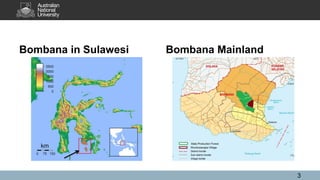
Bombana in Sulawesi Bombana Mainland
3
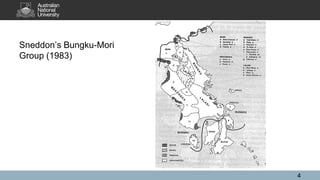
Sneddon’s Bungku-Mori
Group (1983)
4
5
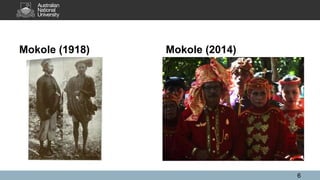
Mokole (1918) Mokole (2014)
6
7
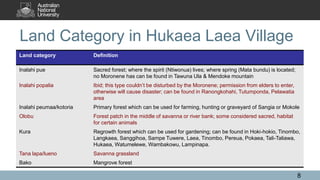
Land Category in Hukaea Laea Village
Land category Definition
Inalahi pue
Inalahi popalia
Inalahi peumaa/kotoria
Olobu
Kura
Tana lapa/lueno
Bako
Sacred forest; where the spirit (Ntiwonua) lives; where spring (Mata bundu) is located;
no Moronene has can be found in Tawuna Ula & Mendoke mountain
Ibid; this type couldn’t be disturbed by the Moronene; permission from elders to enter,
otherwise will cause disaster; can be found in Ranongkohahi, Tutumponda, Pelawatia
area
Primary forest which can be used for farming, hunting or graveyard of Sangia or Mokole
Forest patch in the middle of savanna or river bank; some considered sacred, habitat
for certain animals
Regrowth forest which can be used for gardening; can be found in Hoki-hokio, Tinombo,
Langkaea, Sanggihoa, Sampe Tuwere, Laea, Tinombo, Pereua, Pokaea, Tali-Taliawa,
Hukaea, Watumelewe, Wambakowu, Lampinapa.
Savanna grassland
Mangrove forest
8
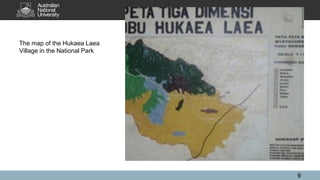
The map of the Hukaea Laea
Village in the National Park
9
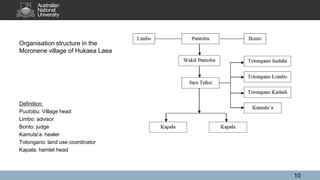
Organisation structure in the
Moronene village of Hukaea Laea
Definition:
Puutobu: Village head
Limbo: advisor
Bonto: judge
Kamuta’a: healer
Totongano: land use coordinator
Kapala: hamlet head
10
Events that led to land dispute and eviction
• 1952: Incoming of Darul Islam/Tentara Islam Indonesia
(DI-TII)
• 1976: The Hunting Park Designation
• 1979/1980: The National Transmigration Program
• In 1990: the Rawa Aopa Watumohai National Park
Designation
• 1997-2002: Clean swipe operation (Operasi sapu Jagat)
11
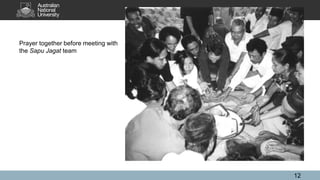
Prayer together before meeting with
the Sapu Jagat team
12
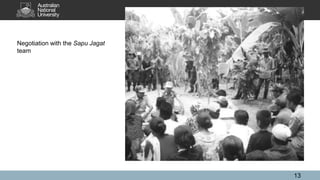
Negotiation with the Sapu Jagat
team
13
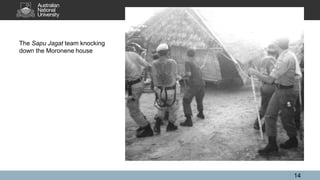
The Sapu Jagat team knocking
down the Moronene house
14
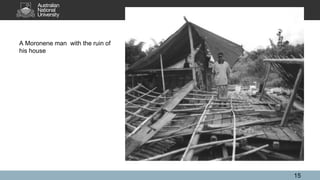
A Moronene man with the ruin of
his house
15
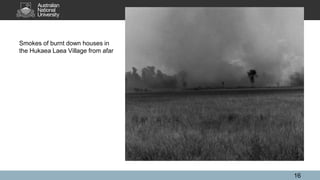
Smokes of burnt down houses in
the Hukaea Laea Village from afar
16
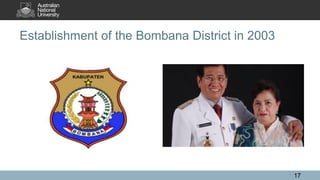
Establishment of the Bombana District in 2003
17
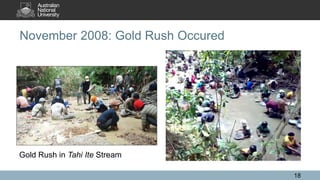
November 2008: Gold Rush Occured
18
Gold Rush in Tahi Ite Stream
19
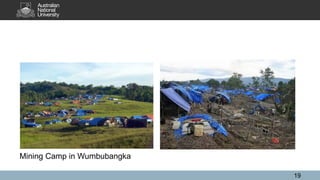
Mining Camp in Wumbubangka
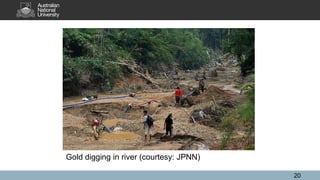
Gold digging in river (courtesy: JPNN)
20
21
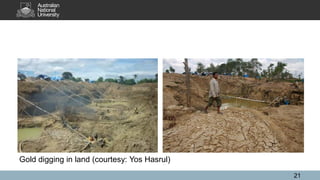
Gold digging in land (courtesy: Yos Hasrul)
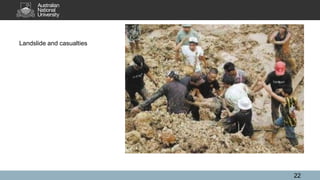
Landslide and casualties
22
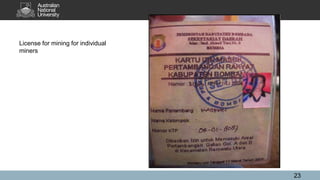
License for mining for individual
miners
23
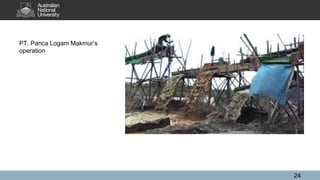
PT. Panca Logam Makmur’s
operation
24
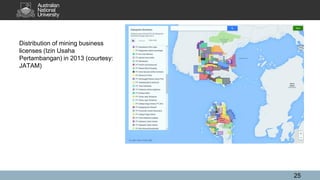
Distribution of mining business
licenses (Izin Usaha
Pertambangan) in 2013 (courtesy:
JATAM)
25
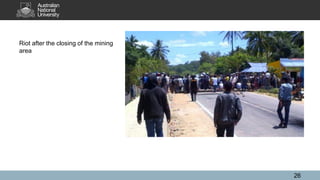
Riot after the closing of the mining
area
26
27
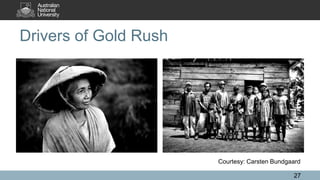
Courtesy: Carsten Bundgaard
Drivers of Gold Rush
28
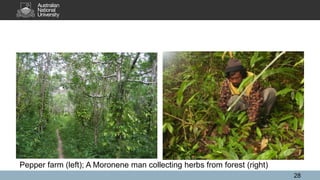
Pepper farm (left); A Moronene man collecting herbs from forest (right)
29
30
31
Courtesy: Carsten Bundgaard
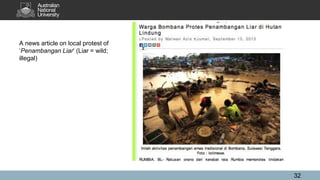
A news article on local protest of
‘Penambangan Liar’ (Liar = wild;
illegal)
32
Research Questions
• Why do some people in the uplands of Bombana,
particularly the indigenous Moronene groups, choose to
become artisanal gold miners, while others do not?
• How is informal artisanal gold mining organized? How
does each mining organization create social and power
relations that encourage or discourage participation?
33
Theoretical Orientation
• Culturally-oriented Political Economy (William
Roseberry, 1984, among others)
• Structuration Theory (Bourdieu, 1973; Giddens, 1984)
– Bourdieu (1973): Field, Habitus, Interest, Capital
• Access (Ribbot and Pelluso, 1994)
34
Methodology and Ethics
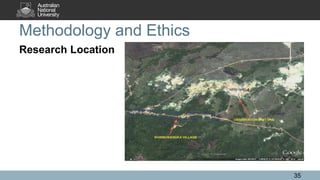
Research Location
35
• Methods:
– Interviews, informal discussions and observations of
social relations and concrete events and rituals, as
well as cases and concepts clarification by
respondents
36
Thank You
37

PhD Candicacy PPT

  • 1.
    “Silence is nolonger golden”: an Ethnography of Informal ‘Gold Digging’ in Bombana District, Indonesia Omar Pidani Department of Anthropology, School of Culture, History and Language, CAP
  • 2.
    2 Outline • Background – Ethno-historyof the District – Gold Rush & The closure of People's Mining Area – Drivers of Gold Rush in Bombana • Research Questions • Theoretical Orientation • Methodology and Ethics
  • 3.
    Bombana in SulawesiBombana Mainland 3
  • 4.
  • 5.
  • 6.
  • 7.
  • 8.
    Land Category inHukaea Laea Village Land category Definition Inalahi pue Inalahi popalia Inalahi peumaa/kotoria Olobu Kura Tana lapa/lueno Bako Sacred forest; where the spirit (Ntiwonua) lives; where spring (Mata bundu) is located; no Moronene has can be found in Tawuna Ula & Mendoke mountain Ibid; this type couldn’t be disturbed by the Moronene; permission from elders to enter, otherwise will cause disaster; can be found in Ranongkohahi, Tutumponda, Pelawatia area Primary forest which can be used for farming, hunting or graveyard of Sangia or Mokole Forest patch in the middle of savanna or river bank; some considered sacred, habitat for certain animals Regrowth forest which can be used for gardening; can be found in Hoki-hokio, Tinombo, Langkaea, Sanggihoa, Sampe Tuwere, Laea, Tinombo, Pereua, Pokaea, Tali-Taliawa, Hukaea, Watumelewe, Wambakowu, Lampinapa. Savanna grassland Mangrove forest 8
  • 9.
    The map ofthe Hukaea Laea Village in the National Park 9
  • 10.
    Organisation structure inthe Moronene village of Hukaea Laea Definition: Puutobu: Village head Limbo: advisor Bonto: judge Kamuta’a: healer Totongano: land use coordinator Kapala: hamlet head 10
  • 11.
    Events that ledto land dispute and eviction • 1952: Incoming of Darul Islam/Tentara Islam Indonesia (DI-TII) • 1976: The Hunting Park Designation • 1979/1980: The National Transmigration Program • In 1990: the Rawa Aopa Watumohai National Park Designation • 1997-2002: Clean swipe operation (Operasi sapu Jagat) 11
  • 12.
    Prayer together beforemeeting with the Sapu Jagat team 12
  • 13.
    Negotiation with theSapu Jagat team 13
  • 14.
    The Sapu Jagatteam knocking down the Moronene house 14
  • 15.
    A Moronene manwith the ruin of his house 15
  • 16.
    Smokes of burntdown houses in the Hukaea Laea Village from afar 16
  • 17.
    Establishment of theBombana District in 2003 17
  • 18.
    November 2008: GoldRush Occured 18 Gold Rush in Tahi Ite Stream
  • 19.
    19 Mining Camp inWumbubangka
  • 20.
    Gold digging inriver (courtesy: JPNN) 20
  • 21.
    21 Gold digging inland (courtesy: Yos Hasrul)
  • 22.
  • 23.
    License for miningfor individual miners 23
  • 24.
    PT. Panca LogamMakmur’s operation 24
  • 25.
    Distribution of miningbusiness licenses (Izin Usaha Pertambangan) in 2013 (courtesy: JATAM) 25
  • 26.
    Riot after theclosing of the mining area 26
  • 27.
  • 28.
    28 Pepper farm (left);A Moronene man collecting herbs from forest (right)
  • 29.
  • 30.
  • 31.
  • 32.
    A news articleon local protest of ‘Penambangan Liar’ (Liar = wild; illegal) 32
  • 33.
    Research Questions • Whydo some people in the uplands of Bombana, particularly the indigenous Moronene groups, choose to become artisanal gold miners, while others do not? • How is informal artisanal gold mining organized? How does each mining organization create social and power relations that encourage or discourage participation? 33
  • 34.
    Theoretical Orientation • Culturally-orientedPolitical Economy (William Roseberry, 1984, among others) • Structuration Theory (Bourdieu, 1973; Giddens, 1984) – Bourdieu (1973): Field, Habitus, Interest, Capital • Access (Ribbot and Pelluso, 1994) 34
  • 35.
  • 36.
    • Methods: – Interviews,informal discussions and observations of social relations and concrete events and rituals, as well as cases and concepts clarification by respondents 36
  • 37.