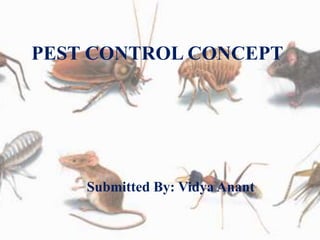
PEST CONTROL CONCEPT
Submitted By: Vidya Anant
What Is Pest
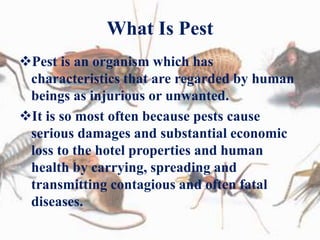
Pest is an organism which has
characteristics that are regarded by human
beings as injurious or unwanted.
It is so most often because pests cause
serious damages and substantial economic
loss to the hotel properties and human
health by carrying, spreading and
transmitting contagious and often fatal
diseases.
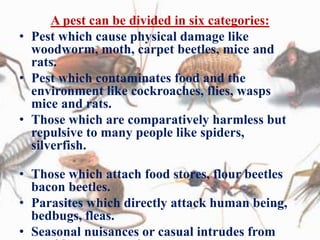
A pest can be divided in six categories:
• Pest which cause physical damage like
woodworm, moth, carpet beetles, mice and
rats.
• Pest which contaminates food and the
environment like cockroaches, flies, wasps
mice and rats.
• Those which are comparatively harmless but
repulsive to many people like spiders,
silverfish.
• Those which attach food stores, flour beetles
bacon beetles.
• Parasites which directly attack human being,
bedbugs, fleas.
• Seasonal nuisances or casual intrudes from
What are Pesticides
A pesticide is any chemical which is used by
man to control pests. The pests may be
insects, plant diseases, fungi, weeds,
nematodes, snails, slugs, etc.
Types Of Pesticides
Insecticides: are used in hotels to control
such pests as ants, flies, spiders, moths,
cockroaches and termites.
Herbicides: These chemicals are used to
control weeds or other unwanted plants.
Herbicides are used by hotel gardeners to
reduce weeds, crab grass and dandelions
among their plants. They are also used in
recreational areas like gardens, ponds and
lakes.
Fungicides: are sprayed or dusted to kill
fungal growths like rusts, mildew, smuts,
and moulds. Fabrics are treated with
fungicides to prevent rotting.
Rodenticides: are chemicals used in areas
infested with rats and other rodents which
are health hazards. Rats destroy food and
grain in hotel dry stores. This helps in
eliminating such pests in prone areas of the
hotel like kitchen and stores.
Pest Control Equipments
Food operation areas like kitchens use pest
control equipment like insectocutors in
kitchens to attract and eliminate, through
electrocution, mosquitoes,, moths, wasps,
beetles and other photopositive flying
insects.
Rodents are snared by mechanical traps,
slow poison traps, and glue traps
(Bromodioline).
• Modern Techniques use rat ultrasonic
machines, which use vibrations to keep rats
and mice away. These units are very
compact, safe, noiseless, environment
friendly and non-irritating pest repellers.
• Air curtains at doorways help keep flying
insects from entering indoor areas like
kitchens, pantries, food receiving areas and
cafeterias. They also help maintain
temperatures indoors from harsh outside
temperatures.
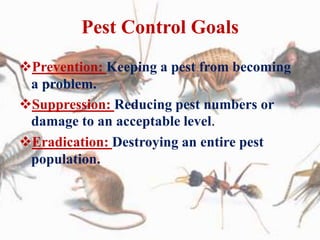
Pest Control Goals
Prevention: Keeping a pest from becoming
a problem.
Suppression: Reducing pest numbers or
damage to an acceptable level.
Eradication: Destroying an entire pest
population.
Methods of Pest Control
1. Natural controls
Some natural forces act on all organisms,
causing their populations to rise and fall.
These natural forces act independently of
humans and may either help or hinder pest
control.
Natural forces that affect pest populations
include climate, natural enemies, natural
barriers, availability of shelter, and food
and water supplies.
2. Applied controls
Unfortunately, natural controls often do not
control pests quickly or completely enough
to prevent unacceptable injury or damage.
Then other control measures must be used.
These may include the following:
• Host resistance
• Some plants, animals, and structures resist
pests better than others.
• Some varieties of plants, wood, and animals
are resistant to certain pests.
Host resistance works in one of three ways:
• Chemicals in the host repel the pest or
prevent them from completing their life
cycle.
• The host is more vigorous or tolerant than
other varieties and thus less likely to be
seriously damaged by pest attacks.
• The host has physical characteristics that
make it more difficult to attack.
3. Biological control
This involves the introduction of natural
enemies— parasites, predators, and
pathogens. Biological control usually does
not target eradication.
Under proper conditions, sufficient control
can be achieved to eliminate the threat to
the plant, animal, or material to be
protected.
Applying juvenile hormones to an area can
reduce pest numbers by keeping some
immature pests from becoming normal,
Cultural control
• Cultured practices are sometimes used to
reduce the number of pests that are
attacking cultivated plants. These practices
alter the environment, the condition
of the host plant, or the behavior of the pest
to prevent or suppress an infestation.
Pest control concept

Pest control concept

  • 1.
  • 2.
    What Is Pest Pestis an organism which has characteristics that are regarded by human beings as injurious or unwanted. It is so most often because pests cause serious damages and substantial economic loss to the hotel properties and human health by carrying, spreading and transmitting contagious and often fatal diseases.
  • 3.
    A pest canbe divided in six categories: • Pest which cause physical damage like woodworm, moth, carpet beetles, mice and rats. • Pest which contaminates food and the environment like cockroaches, flies, wasps mice and rats. • Those which are comparatively harmless but repulsive to many people like spiders, silverfish. • Those which attach food stores, flour beetles bacon beetles. • Parasites which directly attack human being, bedbugs, fleas. • Seasonal nuisances or casual intrudes from
  • 4.
    What are Pesticides Apesticide is any chemical which is used by man to control pests. The pests may be insects, plant diseases, fungi, weeds, nematodes, snails, slugs, etc.
  • 5.
    Types Of Pesticides Insecticides:are used in hotels to control such pests as ants, flies, spiders, moths, cockroaches and termites. Herbicides: These chemicals are used to control weeds or other unwanted plants. Herbicides are used by hotel gardeners to reduce weeds, crab grass and dandelions among their plants. They are also used in recreational areas like gardens, ponds and lakes.
  • 6.
    Fungicides: are sprayedor dusted to kill fungal growths like rusts, mildew, smuts, and moulds. Fabrics are treated with fungicides to prevent rotting. Rodenticides: are chemicals used in areas infested with rats and other rodents which are health hazards. Rats destroy food and grain in hotel dry stores. This helps in eliminating such pests in prone areas of the hotel like kitchen and stores.
  • 7.
    Pest Control Equipments Foodoperation areas like kitchens use pest control equipment like insectocutors in kitchens to attract and eliminate, through electrocution, mosquitoes,, moths, wasps, beetles and other photopositive flying insects. Rodents are snared by mechanical traps, slow poison traps, and glue traps (Bromodioline).
  • 8.
    • Modern Techniquesuse rat ultrasonic machines, which use vibrations to keep rats and mice away. These units are very compact, safe, noiseless, environment friendly and non-irritating pest repellers. • Air curtains at doorways help keep flying insects from entering indoor areas like kitchens, pantries, food receiving areas and cafeterias. They also help maintain temperatures indoors from harsh outside temperatures.
  • 9.
    Pest Control Goals Prevention:Keeping a pest from becoming a problem. Suppression: Reducing pest numbers or damage to an acceptable level. Eradication: Destroying an entire pest population.
  • 10.
    Methods of PestControl 1. Natural controls Some natural forces act on all organisms, causing their populations to rise and fall. These natural forces act independently of humans and may either help or hinder pest control. Natural forces that affect pest populations include climate, natural enemies, natural barriers, availability of shelter, and food and water supplies.
  • 11.
    2. Applied controls Unfortunately,natural controls often do not control pests quickly or completely enough to prevent unacceptable injury or damage. Then other control measures must be used. These may include the following: • Host resistance • Some plants, animals, and structures resist pests better than others. • Some varieties of plants, wood, and animals are resistant to certain pests.
  • 12.
    Host resistance worksin one of three ways: • Chemicals in the host repel the pest or prevent them from completing their life cycle. • The host is more vigorous or tolerant than other varieties and thus less likely to be seriously damaged by pest attacks. • The host has physical characteristics that make it more difficult to attack.
  • 13.
    3. Biological control Thisinvolves the introduction of natural enemies— parasites, predators, and pathogens. Biological control usually does not target eradication. Under proper conditions, sufficient control can be achieved to eliminate the threat to the plant, animal, or material to be protected. Applying juvenile hormones to an area can reduce pest numbers by keeping some immature pests from becoming normal,
  • 14.
    Cultural control • Culturedpractices are sometimes used to reduce the number of pests that are attacking cultivated plants. These practices alter the environment, the condition of the host plant, or the behavior of the pest to prevent or suppress an infestation.