PERSONAL STATEMENT
WORKSHOP PART TWO
8TH SEPTEMBER 2015
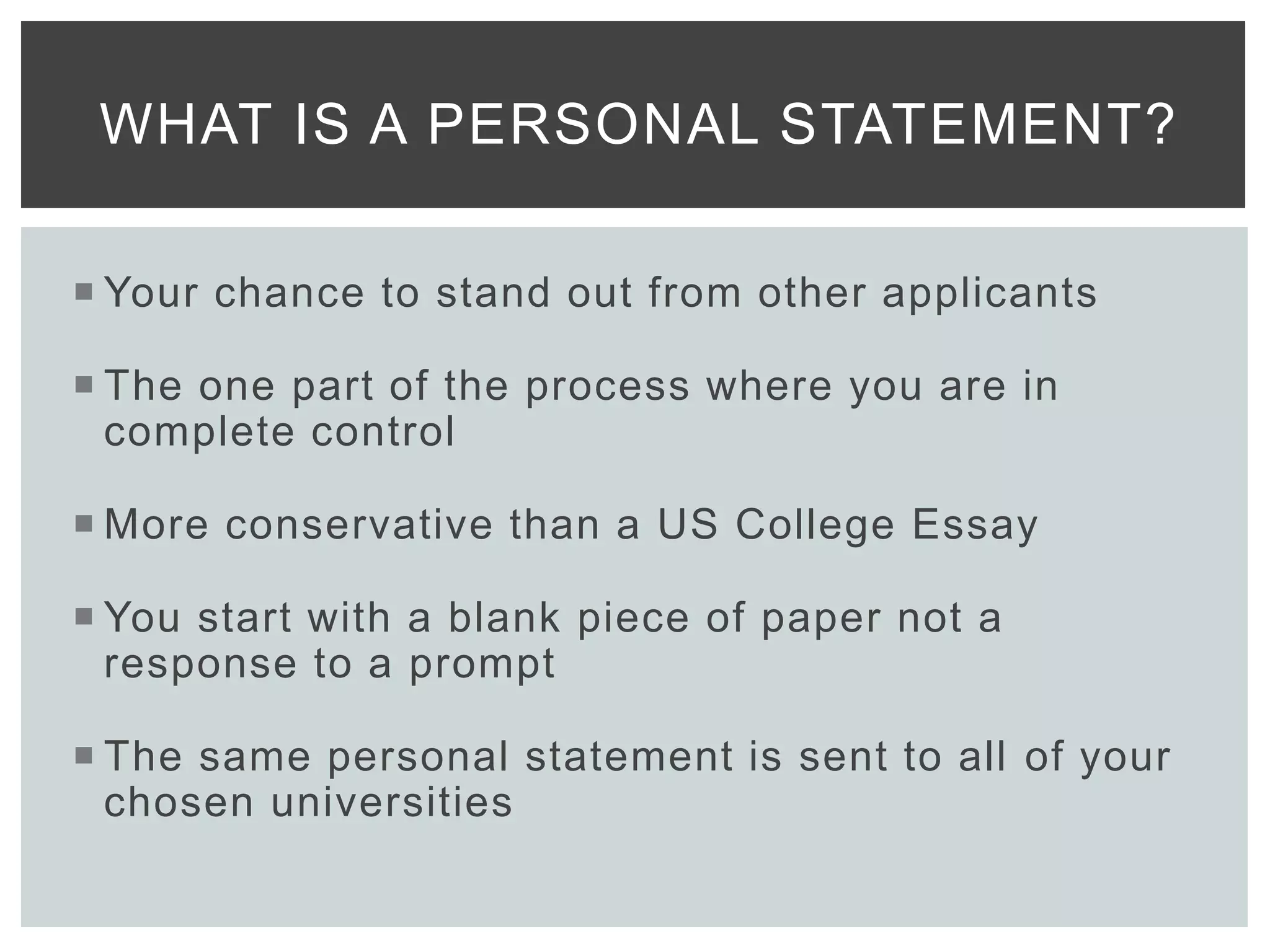
 Your chance to stand out from other applicants
 The one part of the process where you are in
complete control
 More conservative than a US College Essay
 You start with a blank piece of paper not a
response to a prompt
 The same personal statement is sent to all of your
chosen universities
WHAT IS A PERSONAL STATEMENT?
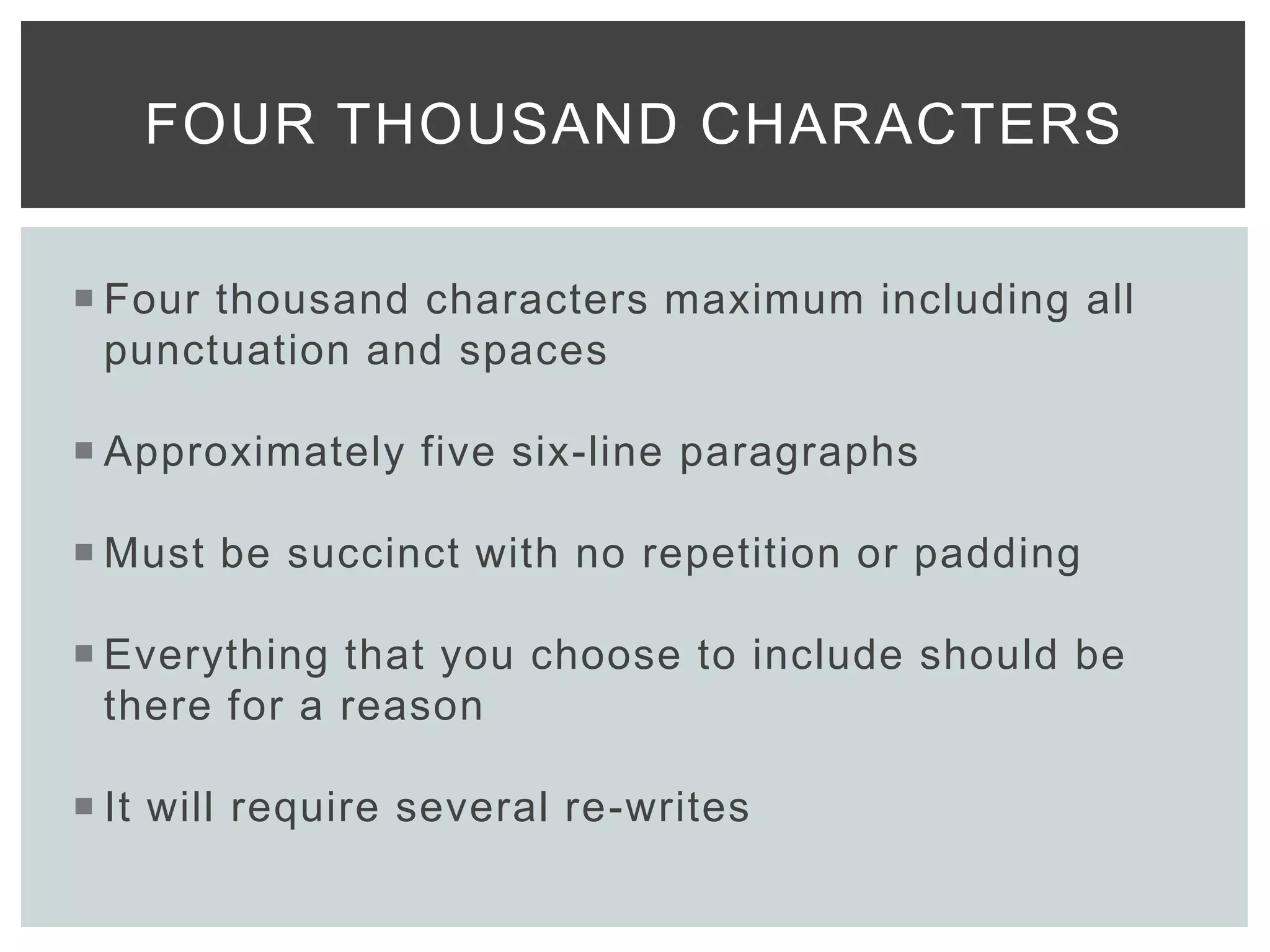
 Four thousand characters maximum including all
punctuation and spaces
 Approximately five six-line paragraphs
 Must be succinct with no repetition or padding
 Everything that you choose to include should be
there for a reason
 It will require several re-writes
FOUR THOUSAND CHARACTERS
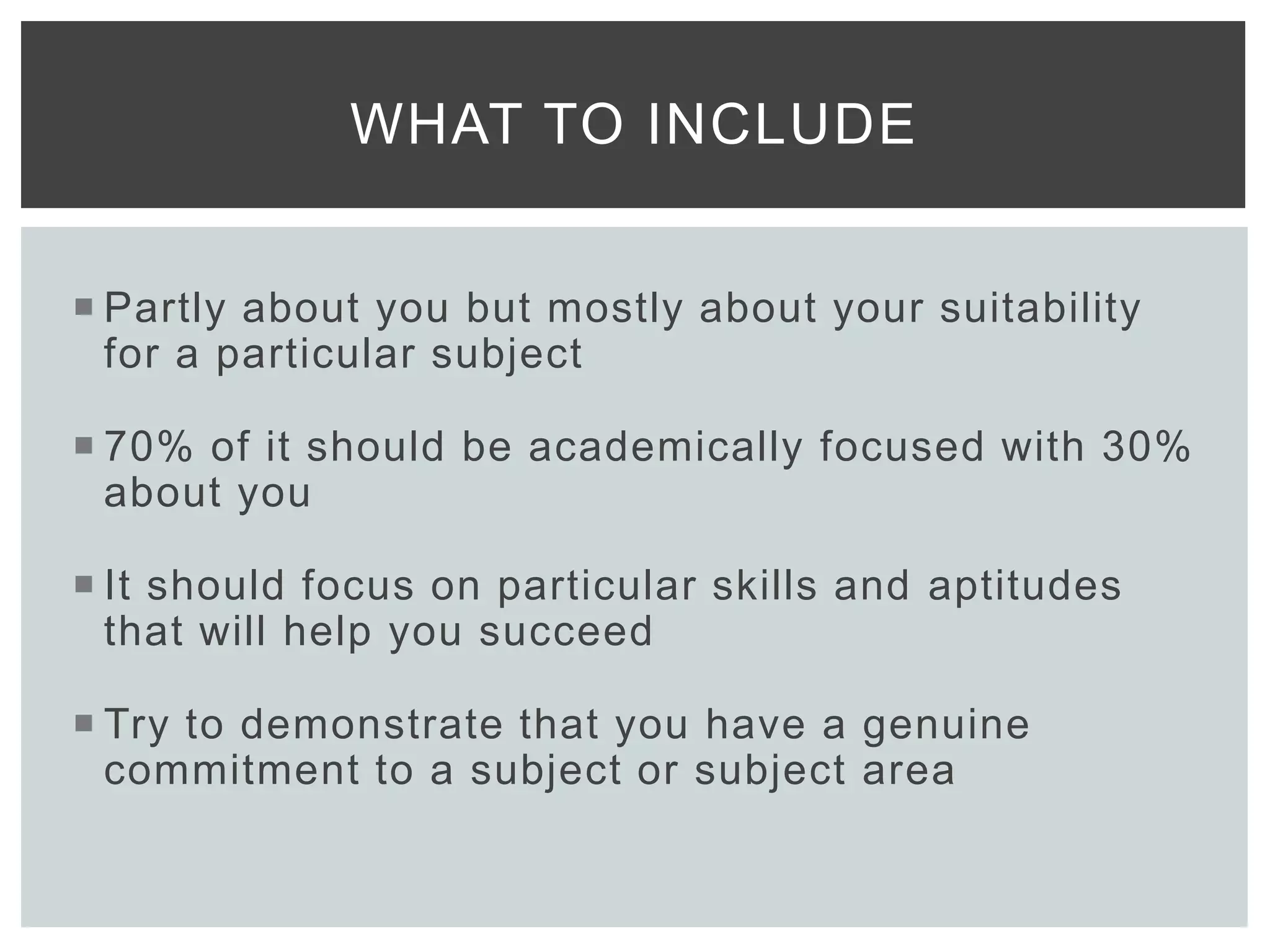
 Partly about you but mostly about your suitability
for a particular subject
 70% of it should be academically focused with 30%
about you
 It should focus on particular skills and aptitudes
that will help you succeed
 Try to demonstrate that you have a genuine
commitment to a subject or subject area
WHAT TO INCLUDE
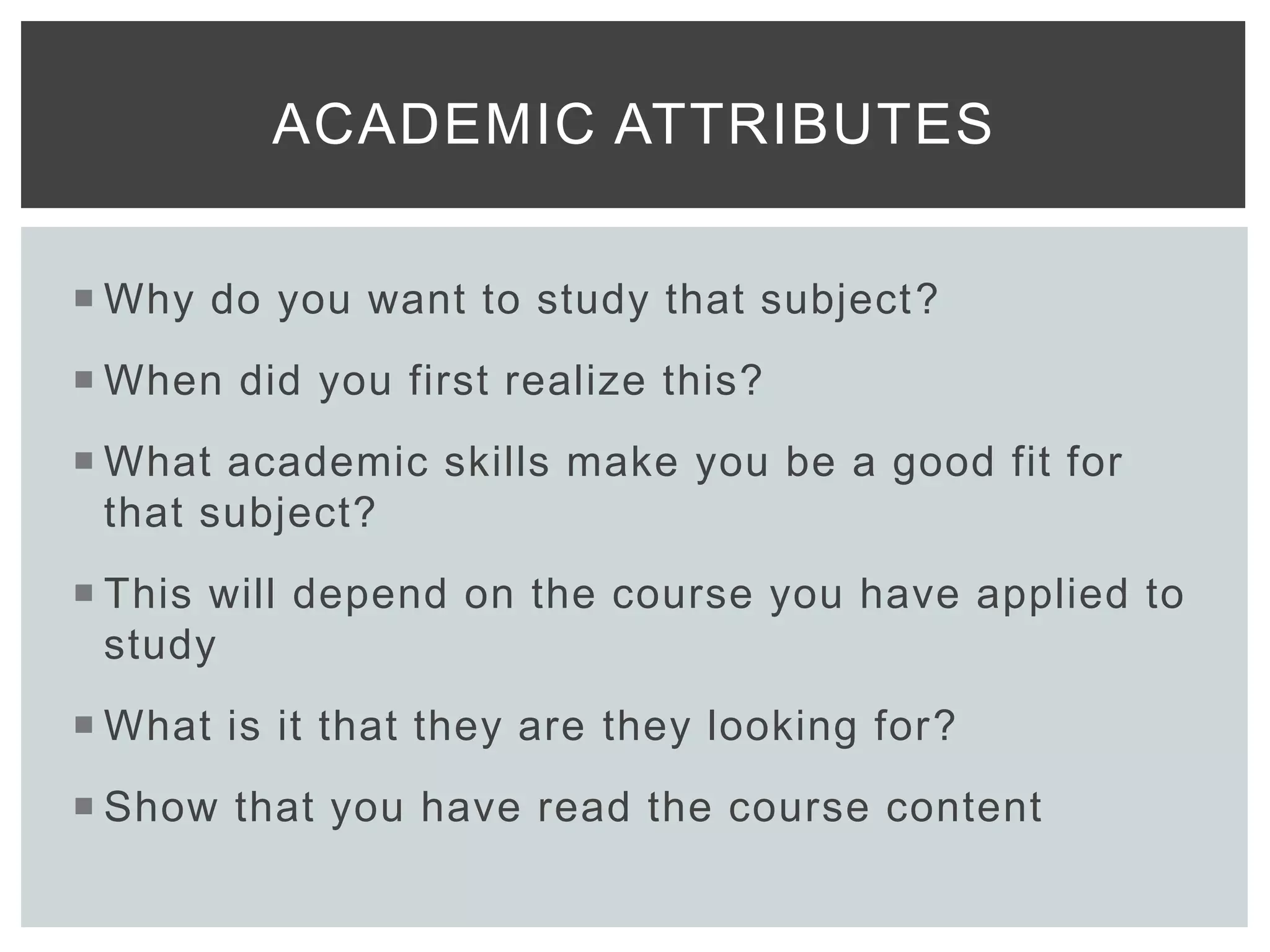
 Why do you want to study that subject?
 When did you first realize this?
 What academic skills make you be a good fit for
that subject?
 This will depend on the course you have applied to
study
 What is it that they are they looking for?
 Show that you have read the course content
ACADEMIC ATTRIBUTES
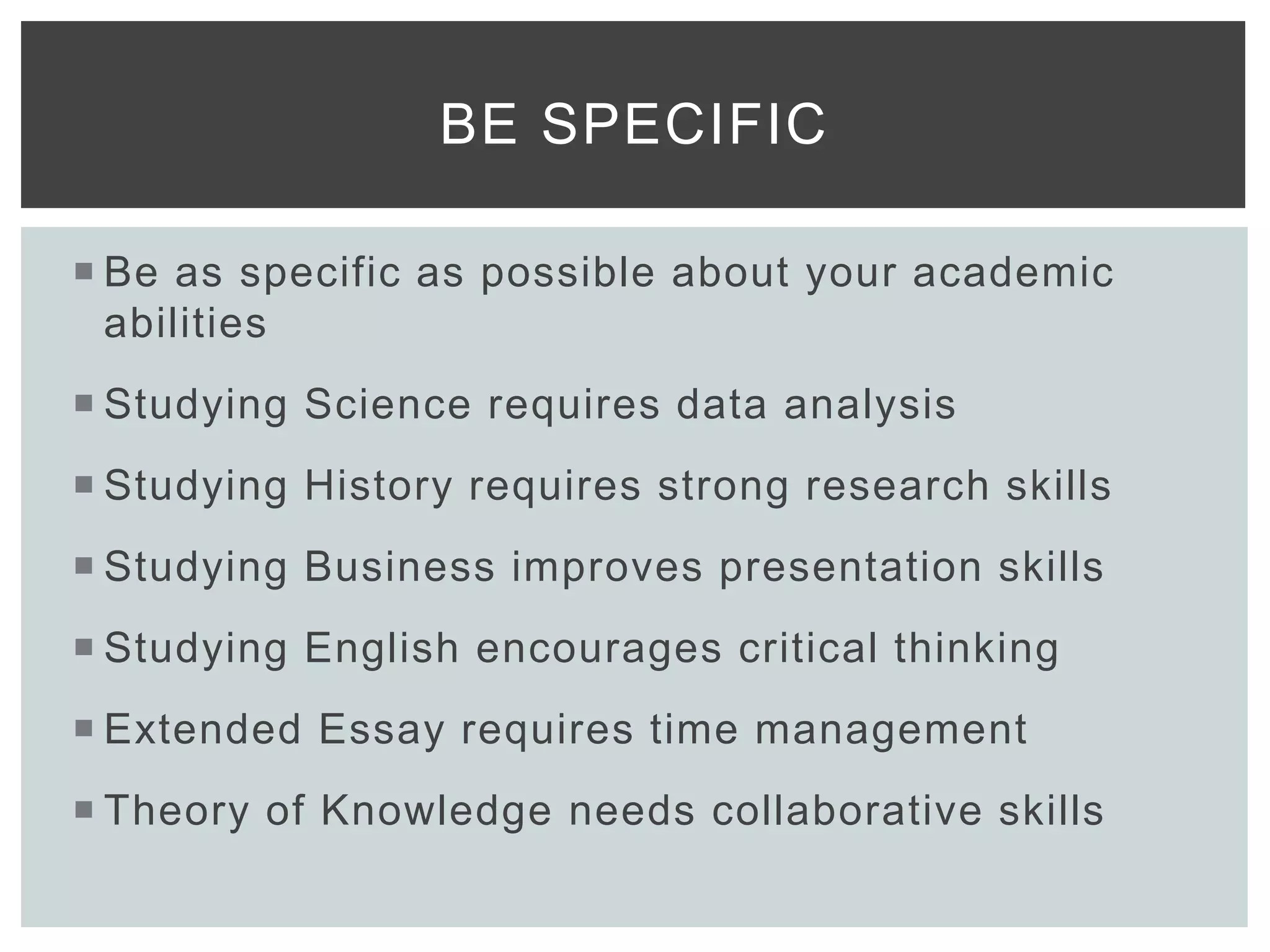
 Be as specific as possible about your academic
abilities
 Studying Science requires data analysis
 Studying History requires strong research skills
 Studying Business improves presentation skills
 Studying English encourages critical thinking
 Extended Essay requires time management
 Theory of Knowledge needs collaborative skills
BE SPECIFIC
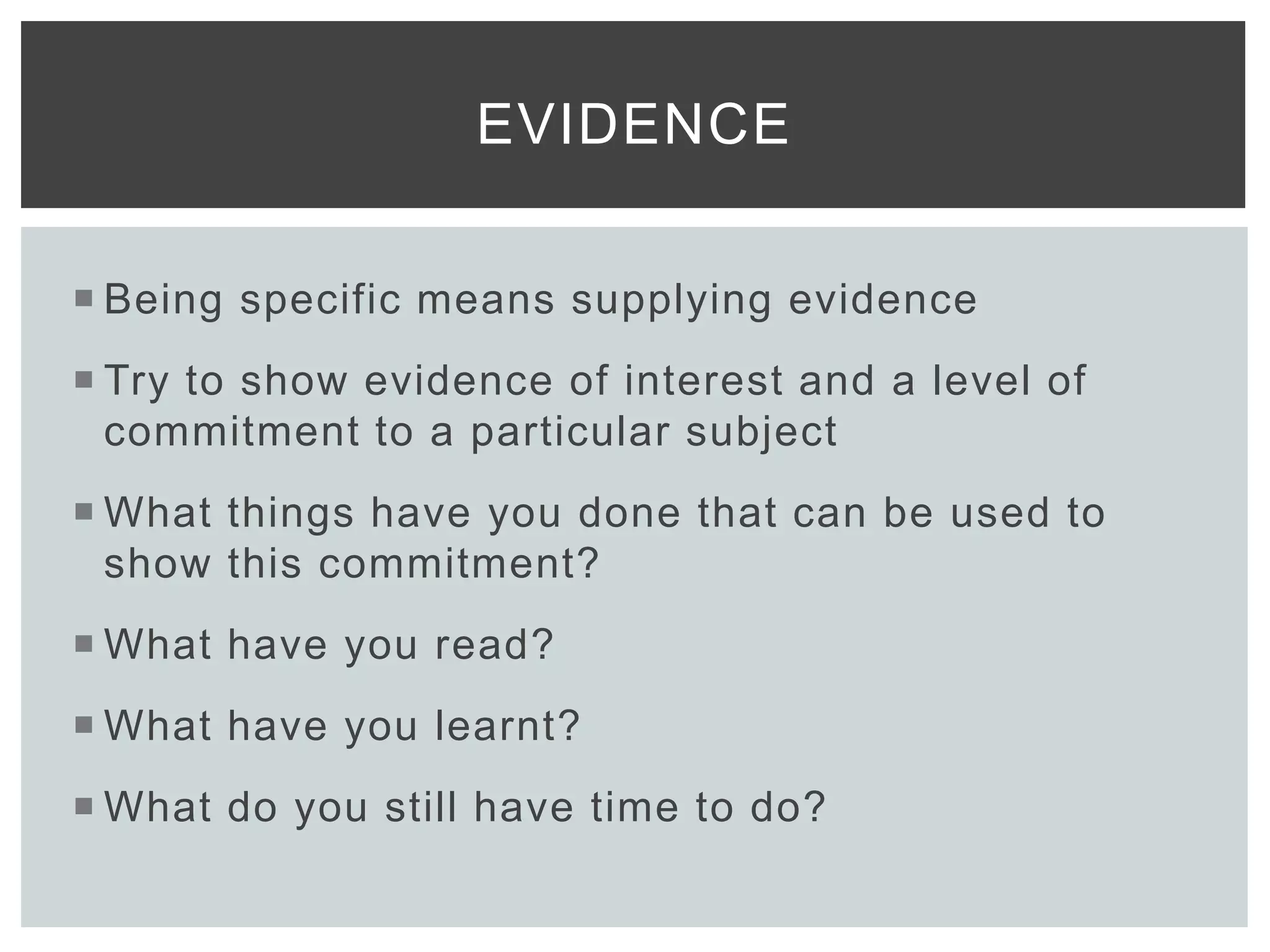
 Being specific means supplying evidence
 Try to show evidence of interest and a level of
commitment to a particular subject
 What things have you done that can be used to
show this commitment?
 What have you read?
 What have you learnt?
 What do you still have time to do?
EVIDENCE
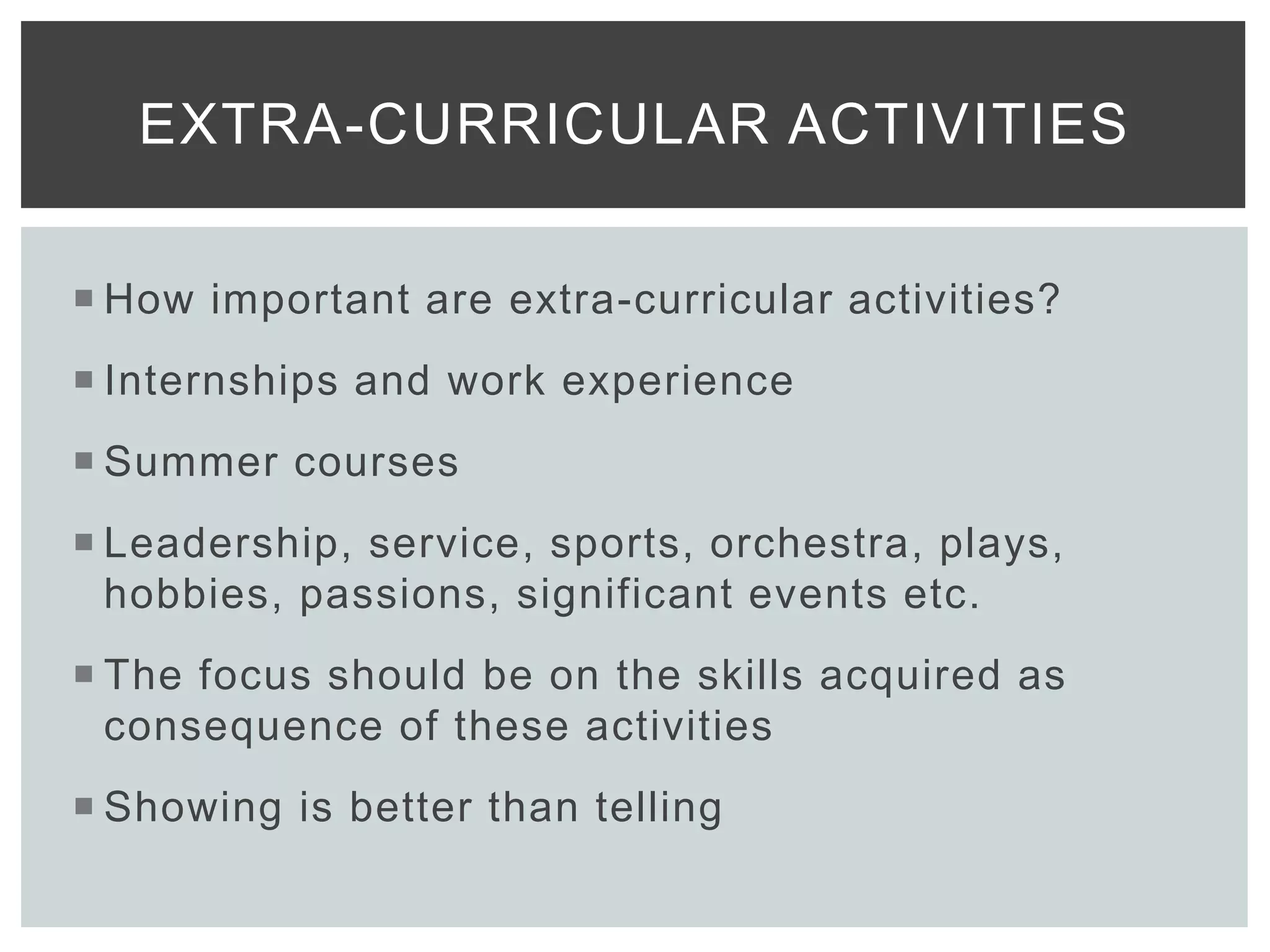
 How important are extra-curricular activities?
 Internships and work experience
 Summer courses
 Leadership, service, sports, orchestra, plays,
hobbies, passions, significant events etc.
 The focus should be on the skills acquired as
consequence of these activities
 Showing is better than telling
EXTRA-CURRICULAR ACTIVITIES
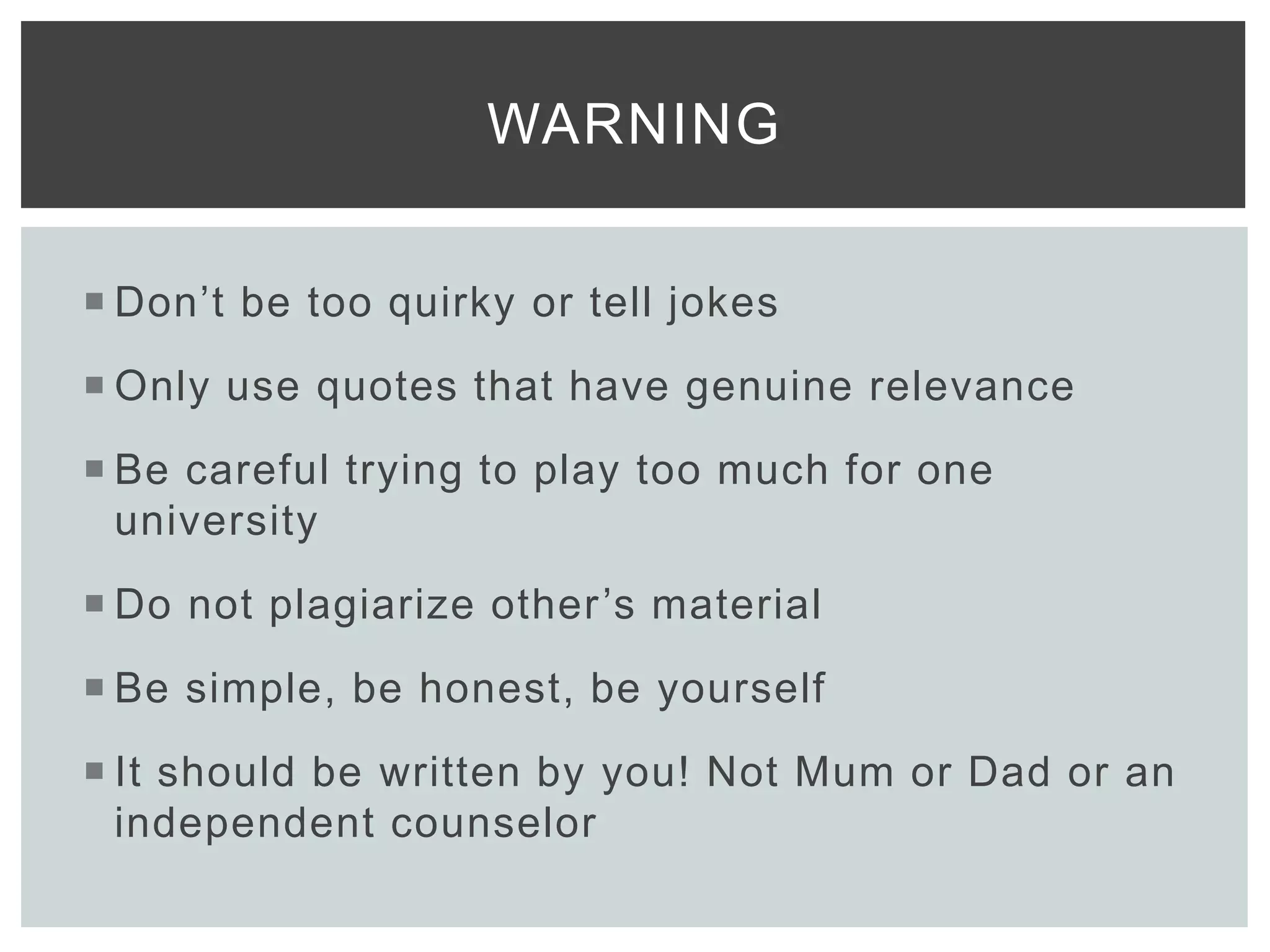
 Don’t be too quirky or tell jokes
 Only use quotes that have genuine relevance
 Be careful trying to play too much for one
university
 Do not plagiarize other’s material
 Be simple, be honest, be yourself
 It should be written by you! Not Mum or Dad or an
independent counselor
WARNING
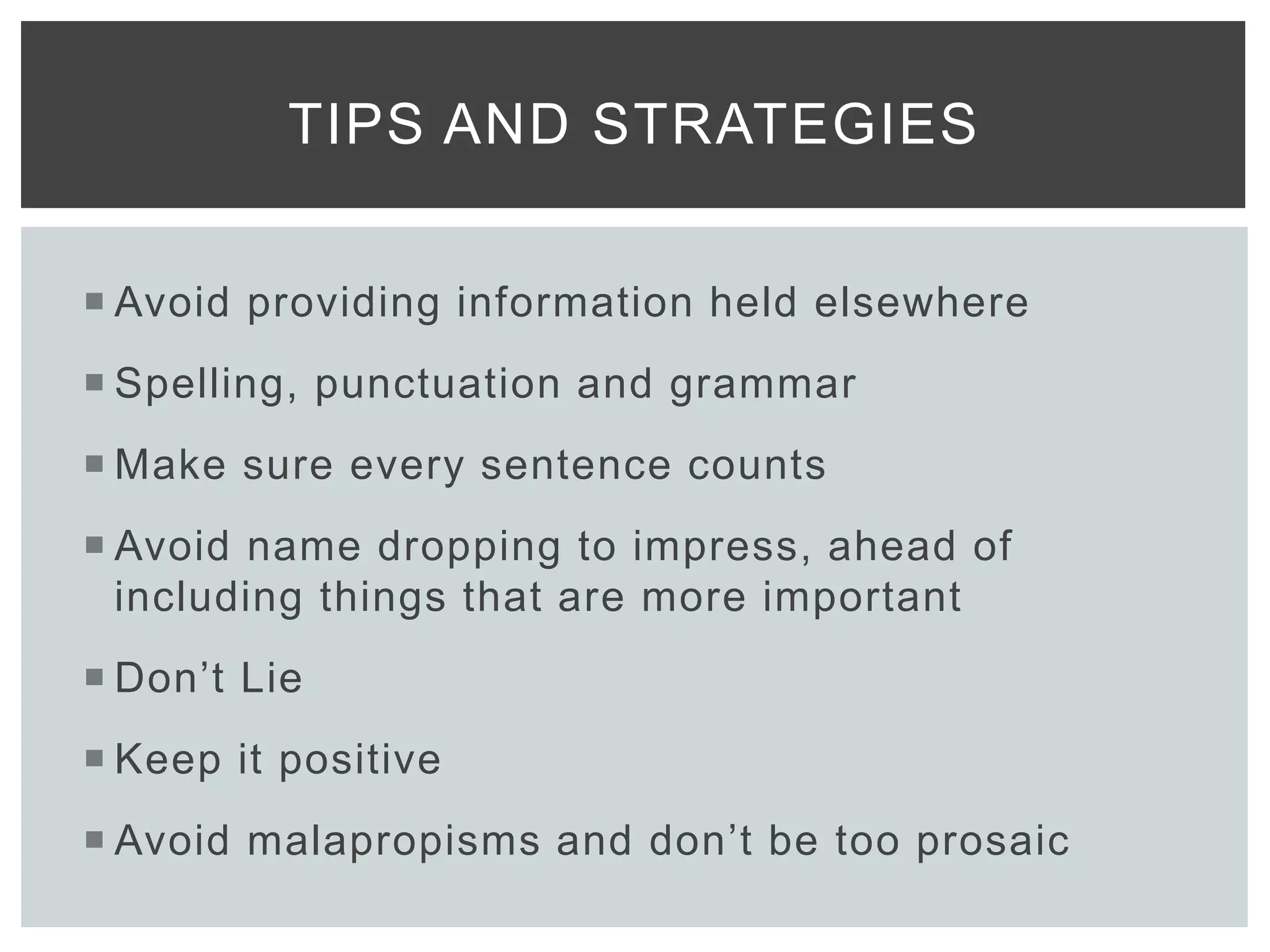
 Avoid providing information held elsewhere
 Spelling, punctuation and grammar
 Make sure every sentence counts
 Avoid name dropping to impress, ahead of
including things that are more important
 Don’t Lie
 Keep it positive
 Avoid malapropisms and don’t be too prosaic
TIPS AND STRATEGIES
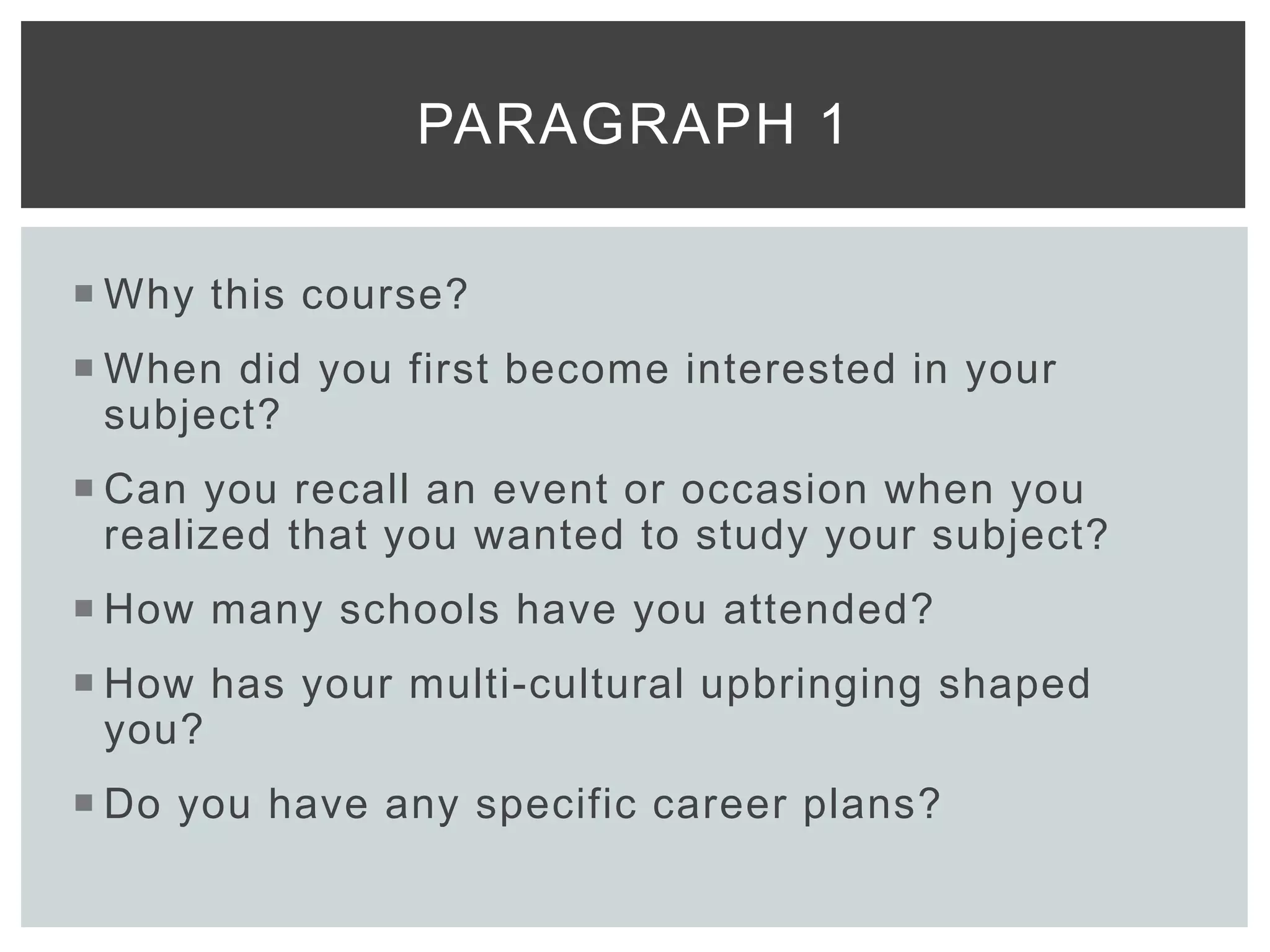
 Why this course?
 When did you first become interested in your
subject?
 Can you recall an event or occasion when you
realized that you wanted to study your subject?
 How many schools have you attended?
 How has your multi-cultural upbringing shaped
you?
 Do you have any specific career plans?
PARAGRAPH 1
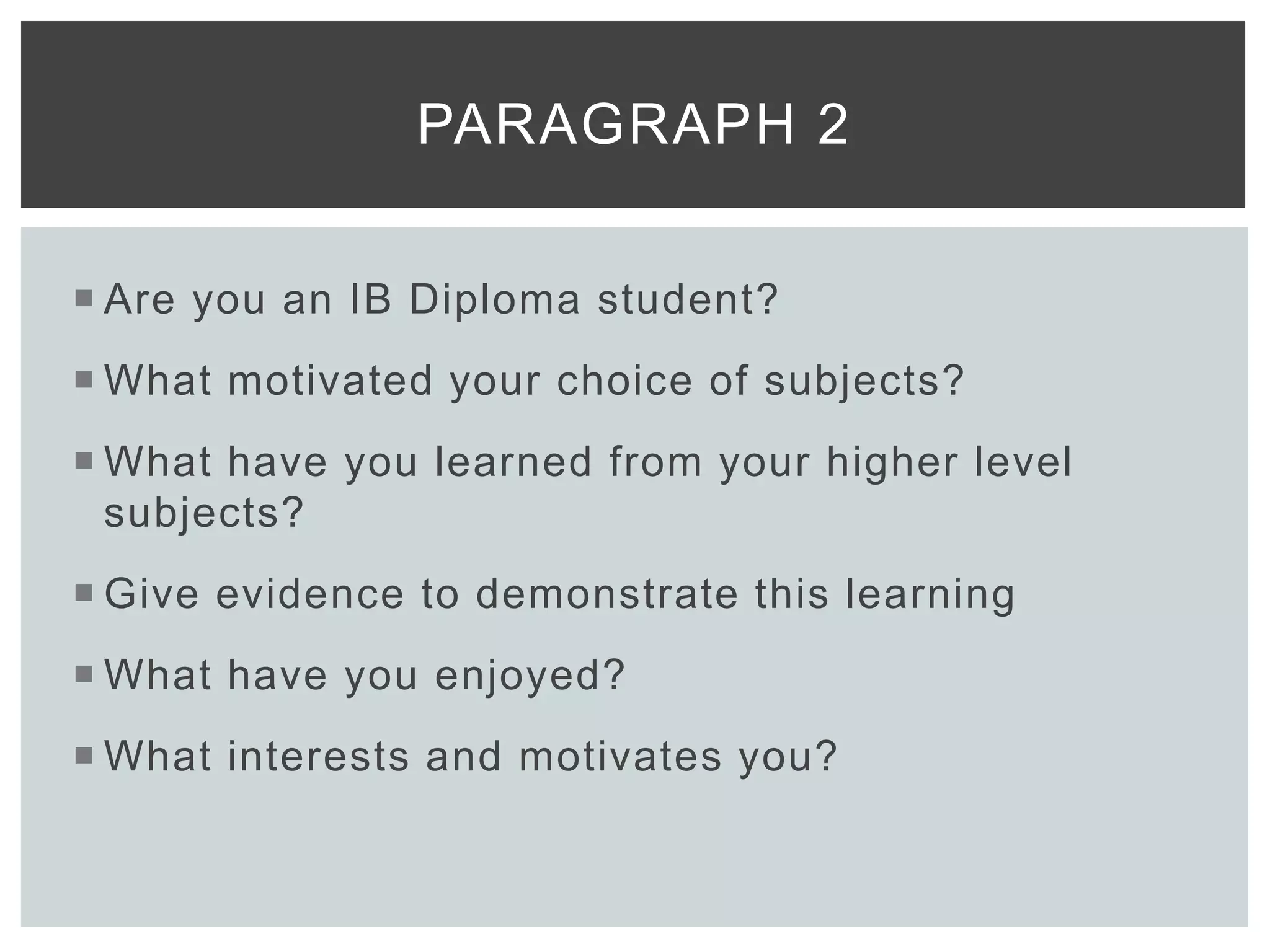
 Are you an IB Diploma student?
 What motivated your choice of subjects?
 What have you learned from your higher level
subjects?
 Give evidence to demonstrate this learning
 What have you enjoyed?
 What interests and motivates you?
PARAGRAPH 2
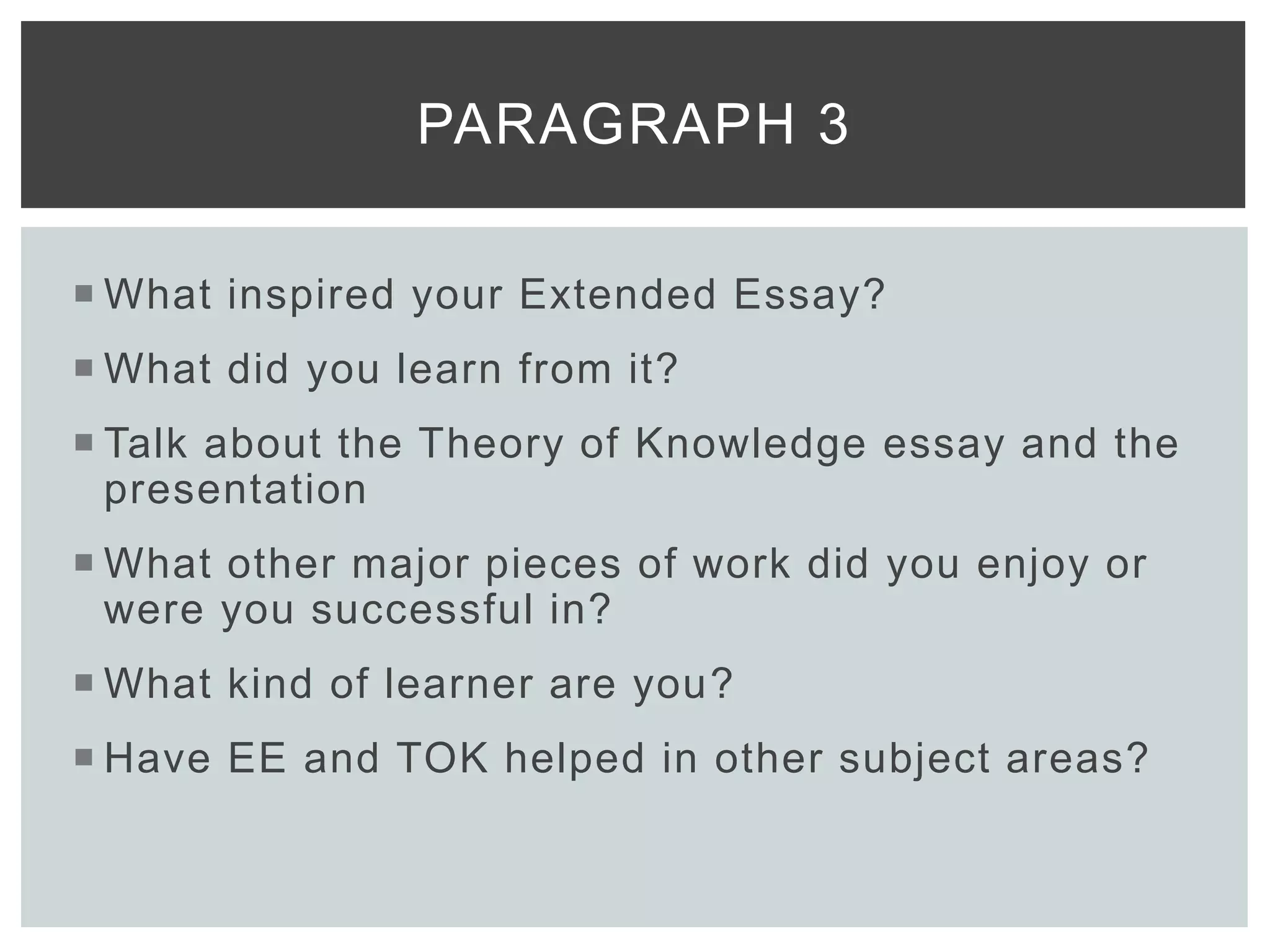
 What inspired your Extended Essay?
 What did you learn from it?
 Talk about the Theory of Knowledge essay and the
presentation
 What other major pieces of work did you enjoy or
were you successful in?
 What kind of learner are you?
 Have EE and TOK helped in other subject areas?
PARAGRAPH 3
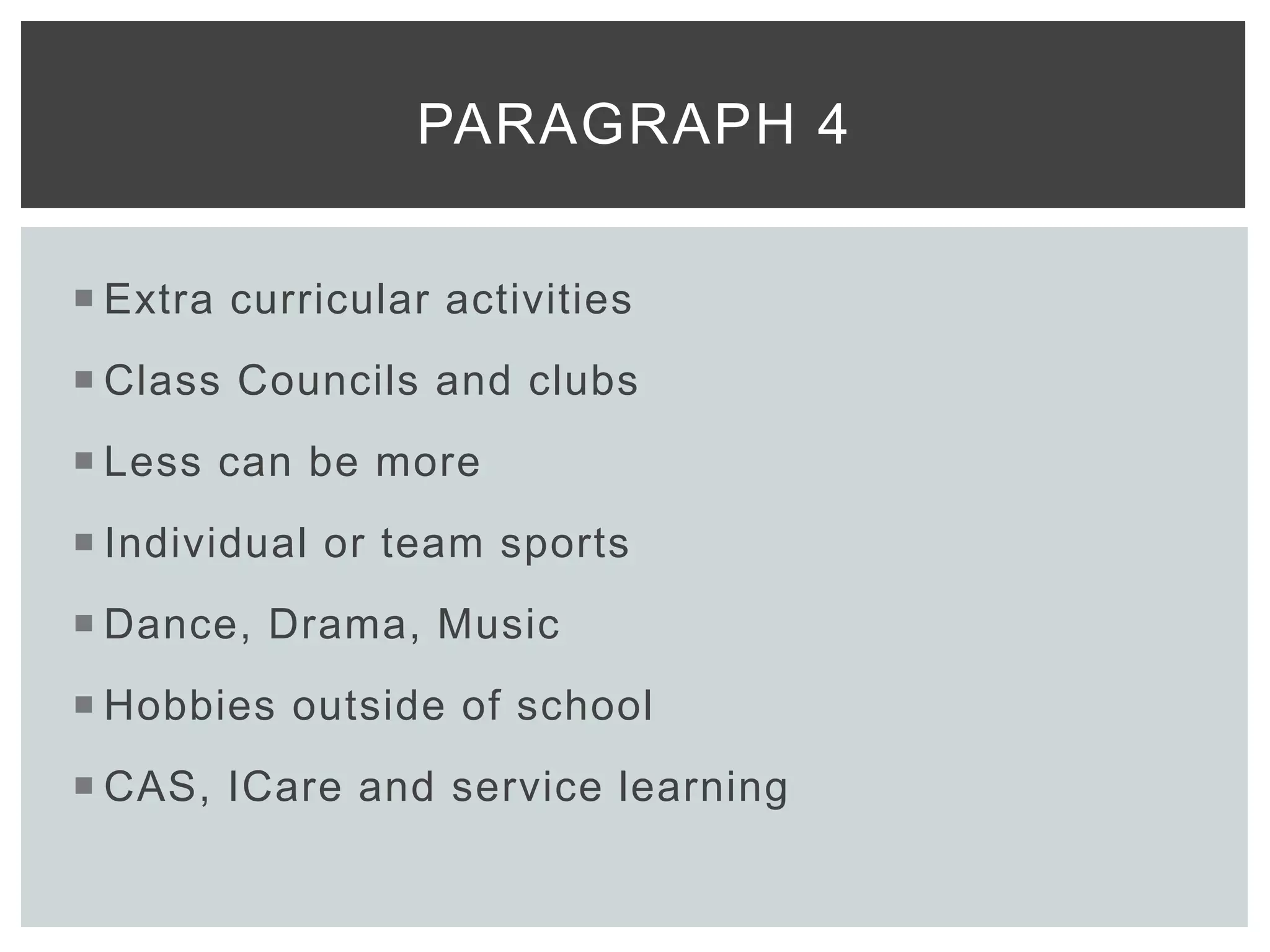
 Extra curricular activities
 Class Councils and clubs
 Less can be more
 Individual or team sports
 Dance, Drama, Music
 Hobbies outside of school
 CAS, ICare and service learning
PARAGRAPH 4
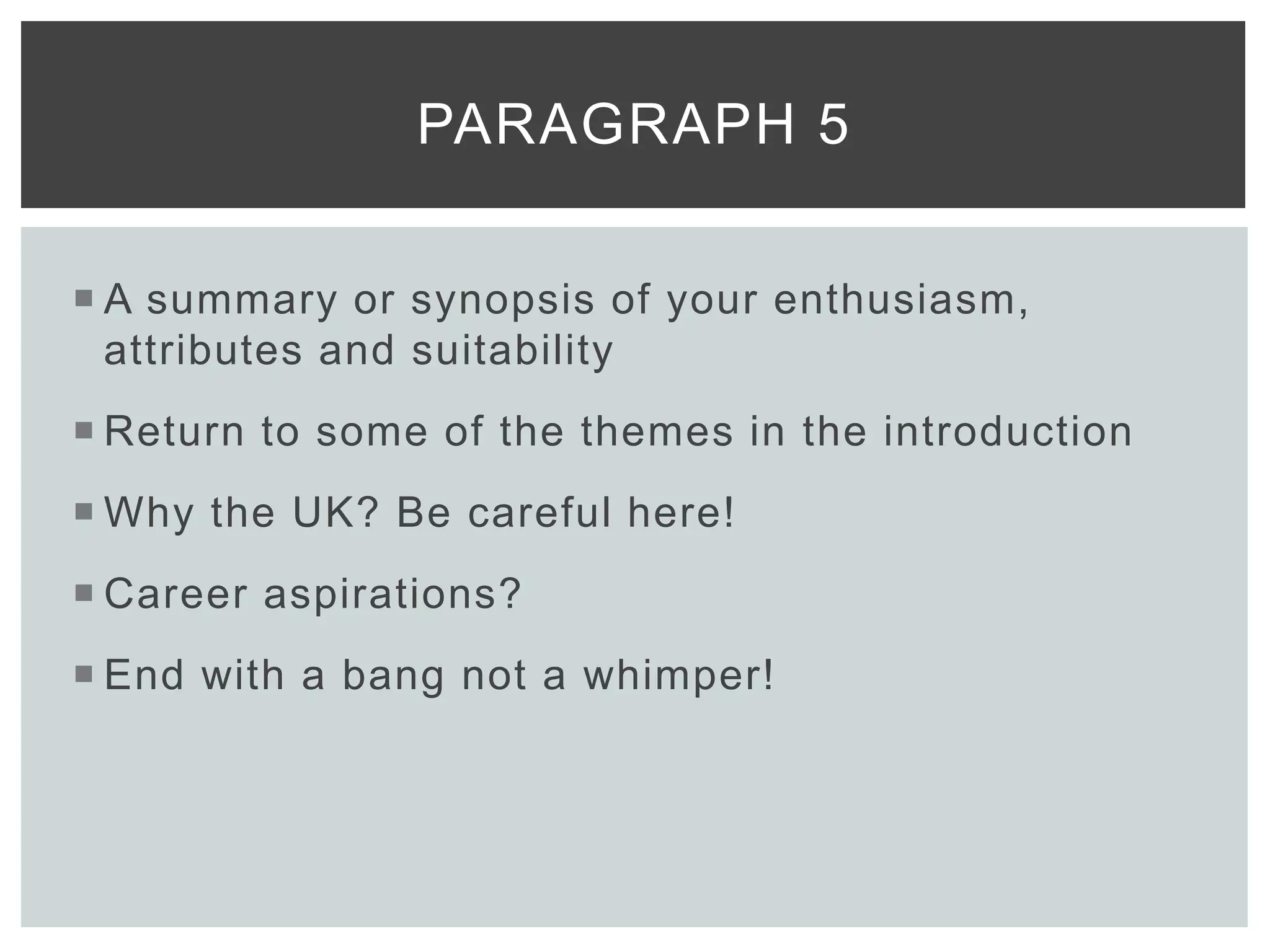
 A summary or synopsis of your enthusiasm,
attributes and suitability
 Return to some of the themes in the introduction
 Why the UK? Be careful here!
 Career aspirations?
 End with a bang not a whimper!
PARAGRAPH 5
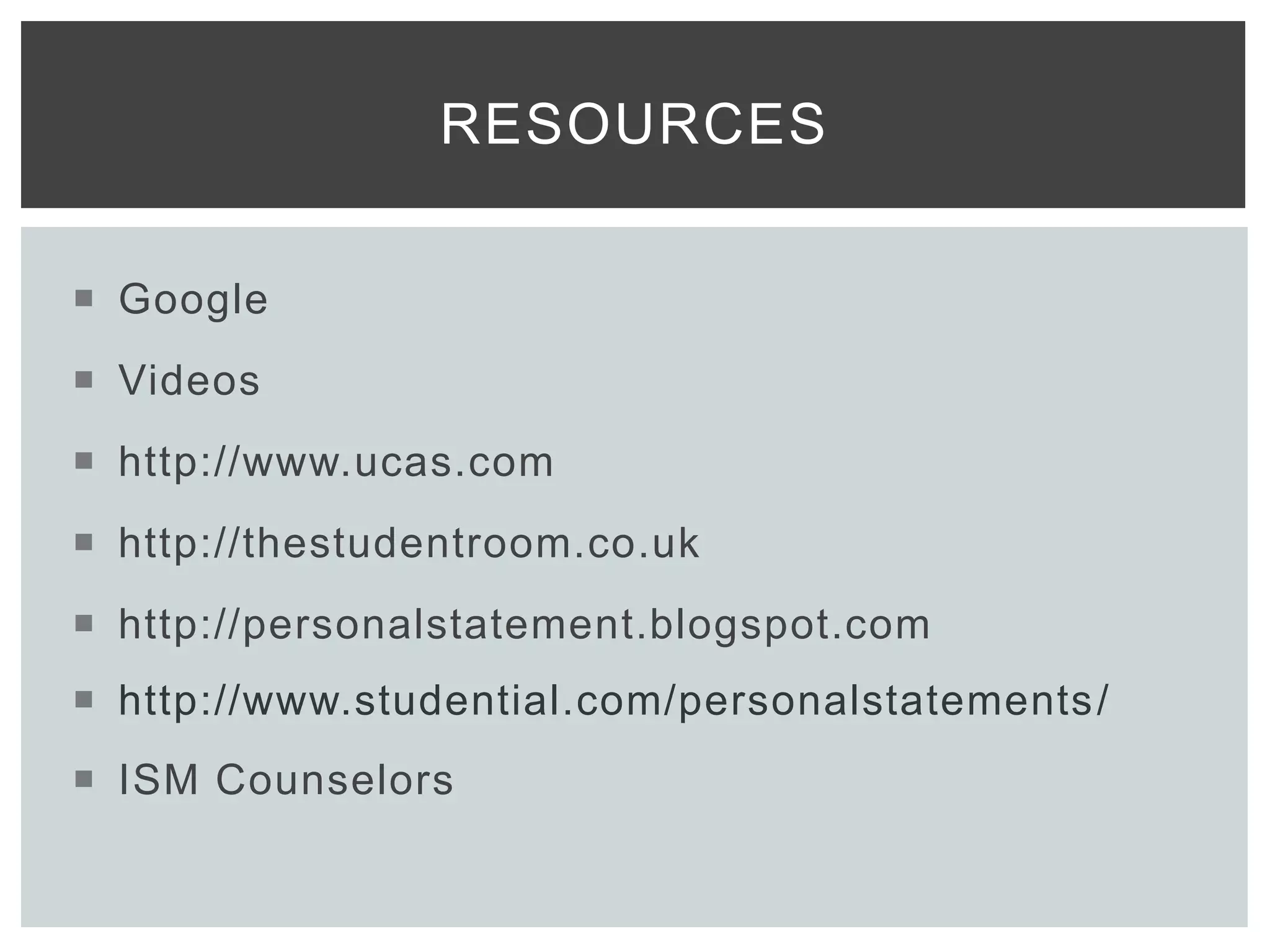
 Google
 Videos
 http://www.ucas.com
 http://thestudentroom.co.uk
 http://personalstatement.blogspot.com
 http://www.studential.com/personalstatements/
 ISM Counselors
RESOURCES

Personal Statement Workshop 2015 Part 2

  • 1.
    PERSONAL STATEMENT WORKSHOP PARTTWO 8TH SEPTEMBER 2015
  • 2.
     Your chanceto stand out from other applicants  The one part of the process where you are in complete control  More conservative than a US College Essay  You start with a blank piece of paper not a response to a prompt  The same personal statement is sent to all of your chosen universities WHAT IS A PERSONAL STATEMENT?
  • 3.
     Four thousandcharacters maximum including all punctuation and spaces  Approximately five six-line paragraphs  Must be succinct with no repetition or padding  Everything that you choose to include should be there for a reason  It will require several re-writes FOUR THOUSAND CHARACTERS
  • 4.
     Partly aboutyou but mostly about your suitability for a particular subject  70% of it should be academically focused with 30% about you  It should focus on particular skills and aptitudes that will help you succeed  Try to demonstrate that you have a genuine commitment to a subject or subject area WHAT TO INCLUDE
  • 5.
     Why doyou want to study that subject?  When did you first realize this?  What academic skills make you be a good fit for that subject?  This will depend on the course you have applied to study  What is it that they are they looking for?  Show that you have read the course content ACADEMIC ATTRIBUTES
  • 6.
     Be asspecific as possible about your academic abilities  Studying Science requires data analysis  Studying History requires strong research skills  Studying Business improves presentation skills  Studying English encourages critical thinking  Extended Essay requires time management  Theory of Knowledge needs collaborative skills BE SPECIFIC
  • 7.
     Being specificmeans supplying evidence  Try to show evidence of interest and a level of commitment to a particular subject  What things have you done that can be used to show this commitment?  What have you read?  What have you learnt?  What do you still have time to do? EVIDENCE
  • 8.
     How importantare extra-curricular activities?  Internships and work experience  Summer courses  Leadership, service, sports, orchestra, plays, hobbies, passions, significant events etc.  The focus should be on the skills acquired as consequence of these activities  Showing is better than telling EXTRA-CURRICULAR ACTIVITIES
  • 9.
     Don’t betoo quirky or tell jokes  Only use quotes that have genuine relevance  Be careful trying to play too much for one university  Do not plagiarize other’s material  Be simple, be honest, be yourself  It should be written by you! Not Mum or Dad or an independent counselor WARNING
  • 10.
     Avoid providinginformation held elsewhere  Spelling, punctuation and grammar  Make sure every sentence counts  Avoid name dropping to impress, ahead of including things that are more important  Don’t Lie  Keep it positive  Avoid malapropisms and don’t be too prosaic TIPS AND STRATEGIES
  • 11.
     Why thiscourse?  When did you first become interested in your subject?  Can you recall an event or occasion when you realized that you wanted to study your subject?  How many schools have you attended?  How has your multi-cultural upbringing shaped you?  Do you have any specific career plans? PARAGRAPH 1
  • 12.
     Are youan IB Diploma student?  What motivated your choice of subjects?  What have you learned from your higher level subjects?  Give evidence to demonstrate this learning  What have you enjoyed?  What interests and motivates you? PARAGRAPH 2
  • 13.
     What inspiredyour Extended Essay?  What did you learn from it?  Talk about the Theory of Knowledge essay and the presentation  What other major pieces of work did you enjoy or were you successful in?  What kind of learner are you?  Have EE and TOK helped in other subject areas? PARAGRAPH 3
  • 14.
     Extra curricularactivities  Class Councils and clubs  Less can be more  Individual or team sports  Dance, Drama, Music  Hobbies outside of school  CAS, ICare and service learning PARAGRAPH 4
  • 15.
     A summaryor synopsis of your enthusiasm, attributes and suitability  Return to some of the themes in the introduction  Why the UK? Be careful here!  Career aspirations?  End with a bang not a whimper! PARAGRAPH 5
  • 16.
     Google  Videos http://www.ucas.com  http://thestudentroom.co.uk  http://personalstatement.blogspot.com  http://www.studential.com/personalstatements/  ISM Counselors RESOURCES