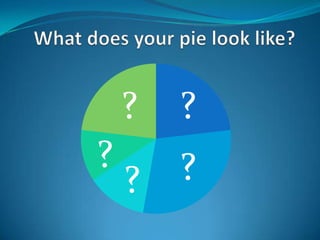
?   ?
?     ?
    ?
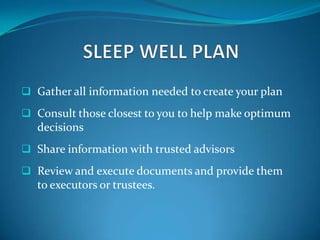
 Gather all information needed to create your plan
 Consult those closest to you to help make optimum
   decisions
 Share information with trusted advisors
 Review and execute documents and provide them
   to executors or trustees.
 California laws of intestate succession are used to
   determine who will inherit your estate.

 As a “community property” state, transfer of
   property, even when a will or trust is in place, can
   be more complicated requiring good professional
   advice.

 Examples of distribution of decedents property
   according to California intestacy laws.
Will: A written legal document signed and witnessed
directing the distribution of your property.
Living Trust: A legal document to which ownership of
property is transferred and a trustee is appointed and
which distributes your property according to the terms
created in the trust.
Which is best for me? Will or Living Trust?
The unintended consequence of intestacy or a poorly
or incorrectly drafted will or living trust.
How to avoid Accidental Inheritance:
   Gather all pertinent information accurately
   Consult with family and friends if appropriate
   Consider all personal passions and legacy giving
   Consult with trusted professional advisors when
     drafting documents.
 Current Will or Living Trust
 Durable Power of Attorney for Finances
 Durable Power of Attorney for Healthcare
 Proper Distribution of Real Estate and
  Retirement Funds
 Use of Insurance
 Legacy Gifting Options
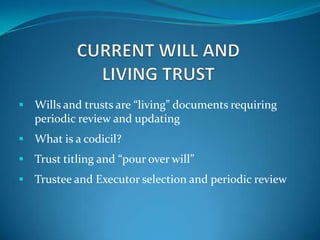
 Wills and trusts are “living” documents requiring
   periodic review and updating
 What is a codicil?
 Trust titling and “pour over will”
 Trustee and Executor selection and periodic review
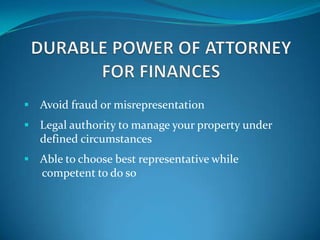
 Avoid fraud or misrepresentation
 Legal authority to manage your property under
   defined circumstances
 Able to choose best representative while
   competent to do so
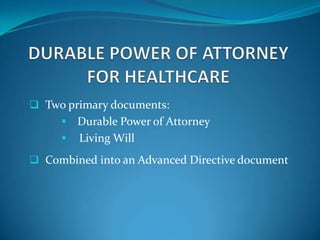
 Two primary documents:
      Durable Power of Attorney
        Living Will
 Combined into an Advanced Directive document
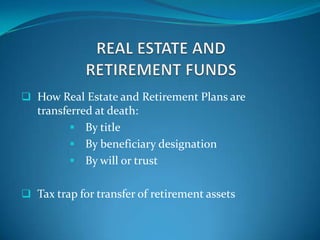
 How Real Estate and Retirement Plans are
   transferred at death:
           By title
           By beneficiary designation
           By will or trust


 Tax trap for transfer of retirement assets
 Long Term Care Insurance
 Life Insurance

 Annuities

 Cost – Benefit Analysis
 Why A Legacy Gift?
 Life Income Gifts
 Charitable Trusts
 Bequest Giving
 Gifting Through Titling of Assets
   Personal information on you and your family
   Define your estate planning goals
   Take inventory of your current situation
   Select person for role as Healthcare Power of Attorney
   Select person for role as Financial Power of Attorney
   Take inventory of assets: real estate, bank accounts,
    investments, and personal property
   Take inventory of liabilities: mortgages, vehicles, credit
    card accounts, loans and other debts
   Estate Plan details
 Complete the workbook accurately.
 Engage professional advisors, especially if you have
   unique assets, blended family issues, or specific
   questions.
 Contact your charities of choice about legacy
   gifting. Call me with specific questions about
   legacy gifts in general or gifts to Marymount
   College or the Peninsula Seniors.
Tom Zajac
      MARYMOUNT COLLEGE
      Major/Planned Gifts Officer
             Development
     30800 Palos Verdes Drive East
    Rancho Palos Verdes, CA 90275
Ph. (310) 303- 7625, Fax: (310) 303-7284
  Email: tzajac@marymountpv.edu
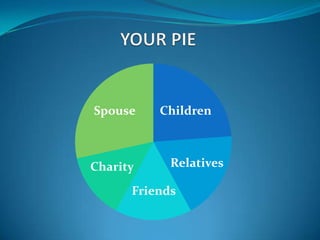
Spouse    Children


Charity     Relatives

      Friends
Peninsula seniors pg workshop power point

Peninsula seniors pg workshop power point

  • 3.
    ? ? ? ? ?
  • 4.
     Gather allinformation needed to create your plan  Consult those closest to you to help make optimum decisions  Share information with trusted advisors  Review and execute documents and provide them to executors or trustees.
  • 5.
     California lawsof intestate succession are used to determine who will inherit your estate.  As a “community property” state, transfer of property, even when a will or trust is in place, can be more complicated requiring good professional advice.  Examples of distribution of decedents property according to California intestacy laws.
  • 6.
    Will: A writtenlegal document signed and witnessed directing the distribution of your property. Living Trust: A legal document to which ownership of property is transferred and a trustee is appointed and which distributes your property according to the terms created in the trust. Which is best for me? Will or Living Trust?
  • 7.
    The unintended consequenceof intestacy or a poorly or incorrectly drafted will or living trust. How to avoid Accidental Inheritance:  Gather all pertinent information accurately  Consult with family and friends if appropriate  Consider all personal passions and legacy giving  Consult with trusted professional advisors when drafting documents.
  • 8.
     Current Willor Living Trust  Durable Power of Attorney for Finances  Durable Power of Attorney for Healthcare  Proper Distribution of Real Estate and Retirement Funds  Use of Insurance  Legacy Gifting Options
  • 9.
     Wills andtrusts are “living” documents requiring periodic review and updating  What is a codicil?  Trust titling and “pour over will”  Trustee and Executor selection and periodic review
  • 10.
     Avoid fraudor misrepresentation  Legal authority to manage your property under defined circumstances  Able to choose best representative while competent to do so
  • 11.
     Two primarydocuments:  Durable Power of Attorney  Living Will  Combined into an Advanced Directive document
  • 12.
     How RealEstate and Retirement Plans are transferred at death:  By title  By beneficiary designation  By will or trust  Tax trap for transfer of retirement assets
  • 13.
     Long TermCare Insurance  Life Insurance  Annuities  Cost – Benefit Analysis
  • 14.
     Why ALegacy Gift?  Life Income Gifts  Charitable Trusts  Bequest Giving  Gifting Through Titling of Assets
  • 15.
    Personal information on you and your family  Define your estate planning goals  Take inventory of your current situation  Select person for role as Healthcare Power of Attorney  Select person for role as Financial Power of Attorney  Take inventory of assets: real estate, bank accounts, investments, and personal property  Take inventory of liabilities: mortgages, vehicles, credit card accounts, loans and other debts  Estate Plan details
  • 16.
     Complete theworkbook accurately.  Engage professional advisors, especially if you have unique assets, blended family issues, or specific questions.  Contact your charities of choice about legacy gifting. Call me with specific questions about legacy gifts in general or gifts to Marymount College or the Peninsula Seniors.
  • 17.
    Tom Zajac MARYMOUNT COLLEGE Major/Planned Gifts Officer Development 30800 Palos Verdes Drive East Rancho Palos Verdes, CA 90275 Ph. (310) 303- 7625, Fax: (310) 303-7284 Email: tzajac@marymountpv.edu
  • 18.
    Spouse Children Charity Relatives Friends