INTRODUCTION
Peanut katli isa traditional Indian sweet crafed from
peanuts, sugar, milk powder, and ghee.
It serves as a cost-effective alternative to the more
expensive kaju katli (cashew sweet), offering similar
taste and texture at a fraction of the price.
Its growing popularity is driven by affordability,
nutritional value, and appeal among both traditional
sweet lovers and health-conscious consumers
4.
NUTRITIONAL VALUES
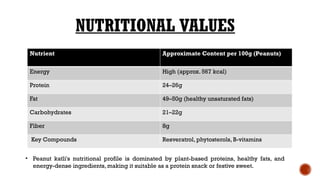
Nutrient ApproximateContent per 100g (Peanuts)
Energy High (approx. 567 kcal)
Protein 24–26g
Fat 49–50g (healthy unsaturated fats)
Carbohydrates 21–22g
Fiber 8g
Key Compounds Resveratrol, phytosterols, B-vitamins
• Peanut katli's nutritional profile is dominated by plant-based proteins, healthy fats, and
energy-dense ingredients, making it suitable as a protein snack or festive sweet.
5.
MARKET SURVEY
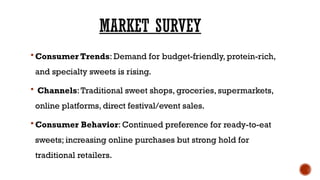
ConsumerTrends: Demand for budget-friendly, protein-rich,
and specialty sweets is rising.
Channels:Traditional sweet shops, groceries, supermarkets,
online platforms, direct festival/event sales.
Consumer Behavior: Continued preference for ready-to-eat
sweets; increasing online purchases but strong hold for
traditional retailers.
6.
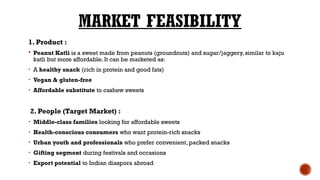
MARKET FEASIBILITY
1. Product:
Peanut Katli is a sweet made from peanuts (groundnuts) and sugar/jaggery, similar to kaju
katli but more affordable. It can be marketed as:
• A healthy snack (rich in protein and good fats)
• Vegan & gluten-free
• Affordable substitute to cashew sweets
2. People (Target Market) :
• Middle-class families looking for affordable sweets
• Health-conscious consumers who want protein-rich snacks
• Urban youth and professionals who prefer convenient, packed snacks
• Gifting segment during festivals and occasions
• Export potential to Indian diaspora abroad
7.
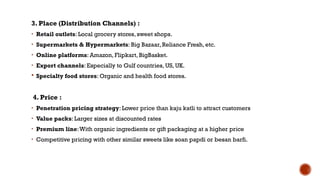
3. Place (DistributionChannels) :
• Retail outlets: Local grocery stores, sweet shops.
• Supermarkets & Hypermarkets: Big Bazaar, Reliance Fresh, etc.
• Online platforms: Amazon, Flipkart, BigBasket.
• Export channels: Especially to Gulf countries, US, UK.
Specialty food stores: Organic and health food stores.
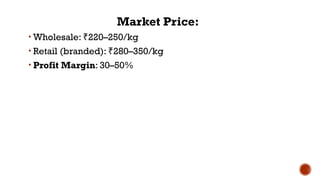
4. Price :
• Penetration pricing strategy: Lower price than kaju katli to attract customers
• Value packs: Larger sizes at discounted rates
• Premium line:With organic ingredients or gift packaging at a higher price
• Competitive pricing with other similar sweets like soan papdi or besan barfi.
8.
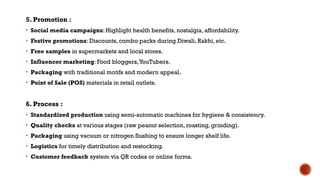
5. Promotion :
•Social media campaigns: Highlight health benefits, nostalgia, affordability.
• Festive promotions: Discounts, combo packs during Diwali, Rakhi, etc.
• Free samples in supermarkets and local stores.
• Influencer marketing: Food bloggers,YouTubers.
• Packaging with traditional motifs and modern appeal.
• Point of Sale (POS) materials in retail outlets.
6. Process :
• Standardized production using semi-automatic machines for hygiene & consistency.
• Quality checks at various stages (raw peanut selection, roasting, grinding).
• Packaging using vacuum or nitrogen flushing to ensure longer shelf life.
• Logistics for timely distribution and restocking.
• Customer feedback system via QR codes or online forms.
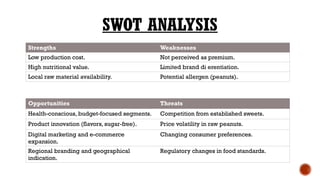
SWOT ANALYSIS
Strengths Weaknesses
Lowproduction cost. Not perceived as premium.
High nutritional value. Limited brand di erentiation.
Local raw material availability. Potential allergen (peanuts).
Opportunities Threats
Health-conscious, budget-focused segments. Competition from established sweets.
Product innovation (flavors, sugar-free). Price volatility in raw peanuts.
Digital marketing and e-commerce
expansion.
Changing consumer preferences.
Regional branding and geographical
indication.
Regulatory changes in food standards.
11.
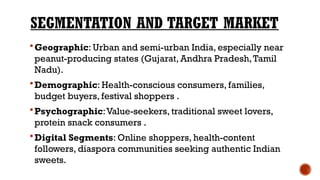
SEGMENTATION AND TARGETMARKET
Geographic: Urban and semi-urban India, especially near
peanut-producing states (Gujarat, Andhra Pradesh,Tamil
Nadu).
Demographic: Health-conscious consumers, families,
budget buyers, festival shoppers .
Psychographic:Value-seekers, traditional sweet lovers,
protein snack consumers .
Digital Segments: Online shoppers, health-content
followers, diaspora communities seeking authentic Indian
sweets.
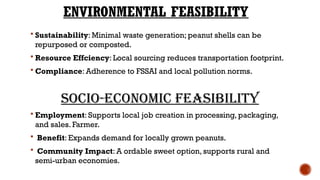
ENVIRONMENTAL FEASIBILITY
Sustainability:Minimal waste generation; peanut shells can be
repurposed or composted.
Resource Effciency: Local sourcing reduces transportation footprint.
Compliance: Adherence to FSSAI and local pollution norms.
Socio-Economic Feasibility
Employment: Supports local job creation in processing, packaging,
and sales. Farmer.
Benefit: Expands demand for locally grown peanuts.
Community Impact: A ordable sweet option, supports rural and
semi-urban economies.
16.
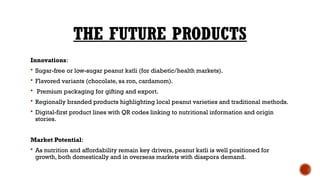
THE FUTURE PRODUCTS
Innovations:
Sugar-free or low-sugar peanut katli (for diabetic/health markets).
Flavored variants (chocolate, sa ron, cardamom).
Premium packaging for gifting and export.
Regionally branded products highlighting local peanut varieties and traditional methods.
Digital-first product lines with QR codes linking to nutritional information and origin
stories.
Market Potential:
As nutrition and affordability remain key drivers, peanut katli is well positioned for
growth, both domestically and in overseas markets with diaspora demand.
17.
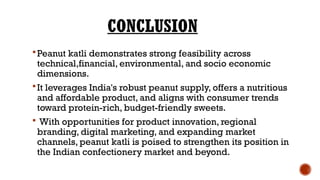
CONCLUSION
Peanut katli demonstratesstrong feasibility across
technical,financial, environmental, and socio economic
dimensions.
It leverages India's robust peanut supply, offers a nutritious
and affordable product, and aligns with consumer trends
toward protein-rich, budget-friendly sweets.
With opportunities for product innovation, regional
branding, digital marketing, and expanding market
channels, peanut katli is poised to strengthen its position in
the Indian confectionery market and beyond.