Downloaded 155 times
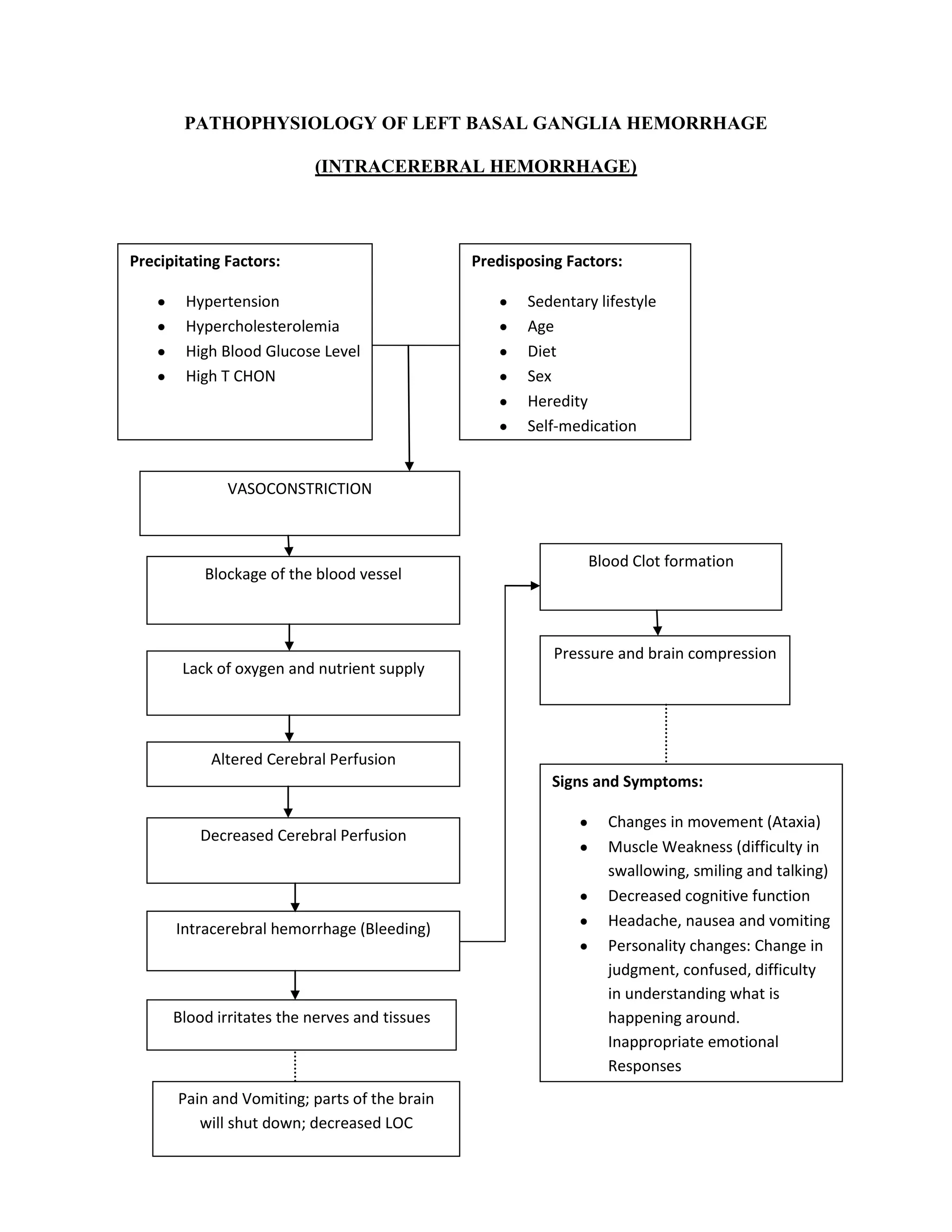

This document discusses the pathophysiology of left basal ganglia hemorrhage or intracerebral hemorrhage. It lists precipitating factors like hypertension, hypercholesterolemia, and high blood glucose that can cause vasoconstriction and blockage of blood vessels, restricting oxygen and nutrient supply. This decreased cerebral perfusion results in intracerebral bleeding that irritates nerves and tissues, causing signs and symptoms such as changes in movement, weakness, cognitive deficits, headaches, and personality changes.


![[2015] the treatment of diabetes mellitus of patients with chronic liver disease](https://cdn.slidesharecdn.com/ss_thumbnails/2015thetreatmentofdiabetesmellitusofpatientswithchronicliverdisease-151117004501-lva1-app6891-thumbnail.jpg?width=640&height=640&fit=bounds)


