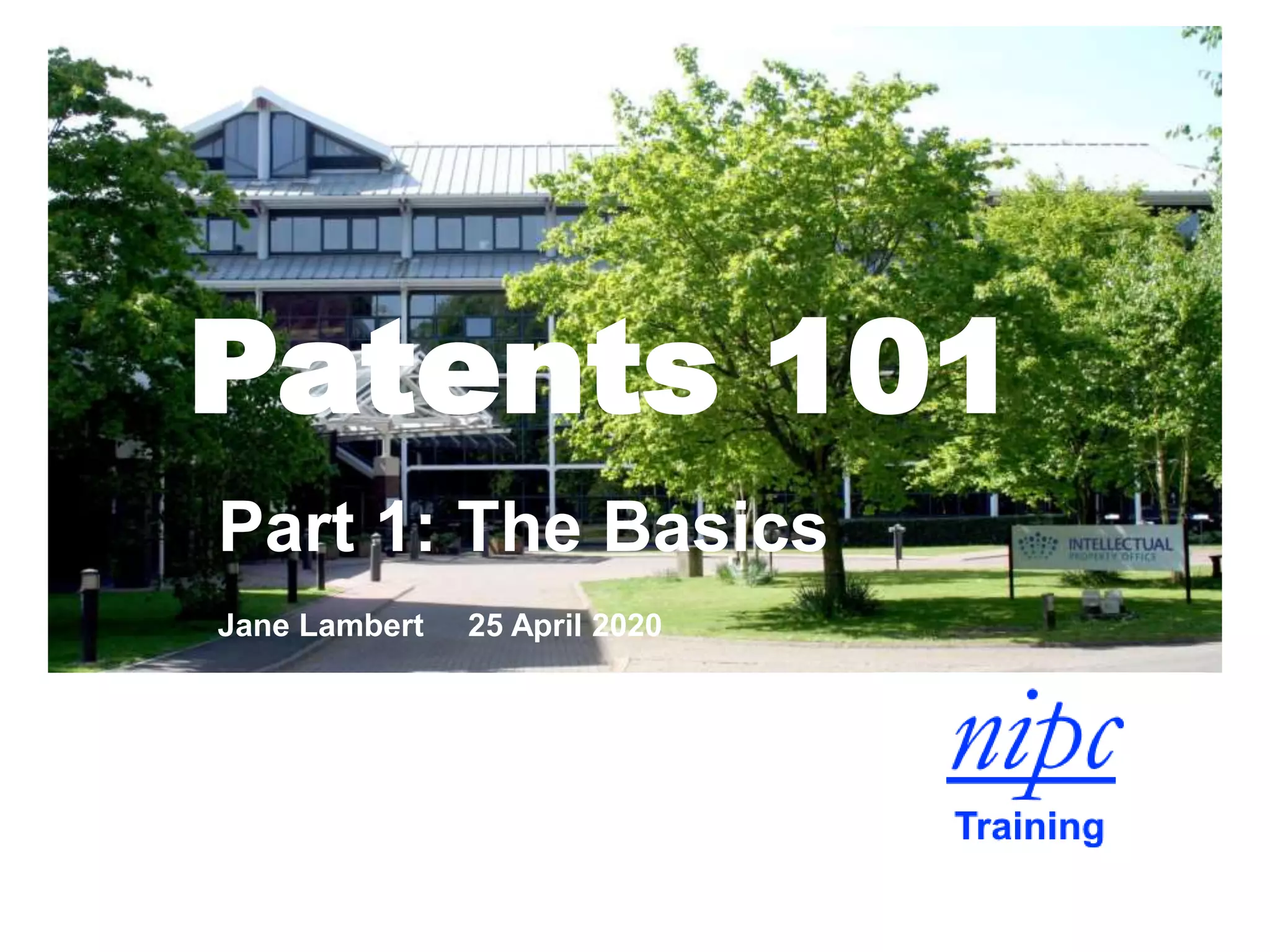
Patents 101
Part 1: The Basics
Jane Lambert 25 April 2020
Content
• What is a patent?
• What is a monopoly?
• What is an invention?
• What is a specification
• The inventor’s bargain with the public
• The teaching
• The claims
What is a patent?
A monopoly of a new invention.
What is a monopoly?
An exclusive right to exploit an invention.
If the invention is a product, the
exclusive right to make, import, sell,
market, use or keep the product.
If the invention is a process, the
exclusive right to use the process
including importing, marketing or
selling anything made from it.
What is a monopoly?
A patent may be infringed even if the
infringer developed his or her product
independently, in good faith and without
any knowledge of the patent.
Compare a patent to a copyright which
merely restricts certain acts like copying
or publishing a copyright work.
What is an invention?
There is no statutory definition of
“invention” in most countries’ patent
laws.
Most statutes indicate that an invention
can be a product or a process.
All refer to the invention as the part of a
specification known as a “claim”.
What is a specification?
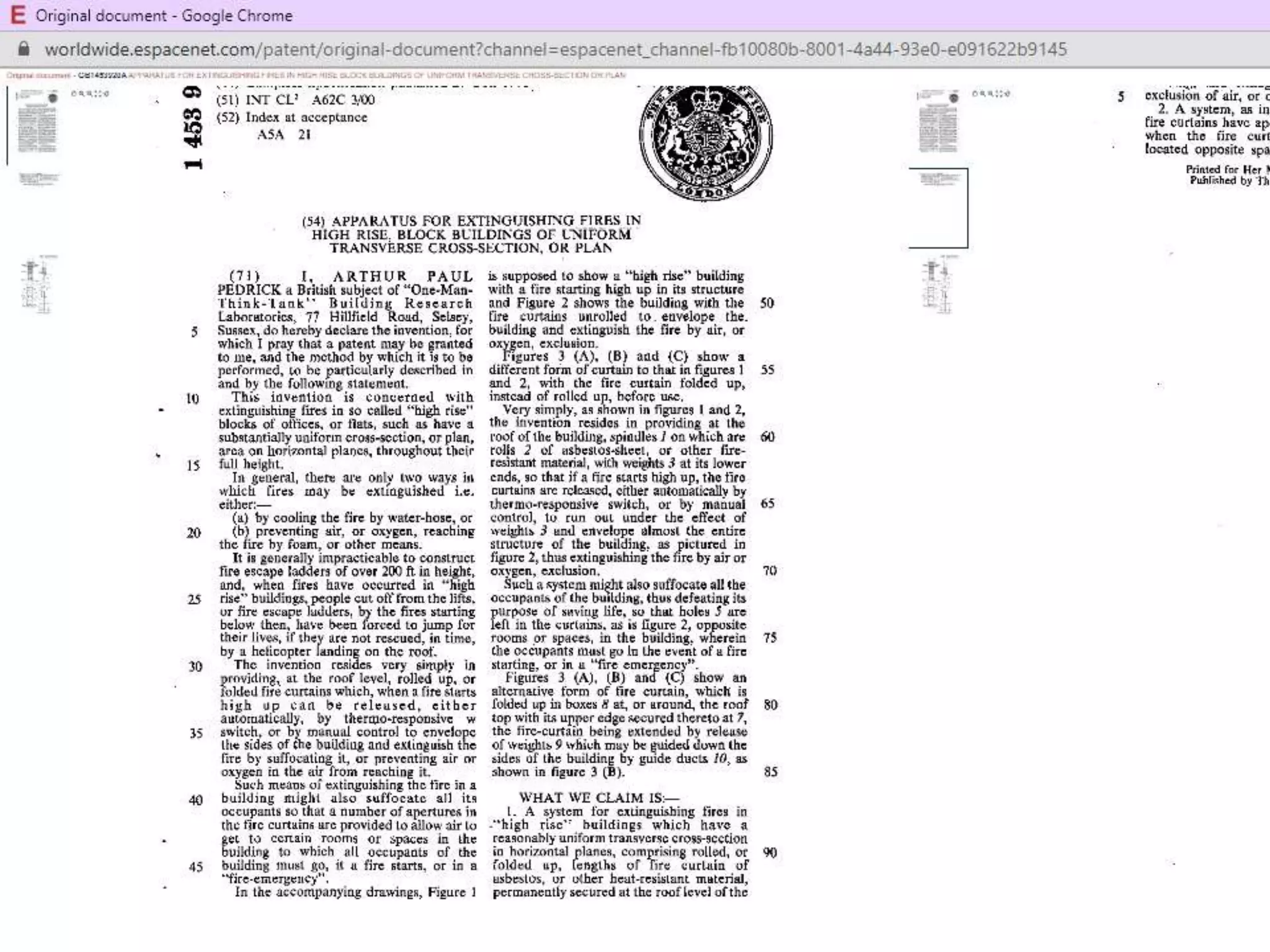
The specification is the document that
contains the patent.
It consists of two parts:
• The description and
• The claims.
What is a specification?
The specification is the document that
contains the patent.
It consists of two parts:
• A description’ and
• The claims.
So what is a “claim”?
The inventor’s bargain
The inventor discloses his or her
invention to the public.
In return, the public grant the inventor a
20 year monopoly of the invention as
defined in the claims on the
understanding that the claims are valid
and the inventor pays the renewal fees.
The teaching
The description of the invention is often
referred to as the “teaching”.
It usually sets out:
• A technical problem
• Previous attempts to solve it
• A technical solution supported by
drawings.
The claims
The claims are the monopoly.
They are set out by the inventor or more
usually his or her patent attorney.
Drafting claims requires great skill and a
knowledge of the law and the technology.
Listed in numbered paragraphs starting
with the widest.
Questions and answers
Jane Lambert
4-5 Gray’s Inn Square
London
WC1R 3AH
jane.lambert@nipclaw.com
www.nipclaw.com
+44 (0)20 7404 5252

Patents101- The Basics

  • 1.
    Patents 101 Part 1:The Basics Jane Lambert 25 April 2020
  • 2.
    Content • What isa patent? • What is a monopoly? • What is an invention? • What is a specification • The inventor’s bargain with the public • The teaching • The claims
  • 3.
    What is apatent? A monopoly of a new invention.
  • 4.
    What is amonopoly? An exclusive right to exploit an invention. If the invention is a product, the exclusive right to make, import, sell, market, use or keep the product. If the invention is a process, the exclusive right to use the process including importing, marketing or selling anything made from it.
  • 5.
    What is amonopoly? A patent may be infringed even if the infringer developed his or her product independently, in good faith and without any knowledge of the patent. Compare a patent to a copyright which merely restricts certain acts like copying or publishing a copyright work.
  • 6.
    What is aninvention? There is no statutory definition of “invention” in most countries’ patent laws. Most statutes indicate that an invention can be a product or a process. All refer to the invention as the part of a specification known as a “claim”.
  • 7.
    What is aspecification? The specification is the document that contains the patent. It consists of two parts: • The description and • The claims.
  • 8.
    What is aspecification? The specification is the document that contains the patent. It consists of two parts: • A description’ and • The claims.
  • 9.
    So what isa “claim”?
  • 10.
    The inventor’s bargain Theinventor discloses his or her invention to the public. In return, the public grant the inventor a 20 year monopoly of the invention as defined in the claims on the understanding that the claims are valid and the inventor pays the renewal fees.
  • 11.
    The teaching The descriptionof the invention is often referred to as the “teaching”. It usually sets out: • A technical problem • Previous attempts to solve it • A technical solution supported by drawings.
  • 12.
    The claims The claimsare the monopoly. They are set out by the inventor or more usually his or her patent attorney. Drafting claims requires great skill and a knowledge of the law and the technology. Listed in numbered paragraphs starting with the widest.
  • 13.
    Questions and answers JaneLambert 4-5 Gray’s Inn Square London WC1R 3AH jane.lambert@nipclaw.com www.nipclaw.com +44 (0)20 7404 5252