PARTICIPATORY PUBLIC
DATA INFRASTRUCTURE
OPEN DATA STANDARDS ANDTHETURNTO
TRANSPARENCY
@timdavies | tim@timdavies.org.uk
PARTICIPATORY PUBLIC DATA INFRASTRUCTURE
OPEN DATA STANDARDS ANDTHETURNTOTRANSPARENCY
1. Participatory public data infrastructure
2. Transparency
3. Standards
4. Examples
5. Recap & action
PART 1: PARTICIPATORY PUBLIC DATA
INFRASTRUCTURE
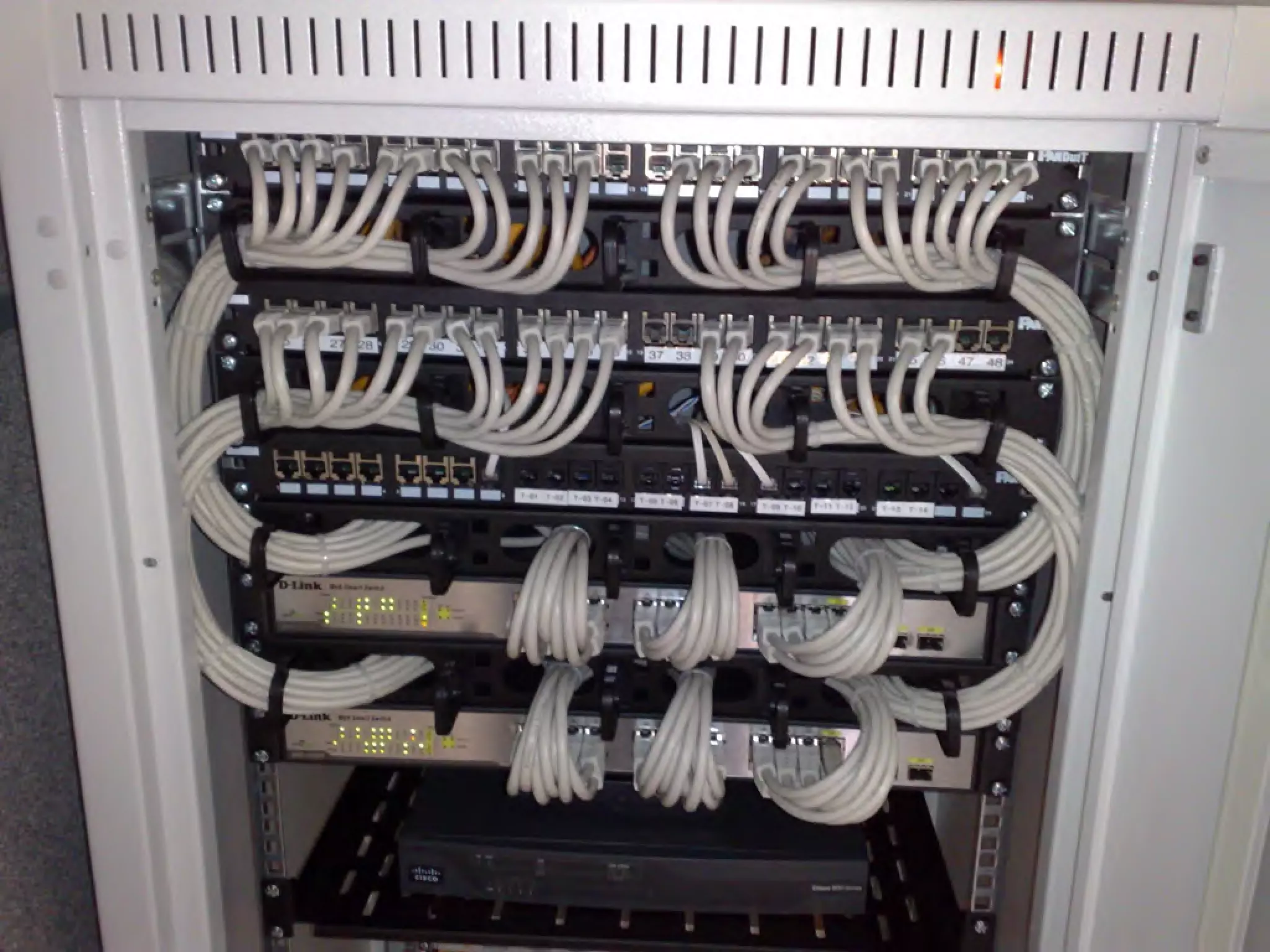
DATA INFRASTRUCTURE
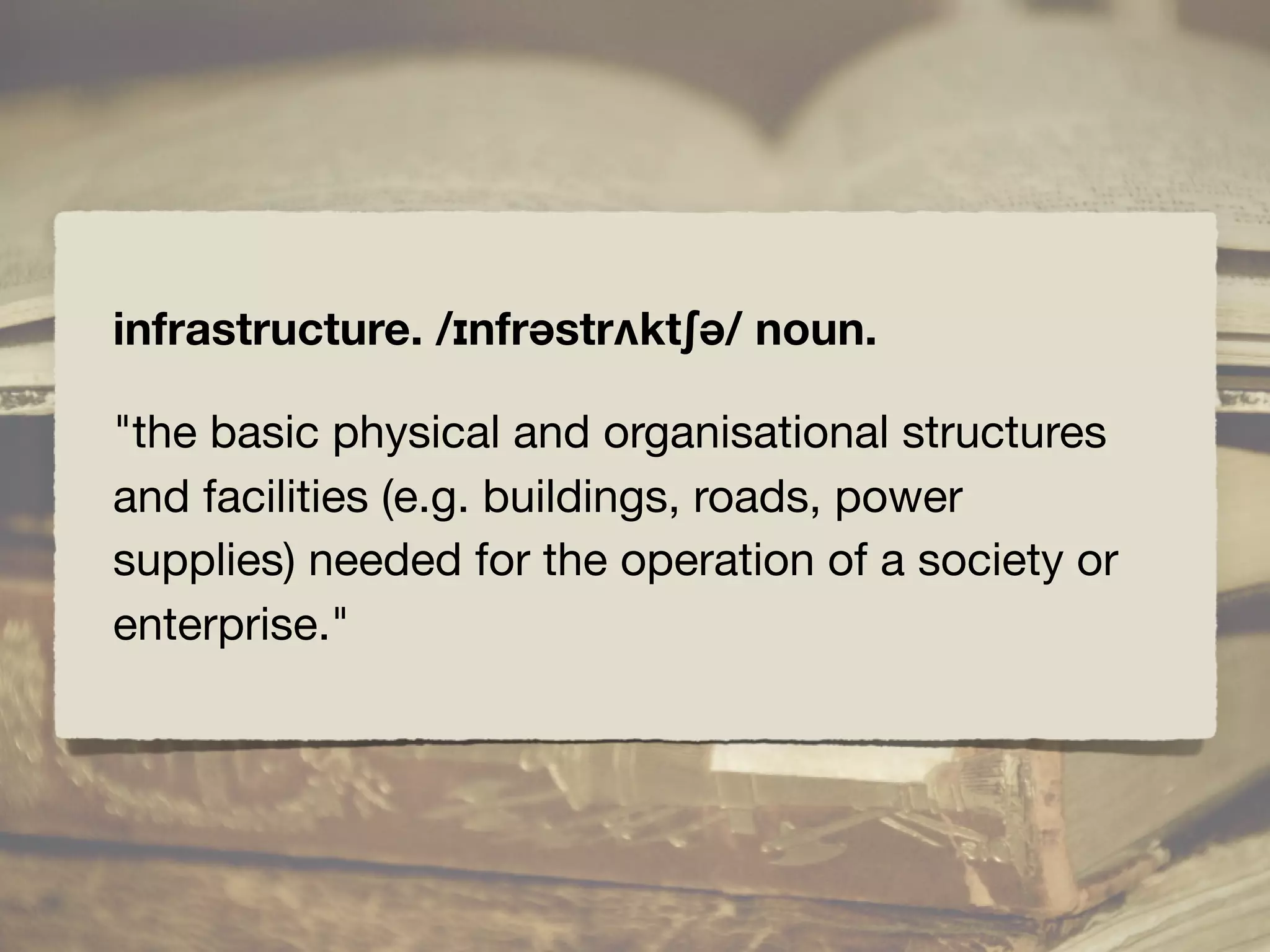
infrastructure. /ɪnfrəstrʌktʃə/ noun.
"the basic physical and organisational structures
and facilities (e.g. buildings, roads, power
supplies) needed for the operation of a society or
enterprise."
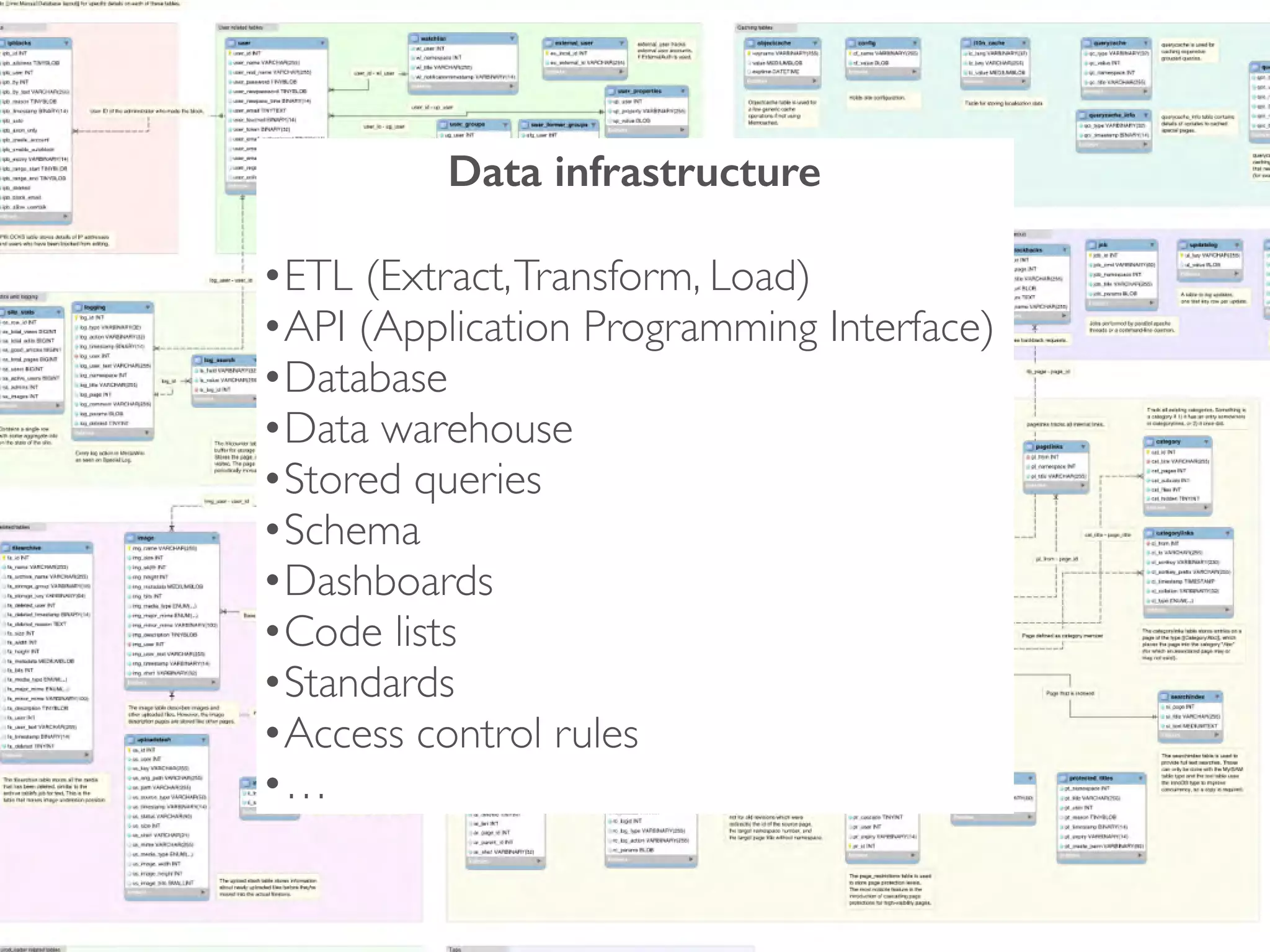
Data infrastructure
•ETL (Extract,Transform, Load)
•API (Application Programming Interface)
•Database
•Data warehouse
•Stored queries
•Schema
•Dashboards
•Code lists
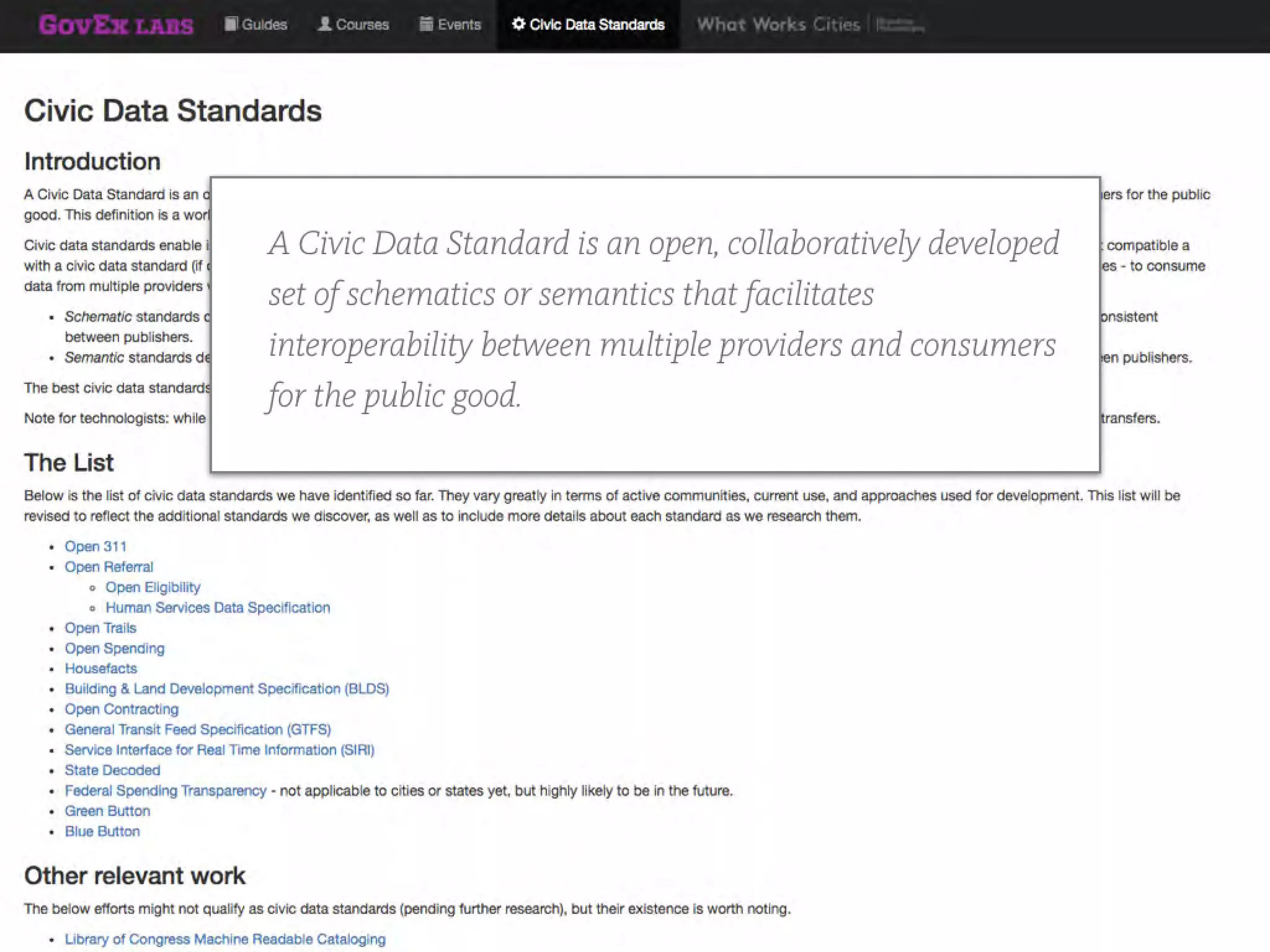
•Standards
•Access control rules
•…
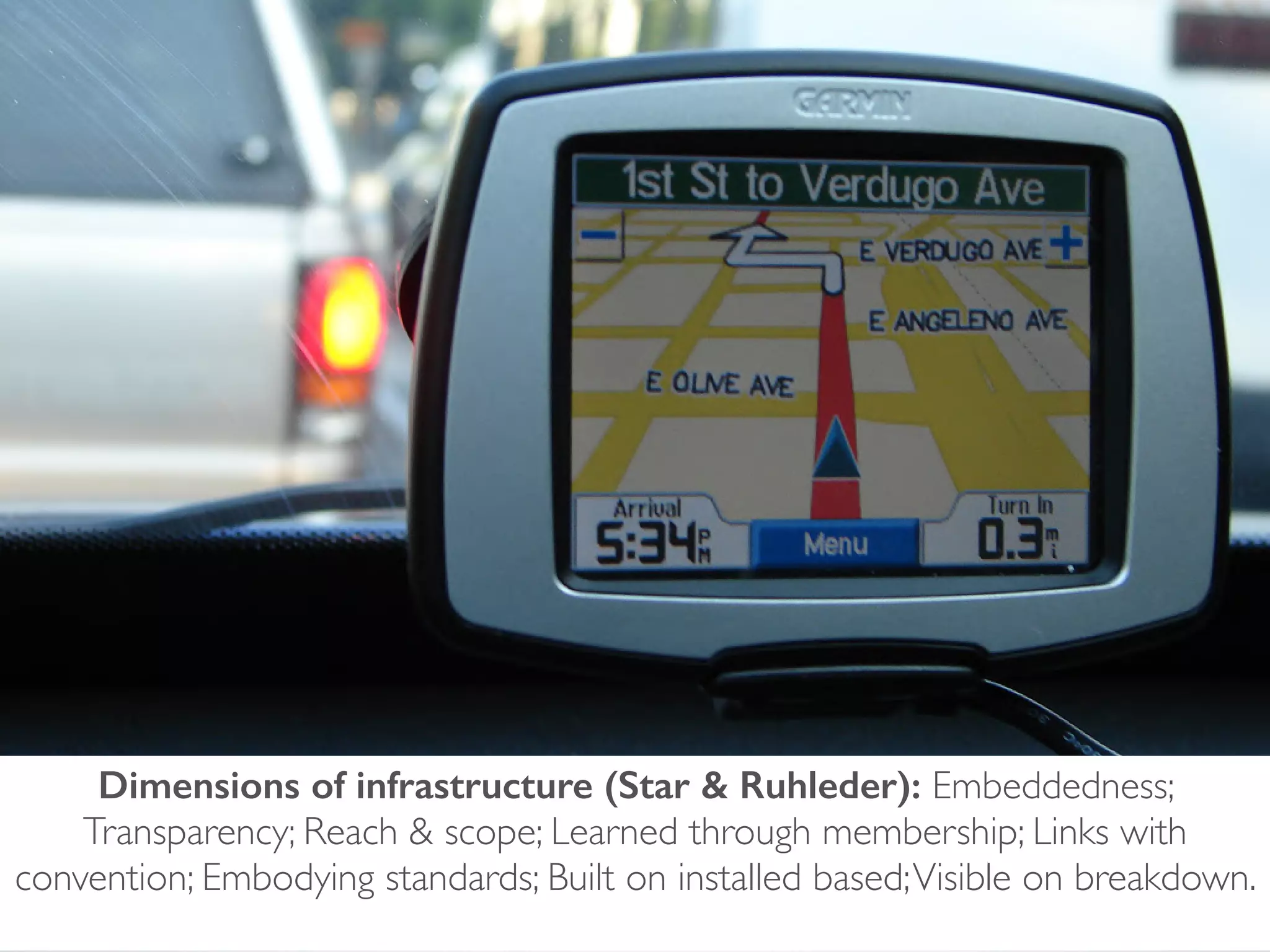
Dimensions of infrastructure (Star & Ruhleder): Embeddedness;
Transparency; Reach & scope; Learned through membership; Links with
convention; Embodying standards; Built on installed based;Visible on breakdown.
PUBLIC DATA INFRASTRUCTURE
PARTICIPATORY PUBLIC DATA
INFRASTRUCTURE
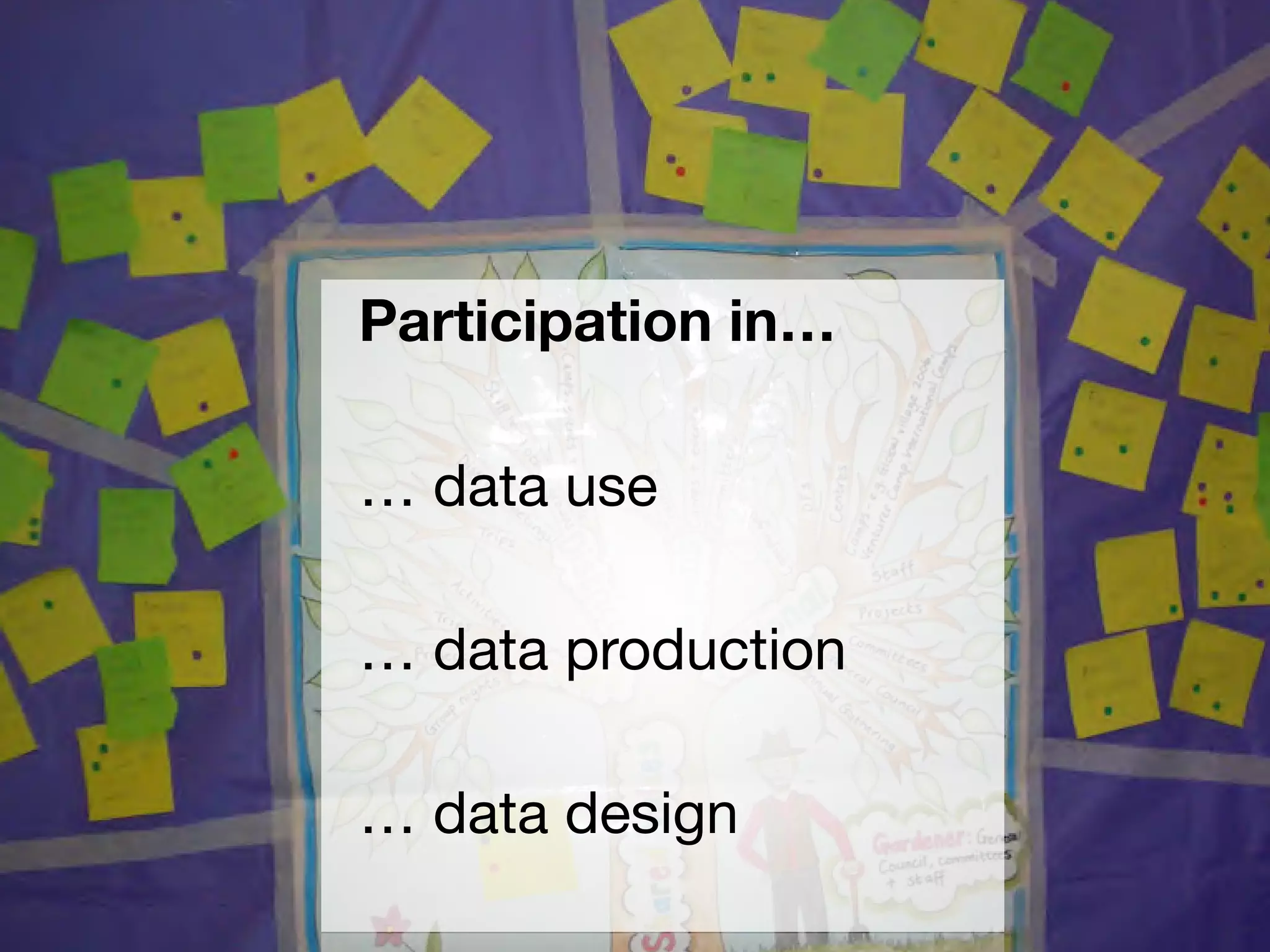
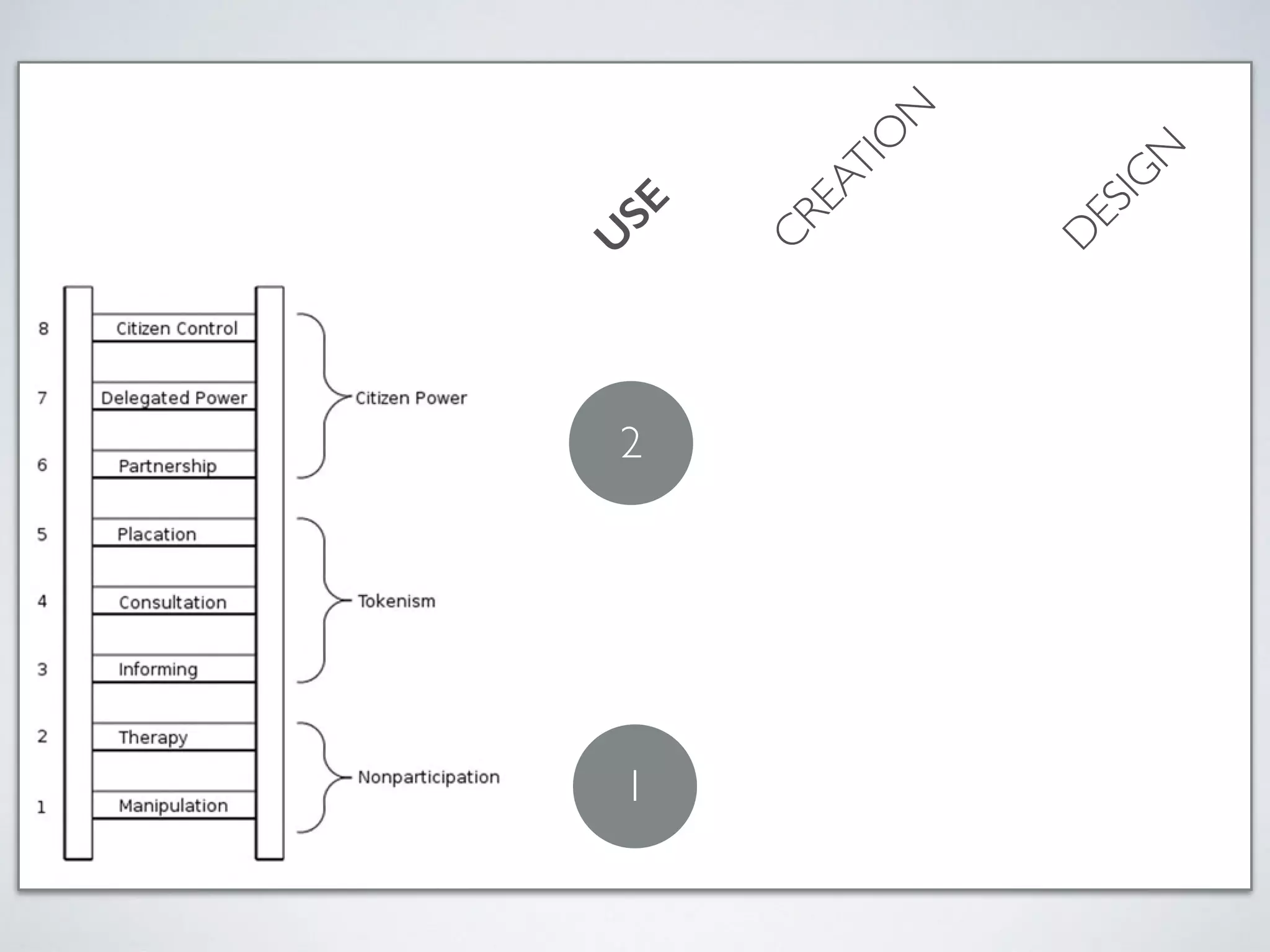
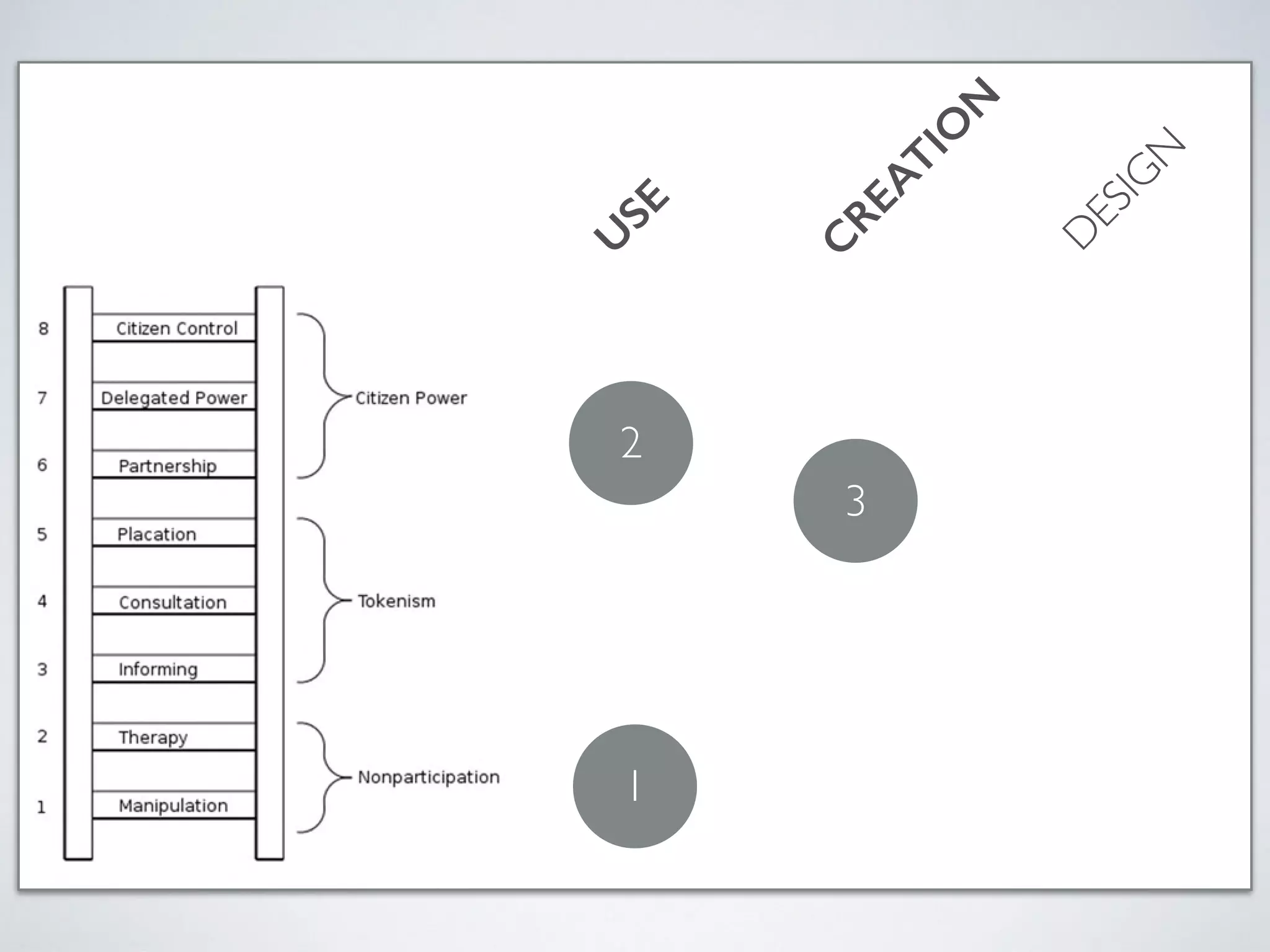
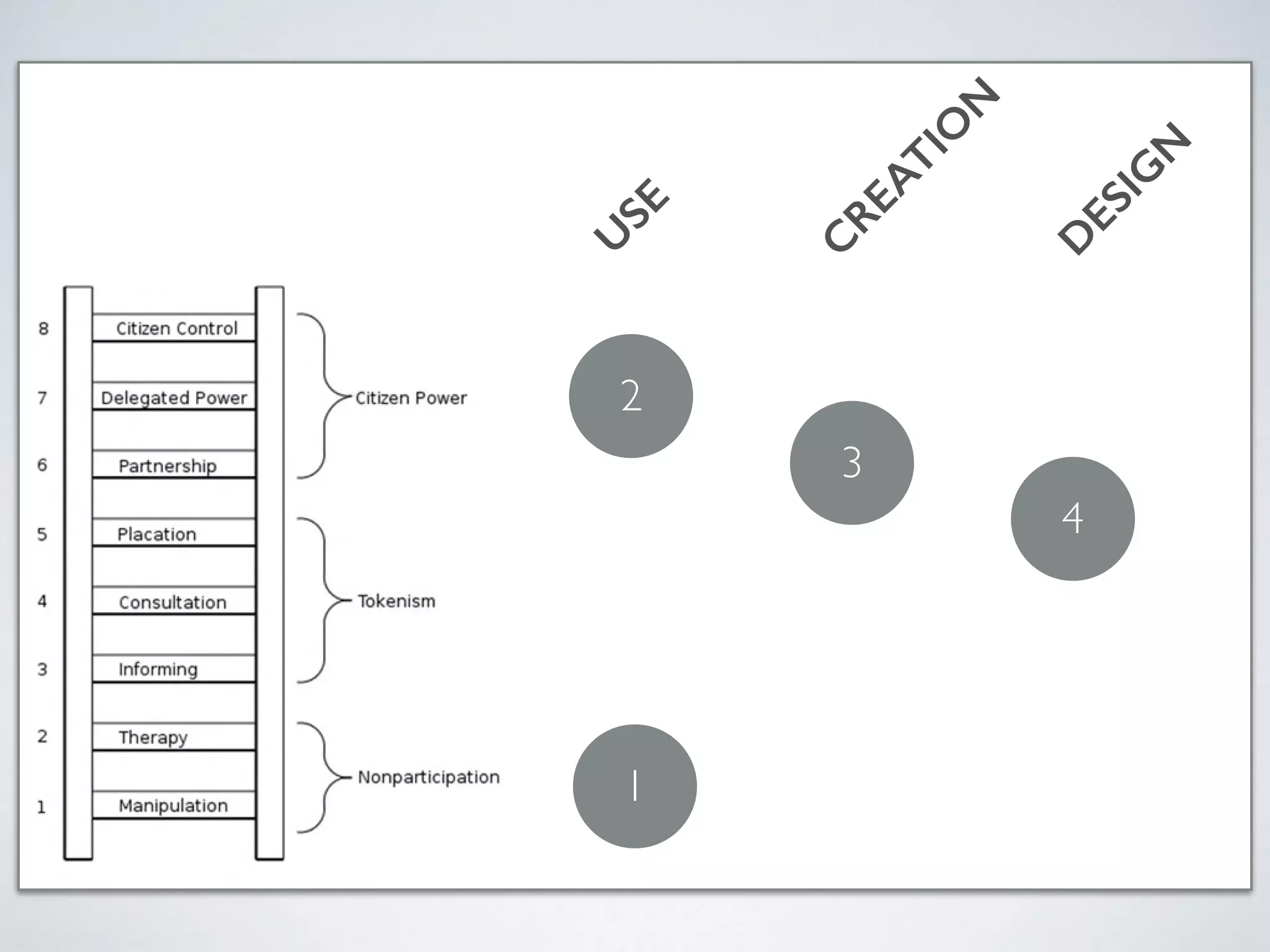
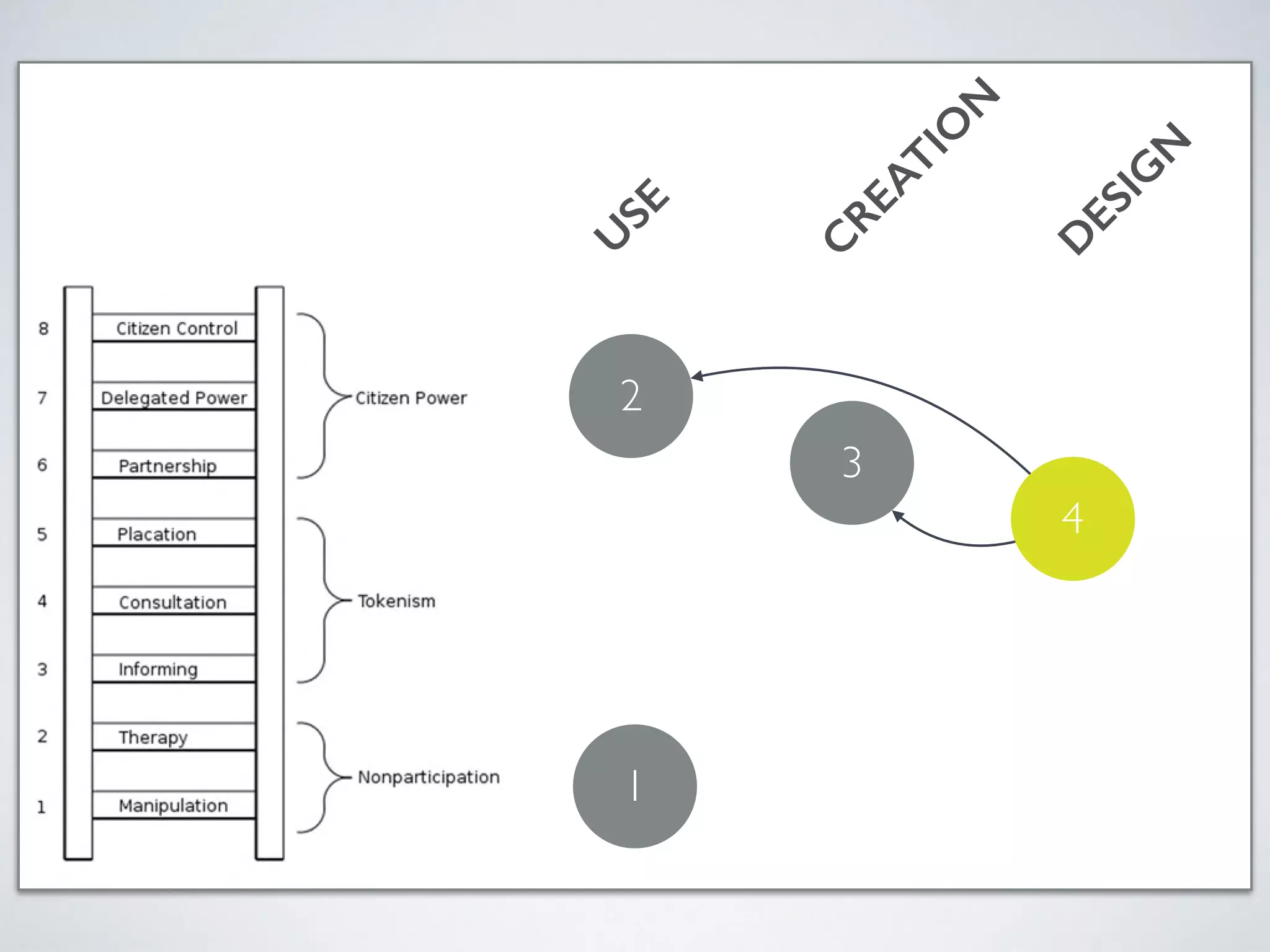
Participation in…

… data use

… data production

… data design
U
SE
CREATIO
N
D
ESIG
N
1
2
U
SE
C
REATIO
N
D
ESIG
N
1
2
3
U
SE
C
REATIO
N
D
ESIG
N
1
2
3
4
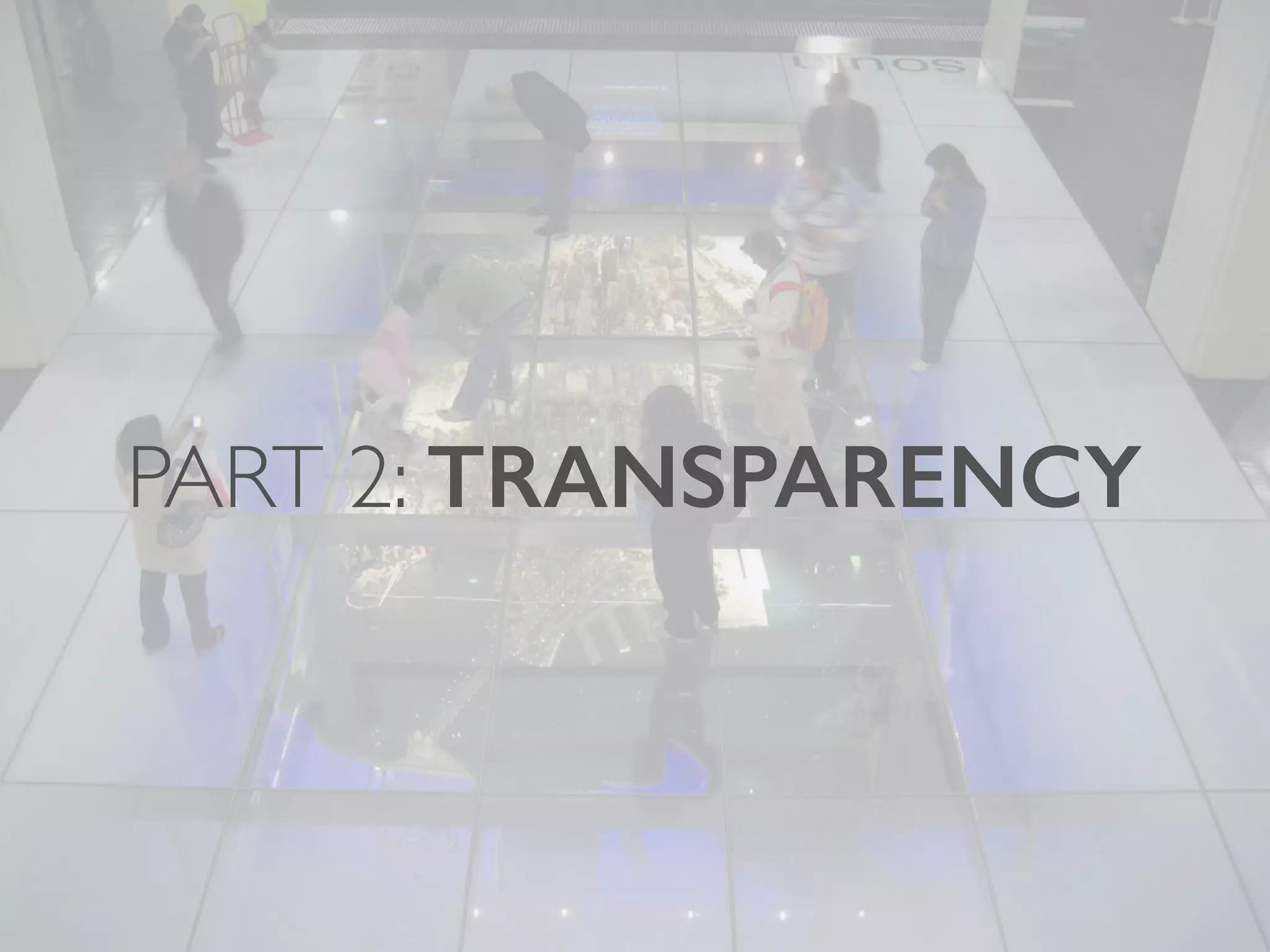
PART 2: TRANSPARENCY
transparency /tranˈspar(ə)nsi/ noun
"the quality of being done in an open way without
secrets"
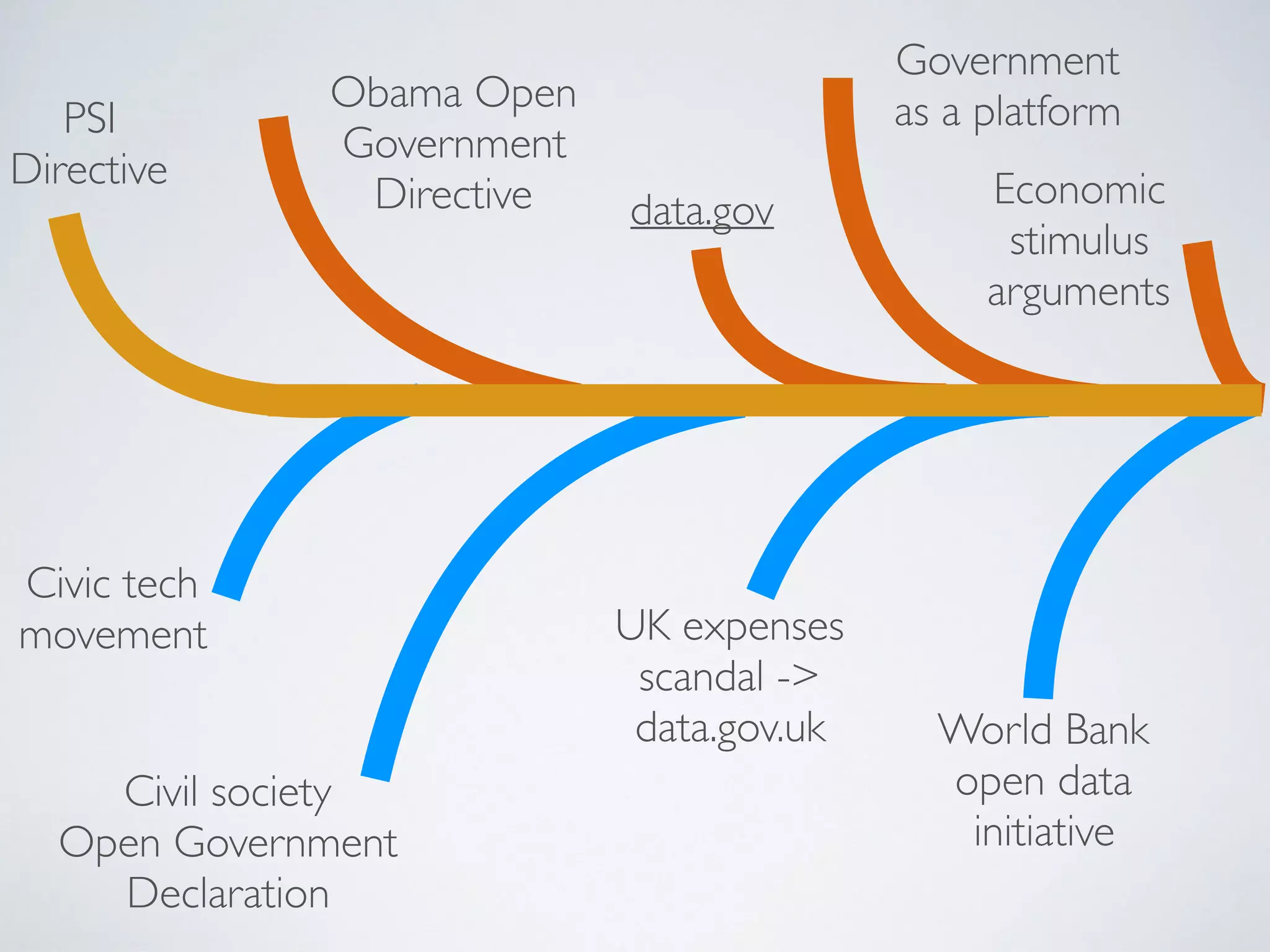
PSI
Directive
Civil society
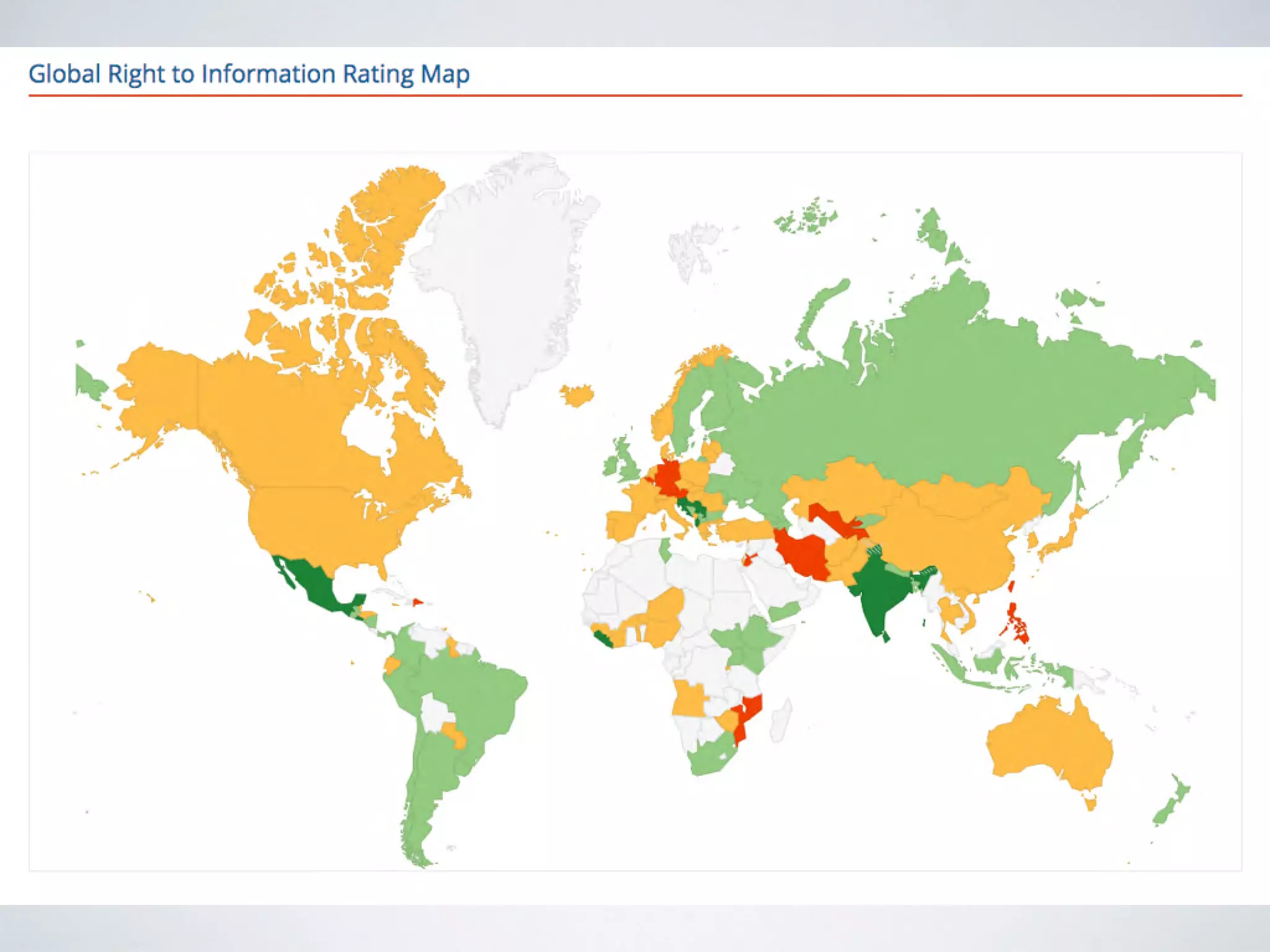
Open Government
Declaration
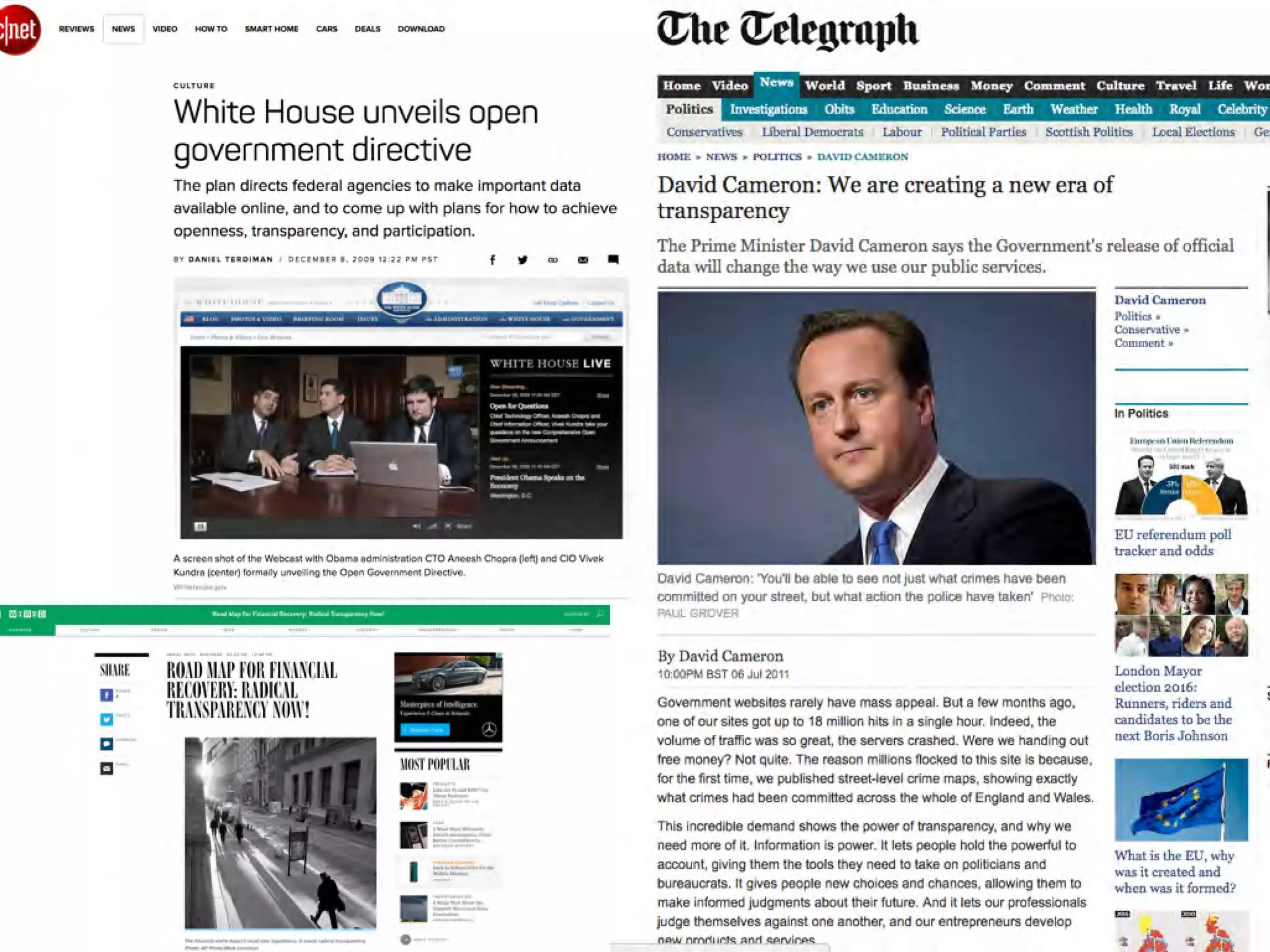
Obama Open
Government
Directive data.gov
UK expenses
scandal ->
data.gov.uk
Civic tech
movement
Government
as a platform
World Bank
open data
initiative
Economic
stimulus
arguments
PART 3: STANDARDS
standard /ˈstandəd/ noun
"something used as a measure, norm, or model in
[comparative] evaluations."
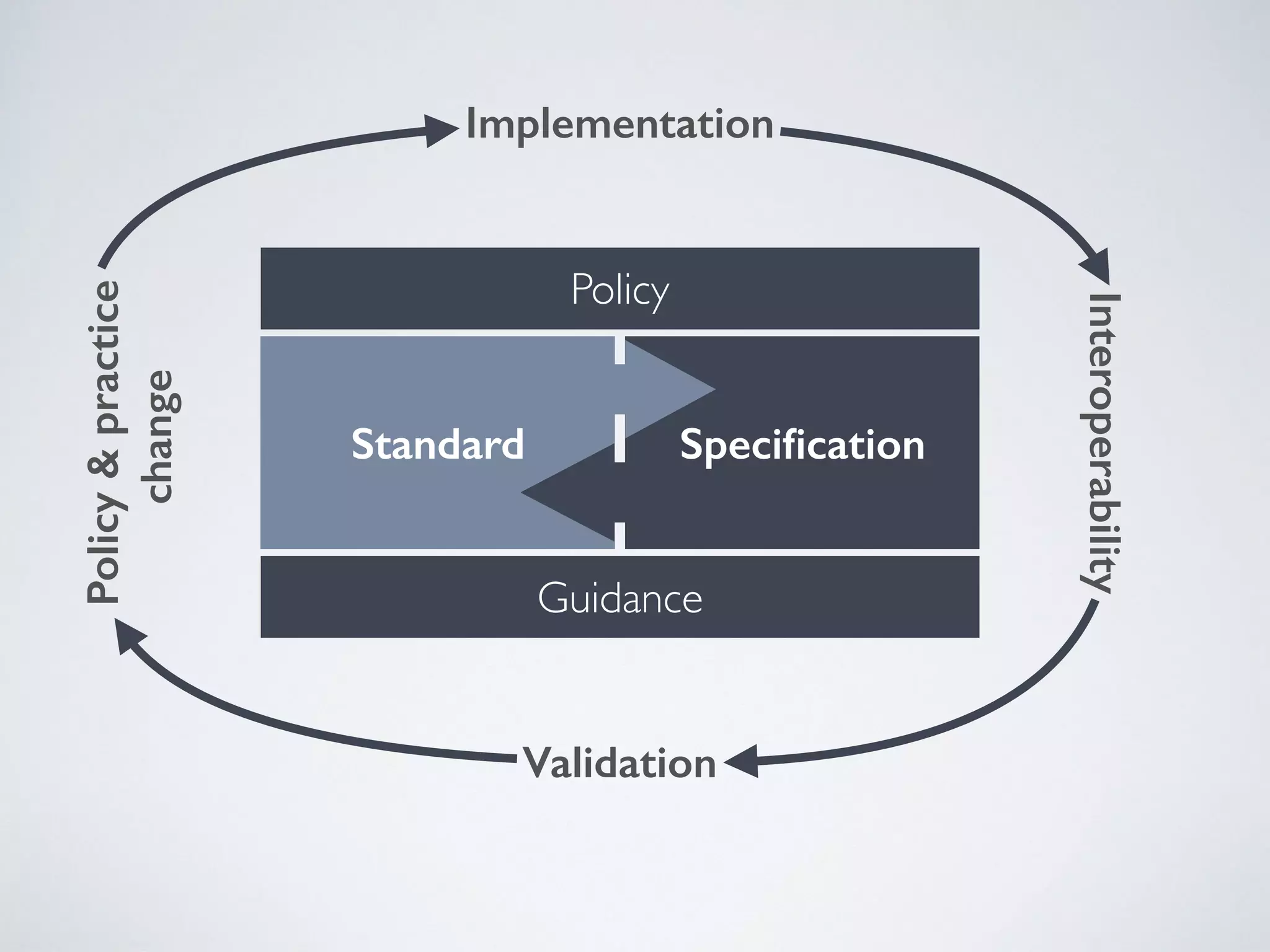
Standard Specification
Policy
Guidance
Implementation
Validation
Policy&practice
change
Interoperability
PART 4: EXAMPLES
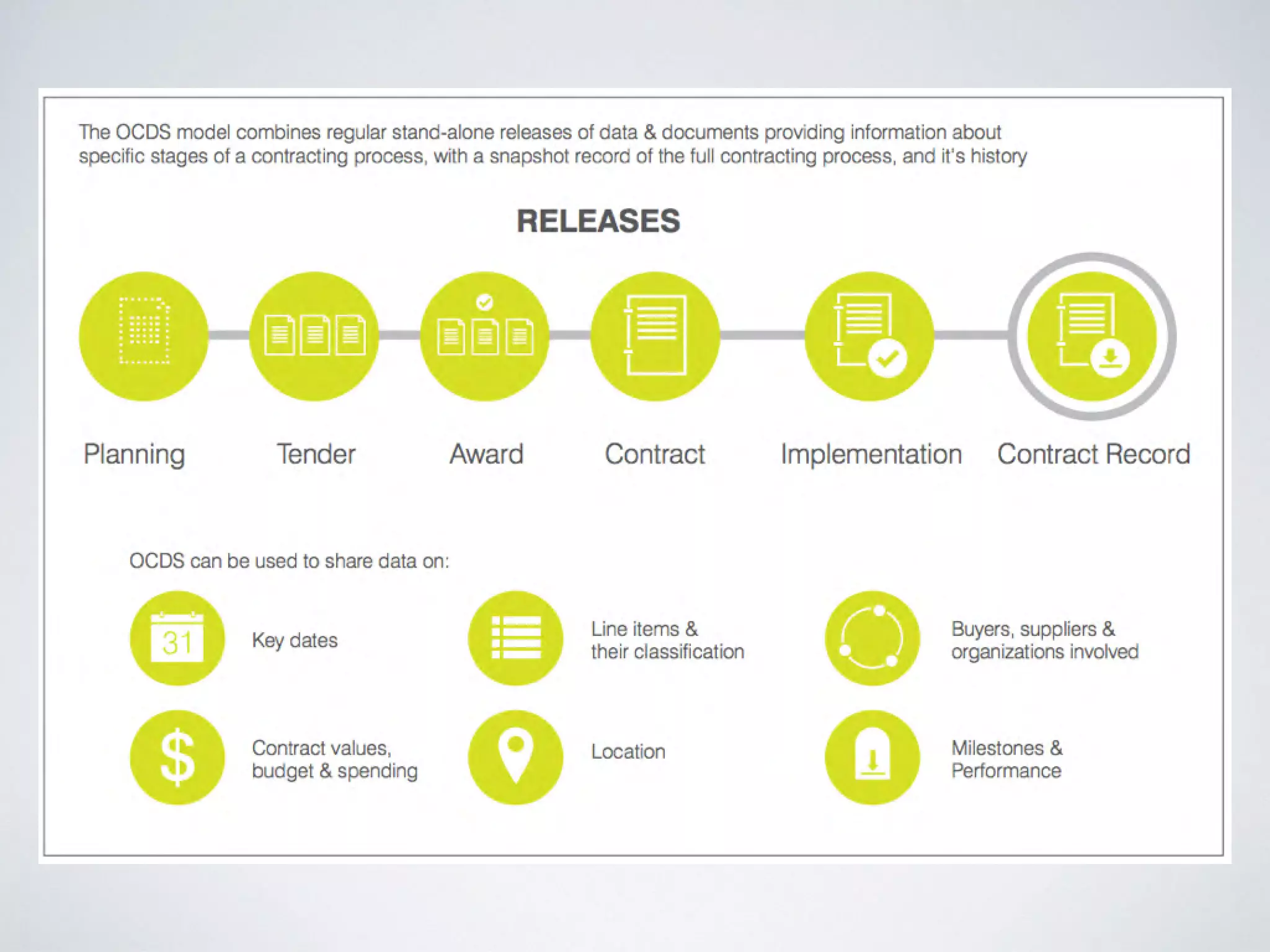
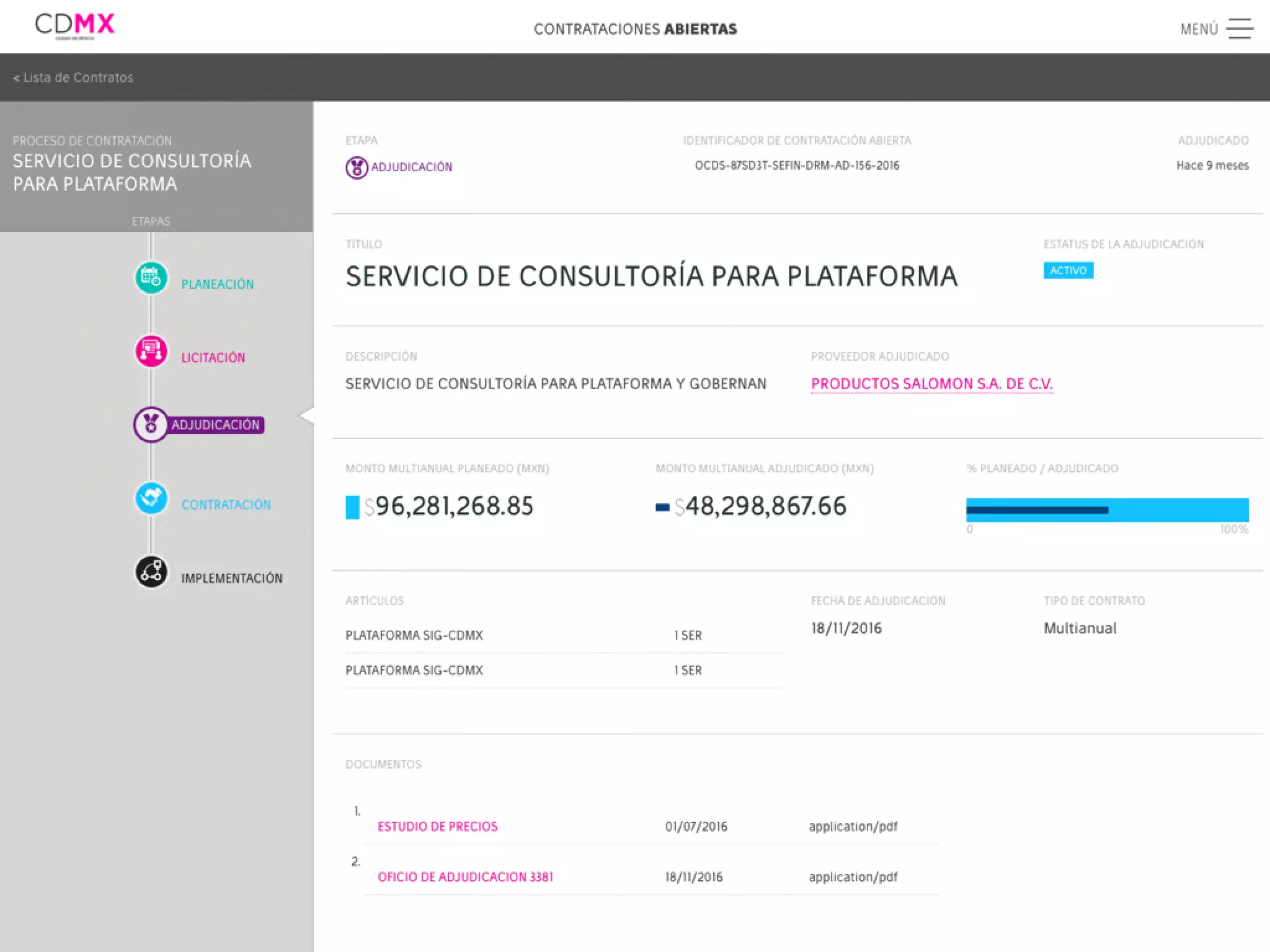
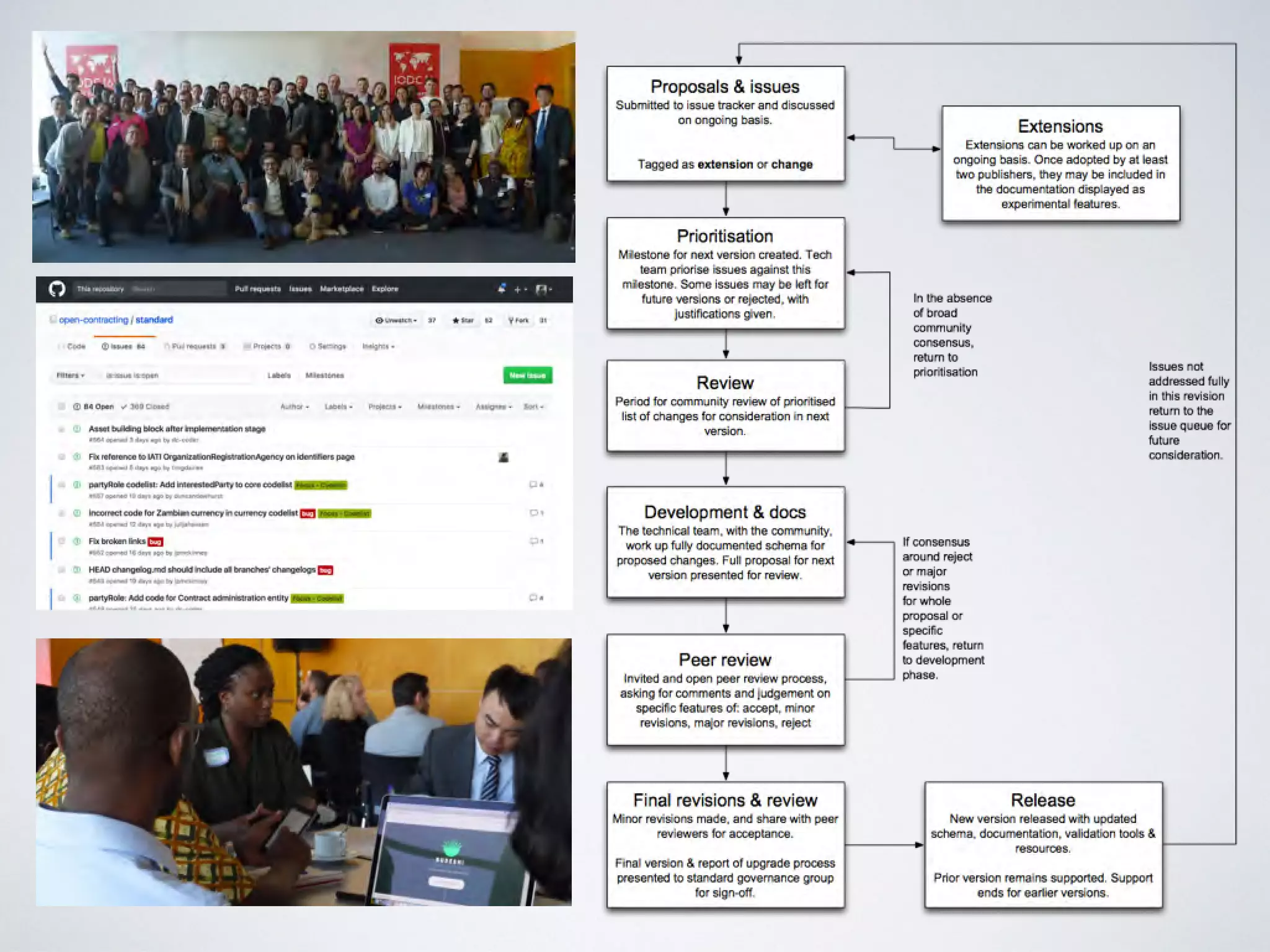
Contracting
U
SE
C
REATIO
N
D
ESIG
N
1
2
3
4
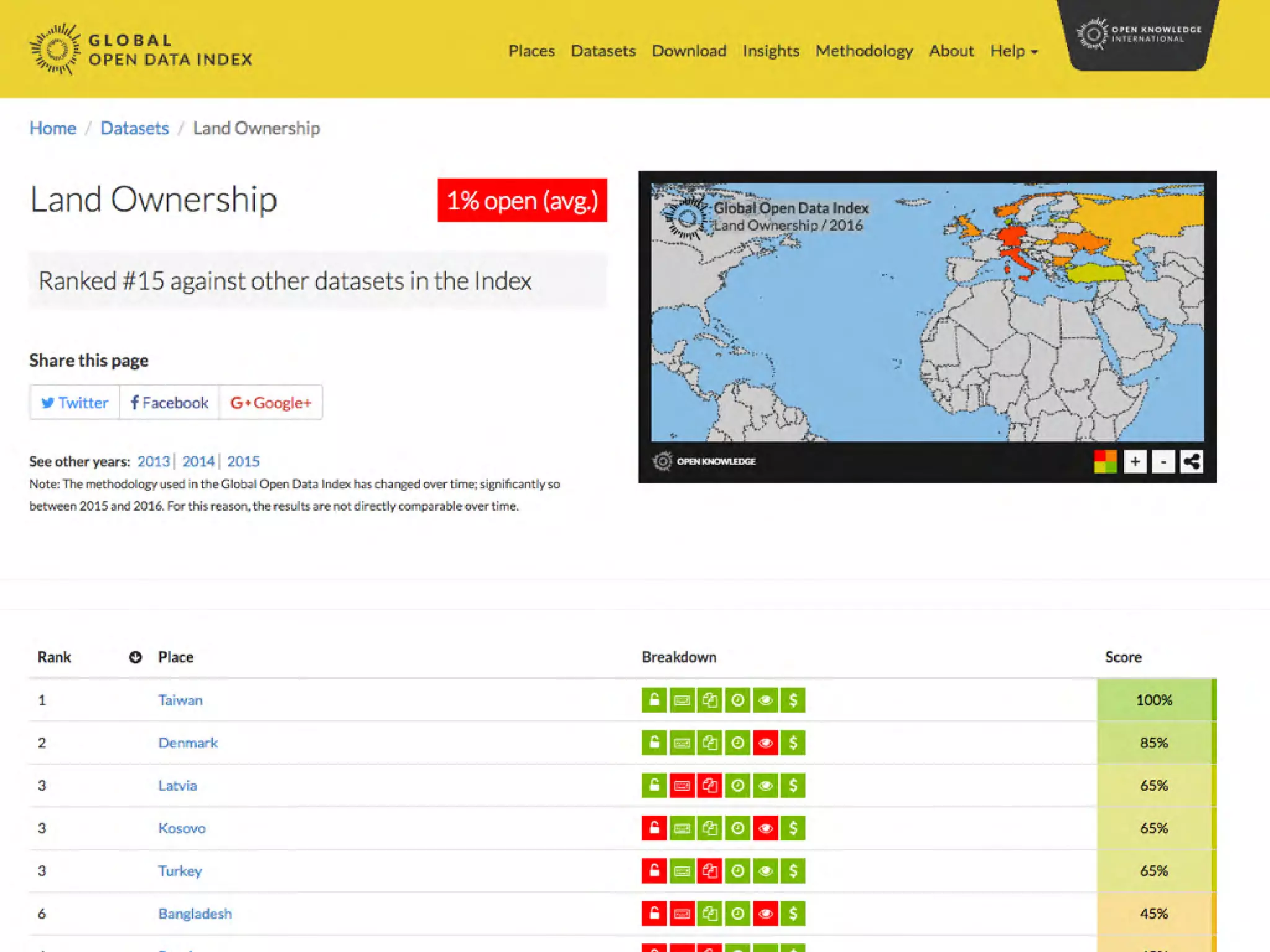
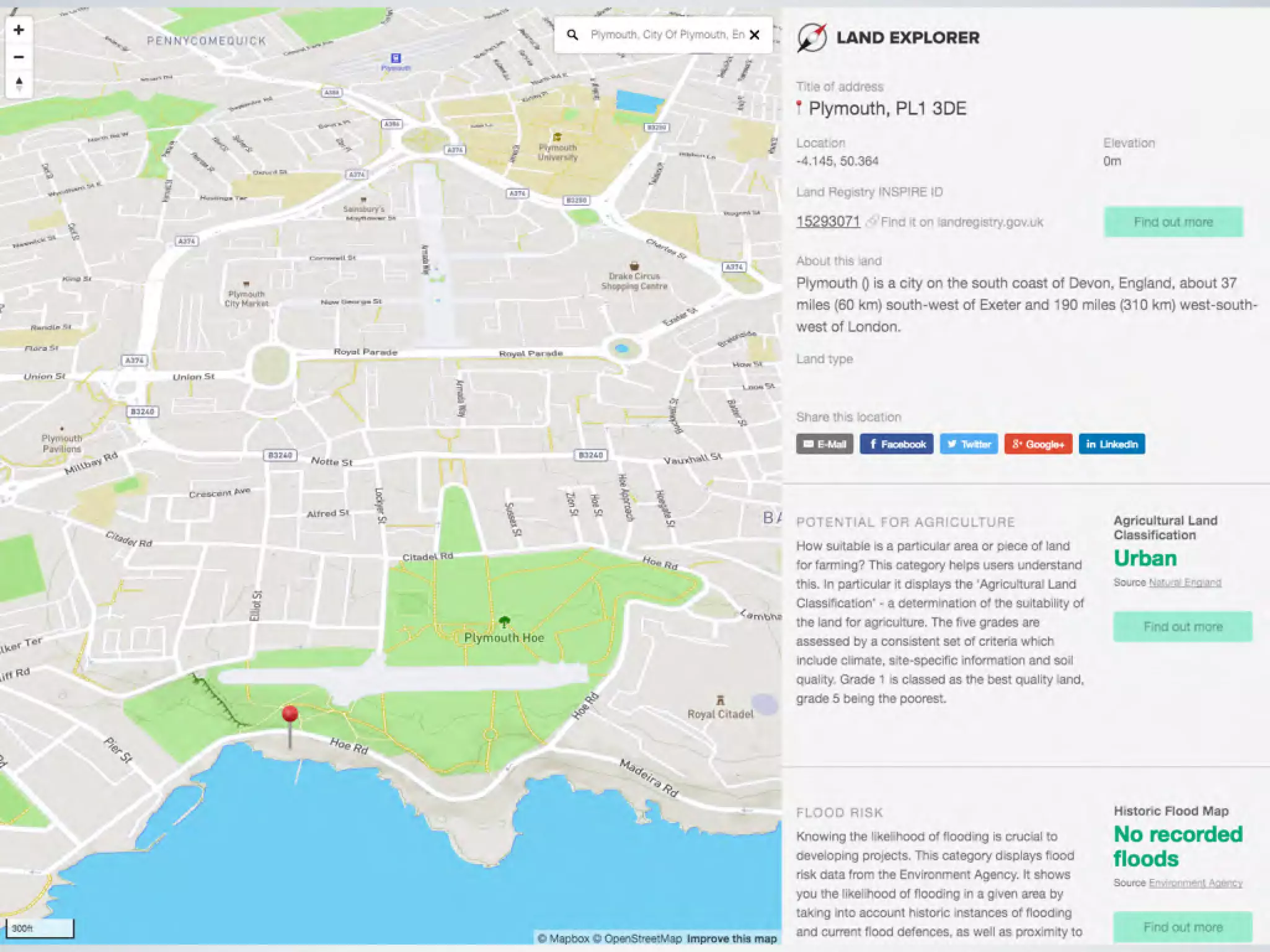
Land
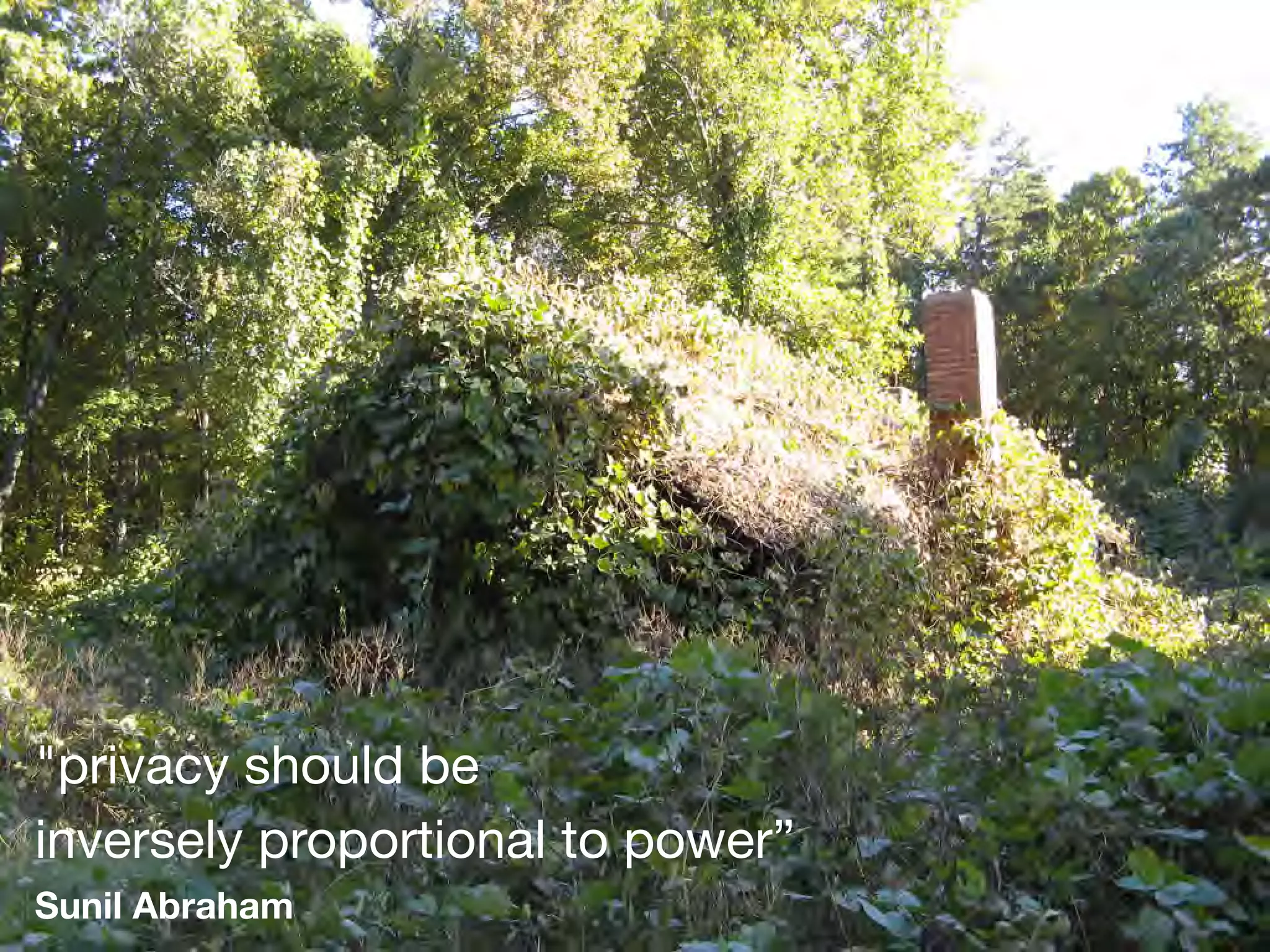
"privacy should be 

inversely proportional to power” 

Sunil Abraham
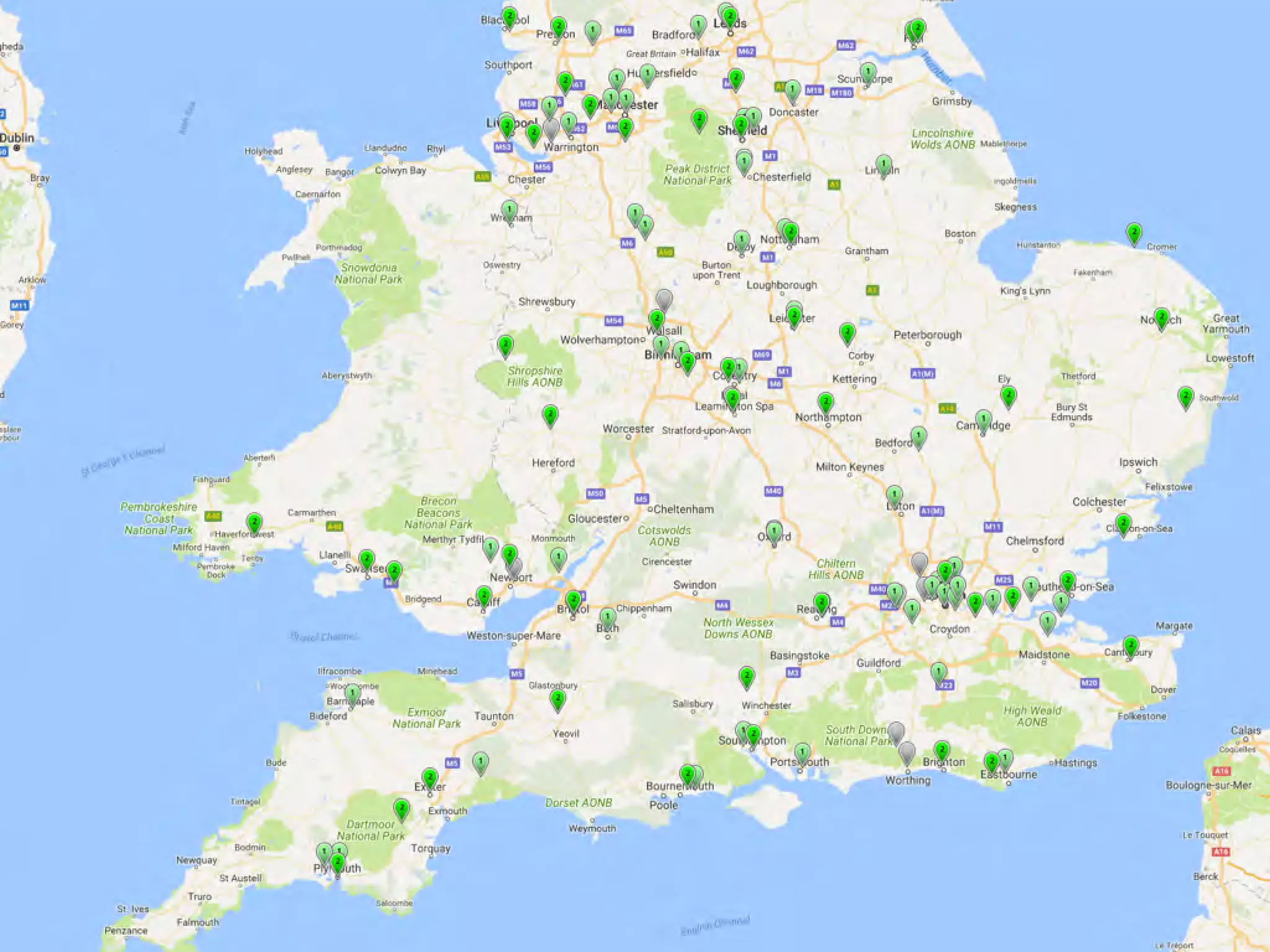
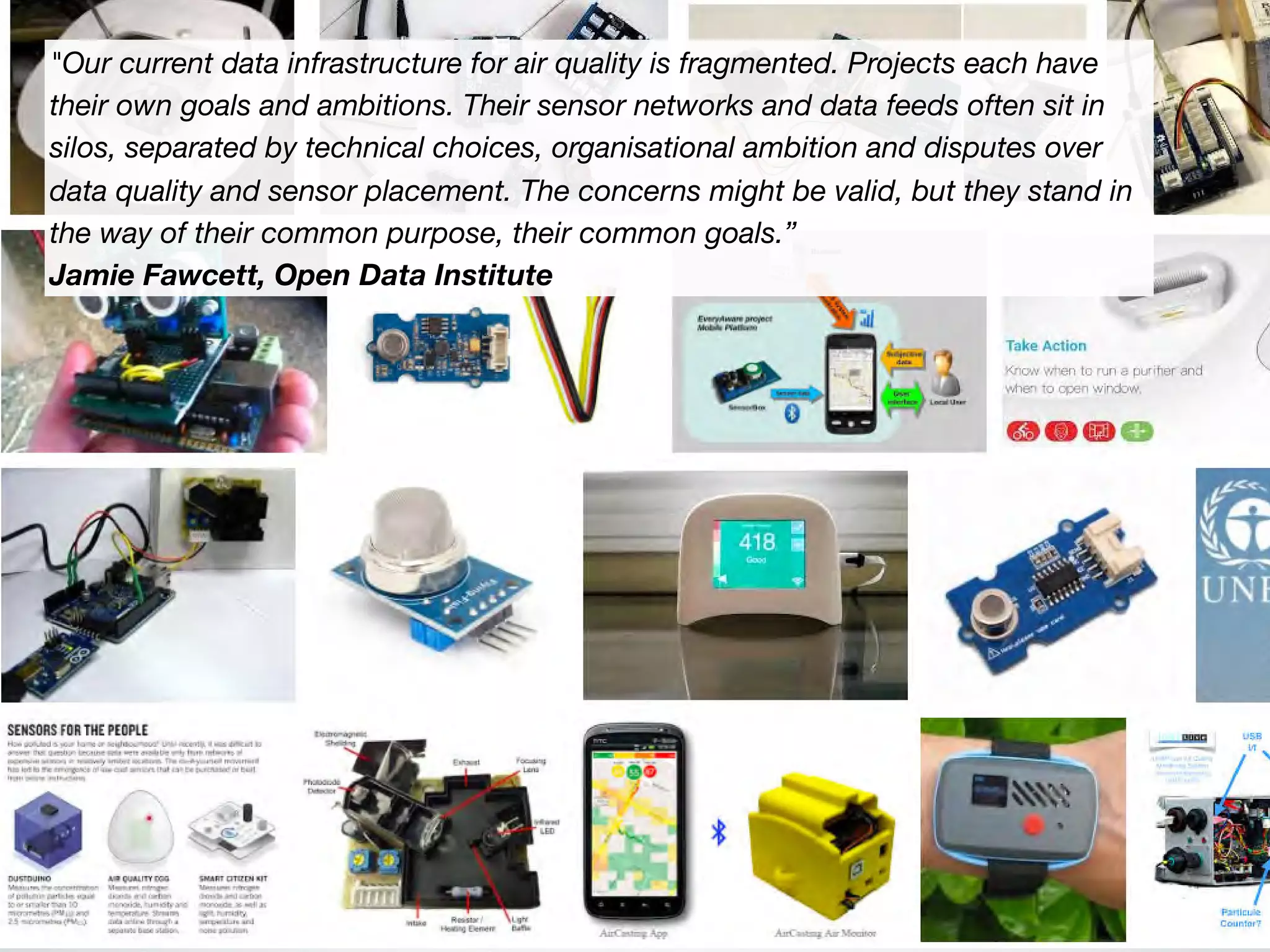
Air
"Our current data infrastructure for air quality is fragmented. Projects each have
their own goals and ambitions. Their sensor networks and data feeds often sit in
silos, separated by technical choices, organisational ambition and disputes over
data quality and sensor placement. The concerns might be valid, but they stand in
the way of their common purpose, their common goals.”
Jamie Fawcett, Open Data Institute
PART 4: RECAP
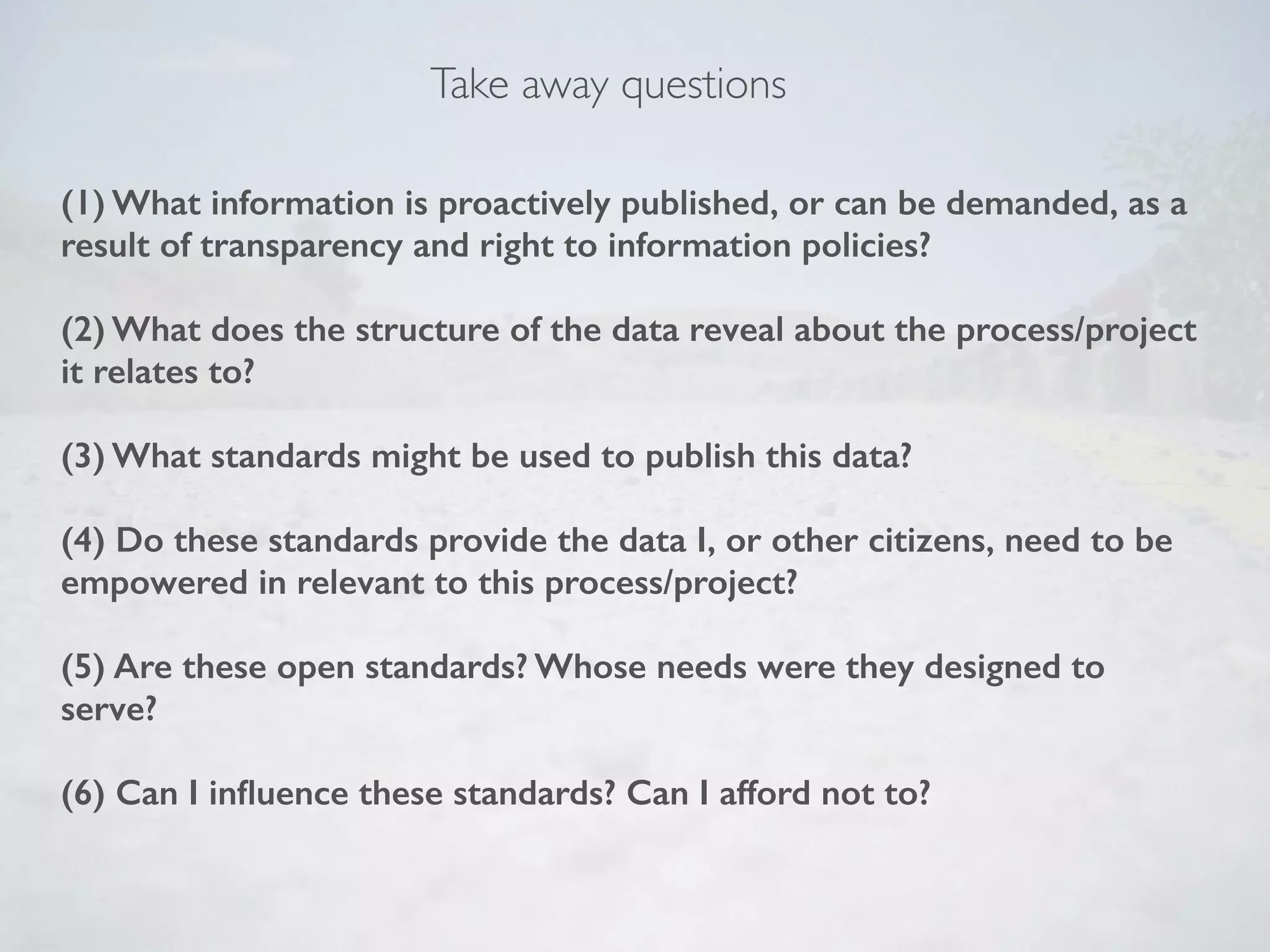
(1) What information is proactively published, or can be demanded, as a
result of transparency and right to information policies?

(2) What does the structure of the data reveal about the process/project
it relates to?

(3) What standards might be used to publish this data?

(4) Do these standards provide the data I, or other citizens, need to be
empowered in relevant to this process/project?

(5) Are these open standards? Whose needs were they designed to
serve? 

(6) Can I influence these standards? Can I afford not to?
Take away questions
PARTICIPATORY PUBLIC
DATA INFRASTRUCTURE
OPEN DATA STANDARDS ANDTHETURNTO
TRANSPARENCY
@timdavies | tim@timdavies.org.uk
REFERENCES (1)
• 1]: https://www.google.co.uk/search?q=define%3Ainfrastructure, accessed 17th August 2017
• [2]: Star, S., & Ruhleder, K. (1996). StepsToward an Ecology of Infrastructure: Design and Access for Large Information Spaces.
Information Systems Research, 7(1), 111–134.
• [3]: Bowker, G. C., & Star, S. L. (2000). SortingThings Out: Classification and Its Consequences.The MIT Press.
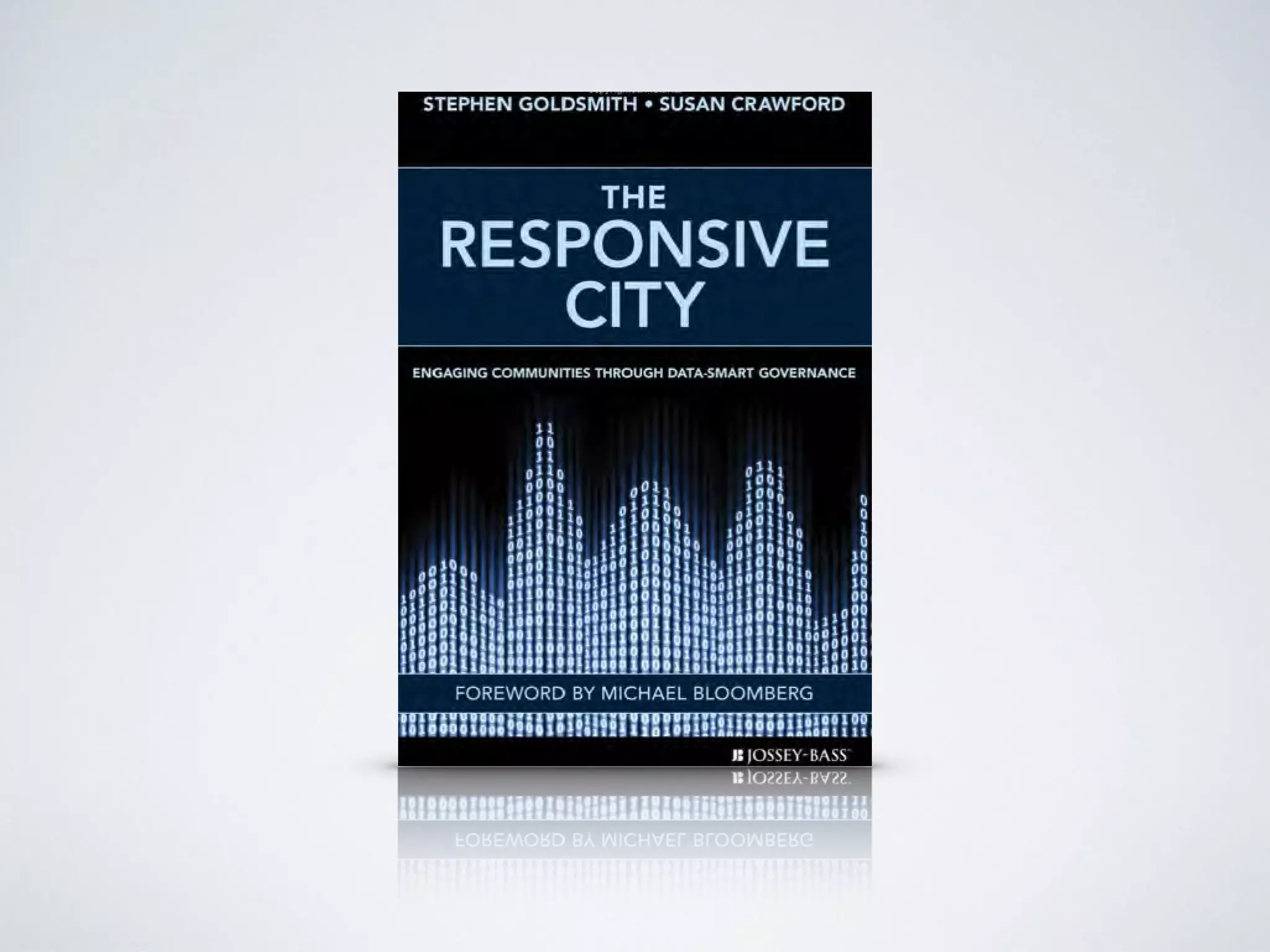
• [4]: Goldsmith, S., & Crawford, S. (2014).The responsive city. Jossey-Bass.
• [5]: Kitchin, R. (2014).The Data Revolution: Big Data, Open Data, Data Infrastructures andTheir Consequences. SAGE
Publications.
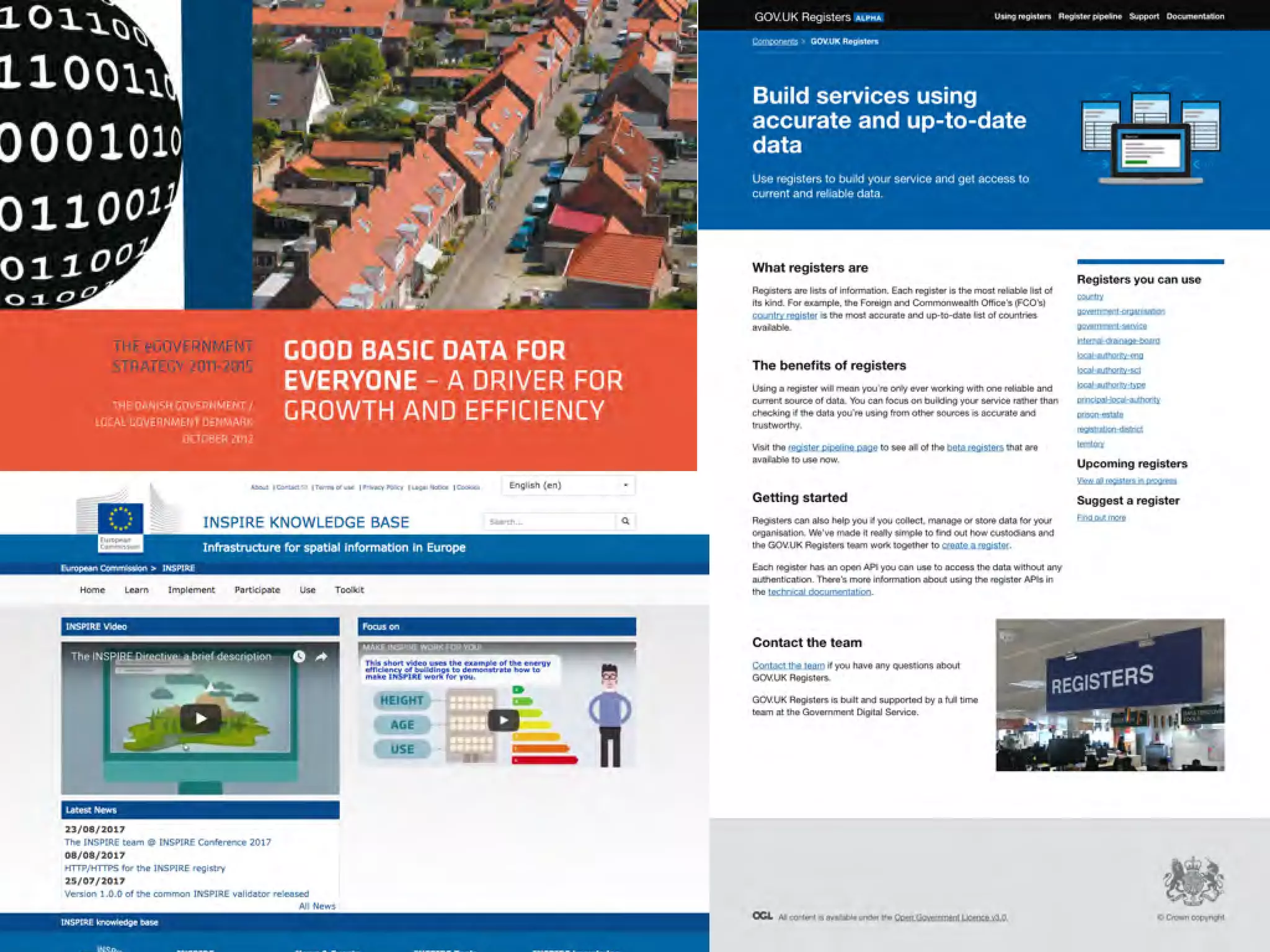
• [6]:The Danish Government. (2012). Good Basic Data for Everyone – a Driver for Growth and Efficiency, (October 2012)
• [7]: Bartha, G., & Kocsis, S. (2011). Standardization of Geographic Data:The European INSPIRE Directive. European Journal of
Geography, 22, 79–89.
• [10]: Guldi, J. (2012). Roads to power: Britain invents the infrastructure state.
• [11]: Gray, J., & Davies,T. (2015). Fighting Phantom Firms in the UK : From Opening Up Datasets to Reshaping Data
Infrastructures?
REFERENCES (2)
• [12]: Gray, J., &TommasoVenturini. (2015). Rethinking the Politics of Public Information: From Opening Up Datasets to
Recomposing Data Infrastructures?
• [13]: Gray, J. (2015). DEMOCRATISINGTHE DATA REVOLUTION:A Discussion Paper
• [14]:Arnstein, S. R. (1969).A ladder of citizen participation. Journalof the American Institute of Planners, 34(5), 216–224.
• [16]: Ribes, D., & Baker, K. (2007). Modes of social science engagement in community infrastructure design. Proceedings of the 3rd
Communities andTechnologies Conference, C andT 2007, 107–130.
• [17]: Davies,T. (2010, September 29). Open data, democracy and public sector reform:A look at open government data use from
data.gov.uk.
• [18]: Davies,T. (2014). Open Data Policies and Practice:An International Comparison.
• [19]: Fung,A., Graham, M., & Weil, D. (2007). Full Disclosure:The Perils and Promise ofTransparency (1st ed.). Cambridge University
Press.
• [22]: Craveiro, G. S., Machado, J.A. S., Martano,A. M. R., & Souza,T. J. (2014). Exploring the Impact of Web Publishing Budgetary
Information at the Sub-National Level in Brazil.
• [24]: Hetherington, K. (2011). Guerrilla auditors: the politics of transparency in neoliberal Paraguay. London: Duke University Press.
• [25]: Scott, J. C. (1987).Weapons of the Weak: Everyday Forms of Peasant Resistance.
Image Credits
Hossen27: https://commons.wikimedia.org/wiki/File:Below_Auckland_Harbour_Bridge_Hossen27.jpg
Bidgee: https://commons.wikimedia.org/wiki/File:Rural_landscape_of_Wantabadgery_near_Mundarlo_from_the_air.jpg
Railyard: https://pxhere.com/en/photo/266719
DSMIC: https://commons.wikimedia.org/wiki/File:19-inch_rackmount_Ethernet_switches_and_patch_panels.jpg
Toronto City Scape: https://commons.wikimedia.org/wiki/File:Toronto_Yonge-Dundas_Square.jpg
Database schema: https://commons.wikimedia.org/wiki/File:MediaWiki_database_schema_1-19_(r102798).svg
SatNav: https://www.flickr.com/photos/xurble/244671618
Andalcant: https://commons.wikimedia.org/wiki/File:Brasilia_aerea_torredetv1304_4713.jpg
Nilfanion: https://en.wikipedia.org/wiki/File:London_Commuter_Belt_map.svg
Liberaler Humanist: https://commons.wikimedia.org/wiki/File:Motorway_bridge_over_Wenger_Bach_in_Pfarrwerfen.jpg
Leitonmahillo: https://commons.wikimedia.org/wiki/
File:HK_CWB_Sharp_Street_East_Times_Square_public_space_usage_Private_property_sign_July-2014_RedMi.jpg
Post-it notes: Bill Badham, Practical Participation
Brycemilton: https://commons.wikimedia.org/wiki/File:1920_US_census_form_for_2nd_ward_of_Snohomish_Washington.jpg
Jason7825: https://commons.wikimedia.org/wiki/File:Customs_House_Library_floor_city_model_1.jpg
Cogs: https://www.pexels.com
Keneckert: https://en.wikipedia.org/wiki/File:First_Metre,_Paris.jpg
Land - Linz: http://www.linz.govt.nz/land/land-records
Camouflaged house - NatalieMaynor - https://www.flickr.com/photos/nataliemaynor/1917593183
Participatory public data infrastructure: open data standards and the turn to transparency

Participatory public data infrastructure: open data standards and the turn to transparency

  • 1.
    PARTICIPATORY PUBLIC DATA INFRASTRUCTURE OPENDATA STANDARDS ANDTHETURNTO TRANSPARENCY @timdavies | tim@timdavies.org.uk
  • 2.
    PARTICIPATORY PUBLIC DATAINFRASTRUCTURE OPEN DATA STANDARDS ANDTHETURNTOTRANSPARENCY 1. Participatory public data infrastructure 2. Transparency 3. Standards 4. Examples 5. Recap & action
  • 3.
    PART 1: PARTICIPATORYPUBLIC DATA INFRASTRUCTURE
  • 4.
  • 5.
    infrastructure. /ɪnfrəstrʌktʃə/ noun. "thebasic physical and organisational structures and facilities (e.g. buildings, roads, power supplies) needed for the operation of a society or enterprise."
  • 9.
    Data infrastructure •ETL (Extract,Transform,Load) •API (Application Programming Interface) •Database •Data warehouse •Stored queries •Schema •Dashboards •Code lists •Standards •Access control rules •…
  • 10.
    Dimensions of infrastructure(Star & Ruhleder): Embeddedness; Transparency; Reach & scope; Learned through membership; Links with convention; Embodying standards; Built on installed based;Visible on breakdown.
  • 11.
  • 19.
  • 20.
    Participation in…
 … datause
 … data production
 … data design
  • 21.
  • 23.
  • 25.
  • 27.
  • 28.
    transparency /tranˈspar(ə)nsi/ noun "thequality of being done in an open way without secrets"
  • 29.
    PSI Directive Civil society Open Government Declaration ObamaOpen Government Directive data.gov UK expenses scandal -> data.gov.uk Civic tech movement Government as a platform World Bank open data initiative Economic stimulus arguments
  • 33.
  • 34.
    standard /ˈstandəd/ noun "somethingused as a measure, norm, or model in [comparative] evaluations."
  • 35.
  • 43.
  • 44.
  • 49.
  • 50.
  • 52.
    "privacy should be inversely proportional to power” Sunil Abraham
  • 54.
  • 56.
    "Our current datainfrastructure for air quality is fragmented. Projects each have their own goals and ambitions. Their sensor networks and data feeds often sit in silos, separated by technical choices, organisational ambition and disputes over data quality and sensor placement. The concerns might be valid, but they stand in the way of their common purpose, their common goals.” Jamie Fawcett, Open Data Institute
  • 57.
  • 59.
    (1) What informationis proactively published, or can be demanded, as a result of transparency and right to information policies?
 (2) What does the structure of the data reveal about the process/project it relates to?
 (3) What standards might be used to publish this data?
 (4) Do these standards provide the data I, or other citizens, need to be empowered in relevant to this process/project?
 (5) Are these open standards? Whose needs were they designed to serve? 
 (6) Can I influence these standards? Can I afford not to? Take away questions
  • 60.
    PARTICIPATORY PUBLIC DATA INFRASTRUCTURE OPENDATA STANDARDS ANDTHETURNTO TRANSPARENCY @timdavies | tim@timdavies.org.uk
  • 61.
    REFERENCES (1) • 1]:https://www.google.co.uk/search?q=define%3Ainfrastructure, accessed 17th August 2017 • [2]: Star, S., & Ruhleder, K. (1996). StepsToward an Ecology of Infrastructure: Design and Access for Large Information Spaces. Information Systems Research, 7(1), 111–134. • [3]: Bowker, G. C., & Star, S. L. (2000). SortingThings Out: Classification and Its Consequences.The MIT Press. • [4]: Goldsmith, S., & Crawford, S. (2014).The responsive city. Jossey-Bass. • [5]: Kitchin, R. (2014).The Data Revolution: Big Data, Open Data, Data Infrastructures andTheir Consequences. SAGE Publications. • [6]:The Danish Government. (2012). Good Basic Data for Everyone – a Driver for Growth and Efficiency, (October 2012) • [7]: Bartha, G., & Kocsis, S. (2011). Standardization of Geographic Data:The European INSPIRE Directive. European Journal of Geography, 22, 79–89. • [10]: Guldi, J. (2012). Roads to power: Britain invents the infrastructure state. • [11]: Gray, J., & Davies,T. (2015). Fighting Phantom Firms in the UK : From Opening Up Datasets to Reshaping Data Infrastructures?
  • 62.
    REFERENCES (2) • [12]:Gray, J., &TommasoVenturini. (2015). Rethinking the Politics of Public Information: From Opening Up Datasets to Recomposing Data Infrastructures? • [13]: Gray, J. (2015). DEMOCRATISINGTHE DATA REVOLUTION:A Discussion Paper • [14]:Arnstein, S. R. (1969).A ladder of citizen participation. Journalof the American Institute of Planners, 34(5), 216–224. • [16]: Ribes, D., & Baker, K. (2007). Modes of social science engagement in community infrastructure design. Proceedings of the 3rd Communities andTechnologies Conference, C andT 2007, 107–130. • [17]: Davies,T. (2010, September 29). Open data, democracy and public sector reform:A look at open government data use from data.gov.uk. • [18]: Davies,T. (2014). Open Data Policies and Practice:An International Comparison. • [19]: Fung,A., Graham, M., & Weil, D. (2007). Full Disclosure:The Perils and Promise ofTransparency (1st ed.). Cambridge University Press. • [22]: Craveiro, G. S., Machado, J.A. S., Martano,A. M. R., & Souza,T. J. (2014). Exploring the Impact of Web Publishing Budgetary Information at the Sub-National Level in Brazil. • [24]: Hetherington, K. (2011). Guerrilla auditors: the politics of transparency in neoliberal Paraguay. London: Duke University Press. • [25]: Scott, J. C. (1987).Weapons of the Weak: Everyday Forms of Peasant Resistance.
  • 63.
    Image Credits Hossen27: https://commons.wikimedia.org/wiki/File:Below_Auckland_Harbour_Bridge_Hossen27.jpg Bidgee:https://commons.wikimedia.org/wiki/File:Rural_landscape_of_Wantabadgery_near_Mundarlo_from_the_air.jpg Railyard: https://pxhere.com/en/photo/266719 DSMIC: https://commons.wikimedia.org/wiki/File:19-inch_rackmount_Ethernet_switches_and_patch_panels.jpg Toronto City Scape: https://commons.wikimedia.org/wiki/File:Toronto_Yonge-Dundas_Square.jpg Database schema: https://commons.wikimedia.org/wiki/File:MediaWiki_database_schema_1-19_(r102798).svg SatNav: https://www.flickr.com/photos/xurble/244671618 Andalcant: https://commons.wikimedia.org/wiki/File:Brasilia_aerea_torredetv1304_4713.jpg Nilfanion: https://en.wikipedia.org/wiki/File:London_Commuter_Belt_map.svg Liberaler Humanist: https://commons.wikimedia.org/wiki/File:Motorway_bridge_over_Wenger_Bach_in_Pfarrwerfen.jpg Leitonmahillo: https://commons.wikimedia.org/wiki/ File:HK_CWB_Sharp_Street_East_Times_Square_public_space_usage_Private_property_sign_July-2014_RedMi.jpg Post-it notes: Bill Badham, Practical Participation Brycemilton: https://commons.wikimedia.org/wiki/File:1920_US_census_form_for_2nd_ward_of_Snohomish_Washington.jpg Jason7825: https://commons.wikimedia.org/wiki/File:Customs_House_Library_floor_city_model_1.jpg Cogs: https://www.pexels.com Keneckert: https://en.wikipedia.org/wiki/File:First_Metre,_Paris.jpg Land - Linz: http://www.linz.govt.nz/land/land-records Camouflaged house - NatalieMaynor - https://www.flickr.com/photos/nataliemaynor/1917593183