Oxygen PondsOxygen PondsOxygen PondsOxygen Ponds
Oxidation Ponds
What are Oxidation Ponds ?
•Oxidation Ponds are large earthen basins in which waste water is treated by
natural processes involving bacteria and in many instances algae.
•These are shallow basins used to treat raw water
•Rate of waste oxidation is slower in Oxidation Ponds
Types Of Oxidation ponds
• Aerobic Ponds
• Anaerobic Ponds
• Facultative Ponds
• Maturation or Tertiary Ponds
Aerobic Ponds
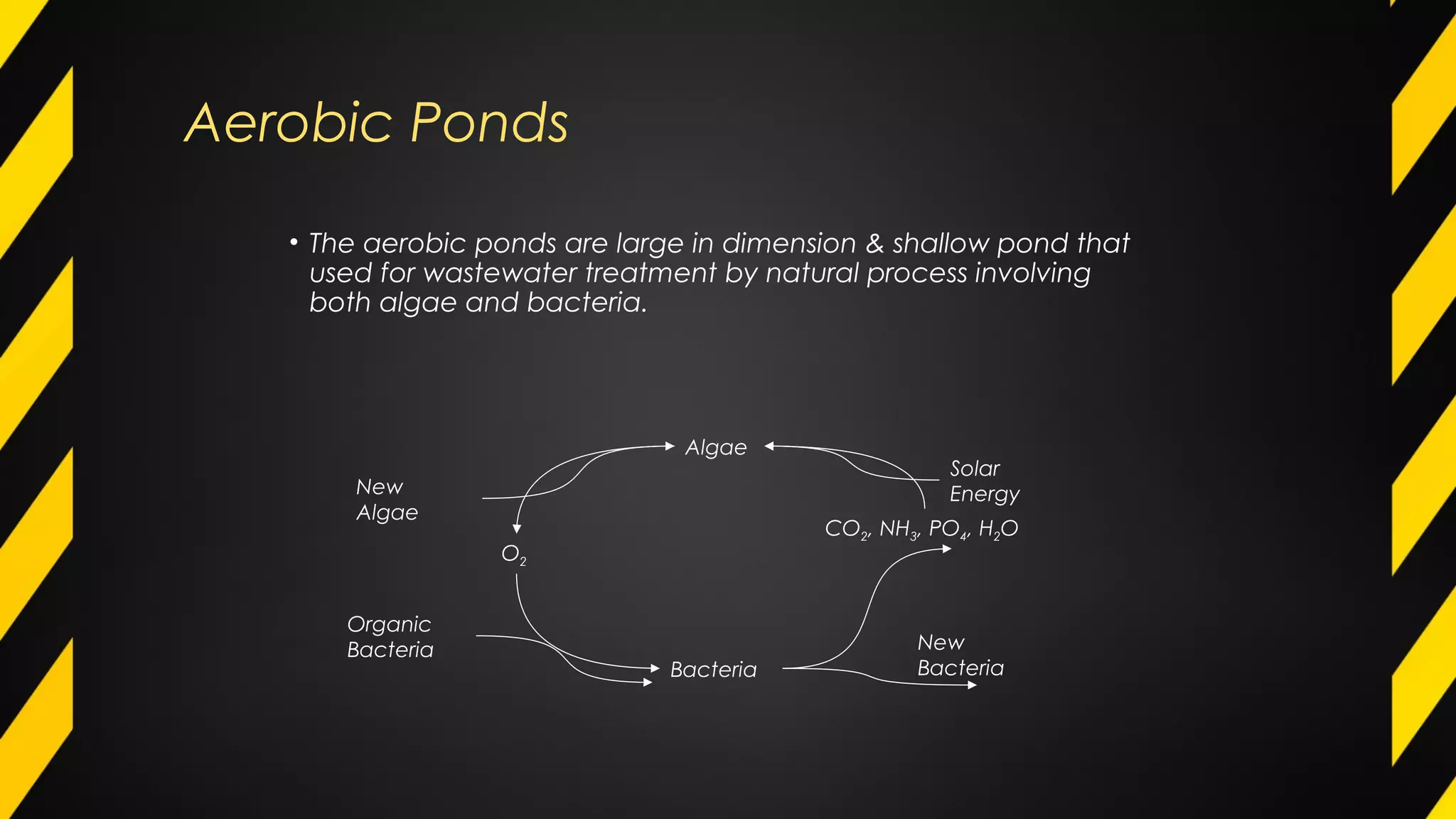
• The aerobic ponds are large in dimension & shallow pond that
used for wastewater treatment by natural process involving
both algae and bacteria.
New
Algae
Algae
O2
Bacteria
CO2, NH3, PO4, H2O
New
Bacteria
Organic
Bacteria
Solar
Energy
Design Considerations
Parameter Value
Depth in mts. 0.15 - 0.5
Retention time (day) 2-6
BODu loading (lb/acre-day) 100-200
BODu removal (%) 80-90
Algae concentration (mg/l) 100-200
Re-circulation ratio 0.2-2.0
Effluent suspended solids
concentration (mg/l)
150-350
Anaerobic Ponds
• Anaerobic Ponds requires no Dissolved Oxygen for microbial activity
as the organisms use O2 from compounds such as NO3, SO4 as their
hydrogen acceptors and give end product such as methane,
carbon dioxide etc.
• These ponds are basically Sedimentation ponds
• High waste water loading which depletes all O2
• Solids settles in pond basin
• Anaerobic digestion of sludge occurs in pond bottom
Large Organic Loading
O2 Req > O2 Supply
Enhanced H2S- Formation
Increase In Turbidity
Reduced Light Penetration
Reduced Photosynthesis
Reduced O2 Formation
Anaerobic Conditions
how anaerobic
conditions occurs
in oxidation
ponds?
Anaerobic digestion process
• Hydrolysis - Complex organics (proteins and fats) broken down to simpler
compounds by various bacteria
• Acidogenesis (Fermentation) – Fatty acids and alcohols oxidized, amino acids
and carbohydrates fermented , forms volatile fatty acids and hydrogen
• Acteogenesis – conversion of complex fatty acids to acetic acid
• Methnogenesis - conversion of acetic acid to methane and CO2 and CO2
,H2S to methane
Process
• When temperature rises above 15o
C digestion generates
enough biomass which causes pond surface to bubble –
biogas (70% CH4 and 30% CO2)
• Digested solids accumulate – cleanout in 1 to 3 years
Pond Characteristics
• Hydraulic detention time is short – 1 day
• Depth – 2 to 5 m (usually 3m)
• Design is highly empirical – based on volumetric load (gm BOD/m3
/day)
• For e.g. 100 gm BOD/m3
/day to 3 m deep pond=3000 kg/ha/day
Role of pH
• Below pH 7.0 then H2S forms and causes odor
• Below ph 6.2 then conditions became toxic
ADVANTAGES
•Gives energy whereas aerobic requires energy.
•Very high concentration can be treated efficiently whereas
not possible in aerobic ponds.
LIMITATIONS
•Standard BOD cannot be maintained under anaerobic
process as suspended solid increased.
•Organic matter convert to CO2, CH4 which is difficult to
separate from bacteria.
Facultative Ponds
• These are neither fully aerobic nor fully anaerobic.
• They are often about 1 to 2 m in depth and favor algal growth along with the growth
of aerobic, anaerobic and facultative microorganisms.
• Such ponds are aerobic during day time. In the remaining hours the pond bottom
may turn anaerobic.
• Top Pond water is aerobic and supports very high density algal population
• Bottom water is an anaerobic condition in which sludge is digested
• Algae generate O2 by photosynthesis during the day ,which is useful for oxidation of
waste by bacteria
• Bacteria degrade waste, uses O2 and generates CO2, algae use CO2 and
generate O2
Wind
CO2
Anaerobi
cZoneAerobic
Zone
Facultative
Zone
O2
alga
e
(CO2, NO2, PO4, SO4)
Aerobic
Bacteria
Biomass
Biomass
Anaerobic
Bacteria
Sludge Blanket
Organic acids &
Compounds of C, N, P, S
Impermeable lining
Sunlight
Maturation / Tertiary Ponds
• These are similar to aerobic ponds but are very lightly loaded with organic wastes.
• Generally used for upgrading effluents from conventional secondary treatment
processes.
• The principal purpose is to achieve reduction in fecal colliform count and remove
nitrogen and phosphorus.
• Used to remove pathogenic bacteria and viruses (99.9997%) - e-Coli removal
• Solar disinfection – using UV light
• 1 m deep
• Total detention time of the order of 10 days
• Disinfection may be used, if required
Skillcruise.com

Oxidation ponds

  • 1.
  • 2.
    Oxidation Ponds What areOxidation Ponds ? •Oxidation Ponds are large earthen basins in which waste water is treated by natural processes involving bacteria and in many instances algae. •These are shallow basins used to treat raw water •Rate of waste oxidation is slower in Oxidation Ponds
  • 3.
    Types Of Oxidationponds • Aerobic Ponds • Anaerobic Ponds • Facultative Ponds • Maturation or Tertiary Ponds
  • 4.
    Aerobic Ponds • Theaerobic ponds are large in dimension & shallow pond that used for wastewater treatment by natural process involving both algae and bacteria. New Algae Algae O2 Bacteria CO2, NH3, PO4, H2O New Bacteria Organic Bacteria Solar Energy
  • 5.
    Design Considerations Parameter Value Depthin mts. 0.15 - 0.5 Retention time (day) 2-6 BODu loading (lb/acre-day) 100-200 BODu removal (%) 80-90 Algae concentration (mg/l) 100-200 Re-circulation ratio 0.2-2.0 Effluent suspended solids concentration (mg/l) 150-350
  • 6.
    Anaerobic Ponds • AnaerobicPonds requires no Dissolved Oxygen for microbial activity as the organisms use O2 from compounds such as NO3, SO4 as their hydrogen acceptors and give end product such as methane, carbon dioxide etc. • These ponds are basically Sedimentation ponds • High waste water loading which depletes all O2 • Solids settles in pond basin • Anaerobic digestion of sludge occurs in pond bottom
  • 7.
    Large Organic Loading O2Req > O2 Supply Enhanced H2S- Formation Increase In Turbidity Reduced Light Penetration Reduced Photosynthesis Reduced O2 Formation Anaerobic Conditions how anaerobic conditions occurs in oxidation ponds?
  • 9.
    Anaerobic digestion process •Hydrolysis - Complex organics (proteins and fats) broken down to simpler compounds by various bacteria • Acidogenesis (Fermentation) – Fatty acids and alcohols oxidized, amino acids and carbohydrates fermented , forms volatile fatty acids and hydrogen • Acteogenesis – conversion of complex fatty acids to acetic acid • Methnogenesis - conversion of acetic acid to methane and CO2 and CO2 ,H2S to methane
  • 10.
    Process • When temperaturerises above 15o C digestion generates enough biomass which causes pond surface to bubble – biogas (70% CH4 and 30% CO2) • Digested solids accumulate – cleanout in 1 to 3 years
  • 11.
    Pond Characteristics • Hydraulicdetention time is short – 1 day • Depth – 2 to 5 m (usually 3m) • Design is highly empirical – based on volumetric load (gm BOD/m3 /day) • For e.g. 100 gm BOD/m3 /day to 3 m deep pond=3000 kg/ha/day
  • 12.
    Role of pH •Below pH 7.0 then H2S forms and causes odor • Below ph 6.2 then conditions became toxic
  • 13.
    ADVANTAGES •Gives energy whereasaerobic requires energy. •Very high concentration can be treated efficiently whereas not possible in aerobic ponds. LIMITATIONS •Standard BOD cannot be maintained under anaerobic process as suspended solid increased. •Organic matter convert to CO2, CH4 which is difficult to separate from bacteria.
  • 14.
    Facultative Ponds • Theseare neither fully aerobic nor fully anaerobic. • They are often about 1 to 2 m in depth and favor algal growth along with the growth of aerobic, anaerobic and facultative microorganisms. • Such ponds are aerobic during day time. In the remaining hours the pond bottom may turn anaerobic. • Top Pond water is aerobic and supports very high density algal population • Bottom water is an anaerobic condition in which sludge is digested • Algae generate O2 by photosynthesis during the day ,which is useful for oxidation of waste by bacteria • Bacteria degrade waste, uses O2 and generates CO2, algae use CO2 and generate O2
  • 15.
    Wind CO2 Anaerobi cZoneAerobic Zone Facultative Zone O2 alga e (CO2, NO2, PO4,SO4) Aerobic Bacteria Biomass Biomass Anaerobic Bacteria Sludge Blanket Organic acids & Compounds of C, N, P, S Impermeable lining Sunlight
  • 16.
    Maturation / TertiaryPonds • These are similar to aerobic ponds but are very lightly loaded with organic wastes. • Generally used for upgrading effluents from conventional secondary treatment processes. • The principal purpose is to achieve reduction in fecal colliform count and remove nitrogen and phosphorus. • Used to remove pathogenic bacteria and viruses (99.9997%) - e-Coli removal • Solar disinfection – using UV light • 1 m deep • Total detention time of the order of 10 days • Disinfection may be used, if required
  • 17.