What are stabilization of ponds
?
Explain the algae -bacteria
symbiosis in an oxidation pond
with neat sketch.
STABILIZATION PONDS
 Stabilization Ponds is Biological Treatment Systems in
which stabilization of organic material is carried out by
Bacterial oxidation/ photosynthetic reduction in algae.
 Stabilization Ponds are also known as lagoons or
oxidation ponds.
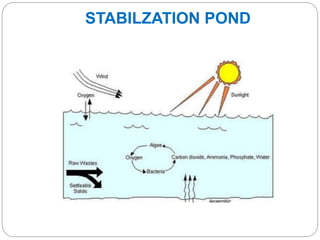
STABILZATION POND
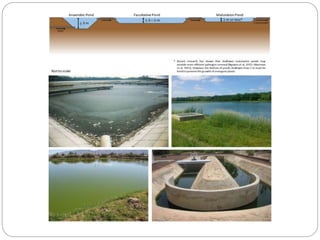
 Stabilization ponds are large, shallow ponds
designed to treat wastewater through the
interaction of sunlight, bacteria and algae.
 The pond, typically 1-2m deep.
 Decomposition by symbiotic action of algae and
bacteria.
 Top layer is Anerobic while the bottom layer is
anaerobic.
 Algae grow within the pond and utilize the Carbon
dioxide, Sulphates, nitrates, phosphates, water
and sunlight and gives oxygen that is available to
bacteria and other microbes
 This O2 is used by the aerobic bacteria in the
oxidation pond to breakdown the organic matter
in wastewater
STABILZATION POND
 During the process of photosynthesis, The algae
release oxygen needed by aerobic bacteria.
 Mechanical aerators are sometimes installed to
supply yet more oxygen, thereby reducing the
required size of the pond.
 Sludge deposits in the pond must be eventually
removed by dredging.
 Algae remaining in the pond effluent can be
removed by filtration or by a combination of chemical
treatment.
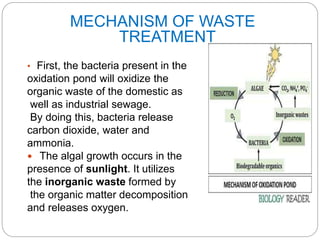
MECHANISM OF WASTE
TREATMENT
• First, the bacteria present in the
oxidation pond will oxidize the
organic waste of the domestic as
well as industrial sewage.
By doing this, bacteria release
carbon dioxide, water and
ammonia.
 The algal growth occurs in the
presence of sunlight. It utilizes
the inorganic waste formed by
the organic matter decomposition
and releases oxygen.
 From the above two mechanisms, the algae and
bacteria work corporately to fulfil each other’s
requirement. The bacteria use oxygen released by
the algae, to oxidize the biodegradable organics.
A carbon-dioxide release as the result of organic
waste oxidation by the bacteria is used by the algae
to undergo a reduction of inorganic waste like
nitrogen, phosphorus compounds etc. As the
oxidation and reduction reaction co-occurs, an
oxidation pond also refers as “Redox pond”. The
sludge of oxidation pond may use as a manure for
the irrigation processes.
PROCESS INVOLVED IN OXIDATION
POND
 The process involved in the conversion of industrial, domestic
wastewater into simple form includes:
 First, through the inlet system, the industrial, domestic
wastewater influents into the oxidation pond.
 Then, the bacteria utilize the biodegradable organics and
convert it into inorganic compounds by releasing carbon
dioxide. Achromobactin, Proteus, Alcaligenes, Pseudomonas,
Thiospirillum, Rhodothecae etc. are the following genera of the
bacteria that predominates in the stabilization pond.
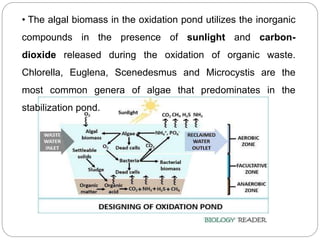
• The algal biomass in the oxidation pond utilizes the inorganic
compounds in the presence of sunlight and carbon-
dioxide released during the oxidation of organic waste.
Chlorella, Euglena, Scenedesmus and Microcystis are the
most common genera of algae that predominates in the
stabilization pond.
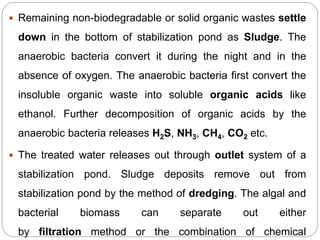
 Remaining non-biodegradable or solid organic wastes settle
down in the bottom of stabilization pond as Sludge. The
anaerobic bacteria convert it during the night and in the
absence of oxygen. The anaerobic bacteria first convert the
insoluble organic waste into soluble organic acids like
ethanol. Further decomposition of organic acids by the
anaerobic bacteria releases H2S, NH3, CH4, CO2 etc.
 The treated water releases out through outlet system of a
stabilization pond. Sludge deposits remove out from
stabilization pond by the method of dredging. The algal and
bacterial biomass can separate out either
by filtration method or the combination of chemical
FAVOURABLE CONDITIONS
Secondary treatment of wastewater in an oxidation
pond requires the following environmental factors:
1.Sunlight
2.Micro Organisms
3. Oxygen
4. Wastewater Quality
5. Pollutant Load
ADVANTAGES OF STABILIZATION
PONDS
 The stabilization pond can reduce the biological oxygen
demand up to 90% naturally.
 It is a simple method to operate, does not require
sophisticated equipment.
 Oxidation pond is a practical and effective method for the
wastewater treatment of domestic and trade wastes in the
tropical areas.
 The operation of a stabilization pond does not require much
labor-power.
 It is an economical method for the treatment of wastewater
from small and isolated units.
DISADVANTAGES OF
STABILIZATION PONDS
 The construction of a stabilization pond
requires more land area.
 The maintenance is quite intricate.
 Sometimes, it gives a foul smell and mosquito
menace during the process if not appropriately
maintained.
 There may get a chance of effluent seepage into
the ground water, which can ultimately cause
ground water pollution.
CONCLUSION
 Therefore, we can conclude that the oxidation pond
is a biological system which takes about 10-40days
of detention time. This method can load organic
matter up to 300-150Kg/hectare/day and having a
length of 50-100m, a width of 30-50m and a depth
of 0.9-1.5m.
 Usually, an oxidation pond can hold water up
to 0.3m and settled sludge up to 0.02m. The
decomposition of bio-organics produces a foul
smell, that’s why the stabilization pond is kept away
from the residential areas. The use of sodium

Stabilization ponds

  • 1.
    What are stabilizationof ponds ? Explain the algae -bacteria symbiosis in an oxidation pond with neat sketch.
  • 2.
    STABILIZATION PONDS  StabilizationPonds is Biological Treatment Systems in which stabilization of organic material is carried out by Bacterial oxidation/ photosynthetic reduction in algae.  Stabilization Ponds are also known as lagoons or oxidation ponds.
  • 3.
  • 4.
     Stabilization pondsare large, shallow ponds designed to treat wastewater through the interaction of sunlight, bacteria and algae.  The pond, typically 1-2m deep.  Decomposition by symbiotic action of algae and bacteria.  Top layer is Anerobic while the bottom layer is anaerobic.  Algae grow within the pond and utilize the Carbon dioxide, Sulphates, nitrates, phosphates, water and sunlight and gives oxygen that is available to bacteria and other microbes  This O2 is used by the aerobic bacteria in the oxidation pond to breakdown the organic matter in wastewater
  • 5.
  • 6.
     During theprocess of photosynthesis, The algae release oxygen needed by aerobic bacteria.  Mechanical aerators are sometimes installed to supply yet more oxygen, thereby reducing the required size of the pond.  Sludge deposits in the pond must be eventually removed by dredging.  Algae remaining in the pond effluent can be removed by filtration or by a combination of chemical treatment.
  • 7.
    MECHANISM OF WASTE TREATMENT •First, the bacteria present in the oxidation pond will oxidize the organic waste of the domestic as well as industrial sewage. By doing this, bacteria release carbon dioxide, water and ammonia.  The algal growth occurs in the presence of sunlight. It utilizes the inorganic waste formed by the organic matter decomposition and releases oxygen.
  • 8.
     From theabove two mechanisms, the algae and bacteria work corporately to fulfil each other’s requirement. The bacteria use oxygen released by the algae, to oxidize the biodegradable organics. A carbon-dioxide release as the result of organic waste oxidation by the bacteria is used by the algae to undergo a reduction of inorganic waste like nitrogen, phosphorus compounds etc. As the oxidation and reduction reaction co-occurs, an oxidation pond also refers as “Redox pond”. The sludge of oxidation pond may use as a manure for the irrigation processes.
  • 9.
    PROCESS INVOLVED INOXIDATION POND  The process involved in the conversion of industrial, domestic wastewater into simple form includes:  First, through the inlet system, the industrial, domestic wastewater influents into the oxidation pond.  Then, the bacteria utilize the biodegradable organics and convert it into inorganic compounds by releasing carbon dioxide. Achromobactin, Proteus, Alcaligenes, Pseudomonas, Thiospirillum, Rhodothecae etc. are the following genera of the bacteria that predominates in the stabilization pond.
  • 10.
    • The algalbiomass in the oxidation pond utilizes the inorganic compounds in the presence of sunlight and carbon- dioxide released during the oxidation of organic waste. Chlorella, Euglena, Scenedesmus and Microcystis are the most common genera of algae that predominates in the stabilization pond.
  • 11.
     Remaining non-biodegradableor solid organic wastes settle down in the bottom of stabilization pond as Sludge. The anaerobic bacteria convert it during the night and in the absence of oxygen. The anaerobic bacteria first convert the insoluble organic waste into soluble organic acids like ethanol. Further decomposition of organic acids by the anaerobic bacteria releases H2S, NH3, CH4, CO2 etc.  The treated water releases out through outlet system of a stabilization pond. Sludge deposits remove out from stabilization pond by the method of dredging. The algal and bacterial biomass can separate out either by filtration method or the combination of chemical
  • 12.
    FAVOURABLE CONDITIONS Secondary treatmentof wastewater in an oxidation pond requires the following environmental factors: 1.Sunlight 2.Micro Organisms 3. Oxygen 4. Wastewater Quality 5. Pollutant Load
  • 13.
    ADVANTAGES OF STABILIZATION PONDS The stabilization pond can reduce the biological oxygen demand up to 90% naturally.  It is a simple method to operate, does not require sophisticated equipment.  Oxidation pond is a practical and effective method for the wastewater treatment of domestic and trade wastes in the tropical areas.  The operation of a stabilization pond does not require much labor-power.  It is an economical method for the treatment of wastewater from small and isolated units.
  • 14.
    DISADVANTAGES OF STABILIZATION PONDS The construction of a stabilization pond requires more land area.  The maintenance is quite intricate.  Sometimes, it gives a foul smell and mosquito menace during the process if not appropriately maintained.  There may get a chance of effluent seepage into the ground water, which can ultimately cause ground water pollution.
  • 15.
    CONCLUSION  Therefore, wecan conclude that the oxidation pond is a biological system which takes about 10-40days of detention time. This method can load organic matter up to 300-150Kg/hectare/day and having a length of 50-100m, a width of 30-50m and a depth of 0.9-1.5m.  Usually, an oxidation pond can hold water up to 0.3m and settled sludge up to 0.02m. The decomposition of bio-organics produces a foul smell, that’s why the stabilization pond is kept away from the residential areas. The use of sodium