Path to success
Using Outsource
for a Startup
Roman Smolgovsky
Head of Engineering
SORT Financial
To Outsource or Not to
Outsource?
❖ Benefits
❖ Cost (Duh?)*
❖ Talent attraction
❖ 24x7 development cycle
❖ Drawbacks
❖ ‘Knowledge distribution’
❖ Regulations compliance (Government, financial, security, etc.)
❖ Distributed team
“The road so far…”
❖ Outsource 1.0 - “Give us a spec and we will build it for you”
❖ Charge per hour (disaster!) or per project (try to get it!)
❖ Requires:
❖ Very detailed and accurate specification - impossible to
make!
❖ Coordination and alignment effort (often billable!!!)
❖ Project management and activity tracking - time
consuming and boring!
“The road so far…” -
Continued
❖ Outsource 2.0 - “Here is your team…”
❖ Charge per person per month
❖ Same personnel for long period of time
❖ Has a Delivery Manager (may even not be billable) that
is responsible to assure your success
❖ Very often residing in US
❖ You manage the team any way you want (Agile -
suggested, more about it later)
What to look for in Outsource 2.0
provider
❖ Personnel retention, no personnel rotation
❖ Personnel is 100% dedicated to your project
❖ Adequate development/testing equipment (at times it is OK
to pay extra for some testing stuff)
❖ Facilities: conference rooms, videoconferencing facilities,
ability to easily reach the team (e.g. US phone numbers)
❖ Personnel engagement and interest
❖ Teams training and intra-team knowledge sharing
Set your expectations…
❖ “Out of the box” the team is not yours!
❖ They may (and will) see you as a ‘stranger’
❖ They may not push back when needed
❖ They may take requirements and procedures literally!
❖ They will not ‘fill the blanks’
❖ Language barriers (lots of funny stories)
❖ Even the best speaking team may not understand all the subtleties
❖ Cultural differences
❖ Amount of vacation time
❖ Start time and working habits
Expected from you…
❖ Strong engineering management at the home office
❖ Manages your remote team and represents them within your company
❖ Establish connection with your team
❖ Meet them in person - periodically spend time at their facilities
❖ Identify the key events (new release planning, etc.) and spend a few weeks at their
location working together
❖ Establish daily call with a video
❖ Establish the right attitude towards the remote team in the home office
❖ Eliminate ‘they’ attitude
❖ Establish collaboration outside engineering; e.g. QA-Product Management, UX
designers - UX developers, etc.
Expected from you…(Cont.)
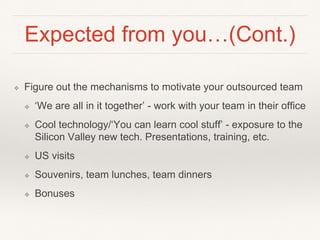
❖ Figure out the mechanisms to motivate your outsourced team
❖ ‘We are all in it together’ - work with your team in their office
❖ Cool technology/‘You can learn cool stuff’ - exposure to the
Silicon Valley new tech. Presentations, training, etc.
❖ US visits
❖ Souvenirs, team lunches, team dinners
❖ Bonuses
Expected from you…(Cont.)
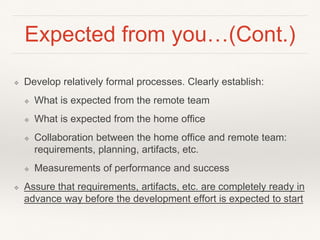
❖ Develop relatively formal processes. Clearly establish:
❖ What is expected from the remote team
❖ What is expected from the home office
❖ Collaboration between the home office and remote team:
requirements, planning, artifacts, etc.
❖ Measurements of performance and success
❖ Assure that requirements, artifacts, etc. are completely ready in
advance way before the development effort is expected to start
Expected from you…(Cont.)
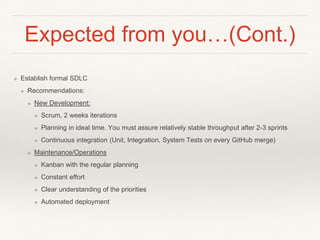
❖ Establish formal SDLC
❖ Recommendations:
❖ New Development:
❖ Scrum, 2 weeks iterations
❖ Planning in ideal time. You must assure relatively stable throughput after 2-3 sprints
❖ Continuous integration (Unit, Integration, System Tests on every GitHub merge)
❖ Maintenance/Operations
❖ Kanban with the regular planning
❖ Constant effort
❖ Clear understanding of the priorities
❖ Automated deployment
Performance and Success
Measurement
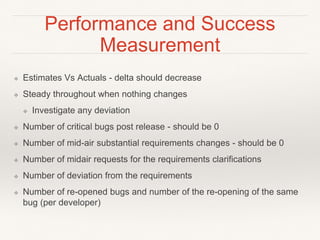
❖ Estimates Vs Actuals - delta should decrease
❖ Steady throughout when nothing changes
❖ Investigate any deviation
❖ Number of critical bugs post release - should be 0
❖ Number of mid-air substantial requirements changes - should be 0
❖ Number of midair requests for the requirements clarifications
❖ Number of deviation from the requirements
❖ Number of re-opened bugs and number of the re-opening of the same
bug (per developer)
Thank you!
Questions, Comments, Concerns

Outsource for a startup

  • 1.
    Path to success UsingOutsource for a Startup Roman Smolgovsky Head of Engineering SORT Financial
  • 2.
    To Outsource orNot to Outsource? ❖ Benefits ❖ Cost (Duh?)* ❖ Talent attraction ❖ 24x7 development cycle ❖ Drawbacks ❖ ‘Knowledge distribution’ ❖ Regulations compliance (Government, financial, security, etc.) ❖ Distributed team
  • 3.
    “The road sofar…” ❖ Outsource 1.0 - “Give us a spec and we will build it for you” ❖ Charge per hour (disaster!) or per project (try to get it!) ❖ Requires: ❖ Very detailed and accurate specification - impossible to make! ❖ Coordination and alignment effort (often billable!!!) ❖ Project management and activity tracking - time consuming and boring!
  • 4.
    “The road sofar…” - Continued ❖ Outsource 2.0 - “Here is your team…” ❖ Charge per person per month ❖ Same personnel for long period of time ❖ Has a Delivery Manager (may even not be billable) that is responsible to assure your success ❖ Very often residing in US ❖ You manage the team any way you want (Agile - suggested, more about it later)
  • 5.
    What to lookfor in Outsource 2.0 provider ❖ Personnel retention, no personnel rotation ❖ Personnel is 100% dedicated to your project ❖ Adequate development/testing equipment (at times it is OK to pay extra for some testing stuff) ❖ Facilities: conference rooms, videoconferencing facilities, ability to easily reach the team (e.g. US phone numbers) ❖ Personnel engagement and interest ❖ Teams training and intra-team knowledge sharing
  • 6.
    Set your expectations… ❖“Out of the box” the team is not yours! ❖ They may (and will) see you as a ‘stranger’ ❖ They may not push back when needed ❖ They may take requirements and procedures literally! ❖ They will not ‘fill the blanks’ ❖ Language barriers (lots of funny stories) ❖ Even the best speaking team may not understand all the subtleties ❖ Cultural differences ❖ Amount of vacation time ❖ Start time and working habits
  • 7.
    Expected from you… ❖Strong engineering management at the home office ❖ Manages your remote team and represents them within your company ❖ Establish connection with your team ❖ Meet them in person - periodically spend time at their facilities ❖ Identify the key events (new release planning, etc.) and spend a few weeks at their location working together ❖ Establish daily call with a video ❖ Establish the right attitude towards the remote team in the home office ❖ Eliminate ‘they’ attitude ❖ Establish collaboration outside engineering; e.g. QA-Product Management, UX designers - UX developers, etc.
  • 8.
    Expected from you…(Cont.) ❖Figure out the mechanisms to motivate your outsourced team ❖ ‘We are all in it together’ - work with your team in their office ❖ Cool technology/‘You can learn cool stuff’ - exposure to the Silicon Valley new tech. Presentations, training, etc. ❖ US visits ❖ Souvenirs, team lunches, team dinners ❖ Bonuses
  • 9.
    Expected from you…(Cont.) ❖Develop relatively formal processes. Clearly establish: ❖ What is expected from the remote team ❖ What is expected from the home office ❖ Collaboration between the home office and remote team: requirements, planning, artifacts, etc. ❖ Measurements of performance and success ❖ Assure that requirements, artifacts, etc. are completely ready in advance way before the development effort is expected to start
  • 10.
    Expected from you…(Cont.) ❖Establish formal SDLC ❖ Recommendations: ❖ New Development: ❖ Scrum, 2 weeks iterations ❖ Planning in ideal time. You must assure relatively stable throughput after 2-3 sprints ❖ Continuous integration (Unit, Integration, System Tests on every GitHub merge) ❖ Maintenance/Operations ❖ Kanban with the regular planning ❖ Constant effort ❖ Clear understanding of the priorities ❖ Automated deployment
  • 11.
    Performance and Success Measurement ❖Estimates Vs Actuals - delta should decrease ❖ Steady throughout when nothing changes ❖ Investigate any deviation ❖ Number of critical bugs post release - should be 0 ❖ Number of mid-air substantial requirements changes - should be 0 ❖ Number of midair requests for the requirements clarifications ❖ Number of deviation from the requirements ❖ Number of re-opened bugs and number of the re-opening of the same bug (per developer)
  • 12.