LENI Systems
SMOSE
LENI > ISE > STI > EPFL
LENI - Laboratory for Industrial Energy Systems
ISE - Institute of Energy Science
Prof D. Favrat
Introducing
A tool for
design and analysis of
integrated energy systems
The functionalities of OSMOSE
are organized in a
three-layer architecture
OSMOSE
OSMOSE
OSMOSE
OSMOSE is a computation
platform built to study and
design energy systems
1
3
2
SMOSEPhilosophyandarchitecture
Decision
variables
State of the
system
Models architecture
Thermo-economical state of the
system with optimal heat integration
SMOSE1
- model interrogation
- cross-software communication
- superstructure generation
Heat and power integration
Thermo-economic performance
Material and chemical balance
Osmose1 main tasks
OSMOSE1
Model interaction
layer
Computation
definition
Results
- organize and handle computations
- results storage
Multi-objective optimization
Sensitivity analysis
Data reconciliation
Computation options
Analysis and
optimization layer
OSMOSE1
OSMOSE2
Model snapshot
Semi-newton optimization
SMOSE2
Computed Measure Reconciled
100 110
12 12
50.23 50.24
Results for energy system design
decision makers
Osmose2 main tasks
Analysis and statistics
Reporting
Plotting
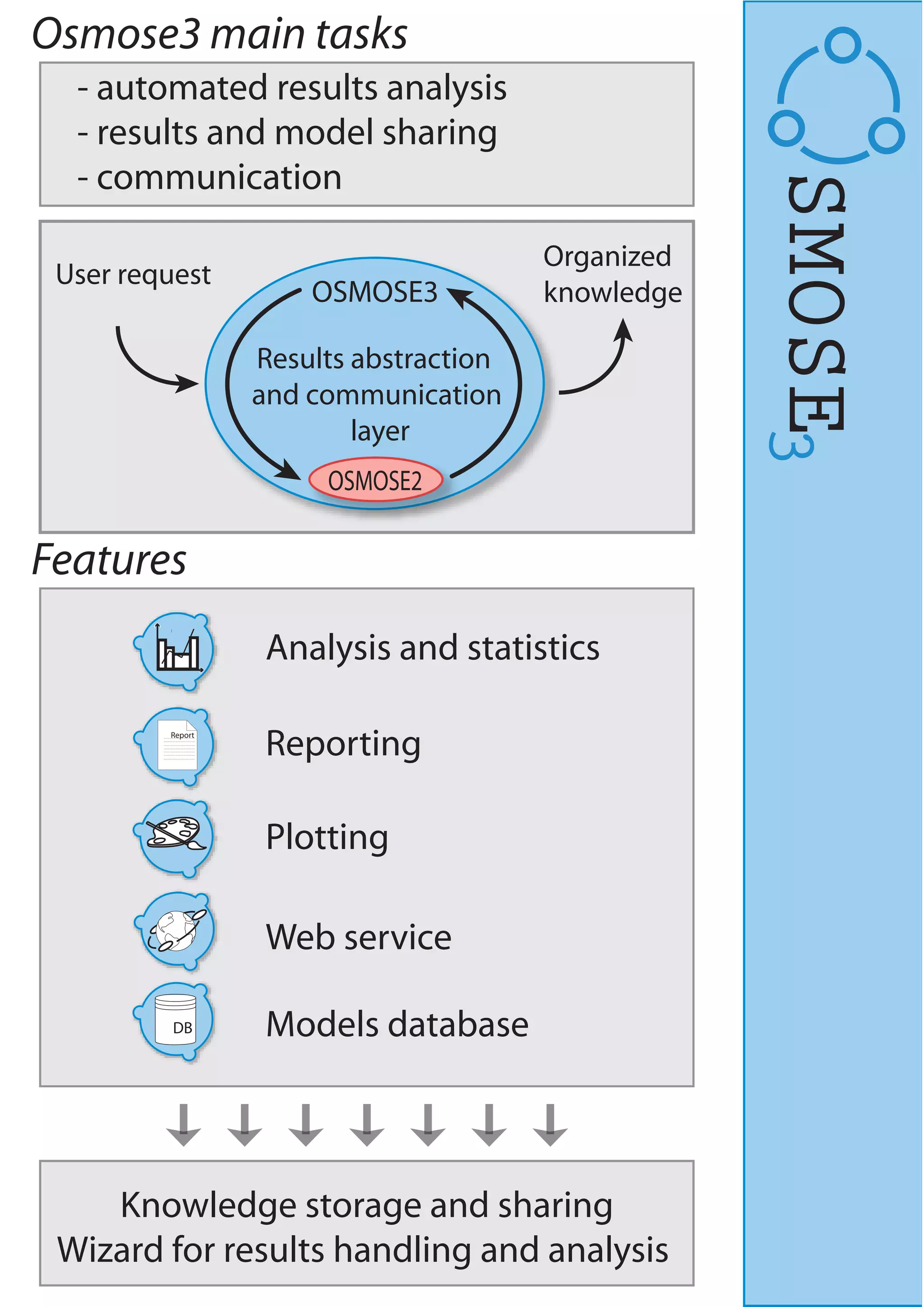
Results abstraction
and communication
layer
OSMOSE3
Web service
Models database
Knowledge storage and sharing
Wizard for results handling and analysis
User request
Organized
knowledge
SMOSE3
DB
Report
Osmose3 main tasks
- automated results analysis
- results and model sharing
- communication
Features
OSMOSE2
Selected Publications
ProjectTeam
Advanced Power Plant Design Methodology using Process Integration
and Multi-Objective Thermo-Economic Optimisation / Bolliger, Raffaele;
Favrat, Daniel; Maréchal, François – In ECOS 2005, 18th International
Conference on Efficiency, Cost, Optimization, Simulation and Environ-
mental Impact of Energy Systems, vol. 2 (2005), p. 777-784.
Thermo-economic modelling and optimisation of fuel cell systems /
Maréchal, François; Favrat, Daniel; Palazzi, Francesca; Godat, Julien –
In Fuel Cells- From Fundamentals to Systems, vol. 5, num. 1 (2005), p.
5-24.
A Methodology for Thermo-Economic Modeling and Optimization of
SOFC Systems / Palazzi, Francesca; Autissier, Nordahl; Maréchal,
François; Van herle, Jan – In Chemical Engineering Transactions, vol. 7
(2005), p. 13-18
Thermo-Economic Optimization of a Solid Oxide Fuel Cell, Gas Turbine
Hybrid System / N. Autissier, F. Palazzi, F. Marechal, J. Van herle, D.
Favrat - European Fuel Cell Technology and Applications Conference
2005 EFC2005-86072
Francesca Palazzi
Raffaele Bolliger
Daniel Favrat
François Maréchal
Luc Girardin
Irene Ricart-Puig
Zoé Périn-Levasseur
Nicolas Borboën
Damien Muller
Laboratoire d’Énergétique Industrielle
École Polytechnique Fédérale de Lausanne
ME A2 434 (Bâtiment ME)
Station 9
CH-1015 Lausanne
Tél.:+41 21 693 35 07
Fax:+41 21 693 73 22
http://leniwww.epfl.ch

osmose

  • 1.
    LENI Systems SMOSE LENI >ISE > STI > EPFL LENI - Laboratory for Industrial Energy Systems ISE - Institute of Energy Science Prof D. Favrat Introducing A tool for design and analysis of integrated energy systems
  • 2.
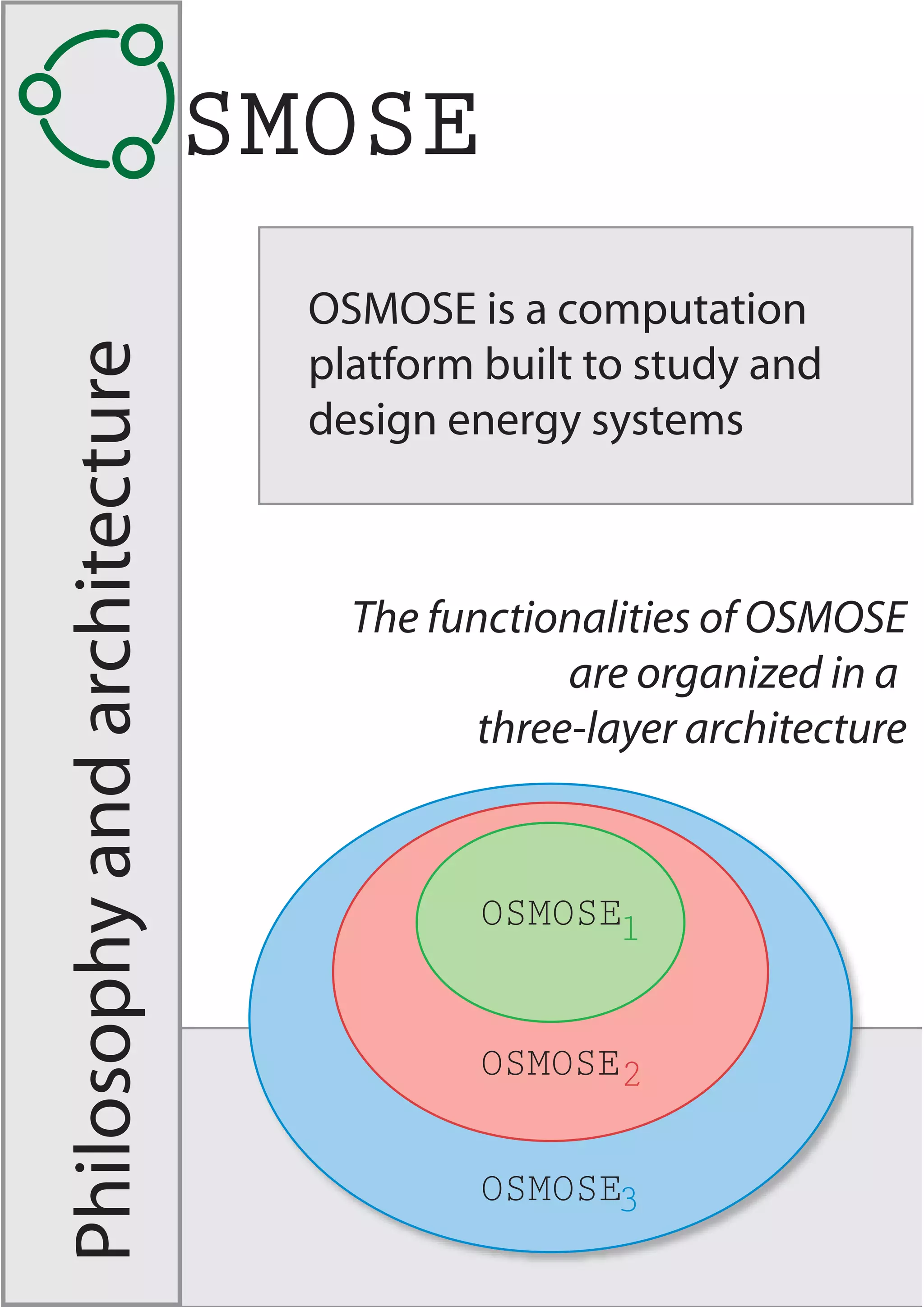
    The functionalities ofOSMOSE are organized in a three-layer architecture OSMOSE OSMOSE OSMOSE OSMOSE is a computation platform built to study and design energy systems 1 3 2 SMOSEPhilosophyandarchitecture
  • 3.
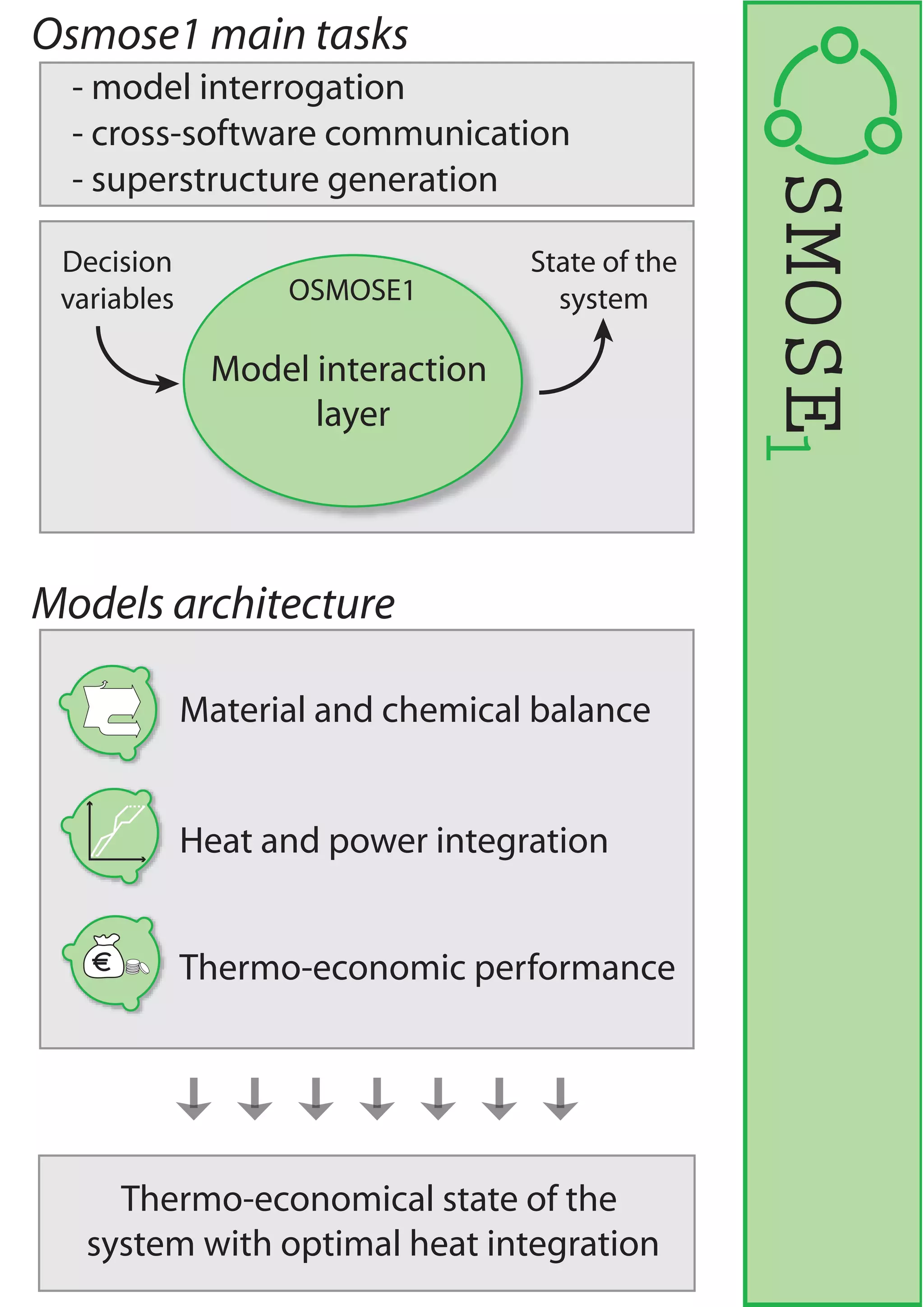
    Decision variables State of the system Modelsarchitecture Thermo-economical state of the system with optimal heat integration SMOSE1 - model interrogation - cross-software communication - superstructure generation Heat and power integration Thermo-economic performance Material and chemical balance Osmose1 main tasks OSMOSE1 Model interaction layer
  • 4.
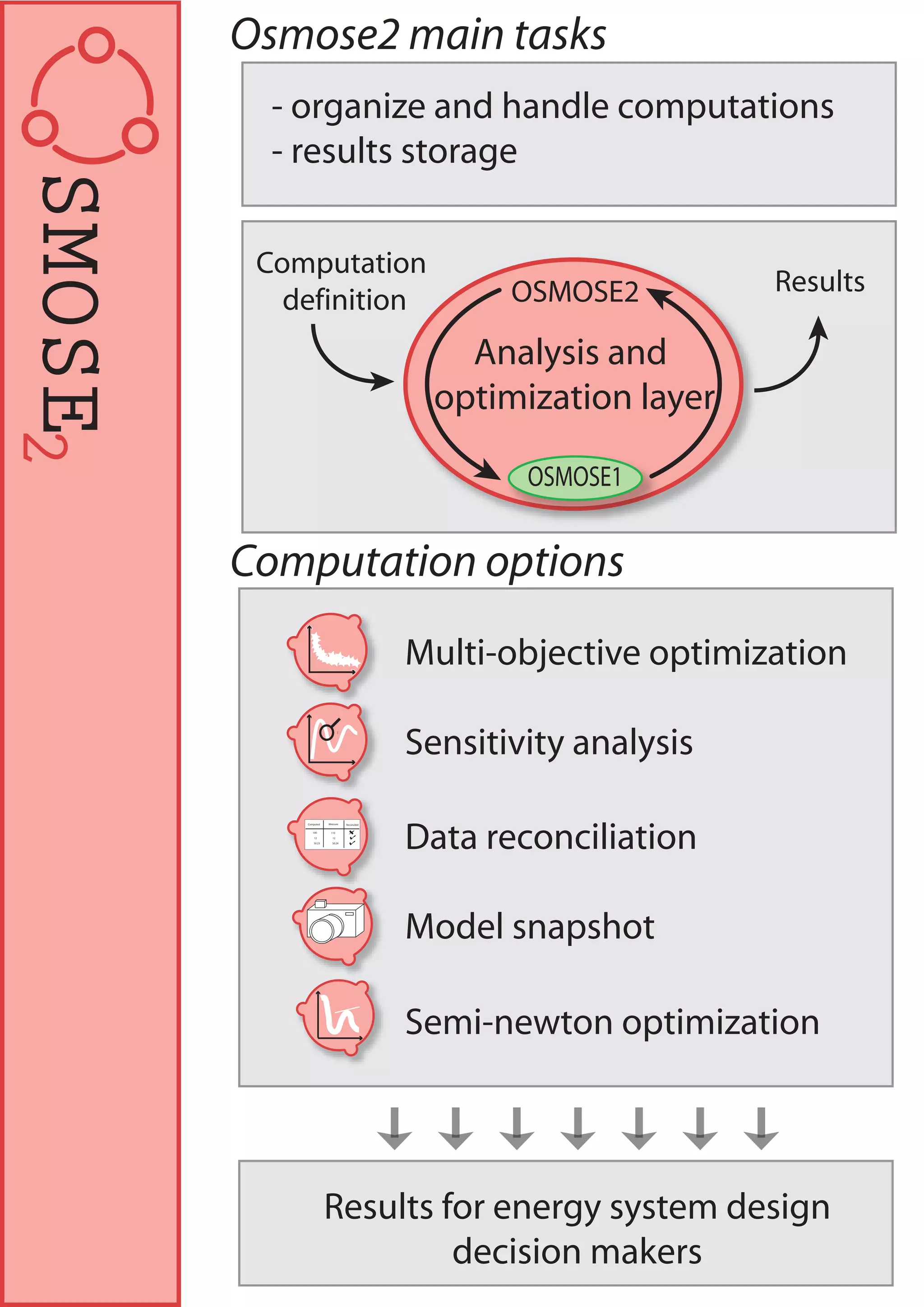
    Computation definition Results - organize andhandle computations - results storage Multi-objective optimization Sensitivity analysis Data reconciliation Computation options Analysis and optimization layer OSMOSE1 OSMOSE2 Model snapshot Semi-newton optimization SMOSE2 Computed Measure Reconciled 100 110 12 12 50.23 50.24 Results for energy system design decision makers Osmose2 main tasks
  • 5.
    Analysis and statistics Reporting Plotting Resultsabstraction and communication layer OSMOSE3 Web service Models database Knowledge storage and sharing Wizard for results handling and analysis User request Organized knowledge SMOSE3 DB Report Osmose3 main tasks - automated results analysis - results and model sharing - communication Features OSMOSE2
  • 6.
    Selected Publications ProjectTeam Advanced PowerPlant Design Methodology using Process Integration and Multi-Objective Thermo-Economic Optimisation / Bolliger, Raffaele; Favrat, Daniel; Maréchal, François – In ECOS 2005, 18th International Conference on Efficiency, Cost, Optimization, Simulation and Environ- mental Impact of Energy Systems, vol. 2 (2005), p. 777-784. Thermo-economic modelling and optimisation of fuel cell systems / Maréchal, François; Favrat, Daniel; Palazzi, Francesca; Godat, Julien – In Fuel Cells- From Fundamentals to Systems, vol. 5, num. 1 (2005), p. 5-24. A Methodology for Thermo-Economic Modeling and Optimization of SOFC Systems / Palazzi, Francesca; Autissier, Nordahl; Maréchal, François; Van herle, Jan – In Chemical Engineering Transactions, vol. 7 (2005), p. 13-18 Thermo-Economic Optimization of a Solid Oxide Fuel Cell, Gas Turbine Hybrid System / N. Autissier, F. Palazzi, F. Marechal, J. Van herle, D. Favrat - European Fuel Cell Technology and Applications Conference 2005 EFC2005-86072 Francesca Palazzi Raffaele Bolliger Daniel Favrat François Maréchal Luc Girardin Irene Ricart-Puig Zoé Périn-Levasseur Nicolas Borboën Damien Muller Laboratoire d’Énergétique Industrielle École Polytechnique Fédérale de Lausanne ME A2 434 (Bâtiment ME) Station 9 CH-1015 Lausanne Tél.:+41 21 693 35 07 Fax:+41 21 693 73 22 http://leniwww.epfl.ch http://leniwww.epfl.ch