Organisms and their environment
Key definitions
• Food Chain: A linear transfer of energy from one
organism to another, starting with a producer.
• Food Web: A network of interconnected food
chains.
• Producer: Organisms that create their organic
nutrients, often using sunlight.
• Consumer: Organisms that obtain energy by
consuming other organisms.
• Herbivore: Animals that feed on plants.
• Carnivore: Animals that feed on other animals.
• Decomposer: Organisms that obtain energy from
dead or waste organic material.
• Trophic Level: The position of an organism in a food
chain, food web, or ecological pyramid.
Dependence on
Sunlight
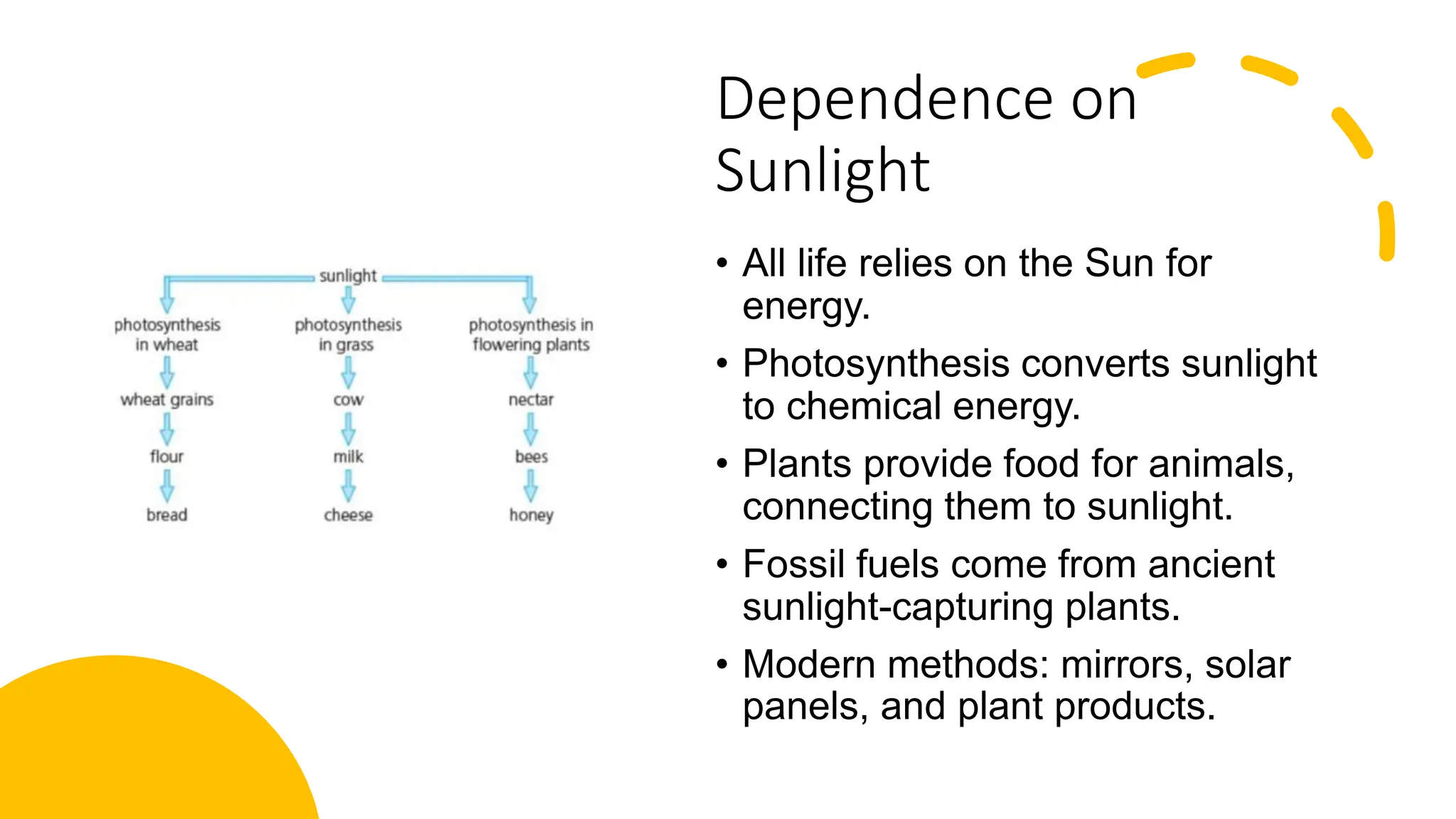
• All life relies on the Sun for
energy.
• Photosynthesis converts sunlight
to chemical energy.
• Plants provide food for animals,
connecting them to sunlight.
• Fossil fuels come from ancient
sunlight-capturing plants.
• Modern methods: mirrors, solar
panels, and plant products.
Food Chain
• Many organisms depend on each
other for survival.
• Herbivores eat plants, forming a
food chain.
• Trophic levels show an
organism's place in the chain.
• Pyramids of numbers depict
organisms' numbers.
• Pyramids of biomass consider
living organisms' mass for
accuracy.
• Trophic levels:
• Trophic level defines an organism's position in a food chain.
• At the base are plants (producers), converting CO2, water, and salts
into food through photosynthesis.
• Herbivores (e.g., mice) are primary consumers, eating plants.
• Carnivores (e.g., snakes) are secondary consumers preying on
herbivores.
• Tertiary consumers (e.g., mongoose or hawk) may eat secondary
consumers.
• Plankton:
• Plankton includes microscopic sea or freshwater organisms.
• Phytoplankton, single-celled algae, use chloroplasts to convert sunlight
into food.
• Zooplankton, primarily crustaceans, consume phytoplankton.
• Small carp feed on crustaceans.
Pyramids of Numbers and
Biomass
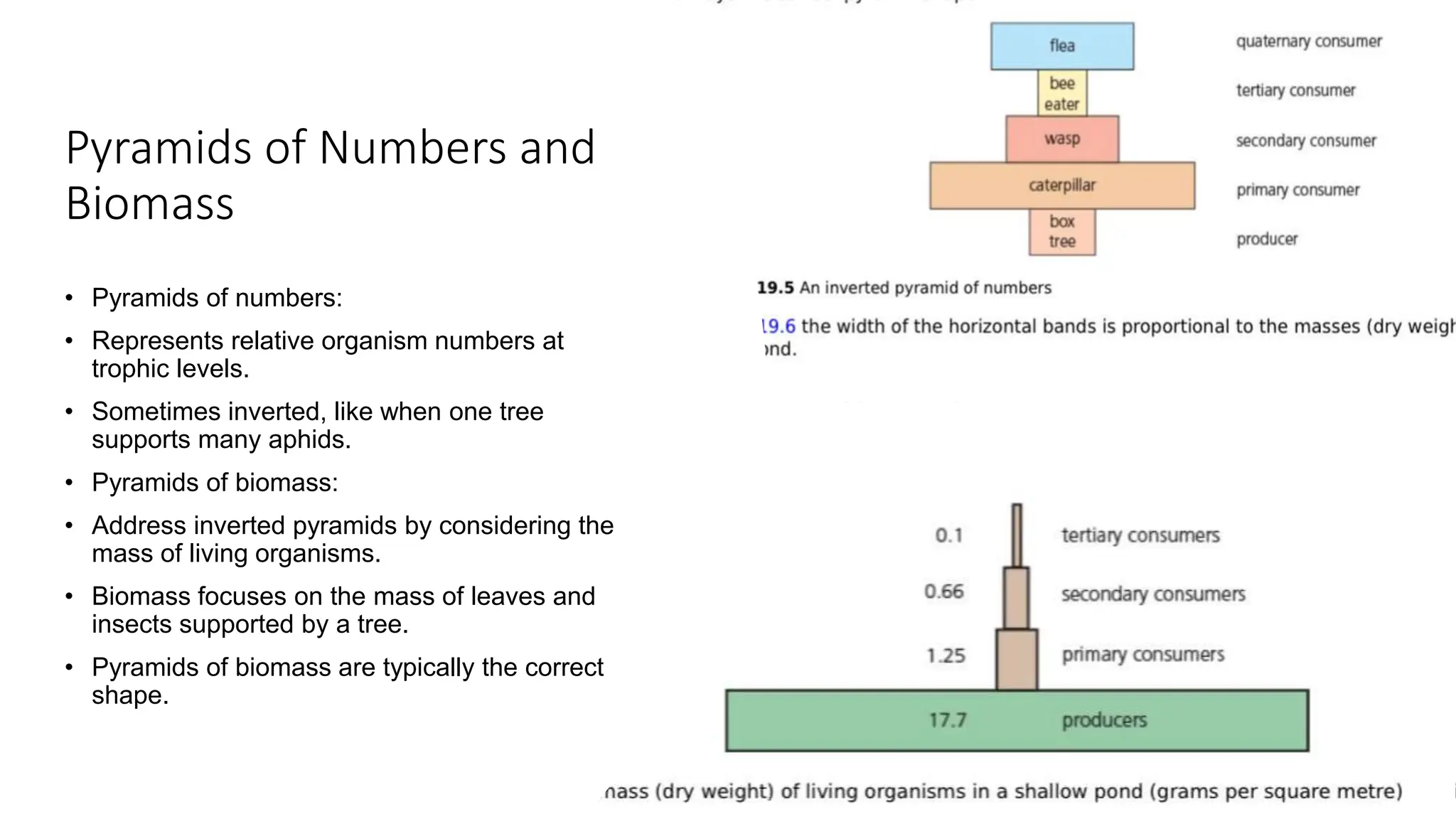
• Pyramids of numbers:
• Represents relative organism numbers at
trophic levels.
• Sometimes inverted, like when one tree
supports many aphids.
• Pyramids of biomass:
• Address inverted pyramids by considering the
mass of living organisms.
• Biomass focuses on the mass of leaves and
insects supported by a tree.
• Pyramids of biomass are typically the correct
shape.
Food webs
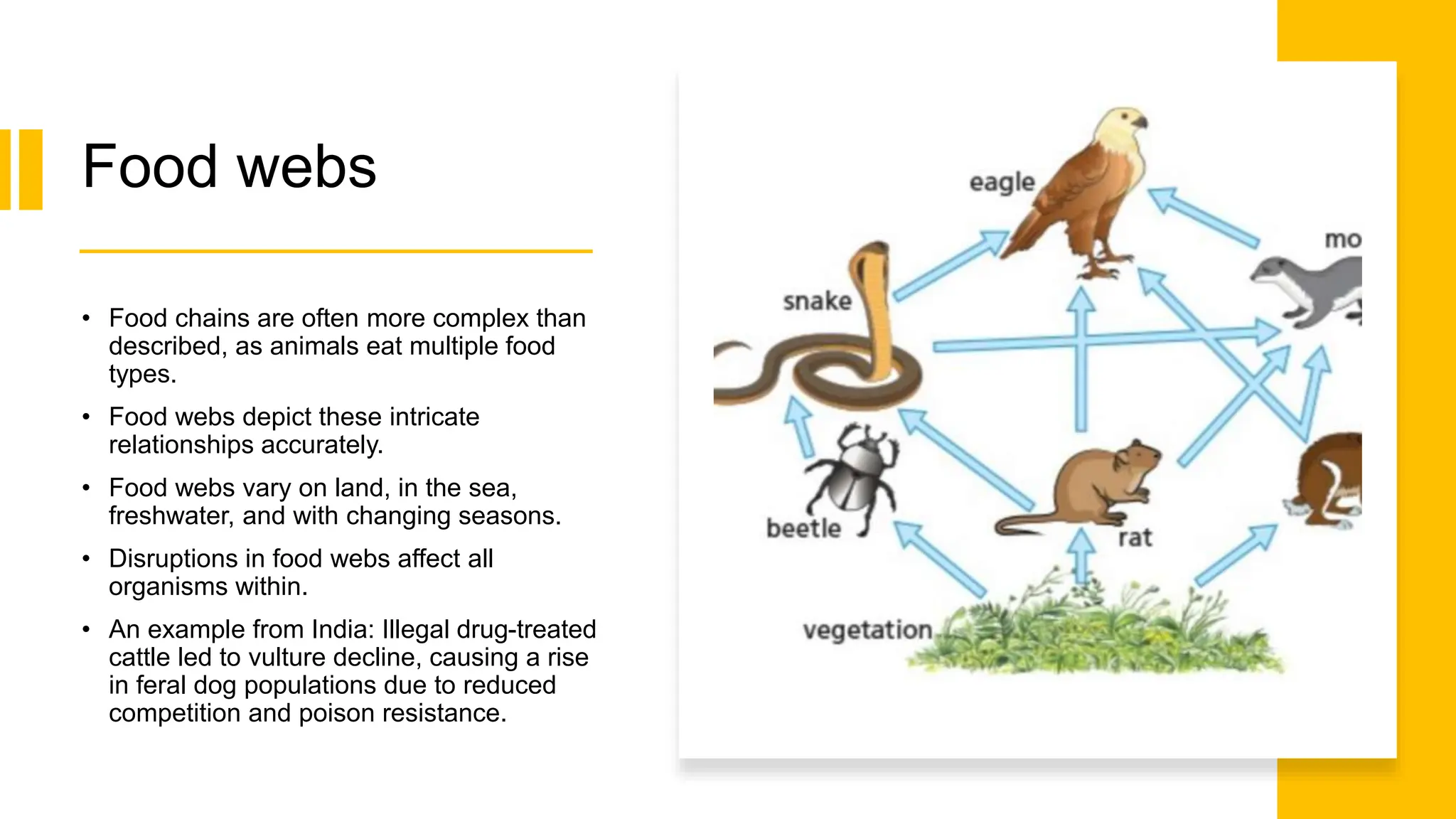
• Food chains are often more complex than
described, as animals eat multiple food
types.
• Food webs depict these intricate
relationships accurately.
• Food webs vary on land, in the sea,
freshwater, and with changing seasons.
• Disruptions in food webs affect all
organisms within.
• An example from India: Illegal drug-treated
cattle led to vulture decline, causing a rise
in feral dog populations due to reduced
competition and poison resistance.
Over-harvesting &Overfishing
• Effects of over-harvesting :
• Over-harvesting reduces species to endangerment
or extinction.
• Species harvested for food, body parts (e.g., tusks,
horns, bones, fur), or as pets.
• Unregulated bush meat hunting, like primates,
threatens rare species in some regions
• Effects of overfishing:
• Overfishing due to commercial practices harms fish
populations and ecosystems.
• Whaling has drastically reduced whale populations.
• Overfishing can harm environments, e.g., coral
reefs, and disrupt food chains.
Introducing Foreign Species to Ecosystems
• Introduction of foreign species can
devastate native ecosystems and
endanger species.
• Examples of introducing foreign species:
• Rats introduced to Galapagos Islands
caused harm to native species.
• Prickly pear cactus introduced in Australia
led to ecosystem damage.
• The introduction of non-native species can
have unintended consequences.
• Pesticides and poisons, released
accidentally or intentionally, can disrupt
food chains and ecosystems.
Undesirable Effects
of Deforestation
• Deforestation leads to habitat loss, endangering plant and animal species due to land
conversion for agriculture, mining, housing, and roads.
• Biodiversity suffers as animal habitats and food sources vanish with deforestation.
• Tree removal increases soil erosion risk, polluting rivers and lakes.
• Deforestation elevates flood occurrence as trees no longer absorb rainwater.
• It contributes to higher carbon dioxide levels, intensifying global warming and climate
change.
• Forests regulate climate, water supply, and soil quality by slowly releasing rainfall and
anchoring soil with roots.
• Deforestation results from timber extraction, agriculture, infrastructure development,
and firewood use.
• Global forests declined from 31.6% to 30.6% of global land area between 1990 and
2015.
• The Amazon basin faces severe deforestation, with an estimated 27% tree loss by 2030,
endangering biodiversity.
• Soil erosion follows tree removal and ploughing, causing river clogging and potential
floods.
• Deforested soil initially yields crops but quickly depletes nutrients, leading to erosion.
• Abandoned deforested land does not recover, and soil remains nutrient-poor.
Forests and climate
• Half of tropical rainforest rainfall is from tree
transpiration, maintaining a cool and humid climate by
reflecting sunlight.
• Deforestation leads to reduced rain, increased
temperature fluctuations, and diminished cloud cover.
• In North-Eastern Brazil, deforestation nears 60%,
risking permanent regional climate changes and
desertification.
• Mass tree removal hinders carbon dioxide absorption
via photosynthesis, contributing to increased
atmospheric CO2 and global warming.
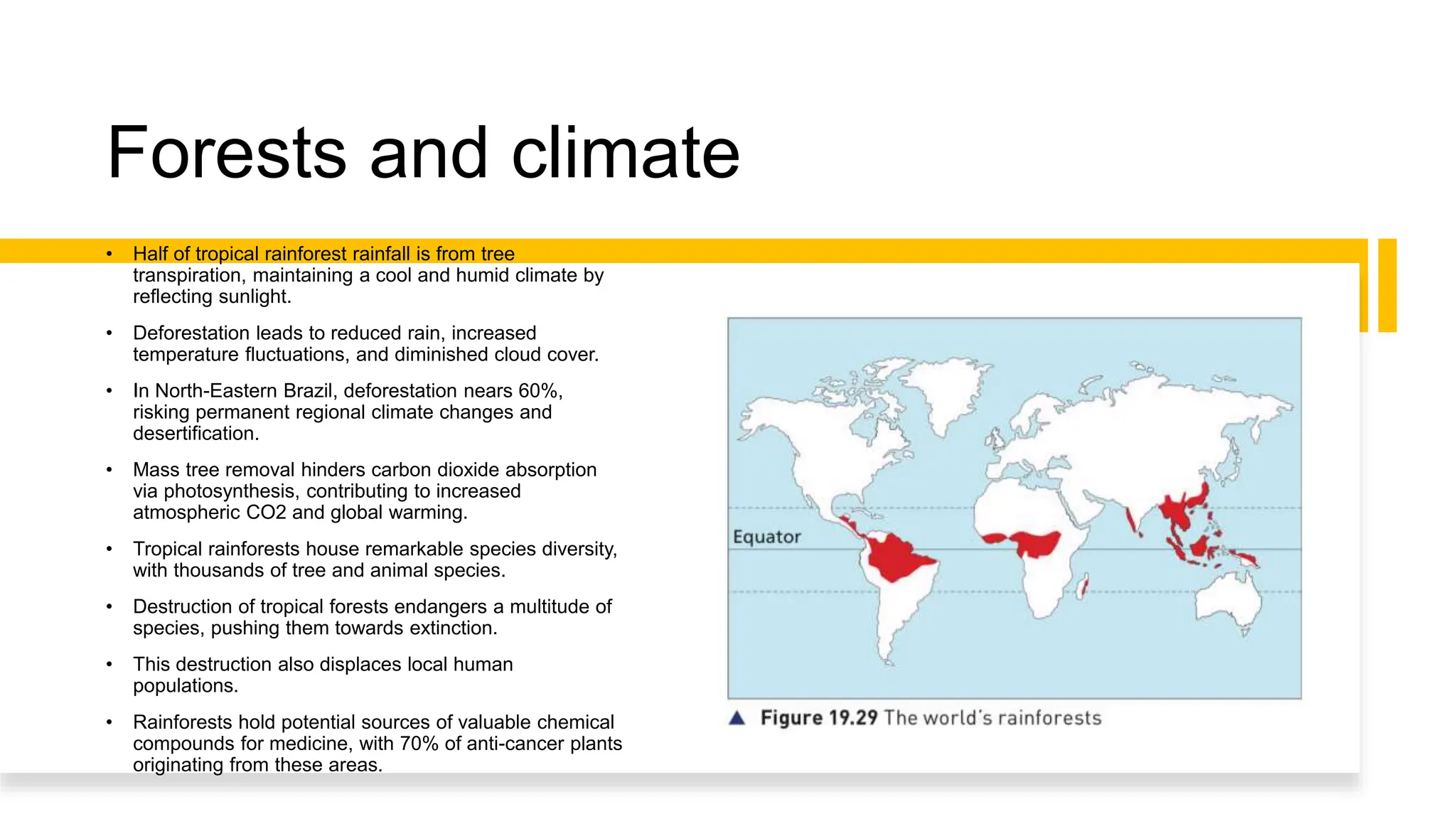
• Tropical rainforests house remarkable species diversity,
with thousands of tree and animal species.
• Destruction of tropical forests endangers a multitude of
species, pushing them towards extinction.
• This destruction also displaces local human
populations.
• Rainforests hold potential sources of valuable chemical
compounds for medicine, with 70% of anti-cancer plants
originating from these areas.
• Intensive agriculture has destroyed natural habitats like hedgerows, hay meadows, and stubble fields.
• Removal of hedgerows, replaced by larger fields and monoculture, has reduced plant and animal diversity.
• Planting winter wheat prevents animals' access to stubble fields, leading to declining butterfly, flower, and bird populations.
• Some countries have laws protecting select hedgerows due to their significance.
• Encouraging wildlife-friendly land management practices, like leaving uncultivated strips or planting new hedgerows, can help boost useful
insect populations.
• Urbanization results in the loss of natural habitats due to the development of towns and cities.
• Mining, particularly for coal and natural resources like gold and gravel, leaves scars in the landscape, destroying natural habitats.
• Open-pit mining impacts local water sources and aquatic habitats through water contamination with toxic metals.
• Oil spills around oil wells are highly toxic and destroy habitats.
• The need for more raw materials and energy sources due to population growth and technology demands threatens natural habitats and
resources.
• International efforts, such as the World Charter for Nature in 1982, The World Ethic of Sustainability in 1990, and Earth Summit in 1992, aim to
address these major environmental issues and promote habitat conservation.
Pollution
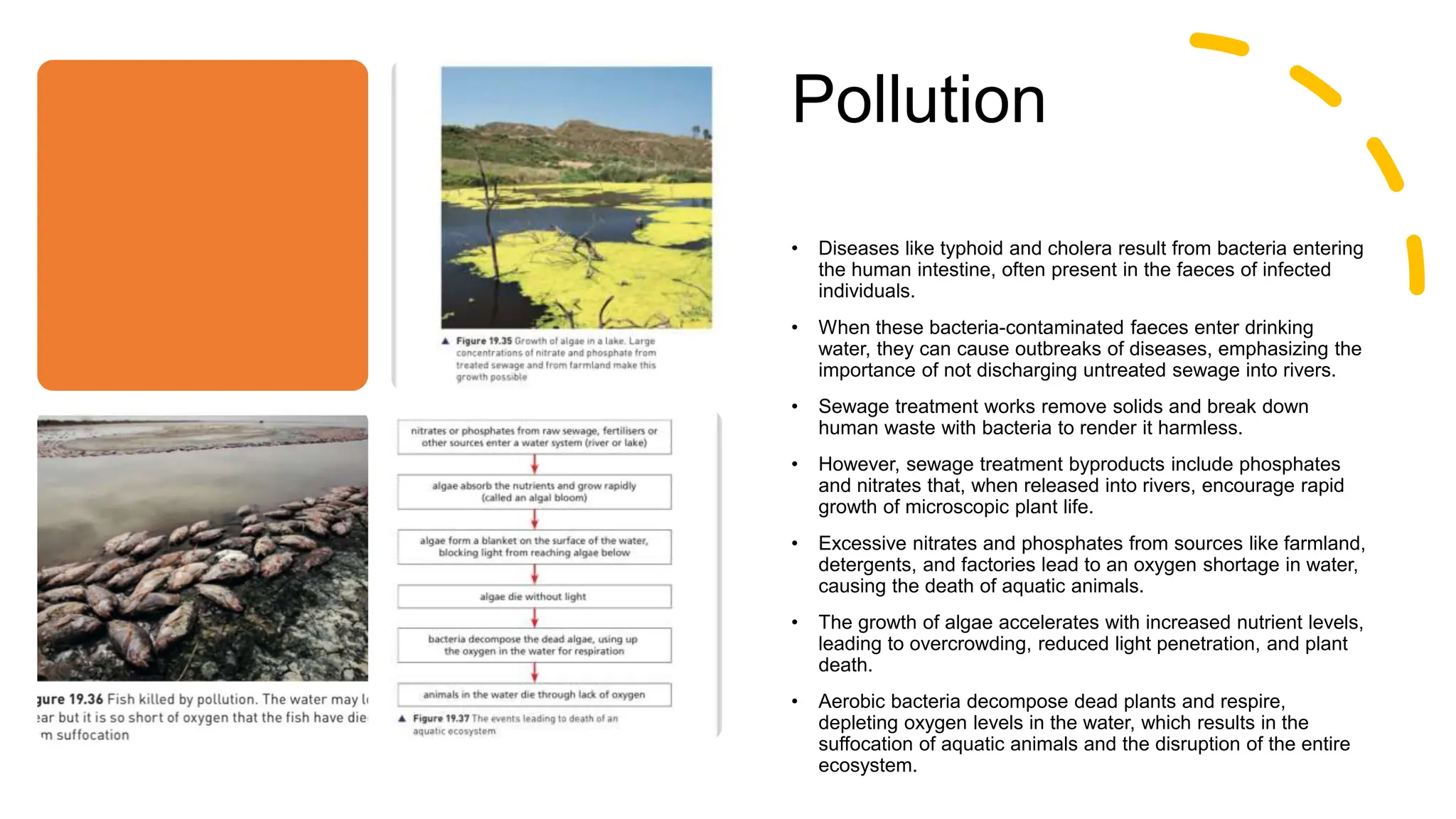
• Diseases like typhoid and cholera result from bacteria entering
the human intestine, often present in the faeces of infected
individuals.
• When these bacteria-contaminated faeces enter drinking
water, they can cause outbreaks of diseases, emphasizing the
importance of not discharging untreated sewage into rivers.
• Sewage treatment works remove solids and break down
human waste with bacteria to render it harmless.
• However, sewage treatment byproducts include phosphates
and nitrates that, when released into rivers, encourage rapid
growth of microscopic plant life.
• Excessive nitrates and phosphates from sources like farmland,
detergents, and factories lead to an oxygen shortage in water,
causing the death of aquatic animals.
• The growth of algae accelerates with increased nutrient levels,
leading to overcrowding, reduced light penetration, and plant
death.
• Aerobic bacteria decompose dead plants and respire,
depleting oxygen levels in the water, which results in the
suffocation of aquatic animals and the disruption of the entire
ecosystem.
Eutrophication
• Plants require nitrates and various ions for growth, with the rate of growth
often limited by nutrient availability.
• Human activities have significantly increased nitrate and ion levels in rivers and
lakes, accelerating the process of eutrophication.
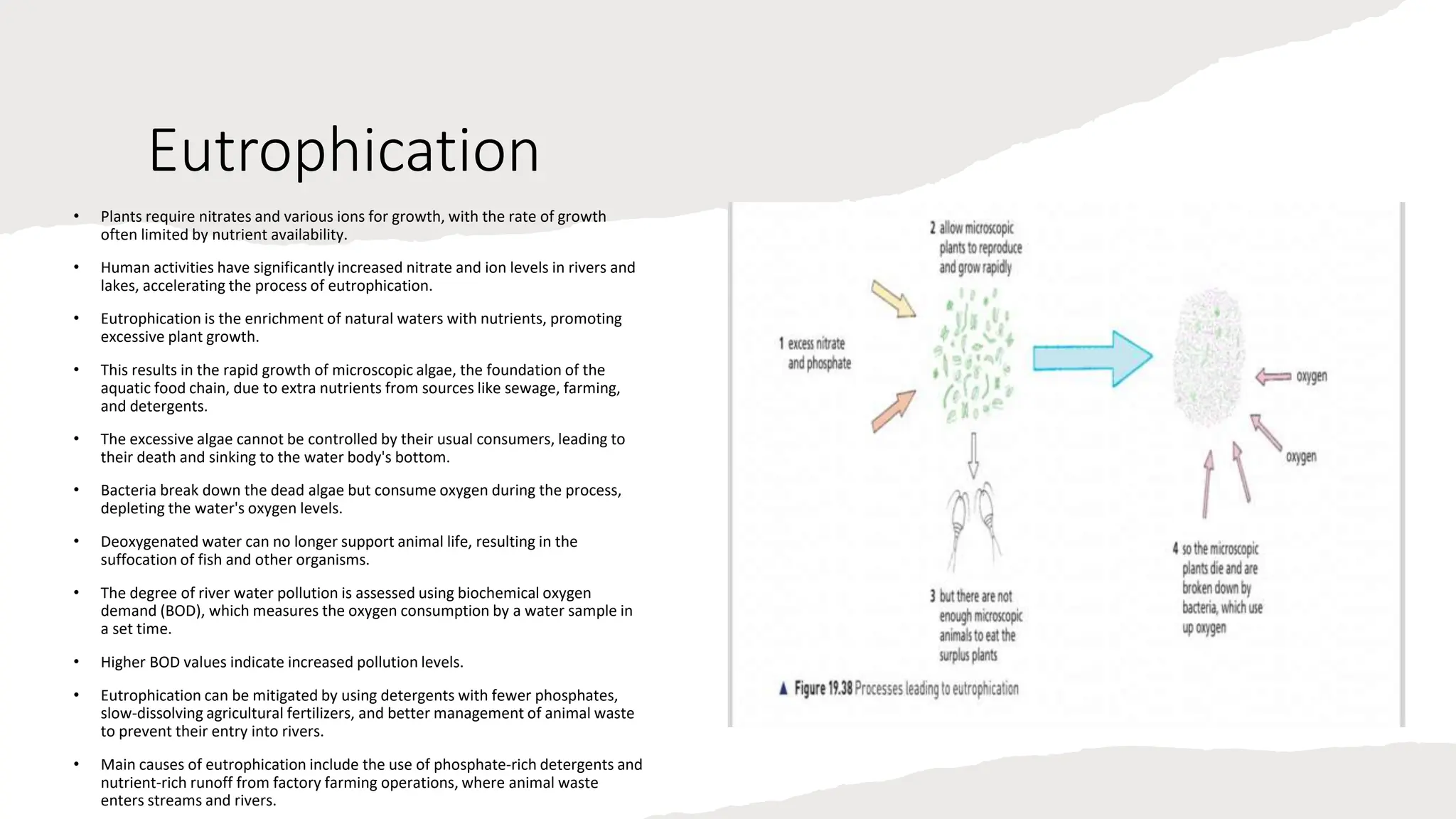
• Eutrophication is the enrichment of natural waters with nutrients, promoting
excessive plant growth.
• This results in the rapid growth of microscopic algae, the foundation of the
aquatic food chain, due to extra nutrients from sources like sewage, farming,
and detergents.
• The excessive algae cannot be controlled by their usual consumers, leading to
their death and sinking to the water body's bottom.
• Bacteria break down the dead algae but consume oxygen during the process,
depleting the water's oxygen levels.
• Deoxygenated water can no longer support animal life, resulting in the
suffocation of fish and other organisms.
• The degree of river water pollution is assessed using biochemical oxygen
demand (BOD), which measures the oxygen consumption by a water sample in
a set time.
• Higher BOD values indicate increased pollution levels.
• Eutrophication can be mitigated by using detergents with fewer phosphates,
slow-dissolving agricultural fertilizers, and better management of animal waste
to prevent their entry into rivers.
• Main causes of eutrophication include the use of phosphate-rich detergents and
nutrient-rich runoff from factory farming operations, where animal waste
enters streams and rivers.
Plastics and the
environment:
• Plastics are non-biodegradable and do not break down naturally when
discarded.
• They persist in the environment, taking up space and causing visual
pollution.
• Discarded plastic items like bottles, fishing lines, and nets can trap and
harm animals.
• Over time, plastics degrade into smaller fragments, which can be ingested
by fish and birds, causing harm.
• Plastic bags are a significant issue, filling up landfill sites and causing litter
problems.
• Some countries have taken measures to address plastic bag pollution,
including bans and fees.
• Polythene waste is now being recycled to create various products, such as
car seat covers, sports shoes, and headphones.
• Some innovative uses of recycled plastic include incorporating it into road
construction.
The Greenhouse
Effect and Climate
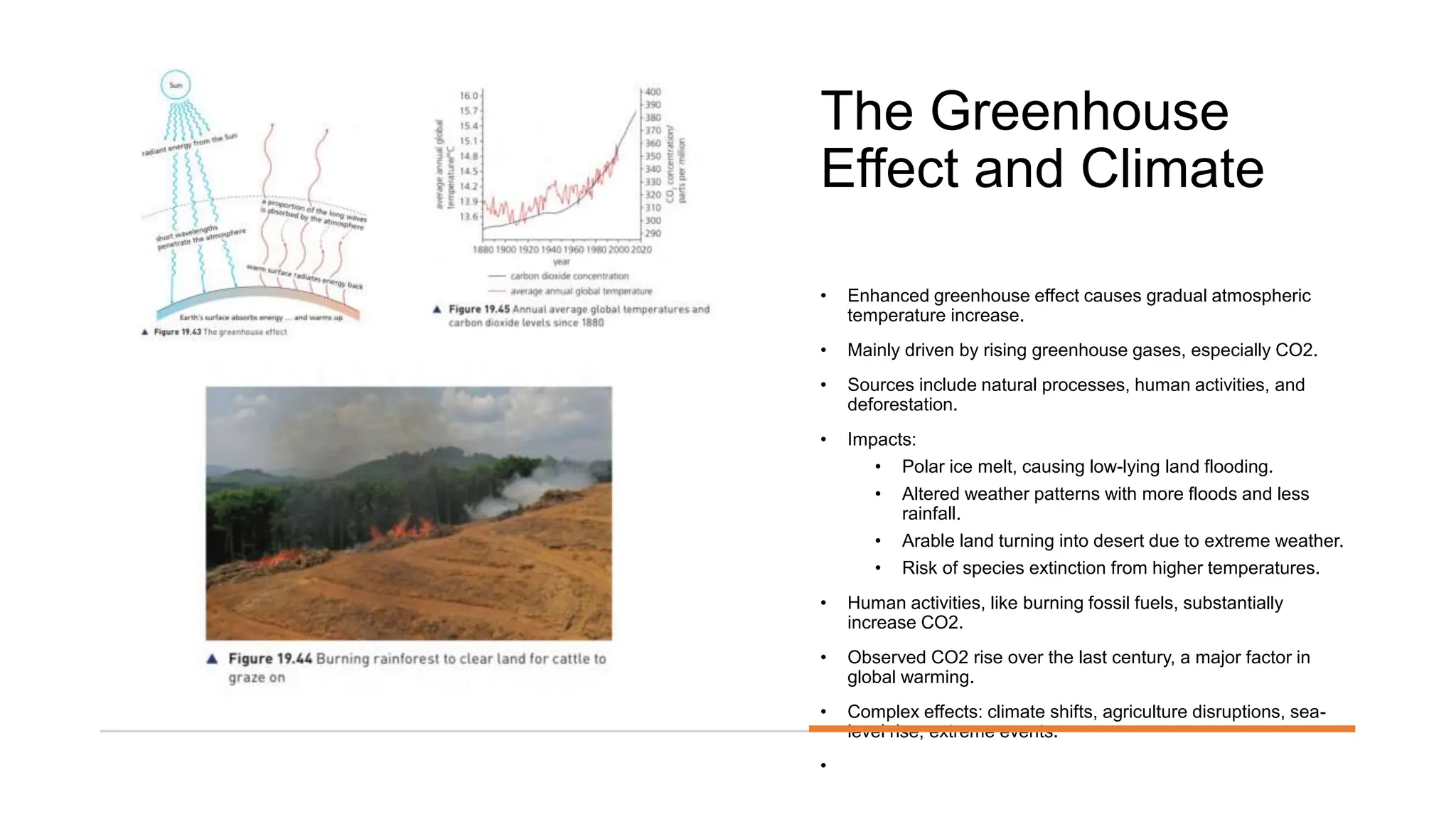
• Enhanced greenhouse effect causes gradual atmospheric
temperature increase.
• Mainly driven by rising greenhouse gases, especially CO2.
• Sources include natural processes, human activities, and
deforestation.
• Impacts:
• Polar ice melt, causing low-lying land flooding.
• Altered weather patterns with more floods and less
rainfall.
• Arable land turning into desert due to extreme weather.
• Risk of species extinction from higher temperatures.
• Human activities, like burning fossil fuels, substantially
increase CO2.
• Observed CO2 rise over the last century, a major factor in
global warming.
• Complex effects: climate shifts, agriculture disruptions, sea-
level rise, extreme events.
•
Freshwater and Marine
Pollution:
• Industries produce toxic waste harming the environment.
• E.g., electroplating waste with copper and cyanide poisons
aquatic life.
• Some detergents contain non-removable phosphate,
polluting rivers.
• Global chemical waste issue; Ganga River in India
affected by industrial and sewage pollution.
• Mercury poisoning in Minamata Bay caused by factory
discharge, harming humans and wildlife.
• Oil spills disrupt marine ecosystems, as lighter oils float
and disrupt habitats.
• Widespread ocean pollution due to sewage, fertilizers, and
pesticides.
• Plastics, non-biodegradable, harm marine life when
ingested, create dead zones with low oxygen.
• Oil spills impact intertidal zones, harming seaweeds and
filter-feeding animals.
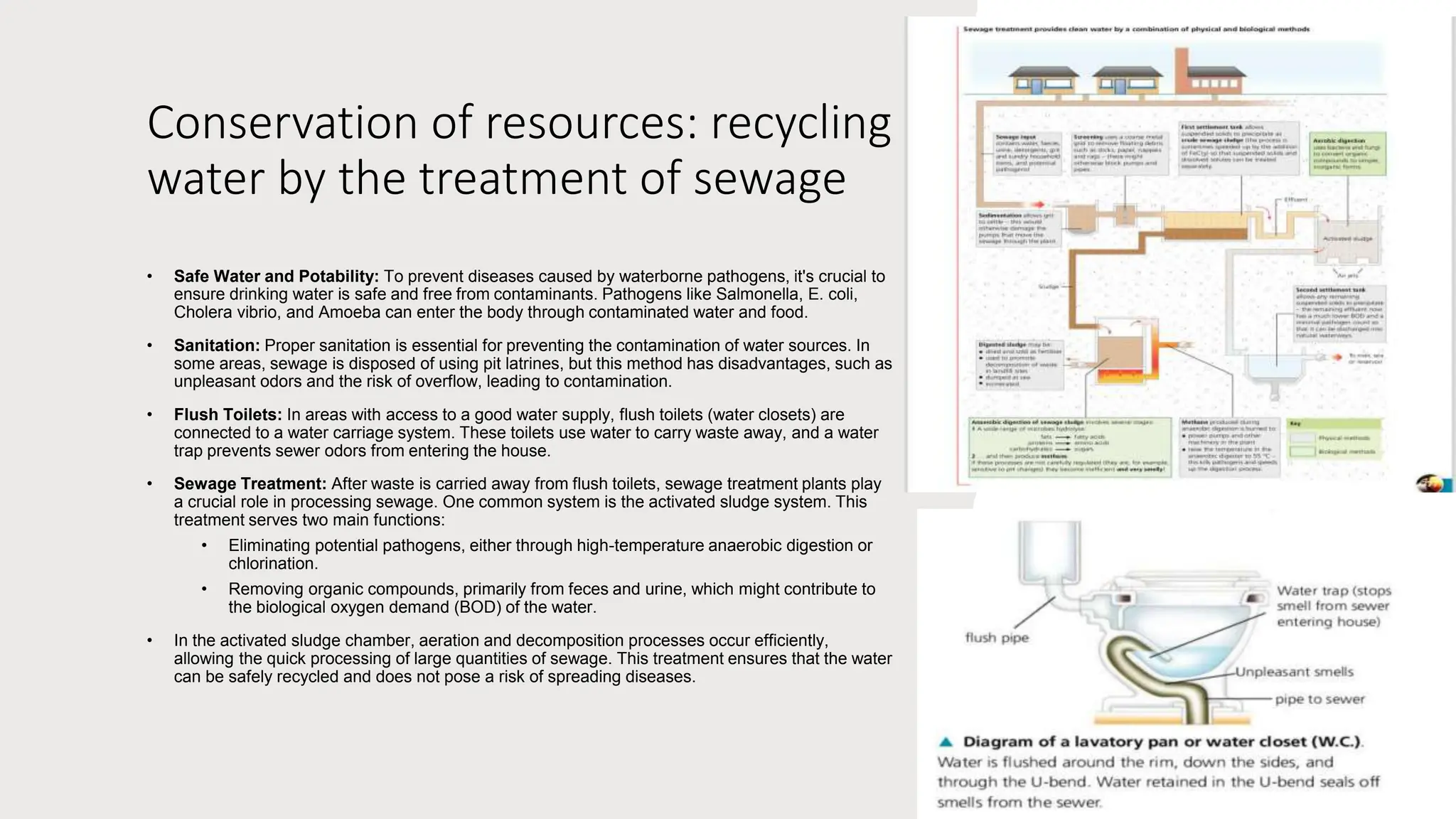
Conservation of resources: recycling
water by the treatment of sewage
• Safe Water and Potability: To prevent diseases caused by waterborne pathogens, it's crucial to
ensure drinking water is safe and free from contaminants. Pathogens like Salmonella, E. coli,
Cholera vibrio, and Amoeba can enter the body through contaminated water and food.
• Sanitation: Proper sanitation is essential for preventing the contamination of water sources. In
some areas, sewage is disposed of using pit latrines, but this method has disadvantages, such as
unpleasant odors and the risk of overflow, leading to contamination.
• Flush Toilets: In areas with access to a good water supply, flush toilets (water closets) are
connected to a water carriage system. These toilets use water to carry waste away, and a water
trap prevents sewer odors from entering the house.
• Sewage Treatment: After waste is carried away from flush toilets, sewage treatment plants play
a crucial role in processing sewage. One common system is the activated sludge system. This
treatment serves two main functions:
• Eliminating potential pathogens, either through high-temperature anaerobic digestion or
chlorination.
• Removing organic compounds, primarily from feces and urine, which might contribute to
the biological oxygen demand (BOD) of the water.
• In the activated sludge chamber, aeration and decomposition processes occur efficiently,
allowing the quick processing of large quantities of sewage. This treatment ensures that the water
can be safely recycled and does not pose a risk of spreading diseases.
Conservation of forests
• Education:
• Educate local communities about conservation to raise awareness.
• Teach sustainable tree-felling techniques to reduce damage.
• Organizations like the Rainforest Alliance offer education programs to farmers, encouraging forest protection.
• Protection of Rare Areas:
• Establish conservation areas to protect rare tree species.
• Governments create protected areas with tree preservation orders (TPOs).
• Organizations like the Wildlife Alliance protect forests in Southeast Asia to preserve vital habitats.
• Legal Quotas:
• Implement legal quotas to prevent excessive tree felling.
• For example, legal limits on bamboo cutting in China, crucial for giant pandas' food.
• In the UK, tree-felling requires licenses from the Forestry Commission.
• Replanting:
• Initiate large-scale tree planting projects to replace deforested areas.
• In Brazil, a project aims to plant 73 million trees to recover rainforests.
• India planted 50 million trees in 24 hours for reforestation.
• Pakistan achieved its billion tree goal to restore depleted forests.
• China plans to restore 69.2 million hectares of forests.
• Recycling and Reducing Paper Consumption:
• Promote recycling of waste paper to reduce the need for timber.
• Waste paper is pulped and used for paper and cardboard.
• Recycling reduces the demand for trees and protects natural habitats.
• These methods aim to prevent deforestation, preserve biodiversity, and combat the impacts of climate change.
Conservation of fish
stocks
• Education:
• Raise public awareness through educational programs.
• Example: The tomato fish project in Germany educates the public on sustainable
development through publications like "Nina and the Tomato Fish."
• Closed Seasons:
• Implement closed seasons, periods when fishing for specific species is prohibited,
allowing fish to spawn and replenish.
• Ghana extended its closed season from one to two months to support fish stock
recovery.
• Protected Areas:
• Designate marine protected areas, legally managed spaces, to conserve fish populations
and their habitats, promoting sustainable fisheries.
• Control of Net Types and Mesh Size:
• Regulate fishing net types and mesh sizes to reduce bycatch and protect marine habitats.
• Trawl nets, known for their destructive nature, are banned in some regions.
• LED lights added to gillnets can reduce accidental catches of non-target species.
• Legal Quotas:
• Set fishing quotas to manage fish stocks and safeguard endangered species.
• The Common Fisheries Policy in Europe enforces quotas based on species and size.
• Monitoring:
• Employ fisheries inspectors and patrol vessels to oversee commercial fishing activities.
• Inspectors record catches and use population estimates to aid fish stock conservation.
• These methods aim to ensure the long-term sustainability of fish populations and protect the
marine environment from overfishing and habitat destruction.
Endangering Species
and Causes of
Extinction
• Habitat Destruction:
• Destruction of natural habitats through activities like deforestation or urban development can lead to species
endangerment.
• Introduction of Other Species:
• Species introduced by humans can disrupt local ecosystems and threaten native species by outcompeting them or preying
on them.
• Hunting and Overexploitation:
• Overhunting and overfishing can lead to population declines or extinctions of species.
• Example: Tigers hunted for their skins and body parts, leading to a significant reduction in their numbers.
• Pollution:
• Pollution, including toxic chemicals, can harm ecosystems and the species within them, often causing population declines.
• ClimateChange:
• Climate change, exacerbated by human activities, can lead to shifts in species distribution and loss of habitats.
• Example: Coral reefs are threatened by ocean warming and increased acidity, causing bleaching and collapse.
• Accidental SpeciesIntroductions:
• Some species are accidentally introduced into new ecosystems, where they disrupt existing food chains.
• Example: Sea lampreys in the Great Lakes led to a drastic reduction in trout populations.
• Overfishing:
• Overfishing depletes fish stocks, leading to the decline of targeted species and affecting the entire marine ecosystem.
• Global Agreementsand Conservation Efforts:
• International agreements like CITES aim to protect endangered species by restricting or banning trade in their products.
• Conservation efforts focus on protecting habitats, enforcing laws, and implementing wardens.
• Projects and organizations like WWF, CITES, and the IWC work to conserve wildlife and their habitats on a global scale.
• These factors and conservation measures play a crucial role in preserving Earth's biodiversity and preventing species extinction.
Conservation of species
• Legal Protection and International Agreements:
• Laws protecting species and international agreements
like CITES restrict the killing or collection of endangered
species and their products.
• Habitat Conservation:
• Conservation of habitats can involve legal protection,
wardens to safeguard them, and controlling factors like
water drainage and grazing.
• Examples include national parks, wildlife sanctuaries,
and wetlands established by governments.
• Education:
• Education is essential to raise awareness about
endangered species and the importance of
conservation.
• TV documentaries and news items help inform a wider
audience about conservation issues.
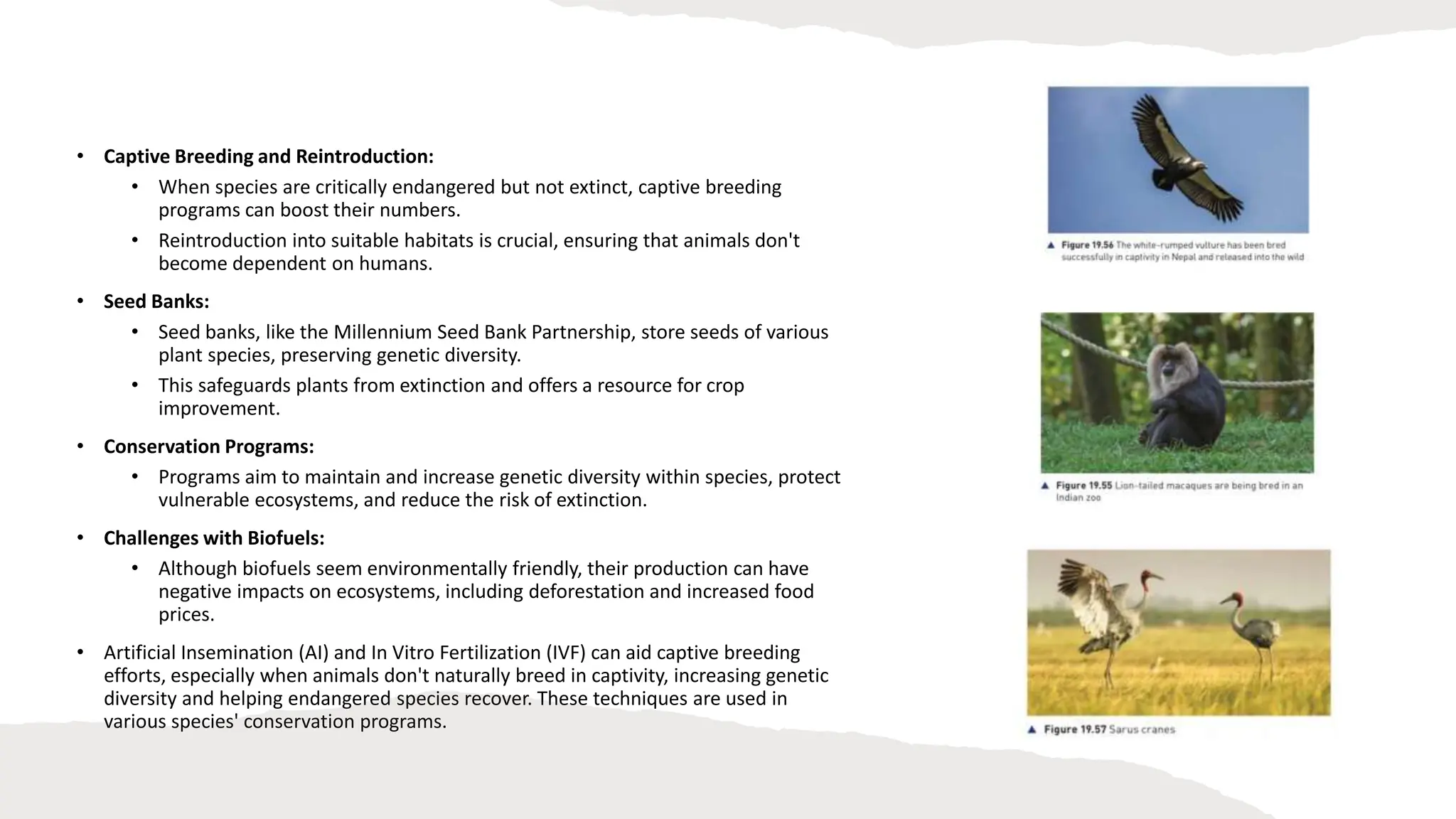
• Captive Breeding and Reintroduction:
• When species are critically endangered but not extinct, captive breeding
programs can boost their numbers.
• Reintroduction into suitable habitats is crucial, ensuring that animals don't
become dependent on humans.
• Seed Banks:
• Seed banks, like the Millennium Seed Bank Partnership, store seeds of various
plant species, preserving genetic diversity.
• This safeguards plants from extinction and offers a resource for crop
improvement.
• Conservation Programs:
• Programs aim to maintain and increase genetic diversity within species, protect
vulnerable ecosystems, and reduce the risk of extinction.
• Challenges with Biofuels:
• Although biofuels seem environmentally friendly, their production can have
negative impacts on ecosystems, including deforestation and increased food
prices.
• Artificial Insemination (AI) and In Vitro Fertilization (IVF) can aid captive breeding
efforts, especially when animals don't naturally breed in captivity, increasing genetic
diversity and helping endangered species recover. These techniques are used in
various species' conservation programs.
Saving fossil
fuels: fuel from
fermentation
• Fermentations make products which can be used as fuel.
Biomass fuels use raw materials produced by
photosynthesis. These materials are from plants and can
therefore be regenerated. Biomass fuels include: • solid
fuels - wood, charcoal and vegetable waste • liquid fuels -
alcohol and vegetable oil • gaseous fuel - biogas (a
methane/carbon dioxide mixture). The production of these
biomass fuels is described in the following diagrams: this
can help to reduce our use of fossil fuels, which are non-
renewable.
Recycling: management of
solid waste
• Effective waste management is essential
due to convenience, aesthetics, and
disease prevention. Waste management
methods include refuse tips, landfill sites,
and incinerators, situated away from
residential areas. Recycling reuses
materials, conserving resources, saving
energy, reducing waste, and providing
environmental benefits. Recycling various
materials such as paper involves
collection, sorting, pulping, cleaning, and
manufacturing, contributing to cleaner and
more sustainable waste management.
Energy
transfer
• Primary consumers on land often eat only a small portion of available vegetation.
• Unconsumed vegetation becomes a source of energy for decomposers.
• A cow, a primary consumer, digests only about 10% of plant material for growth,
while 60% passes through undigested and 30% is used for respiration and movement.
• Energy transfer from primary to secondary consumers is likely more efficient, with
better digestion of animal food.
• Energy transfer at each stage can be represented by trophic levels in a pyramid,
where about 90% of energy is lost at each level.
• Food chains rarely exceed five trophic levels due to significant energy loss, resulting in
limited energy available to top consumers.
Energy
transfer in
agriculture
• Only 10% of plant material becomes animal
products.
• Directly consuming plant products like
wheat as bread is more economical.
• Indoor confinement of animals, such as
hens in small cages, can reduce energy
losses, but this method is often considered
inhumane.
• Human consumption of plant products is
more energy-efficient.
Nutrient Cycles
• Carbon cycle
• Carbon, a vital element, exists in all living organisms.
• Plants acquire carbon from atmospheric carbon dioxide, while animals get their carbon
from plants.
• Photosynthesis in green plants removes carbon dioxide from the atmosphere,
converting it into carbohydrates and other compounds.
• When animals consume plants, the carbon from plants becomes part of animal tissues.
• Fossils can form when decomposition is slow, preserving carbon for millions of years
and possibly becoming fossil fuels or fossils.
• Carbon is returned to the atmosphere through respiration in plants and animals,
producing carbon dioxide.
• Decomposition plays a crucial role in carbon recycling, involving enzymes, scavengers,
and microorganisms.
• Combustion of carbon-containing fuels results in the release of carbon dioxide into the
atmosphere.
• Carbon cycles through various living and non-living components, with no new matter
created, only rearranged.
• The Earth's elements, including carbon, are continually reused in various organisms and
ecosystems.
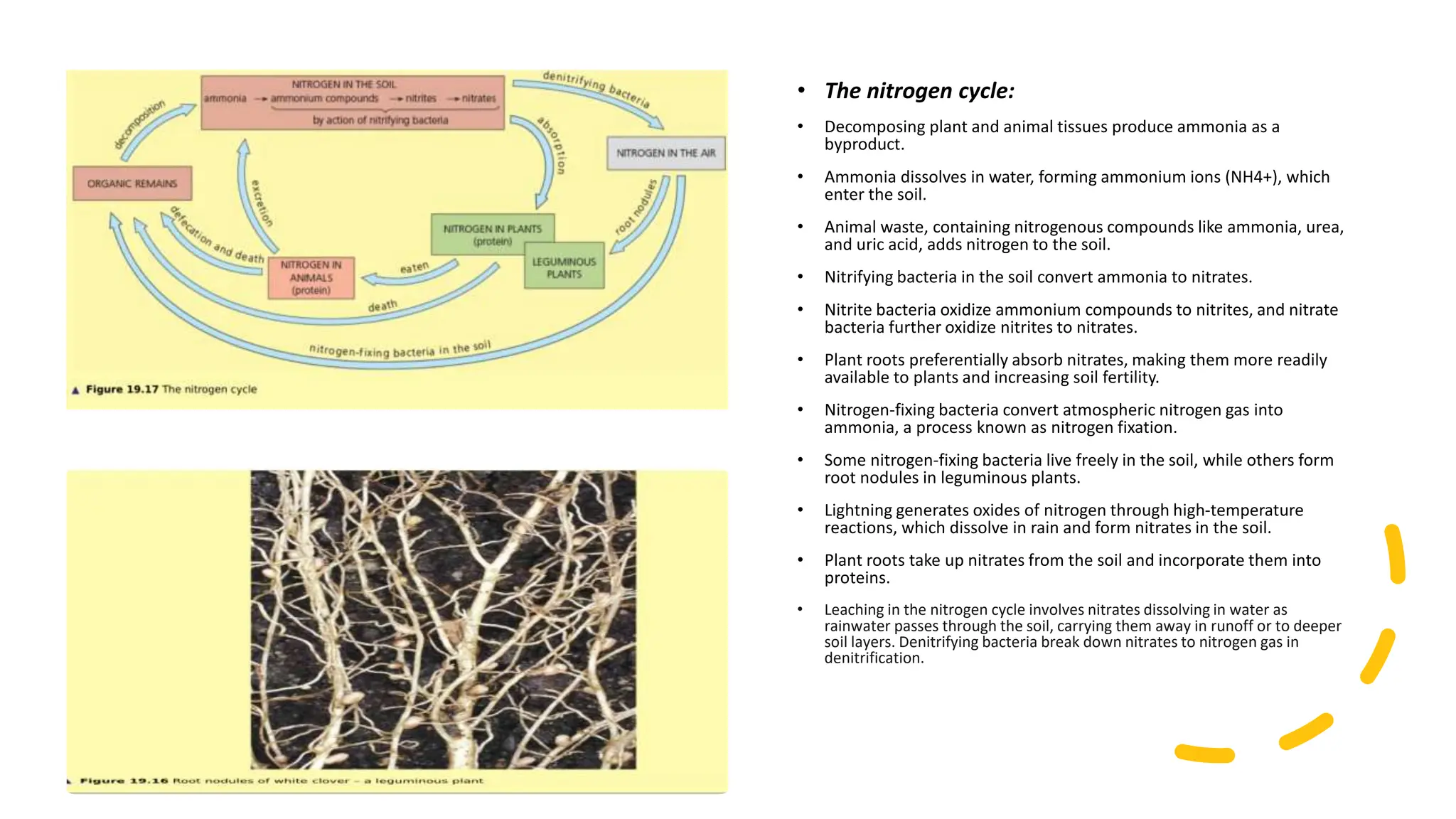
• The nitrogen cycle:
• Decomposing plant and animal tissues produce ammonia as a
byproduct.
• Ammonia dissolves in water, forming ammonium ions (NH4+), which
enter the soil.
• Animal waste, containing nitrogenous compounds like ammonia, urea,
and uric acid, adds nitrogen to the soil.
• Nitrifying bacteria in the soil convert ammonia to nitrates.
• Nitrite bacteria oxidize ammonium compounds to nitrites, and nitrate
bacteria further oxidize nitrites to nitrates.
• Plant roots preferentially absorb nitrates, making them more readily
available to plants and increasing soil fertility.
• Nitrogen-fixing bacteria convert atmospheric nitrogen gas into
ammonia, a process known as nitrogen fixation.
• Some nitrogen-fixing bacteria live freely in the soil, while others form
root nodules in leguminous plants.
• Lightning generates oxides of nitrogen through high-temperature
reactions, which dissolve in rain and form nitrates in the soil.
• Plant roots take up nitrates from the soil and incorporate them into
proteins.
• Leaching in the nitrogen cycle involves nitrates dissolving in water as
rainwater passes through the soil, carrying them away in runoff or to deeper
soil layers. Denitrifying bacteria break down nitrates to nitrogen gas in
denitrification.
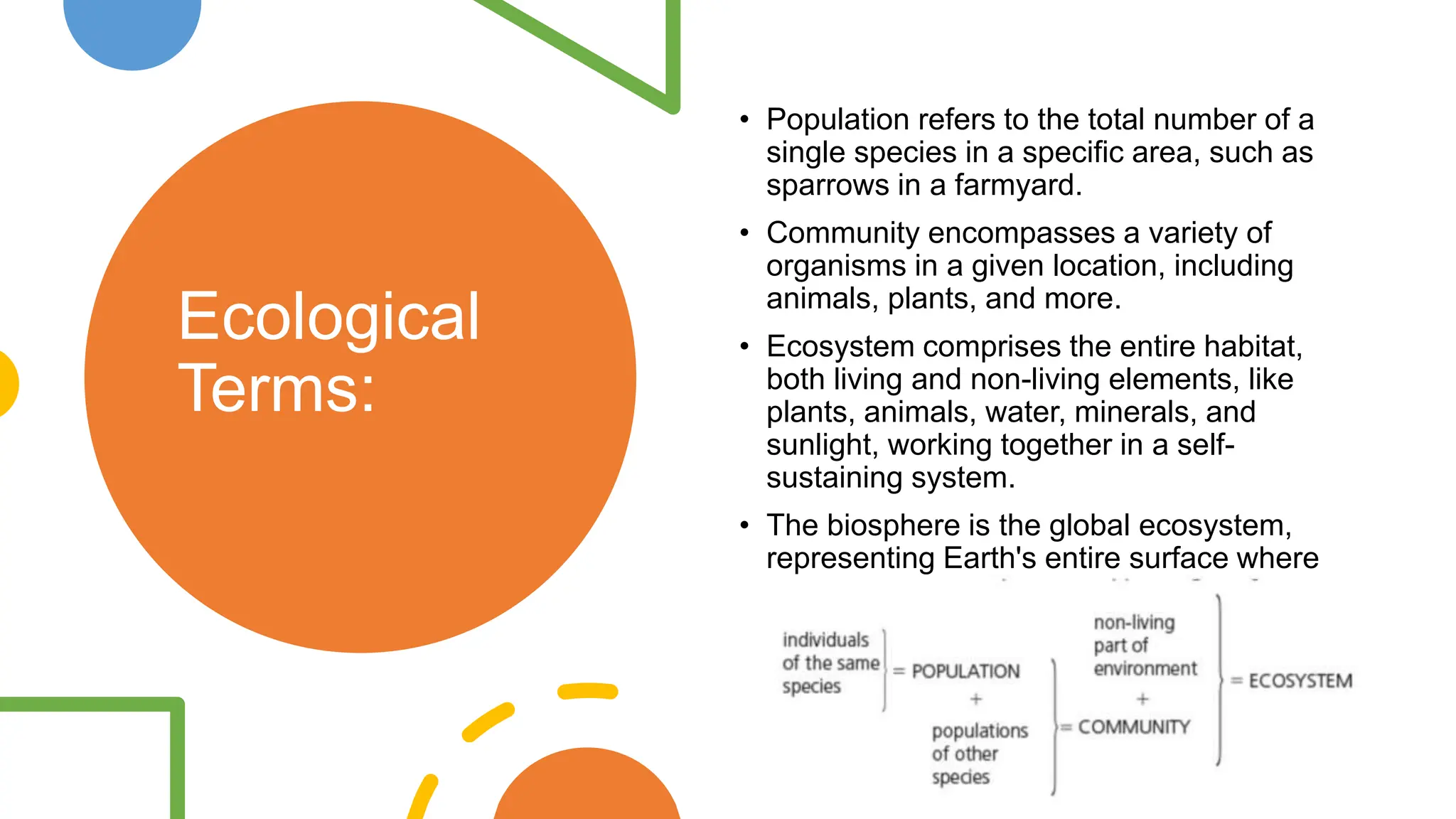
Ecological
Terms:
• Population refers to the total number of a
single species in a specific area, such as
sparrows in a farmyard.
• Community encompasses a variety of
organisms in a given location, including
animals, plants, and more.
• Ecosystem comprises the entire habitat,
both living and non-living elements, like
plants, animals, water, minerals, and
sunlight, working together in a self-
sustaining system.
• The biosphere is the global ecosystem,
representing Earth's entire surface where
life exists.
Distribution in Ecosystems:
• Organisms within ecosystems are not uniformly distributed but
rather occupy specific habitats that suit their lifestyles.
• For example, fish have preferred feeding and dwelling areas,
like rays and flatfish on the sea floor and sardines and mackerel
in surface waters.
• Snails in a pond tend to stay close to the plants they feed on.
• Limpets and barnacles on rocky coasts resist exposure
between tides and colonize the rocks, while some seaweeds
are limited to rocky pools or the sea beyond low tide.
Factors affecting
population growth
• Population grows when birth rate exceeds death
rate.
• Food Supply: Adequate food availability supports
successful breeding and increased offspring;
food shortage leads to starvation, emigration,
and population decline.
• Competition: Competition for food, shelter, and
mates occurs within a habitat, involving
individuals of the same or different species.
• Predator-Prey Relationships: Predators can
impact population size; changes in predator
numbers influence prey populations and vice
versa, often with a time lag.
• Disease: Disease epidemics can quickly reduce
population size; diseases like COVID-19, HIV,
and malaria have significant global impacts.
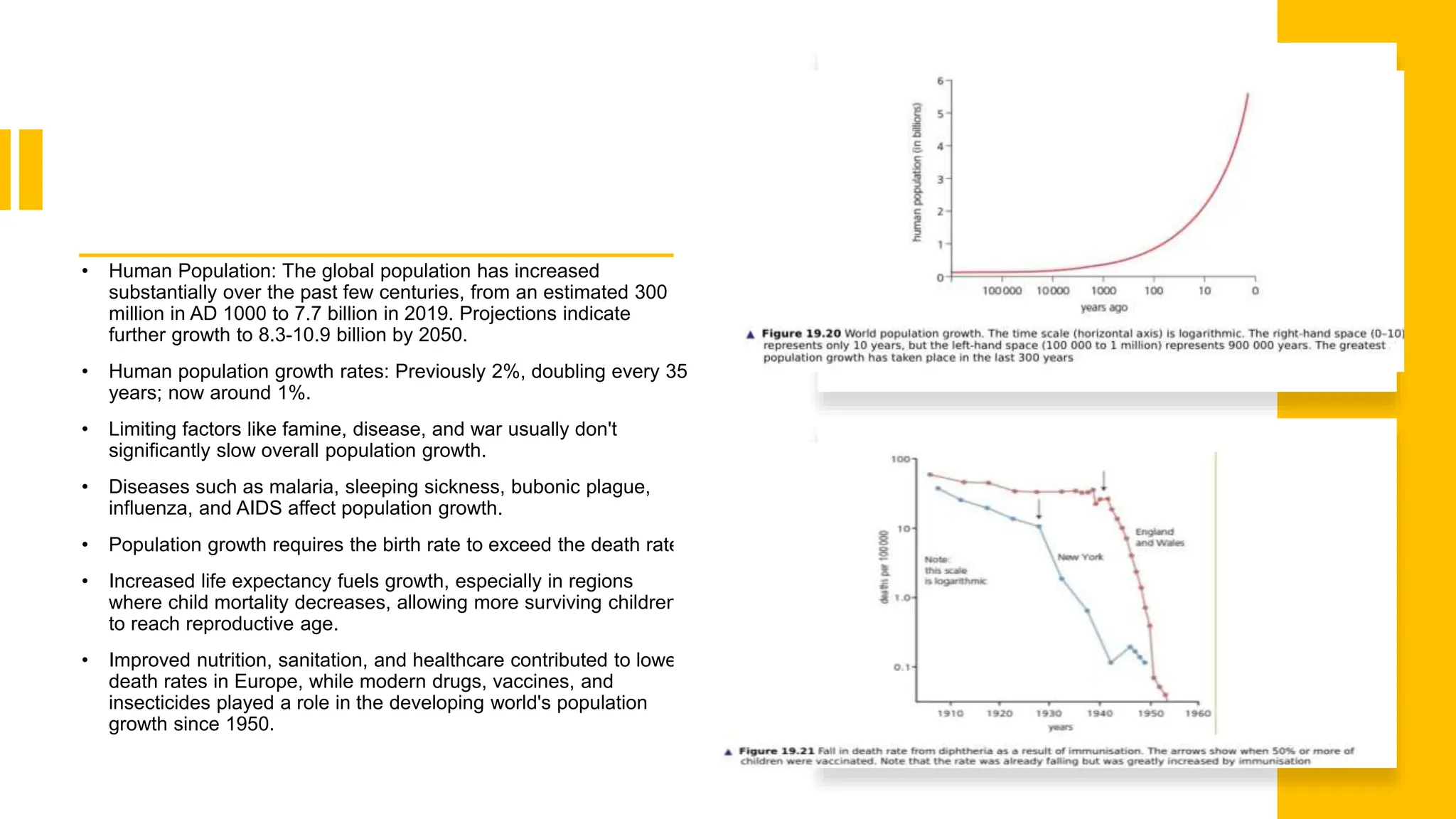
• Human Population: The global population has increased
substantially over the past few centuries, from an estimated 300
million in AD 1000 to 7.7 billion in 2019. Projections indicate
further growth to 8.3-10.9 billion by 2050.
• Human population growth rates: Previously 2%, doubling every 35
years; now around 1%.
• Limiting factors like famine, disease, and war usually don't
significantly slow overall population growth.
• Diseases such as malaria, sleeping sickness, bubonic plague,
influenza, and AIDS affect population growth.
• Population growth requires the birth rate to exceed the death rate.
• Increased life expectancy fuels growth, especially in regions
where child mortality decreases, allowing more surviving children
to reach reproductive age.
• Improved nutrition, sanitation, and healthcare contributed to lower
death rates in Europe, while modern drugs, vaccines, and
insecticides played a role in the developing world's population
growth since 1950.
Population Stability and Growth
• In the past 300 years, mortality rates have dropped while birth rates have
remained relatively high, resulting in rapid population growth.
• A decrease in fertility rates can stabilize populations, but many regions still
have rates above the necessary 2.1 for stability.
• Factors contributing to declining fertility rates include better education,
improved living conditions, reduced need for large families in modern
agriculture and cities, and greater use of family planning.
• Population growth is projected to continue; the United Nations anticipates
balance in birth and death rates by 2100, with an estimated 11.2 billion
people.
• Food production has not always matched population growth, leading to
malnutrition in some regions, despite global food production increases.
• Regions with excess food may not be able to distribute it effectively to areas
facing food shortages, and economic factors can also affect access to food.
• Population growth places additional stress on the environment and can
lead to environmental issues if not managed carefully
Sigmoid population growth curves
• Population distribution and numbers can vary within a habitat.
• A population can consist of different individuals such as adults, juveniles,
larvae, eggs, or seeds.
• In simplified laboratory conditions, a single-species population may exhibit a
sigmoid growth curve, typically composed of four phases:
• A: Lag phase, with slow population growth.
• B: Exponential (log) phase, characterized by rapid population increase.
• C: Stationary phase, where the population size remains relatively stable.
• D: Death phase, leading to a decline in population numbers.
Sigmoid Population
Growth Curve
Phases
• A.Lag Phase: Population is small, with doubling of
numbers at each generation but not a significant
increase.
• B. Exponential Phase (Log Phase): Rapid
population growth through continued doubling of
numbers at each generation. This phase may end
due to resource limitations or increased competition.
• C. Stationary Phase: Resources cannot support
further population growth, leading to limiting factors
like food shortage, diseases, and overcrowding.
Birth rate equals death rate, maintaining stable
population numbers.
• D. Death Phase: Mortality rate exceeds the birth
rate, resulting in a decline in population numbers.
Factors like limited food, habitat contamination, and
disease contribute to this decline.
Limits to
Population
Growth
• Populations in natural habitats are rarely in a state of
equilibrium.
• Various limiting factors prevent populations from reaching
their maximum potential.
• Competition for resources, like food, can severely affect
population growth.
• Both abiotic (non-living) and biotic (living) factors, such as
climate, diseases, and predation, influence population size.
• The availability of food and nest sites can restrict animal
populations.
• Seasonal changes, immigration, and emigration also impact
population numbers.
• Multiple interacting factors can limit populations in natural
environments.

Organism and their environment with respect to biology

  • 1.
  • 2.
    Key definitions • FoodChain: A linear transfer of energy from one organism to another, starting with a producer. • Food Web: A network of interconnected food chains. • Producer: Organisms that create their organic nutrients, often using sunlight. • Consumer: Organisms that obtain energy by consuming other organisms. • Herbivore: Animals that feed on plants. • Carnivore: Animals that feed on other animals. • Decomposer: Organisms that obtain energy from dead or waste organic material. • Trophic Level: The position of an organism in a food chain, food web, or ecological pyramid.
  • 3.
    Dependence on Sunlight • Alllife relies on the Sun for energy. • Photosynthesis converts sunlight to chemical energy. • Plants provide food for animals, connecting them to sunlight. • Fossil fuels come from ancient sunlight-capturing plants. • Modern methods: mirrors, solar panels, and plant products.
  • 4.
    Food Chain • Manyorganisms depend on each other for survival. • Herbivores eat plants, forming a food chain. • Trophic levels show an organism's place in the chain. • Pyramids of numbers depict organisms' numbers. • Pyramids of biomass consider living organisms' mass for accuracy.
  • 5.
    • Trophic levels: •Trophic level defines an organism's position in a food chain. • At the base are plants (producers), converting CO2, water, and salts into food through photosynthesis. • Herbivores (e.g., mice) are primary consumers, eating plants. • Carnivores (e.g., snakes) are secondary consumers preying on herbivores. • Tertiary consumers (e.g., mongoose or hawk) may eat secondary consumers. • Plankton: • Plankton includes microscopic sea or freshwater organisms. • Phytoplankton, single-celled algae, use chloroplasts to convert sunlight into food. • Zooplankton, primarily crustaceans, consume phytoplankton. • Small carp feed on crustaceans.
  • 6.
    Pyramids of Numbersand Biomass • Pyramids of numbers: • Represents relative organism numbers at trophic levels. • Sometimes inverted, like when one tree supports many aphids. • Pyramids of biomass: • Address inverted pyramids by considering the mass of living organisms. • Biomass focuses on the mass of leaves and insects supported by a tree. • Pyramids of biomass are typically the correct shape.
  • 7.
    Food webs • Foodchains are often more complex than described, as animals eat multiple food types. • Food webs depict these intricate relationships accurately. • Food webs vary on land, in the sea, freshwater, and with changing seasons. • Disruptions in food webs affect all organisms within. • An example from India: Illegal drug-treated cattle led to vulture decline, causing a rise in feral dog populations due to reduced competition and poison resistance.
  • 8.
    Over-harvesting &Overfishing • Effectsof over-harvesting : • Over-harvesting reduces species to endangerment or extinction. • Species harvested for food, body parts (e.g., tusks, horns, bones, fur), or as pets. • Unregulated bush meat hunting, like primates, threatens rare species in some regions • Effects of overfishing: • Overfishing due to commercial practices harms fish populations and ecosystems. • Whaling has drastically reduced whale populations. • Overfishing can harm environments, e.g., coral reefs, and disrupt food chains.
  • 9.
    Introducing Foreign Speciesto Ecosystems • Introduction of foreign species can devastate native ecosystems and endanger species. • Examples of introducing foreign species: • Rats introduced to Galapagos Islands caused harm to native species. • Prickly pear cactus introduced in Australia led to ecosystem damage. • The introduction of non-native species can have unintended consequences. • Pesticides and poisons, released accidentally or intentionally, can disrupt food chains and ecosystems.
  • 10.
    Undesirable Effects of Deforestation •Deforestation leads to habitat loss, endangering plant and animal species due to land conversion for agriculture, mining, housing, and roads. • Biodiversity suffers as animal habitats and food sources vanish with deforestation. • Tree removal increases soil erosion risk, polluting rivers and lakes. • Deforestation elevates flood occurrence as trees no longer absorb rainwater. • It contributes to higher carbon dioxide levels, intensifying global warming and climate change. • Forests regulate climate, water supply, and soil quality by slowly releasing rainfall and anchoring soil with roots. • Deforestation results from timber extraction, agriculture, infrastructure development, and firewood use. • Global forests declined from 31.6% to 30.6% of global land area between 1990 and 2015. • The Amazon basin faces severe deforestation, with an estimated 27% tree loss by 2030, endangering biodiversity. • Soil erosion follows tree removal and ploughing, causing river clogging and potential floods. • Deforested soil initially yields crops but quickly depletes nutrients, leading to erosion. • Abandoned deforested land does not recover, and soil remains nutrient-poor.
  • 11.
    Forests and climate •Half of tropical rainforest rainfall is from tree transpiration, maintaining a cool and humid climate by reflecting sunlight. • Deforestation leads to reduced rain, increased temperature fluctuations, and diminished cloud cover. • In North-Eastern Brazil, deforestation nears 60%, risking permanent regional climate changes and desertification. • Mass tree removal hinders carbon dioxide absorption via photosynthesis, contributing to increased atmospheric CO2 and global warming. • Tropical rainforests house remarkable species diversity, with thousands of tree and animal species. • Destruction of tropical forests endangers a multitude of species, pushing them towards extinction. • This destruction also displaces local human populations. • Rainforests hold potential sources of valuable chemical compounds for medicine, with 70% of anti-cancer plants originating from these areas.
  • 12.
    • Intensive agriculturehas destroyed natural habitats like hedgerows, hay meadows, and stubble fields. • Removal of hedgerows, replaced by larger fields and monoculture, has reduced plant and animal diversity. • Planting winter wheat prevents animals' access to stubble fields, leading to declining butterfly, flower, and bird populations. • Some countries have laws protecting select hedgerows due to their significance. • Encouraging wildlife-friendly land management practices, like leaving uncultivated strips or planting new hedgerows, can help boost useful insect populations. • Urbanization results in the loss of natural habitats due to the development of towns and cities. • Mining, particularly for coal and natural resources like gold and gravel, leaves scars in the landscape, destroying natural habitats. • Open-pit mining impacts local water sources and aquatic habitats through water contamination with toxic metals. • Oil spills around oil wells are highly toxic and destroy habitats. • The need for more raw materials and energy sources due to population growth and technology demands threatens natural habitats and resources. • International efforts, such as the World Charter for Nature in 1982, The World Ethic of Sustainability in 1990, and Earth Summit in 1992, aim to address these major environmental issues and promote habitat conservation.
  • 13.
    Pollution • Diseases liketyphoid and cholera result from bacteria entering the human intestine, often present in the faeces of infected individuals. • When these bacteria-contaminated faeces enter drinking water, they can cause outbreaks of diseases, emphasizing the importance of not discharging untreated sewage into rivers. • Sewage treatment works remove solids and break down human waste with bacteria to render it harmless. • However, sewage treatment byproducts include phosphates and nitrates that, when released into rivers, encourage rapid growth of microscopic plant life. • Excessive nitrates and phosphates from sources like farmland, detergents, and factories lead to an oxygen shortage in water, causing the death of aquatic animals. • The growth of algae accelerates with increased nutrient levels, leading to overcrowding, reduced light penetration, and plant death. • Aerobic bacteria decompose dead plants and respire, depleting oxygen levels in the water, which results in the suffocation of aquatic animals and the disruption of the entire ecosystem.
  • 14.
    Eutrophication • Plants requirenitrates and various ions for growth, with the rate of growth often limited by nutrient availability. • Human activities have significantly increased nitrate and ion levels in rivers and lakes, accelerating the process of eutrophication. • Eutrophication is the enrichment of natural waters with nutrients, promoting excessive plant growth. • This results in the rapid growth of microscopic algae, the foundation of the aquatic food chain, due to extra nutrients from sources like sewage, farming, and detergents. • The excessive algae cannot be controlled by their usual consumers, leading to their death and sinking to the water body's bottom. • Bacteria break down the dead algae but consume oxygen during the process, depleting the water's oxygen levels. • Deoxygenated water can no longer support animal life, resulting in the suffocation of fish and other organisms. • The degree of river water pollution is assessed using biochemical oxygen demand (BOD), which measures the oxygen consumption by a water sample in a set time. • Higher BOD values indicate increased pollution levels. • Eutrophication can be mitigated by using detergents with fewer phosphates, slow-dissolving agricultural fertilizers, and better management of animal waste to prevent their entry into rivers. • Main causes of eutrophication include the use of phosphate-rich detergents and nutrient-rich runoff from factory farming operations, where animal waste enters streams and rivers.
  • 15.
    Plastics and the environment: •Plastics are non-biodegradable and do not break down naturally when discarded. • They persist in the environment, taking up space and causing visual pollution. • Discarded plastic items like bottles, fishing lines, and nets can trap and harm animals. • Over time, plastics degrade into smaller fragments, which can be ingested by fish and birds, causing harm. • Plastic bags are a significant issue, filling up landfill sites and causing litter problems. • Some countries have taken measures to address plastic bag pollution, including bans and fees. • Polythene waste is now being recycled to create various products, such as car seat covers, sports shoes, and headphones. • Some innovative uses of recycled plastic include incorporating it into road construction.
  • 16.
    The Greenhouse Effect andClimate • Enhanced greenhouse effect causes gradual atmospheric temperature increase. • Mainly driven by rising greenhouse gases, especially CO2. • Sources include natural processes, human activities, and deforestation. • Impacts: • Polar ice melt, causing low-lying land flooding. • Altered weather patterns with more floods and less rainfall. • Arable land turning into desert due to extreme weather. • Risk of species extinction from higher temperatures. • Human activities, like burning fossil fuels, substantially increase CO2. • Observed CO2 rise over the last century, a major factor in global warming. • Complex effects: climate shifts, agriculture disruptions, sea- level rise, extreme events. •
  • 17.
    Freshwater and Marine Pollution: •Industries produce toxic waste harming the environment. • E.g., electroplating waste with copper and cyanide poisons aquatic life. • Some detergents contain non-removable phosphate, polluting rivers. • Global chemical waste issue; Ganga River in India affected by industrial and sewage pollution. • Mercury poisoning in Minamata Bay caused by factory discharge, harming humans and wildlife. • Oil spills disrupt marine ecosystems, as lighter oils float and disrupt habitats. • Widespread ocean pollution due to sewage, fertilizers, and pesticides. • Plastics, non-biodegradable, harm marine life when ingested, create dead zones with low oxygen. • Oil spills impact intertidal zones, harming seaweeds and filter-feeding animals.
  • 18.
    Conservation of resources:recycling water by the treatment of sewage • Safe Water and Potability: To prevent diseases caused by waterborne pathogens, it's crucial to ensure drinking water is safe and free from contaminants. Pathogens like Salmonella, E. coli, Cholera vibrio, and Amoeba can enter the body through contaminated water and food. • Sanitation: Proper sanitation is essential for preventing the contamination of water sources. In some areas, sewage is disposed of using pit latrines, but this method has disadvantages, such as unpleasant odors and the risk of overflow, leading to contamination. • Flush Toilets: In areas with access to a good water supply, flush toilets (water closets) are connected to a water carriage system. These toilets use water to carry waste away, and a water trap prevents sewer odors from entering the house. • Sewage Treatment: After waste is carried away from flush toilets, sewage treatment plants play a crucial role in processing sewage. One common system is the activated sludge system. This treatment serves two main functions: • Eliminating potential pathogens, either through high-temperature anaerobic digestion or chlorination. • Removing organic compounds, primarily from feces and urine, which might contribute to the biological oxygen demand (BOD) of the water. • In the activated sludge chamber, aeration and decomposition processes occur efficiently, allowing the quick processing of large quantities of sewage. This treatment ensures that the water can be safely recycled and does not pose a risk of spreading diseases.
  • 19.
    Conservation of forests •Education: • Educate local communities about conservation to raise awareness. • Teach sustainable tree-felling techniques to reduce damage. • Organizations like the Rainforest Alliance offer education programs to farmers, encouraging forest protection. • Protection of Rare Areas: • Establish conservation areas to protect rare tree species. • Governments create protected areas with tree preservation orders (TPOs). • Organizations like the Wildlife Alliance protect forests in Southeast Asia to preserve vital habitats. • Legal Quotas: • Implement legal quotas to prevent excessive tree felling. • For example, legal limits on bamboo cutting in China, crucial for giant pandas' food. • In the UK, tree-felling requires licenses from the Forestry Commission. • Replanting: • Initiate large-scale tree planting projects to replace deforested areas. • In Brazil, a project aims to plant 73 million trees to recover rainforests. • India planted 50 million trees in 24 hours for reforestation. • Pakistan achieved its billion tree goal to restore depleted forests. • China plans to restore 69.2 million hectares of forests. • Recycling and Reducing Paper Consumption: • Promote recycling of waste paper to reduce the need for timber. • Waste paper is pulped and used for paper and cardboard. • Recycling reduces the demand for trees and protects natural habitats. • These methods aim to prevent deforestation, preserve biodiversity, and combat the impacts of climate change.
  • 20.
    Conservation of fish stocks •Education: • Raise public awareness through educational programs. • Example: The tomato fish project in Germany educates the public on sustainable development through publications like "Nina and the Tomato Fish." • Closed Seasons: • Implement closed seasons, periods when fishing for specific species is prohibited, allowing fish to spawn and replenish. • Ghana extended its closed season from one to two months to support fish stock recovery. • Protected Areas: • Designate marine protected areas, legally managed spaces, to conserve fish populations and their habitats, promoting sustainable fisheries. • Control of Net Types and Mesh Size: • Regulate fishing net types and mesh sizes to reduce bycatch and protect marine habitats. • Trawl nets, known for their destructive nature, are banned in some regions. • LED lights added to gillnets can reduce accidental catches of non-target species. • Legal Quotas: • Set fishing quotas to manage fish stocks and safeguard endangered species. • The Common Fisheries Policy in Europe enforces quotas based on species and size. • Monitoring: • Employ fisheries inspectors and patrol vessels to oversee commercial fishing activities. • Inspectors record catches and use population estimates to aid fish stock conservation. • These methods aim to ensure the long-term sustainability of fish populations and protect the marine environment from overfishing and habitat destruction.
  • 21.
    Endangering Species and Causesof Extinction • Habitat Destruction: • Destruction of natural habitats through activities like deforestation or urban development can lead to species endangerment. • Introduction of Other Species: • Species introduced by humans can disrupt local ecosystems and threaten native species by outcompeting them or preying on them. • Hunting and Overexploitation: • Overhunting and overfishing can lead to population declines or extinctions of species. • Example: Tigers hunted for their skins and body parts, leading to a significant reduction in their numbers. • Pollution: • Pollution, including toxic chemicals, can harm ecosystems and the species within them, often causing population declines. • ClimateChange: • Climate change, exacerbated by human activities, can lead to shifts in species distribution and loss of habitats. • Example: Coral reefs are threatened by ocean warming and increased acidity, causing bleaching and collapse. • Accidental SpeciesIntroductions: • Some species are accidentally introduced into new ecosystems, where they disrupt existing food chains. • Example: Sea lampreys in the Great Lakes led to a drastic reduction in trout populations. • Overfishing: • Overfishing depletes fish stocks, leading to the decline of targeted species and affecting the entire marine ecosystem. • Global Agreementsand Conservation Efforts: • International agreements like CITES aim to protect endangered species by restricting or banning trade in their products. • Conservation efforts focus on protecting habitats, enforcing laws, and implementing wardens. • Projects and organizations like WWF, CITES, and the IWC work to conserve wildlife and their habitats on a global scale. • These factors and conservation measures play a crucial role in preserving Earth's biodiversity and preventing species extinction.
  • 22.
    Conservation of species •Legal Protection and International Agreements: • Laws protecting species and international agreements like CITES restrict the killing or collection of endangered species and their products. • Habitat Conservation: • Conservation of habitats can involve legal protection, wardens to safeguard them, and controlling factors like water drainage and grazing. • Examples include national parks, wildlife sanctuaries, and wetlands established by governments. • Education: • Education is essential to raise awareness about endangered species and the importance of conservation. • TV documentaries and news items help inform a wider audience about conservation issues.
  • 23.
    • Captive Breedingand Reintroduction: • When species are critically endangered but not extinct, captive breeding programs can boost their numbers. • Reintroduction into suitable habitats is crucial, ensuring that animals don't become dependent on humans. • Seed Banks: • Seed banks, like the Millennium Seed Bank Partnership, store seeds of various plant species, preserving genetic diversity. • This safeguards plants from extinction and offers a resource for crop improvement. • Conservation Programs: • Programs aim to maintain and increase genetic diversity within species, protect vulnerable ecosystems, and reduce the risk of extinction. • Challenges with Biofuels: • Although biofuels seem environmentally friendly, their production can have negative impacts on ecosystems, including deforestation and increased food prices. • Artificial Insemination (AI) and In Vitro Fertilization (IVF) can aid captive breeding efforts, especially when animals don't naturally breed in captivity, increasing genetic diversity and helping endangered species recover. These techniques are used in various species' conservation programs.
  • 24.
    Saving fossil fuels: fuelfrom fermentation • Fermentations make products which can be used as fuel. Biomass fuels use raw materials produced by photosynthesis. These materials are from plants and can therefore be regenerated. Biomass fuels include: • solid fuels - wood, charcoal and vegetable waste • liquid fuels - alcohol and vegetable oil • gaseous fuel - biogas (a methane/carbon dioxide mixture). The production of these biomass fuels is described in the following diagrams: this can help to reduce our use of fossil fuels, which are non- renewable.
  • 25.
    Recycling: management of solidwaste • Effective waste management is essential due to convenience, aesthetics, and disease prevention. Waste management methods include refuse tips, landfill sites, and incinerators, situated away from residential areas. Recycling reuses materials, conserving resources, saving energy, reducing waste, and providing environmental benefits. Recycling various materials such as paper involves collection, sorting, pulping, cleaning, and manufacturing, contributing to cleaner and more sustainable waste management.
  • 26.
    Energy transfer • Primary consumerson land often eat only a small portion of available vegetation. • Unconsumed vegetation becomes a source of energy for decomposers. • A cow, a primary consumer, digests only about 10% of plant material for growth, while 60% passes through undigested and 30% is used for respiration and movement. • Energy transfer from primary to secondary consumers is likely more efficient, with better digestion of animal food. • Energy transfer at each stage can be represented by trophic levels in a pyramid, where about 90% of energy is lost at each level. • Food chains rarely exceed five trophic levels due to significant energy loss, resulting in limited energy available to top consumers.
  • 27.
    Energy transfer in agriculture • Only10% of plant material becomes animal products. • Directly consuming plant products like wheat as bread is more economical. • Indoor confinement of animals, such as hens in small cages, can reduce energy losses, but this method is often considered inhumane. • Human consumption of plant products is more energy-efficient.
  • 28.
    Nutrient Cycles • Carboncycle • Carbon, a vital element, exists in all living organisms. • Plants acquire carbon from atmospheric carbon dioxide, while animals get their carbon from plants. • Photosynthesis in green plants removes carbon dioxide from the atmosphere, converting it into carbohydrates and other compounds. • When animals consume plants, the carbon from plants becomes part of animal tissues. • Fossils can form when decomposition is slow, preserving carbon for millions of years and possibly becoming fossil fuels or fossils. • Carbon is returned to the atmosphere through respiration in plants and animals, producing carbon dioxide. • Decomposition plays a crucial role in carbon recycling, involving enzymes, scavengers, and microorganisms. • Combustion of carbon-containing fuels results in the release of carbon dioxide into the atmosphere. • Carbon cycles through various living and non-living components, with no new matter created, only rearranged. • The Earth's elements, including carbon, are continually reused in various organisms and ecosystems.
  • 29.
    • The nitrogencycle: • Decomposing plant and animal tissues produce ammonia as a byproduct. • Ammonia dissolves in water, forming ammonium ions (NH4+), which enter the soil. • Animal waste, containing nitrogenous compounds like ammonia, urea, and uric acid, adds nitrogen to the soil. • Nitrifying bacteria in the soil convert ammonia to nitrates. • Nitrite bacteria oxidize ammonium compounds to nitrites, and nitrate bacteria further oxidize nitrites to nitrates. • Plant roots preferentially absorb nitrates, making them more readily available to plants and increasing soil fertility. • Nitrogen-fixing bacteria convert atmospheric nitrogen gas into ammonia, a process known as nitrogen fixation. • Some nitrogen-fixing bacteria live freely in the soil, while others form root nodules in leguminous plants. • Lightning generates oxides of nitrogen through high-temperature reactions, which dissolve in rain and form nitrates in the soil. • Plant roots take up nitrates from the soil and incorporate them into proteins. • Leaching in the nitrogen cycle involves nitrates dissolving in water as rainwater passes through the soil, carrying them away in runoff or to deeper soil layers. Denitrifying bacteria break down nitrates to nitrogen gas in denitrification.
  • 30.
    Ecological Terms: • Population refersto the total number of a single species in a specific area, such as sparrows in a farmyard. • Community encompasses a variety of organisms in a given location, including animals, plants, and more. • Ecosystem comprises the entire habitat, both living and non-living elements, like plants, animals, water, minerals, and sunlight, working together in a self- sustaining system. • The biosphere is the global ecosystem, representing Earth's entire surface where life exists.
  • 31.
    Distribution in Ecosystems: •Organisms within ecosystems are not uniformly distributed but rather occupy specific habitats that suit their lifestyles. • For example, fish have preferred feeding and dwelling areas, like rays and flatfish on the sea floor and sardines and mackerel in surface waters. • Snails in a pond tend to stay close to the plants they feed on. • Limpets and barnacles on rocky coasts resist exposure between tides and colonize the rocks, while some seaweeds are limited to rocky pools or the sea beyond low tide.
  • 32.
    Factors affecting population growth •Population grows when birth rate exceeds death rate. • Food Supply: Adequate food availability supports successful breeding and increased offspring; food shortage leads to starvation, emigration, and population decline. • Competition: Competition for food, shelter, and mates occurs within a habitat, involving individuals of the same or different species. • Predator-Prey Relationships: Predators can impact population size; changes in predator numbers influence prey populations and vice versa, often with a time lag. • Disease: Disease epidemics can quickly reduce population size; diseases like COVID-19, HIV, and malaria have significant global impacts.
  • 33.
    • Human Population:The global population has increased substantially over the past few centuries, from an estimated 300 million in AD 1000 to 7.7 billion in 2019. Projections indicate further growth to 8.3-10.9 billion by 2050. • Human population growth rates: Previously 2%, doubling every 35 years; now around 1%. • Limiting factors like famine, disease, and war usually don't significantly slow overall population growth. • Diseases such as malaria, sleeping sickness, bubonic plague, influenza, and AIDS affect population growth. • Population growth requires the birth rate to exceed the death rate. • Increased life expectancy fuels growth, especially in regions where child mortality decreases, allowing more surviving children to reach reproductive age. • Improved nutrition, sanitation, and healthcare contributed to lower death rates in Europe, while modern drugs, vaccines, and insecticides played a role in the developing world's population growth since 1950.
  • 34.
    Population Stability andGrowth • In the past 300 years, mortality rates have dropped while birth rates have remained relatively high, resulting in rapid population growth. • A decrease in fertility rates can stabilize populations, but many regions still have rates above the necessary 2.1 for stability. • Factors contributing to declining fertility rates include better education, improved living conditions, reduced need for large families in modern agriculture and cities, and greater use of family planning. • Population growth is projected to continue; the United Nations anticipates balance in birth and death rates by 2100, with an estimated 11.2 billion people. • Food production has not always matched population growth, leading to malnutrition in some regions, despite global food production increases. • Regions with excess food may not be able to distribute it effectively to areas facing food shortages, and economic factors can also affect access to food. • Population growth places additional stress on the environment and can lead to environmental issues if not managed carefully
  • 35.
    Sigmoid population growthcurves • Population distribution and numbers can vary within a habitat. • A population can consist of different individuals such as adults, juveniles, larvae, eggs, or seeds. • In simplified laboratory conditions, a single-species population may exhibit a sigmoid growth curve, typically composed of four phases: • A: Lag phase, with slow population growth. • B: Exponential (log) phase, characterized by rapid population increase. • C: Stationary phase, where the population size remains relatively stable. • D: Death phase, leading to a decline in population numbers.
  • 36.
    Sigmoid Population Growth Curve Phases •A.Lag Phase: Population is small, with doubling of numbers at each generation but not a significant increase. • B. Exponential Phase (Log Phase): Rapid population growth through continued doubling of numbers at each generation. This phase may end due to resource limitations or increased competition. • C. Stationary Phase: Resources cannot support further population growth, leading to limiting factors like food shortage, diseases, and overcrowding. Birth rate equals death rate, maintaining stable population numbers. • D. Death Phase: Mortality rate exceeds the birth rate, resulting in a decline in population numbers. Factors like limited food, habitat contamination, and disease contribute to this decline.
  • 37.
    Limits to Population Growth • Populationsin natural habitats are rarely in a state of equilibrium. • Various limiting factors prevent populations from reaching their maximum potential. • Competition for resources, like food, can severely affect population growth. • Both abiotic (non-living) and biotic (living) factors, such as climate, diseases, and predation, influence population size. • The availability of food and nest sites can restrict animal populations. • Seasonal changes, immigration, and emigration also impact population numbers. • Multiple interacting factors can limit populations in natural environments.