ORAL BIOPSY
One can’t show it when it’s not there
One can’t hide it when it’s there.
DEPT. OF ORAL MEDICINE AND RADIOLOGY
DR ZIAUDDIN AHAMAD DENTAL COLLEGE AND HOSPITAL
ALIGARH MUSLIM UNIVERSITY
Presented by,
Dr Shadiya C
Junior resident
SEMINAR:6
DOP:5/11/2024
2
TABLE OF CONTENTS
• Introduction
• History
• Definitions
• Indications &
Contraindications
• Classification
• Various biopsy procedures
• Special considerations
• Essential biopsy principles
• Conclusion
3
INTRODUCTION
• The clinical presentation of any pathology can be the
mucosal surface change (i.e., change in texture, ulceration,
proliferation) or it can be submucosal structural alterations
(i.e., distortion or swelling produced by a mass).
• The diagnosis of such pathology depends on the history,
examination, laboratory studies, biopsy and other
diagnostic techniques.
4
• Among all these investigations, obtaining an accurate
tissue diagnosis is the one needed in the process of
forming a definitive diagnosis and treatment
planning.This is referred to as the biopsy.
• There are many methods used to perform this
procedure. But whatever the procedure, the aim of it
should be to provide a suitably representative
sample for the pathologist to interpret, while
minimizing perioperative discomfort for the patient
5
HISTORY
6
• In the early 16th
century, Sir Marcello Malphigi
was the one who formulated the basic microscopic
technique of utilizing the living tissues.
• He termed it Bios-living, Opsis-visualizing.
• Later, Sir Georianni Morgahni in the early 17th
century popularized this method through his book
‘The site and causes of diseases’ which laid the
foundation for physiologic anatomy.
7
• The term "biopsy" was introduced into medical
terminology in 1879 by Ernest Besnier.
• There is in this latter mode of investigation,
true biopsy (a new word that we propose to designate a new
thing),regular clinical diagnostic process whose importance
is considerable.”
• In this quote from an article in the weekly Gazette of
Medicine and Surgery October 10, 1879 under the Ernest
Besnier signature, the word biopsy is first delivered.
8
DEFINITION OF BIOPSY
• Biopsy is the removal of tissue for examination,
microscopic analysis, chemical analysis, and
bacterial analysis or a combination of all four.The
term is used most frequently to indicate removal of
tissue from a living subject for analysis.
-Tiecke RW in 1965
9
• Biopsy is the removal of a piece of tissue from the
living body for diagnosis by microscopic examination.
- Tomlins Christopher DC in 1998
• Biopsy is the removal of tissue from a living subject for
laboratory evaluation and analysis.
-Neelima AM in 2002.
10
INDICATIONS FOR BIOPSY
• To confirm a clinical impression of a lesion.
• When an inflammatory lesion is not responding to
conservative therapy after 10 to 14 days.
• For the determination of the more definitive
treatment of the lesion.
11
• To determine the nature of any intraosseous lesion
which cannot be identified clinically and
radiographically.
• To determine the nature of all abnormal tissue
removed from the oral cavity, including cysts and
granulomas.
12
• Persistent hyperkeratotic changes in surface tissues.
• Any persistent tumescence, either visible or palpable
beneath a relatively normal tissue.
• Lesions that interfere with local function (e.g. Fibroma).
• Any lesion that has the characteristics of a malignancy
(e.g. Erythroplakia).
13
CONTRAINDICATIONS FOR BIOPSY
RELATIVE
For ambiguous lesions
a) This should include inflammatory lesions of allergic, viral,
fungal or bacterial etiology.
b) Normal anatomical and racial variations, e.g., linea alba,
physiological racial pigmentation, leukedema, exostoses etc.
c) Lesions caused by recent trauma.
14
• Compromised general health of the patient or a
history of coagulopathy or bleeding diathesis,
including patient on anticoagulant therapy.
• Proximity of lesion to vital anatomic, vascular, neural
or ductal structures and lesions in areas of difficult
surgical access.
15
ABSOLUTE
• Pulsatile lesions or those suggestive of a vascular nature should
be referred for more in depth evaluation (e.g., hemangioma).
• Intrabony radiolucent lesions should not be biopsied without
initial aspiration.
• Pigmented lesions generally should not be biopsied
incisionally (e.g. Spread of a melanoma, transformation of
premalignant pigmented lesions to malignant ones).
16
• Lesions that because of size or location present
technically difficult surgery e.g., posterior tongue
and oropharynx offer severe problems of access.
• Lesions that are clinically obviously malignant
should be biopsied only in the facility that will
assure continual care.
17
ARMAMENTARIUM:
18
VARIOUS BIOPSY TECHNIQUES
• The type of biopsy to be performed depends on the location, size and clinical
impression of the lesion.
• Basic types include-
 Incisional
 Excisional
 Exploratory
 punch biopsy
 needle biopsy
 cytological smear
 curettage biopsy
 unplanned biopsy.
19
SURGICAL
NON-SURGICAL
SOFT TISSUE
BONE
DIAGNOSTIC
CURATIVE
•PUNCH
•ELECTROCAUTERY
•SOFT TISSUE
CURETTAGE
•FROZEN SECTION
•EXCISIONAL
DIAGNOSTIC
CURATIVE
•CURETTAGE
•TREPHINE
•ASPIRATION
•FROZEN
•ENUCLEATION
•RESECTION
•CURETTAGE
ASPIRATION CYTOLOGY
•SCALPEL
•CAUTERY
•EXFOLIATIVE
•FNAC
•INCISIONAL
20
Tissue may be obtained as:
• Tissue piece:
a. Incisional biopsy including geographical biopsies and
vital staining
b. Excisional biopsy
c. Curetting
d. Frozen section.
21
• Tissue core:
a. Fine needle cutting biopsy.
b. Tru-cut needle biopsy.
c. Vin Silverman needle biopsy.
• Cell aspirate:
Fine needle aspirate biopsy.
• Scrapings:
Exfoliative cytology.
22
INCISIONAL BIOPSY / DIAGNOSTIC
BIOPSY:
• It is a biopsy technique that samples only a particular
or representative part of the lesion.
• Using this technique multiple biopsy (that is, if the
lesion is large or has different characteristics at
different locations, more than one area of the lesion
need to be sampled) can be considered.
23
24
25
Indication:
• It is chosen- when the lesion is extensive (larger than 1 cm in
diameter) or potentially malignant (requiring wide excision)
or to avoid an adjacent structure, e.g., nerve or artery.
• For central bony lesions (either cystic or solid) in
determining the nature and facilitate planning for definitive
removal/ reconstruction.
26
Contraindications:
• Pulsatile/ vascular lesions.
• Pigmented lesions.
27
Disadvantages:
• Leaves noticeable scar.
• Risk of facial nerve damage.
• Possible spread of malignant cells
(detection of cytokeratine 19 reverse transcriptase in peripheral
blood drained 15 mins after incision of squamous cell carcinoma,
not detected in excisional biopsy group or in controls.
If at all Incisional biopsy is necessary, chemotherapy should be
administered before or after biopsy thus effective in preventing
secondary metastasis)
28
Principle:
• Representative areas of the lesion (the area that shows
complete tissue changes) should be biopsied in wedge
fashion from the edge of the lesion including some of the
normal tissue.
• Deep narrow biopsy should be considered rather than broad,
shallow one, because superficial changes may be different
from those deeper in the tissues.
• Necrotic areas should be avoided because it may be
nondiagnostic.
29
GEOGRAPHICAL BIOPSY AND
VITAL STAINING
• Lesions with areas of varying appearances and in
cases of widespread dysplastic disease or field
changes within the oral cavity affecting whole of
palate, tongue or floor of the mouth may require
several biopsies, in such situation vital staining helps
to choose the appropriate area for biopsy.
30
Technique:
• 1% aqueous toludine blue dye is applied to the
affected lesion for approximately 30 seconds
followed by a rinse with water.
• Then 1% acetic acid stain is applied and rinsed with
water.
31
• Toludine blue stains the epithelial surface blue and
with the application of acetic acid the blue stain from
normal epithelium is lost whereas the stain is
retained in premalignant and malignant
erythematous lesions and are not decolorized by
acetic acid.
32
Advantages:
• The technique is helpful in differentiating the small
dysplastic erythroplakia that requires biopsy from
erythematous lesions caused by infection,
inflammation or trauma.
• In dysplastic or malignant lesions with diffuse
marginal pattern preoperative toluidine blue staining
indicates the border of a lesion serving as a guide for
surgical excision than does the clinical examination
alone.
33
Disadvantage:
• The technique cannot show tumor that is present
beneath the normal epithelium.
34
ELECTRO-SURGERY BIOPSY
• Electro-surgery refers to the cutting and coagulation of
tissue using very high-frequency, low-voltage electrical
currents.
• A blended current combines cutting and coagulation,
and is useful in producing a bloodless operative field.
• Lesion excisions on the face are usually performed with
only a cutting current to limit scarring at the wound base,
which can be produced by the effects of thermal
coagulation.
35
Electro-surgical
technique
The lesion is
grasped with
forceps through
the loop
electrode.The
electrode is
activated going
under the lesion,
removing the
36
EXCISIONAL BIOPSY
• It is the removal of the lesion in toto at the time the
surgical diagnostic procedure is performed.
• Not only the entire lesion is made available for
pathological examination, but also complete excision
may constitute definitive treatment for few lesions.
37
Indications:
• It is the usual approach for smaller lesions (less than
1 cm in diameter).
• It is used for clinically benign lesions, be they
superficial or deep, soft or hard tissue.
• Includes the excision of pigmented and
hyperkeratotic lesions.
• Fibromas and papillomas.
38
• Mucoceles
• Myoblastoma
• Keratoacanthoma
• Sialoliths and smaller benign lesions of accessory
salivary glands
• Certain cicatrial lesions
39
Principle:
• Entire lesion along with 2 to 3 mm of normal
appearing surrounding tissue is excised.
40
41
Technique:
• For surface excision simple elliptical approach is
designed, like for the excision of pigmented and
hyperkeratotic lesions, fibroma, papillomas and
superficial pathology.
• For deep soft tissue lesions, modified elliptical that is
combined with deeper dissection is chosen.
42
elliptical incision vertical deep
43
• An elliptical area at the surface is outlined using no.15
sharp scalpel blade (to avoid tearing the tissue), incision
is taken down to the connective tissue layer to form a ‘V’ at
the base of the lesion, this provides a good specimen and
also leaves a wound that is easy to close.
• The length of the incision should be three times its width
to allow for tension-free primary closure.
• High volume suction devices should be avoided as they
can aspirate small surgical specimen.
44
CURRETTAGE BIOPSY
• CURRETTE is a French word ‘Curer’- meaning to clean.
• It is indicated for intraosseous lesions that lie in cavities
such as maxillary antrum and cystic lesions within the
jaws.
• Also used in very friable cellular lesions like sinuses
and fistulae within the soft tissues when only small
amounts of surface material are necessary for
evaluation.
45
• Although the sample produced is usually soft tissue
but it may include bone fragment as well.
• These extremely small segments of tissue after
fixation are centrifuged and then the sediment is
placed in medium such as agar, they are then
sectioned as a cellblock.
46
PUNCH BIOPSY:
• It is an alternative technique of tissue removal
applicable to both incisional and excisional biopsy.
47
48
Indications:
• The technique most often is used for total removal of
small lesions but also finds applicability in the partial
removal of superficial abnormalities.
• It is extremely useful when used on fixed tissue such as
firmly attached palatal tissue, which heal by secondary
intention regardless of the technique.
49
• The technique is used for oral mucosal malignancies
such as squamous cell carcinoma as well as
leukoplakia and other mucosal abnormalities that
may require multiple biopsies.
• It is also helpful to diagnose oral manifestations of
mucocutaneous and other vesiculoulcerative
diseases.
50
Contraindication:
• As a definitive surgical excision procedure of
suspected malignant lesions and cases of vascular
lesions.
51
Advantages:
• Technique is fast with low incidence of post surgical
morbidity.
• Suturing is usually not required as the surgical wound heal
readily by secondary intention with minimal or no scar
formation and with maximum esthetic results.
• The need for a post operative or suture removal visit is
uncommon.
• The technique can be used on any mucosal surface
accessible to the biopsy punch.
52
Disadvantage:
• Technique is designed primarily for use with epithelial or
superficial mesenchymal lesions.
• It is difficult to use biopsy punch to obtain adequate
representative tissue deeper than the superficial lamina
propria.
• Freely movable mucosa that cannot be well supported as
with the floor of the mouth and soft palate may preclude the
technique.
53
• Punch biopsy should be used with caution when the
lesion overlie significant submucosal structures such
as mental foramen or nasopalatine foramen and
occurs in inaccessible areas such as the maxillary
posterior buccal alveolar ridge and anterior lingual
aspect of the mandible.
54
Technique:
• Various types of biopsy punches are available –
- Keye biopsy punch
- Belt-driven.
• Even disposable biopsy punches are available.
55
• After the biopsy site has been anesthetized, the site
is gently blotted with sterile gauze.
• The edge of the blade of the biopsy punch is placed
on the site and rotated back and forth using
moderate pressure to an appropriate depth until the
external bevel is not visible and creates a clearly
defined surgical margin.
56
• The tissue is then grasped with an atraumatic forceps
and the base of the tissue core is released using a
scalpel blade or fine curved scissors.
• Punch size varies from 2-6 mm in diameter.
• Suture is rarely needed, as the hemorrhage is minimal.
• Local pressure with sterile gauze is sufficient to induce
haemostasis
57
• Persistent hemorrhage can be treated with chemical
cautery such as silver nitrate, collagen matrix, or by
electrocautery.
58
• Post- operative instructions include avoidance of
inadvertent trauma to the area, either by diet or
through attempts at oral hygiene for 48 hours.
• Warm salt mater rinses recommended for palliation.
• Non-steroidal anti-inflammatory agents are preferred
for post-operative discomfort.
59
60
FROZEN SECTION
• In surgical oncology, treatment of malignant oropharyngeal
tumors involves the excision of tumor with 1 cm margin of
normal tissue around the tumor- this is termed as clear
margin. Failure to achieve this reduces the chance of local
control (for radiotherapy) and recurrence can be expected.
• To overcome this problem, frozen section analysis is
undertaken from the mucosal and deep surfaces of the
defect intraoperatively; and if the tumor remains then
further resection is undertaken at the time of primary
resection.
61
Indication:
• To make an immediate surgical therapeutic decision.
• To determine whether a lesion is benign, malignant or
non-neoplastic.
• Establish the adequacy of clearance of margin after
resection.
• Ascertain metastatic involvement of regional lymph nodes.
62
• It reduces the time of processing from 18 hours to 5
minutes
Methods of frozen section:
• Freezing microtome using CO2 gas
• Refrigerated microtome(cryostat)
63
Technique:
• Biopsy tissue is frozen in a mixture of isopentene and solid
carbon dioxide at -70o
.
• Sections of 5-7 m are made on a refrigerated microtome
μ
adhered to a glass slide at room temperature, fixed with
formal acetic alcohol (50ml formalin, 450ml 90% alcohol
and 25ml of glacial acetic acid) and stained with
haematoxylin and eosin.
• The procedure is completed within 5-10 mins from the time
of receiving specimen till it is stained.
64
• The remainder of tissue is stored in 10% buffered
formaldehyde and routinely processed; embedded in
paraffin, sectioned to 3 m and stained with
μ
haematoxylin and eosin.
• In this type of biopsy slides cannot be preserved for
future reference.
65
Errors in diagnosis can be due to:
• Sampling by the surgeon or pathologist.
• Interpretation by the pathologist.
• Difference in communication between the two.
66
Disadvantages:
• There can be error in sampling and interpretation of frozen
tissue as compared to routinely processed tissue.
• Differentiation between reactive epithelial changes is difficult.
• It has the disadvantage that only 8-16 micron thick section can
be cut and finer details of tissue can not be examined.
67
CUTTING NEEDLE BIOPSY
• employed the Biopsy gun
• first devised in the early 1980s.
• Studies assessing the clinical utility of cutting needle
biopsy using Monopty biopsy instrument (18G
needle), which is a newly introduced simple disposable
tool for performing cutting needle biopsy in head and
neck lesions like lesions of lymph nodes, salivary
glands, palate and soft tissue
• shown accuracy of 88%
68
TRU-CUT NEEDLE BIOPSY:
• It consists of wide bore 14G and consists of a long
15.2cm )canula and trocar with a 2cm notch at the tip of
the trocar.
Technique:
• L.A.
• Stab incision with a scalpel
• Canula is inserted with the trocar fully retracted until
the specimen notch is with in the tissue to be biopsied.
69
70
VIM SILVERMAN NEEDLE BIOPSY:1938
It consists of:
1)Outer canula 16 G in size.
2)Inner trocar.
3)Inner split longitudinal needle.
Technique:
• L.A.
• Small incision made with the scalpel before the canula
and trocar are inserted up to the tissue to be biopsied.
• The trocar is then completely removed and replaced by
the split cutting needle.
71
72
Advantage:
• They are easy to interpret than aspiration cytology to the
pathologist
• To distinguish between reactive changes and recurrent
malignancy in possible cervical metastasis.
73
FINE NEEDLE ASPIRATION CYTOLOGY:
(FNAC)
• Kun in 1847, gave the first description of the technique for
aspiration biopsy.
• Greg and Gray in 1904 used needle aspiration to demonstrate
the organisms in the lymph nodes.
• Franzem et al 1956 gave the technique of fine needle aspiration
biopsy which is used today (needles of 21G or smaller).
74
Patient selection/Indication:
1)The disease must be localized and clearly defined by clinical
examination or by any available radiological investigating
technique.
2)The most commonly diagnosed malignant lesion, with this
method is squamous cell carcinoma & benign lesions are
Pleomorphic adenoma and relative lymph node hyperplasia.
75
• Aspiration of soft tissue pathology is employed only when
fluid is detected or suspected and in of little value in the
diagnosis of solid oral lesions.
• Although it is not a substitute for conventional biopsy but it is
valuable in producing immediate results and free of
complications and even helpful in distinguishing between
benign from malignant neoplasms, to initiate treatment, or
even to indicate the need for further investigation.
76
Disadvantages:
• Success of FNA depends on obtaining a
representative sample (if the specimen is small with
few or no cells).
• Experience is required for interpretation.
• Definitive diagnosis not always possible.
• False negative and false positive results are possible.
77
Technique:
• Standard disposable needles (21 – 23G) are used for all
palpable lesions (for children and where the eyelids are
involved smaller 25 G needles are used).
• Thicker needles tend to cause more bleeding and are prone to
blockage.
• The needle is attached to a standard 10-20 ml disposable
syringe capable of producing good suction.
• The barrel of the syringe is supported with free hand and the
lesion is approached, as vertically as possible
78
• The needle is inserted into the lesion using no suction and once
the needle is within the lesion the change in resilience confirms
the entry of needle into the mass.
• Then suction or negative pressure is applied and is moved back
and forth in the lesion for 10 to 15 times at different angulations
making sure that the needle is within the lesion.
• When the mass has been adequately sampled, the negative
pressure is released from the syringe and the needle is
withdrawn.
• Then air is drawn into the syringe and the aspirate is deposited
on a clean-labeled microscopic slide.
79
• Usually 2-3 slides are prepared on each mass.
• One slide is immediately fixed in 95% ethanol
solution and subsequently stained with
Papanicolaou’s or haematoxylin and eosin stain.
• Another slide is allowed to dry for staining with a
May-Graunwald or Wright stain.
80
• After any needle biopsy, direct pressure should be
applied over the site to reduce the incidence of
hematoma formation.
81
A- needle is introduced into the mass.
B – plunger is retracted after needle enters the mass
C – suction is maintained while needle is moved back and
forth within the mass
D – suction is released and plunger returned to original
position before needle is withdrawn
82
FRANZEN’S HANDLE WITH SYRINGE & NEEDLE
FITTED ON IT FOR PERFORMING FNAC
83
COMPLICATION &
HAZARDS OF FNAC
•Haematoma: Bleeding from puncture site & haematoma
formation are commonest complications of the procedure.
Firm finger pressure for 2-3 minutes immediately after
procedure reduces the frequency of complications.
•Infection: Introduction of infection is not a significant
hazard.
•Dissemination of tumour: Local dissemination by
seeding of malignant cells along the needle tract is a rare
complication & reported in cancers of lung, prostate &
pancreas.
84
LIMITATIONS OF FNAC
•Only a small population of cells is sampled, thus the
reliability of test depends on adequacy of sample & its
representative character. An inadequate sample, which is
not representative of true lesion, results in false negative
report.
•Requires clinical information or relevant investigation (e.g.
x-ray finding), which further limit utility of FNAC.
85
USE OF FNAC:
• Commonest indication is to distinguish between both
benign and malignant neoplasia as well as non-
neoplastic conditions.
• Secondly to differentiate between a local recurrence
or nodal metastasis
86
• Lymph nodes – FNAB is an excellent initial diagnostic modality
in the evaluation of lymphadenopathy. Many infectious
processes can be diagnosed because cultures may be
obtained from bacteria and fungus.
Aspirates from enlarged lymph nodes can differentiate
between-
• Reactive hyperplasia or inflammation.
• Malignant disease.
• Lymphoma.
• It is also used to confirm the cervical lymph node metastasis
from previously treated local neoplasms.
87
• Aspirated blood often indicates a vascular lesion e.g.,
hemangioma or aneurysmal bone cyst.
• Withdrawn air suggests likely entry into the maxillary
sinus or a traumatic cyst.
• Aspirated serous fluid sometimes glistering with
cholesterol crystal is indicative of a cyst.
• If aspiration of a central bony defect is
nonproductive, the probability of a solid lesion, i.e.
neoplasia or tumor, exists
88
• Skin and soft tissue - It is usually possible to obtain
tissue by incisional at excisional biopsy, but FNA is
possible on all lesions larger them 5 mm.
89
Salivary gland swelling –
• Incisional or cutting biopsies are contraindicated owing to risks of
tumor seeding or fistula formation.
• Thus FNAB is most widely used in the assessment of salivary gland
masses.
• The primary indication for FNAB of salivary gland is to distinguish
among benign, malignant and inflammatory lesions.
• The accuracy percentage is higher for benign as compared to
malignant tumors with a sensitivity and specificity of 80% and 98%.
90
Terminology:
• Regarding the confusion over the use of the terms
aspiration biopsy and aspiration cytology.
• If an aspirate of cells is obtained using fine needles (21-
25G) the technique is called “fine needle aspiration
cytology” (FNAC) or fine needle aspiration (FNA).
• Whereas, if a core of tissue is produced using larger
bore needles (14-18G), the procedure is best referred to
as fine needle cutting biopsy (FNCB) or true cut biopsy
91
ASPIRATION BIOPSY
• Aspiration biopsy is the use of a needle & syringe to
penetrate a lesion for aspiration of its contents for
purpose of analysis.
• Applicable to both intra osseous as well as soft
tissue masses.
92
Aspiration biopsy of radiolucent lesions
•Any radiolucent lesion that requires biopsy should undergo
aspiration before surgical exploration. This provides valuable
diagnostic information regarding the nature of the lesion.
•For e.g, brisk, pulsating blood may indicate a vascular lesion,
which should not undergo surgical exploration by the general
dentist. The return of straw colored fluid would corroborate
presumptive diagnosis of a cyst, and surgical removal can
then be undertaken without hesitation. The aspiration of air
may indicate that then needle tip is within the maxillary sinus
or a traumatic bone cavity.
93
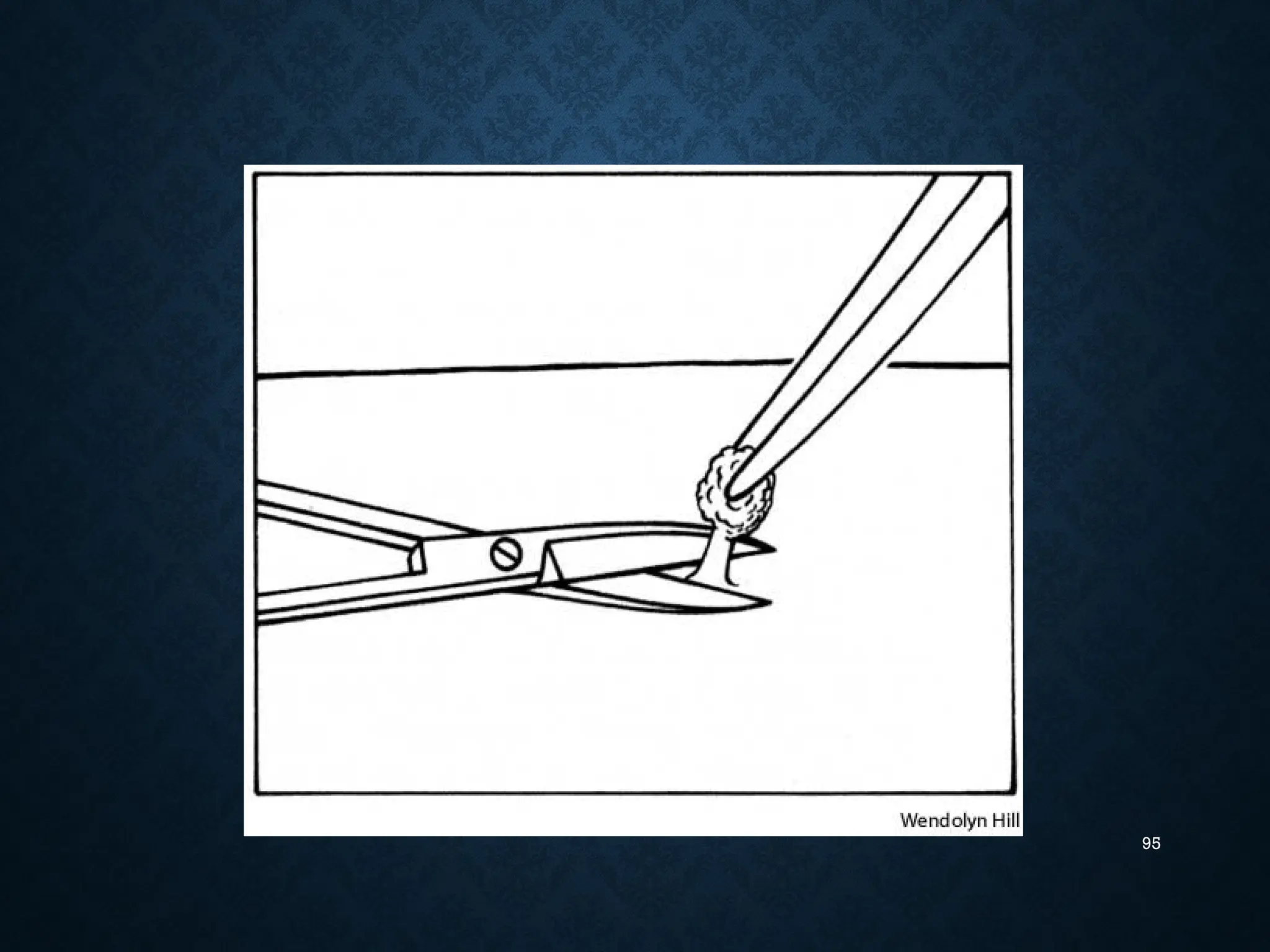
SCISSORS BIOPSY
• Is one of the ways to remove skin tissue for a biopsy
specimen.
• This procedure entails snipping off a growth that is attached to
the skin with a stalk.
• Scissors biopsy is indicated for pedunculated and very
superficial growth.
• Depending on lesion size and morphology, anesthesia may or
may not be necessary.
94
• Small forceps with teeth and a pair of sharp curved or
straight iris scissors are the only surgical instruments
required.
• The lesion to be removed is lightly grasped with forceps
by gently pulling upward, traction provides a firm cutting
surface and allows clear visualization of the lesion base.
• Bleeding after this procedure is usually minimal and can
be easily controlled by application of 35% aluminium
chloride solution
95
96
SHAVE BIOPSY
• A scalpel or razor blade is used to scrape lesion,
performed superficially or deeply.
• Shave excision usually extends to the level of the
middle dermis, with the subcutaneous tissue left
undisturbed.
• Skin lesions with a minimal dermal component, such
as seborrheic keratoses or fibrous papules are
excellent candidates for shave excision technique.
97
The blade is held horizontal to
the skin surface and brought
below the lesion.
The other hand is used to
stretch and stabilize the skin
surrounding the lesion
during the shave biopsy.
Smooth, unidirectional cutting
with the blade separates the
lesion above from the
deep (reticular) dermis
below.
98
ASSISTED GUIDANCE:
• Most tumours that are visible or palpable can be
examined without the aid of radiologic imaging,
whereas for deep lesions that cannot be palpated, as
well as for small, deep mobile lesions that are difficult
to palpate require radiologic control to ensure that
target tissue sample is obtained and secondly this
guidance reduces the number of aspirates and
helpful in differentiating the tissues within a lesion.
• Ultrasound, computed tomography and MRI are used
in percutaneous biopsy procedures
99
ULTRASOUND GUIDED BIOPSY
• This technique has the advantages of being noninvasive,
quick, and easy, and it can be performed with the patient
under local anesthesia.
• It has an advantage over blind percutaneous biopsy
because the needle can be visualized in the organ and the
organ scanned after biopsy for possible complications.
• Another advantage is that, unlike other radiographic
biopsy procedures, ionizing radiation is not used for
imaging.
100
• However, Ultrasound guided biopsy is not possible
when gas/bone prevents the visualization of the
biopsy region.
101
102
CT GUIDED BIOPSY
• A computed tomography guided biopsy, uses real-
time CT images to help the doctor guide a needle to
the suspect lesion to obtain a tissue sample.
• Occasionally, intravenous (IV) contrast is needed to
help the radiologist identify and target the lesion
prior to the biopsy.
• The CT image is immediately available on a monitor,
allowing the radiologist to view the biopsy target.
103
Indications
1. Lymph nodes or masses that are not completely
identifiable using ultrasound.
2. Lesions near the skull base: CT is optimal for
localizing these lesions.
104
Disadvantages of CT include
• radiation exposure,
• limited possible scan plane orientations,
• low soft tissue contrast, and,
• poor vessel conspicuity without administration of
intravenous contrast medium.
105
MRI GUIDED
• Interventional MRI is a method for procedure
guidance that combines the imaging benefits of
magnetic resonance, including excellent tissue
contrast and multiplanar imaging capability, and
good vessel depiction of MRI with the increased
patient access that is possible with newer magnet
designs.
106
107
• Scientific interest has also focused on MRI-guided,
minimally invasive thermal tumour ablation using the
unique temperature sensitivity of MRI or its capability
to demonstrate changes in tissue relaxation
parameters (T1 and T2) that occur in the process of
necrosis.
• The mean procedure time for MRI-guided needle
insertion per pass is less than 10 minutes for
aspiration as well as core biopsy.
108
ENDOSCOPE GUIDED BIOPSY
• Endoscopy is defined as “the examination of the interior
of a canal or hollow viscous by means of an endoscope.”
• Endoscopic technique may prove to be particularly
important when dealing with large jaw cystic lesions
that may contain neoplastic processes such as
ameloblastomas or carcinomatous entities within certain
regions of their lining.
109
• Endoscopy may prove to be an important tool for the
internal examination of large jaw cysts that may
contain regional neoplastic processes within the cyst
lining.
• Especially in the case in large cysts that extend into
areas that are difficult to inspect and sample through
a standard “bony window” technique
110
ENDOSCOPE POSITIONED INTO THE
LESION.
111
ENDOSCOPIC VIEW SHOWING AREAS OF
THICKENED LINING
CONTAINING EXOPHYTIC PROTRUSIONS
MEASURING UP TO 10 MM IN DIAMETER.
112
VELSCOPE
113
114
115
116
117
EXPLORATION BIOPSY
• Used for inrtaosseous lesions of maxilla and mandible
• Instruments: Chisel, Bone burs, Periosteal Elevator
UNEXPECTED/ UNPLANNED BIOPSY
• When as a result of surgical procedure (Tooth
extraction) some suspicious tissue is obtained
unexpectedly
118
TISSUE SCRAPINGS
EXFOLIATIVE CYTOLOGY:
• Cyto – Cell -- Logos – Study
• Study of cells.
• Rudolf Virchow (1955) stated “Every cell is derived
from a cell & that human disease processes were
essentially disease of the cells.”
119
• Normal oral squamous epithelium continuously
sheds the most superficial cells.
• If malignant or other disease processes affect the
area, the deeper cells lose their cohesiveness and
are exfoliated at the same time as the superficial
cells.
120
• Exfoliative cytology is the study of superficial cells
which have been either exfoliated or shed actually
from mucous membrane, renal tubules etc. and also
includes the study of those cells which have been
collected being scraped or pulled off by tissue
surface and may also be found in body fluids such as
sputum, saliva etc
121
The lesion is repeatedly scraped with a
moistened tongue depressor or spatula or
cytobrush type instrument. The cells
obtained are smeared on a glass slide and
immediately fixed with a fixative spray or
solution.
122
Indications:
• For quick laboratory evaluation of suspected malignant and
premalignant oral lesions and multiple premalignant and
extensive lesion and lesions leading to field cancerization.
• For sequential laboratory evaluation of post-operative or
post-irradiated malignant lesions.
• Recurrent oral cancers after treatment.
• Mass screening of oral cancer.
123
• To identify the presence of certain specific cells in non-
malignant red patches or ulcerative lesions.
• To see malignancy associated change in buccal squamous
cells in patients with malnutrition.
• For evaluation of vesicular lesion.
• For detection of sex chromosomes.
• For the study of buccal mucosa in various anemia.
124
• Certain benign hereditary skin lesions having their
representative oral manifestations.
• For the study of the change of the oral epithelial cells
followed by chemotherapy.
125
Contradictions:
• Deep seated lesions (both soft and hard tissue).
• Fibrous lesions.
• Polypoid growth.
• Non-ulcerative lesions.
• Lesions do not show positive changes in the cells of the
superficial layers.
126
127
128
129
130
131
Follow-up and Reporting of Biopsy Result to the Patient
• Patients should be seen 1 to 2 weeks postoperatively to
ensure healing and to discuss the results of the biopsy.
• It is the responsibility of the clinician (not the assistant
or secretary) to explain the diagnosis and any further
management if necessary.
• If the microscopic diagnosis is inconsistent with the
clinical impression, the clinician is strongly advised to
discuss any concerns directly with the pathologist.
132
For red & white lesions include both red & white
area
133
ULCERS
Include margin,
deep part of
ulcer and site of
maximal clinical
activity.
AVOID
Superficial
ulcers &
necrotic tissue
134
For Polypoid lesions include base
135
For Vesiculobullous lesions
Fluid is more representative. Intact vesicle or bulla
should be biopsied.
136
For LICHEN PLANUS – representative area should
be biopsied
137
For LEUKOPLAKIA – Most dysplastic
area should be biopsied
138
For MUCOCELE lesions – careful excisional biopsy
139
For GRANULOMATOUS LESIONS –
deep incisional biopsy + fresh sample to
microbiology if infective agent suspected
140
Do not cut into pigmented and vascular lesions
141
CONCLUSION
• For entities of uncertain significance or etiology, a biopsy
provides the simplest and most speedy means of obtaining
the perfect diagnosis. In the concern of patient’s welfare,
correct diagnosis is of extreme importance.
• A carefully selected, performed and interpreted biopsy is
critical in rendering an accurate diagnosis.
• When considering biopsy, a little forward planning and
thought can greatly improve the diagnostic value obtained.
142
• Careful handling of the tissue and prompt
appropriate fixation will enable a confident
histological diagnosis to be reached. Inadequate care
at any stage could result in a nondiagnostic biopsy
and may necessitate the patient having a repeat
procedure with its ensuing physical and
psychological morbidity.
143
REFERENCES
1. R. Rajendran and B. Sivapathasundharam: Shafer’s textbook of oral pathology, 5th
edition (2006),
Elsevier.
2. Neville Brad W., Damm Douglas D., Allen Carl M. and Bouquet Jerry E.: Oral and Maxillofacial
Pathology, 2nd
Edition (2004) Saunders.
3. Martin S. Greenberg and Michael Glick: Burket’s Oral Medicine Diagnosis and Treatment, 10th
Edition
(2003); BC Decker Inc.
4. Marx RE. Oral and Maxillofacial Pathology. A rationale for diagnosis and treatment. 2003. Quintessence
publishing co, Inc. Chicago.
5. Cawson RA, Odell EW. Essentials of Oral Pathology and Medicine.1998. 6th
ed. Churchill Livingstone.
Edinburgh.
6. Peterson, Ellis, Hupp and Tucker: contemporary oral and maxillofacial surgery, 4th
edition.
7. S M Balaji: Text book of oral and maxillofacial surgery, 1st
edition.
8. Theory & practice of Histological techniques , 2nd
& 3rd
ed. , Bancroft
9. Journal of Cancer Research and Therapeutics - April-June 2012 - Volume 8 - Issue 2
10.S I Talukder. www.talukderbd.com. Histopathology Techniques: Tissue Processing and Staining
11.Sylvie-Louise Avon. Oral Soft-Tissue Biopsy: An Overview. J Can Dent Assoc 2012;78:c75
12.K. L. Kumaraswamy, M. Vidhya. Oral biopsy: Oral pathologist’s perspective. Journal of Cancer Research
and Therapeutics - April-June 2012 - Volume 8 - Issue 2
144
THANK YOU

ORAL BIOPSY techniques and procedure .pptx

  • 1.
    ORAL BIOPSY One can’tshow it when it’s not there One can’t hide it when it’s there. DEPT. OF ORAL MEDICINE AND RADIOLOGY DR ZIAUDDIN AHAMAD DENTAL COLLEGE AND HOSPITAL ALIGARH MUSLIM UNIVERSITY Presented by, Dr Shadiya C Junior resident SEMINAR:6 DOP:5/11/2024
  • 2.
    2 TABLE OF CONTENTS •Introduction • History • Definitions • Indications & Contraindications • Classification • Various biopsy procedures • Special considerations • Essential biopsy principles • Conclusion
  • 3.
    3 INTRODUCTION • The clinicalpresentation of any pathology can be the mucosal surface change (i.e., change in texture, ulceration, proliferation) or it can be submucosal structural alterations (i.e., distortion or swelling produced by a mass). • The diagnosis of such pathology depends on the history, examination, laboratory studies, biopsy and other diagnostic techniques.
  • 4.
    4 • Among allthese investigations, obtaining an accurate tissue diagnosis is the one needed in the process of forming a definitive diagnosis and treatment planning.This is referred to as the biopsy. • There are many methods used to perform this procedure. But whatever the procedure, the aim of it should be to provide a suitably representative sample for the pathologist to interpret, while minimizing perioperative discomfort for the patient
  • 5.
  • 6.
    6 • In theearly 16th century, Sir Marcello Malphigi was the one who formulated the basic microscopic technique of utilizing the living tissues. • He termed it Bios-living, Opsis-visualizing. • Later, Sir Georianni Morgahni in the early 17th century popularized this method through his book ‘The site and causes of diseases’ which laid the foundation for physiologic anatomy.
  • 7.
    7 • The term"biopsy" was introduced into medical terminology in 1879 by Ernest Besnier. • There is in this latter mode of investigation, true biopsy (a new word that we propose to designate a new thing),regular clinical diagnostic process whose importance is considerable.” • In this quote from an article in the weekly Gazette of Medicine and Surgery October 10, 1879 under the Ernest Besnier signature, the word biopsy is first delivered.
  • 8.
    8 DEFINITION OF BIOPSY •Biopsy is the removal of tissue for examination, microscopic analysis, chemical analysis, and bacterial analysis or a combination of all four.The term is used most frequently to indicate removal of tissue from a living subject for analysis. -Tiecke RW in 1965
  • 9.
    9 • Biopsy isthe removal of a piece of tissue from the living body for diagnosis by microscopic examination. - Tomlins Christopher DC in 1998 • Biopsy is the removal of tissue from a living subject for laboratory evaluation and analysis. -Neelima AM in 2002.
  • 10.
    10 INDICATIONS FOR BIOPSY •To confirm a clinical impression of a lesion. • When an inflammatory lesion is not responding to conservative therapy after 10 to 14 days. • For the determination of the more definitive treatment of the lesion.
  • 11.
    11 • To determinethe nature of any intraosseous lesion which cannot be identified clinically and radiographically. • To determine the nature of all abnormal tissue removed from the oral cavity, including cysts and granulomas.
  • 12.
    12 • Persistent hyperkeratoticchanges in surface tissues. • Any persistent tumescence, either visible or palpable beneath a relatively normal tissue. • Lesions that interfere with local function (e.g. Fibroma). • Any lesion that has the characteristics of a malignancy (e.g. Erythroplakia).
  • 13.
    13 CONTRAINDICATIONS FOR BIOPSY RELATIVE Forambiguous lesions a) This should include inflammatory lesions of allergic, viral, fungal or bacterial etiology. b) Normal anatomical and racial variations, e.g., linea alba, physiological racial pigmentation, leukedema, exostoses etc. c) Lesions caused by recent trauma.
  • 14.
    14 • Compromised generalhealth of the patient or a history of coagulopathy or bleeding diathesis, including patient on anticoagulant therapy. • Proximity of lesion to vital anatomic, vascular, neural or ductal structures and lesions in areas of difficult surgical access.
  • 15.
    15 ABSOLUTE • Pulsatile lesionsor those suggestive of a vascular nature should be referred for more in depth evaluation (e.g., hemangioma). • Intrabony radiolucent lesions should not be biopsied without initial aspiration. • Pigmented lesions generally should not be biopsied incisionally (e.g. Spread of a melanoma, transformation of premalignant pigmented lesions to malignant ones).
  • 16.
    16 • Lesions thatbecause of size or location present technically difficult surgery e.g., posterior tongue and oropharynx offer severe problems of access. • Lesions that are clinically obviously malignant should be biopsied only in the facility that will assure continual care.
  • 17.
  • 18.
    18 VARIOUS BIOPSY TECHNIQUES •The type of biopsy to be performed depends on the location, size and clinical impression of the lesion. • Basic types include-  Incisional  Excisional  Exploratory  punch biopsy  needle biopsy  cytological smear  curettage biopsy  unplanned biopsy.
  • 19.
    19 SURGICAL NON-SURGICAL SOFT TISSUE BONE DIAGNOSTIC CURATIVE •PUNCH •ELECTROCAUTERY •SOFT TISSUE CURETTAGE •FROZENSECTION •EXCISIONAL DIAGNOSTIC CURATIVE •CURETTAGE •TREPHINE •ASPIRATION •FROZEN •ENUCLEATION •RESECTION •CURETTAGE ASPIRATION CYTOLOGY •SCALPEL •CAUTERY •EXFOLIATIVE •FNAC •INCISIONAL
  • 20.
    20 Tissue may beobtained as: • Tissue piece: a. Incisional biopsy including geographical biopsies and vital staining b. Excisional biopsy c. Curetting d. Frozen section.
  • 21.
    21 • Tissue core: a.Fine needle cutting biopsy. b. Tru-cut needle biopsy. c. Vin Silverman needle biopsy. • Cell aspirate: Fine needle aspirate biopsy. • Scrapings: Exfoliative cytology.
  • 22.
    22 INCISIONAL BIOPSY /DIAGNOSTIC BIOPSY: • It is a biopsy technique that samples only a particular or representative part of the lesion. • Using this technique multiple biopsy (that is, if the lesion is large or has different characteristics at different locations, more than one area of the lesion need to be sampled) can be considered.
  • 23.
  • 24.
  • 25.
    25 Indication: • It ischosen- when the lesion is extensive (larger than 1 cm in diameter) or potentially malignant (requiring wide excision) or to avoid an adjacent structure, e.g., nerve or artery. • For central bony lesions (either cystic or solid) in determining the nature and facilitate planning for definitive removal/ reconstruction.
  • 26.
    26 Contraindications: • Pulsatile/ vascularlesions. • Pigmented lesions.
  • 27.
    27 Disadvantages: • Leaves noticeablescar. • Risk of facial nerve damage. • Possible spread of malignant cells (detection of cytokeratine 19 reverse transcriptase in peripheral blood drained 15 mins after incision of squamous cell carcinoma, not detected in excisional biopsy group or in controls. If at all Incisional biopsy is necessary, chemotherapy should be administered before or after biopsy thus effective in preventing secondary metastasis)
  • 28.
    28 Principle: • Representative areasof the lesion (the area that shows complete tissue changes) should be biopsied in wedge fashion from the edge of the lesion including some of the normal tissue. • Deep narrow biopsy should be considered rather than broad, shallow one, because superficial changes may be different from those deeper in the tissues. • Necrotic areas should be avoided because it may be nondiagnostic.
  • 29.
    29 GEOGRAPHICAL BIOPSY AND VITALSTAINING • Lesions with areas of varying appearances and in cases of widespread dysplastic disease or field changes within the oral cavity affecting whole of palate, tongue or floor of the mouth may require several biopsies, in such situation vital staining helps to choose the appropriate area for biopsy.
  • 30.
    30 Technique: • 1% aqueoustoludine blue dye is applied to the affected lesion for approximately 30 seconds followed by a rinse with water. • Then 1% acetic acid stain is applied and rinsed with water.
  • 31.
    31 • Toludine bluestains the epithelial surface blue and with the application of acetic acid the blue stain from normal epithelium is lost whereas the stain is retained in premalignant and malignant erythematous lesions and are not decolorized by acetic acid.
  • 32.
    32 Advantages: • The techniqueis helpful in differentiating the small dysplastic erythroplakia that requires biopsy from erythematous lesions caused by infection, inflammation or trauma. • In dysplastic or malignant lesions with diffuse marginal pattern preoperative toluidine blue staining indicates the border of a lesion serving as a guide for surgical excision than does the clinical examination alone.
  • 33.
    33 Disadvantage: • The techniquecannot show tumor that is present beneath the normal epithelium.
  • 34.
    34 ELECTRO-SURGERY BIOPSY • Electro-surgeryrefers to the cutting and coagulation of tissue using very high-frequency, low-voltage electrical currents. • A blended current combines cutting and coagulation, and is useful in producing a bloodless operative field. • Lesion excisions on the face are usually performed with only a cutting current to limit scarring at the wound base, which can be produced by the effects of thermal coagulation.
  • 35.
    35 Electro-surgical technique The lesion is graspedwith forceps through the loop electrode.The electrode is activated going under the lesion, removing the
  • 36.
    36 EXCISIONAL BIOPSY • Itis the removal of the lesion in toto at the time the surgical diagnostic procedure is performed. • Not only the entire lesion is made available for pathological examination, but also complete excision may constitute definitive treatment for few lesions.
  • 37.
    37 Indications: • It isthe usual approach for smaller lesions (less than 1 cm in diameter). • It is used for clinically benign lesions, be they superficial or deep, soft or hard tissue. • Includes the excision of pigmented and hyperkeratotic lesions. • Fibromas and papillomas.
  • 38.
    38 • Mucoceles • Myoblastoma •Keratoacanthoma • Sialoliths and smaller benign lesions of accessory salivary glands • Certain cicatrial lesions
  • 39.
    39 Principle: • Entire lesionalong with 2 to 3 mm of normal appearing surrounding tissue is excised.
  • 40.
  • 41.
    41 Technique: • For surfaceexcision simple elliptical approach is designed, like for the excision of pigmented and hyperkeratotic lesions, fibroma, papillomas and superficial pathology. • For deep soft tissue lesions, modified elliptical that is combined with deeper dissection is chosen.
  • 42.
  • 43.
    43 • An ellipticalarea at the surface is outlined using no.15 sharp scalpel blade (to avoid tearing the tissue), incision is taken down to the connective tissue layer to form a ‘V’ at the base of the lesion, this provides a good specimen and also leaves a wound that is easy to close. • The length of the incision should be three times its width to allow for tension-free primary closure. • High volume suction devices should be avoided as they can aspirate small surgical specimen.
  • 44.
    44 CURRETTAGE BIOPSY • CURRETTEis a French word ‘Curer’- meaning to clean. • It is indicated for intraosseous lesions that lie in cavities such as maxillary antrum and cystic lesions within the jaws. • Also used in very friable cellular lesions like sinuses and fistulae within the soft tissues when only small amounts of surface material are necessary for evaluation.
  • 45.
    45 • Although thesample produced is usually soft tissue but it may include bone fragment as well. • These extremely small segments of tissue after fixation are centrifuged and then the sediment is placed in medium such as agar, they are then sectioned as a cellblock.
  • 46.
    46 PUNCH BIOPSY: • Itis an alternative technique of tissue removal applicable to both incisional and excisional biopsy.
  • 47.
  • 48.
    48 Indications: • The techniquemost often is used for total removal of small lesions but also finds applicability in the partial removal of superficial abnormalities. • It is extremely useful when used on fixed tissue such as firmly attached palatal tissue, which heal by secondary intention regardless of the technique.
  • 49.
    49 • The techniqueis used for oral mucosal malignancies such as squamous cell carcinoma as well as leukoplakia and other mucosal abnormalities that may require multiple biopsies. • It is also helpful to diagnose oral manifestations of mucocutaneous and other vesiculoulcerative diseases.
  • 50.
    50 Contraindication: • As adefinitive surgical excision procedure of suspected malignant lesions and cases of vascular lesions.
  • 51.
    51 Advantages: • Technique isfast with low incidence of post surgical morbidity. • Suturing is usually not required as the surgical wound heal readily by secondary intention with minimal or no scar formation and with maximum esthetic results. • The need for a post operative or suture removal visit is uncommon. • The technique can be used on any mucosal surface accessible to the biopsy punch.
  • 52.
    52 Disadvantage: • Technique isdesigned primarily for use with epithelial or superficial mesenchymal lesions. • It is difficult to use biopsy punch to obtain adequate representative tissue deeper than the superficial lamina propria. • Freely movable mucosa that cannot be well supported as with the floor of the mouth and soft palate may preclude the technique.
  • 53.
    53 • Punch biopsyshould be used with caution when the lesion overlie significant submucosal structures such as mental foramen or nasopalatine foramen and occurs in inaccessible areas such as the maxillary posterior buccal alveolar ridge and anterior lingual aspect of the mandible.
  • 54.
    54 Technique: • Various typesof biopsy punches are available – - Keye biopsy punch - Belt-driven. • Even disposable biopsy punches are available.
  • 55.
    55 • After thebiopsy site has been anesthetized, the site is gently blotted with sterile gauze. • The edge of the blade of the biopsy punch is placed on the site and rotated back and forth using moderate pressure to an appropriate depth until the external bevel is not visible and creates a clearly defined surgical margin.
  • 56.
    56 • The tissueis then grasped with an atraumatic forceps and the base of the tissue core is released using a scalpel blade or fine curved scissors. • Punch size varies from 2-6 mm in diameter. • Suture is rarely needed, as the hemorrhage is minimal. • Local pressure with sterile gauze is sufficient to induce haemostasis
  • 57.
    57 • Persistent hemorrhagecan be treated with chemical cautery such as silver nitrate, collagen matrix, or by electrocautery.
  • 58.
    58 • Post- operativeinstructions include avoidance of inadvertent trauma to the area, either by diet or through attempts at oral hygiene for 48 hours. • Warm salt mater rinses recommended for palliation. • Non-steroidal anti-inflammatory agents are preferred for post-operative discomfort.
  • 59.
  • 60.
    60 FROZEN SECTION • Insurgical oncology, treatment of malignant oropharyngeal tumors involves the excision of tumor with 1 cm margin of normal tissue around the tumor- this is termed as clear margin. Failure to achieve this reduces the chance of local control (for radiotherapy) and recurrence can be expected. • To overcome this problem, frozen section analysis is undertaken from the mucosal and deep surfaces of the defect intraoperatively; and if the tumor remains then further resection is undertaken at the time of primary resection.
  • 61.
    61 Indication: • To makean immediate surgical therapeutic decision. • To determine whether a lesion is benign, malignant or non-neoplastic. • Establish the adequacy of clearance of margin after resection. • Ascertain metastatic involvement of regional lymph nodes.
  • 62.
    62 • It reducesthe time of processing from 18 hours to 5 minutes Methods of frozen section: • Freezing microtome using CO2 gas • Refrigerated microtome(cryostat)
  • 63.
    63 Technique: • Biopsy tissueis frozen in a mixture of isopentene and solid carbon dioxide at -70o . • Sections of 5-7 m are made on a refrigerated microtome μ adhered to a glass slide at room temperature, fixed with formal acetic alcohol (50ml formalin, 450ml 90% alcohol and 25ml of glacial acetic acid) and stained with haematoxylin and eosin. • The procedure is completed within 5-10 mins from the time of receiving specimen till it is stained.
  • 64.
    64 • The remainderof tissue is stored in 10% buffered formaldehyde and routinely processed; embedded in paraffin, sectioned to 3 m and stained with μ haematoxylin and eosin. • In this type of biopsy slides cannot be preserved for future reference.
  • 65.
    65 Errors in diagnosiscan be due to: • Sampling by the surgeon or pathologist. • Interpretation by the pathologist. • Difference in communication between the two.
  • 66.
    66 Disadvantages: • There canbe error in sampling and interpretation of frozen tissue as compared to routinely processed tissue. • Differentiation between reactive epithelial changes is difficult. • It has the disadvantage that only 8-16 micron thick section can be cut and finer details of tissue can not be examined.
  • 67.
    67 CUTTING NEEDLE BIOPSY •employed the Biopsy gun • first devised in the early 1980s. • Studies assessing the clinical utility of cutting needle biopsy using Monopty biopsy instrument (18G needle), which is a newly introduced simple disposable tool for performing cutting needle biopsy in head and neck lesions like lesions of lymph nodes, salivary glands, palate and soft tissue • shown accuracy of 88%
  • 68.
    68 TRU-CUT NEEDLE BIOPSY: •It consists of wide bore 14G and consists of a long 15.2cm )canula and trocar with a 2cm notch at the tip of the trocar. Technique: • L.A. • Stab incision with a scalpel • Canula is inserted with the trocar fully retracted until the specimen notch is with in the tissue to be biopsied.
  • 69.
  • 70.
    70 VIM SILVERMAN NEEDLEBIOPSY:1938 It consists of: 1)Outer canula 16 G in size. 2)Inner trocar. 3)Inner split longitudinal needle. Technique: • L.A. • Small incision made with the scalpel before the canula and trocar are inserted up to the tissue to be biopsied. • The trocar is then completely removed and replaced by the split cutting needle.
  • 71.
  • 72.
    72 Advantage: • They areeasy to interpret than aspiration cytology to the pathologist • To distinguish between reactive changes and recurrent malignancy in possible cervical metastasis.
  • 73.
    73 FINE NEEDLE ASPIRATIONCYTOLOGY: (FNAC) • Kun in 1847, gave the first description of the technique for aspiration biopsy. • Greg and Gray in 1904 used needle aspiration to demonstrate the organisms in the lymph nodes. • Franzem et al 1956 gave the technique of fine needle aspiration biopsy which is used today (needles of 21G or smaller).
  • 74.
    74 Patient selection/Indication: 1)The diseasemust be localized and clearly defined by clinical examination or by any available radiological investigating technique. 2)The most commonly diagnosed malignant lesion, with this method is squamous cell carcinoma & benign lesions are Pleomorphic adenoma and relative lymph node hyperplasia.
  • 75.
    75 • Aspiration ofsoft tissue pathology is employed only when fluid is detected or suspected and in of little value in the diagnosis of solid oral lesions. • Although it is not a substitute for conventional biopsy but it is valuable in producing immediate results and free of complications and even helpful in distinguishing between benign from malignant neoplasms, to initiate treatment, or even to indicate the need for further investigation.
  • 76.
    76 Disadvantages: • Success ofFNA depends on obtaining a representative sample (if the specimen is small with few or no cells). • Experience is required for interpretation. • Definitive diagnosis not always possible. • False negative and false positive results are possible.
  • 77.
    77 Technique: • Standard disposableneedles (21 – 23G) are used for all palpable lesions (for children and where the eyelids are involved smaller 25 G needles are used). • Thicker needles tend to cause more bleeding and are prone to blockage. • The needle is attached to a standard 10-20 ml disposable syringe capable of producing good suction. • The barrel of the syringe is supported with free hand and the lesion is approached, as vertically as possible
  • 78.
    78 • The needleis inserted into the lesion using no suction and once the needle is within the lesion the change in resilience confirms the entry of needle into the mass. • Then suction or negative pressure is applied and is moved back and forth in the lesion for 10 to 15 times at different angulations making sure that the needle is within the lesion. • When the mass has been adequately sampled, the negative pressure is released from the syringe and the needle is withdrawn. • Then air is drawn into the syringe and the aspirate is deposited on a clean-labeled microscopic slide.
  • 79.
    79 • Usually 2-3slides are prepared on each mass. • One slide is immediately fixed in 95% ethanol solution and subsequently stained with Papanicolaou’s or haematoxylin and eosin stain. • Another slide is allowed to dry for staining with a May-Graunwald or Wright stain.
  • 80.
    80 • After anyneedle biopsy, direct pressure should be applied over the site to reduce the incidence of hematoma formation.
  • 81.
    81 A- needle isintroduced into the mass. B – plunger is retracted after needle enters the mass C – suction is maintained while needle is moved back and forth within the mass D – suction is released and plunger returned to original position before needle is withdrawn
  • 82.
    82 FRANZEN’S HANDLE WITHSYRINGE & NEEDLE FITTED ON IT FOR PERFORMING FNAC
  • 83.
    83 COMPLICATION & HAZARDS OFFNAC •Haematoma: Bleeding from puncture site & haematoma formation are commonest complications of the procedure. Firm finger pressure for 2-3 minutes immediately after procedure reduces the frequency of complications. •Infection: Introduction of infection is not a significant hazard. •Dissemination of tumour: Local dissemination by seeding of malignant cells along the needle tract is a rare complication & reported in cancers of lung, prostate & pancreas.
  • 84.
    84 LIMITATIONS OF FNAC •Onlya small population of cells is sampled, thus the reliability of test depends on adequacy of sample & its representative character. An inadequate sample, which is not representative of true lesion, results in false negative report. •Requires clinical information or relevant investigation (e.g. x-ray finding), which further limit utility of FNAC.
  • 85.
    85 USE OF FNAC: •Commonest indication is to distinguish between both benign and malignant neoplasia as well as non- neoplastic conditions. • Secondly to differentiate between a local recurrence or nodal metastasis
  • 86.
    86 • Lymph nodes– FNAB is an excellent initial diagnostic modality in the evaluation of lymphadenopathy. Many infectious processes can be diagnosed because cultures may be obtained from bacteria and fungus. Aspirates from enlarged lymph nodes can differentiate between- • Reactive hyperplasia or inflammation. • Malignant disease. • Lymphoma. • It is also used to confirm the cervical lymph node metastasis from previously treated local neoplasms.
  • 87.
    87 • Aspirated bloodoften indicates a vascular lesion e.g., hemangioma or aneurysmal bone cyst. • Withdrawn air suggests likely entry into the maxillary sinus or a traumatic cyst. • Aspirated serous fluid sometimes glistering with cholesterol crystal is indicative of a cyst. • If aspiration of a central bony defect is nonproductive, the probability of a solid lesion, i.e. neoplasia or tumor, exists
  • 88.
    88 • Skin andsoft tissue - It is usually possible to obtain tissue by incisional at excisional biopsy, but FNA is possible on all lesions larger them 5 mm.
  • 89.
    89 Salivary gland swelling– • Incisional or cutting biopsies are contraindicated owing to risks of tumor seeding or fistula formation. • Thus FNAB is most widely used in the assessment of salivary gland masses. • The primary indication for FNAB of salivary gland is to distinguish among benign, malignant and inflammatory lesions. • The accuracy percentage is higher for benign as compared to malignant tumors with a sensitivity and specificity of 80% and 98%.
  • 90.
    90 Terminology: • Regarding theconfusion over the use of the terms aspiration biopsy and aspiration cytology. • If an aspirate of cells is obtained using fine needles (21- 25G) the technique is called “fine needle aspiration cytology” (FNAC) or fine needle aspiration (FNA). • Whereas, if a core of tissue is produced using larger bore needles (14-18G), the procedure is best referred to as fine needle cutting biopsy (FNCB) or true cut biopsy
  • 91.
    91 ASPIRATION BIOPSY • Aspirationbiopsy is the use of a needle & syringe to penetrate a lesion for aspiration of its contents for purpose of analysis. • Applicable to both intra osseous as well as soft tissue masses.
  • 92.
    92 Aspiration biopsy ofradiolucent lesions •Any radiolucent lesion that requires biopsy should undergo aspiration before surgical exploration. This provides valuable diagnostic information regarding the nature of the lesion. •For e.g, brisk, pulsating blood may indicate a vascular lesion, which should not undergo surgical exploration by the general dentist. The return of straw colored fluid would corroborate presumptive diagnosis of a cyst, and surgical removal can then be undertaken without hesitation. The aspiration of air may indicate that then needle tip is within the maxillary sinus or a traumatic bone cavity.
  • 93.
    93 SCISSORS BIOPSY • Isone of the ways to remove skin tissue for a biopsy specimen. • This procedure entails snipping off a growth that is attached to the skin with a stalk. • Scissors biopsy is indicated for pedunculated and very superficial growth. • Depending on lesion size and morphology, anesthesia may or may not be necessary.
  • 94.
    94 • Small forcepswith teeth and a pair of sharp curved or straight iris scissors are the only surgical instruments required. • The lesion to be removed is lightly grasped with forceps by gently pulling upward, traction provides a firm cutting surface and allows clear visualization of the lesion base. • Bleeding after this procedure is usually minimal and can be easily controlled by application of 35% aluminium chloride solution
  • 95.
  • 96.
    96 SHAVE BIOPSY • Ascalpel or razor blade is used to scrape lesion, performed superficially or deeply. • Shave excision usually extends to the level of the middle dermis, with the subcutaneous tissue left undisturbed. • Skin lesions with a minimal dermal component, such as seborrheic keratoses or fibrous papules are excellent candidates for shave excision technique.
  • 97.
    97 The blade isheld horizontal to the skin surface and brought below the lesion. The other hand is used to stretch and stabilize the skin surrounding the lesion during the shave biopsy. Smooth, unidirectional cutting with the blade separates the lesion above from the deep (reticular) dermis below.
  • 98.
    98 ASSISTED GUIDANCE: • Mosttumours that are visible or palpable can be examined without the aid of radiologic imaging, whereas for deep lesions that cannot be palpated, as well as for small, deep mobile lesions that are difficult to palpate require radiologic control to ensure that target tissue sample is obtained and secondly this guidance reduces the number of aspirates and helpful in differentiating the tissues within a lesion. • Ultrasound, computed tomography and MRI are used in percutaneous biopsy procedures
  • 99.
    99 ULTRASOUND GUIDED BIOPSY •This technique has the advantages of being noninvasive, quick, and easy, and it can be performed with the patient under local anesthesia. • It has an advantage over blind percutaneous biopsy because the needle can be visualized in the organ and the organ scanned after biopsy for possible complications. • Another advantage is that, unlike other radiographic biopsy procedures, ionizing radiation is not used for imaging.
  • 100.
    100 • However, Ultrasoundguided biopsy is not possible when gas/bone prevents the visualization of the biopsy region.
  • 101.
  • 102.
    102 CT GUIDED BIOPSY •A computed tomography guided biopsy, uses real- time CT images to help the doctor guide a needle to the suspect lesion to obtain a tissue sample. • Occasionally, intravenous (IV) contrast is needed to help the radiologist identify and target the lesion prior to the biopsy. • The CT image is immediately available on a monitor, allowing the radiologist to view the biopsy target.
  • 103.
    103 Indications 1. Lymph nodesor masses that are not completely identifiable using ultrasound. 2. Lesions near the skull base: CT is optimal for localizing these lesions.
  • 104.
    104 Disadvantages of CTinclude • radiation exposure, • limited possible scan plane orientations, • low soft tissue contrast, and, • poor vessel conspicuity without administration of intravenous contrast medium.
  • 105.
    105 MRI GUIDED • InterventionalMRI is a method for procedure guidance that combines the imaging benefits of magnetic resonance, including excellent tissue contrast and multiplanar imaging capability, and good vessel depiction of MRI with the increased patient access that is possible with newer magnet designs.
  • 106.
  • 107.
    107 • Scientific interesthas also focused on MRI-guided, minimally invasive thermal tumour ablation using the unique temperature sensitivity of MRI or its capability to demonstrate changes in tissue relaxation parameters (T1 and T2) that occur in the process of necrosis. • The mean procedure time for MRI-guided needle insertion per pass is less than 10 minutes for aspiration as well as core biopsy.
  • 108.
    108 ENDOSCOPE GUIDED BIOPSY •Endoscopy is defined as “the examination of the interior of a canal or hollow viscous by means of an endoscope.” • Endoscopic technique may prove to be particularly important when dealing with large jaw cystic lesions that may contain neoplastic processes such as ameloblastomas or carcinomatous entities within certain regions of their lining.
  • 109.
    109 • Endoscopy mayprove to be an important tool for the internal examination of large jaw cysts that may contain regional neoplastic processes within the cyst lining. • Especially in the case in large cysts that extend into areas that are difficult to inspect and sample through a standard “bony window” technique
  • 110.
  • 111.
    111 ENDOSCOPIC VIEW SHOWINGAREAS OF THICKENED LINING CONTAINING EXOPHYTIC PROTRUSIONS MEASURING UP TO 10 MM IN DIAMETER.
  • 112.
  • 113.
  • 114.
  • 115.
  • 116.
  • 117.
    117 EXPLORATION BIOPSY • Usedfor inrtaosseous lesions of maxilla and mandible • Instruments: Chisel, Bone burs, Periosteal Elevator UNEXPECTED/ UNPLANNED BIOPSY • When as a result of surgical procedure (Tooth extraction) some suspicious tissue is obtained unexpectedly
  • 118.
    118 TISSUE SCRAPINGS EXFOLIATIVE CYTOLOGY: •Cyto – Cell -- Logos – Study • Study of cells. • Rudolf Virchow (1955) stated “Every cell is derived from a cell & that human disease processes were essentially disease of the cells.”
  • 119.
    119 • Normal oralsquamous epithelium continuously sheds the most superficial cells. • If malignant or other disease processes affect the area, the deeper cells lose their cohesiveness and are exfoliated at the same time as the superficial cells.
  • 120.
    120 • Exfoliative cytologyis the study of superficial cells which have been either exfoliated or shed actually from mucous membrane, renal tubules etc. and also includes the study of those cells which have been collected being scraped or pulled off by tissue surface and may also be found in body fluids such as sputum, saliva etc
  • 121.
    121 The lesion isrepeatedly scraped with a moistened tongue depressor or spatula or cytobrush type instrument. The cells obtained are smeared on a glass slide and immediately fixed with a fixative spray or solution.
  • 122.
    122 Indications: • For quicklaboratory evaluation of suspected malignant and premalignant oral lesions and multiple premalignant and extensive lesion and lesions leading to field cancerization. • For sequential laboratory evaluation of post-operative or post-irradiated malignant lesions. • Recurrent oral cancers after treatment. • Mass screening of oral cancer.
  • 123.
    123 • To identifythe presence of certain specific cells in non- malignant red patches or ulcerative lesions. • To see malignancy associated change in buccal squamous cells in patients with malnutrition. • For evaluation of vesicular lesion. • For detection of sex chromosomes. • For the study of buccal mucosa in various anemia.
  • 124.
    124 • Certain benignhereditary skin lesions having their representative oral manifestations. • For the study of the change of the oral epithelial cells followed by chemotherapy.
  • 125.
    125 Contradictions: • Deep seatedlesions (both soft and hard tissue). • Fibrous lesions. • Polypoid growth. • Non-ulcerative lesions. • Lesions do not show positive changes in the cells of the superficial layers.
  • 126.
  • 127.
  • 128.
  • 129.
  • 130.
  • 131.
    131 Follow-up and Reportingof Biopsy Result to the Patient • Patients should be seen 1 to 2 weeks postoperatively to ensure healing and to discuss the results of the biopsy. • It is the responsibility of the clinician (not the assistant or secretary) to explain the diagnosis and any further management if necessary. • If the microscopic diagnosis is inconsistent with the clinical impression, the clinician is strongly advised to discuss any concerns directly with the pathologist.
  • 132.
    132 For red &white lesions include both red & white area
  • 133.
    133 ULCERS Include margin, deep partof ulcer and site of maximal clinical activity. AVOID Superficial ulcers & necrotic tissue
  • 134.
  • 135.
    135 For Vesiculobullous lesions Fluidis more representative. Intact vesicle or bulla should be biopsied.
  • 136.
    136 For LICHEN PLANUS– representative area should be biopsied
  • 137.
    137 For LEUKOPLAKIA –Most dysplastic area should be biopsied
  • 138.
    138 For MUCOCELE lesions– careful excisional biopsy
  • 139.
    139 For GRANULOMATOUS LESIONS– deep incisional biopsy + fresh sample to microbiology if infective agent suspected
  • 140.
    140 Do not cutinto pigmented and vascular lesions
  • 141.
    141 CONCLUSION • For entitiesof uncertain significance or etiology, a biopsy provides the simplest and most speedy means of obtaining the perfect diagnosis. In the concern of patient’s welfare, correct diagnosis is of extreme importance. • A carefully selected, performed and interpreted biopsy is critical in rendering an accurate diagnosis. • When considering biopsy, a little forward planning and thought can greatly improve the diagnostic value obtained.
  • 142.
    142 • Careful handlingof the tissue and prompt appropriate fixation will enable a confident histological diagnosis to be reached. Inadequate care at any stage could result in a nondiagnostic biopsy and may necessitate the patient having a repeat procedure with its ensuing physical and psychological morbidity.
  • 143.
    143 REFERENCES 1. R. Rajendranand B. Sivapathasundharam: Shafer’s textbook of oral pathology, 5th edition (2006), Elsevier. 2. Neville Brad W., Damm Douglas D., Allen Carl M. and Bouquet Jerry E.: Oral and Maxillofacial Pathology, 2nd Edition (2004) Saunders. 3. Martin S. Greenberg and Michael Glick: Burket’s Oral Medicine Diagnosis and Treatment, 10th Edition (2003); BC Decker Inc. 4. Marx RE. Oral and Maxillofacial Pathology. A rationale for diagnosis and treatment. 2003. Quintessence publishing co, Inc. Chicago. 5. Cawson RA, Odell EW. Essentials of Oral Pathology and Medicine.1998. 6th ed. Churchill Livingstone. Edinburgh. 6. Peterson, Ellis, Hupp and Tucker: contemporary oral and maxillofacial surgery, 4th edition. 7. S M Balaji: Text book of oral and maxillofacial surgery, 1st edition. 8. Theory & practice of Histological techniques , 2nd & 3rd ed. , Bancroft 9. Journal of Cancer Research and Therapeutics - April-June 2012 - Volume 8 - Issue 2 10.S I Talukder. www.talukderbd.com. Histopathology Techniques: Tissue Processing and Staining 11.Sylvie-Louise Avon. Oral Soft-Tissue Biopsy: An Overview. J Can Dent Assoc 2012;78:c75 12.K. L. Kumaraswamy, M. Vidhya. Oral biopsy: Oral pathologist’s perspective. Journal of Cancer Research and Therapeutics - April-June 2012 - Volume 8 - Issue 2
  • 144.

Editor's Notes

  • #12 tumidity resulting from the presence of blood or other fluid in the tissues
  • #100 Small Animal Diagnostic Ultrasound  edited by Thomas G. Nyland, John S. Mattoon
  • #110 Gliddon et al. Endoscope-Guided Biopsy of Mandibular Cyst. J Oral Maxillofac Surg 2005.