Presentation on Online Voting
Systems
This presentation highlights the need for modernizing traditional voting methods by introducing online
platforms for increased accessibility and efficiency. It discusses the challenges in traditional systems
and proposes online voting as a secure alternative. Python's role in developing these systems is
emphasized, with a focus on security measures and user-friendly interfaces. The future of online
voting technologies and audience engagement through a Q&A session are also discussed.
01
02
03
04
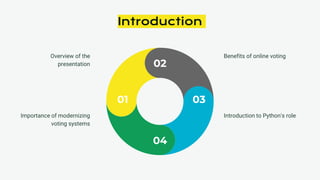
Overview of the
presentation
Importance of modernizing
voting systems
Benefits of online voting
Introduction to Python's role
Introduction
01
03
02
04
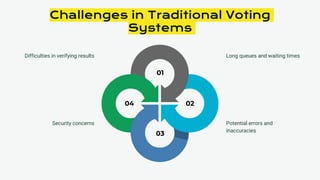
Long queues and waiting times
Potential errors and
inaccuracies
Difficulties in verifying results
Security concerns
Challenges in Traditional Voting
Systems
● Increased accessibility for voters
● Enhanced efficiency in the voting process
● Reduced chances of errors
● Advanced security measures
Proposed Solution:
Online Voting
01 02
03 04
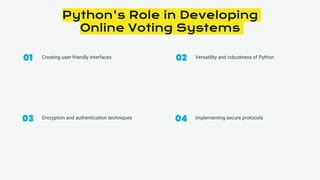
Python's Role in Developing
Online Voting Systems
Creating user-friendly interfaces Versatility and robustness of Python
Encryption and authentication techniques Implementing secure protocols
01
02
03
04
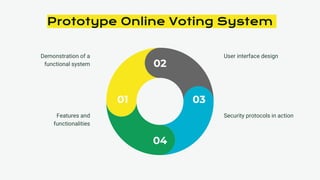
Demonstration of a
functional system
Features and
functionalities
User interface design
Security protocols in action
Prototype Online Voting System
01
03
02
04
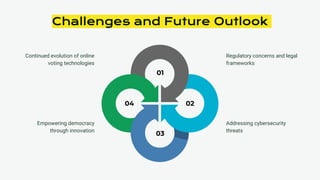
Regulatory concerns and legal
frameworks
Addressing cybersecurity
threats
Continued evolution of online
voting technologies
Empowering democracy
through innovation
Challenges and Future Outlook
Thank you for your time 😊

Online voting system presentation.pptx

  • 3.
    Presentation on OnlineVoting Systems This presentation highlights the need for modernizing traditional voting methods by introducing online platforms for increased accessibility and efficiency. It discusses the challenges in traditional systems and proposes online voting as a secure alternative. Python's role in developing these systems is emphasized, with a focus on security measures and user-friendly interfaces. The future of online voting technologies and audience engagement through a Q&A session are also discussed.
  • 4.
    01 02 03 04 Overview of the presentation Importanceof modernizing voting systems Benefits of online voting Introduction to Python's role Introduction
  • 5.
    01 03 02 04 Long queues andwaiting times Potential errors and inaccuracies Difficulties in verifying results Security concerns Challenges in Traditional Voting Systems
  • 6.
    ● Increased accessibilityfor voters ● Enhanced efficiency in the voting process ● Reduced chances of errors ● Advanced security measures Proposed Solution: Online Voting
  • 7.
    01 02 03 04 Python'sRole in Developing Online Voting Systems Creating user-friendly interfaces Versatility and robustness of Python Encryption and authentication techniques Implementing secure protocols
  • 8.
    01 02 03 04 Demonstration of a functionalsystem Features and functionalities User interface design Security protocols in action Prototype Online Voting System
  • 9.
    01 03 02 04 Regulatory concerns andlegal frameworks Addressing cybersecurity threats Continued evolution of online voting technologies Empowering democracy through innovation Challenges and Future Outlook
  • 10.
    Thank you foryour time 😊

Editor's Notes

  • #2 Entered text The presentation on online voting systems with Python highlights the need for modernizing traditional voting methods by introducing online platforms for increased accessibility and efficiency. It identifies challenges in traditional systems, such as long queues and potential errors, and proposes online voting as a secure alternative. Python's versatility and robustness are emphasized as key factors in developing these systems, with a focus on security measures like encryption and authentication. A demonstration of a prototype online voting system showcases Python's role in creating user-friendly interfaces and implementing secure protocols. Despite implementation challenges such as regulatory concerns and cybersecurity threats, the presentation envisions a future where online voting technologies continue to evolve, empowering democracy through technological innovation. Audience engagement is encouraged through a Q&A session, fostering discussion and collaboration in the advancement of online voting systems.