ONLINE KIRANA
An E-Commerce Project By:
Roshan Joshi
Rajeshswor Koirala
 Introduction
 Problem Statement
 Objectives
 Study of Existing
System
 Features
 Tools used
 SDLC
 Use Case Diagram
 Work Report
 Future Enhancements
OVERVIEW
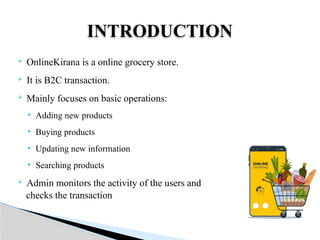
 OnlineKirana is a online grocery store.
 It is B2C transaction.
 Mainly focuses on basic operations:
• Adding new products
• Buying products
• Updating new information
• Searching products
 Admin monitors the activity of the users and
checks the transaction
INTRODUCTION
The current challenges that we found are:
 Customers may not be willing to shop online
 Products may not meet expectations
So, overcome above limitation we provide a platform that may makes
it easier to buy various groceries items in single platform.
PROBLEM STATEMENT
 To create a responsive and easy to use platform
 To helps customers to finds different items at single
place
 Integrate a secure and efficient payment system to
facilitate smooth transactions.
OBJECTIVE
 Product Categories: Grocery, fresh produce, dairy, household
items, Meat, etc.
 Shopping Cart: Add/remove items, view total price, and proceed to
checkout.
 Order Management: Track orders, history, and re-order system
 User Experience: Easy product search with filters.
 Customer Feedback: Direct communication with customers to
ensure satisfaction.
FEATURES OF ONLINE KIRANA
Current Market Solutions:
 Multiple Vendor Platforms: Platforms like Amazon and Daraz offer a
wide range of products from various vendors, leading to inconsistent
quality.
 Local Grocery Stores: Limited to physical locations and lack an
online presence.
 Payment Systems: Existing systems may not be fully integrated,
leading to a fragmented user experience.
Gap Analysis: The need for a streamlined, single-vendor solution that
ensures product quality, consistency, and secure payments.
STUDY OF EXISTING SYSTEM
Front End Tools
 HTML
 CSS
 JavaScript
TOOLS USED
Back End Tools
 PHP
 MySQL
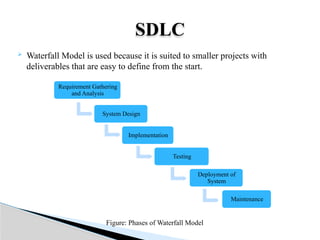
 Waterfall Model is used because it is suited to smaller projects with
deliverables that are easy to define from the start.
SDLC
Requirement Gathering
and Analysis
System Design
Implementation
Testing
Deployment of
System
Maintenance
Figure: Phases of Waterfall Model
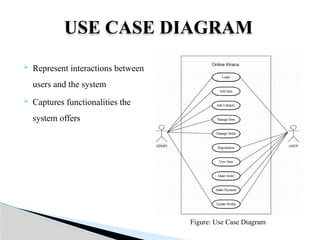
 Represent interactions between
users and the system
 Captures functionalities the
system offers
USE CASE DIAGRAM
Figure: Use Case Diagram
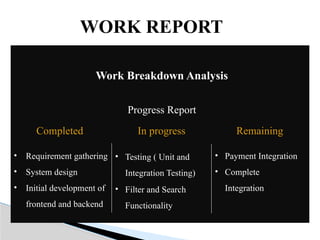
Work Breakdown Analysis
Progress Report
Completed In progress Remaining
WORK REPORT
• Testing ( Unit and
Integration Testing)
• Filter and Search
Functionality
• Requirement gathering
• System design
• Initial development of
frontend and backend
• Payment Integration
• Complete
Integration
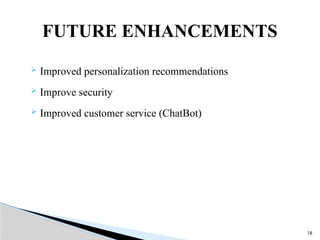
FUTURE ENHANCEMENTS
 Improved personalization recommendations
 Improve security
 Improved customer service (ChatBot)
18
https://en.wikipedia.org/wiki/Online_shopping
https://www.slideshare.net/nadimtopsecret/online-shopping
https://
dokumen.tips/marketing/online-shopping-full-project-presentati
on.html?
REFERENCES

ONLINE SHOPPING SYSTEM PRESENTATION.pptx

  • 1.
    ONLINE KIRANA An E-CommerceProject By: Roshan Joshi Rajeshswor Koirala
  • 2.
     Introduction  ProblemStatement  Objectives  Study of Existing System  Features  Tools used  SDLC  Use Case Diagram  Work Report  Future Enhancements OVERVIEW
  • 3.
     OnlineKirana isa online grocery store.  It is B2C transaction.  Mainly focuses on basic operations: • Adding new products • Buying products • Updating new information • Searching products  Admin monitors the activity of the users and checks the transaction INTRODUCTION
  • 4.
    The current challengesthat we found are:  Customers may not be willing to shop online  Products may not meet expectations So, overcome above limitation we provide a platform that may makes it easier to buy various groceries items in single platform. PROBLEM STATEMENT
  • 5.
     To createa responsive and easy to use platform  To helps customers to finds different items at single place  Integrate a secure and efficient payment system to facilitate smooth transactions. OBJECTIVE
  • 6.
     Product Categories:Grocery, fresh produce, dairy, household items, Meat, etc.  Shopping Cart: Add/remove items, view total price, and proceed to checkout.  Order Management: Track orders, history, and re-order system  User Experience: Easy product search with filters.  Customer Feedback: Direct communication with customers to ensure satisfaction. FEATURES OF ONLINE KIRANA
  • 7.
    Current Market Solutions: Multiple Vendor Platforms: Platforms like Amazon and Daraz offer a wide range of products from various vendors, leading to inconsistent quality.  Local Grocery Stores: Limited to physical locations and lack an online presence.  Payment Systems: Existing systems may not be fully integrated, leading to a fragmented user experience. Gap Analysis: The need for a streamlined, single-vendor solution that ensures product quality, consistency, and secure payments. STUDY OF EXISTING SYSTEM
  • 8.
    Front End Tools HTML  CSS  JavaScript TOOLS USED Back End Tools  PHP  MySQL
  • 9.
     Waterfall Modelis used because it is suited to smaller projects with deliverables that are easy to define from the start. SDLC Requirement Gathering and Analysis System Design Implementation Testing Deployment of System Maintenance Figure: Phases of Waterfall Model
  • 10.
     Represent interactionsbetween users and the system  Captures functionalities the system offers USE CASE DIAGRAM Figure: Use Case Diagram
  • 11.
    Work Breakdown Analysis ProgressReport Completed In progress Remaining WORK REPORT • Testing ( Unit and Integration Testing) • Filter and Search Functionality • Requirement gathering • System design • Initial development of frontend and backend • Payment Integration • Complete Integration
  • 12.
    FUTURE ENHANCEMENTS  Improvedpersonalization recommendations  Improve security  Improved customer service (ChatBot) 18
  • 13.