Scope of social issue
campaigns by Indian
english dailies

Presented by: Tanmoy Porel, LIBA
OBJECTIVES
Objectives
• To assess the impact and effect of social issue
campaigns by Indian english newspapers
• To find the parameters or attributes for an effective
social campaign
• To gauge the scope of a particular campaign in the
context of print media
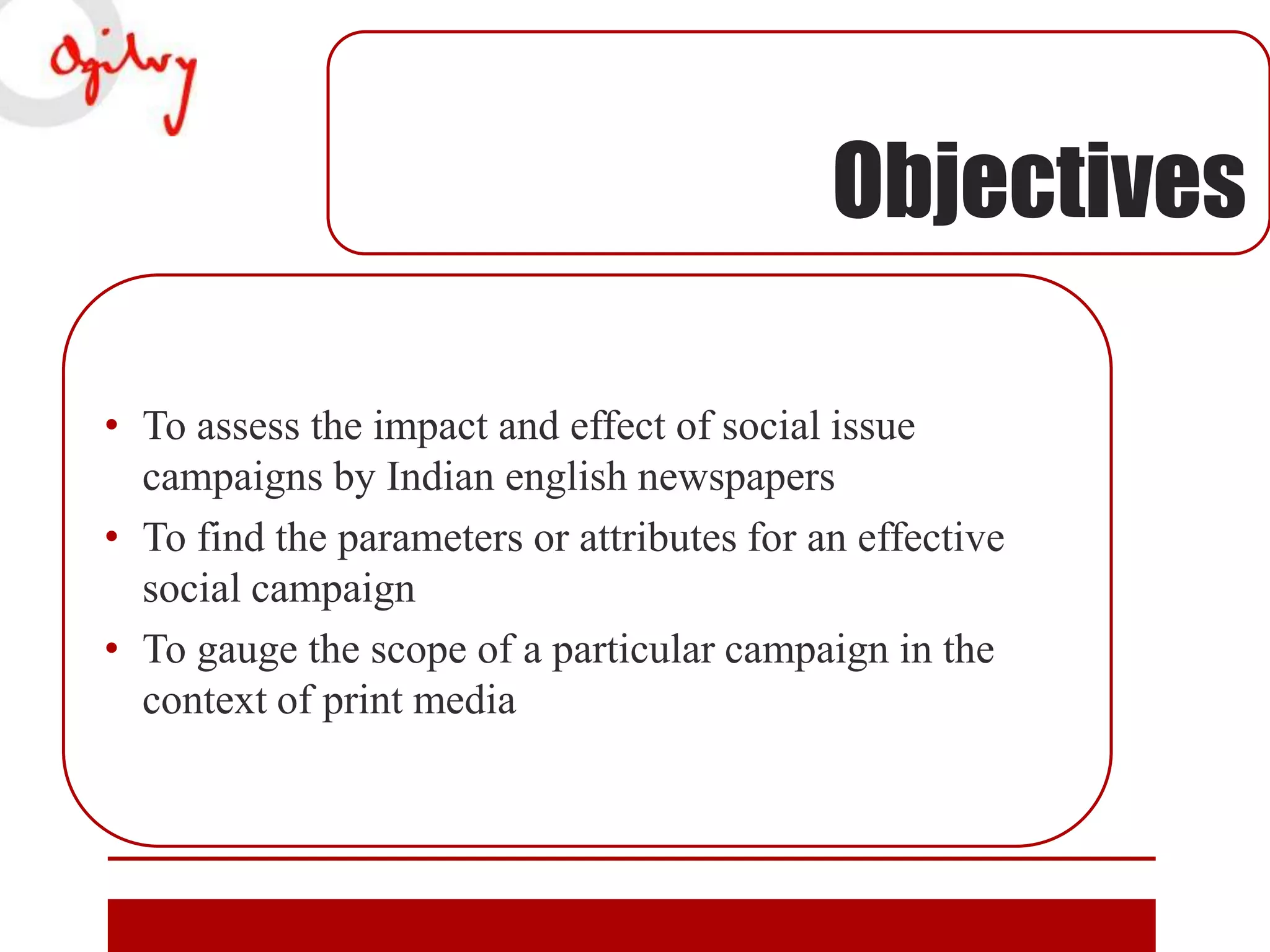
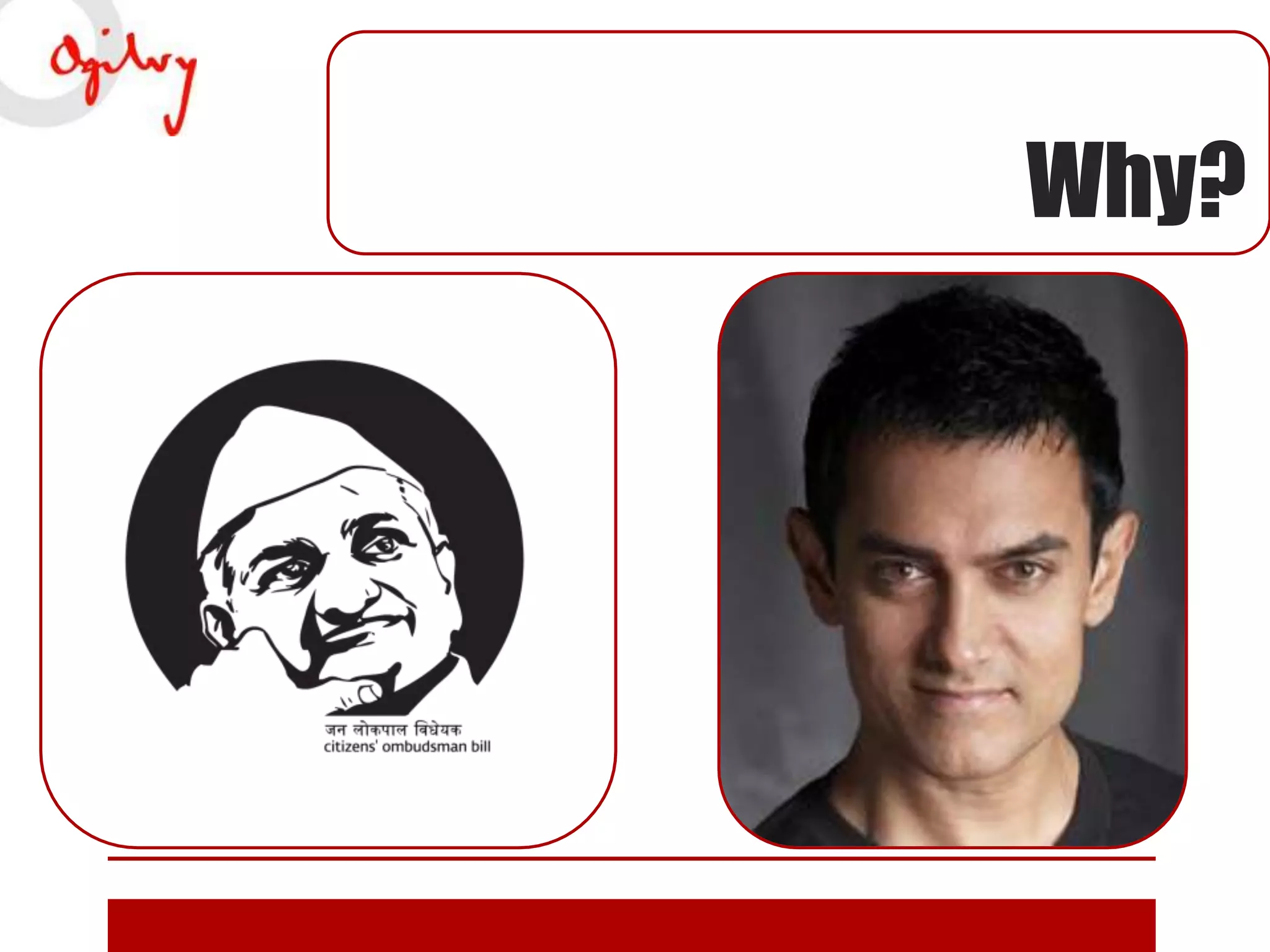
Why?
Why?
Why?
Why?
• Television remains the most popular source of
information*
• 22 per cent for news and current affairs
• 63 per cent read newspapers to gather news and
information on current event

• Highest newspaper circulation
• Numerous Social Issue Campaigns

* WALL STREET JOURNAL http://blogs.wsj.com/indiarealtime/2010/11/15/do-young-indians-read-not-as-much-as-they-watch-tv/
The Research
DEMOGRAPHICS
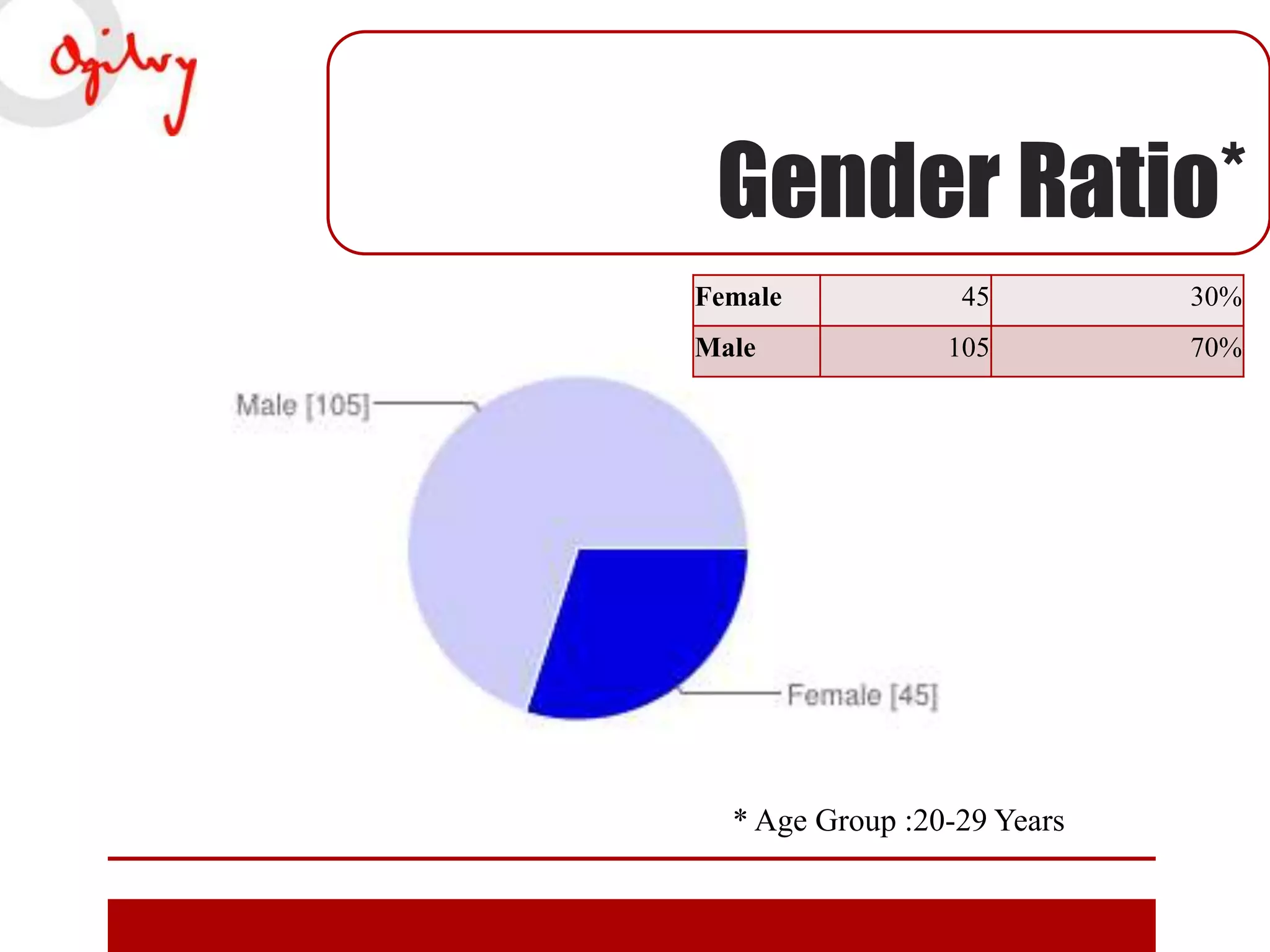
Gender Ratio*
Female
Male

45

30%

105

70%

* Age Group :20-29 Years
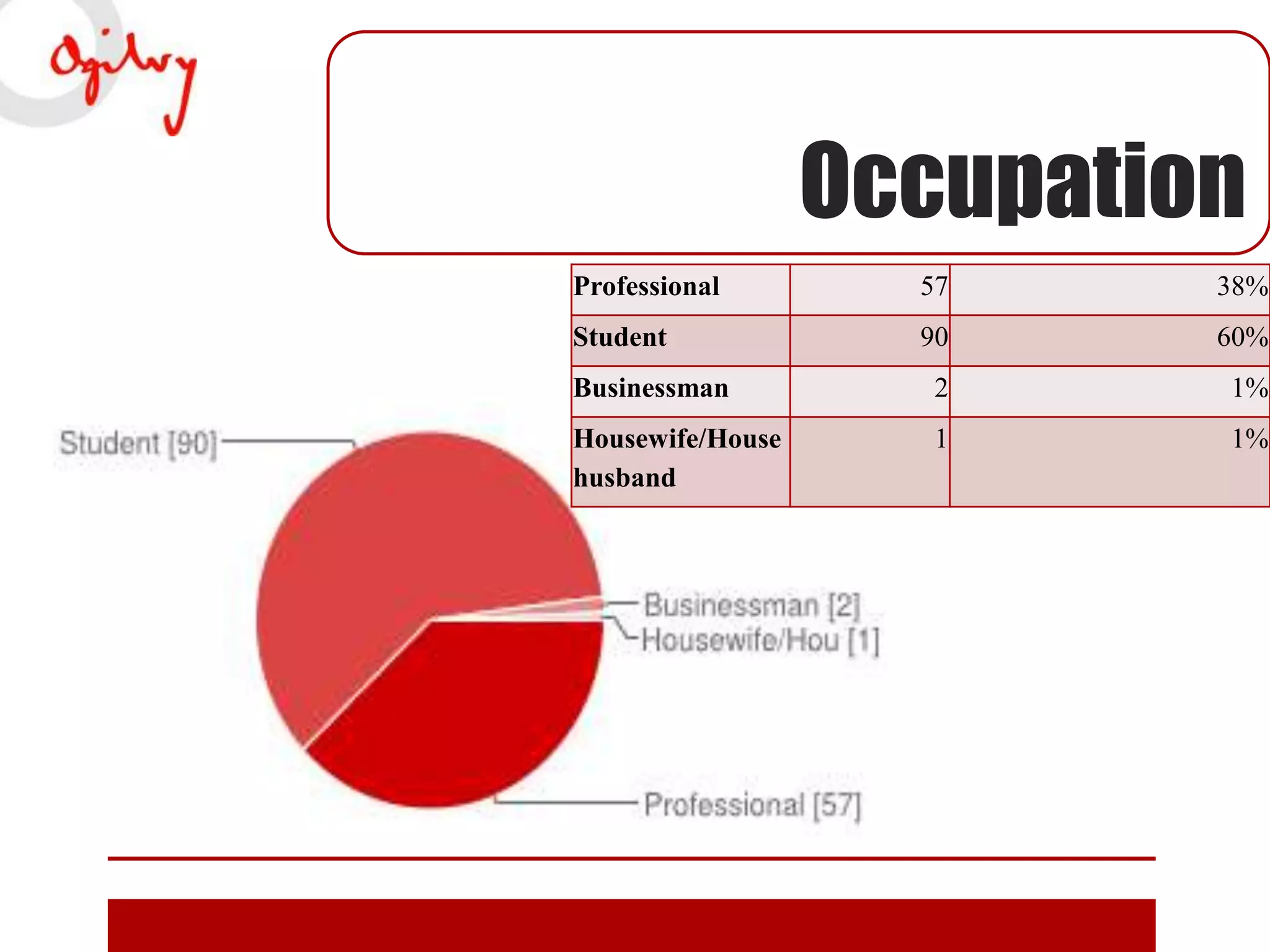
Occupation
Professional

57

38%

Student

90

60%

Businessman

2

1%

Housewife/House
husband

1

1%
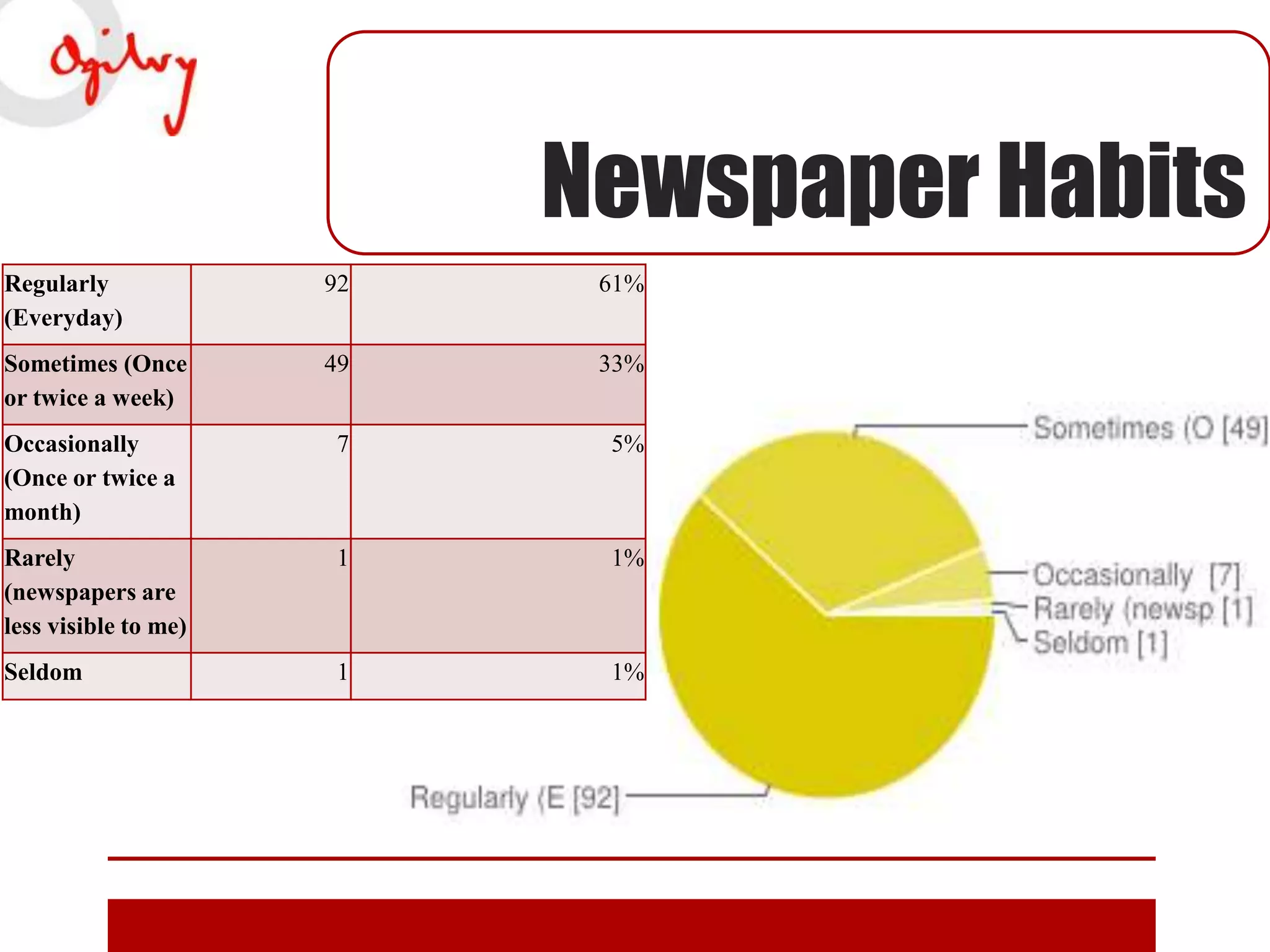
Newspaper Habits
Regularly
(Everyday)

92

61%

Sometimes (Once
or twice a week)

49

33%

Occasionally
(Once or twice a
month)

7

5%

Rarely
(newspapers are
less visible to me)

1

1%

Seldom

1

1%
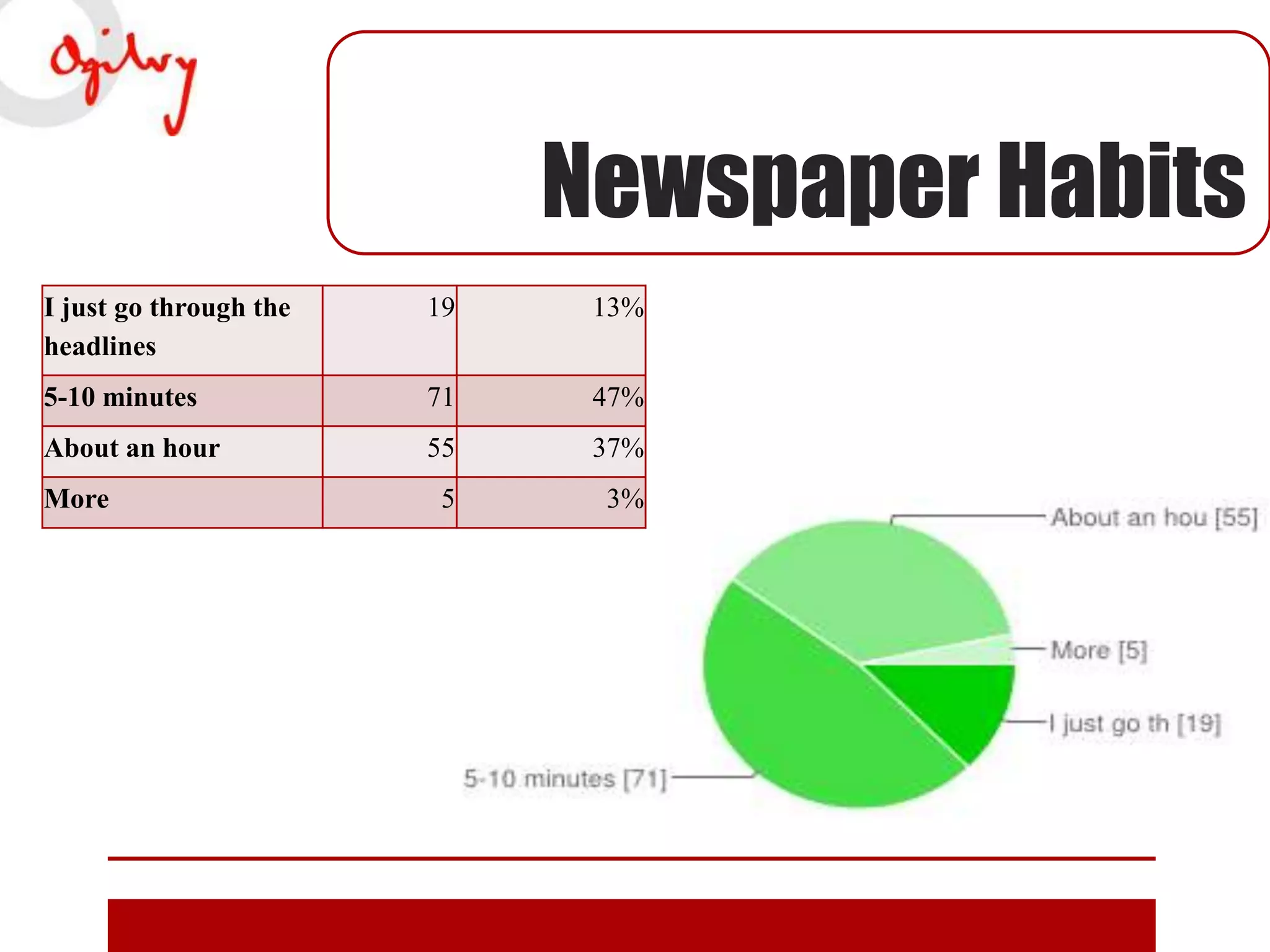
Newspaper Habits
I just go through the
headlines

19

13%

5-10 minutes

71

47%

About an hour

55

37%

5

3%

More
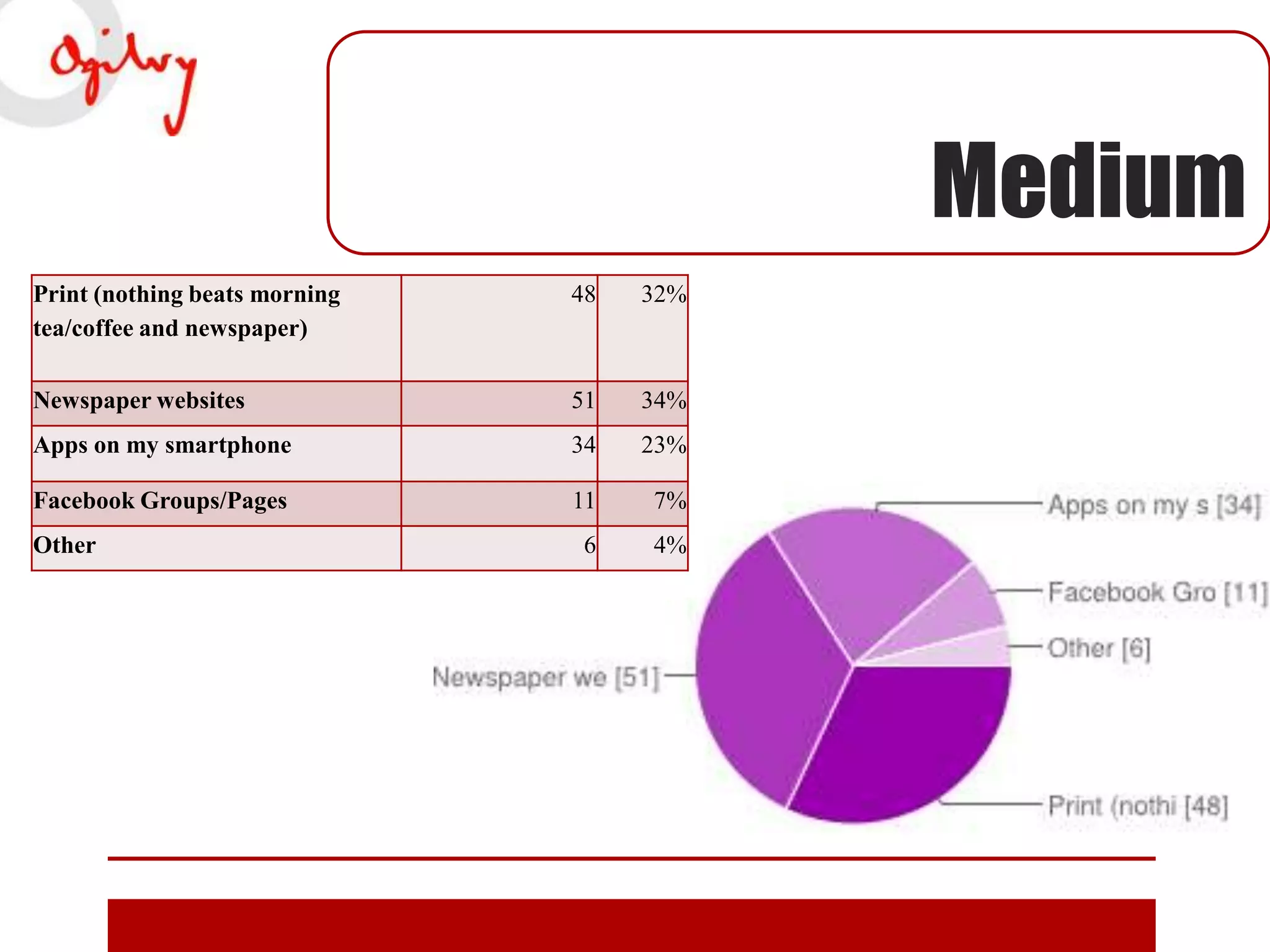
Medium
Print (nothing beats morning
tea/coffee and newspaper)

48

32%

Newspaper websites

51

34%

Apps on my smartphone

34

23%

Facebook Groups/Pages

11

7%

6

4%

Other
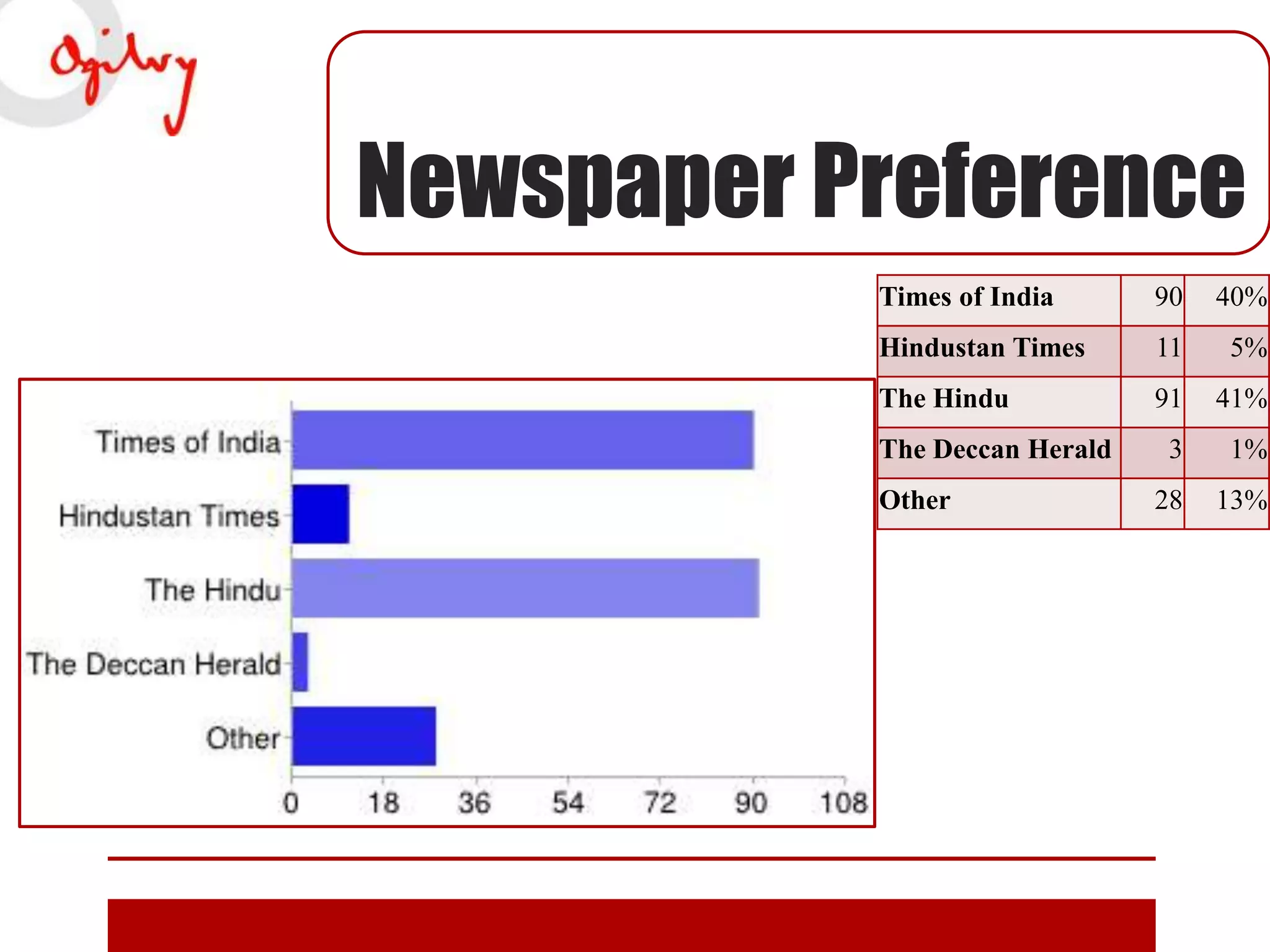
Newspaper Preference
Times of India

90

40%

Hindustan Times

11

5%

The Hindu

91

41%

3

1%

28

13%

The Deccan Herald
Other
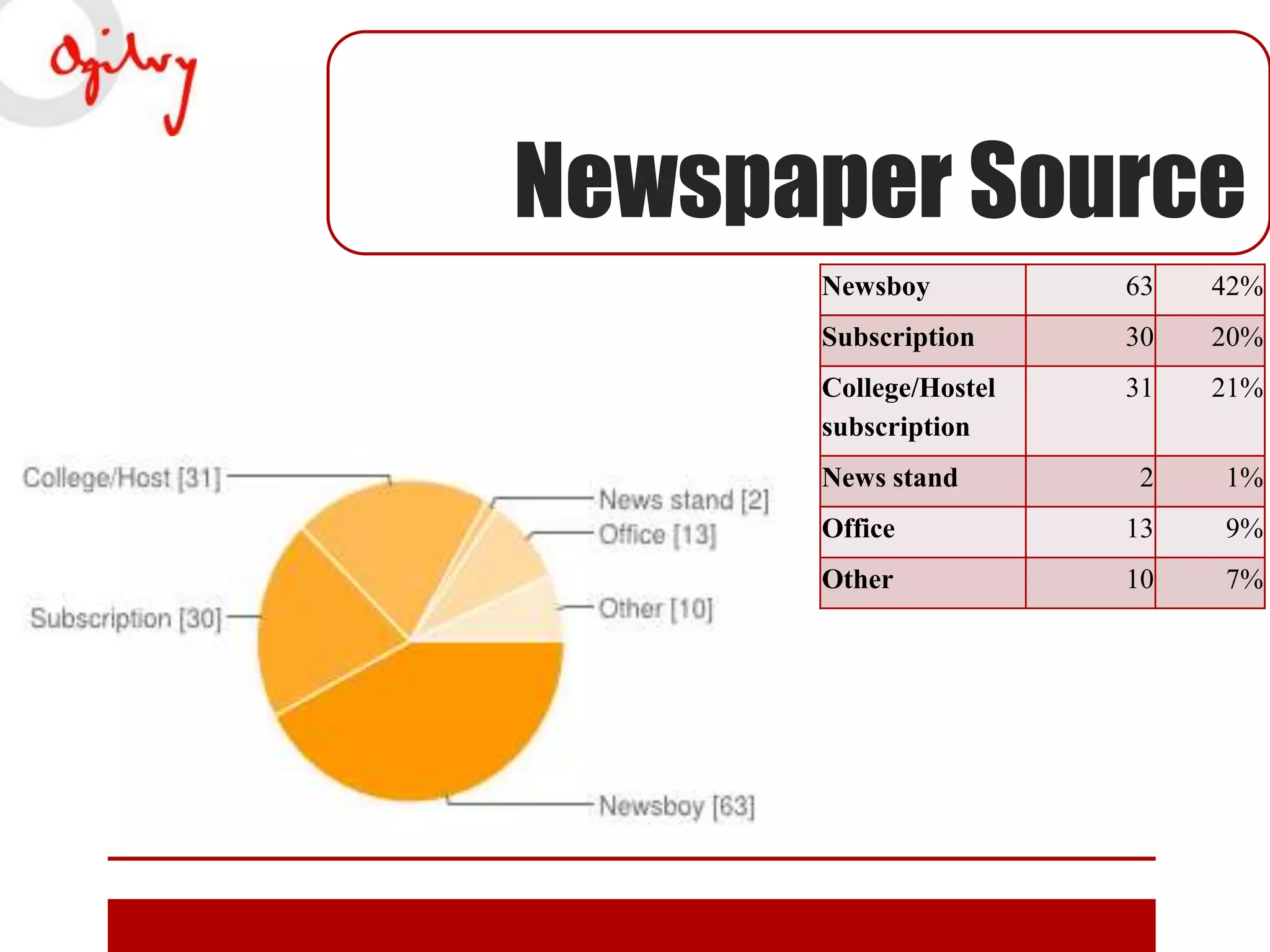
Newspaper Source
Newsboy

63

42%

Subscription

30

20%

College/Hostel
subscription

31

21%

2

1%

Office

13

9%

Other

10

7%

News stand
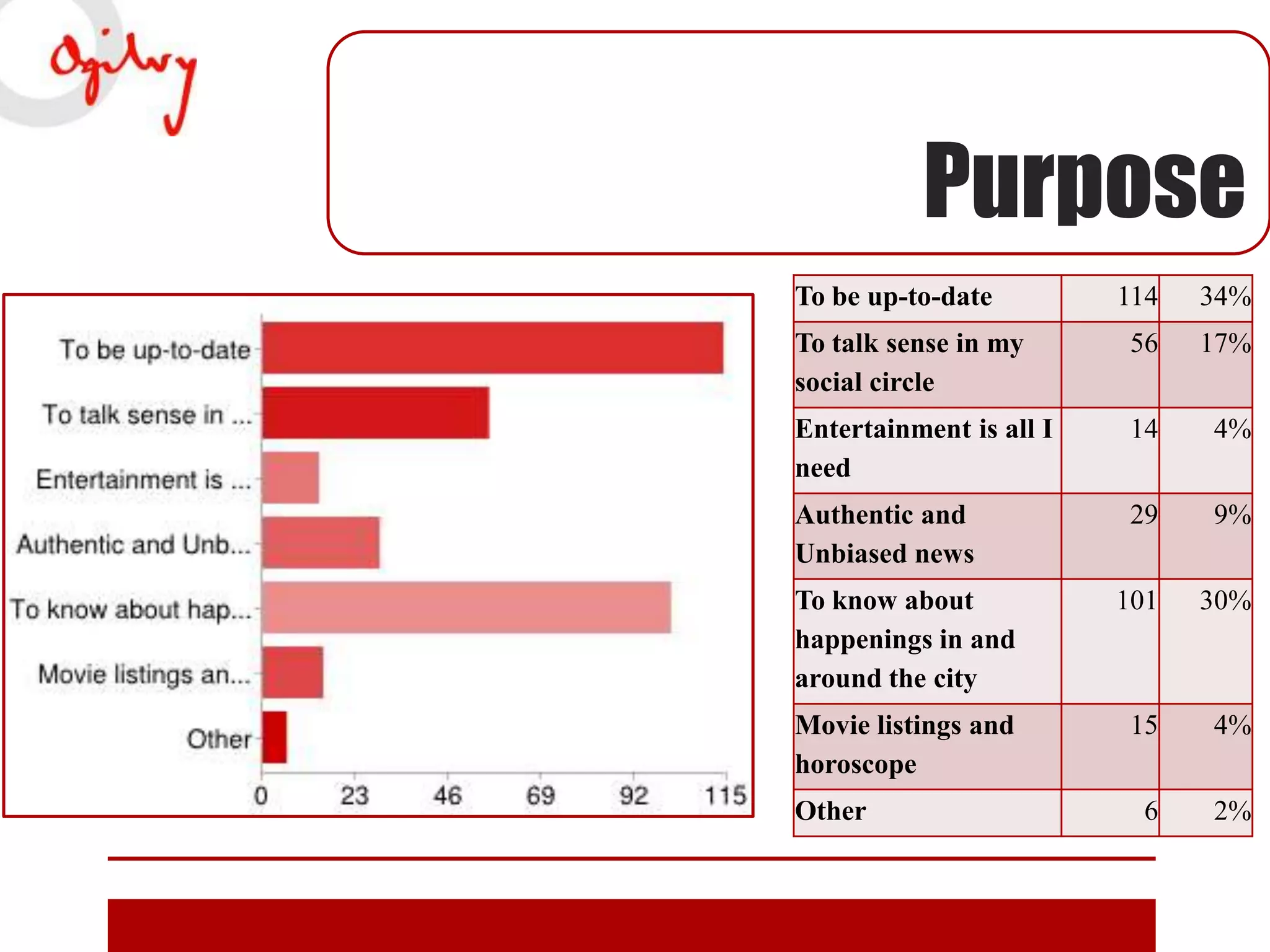
Purpose
To be up-to-date

114

34%

To talk sense in my
social circle

56

17%

Entertainment is all I
need

14

4%

Authentic and
Unbiased news

29

9%

To know about
happenings in and
around the city

101

30%

Movie listings and
horoscope

15

4%

6

2%

Other
The Analysis
STATISTICAL ANALYSIS
Campaigns
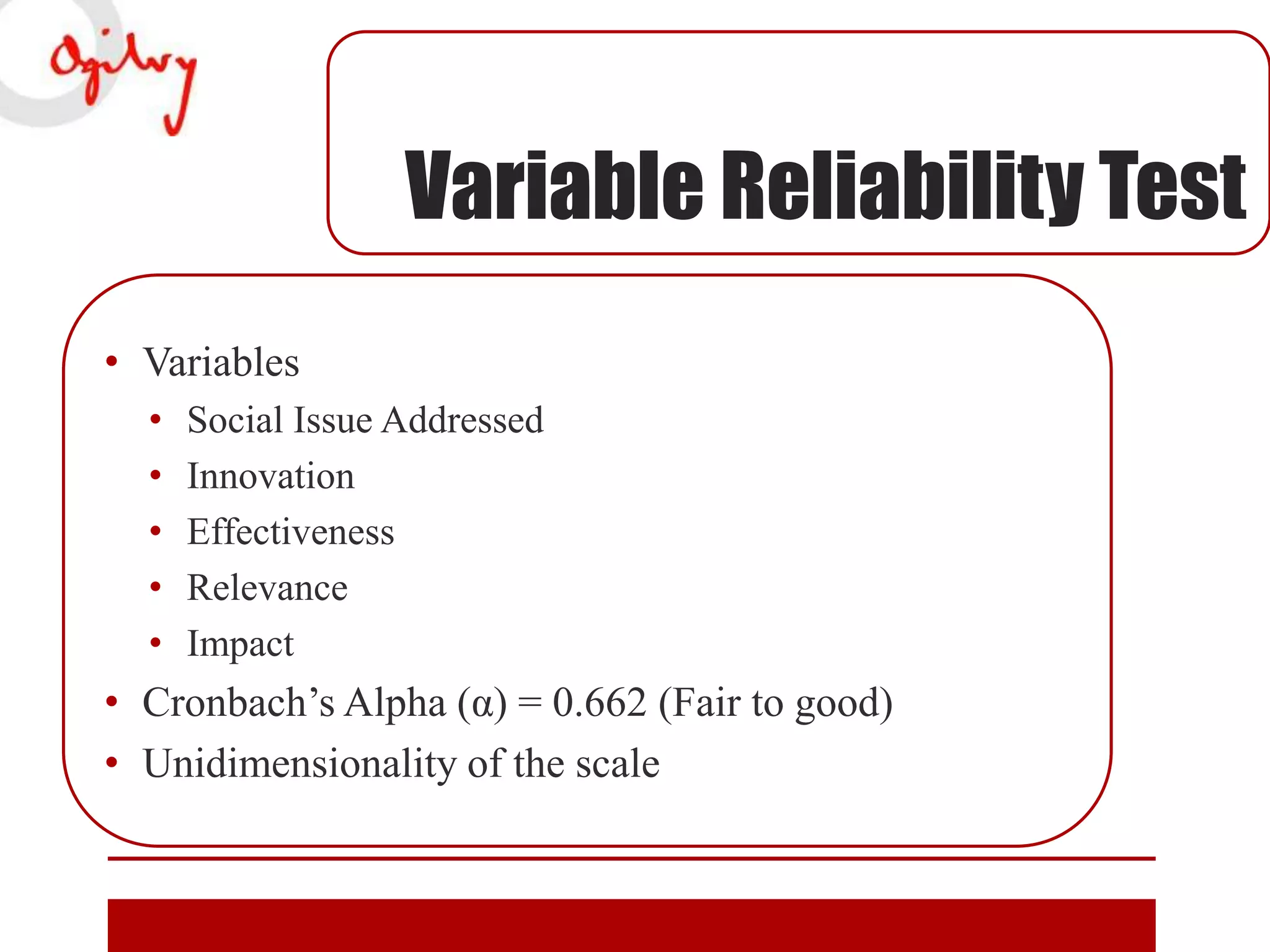
Variable Reliability Test
• Variables
•
•
•
•
•

Social Issue Addressed
Innovation
Effectiveness
Relevance
Impact

• Cronbach’s Alpha (α) = 0.662 (Fair to good)
• Unidimensionality of the scale
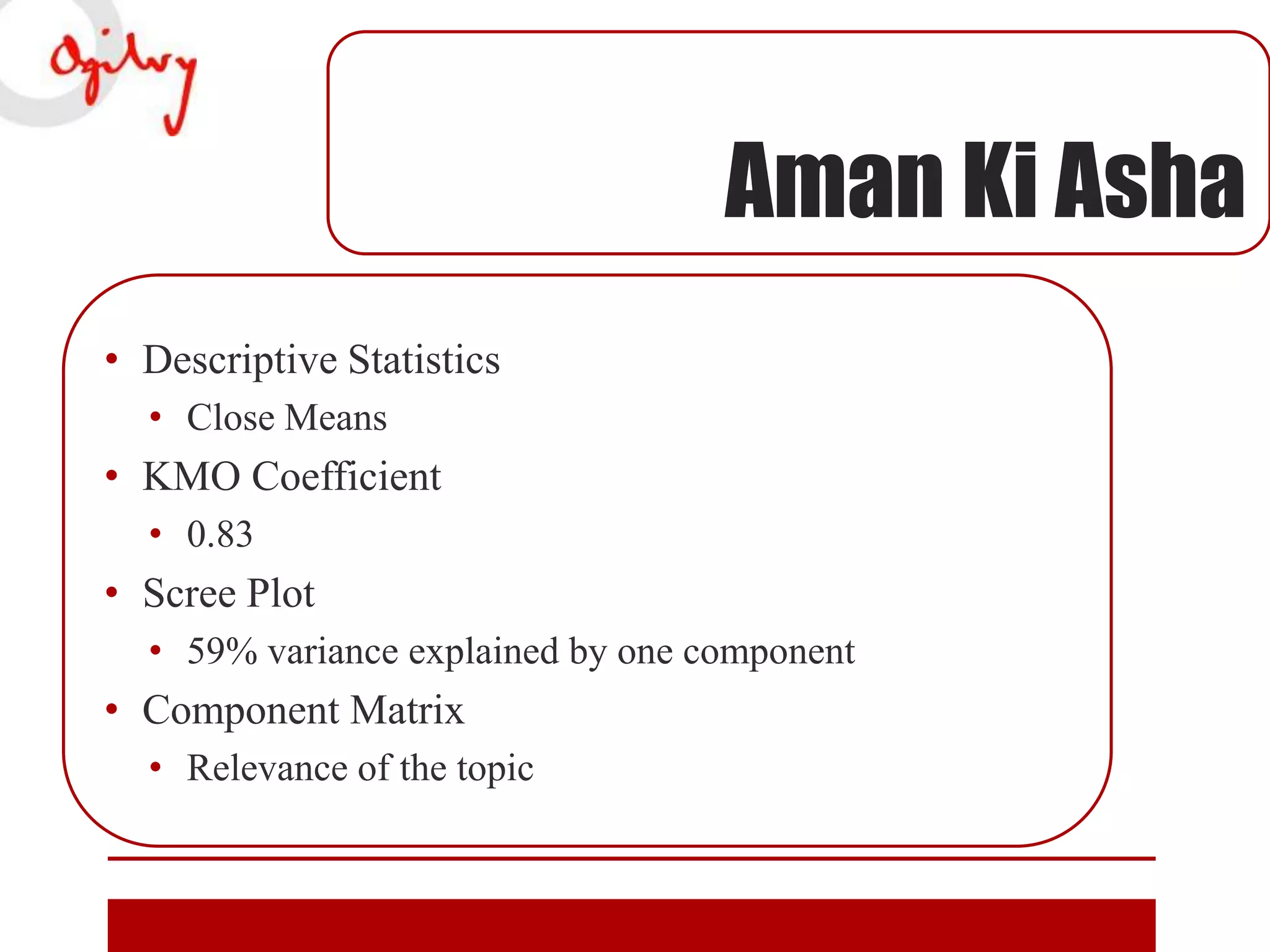
Aman Ki Asha
• Descriptive Statistics
• Close Means

• KMO Coefficient
• 0.83

• Scree Plot
• 59% variance explained by one component

• Component Matrix
• Relevance of the topic
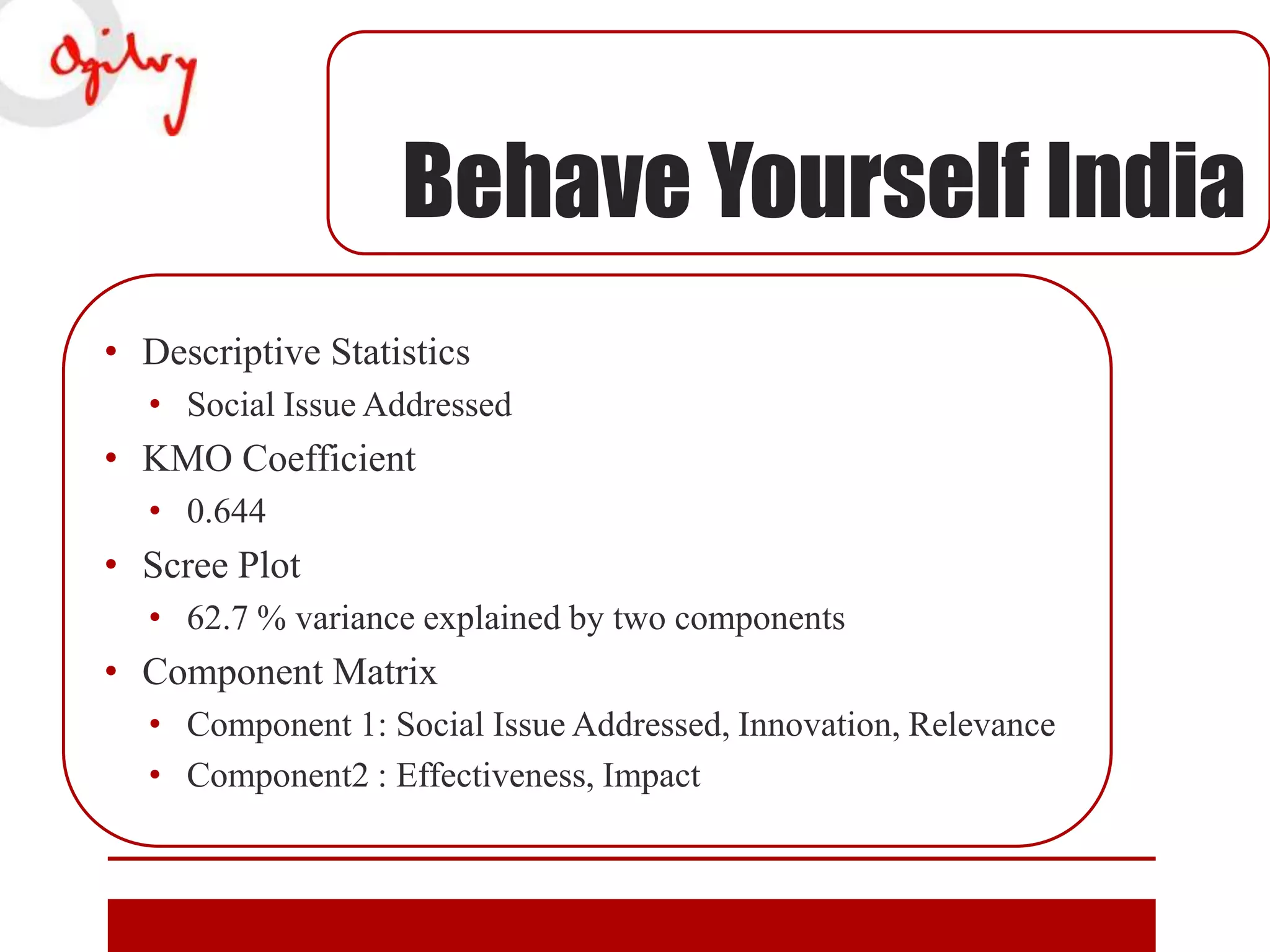
Behave Yourself India
• Descriptive Statistics
• Social Issue Addressed

• KMO Coefficient
• 0.644

• Scree Plot
• 62.7 % variance explained by two components

• Component Matrix
• Component 1: Social Issue Addressed, Innovation, Relevance
• Component2 : Effectiveness, Impact
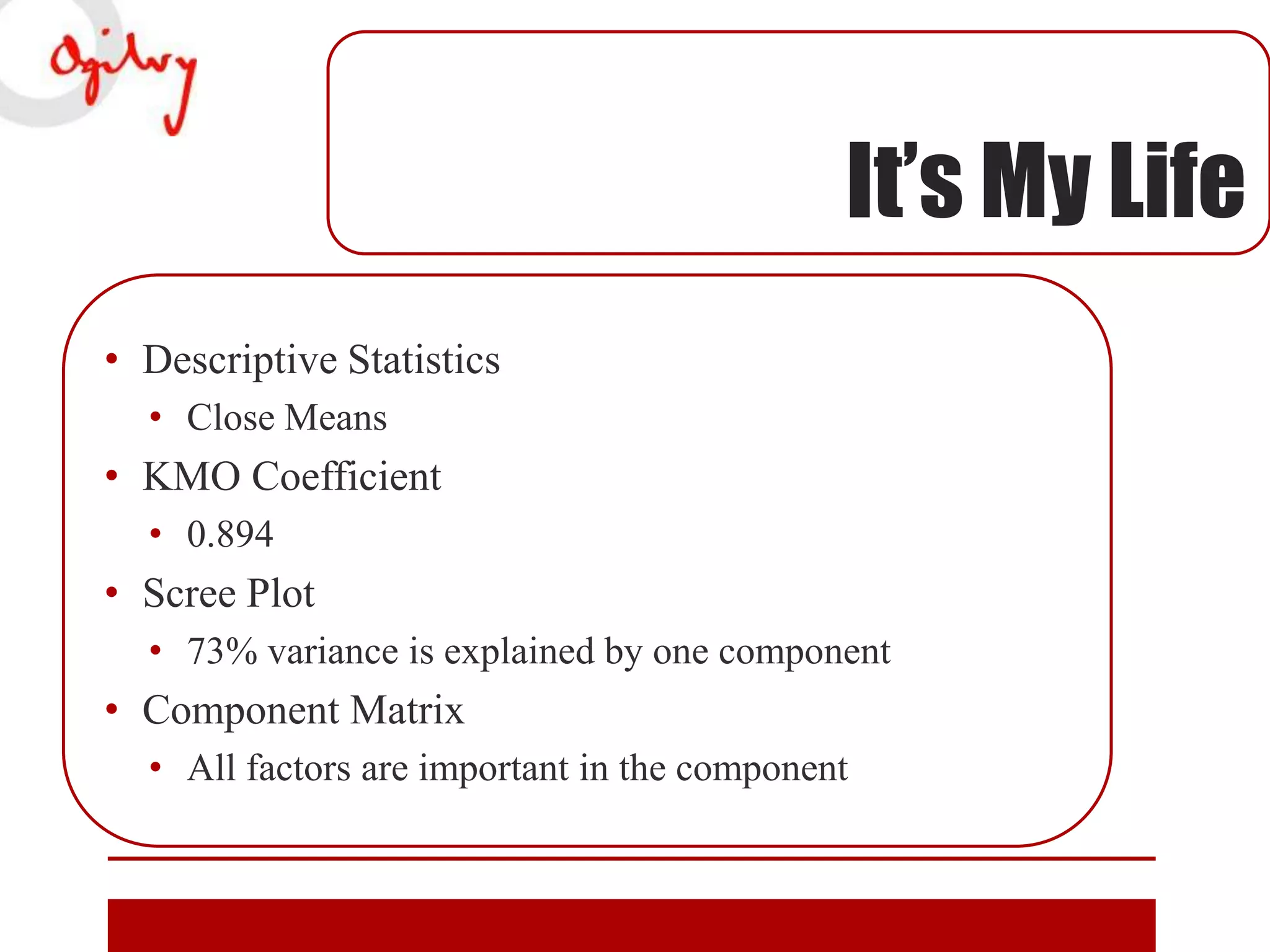
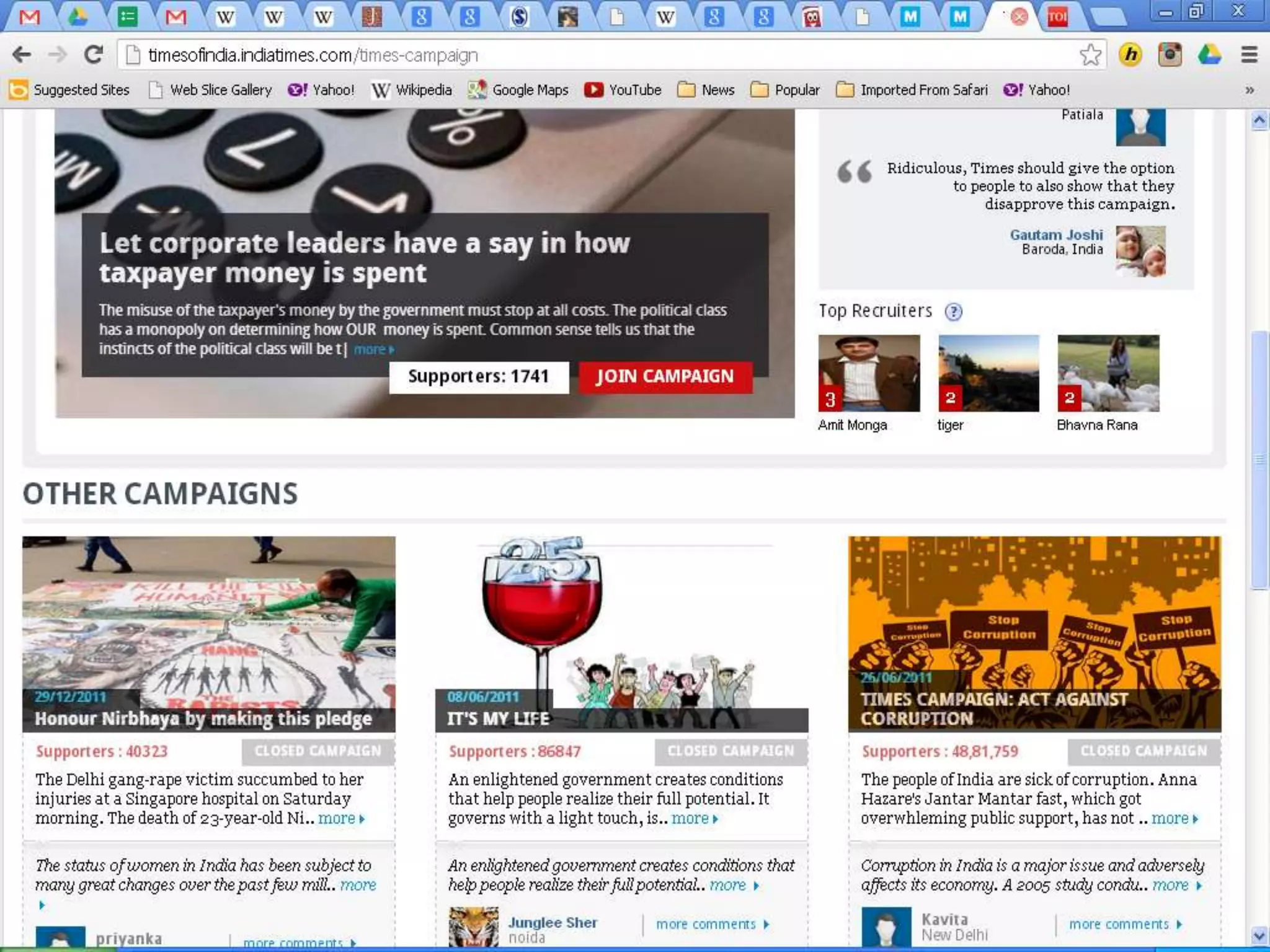
It’s My Life
• Descriptive Statistics
• Close Means

• KMO Coefficient
• 0.894

• Scree Plot
• 73% variance is explained by one component

• Component Matrix
• All factors are important in the component
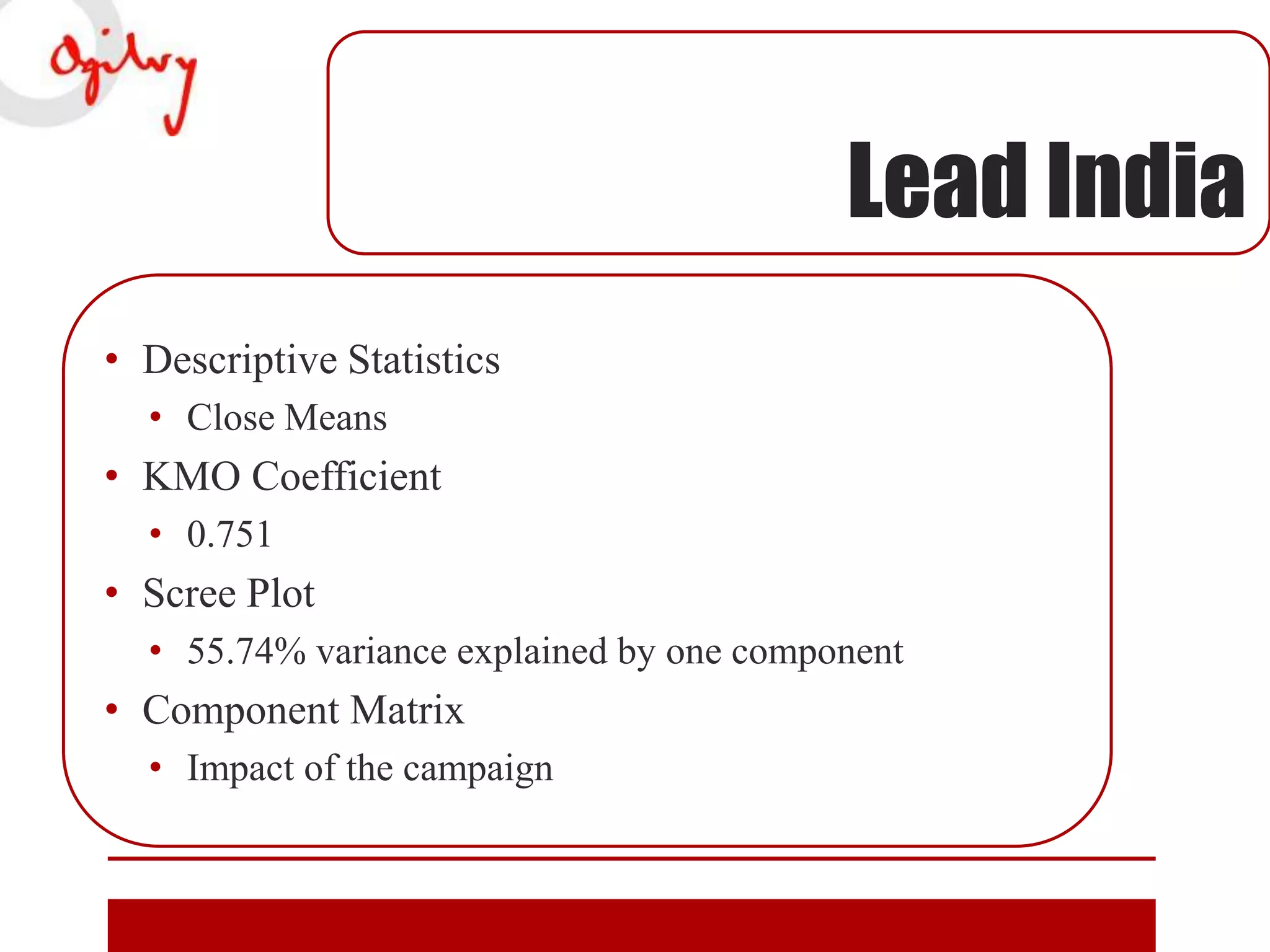
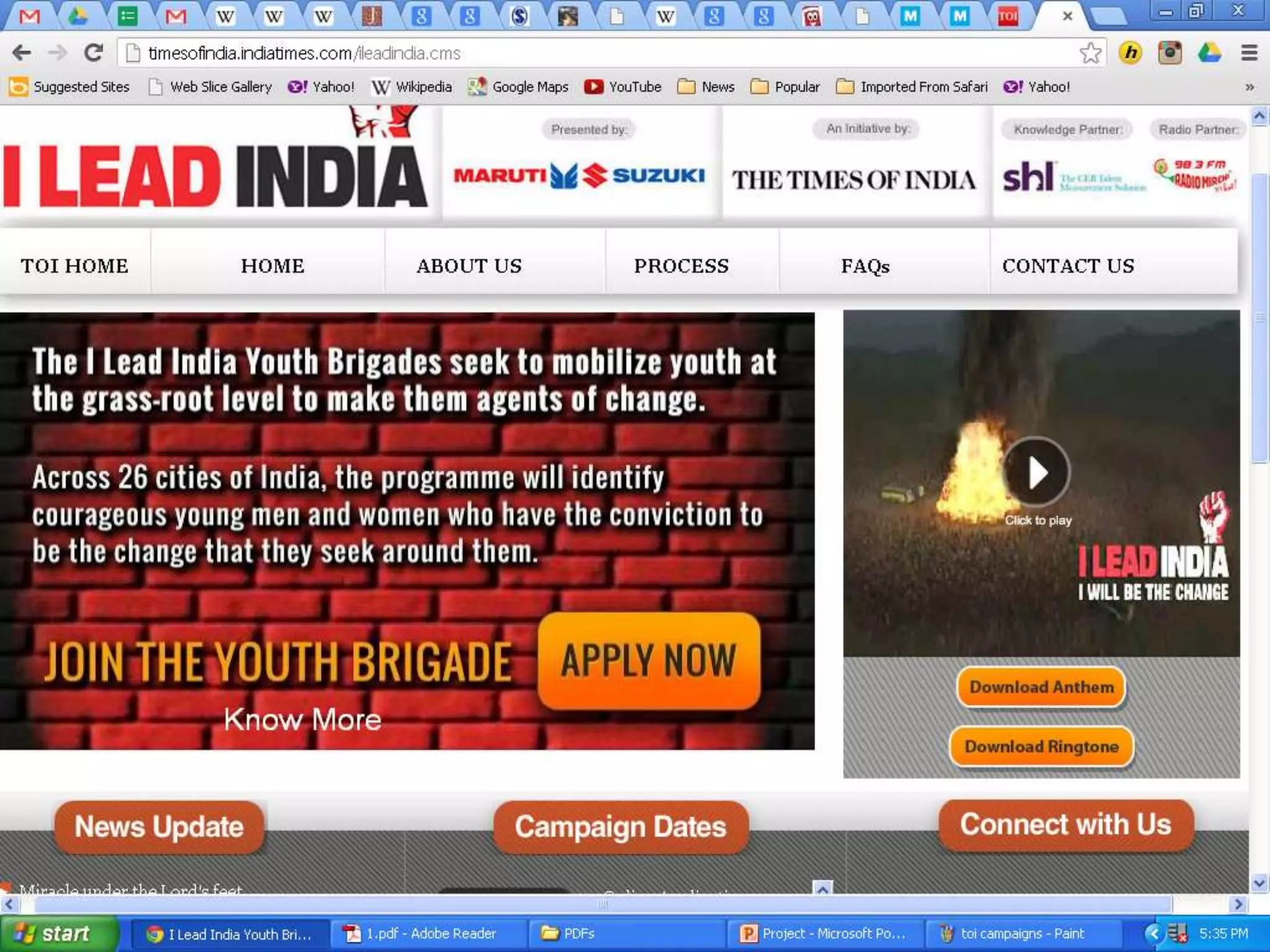
Lead India
• Descriptive Statistics
• Close Means

• KMO Coefficient
• 0.751

• Scree Plot
• 55.74% variance explained by one component

• Component Matrix
• Impact of the campaign
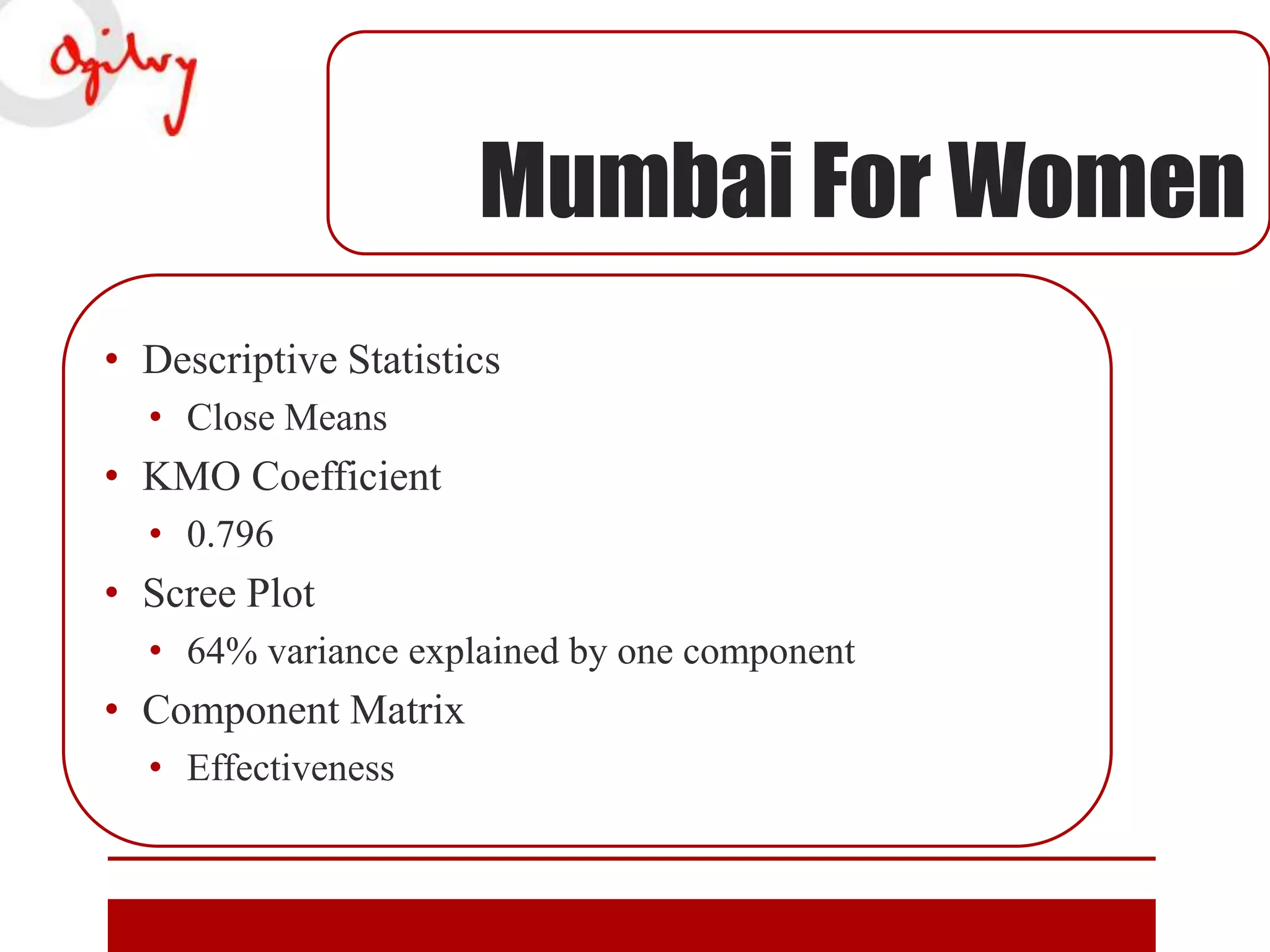
Mumbai For Women
• Descriptive Statistics
• Close Means

• KMO Coefficient
• 0.796

• Scree Plot
• 64% variance explained by one component

• Component Matrix
• Effectiveness
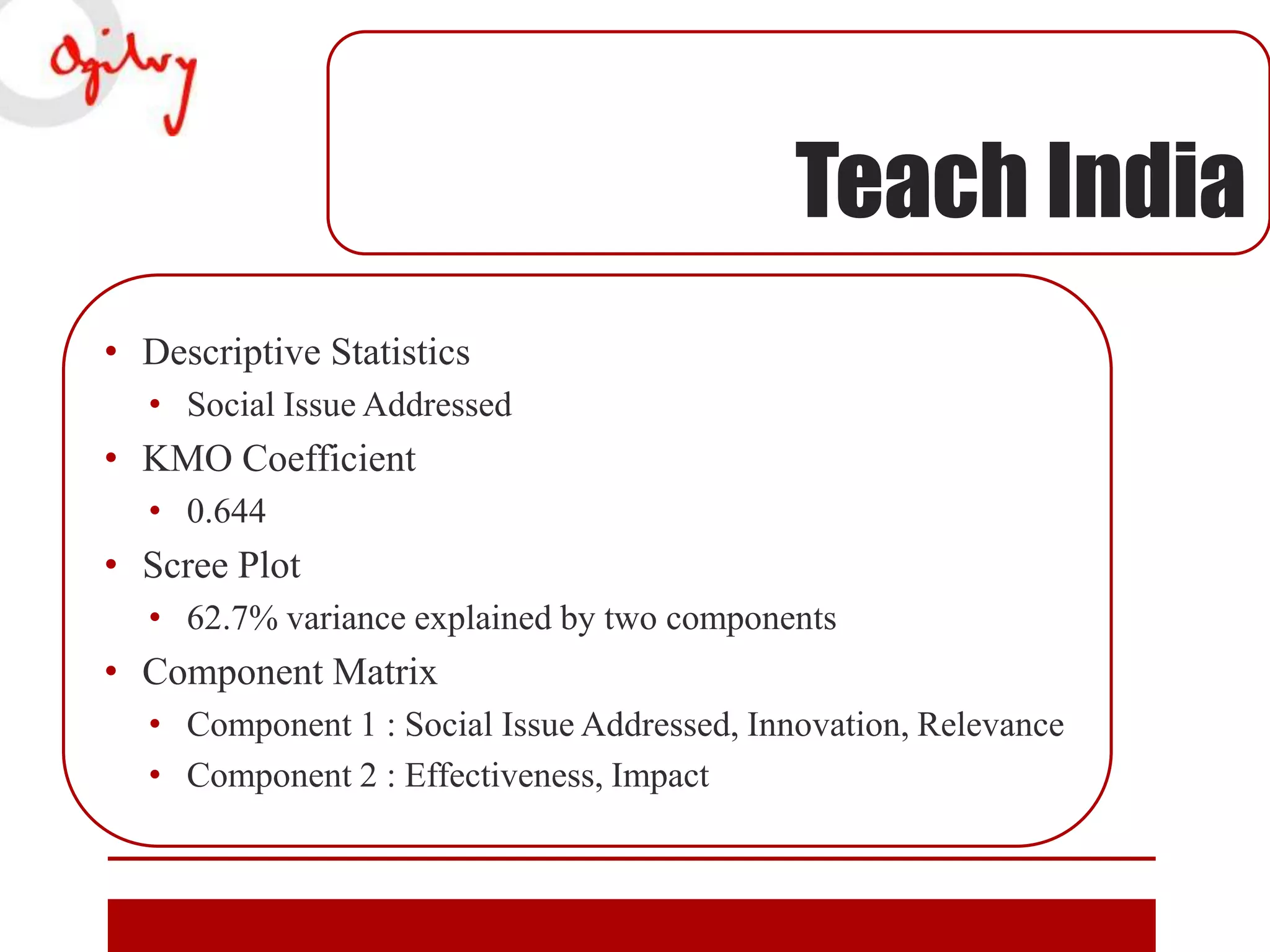
Teach India
• Descriptive Statistics
• Social Issue Addressed

• KMO Coefficient
• 0.644

• Scree Plot
• 62.7% variance explained by two components

• Component Matrix
• Component 1 : Social Issue Addressed, Innovation, Relevance
• Component 2 : Effectiveness, Impact
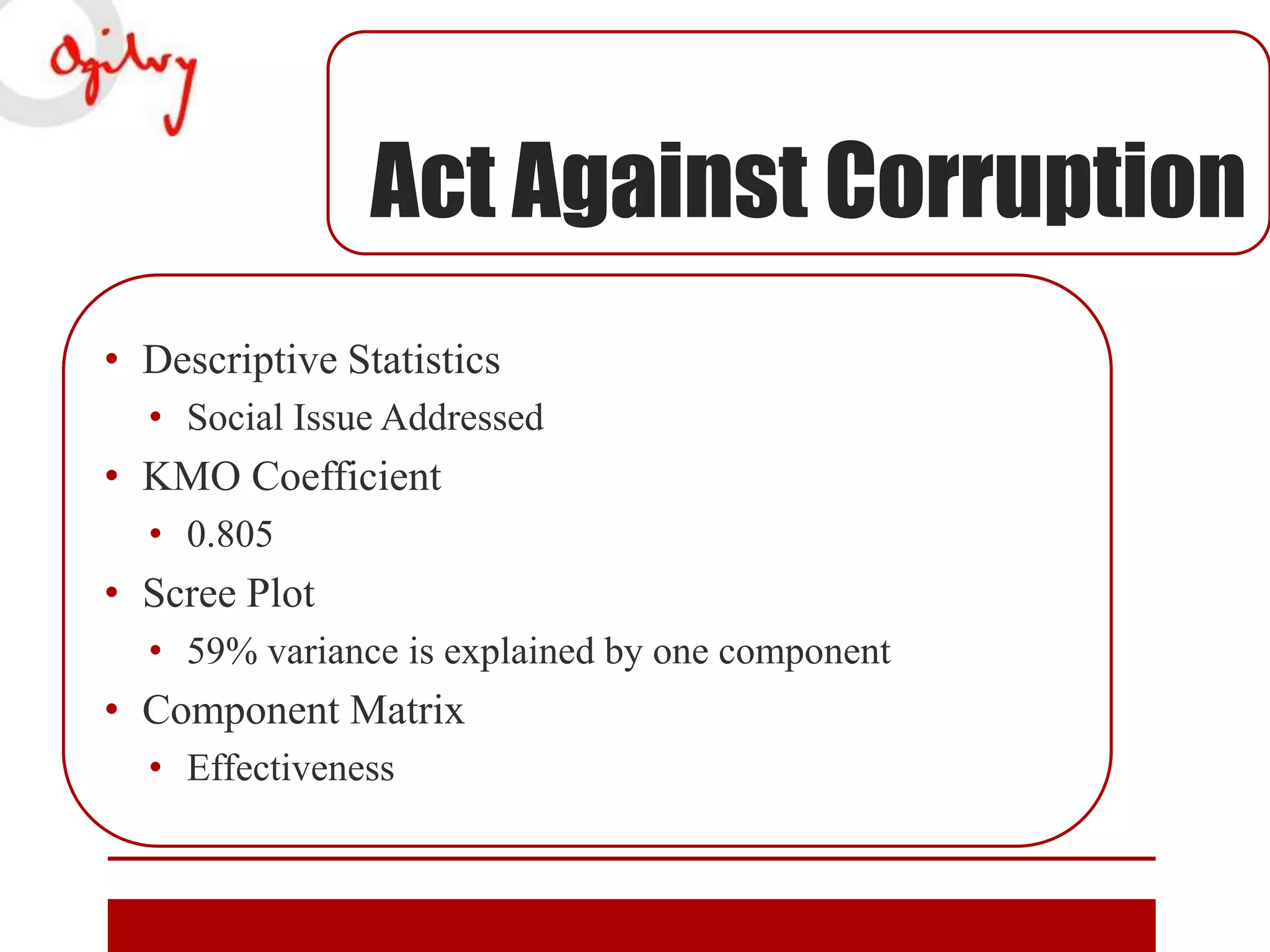
Act Against Corruption
• Descriptive Statistics
• Social Issue Addressed

• KMO Coefficient
• 0.805

• Scree Plot
• 59% variance is explained by one component

• Component Matrix
• Effectiveness
Success Attributes
Attributes
•
•
•
•
•

Implementation
Importance
Effect
Brand Name
Marketing
Factor Analysis
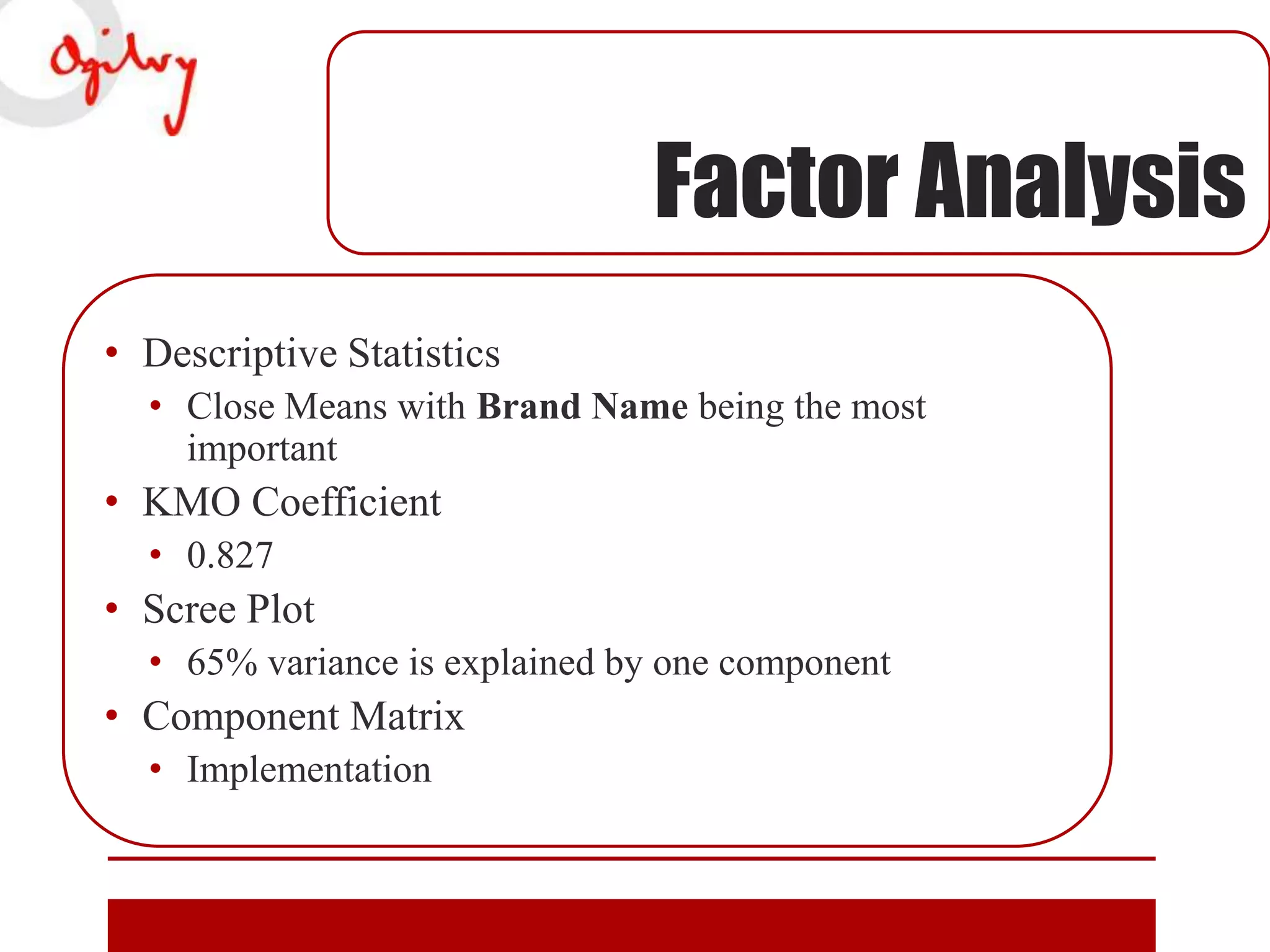
• Descriptive Statistics
• Close Means with Brand Name being the most
important

• KMO Coefficient
• 0.827

• Scree Plot
• 65% variance is explained by one component

• Component Matrix
• Implementation
PERCENTAGE ANALYSIS
Attributes
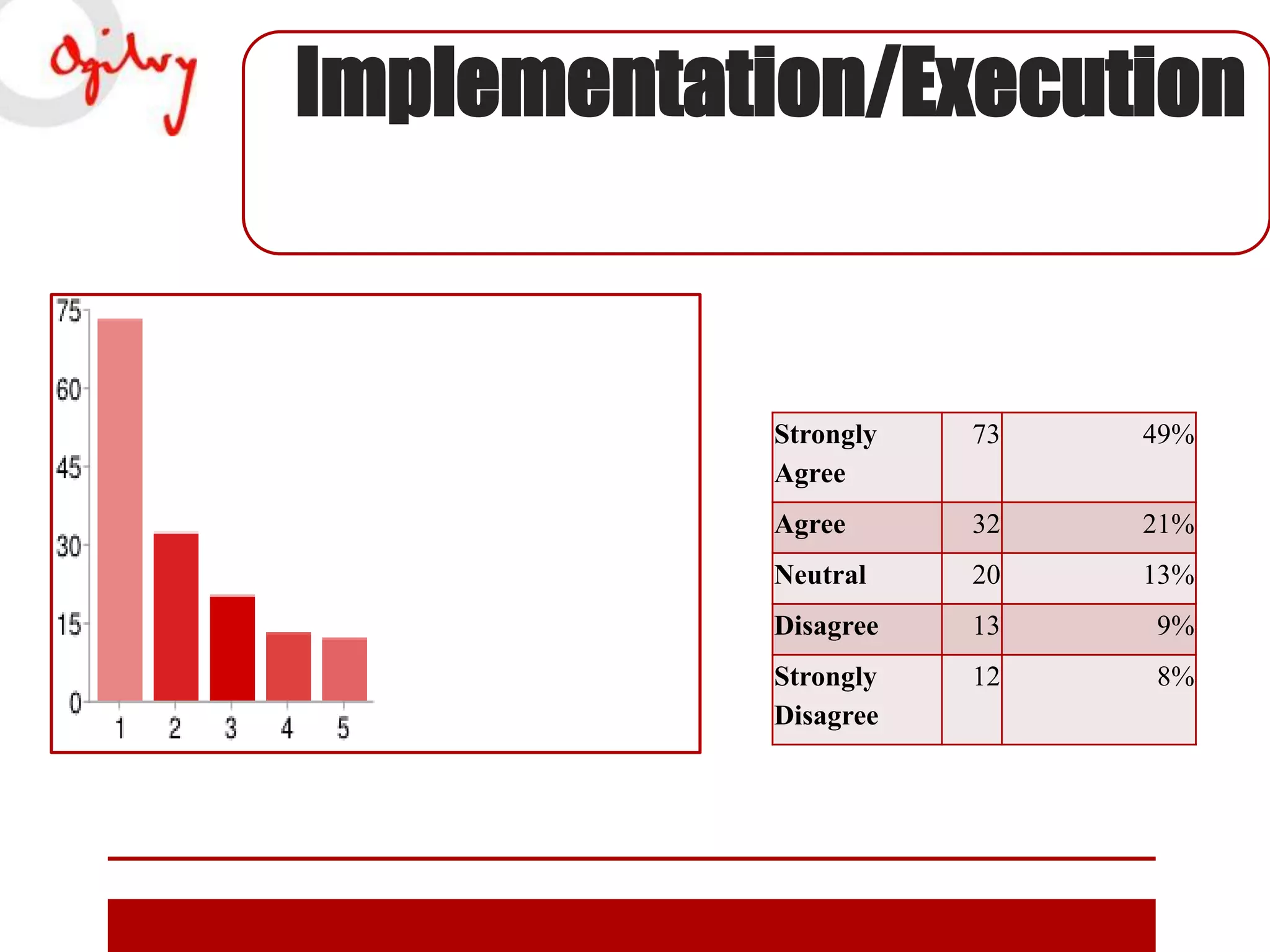
Implementation/Execution

Strongly
Agree

73

49%

Agree

32

21%

Neutral

20

13%

Disagree

13

9%

Strongly
Disagree

12

8%
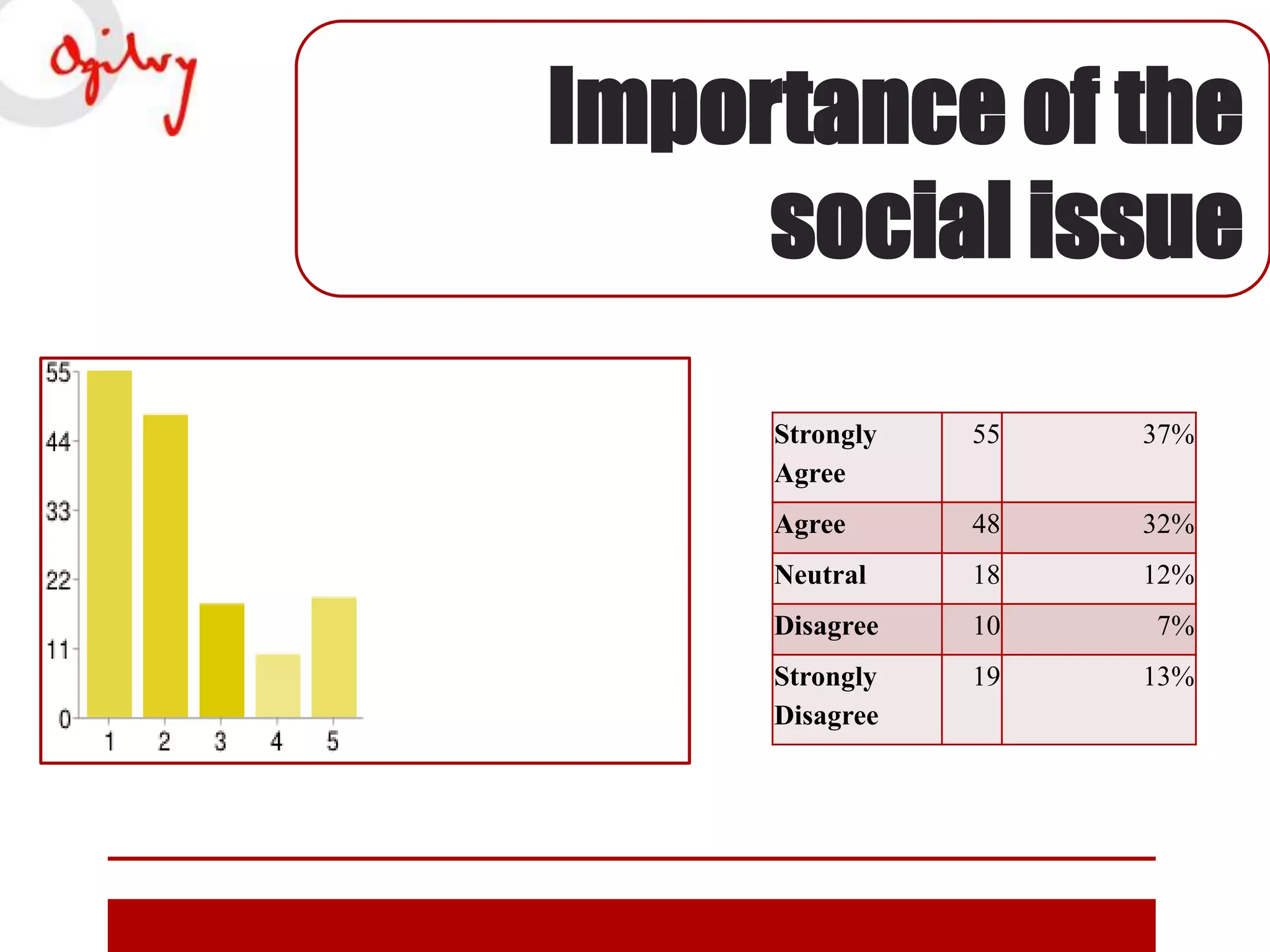
Importance of the
social issue
Strongly
Agree

55

37%

Agree

48

32%

Neutral

18

12%

Disagree

10

7%

Strongly
Disagree

19

13%
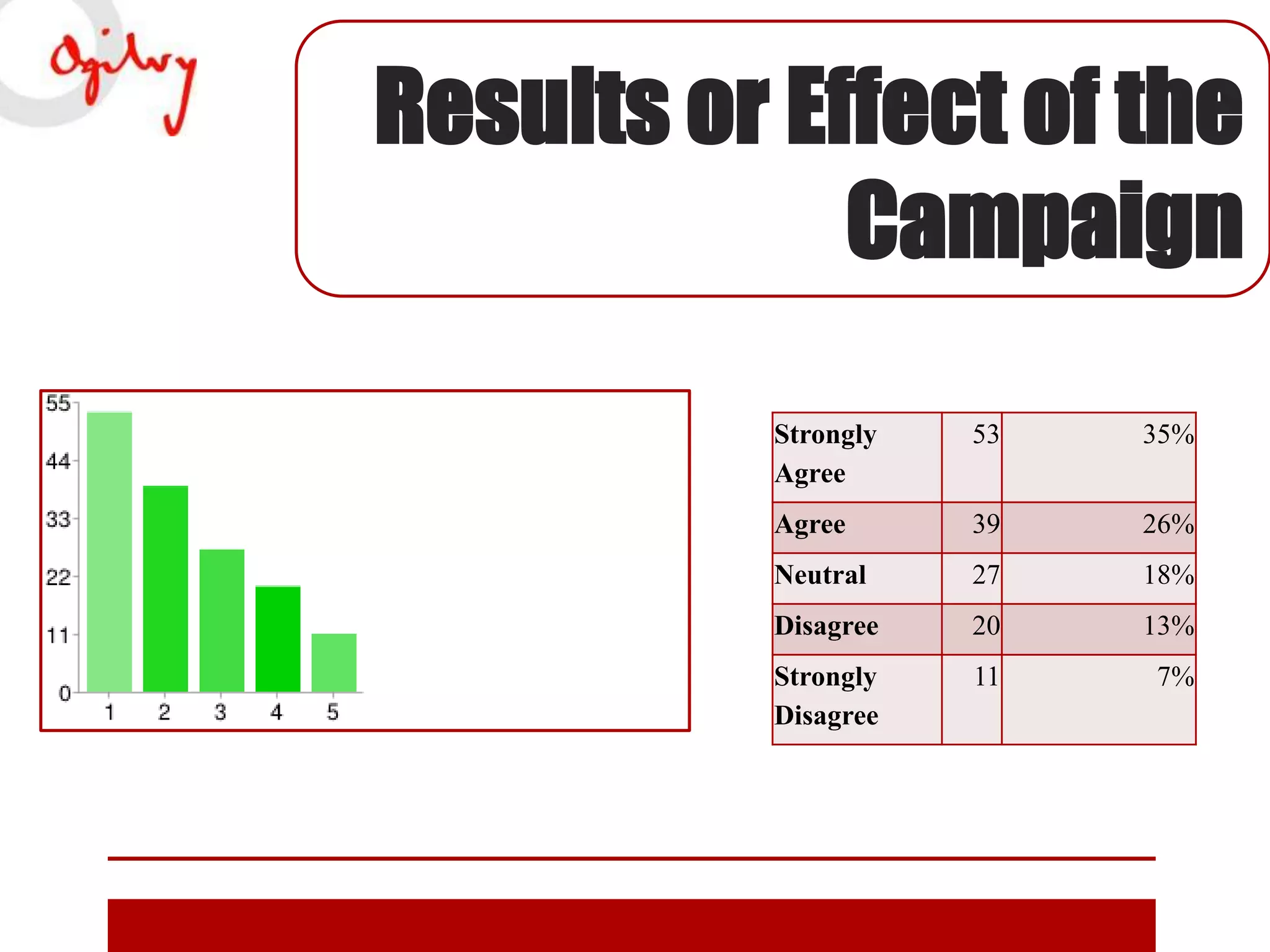
Results or Effect of the
Campaign
Strongly
Agree

53

35%

Agree

39

26%

Neutral

27

18%

Disagree

20

13%

Strongly
Disagree

11

7%
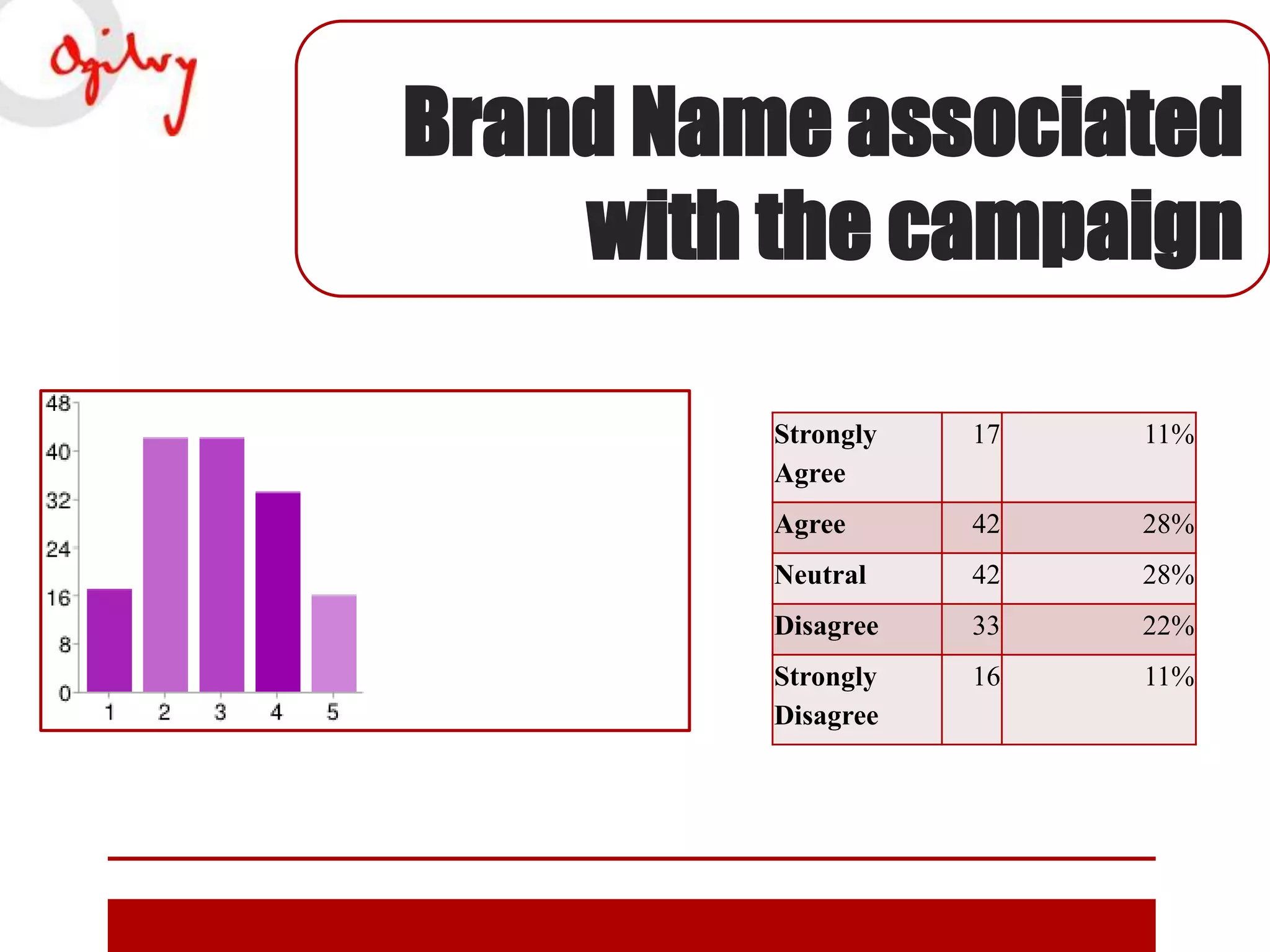
Brand Name associated
with the campaign
Strongly
Agree

17

11%

Agree

42

28%

Neutral

42

28%

Disagree

33

22%

Strongly
Disagree

16

11%
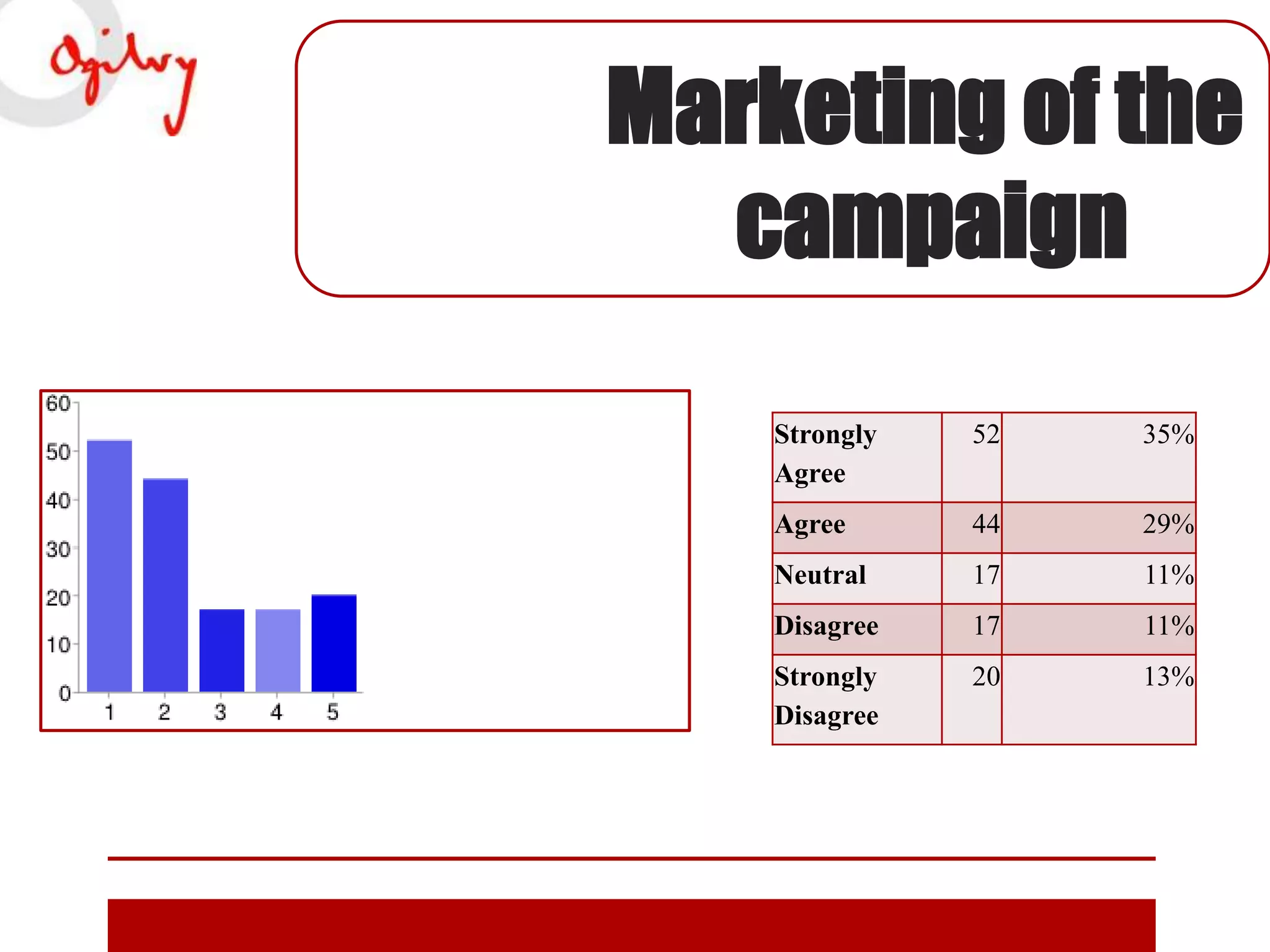
Marketing of the
campaign
Strongly
Agree

52

35%

Agree

44

29%

Neutral

17

11%

Disagree

17

11%

Strongly
Disagree

20

13%
Effect
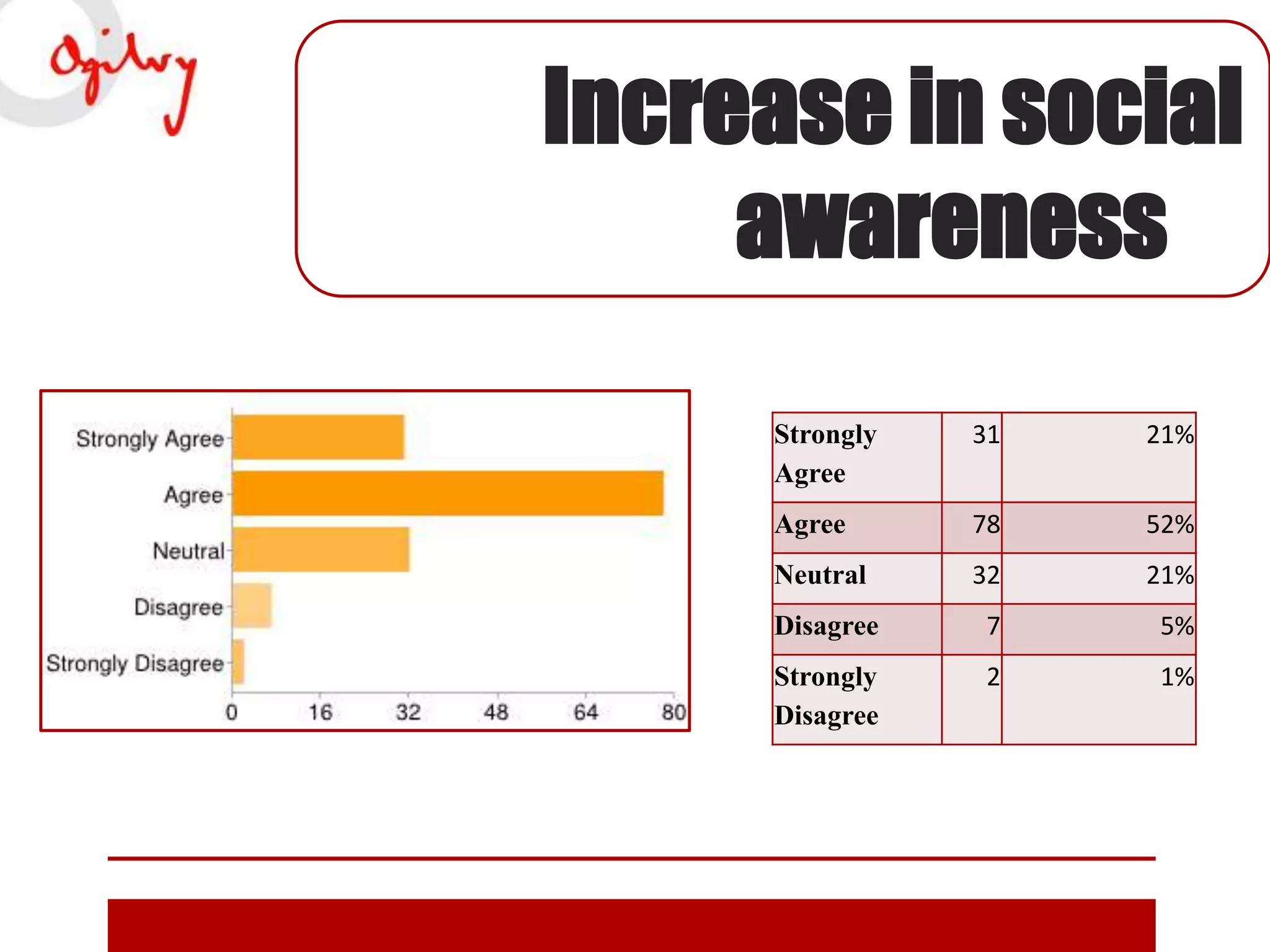
Increase in social
awareness
Strongly
Agree

31

21%

Agree

78

52%

Neutral

32

21%

Disagree

7

5%

Strongly
Disagree

2

1%
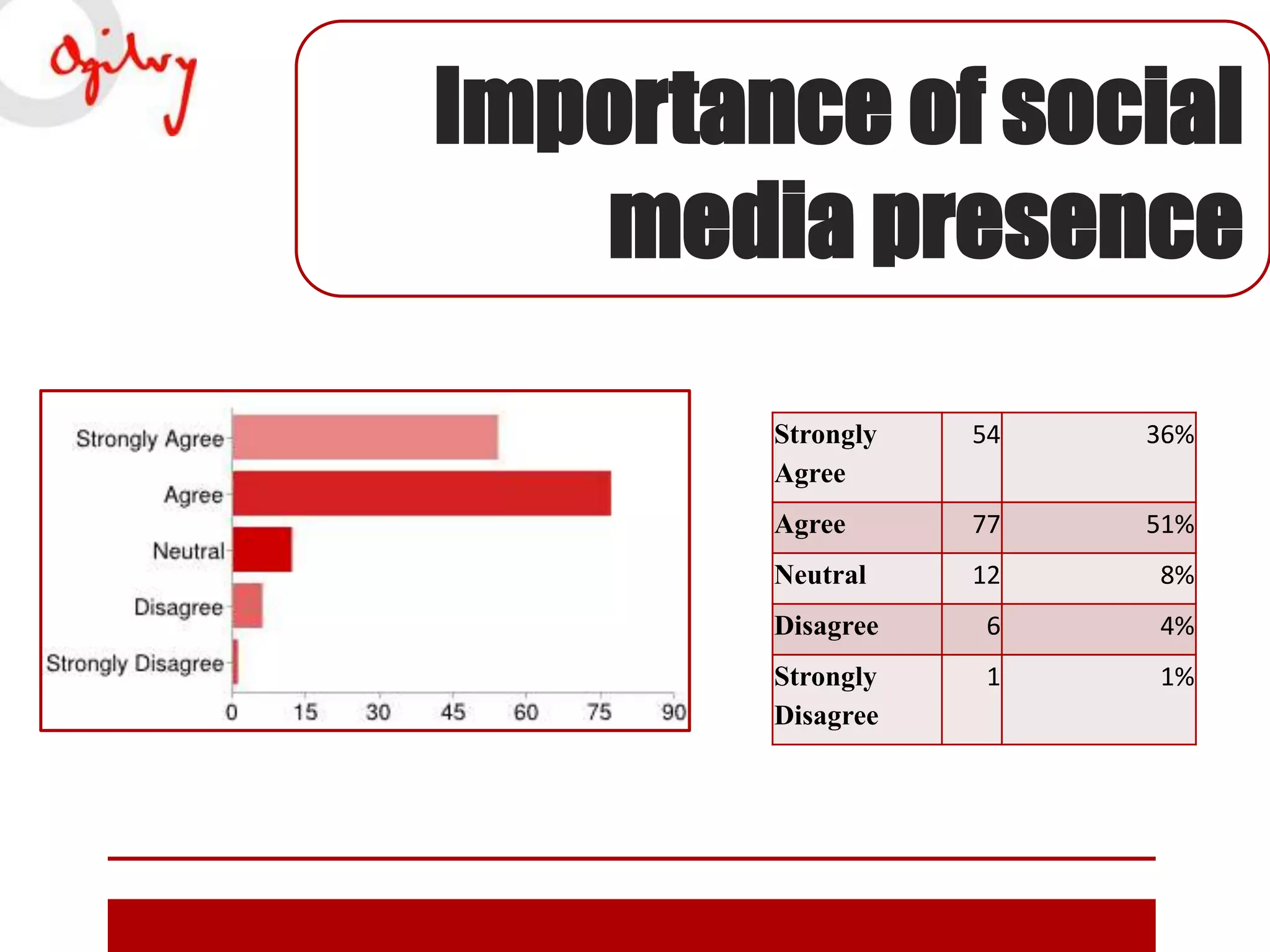
Importance of social
media presence
Strongly
Agree

54

36%

Agree

77

51%

Neutral

12

8%

Disagree

6

4%

Strongly
Disagree

1

1%
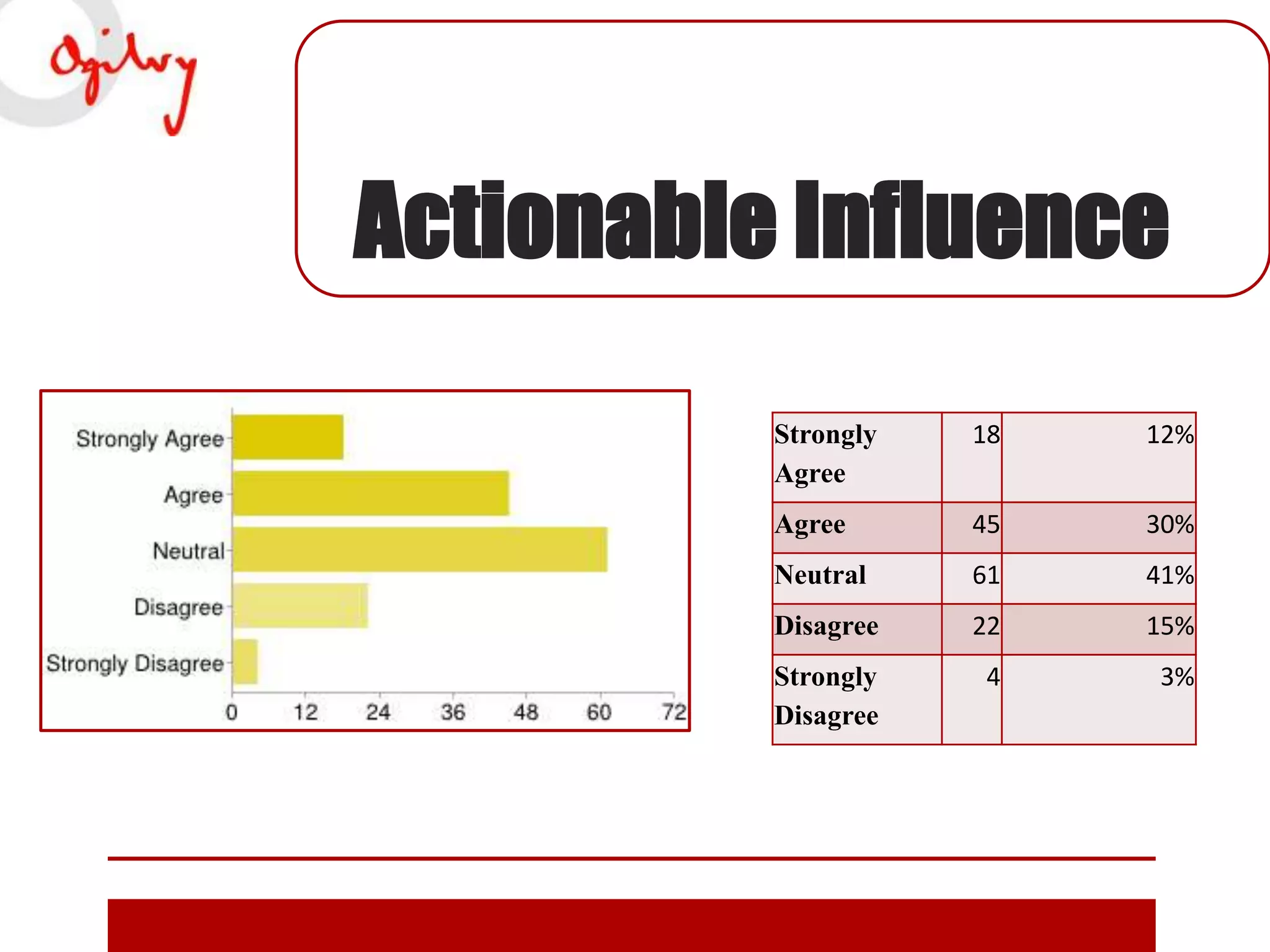
Actionable Influence
Strongly
Agree

18

12%

Agree

45

30%

Neutral

61

41%

Disagree

22

15%

Strongly
Disagree

4

3%
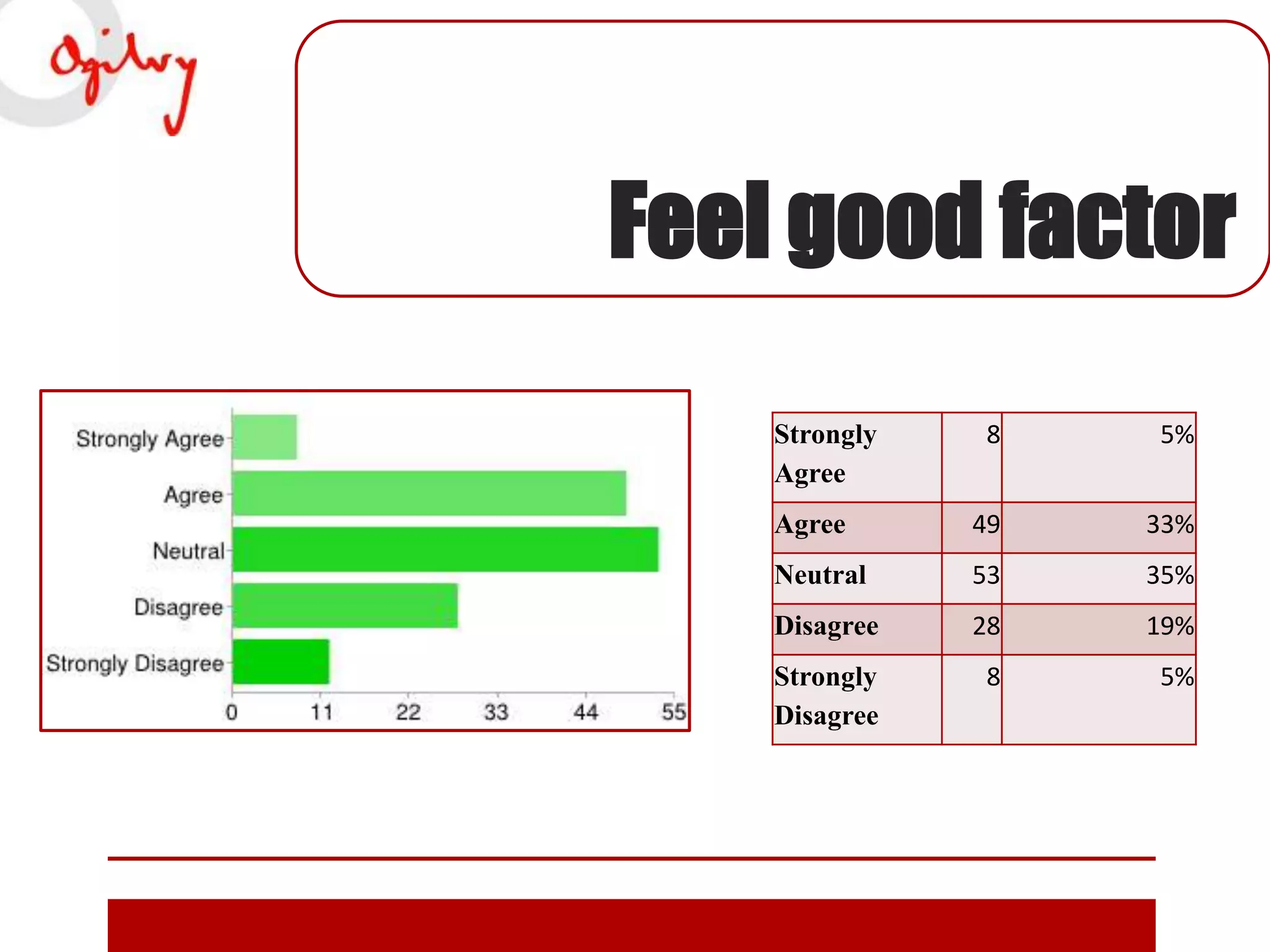
Feel good factor
8

5%

Agree

49

33%

Neutral

53

35%

Disagree

28

19%

Strongly
Disagree

8

5%

Strongly
Agree
Perception
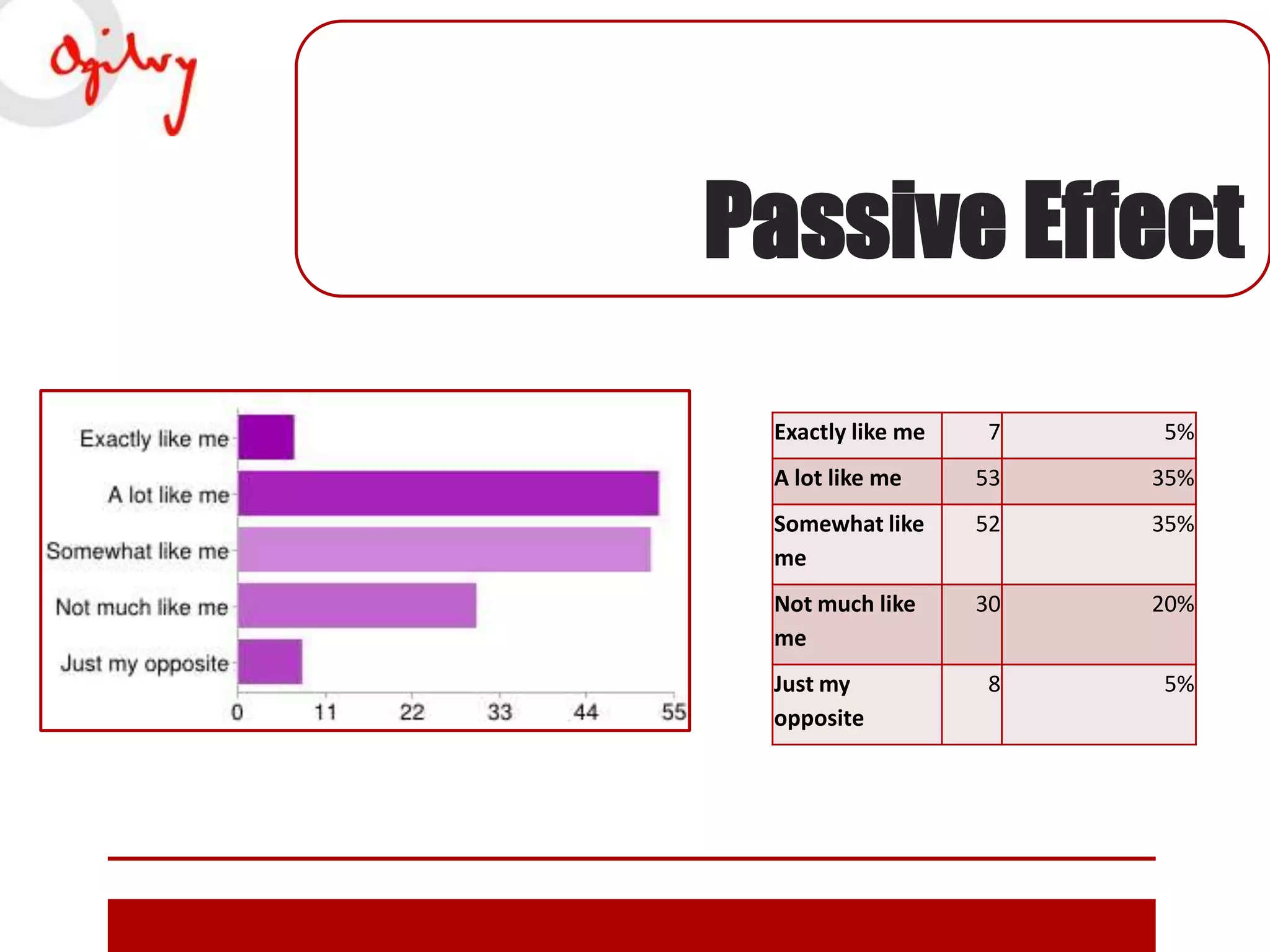
Passive Effect
Exactly like me

7

5%

A lot like me

53

35%

Somewhat like
me

52

35%

Not much like
me

30

20%

8

5%

Just my
opposite
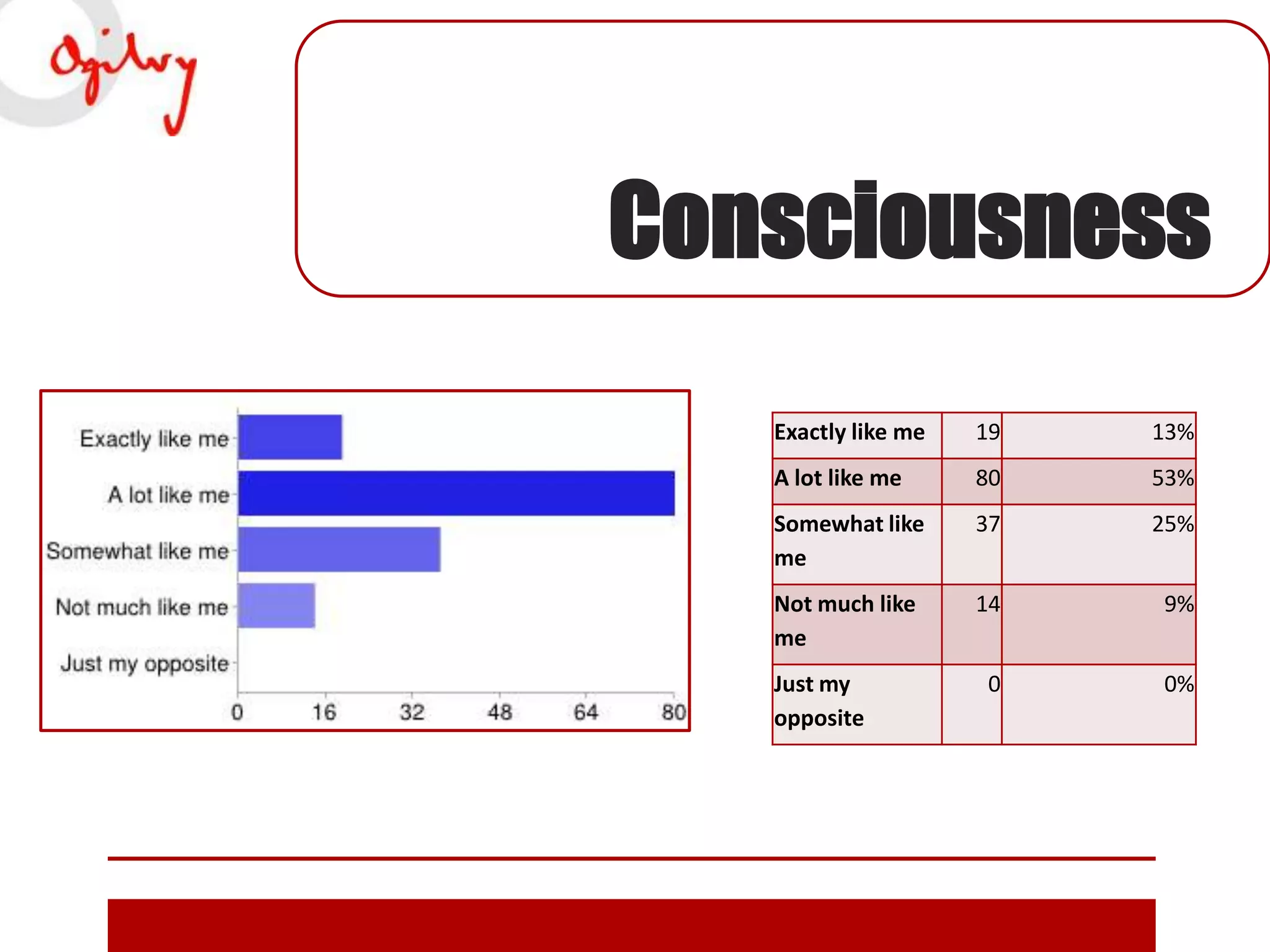
Consciousness
Exactly like me

19

13%

A lot like me

80

53%

Somewhat like
me

37

25%

Not much like
me

14

9%

0

0%

Just my
opposite
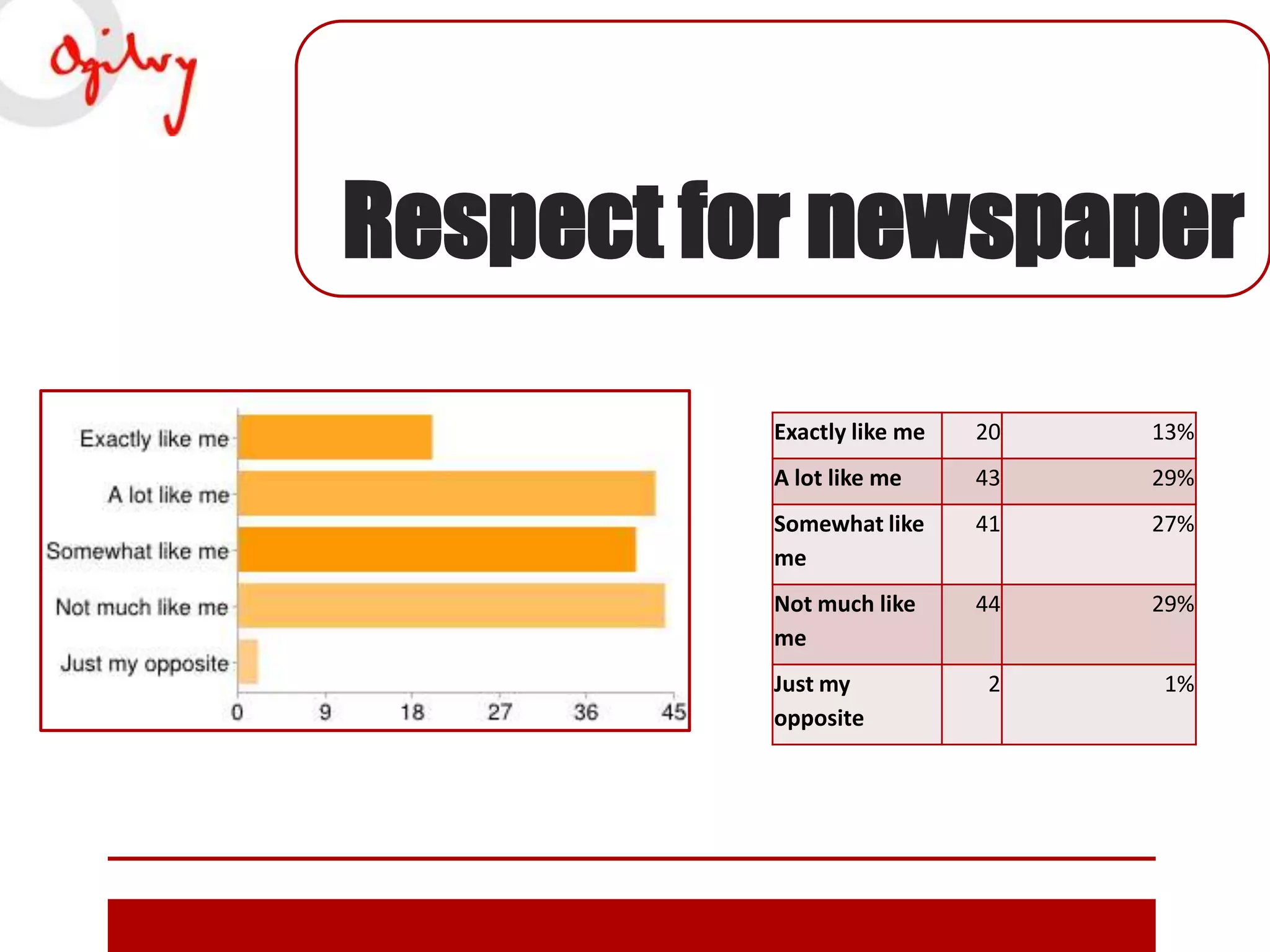
Respect for newspaper
Exactly like me

20

13%

A lot like me

43

29%

Somewhat like
me

41

27%

Not much like
me

44

29%

2

1%

Just my
opposite
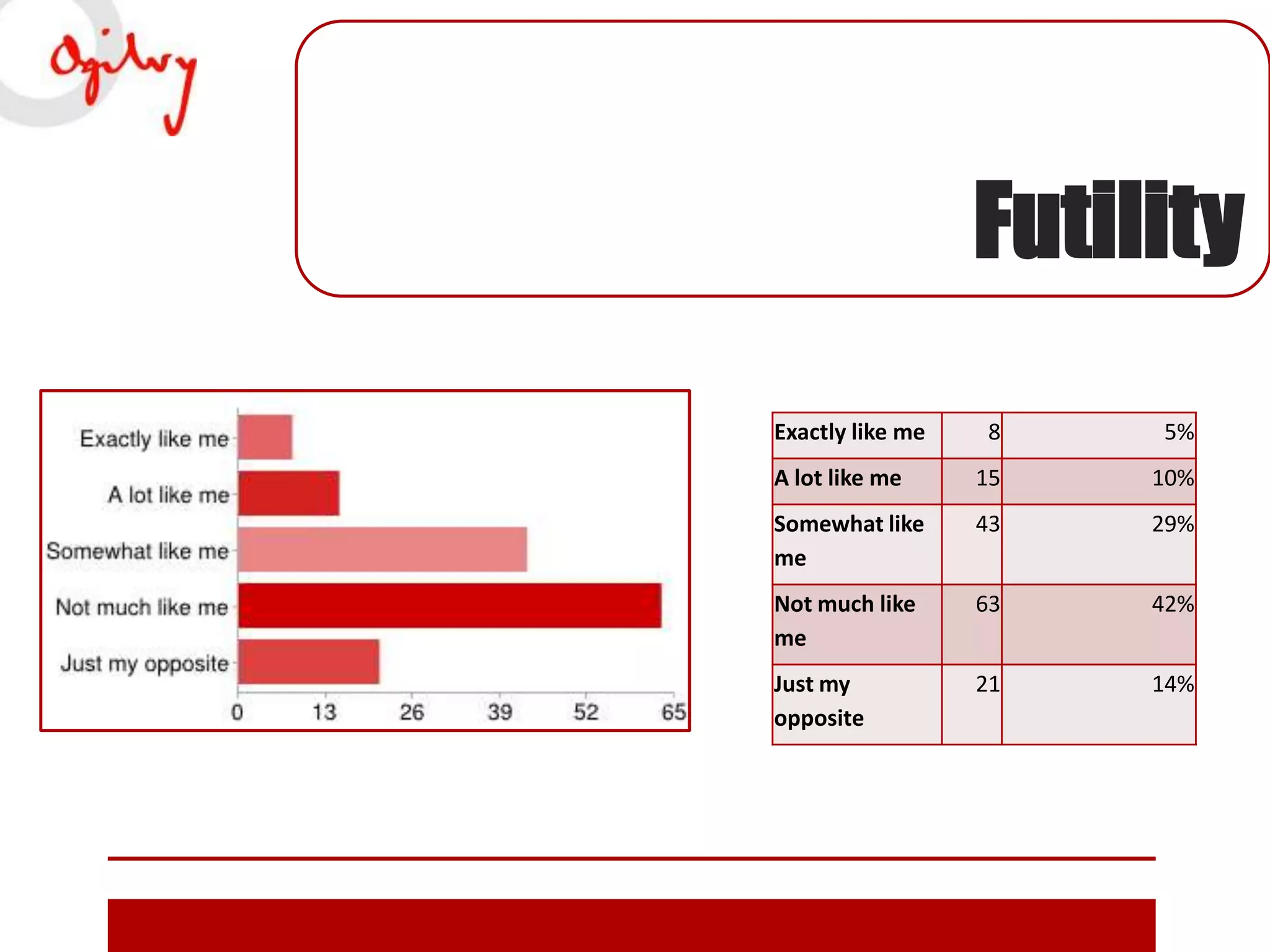
Futility
Exactly like me

8

5%

A lot like me

15

10%

Somewhat like
me

43

29%

Not much like
me

63

42%

Just my
opposite

21

14%
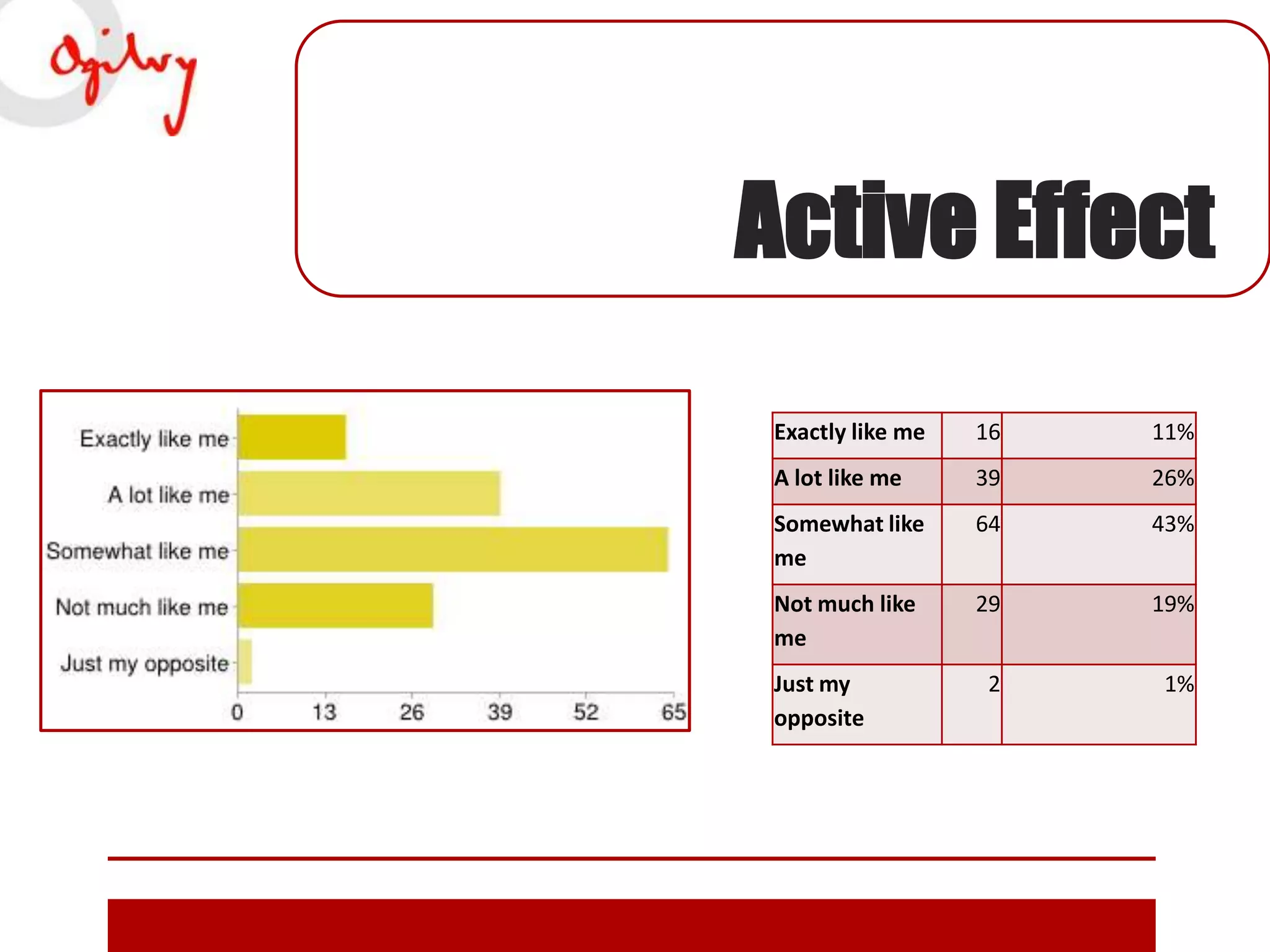
Active Effect
Exactly like me

16

11%

A lot like me

39

26%

Somewhat like
me

64

43%

Not much like
me

29

19%

2

1%

Just my
opposite
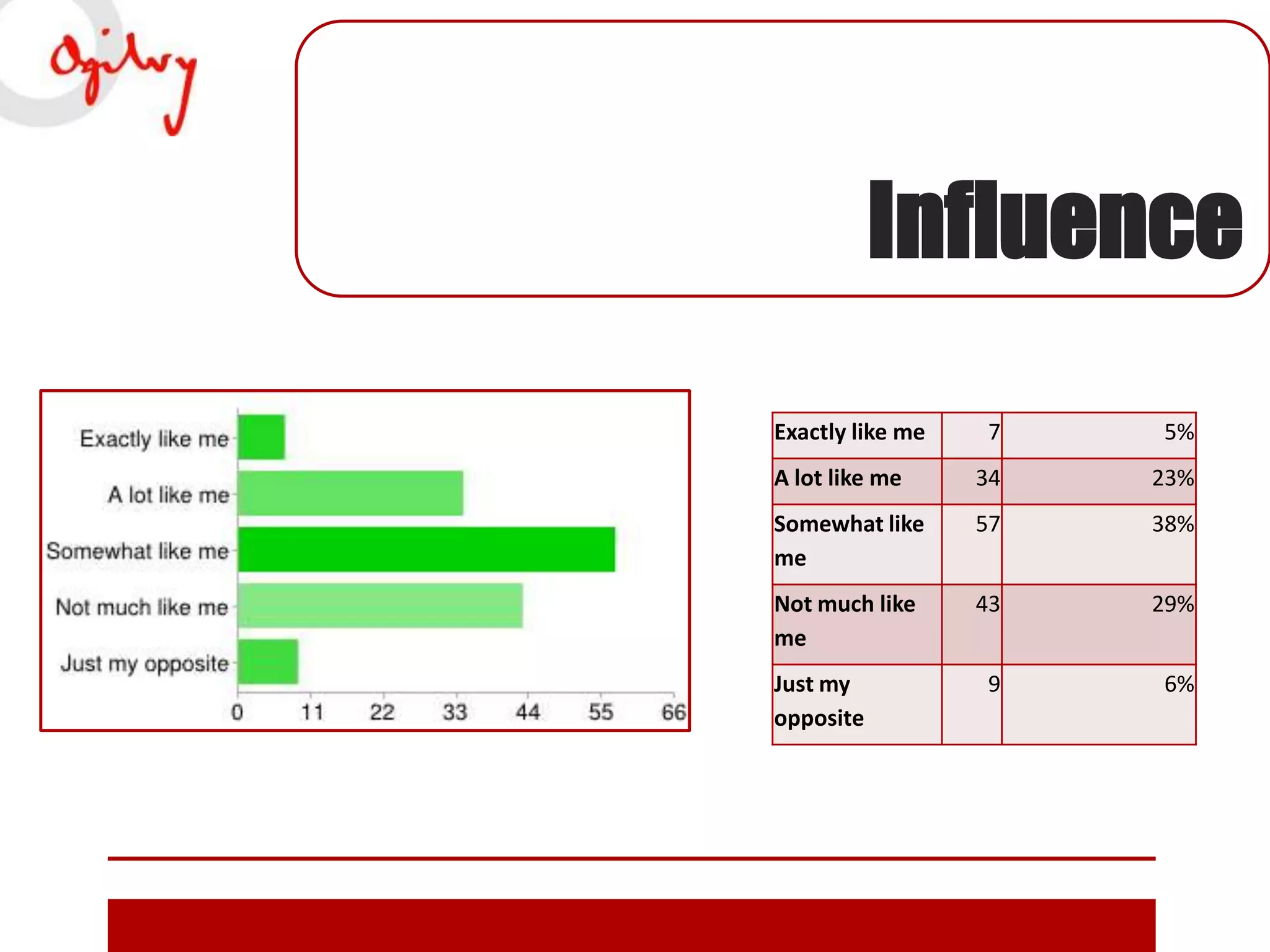
Influence
Exactly like me

7

5%

A lot like me

34

23%

Somewhat like
me

57

38%

Not much like
me

43

29%

9

6%

Just my
opposite
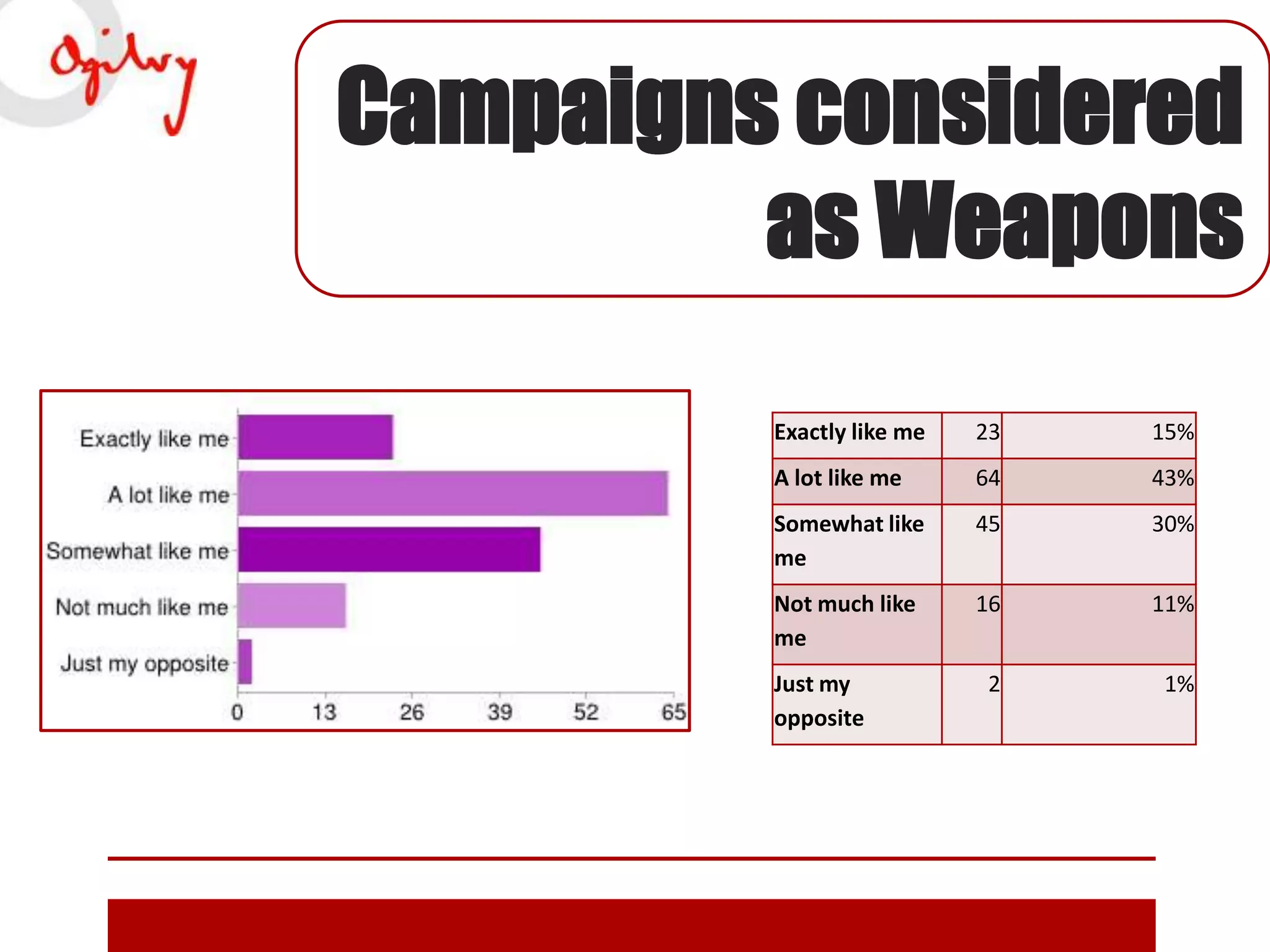
Campaigns considered
as Weapons
Exactly like me

23

15%

A lot like me

64

43%

Somewhat like
me

45

30%

Not much like
me

16

11%

2

1%

Just my
opposite
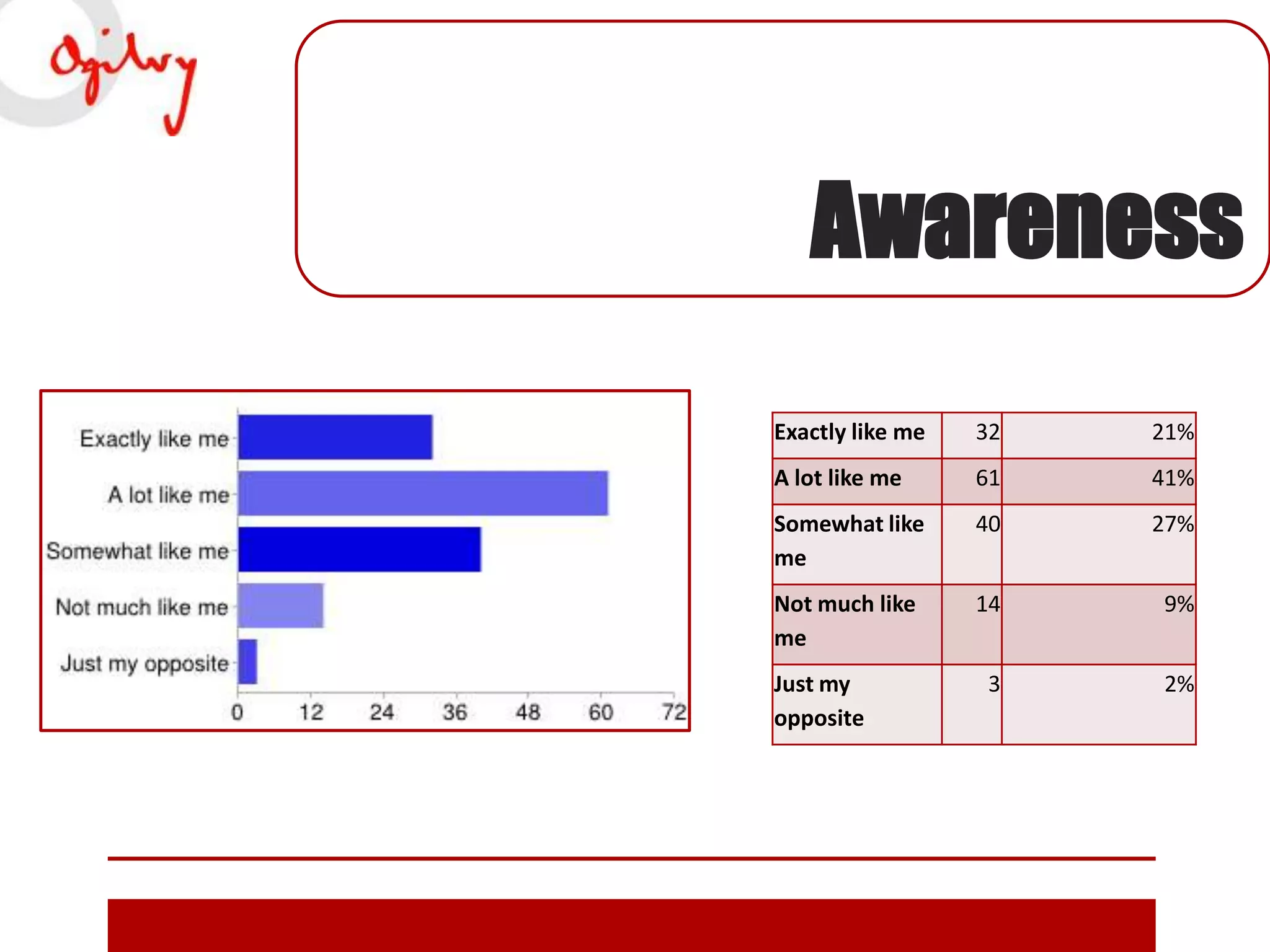
Awareness
Exactly like me

32

21%

A lot like me

61

41%

Somewhat like
me

40

27%

Not much like
me

14

9%

3

2%

Just my
opposite
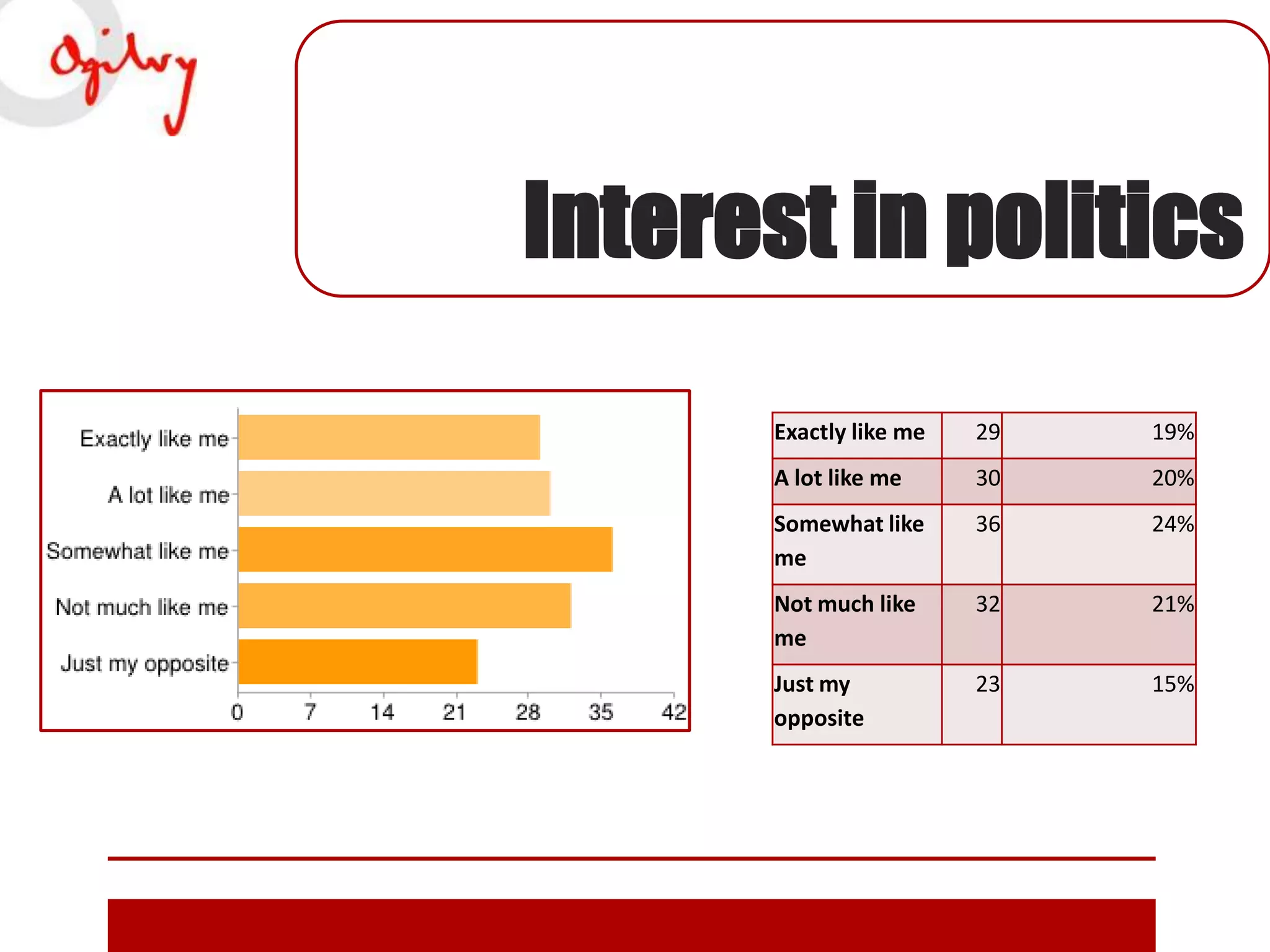
Interest in politics
Exactly like me

29

19%

A lot like me

30

20%

Somewhat like
me

36

24%

Not much like
me

32

21%

Just my
opposite

23

15%
Preferences
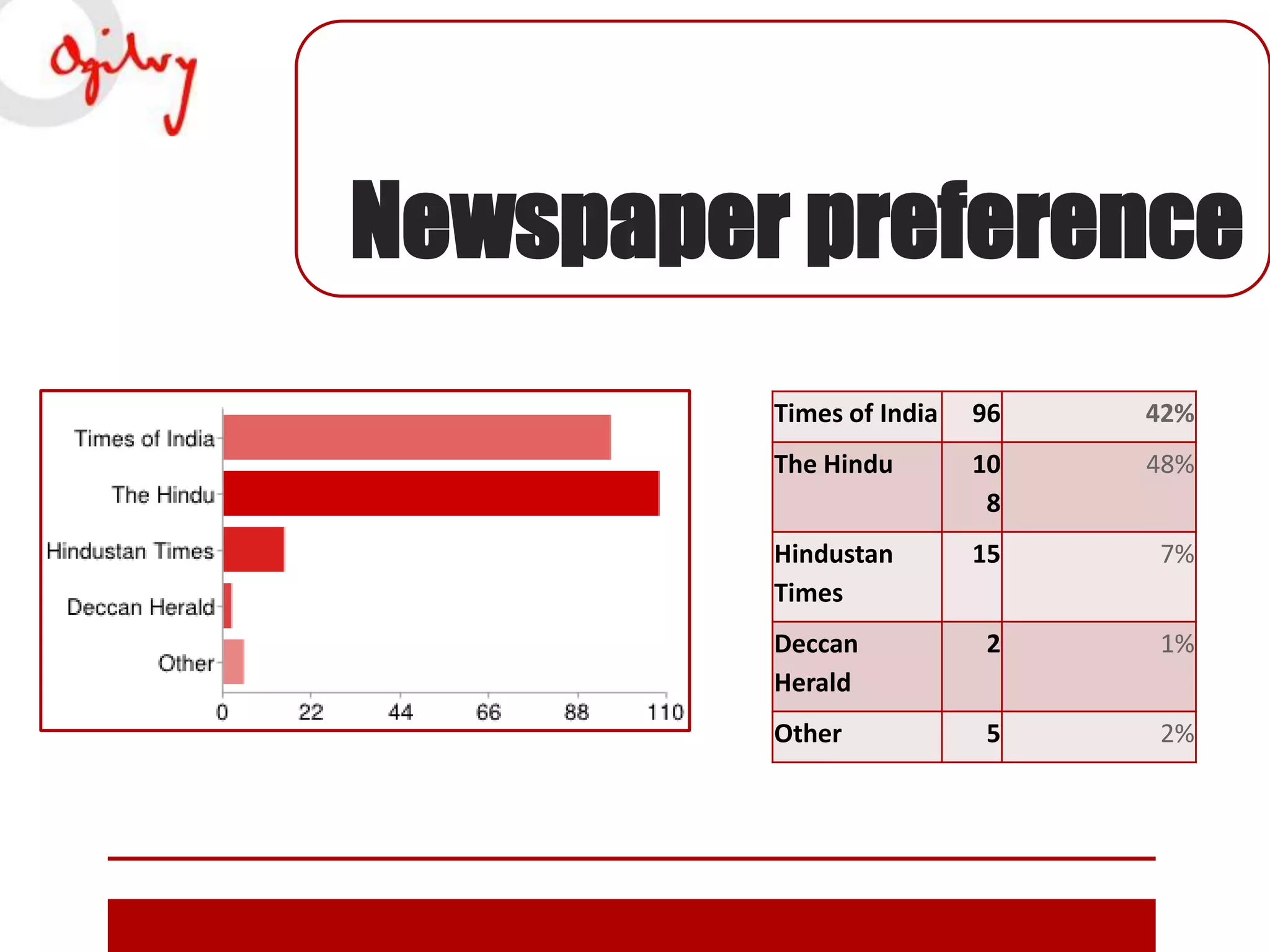
Newspaper preference
Times of India

96

42%

The Hindu

10
8

48%

Hindustan
Times

15

7%

Deccan
Herald

2

1%

Other

5

2%
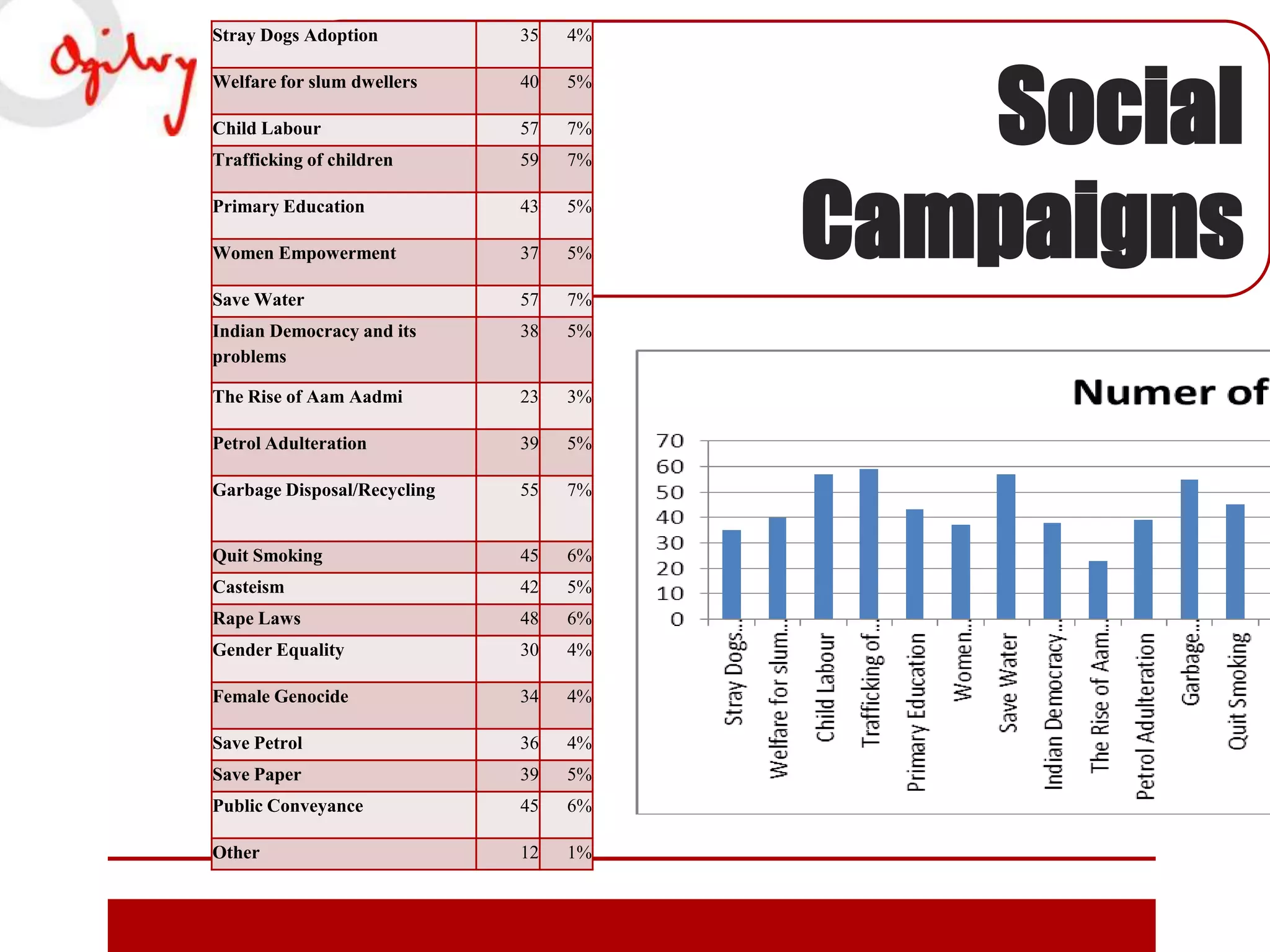
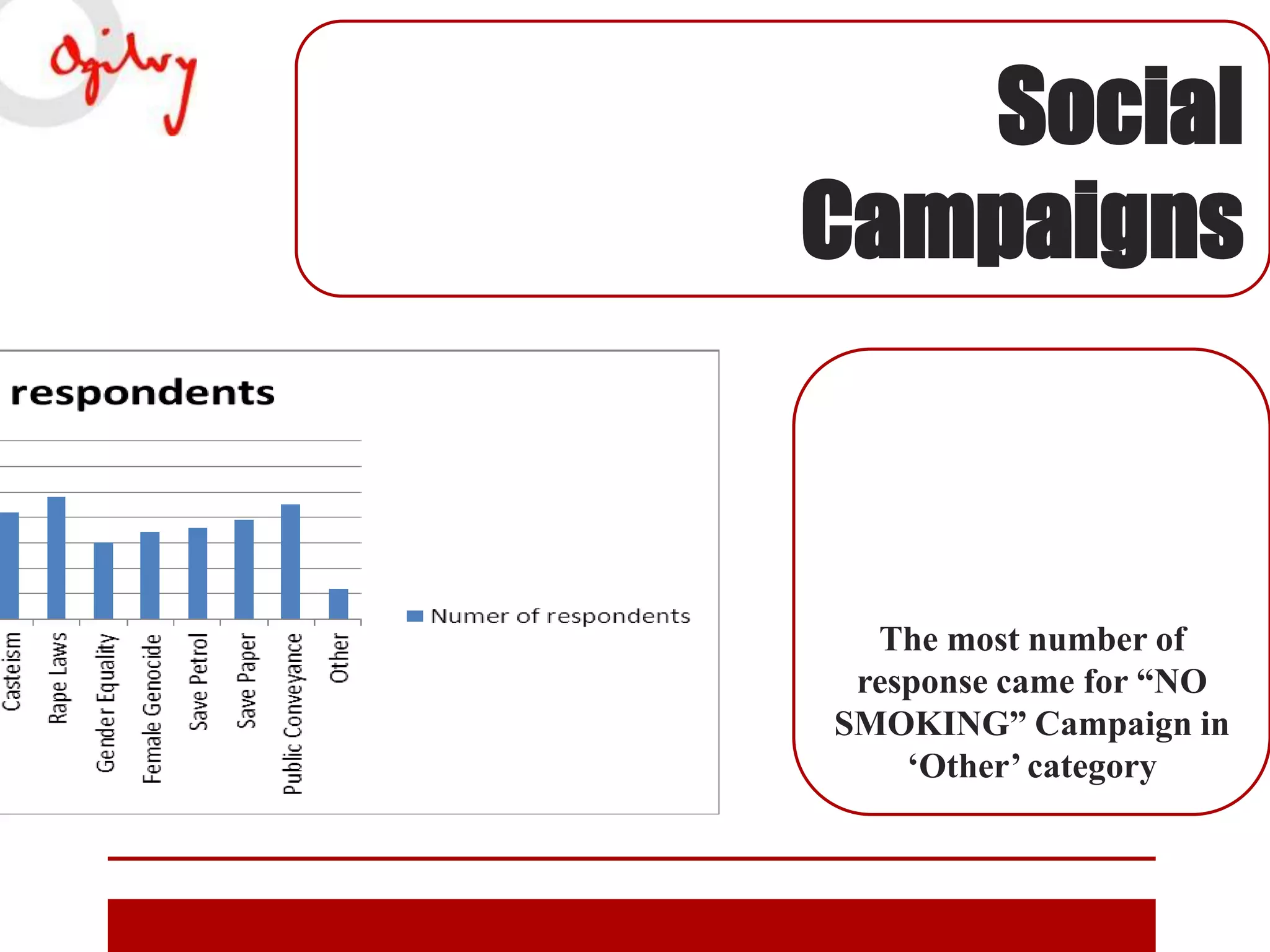
Stray Dogs Adoption

35

4%

Welfare for slum dwellers

40

5%

Child Labour

57

7%

Trafficking of children

59

7%

Primary Education

43

5%

Women Empowerment

37

5%

Save Water

57

7%

Indian Democracy and its
problems

38

5%

The Rise of Aam Aadmi

23

3%

Petrol Adulteration

39

5%

Garbage Disposal/Recycling

55

7%

Quit Smoking

45

6%

Casteism

42

5%

Rape Laws

48

6%

Gender Equality

30

4%

Female Genocide

34

4%

Save Petrol

36

4%

Save Paper

39

5%

Public Conveyance

45

6%

Other

12

1%

Social
Campaigns
Social
Campaigns

The most number of
response came for “NO
SMOKING” Campaign in
„Other‟ category
RESULT
Findings
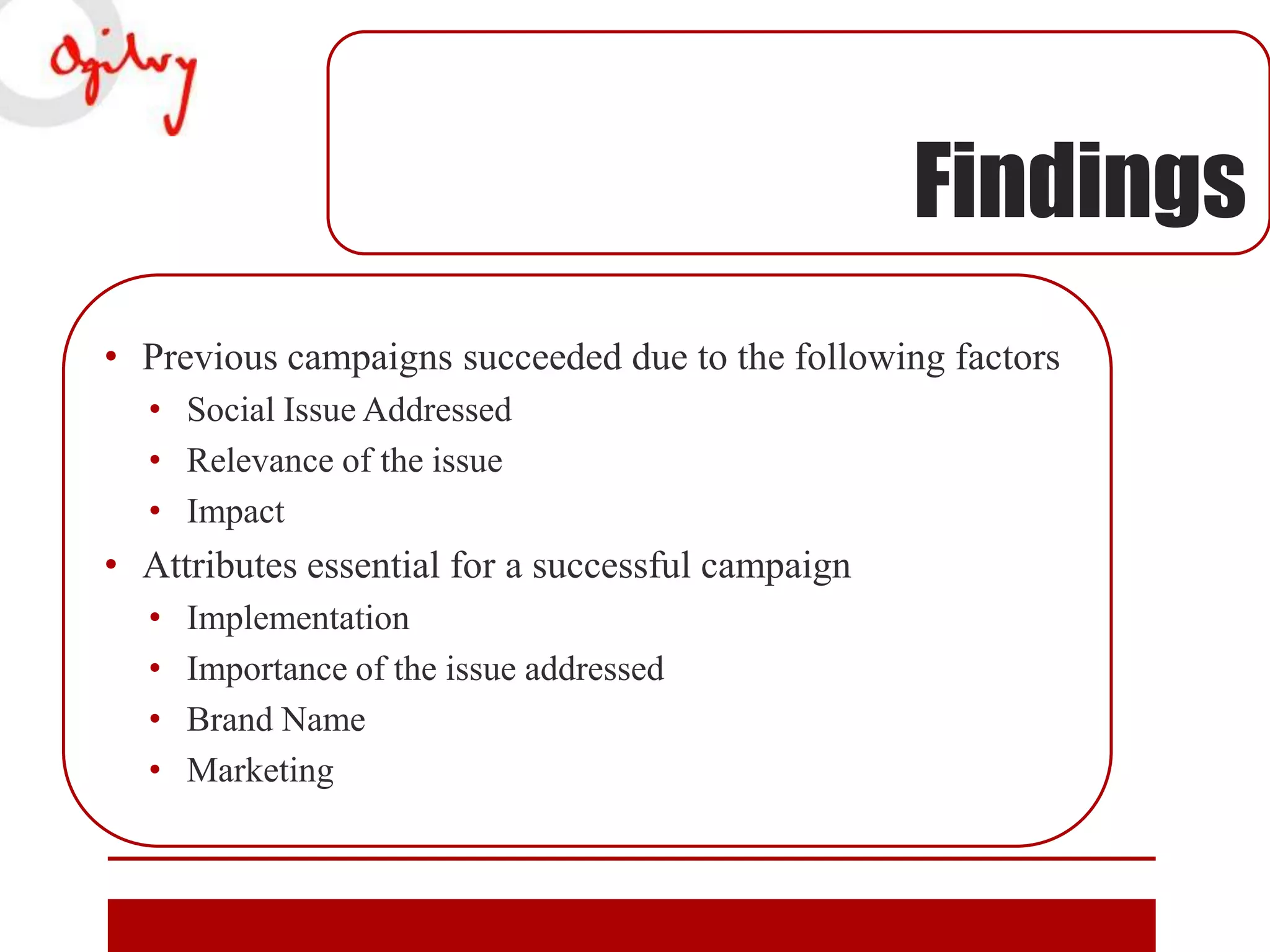
• Previous campaigns succeeded due to the following factors
• Social Issue Addressed
• Relevance of the issue
• Impact

• Attributes essential for a successful campaign
•
•
•
•

Implementation
Importance of the issue addressed
Brand Name
Marketing
Findings
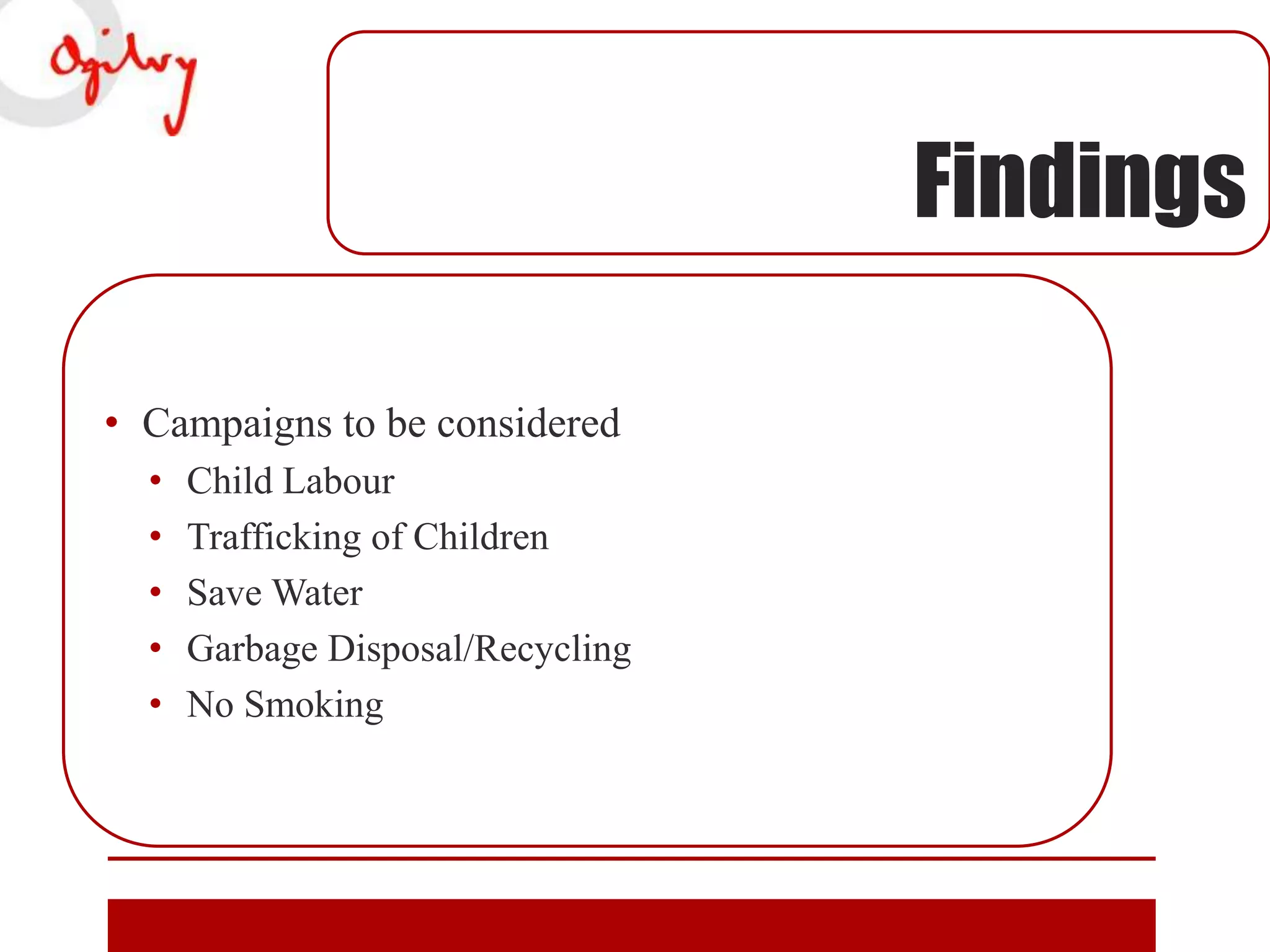
• Campaigns to be considered
•
•
•
•
•

Child Labour
Trafficking of Children
Save Water
Garbage Disposal/Recycling
No Smoking
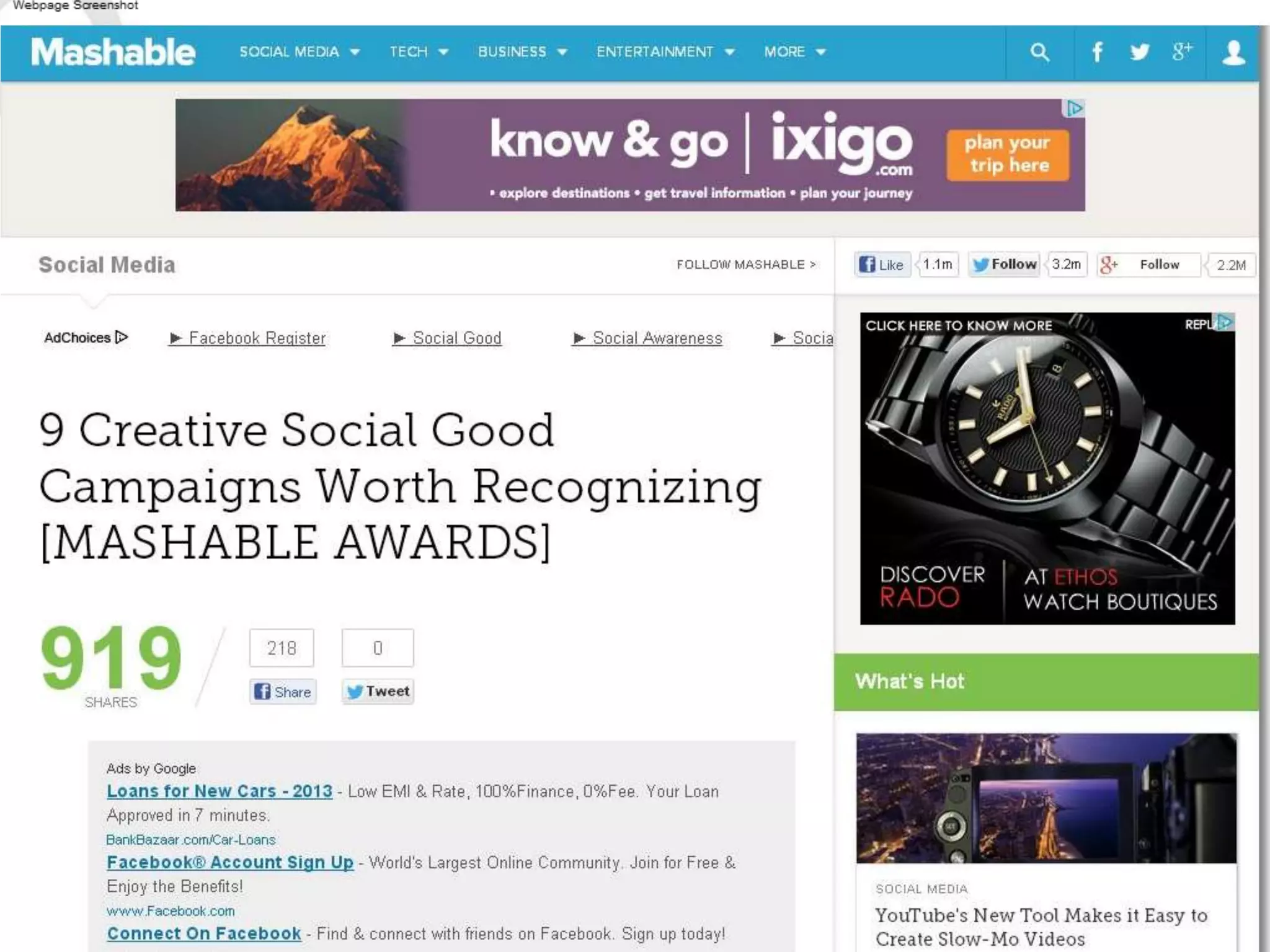
SECONDARY RESEARCH
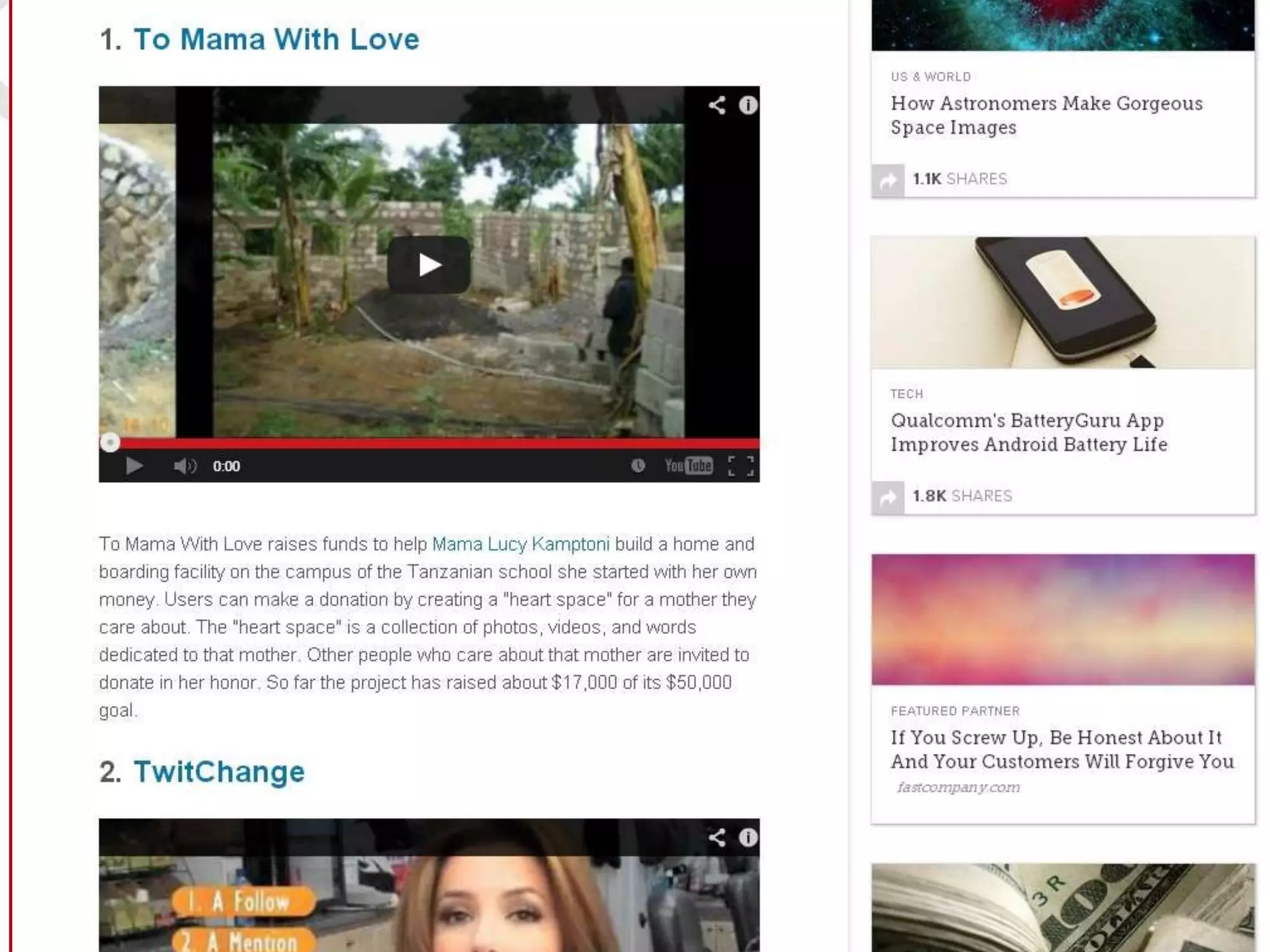
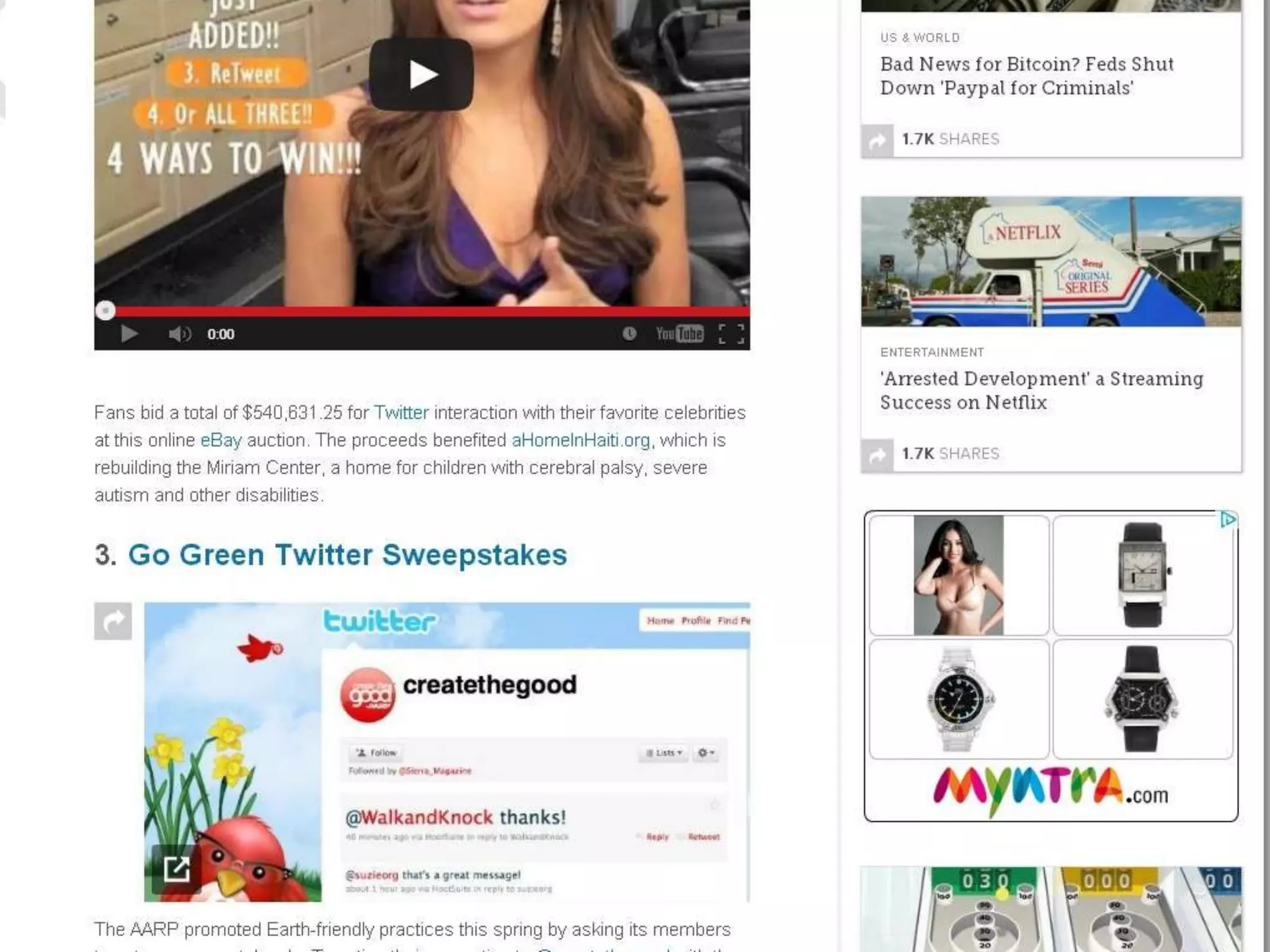
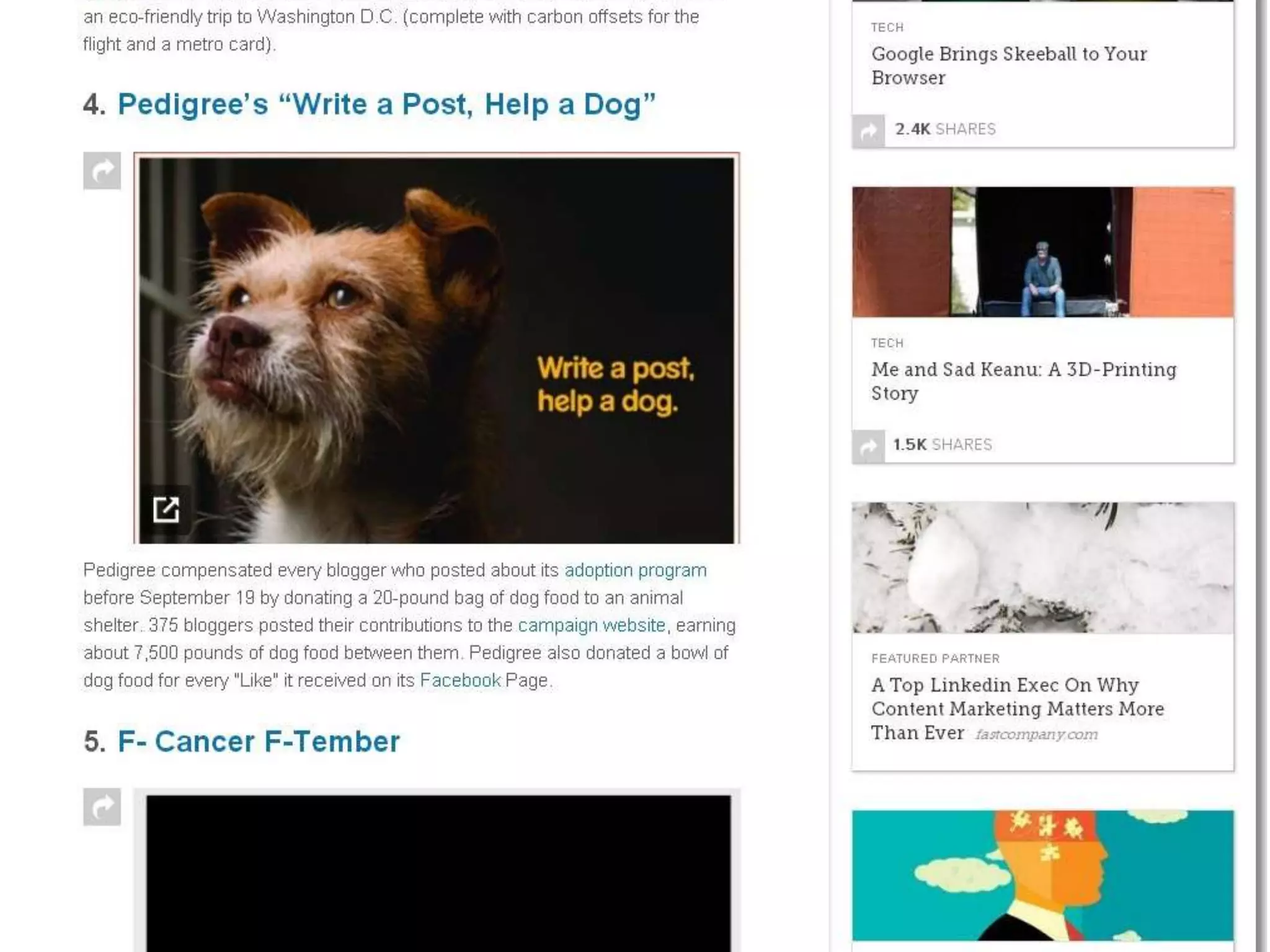
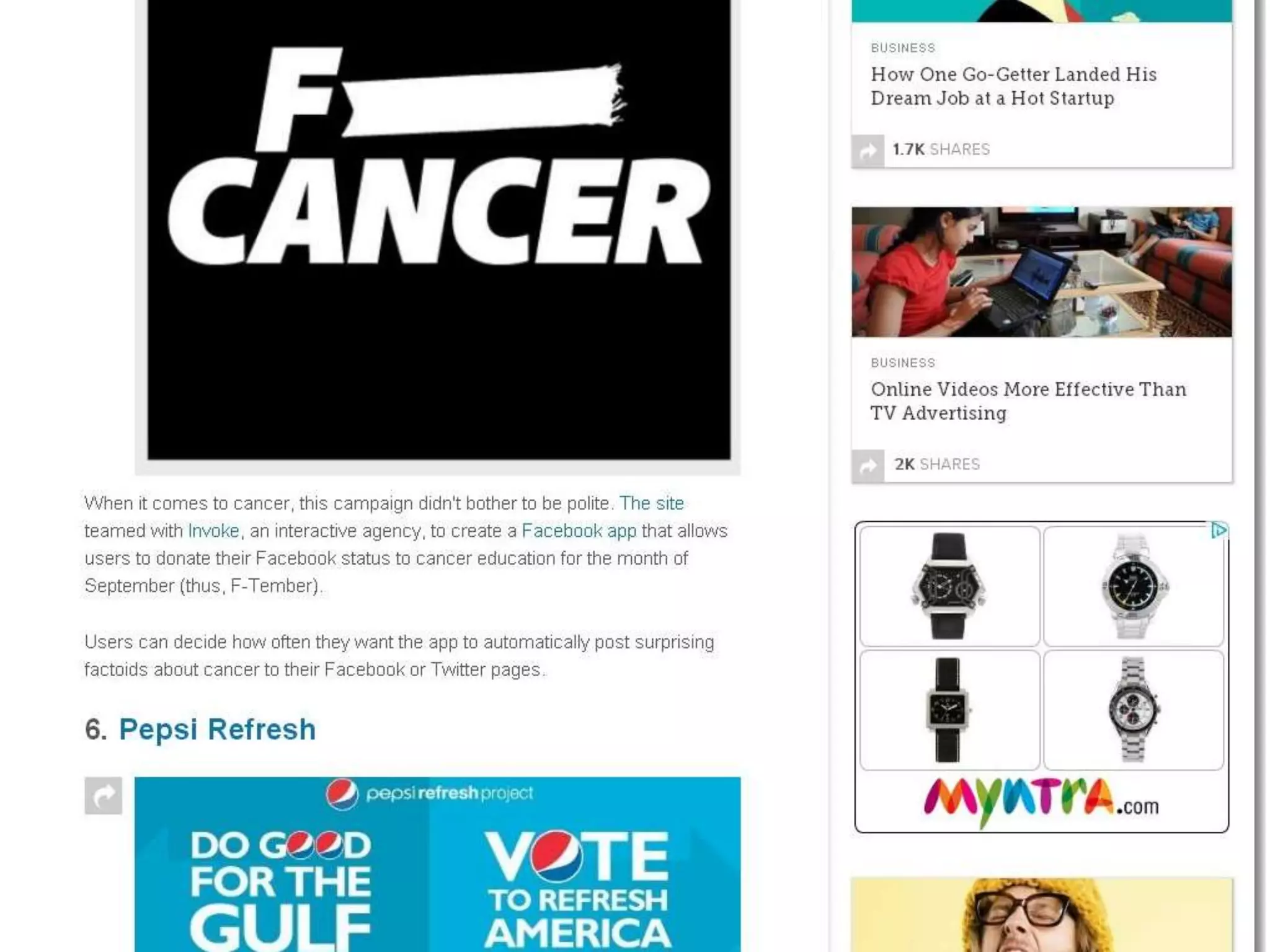
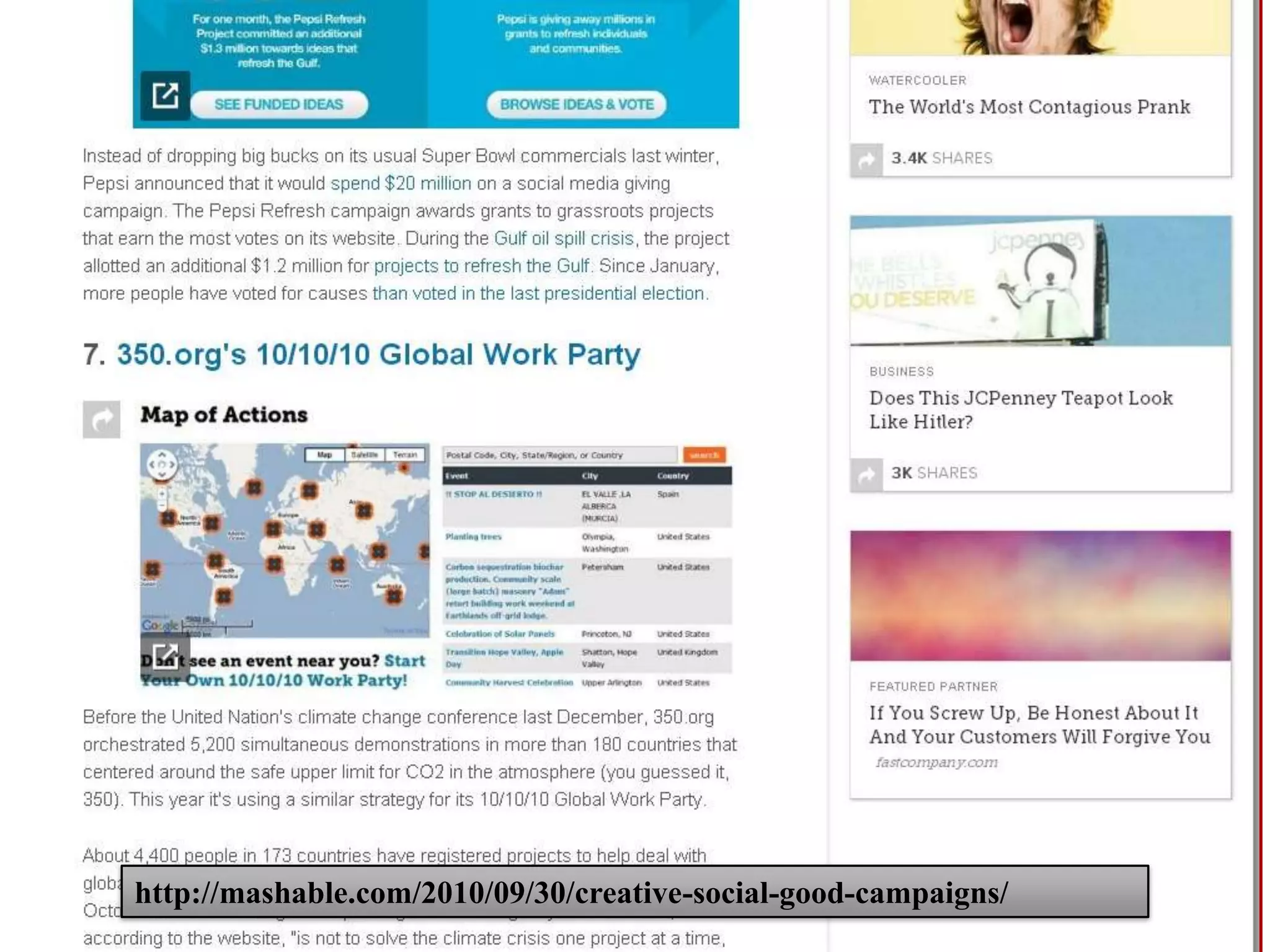
http://mashable.com/2010/09/30/creative-social-good-campaigns/
RECOMMENDATIONS
Social Marketing
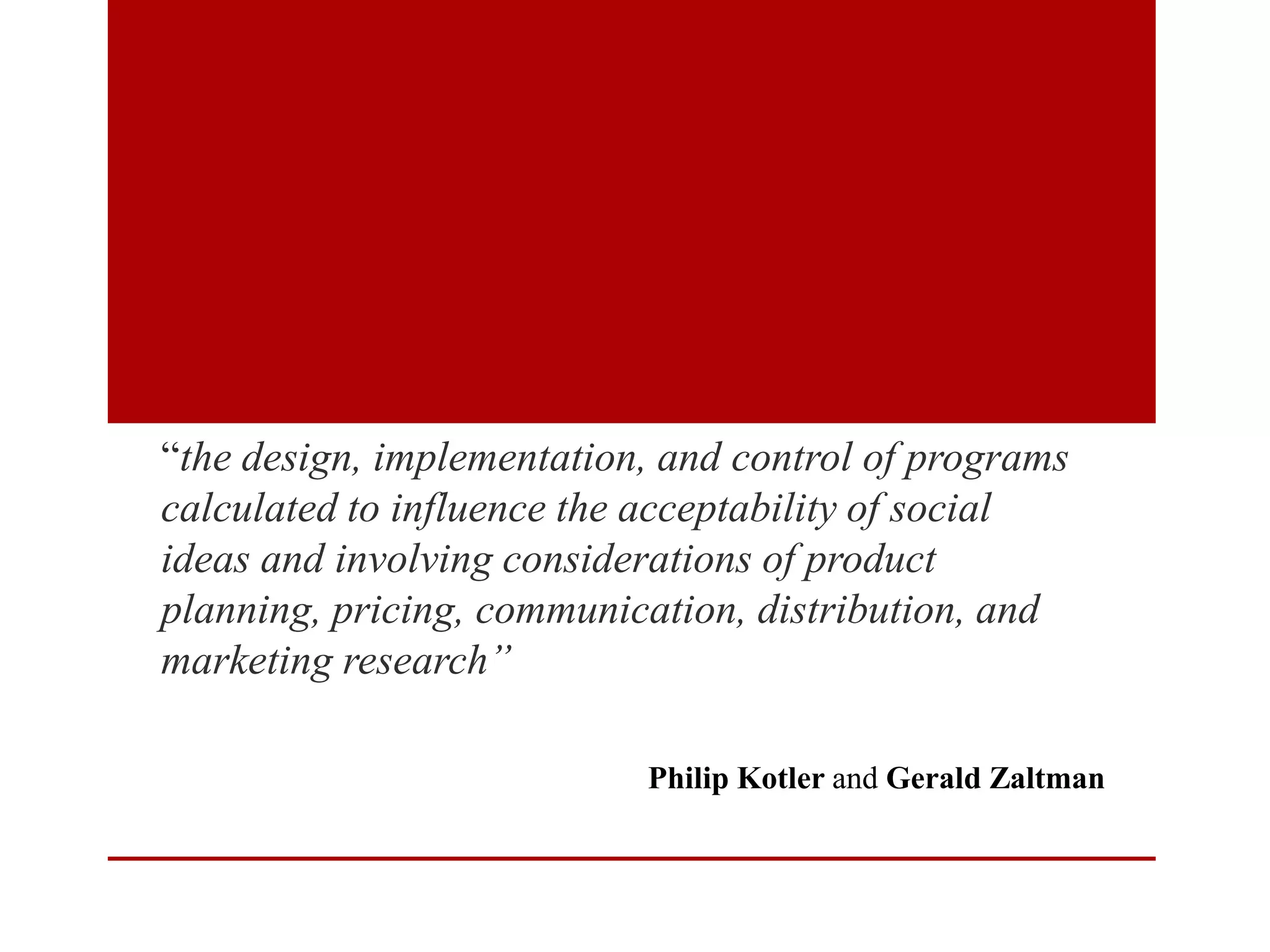
“the design, implementation, and control of programs
calculated to influence the acceptability of social
ideas and involving considerations of product
planning, pricing, communication, distribution, and
marketing research”
Philip Kotler and Gerald Zaltman
Model*
• Selecting Behaviour
• Identifying Barriers and Benefits
• Developing Strategies
•
•
•
•
•
•
•

Commitment
Social Norms : Community Support
Social Diffusion
Prompts
Communication
Incentives
Convenience

• Piloting
• Broad Scale Implementation and Evaluation
*Fostering Sustainable Behavior – Doug McKenzie – Mohr, New Society Publishers
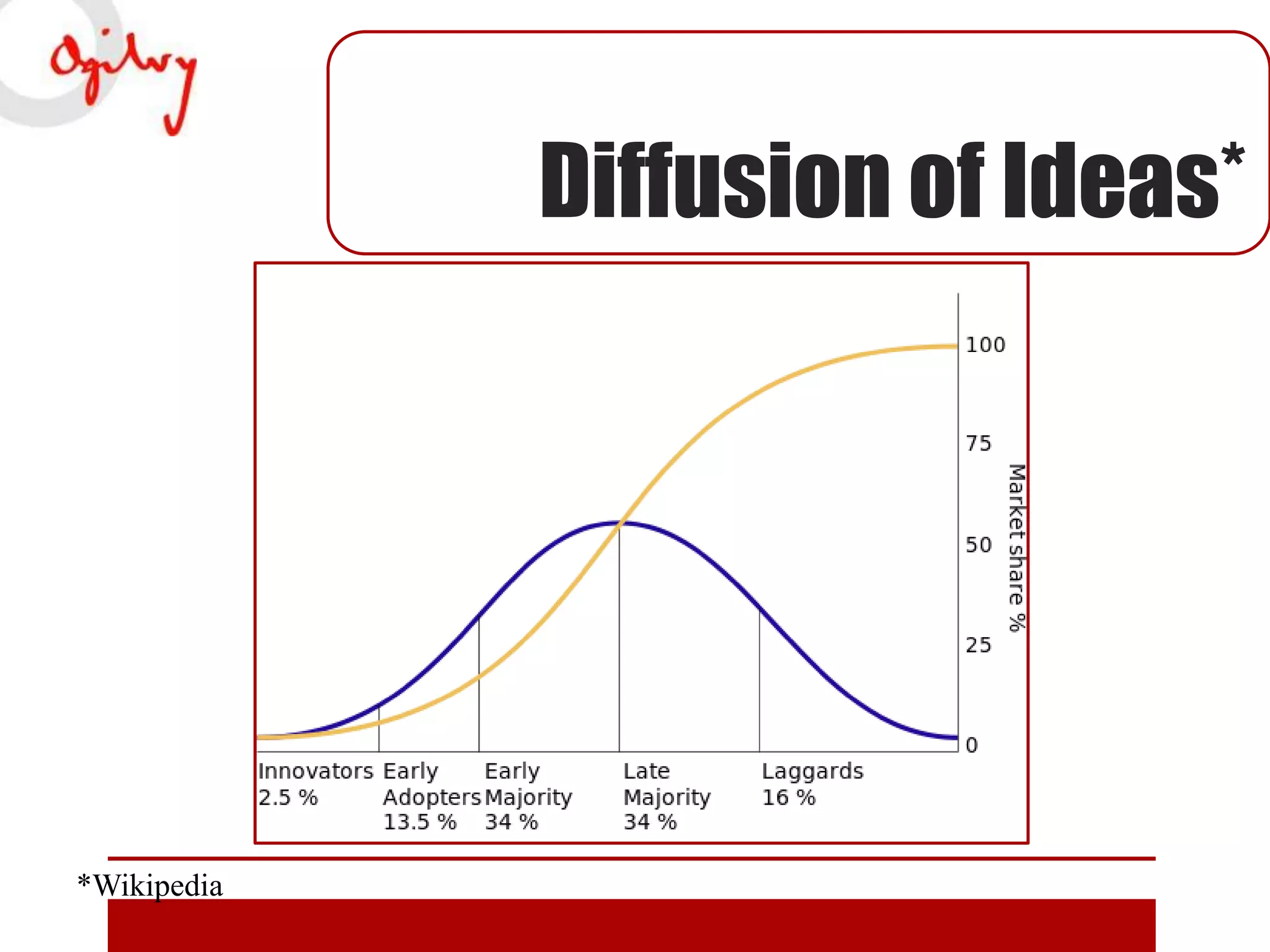
Diffusion of Ideas*

*Wikipedia
Conclusion
Ogilvy & Mather Project Presentation

Ogilvy & Mather Project Presentation