Recent developments in
long-term care and
palliative care in the
Netherlands
Fred Lafeber
Department of Long-Term Care
fn.lafeber@minvws.nl
1. Trends and challenges
2. Address challenges 1
Good organisation & finance
3. Address challenges 2
Offer social protection
4. Address challenges 3
Additional policy programmes
Outline
Long-term care
& palliative care
3
Kingdom of the Netherlands
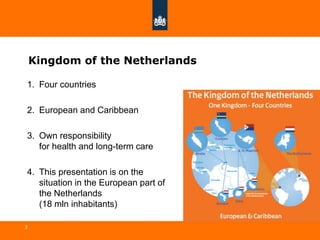
1. Four countries
2. European and Caribbean
3. Own responsibility
for health and long-term care
4. This presentation is on the
situation in the European part of
the Netherlands
(18 mln inhabitants)
1. Trends
4
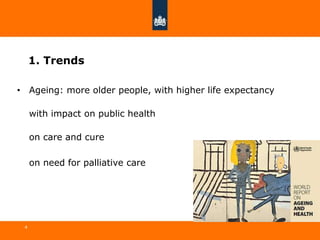
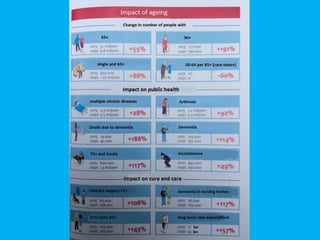
• Ageing: more older people, with higher life expectancy
with impact on public health
on care and cure
on need for palliative care
Trends
6
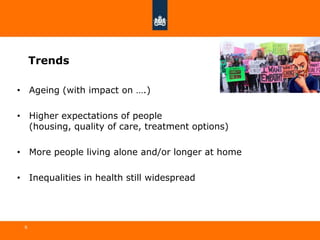
• Ageing (with impact on ….)
• Higher expectations of people
(housing, quality of care, treatment options)
• More people living alone and/or longer at home
• Inequalities in health still widespread
Inequalities and frailty
7
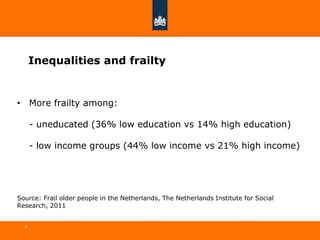
• More frailty among:
- uneducated (36% low education vs 14% high education)
- low income groups (44% low income vs 21% high income)
Source: Frail older people in the Netherlands, The Netherlands Institute for Social
Research, 2011
Challenges
8
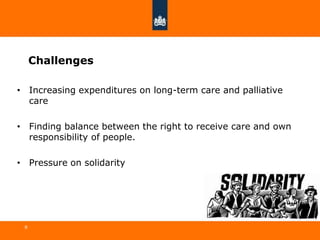
• Increasing expenditures on long-term care and palliative
care
• Finding balance between the right to receive care and own
responsibility of people.
• Pressure on solidarity
More challenges and link with rights of older
people
• Ensure better accessibility
(right to receive long-term care and palliative care,
with less paperwork and affordable for all)
• Better quality of care
(right to complain, focus on personal choice, human
touch & quality of life)
• Enable fuller participation
(right to function in society)
9
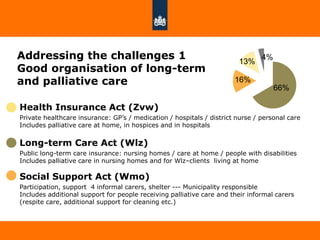
Addressing the challenges 1
Good organisation of long-term
and palliative care
Health Insurance Act (Zvw)
Private healthcare insurance: GP’s / medication / hospitals / district nurse / personal care
Includes palliative care at home, in hospices and in hospitals
Long-term Care Act (Wlz)
Public long-term care insurance: nursing homes / care at home / people with disabilities
Includes palliative care in nursing homes and for Wlz–clients living at home
Social Support Act (Wmo)
Participation, support 4 informal carers, shelter --- Municipality responsible
Includes additional support for people receiving palliative care and their informal carers
(respite care, additional support for cleaning etc.)
66%
16%
13%
4%
Organisation and financing of palliative care
• Integrated in main health laws
• Additional financing scheme for palliative care provided
by volunteers and majority of hospices
• 66 networks palliative care
• Consultation by specialists where needed
11
Addressing the challenges 2
Good social protection of long-term care and
palliative care in international perspective
• Wide differences among countries in scope and type of
support. Difficult to compare.
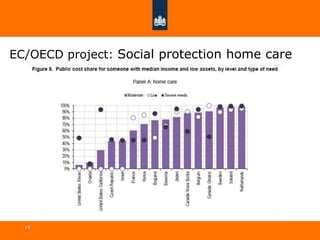
• EC/OECD project on long-term care (ADL and iADL)
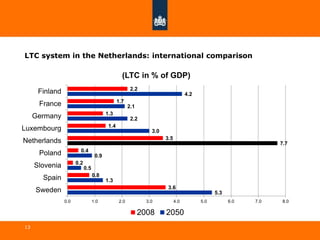
• Netherlands high expenditures on long-term care
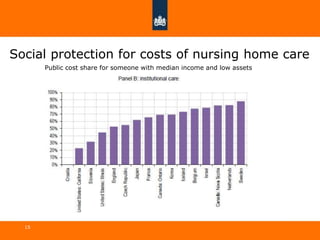
Result: offers good social protection against costs of Ltc
12
LTC system in the Netherlands: international comparison
13
5.3
1.3
0.5
0.9
7.7
3.0
2.2
2.1
4.2
3.6
0.8
0.2
0.4
3.5
1.4
1.3
1.7
2.2
0.0 1.0 2.0 3.0 4.0 5.0 6.0 7.0 8.0
Sweden
Spain
Slovenia
Poland
Netherlands
Luxembourg
Germany
France
Finland
(LTC in % of GDP)
2008 2050
14
EC/OECD project: Social protection home care
15
Social protection for costs of nursing home care
Public cost share for someone with median income and low assets
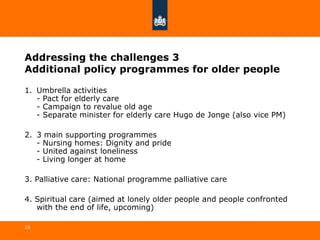
Addressing the challenges 3
Additional policy programmes for older people
1. Umbrella activities
- Pact for elderly care
- Campaign to revalue old age
- Separate minister for elderly care Hugo de Jonge (also vice PM)
2. 3 main supporting programmes
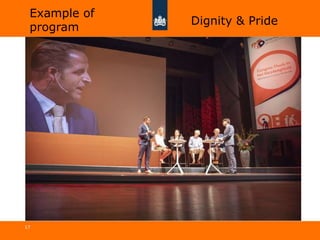
- Nursing homes: Dignity and pride
- United against loneliness
- Living longer at home
3. Palliative care: National programme palliative care
4. Spiritual care (aimed at lonely older people and people confronted
with the end of life, upcoming)
16
17
Example of
program
Dignity & Pride
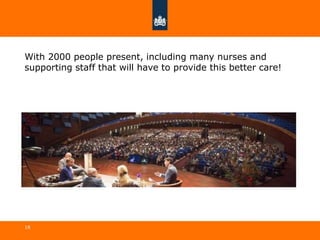
With 2000 people present, including many nurses and
supporting staff that will have to provide this better care!
18
Extra: National program palliative care
1. 4 themes and 14 concrete targets:
- Awareness
- Organisation and continuity
- Quality
- Patient involvement (including informal carers)
2. Research programme (8 million, 70+ projects pending)
3. Practice team to address urgent needs (solve and learn)
19
Conclusions
1. Many challenges due to ageing and other trends
2. Answer by an elaborated system of long-term care
3. Palliative care is (mostly) not seperated, but integrated in
the health and long-term care system
4. In international perspective the system is expensive but
offers good social protection against long-term care costs
5. Many additional policy initiatives to address the needs of
older people.
20

OEWG presentation Fred Lafeber powerpointx

  • 1.
    Recent developments in long-termcare and palliative care in the Netherlands Fred Lafeber Department of Long-Term Care fn.lafeber@minvws.nl
  • 2.
    1. Trends andchallenges 2. Address challenges 1 Good organisation & finance 3. Address challenges 2 Offer social protection 4. Address challenges 3 Additional policy programmes Outline Long-term care & palliative care
  • 3.
    3 Kingdom of theNetherlands 1. Four countries 2. European and Caribbean 3. Own responsibility for health and long-term care 4. This presentation is on the situation in the European part of the Netherlands (18 mln inhabitants)
  • 4.
    1. Trends 4 • Ageing:more older people, with higher life expectancy with impact on public health on care and cure on need for palliative care
  • 6.
    Trends 6 • Ageing (withimpact on ….) • Higher expectations of people (housing, quality of care, treatment options) • More people living alone and/or longer at home • Inequalities in health still widespread
  • 7.
    Inequalities and frailty 7 •More frailty among: - uneducated (36% low education vs 14% high education) - low income groups (44% low income vs 21% high income) Source: Frail older people in the Netherlands, The Netherlands Institute for Social Research, 2011
  • 8.
    Challenges 8 • Increasing expenditureson long-term care and palliative care • Finding balance between the right to receive care and own responsibility of people. • Pressure on solidarity
  • 9.
    More challenges andlink with rights of older people • Ensure better accessibility (right to receive long-term care and palliative care, with less paperwork and affordable for all) • Better quality of care (right to complain, focus on personal choice, human touch & quality of life) • Enable fuller participation (right to function in society) 9
  • 10.
    Addressing the challenges1 Good organisation of long-term and palliative care Health Insurance Act (Zvw) Private healthcare insurance: GP’s / medication / hospitals / district nurse / personal care Includes palliative care at home, in hospices and in hospitals Long-term Care Act (Wlz) Public long-term care insurance: nursing homes / care at home / people with disabilities Includes palliative care in nursing homes and for Wlz–clients living at home Social Support Act (Wmo) Participation, support 4 informal carers, shelter --- Municipality responsible Includes additional support for people receiving palliative care and their informal carers (respite care, additional support for cleaning etc.) 66% 16% 13% 4%
  • 11.
    Organisation and financingof palliative care • Integrated in main health laws • Additional financing scheme for palliative care provided by volunteers and majority of hospices • 66 networks palliative care • Consultation by specialists where needed 11
  • 12.
    Addressing the challenges2 Good social protection of long-term care and palliative care in international perspective • Wide differences among countries in scope and type of support. Difficult to compare. • EC/OECD project on long-term care (ADL and iADL) • Netherlands high expenditures on long-term care Result: offers good social protection against costs of Ltc 12
  • 13.
    LTC system inthe Netherlands: international comparison 13 5.3 1.3 0.5 0.9 7.7 3.0 2.2 2.1 4.2 3.6 0.8 0.2 0.4 3.5 1.4 1.3 1.7 2.2 0.0 1.0 2.0 3.0 4.0 5.0 6.0 7.0 8.0 Sweden Spain Slovenia Poland Netherlands Luxembourg Germany France Finland (LTC in % of GDP) 2008 2050
  • 14.
    14 EC/OECD project: Socialprotection home care
  • 15.
    15 Social protection forcosts of nursing home care Public cost share for someone with median income and low assets
  • 16.
    Addressing the challenges3 Additional policy programmes for older people 1. Umbrella activities - Pact for elderly care - Campaign to revalue old age - Separate minister for elderly care Hugo de Jonge (also vice PM) 2. 3 main supporting programmes - Nursing homes: Dignity and pride - United against loneliness - Living longer at home 3. Palliative care: National programme palliative care 4. Spiritual care (aimed at lonely older people and people confronted with the end of life, upcoming) 16
  • 17.
  • 18.
    With 2000 peoplepresent, including many nurses and supporting staff that will have to provide this better care! 18
  • 19.
    Extra: National programpalliative care 1. 4 themes and 14 concrete targets: - Awareness - Organisation and continuity - Quality - Patient involvement (including informal carers) 2. Research programme (8 million, 70+ projects pending) 3. Practice team to address urgent needs (solve and learn) 19
  • 20.
    Conclusions 1. Many challengesdue to ageing and other trends 2. Answer by an elaborated system of long-term care 3. Palliative care is (mostly) not seperated, but integrated in the health and long-term care system 4. In international perspective the system is expensive but offers good social protection against long-term care costs 5. Many additional policy initiatives to address the needs of older people. 20