Observation Of The Patient In The
Postoperative Period: A) After Surgery On
The Chest Organs
SlideMake.com
Introduction
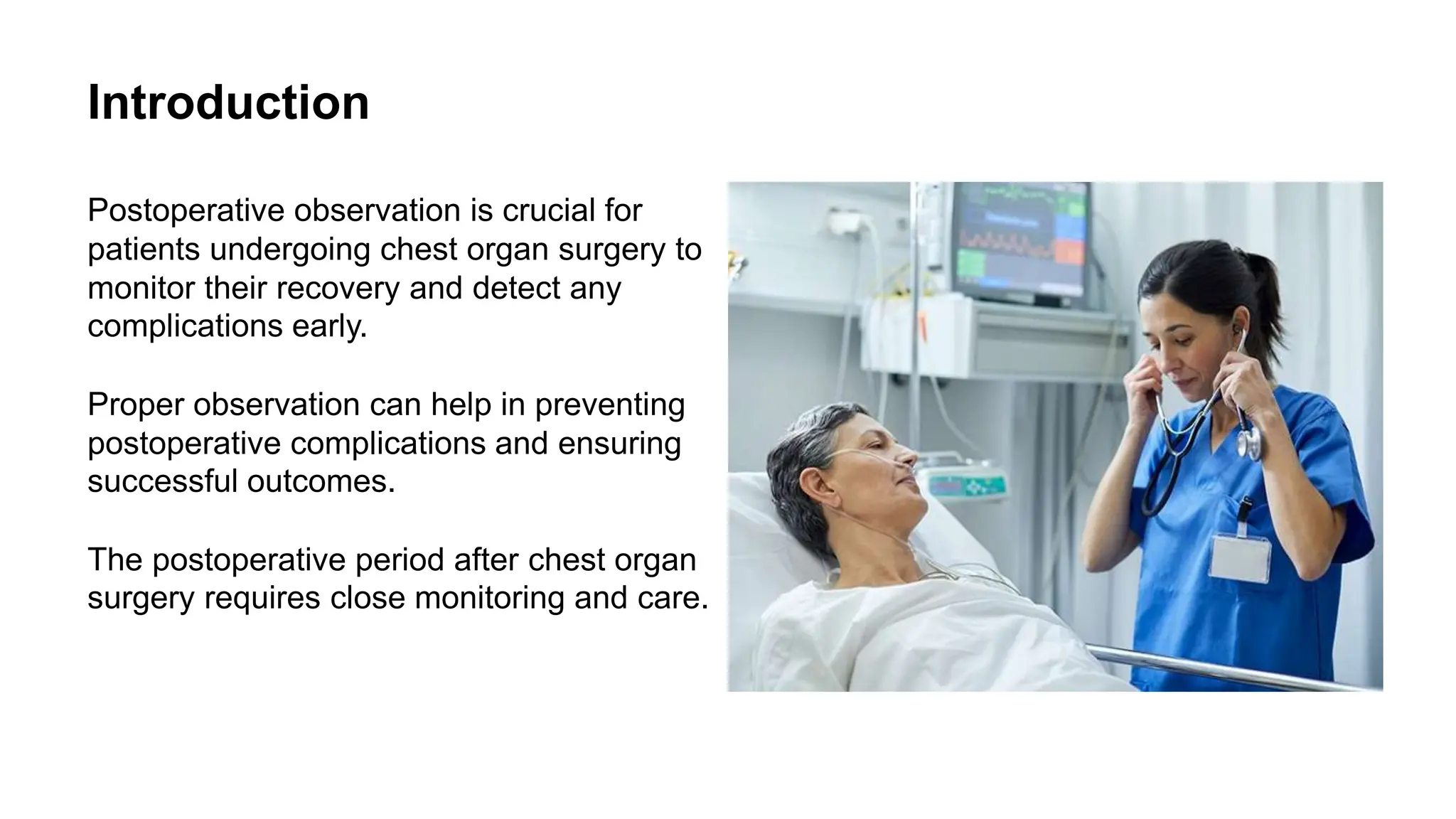
Postoperative observation is crucial for
patients undergoing chest organ surgery to
monitor their recovery and detect any
complications early.
Proper observation can help in preventing
postoperative complications and ensuring
successful outcomes.
The postoperative period after chest organ
surgery requires close monitoring and care.
Immediate Postoperative Period
Immediately after surgery on the chest
organs, the patient is taken to the recovery
room for close monitoring.
Vital signs such as heart rate, blood
pressure, respiratory rate, and oxygen
saturation are closely monitored.
Any signs of bleeding, respiratory distress,
or other complications are promptly
addressed.
Respiratory Assessment
Assess the patient's respiratory rate, depth,
and effort regularly to detect any signs of
respiratory distress.
Monitor oxygen saturation levels and
provide supplemental oxygen if necessary.
Encourage deep breathing and coughing
exercises to prevent postoperative
respiratory complications.
Pain Management
Assess the patient's pain levels using a
pain scale and administer pain medication
as prescribed.
Monitor for signs of inadequate pain control
or adverse reactions to pain medication.
Use multimodal pain management
techniques to ensure adequate pain relief.
Chest Tube Management
Monitor the chest tube drainage and
assess for any signs of excessive bleeding
or air leak.
Ensure proper functioning of the chest tube
system and keep it patent.
Educate the patient and caregivers on
chest tube care and signs of complications.
Wound Care
Monitor the surgical incision for signs of
infection, dehiscence, or delayed healing.
Keep the incision clean and dry, and
change dressings as needed.
Educate the patient on proper wound care
techniques and signs of surgical site
infection.
Fluid and Electrolyte Balance
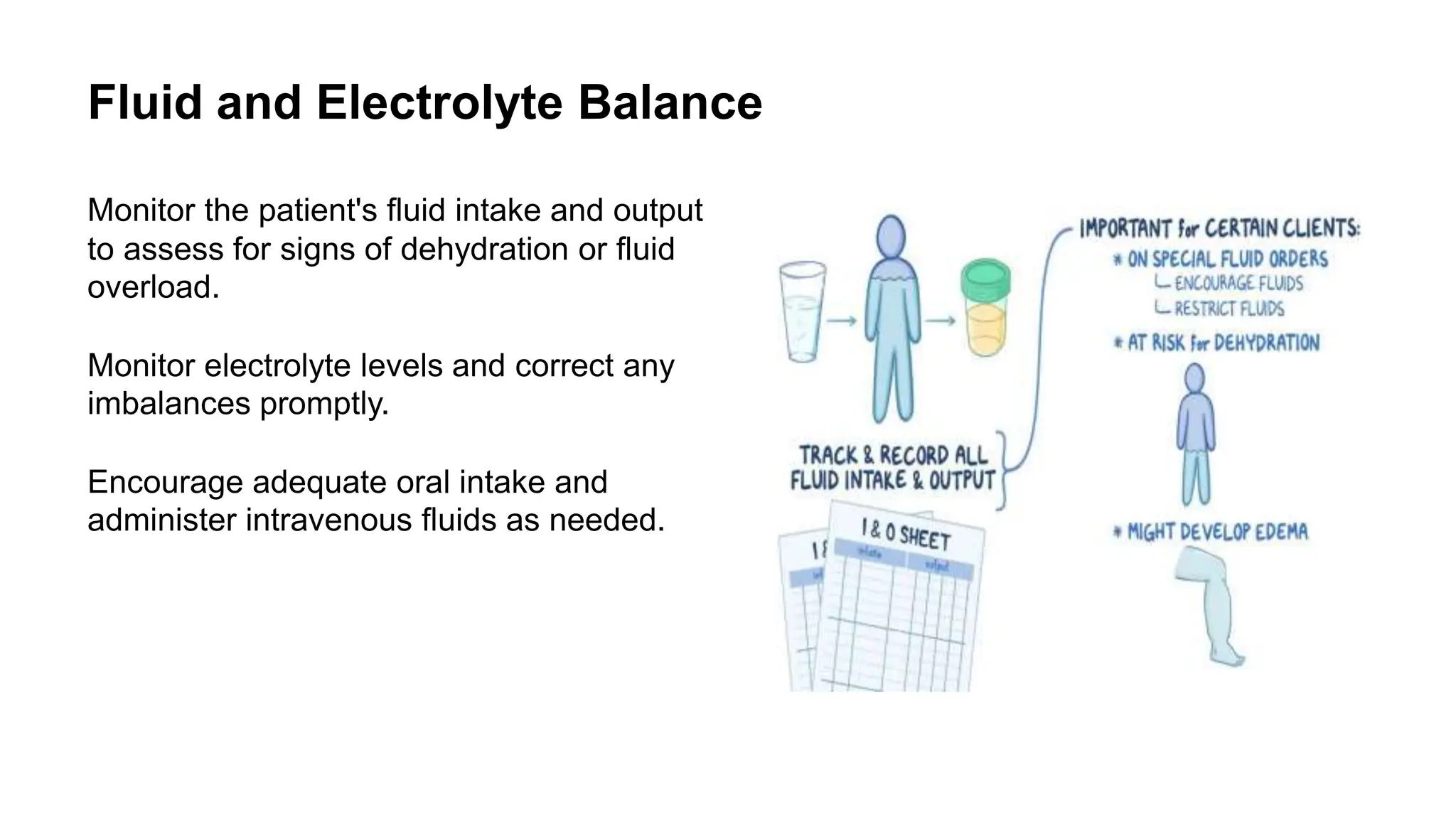
Monitor the patient's fluid intake and output
to assess for signs of dehydration or fluid
overload.
Monitor electrolyte levels and correct any
imbalances promptly.
Encourage adequate oral intake and
administer intravenous fluids as needed.
Mobilization and Activity
Encourage early mobilization and
ambulation to prevent complications such
as deep vein thrombosis and pneumonia.
Assess the patient's ability to perform
activities of daily living and provide
assistance as needed.
Gradually increase activity levels based on
the patient's tolerance and surgical
recovery.
Nutritional Support
Monitor the patient's nutritional status and
provide appropriate dietary support.
Ensure adequate protein intake to promote
wound healing and recovery.
Consider nutritional supplements or enteral
feeding if the patient is unable to eat orally.
Psychological Support
Provide emotional support to the patient
and address any fears or anxiety related to
the surgery.
Encourage open communication and
provide information about the recovery
process.
Refer the patient to a mental health
professional if needed for additional
support.
Discharge Planning
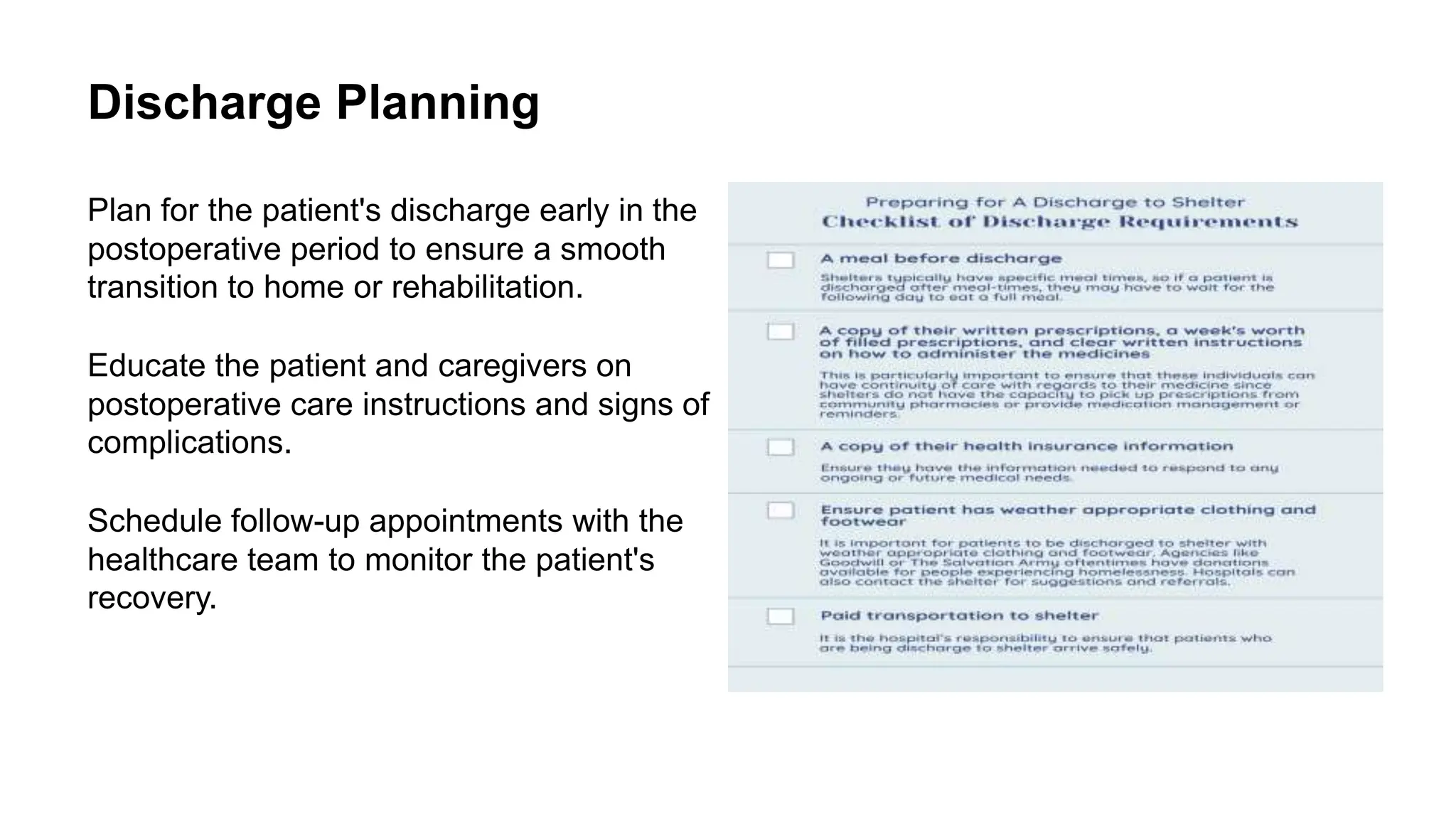
Plan for the patient's discharge early in the
postoperative period to ensure a smooth
transition to home or rehabilitation.
Educate the patient and caregivers on
postoperative care instructions and signs of
complications.
Schedule follow-up appointments with the
healthcare team to monitor the patient's
recovery.
Complication Recognition
Educate the patient on signs and
symptoms of postoperative complications
such as infection, bleeding, and respiratory
distress.
Instruct the patient to seek immediate
medical attention if they experience any
worrisome symptoms.
Provide contact information for healthcare
providers in case of emergency.
Team Collaboration
Collaborate with the multidisciplinary
healthcare team, including surgeons,
nurses, respiratory therapists, and physical
therapists.
Communicate effectively with team
members to ensure coordinated care and
optimal patient outcomes.
Participate in postoperative rounds and
meetings to discuss the patient's progress
and plan of care.
Patient Education
Provide thorough education to the patient
and caregivers about the surgery, recovery
process, and potential complications.
Use clear and simple language to explain
postoperative care instructions and follow-
up appointments.
Ensure the patient understands the
importance of adherence to the prescribed
treatment plan.
Conclusion
Postoperative observation of patients after
chest organ surgery is essential for
ensuring a safe and successful recovery.
Close monitoring, early intervention, and
patient education are key components of
postoperative care.
By following proper observation protocols
and guidelines, healthcare providers can
optimize patient outcomes and promote
effective recovery.

Observation Of The Patient In The Postoperative Period_ A) After Surgery On The Chest Organs.pptx

  • 1.
    Observation Of ThePatient In The Postoperative Period: A) After Surgery On The Chest Organs SlideMake.com
  • 2.
    Introduction Postoperative observation iscrucial for patients undergoing chest organ surgery to monitor their recovery and detect any complications early. Proper observation can help in preventing postoperative complications and ensuring successful outcomes. The postoperative period after chest organ surgery requires close monitoring and care.
  • 3.
    Immediate Postoperative Period Immediatelyafter surgery on the chest organs, the patient is taken to the recovery room for close monitoring. Vital signs such as heart rate, blood pressure, respiratory rate, and oxygen saturation are closely monitored. Any signs of bleeding, respiratory distress, or other complications are promptly addressed.
  • 4.
    Respiratory Assessment Assess thepatient's respiratory rate, depth, and effort regularly to detect any signs of respiratory distress. Monitor oxygen saturation levels and provide supplemental oxygen if necessary. Encourage deep breathing and coughing exercises to prevent postoperative respiratory complications.
  • 5.
    Pain Management Assess thepatient's pain levels using a pain scale and administer pain medication as prescribed. Monitor for signs of inadequate pain control or adverse reactions to pain medication. Use multimodal pain management techniques to ensure adequate pain relief.
  • 6.
    Chest Tube Management Monitorthe chest tube drainage and assess for any signs of excessive bleeding or air leak. Ensure proper functioning of the chest tube system and keep it patent. Educate the patient and caregivers on chest tube care and signs of complications.
  • 7.
    Wound Care Monitor thesurgical incision for signs of infection, dehiscence, or delayed healing. Keep the incision clean and dry, and change dressings as needed. Educate the patient on proper wound care techniques and signs of surgical site infection.
  • 8.
    Fluid and ElectrolyteBalance Monitor the patient's fluid intake and output to assess for signs of dehydration or fluid overload. Monitor electrolyte levels and correct any imbalances promptly. Encourage adequate oral intake and administer intravenous fluids as needed.
  • 9.
    Mobilization and Activity Encourageearly mobilization and ambulation to prevent complications such as deep vein thrombosis and pneumonia. Assess the patient's ability to perform activities of daily living and provide assistance as needed. Gradually increase activity levels based on the patient's tolerance and surgical recovery.
  • 10.
    Nutritional Support Monitor thepatient's nutritional status and provide appropriate dietary support. Ensure adequate protein intake to promote wound healing and recovery. Consider nutritional supplements or enteral feeding if the patient is unable to eat orally.
  • 11.
    Psychological Support Provide emotionalsupport to the patient and address any fears or anxiety related to the surgery. Encourage open communication and provide information about the recovery process. Refer the patient to a mental health professional if needed for additional support.
  • 12.
    Discharge Planning Plan forthe patient's discharge early in the postoperative period to ensure a smooth transition to home or rehabilitation. Educate the patient and caregivers on postoperative care instructions and signs of complications. Schedule follow-up appointments with the healthcare team to monitor the patient's recovery.
  • 13.
    Complication Recognition Educate thepatient on signs and symptoms of postoperative complications such as infection, bleeding, and respiratory distress. Instruct the patient to seek immediate medical attention if they experience any worrisome symptoms. Provide contact information for healthcare providers in case of emergency.
  • 14.
    Team Collaboration Collaborate withthe multidisciplinary healthcare team, including surgeons, nurses, respiratory therapists, and physical therapists. Communicate effectively with team members to ensure coordinated care and optimal patient outcomes. Participate in postoperative rounds and meetings to discuss the patient's progress and plan of care.
  • 15.
    Patient Education Provide thorougheducation to the patient and caregivers about the surgery, recovery process, and potential complications. Use clear and simple language to explain postoperative care instructions and follow- up appointments. Ensure the patient understands the importance of adherence to the prescribed treatment plan.
  • 16.
    Conclusion Postoperative observation ofpatients after chest organ surgery is essential for ensuring a safe and successful recovery. Close monitoring, early intervention, and patient education are key components of postoperative care. By following proper observation protocols and guidelines, healthcare providers can optimize patient outcomes and promote effective recovery.

Editor's Notes

  • #3 Image source: https://healthtimes.com.au/hub/perioperative/46/practice/anmf/pre-and-postoperative-care/2864/
  • #4 Image source: https://www.pinterest.com/pin/454652524855844383/
  • #5 Image source: https://nursekey.com/assessment-of-breathing/
  • #6 Image source: https://www.trinityhealth.org/services/pain/
  • #7 Image source: https://www.pinterest.com/pin/chestdraining-methods--608337862180708194/
  • #8 Image source: https://www.medlineuniversity.com/viewdocument/incision-care-and-the-prevention-of?CommunityKey=d15198e2-e041-4be7-be2b-1cc2c8291f86
  • #9 Image source: https://www.osmosis.org/learn/GI/GU:_Monitoring_fluid_intake_and_output
  • #10 Image source: https://www.johnshopkinssolutions.com/early-mobility-improves-patient-outcomes/
  • #11 Image source: https://nursekey.com/nutritional-assessment-and-support/
  • #12 Image source: https://theresiliencysolution.com/how-can-nurses-provide-emotional-support-for-patients/
  • #13 Image source: https://www.mass.gov/info-details/discharge-planning-skills-and-resources
  • #14 Image source: https://betsylehmancenterma.gov/news/medical-students-mobile-app-engages-patients-in-postoperative-recovery
  • #15 Image source: https://www.labtestingmatters.org/quality-care/interprofessional-teamwork-the-key-to-safe-patient-care/
  • #16 Image source: https://avasta.ch/effective-patient-education-strategies-with-visuals/
  • #17 Image source: https://mavink.com/explore/Chest-Tube-Types