OBJECTIVES OF
RERA
REAL ESTATE (REGULATION AND DEVELOPMENT)
ACT (RERA) 2016
RERA IS AN ACT FOR REGULATION AND PROMOTION
OF THE REAL ESTATE SECTOR TO ENSURE THE
CLOSEOUT OF APARTMENT, PLOT OR BUILDING IN AN
EFFECTIVE AND STRAIGHTFORWARD WAY. THE ACT
INTENDS TO SECURE THE ENTHUSIASM OF
CONSUMERS. IT WAS ENACTED BY THE PARLIAMENT
IN MAY 2016 AND THE ACT HAS COME INTO POWER
WITH ALL ITS 92 SECTIONS FROM 1ST MAY 2017.
WHAT IS RERA ?
NEED FOR RERA
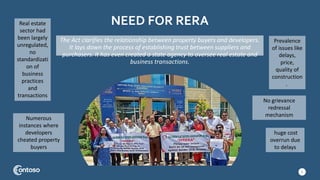
The Act clarifies the relationship between property buyers and developers.
It lays down the process of establishing trust between suppliers and
purchasers. It has even created a state agency to oversee real estate and
business transactions.
3
Real estate
sector had
been largely
unregulated,
no
standardizati
on of
business
practices
and
transactions
Prevalence
of issues like
delays,
price,
quality of
construction
.
No grievance
redressal
mechanism
Numerous
instances where
developers
cheated property
buyers
huge cost
overrun due
to delays
OBJECTIVES OFTHE
ACT
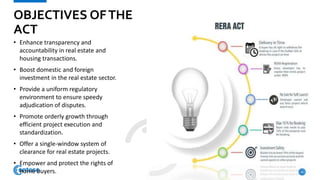
• Enhance transparency and
accountability in real estate and
housing transactions.
• Boost domestic and foreign
investment in the real estate sector.
• Provide a uniform regulatory
environment to ensure speedy
adjudication of disputes.
• Promote orderly growth through
efficient project execution and
standardization.
• Offer a single-window system of
clearance for real estate projects.
• Empower and protect the rights of
home buyers. 4
IMPORTANT SECTIONS
OFTHE RERA ACT, 2016
• Mandatory Registration (Section 3) –
Regulatory Authorities require all
projects with a plot size of at least
500 square metres or eight flats to be
registered.
• Deposits – Placing 70% of the monies
accumulated from the buyer shall be
deposited in a separate escrow
account dedicated solely for the
construction of that project.
5
• Ceiling on advance payments (Section 13) –
Without initially entering into a sale
agreement, a promoter cannot receive more
than 10% of the cost of the plot, apartment,
or building as an advance payment or an
application fee from a person.
• State-level regulatory authorities (Section
20) –The Real Estate Regulatory Authority
(RERA) is established at the state level. The
Act allows state governments to create
multiple regulatory authorities, each with
the following mandate:
6
7
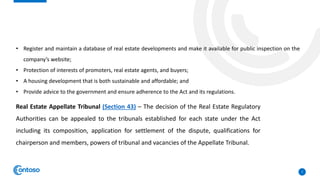
• Register and maintain a database of real estate developments and make it available for public inspection on the
company’s website;
• Protection of interests of promoters, real estate agents, and buyers;
• A housing development that is both sustainable and affordable; and
• Provide advice to the government and ensure adherence to the Act and its regulations.
Real Estate Appellate Tribunal (Section 43) – The decision of the Real Estate Regulatory
Authorities can be appealed to the tribunals established for each state under the Act
including its composition, application for settlement of the dispute, qualifications for
chairperson and members, powers of tribunal and vacancies of the Appellate Tribunal.
8
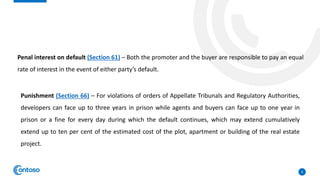
Penal interest on default (Section 61) – Both the promoter and the buyer are responsible to pay an equal
rate of interest in the event of either party’s default.
Punishment (Section 66) – For violations of orders of Appellate Tribunals and Regulatory Authorities,
developers can face up to three years in prison while agents and buyers can face up to one year in
prison or a fine for every day during which the default continues, which may extend cumulatively
extend up to ten per cent of the estimated cost of the plot, apartment or building of the real estate
project.
JUDICIAL INSIGHTS
GEETANJALIAMAN
CONSTRUCTIONSV.
HRISHIKESH RAMESH
PARANJPE
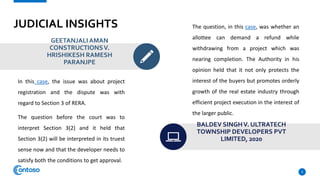
In this case, the issue was about project
registration and the dispute was with
regard to Section 3 of RERA.
The question before the court was to
interpret Section 3(2) and it held that
Section 3(2) will be interpreted in its truest
sense now and that the developer needs to
satisfy both the conditions to get approval.
The question, in this case, was whether an
allottee can demand a refund while
withdrawing from a project which was
nearing completion. The Authority in his
opinion held that it not only protects the
interest of the buyers but promotes orderly
growth of the real estate industry through
efficient project execution in the interest of
the larger public.
BALDEV SINGHV. ULTRATECH
TOWNSHIP DEVELOPERS PVT
LIMITED, 2020
9
CONCLUSION
10
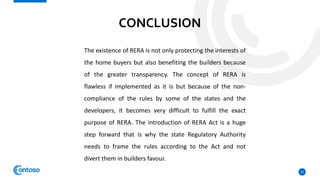
The existence of RERA is not only protecting the interests of
the home buyers but also benefiting the builders because
of the greater transparency. The concept of RERA is
flawless if implemented as it is but because of the non-
compliance of the rules by some of the states and the
developers, it becomes very difficult to fulfill the exact
purpose of RERA. The introduction of RERA Act is a huge
step forward that is why the state Regulatory Authority
needs to frame the rules according to the Act and not
divert them in builders favour.
THANKYOU!

OBJECTIVES OF RERA.pptx

  • 1.
    OBJECTIVES OF RERA REAL ESTATE(REGULATION AND DEVELOPMENT) ACT (RERA) 2016
  • 2.
    RERA IS ANACT FOR REGULATION AND PROMOTION OF THE REAL ESTATE SECTOR TO ENSURE THE CLOSEOUT OF APARTMENT, PLOT OR BUILDING IN AN EFFECTIVE AND STRAIGHTFORWARD WAY. THE ACT INTENDS TO SECURE THE ENTHUSIASM OF CONSUMERS. IT WAS ENACTED BY THE PARLIAMENT IN MAY 2016 AND THE ACT HAS COME INTO POWER WITH ALL ITS 92 SECTIONS FROM 1ST MAY 2017. WHAT IS RERA ?
  • 3.
    NEED FOR RERA TheAct clarifies the relationship between property buyers and developers. It lays down the process of establishing trust between suppliers and purchasers. It has even created a state agency to oversee real estate and business transactions. 3 Real estate sector had been largely unregulated, no standardizati on of business practices and transactions Prevalence of issues like delays, price, quality of construction . No grievance redressal mechanism Numerous instances where developers cheated property buyers huge cost overrun due to delays
  • 4.
    OBJECTIVES OFTHE ACT • Enhancetransparency and accountability in real estate and housing transactions. • Boost domestic and foreign investment in the real estate sector. • Provide a uniform regulatory environment to ensure speedy adjudication of disputes. • Promote orderly growth through efficient project execution and standardization. • Offer a single-window system of clearance for real estate projects. • Empower and protect the rights of home buyers. 4
  • 5.
    IMPORTANT SECTIONS OFTHE RERAACT, 2016 • Mandatory Registration (Section 3) – Regulatory Authorities require all projects with a plot size of at least 500 square metres or eight flats to be registered. • Deposits – Placing 70% of the monies accumulated from the buyer shall be deposited in a separate escrow account dedicated solely for the construction of that project. 5
  • 6.
    • Ceiling onadvance payments (Section 13) – Without initially entering into a sale agreement, a promoter cannot receive more than 10% of the cost of the plot, apartment, or building as an advance payment or an application fee from a person. • State-level regulatory authorities (Section 20) –The Real Estate Regulatory Authority (RERA) is established at the state level. The Act allows state governments to create multiple regulatory authorities, each with the following mandate: 6
  • 7.
    7 • Register andmaintain a database of real estate developments and make it available for public inspection on the company’s website; • Protection of interests of promoters, real estate agents, and buyers; • A housing development that is both sustainable and affordable; and • Provide advice to the government and ensure adherence to the Act and its regulations. Real Estate Appellate Tribunal (Section 43) – The decision of the Real Estate Regulatory Authorities can be appealed to the tribunals established for each state under the Act including its composition, application for settlement of the dispute, qualifications for chairperson and members, powers of tribunal and vacancies of the Appellate Tribunal.
  • 8.
    8 Penal interest ondefault (Section 61) – Both the promoter and the buyer are responsible to pay an equal rate of interest in the event of either party’s default. Punishment (Section 66) – For violations of orders of Appellate Tribunals and Regulatory Authorities, developers can face up to three years in prison while agents and buyers can face up to one year in prison or a fine for every day during which the default continues, which may extend cumulatively extend up to ten per cent of the estimated cost of the plot, apartment or building of the real estate project.
  • 9.
    JUDICIAL INSIGHTS GEETANJALIAMAN CONSTRUCTIONSV. HRISHIKESH RAMESH PARANJPE Inthis case, the issue was about project registration and the dispute was with regard to Section 3 of RERA. The question before the court was to interpret Section 3(2) and it held that Section 3(2) will be interpreted in its truest sense now and that the developer needs to satisfy both the conditions to get approval. The question, in this case, was whether an allottee can demand a refund while withdrawing from a project which was nearing completion. The Authority in his opinion held that it not only protects the interest of the buyers but promotes orderly growth of the real estate industry through efficient project execution in the interest of the larger public. BALDEV SINGHV. ULTRATECH TOWNSHIP DEVELOPERS PVT LIMITED, 2020 9
  • 10.
    CONCLUSION 10 The existence ofRERA is not only protecting the interests of the home buyers but also benefiting the builders because of the greater transparency. The concept of RERA is flawless if implemented as it is but because of the non- compliance of the rules by some of the states and the developers, it becomes very difficult to fulfill the exact purpose of RERA. The introduction of RERA Act is a huge step forward that is why the state Regulatory Authority needs to frame the rules according to the Act and not divert them in builders favour.
  • 11.