Nurturing a Healthy Workplace:
Strategies to Maximize
Corporate Wellness Programs
Corporate wellness programs are becoming more and more popular as businesses see the benefits
of having a happy and healthy workforce. These initiatives, which aim to improve workers’
happiness, productivity, and well-being, are now essential parts of the culture at work. We will go
into the topic of corporate wellness programs in this comprehensive guide, explaining its
importance, elements, methods of implementation, and ways that employers and employees can
get the most out of these endeavors.
Understanding Corporate Wellness Programs
Corporate wellness programs are structured initiatives implemented by organizations to promote
the health and well-being of their employees. These programs encompass a wide range of
activities and services aimed at fostering physical, mental, and emotional wellness. From fitness
classes and nutrition workshops to stress management resources and preventive health screenings,
corporate wellness programs are designed to create a supportive environment encouraging
employees to prioritize their health.
Components of Corporate Wellness Programs
Effective corporate wellness programs typically incorporate a diverse array of components to
address various aspects of well-being. Key components may include:
Physical Fitness Programs: Offering gym facilities, fitness classes, or incentives for physical
activity.
Nutritional Initiatives: Providing access to healthy snacks, nutrition counseling, or educational
workshops.
Mental Health Support: Offering counseling services, stress management programs, and
resources to support mental well-being.
Health Screenings: Providing preventive health check-ups and early screenings to detect
potential health issues.
Work-Life Balance Initiatives: Encouraging flexible work schedules, remote work options, and
policies that promote a healthy work-life balance.
Tailoring Programs to Employee Needs
To maximize the impact of corporate wellness programs, employers should consider tailoring
initiatives to the specific needs and preferences of their workforce. Conducting surveys or
seeking feedback can help organizations understand the unique challenges and priorities of their
employees, allowing for the customization of wellness offerings.
Example: An organization with a diverse workforce discovers through employee surveys that
stress management is a top concern. In response, they introduce mindfulness workshops and
resources to address this specific need.
Promoting a Culture of Wellness
The success of corporate wellness programs is closely tied to the organization’s culture. A
workplace that actively promotes a culture of wellness fosters an environment where employees
feel supported and encouraged to prioritize their health. This involves leadership demonstrating a
commitment to well-being, integrating wellness into company values, and recognizing and
rewarding healthy behaviors.
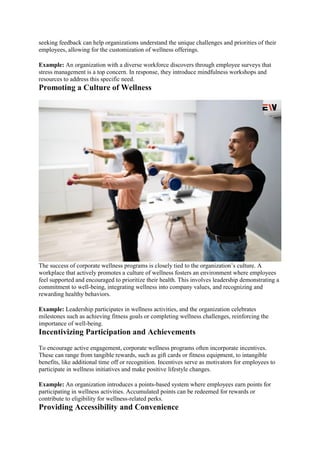
Example: Leadership participates in wellness activities, and the organization celebrates
milestones such as achieving fitness goals or completing wellness challenges, reinforcing the
importance of well-being.
Incentivizing Participation and Achievements
To encourage active engagement, corporate wellness programs often incorporate incentives.
These can range from tangible rewards, such as gift cards or fitness equipment, to intangible
benefits, like additional time off or recognition. Incentives serve as motivators for employees to
participate in wellness initiatives and make positive lifestyle changes.
Example: An organization introduces a points-based system where employees earn points for
participating in wellness activities. Accumulated points can be redeemed for rewards or
contribute to eligibility for wellness-related perks.
Providing Accessibility and Convenience
The accessibility of wellness programs significantly influences participation rates. To maximize
benefits, organizations should ensure that wellness offerings are convenient and easily accessible
to all employees. This may involve providing on-site fitness facilities, offering virtual wellness
resources, or partnering with local health and fitness providers.
Example: An organization with multiple locations provides virtual fitness classes and wellness
webinars to ensure that all employees, regardless of their location, can access and benefit from
the programs.
Encouraging Social Support and Community Building
The social aspect of wellness programs is crucial for fostering a sense of community and support.
Creating opportunities for employees to engage in wellness activities, participate in team
challenges, or join wellness-focused interest groups contributes to a supportive and collaborative
atmosphere.
Example: An organization organizes group walks during lunch breaks or establishes wellness
clubs based on shared interests, providing employees with opportunities to connect and support
each other’s wellness journeys.
Measuring and Analyzing Program Effectiveness
To gauge the impact of corporate wellness programs, organizations should establish metrics and
regularly evaluate the effectiveness of their initiatives. Metrics may include participation rates,
health improvements, employee satisfaction surveys, and the overall impact on workplace
culture. Analyzing this data allows employers to refine and tailor programs for continuous
improvement.
Example: An organization conducts annual wellness assessments, tracking changes in key health
indicators and surveying employees about their satisfaction with wellness offerings. This data
guides adjustments and enhancements to the program.
Integrating Technology for Wellness Tracking
The integration of technology can enhance the tracking and monitoring of employee wellness.
Wellness apps, wearable devices, and online platforms allow employees to set goals, track
progress, and access resources conveniently. Employers can leverage technology to collect
anonymized data, gaining insights into trends and areas where additional support may be needed.
Example: Employees use a wellness app that syncs with their fitness trackers, allowing them to
log activities, monitor health metrics, and receive personalized recommendations. The
organization analyzes aggregated data to identify trends and tailor wellness initiatives.
Creating a Continuum of Care
Maximizing the benefits of corporate wellness programs involves recognizing that well-being is
an ongoing journey. Establishing a continuum of care that extends beyond specific programs or
challenges ensures that employees have access to resources and support throughout their wellness
journey. This may include ongoing educational workshops, periodic health check-ups, and
resources for maintaining healthy habits.
Example: An organization provides follow-up sessions or workshops to support employees after
completing a stress management program, reinforcing strategies learned and offering ongoing
guidance.
Conclusion
Corporate wellness programs are powerful tools for creating healthier, more engaged, and
productive workplaces. Employers may optimize the advantages of corporate wellness programs
by comprehending the constituents, customizing programs to meet the needs of staff, encouraging
a wellness culture, and leveraging technology for monitoring. Investing in the well-being of
employees not only improves employee well-being but also fosters a healthy and vibrant working
culture within organizations.
Also Read: Are These 5 Toxic Workplace Behaviors Driving Away Your Talent?

Nurturing a Healthy Workplac1.pdf

  • 1.
    Nurturing a HealthyWorkplace: Strategies to Maximize Corporate Wellness Programs Corporate wellness programs are becoming more and more popular as businesses see the benefits of having a happy and healthy workforce. These initiatives, which aim to improve workers’ happiness, productivity, and well-being, are now essential parts of the culture at work. We will go into the topic of corporate wellness programs in this comprehensive guide, explaining its importance, elements, methods of implementation, and ways that employers and employees can get the most out of these endeavors. Understanding Corporate Wellness Programs
  • 2.
    Corporate wellness programsare structured initiatives implemented by organizations to promote the health and well-being of their employees. These programs encompass a wide range of activities and services aimed at fostering physical, mental, and emotional wellness. From fitness classes and nutrition workshops to stress management resources and preventive health screenings, corporate wellness programs are designed to create a supportive environment encouraging employees to prioritize their health. Components of Corporate Wellness Programs Effective corporate wellness programs typically incorporate a diverse array of components to address various aspects of well-being. Key components may include: Physical Fitness Programs: Offering gym facilities, fitness classes, or incentives for physical activity. Nutritional Initiatives: Providing access to healthy snacks, nutrition counseling, or educational workshops. Mental Health Support: Offering counseling services, stress management programs, and resources to support mental well-being. Health Screenings: Providing preventive health check-ups and early screenings to detect potential health issues. Work-Life Balance Initiatives: Encouraging flexible work schedules, remote work options, and policies that promote a healthy work-life balance. Tailoring Programs to Employee Needs To maximize the impact of corporate wellness programs, employers should consider tailoring initiatives to the specific needs and preferences of their workforce. Conducting surveys or
  • 3.
    seeking feedback canhelp organizations understand the unique challenges and priorities of their employees, allowing for the customization of wellness offerings. Example: An organization with a diverse workforce discovers through employee surveys that stress management is a top concern. In response, they introduce mindfulness workshops and resources to address this specific need. Promoting a Culture of Wellness The success of corporate wellness programs is closely tied to the organization’s culture. A workplace that actively promotes a culture of wellness fosters an environment where employees feel supported and encouraged to prioritize their health. This involves leadership demonstrating a commitment to well-being, integrating wellness into company values, and recognizing and rewarding healthy behaviors. Example: Leadership participates in wellness activities, and the organization celebrates milestones such as achieving fitness goals or completing wellness challenges, reinforcing the importance of well-being. Incentivizing Participation and Achievements To encourage active engagement, corporate wellness programs often incorporate incentives. These can range from tangible rewards, such as gift cards or fitness equipment, to intangible benefits, like additional time off or recognition. Incentives serve as motivators for employees to participate in wellness initiatives and make positive lifestyle changes. Example: An organization introduces a points-based system where employees earn points for participating in wellness activities. Accumulated points can be redeemed for rewards or contribute to eligibility for wellness-related perks. Providing Accessibility and Convenience
  • 4.
    The accessibility ofwellness programs significantly influences participation rates. To maximize benefits, organizations should ensure that wellness offerings are convenient and easily accessible to all employees. This may involve providing on-site fitness facilities, offering virtual wellness resources, or partnering with local health and fitness providers. Example: An organization with multiple locations provides virtual fitness classes and wellness webinars to ensure that all employees, regardless of their location, can access and benefit from the programs. Encouraging Social Support and Community Building The social aspect of wellness programs is crucial for fostering a sense of community and support. Creating opportunities for employees to engage in wellness activities, participate in team challenges, or join wellness-focused interest groups contributes to a supportive and collaborative atmosphere. Example: An organization organizes group walks during lunch breaks or establishes wellness clubs based on shared interests, providing employees with opportunities to connect and support each other’s wellness journeys. Measuring and Analyzing Program Effectiveness To gauge the impact of corporate wellness programs, organizations should establish metrics and regularly evaluate the effectiveness of their initiatives. Metrics may include participation rates, health improvements, employee satisfaction surveys, and the overall impact on workplace culture. Analyzing this data allows employers to refine and tailor programs for continuous improvement.
  • 5.
    Example: An organizationconducts annual wellness assessments, tracking changes in key health indicators and surveying employees about their satisfaction with wellness offerings. This data guides adjustments and enhancements to the program. Integrating Technology for Wellness Tracking The integration of technology can enhance the tracking and monitoring of employee wellness. Wellness apps, wearable devices, and online platforms allow employees to set goals, track progress, and access resources conveniently. Employers can leverage technology to collect anonymized data, gaining insights into trends and areas where additional support may be needed. Example: Employees use a wellness app that syncs with their fitness trackers, allowing them to log activities, monitor health metrics, and receive personalized recommendations. The organization analyzes aggregated data to identify trends and tailor wellness initiatives. Creating a Continuum of Care Maximizing the benefits of corporate wellness programs involves recognizing that well-being is an ongoing journey. Establishing a continuum of care that extends beyond specific programs or challenges ensures that employees have access to resources and support throughout their wellness journey. This may include ongoing educational workshops, periodic health check-ups, and resources for maintaining healthy habits. Example: An organization provides follow-up sessions or workshops to support employees after completing a stress management program, reinforcing strategies learned and offering ongoing guidance. Conclusion Corporate wellness programs are powerful tools for creating healthier, more engaged, and productive workplaces. Employers may optimize the advantages of corporate wellness programs by comprehending the constituents, customizing programs to meet the needs of staff, encouraging a wellness culture, and leveraging technology for monitoring. Investing in the well-being of employees not only improves employee well-being but also fosters a healthy and vibrant working culture within organizations. Also Read: Are These 5 Toxic Workplace Behaviors Driving Away Your Talent?