WHAT IS MIGRATION?
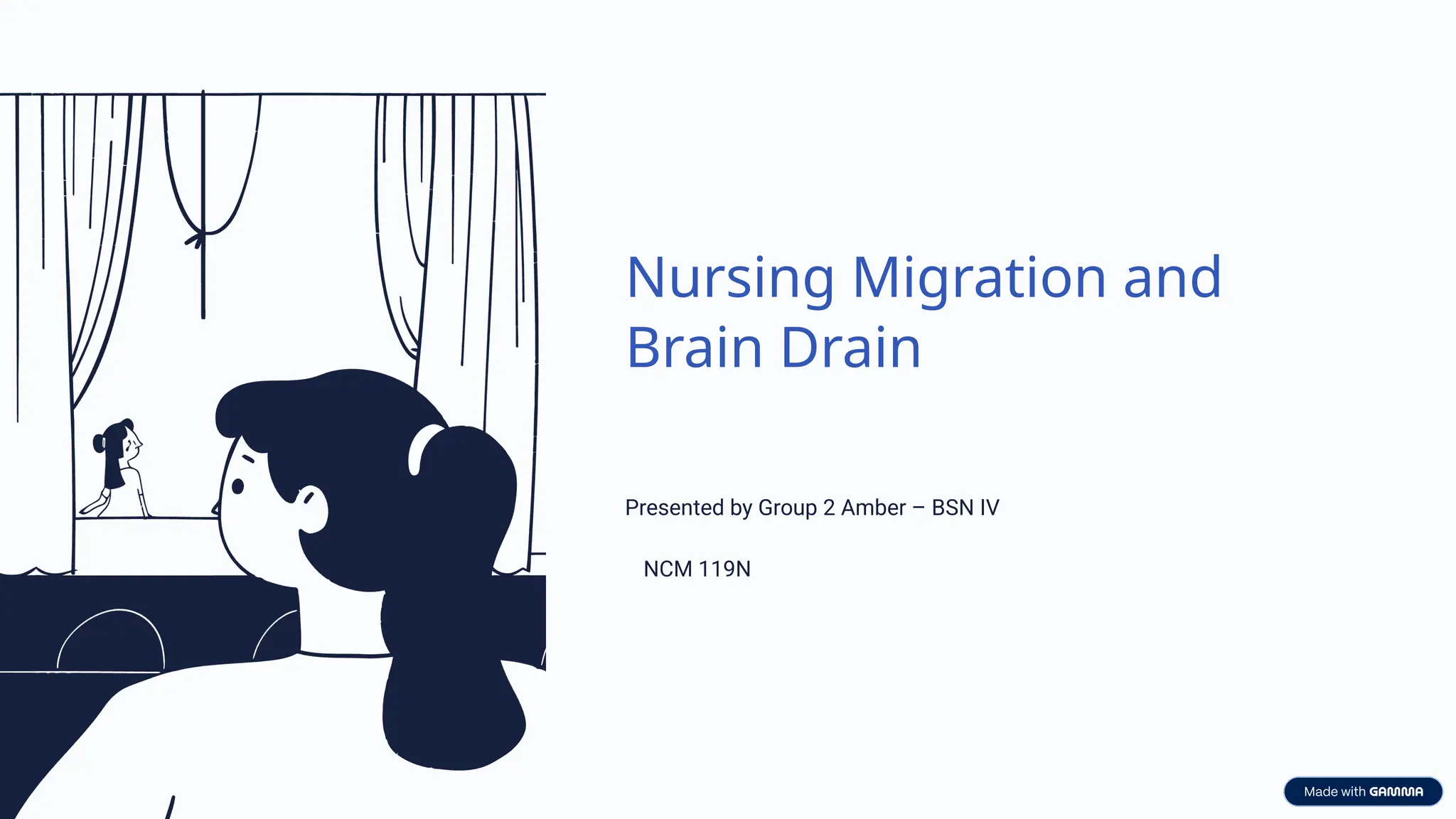
NursingMigration Nurses moving abroad for better opportunities. The term "Brain Drain" loss of skilled workers from home country
Global Trend
1 in 8 nurses now works outside their home country, highlighting a
widespread international trend.
Philippines' Role
The Philippines stands as the No. 1 exporter of nurses globally,
contributing significantly to the international nursing workforce.
3.
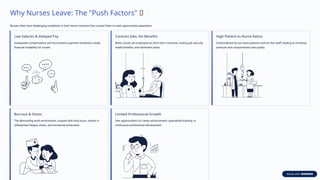
Why Nurses Leave:The "Push Factors" 🚪
Nurses often face challenging conditions in their home countries that compel them to seek opportunities elsewhere.
Low Salaries & Delayed Pay
Inadequate compensation and inconsistent payment schedules create
financial instability for nurses.
Contract Jobs, No Benefits
Many nurses are employed on short-term contracts, lacking job security,
health benefits, and retirement plans.
High Patient-to-Nurse Ratios
Overburdened by too many patients and too few staff, leading to immense
pressure and compromised care quality.
Burnout & Stress
The demanding work environment, coupled with long hours, results in
widespread fatigue, stress, and emotional exhaustion.
Limited Professional Growth
Few opportunities for career advancement, specialized training, or
continuous professional development.
4.
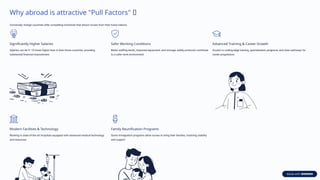
Why abroad isattractive "Pull Factors" 🎯
Conversely, foreign countries offer compelling incentives that attract nurses from their home nations.
Significantly Higher Salaries
Salaries can be 5–10 times higher than in their home countries, providing
substantial financial improvement.
Safer Working Conditions
Better staffing levels, improved equipment, and stronger safety protocols contribute
to a safer work environment.
Advanced Training & Career Growth
Access to cutting-edge training, specialization programs, and clear pathways for
career progression.
Modern Facilities & Technology
Working in state-of-the-art hospitals equipped with advanced medical technology
and resources.
Family Reunification Programs
Some immigration programs allow nurses to bring their families, fostering stability
and support.
5.
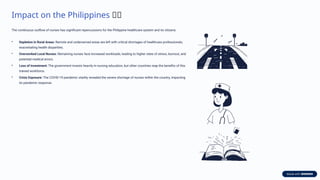
Impact on thePhilippines 🇵🇭
The continuous outflow of nurses has significant repercussions for the Philippine healthcare system and its citizens.
• Depletion in Rural Areas: Remote and underserved areas are left with critical shortages of healthcare professionals,
exacerbating health disparities.
• Overworked Local Nurses: Remaining nurses face increased workloads, leading to higher rates of stress, burnout, and
potential medical errors.
• Loss of Investment: The government invests heavily in nursing education, but other countries reap the benefits of this
trained workforce.
• Crisis Exposure: The COVID-19 pandemic starkly revealed the severe shortage of nurses within the country, impacting
its pandemic response.
6.
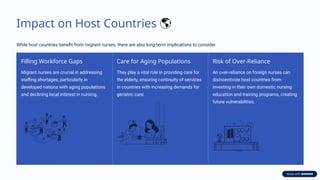
Impact on HostCountries 🌎
While host countries benefit from migrant nurses, there are also long-term implications to consider.
Filling Workforce Gaps
Migrant nurses are crucial in addressing
staffing shortages, particularly in
developed nations with aging populations
and declining local interest in nursing.
Care for Aging Populations
They play a vital role in providing care for
the elderly, ensuring continuity of services
in countries with increasing demands for
geriatric care.
Risk of Over-Reliance
An over-reliance on foreign nurses can
disincentivize host countries from
investing in their own domestic nursing
education and training programs, creating
future vulnerabilities.
7.
Impact on MigrantNurses ✈ ️
⚕️
✈️
️
⚕
️
⚕
️
⚕
️
⚕
️
⚕
️
⚕
️
⚕
️
⚕
️
⚕
️
⚕
️
⚕
️
⚕
️
⚕️
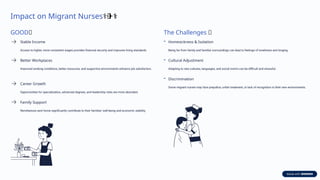
GOOD✅
Stable Income
Access to higher, more consistent wages provides financial security and improves living standards.
Better Workplaces
Improved working conditions, better resources, and supportive environments enhance job satisfaction.
Career Growth
Opportunities for specialization, advanced degrees, and leadership roles are more abundant.
Family Support
Remittances sent home significantly contribute to their families' well-being and economic stability.
The Challenges ❌
Homesickness & Isolation
Being far from family and familiar surroundings can lead to feelings of loneliness and longing.
Cultural Adjustment
Adapting to new cultures, languages, and social norms can be difficult and stressful.
Discrimination
Some migrant nurses may face prejudice, unfair treatment, or lack of recognition in their new environments.
8.
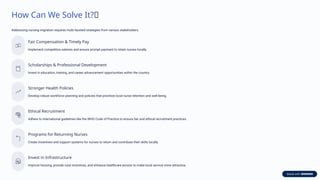
How Can WeSolve It?💡
Addressing nursing migration requires multi-faceted strategies from various stakeholders.
Fair Compensation & Timely Pay
Implement competitive salaries and ensure prompt payment to retain nurses locally.
Scholarships & Professional Development
Invest in education, training, and career advancement opportunities within the country.
Stronger Health Policies
Develop robust workforce planning and policies that prioritize local nurse retention and well-being.
Ethical Recruitment
Adhere to international guidelines like the WHO Code of Practice to ensure fair and ethical recruitment practices.
Programs for Returning Nurses
Create incentives and support systems for nurses to return and contribute their skills locally.
Invest in Infrastructure
Improve housing, provide rural incentives, and enhance healthcare access to make local service more attractive.
9.
Role of Nurses💪
⚕️
️
⚕
️
⚕
️
⚕
️
⚕
️
⚕
️
⚕
️
⚕
️
⚕
️
⚕
️
⚕
️
⚕
️
⚕
️
⚕️
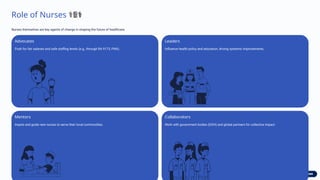
Nurses themselves are key agents of change in shaping the future of healthcare.
Advocates
Push for fair salaries and safe staffing levels (e.g., through RA 9173, PNA).
Leaders
Influence health policy and education, driving systemic improvements.
Mentors
Inspire and guide new nurses to serve their local communities.
Collaborators
Work with government bodies (DOH) and global partners for collective impact.
10.
Final Message
Nursing migration=big
challenge for the
Philippines.
SDG 8: Decent Work & Economic Growth, emphasizing the need for sustainable employment
and equitable opportunities.
Together — policy makers, institutions, and nurses — we can build a future where:
✨ Nurses stay.✨
Healthcare grows.✨
Communities thrive.