NSPS OOOOa – Looking Forward
Presented By
John A. McGreevy
November 2, 2016
Prepared For
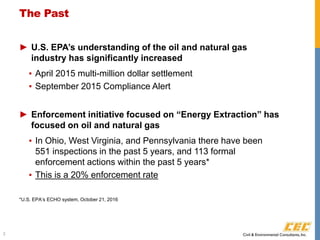
The Past
ā–ŗ U.S. EPA’s understanding of the oil and natural gas
industry has significantly increased
ā–Ŗ April 2015 multi-million dollar settlement
ā–Ŗ September 2015 Compliance Alert
ā–ŗ Enforcement initiative focused on ā€œEnergy Extractionā€ has
focused on oil and natural gas
ā–Ŗ In Ohio, West Virginia, and Pennsylvania there have been
551 inspections in the past 5 years, and 113 formal
enforcement actions within the past 5 years*
ā–Ŗ This is a 20% enforcement rate
*U.S. EPA’s ECHO system, October 21, 2016
2
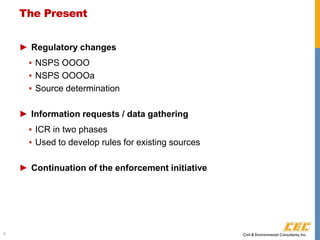
The Present
ā–ŗ Regulatory changes
ā–Ŗ NSPS OOOO
ā–Ŗ NSPS OOOOa
ā–Ŗ Source determination
ā–ŗ Information requests / data gathering
ā–Ŗ ICR in two phases
ā–Ŗ Used to develop rules for existing sources
ā–ŗ Continuation of the enforcement initiative
3
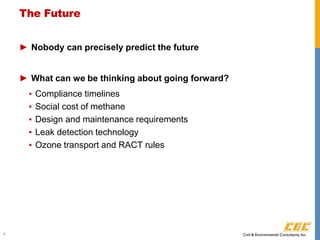
The Future
ā–ŗ Nobody can precisely predict the future
ā–ŗ What can we be thinking about going forward?
ā–Ŗ Compliance timelines
ā–Ŗ Social cost of methane
ā–Ŗ Design and maintenance requirements
ā–Ŗ Leak detection technology
ā–Ŗ Ozone transport and RACT rules
4
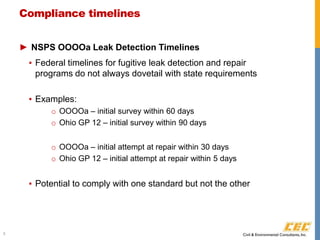
Compliance timelines
ā–ŗ NSPS OOOOa Leak Detection Timelines
ā–Ŗ Federal timelines for fugitive leak detection and repair
programs do not always dovetail with state requirements
ā–Ŗ Examples:
o OOOOa – initial survey within 60 days
o Ohio GP 12 – initial survey within 90 days
o OOOOa – initial attempt at repair within 30 days
o Ohio GP 12 – initial attempt at repair within 5 days
ā–Ŗ Potential to comply with one standard but not the other
5
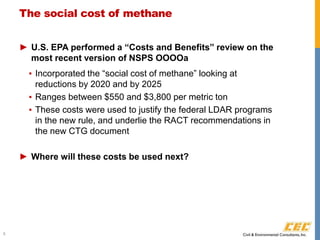
The social cost of methane
ā–ŗ U.S. EPA performed a ā€œCosts and Benefitsā€ review on the
most recent version of NSPS OOOOa
ā–Ŗ Incorporated the ā€œsocial cost of methaneā€ looking at
reductions by 2020 and by 2025
ā–Ŗ Ranges between $550 and $3,800 per metric ton
ā–Ŗ These costs were used to justify the federal LDAR programs
in the new rule, and underlie the RACT recommendations in
the new CTG document
ā–ŗ Where will these costs be used next?
6
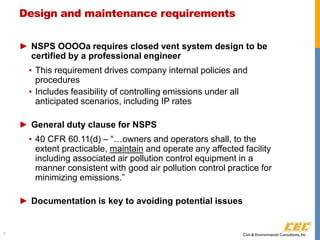
Design and maintenance requirements
ā–ŗ NSPS OOOOa requires closed vent system design to be
certified by a professional engineer
ā–Ŗ This requirement drives company internal policies and
procedures
ā–Ŗ Includes feasibility of controlling emissions under all
anticipated scenarios, including IP rates
ā–ŗ General duty clause for NSPS
ā–Ŗ 40 CFR 60.11(d) – ā€œā€¦owners and operators shall, to the
extent practicable, maintain and operate any affected facility
including associated air pollution control equipment in a
manner consistent with good air pollution control practice for
minimizing emissions.ā€
ā–ŗ Documentation is key to avoiding potential issues
7
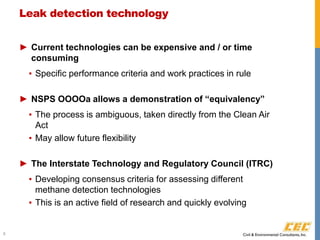
Leak detection technology
ā–ŗ Current technologies can be expensive and / or time
consuming
ā–Ŗ Specific performance criteria and work practices in rule
ā–ŗ NSPS OOOOa allows a demonstration of ā€œequivalencyā€
ā–Ŗ The process is ambiguous, taken directly from the Clean Air
Act
ā–Ŗ May allow future flexibility
ā–ŗ The Interstate Technology and Regulatory Council (ITRC)
ā–Ŗ Developing consensus criteria for assessing different
methane detection technologies
ā–Ŗ This is an active field of research and quickly evolving
8
The Ozone Transport Region and RACT rules
ā–ŗ U.S. EPA officially published a new Control Techniques
Guidelines (CTG) document for the oil and gas industry
ā–Ŗ Limitations and recommendations directly from OOOOa
ā–Ŗ Applies to existing sources in some ozone non-attainment
areas and states in the OTR
ā–Ŗ 2 years for states to revise their rules to incorporate these
requirements – RACT rules
ā–ŗ The OTR currently includes Pennsylvania
ā–Ŗ Several OTR states submitted a petition to U.S. EPA on
December 9, 2013 requesting the addition of several more
states, including Ohio
ā–Ŗ This petition is still pending, no action has been taken as of
yet
9
Thank you
ā–ŗ I appreciate your attention, and look forward to your
questions and comments
10

NSPS OOOOa - Looking Forward

  • 1.
    NSPS OOOOa –Looking Forward Presented By John A. McGreevy November 2, 2016 Prepared For
  • 2.
    The Past ā–ŗ U.S.EPA’s understanding of the oil and natural gas industry has significantly increased ā–Ŗ April 2015 multi-million dollar settlement ā–Ŗ September 2015 Compliance Alert ā–ŗ Enforcement initiative focused on ā€œEnergy Extractionā€ has focused on oil and natural gas ā–Ŗ In Ohio, West Virginia, and Pennsylvania there have been 551 inspections in the past 5 years, and 113 formal enforcement actions within the past 5 years* ā–Ŗ This is a 20% enforcement rate *U.S. EPA’s ECHO system, October 21, 2016 2
  • 3.
    The Present ā–ŗ Regulatorychanges ā–Ŗ NSPS OOOO ā–Ŗ NSPS OOOOa ā–Ŗ Source determination ā–ŗ Information requests / data gathering ā–Ŗ ICR in two phases ā–Ŗ Used to develop rules for existing sources ā–ŗ Continuation of the enforcement initiative 3
  • 4.
    The Future ā–ŗ Nobodycan precisely predict the future ā–ŗ What can we be thinking about going forward? ā–Ŗ Compliance timelines ā–Ŗ Social cost of methane ā–Ŗ Design and maintenance requirements ā–Ŗ Leak detection technology ā–Ŗ Ozone transport and RACT rules 4
  • 5.
    Compliance timelines ā–ŗ NSPSOOOOa Leak Detection Timelines ā–Ŗ Federal timelines for fugitive leak detection and repair programs do not always dovetail with state requirements ā–Ŗ Examples: o OOOOa – initial survey within 60 days o Ohio GP 12 – initial survey within 90 days o OOOOa – initial attempt at repair within 30 days o Ohio GP 12 – initial attempt at repair within 5 days ā–Ŗ Potential to comply with one standard but not the other 5
  • 6.
    The social costof methane ā–ŗ U.S. EPA performed a ā€œCosts and Benefitsā€ review on the most recent version of NSPS OOOOa ā–Ŗ Incorporated the ā€œsocial cost of methaneā€ looking at reductions by 2020 and by 2025 ā–Ŗ Ranges between $550 and $3,800 per metric ton ā–Ŗ These costs were used to justify the federal LDAR programs in the new rule, and underlie the RACT recommendations in the new CTG document ā–ŗ Where will these costs be used next? 6
  • 7.
    Design and maintenancerequirements ā–ŗ NSPS OOOOa requires closed vent system design to be certified by a professional engineer ā–Ŗ This requirement drives company internal policies and procedures ā–Ŗ Includes feasibility of controlling emissions under all anticipated scenarios, including IP rates ā–ŗ General duty clause for NSPS ā–Ŗ 40 CFR 60.11(d) – ā€œā€¦owners and operators shall, to the extent practicable, maintain and operate any affected facility including associated air pollution control equipment in a manner consistent with good air pollution control practice for minimizing emissions.ā€ ā–ŗ Documentation is key to avoiding potential issues 7
  • 8.
    Leak detection technology ā–ŗCurrent technologies can be expensive and / or time consuming ā–Ŗ Specific performance criteria and work practices in rule ā–ŗ NSPS OOOOa allows a demonstration of ā€œequivalencyā€ ā–Ŗ The process is ambiguous, taken directly from the Clean Air Act ā–Ŗ May allow future flexibility ā–ŗ The Interstate Technology and Regulatory Council (ITRC) ā–Ŗ Developing consensus criteria for assessing different methane detection technologies ā–Ŗ This is an active field of research and quickly evolving 8
  • 9.
    The Ozone TransportRegion and RACT rules ā–ŗ U.S. EPA officially published a new Control Techniques Guidelines (CTG) document for the oil and gas industry ā–Ŗ Limitations and recommendations directly from OOOOa ā–Ŗ Applies to existing sources in some ozone non-attainment areas and states in the OTR ā–Ŗ 2 years for states to revise their rules to incorporate these requirements – RACT rules ā–ŗ The OTR currently includes Pennsylvania ā–Ŗ Several OTR states submitted a petition to U.S. EPA on December 9, 2013 requesting the addition of several more states, including Ohio ā–Ŗ This petition is still pending, no action has been taken as of yet 9
  • 10.
    Thank you ā–ŗ Iappreciate your attention, and look forward to your questions and comments 10