NOISE CONTROL OF
BUILDINGS
BY
POOJITHA B
7989460105
CONTENTS... . . .
 Introduction
 Sound and noise
 Room acoustics
 Floor construction
 Space planning
 Noise control for main building equipment
 conclusion
I INTRODUCTION
 Noise is unwanted sound. It can cause hearing loss, distrurb
communication or cause nuisance
 Noise control is a set of strategies to reduce noise pollution or to
reduce impact , whether outdoors or indoors.
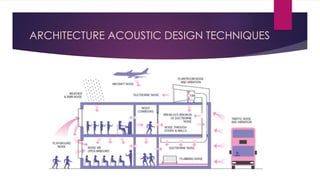
ARCHITECTURE ACOUSTIC DESIGN TECHNIQUES
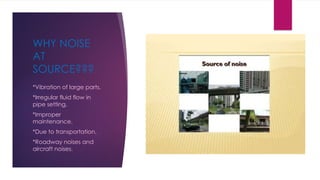
WHY NOISE
AT
SOURCE???
*Vibration of large parts.
*Irregular fluid flow in
pipe setting.
*Improper
maintenance.
*Due to transportation.
*Roadway noises and
aircraft noises.
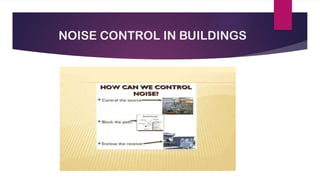
NOISE CONTROL IN BUILDINGS
 Sound is a form of energy that is transmitted by pressure
vibrations or vibrations that travel through the air or other
medium.
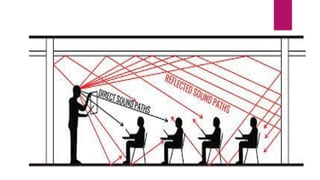
 Sound waves combine and reach a listener via direct and
indirect pathways.
 Noise nuisance is excessive noise or disturbance that may have
a negative effect on health.
 The building regulations approved document E , it describes
‘noise’ as an unwanted ‘sound’.
SOUND AND NOISE...
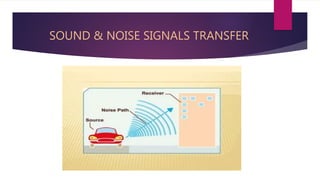
SOUND & NOISE SIGNALS TRANSFER
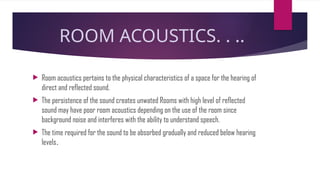
ROOM ACOUSTICS. . ..
 Room acoustics pertains to the physical characteristics of a space for the hearing of
direct and reflected sound.
 The persistence of the sound creates unwated Rooms with high level of reflected
sound may have poor room acoustics depending on the use of the room since
background noise and interferes with the ability to understand speech.
 The time required for the sound to be absorbed gradually and reduced below hearing
levels.
FLOOR CONSTRUCTION . . ..
 Floor construction and assemblies perform two
acoustical functions.
 Like walls, they provide and acoustical between
adjacent spaces (airborne sound insulation), but
they also reduce the sound of footfalls around and
other impact sounds from an floor an upper
floor(impact insulation).
SPACE PLANNING. . .
 Space the can be the most cost-effective noise
control technique.
 Avoid locating mechanical equipment rooms and
electrical transfer rooms near spaces(either
vertically or horizontally ) that require low
background noise levels.
NOISE CONTROL FOR MAIN BUILDING EQIUPMENT. . .
 Large fans used as part of the air conditioning system in
a building are source of a significant amount of
unwanted noise.
 The quietest type of the fan that will satisfy the
operating requirement should be selected whenever
possible to reduce the need for mitigation measures.
 The cost of mitigation may exceed the cost savings for
a less expensive.
CONCLUSION. . .
 As the architectural and engineering design of
project evolves the design should be reviewed in
light of the agreed upon acoustical program
requirement for the building project.
 A city or state building official cannot be
expected to comment on the acoustical design in
the contract documents.
THANK YOU

noise control buldings.pptx.............

  • 1.
  • 2.
    CONTENTS... . ..  Introduction  Sound and noise  Room acoustics  Floor construction  Space planning  Noise control for main building equipment  conclusion
  • 3.
    I INTRODUCTION  Noiseis unwanted sound. It can cause hearing loss, distrurb communication or cause nuisance  Noise control is a set of strategies to reduce noise pollution or to reduce impact , whether outdoors or indoors.
  • 4.
  • 5.
    WHY NOISE AT SOURCE??? *Vibration oflarge parts. *Irregular fluid flow in pipe setting. *Improper maintenance. *Due to transportation. *Roadway noises and aircraft noises.
  • 6.
  • 9.
     Sound isa form of energy that is transmitted by pressure vibrations or vibrations that travel through the air or other medium.  Sound waves combine and reach a listener via direct and indirect pathways.  Noise nuisance is excessive noise or disturbance that may have a negative effect on health.  The building regulations approved document E , it describes ‘noise’ as an unwanted ‘sound’. SOUND AND NOISE...
  • 10.
    SOUND & NOISESIGNALS TRANSFER
  • 11.
    ROOM ACOUSTICS. ...  Room acoustics pertains to the physical characteristics of a space for the hearing of direct and reflected sound.  The persistence of the sound creates unwated Rooms with high level of reflected sound may have poor room acoustics depending on the use of the room since background noise and interferes with the ability to understand speech.  The time required for the sound to be absorbed gradually and reduced below hearing levels.
  • 16.
    FLOOR CONSTRUCTION .. ..  Floor construction and assemblies perform two acoustical functions.  Like walls, they provide and acoustical between adjacent spaces (airborne sound insulation), but they also reduce the sound of footfalls around and other impact sounds from an floor an upper floor(impact insulation).
  • 17.
    SPACE PLANNING. ..  Space the can be the most cost-effective noise control technique.  Avoid locating mechanical equipment rooms and electrical transfer rooms near spaces(either vertically or horizontally ) that require low background noise levels.
  • 18.
    NOISE CONTROL FORMAIN BUILDING EQIUPMENT. . .  Large fans used as part of the air conditioning system in a building are source of a significant amount of unwanted noise.  The quietest type of the fan that will satisfy the operating requirement should be selected whenever possible to reduce the need for mitigation measures.  The cost of mitigation may exceed the cost savings for a less expensive.
  • 19.
    CONCLUSION. . . As the architectural and engineering design of project evolves the design should be reviewed in light of the agreed upon acoustical program requirement for the building project.  A city or state building official cannot be expected to comment on the acoustical design in the contract documents.
  • 20.