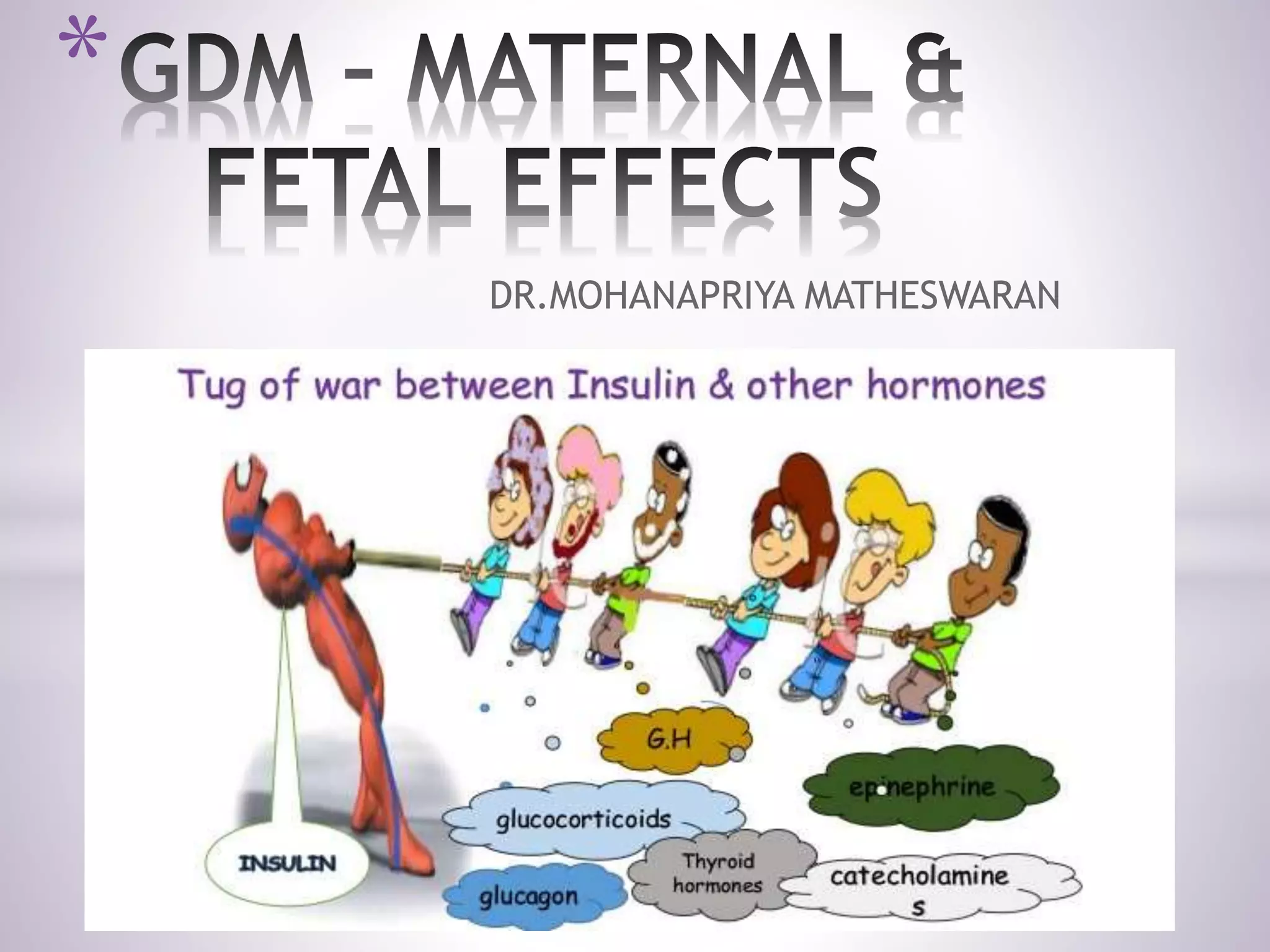
DR.MOHANAPRIYA MATHESWARAN
*
*
ON MOTHER ON PREGNANCY ON FETUS ON NEONATE
• Retinopathy
• Nephropathy
• Neuropathy
• DKA
• Hypertension
• Pre-eclampsia
• Hydramnios
• Malpresentatio
ns
• Spontaneous
abortion
• Congenital
malformations
• macrosomia
• Preterm labour
• Still birth
• Hypoglycemia
• Hypocalcemia
• Polycythemia
• Hyperbilirubine
mia
• Neurodevelopm
ental
anomalies
• Long term
sequalae
• Diabetic retinopathy
• Diabetic nephropathy
• Diabetic neuropathy
• Diabetic ketoacidosis
*
*Fetal prognosis – depends on
*Type of diabetes
*Degree of glycemic control during pregnancy
*
Younger the age of onset of diabetes & longer the
duration of disease before pregnancy, the worse is
the outlook
*Type I diabetes :
beta cell deficiency low insulin levels
hyperglycemia
Type II diabetes:
insulin resistance normal or increased insulin
levels hyperglycemia
*
GDM IS FORM OF TYPE II DM
INCREASED RISK OF CONGENITAL
MALFORMATIONS,SPONTANEOUS ABORTIONS,
NEPHROPATHY,RETINOPATHY
*
*
• Presence and severity is related to glycemic control.
*Fundoscopy – prior to conception
1st antenatal visit
If normal Pre-existing lesion
Again at 28weeks At 16 – 20 weeks
NON PROLIFERATIVE DIABETIC RETINOPATHY – good glycemic control
*
NICE 2008
*Type I DM patients:
pre-pregnancy evaluation pregnancy puerperium
proliferative diabetic retinopathy
laser photocoagulation
No pre-pregnancy evaluation evaluation at 1st antenatal visit
proliferative diabetic retinopathy
laser photocoagulation
*
*Untreated proliferative retinopathy
delivered by C-section at term
*
Straining or vulsalva manoeuvre
DR is not a CI for vaginal delivery (
NICE 2008; RCOG 2012)
*
*
*Stage 1 : hyperfunction of kidneys exercise
*Stage 2 : initial changes in kidney structure glycemic control
insulin therapy
*Stage 3 : microalbuminuria hypertension develops
*Stage 4 : overt DN long term anti-hypertensives postpones
ureamia
*Stage 5 : end stage renal failure dialysis or renal
transplantation
*
*
*pre-pregnancy evaluation renal function test
or 24-hour urine protein &
1st antenatal visit creatinine
*Microalbuminuria Macroalbuminuria End stage
(20 – 300mg/d) (>300mg/d)
if serum creatinine is >1.5mg/dl
*
*Incidence of overt proteinuria – 30% in type I
4 – 20 % in type II
*5% Of diabetic pregnant women have renal impairment
*40% of these develop pre-eclampsia
*60% risk of pre-eclampsia in those with chronic
hypertension & overt diabetic nephropathy
*
DIABETES CONTROL AND COMPLICATION TRIAL : 25%
DECREASE INRATE OF NEPHROPATHY FOR EACH 10%
DECREASE IN HbA1C LEVELS.
HOW AND COLLEGUES – NO ASSOCIATION BETWEEN PRE-
ECLAMPSIA AND MICROPROTEINURIA
*25 – 30% In type I DM
*Increases the risk of
1)maternal hypertension
2)preeclampsia
3)fetal growth restriction
4)preterm birth
*Difficult to differentiate from preeclampsia, hence the
importance of regular blood pressure monitoring in cases of
diabetes in pregnancy.
*
*Pre-pregnancy & in puerperium – treated with ACE or
ARB inhibitors
*Pregnancy – above drugs contraindicated* – labetalol
or alpha methyl dopa prefered.
*
ACE INHIBITORS* – FETAL PROXIMAL TUBULAR
DYSGENESIS & OLIGOAMNIOS
*
*
*Autonomic and peripheral neuropathies are rare
*Diabetic Gastropathy:
1)Exagerrated nausea and vomiting
2)nutritional problems & difficulty in glucose control
3)high risk of morbidity & poor perinatal outcome
4)Rx: metoclopromide / H2 receptor antagonists
*
*Most serious complication
*Affects 1% of diabetic pregnancies
*Fetal loss 20%
*Unique to type I DM
*Precipitating factors:
Hyperemesis gravidarum
Non-compliance to insulin therapy
Beta mimetics , corticosteroids
Infection
*
PREGNANT WOMEN USUALLY DEVELOP DKA AT A LOWER LEVEL
OF GLUCOSE THAN NON-PREGNANT INDIVIDUALS
*
*Blood glucose >250mg/dl
*Ketone bodies in urine & plasma
*Arterial pH <7.3
*Serum bicorbonate < 15mg/dl
*
*
*
*
*Maternal hyperglycemia
*Fetal hyperglycemia
*Pass more urine than usual
*Increased amniotic fluid glucose
*Irritates the amnion
*More liquor
Because of this
*malpresentations
Pre-term labour
*
*Pre-eclampsia – 3 – 4 times –
overt diabetes
*Diabetes + coexistent
hypertension = 12times more
likely to develop preeclampsia
*This increased risk with
duration of diabetes may be
related to oxidative stress
There were no differences
in preeclampsia rates.
*
*
• Correlate with HbA1C levels.
• Good pre-pregnancy councelling & periconceptional
glycemic control reduce risk of abortions.
*
HbA1C > 7
Pre prandial > 120mg/dl
3 fold increase in spontaneous abortion rate
• Major congenital anomalies are leading cause of major
perinatal mortality in infants of diabetic mothers.
• Incidence of congenital malformations (both major &
minor) – 9.5 – 16.5%
• HbA1C correlates with the risk of congenital
malformations.
*
Poor glycemic control during the period of
organogenesis ( 5 – 8 weeks) is the major determinant
HYPERGLYCEMIA IN IST TRIMESTER
*
*
*HbA1C – 6.5% - normal
>8% - increased risk of congenital malformation
>9.5% - 22%
• Study involving 30 normal healthy primigravida
<18weeks – HbA1C was 3.9 – 5.0%, much lower
than the upper limit of normal for normal non-
pregnant women.
*
• HAPO STUDY (NEJM 2008):
• A continuum of increasing risk of perinatal outcome
as glucose levels increase
• Even within levels that were previously defined as
normal
This is the reason that even those diabetic mothers
who have presumably a good control during early
pregnancy have an incidence of malformations
higher than the non-diabetic population.
*Most common congenital anomaly – cardiovascular
anomalies
*Most common cardiovascular anomaly – VSD
*Most common characteristic cardiovascular anomaly –
TGA
*Second most common congenital anomaly – neural tube
defects
*Characteristic with diabetic embryopathy – caudal
regression syndrome / sacral agenesis
*
*
*Type I DM – 26% delivered preterm
*Of that 60% were indicated preterm births –
d/t obstetrical or medical complications.
*
*
*Inadequately controlled
*Macrosomic babies
*Fasting hyperglycemia > 105mg/dl ( fetal death in last 4 – 8 weeks)
*Mean blood glucose levels >115mg/dl
Key pathway leading to intrauterine fetal
death is. chronic hypoxia
*Maternal hyperglycemia
*Fetal hyperglycemia
*Fetal hyperinsulinemia
*Increased oxygen consumption
decreased arterial oxygenation
*Fetal hypoxia negative effect on fetal heart cardiac
dysfunction
*Erythropoietin synthesis
(polycythemia – microthrombi formation –
Infarction of heart, brain, kidn
*
Increased fetal plasma & amniotic fluid
erythropoietin
Cardiomyopathy 40%
Trop T (+) - MI
*
*Almost all types of infections are increased.
*Almost 80% of the woemn with type I DM develop atleast 1
infection during pregnancy.
*Common infections : Candida vulvovaginitis
UTI
Respiratory tract infections
Puerperal sepsis
*2 fold increased risk of asymptomatic bacteruria
*Positive urine cultures in a fourth of diabetic women
*5% develop pyelonephritis
*2 – 3 fold increase in wound infection.
*It can be IUGR or macrosomia
*Diminished growth is due to advanced maternal
vascular disease.
*
*Maternal hyperglycemia
*Fetal hyperglycemia
*Fetal hyperinsulinemia
*Stimulates excessive somatic growth
*
Fetal weight increases as mean blood sugar level increases – 130mg/dl.
• Large for date
• Birth weight >4kg / birth weight >90th
percentile / >2SD for the gestational
age
*
Birth weight & amount of fat in the fetus correlated
significantly with the fasting blood sugar levels.
Post prandial normoglycemia reduce the rate.
Reduction in the incidence of large for date babies when the blood sugar
levels were normalised by diet or insulin.
*
*Increased risk of intrauterine deaths
*Disproportion between head and shoulder girdle
*Prolonged labour
*shoulder dystocia
*Brachial plexus injury
*Clavicular fractures
*Intrapartum asphyxia
*Increased incidence of instrumental deliveries & C - sections
*
Earlier the treatment started better is the outcome.
*
*
*Fetus receives glucose from mother
*Glucose level falls from 70 – 80mg/dl to
50mg/dl
*Hepatic glucose is released into the blood
*Cold extrauterine environment
*Beginning the respiratory cycles
*Muscular activity
*Suckling effort
high risk infant
*Risk of developing hypoglycemia
*Maternal hyperglycemia
*Fetal hyperglycemia inutero
*Fetal hyperinsulinemia
cord clamped
*Interrupts the transplacental glucose supply
*Persistant hyperinsulinemia
*hypoglycemia
*
Serum glucose level < 35 – 40
mg/dl in the 1st 12hours of life
Strict glycemic control in the late
pregnancy & labour can decrease the
magnitude & incidence of hypoglycemia
*
*Maternal hyperglycemia
*Fetal hyperglycemia
*Fetal hyperinsulinemia
*Increased oxygen consumption
decreased arterial oxygenation
*Fetal hypoxia
*Erythropoietin synthesis
*polycythemia Destruction hyperbilirubinemia
1. Prematurity
2. Immature hepatic bilirubin
conjugation enzyme
3. Birth trauma – bruising , hematoma
*
* Prematurity
(immature lung with underdeveloped and inflated alveoli)
* Decreased surfactant
* Increased alveolar surface tension
* Atelectasis
* Hypoxemia
* CO2 retention
* Acidosis
* Pulmonary vasoconstriction
* Plasma leak
* Fibrinogen
* Fibrin(hyaline membrane)
*
*<8 mg/dl in term
*<7 in preterm ( neonatal hypoparathyroidism)
*Maternal hypomagnesemia because of
excessive renal loss in the poorly controlled
patient.
*
Rizzo & colleagues IQ is 1 – 2 points lower for
childrens born to diabetic
mothers
DeBoer & associates Impaired memory performance in
infants of diabetic mothers at 1
year of age
CHARGE study Increased incidence of autism
spectrum disorders or
developmental delay
*Although interpreting effects of intrauterine environment on
neurodevelopment is certainy confounded by postnatal events,
emerging data support a link between maternal diabetes,
glycemic control and neurocognitive outcome.
*
*Increased risk of type 2 DM in children and adults who
are exposed to hyperglycemia inutero.
Type 1 DM ( both parents
affected)
3 – 4%
Type II DM ( both parents
affected) – stronger genetic
component
40%
new GDM – MATERNAL & FETAL EFFECTS.pptx

new GDM – MATERNAL & FETAL EFFECTS.pptx

  • 1.
  • 2.
    * ON MOTHER ONPREGNANCY ON FETUS ON NEONATE • Retinopathy • Nephropathy • Neuropathy • DKA • Hypertension • Pre-eclampsia • Hydramnios • Malpresentatio ns • Spontaneous abortion • Congenital malformations • macrosomia • Preterm labour • Still birth • Hypoglycemia • Hypocalcemia • Polycythemia • Hyperbilirubine mia • Neurodevelopm ental anomalies • Long term sequalae
  • 3.
    • Diabetic retinopathy •Diabetic nephropathy • Diabetic neuropathy • Diabetic ketoacidosis *
  • 4.
    *Fetal prognosis –depends on *Type of diabetes *Degree of glycemic control during pregnancy * Younger the age of onset of diabetes & longer the duration of disease before pregnancy, the worse is the outlook
  • 5.
    *Type I diabetes: beta cell deficiency low insulin levels hyperglycemia Type II diabetes: insulin resistance normal or increased insulin levels hyperglycemia * GDM IS FORM OF TYPE II DM INCREASED RISK OF CONGENITAL MALFORMATIONS,SPONTANEOUS ABORTIONS, NEPHROPATHY,RETINOPATHY
  • 6.
  • 7.
    * • Presence andseverity is related to glycemic control.
  • 8.
    *Fundoscopy – priorto conception 1st antenatal visit If normal Pre-existing lesion Again at 28weeks At 16 – 20 weeks NON PROLIFERATIVE DIABETIC RETINOPATHY – good glycemic control * NICE 2008
  • 9.
    *Type I DMpatients: pre-pregnancy evaluation pregnancy puerperium proliferative diabetic retinopathy laser photocoagulation No pre-pregnancy evaluation evaluation at 1st antenatal visit proliferative diabetic retinopathy laser photocoagulation *
  • 10.
    *Untreated proliferative retinopathy deliveredby C-section at term * Straining or vulsalva manoeuvre DR is not a CI for vaginal delivery ( NICE 2008; RCOG 2012)
  • 12.
  • 13.
  • 14.
    *Stage 1 :hyperfunction of kidneys exercise *Stage 2 : initial changes in kidney structure glycemic control insulin therapy *Stage 3 : microalbuminuria hypertension develops *Stage 4 : overt DN long term anti-hypertensives postpones ureamia *Stage 5 : end stage renal failure dialysis or renal transplantation *
  • 15.
  • 16.
    *pre-pregnancy evaluation renalfunction test or 24-hour urine protein & 1st antenatal visit creatinine *Microalbuminuria Macroalbuminuria End stage (20 – 300mg/d) (>300mg/d) if serum creatinine is >1.5mg/dl *
  • 17.
    *Incidence of overtproteinuria – 30% in type I 4 – 20 % in type II *5% Of diabetic pregnant women have renal impairment *40% of these develop pre-eclampsia *60% risk of pre-eclampsia in those with chronic hypertension & overt diabetic nephropathy * DIABETES CONTROL AND COMPLICATION TRIAL : 25% DECREASE INRATE OF NEPHROPATHY FOR EACH 10% DECREASE IN HbA1C LEVELS. HOW AND COLLEGUES – NO ASSOCIATION BETWEEN PRE- ECLAMPSIA AND MICROPROTEINURIA
  • 18.
    *25 – 30%In type I DM *Increases the risk of 1)maternal hypertension 2)preeclampsia 3)fetal growth restriction 4)preterm birth *Difficult to differentiate from preeclampsia, hence the importance of regular blood pressure monitoring in cases of diabetes in pregnancy. *
  • 19.
    *Pre-pregnancy & inpuerperium – treated with ACE or ARB inhibitors *Pregnancy – above drugs contraindicated* – labetalol or alpha methyl dopa prefered. * ACE INHIBITORS* – FETAL PROXIMAL TUBULAR DYSGENESIS & OLIGOAMNIOS
  • 20.
  • 21.
    * *Autonomic and peripheralneuropathies are rare *Diabetic Gastropathy: 1)Exagerrated nausea and vomiting 2)nutritional problems & difficulty in glucose control 3)high risk of morbidity & poor perinatal outcome 4)Rx: metoclopromide / H2 receptor antagonists
  • 22.
  • 23.
    *Most serious complication *Affects1% of diabetic pregnancies *Fetal loss 20% *Unique to type I DM *Precipitating factors: Hyperemesis gravidarum Non-compliance to insulin therapy Beta mimetics , corticosteroids Infection * PREGNANT WOMEN USUALLY DEVELOP DKA AT A LOWER LEVEL OF GLUCOSE THAN NON-PREGNANT INDIVIDUALS
  • 24.
    * *Blood glucose >250mg/dl *Ketonebodies in urine & plasma *Arterial pH <7.3 *Serum bicorbonate < 15mg/dl
  • 25.
  • 26.
  • 27.
  • 28.
    * *Maternal hyperglycemia *Fetal hyperglycemia *Passmore urine than usual *Increased amniotic fluid glucose *Irritates the amnion *More liquor Because of this *malpresentations Pre-term labour
  • 29.
    * *Pre-eclampsia – 3– 4 times – overt diabetes *Diabetes + coexistent hypertension = 12times more likely to develop preeclampsia *This increased risk with duration of diabetes may be related to oxidative stress There were no differences in preeclampsia rates.
  • 30.
  • 31.
  • 32.
    • Correlate withHbA1C levels. • Good pre-pregnancy councelling & periconceptional glycemic control reduce risk of abortions. * HbA1C > 7 Pre prandial > 120mg/dl 3 fold increase in spontaneous abortion rate
  • 33.
    • Major congenitalanomalies are leading cause of major perinatal mortality in infants of diabetic mothers. • Incidence of congenital malformations (both major & minor) – 9.5 – 16.5% • HbA1C correlates with the risk of congenital malformations. * Poor glycemic control during the period of organogenesis ( 5 – 8 weeks) is the major determinant
  • 34.
  • 35.
    * *HbA1C – 6.5%- normal >8% - increased risk of congenital malformation >9.5% - 22% • Study involving 30 normal healthy primigravida <18weeks – HbA1C was 3.9 – 5.0%, much lower than the upper limit of normal for normal non- pregnant women.
  • 36.
    * • HAPO STUDY(NEJM 2008): • A continuum of increasing risk of perinatal outcome as glucose levels increase • Even within levels that were previously defined as normal This is the reason that even those diabetic mothers who have presumably a good control during early pregnancy have an incidence of malformations higher than the non-diabetic population.
  • 37.
    *Most common congenitalanomaly – cardiovascular anomalies *Most common cardiovascular anomaly – VSD *Most common characteristic cardiovascular anomaly – TGA *Second most common congenital anomaly – neural tube defects *Characteristic with diabetic embryopathy – caudal regression syndrome / sacral agenesis *
  • 38.
  • 40.
    *Type I DM– 26% delivered preterm *Of that 60% were indicated preterm births – d/t obstetrical or medical complications. *
  • 41.
    * *Inadequately controlled *Macrosomic babies *Fastinghyperglycemia > 105mg/dl ( fetal death in last 4 – 8 weeks) *Mean blood glucose levels >115mg/dl Key pathway leading to intrauterine fetal death is. chronic hypoxia
  • 42.
    *Maternal hyperglycemia *Fetal hyperglycemia *Fetalhyperinsulinemia *Increased oxygen consumption decreased arterial oxygenation *Fetal hypoxia negative effect on fetal heart cardiac dysfunction *Erythropoietin synthesis (polycythemia – microthrombi formation – Infarction of heart, brain, kidn * Increased fetal plasma & amniotic fluid erythropoietin Cardiomyopathy 40% Trop T (+) - MI
  • 43.
    * *Almost all typesof infections are increased. *Almost 80% of the woemn with type I DM develop atleast 1 infection during pregnancy. *Common infections : Candida vulvovaginitis UTI Respiratory tract infections Puerperal sepsis *2 fold increased risk of asymptomatic bacteruria *Positive urine cultures in a fourth of diabetic women *5% develop pyelonephritis *2 – 3 fold increase in wound infection.
  • 44.
    *It can beIUGR or macrosomia *Diminished growth is due to advanced maternal vascular disease. *
  • 45.
    *Maternal hyperglycemia *Fetal hyperglycemia *Fetalhyperinsulinemia *Stimulates excessive somatic growth * Fetal weight increases as mean blood sugar level increases – 130mg/dl. • Large for date • Birth weight >4kg / birth weight >90th percentile / >2SD for the gestational age
  • 46.
    * Birth weight &amount of fat in the fetus correlated significantly with the fasting blood sugar levels. Post prandial normoglycemia reduce the rate.
  • 47.
    Reduction in theincidence of large for date babies when the blood sugar levels were normalised by diet or insulin.
  • 48.
  • 49.
    *Increased risk ofintrauterine deaths *Disproportion between head and shoulder girdle *Prolonged labour *shoulder dystocia *Brachial plexus injury *Clavicular fractures *Intrapartum asphyxia *Increased incidence of instrumental deliveries & C - sections * Earlier the treatment started better is the outcome.
  • 50.
  • 51.
    * *Fetus receives glucosefrom mother *Glucose level falls from 70 – 80mg/dl to 50mg/dl *Hepatic glucose is released into the blood *Cold extrauterine environment *Beginning the respiratory cycles *Muscular activity *Suckling effort high risk infant *Risk of developing hypoglycemia
  • 52.
    *Maternal hyperglycemia *Fetal hyperglycemiainutero *Fetal hyperinsulinemia cord clamped *Interrupts the transplacental glucose supply *Persistant hyperinsulinemia *hypoglycemia * Serum glucose level < 35 – 40 mg/dl in the 1st 12hours of life Strict glycemic control in the late pregnancy & labour can decrease the magnitude & incidence of hypoglycemia
  • 53.
    * *Maternal hyperglycemia *Fetal hyperglycemia *Fetalhyperinsulinemia *Increased oxygen consumption decreased arterial oxygenation *Fetal hypoxia *Erythropoietin synthesis *polycythemia Destruction hyperbilirubinemia 1. Prematurity 2. Immature hepatic bilirubin conjugation enzyme 3. Birth trauma – bruising , hematoma
  • 54.
    * * Prematurity (immature lungwith underdeveloped and inflated alveoli) * Decreased surfactant * Increased alveolar surface tension * Atelectasis * Hypoxemia * CO2 retention * Acidosis * Pulmonary vasoconstriction * Plasma leak * Fibrinogen * Fibrin(hyaline membrane)
  • 57.
    * *<8 mg/dl interm *<7 in preterm ( neonatal hypoparathyroidism) *Maternal hypomagnesemia because of excessive renal loss in the poorly controlled patient.
  • 58.
    * Rizzo & colleaguesIQ is 1 – 2 points lower for childrens born to diabetic mothers DeBoer & associates Impaired memory performance in infants of diabetic mothers at 1 year of age CHARGE study Increased incidence of autism spectrum disorders or developmental delay *Although interpreting effects of intrauterine environment on neurodevelopment is certainy confounded by postnatal events, emerging data support a link between maternal diabetes, glycemic control and neurocognitive outcome.
  • 59.
    * *Increased risk oftype 2 DM in children and adults who are exposed to hyperglycemia inutero. Type 1 DM ( both parents affected) 3 – 4% Type II DM ( both parents affected) – stronger genetic component 40%