NEUROLOGICAL DISORDERS
1. Neurological Disorders Definition
2. Neurological Disorders Symptoms
3. Neurological Disorders Treatment
4. How is Neuropathic Pain Diagnosed?
WHAT IS
NEUROLOGICAL
DISORDER
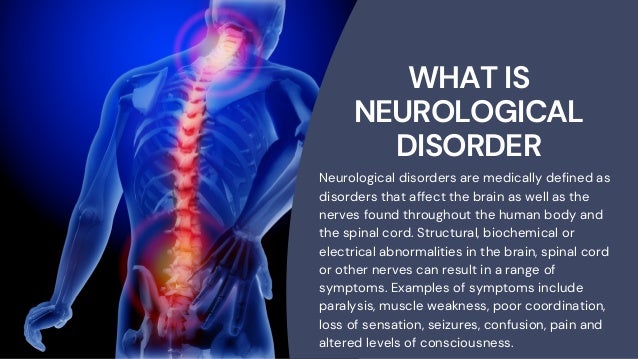
Neurological disorders are medically defined as
disorders that affect the brain as well as the
nerves found throughout the human body and
the spinal cord. Structural, biochemical or
electrical abnormalities in the brain, spinal cord
or other nerves can result in a range of
symptoms. Examples of symptoms include
paralysis, muscle weakness, poor coordination,
loss of sensation, seizures, confusion, pain and
altered levels of consciousness.
NEUROLOGICAL DISORDERS SYMPTOMS
1. Headaches
2. Epilepsy and Seizures
3. Stroke
4. Amyotrophic Lateral Sclerosis
5. Alzheimer’s Disease and Dementia
NEUROLOGICAL DISORDERS CAUSES
1. Lifestyle-Related causes
2. Infections
3. Genetics
4. Nutrition-related causes
5. Environmental influences
6. Physical injuries
RISK FACTORS NEUROLOGICAL DISORDERS
1. Alcohol or illicit Substance Abuse
2. Exposure toxic substances poisons
3. Maintain Functionality
4. Nutritional Deficiencies
5. Repeated Physical Motion or Stress
THANK YOU
FOR THIS
ARTICLE

Neurological disorders

  • 2.
    NEUROLOGICAL DISORDERS 1. NeurologicalDisorders Definition 2. Neurological Disorders Symptoms 3. Neurological Disorders Treatment 4. How is Neuropathic Pain Diagnosed?
  • 3.
    WHAT IS NEUROLOGICAL DISORDER Neurological disordersare medically defined as disorders that affect the brain as well as the nerves found throughout the human body and the spinal cord. Structural, biochemical or electrical abnormalities in the brain, spinal cord or other nerves can result in a range of symptoms. Examples of symptoms include paralysis, muscle weakness, poor coordination, loss of sensation, seizures, confusion, pain and altered levels of consciousness.
  • 4.
    NEUROLOGICAL DISORDERS SYMPTOMS 1.Headaches 2. Epilepsy and Seizures 3. Stroke 4. Amyotrophic Lateral Sclerosis 5. Alzheimer’s Disease and Dementia
  • 6.
    NEUROLOGICAL DISORDERS CAUSES 1.Lifestyle-Related causes 2. Infections 3. Genetics 4. Nutrition-related causes 5. Environmental influences 6. Physical injuries
  • 8.
    RISK FACTORS NEUROLOGICALDISORDERS 1. Alcohol or illicit Substance Abuse 2. Exposure toxic substances poisons 3. Maintain Functionality 4. Nutritional Deficiencies 5. Repeated Physical Motion or Stress
  • 9.