Neglected Diabetic Foot
Dr Abdulhakim Altamimi
University of Aden
Yemen
• Diabetes mellitus has become an epidemic
worldwide .
• Foot problems are an associated complication
• Diabetic foot ulcer will complicate the disease
in more than 15% of these people during their
lifetime .
• Foot ulcer precede more than 80% of non
traumatic lower limb amputation
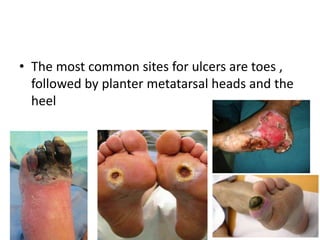
• The most common sites for ulcers are toes ,
followed by planter metatarsal heads and the
heel
• Foot risk factors :
• Peripheral neuropathy
• Peripheral arterial diseases
• Foot deformity
• Others
• Although known risk factors for non-insulin-
dependent diabetes mellitus (NIDDM) such as
family history, obesity and central distribution
of fat are important in the elderly, aging itself
seems to be a stronger risk factor.
Why it is neglected ?
–Patient factors
–Disease factors
–Treating Doctors factors
–Society and health system factors
Neglected Diabetic Foot
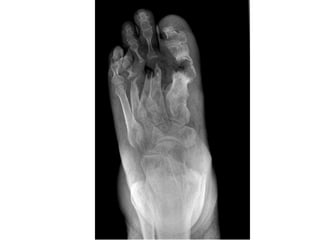
• It is a disaster condition in the foot of diabetic
patient due to deficiency of awareness
towards the complications resulting from
uncontrolled blood sugar , lack of seeking a
proper help as well as poor health care
• The patient may present in a condition that
limb salvageable is questionable
• Understanding reasons for the neglect of foot
screening during the annual review of people
with diabetes enables the development of
solutions for this omission.
• This can be solved by identified the reasons
within the context of health care delivery
systems in terms of the professional, social,
political and economic aspects of this
screening.
Screening tools
• Monofilament test
• Vibration test
• Ankle brachial index
• Duplex US
• Prevention services are infrequently provided
to high-risk patients.
• In the International Working Group on the
Diabetic Foot (IWGDF) Guidance 2015,
Five key elements that underpin
prevention of foot problems
• 1- Identification of the at-risk foot .
• 2- Regular inspection and examination of the
at-risk foot .
• 3-Education of patient, family and healthcare
providers.
• 4- Routine wearing of appropriate footwear .
• 5- Treatment of pre-ulcerative signs.
Diabetic foot classification
• Wagner – Megget’s classification
• University of Texas
• PEDIS classification
• Amit Kumar classification
• Foot lesions constitute an increasing public health
problem and also have substantial economic
consequences.
• The professionals involved in these activities,
make up the multidisciplinary team, which is
composed of medical specialists (diabetologist,
internist, orthopedic, vascular surgeon,
radiologist, cardiologist, etc) and prepared and
trained professionals, such as nurses and
podiatrists.
• The best solution for patient education to be
beneficial in prevention may yet have to be
investigated.
• patient education and find the most effective
methods to promote the correction of habits
and wrong attitudes.
• Education to the patient family and relative
may help in prevention of disabling foot
complications
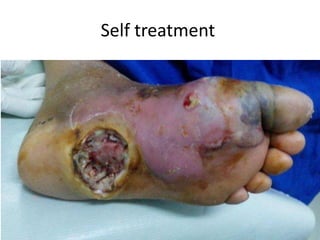
Using herbal treatment
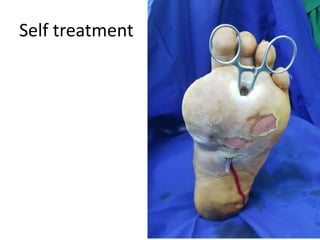
Self treatment
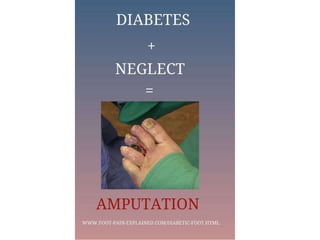
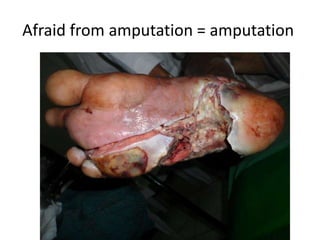
Afraid from amputation = amputation
Self treatment
Conclusions
• Foot at risk for ulcer should be suspected in all
patient with diabetes
• Presence of diabetic foot ulcer is potentially
carrying a high risk for severe infection
• Long standing ulcer = osteomyelitis may be
there
• Long standing ulcer = foreign body is
suspected
• Neglecting from the patient and
underestimation from the care giver may lead
to a complication by which the limb is lost (
major amputation )
• Neglecting from the patient and
underestimation from the care giver may lead
to a complication by which the live is lost
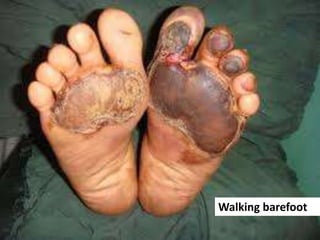
Walking barefoot
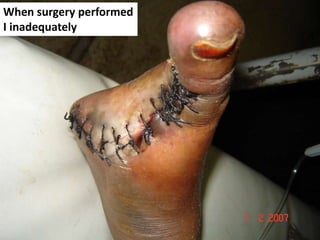
When surgery performed
I inadequately
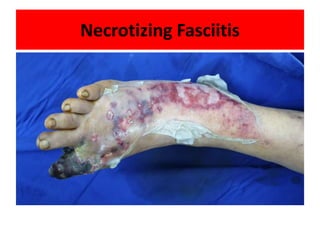
Necrotizing Fasciitis
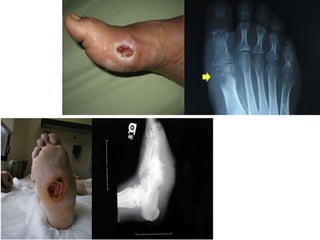
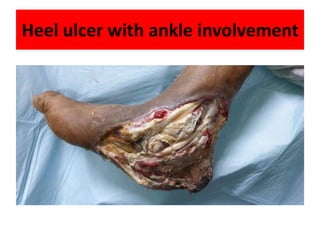
Heel ulcer with ankle involvement
Chronic ulcer with structural deformity
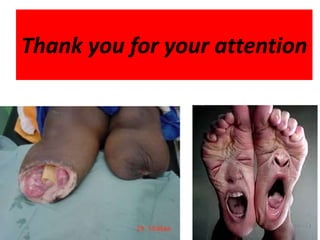
Thank you for your attention

Neglected Diabetic Foot.pptx

  • 1.
    Neglected Diabetic Foot DrAbdulhakim Altamimi University of Aden Yemen
  • 2.
    • Diabetes mellitushas become an epidemic worldwide . • Foot problems are an associated complication • Diabetic foot ulcer will complicate the disease in more than 15% of these people during their lifetime . • Foot ulcer precede more than 80% of non traumatic lower limb amputation
  • 3.
    • The mostcommon sites for ulcers are toes , followed by planter metatarsal heads and the heel
  • 4.
    • Foot riskfactors : • Peripheral neuropathy • Peripheral arterial diseases • Foot deformity • Others
  • 5.
    • Although knownrisk factors for non-insulin- dependent diabetes mellitus (NIDDM) such as family history, obesity and central distribution of fat are important in the elderly, aging itself seems to be a stronger risk factor.
  • 6.
    Why it isneglected ? –Patient factors –Disease factors –Treating Doctors factors –Society and health system factors
  • 7.
    Neglected Diabetic Foot •It is a disaster condition in the foot of diabetic patient due to deficiency of awareness towards the complications resulting from uncontrolled blood sugar , lack of seeking a proper help as well as poor health care • The patient may present in a condition that limb salvageable is questionable
  • 8.
    • Understanding reasonsfor the neglect of foot screening during the annual review of people with diabetes enables the development of solutions for this omission. • This can be solved by identified the reasons within the context of health care delivery systems in terms of the professional, social, political and economic aspects of this screening.
  • 9.
    Screening tools • Monofilamenttest • Vibration test • Ankle brachial index • Duplex US
  • 10.
    • Prevention servicesare infrequently provided to high-risk patients. • In the International Working Group on the Diabetic Foot (IWGDF) Guidance 2015,
  • 11.
    Five key elementsthat underpin prevention of foot problems • 1- Identification of the at-risk foot . • 2- Regular inspection and examination of the at-risk foot . • 3-Education of patient, family and healthcare providers. • 4- Routine wearing of appropriate footwear . • 5- Treatment of pre-ulcerative signs.
  • 12.
    Diabetic foot classification •Wagner – Megget’s classification • University of Texas • PEDIS classification • Amit Kumar classification
  • 13.
    • Foot lesionsconstitute an increasing public health problem and also have substantial economic consequences. • The professionals involved in these activities, make up the multidisciplinary team, which is composed of medical specialists (diabetologist, internist, orthopedic, vascular surgeon, radiologist, cardiologist, etc) and prepared and trained professionals, such as nurses and podiatrists.
  • 14.
    • The bestsolution for patient education to be beneficial in prevention may yet have to be investigated. • patient education and find the most effective methods to promote the correction of habits and wrong attitudes. • Education to the patient family and relative may help in prevention of disabling foot complications
  • 16.
  • 17.
  • 18.
  • 19.
  • 20.
    Conclusions • Foot atrisk for ulcer should be suspected in all patient with diabetes • Presence of diabetic foot ulcer is potentially carrying a high risk for severe infection • Long standing ulcer = osteomyelitis may be there • Long standing ulcer = foreign body is suspected
  • 24.
    • Neglecting fromthe patient and underestimation from the care giver may lead to a complication by which the limb is lost ( major amputation ) • Neglecting from the patient and underestimation from the care giver may lead to a complication by which the live is lost
  • 25.
  • 26.
  • 27.
  • 28.
    Heel ulcer withankle involvement
  • 29.
    Chronic ulcer withstructural deformity
  • 30.
    Thank you foryour attention