Nature VS Nurture
Brainstorm
What Shapes us, Who We Are?
To what extent are we
shaped by our heredity
and our environment??
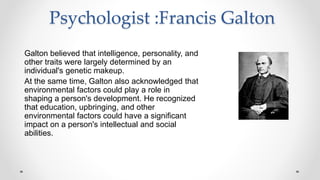
Psychologist :Francis Galton
Galton believed that intelligence, personality, and
other traits were largely determined by an
individual's genetic makeup.
At the same time, Galton also acknowledged that
environmental factors could play a role in
shaping a person's development. He recognized
that education, upbringing, and other
environmental factors could have a significant
impact on a person's intellectual and social
abilities.
“Tabula Rasa” ( Blank Slate)
Individuals are born with a "blank slate,“
(John Locke)
What did Locke mean by this quote ? Do you agree
with it?
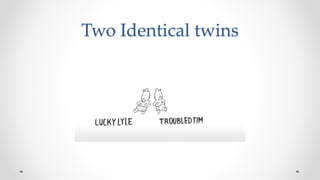
Two Identical twins
Do these images support “Tabula Rasa”
Theory?
Is the outcome of a
child’s behavior
caused by their
parents or
parenting skills? Do you believe
that criminals
are made by
nature?
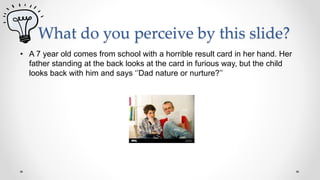
What do you perceive by this slide?
• A 7 year old comes from school with a horrible result card in her hand. Her
father standing at the back looks at the card in furious way, but the child
looks back with him and says ‘’Dad nature or nurture?’’
Which single line matches the one
from the 3
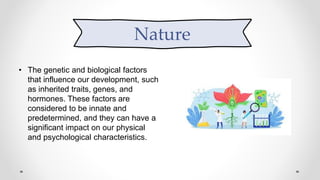
Nature
• The genetic and biological factors
that influence our development, such
as inherited traits, genes, and
hormones. These factors are
considered to be innate and
predetermined, and they can have a
significant impact on our physical
and psychological characteristics.
Nature
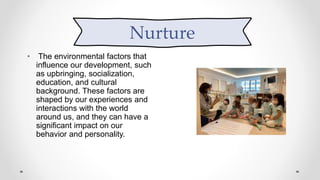
Nurture
• The environmental factors that
influence our development, such
as upbringing, socialization,
education, and cultural
background. These factors are
shaped by our experiences and
interactions with the world
around us, and they can have a
significant impact on our
behavior and personality.
Nurture
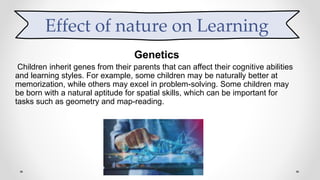
Genetics
Children inherit genes from their parents that can affect their cognitive abilities
and learning styles. For example, some children may be naturally better at
memorization, while others may excel in problem-solving. Some children may
be born with a natural aptitude for spatial skills, which can be important for
tasks such as geometry and map-reading.
Effect of nature on Learning
Environment
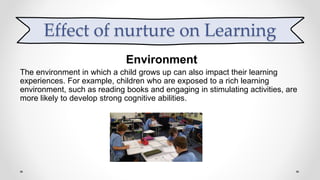
The environment in which a child grows up can also impact their learning
experiences. For example, children who are exposed to a rich learning
environment, such as reading books and engaging in stimulating activities, are
more likely to develop strong cognitive abilities.
Effect of nurture on Learning
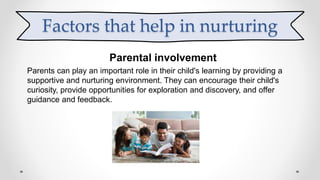
Parental involvement
Parents can play an important role in their child's learning by providing a
supportive and nurturing environment. They can encourage their child's
curiosity, provide opportunities for exploration and discovery, and offer
guidance and feedback.
Factors that help in nurturing
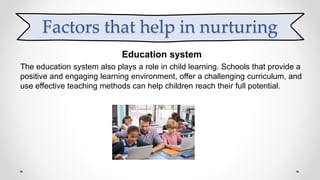
Education system
The education system also plays a role in child learning. Schools that provide a
positive and engaging learning environment, offer a challenging curriculum, and
use effective teaching methods can help children reach their full potential.
Factors that help in nurturing
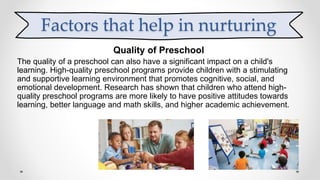
Quality of Preschool
The quality of a preschool can also have a significant impact on a child's
learning. High-quality preschool programs provide children with a stimulating
and supportive learning environment that promotes cognitive, social, and
emotional development. Research has shown that children who attend high-
quality preschool programs are more likely to have positive attitudes towards
learning, better language and math skills, and higher academic achievement.
Factors that help in nurturing
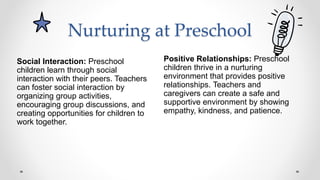
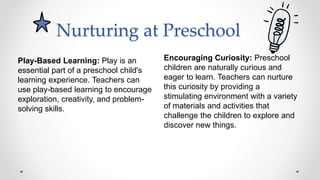
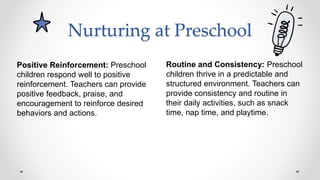
Nurturing at Preschool
Positive Relationships: Preschool
children thrive in a nurturing
environment that provides positive
relationships. Teachers and
caregivers can create a safe and
supportive environment by showing
empathy, kindness, and patience.
Social Interaction: Preschool
children learn through social
interaction with their peers. Teachers
can foster social interaction by
organizing group activities,
encouraging group discussions, and
creating opportunities for children to
work together.
Nurturing at Preschool
Encouraging Curiosity: Preschool
children are naturally curious and
eager to learn. Teachers can nurture
this curiosity by providing a
stimulating environment with a variety
of materials and activities that
challenge the children to explore and
discover new things.
Play-Based Learning: Play is an
essential part of a preschool child's
learning experience. Teachers can
use play-based learning to encourage
exploration, creativity, and problem-
solving skills.
Nurturing at Preschool
Routine and Consistency: Preschool
children thrive in a predictable and
structured environment. Teachers can
provide consistency and routine in
their daily activities, such as snack
time, nap time, and playtime.
Positive Reinforcement: Preschool
children respond well to positive
reinforcement. Teachers can provide
positive feedback, praise, and
encouragement to reinforce desired
behaviors and actions.
Effect on Learning
Emotional Development
Nurturing can help a child develop a sense of emotional security and
confidence, which can lead to greater engagement and participation in learning
activities. Children who feel secure and loved are more likely to take risks,
explore new ideas, and develop positive relationships with their peers and
teachers.
Effect on Learning
Language Development
Nurturing can also impact a child's language development. When children are
exposed to a rich language environment, they are more likely to develop strong
language skills. Nurturing caregivers can provide children with opportunities to
engage in conversation, read books, and listen to stories, all of which can help
develop language skills.
Effect on Learning
Cognitive Development
Nurturing can also impact a child's cognitive development, including their ability
to learn and problem-solve. Children who receive nurturing care and support
are more likely to have better attention spans, memory, and overall cognitive
functioning.
Effect on Learning
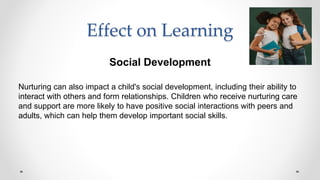
Social Development
Nurturing can also impact a child's social development, including their ability to
interact with others and form relationships. Children who receive nurturing care
and support are more likely to have positive social interactions with peers and
adults, which can help them develop important social skills.
Review Slide 2
What Shapes us Who We Are? Nature or nurture?

Nature VS Nurture.pptx

  • 1.
  • 2.
  • 3.
    To what extentare we shaped by our heredity and our environment??
  • 4.
    Psychologist :Francis Galton Galtonbelieved that intelligence, personality, and other traits were largely determined by an individual's genetic makeup. At the same time, Galton also acknowledged that environmental factors could play a role in shaping a person's development. He recognized that education, upbringing, and other environmental factors could have a significant impact on a person's intellectual and social abilities.
  • 5.
    “Tabula Rasa” (Blank Slate) Individuals are born with a "blank slate,“ (John Locke) What did Locke mean by this quote ? Do you agree with it?
  • 6.
  • 7.
    Do these imagessupport “Tabula Rasa” Theory?
  • 8.
    Is the outcomeof a child’s behavior caused by their parents or parenting skills? Do you believe that criminals are made by nature?
  • 9.
    What do youperceive by this slide? • A 7 year old comes from school with a horrible result card in her hand. Her father standing at the back looks at the card in furious way, but the child looks back with him and says ‘’Dad nature or nurture?’’
  • 10.
    Which single linematches the one from the 3
  • 11.
    Nature • The geneticand biological factors that influence our development, such as inherited traits, genes, and hormones. These factors are considered to be innate and predetermined, and they can have a significant impact on our physical and psychological characteristics. Nature
  • 12.
    Nurture • The environmentalfactors that influence our development, such as upbringing, socialization, education, and cultural background. These factors are shaped by our experiences and interactions with the world around us, and they can have a significant impact on our behavior and personality. Nurture
  • 13.
    Genetics Children inherit genesfrom their parents that can affect their cognitive abilities and learning styles. For example, some children may be naturally better at memorization, while others may excel in problem-solving. Some children may be born with a natural aptitude for spatial skills, which can be important for tasks such as geometry and map-reading. Effect of nature on Learning
  • 14.
    Environment The environment inwhich a child grows up can also impact their learning experiences. For example, children who are exposed to a rich learning environment, such as reading books and engaging in stimulating activities, are more likely to develop strong cognitive abilities. Effect of nurture on Learning
  • 15.
    Parental involvement Parents canplay an important role in their child's learning by providing a supportive and nurturing environment. They can encourage their child's curiosity, provide opportunities for exploration and discovery, and offer guidance and feedback. Factors that help in nurturing
  • 16.
    Education system The educationsystem also plays a role in child learning. Schools that provide a positive and engaging learning environment, offer a challenging curriculum, and use effective teaching methods can help children reach their full potential. Factors that help in nurturing
  • 17.
    Quality of Preschool Thequality of a preschool can also have a significant impact on a child's learning. High-quality preschool programs provide children with a stimulating and supportive learning environment that promotes cognitive, social, and emotional development. Research has shown that children who attend high- quality preschool programs are more likely to have positive attitudes towards learning, better language and math skills, and higher academic achievement. Factors that help in nurturing
  • 18.
    Nurturing at Preschool PositiveRelationships: Preschool children thrive in a nurturing environment that provides positive relationships. Teachers and caregivers can create a safe and supportive environment by showing empathy, kindness, and patience. Social Interaction: Preschool children learn through social interaction with their peers. Teachers can foster social interaction by organizing group activities, encouraging group discussions, and creating opportunities for children to work together.
  • 19.
    Nurturing at Preschool EncouragingCuriosity: Preschool children are naturally curious and eager to learn. Teachers can nurture this curiosity by providing a stimulating environment with a variety of materials and activities that challenge the children to explore and discover new things. Play-Based Learning: Play is an essential part of a preschool child's learning experience. Teachers can use play-based learning to encourage exploration, creativity, and problem- solving skills.
  • 20.
    Nurturing at Preschool Routineand Consistency: Preschool children thrive in a predictable and structured environment. Teachers can provide consistency and routine in their daily activities, such as snack time, nap time, and playtime. Positive Reinforcement: Preschool children respond well to positive reinforcement. Teachers can provide positive feedback, praise, and encouragement to reinforce desired behaviors and actions.
  • 21.
    Effect on Learning EmotionalDevelopment Nurturing can help a child develop a sense of emotional security and confidence, which can lead to greater engagement and participation in learning activities. Children who feel secure and loved are more likely to take risks, explore new ideas, and develop positive relationships with their peers and teachers.
  • 22.
    Effect on Learning LanguageDevelopment Nurturing can also impact a child's language development. When children are exposed to a rich language environment, they are more likely to develop strong language skills. Nurturing caregivers can provide children with opportunities to engage in conversation, read books, and listen to stories, all of which can help develop language skills.
  • 23.
    Effect on Learning CognitiveDevelopment Nurturing can also impact a child's cognitive development, including their ability to learn and problem-solve. Children who receive nurturing care and support are more likely to have better attention spans, memory, and overall cognitive functioning.
  • 24.
    Effect on Learning SocialDevelopment Nurturing can also impact a child's social development, including their ability to interact with others and form relationships. Children who receive nurturing care and support are more likely to have positive social interactions with peers and adults, which can help them develop important social skills.
  • 25.
    Review Slide 2 WhatShapes us Who We Are? Nature or nurture?