BY WAHYUNINGSIH
 One day, Mouse Deer went down to the river to take a drink. But he knew that the crocodile
might be waiting underwater to eat him, so he said out loud. “I wonder if the water’s warm.
I’ll put in my leg and find out.” Of course Mouse Deer didn’t put in his leg. He picked up a
stick instead and put one end into the water. Chomp…! Crocodile grabbed the stick and
pulled it underwater. Mouse Deer laughed. “Ha… ha…ha… Stupid crocodile! Cant you tell
the difference between a stick and a leg?” Then Mouse Deer ran off to drink somewhere
else.
 In the next day, Mouse Deer wanted to cross the river. He wanted to eat the fruits on the
other side of the river. He saw a floating log in the river. He knew that Crocodile looked like
a log when he floated. Mouse Deer didn’t want to be eaten by Crocodile when he crosses
the river. He had an idea. He called out loud, “Crocodile!” Crocodile rose from the water,
“Hello, Mouse Deer. Have you come to be my lunch?” Mouse Deer smiled. “Sorry, not
today, Crocodile. I have orders from the King. He wants to invite all the crocodiles in this
river to a party. He wants me to count all the crocodiles so he could prepare enough meal
for you.”
 “Really…? Tell us what to do,” said Crocodile. “You must line up from this side of the river
to the other side,” said Mouse Deer. Crocodile then got all his friends and family. They lined
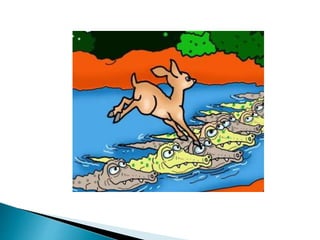
up across the river. Mouse Deer then jumped onto Crocodile’s back. “One,” he counted. He
jumped onto the next crocodile, “Two.” And the next crocodile, “Three.” Mouse Deer kept
jumping until he arrived on the other side of the river. “How many are there?” asked
Crocodile. “Just enough,” said Mouse Deer. He laughed as he ran to the forest.**
Mr. Lion was lying asleep, but was awakened by a mouse
running over his face.
“How dare you! he roared, and raised his paw to kill the mouse.
“Please, sir, “begged Miss Mouse, “Let me go, and one day I may
do something for you return.”
“You help me! Ha . . . Ha . . ., “ laughed Mr. Lion, but he let her
go.
One day, Mr. Lion was caught in a net spread by hunters.
“I can’t get out! he roared angrily.
“But I can help you, “ said a tiny voice, and up ran Miss Mouse,
who nibbled and gnawed at the ropes until the lion was free.
“There, “ she said proudly, “If you had not let me go, I would
not have found a way to help you.”
1. Menunjukkan kesungguhan belajar bahasa
Inggris terkait teks naratif sederhana
berentuk legenda rakyat
2. Menunjukkan perilaku peduli, percaya diri,
dan tanggung jawab dalam melaksanakan
komunikasi terkait teks naratif sederhana
berbentuk legenda rakyat
3. Mengidentifikasi fungsi sosial, struktur teks
dan unsur kebahasaan dari teks naratif
berbentuk legenda rakyat
4. Merespon makna teks naratif sederhana
berbentuj legenda rakyat.
 CHARACTERS (PROTAGONIST, ANTAGONIST)
 SETTING (PLACE AND TIME)
 PLOT / GENERIC STRUCTURE ( ORIENTATION,
COMPLICATION, REORIENTATION)
 MORAL VALUE
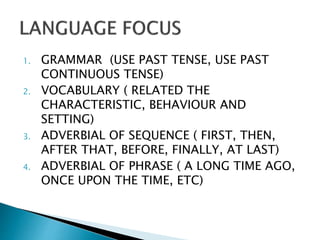
1. GRAMMAR (USE PAST TENSE, USE PAST
CONTINUOUS TENSE)
2. VOCABULARY ( RELATED THE
CHARACTERISTIC, BEHAVIOUR AND
SETTING)
3. ADVERBIAL OF SEQUENCE ( FIRST, THEN,
AFTER THAT, BEFORE, FINALLY, AT LAST)
4. ADVERBIAL OF PHRASE ( A LONG TIME AGO,
ONCE UPON THE TIME, ETC)
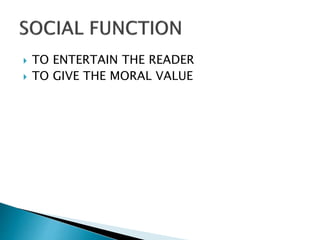
 TO ENTERTAIN THE READER
 TO GIVE THE MORAL VALUE

narrative.ppt

  • 1.
  • 6.
     One day,Mouse Deer went down to the river to take a drink. But he knew that the crocodile might be waiting underwater to eat him, so he said out loud. “I wonder if the water’s warm. I’ll put in my leg and find out.” Of course Mouse Deer didn’t put in his leg. He picked up a stick instead and put one end into the water. Chomp…! Crocodile grabbed the stick and pulled it underwater. Mouse Deer laughed. “Ha… ha…ha… Stupid crocodile! Cant you tell the difference between a stick and a leg?” Then Mouse Deer ran off to drink somewhere else.  In the next day, Mouse Deer wanted to cross the river. He wanted to eat the fruits on the other side of the river. He saw a floating log in the river. He knew that Crocodile looked like a log when he floated. Mouse Deer didn’t want to be eaten by Crocodile when he crosses the river. He had an idea. He called out loud, “Crocodile!” Crocodile rose from the water, “Hello, Mouse Deer. Have you come to be my lunch?” Mouse Deer smiled. “Sorry, not today, Crocodile. I have orders from the King. He wants to invite all the crocodiles in this river to a party. He wants me to count all the crocodiles so he could prepare enough meal for you.”  “Really…? Tell us what to do,” said Crocodile. “You must line up from this side of the river to the other side,” said Mouse Deer. Crocodile then got all his friends and family. They lined up across the river. Mouse Deer then jumped onto Crocodile’s back. “One,” he counted. He jumped onto the next crocodile, “Two.” And the next crocodile, “Three.” Mouse Deer kept jumping until he arrived on the other side of the river. “How many are there?” asked Crocodile. “Just enough,” said Mouse Deer. He laughed as he ran to the forest.**
  • 7.
    Mr. Lion waslying asleep, but was awakened by a mouse running over his face. “How dare you! he roared, and raised his paw to kill the mouse. “Please, sir, “begged Miss Mouse, “Let me go, and one day I may do something for you return.” “You help me! Ha . . . Ha . . ., “ laughed Mr. Lion, but he let her go. One day, Mr. Lion was caught in a net spread by hunters. “I can’t get out! he roared angrily. “But I can help you, “ said a tiny voice, and up ran Miss Mouse, who nibbled and gnawed at the ropes until the lion was free. “There, “ she said proudly, “If you had not let me go, I would not have found a way to help you.”
  • 8.
    1. Menunjukkan kesungguhanbelajar bahasa Inggris terkait teks naratif sederhana berentuk legenda rakyat 2. Menunjukkan perilaku peduli, percaya diri, dan tanggung jawab dalam melaksanakan komunikasi terkait teks naratif sederhana berbentuk legenda rakyat 3. Mengidentifikasi fungsi sosial, struktur teks dan unsur kebahasaan dari teks naratif berbentuk legenda rakyat 4. Merespon makna teks naratif sederhana berbentuj legenda rakyat.
  • 9.
     CHARACTERS (PROTAGONIST,ANTAGONIST)  SETTING (PLACE AND TIME)  PLOT / GENERIC STRUCTURE ( ORIENTATION, COMPLICATION, REORIENTATION)  MORAL VALUE
  • 10.
    1. GRAMMAR (USEPAST TENSE, USE PAST CONTINUOUS TENSE) 2. VOCABULARY ( RELATED THE CHARACTERISTIC, BEHAVIOUR AND SETTING) 3. ADVERBIAL OF SEQUENCE ( FIRST, THEN, AFTER THAT, BEFORE, FINALLY, AT LAST) 4. ADVERBIAL OF PHRASE ( A LONG TIME AGO, ONCE UPON THE TIME, ETC)
  • 11.
     TO ENTERTAINTHE READER  TO GIVE THE MORAL VALUE