1
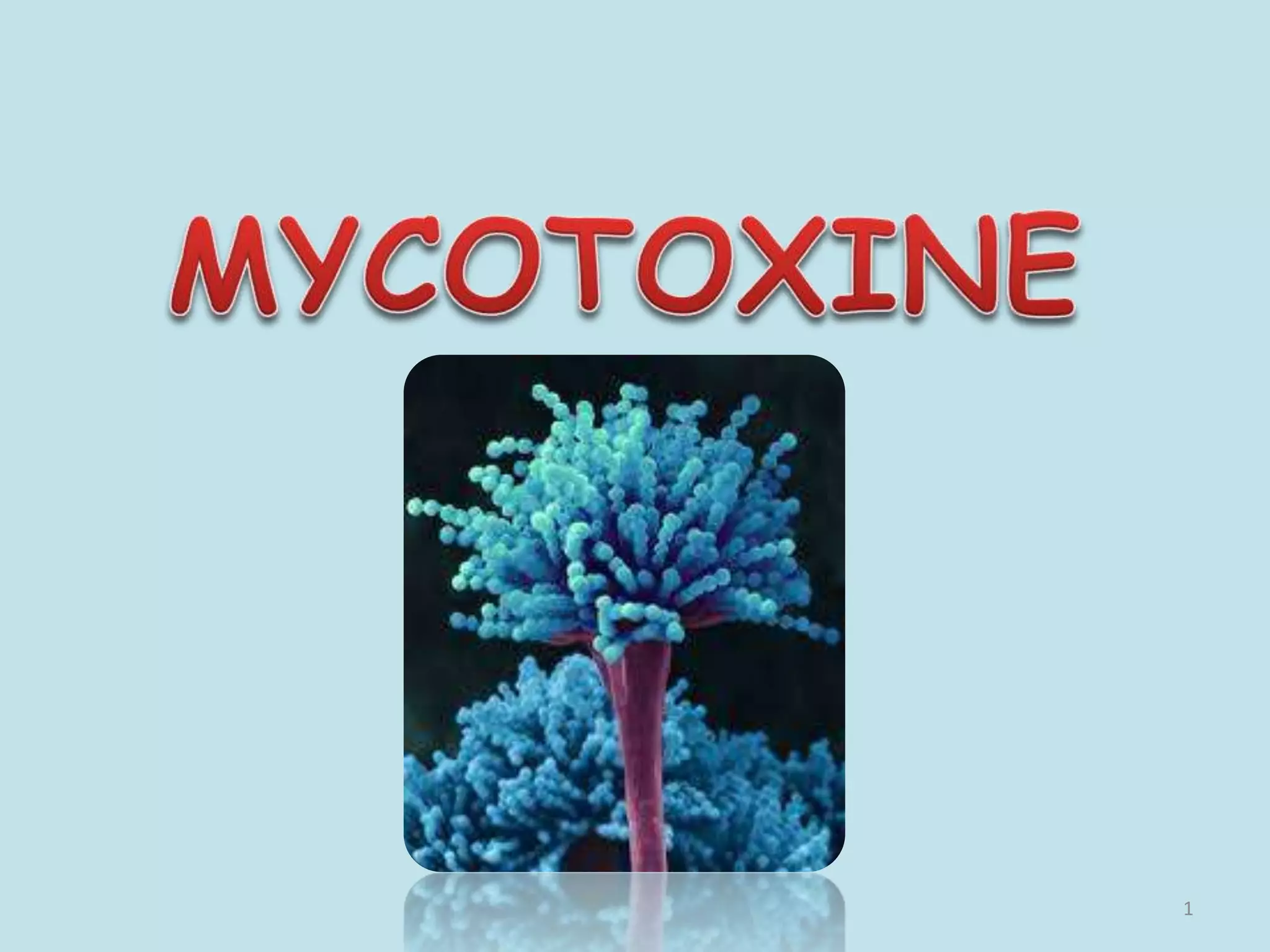
• Mycotoxin is a convenient generic term describing the
toxic secondary metabolites produced by fungi. “Myco”
means fungal (mold) and “toxin” represents poison.
• They encompass a considerable variety of low molecular
weight compounds with diverse chemical structures and
biological activities.
• Some mycotoxins could also be toxic to plants or other
microorganisms but these compounds are not classified
as antibiotics of fungal origin.
• Like most microbial secondary metabolites, the benefit
of mycotoxins for the fungi themselves is still not clearly
defined. 2
• In considering the effects of mycotoxins on animals
it is important to distinguish between “mycotoxicosis”
and “mycosis.”
• Mycotoxicosis is used to describe the action of
mycotoxin and is frequently mediated through a
number of organs, notably the liver, kidney, lungs, and
the nervous, endocrine, and immune systems.
• Mycosis refers to a generalized invasion of living
tissue by growing fungi.
3
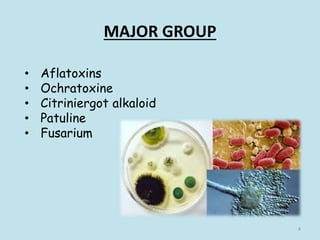
MAJOR GROUP
• Aflatoxins
• Ochratoxine
• Citriniergot alkaloid
• Patuline
• Fusarium
4
• Type of mycotoxin produced by Asprgillus species of
fungi.
• The most toxic, is a potent carcinogen and has been
directly correlated to adverse health effects, such
as liver cancer, in many animal species.
• Aflatoxins are largely associated with commodities
produced in the tropics and subtropics such
as cotton, peanuts, spices, pistachios, and maize.
Ex- Aspergillus flavus and Aspergillus parasiticus
5
• Mycotoxin that comes in three secondary metabolite
forms, A, B, and C.
• All are produced by Penicillium and Aspergillus species.
• Found as a contaminant of a wide range of commodities
including beverages such as beer and wine.
• Ochratoxine A has been labeled as a carcinogen and a
nephrotoxin, and has been linked to tumors in the human
urinary tract, although research in humans is limited
by confounding factors.
Ex- Aspergillus ochraceus , Aspergillus carbonarius.
6
• Toxin that was first isolated from Penicillium citrinum,
but has been identified in over a dozen species
of Penicillium and several species of Aspergillus.
• Some of these species are used to produce human food
such as cheese , sake, miso, and soy sauce.
• Citrinin is associated with yellowed rice disease in
Japan and acts as a nephrotoxin in all animal species
tested.
• Although it is associated with many human foods . its
full significance for human health is unknown.
Ex-Penicillium camemberti, Aspergillus oryzae. 7
• Compounds produced as a toxic mixture of alkaloids in
the sclerotia of species of claviceps, which are common
pathogens of various grass species.
• The ingestion of ergot sclerotia from infected cereals,
commonly in the form of bread produced from
contaminated flour, cause ergotism
• The human disease historically known as st. Anthony's
fire.
8
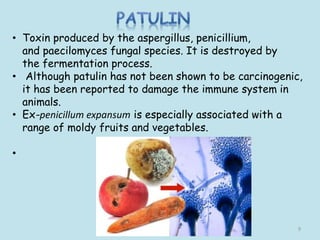
• Toxin produced by the aspergillus, penicillium,
and paecilomyces fungal species. It is destroyed by
the fermentation process.
• Although patulin has not been shown to be carcinogenic,
it has been reported to damage the immune system in
animals.
• Ex-penicillum expansum is especially associated with a
range of moldy fruits and vegetables.
•
9
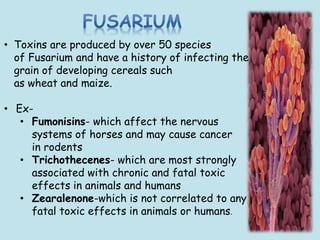
• Toxins are produced by over 50 species
of Fusarium and have a history of infecting the
grain of developing cereals such
as wheat and maize.
• Ex-
• Fumonisins- which affect the nervous
systems of horses and may cause cancer
in rodents
• Trichothecenes- which are most strongly
associated with chronic and fatal toxic
effects in animals and humans
• Zearalenone-which is not correlated to any
fatal toxic effects in animals or humans.
10
• Invasion by fungi and production of mycotoxins in
commodities can occur under favorable conditions in the
field, at harvest, and during processing, transportation
and storage.
 Fungi that are frequently found in the field include: A.
flavus, Alternaria
longipes, A. alternata, Claviceps purpura, Fusarium verticillioides
(previously called moniliforme), F. graminearum, and a number of
other Fusarium spp.
 Species most likely introduced at harvest include:
F. sporotrichioides, Stachybotrys atra, Cladosporium sp.,
Myrothecium verrucaria, Trichothecium roseum, as well as A.
alternata.
11
 Most penicillia are storage fungi. These include:
Penicillium citrinum, P. cyclopium, P. citreoviride, P.
islandicum, P. rubrum, P. viridicatum, P. urticae, P.
verruculosum, P. palitans, P. puberulum, P. expansum, and P.
roqueforti.
All of which are capable of producing mycotoxins in
grains and foods
12
• The most obvious negative economic impact of mycotoxins
is an outright loss of crops and affected animals.
• Also, humans may encounter severe health hazard or high
mortality rates in countries with less regulate.
• Livestock industry some time fully fallen down because of
mycotoxine which produce harmful fungi.
• Large scale crop production also faced mycotoxine
problem, they need to apply fungicides that directly
effect their profit.
13
• In the feed and food industry it has become common
practice to add mycotoxin binding agents such
as montmorillonite or bentonite clay in order to
effectively adsorb the mycotoxins.
MICOTOXINE PREVENTION AND
CONTROLE
• Mycotoxin contamination can be reduced somewhat by
using of resistant varieties and earlier harvest varieties
crop rotation,
adequate irrigation.
control of insect pests.
• Significant control of toxin contamination is expected to
be dependent on a detailed understanding of the:
physiological and environmental factors that affect the
biosynthesis of the toxin,
the biology and ecology of the fungus,
the parameters of the host plant–fungal interactions 14
• Mycotoxin is a convenient generic term describing the
toxic secondary metabolites produced by fungi.
• There are 6 major group belongs to mycotoxcine
• mycotoxine is magior .problem in agriculture,there
many way now introduce prevent those mycotoxine
problems.
• Not all the fungi produce harmful micotoxine some
are produce beneficial toxin example penicillium
notatum which use as antibiotic.
15
16

Mycotoxine

  • 1.
  • 2.
    • Mycotoxin isa convenient generic term describing the toxic secondary metabolites produced by fungi. “Myco” means fungal (mold) and “toxin” represents poison. • They encompass a considerable variety of low molecular weight compounds with diverse chemical structures and biological activities. • Some mycotoxins could also be toxic to plants or other microorganisms but these compounds are not classified as antibiotics of fungal origin. • Like most microbial secondary metabolites, the benefit of mycotoxins for the fungi themselves is still not clearly defined. 2
  • 3.
    • In consideringthe effects of mycotoxins on animals it is important to distinguish between “mycotoxicosis” and “mycosis.” • Mycotoxicosis is used to describe the action of mycotoxin and is frequently mediated through a number of organs, notably the liver, kidney, lungs, and the nervous, endocrine, and immune systems. • Mycosis refers to a generalized invasion of living tissue by growing fungi. 3
  • 4.
    MAJOR GROUP • Aflatoxins •Ochratoxine • Citriniergot alkaloid • Patuline • Fusarium 4
  • 5.
    • Type ofmycotoxin produced by Asprgillus species of fungi. • The most toxic, is a potent carcinogen and has been directly correlated to adverse health effects, such as liver cancer, in many animal species. • Aflatoxins are largely associated with commodities produced in the tropics and subtropics such as cotton, peanuts, spices, pistachios, and maize. Ex- Aspergillus flavus and Aspergillus parasiticus 5
  • 6.
    • Mycotoxin thatcomes in three secondary metabolite forms, A, B, and C. • All are produced by Penicillium and Aspergillus species. • Found as a contaminant of a wide range of commodities including beverages such as beer and wine. • Ochratoxine A has been labeled as a carcinogen and a nephrotoxin, and has been linked to tumors in the human urinary tract, although research in humans is limited by confounding factors. Ex- Aspergillus ochraceus , Aspergillus carbonarius. 6
  • 7.
    • Toxin thatwas first isolated from Penicillium citrinum, but has been identified in over a dozen species of Penicillium and several species of Aspergillus. • Some of these species are used to produce human food such as cheese , sake, miso, and soy sauce. • Citrinin is associated with yellowed rice disease in Japan and acts as a nephrotoxin in all animal species tested. • Although it is associated with many human foods . its full significance for human health is unknown. Ex-Penicillium camemberti, Aspergillus oryzae. 7
  • 8.
    • Compounds producedas a toxic mixture of alkaloids in the sclerotia of species of claviceps, which are common pathogens of various grass species. • The ingestion of ergot sclerotia from infected cereals, commonly in the form of bread produced from contaminated flour, cause ergotism • The human disease historically known as st. Anthony's fire. 8
  • 9.
    • Toxin producedby the aspergillus, penicillium, and paecilomyces fungal species. It is destroyed by the fermentation process. • Although patulin has not been shown to be carcinogenic, it has been reported to damage the immune system in animals. • Ex-penicillum expansum is especially associated with a range of moldy fruits and vegetables. • 9
  • 10.
    • Toxins areproduced by over 50 species of Fusarium and have a history of infecting the grain of developing cereals such as wheat and maize. • Ex- • Fumonisins- which affect the nervous systems of horses and may cause cancer in rodents • Trichothecenes- which are most strongly associated with chronic and fatal toxic effects in animals and humans • Zearalenone-which is not correlated to any fatal toxic effects in animals or humans. 10
  • 11.
    • Invasion byfungi and production of mycotoxins in commodities can occur under favorable conditions in the field, at harvest, and during processing, transportation and storage.  Fungi that are frequently found in the field include: A. flavus, Alternaria longipes, A. alternata, Claviceps purpura, Fusarium verticillioides (previously called moniliforme), F. graminearum, and a number of other Fusarium spp.  Species most likely introduced at harvest include: F. sporotrichioides, Stachybotrys atra, Cladosporium sp., Myrothecium verrucaria, Trichothecium roseum, as well as A. alternata. 11
  • 12.
     Most penicilliaare storage fungi. These include: Penicillium citrinum, P. cyclopium, P. citreoviride, P. islandicum, P. rubrum, P. viridicatum, P. urticae, P. verruculosum, P. palitans, P. puberulum, P. expansum, and P. roqueforti. All of which are capable of producing mycotoxins in grains and foods 12
  • 13.
    • The mostobvious negative economic impact of mycotoxins is an outright loss of crops and affected animals. • Also, humans may encounter severe health hazard or high mortality rates in countries with less regulate. • Livestock industry some time fully fallen down because of mycotoxine which produce harmful fungi. • Large scale crop production also faced mycotoxine problem, they need to apply fungicides that directly effect their profit. 13
  • 14.
    • In thefeed and food industry it has become common practice to add mycotoxin binding agents such as montmorillonite or bentonite clay in order to effectively adsorb the mycotoxins. MICOTOXINE PREVENTION AND CONTROLE • Mycotoxin contamination can be reduced somewhat by using of resistant varieties and earlier harvest varieties crop rotation, adequate irrigation. control of insect pests. • Significant control of toxin contamination is expected to be dependent on a detailed understanding of the: physiological and environmental factors that affect the biosynthesis of the toxin, the biology and ecology of the fungus, the parameters of the host plant–fungal interactions 14
  • 15.
    • Mycotoxin isa convenient generic term describing the toxic secondary metabolites produced by fungi. • There are 6 major group belongs to mycotoxcine • mycotoxine is magior .problem in agriculture,there many way now introduce prevent those mycotoxine problems. • Not all the fungi produce harmful micotoxine some are produce beneficial toxin example penicillium notatum which use as antibiotic. 15
  • 16.