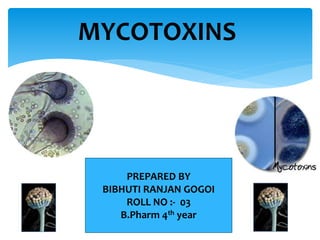
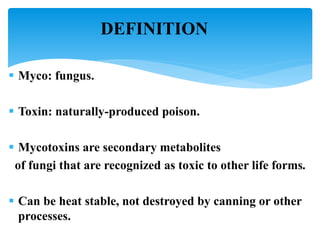
MYCOTOXINS
PREPARED BY
BIBHUTI RANJAN GOGOI
ROLL NO :- 03
B.Pharm 4th year
DEFINITION
 Myco: fungus.
 Toxin: naturally-produced poison.
 Mycotoxins are secondary metabolites
of fungi that are recognized as toxic to other life forms.
 Can be heat stable, not destroyed by canning or other
processes.
HISTORY
 The term mycotoxin was used for the first time in 1961 in
the aftermath of a veterinary crisis in England, during
which thousands of animals died. The disease was linked to
a peanut meal, incorporated in the diet, contaminated with
a toxin produced by the filamentous fungus Aspergillus
flavus.
 Probably a means of protection from insects,
microorganisms, nematodes, grazing animals and humans.
 “Chemical defense system” of the fungi or mold.
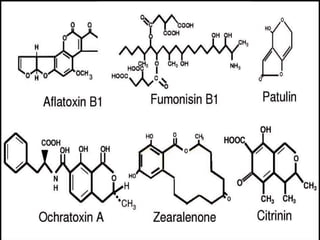
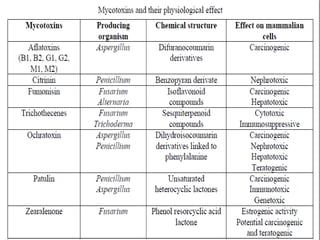
Types of mycotoxins
 Aflatoxins
 Fumonisin
 Ochratoxins
 Patulin
 Citrinin
 Trichothecenes
 Zearalenone
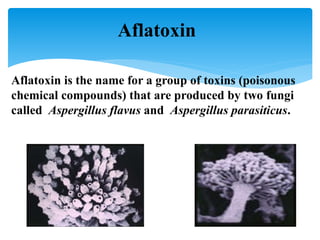
Aflatoxin
Aflatoxin is the name for a group of toxins (poisonous
chemical compounds) that are produced by two fungi
called Aspergillus flavus and Aspergillus parasiticus.
Ochratoxin
 Aspergillus ochraceus and several other species
including Penicillium produce seven structurally
related secondary metabolites called ochratoxin.
 Ochratoxin is found in a large variety of foods
including wheat, corn, soybeans, barley, coffee beans,
meats and cheese. Barley is thought to be the
predominant source.
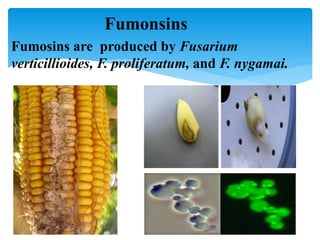
Fumonsins
Fumosins are produced by Fusarium
verticillioides, F. proliferatum, and F. nygamai.
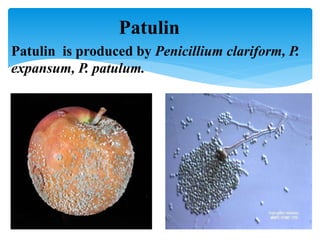
Patulin
Patulin is produced by Penicillium clariform, P.
expansum, P. patulum.
Mycotoxins can cause
 Death.
 Respiratory problems.
 Reproductive problems.
 Liver, kidney or other organ damage.
 Cancer.
 Bleeding.
 Birth defects.
Mycotoxin Treatment
Mycotoxin poisoning is known as mycotoxicosis. There
is no cure for mycotoxicosis. Antibiotics and drugs have
little effect. The best treatment is to stop the exposure to
mycotoxins.
CONCLUSION
Mycotoxins toxicology has bought out many adverse
effects in human health and many outbreaks have
occurred all over the world costing many life's. If
carefully observed this toxication can be prevented.
Still many new methods of preventing the toxin can
be found out through research in future.
Mycotoxin

Mycotoxin

  • 1.
    MYCOTOXINS PREPARED BY BIBHUTI RANJANGOGOI ROLL NO :- 03 B.Pharm 4th year
  • 2.
    DEFINITION  Myco: fungus. Toxin: naturally-produced poison.  Mycotoxins are secondary metabolites of fungi that are recognized as toxic to other life forms.  Can be heat stable, not destroyed by canning or other processes.
  • 3.
    HISTORY  The termmycotoxin was used for the first time in 1961 in the aftermath of a veterinary crisis in England, during which thousands of animals died. The disease was linked to a peanut meal, incorporated in the diet, contaminated with a toxin produced by the filamentous fungus Aspergillus flavus.  Probably a means of protection from insects, microorganisms, nematodes, grazing animals and humans.  “Chemical defense system” of the fungi or mold.
  • 4.
    Types of mycotoxins Aflatoxins  Fumonisin  Ochratoxins  Patulin  Citrinin  Trichothecenes  Zearalenone
  • 6.
    Aflatoxin Aflatoxin is thename for a group of toxins (poisonous chemical compounds) that are produced by two fungi called Aspergillus flavus and Aspergillus parasiticus.
  • 7.
    Ochratoxin  Aspergillus ochraceusand several other species including Penicillium produce seven structurally related secondary metabolites called ochratoxin.  Ochratoxin is found in a large variety of foods including wheat, corn, soybeans, barley, coffee beans, meats and cheese. Barley is thought to be the predominant source.
  • 8.
    Fumonsins Fumosins are producedby Fusarium verticillioides, F. proliferatum, and F. nygamai.
  • 9.
    Patulin Patulin is producedby Penicillium clariform, P. expansum, P. patulum.
  • 11.
    Mycotoxins can cause Death.  Respiratory problems.  Reproductive problems.  Liver, kidney or other organ damage.  Cancer.  Bleeding.  Birth defects.
  • 12.
    Mycotoxin Treatment Mycotoxin poisoningis known as mycotoxicosis. There is no cure for mycotoxicosis. Antibiotics and drugs have little effect. The best treatment is to stop the exposure to mycotoxins.
  • 13.
    CONCLUSION Mycotoxins toxicology hasbought out many adverse effects in human health and many outbreaks have occurred all over the world costing many life's. If carefully observed this toxication can be prevented. Still many new methods of preventing the toxin can be found out through research in future.