Muscle Tissue
Muscle Tissue
There are 3 types of muscle tissue:

 skeletal
skeletal

 smooth
smooth

 cardiac
cardiac
Classification of Muscle Cells
Striated vs. Nonstriated
striated have a banded appearance (stripes)
Single nucleus or multinucleated cells
Muscle cells can be controlled
voluntarily (consciously)
or
or
involuntarily
involuntarily (automatically)
(automatically)
Skeletal Muscle Cells

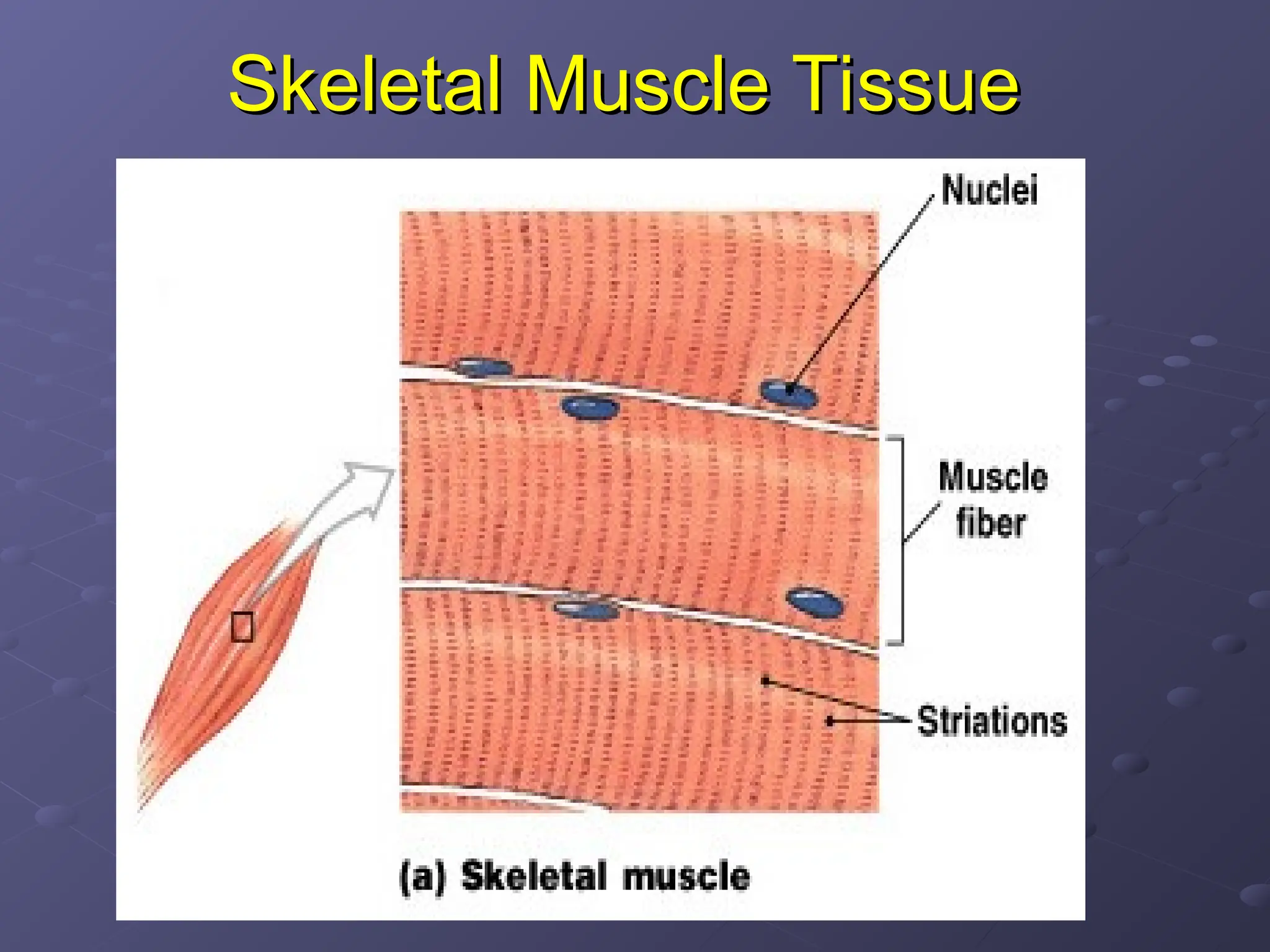
Striated, voluntary, and multinucleated

are long, thin and cylindrical; they are
attached to bones and move our skeleton

are usually called “
are usually called “muscle fibers
muscle fibers”
”

do not divide to create new cells

new fibers are produced by stem cells

Striations -- cross stripes (bands) run
perpendicular to the cells
Skeletal Muscle Tissue
Cardiac Muscle Cells

are called “
are called “cardiocytes
cardiocytes” and found in
” and found in
heart walls
heart walls

branching cells connect at
branching cells connect at intercalated
intercalated
disks
disks which allow contractions to occur
which allow contractions to occur
faster
faster

are regulated by pacemaker cells which
control contraction of the heart muscles

striated, involuntary, and single nucleus
Cardiac Muscle Tissue
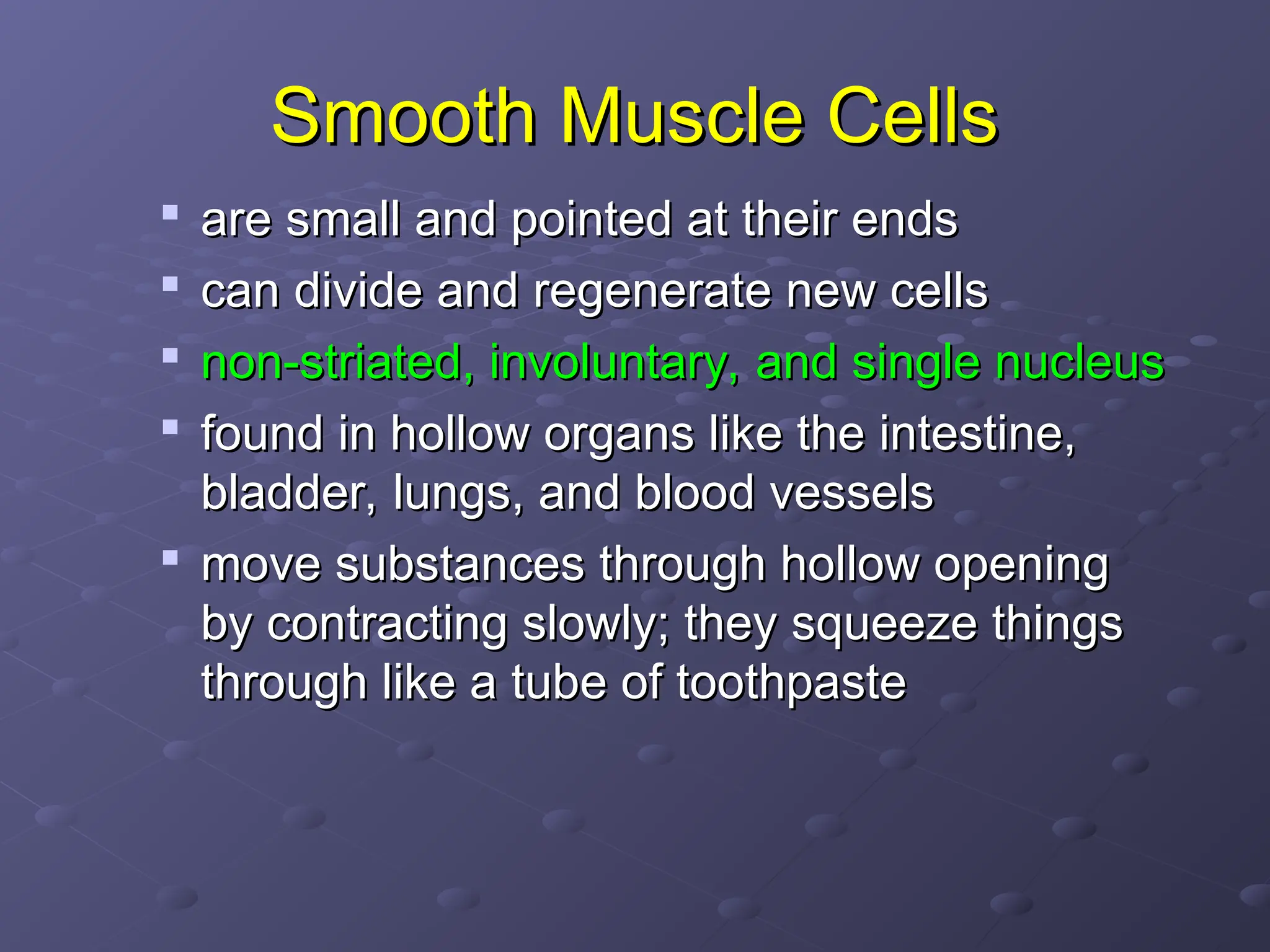
Smooth Muscle Cells
Smooth Muscle Cells

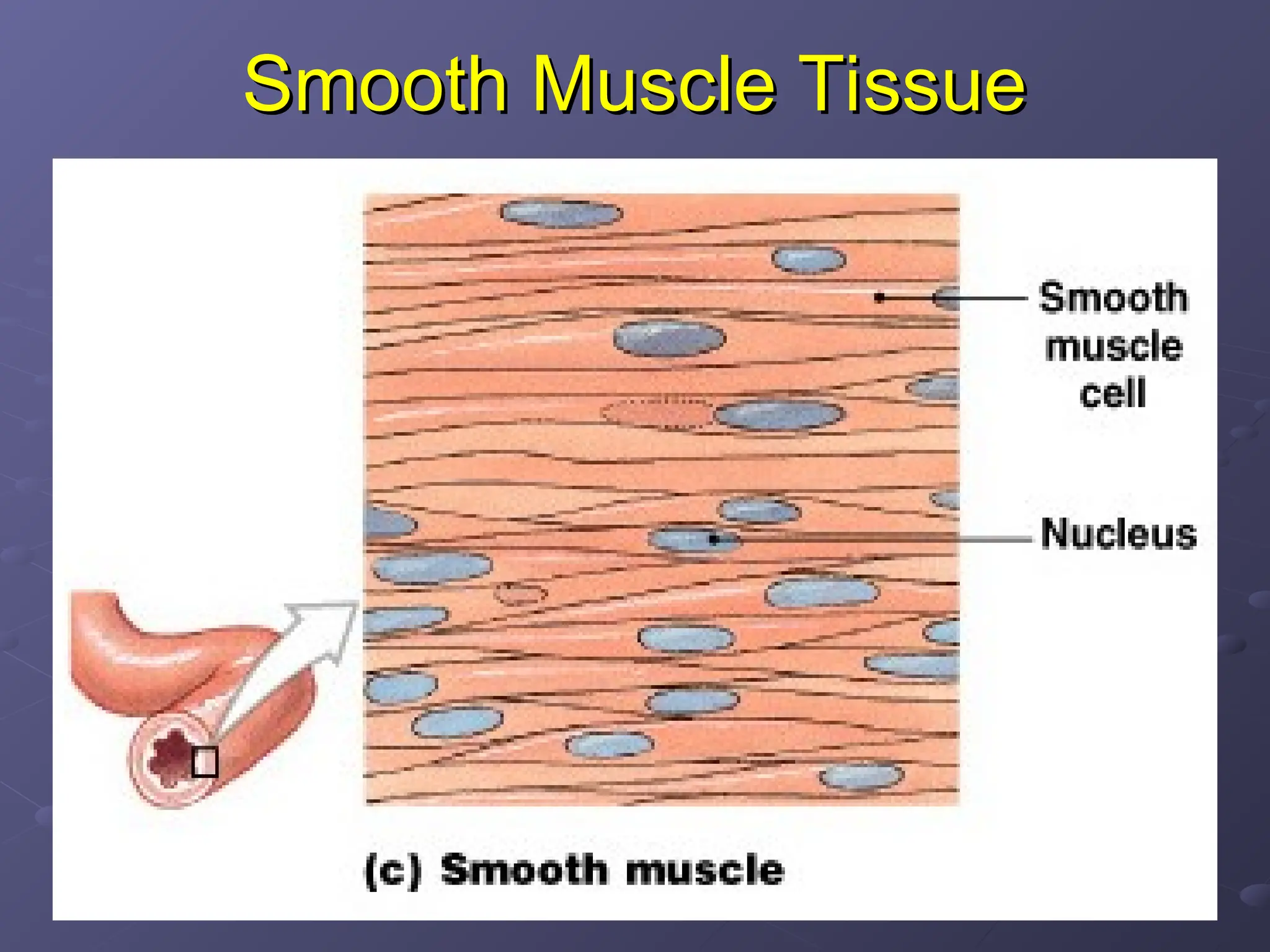
are small and pointed at their ends

can divide and regenerate new cells

non-striated, involuntary, and single nucleus

found in hollow organs like the intestine,
bladder, lungs, and blood vessels

move substances through hollow opening
by contracting slowly; they squeeze things
through like a tube of toothpaste
Smooth Muscle Tissue
Review What You’ve Learned…
Muscle Type
Muscle Type Striated?
Striated? # of nuclei
# of nuclei
Voluntary or
Voluntary or
Involuntary
Involuntary
Skeletal
Skeletal
Cardiac
Cardiac
Smooth
Smooth
Yes
Yes
No
Single
Nucleus
Single
Nucleus
Multi-
nucleated
Voluntary
Involuntary
Involuntary

muscle_tissue.ppt mussscle tissue pharmacology

  • 1.
    Muscle Tissue Muscle Tissue Thereare 3 types of muscle tissue: There are 3 types of muscle tissue:   skeletal skeletal   smooth smooth   cardiac cardiac
  • 2.
    Classification of MuscleCells Classification of Muscle Cells Striated vs. Nonstriated Striated vs. Nonstriated striated have a banded appearance (stripes) striated have a banded appearance (stripes) Single nucleus or multinucleated cells Single nucleus or multinucleated cells Muscle cells can be controlled Muscle cells can be controlled voluntarily (consciously) voluntarily (consciously) or or involuntarily involuntarily (automatically) (automatically)
  • 3.
    Skeletal Muscle Cells SkeletalMuscle Cells  Striated, voluntary, and multinucleated Striated, voluntary, and multinucleated  are long, thin and cylindrical; they are are long, thin and cylindrical; they are attached to bones and move our skeleton attached to bones and move our skeleton  are usually called “ are usually called “muscle fibers muscle fibers” ”  do not divide to create new cells do not divide to create new cells  new fibers are produced by stem cells new fibers are produced by stem cells  Striations -- cross stripes (bands) run Striations -- cross stripes (bands) run perpendicular to the cells perpendicular to the cells
  • 4.
  • 5.
    Cardiac Muscle Cells CardiacMuscle Cells  are called “ are called “cardiocytes cardiocytes” and found in ” and found in heart walls heart walls  branching cells connect at branching cells connect at intercalated intercalated disks disks which allow contractions to occur which allow contractions to occur faster faster  are regulated by pacemaker cells which are regulated by pacemaker cells which control contraction of the heart muscles control contraction of the heart muscles  striated, involuntary, and single nucleus striated, involuntary, and single nucleus
  • 6.
  • 7.
    Smooth Muscle Cells SmoothMuscle Cells  are small and pointed at their ends are small and pointed at their ends  can divide and regenerate new cells can divide and regenerate new cells  non-striated, involuntary, and single nucleus non-striated, involuntary, and single nucleus  found in hollow organs like the intestine, found in hollow organs like the intestine, bladder, lungs, and blood vessels bladder, lungs, and blood vessels  move substances through hollow opening move substances through hollow opening by contracting slowly; they squeeze things by contracting slowly; they squeeze things through like a tube of toothpaste through like a tube of toothpaste
  • 8.
  • 9.
    Review What You’veLearned… Review What You’ve Learned… Muscle Type Muscle Type Striated? Striated? # of nuclei # of nuclei Voluntary or Voluntary or Involuntary Involuntary Skeletal Skeletal Cardiac Cardiac Smooth Smooth Yes Yes No Single Nucleus Single Nucleus Multi- nucleated Voluntary Involuntary Involuntary