Managing Recreational and Tourism Users of
        Marine Protected Areas:
   Issues, Engagements and Processes

   Human Dimensions in Marine Protected Areas Focus Group
       2nd International Marine Conservation Congress
                         Victoria, BC
                      May 15 & 16, 2011


                        R.J. Payne
                    Lakehead University
Managing Recreational and Tourism Users


Introduction
●   Context:
       –   Established MPA
                ●   Note that those established longer have more
                     acceptance from all users and, perhaps, fewer
                     issues
       –   Recreational and tourism use are occurring
       –   Issues; engagements; processes
Managing Recreational and Tourism Users


Issues
●   Recreational angling
         –   Anglers, while generally supporting MPAs, often resist no-
               take zones
         –   Are we justified in assuming that anglers are a homogeneous
               group?
                  ●   Catch & release; equipment; species
         –   Are there sub-groups within the angling group?
         –   What variables set these sub-groups apart?
Managing Recreational and Tourism Users


Issues
●   Commercial tourism
         –   A possible partnership between MPA agencies and
               commercial tourism operators
         –   Who are the commercial tourism operators' clients
         –   Might data be shared for mutual benefit?
         –   What messages might commercial tourism operators deliver
              for MPA agencies?
         –   Can we measure the effectiveness of the messages and the
               delivery?
Managing Recreational and Tourism Users


Engagements
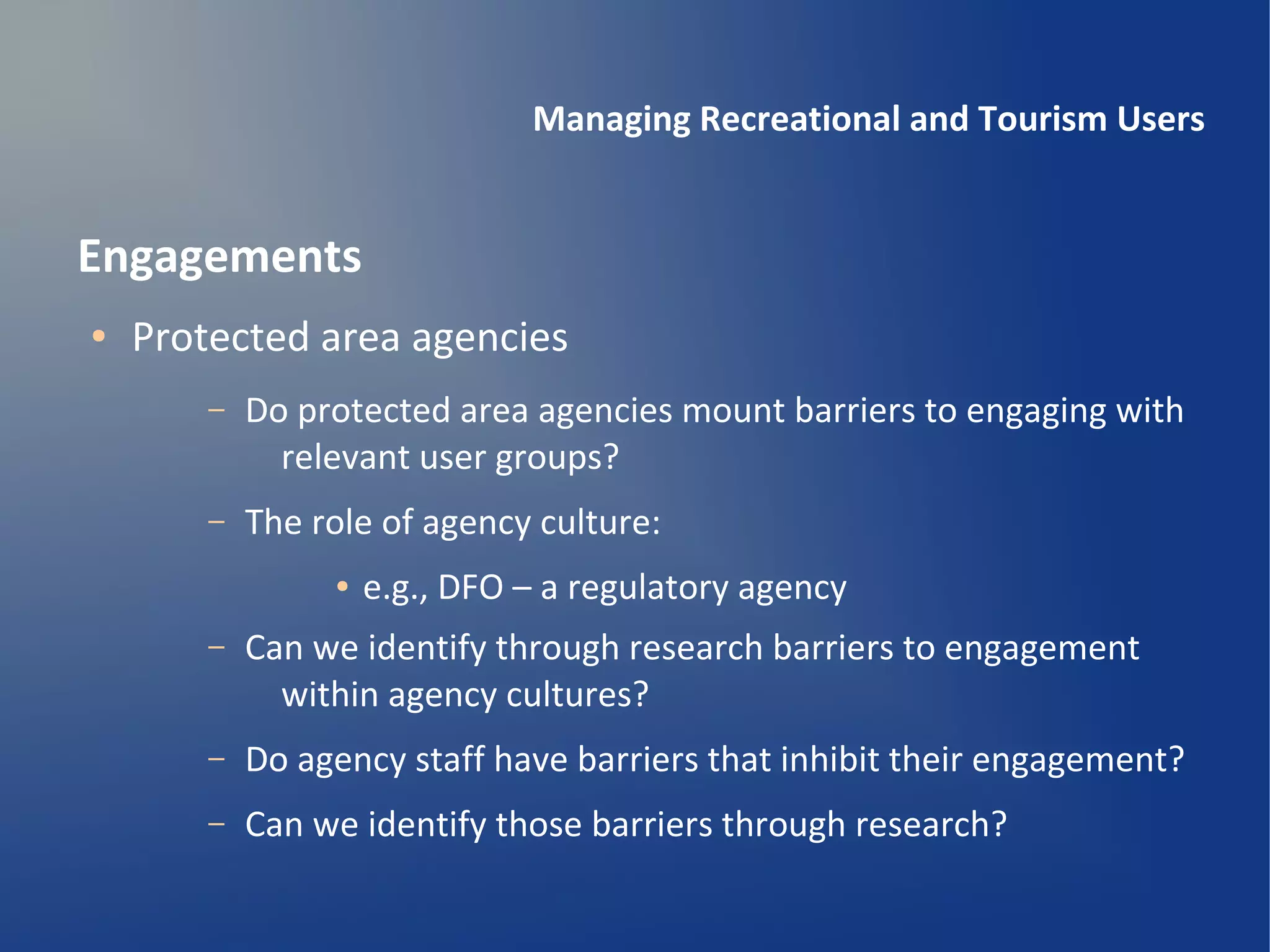
●   Protected area agencies
        –   Do protected area agencies mount barriers to engaging with
              relevant user groups?
        –   The role of agency culture:
                 ●   e.g., DFO – a regulatory agency
        –   Can we identify through research barriers to engagement
              within agency cultures?
        –   Do agency staff have barriers that inhibit their engagement?
        –   Can we identify those barriers through research?
Managing Recreational and Tourism Users


Engagements
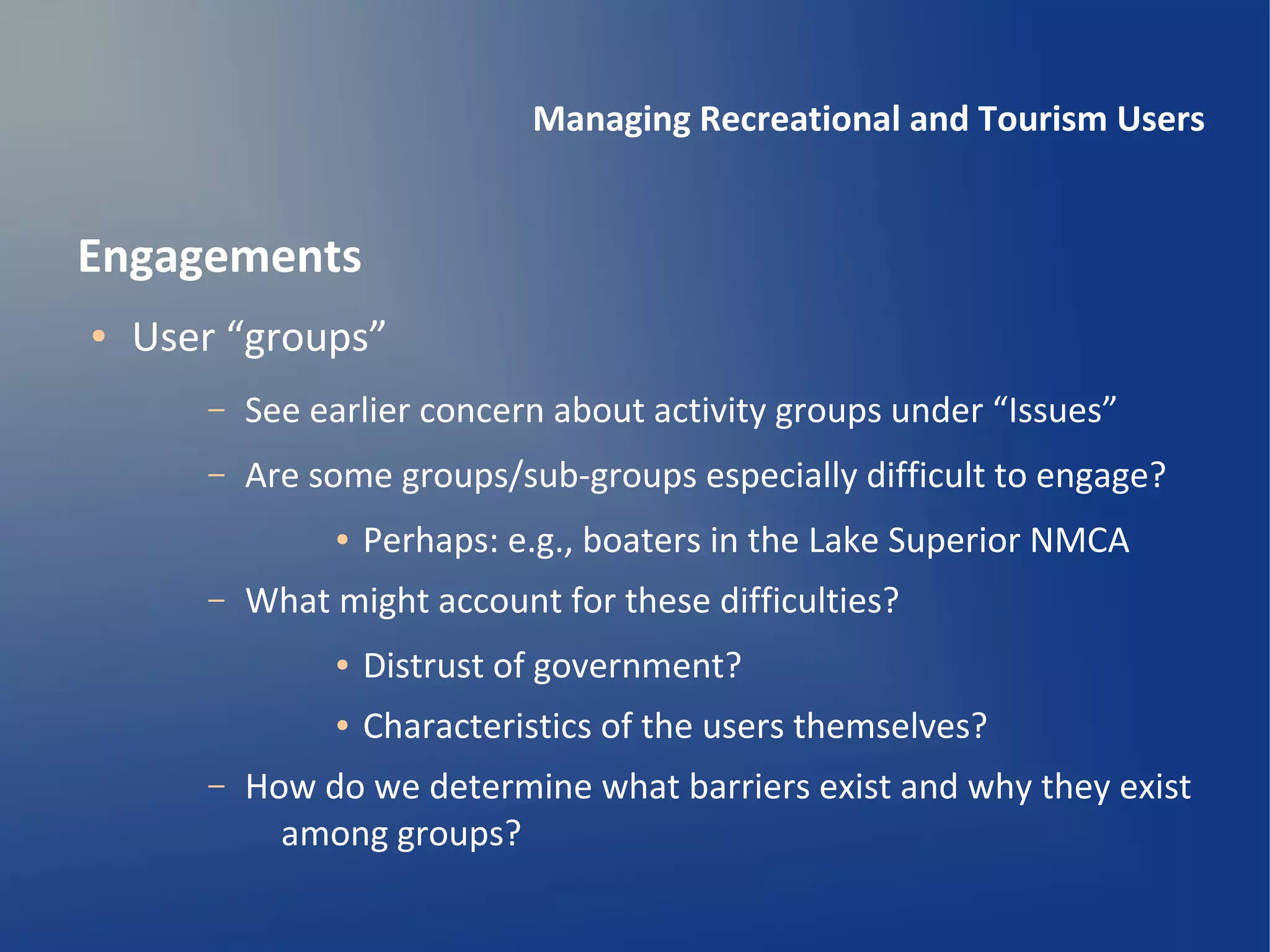
●   User “groups”
       –   See earlier concern about activity groups under “Issues”
       –   Are some groups/sub-groups especially difficult to engage?
                ●   Perhaps: e.g., boaters in the Lake Superior NMCA
       –   What might account for these difficulties?
                ●   Distrust of government?
                ●   Characteristics of the users themselves?
       –   How do we determine what barriers exist and why they exist
             among groups?
Managing Recreational and Tourism Users


Processes
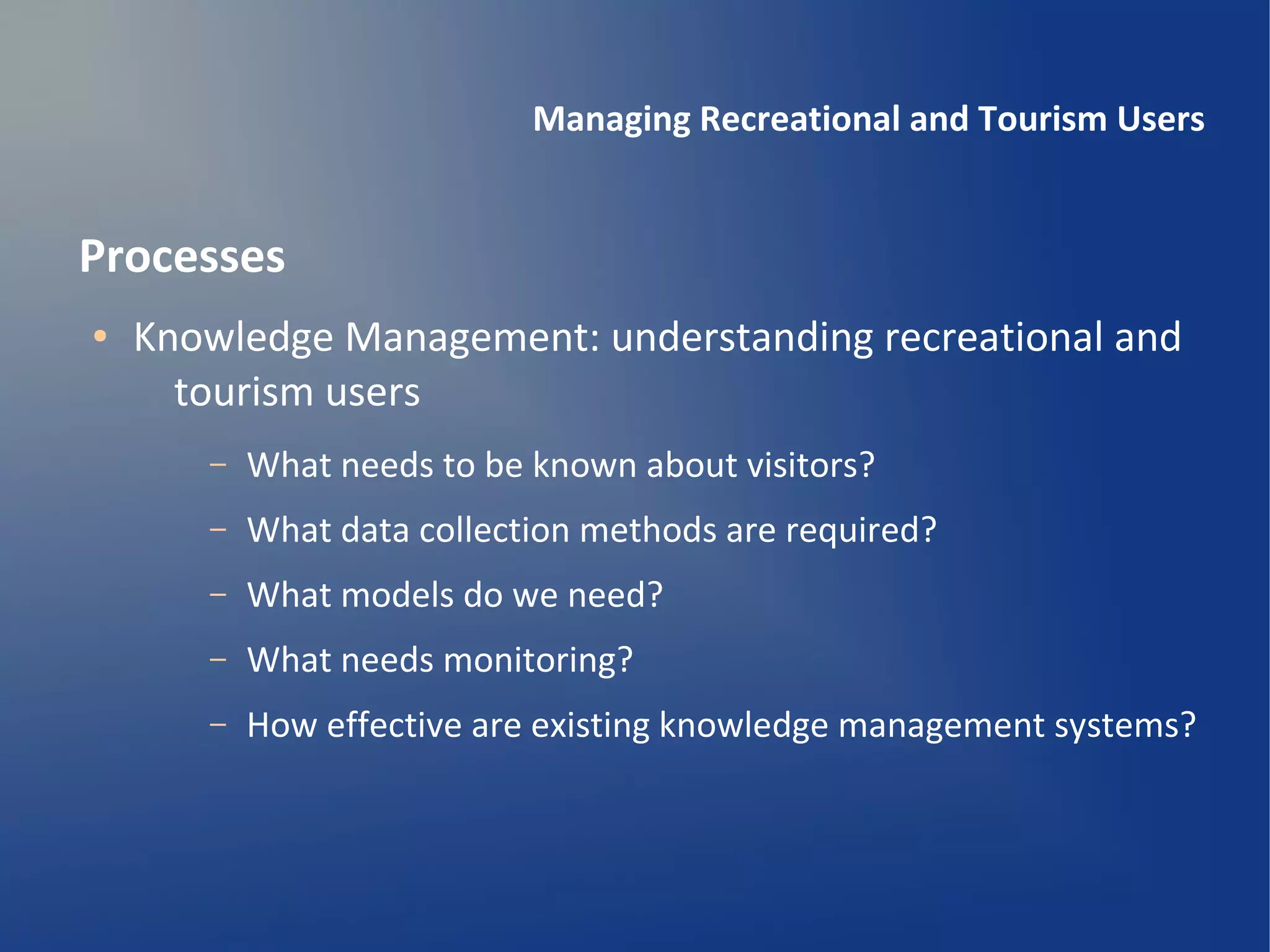
●   Knowledge Management: understanding recreational and
      tourism users
       –   What needs to be known about visitors?
       –   What data collection methods are required?
       –   What models do we need?
       –   What needs monitoring?
       –   How effective are existing knowledge management systems?
Managing Recreational and Tourism Users


Processes
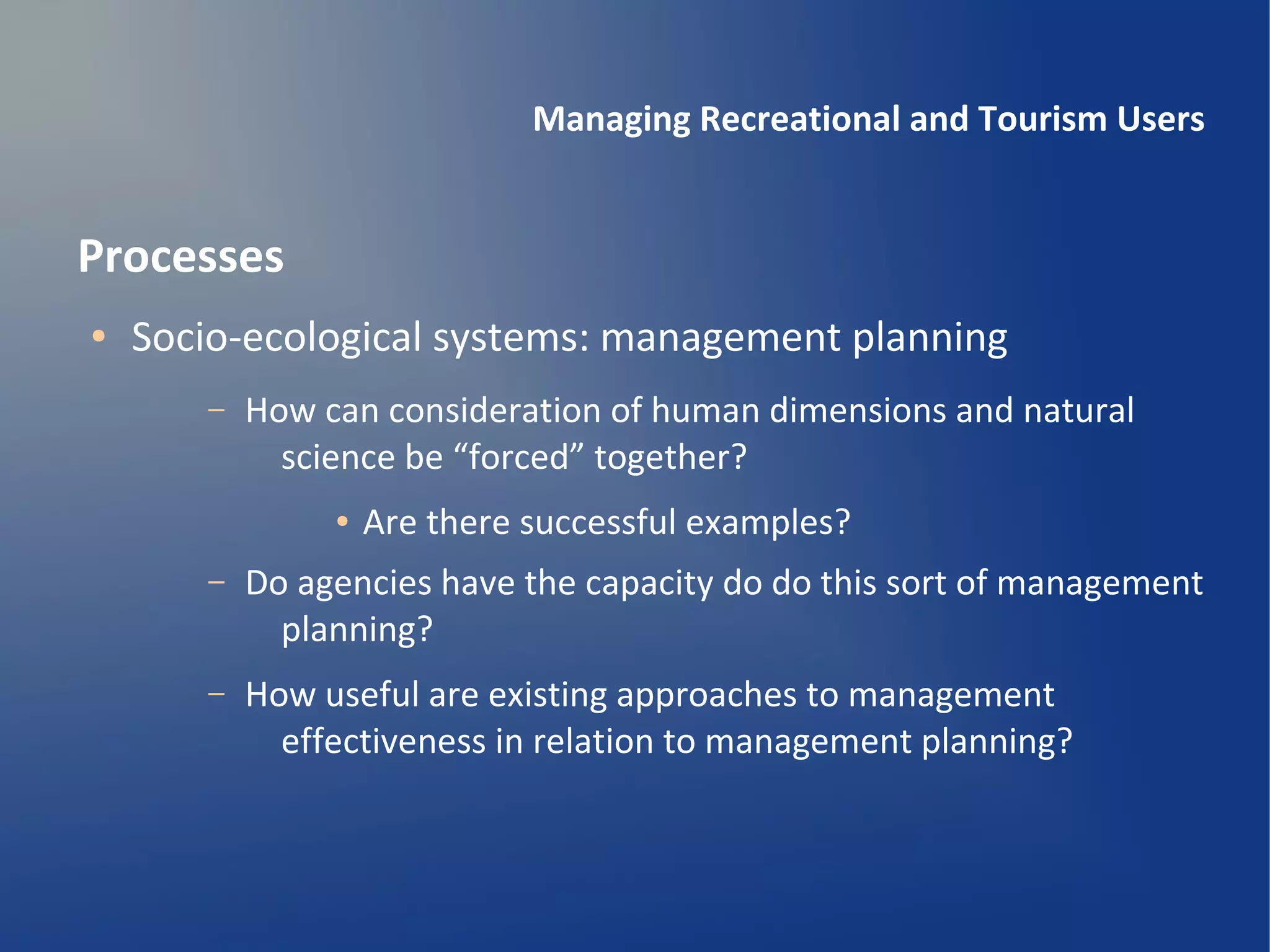
●   Socio-ecological systems: management planning
       –   How can consideration of human dimensions and natural
             science be “forced” together?
                ●   Are there successful examples?
       –   Do agencies have the capacity do do this sort of management
             planning?
       –   How useful are existing approaches to management
             effectiveness in relation to management planning?
Managing Recreational and Tourism Users


Judgments
●   Issues
        –    Deeper analysis: are issues associated with activity groups or
               with sub-groups?
●   Engagements
        –    Barriers: are there barriers that inhibit engagement between
               agencies and user groups?
●   Processes
        –    Are there examples of processes that are effective in
               managing recreation and tourism use?

MPA Users

  • 1.
    Managing Recreational andTourism Users of Marine Protected Areas: Issues, Engagements and Processes Human Dimensions in Marine Protected Areas Focus Group 2nd International Marine Conservation Congress Victoria, BC May 15 & 16, 2011 R.J. Payne Lakehead University
  • 2.
    Managing Recreational andTourism Users Introduction ● Context: – Established MPA ● Note that those established longer have more acceptance from all users and, perhaps, fewer issues – Recreational and tourism use are occurring – Issues; engagements; processes
  • 3.
    Managing Recreational andTourism Users Issues ● Recreational angling – Anglers, while generally supporting MPAs, often resist no- take zones – Are we justified in assuming that anglers are a homogeneous group? ● Catch & release; equipment; species – Are there sub-groups within the angling group? – What variables set these sub-groups apart?
  • 4.
    Managing Recreational andTourism Users Issues ● Commercial tourism – A possible partnership between MPA agencies and commercial tourism operators – Who are the commercial tourism operators' clients – Might data be shared for mutual benefit? – What messages might commercial tourism operators deliver for MPA agencies? – Can we measure the effectiveness of the messages and the delivery?
  • 5.
    Managing Recreational andTourism Users Engagements ● Protected area agencies – Do protected area agencies mount barriers to engaging with relevant user groups? – The role of agency culture: ● e.g., DFO – a regulatory agency – Can we identify through research barriers to engagement within agency cultures? – Do agency staff have barriers that inhibit their engagement? – Can we identify those barriers through research?
  • 6.
    Managing Recreational andTourism Users Engagements ● User “groups” – See earlier concern about activity groups under “Issues” – Are some groups/sub-groups especially difficult to engage? ● Perhaps: e.g., boaters in the Lake Superior NMCA – What might account for these difficulties? ● Distrust of government? ● Characteristics of the users themselves? – How do we determine what barriers exist and why they exist among groups?
  • 7.
    Managing Recreational andTourism Users Processes ● Knowledge Management: understanding recreational and tourism users – What needs to be known about visitors? – What data collection methods are required? – What models do we need? – What needs monitoring? – How effective are existing knowledge management systems?
  • 8.
    Managing Recreational andTourism Users Processes ● Socio-ecological systems: management planning – How can consideration of human dimensions and natural science be “forced” together? ● Are there successful examples? – Do agencies have the capacity do do this sort of management planning? – How useful are existing approaches to management effectiveness in relation to management planning?
  • 9.
    Managing Recreational andTourism Users Judgments ● Issues – Deeper analysis: are issues associated with activity groups or with sub-groups? ● Engagements – Barriers: are there barriers that inhibit engagement between agencies and user groups? ● Processes – Are there examples of processes that are effective in managing recreation and tourism use?