Can MOOCs save Europe's 
unemployed youth? 
Workshop at EC TEL 2014 
16 September 2014
http://goo.gl/PstFYi
aims to strengthen the business 
environment for web and ICT 
entrepreneurs so that their ideas and 
business can start and grow in the EU. 
http://ec.europa.eu/digital-agenda/en/startup-europe
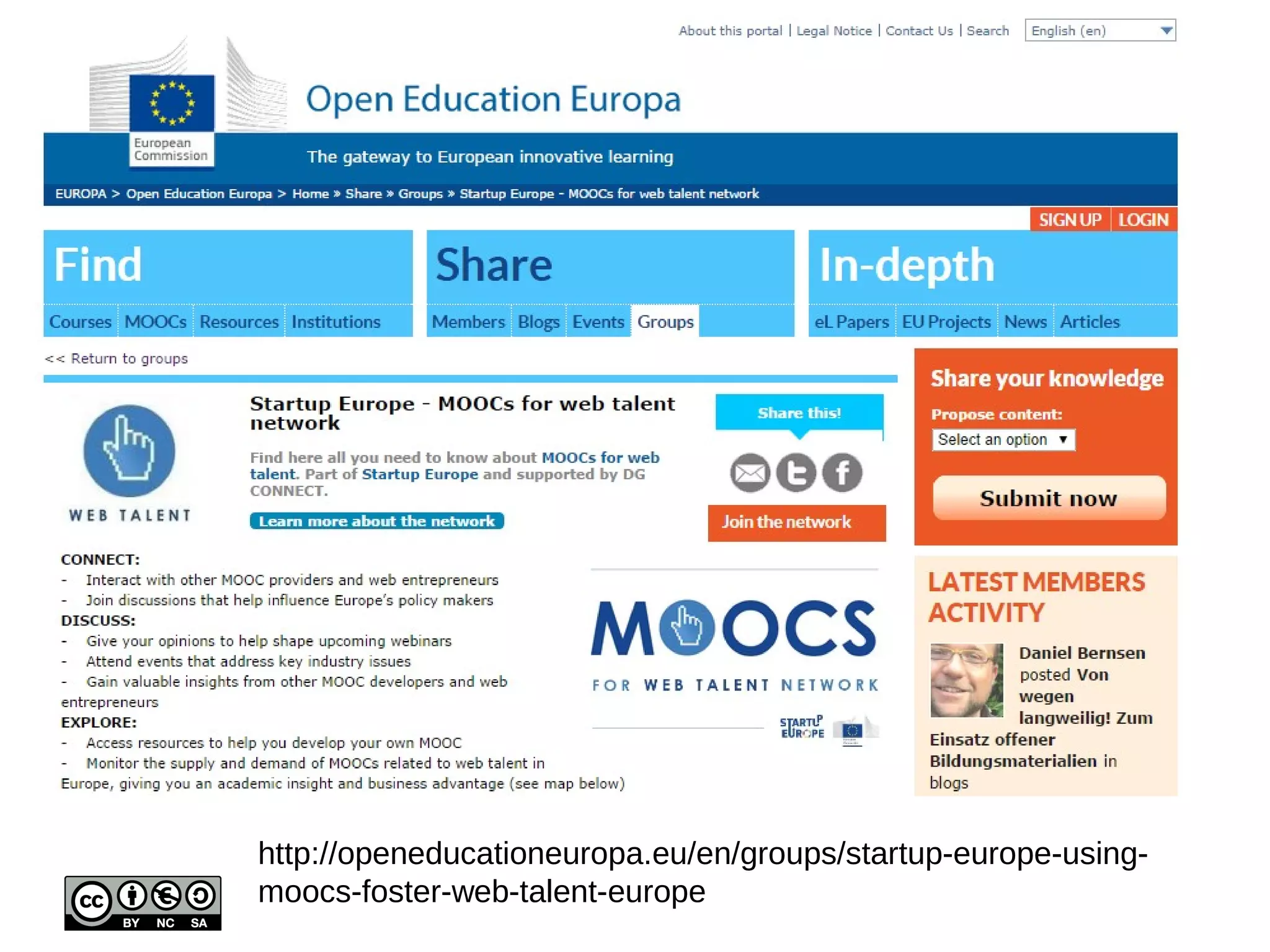
http://openeducationeuropa.eu/en/groups/startup-europe-using-moocs- 
foster-web-talent-europe
Startup Europe - MOOCs for web 
talent network 
CONNECT: 
• Interact with other MOOC providers and web entrepreneurs 
• Join discussions that help influence Europe’s policy makers 
DISCUSS: 
• Give your opinions to help shape upcoming webinars 
• Attend events that address key industry issues 
• Gain valuable insights from other MOOC developers and web 
entrepreneurs 
EXPLORE: 
• Access resources to help you develop your own MOOC 
• Monitor the supply and demand of MOOCs related to web talent in 
Europe, giving you an academic insight and business advantage
So far... 
• Desk research 
• Survey 
• Webinars 
• Knowledge base 
• Network 
• Report 
• This workshop
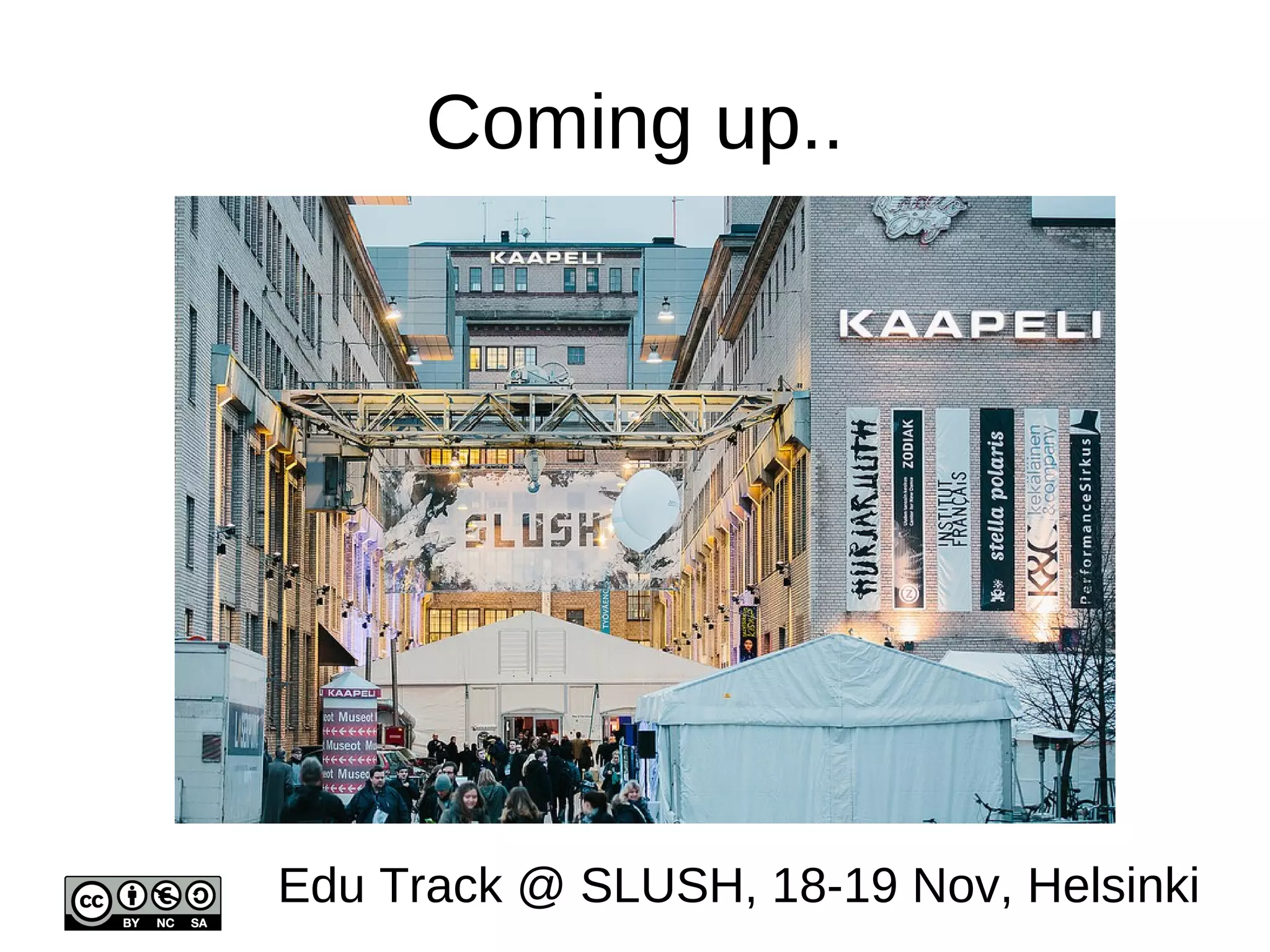
Coming up.. 
Edu Track @ SLUSH, 18-19 Nov, Helsinki
Today 
• Findings from the StartUp Europe MOOC study 
• Paper session 
• Discussion 
Lunch 
• Platform panel: 
FUN, OpenHPI, OpenClassrooms 
• Paper session 
• Response: Davinia Hernández-Leo & Carlos 
Delgado Kloos
The Study 
• Desk research 
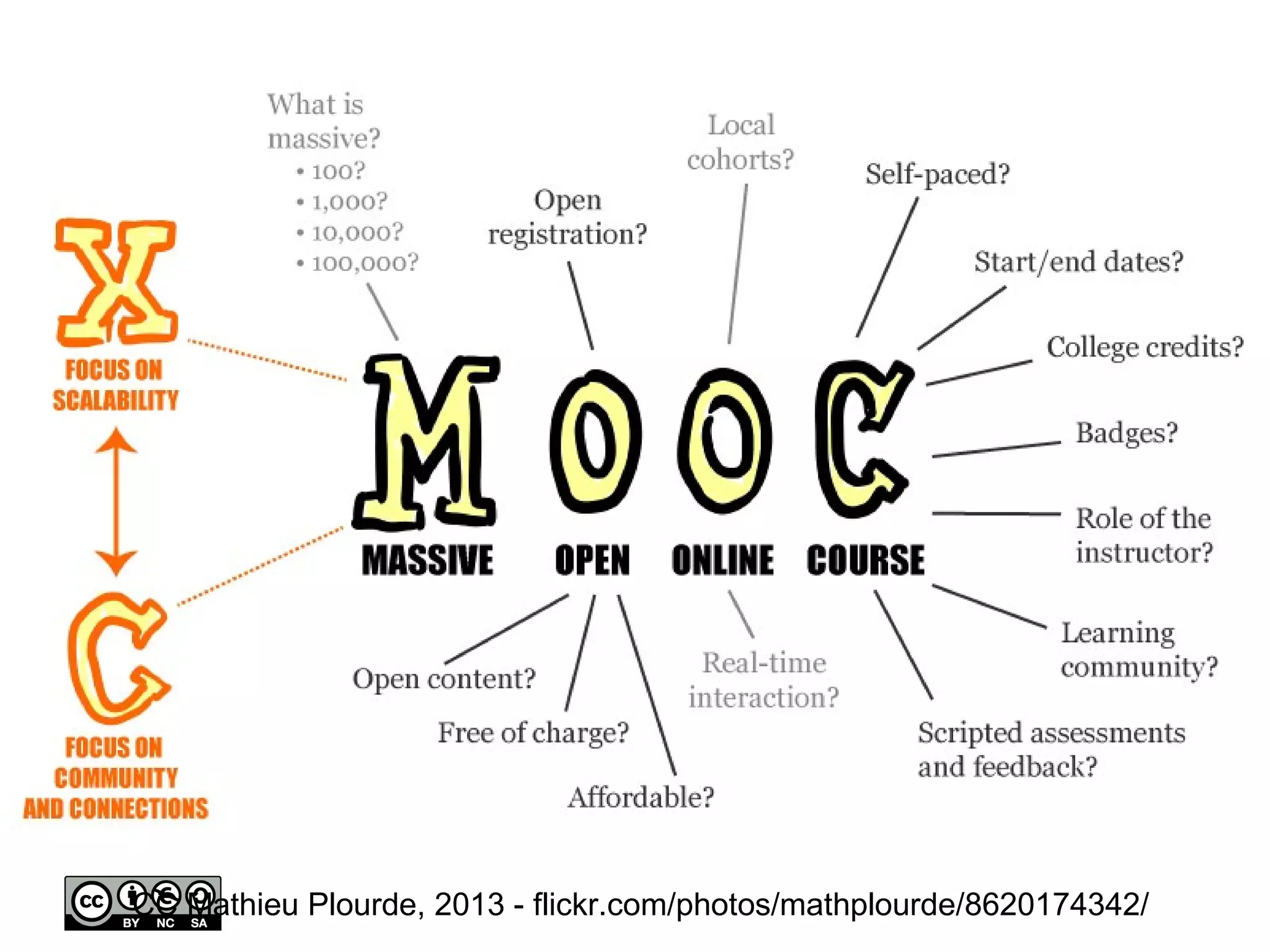
– Literature review: what is a MOOC? 
– Mapping existing MOOCs 
• Survey 
– 2,800 response, 211 countries, 
• Expert review 
– Pierre Dillenburg, Doug Belshaw, Hannes 
Klöpper, Pierre-Antoine Ullmo
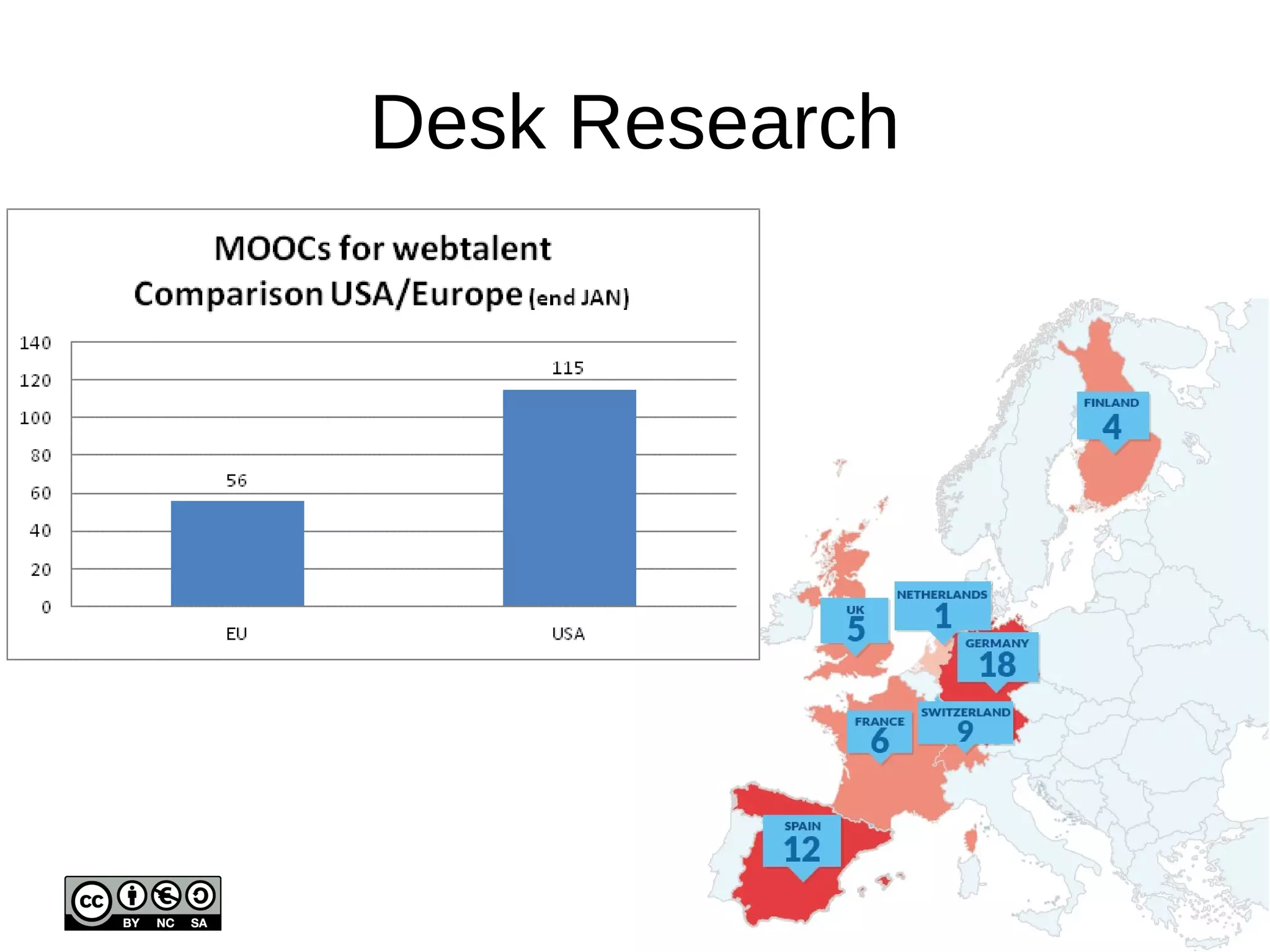
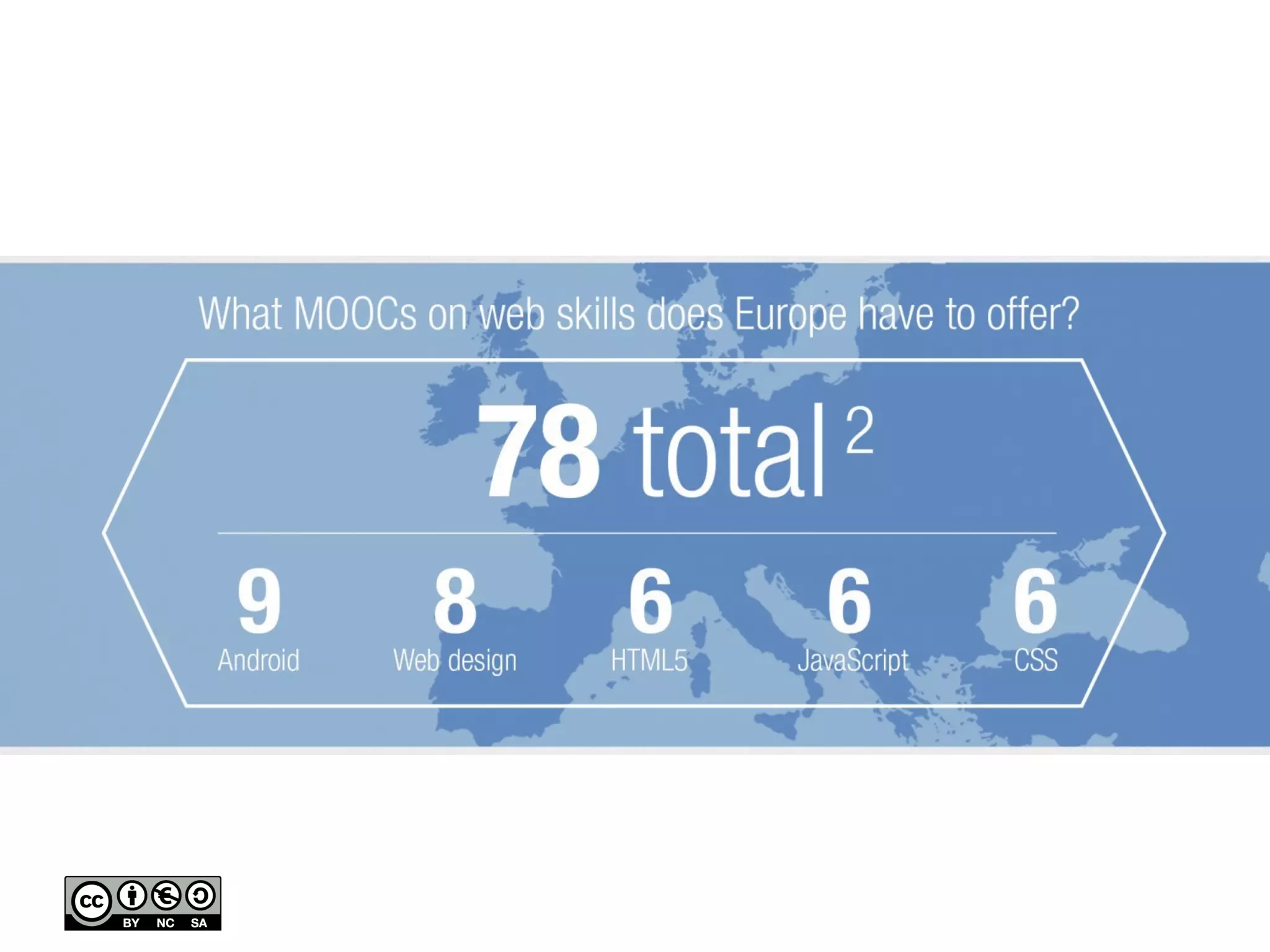
Desk Research
CC Mathieu Plourde, 2 013 - flickr.com/photos/mathplourde/8620174342/
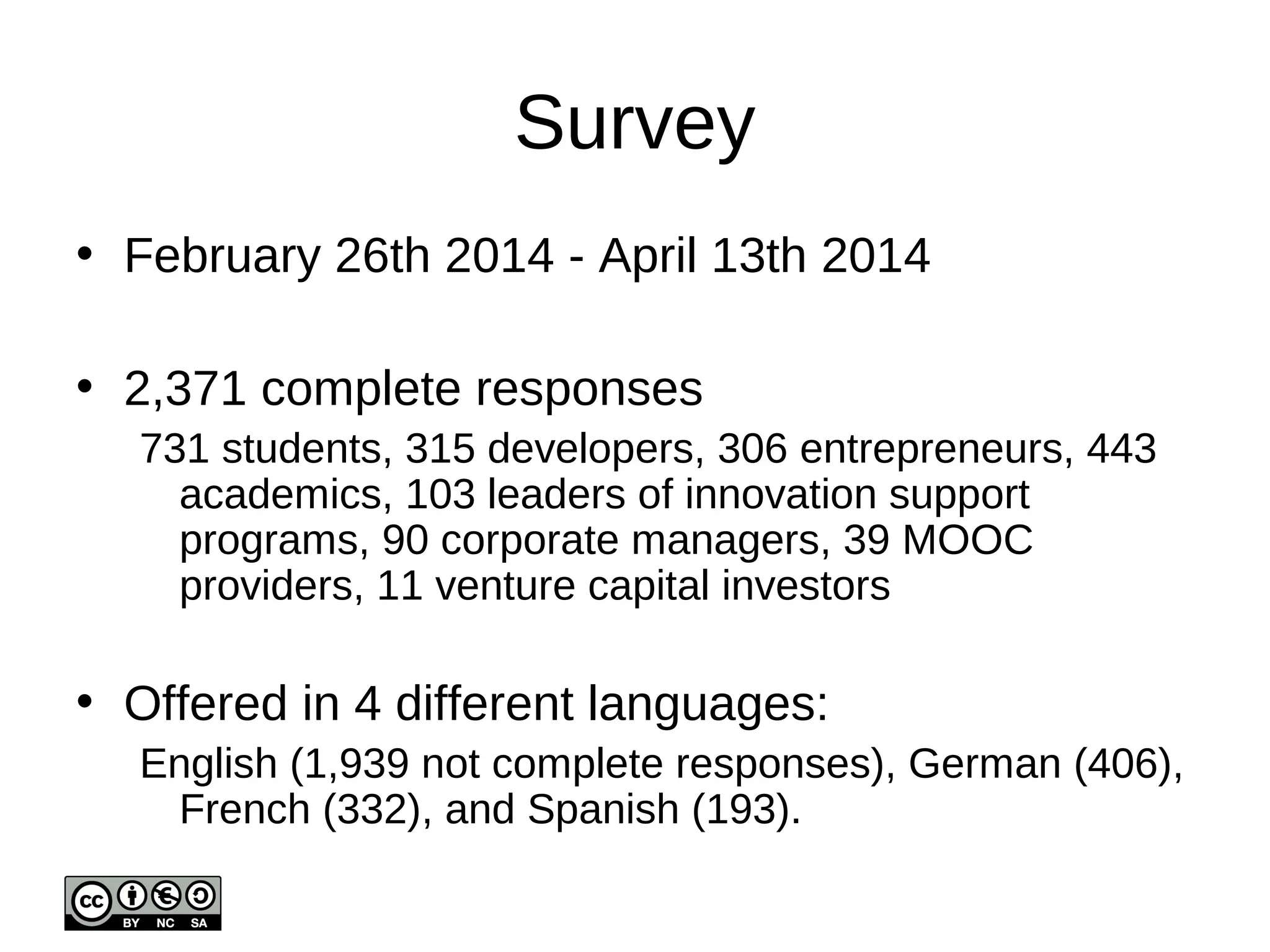
Survey 
• February 26th 2014 - April 13th 2014 
• 2,371 complete responses 
731 students, 315 developers, 306 entrepreneurs, 443 
academics, 103 leaders of innovation support 
programs, 90 corporate managers, 39 MOOC 
providers, 11 venture capital investors 
• Offered in 4 different languages: 
English (1,939 not complete responses), German (406), 
French (332), and Spanish (193).
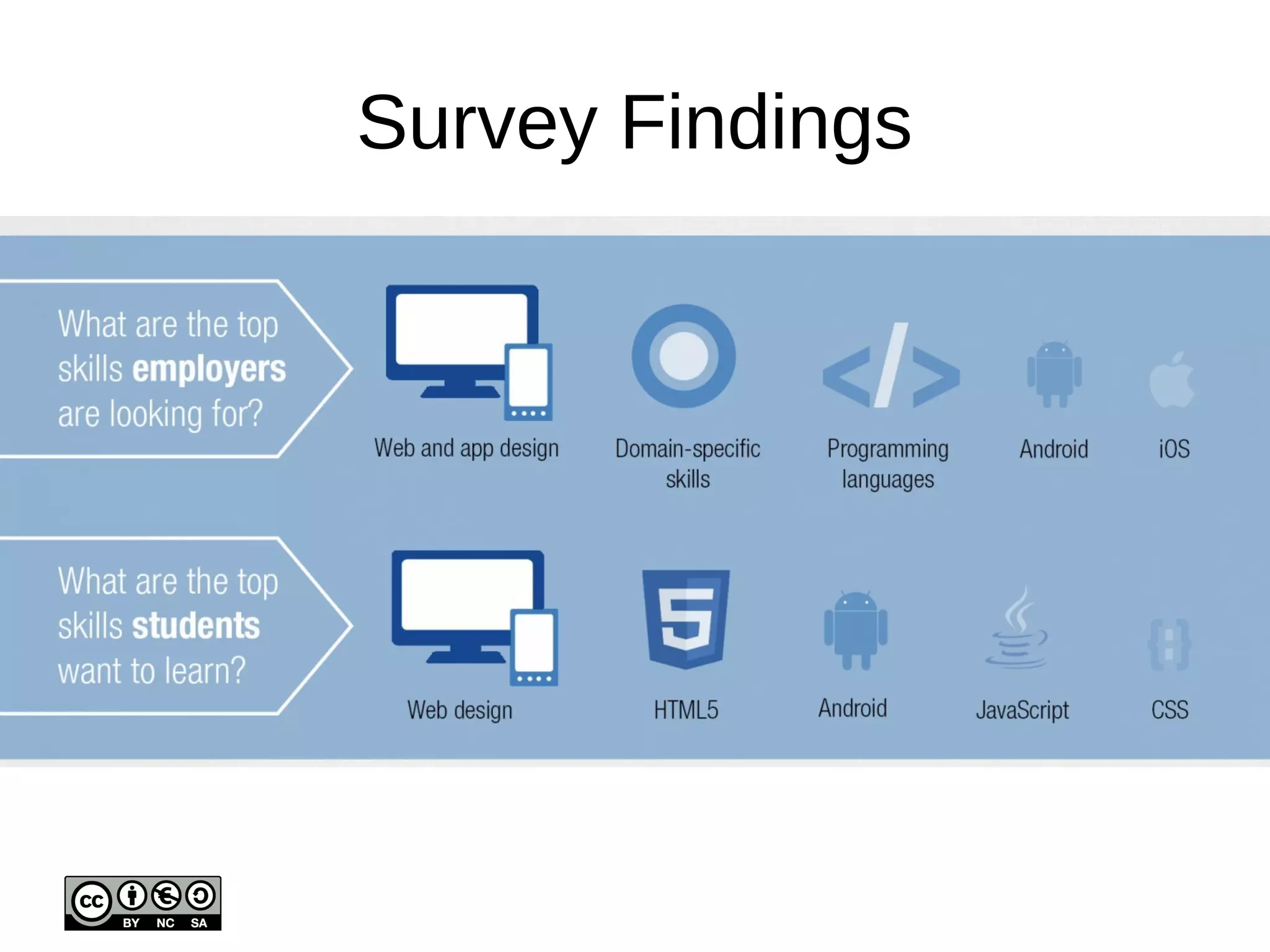
Survey Findings
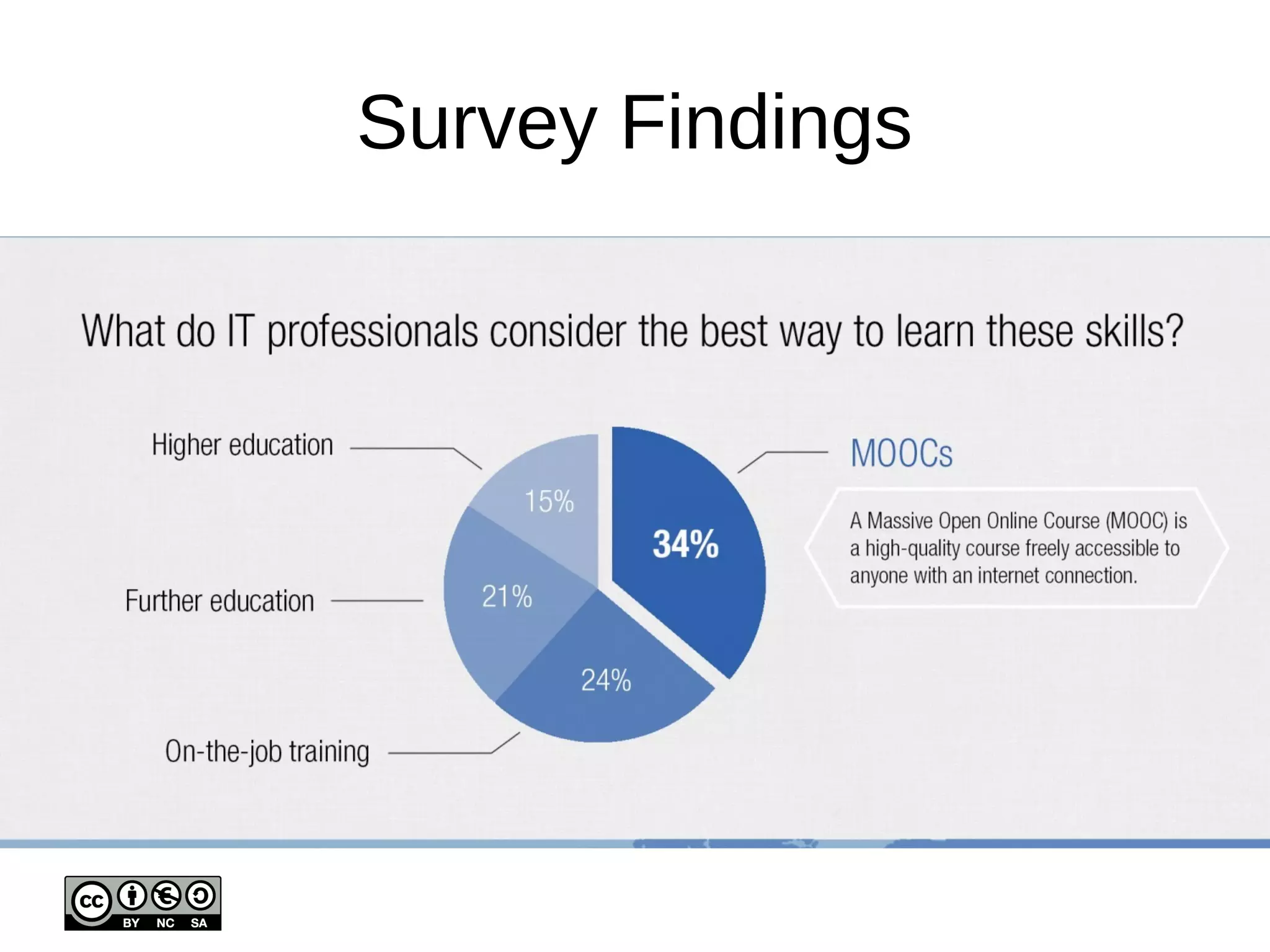
Survey Findings
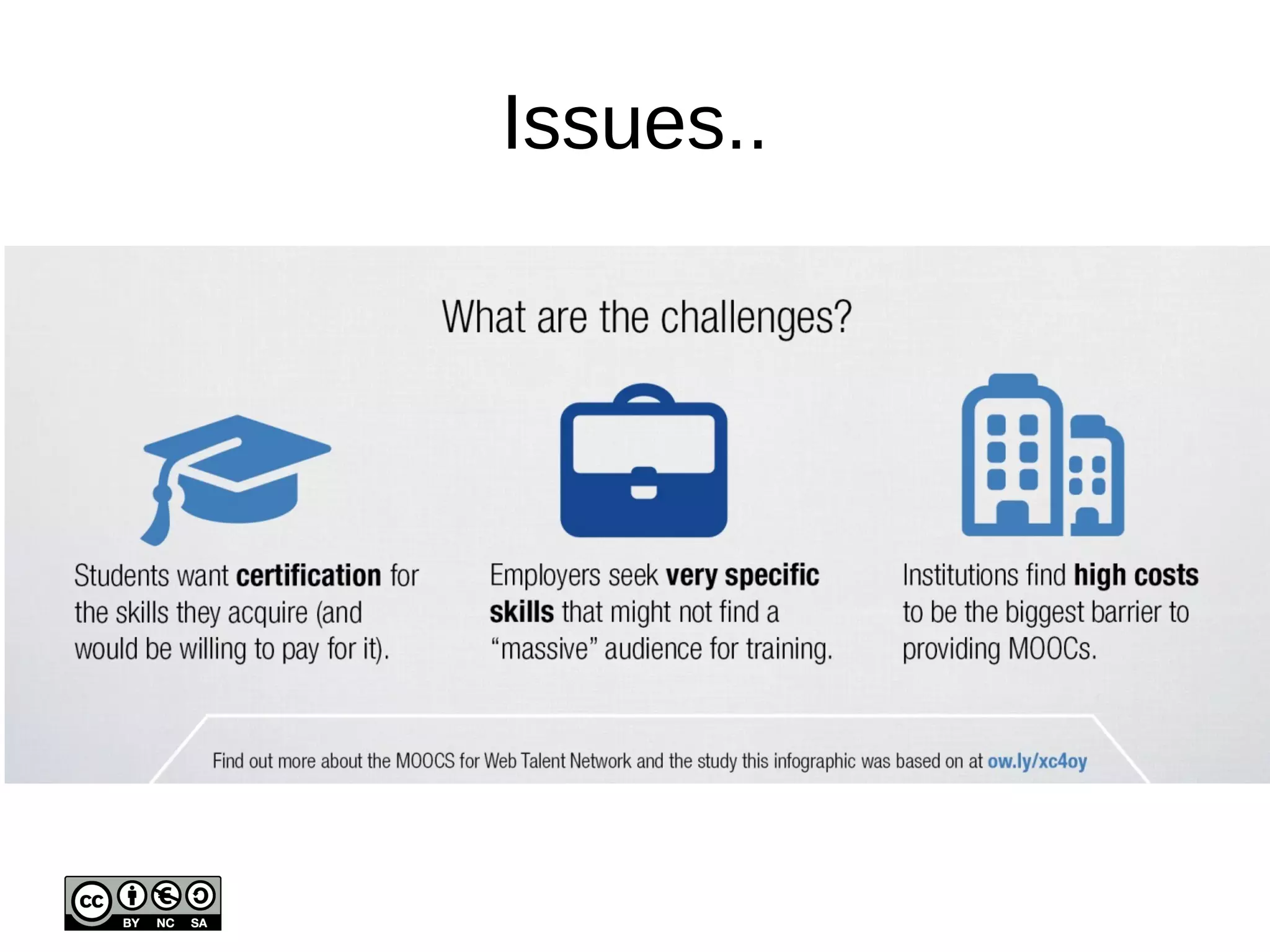
Issues..
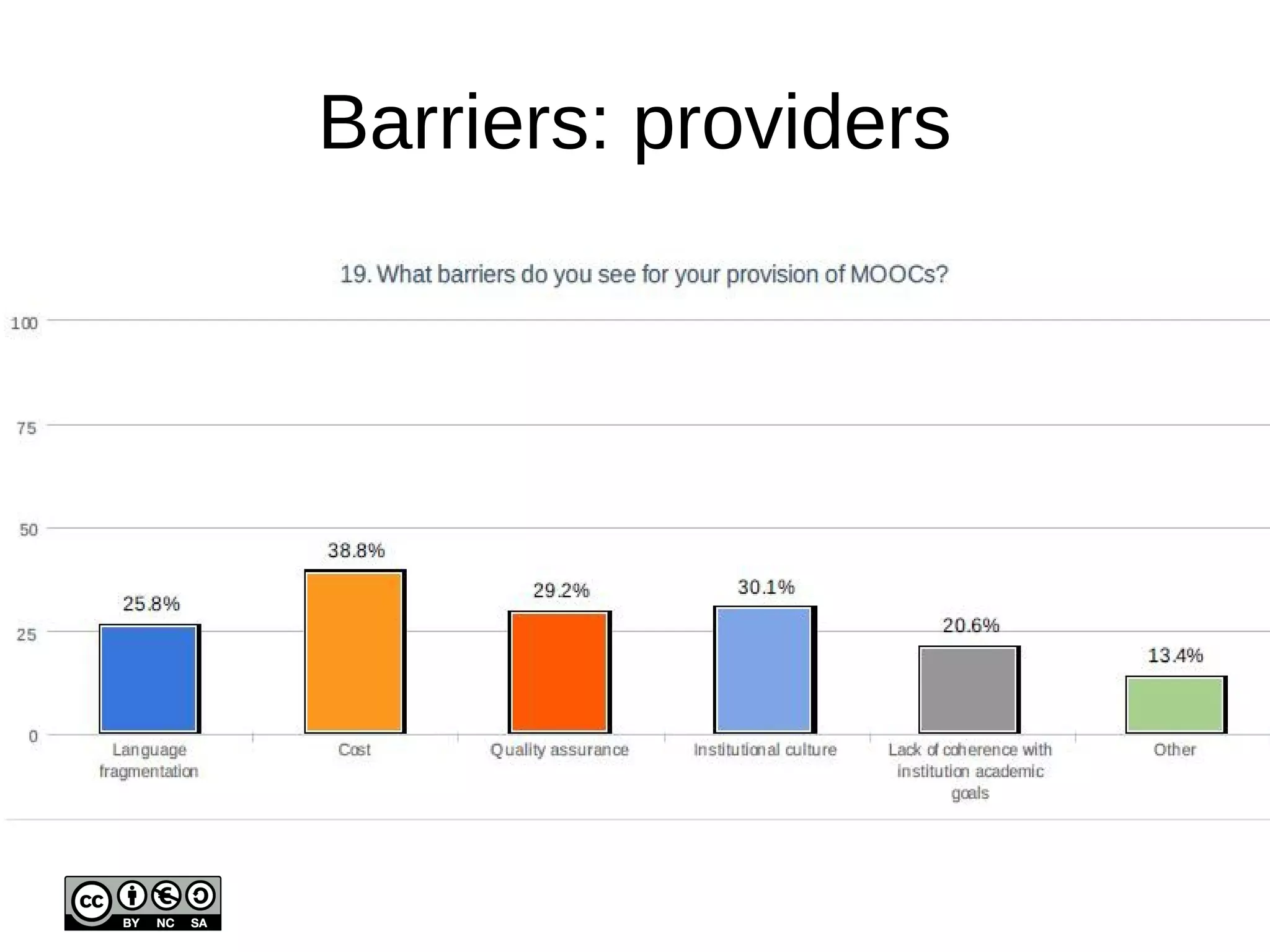
Barriers: providers
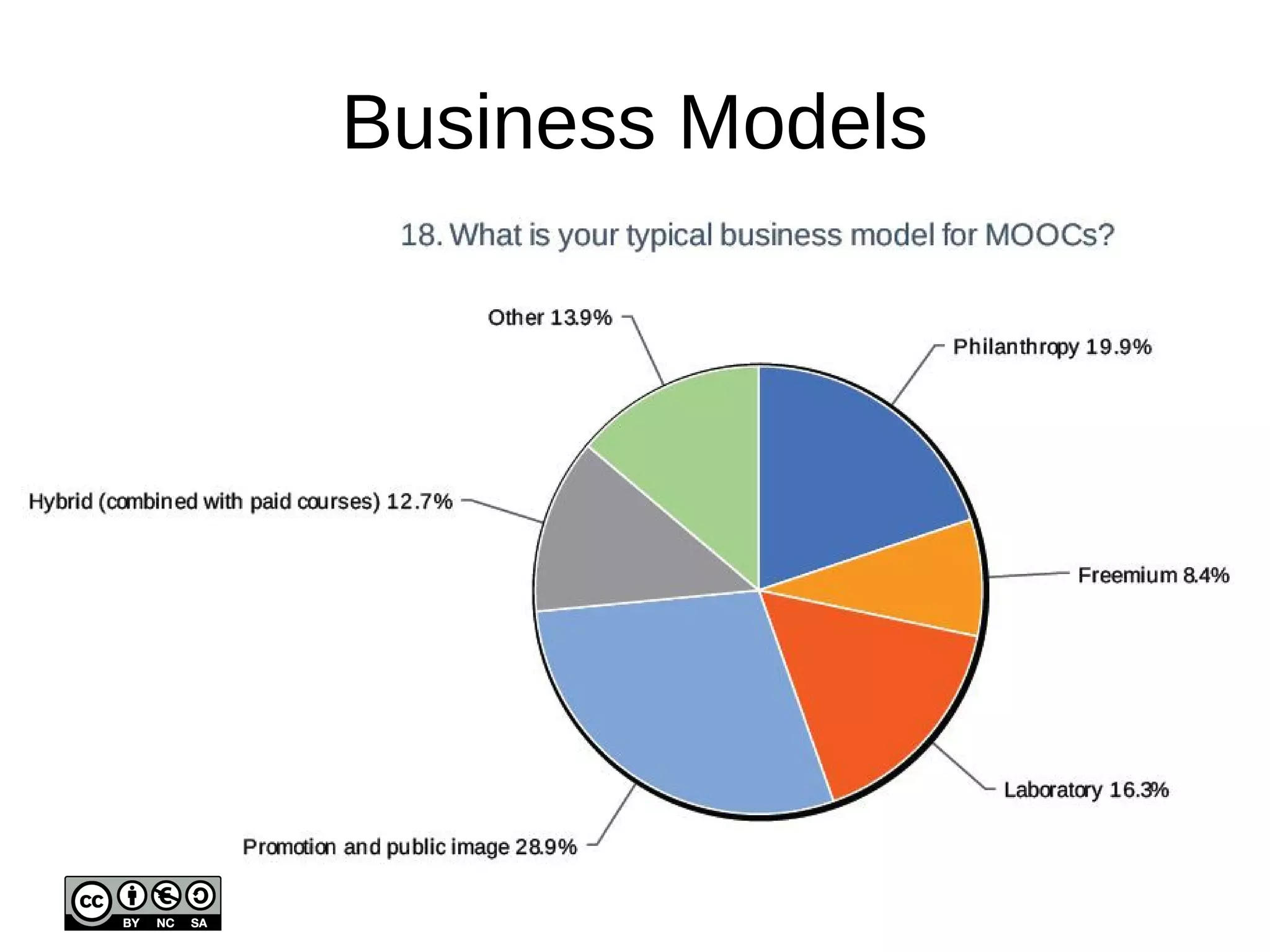
Business Models
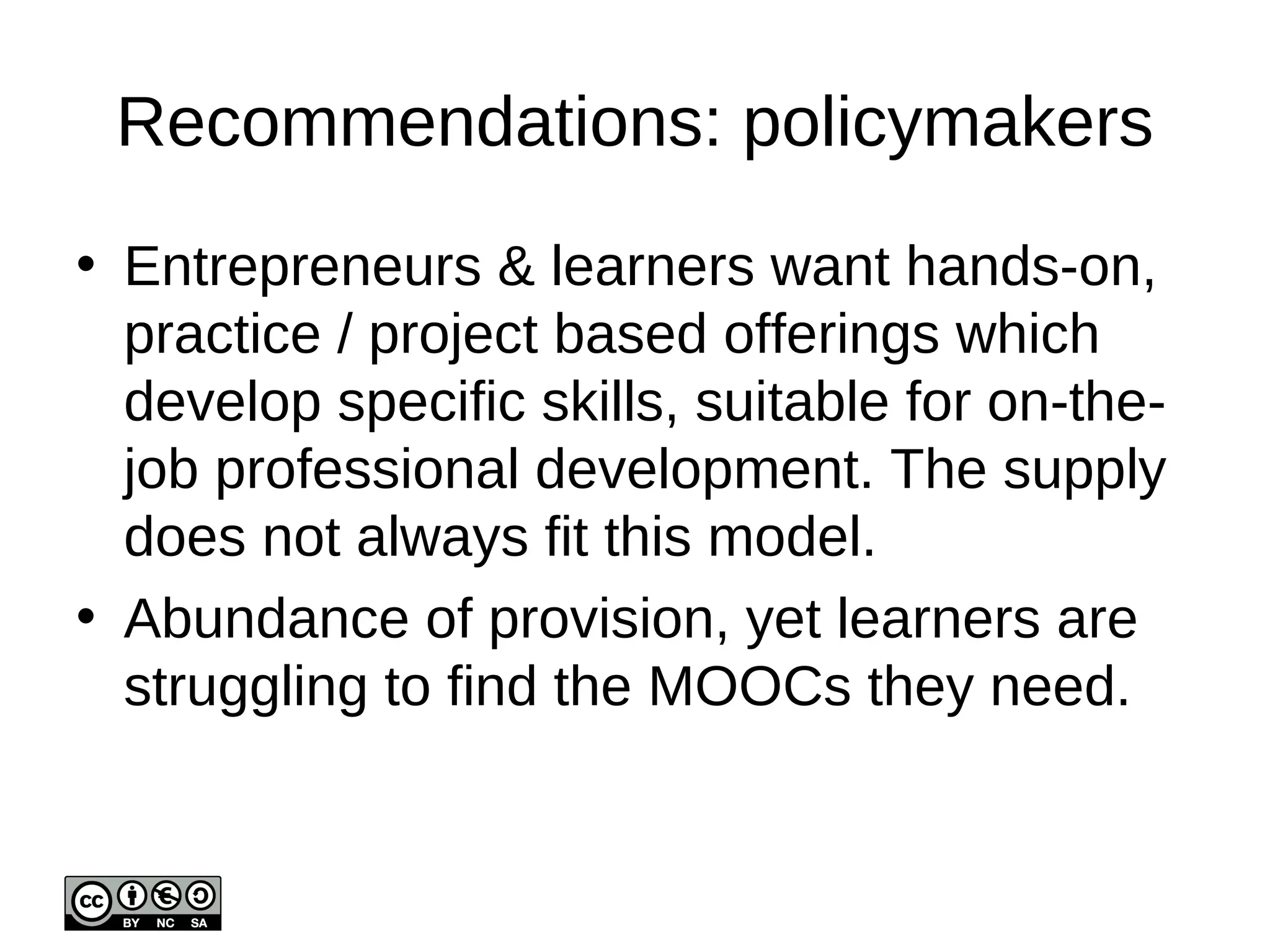
Recommendations: policymakers 
• Entrepreneurs & learners want hands-on, 
practice / project based offerings which 
develop specific skills, suitable for on-the-job 
professional development. The supply 
does not always fit this model. 
• Abundance of provision, yet learners are 
struggling to find the MOOCs they need.
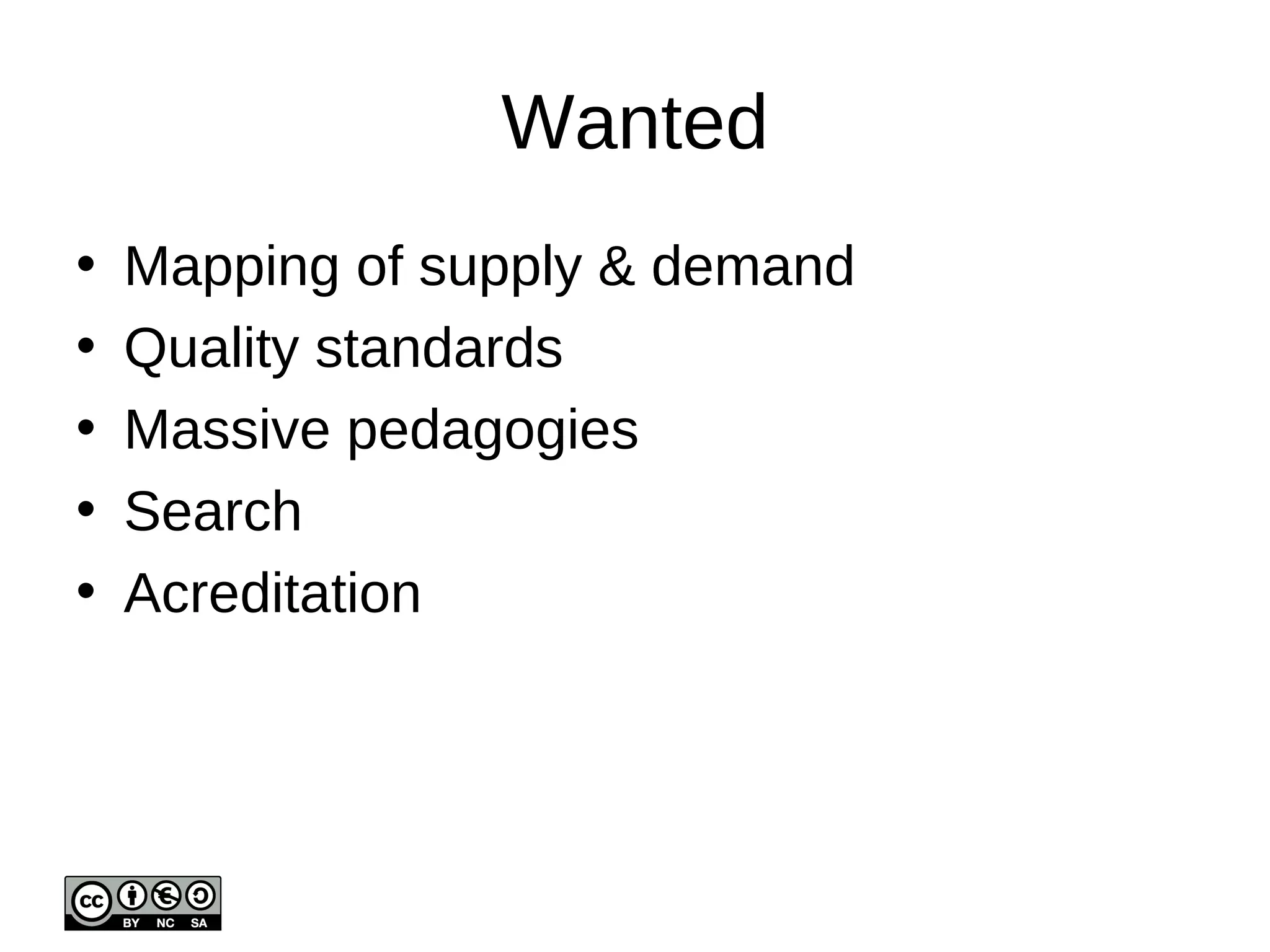
Wanted 
• Mapping of supply & demand 
• Quality standards 
• Massive pedagogies 
• Search 
• Acreditation
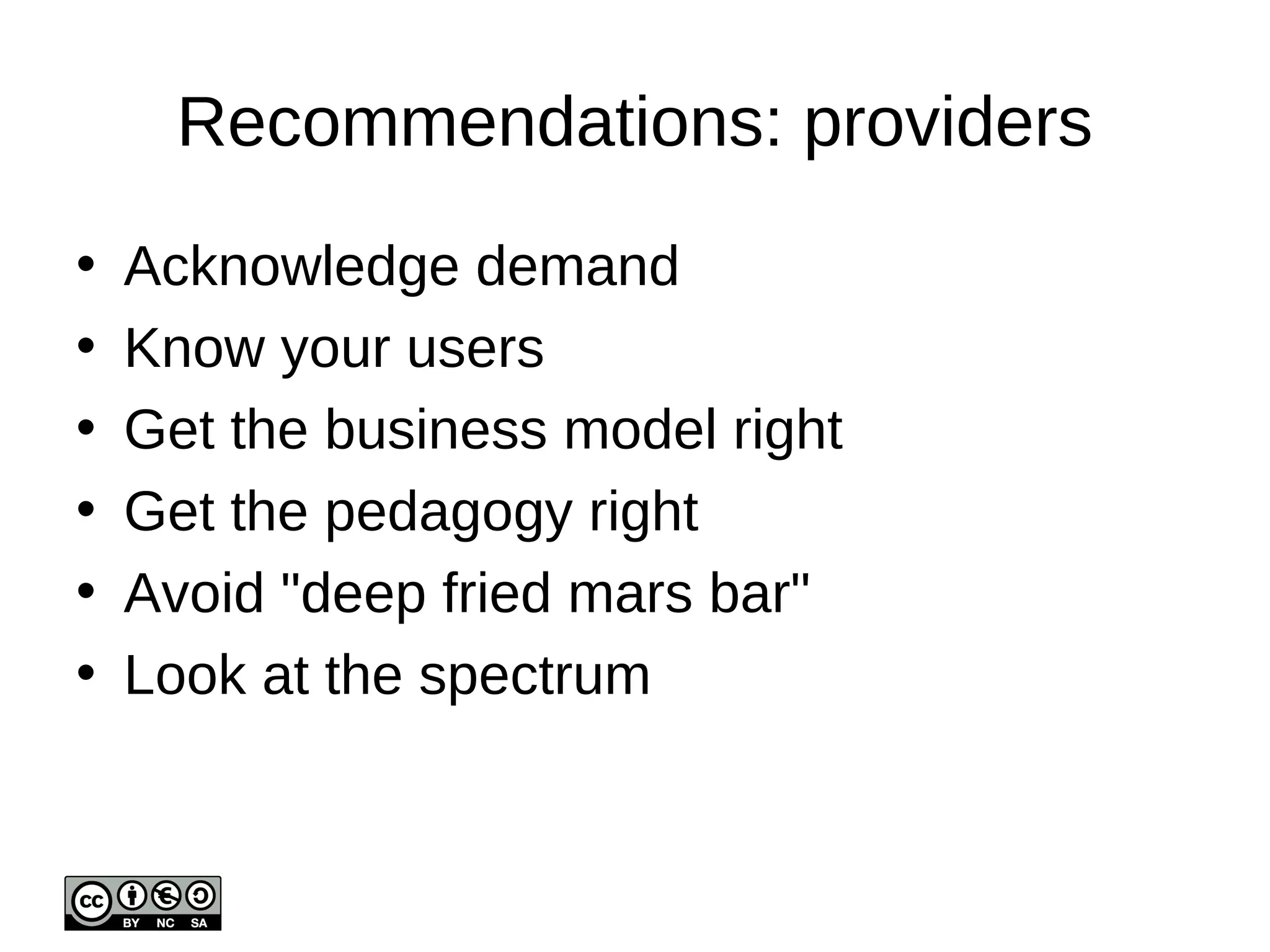
Recommendations: providers 
• Acknowledge demand 
• Know your users 
• Get the business model right 
• Get the pedagogy right 
• Avoid "deep fried mars bar" 
• Look at the spectrum
What they want 
“large focus on practical aspects such as programming 
project” 
“follow-up and application of the learned skills through 
practical, long-term projects” 
“Don't get too academic. Learners are looking for practical 
workflows” 
“The practical aspects of the course are as important as the 
technical contents. Group courses so one can follow a 
career path. Share information with job seekers. 
Promote research oriented courses” 
“Ability to practice skills and get (automated) feedback; 
community that encourages peers to work together on 
projects; instructor expertise and online teaching skills”
“(...) course content to be designed in consultation with 
related job oriented entities who would be ready to 
absorb the participants (who have a lot of spare time at 
their disposal) upon successful completion of the 
MOOC” 
“Certification of the skills acquired is the most relevant topic 
on free MOOCs. Second from some MOOCs it's 
important to qualify the source of knowledge, they need 
to be more specific in the field and if the course can 
contact some professional from the area to have a look 
into the students creations it would totally be a HUGE 
plus since it could turn into a job contact or a network 
contact”
Emerging themes 
• Growing eco-system of campus, blended, hybrid and 
open online courses, which would leverage the overlaps 
and synergies between different modes of delivery 
• Rise in awareness to issues of learning design, 
evaluation, assessment and quality control, which are 
much more salient in on-line courses 
• Importance of accreditation and verification schemes, 
specifically practice-based schemes (e.g. Portfolios) 
which would allow learners to demonstrate the skills they 
acquired to potential employers.
http://openeducationeuropa.eu/en/news/moocs-are-high-demand-especially- 
web-design-according-new-ec-study 
http://www.openeducationeuropa.eu/en/groups/startup-europe-using-moocs- 
foster-web-talent-europe

MOOCs for Web Talent

  • 1.
    Can MOOCs saveEurope's unemployed youth? Workshop at EC TEL 2014 16 September 2014
  • 2.
  • 3.
    aims to strengthenthe business environment for web and ICT entrepreneurs so that their ideas and business can start and grow in the EU. http://ec.europa.eu/digital-agenda/en/startup-europe
  • 4.
  • 5.
    Startup Europe -MOOCs for web talent network CONNECT: • Interact with other MOOC providers and web entrepreneurs • Join discussions that help influence Europe’s policy makers DISCUSS: • Give your opinions to help shape upcoming webinars • Attend events that address key industry issues • Gain valuable insights from other MOOC developers and web entrepreneurs EXPLORE: • Access resources to help you develop your own MOOC • Monitor the supply and demand of MOOCs related to web talent in Europe, giving you an academic insight and business advantage
  • 6.
    So far... •Desk research • Survey • Webinars • Knowledge base • Network • Report • This workshop
  • 7.
    Coming up.. EduTrack @ SLUSH, 18-19 Nov, Helsinki
  • 8.
    Today • Findingsfrom the StartUp Europe MOOC study • Paper session • Discussion Lunch • Platform panel: FUN, OpenHPI, OpenClassrooms • Paper session • Response: Davinia Hernández-Leo & Carlos Delgado Kloos
  • 9.
    The Study •Desk research – Literature review: what is a MOOC? – Mapping existing MOOCs • Survey – 2,800 response, 211 countries, • Expert review – Pierre Dillenburg, Doug Belshaw, Hannes Klöpper, Pierre-Antoine Ullmo
  • 10.
  • 12.
    CC Mathieu Plourde,2 013 - flickr.com/photos/mathplourde/8620174342/
  • 13.
    Survey • February26th 2014 - April 13th 2014 • 2,371 complete responses 731 students, 315 developers, 306 entrepreneurs, 443 academics, 103 leaders of innovation support programs, 90 corporate managers, 39 MOOC providers, 11 venture capital investors • Offered in 4 different languages: English (1,939 not complete responses), German (406), French (332), and Spanish (193).
  • 14.
  • 15.
  • 16.
  • 17.
  • 18.
  • 19.
    Recommendations: policymakers •Entrepreneurs & learners want hands-on, practice / project based offerings which develop specific skills, suitable for on-the-job professional development. The supply does not always fit this model. • Abundance of provision, yet learners are struggling to find the MOOCs they need.
  • 20.
    Wanted • Mappingof supply & demand • Quality standards • Massive pedagogies • Search • Acreditation
  • 21.
    Recommendations: providers •Acknowledge demand • Know your users • Get the business model right • Get the pedagogy right • Avoid "deep fried mars bar" • Look at the spectrum
  • 22.
    What they want “large focus on practical aspects such as programming project” “follow-up and application of the learned skills through practical, long-term projects” “Don't get too academic. Learners are looking for practical workflows” “The practical aspects of the course are as important as the technical contents. Group courses so one can follow a career path. Share information with job seekers. Promote research oriented courses” “Ability to practice skills and get (automated) feedback; community that encourages peers to work together on projects; instructor expertise and online teaching skills”
  • 23.
    “(...) course contentto be designed in consultation with related job oriented entities who would be ready to absorb the participants (who have a lot of spare time at their disposal) upon successful completion of the MOOC” “Certification of the skills acquired is the most relevant topic on free MOOCs. Second from some MOOCs it's important to qualify the source of knowledge, they need to be more specific in the field and if the course can contact some professional from the area to have a look into the students creations it would totally be a HUGE plus since it could turn into a job contact or a network contact”
  • 24.
    Emerging themes •Growing eco-system of campus, blended, hybrid and open online courses, which would leverage the overlaps and synergies between different modes of delivery • Rise in awareness to issues of learning design, evaluation, assessment and quality control, which are much more salient in on-line courses • Importance of accreditation and verification schemes, specifically practice-based schemes (e.g. Portfolios) which would allow learners to demonstrate the skills they acquired to potential employers.
  • 25.