Educational Design
Workshop
Barcelona, July 14
Yishay Mor & Teemu Leinonen
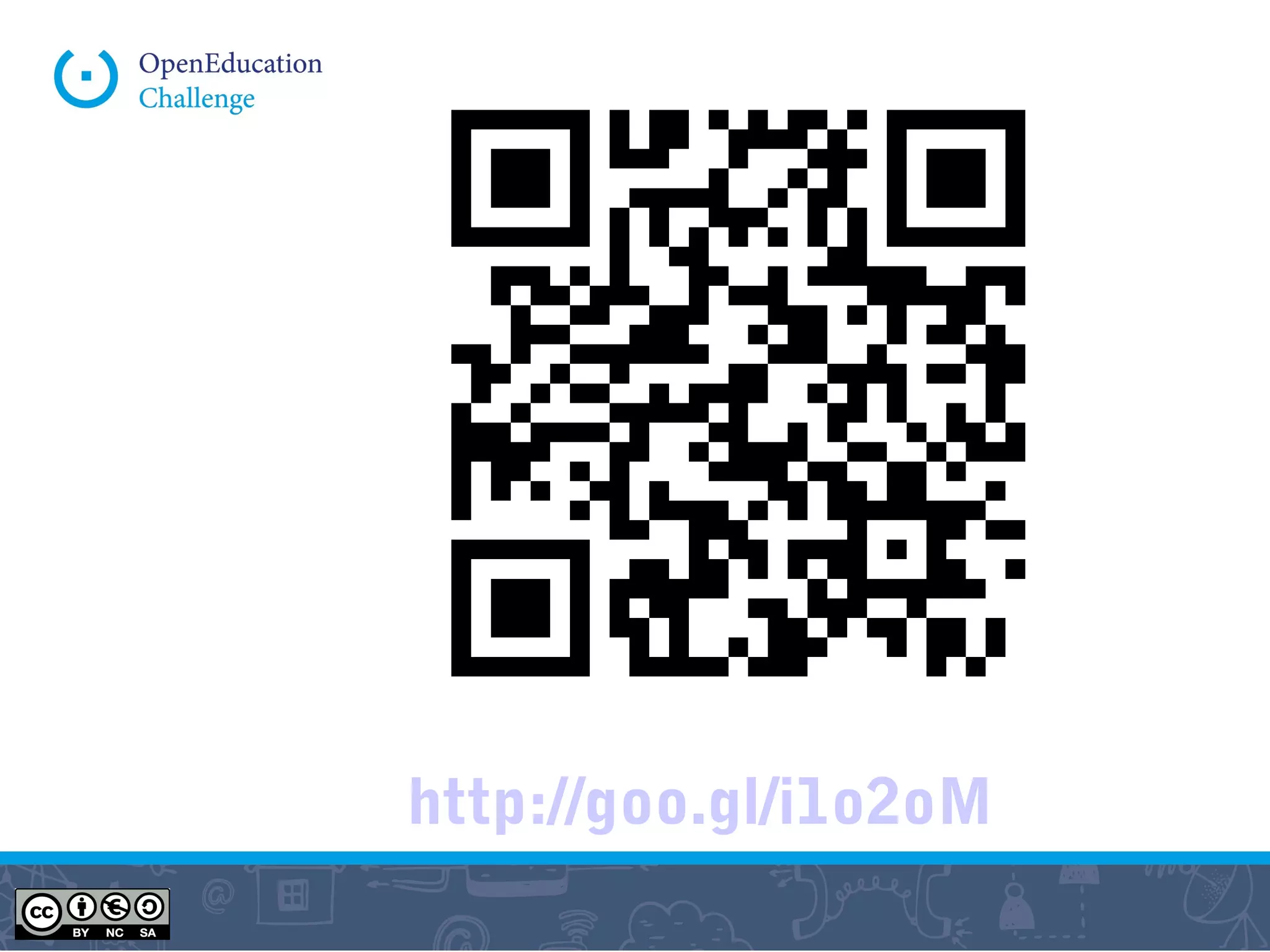
http://goo.gl/i1o2oM
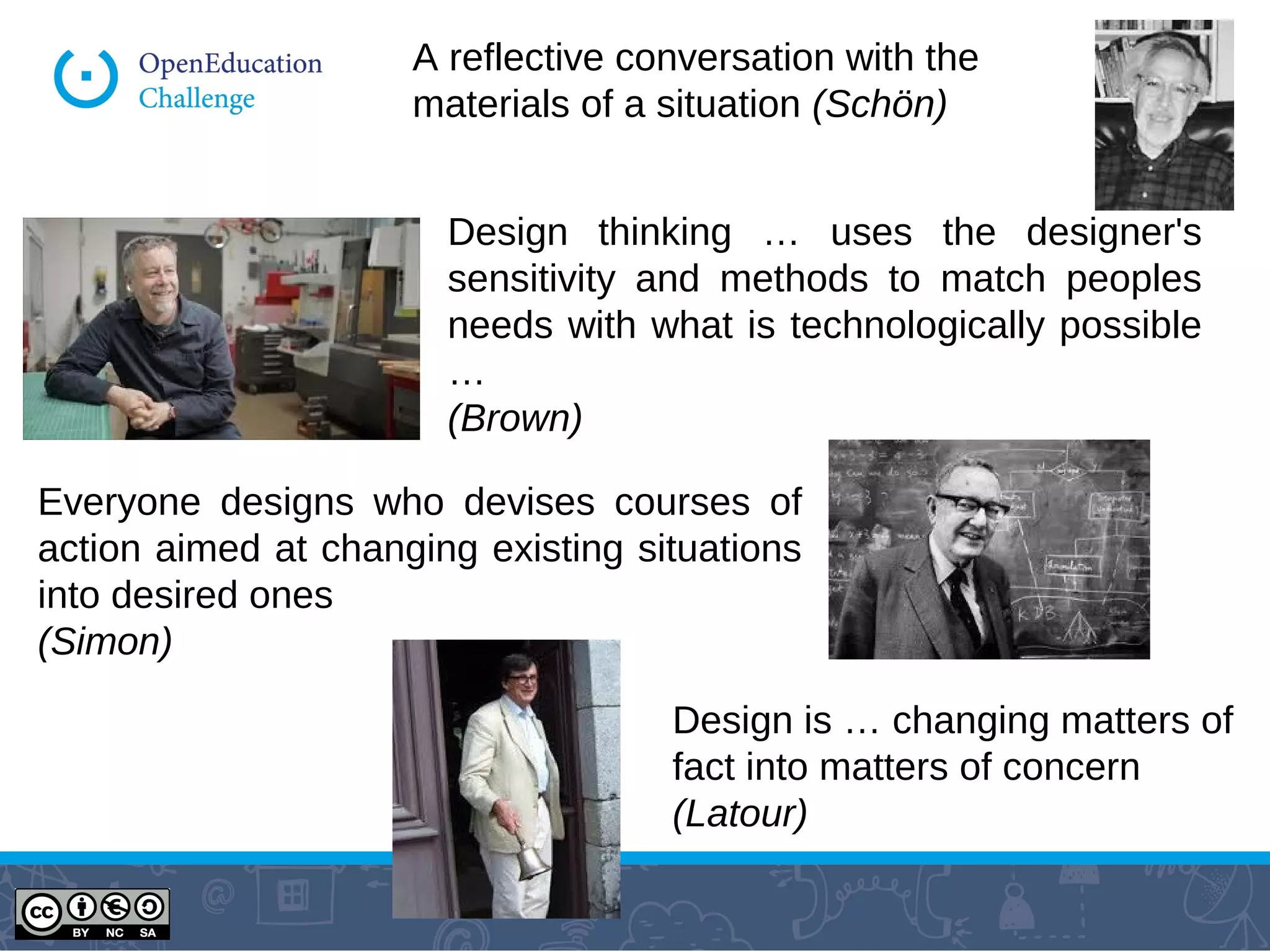
Design thinking … uses the designer's
sensitivity and methods to match peoples
needs with what is technologically possible
…
(Brown)
Everyone designs who devises courses of
action aimed at changing existing situations
into desired ones
(Simon)
Design is … changing matters of
fact into matters of concern
(Latour)
A reflective conversation with the
materials of a situation (Schön)
The great problem of the adult who has to deal with the young
is to see, and to feel deeply a well as merely to see
intellectually, the forces that are moving in the young; but it is
to see them as possibilities, as signs and promises; to
interpret them, in short, in the light of what the may come to
be. Nor does the task end there. It is bound up with the further
problem of judging and devising the conditions, the materials,
both physical, such as tools of work, and moral and social,
which will, once more so interact with existing powers and
preferences as to bring about transformation in the desired
direction.
» John Dewey, 1934
Yishay Mor
J Shop
Teemu Leinonen
Early 1990-95 Pedagogical studies + web design
1995 Design studies + 2 ed.tech. start-ups
2000 + Media Lab Helsinki + Learning Environments Research
Group + Wikipedia
2005 Mobile learning research in South Africa
2008 CSCL Research in Stanford
2009 Professor, New Media Design & Learning
We're here to help
you explain..

Who are your potential users?

What is the context?

What are their needs?

What are the current alternatives?

What is the essence of your innovation?
Convice us that your “thing” will address real
user needs in their context.
Who are you?
The Dead Duck Game

(5 Min.): draw a picture of you & your
product

(2 Min. each): show your picture,
introduce yourself & your product, and
explain why it is a dead duck.
(“it will never fly”)
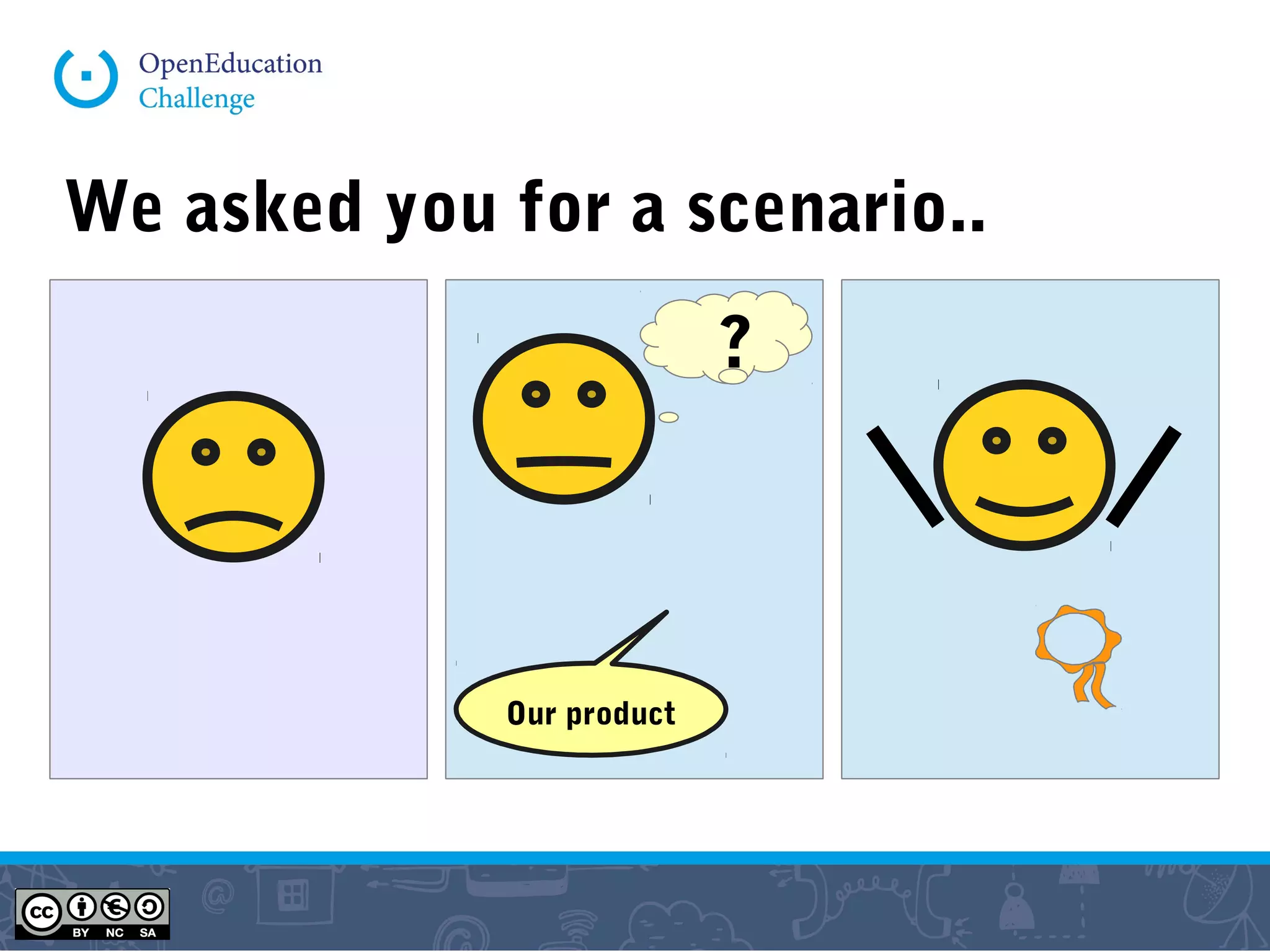
We asked you for a scenario..
Our product
?
Step 1: who are your users?

We don't understand facts, we
understand stories. And a story is always
about someone.

You need to design for someone.
Anyone. If not, you're designing for no-
one.
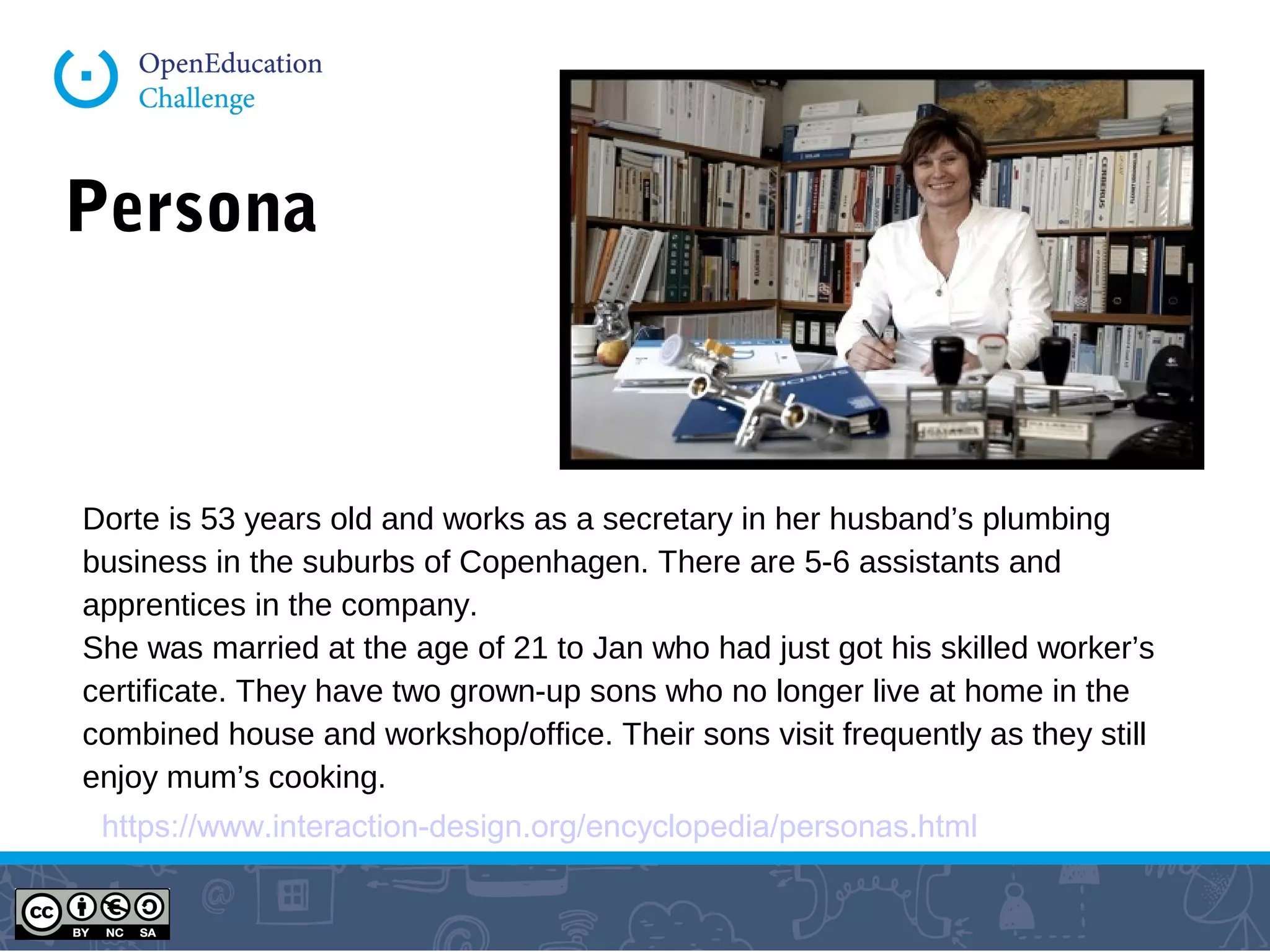
Persona
https://www.interaction-design.org/encyclopedia/personas.html
Dorte is 53 years old and works as a secretary in her husband’s plumbing
business in the suburbs of Copenhagen. There are 5-6 assistants and
apprentices in the company.
She was married at the age of 21 to Jan who had just got his skilled worker’s
certificate. They have two grown-up sons who no longer live at home in the
combined house and workshop/office. Their sons visit frequently as they still
enjoy mum’s cooking.
Create your persona(s)

Use data, real user profiles, or your
intuition

Give them a name and a face (photo /
drawing)

Tell us why they are:
age, gender, personal and professional
situations, desires, abilities, constraints..
Step 2: What is their Context?

Out of context, we are lost

“Context which surrounds, context which
weaves together” (Michael Cole)
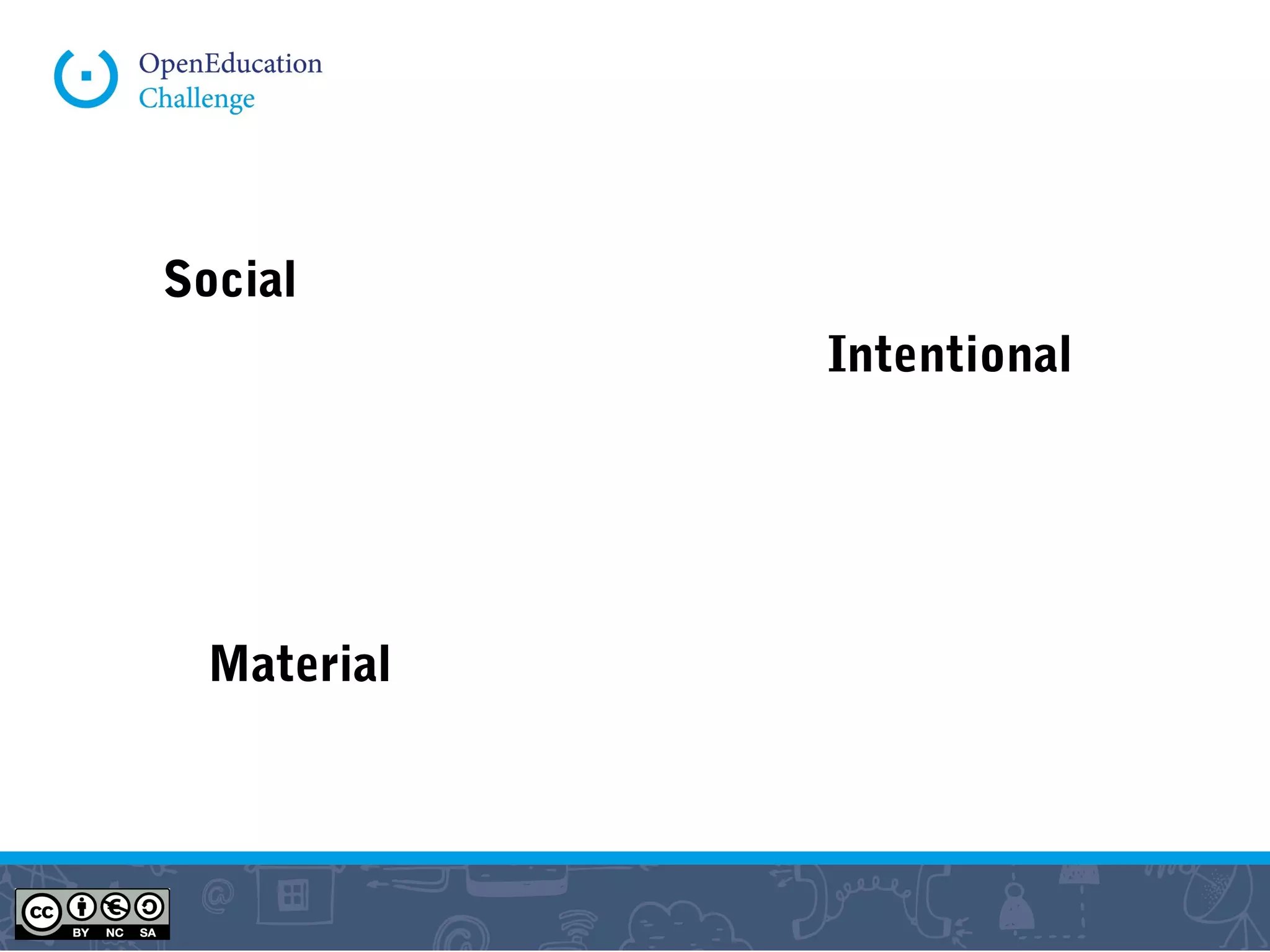
Material
Social
Intentional
Flickr: eoi/6383455155.
Flickr: 67769573@N00/125105125
Flickr: hdptcar/2300129626
Moodboard
http://www.sustainable-everyday-project.net/blog/library-sustainable-everyday/
Via http://www.servicedesigntools.org/tools/17
Map your context

Use a curation tool (pintrest, mural.ly, etc.)
or a plain presentation tool.

Collect images, graphics, texts that
characterise your context.

Draw a concept map of the key issues

Arrange the resources to highlight the key
issues.
Step 3: What's the story?

“Design is always re-design” (Latour).

If there's no problem, we don't need your
solution.

If there is a problem, there already is a
solution (but yours is better, right?)
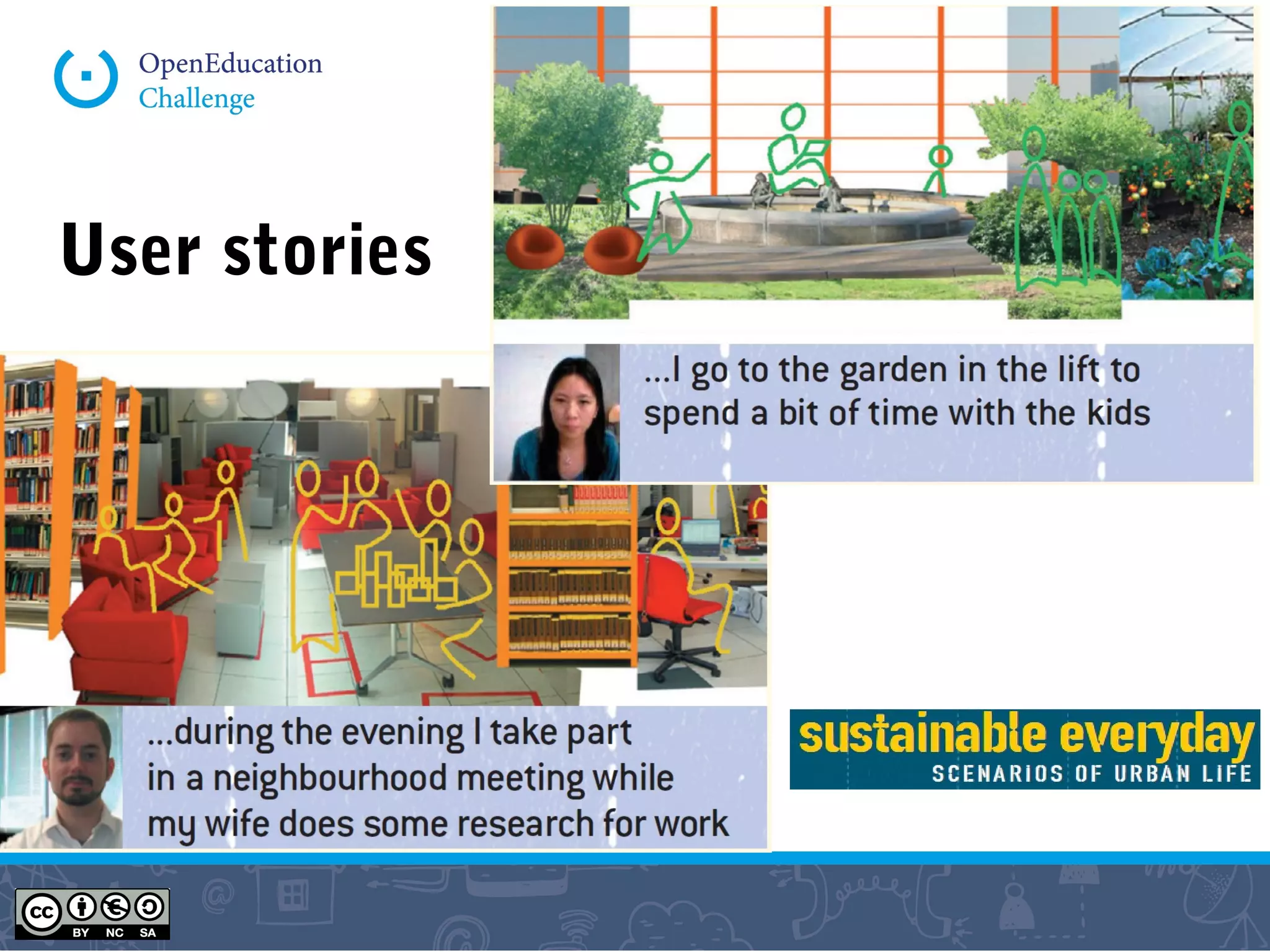
User stories
News story – state of affairs
Who
Where
What
When
Why
How
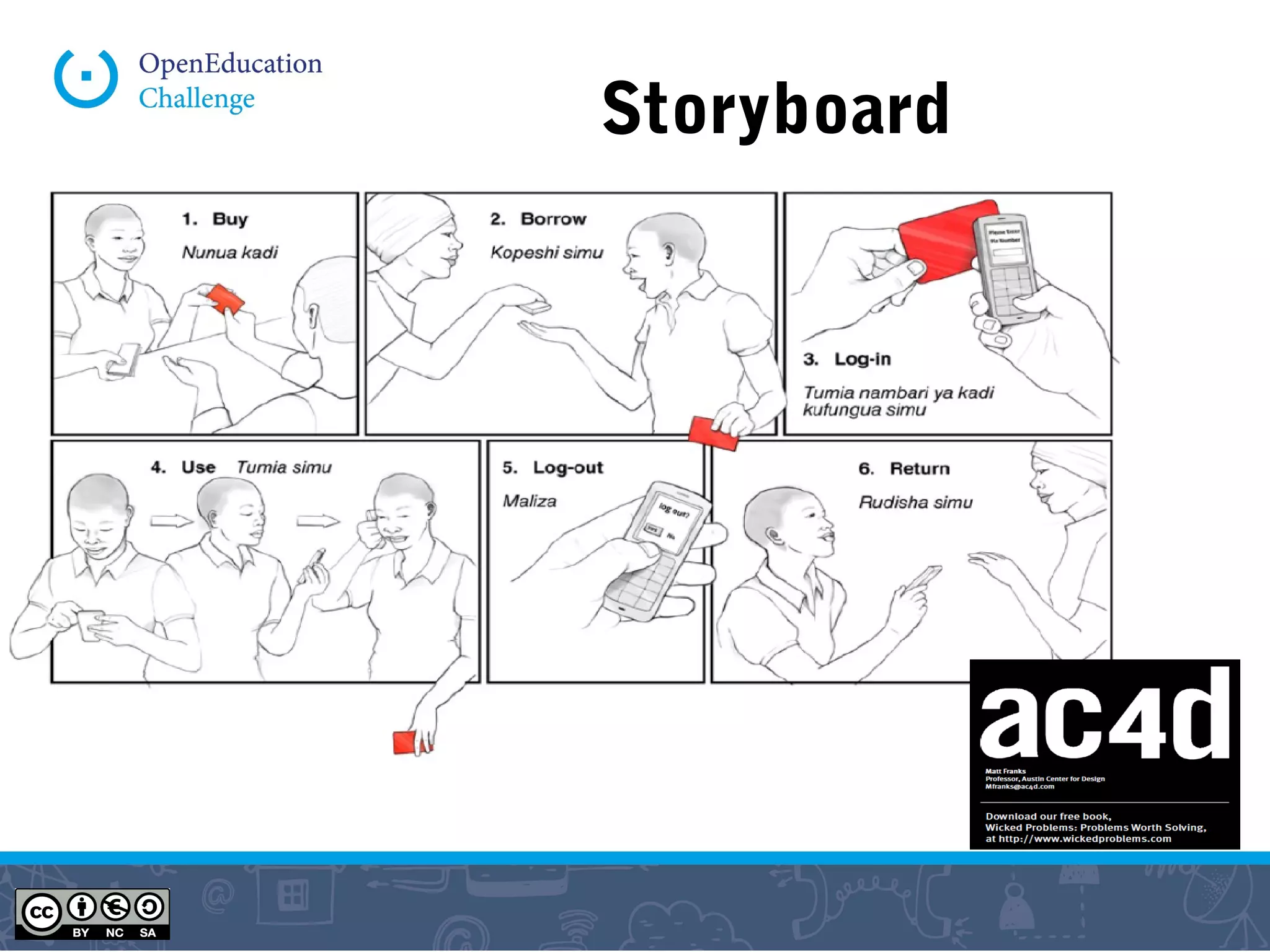
Step 4: What's YOUR story?
Put your persona(s) in their context, and
walk them them through your solution,
step – by – step.
Storyboard
News story – the future, by you..
Who
Where
What
When
Why
How
OpenEducation Challenge Finalists' Workshop: Design Thinking Session

OpenEducation Challenge Finalists' Workshop: Design Thinking Session

  • 1.
    Educational Design Workshop Barcelona, July14 Yishay Mor & Teemu Leinonen
  • 2.
  • 3.
    Design thinking …uses the designer's sensitivity and methods to match peoples needs with what is technologically possible … (Brown) Everyone designs who devises courses of action aimed at changing existing situations into desired ones (Simon) Design is … changing matters of fact into matters of concern (Latour) A reflective conversation with the materials of a situation (Schön)
  • 4.
    The great problemof the adult who has to deal with the young is to see, and to feel deeply a well as merely to see intellectually, the forces that are moving in the young; but it is to see them as possibilities, as signs and promises; to interpret them, in short, in the light of what the may come to be. Nor does the task end there. It is bound up with the further problem of judging and devising the conditions, the materials, both physical, such as tools of work, and moral and social, which will, once more so interact with existing powers and preferences as to bring about transformation in the desired direction. » John Dewey, 1934
  • 5.
  • 6.
    Teemu Leinonen Early 1990-95Pedagogical studies + web design 1995 Design studies + 2 ed.tech. start-ups 2000 + Media Lab Helsinki + Learning Environments Research Group + Wikipedia 2005 Mobile learning research in South Africa 2008 CSCL Research in Stanford 2009 Professor, New Media Design & Learning
  • 7.
    We're here tohelp you explain..  Who are your potential users?  What is the context?  What are their needs?  What are the current alternatives?  What is the essence of your innovation? Convice us that your “thing” will address real user needs in their context.
  • 8.
    Who are you? TheDead Duck Game  (5 Min.): draw a picture of you & your product  (2 Min. each): show your picture, introduce yourself & your product, and explain why it is a dead duck. (“it will never fly”)
  • 9.
    We asked youfor a scenario.. Our product ?
  • 10.
    Step 1: whoare your users?  We don't understand facts, we understand stories. And a story is always about someone.  You need to design for someone. Anyone. If not, you're designing for no- one.
  • 11.
    Persona https://www.interaction-design.org/encyclopedia/personas.html Dorte is 53years old and works as a secretary in her husband’s plumbing business in the suburbs of Copenhagen. There are 5-6 assistants and apprentices in the company. She was married at the age of 21 to Jan who had just got his skilled worker’s certificate. They have two grown-up sons who no longer live at home in the combined house and workshop/office. Their sons visit frequently as they still enjoy mum’s cooking.
  • 12.
    Create your persona(s)  Usedata, real user profiles, or your intuition  Give them a name and a face (photo / drawing)  Tell us why they are: age, gender, personal and professional situations, desires, abilities, constraints..
  • 13.
    Step 2: Whatis their Context?  Out of context, we are lost  “Context which surrounds, context which weaves together” (Michael Cole)
  • 14.
  • 15.
  • 16.
    Map your context  Usea curation tool (pintrest, mural.ly, etc.) or a plain presentation tool.  Collect images, graphics, texts that characterise your context.  Draw a concept map of the key issues  Arrange the resources to highlight the key issues.
  • 17.
    Step 3: What'sthe story?  “Design is always re-design” (Latour).  If there's no problem, we don't need your solution.  If there is a problem, there already is a solution (but yours is better, right?)
  • 18.
  • 19.
    News story –state of affairs Who Where What When Why How
  • 20.
    Step 4: What'sYOUR story? Put your persona(s) in their context, and walk them them through your solution, step – by – step.
  • 21.
  • 22.
    News story –the future, by you.. Who Where What When Why How