MONITORING OF
NEUROMUSCULAR JUNCTION
MODERATOR : DR. S. Srinivas yadav (ASSISTANT PROFESSOR)
SPEAKER : DR. C. Pooja (POST GRADUATE)
Department of Anesthesiology & Critical care
Why NMJ monitoring ?
 To ensure ideal intubating conditions have been met after administration
of muscle relaxant.
 To ensure ideal surgical conditions have been met intraoperatively.
 To administer NMBA’s with appropriate dosing.
 Prevention of residual neuromuscular blockade.
 Surgical indications.
 Prolonged Anaesthesia.
 Presence of renal or hepatic diseases.
Methods of neuromuscular monitoring
 Clinical methods
 Useful only towards the end of surgery for assessing recovery from NMB
 Peripheral nerve stimulator
 Subjective : visual / tactile
 Objective : Quantification with numerical values
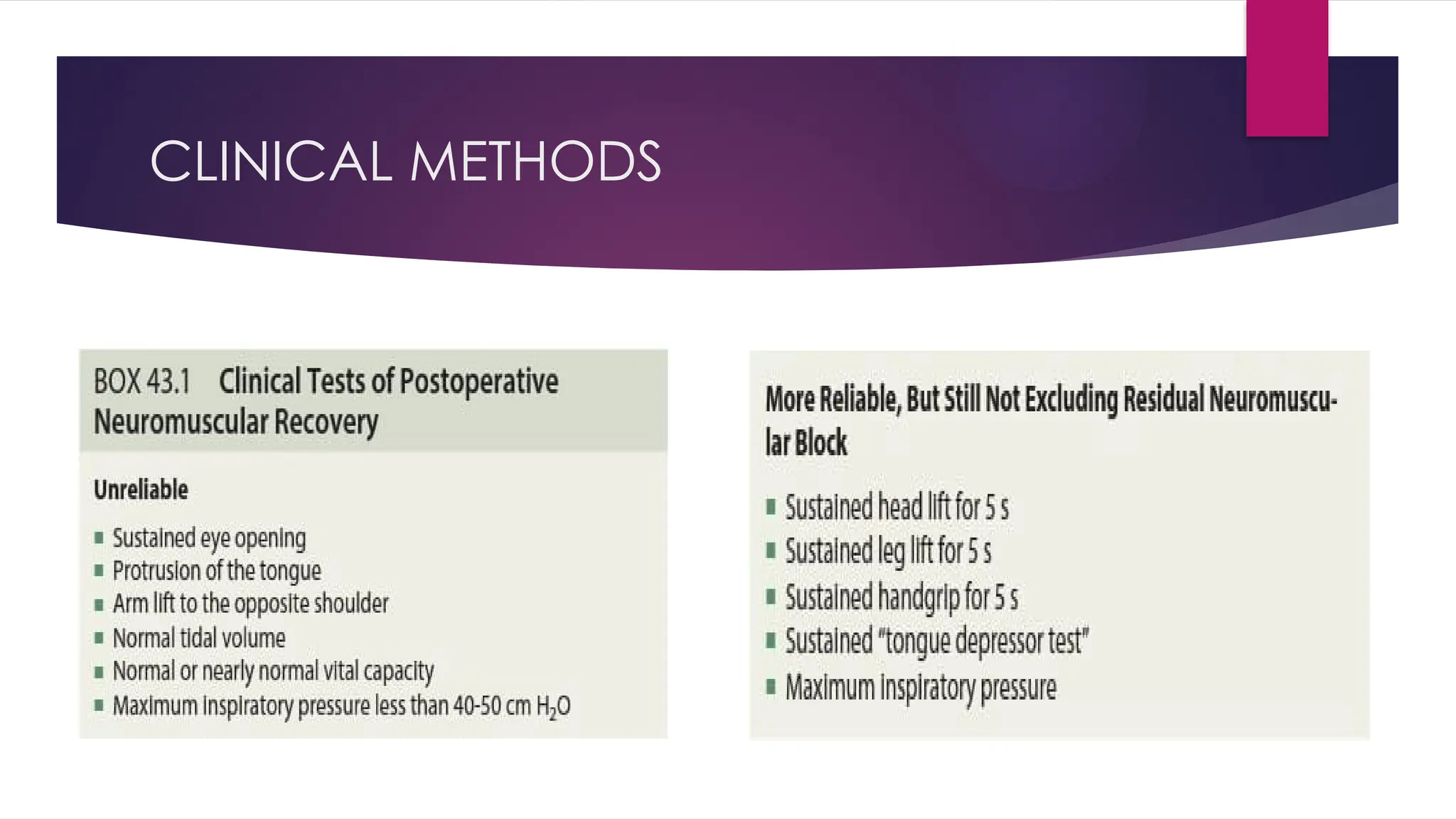
CLINICAL METHODS
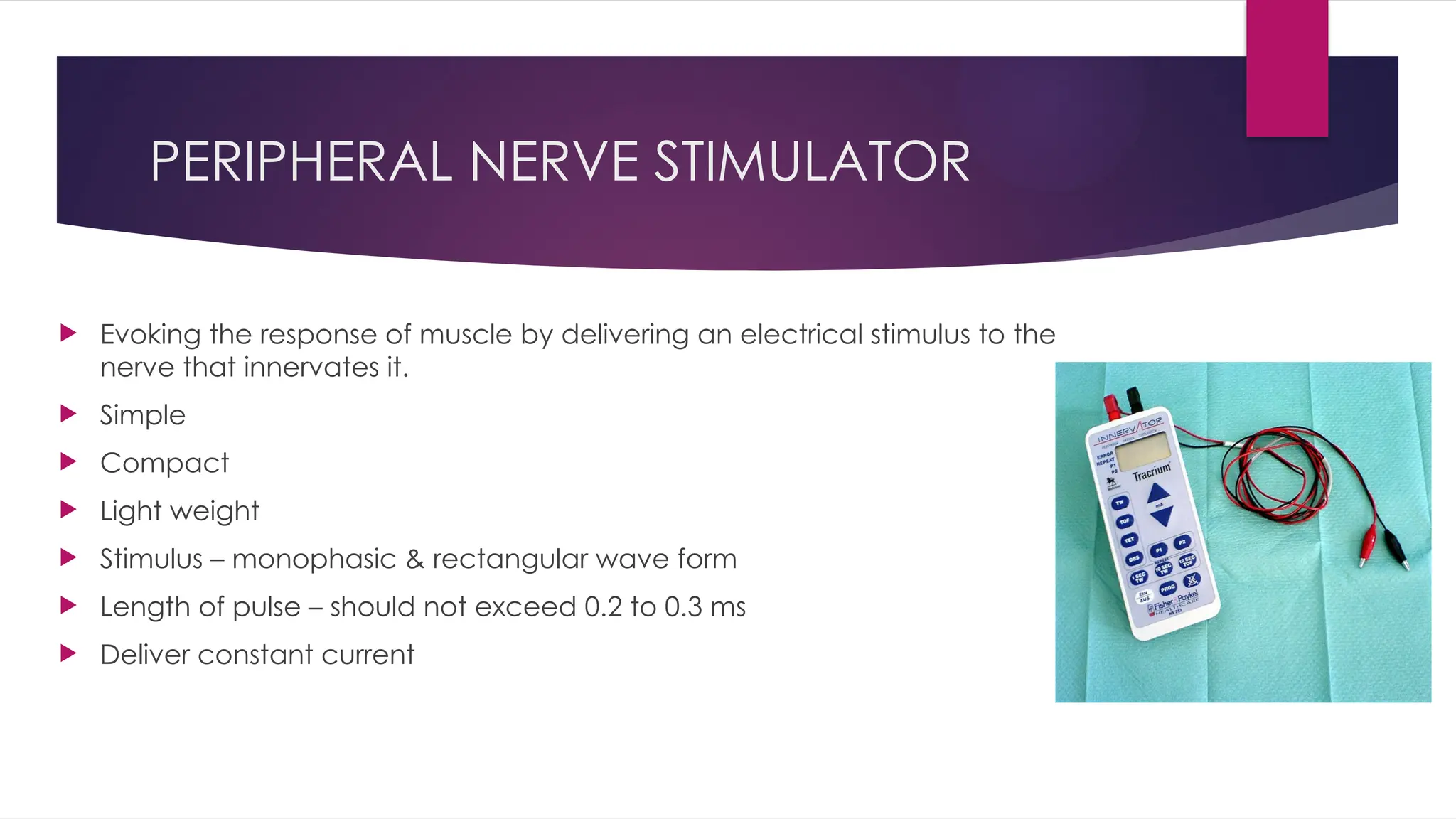
PERIPHERAL NERVE STIMULATOR
 Evoking the response of muscle by delivering an electrical stimulus to the
nerve that innervates it.
 Simple
 Compact
 Light weight
 Stimulus – monophasic & rectangular wave form
 Length of pulse – should not exceed 0.2 to 0.3 ms
 Deliver constant current
PERIPHERAL NERVE STIMULATOR
 Stimulating electrodes
 Surface electrodes (30-70mA)
 Metal electrodes
 Needle electrodes (10mA)
 Current
 Supramaximal stimulus – 25 % of maximal stimulus
 Higher currents – oedema, diabetes
 Lower currents – needle electrodes are used
SITES OF PERIPHERAL NERVE
STIMULATION
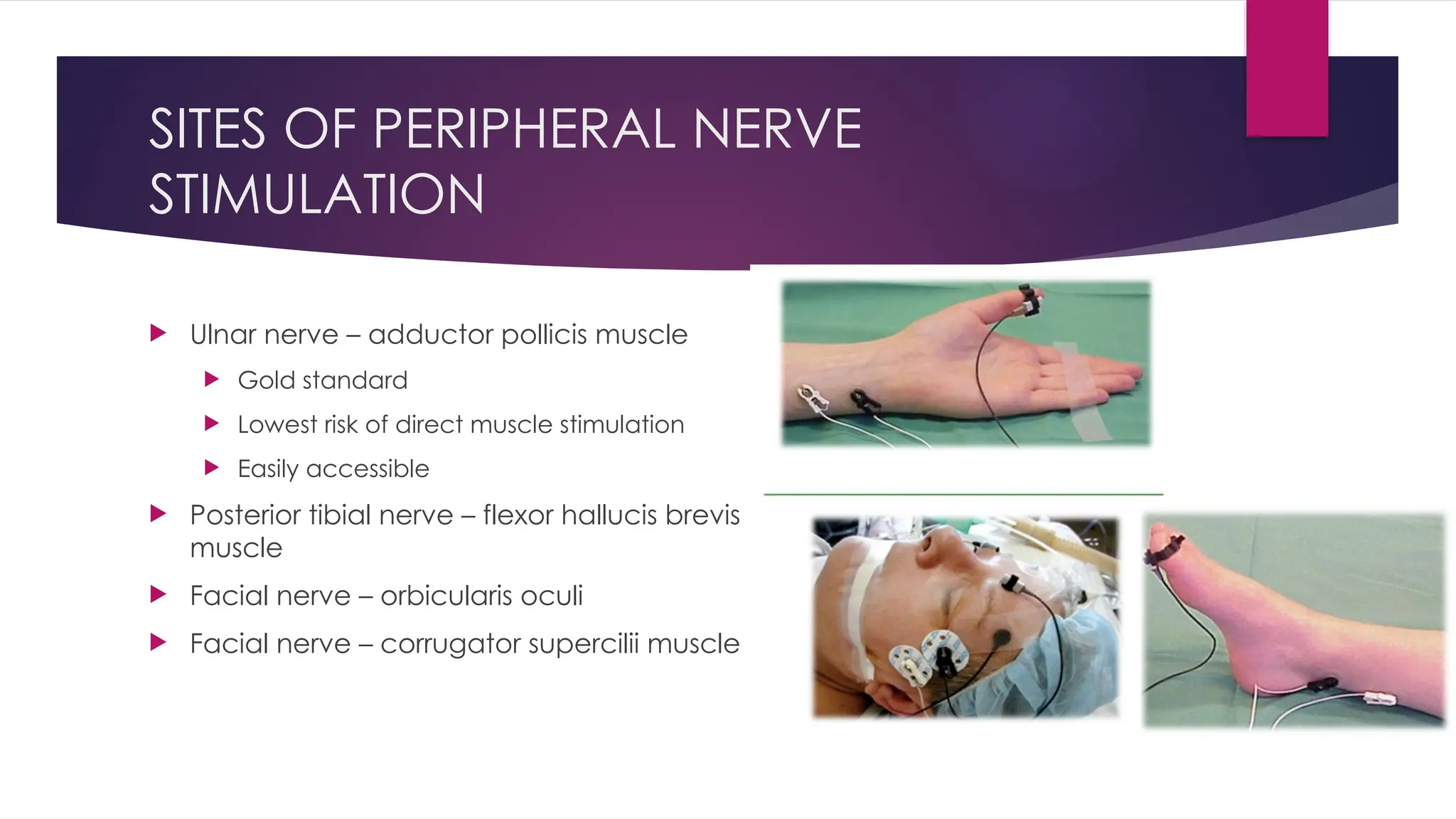
 Ulnar nerve – adductor pollicis muscle
 Gold standard
 Lowest risk of direct muscle stimulation
 Easily accessible
 Posterior tibial nerve – flexor hallucis brevis
muscle
 Facial nerve – orbicularis oculi
 Facial nerve – corrugator supercilii muscle
DIFFERENT MUSCLES GROUPS HAVE
DIFFERENT SENSITIVITY TO NMBD’S
 Diaphragm & laryngeal adductors, corrugator supercili – resistant to NMBD’S
 Onset is late
 Recovery is fast
 Extrapolated by corrugator supercilii
 Peripheral muscles of limbs, orbicularis oculi, upper airway muscles –
sensitive to NMBD’S
 Onset is fast
 Recovery is slow
 Extrapolated by adductor pollicis
Patterns of nerve stimulation
1. Single twitch stimulation
2. Train of four stimulation(TOF)
3. Double burst stimulation(DBS)
4. Tetanic stimulation
5. Post tetanic stimulation(PTC)
Single twitch stimulation
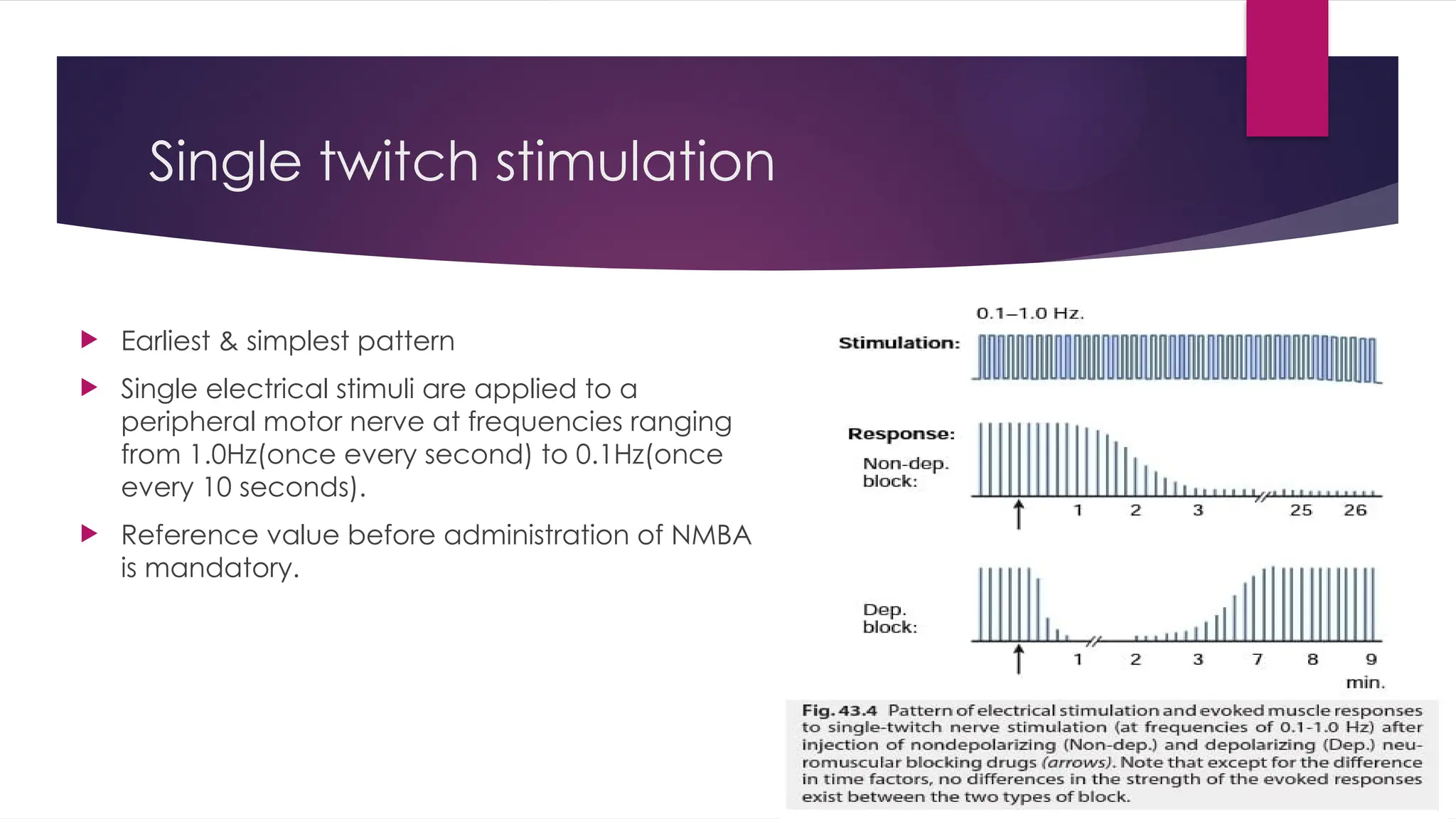
 Earliest & simplest pattern
 Single electrical stimuli are applied to a
peripheral motor nerve at frequencies ranging
from 1.0Hz(once every second) to 0.1Hz(once
every 10 seconds).
 Reference value before administration of NMBA
is mandatory.
SINGLE TWITCH STIMULATION
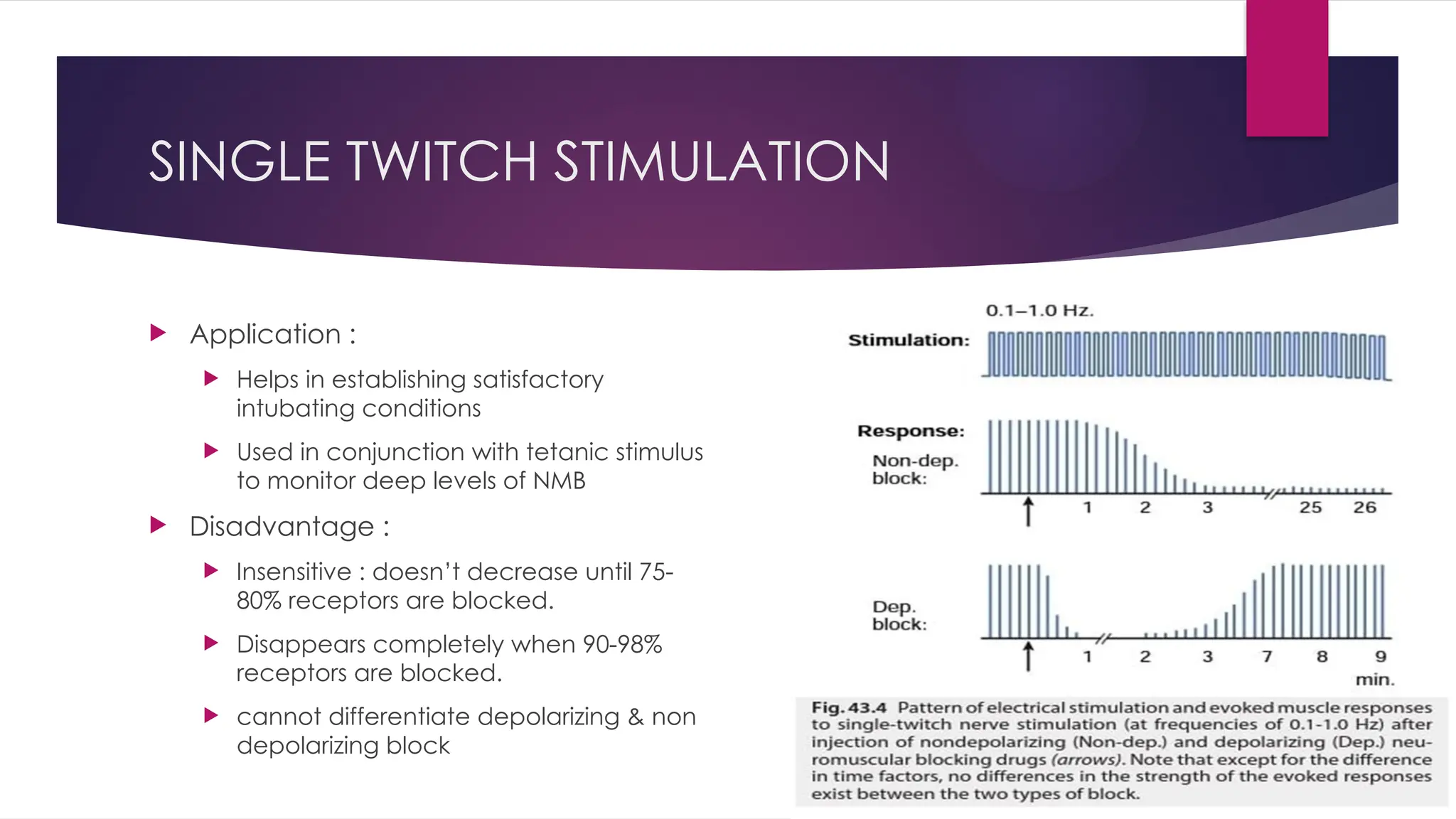
 Application :
 Helps in establishing satisfactory
intubating conditions
 Used in conjunction with tetanic stimulus
to monitor deep levels of NMB
 Disadvantage :
 Insensitive : doesn’t decrease until 75-
80% receptors are blocked.
 Disappears completely when 90-98%
receptors are blocked.
 cannot differentiate depolarizing & non
depolarizing block
Train of four stimulation
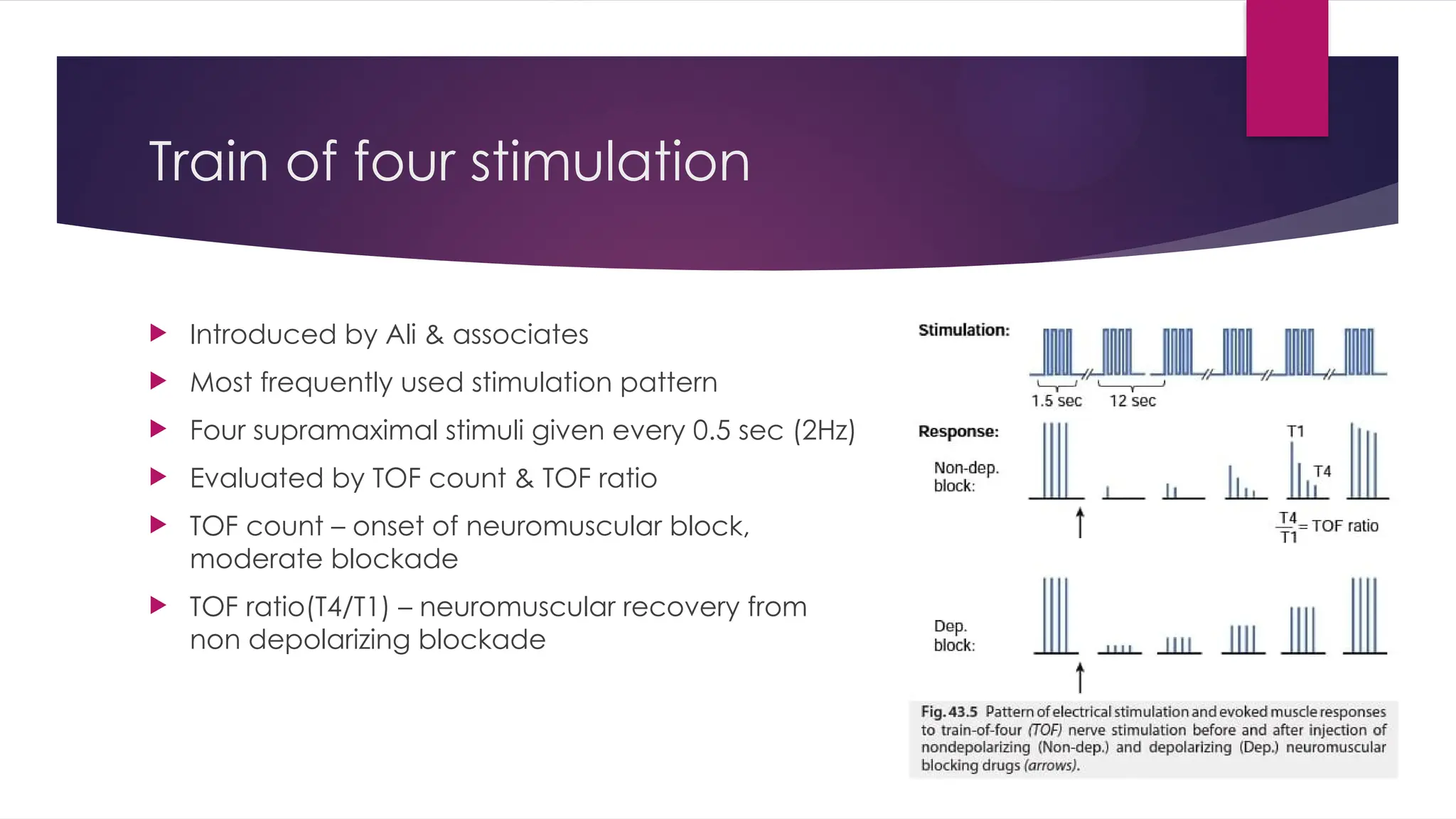
 Introduced by Ali & associates
 Most frequently used stimulation pattern
 Four supramaximal stimuli given every 0.5 sec (2Hz)
 Evaluated by TOF count & TOF ratio
 TOF count – onset of neuromuscular block,
moderate blockade
 TOF ratio(T4/T1) – neuromuscular recovery from
non depolarizing blockade
TRAIN OF FOUR
 Degree of fade is proportional to extent of neuromuscular block
 At unblocked NMJ, TOF ratio equals to 1.0
 Phase 1 block of depolarizing muscle relaxants, twitch height is decreased in all four twitches,
( no fade and TOF ratio equals to 1.0)
 Phase 2 block of depolarizing muscle relaxants or block of NDMR T4 height starts to decrease
when 70-75% receptors are blocked, while T1 remains same ( fade and TOF ratio equals to 0.7
 80% receptors are blocked – 4th
twitch disappears
 85% receptors are blocked – 3rd
twitch disappears
 90% receptors are blocked – 2nd
twitch disappears
 >90% receptors are blocked – 1st
twitch disappears
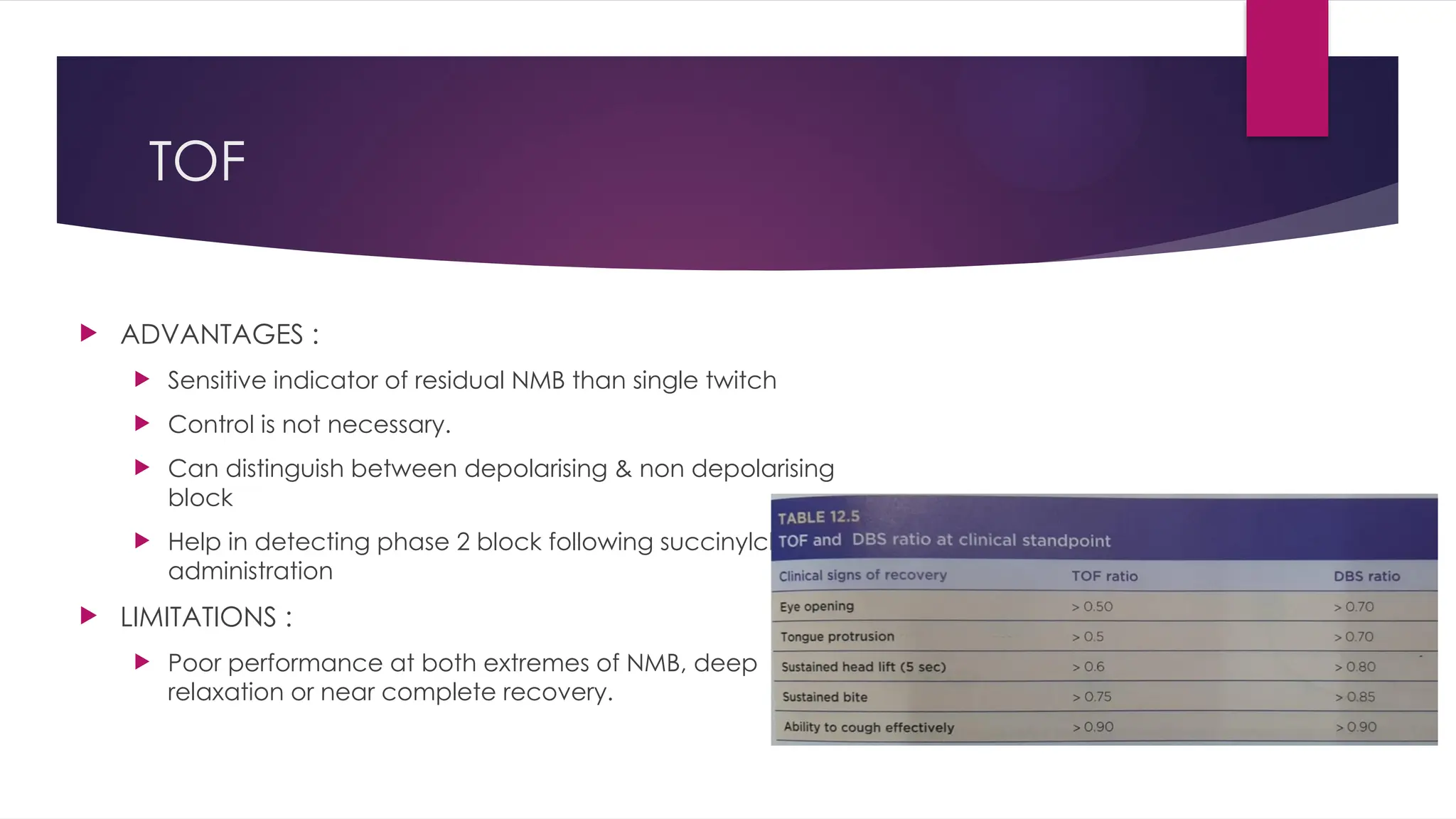
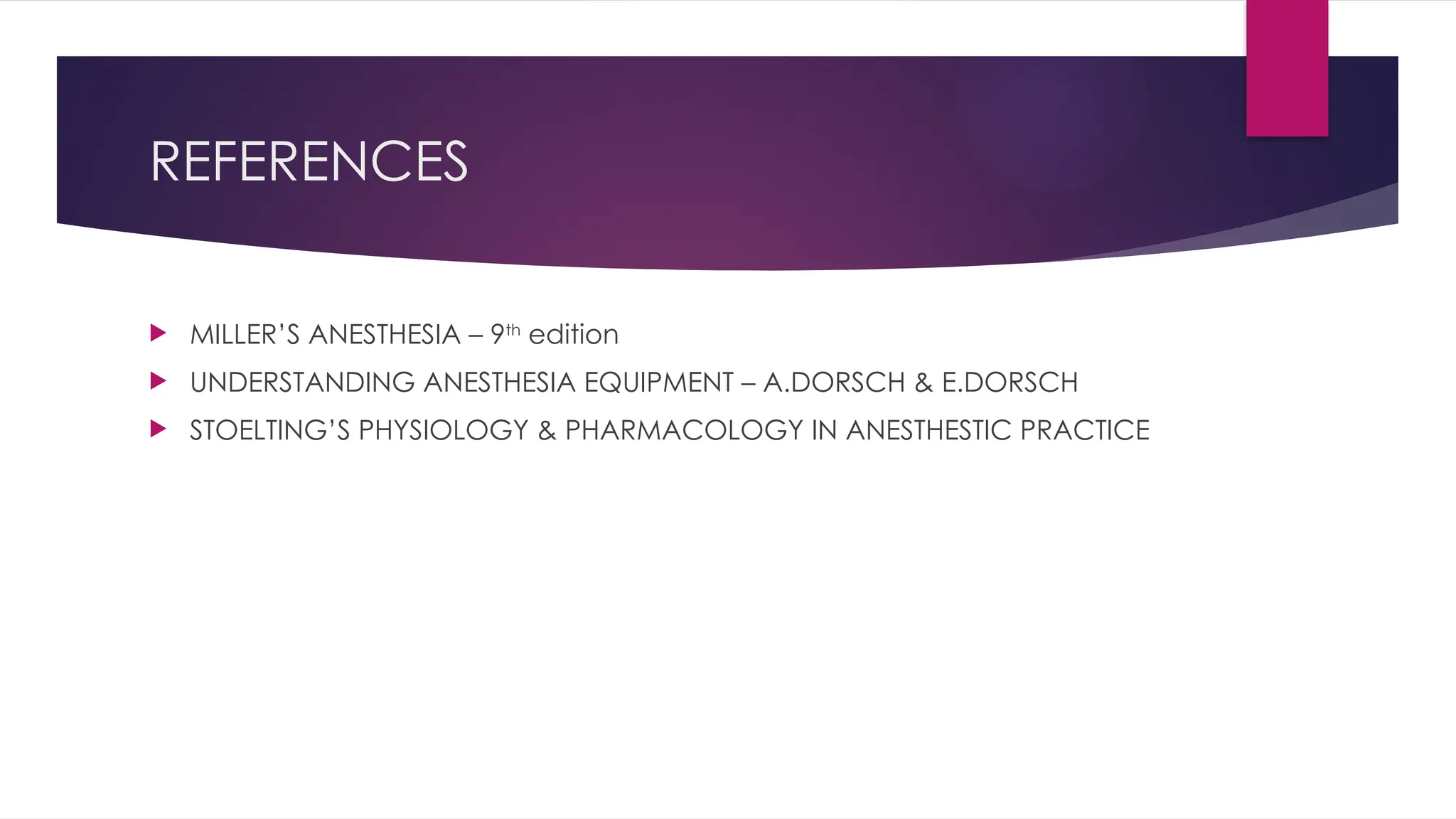
TOF
 ADVANTAGES :
 Sensitive indicator of residual NMB than single twitch
 Control is not necessary.
 Can distinguish between depolarising & non depolarising
block
 Help in detecting phase 2 block following succinylcholine
administration
 LIMITATIONS :
 Poor performance at both extremes of NMB, deep
relaxation or near complete recovery.
TOF
Double burst stimulation
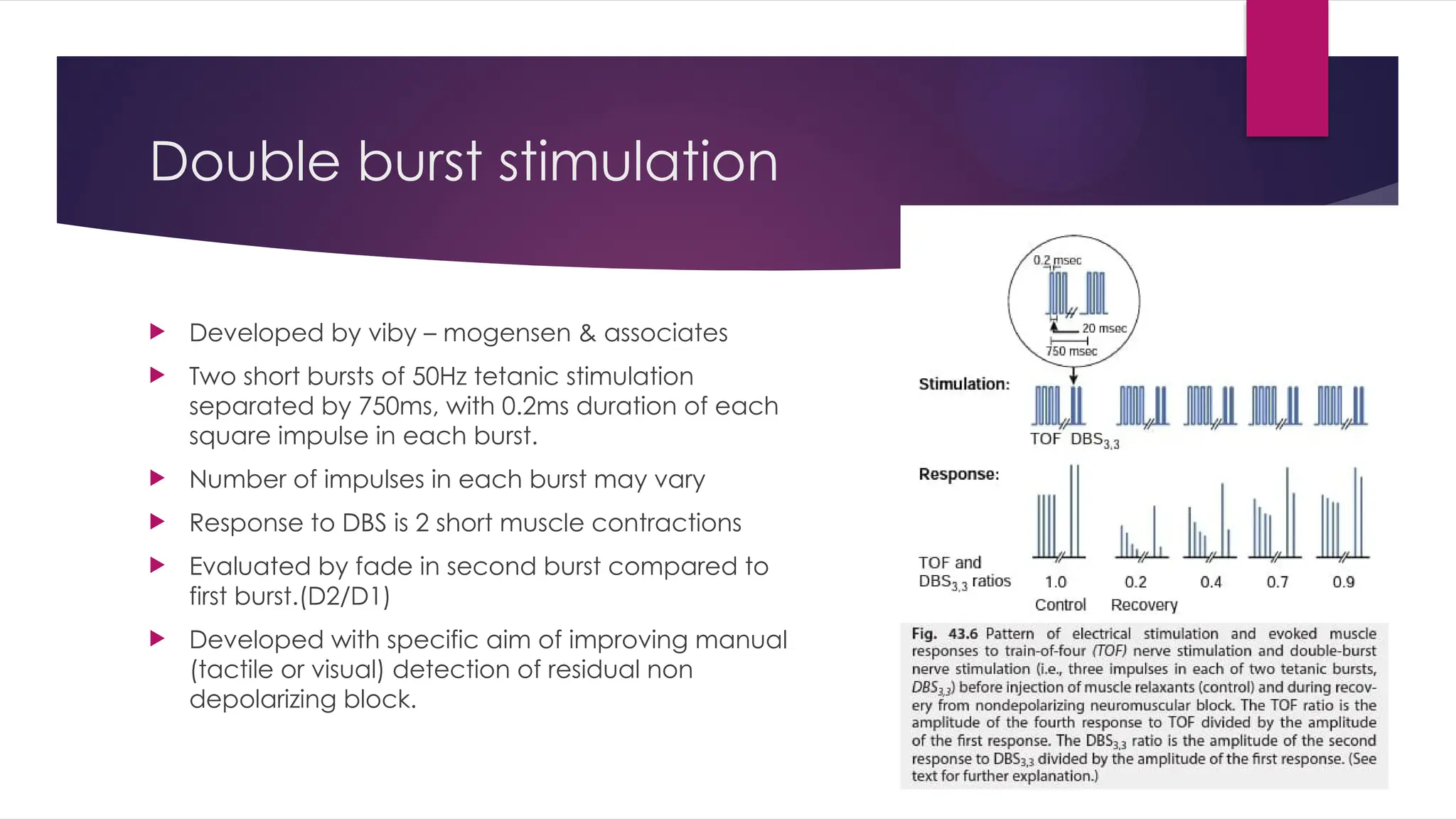
 Developed by viby – mogensen & associates
 Two short bursts of 50Hz tetanic stimulation
separated by 750ms, with 0.2ms duration of each
square impulse in each burst.
 Number of impulses in each burst may vary
 Response to DBS is 2 short muscle contractions
 Evaluated by fade in second burst compared to
first burst.(D2/D1)
 Developed with specific aim of improving manual
(tactile or visual) detection of residual non
depolarizing block.
DBS
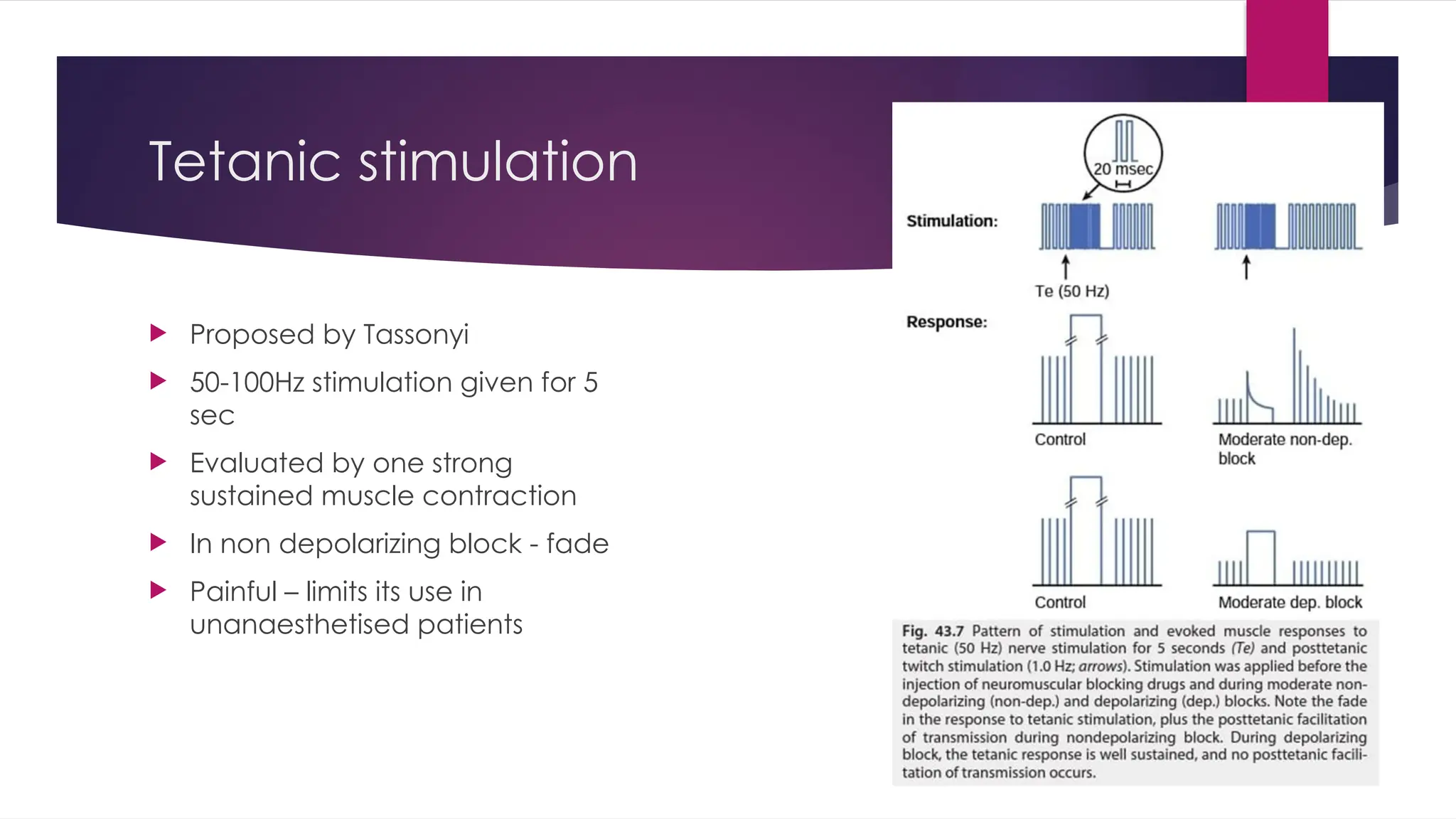
Tetanic stimulation
 Proposed by Tassonyi
 50-100Hz stimulation given for 5
sec
 Evaluated by one strong
sustained muscle contraction
 In non depolarizing block - fade
 Painful – limits its use in
unanaesthetised patients
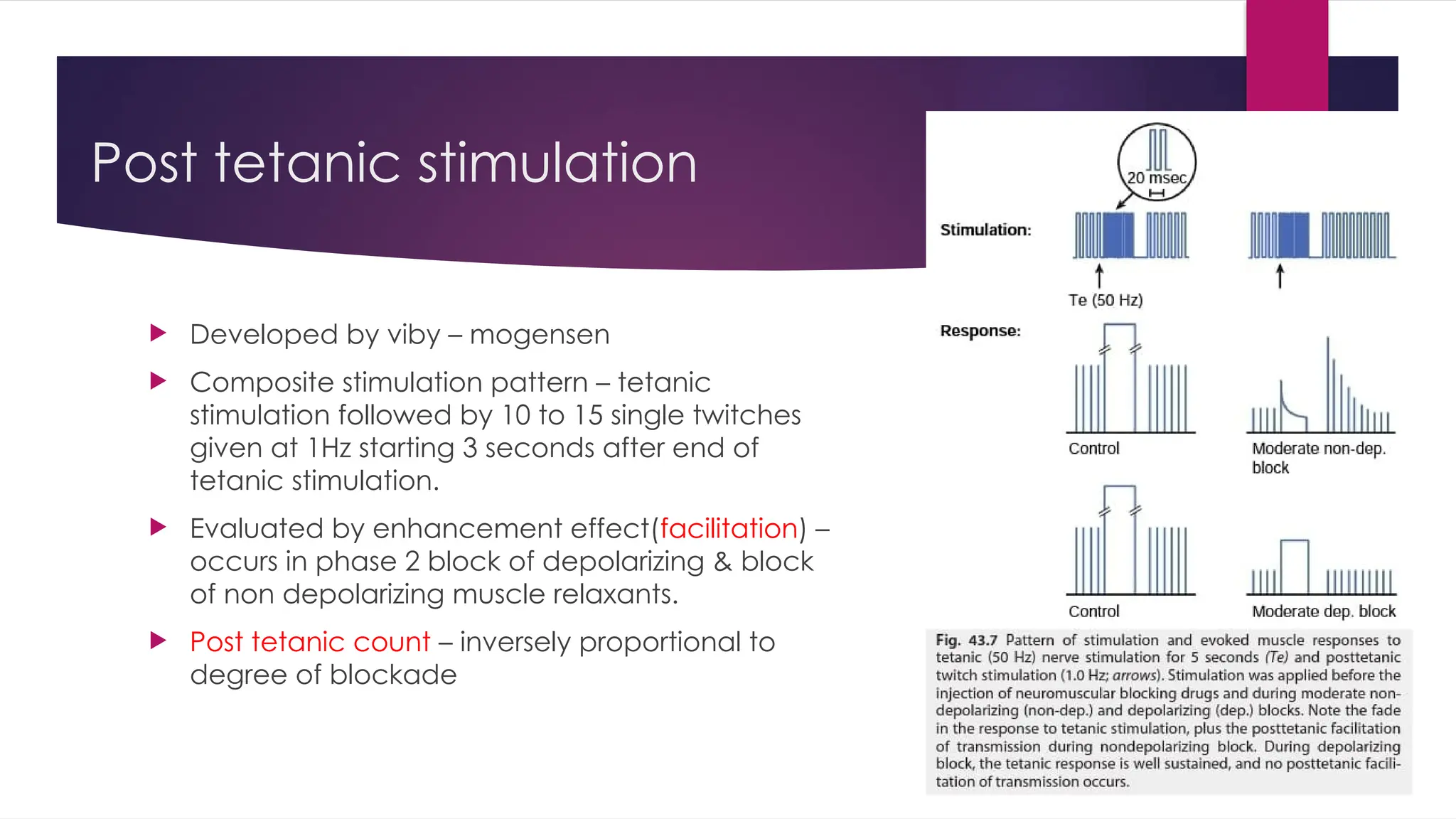
Post tetanic stimulation
 Developed by viby – mogensen
 Composite stimulation pattern – tetanic
stimulation followed by 10 to 15 single twitches
given at 1Hz starting 3 seconds after end of
tetanic stimulation.
 Evaluated by enhancement effect(facilitation) –
occurs in phase 2 block of depolarizing & block
of non depolarizing muscle relaxants.
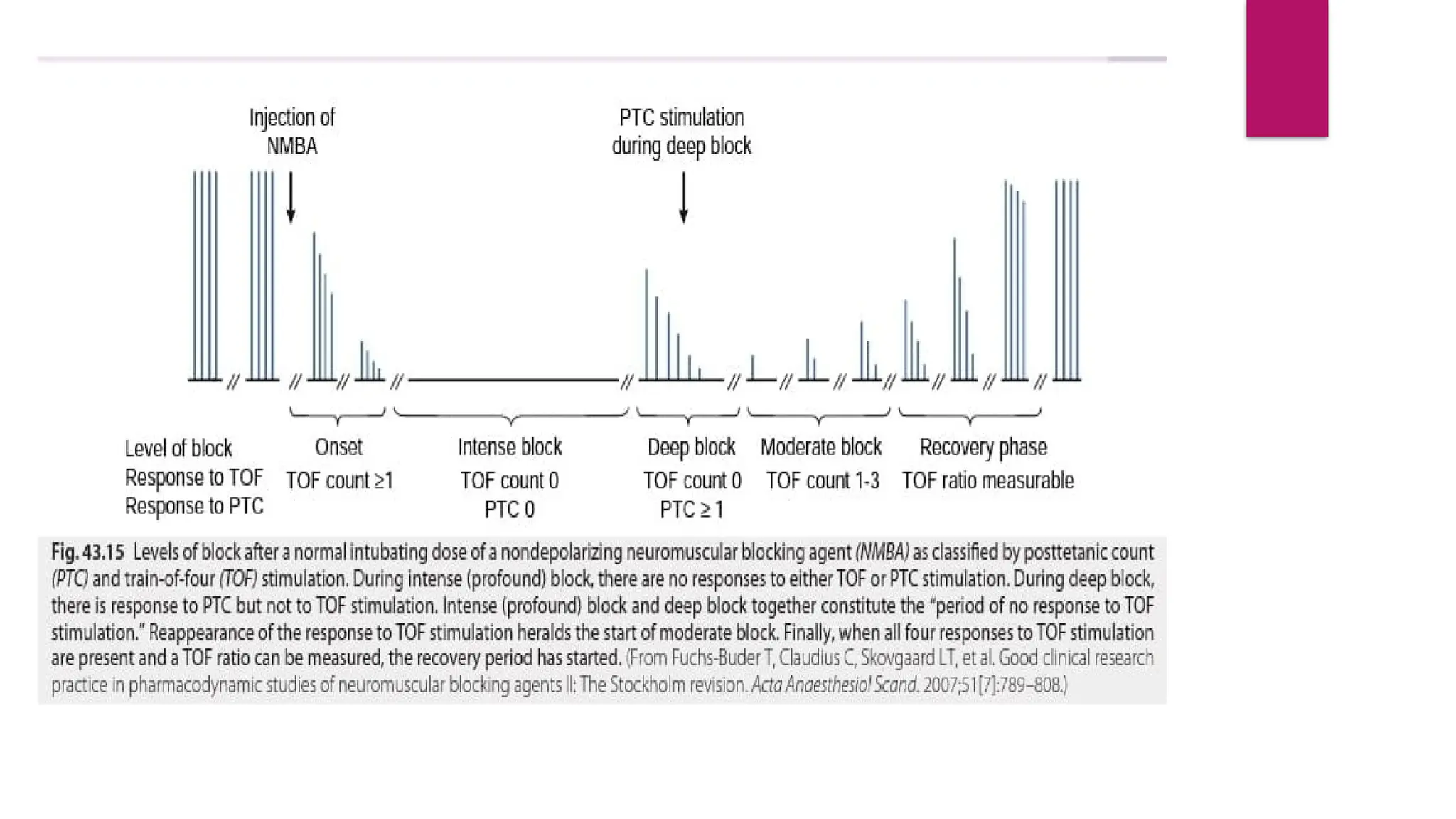
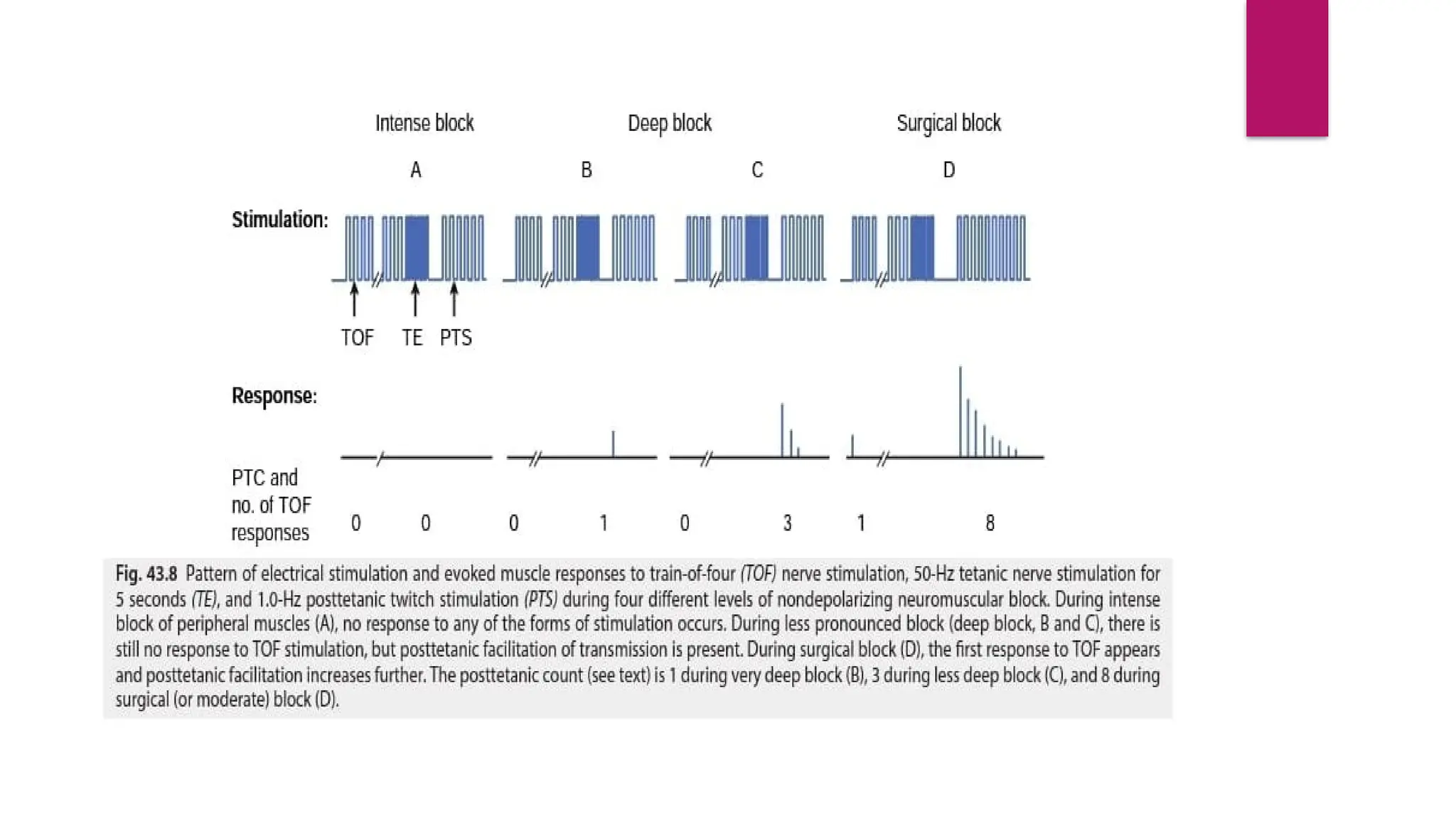
 Post tetanic count – inversely proportional to
degree of blockade
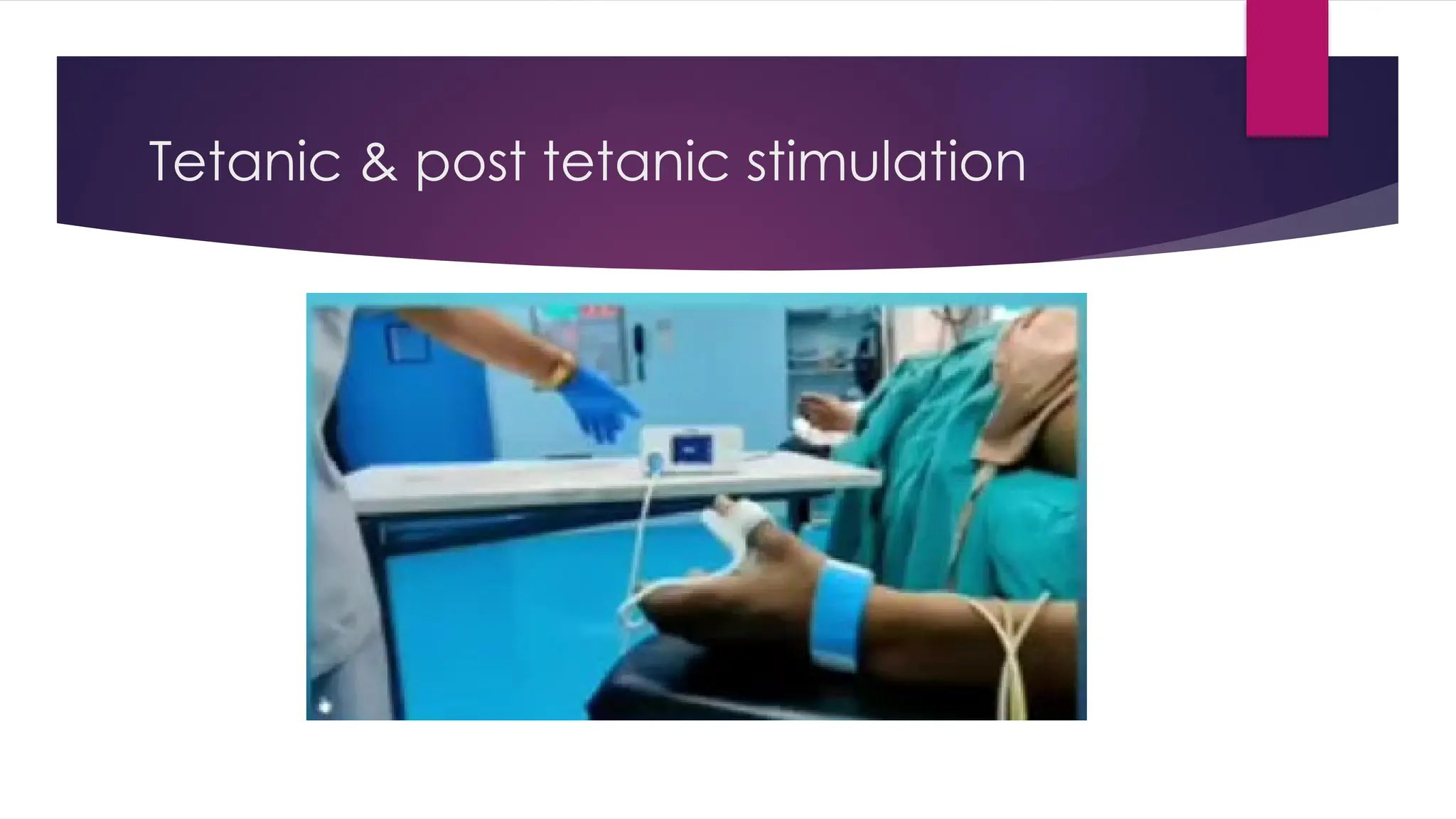
Tetanic & post tetanic stimulation
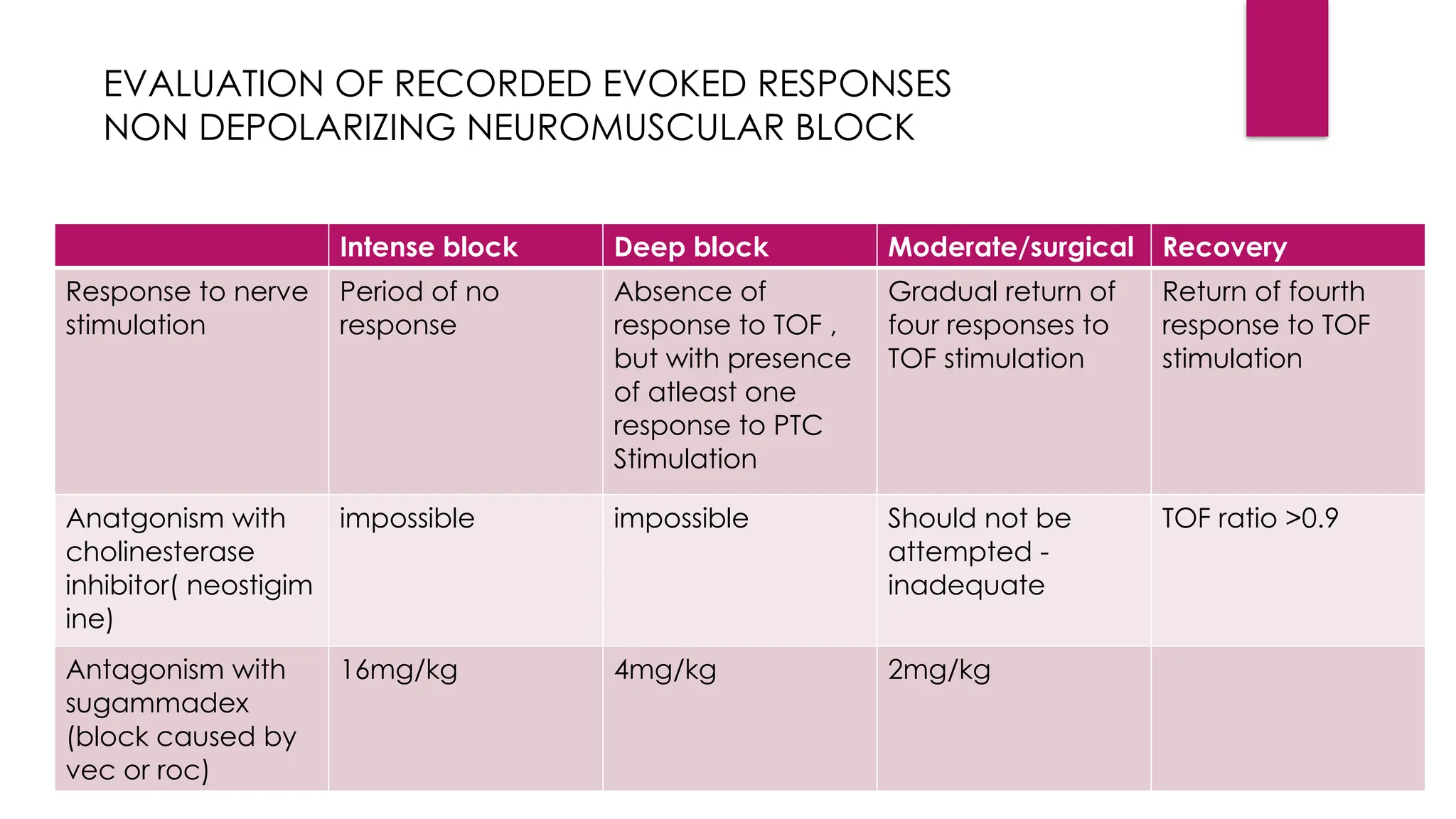
Intense block Deep block Moderate/surgical Recovery
Response to nerve
stimulation
Period of no
response
Absence of
response to TOF ,
but with presence
of atleast one
response to PTC
Stimulation
Gradual return of
four responses to
TOF stimulation
Return of fourth
response to TOF
stimulation
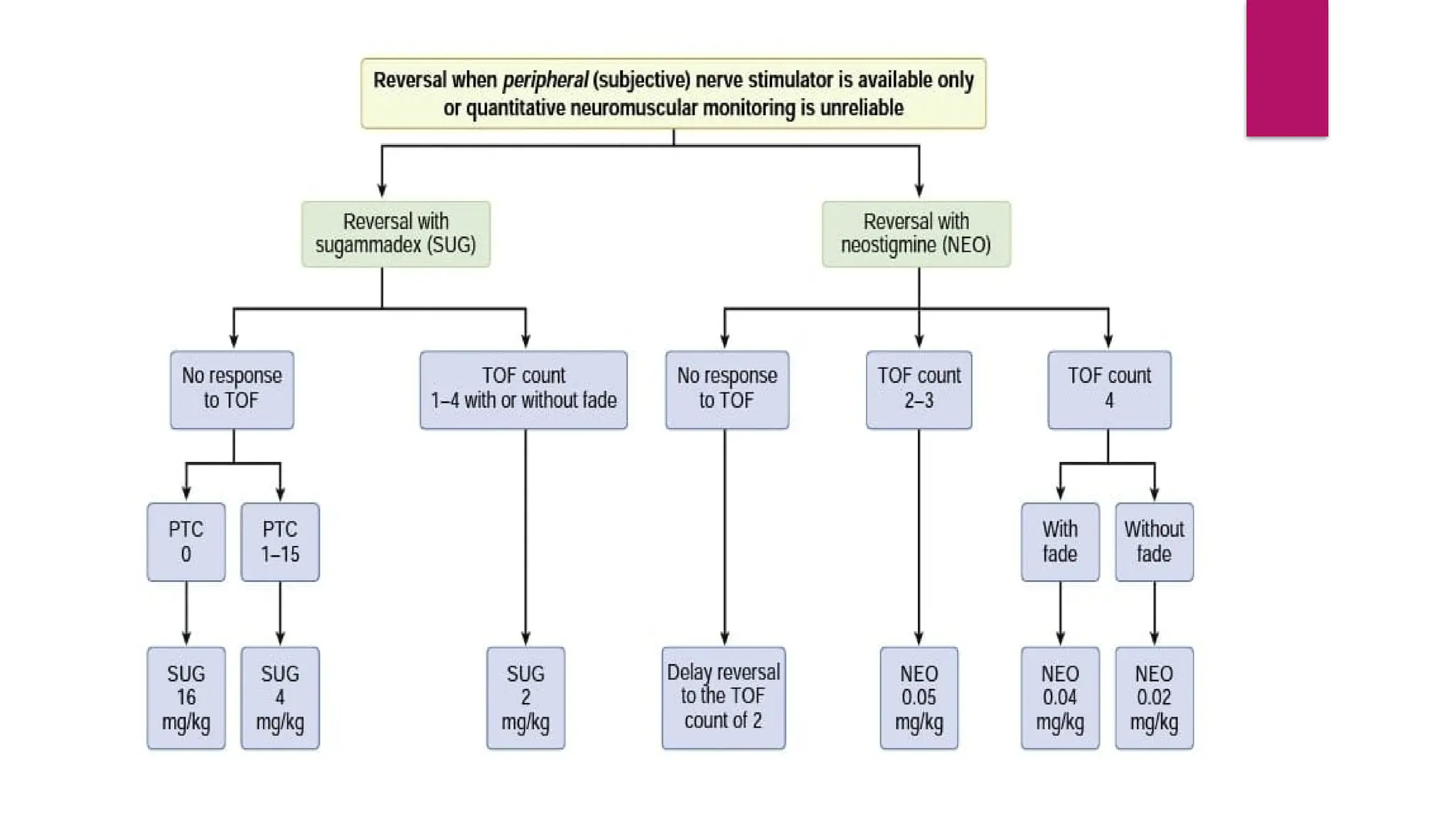
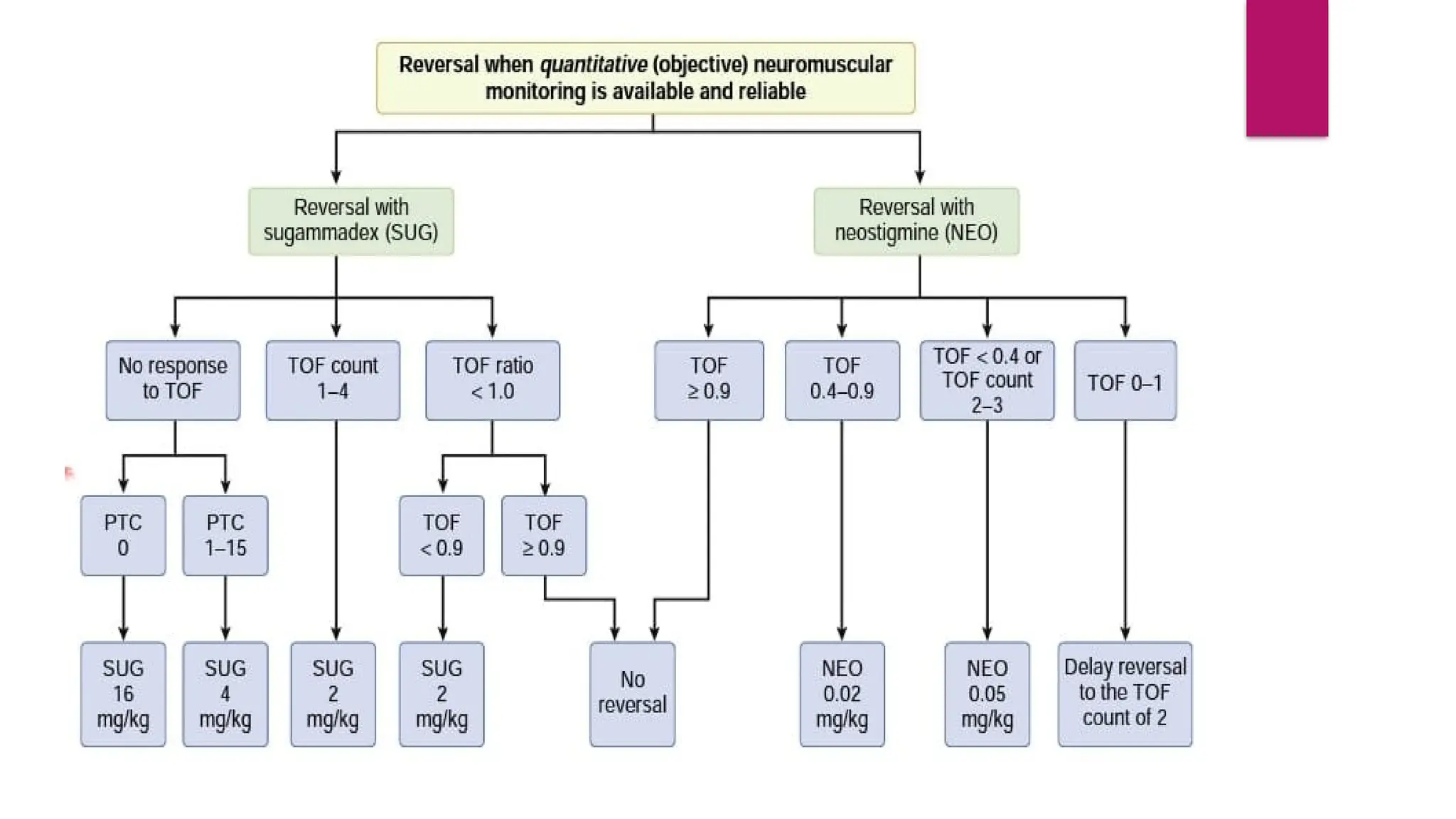
Anatgonism with
cholinesterase
inhibitor( neostigim
ine)
impossible impossible Should not be
attempted -
inadequate
TOF ratio >0.9
Antagonism with
sugammadex
(block caused by
vec or roc)
16mg/kg 4mg/kg 2mg/kg
EVALUATION OF RECORDED EVOKED RESPONSES
NON DEPOLARIZING NEUROMUSCULAR BLOCK
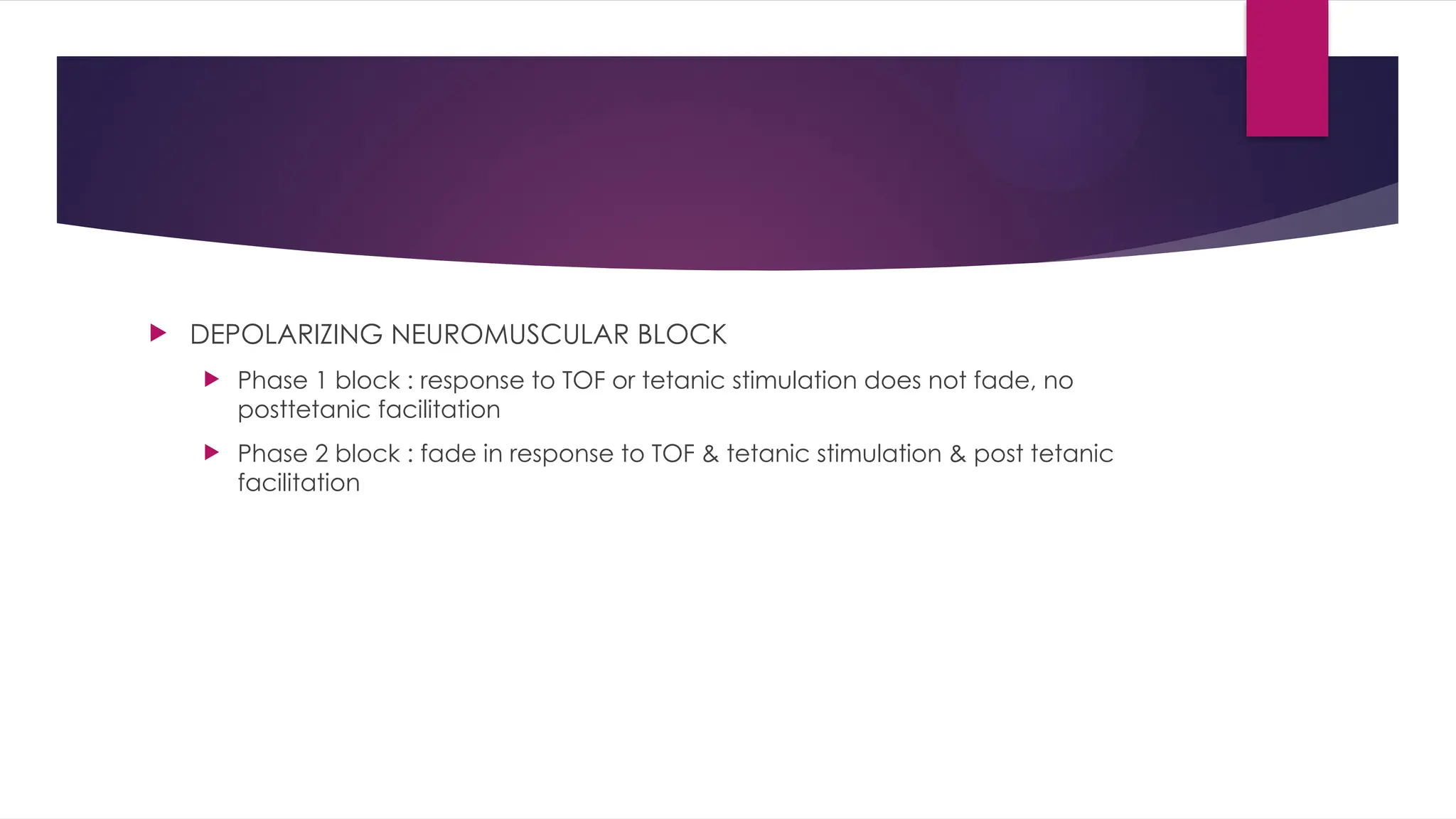
 DEPOLARIZING NEUROMUSCULAR BLOCK
 Phase 1 block : response to TOF or tetanic stimulation does not fade, no
posttetanic facilitation
 Phase 2 block : fade in response to TOF & tetanic stimulation & post tetanic
facilitation
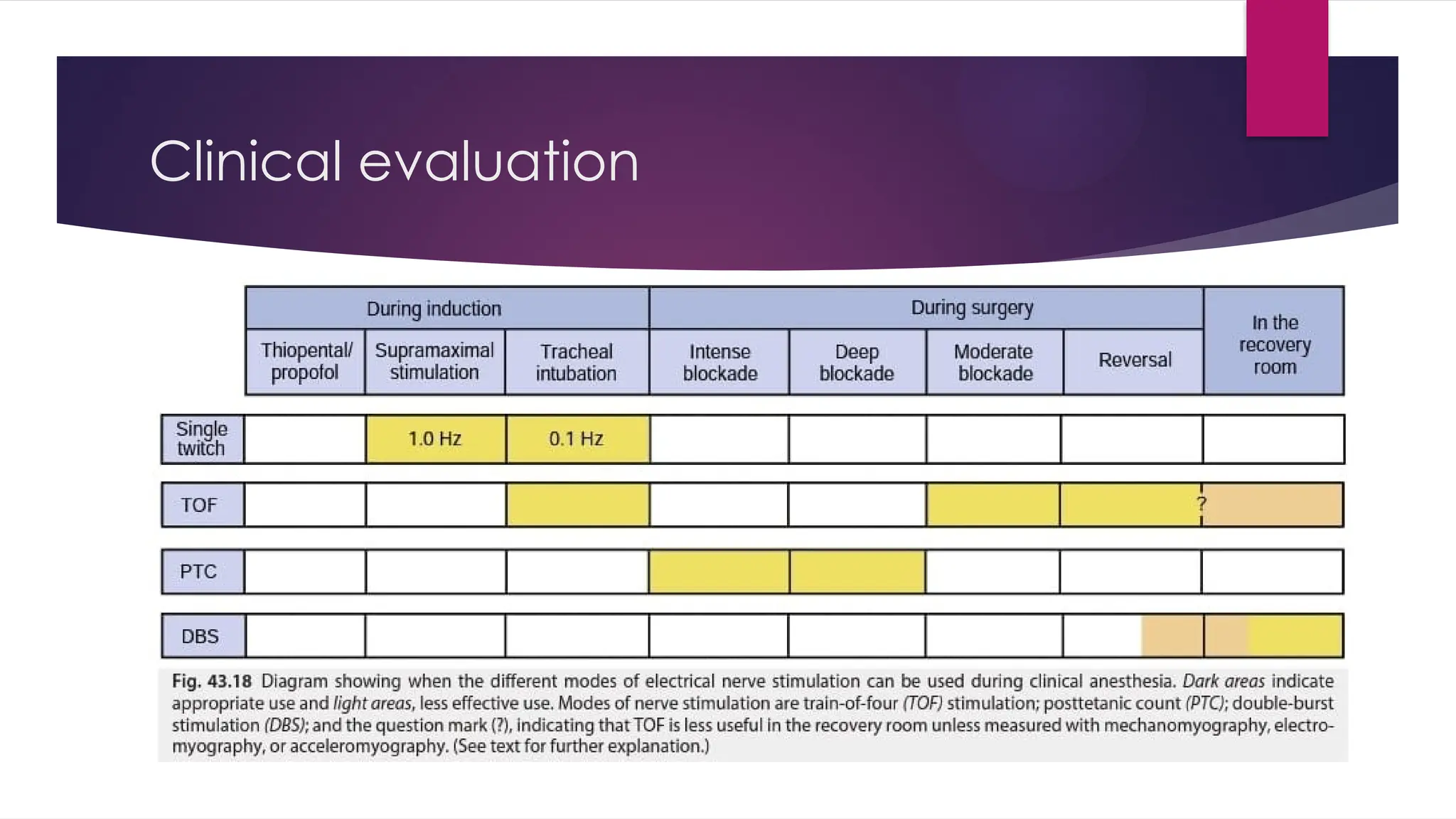
Clinical evaluation
Objective monitors
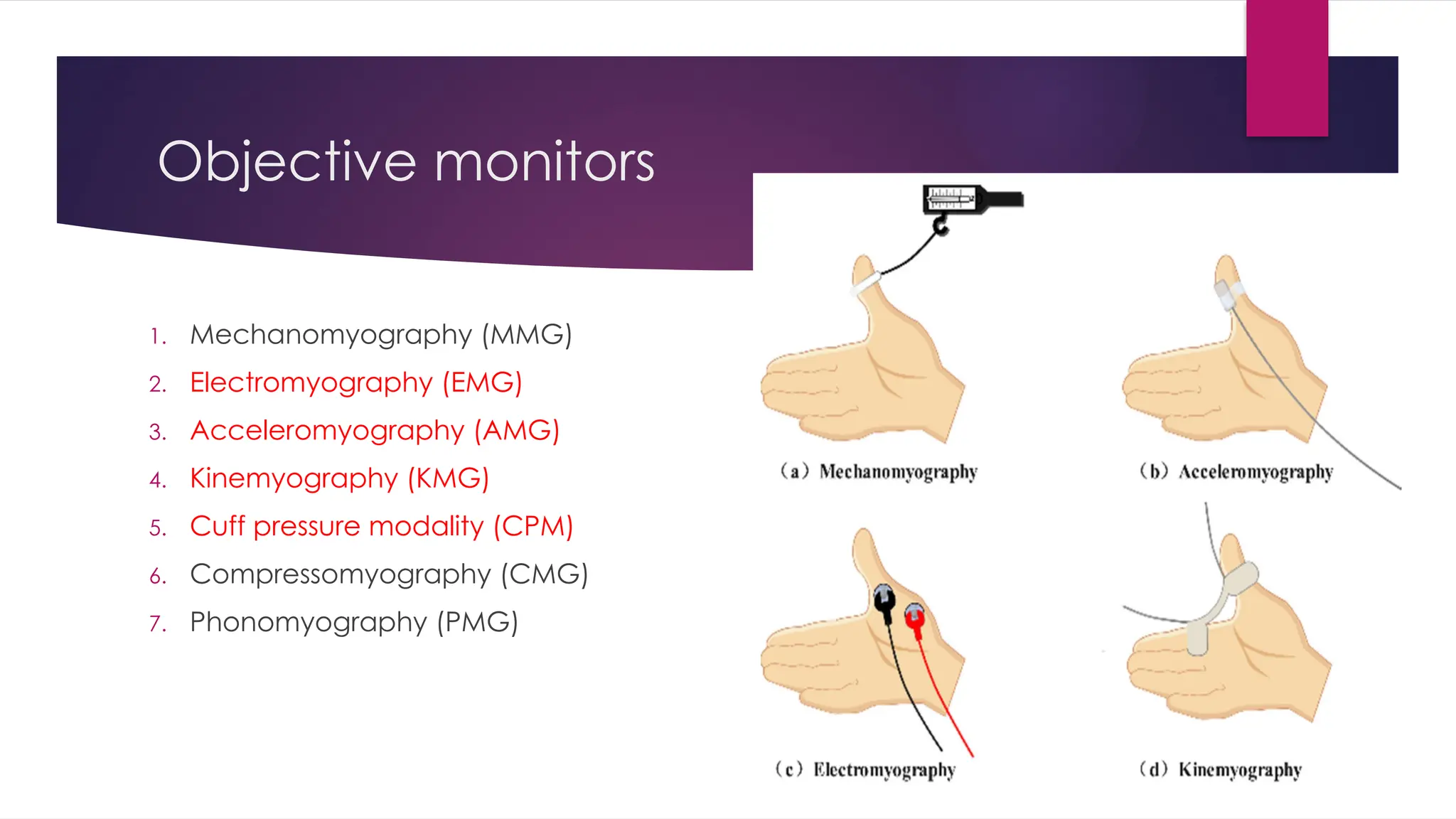
1. Mechanomyography (MMG)
2. Electromyography (EMG)
3. Acceleromyography (AMG)
4. Kinemyography (KMG)
5. Cuff pressure modality (CPM)
6. Compressomyography (CMG)
7. Phonomyography (PMG)
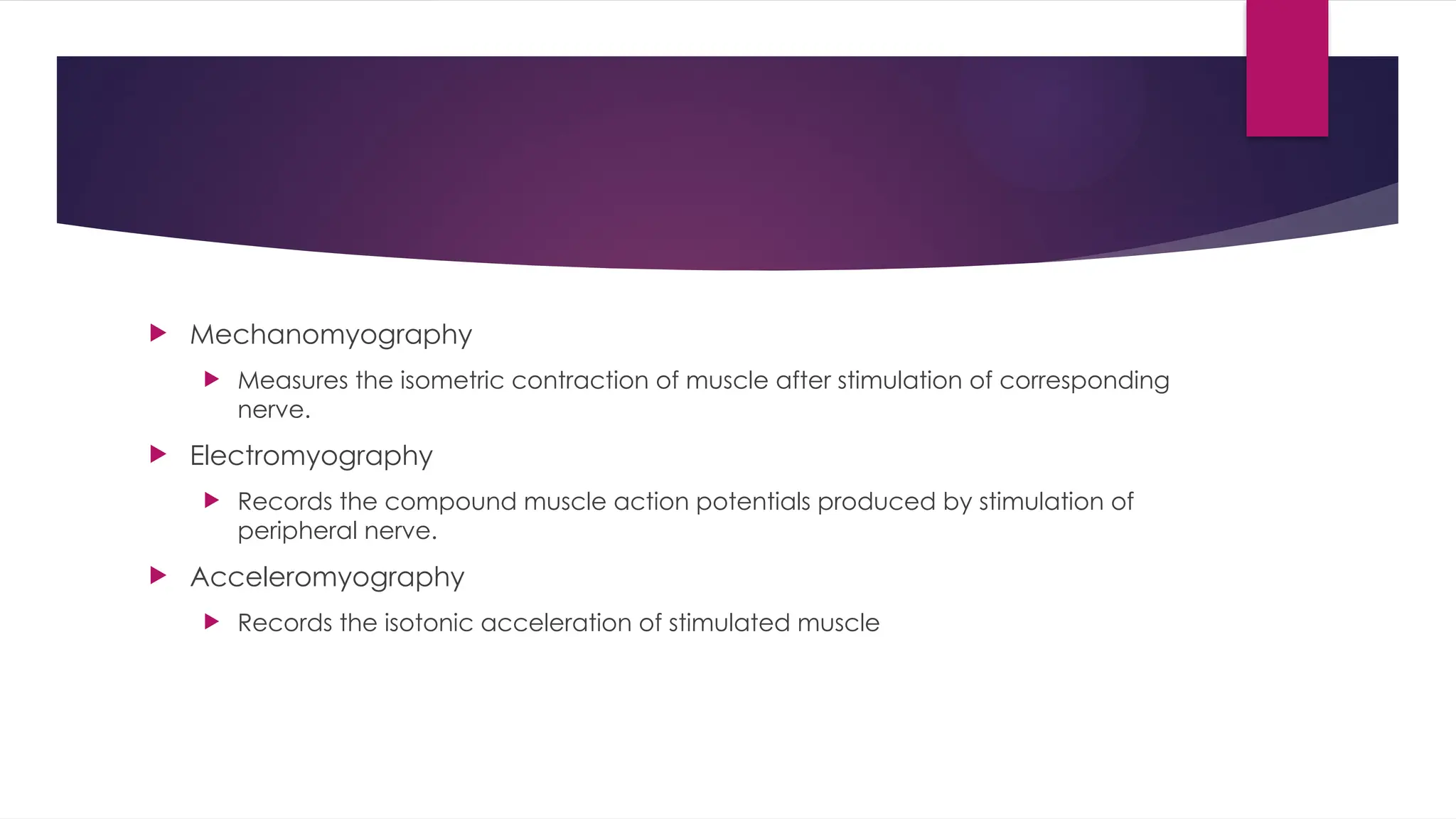
 Mechanomyography
 Measures the isometric contraction of muscle after stimulation of corresponding
nerve.
 Electromyography
 Records the compound muscle action potentials produced by stimulation of
peripheral nerve.
 Acceleromyography
 Records the isotonic acceleration of stimulated muscle
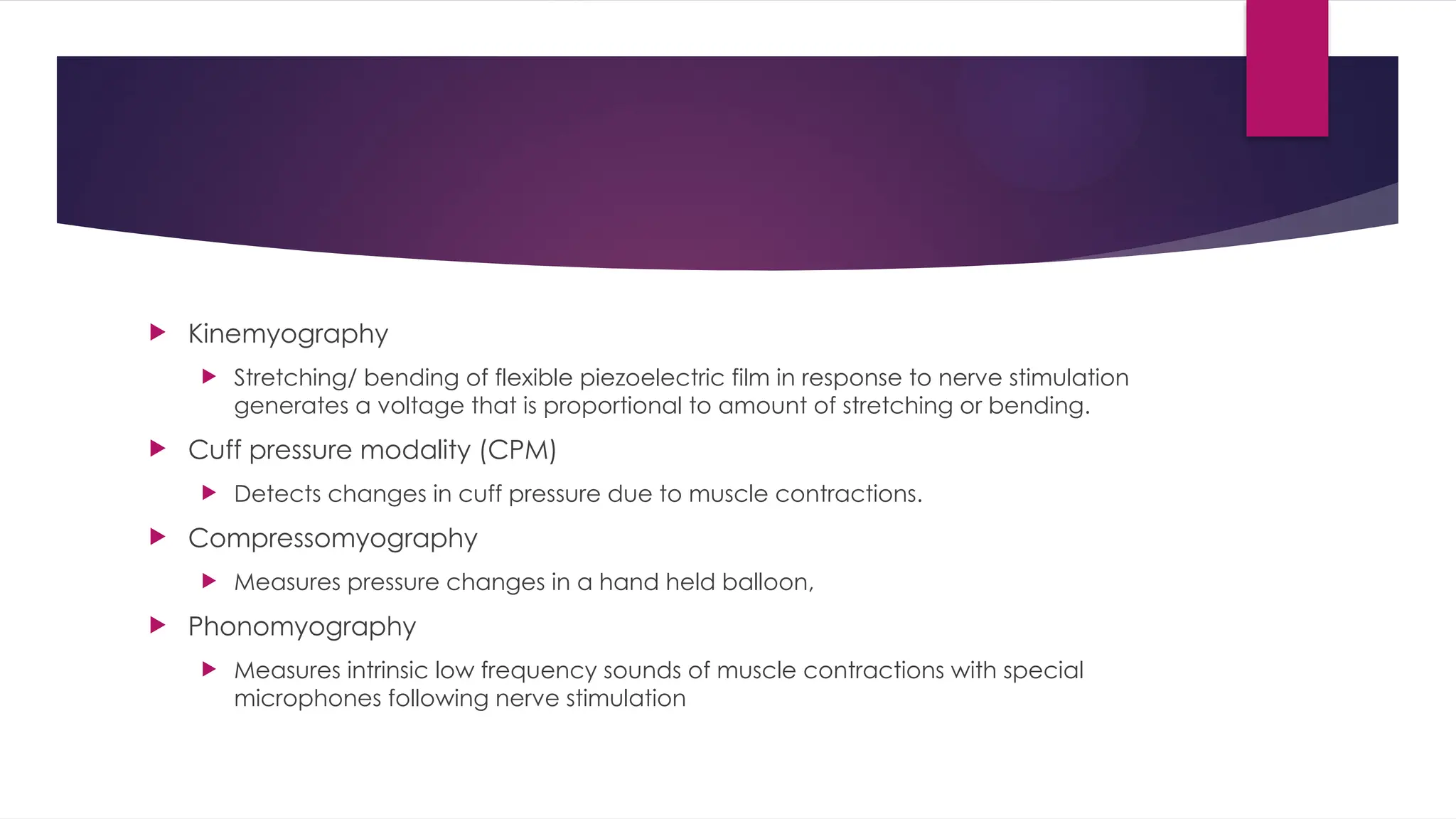
 Kinemyography
 Stretching/ bending of flexible piezoelectric film in response to nerve stimulation
generates a voltage that is proportional to amount of stretching or bending.
 Cuff pressure modality (CPM)
 Detects changes in cuff pressure due to muscle contractions.
 Compressomyography
 Measures pressure changes in a hand held balloon,
 Phonomyography
 Measures intrinsic low frequency sounds of muscle contractions with special
microphones following nerve stimulation
Role of neuromuscular monitoring in
neuromuscular diseases
 Myasthenia gravis –
 Down regulation of Ach receptors
 Resistant to succinyl choline – requires more dose
 Sensitive to NDMR – 50 -75% decrease in dose
 Before giving NDMR – TOF ratio <0.9 – more sensitive to NMDR
 Hemiplegia
 Upregulation of AchRs
 Increased dosage of NDMR
REFERENCES
 MILLER’S ANESTHESIA – 9th
edition
 UNDERSTANDING ANESTHESIA EQUIPMENT – A.DORSCH & E.DORSCH
 STOELTING’S PHYSIOLOGY & PHARMACOLOGY IN ANESTHESTIC PRACTICE
“
”
THANK YOU

MONITORING OF NEUROMUSCULAR JUNCTION.pptx

  • 1.
    MONITORING OF NEUROMUSCULAR JUNCTION MODERATOR: DR. S. Srinivas yadav (ASSISTANT PROFESSOR) SPEAKER : DR. C. Pooja (POST GRADUATE) Department of Anesthesiology & Critical care
  • 2.
    Why NMJ monitoring?  To ensure ideal intubating conditions have been met after administration of muscle relaxant.  To ensure ideal surgical conditions have been met intraoperatively.  To administer NMBA’s with appropriate dosing.  Prevention of residual neuromuscular blockade.  Surgical indications.  Prolonged Anaesthesia.  Presence of renal or hepatic diseases.
  • 3.
    Methods of neuromuscularmonitoring  Clinical methods  Useful only towards the end of surgery for assessing recovery from NMB  Peripheral nerve stimulator  Subjective : visual / tactile  Objective : Quantification with numerical values
  • 4.
  • 5.
    PERIPHERAL NERVE STIMULATOR Evoking the response of muscle by delivering an electrical stimulus to the nerve that innervates it.  Simple  Compact  Light weight  Stimulus – monophasic & rectangular wave form  Length of pulse – should not exceed 0.2 to 0.3 ms  Deliver constant current
  • 6.
    PERIPHERAL NERVE STIMULATOR Stimulating electrodes  Surface electrodes (30-70mA)  Metal electrodes  Needle electrodes (10mA)  Current  Supramaximal stimulus – 25 % of maximal stimulus  Higher currents – oedema, diabetes  Lower currents – needle electrodes are used
  • 7.
    SITES OF PERIPHERALNERVE STIMULATION  Ulnar nerve – adductor pollicis muscle  Gold standard  Lowest risk of direct muscle stimulation  Easily accessible  Posterior tibial nerve – flexor hallucis brevis muscle  Facial nerve – orbicularis oculi  Facial nerve – corrugator supercilii muscle
  • 8.
    DIFFERENT MUSCLES GROUPSHAVE DIFFERENT SENSITIVITY TO NMBD’S  Diaphragm & laryngeal adductors, corrugator supercili – resistant to NMBD’S  Onset is late  Recovery is fast  Extrapolated by corrugator supercilii  Peripheral muscles of limbs, orbicularis oculi, upper airway muscles – sensitive to NMBD’S  Onset is fast  Recovery is slow  Extrapolated by adductor pollicis
  • 9.
    Patterns of nervestimulation 1. Single twitch stimulation 2. Train of four stimulation(TOF) 3. Double burst stimulation(DBS) 4. Tetanic stimulation 5. Post tetanic stimulation(PTC)
  • 10.
    Single twitch stimulation Earliest & simplest pattern  Single electrical stimuli are applied to a peripheral motor nerve at frequencies ranging from 1.0Hz(once every second) to 0.1Hz(once every 10 seconds).  Reference value before administration of NMBA is mandatory.
  • 11.
    SINGLE TWITCH STIMULATION Application :  Helps in establishing satisfactory intubating conditions  Used in conjunction with tetanic stimulus to monitor deep levels of NMB  Disadvantage :  Insensitive : doesn’t decrease until 75- 80% receptors are blocked.  Disappears completely when 90-98% receptors are blocked.  cannot differentiate depolarizing & non depolarizing block
  • 12.
    Train of fourstimulation  Introduced by Ali & associates  Most frequently used stimulation pattern  Four supramaximal stimuli given every 0.5 sec (2Hz)  Evaluated by TOF count & TOF ratio  TOF count – onset of neuromuscular block, moderate blockade  TOF ratio(T4/T1) – neuromuscular recovery from non depolarizing blockade
  • 13.
    TRAIN OF FOUR Degree of fade is proportional to extent of neuromuscular block  At unblocked NMJ, TOF ratio equals to 1.0  Phase 1 block of depolarizing muscle relaxants, twitch height is decreased in all four twitches, ( no fade and TOF ratio equals to 1.0)  Phase 2 block of depolarizing muscle relaxants or block of NDMR T4 height starts to decrease when 70-75% receptors are blocked, while T1 remains same ( fade and TOF ratio equals to 0.7  80% receptors are blocked – 4th twitch disappears  85% receptors are blocked – 3rd twitch disappears  90% receptors are blocked – 2nd twitch disappears  >90% receptors are blocked – 1st twitch disappears
  • 14.
    TOF  ADVANTAGES : Sensitive indicator of residual NMB than single twitch  Control is not necessary.  Can distinguish between depolarising & non depolarising block  Help in detecting phase 2 block following succinylcholine administration  LIMITATIONS :  Poor performance at both extremes of NMB, deep relaxation or near complete recovery.
  • 15.
  • 16.
    Double burst stimulation Developed by viby – mogensen & associates  Two short bursts of 50Hz tetanic stimulation separated by 750ms, with 0.2ms duration of each square impulse in each burst.  Number of impulses in each burst may vary  Response to DBS is 2 short muscle contractions  Evaluated by fade in second burst compared to first burst.(D2/D1)  Developed with specific aim of improving manual (tactile or visual) detection of residual non depolarizing block.
  • 17.
  • 18.
    Tetanic stimulation  Proposedby Tassonyi  50-100Hz stimulation given for 5 sec  Evaluated by one strong sustained muscle contraction  In non depolarizing block - fade  Painful – limits its use in unanaesthetised patients
  • 19.
    Post tetanic stimulation Developed by viby – mogensen  Composite stimulation pattern – tetanic stimulation followed by 10 to 15 single twitches given at 1Hz starting 3 seconds after end of tetanic stimulation.  Evaluated by enhancement effect(facilitation) – occurs in phase 2 block of depolarizing & block of non depolarizing muscle relaxants.  Post tetanic count – inversely proportional to degree of blockade
  • 20.
    Tetanic & posttetanic stimulation
  • 21.
    Intense block Deepblock Moderate/surgical Recovery Response to nerve stimulation Period of no response Absence of response to TOF , but with presence of atleast one response to PTC Stimulation Gradual return of four responses to TOF stimulation Return of fourth response to TOF stimulation Anatgonism with cholinesterase inhibitor( neostigim ine) impossible impossible Should not be attempted - inadequate TOF ratio >0.9 Antagonism with sugammadex (block caused by vec or roc) 16mg/kg 4mg/kg 2mg/kg EVALUATION OF RECORDED EVOKED RESPONSES NON DEPOLARIZING NEUROMUSCULAR BLOCK
  • 24.
     DEPOLARIZING NEUROMUSCULARBLOCK  Phase 1 block : response to TOF or tetanic stimulation does not fade, no posttetanic facilitation  Phase 2 block : fade in response to TOF & tetanic stimulation & post tetanic facilitation
  • 25.
  • 27.
    Objective monitors 1. Mechanomyography(MMG) 2. Electromyography (EMG) 3. Acceleromyography (AMG) 4. Kinemyography (KMG) 5. Cuff pressure modality (CPM) 6. Compressomyography (CMG) 7. Phonomyography (PMG)
  • 28.
     Mechanomyography  Measuresthe isometric contraction of muscle after stimulation of corresponding nerve.  Electromyography  Records the compound muscle action potentials produced by stimulation of peripheral nerve.  Acceleromyography  Records the isotonic acceleration of stimulated muscle
  • 29.
     Kinemyography  Stretching/bending of flexible piezoelectric film in response to nerve stimulation generates a voltage that is proportional to amount of stretching or bending.  Cuff pressure modality (CPM)  Detects changes in cuff pressure due to muscle contractions.  Compressomyography  Measures pressure changes in a hand held balloon,  Phonomyography  Measures intrinsic low frequency sounds of muscle contractions with special microphones following nerve stimulation
  • 31.
    Role of neuromuscularmonitoring in neuromuscular diseases  Myasthenia gravis –  Down regulation of Ach receptors  Resistant to succinyl choline – requires more dose  Sensitive to NDMR – 50 -75% decrease in dose  Before giving NDMR – TOF ratio <0.9 – more sensitive to NMDR  Hemiplegia  Upregulation of AchRs  Increased dosage of NDMR
  • 32.
    REFERENCES  MILLER’S ANESTHESIA– 9th edition  UNDERSTANDING ANESTHESIA EQUIPMENT – A.DORSCH & E.DORSCH  STOELTING’S PHYSIOLOGY & PHARMACOLOGY IN ANESTHESTIC PRACTICE
  • 33.