CONTEMPORARY ARTS
FROM THE REGION
Direction: Organize the
words to complete the
statement. From the idea
that was yielded from the
words, explain your own
understanding of the
CONTEMPORARY
AND
FORMS
PRACTICES
ART THE
REGIONS FROM
YOU AS AN ARTIST
Directions: What do you think are
the qualities of an artist? Do you
possess those character traits? If
you do, state some of your artistic
qualities.
NATURE OF ART
-ART IS DERIVED FROM THE LATIN WORD
ARS/ ARTIS WHICH IS TO DO OR
MANMADE.
A MEDIUM OF INSTRUCTUON BECAUSE WE
EXPRESS OUR IDEAS, EMOTIONS, FEELINGS
WITHOUT USING WORDS
CREATIVE ACTIVITY THAT INVOLVE SKILLS OR
EXPERTISE IN HANDLING MATERIALS AND
ORGANIZING THEM INTO SOMETHING NEW.
APPLIED TO EXPRESS IDEAS BY THE USE OF
SKILL AND IMAGINATION IN THE CREATION
OF OBJECTS AND EXPERIENCES THAT CAN BE
SHARED TO OTHERS
Art is derived from Latin word "ars,"
meaning ability or skill. -J.V. Estolas
Art is taken from the Italian word
"artis," which means craftsmanship,
skill, mastery of form exist between
material and technique. - A.Tan
Art is the communication of ideas and
feelings by means of medium, color,
sound, bronze, marble, words, and
film. -C. Sanchez
Importance of Art
SATISFIES THE NEEDS FOR PERSONAL
EXPRESSION
DEVELOPS OUR SKILLS TO
EXPRESS OURSELVES
CHALLENGES US TO SEE THINGS
DIFFERENTLY
Unleashes our hidden desires
and passion
CAN CHANGE OUR WAYS IN
LIFE
SEES THE TRUTH THAT WE MIGHT
NOT UNDERSTAND BEFORE
 Gives pleasure, satisfaction
and gratification
FUNCTIONS OF ART
MOST IMPORTANT MEANS OF
EXPRESSION DEVELOPED BY MAN.
TO EXPRESS BEAUTY
TO GIVE MAN MOMENT OF RELAXATION
AND SPIRITUAL HAPPINESS
TO SERVE AS A CHANNEL OF
MAN’S PASSION
TO OVERCOME THE FEELINGS
OF RESTLESSNESS AND
LONELINESS
TO REFORM MAN
TO OVERCOME THE FEELING OF
RESTLESNESS AND LONELINESS
ART APPRECIATION
IT IS THE ABILITY TO INTERPRET OR
UNDERSTAND MAN-MADE ARTS AND
ENJOY THEM EITHER THROUGH ACTUAL
AND WORKEXPERIENCE WITH TOOLS AND
MATERIALS OR POSESSION OF THESE
WORKS FOR SATISFACTION.
WORK OF ART
AN ACTIVITY THAT INVOLVES
BOTH IMAGINATION AND SKILL
IN ACCOMPLISHING IT
A THING OF BEAUTY HAVING
AESTHERIC VALUE; OBRA
MAESTRA THAT PROVIDES
AESTHETIC VALUE TO
VIEWERS
Subject of Art
The subject matter may vary, usually
anything that is represented in the
artwork. It may be a person, object,
scene, or event
Contemporary Arts
According to quora.com,
contemporary art forms refer to field
of arts such as painting, drawing,
dancing, music, sculpture,
architecture, etc.
Contemporary artists work in a
globally influenced, culturally
diverse, and technologically
advanced world.
Contemporary art in most cases,
defined it as art that has been
and continuously being created
during our lifetime. (widewall.ch)
Contemporary Philippine
Art
The art of the Philippines refers to the
works of art that have developed and
accumulated in the Philippines from the
beginning of civilization in the country up
to the present era.
Contemporary Arts began during
the 1950s, after World War II.
Artists began to experiment various
procedures and various methods of
communicating their feelings,
perspectives, thoughts, and different
things that they needed to
communicate through Arts.
They were viewed as
contemporary artists in light of the
fact that their styles and methods
of making artworks veered away
from that of customary
workmanship.
Contemporary Philippine Arts
tends to be found in the various
displays, art schools, side lanes
and open spaces like train or
transport stations, shopping
centers, parks and malls.
Along these lines, what is basic in
contemporary arts is the procedure of
art-making. For most, it is not how
much cash they make from their last
work but the message it wants to
convey.
Contemporary arts
from the region
It refers to art forms that are
developing in various regions of the
Philippines that relied on the existing
materials in specific region or
province.
ivatans
vacul
MADE FROM THE FIBRES OF VUYAVUY
PALM, TO PROTECT THEM FROM THE
SCOTCHING HEAT OF THE SUN WHILE
WORKING ON THEIR FARMLANDS.
This particular headgear is also a
substitute to umbrella in rainy
season.
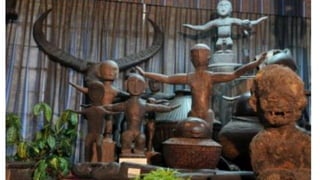
VASES AND STATUES CRAFTED IN THE
CORDILLERA REGION,
PARTICULARLY IN BAGUIO AND
BENGUET AREA.
1. THANKSGIVING FOR RICH
HARVEST
2. FOR CELEBRATION OF
MARRIAGES
3. CONDUCTING FUNERAL
The Moriones denotes the masked and
costumed penitents who march around
the town for seven days searching for
Longinus. These Masks were intricately
painted with colorful designs that
symbolize Roman culture, Customs and
tradition.
In the Visayan Region, maskara, which
means Mask is a prominent feature of the
festival which also bears the same name.
Maskara are always ornamented with
smiling faces, giving rise to Bacolod being
named the "City of Smiles".
HAVING TATOOS OR PINTA WHICH
SYMBOLIZES THEIR “KAISUGAN”
OR VALOR OR BRAVERY.
•These tattoos are called Pinta which
makes Visayan people of Ilo-ilo and
Panay regions to earn the name
“Pintados” which later became the
name of their festival
Directions:
Let’s divide the class into two groups. Group 1 for
the boys and group 2 for the girls. Every group
should pick 10 – 15 members to answer and be part
of the game. The remaining others will be their
support system.
Direction #2
I’ll be showing different pictures/statements or
questions, all you need to do is to guess the
corresponding answers for it. Below, there will be
shuffled words, so every group should make an
effort to understand and arrange it in order to find
out the correct answers. If you and your group
know the answers, run immediately and write it on
the board. The group who will have a highest
score will be the winner.
Ready na?
Let’s have an example first
L V U C A
i M S L E
BACOLOD CITY IS KNOWN TO BE
THE CITY OF?
S P I O N T D A F L E A S T I V
A FESTIVAL BEING
CELEBRATED EVERY MARCH
19TH
TO 24TH
OF THE YEAR.
T A R
IT IS DERIVED FROM THE LATIN
WORD ARS/ ARTIS WHICH IS TO
DO OR MANMADE.
N T I V A
K T I A A N L
A TRADITIONAL
CLOTH MADE BY
A T’BOLIS
P N A T I
SYMBOLIZES
THEIR
“KAISUGAN” OR
VALOR OR
BRAVERY.
T A R A A M T R I E L S
A A T S N V I
Natives of Batanes
L O O E D N A R AD I I V N C
WHO PAINTED
THE MONALISA?
C S N E E
WHAT SUBJECT
OF ART IS
BEING USED IN
THIS
PAINTING?
O O M R N E I S F S E T V I A L
D W L O R R W A II
Contemporary Arts began during the
1950s after _______ _____ __.
A A B A C
Its fiber has a
natural luster with
colors ranging
from pure white
to ivory and dark
brown
B B A M O O
A C R U R E E C H I T T
According to quora.com, contemporary art
forms refer to field of arts such as painting,
drawing, dancing, music,
sculpture,__________________.
IN MINDANAO AREA, MUSLIM
PEOPLE OF ZAMBOANGA ARE
RENOWNED FOR THEIR COLORFUL
“VINTAS”
VINTA IS A TRADITIONAL
OUTRIGGER BOAT OF MINDANAO
ISLAND.
VINTA ARE USED AS:
1. FISHING VESSELS
2. CARGO SHIPS, AND
3. HOUSEBOATS
TRIBES OF MINDANAO ARE ALSO
KNOWN FOR T'NALAK, A TRADITIONAL
CLOTH MADE BY A GROUP OF PEOPLE
IN LAKE SEBU, SOUTH COTABATO
CALLED T'BOLIS.
T’bolis believes that they cannot create a
design of the Tinalak if they have not
dreamed of it. Therefore, they are
sometimes called the "Dream Weavers"
SARIMANOK
THE LEGENDARY BIRD THAT HAS
BECOME AN UBIQUITOUS SYMBOL OF
MARANAO ART
It is depicted as a fowl with
colorful wings and feathered tail,
holding a fish on its beak or
talons.
The head is profusely decorated
with scroll, leaf, and spiral motifs.
It is said to be a symbol of good
fortune.
Its fiber has a natural luster with
colors ranging from pure white to
ivory and dark brown
Bamboo is use as raw material in
creating many products. It is used
in construction, textile, musical
instruments, weapons, and many
more.
Buri on the other hand is
extracted from the matured
leaves of the buri palm. The fibre
is durable and resistant to
moisture
Hats, bags, baskets, memorabilia
boxes, perfume tray
RATTAN
BELONGS TO THE PALM FAMILY HAS
DIFFERENT TYPES SUCH AS HIGH OR
LOW CLIMBERS, SINGLE STEMMED OR
CLUSTERED RATTAN SPECIES
FILIPINO
CONTEMPORARY
ARTISTS
Artist : Lisa Macuja – Elizalde
-Artistic Director Of Ballet
TRIBE/ REGION : Manila - National
Capital Region Balle
CONTEMPORARY ART FORM: Ballet
Teresita Pacheco Macuja-Elizalde is a
Filipino prima ballerina. In 1984, she
became the first foreign soloist to ever join
the Kirov Ballet. In the Philippines, she is
the Artistic Director and CEO of Ballet
Manila and was the Vice-Chairman of the
Philippine UNESCO National Commission
BORN: OCTOBER 3, 1964 (AGE 57 YEARS), MANILA
CHILDREN: MICHELLE ELIZABETH MACUJA ELIZALDE
BOOKS: BALLERINA OF THE PEOPLE
PARENTS: SUSAN PACHECO, CESAR MACUJA
KNOWN FOR: BALLET
EDUCATION:
VAGANOVA ACADEMY OF RUSSIAN BALLET,
ST. THERESA'S COLLEGEMOVEMENT: CLASSICAL,
MODERN
Ginaw Bilog
Tribe/region
-Hanonou, Mangyan Panaytayan, Oriental
Mindoro
Contemporary Art Form
Poetry
Ginaw Bilog was a Filipino poet who was
recognized as a National Living Treasure
by the Philippine government. Born on
January 3, 1953, Bilog was a Hanunuo
Mangyan who was a native of Mansalay,
Oriental Mindoro. He was known for his
efforts in preserving the Mangyan poetry
tradition of ambahan.
•Born: January 3, 1953, Mansalay
•Died: June 3, 2003, Oriental
Mindoro
•Genre: Ambahan
•Language: Mangyan
•Notable awards: Gawad sa
Manlilikha ng Bayan
Masino Intaray
Tribe/Region
Pala’wan Brookes Point, Palawan
Contemporary Art Form
Local Music
Masino Intaray was a Filipino poet, bard
artist, and musician who is a Palawan
native known for his performance of the
local traditions of basal, kulilal and bagit.
He is also a recipient of the National
Living Treasure recognition.
Born: April 10, 1943, Palawan
Died: November 30, 2013
Samaon Sulaiman was a Filipino musician
who is a recipient of the National Living
Treasure award. The Maguindanaon is
known for his mastery of the indigenous
kutyapi instrument. Born on 3 March 1953,
Sulaiman first learned playing kutyapi at
around 13 years old from his uncle
EITHER DISSCUSS OR NOT
•Born:March3, 1953, Mamasapano
•Died: May 21, 2011, Manila
•Nationality: Philippine
•Instruments: kutyapi
Lang Dulay
Tribe/Region
T’boli, Lake Sebu, South Cotabato
Contemporary Art Form
Textile Weaving
Lang Dulay was a Filipino traditional
weaver who was a recipient of the
National Living Treasures Award.
She is credited with preserving her
people's tradition of weaving T'nalak,
a dyed fabric made from refined
abaca fibre.
•Born: August 3, 1928
•Died: April 30, 2015, Lake Sebu
•Parents: Luan Senig
•Nationality: Philippine
•Awards: Gawad sa Manlilikha ng Bayan
•Known for: T'nalak weaving
•Style: Traditional T'boli design
Tribe/Region
Tagabawa Bagobo, Bansalan, Davao del Sur
Contemporary Art Form
Textile Weaving
Salinta Monon was a Filipino textile
weaver who was the one of two
recipients of the National Living
Treasures Award in 1998. She was
known for her Bagobo-Tagabawa
textiles and was known as the "last
Bagobo weaver
Tribe/Region
Lubugan, kalinga
Contemporary Art Form
Local Music and Dance
• Alonzo Saclag is a Filipino musician and dancer
who is a recipient of the National Living
Treasures Award.
• Born: August 4, 1942 (age 80 years), Lubuagan
• Nationality: Philippine
• Children: 9
• Current group: Kalinga Budong Dance Troupe
• Instruments: Gangsa (Kalinga gong)
• Federico Caballero
FEDERICO CABALLERO
Tribe/Region
Sulod-Bukidnon, Calinog, Iloilo
Contemporary Art Form
EPIC CHANTING
UWANG AHADAS
Tribe/Region
Yakan Lamitan, Basailan
Contemporary Art Form
Local Music
Uwang Ahadas is a Filipino folk
musician of the Yakan people who is
a recipient of the National Living
Treasures Award
•Born: February 16, 1945 (age 77 years)
•Genres: Folk
•Instruments: abbang; agung;
kwintangan
•Origin: Lamitan, Basilan, Philippines
Darhata Sawabi
Tribe/Region
Tausug, Parang, Sulu
Contemporary Art Form
Textile Weaving
Darhata Sawabi is a Filipino weaver
from Parang, Sulu known for pis
syabit, a traditional Taus g cloth
ū
tapestry worn as a head covering by
the people of Jolo. She is a recipient
of the National Living Treasures
Award, having given the distinction in
2004.
Eduardo Tubig Mutuc is a Filipino
metalsmith and sculptor. He is a known to
be a practitioner of the craft of pinukpuk
which involved the stamping of
embellishments on metal sheets. Mutuc
create works of both secular and religious
nature using silver, wood and bronze
mediums
Born: October 12, 1949 (age
72 years)
Haja Amina Appi was a Filipino
master mat weaver and teacher
from the Sama indigenous people of
Ungos Matata, Tandubas, Tawi-
Tawi. She was credited for creating
colorful pandan mats with complex
geometric patterns
•Born: June 25, 1925
•Died: April 2, 2013
•Nationality: Philippine
•Awards: National Living Treasure
Award; 2004
•Known for: Textile
•Style: Sama traditional weaving
ART FORM
Mat Weaving
Teofilo Garcia is a Filipino hatter
who is regarded as a National Living
Treasure in the Philippines for
making tabungaw hats, a type of
Ilocano headwear.
ART FORM
Casque Making
•Magdalena Gamayo is a Filipino
weaver who is a lead-practitioner
of the Ilocano tradition of
pinagabel.
•Born: August 13, 1924 (age
98 years)
ART FORM
•Textile Weaving
Criteria for
reporting
PURPOSE: The goal of the oral report is for students to summarize in a brief,
professional oral report
TOPIC DELIVERY (EXPLANATION) – 50%
Do you summarized the in information about
your assigned topic? Do you understand the
topic and can answer questions about it?
You may occasionally refer to the notes or the
PowerPoint slide(s) during the report. Do you make
effective eye contact with the audience? Do you
deliver the information in a smooth manner
indicating you understand the topic and have
practiced the report? The reporters should know
how to handle their classmates and can bombard
exam during class discussion.
QUALITY OF VOICE- 20%
The ability to deliver the topic in a
smooth but modulated voice, in which 4
corners of the room can be hear
CONTENT/PRESENTATION/
PREPAREDNESS-20%
The reporters are able to make formal,
presentable and complete slides/ presentation
about their topic. Reporters are prepared and
able to answer different questions being ask by
their classmates.
AUDIENCE INTERACTION- 10%
TOPIC DELIVERY (EXPLANATION) – 50%
QUALITY OF VOICE- 20%
CONTENT/PRESENTATION/ PREPAREDNESS-20%
AUDIENCE INTERACTION- 10%

MODULE 1.pptx CPAR MODULE QUARTER 1 MODULE 1

  • 4.
  • 5.
    Direction: Organize the wordsto complete the statement. From the idea that was yielded from the words, explain your own understanding of the
  • 6.
  • 7.
    YOU AS ANARTIST Directions: What do you think are the qualities of an artist? Do you possess those character traits? If you do, state some of your artistic qualities.
  • 8.
    NATURE OF ART -ARTIS DERIVED FROM THE LATIN WORD ARS/ ARTIS WHICH IS TO DO OR MANMADE.
  • 9.
    A MEDIUM OFINSTRUCTUON BECAUSE WE EXPRESS OUR IDEAS, EMOTIONS, FEELINGS WITHOUT USING WORDS
  • 10.
    CREATIVE ACTIVITY THATINVOLVE SKILLS OR EXPERTISE IN HANDLING MATERIALS AND ORGANIZING THEM INTO SOMETHING NEW.
  • 15.
    APPLIED TO EXPRESSIDEAS BY THE USE OF SKILL AND IMAGINATION IN THE CREATION OF OBJECTS AND EXPERIENCES THAT CAN BE SHARED TO OTHERS
  • 16.
    Art is derivedfrom Latin word "ars," meaning ability or skill. -J.V. Estolas
  • 17.
    Art is takenfrom the Italian word "artis," which means craftsmanship, skill, mastery of form exist between material and technique. - A.Tan
  • 18.
    Art is thecommunication of ideas and feelings by means of medium, color, sound, bronze, marble, words, and film. -C. Sanchez
  • 19.
  • 20.
    SATISFIES THE NEEDSFOR PERSONAL EXPRESSION
  • 21.
    DEVELOPS OUR SKILLSTO EXPRESS OURSELVES
  • 22.
    CHALLENGES US TOSEE THINGS DIFFERENTLY
  • 23.
    Unleashes our hiddendesires and passion
  • 24.
    CAN CHANGE OURWAYS IN LIFE
  • 25.
    SEES THE TRUTHTHAT WE MIGHT NOT UNDERSTAND BEFORE
  • 26.
     Gives pleasure,satisfaction and gratification
  • 27.
  • 28.
    MOST IMPORTANT MEANSOF EXPRESSION DEVELOPED BY MAN.
  • 29.
  • 30.
    TO GIVE MANMOMENT OF RELAXATION AND SPIRITUAL HAPPINESS
  • 31.
    TO SERVE ASA CHANNEL OF MAN’S PASSION
  • 32.
    TO OVERCOME THEFEELINGS OF RESTLESSNESS AND LONELINESS
  • 33.
  • 34.
    TO OVERCOME THEFEELING OF RESTLESNESS AND LONELINESS
  • 35.
    ART APPRECIATION IT ISTHE ABILITY TO INTERPRET OR UNDERSTAND MAN-MADE ARTS AND ENJOY THEM EITHER THROUGH ACTUAL AND WORKEXPERIENCE WITH TOOLS AND MATERIALS OR POSESSION OF THESE WORKS FOR SATISFACTION.
  • 36.
  • 37.
    AN ACTIVITY THATINVOLVES BOTH IMAGINATION AND SKILL IN ACCOMPLISHING IT
  • 38.
    A THING OFBEAUTY HAVING AESTHERIC VALUE; OBRA MAESTRA THAT PROVIDES AESTHETIC VALUE TO VIEWERS
  • 39.
    Subject of Art Thesubject matter may vary, usually anything that is represented in the artwork. It may be a person, object, scene, or event
  • 40.
    Contemporary Arts According toquora.com, contemporary art forms refer to field of arts such as painting, drawing, dancing, music, sculpture, architecture, etc.
  • 41.
    Contemporary artists workin a globally influenced, culturally diverse, and technologically advanced world.
  • 42.
    Contemporary art inmost cases, defined it as art that has been and continuously being created during our lifetime. (widewall.ch)
  • 43.
  • 44.
    The art ofthe Philippines refers to the works of art that have developed and accumulated in the Philippines from the beginning of civilization in the country up to the present era.
  • 45.
    Contemporary Arts beganduring the 1950s, after World War II.
  • 46.
    Artists began toexperiment various procedures and various methods of communicating their feelings, perspectives, thoughts, and different things that they needed to communicate through Arts.
  • 47.
    They were viewedas contemporary artists in light of the fact that their styles and methods of making artworks veered away from that of customary workmanship.
  • 48.
    Contemporary Philippine Arts tendsto be found in the various displays, art schools, side lanes and open spaces like train or transport stations, shopping centers, parks and malls.
  • 49.
    Along these lines,what is basic in contemporary arts is the procedure of art-making. For most, it is not how much cash they make from their last work but the message it wants to convey.
  • 50.
  • 51.
    It refers toart forms that are developing in various regions of the Philippines that relied on the existing materials in specific region or province.
  • 52.
  • 53.
  • 54.
    MADE FROM THEFIBRES OF VUYAVUY PALM, TO PROTECT THEM FROM THE SCOTCHING HEAT OF THE SUN WHILE WORKING ON THEIR FARMLANDS.
  • 55.
    This particular headgearis also a substitute to umbrella in rainy season.
  • 58.
    VASES AND STATUESCRAFTED IN THE CORDILLERA REGION, PARTICULARLY IN BAGUIO AND BENGUET AREA.
  • 59.
    1. THANKSGIVING FORRICH HARVEST
  • 60.
    2. FOR CELEBRATIONOF MARRIAGES
  • 61.
  • 63.
    The Moriones denotesthe masked and costumed penitents who march around the town for seven days searching for Longinus. These Masks were intricately painted with colorful designs that symbolize Roman culture, Customs and tradition.
  • 65.
    In the VisayanRegion, maskara, which means Mask is a prominent feature of the festival which also bears the same name. Maskara are always ornamented with smiling faces, giving rise to Bacolod being named the "City of Smiles".
  • 68.
    HAVING TATOOS ORPINTA WHICH SYMBOLIZES THEIR “KAISUGAN” OR VALOR OR BRAVERY.
  • 69.
    •These tattoos arecalled Pinta which makes Visayan people of Ilo-ilo and Panay regions to earn the name “Pintados” which later became the name of their festival
  • 71.
    Directions: Let’s divide theclass into two groups. Group 1 for the boys and group 2 for the girls. Every group should pick 10 – 15 members to answer and be part of the game. The remaining others will be their support system.
  • 72.
    Direction #2 I’ll beshowing different pictures/statements or questions, all you need to do is to guess the corresponding answers for it. Below, there will be shuffled words, so every group should make an effort to understand and arrange it in order to find out the correct answers. If you and your group know the answers, run immediately and write it on the board. The group who will have a highest score will be the winner.
  • 73.
  • 74.
    Let’s have anexample first
  • 75.
    L V UC A
  • 76.
    i M SL E BACOLOD CITY IS KNOWN TO BE THE CITY OF?
  • 77.
    S P IO N T D A F L E A S T I V A FESTIVAL BEING CELEBRATED EVERY MARCH 19TH TO 24TH OF THE YEAR.
  • 78.
    T A R ITIS DERIVED FROM THE LATIN WORD ARS/ ARTIS WHICH IS TO DO OR MANMADE.
  • 79.
    N T IV A
  • 80.
    K T IA A N L A TRADITIONAL CLOTH MADE BY A T’BOLIS
  • 81.
    P N AT I SYMBOLIZES THEIR “KAISUGAN” OR VALOR OR BRAVERY.
  • 82.
    T A RA A M T R I E L S
  • 83.
    A A TS N V I Natives of Batanes
  • 84.
    L O OE D N A R AD I I V N C WHO PAINTED THE MONALISA?
  • 85.
    C S NE E WHAT SUBJECT OF ART IS BEING USED IN THIS PAINTING?
  • 86.
    O O MR N E I S F S E T V I A L
  • 87.
    D W LO R R W A II Contemporary Arts began during the 1950s after _______ _____ __.
  • 88.
    A A BA C Its fiber has a natural luster with colors ranging from pure white to ivory and dark brown
  • 89.
    B B AM O O
  • 90.
    A C RU R E E C H I T T According to quora.com, contemporary art forms refer to field of arts such as painting, drawing, dancing, music, sculpture,__________________.
  • 91.
    IN MINDANAO AREA,MUSLIM PEOPLE OF ZAMBOANGA ARE RENOWNED FOR THEIR COLORFUL “VINTAS”
  • 94.
    VINTA IS ATRADITIONAL OUTRIGGER BOAT OF MINDANAO ISLAND.
  • 95.
    VINTA ARE USEDAS: 1. FISHING VESSELS 2. CARGO SHIPS, AND 3. HOUSEBOATS
  • 96.
    TRIBES OF MINDANAOARE ALSO KNOWN FOR T'NALAK, A TRADITIONAL CLOTH MADE BY A GROUP OF PEOPLE IN LAKE SEBU, SOUTH COTABATO CALLED T'BOLIS.
  • 100.
    T’bolis believes thatthey cannot create a design of the Tinalak if they have not dreamed of it. Therefore, they are sometimes called the "Dream Weavers"
  • 102.
    SARIMANOK THE LEGENDARY BIRDTHAT HAS BECOME AN UBIQUITOUS SYMBOL OF MARANAO ART
  • 103.
    It is depictedas a fowl with colorful wings and feathered tail, holding a fish on its beak or talons.
  • 104.
    The head isprofusely decorated with scroll, leaf, and spiral motifs. It is said to be a symbol of good fortune.
  • 107.
    Its fiber hasa natural luster with colors ranging from pure white to ivory and dark brown
  • 111.
    Bamboo is useas raw material in creating many products. It is used in construction, textile, musical instruments, weapons, and many more.
  • 118.
    Buri on theother hand is extracted from the matured leaves of the buri palm. The fibre is durable and resistant to moisture
  • 119.
    Hats, bags, baskets,memorabilia boxes, perfume tray
  • 125.
    RATTAN BELONGS TO THEPALM FAMILY HAS DIFFERENT TYPES SUCH AS HIGH OR LOW CLIMBERS, SINGLE STEMMED OR CLUSTERED RATTAN SPECIES
  • 130.
  • 132.
    Artist : LisaMacuja – Elizalde -Artistic Director Of Ballet TRIBE/ REGION : Manila - National Capital Region Balle CONTEMPORARY ART FORM: Ballet
  • 133.
    Teresita Pacheco Macuja-Elizaldeis a Filipino prima ballerina. In 1984, she became the first foreign soloist to ever join the Kirov Ballet. In the Philippines, she is the Artistic Director and CEO of Ballet Manila and was the Vice-Chairman of the Philippine UNESCO National Commission
  • 134.
    BORN: OCTOBER 3,1964 (AGE 57 YEARS), MANILA CHILDREN: MICHELLE ELIZABETH MACUJA ELIZALDE BOOKS: BALLERINA OF THE PEOPLE PARENTS: SUSAN PACHECO, CESAR MACUJA KNOWN FOR: BALLET EDUCATION: VAGANOVA ACADEMY OF RUSSIAN BALLET, ST. THERESA'S COLLEGEMOVEMENT: CLASSICAL, MODERN
  • 137.
    Ginaw Bilog Tribe/region -Hanonou, MangyanPanaytayan, Oriental Mindoro Contemporary Art Form Poetry
  • 138.
    Ginaw Bilog wasa Filipino poet who was recognized as a National Living Treasure by the Philippine government. Born on January 3, 1953, Bilog was a Hanunuo Mangyan who was a native of Mansalay, Oriental Mindoro. He was known for his efforts in preserving the Mangyan poetry tradition of ambahan.
  • 139.
    •Born: January 3,1953, Mansalay •Died: June 3, 2003, Oriental Mindoro •Genre: Ambahan •Language: Mangyan •Notable awards: Gawad sa Manlilikha ng Bayan
  • 142.
    Masino Intaray Tribe/Region Pala’wan BrookesPoint, Palawan Contemporary Art Form Local Music
  • 143.
    Masino Intaray wasa Filipino poet, bard artist, and musician who is a Palawan native known for his performance of the local traditions of basal, kulilal and bagit. He is also a recipient of the National Living Treasure recognition. Born: April 10, 1943, Palawan Died: November 30, 2013
  • 145.
    Samaon Sulaiman wasa Filipino musician who is a recipient of the National Living Treasure award. The Maguindanaon is known for his mastery of the indigenous kutyapi instrument. Born on 3 March 1953, Sulaiman first learned playing kutyapi at around 13 years old from his uncle
  • 146.
  • 147.
    •Born:March3, 1953, Mamasapano •Died:May 21, 2011, Manila •Nationality: Philippine •Instruments: kutyapi
  • 150.
    Lang Dulay Tribe/Region T’boli, LakeSebu, South Cotabato Contemporary Art Form Textile Weaving
  • 151.
    Lang Dulay wasa Filipino traditional weaver who was a recipient of the National Living Treasures Award. She is credited with preserving her people's tradition of weaving T'nalak, a dyed fabric made from refined abaca fibre.
  • 152.
    •Born: August 3,1928 •Died: April 30, 2015, Lake Sebu •Parents: Luan Senig •Nationality: Philippine •Awards: Gawad sa Manlilikha ng Bayan •Known for: T'nalak weaving •Style: Traditional T'boli design
  • 154.
    Tribe/Region Tagabawa Bagobo, Bansalan,Davao del Sur Contemporary Art Form Textile Weaving
  • 155.
    Salinta Monon wasa Filipino textile weaver who was the one of two recipients of the National Living Treasures Award in 1998. She was known for her Bagobo-Tagabawa textiles and was known as the "last Bagobo weaver
  • 158.
  • 159.
    • Alonzo Saclagis a Filipino musician and dancer who is a recipient of the National Living Treasures Award. • Born: August 4, 1942 (age 80 years), Lubuagan • Nationality: Philippine • Children: 9 • Current group: Kalinga Budong Dance Troupe • Instruments: Gangsa (Kalinga gong)
  • 162.
  • 163.
    FEDERICO CABALLERO Tribe/Region Sulod-Bukidnon, Calinog,Iloilo Contemporary Art Form EPIC CHANTING
  • 166.
    UWANG AHADAS Tribe/Region Yakan Lamitan,Basailan Contemporary Art Form Local Music
  • 167.
    Uwang Ahadas isa Filipino folk musician of the Yakan people who is a recipient of the National Living Treasures Award
  • 168.
    •Born: February 16,1945 (age 77 years) •Genres: Folk •Instruments: abbang; agung; kwintangan •Origin: Lamitan, Basilan, Philippines
  • 171.
    Darhata Sawabi Tribe/Region Tausug, Parang,Sulu Contemporary Art Form Textile Weaving
  • 172.
    Darhata Sawabi isa Filipino weaver from Parang, Sulu known for pis syabit, a traditional Taus g cloth ū tapestry worn as a head covering by the people of Jolo. She is a recipient of the National Living Treasures Award, having given the distinction in 2004.
  • 174.
    Eduardo Tubig Mutucis a Filipino metalsmith and sculptor. He is a known to be a practitioner of the craft of pinukpuk which involved the stamping of embellishments on metal sheets. Mutuc create works of both secular and religious nature using silver, wood and bronze mediums
  • 175.
    Born: October 12,1949 (age 72 years)
  • 177.
    Haja Amina Appiwas a Filipino master mat weaver and teacher from the Sama indigenous people of Ungos Matata, Tandubas, Tawi- Tawi. She was credited for creating colorful pandan mats with complex geometric patterns
  • 178.
    •Born: June 25,1925 •Died: April 2, 2013 •Nationality: Philippine •Awards: National Living Treasure Award; 2004 •Known for: Textile •Style: Sama traditional weaving
  • 179.
  • 181.
    Teofilo Garcia isa Filipino hatter who is regarded as a National Living Treasure in the Philippines for making tabungaw hats, a type of Ilocano headwear.
  • 182.
  • 184.
    •Magdalena Gamayo isa Filipino weaver who is a lead-practitioner of the Ilocano tradition of pinagabel. •Born: August 13, 1924 (age 98 years)
  • 185.
  • 200.
  • 201.
    PURPOSE: The goalof the oral report is for students to summarize in a brief, professional oral report TOPIC DELIVERY (EXPLANATION) – 50% Do you summarized the in information about your assigned topic? Do you understand the topic and can answer questions about it?
  • 202.
    You may occasionallyrefer to the notes or the PowerPoint slide(s) during the report. Do you make effective eye contact with the audience? Do you deliver the information in a smooth manner indicating you understand the topic and have practiced the report? The reporters should know how to handle their classmates and can bombard exam during class discussion.
  • 203.
    QUALITY OF VOICE-20% The ability to deliver the topic in a smooth but modulated voice, in which 4 corners of the room can be hear
  • 204.
    CONTENT/PRESENTATION/ PREPAREDNESS-20% The reporters areable to make formal, presentable and complete slides/ presentation about their topic. Reporters are prepared and able to answer different questions being ask by their classmates.
  • 205.
  • 206.
    TOPIC DELIVERY (EXPLANATION)– 50% QUALITY OF VOICE- 20% CONTENT/PRESENTATION/ PREPAREDNESS-20% AUDIENCE INTERACTION- 10%