MOBILE COMMUNICATION
SUBMITTED BY:
Nitesh Singh Patel (2013178)
Pareena Neema (2013191)
Parita Mandhana (2013192)
Parth Mehta (2013193)
WHAT IS MOBILE COMMUNICATION?
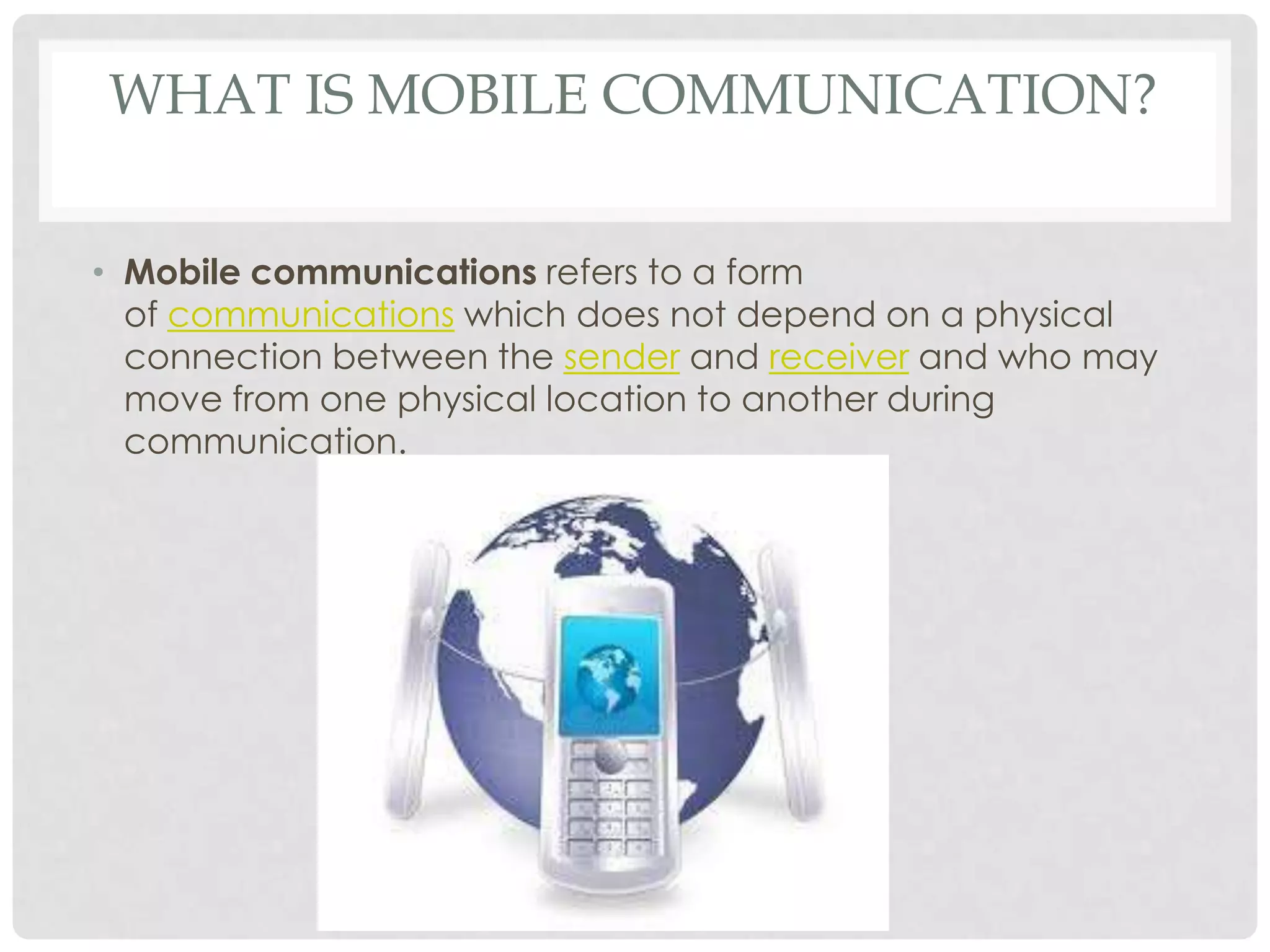
• Mobile communications refers to a form
of communications which does not depend on a physical
connection between the sender and receiver and who may
move from one physical location to another during
communication.
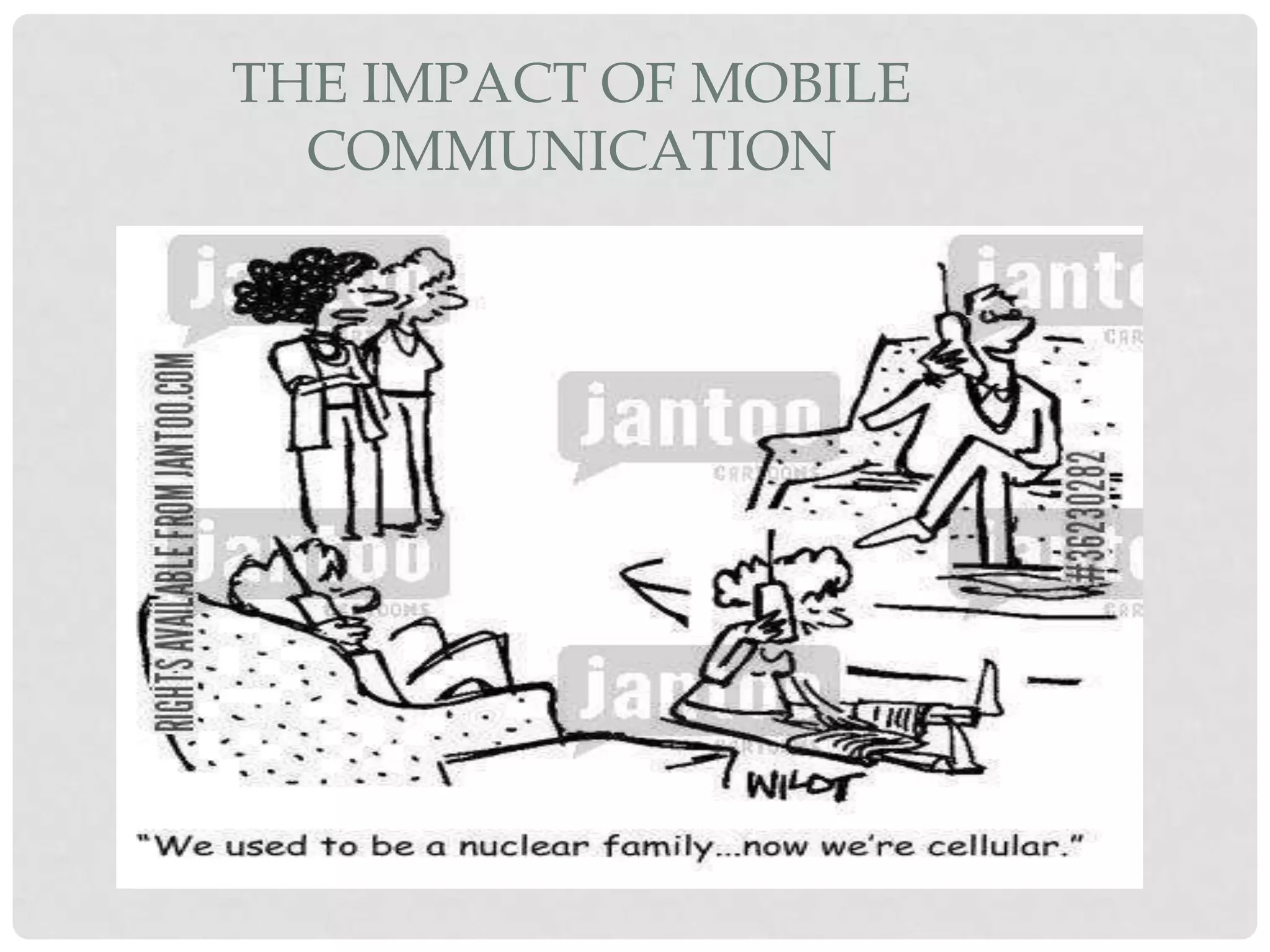
THE IMPACT OF MOBILE
COMMUNICATION
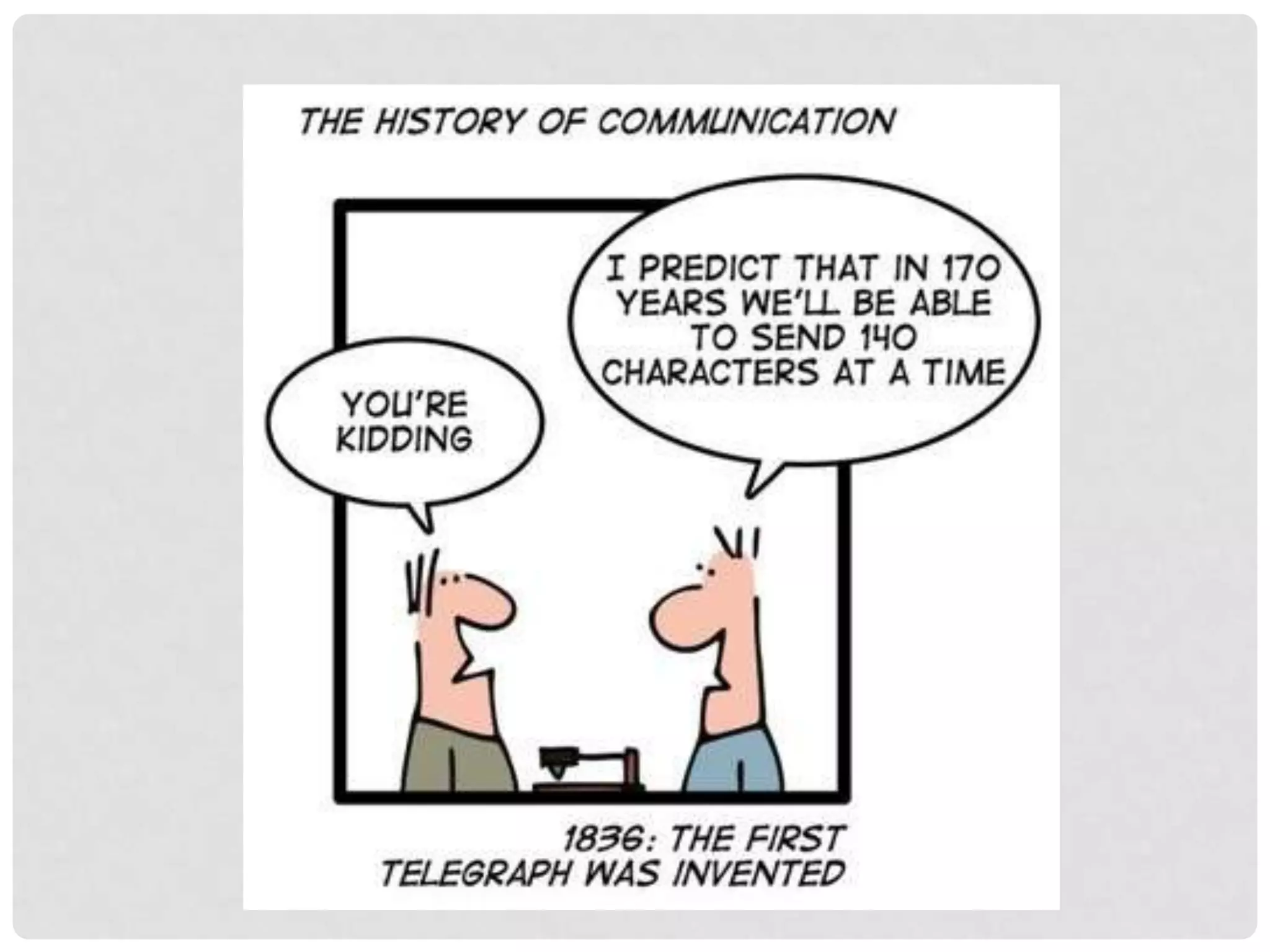
HISTORY OF WIRELESS
COMMUNICATION I
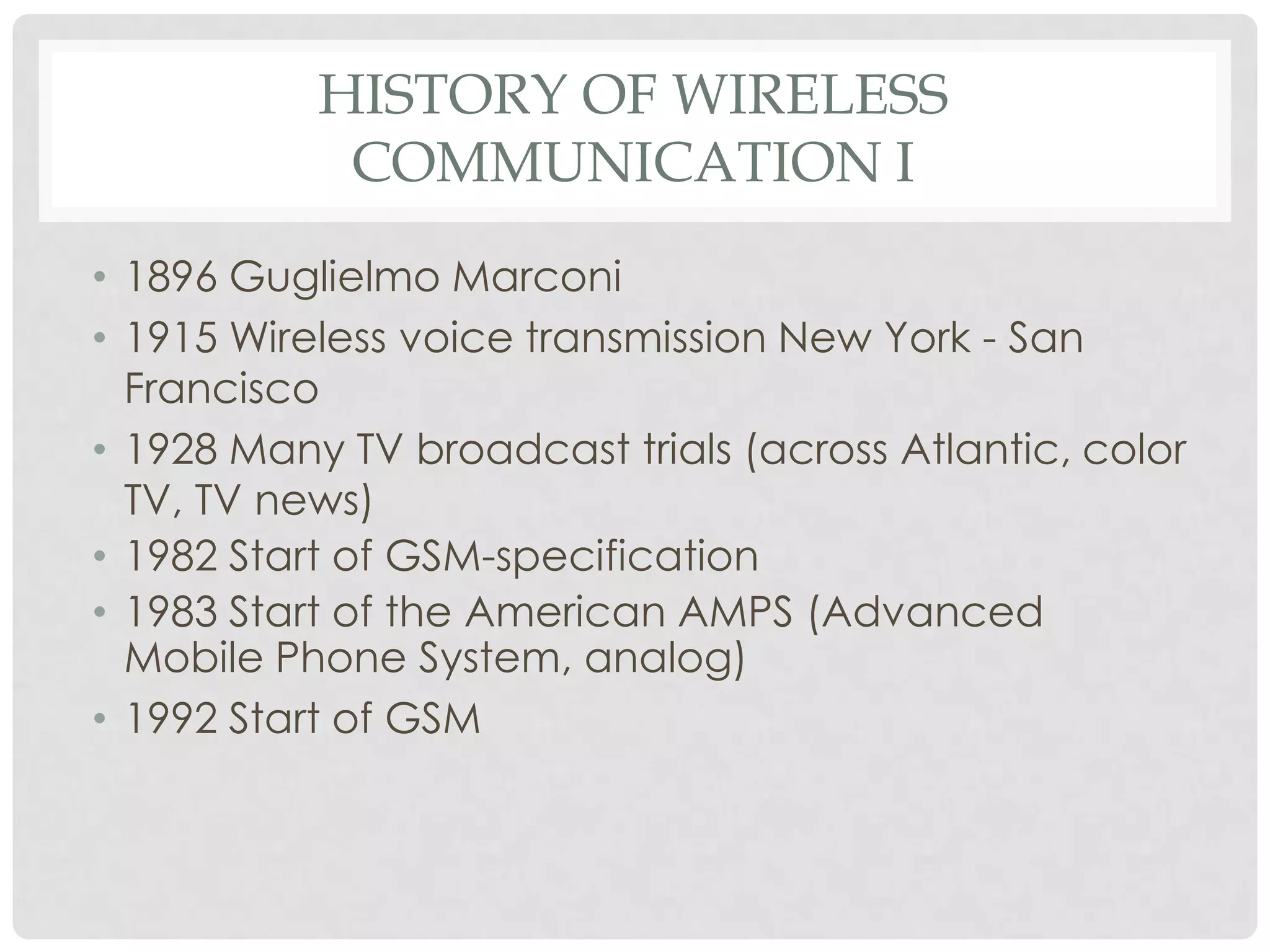
• 1896 Guglielmo Marconi
• 1915 Wireless voice transmission New York - San
Francisco
• 1928 Many TV broadcast trials (across Atlantic, color
TV, TV news)
• 1982 Start of GSM-specification
• 1983 Start of the American AMPS (Advanced
Mobile Phone System, analog)
• 1992 Start of GSM
HISTORY OF WIRELESS
COMMUNICATION II
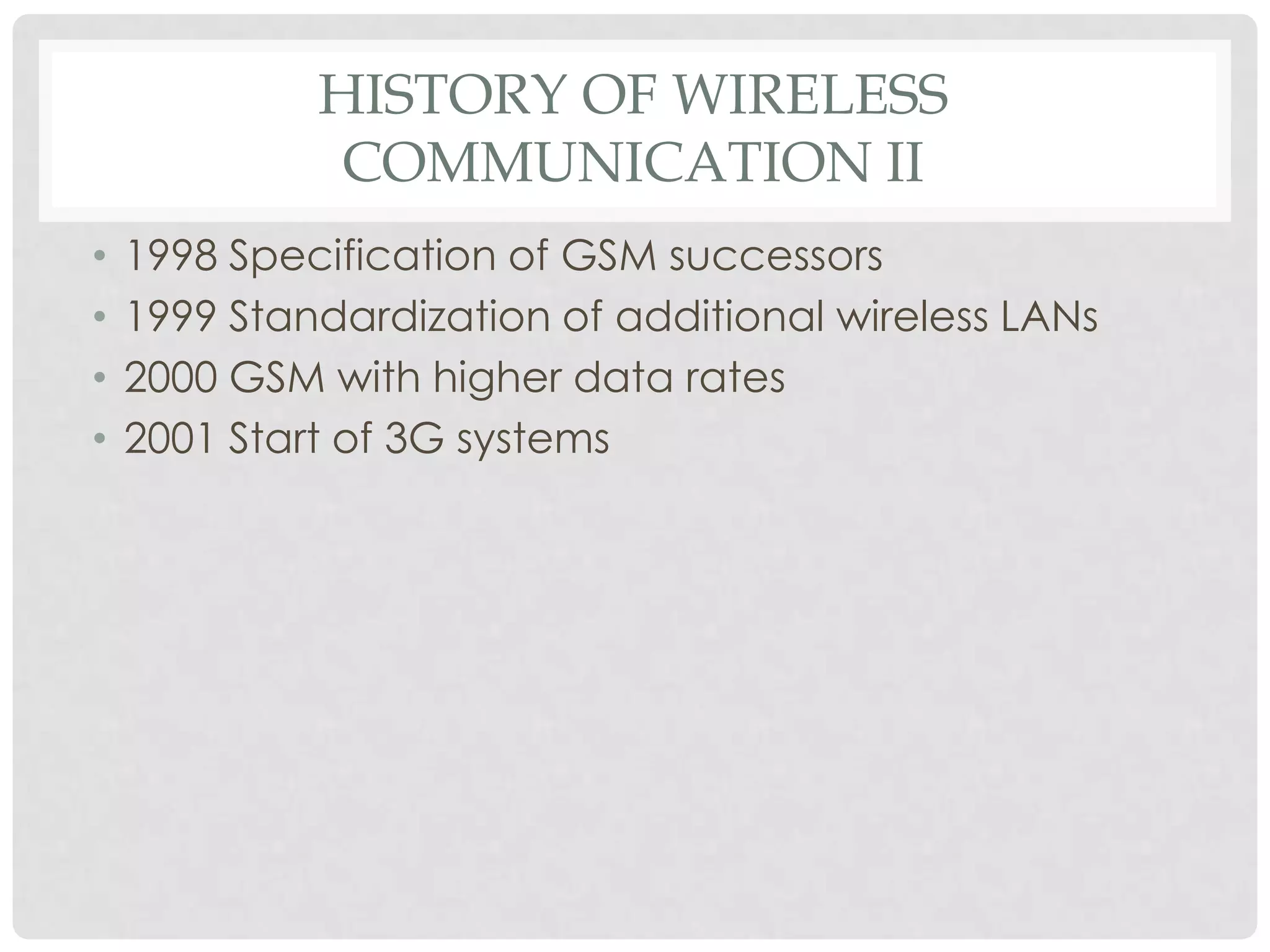
• 1998 Specification of GSM successors
• 1999 Standardization of additional wireless LANs
• 2000 GSM with higher data rates
• 2001 Start of 3G systems
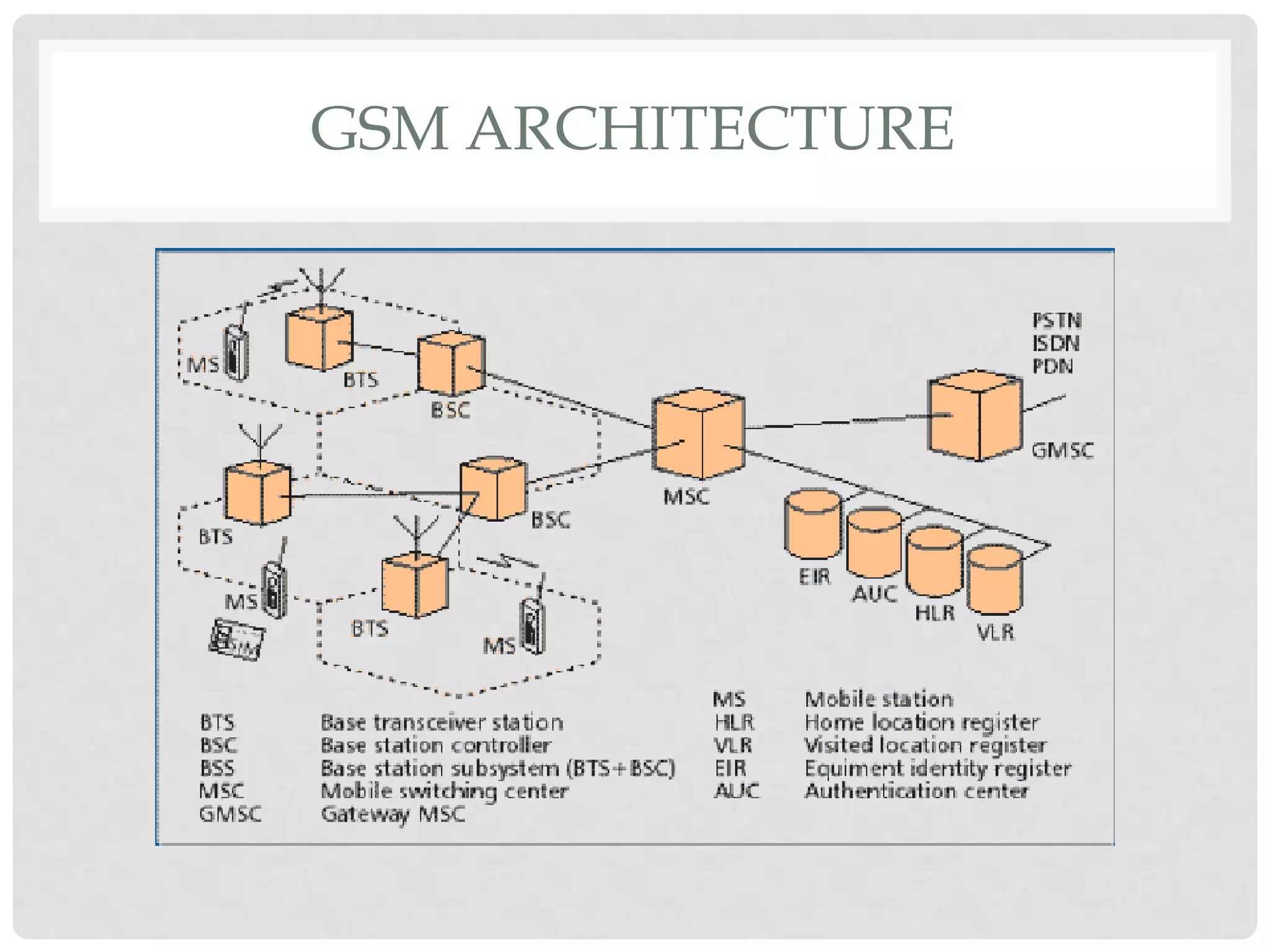
GSM ARCHITECTURE
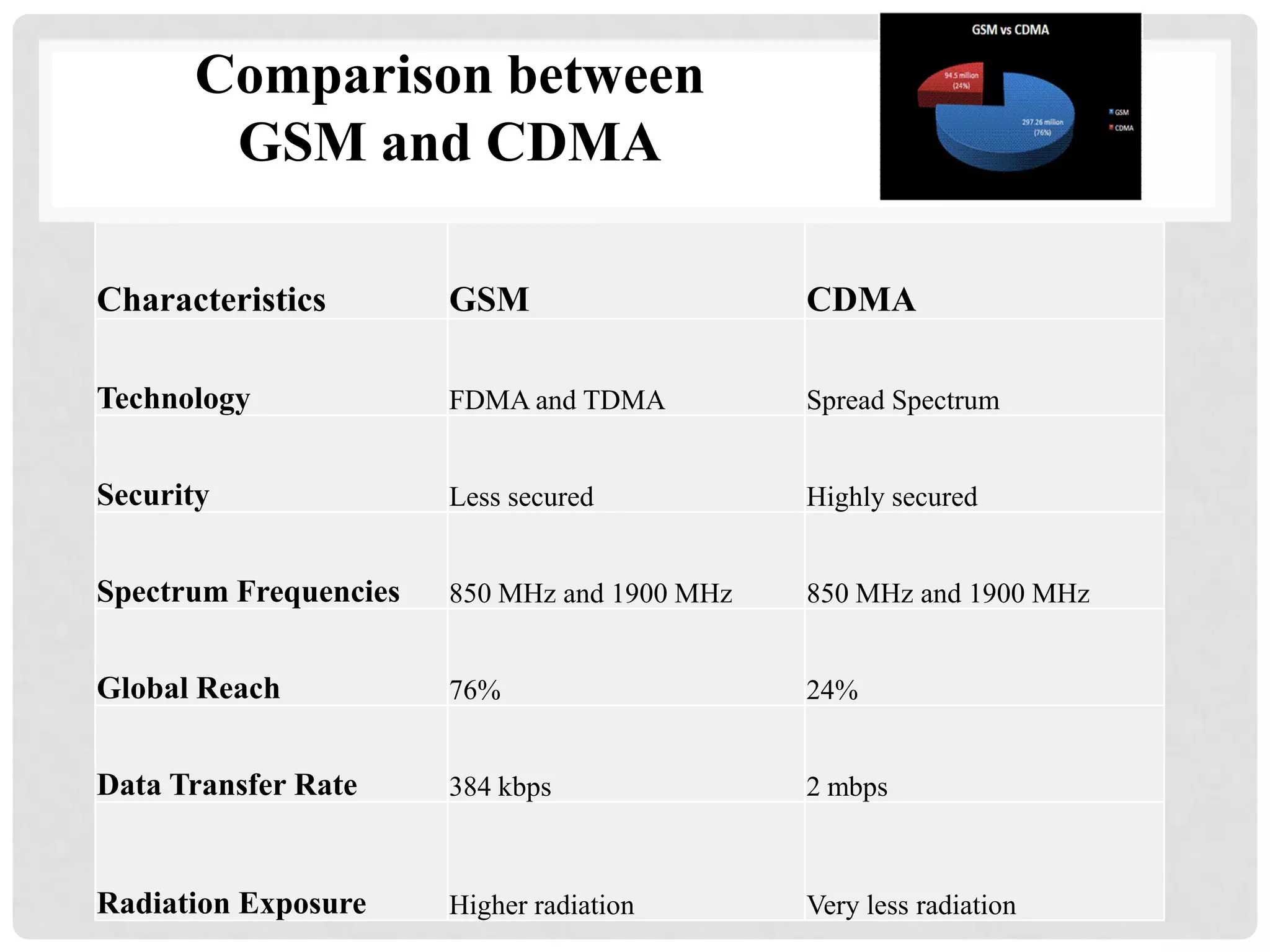
Characteristics GSM CDMA
Technology FDMA and TDMA Spread Spectrum
Security Less secured Highly secured
Spectrum Frequencies 850 MHz and 1900 MHz 850 MHz and 1900 MHz
Global Reach 76% 24%
Data Transfer Rate 384 kbps 2 mbps
Radiation Exposure Higher radiation Very less radiation
Comparison between
GSM and CDMA
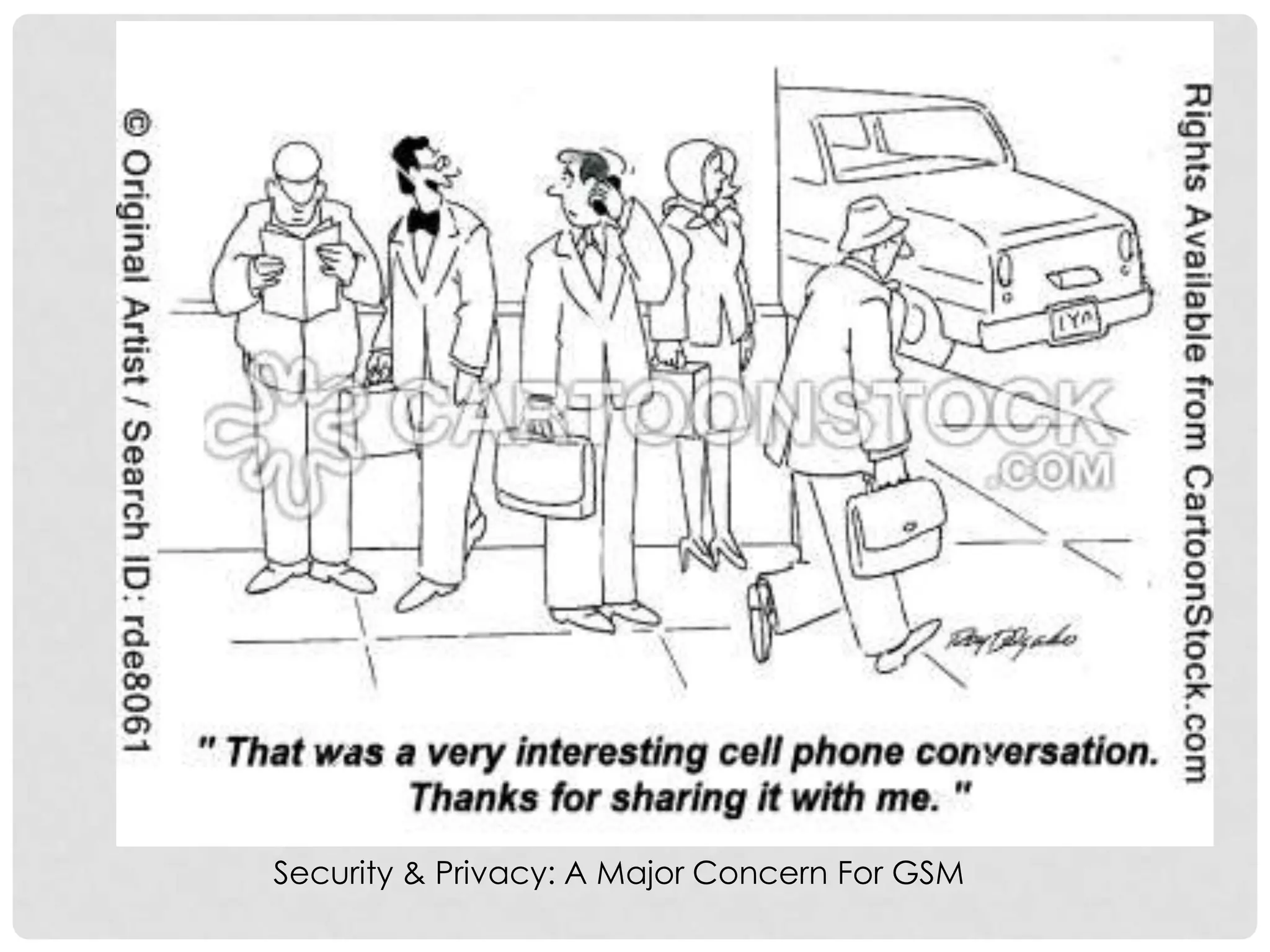
Security & Privacy: A Major Concern For GSM
CHANNELIZATION TECHNIQUES
• TDMA
• FDMA
• CDMA
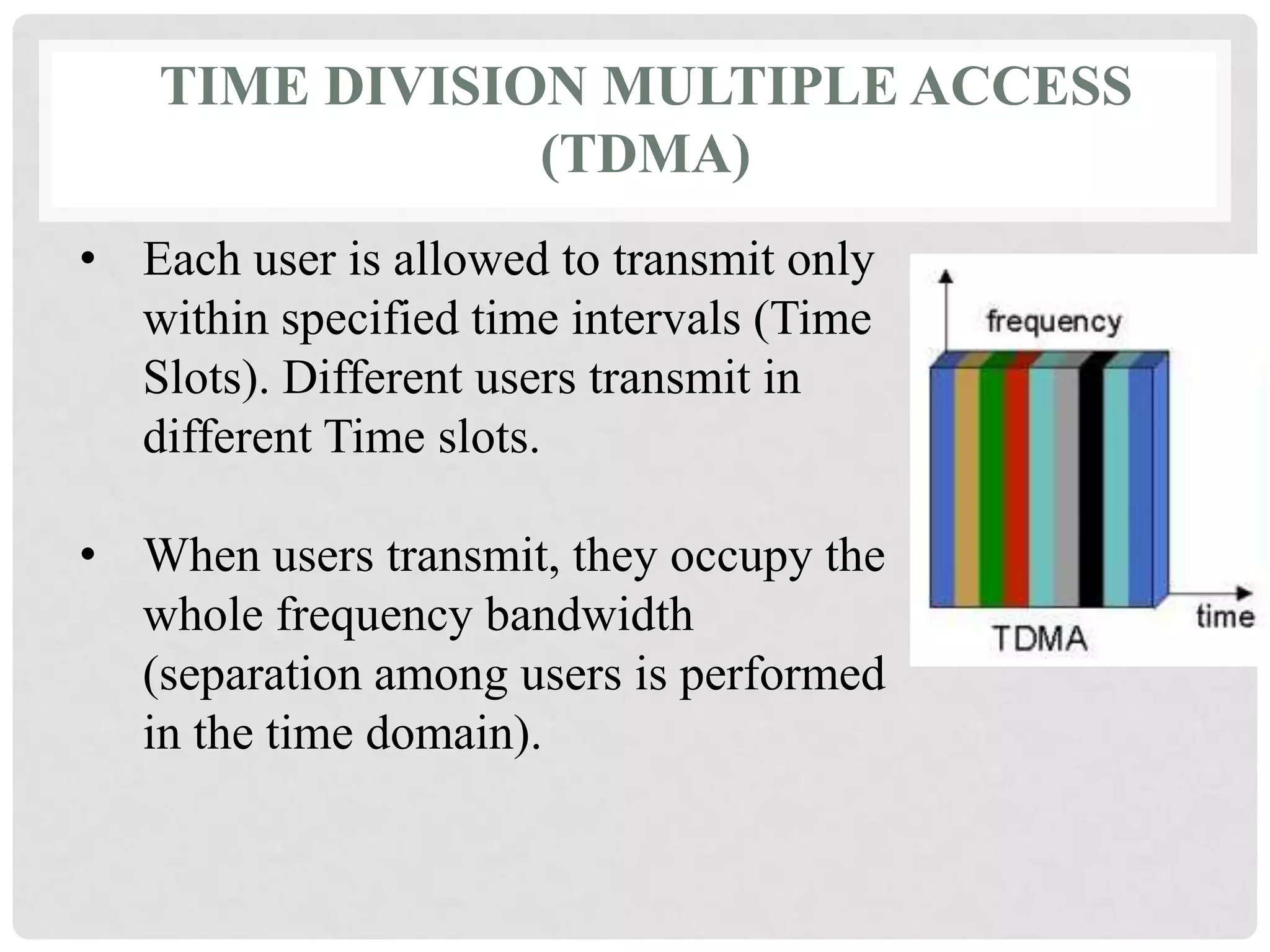
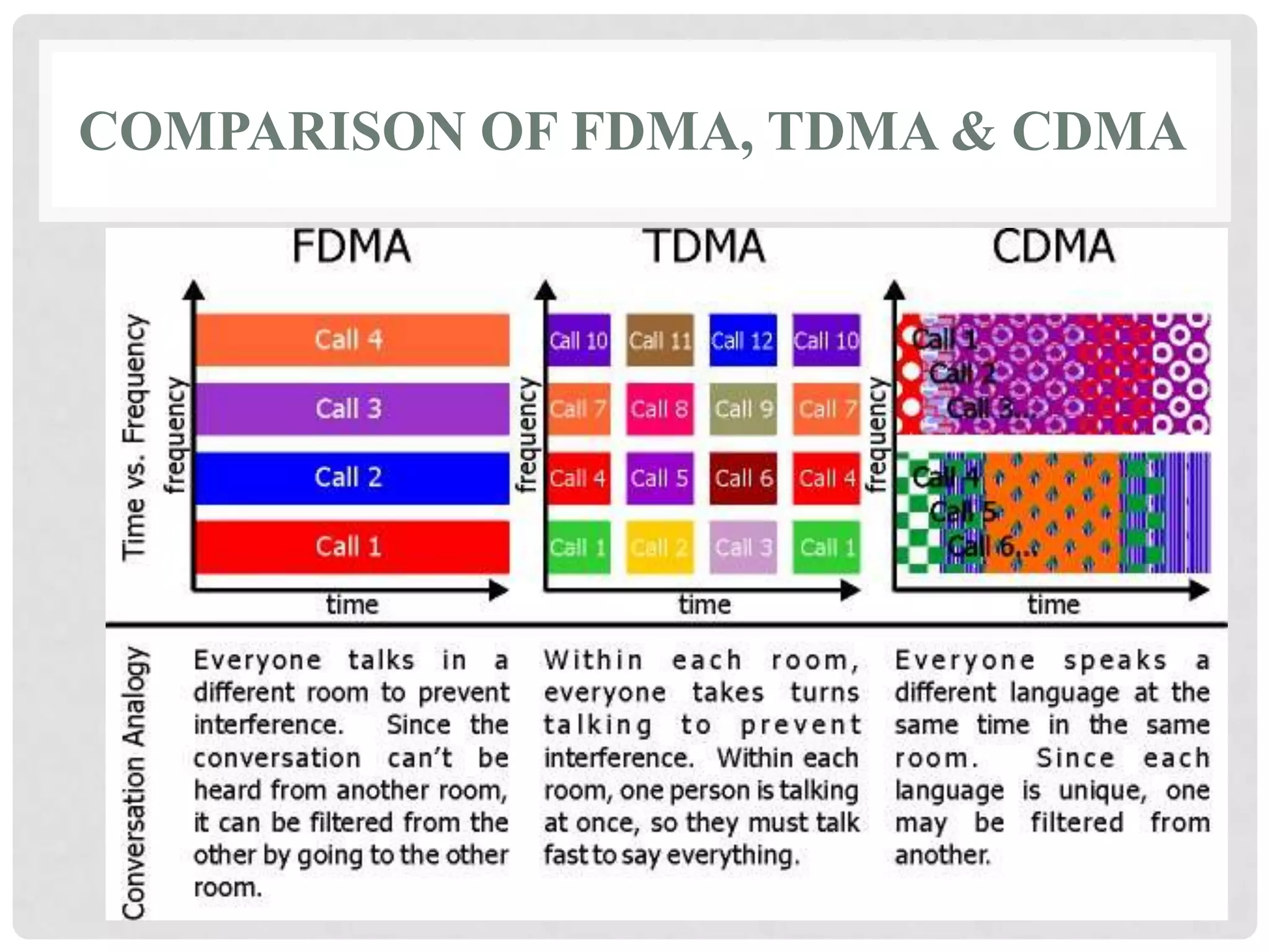
TIME DIVISION MULTIPLE ACCESS
(TDMA)
• Each user is allowed to transmit only
within specified time intervals (Time
Slots). Different users transmit in
different Time slots.
• When users transmit, they occupy the
whole frequency bandwidth
(separation among users is performed
in the time domain).
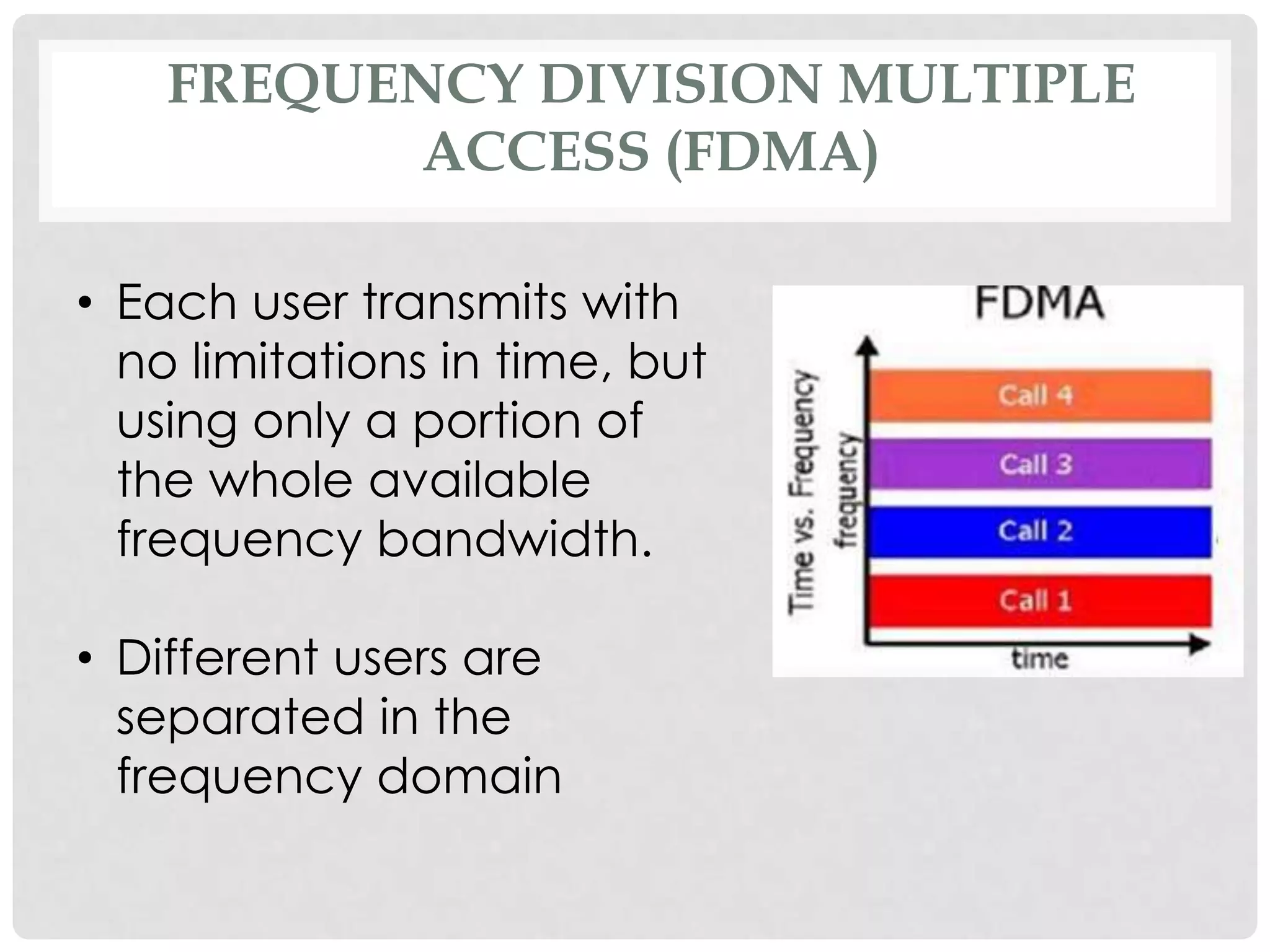
FREQUENCY DIVISION MULTIPLE
ACCESS (FDMA)
• Each user transmits with
no limitations in time, but
using only a portion of
the whole available
frequency bandwidth.
• Different users are
separated in the
frequency domain
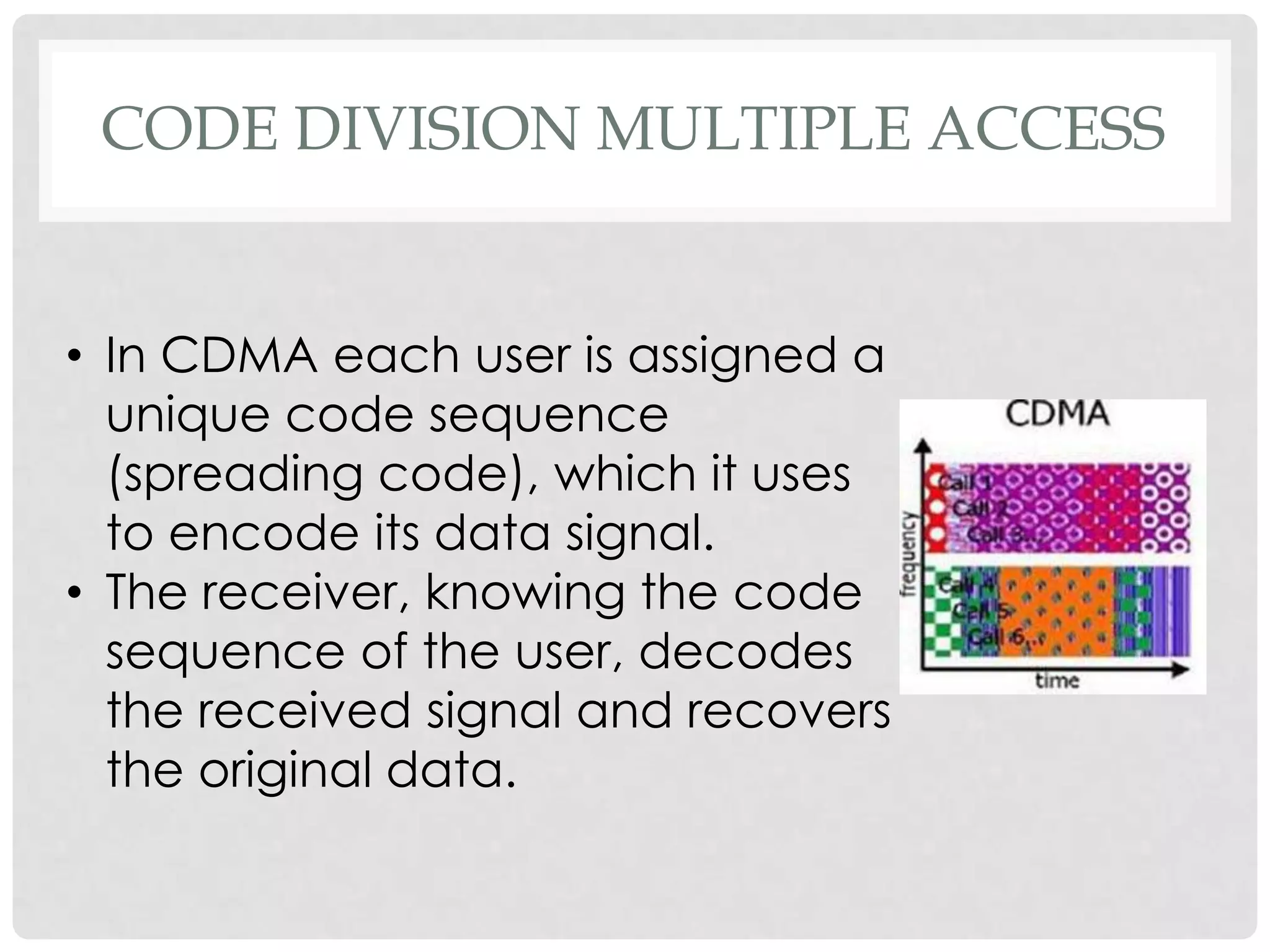
CODE DIVISION MULTIPLE ACCESS
• In CDMA each user is assigned a
unique code sequence
(spreading code), which it uses
to encode its data signal.
• The receiver, knowing the code
sequence of the user, decodes
the received signal and recovers
the original data.
COMPARISON OF FDMA, TDMA & CDMA
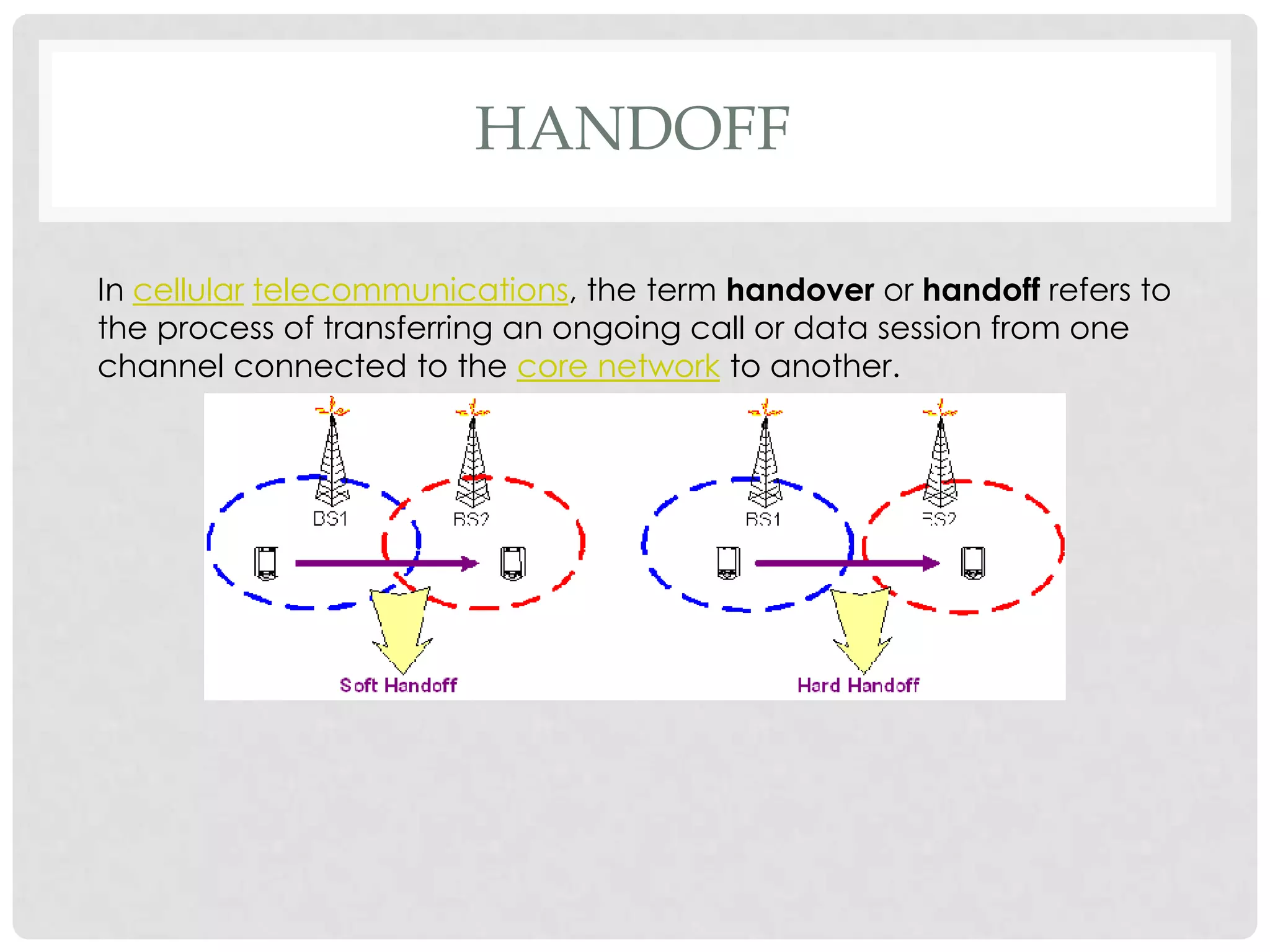
HANDOFF
In cellular telecommunications, the term handover or handoff refers to
the process of transferring an ongoing call or data session from one
channel connected to the core network to another.
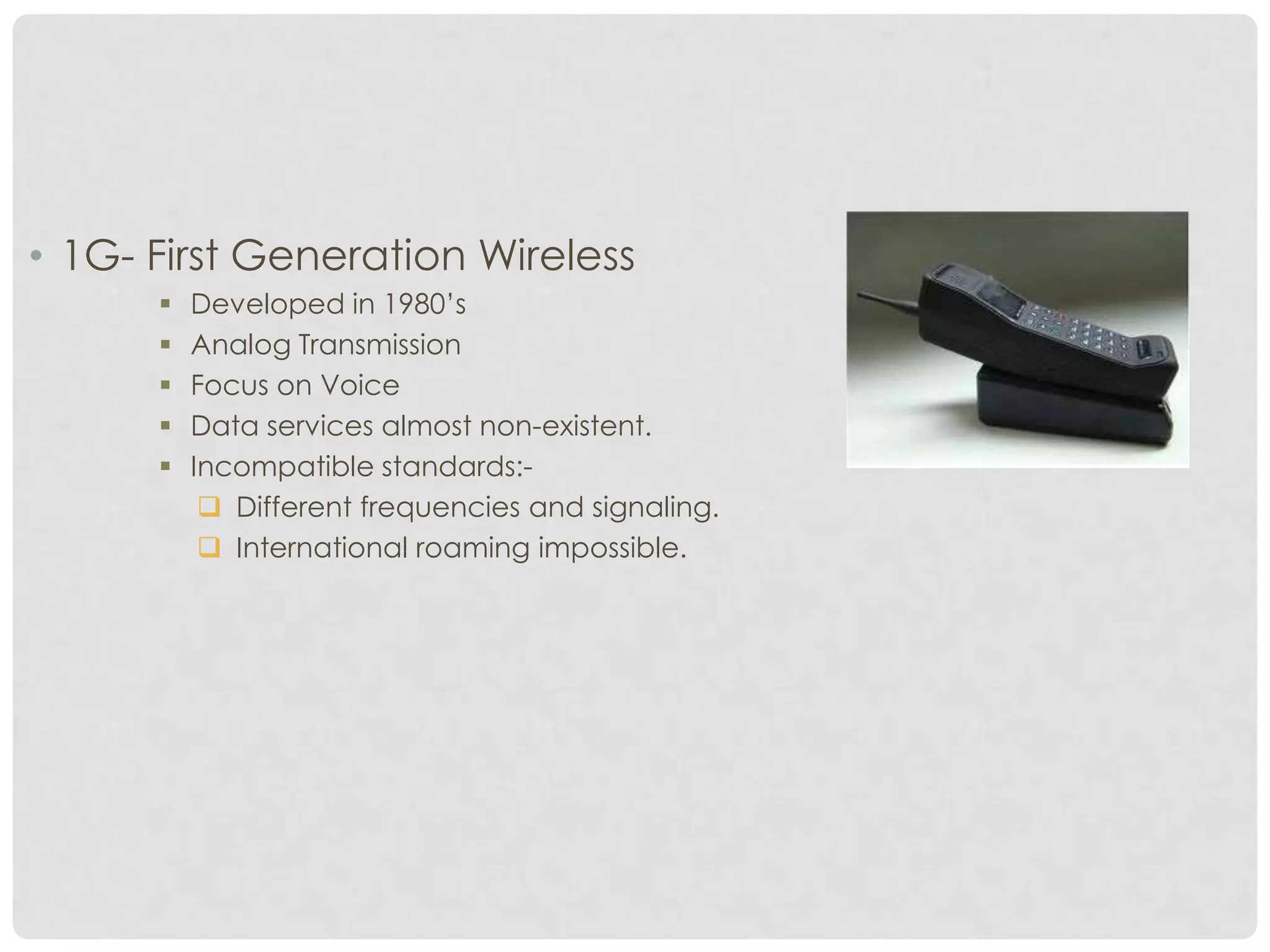
• 1G- First Generation Wireless
 Developed in 1980’s
 Analog Transmission
 Focus on Voice
 Data services almost non-existent.
 Incompatible standards:-
 Different frequencies and signaling.
 International roaming impossible.
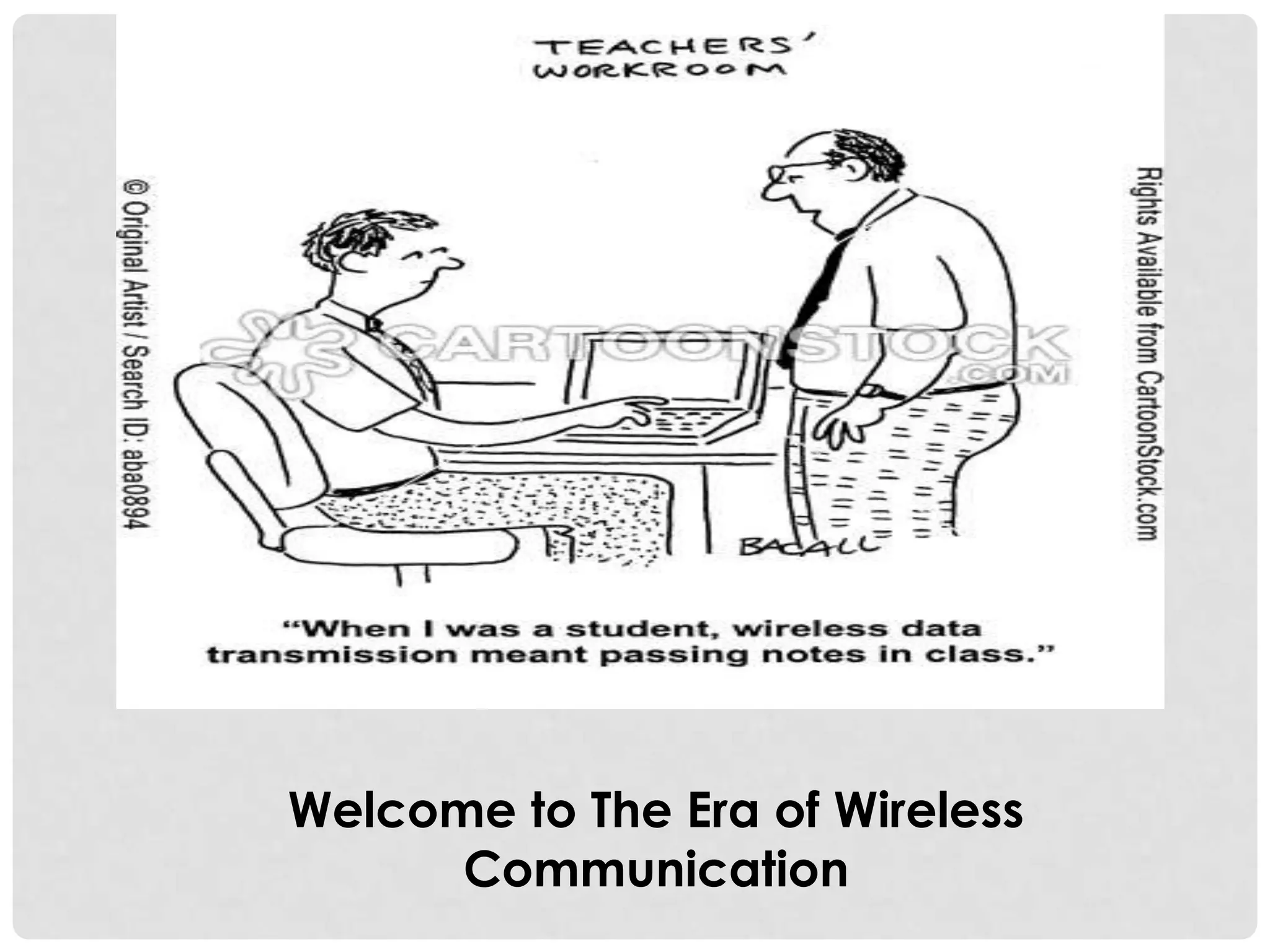
Welcome to The Era of Wireless
Communication
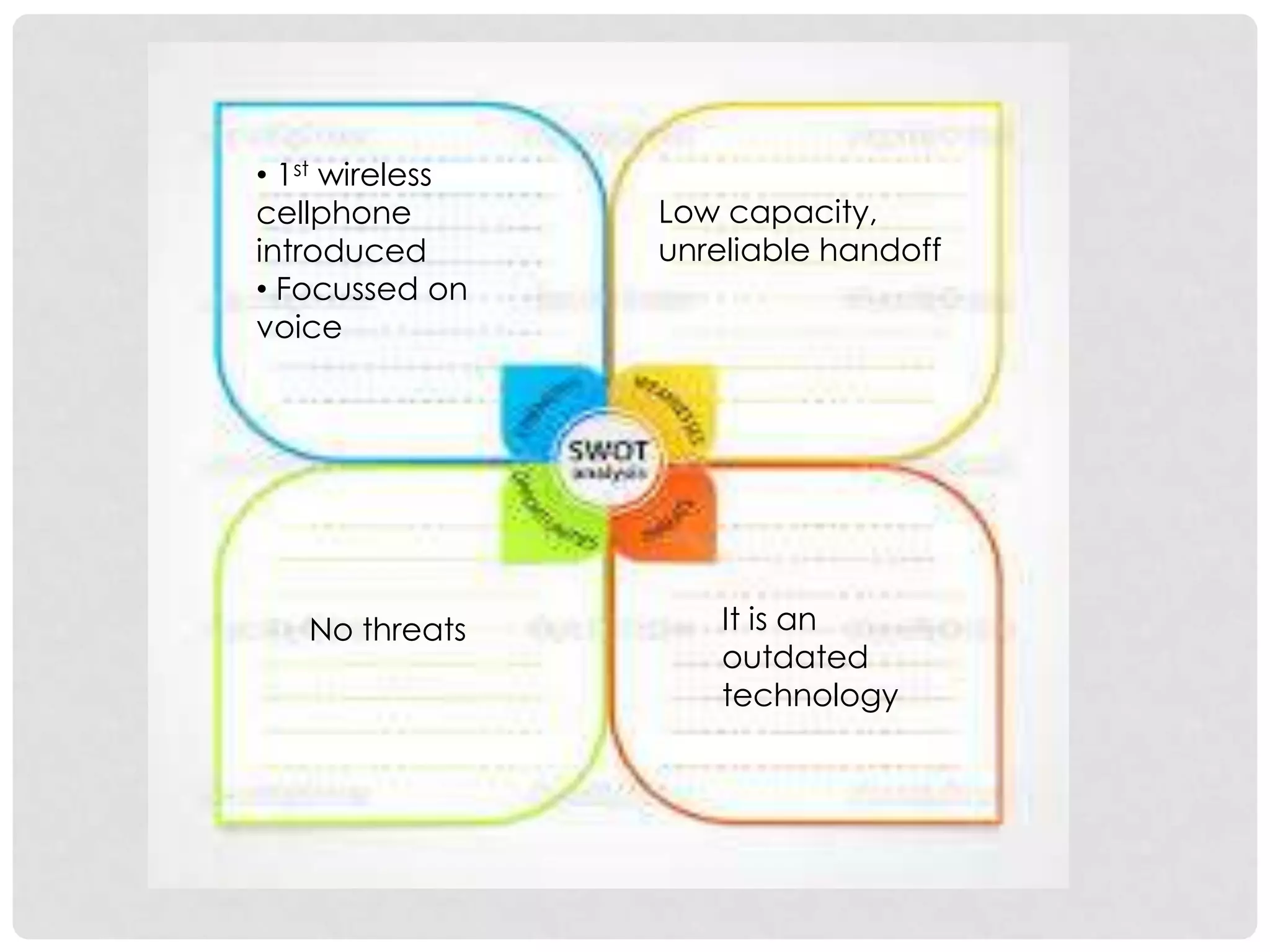
• 1st wireless
cellphone
introduced
• Focussed on
voice
Low capacity,
unreliable handoff
No threats It is an
outdated
technology
• 2G- SECOND GENERATION WIRELESS
 It was invented and developed in 1990-1991.
 Digital transmission technology.
 Increased QoS.
 Possibility of wireless data services.
 863 million users in 197 countries
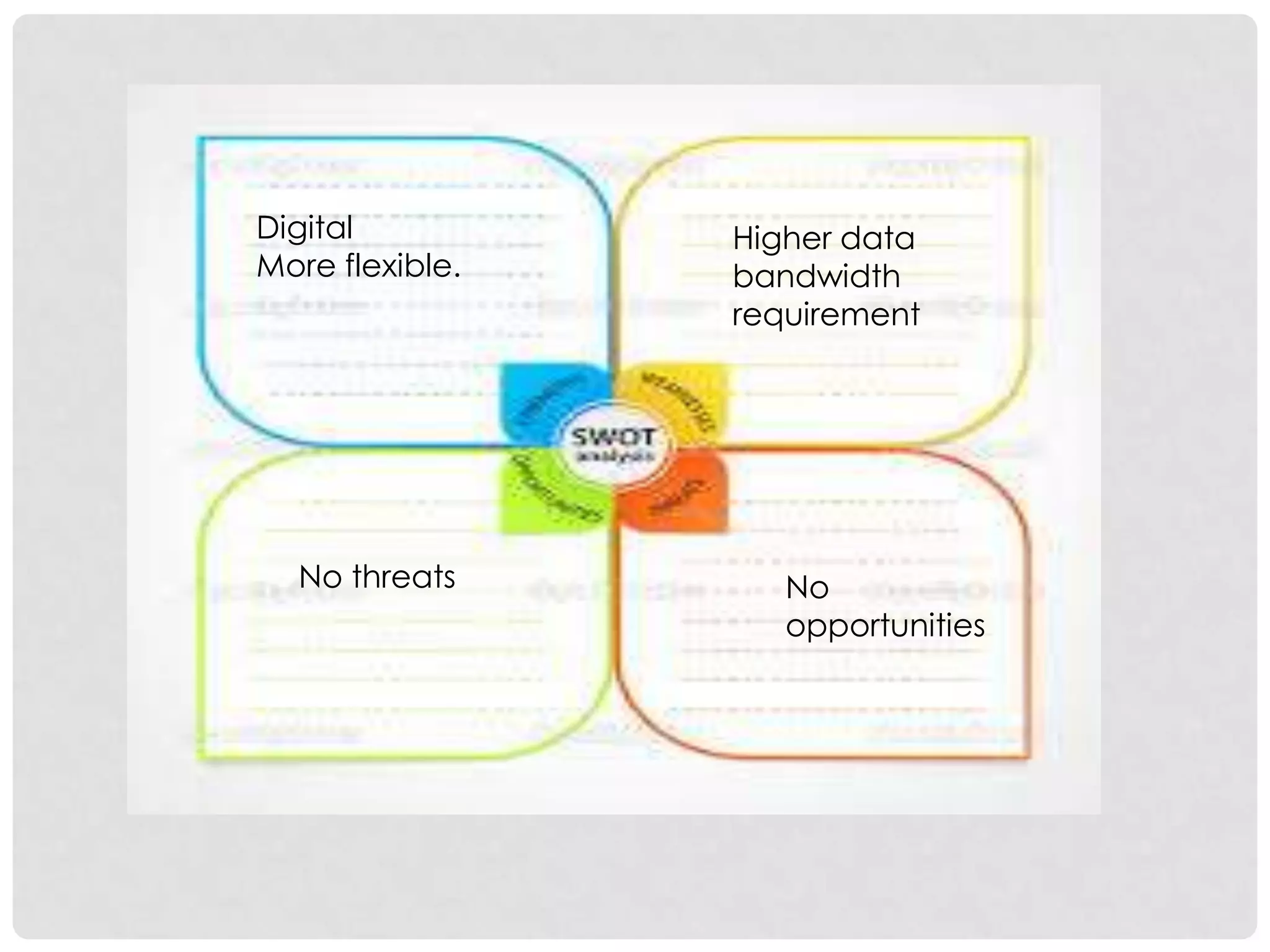
No threats No
opportunities
Digital
More flexible.
Higher data
bandwidth
requirement
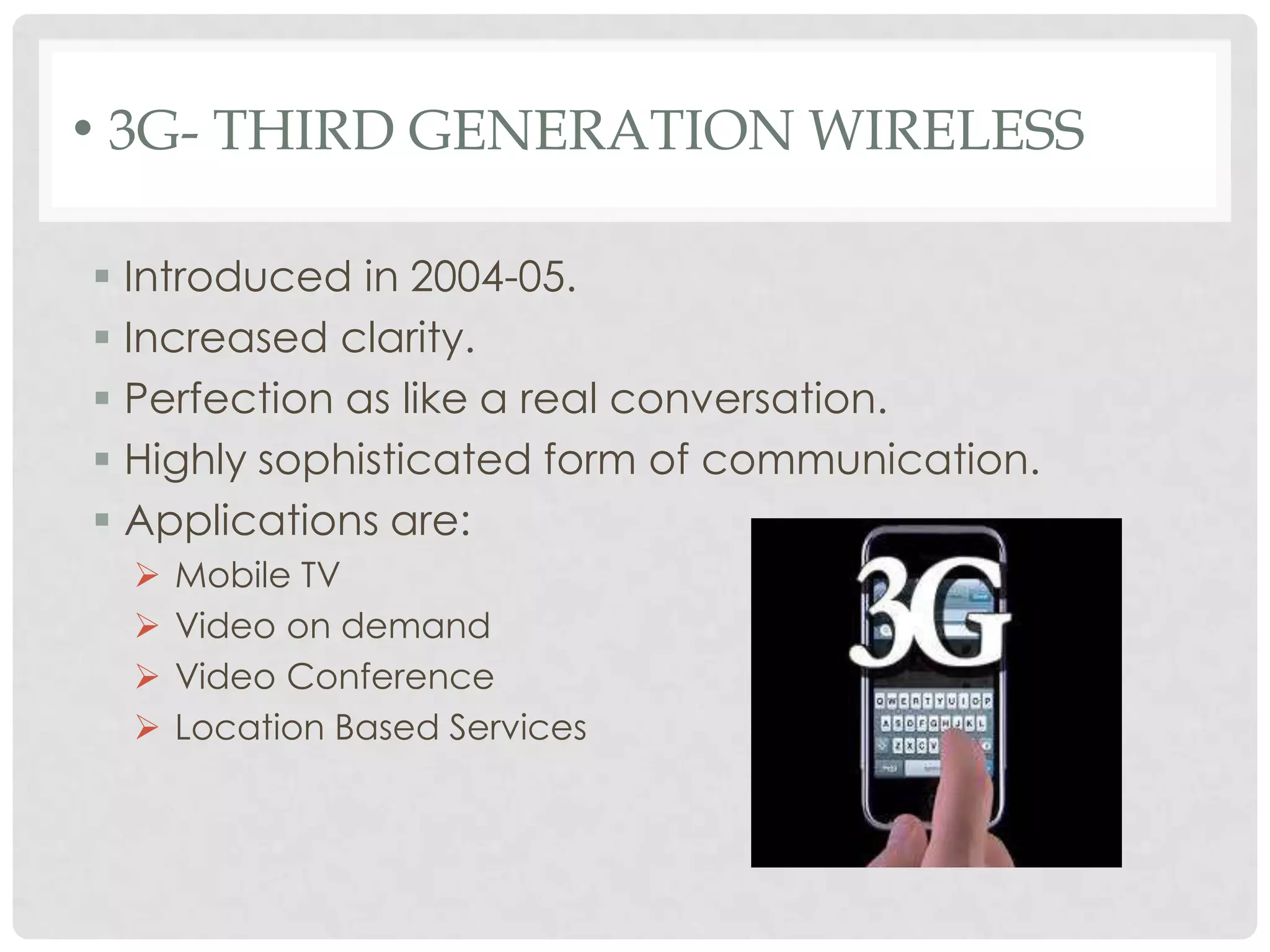
• 3G- THIRD GENERATION WIRELESS
 Introduced in 2004-05.
 Increased clarity.
 Perfection as like a real conversation.
 Highly sophisticated form of communication.
 Applications are:
 Mobile TV
 Video on demand
 Video Conference
 Location Based Services
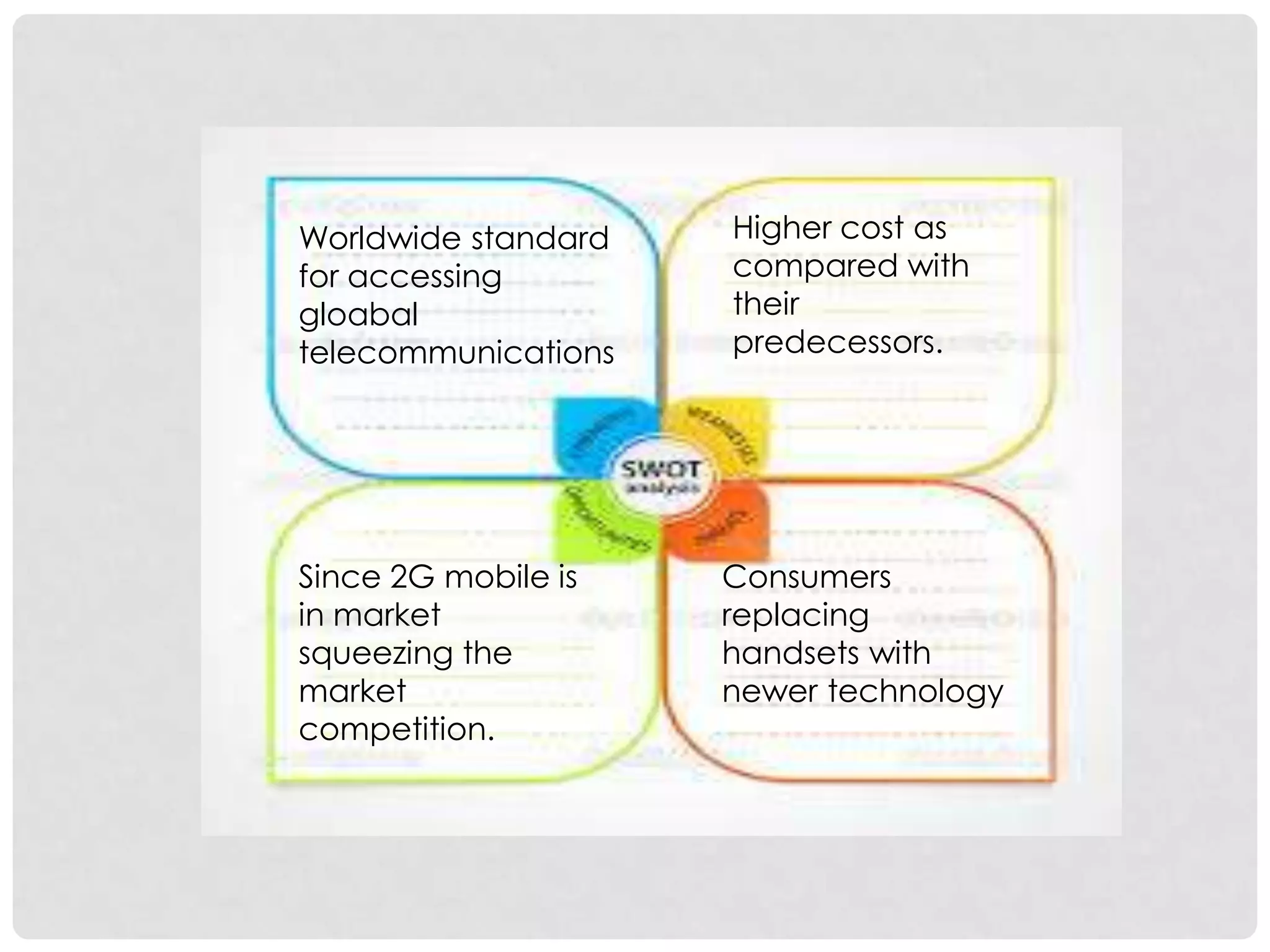
Worldwide standard
for accessing
gloabal
telecommunications
Higher cost as
compared with
their
predecessors.
Since 2G mobile is
in market
squeezing the
market
competition.
Consumers
replacing
handsets with
newer technology
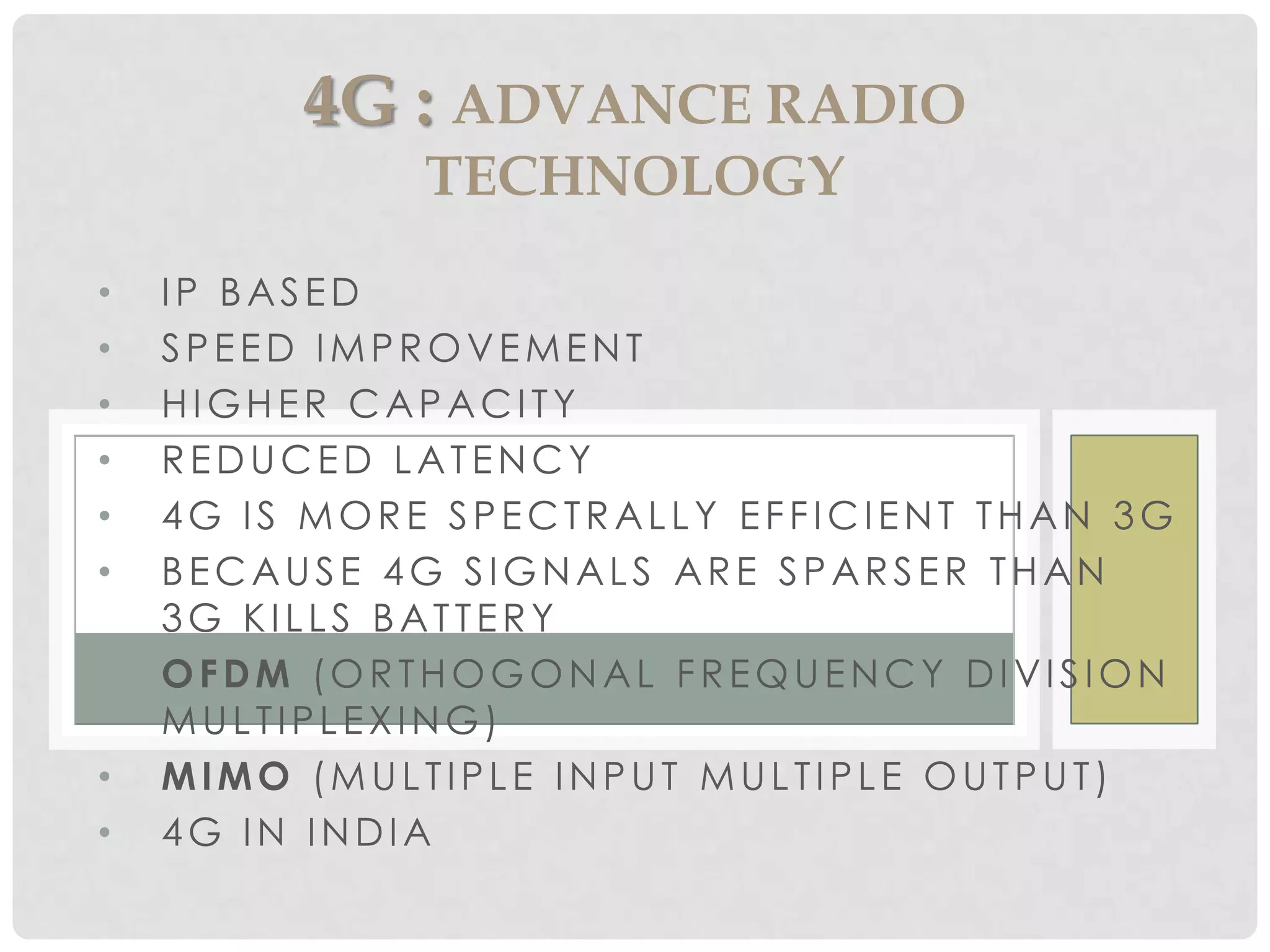
• IP BASED
• SPEED IMPROVEMENT
• HIGHER CAPACITY
• REDUCED LATENCY
• 4G IS MORE SPECTRALLY EFFICIENT THAN 3G
• BECAUSE 4G SIGNALS ARE SPARSER THAN
3G KILLS BATTERY
• OFDM (ORTHOGONAL FREQUENCY DIVISION
MULTIPLEXING)
• MIMO (MULTIPLE INPUT MULTIPLE OUTPUT)
• 4G IN INDIA
4G : ADVANCE RADIO
TECHNOLOGY
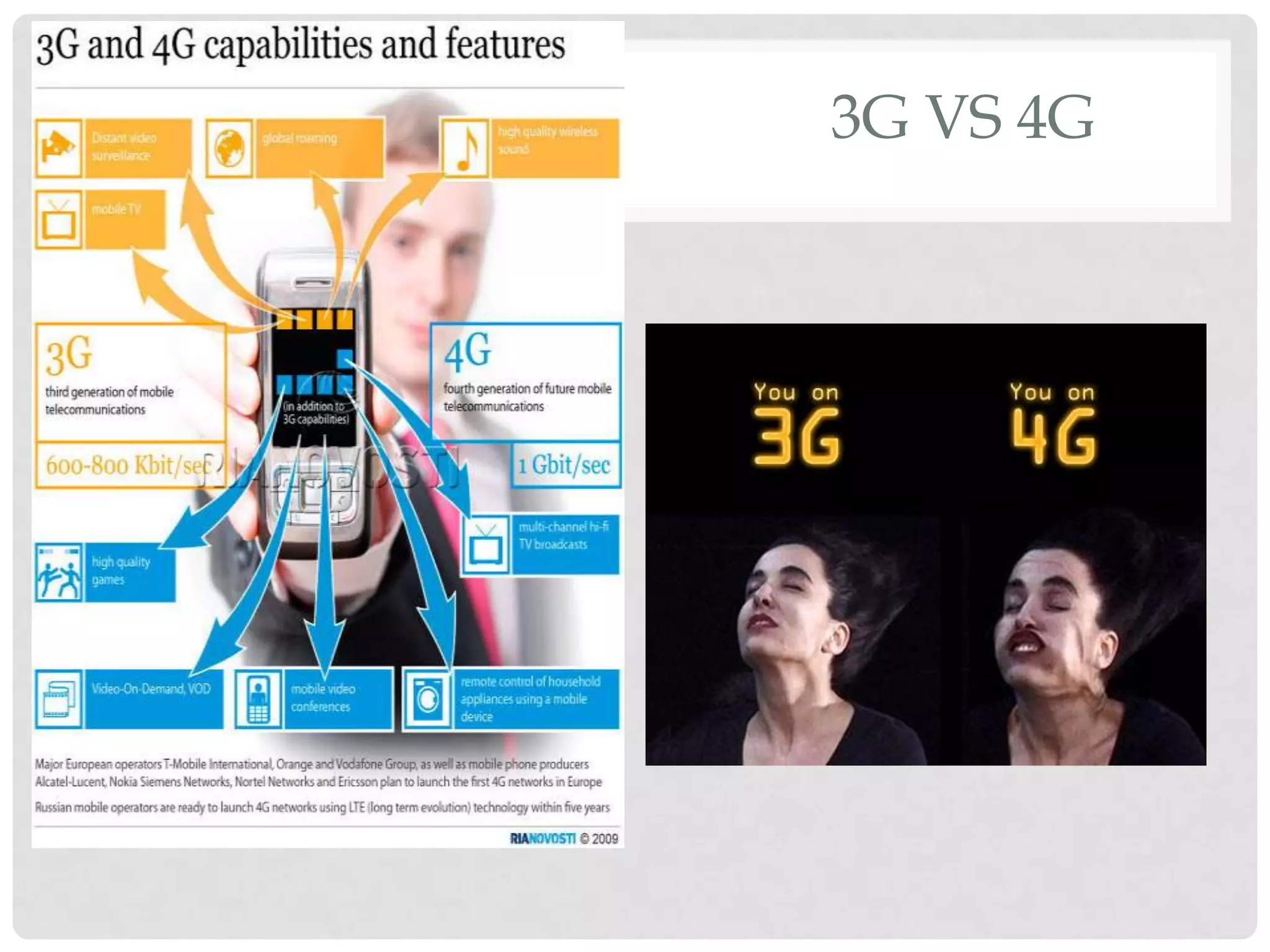
3G VS 4G
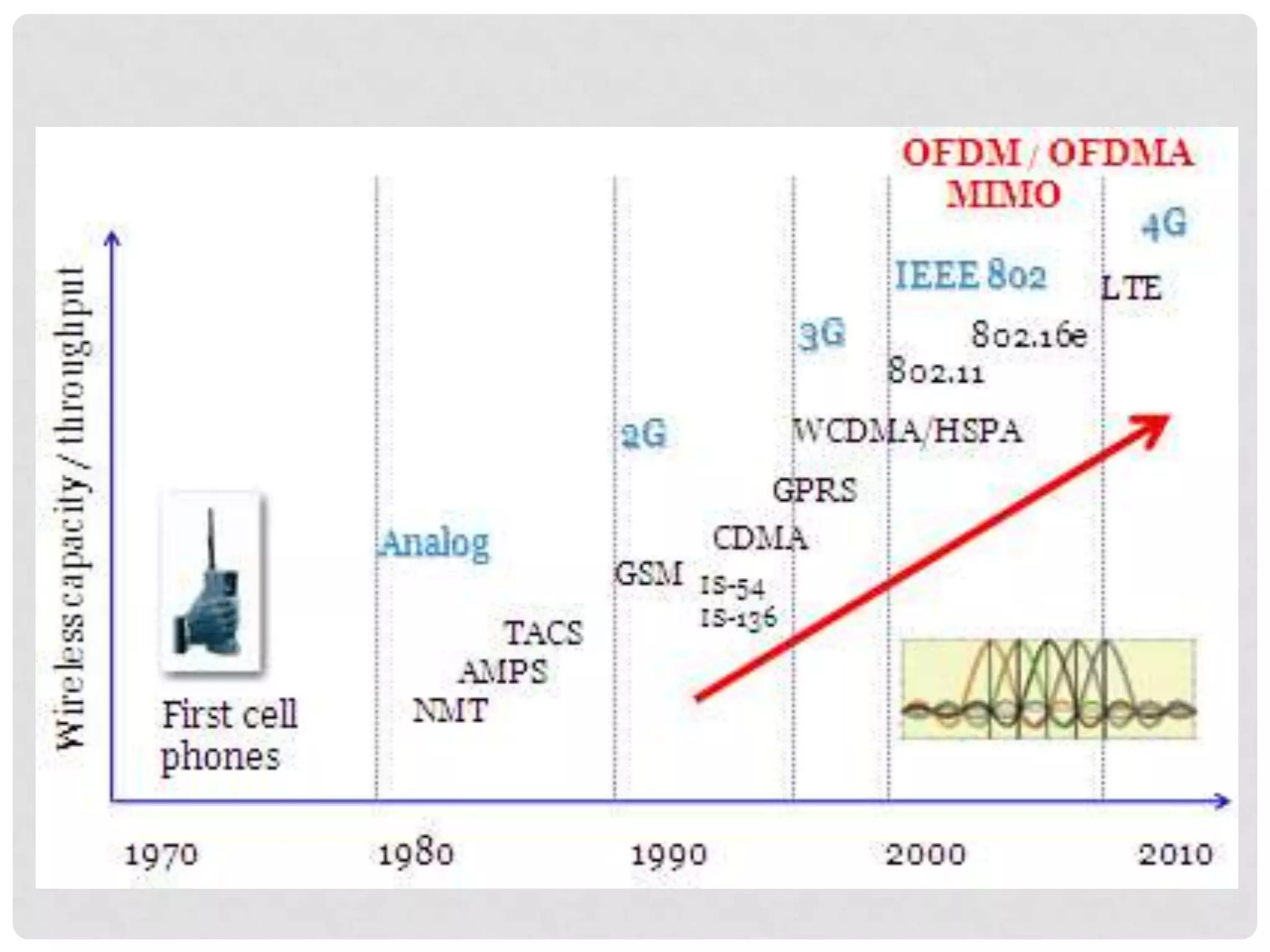
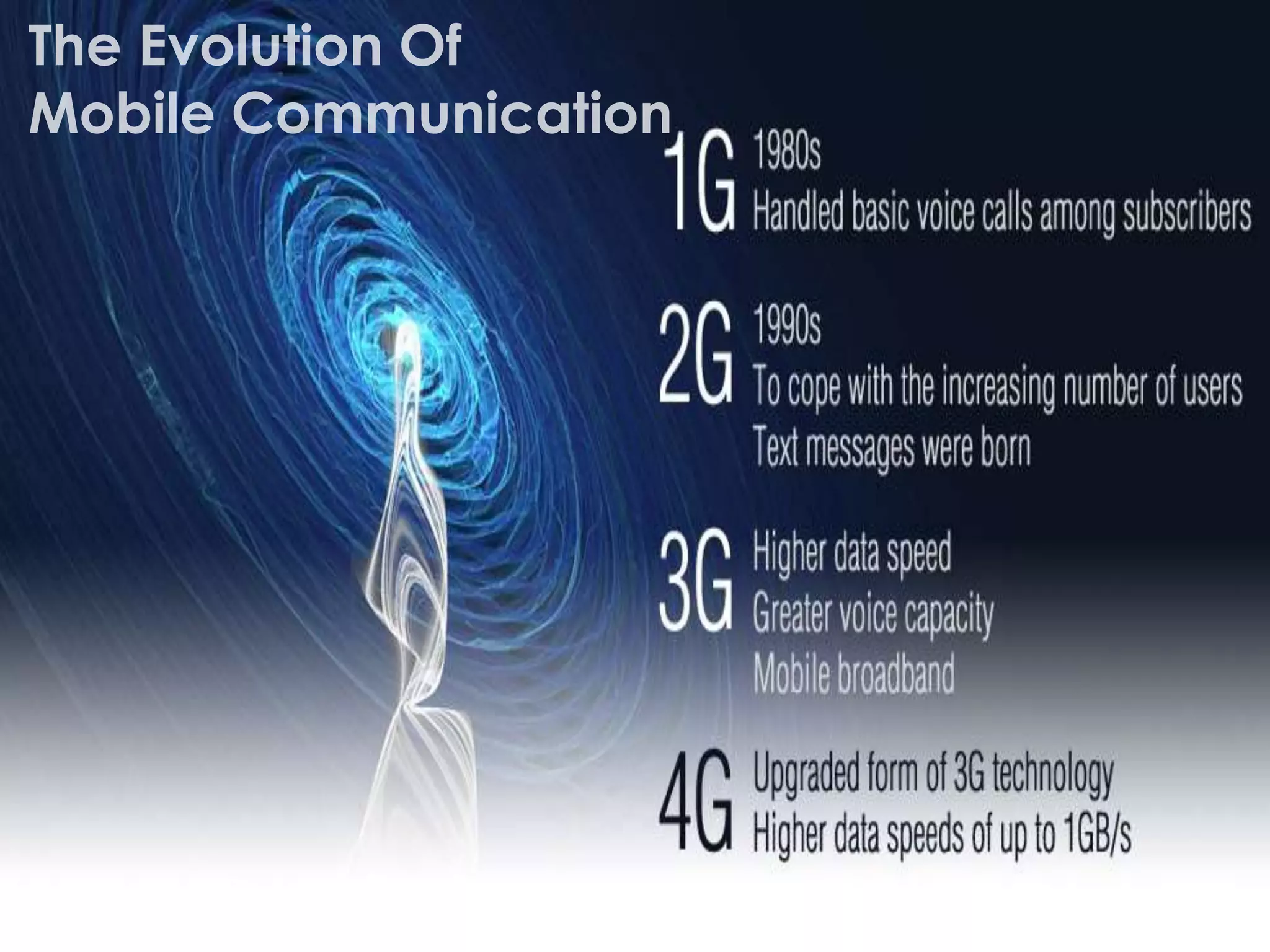
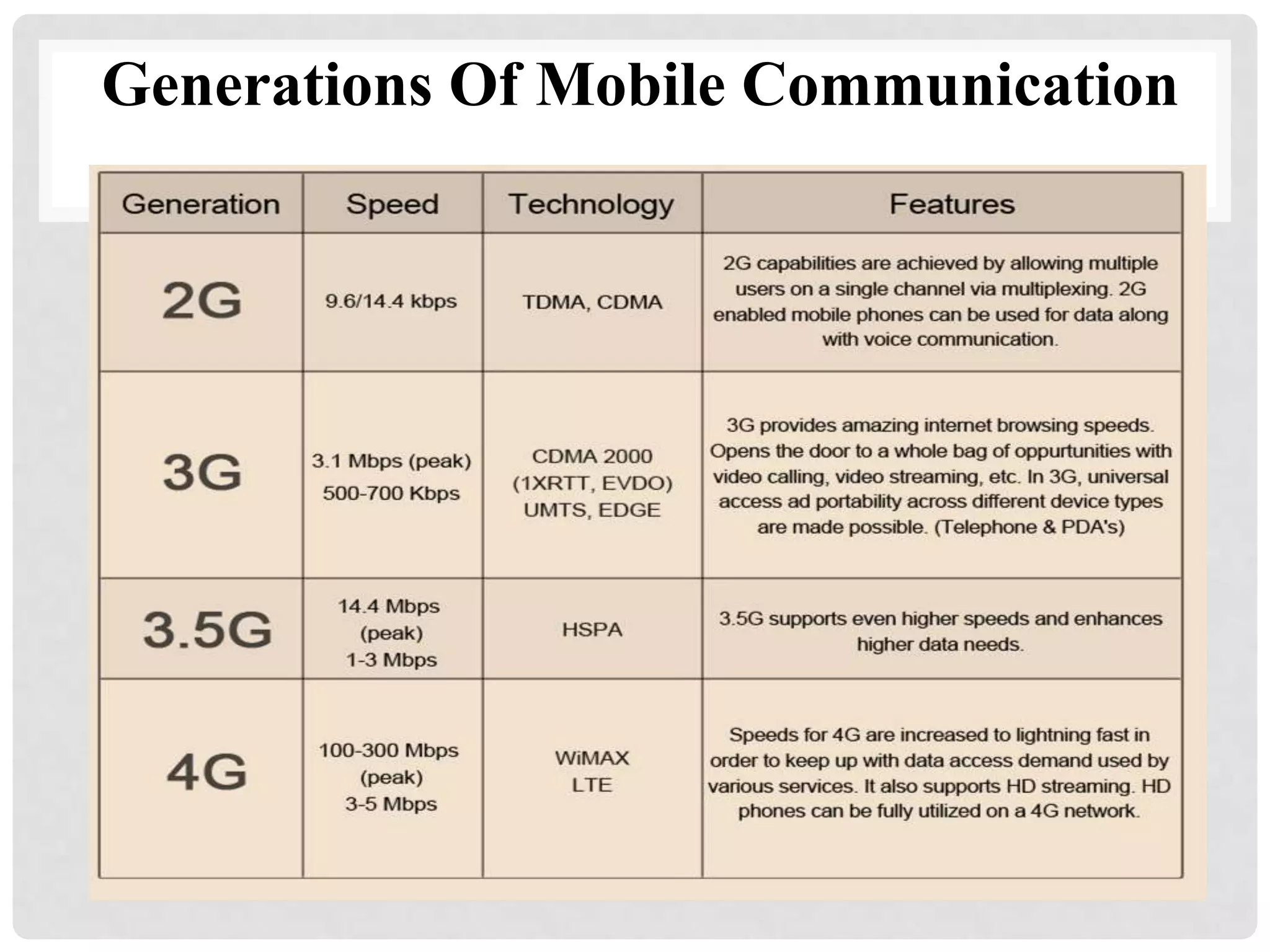
Generations Of Mobile Communication
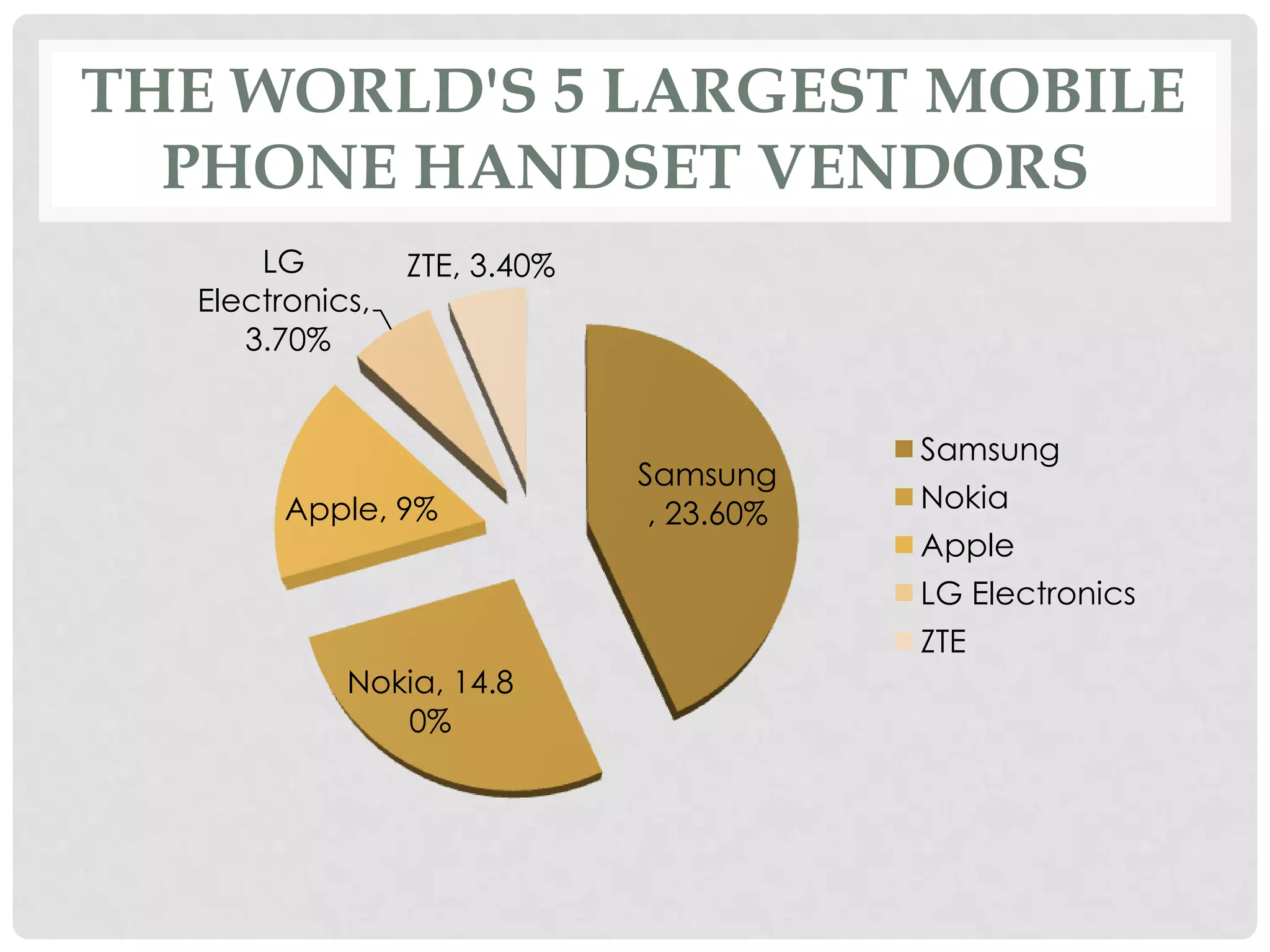
THE WORLD'S 5 LARGEST MOBILE
PHONE HANDSET VENDORS
Samsung
, 23.60%
Nokia, 14.8
0%
Apple, 9%
LG
Electronics,
3.70%
ZTE, 3.40%
Samsung
Nokia
Apple
LG Electronics
ZTE
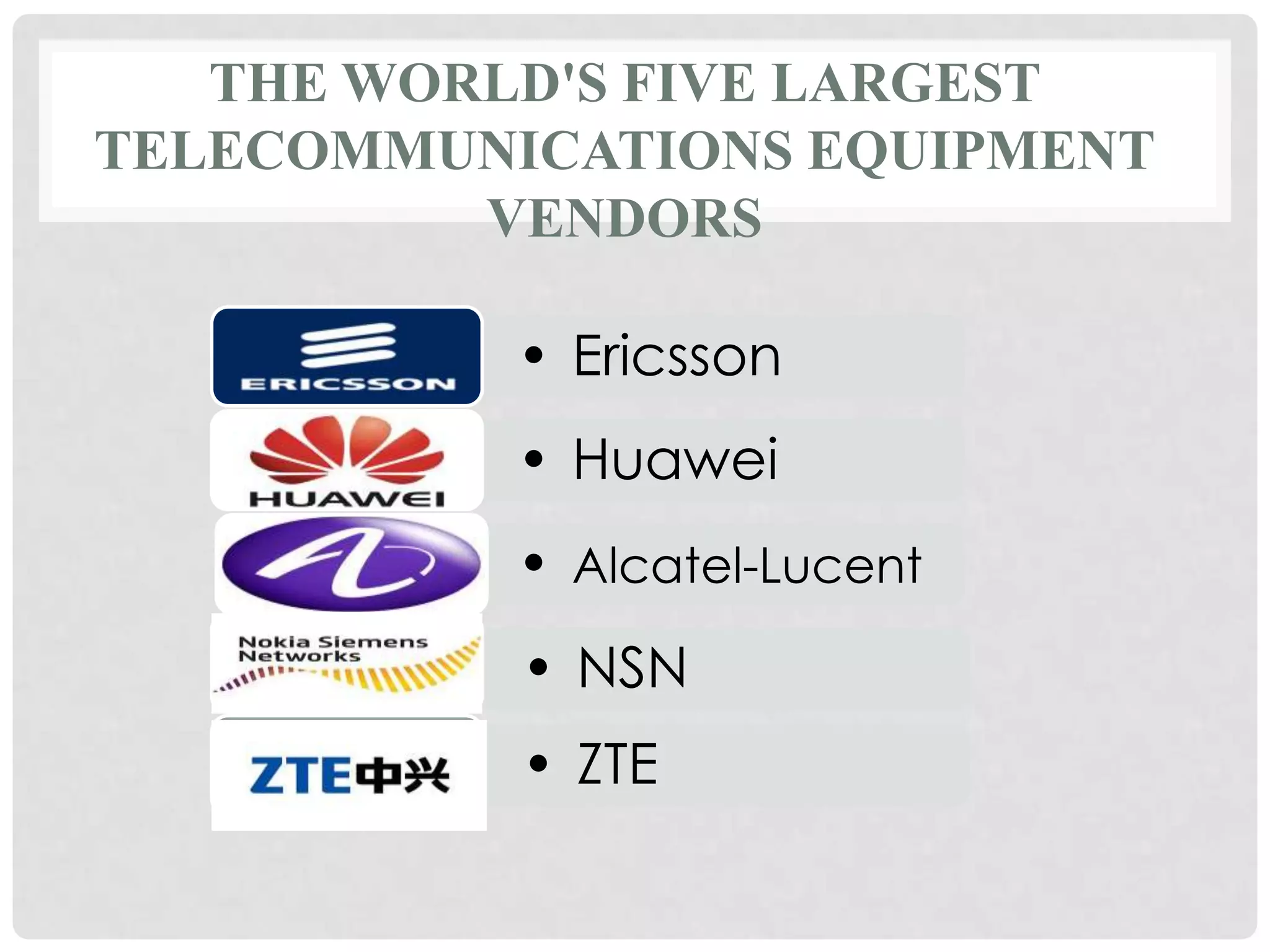
THE WORLD'S FIVE LARGEST
TELECOMMUNICATIONS EQUIPMENT
VENDORS
• Ericsson
• Huawei
• Alcatel-Lucent
• NSN
• ZTE

Mobile Communication for Information Technology Application & Management (ITAM)

  • 1.
    MOBILE COMMUNICATION SUBMITTED BY: NiteshSingh Patel (2013178) Pareena Neema (2013191) Parita Mandhana (2013192) Parth Mehta (2013193)
  • 2.
    WHAT IS MOBILECOMMUNICATION? • Mobile communications refers to a form of communications which does not depend on a physical connection between the sender and receiver and who may move from one physical location to another during communication.
  • 3.
    THE IMPACT OFMOBILE COMMUNICATION
  • 5.
    HISTORY OF WIRELESS COMMUNICATIONI • 1896 Guglielmo Marconi • 1915 Wireless voice transmission New York - San Francisco • 1928 Many TV broadcast trials (across Atlantic, color TV, TV news) • 1982 Start of GSM-specification • 1983 Start of the American AMPS (Advanced Mobile Phone System, analog) • 1992 Start of GSM
  • 6.
    HISTORY OF WIRELESS COMMUNICATIONII • 1998 Specification of GSM successors • 1999 Standardization of additional wireless LANs • 2000 GSM with higher data rates • 2001 Start of 3G systems
  • 8.
  • 9.
    Characteristics GSM CDMA TechnologyFDMA and TDMA Spread Spectrum Security Less secured Highly secured Spectrum Frequencies 850 MHz and 1900 MHz 850 MHz and 1900 MHz Global Reach 76% 24% Data Transfer Rate 384 kbps 2 mbps Radiation Exposure Higher radiation Very less radiation Comparison between GSM and CDMA
  • 10.
    Security & Privacy:A Major Concern For GSM
  • 11.
  • 12.
    TIME DIVISION MULTIPLEACCESS (TDMA) • Each user is allowed to transmit only within specified time intervals (Time Slots). Different users transmit in different Time slots. • When users transmit, they occupy the whole frequency bandwidth (separation among users is performed in the time domain).
  • 13.
    FREQUENCY DIVISION MULTIPLE ACCESS(FDMA) • Each user transmits with no limitations in time, but using only a portion of the whole available frequency bandwidth. • Different users are separated in the frequency domain
  • 14.
    CODE DIVISION MULTIPLEACCESS • In CDMA each user is assigned a unique code sequence (spreading code), which it uses to encode its data signal. • The receiver, knowing the code sequence of the user, decodes the received signal and recovers the original data.
  • 15.
  • 16.
    HANDOFF In cellular telecommunications,the term handover or handoff refers to the process of transferring an ongoing call or data session from one channel connected to the core network to another.
  • 18.
    • 1G- FirstGeneration Wireless  Developed in 1980’s  Analog Transmission  Focus on Voice  Data services almost non-existent.  Incompatible standards:-  Different frequencies and signaling.  International roaming impossible.
  • 19.
    Welcome to TheEra of Wireless Communication
  • 20.
    • 1st wireless cellphone introduced •Focussed on voice Low capacity, unreliable handoff No threats It is an outdated technology
  • 21.
    • 2G- SECONDGENERATION WIRELESS  It was invented and developed in 1990-1991.  Digital transmission technology.  Increased QoS.  Possibility of wireless data services.  863 million users in 197 countries
  • 22.
    No threats No opportunities Digital Moreflexible. Higher data bandwidth requirement
  • 23.
    • 3G- THIRDGENERATION WIRELESS  Introduced in 2004-05.  Increased clarity.  Perfection as like a real conversation.  Highly sophisticated form of communication.  Applications are:  Mobile TV  Video on demand  Video Conference  Location Based Services
  • 24.
    Worldwide standard for accessing gloabal telecommunications Highercost as compared with their predecessors. Since 2G mobile is in market squeezing the market competition. Consumers replacing handsets with newer technology
  • 25.
    • IP BASED •SPEED IMPROVEMENT • HIGHER CAPACITY • REDUCED LATENCY • 4G IS MORE SPECTRALLY EFFICIENT THAN 3G • BECAUSE 4G SIGNALS ARE SPARSER THAN 3G KILLS BATTERY • OFDM (ORTHOGONAL FREQUENCY DIVISION MULTIPLEXING) • MIMO (MULTIPLE INPUT MULTIPLE OUTPUT) • 4G IN INDIA 4G : ADVANCE RADIO TECHNOLOGY
  • 26.
  • 27.
    Generations Of MobileCommunication
  • 29.
    THE WORLD'S 5LARGEST MOBILE PHONE HANDSET VENDORS Samsung , 23.60% Nokia, 14.8 0% Apple, 9% LG Electronics, 3.70% ZTE, 3.40% Samsung Nokia Apple LG Electronics ZTE
  • 30.
    THE WORLD'S FIVELARGEST TELECOMMUNICATIONS EQUIPMENT VENDORS • Ericsson • Huawei • Alcatel-Lucent • NSN • ZTE