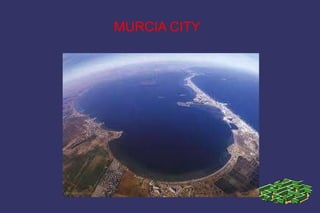
Murcia City The Region of Murcia is an autonomous province in Spanish, located in the southeast of the Iberian Peninsula. In the Region of Murcia is the largest natural lake in Spain, the lagoon of Mar Menor. It is a saltwater lagoon next to the Mediterranean Sea, constituting the largest salt lake in Europe. Their special ecological and natural characteristics of the Mar Menor make a unique natural.
MURCIA CITY
Murcian gastronomy The Murcian cuisine has influences from the neighboring kitchen of La Mancha, Valencia and Granada. Notwithstanding the Murcia region belongs to the Spanish East and that is seen in the marine character of some dishes, and its characteristic ingredient rice and some salted fish preparations: mojamas. One of the Murcian desserts are known in the province paparajotes, made with lemon leaves a fritter in which a mass produced coated with flour and egg and fried and sprinkled with sugar and cinnamon. Are known in the Lorca area Cieza and hazelnut mischief. The syrup also are traditional (sweet made with dried figs), bacon from heaven, the crullers and the bread called Calatrava. In the municipality of Totana garabazo is common, a cute for St. Mark's Day (celebrated on April 25) consisting of an Easter cake or orange with a boiled egg in the center.
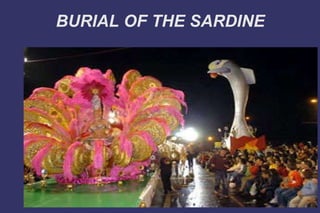
Traditional Festivals in Murcia Burial of the Sardine : The Burial of the Sardine is a holiday that is celebrated in Murcia (Spain) during the Spring Festival, whose main event is a parade of floats which culminates with the burning of the sardine on the Saturday after Easter. It has been declared International Tourist Interest.
BURIAL OF THE SARDINE
TRADITIONAL FESTIVALS IN MURCIA Easter Week:  Murcia Easter is a religious festival declared of International Tourist Interest held every year from Good Friday and Easter Sunday in the city of Murcia (Spain).
EASTER WEEK
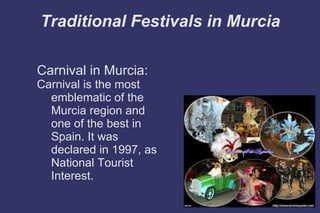
Traditional Festivals in Murcia Carnival in Murcia:
Carnival is the most emblematic of the Murcia region and one of the best in Spain. It was declared in 1997, as National Tourist Interest.
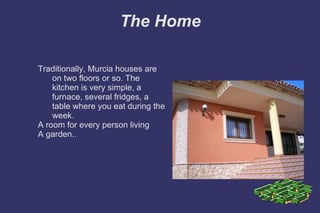
The Home Traditionally, Murcia houses are on two floors or so. The kitchen is very simple, a furnace, several fridges, a table where you eat during the week.
A room for every person living

Miguel García Valverde 2º ESO

  • 1.
    Murcia City TheRegion of Murcia is an autonomous province in Spanish, located in the southeast of the Iberian Peninsula. In the Region of Murcia is the largest natural lake in Spain, the lagoon of Mar Menor. It is a saltwater lagoon next to the Mediterranean Sea, constituting the largest salt lake in Europe. Their special ecological and natural characteristics of the Mar Menor make a unique natural.
  • 2.
  • 3.
    Murcian gastronomy TheMurcian cuisine has influences from the neighboring kitchen of La Mancha, Valencia and Granada. Notwithstanding the Murcia region belongs to the Spanish East and that is seen in the marine character of some dishes, and its characteristic ingredient rice and some salted fish preparations: mojamas. One of the Murcian desserts are known in the province paparajotes, made with lemon leaves a fritter in which a mass produced coated with flour and egg and fried and sprinkled with sugar and cinnamon. Are known in the Lorca area Cieza and hazelnut mischief. The syrup also are traditional (sweet made with dried figs), bacon from heaven, the crullers and the bread called Calatrava. In the municipality of Totana garabazo is common, a cute for St. Mark's Day (celebrated on April 25) consisting of an Easter cake or orange with a boiled egg in the center.
  • 4.
    Traditional Festivals inMurcia Burial of the Sardine : The Burial of the Sardine is a holiday that is celebrated in Murcia (Spain) during the Spring Festival, whose main event is a parade of floats which culminates with the burning of the sardine on the Saturday after Easter. It has been declared International Tourist Interest.
  • 5.
  • 6.
    TRADITIONAL FESTIVALS INMURCIA Easter Week: Murcia Easter is a religious festival declared of International Tourist Interest held every year from Good Friday and Easter Sunday in the city of Murcia (Spain).
  • 7.
  • 8.
    Traditional Festivals inMurcia Carnival in Murcia:
  • 9.
    Carnival is themost emblematic of the Murcia region and one of the best in Spain. It was declared in 1997, as National Tourist Interest.
  • 10.
    The Home Traditionally,Murcia houses are on two floors or so. The kitchen is very simple, a furnace, several fridges, a table where you eat during the week.
  • 11.
    A room forevery person living