An overview of different programming language types and their characteristics.
Programming
Languages
Introduction
This presentation explores the different types of
programming languages, including their
characteristics and examples. We will delve into
compiled languages, interpreted languages, and
the popular languages used in the industry
today.
Types
01
Compiled
Languages
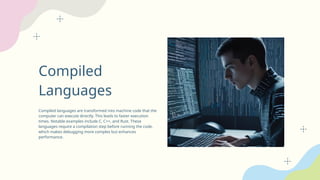
Compiled languages are transformed into machine code that the
computer can execute directly. This leads to faster execution
times. Notable examples include C, C++, and Rust. These
languages require a compilation step before running the code,
which makes debugging more complex but enhances
performance.
Interpreted Languages
Interpreted languages are read and executed line
by line by an interpreter, which makes development
faster and easier, especially for beginners.
Examples include Python, JavaScript, and Ruby. The
downside is that interpreted languages may run
slower than compiled languages due to the need
for real-time interpretation. They offer greater
flexibility and ease of debugging.
Object-Oriented
Languages
Object-oriented languages are designed around objects
rather than actions. This paradigm promotes code
reusability and modularity, allowing for easier
maintenance and scalability. Key features include
encapsulation, inheritance, and polymorphism. Popular
examples include Java, C++, and Python, which facilitate
real-world modeling.
Popular Languages
02
Python
Python is a high-level, interpreted language known
for its readability and simplicity. It supports
multiple programming paradigms, including
procedural, object-oriented, and functional
programming. Python's extensive standard library
and community-contributed modules make it a
popular choice for web development, data
analysis, artificial intelligence, and more.
JavaScript
JavaScript is a high-level, interpreted language primarily used for
enhancing web pages and applications. It enables interactive web
experiences, allowing developers to create dynamic content.
JavaScript is essential for frontend development and, with tools
like Node.js, also supports backend development. It supports
event-driven and functional programming.
Java
Java is a versatile, high-level, object-oriented
programming language designed to be platform-
independent through the Java Virtual Machine (JVM). It
is widely used in enterprise environments and Android
app development due to its robustness and ease of
maintenance. Java promotes code reusability and
includes a rich set of libraries.
Conclusions
In summary, understanding various programming languages,
their types, and characteristics is essential for developers.
Compiled, interpreted, and object-oriented languages each have
distinct advantages and use cases. By exploring popular
languages such as Python, JavaScript, and Java, we see how they
shape modern software development.
CREDITS: This presentation template was created by Slidesgo,
and includes icons, infographics & images by Freepik
Do you have any questions?
Thank you!

Microsoft Office Crack Download Free Version 2025

  • 1.
    An overview ofdifferent programming language types and their characteristics. Programming Languages
  • 2.
    Introduction This presentation exploresthe different types of programming languages, including their characteristics and examples. We will delve into compiled languages, interpreted languages, and the popular languages used in the industry today.
  • 3.
  • 4.
    Compiled Languages Compiled languages aretransformed into machine code that the computer can execute directly. This leads to faster execution times. Notable examples include C, C++, and Rust. These languages require a compilation step before running the code, which makes debugging more complex but enhances performance.
  • 5.
    Interpreted Languages Interpreted languagesare read and executed line by line by an interpreter, which makes development faster and easier, especially for beginners. Examples include Python, JavaScript, and Ruby. The downside is that interpreted languages may run slower than compiled languages due to the need for real-time interpretation. They offer greater flexibility and ease of debugging.
  • 6.
    Object-Oriented Languages Object-oriented languages aredesigned around objects rather than actions. This paradigm promotes code reusability and modularity, allowing for easier maintenance and scalability. Key features include encapsulation, inheritance, and polymorphism. Popular examples include Java, C++, and Python, which facilitate real-world modeling.
  • 7.
  • 8.
    Python Python is ahigh-level, interpreted language known for its readability and simplicity. It supports multiple programming paradigms, including procedural, object-oriented, and functional programming. Python's extensive standard library and community-contributed modules make it a popular choice for web development, data analysis, artificial intelligence, and more.
  • 9.
    JavaScript JavaScript is ahigh-level, interpreted language primarily used for enhancing web pages and applications. It enables interactive web experiences, allowing developers to create dynamic content. JavaScript is essential for frontend development and, with tools like Node.js, also supports backend development. It supports event-driven and functional programming.
  • 10.
    Java Java is aversatile, high-level, object-oriented programming language designed to be platform- independent through the Java Virtual Machine (JVM). It is widely used in enterprise environments and Android app development due to its robustness and ease of maintenance. Java promotes code reusability and includes a rich set of libraries.
  • 11.
    Conclusions In summary, understandingvarious programming languages, their types, and characteristics is essential for developers. Compiled, interpreted, and object-oriented languages each have distinct advantages and use cases. By exploring popular languages such as Python, JavaScript, and Java, we see how they shape modern software development.
  • 12.
    CREDITS: This presentationtemplate was created by Slidesgo, and includes icons, infographics & images by Freepik Do you have any questions? Thank you!