COMPLIMENTARY TEACHING MATERIALS
MICROBIAL FOOD SAFETY
A FOOD SYSTEMS APPROACH
Charlene Wolf-Hall and William Nganje
COMPLIMENTARY TEACHING MATERIALS
Chapter 4: Humans and Microbes – Risk
Analysis
COMPLIMENTARY TEACHING MATERIALS
 What is risk analysis?
 How do microbial hazards become risks
to humans?
 How do lapses in policies result in type I
and type II food risks?
 How do microbial foodborne disease
outbreaks impact food systems?
Key Questions
COMPLIMENTARY TEACHING MATERIALS
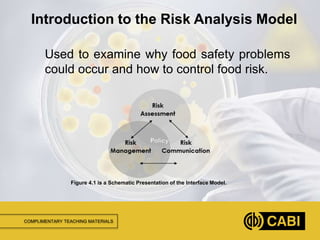
Used to examine why food safety problems
could occur and how to control food risk.
Introduction to the Risk Analysis Model
Figure 4.1 is a Schematic Presentation of the Interface Model.
COMPLIMENTARY TEACHING MATERIALS
What is the probability that hazardous foods will
become food safety risks to humans?
1. Hazard identification;
2. Hazard assessment;
3. Dose-response;
4. Exposure analysis;
5. Economic outcome assessment and risk
measurement.
Risk Assessment and Responsibilities
for Food Safety Risks
COMPLIMENTARY TEACHING MATERIALS
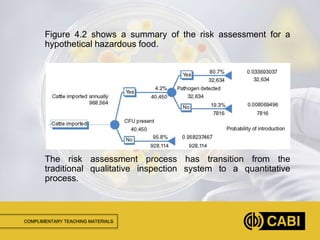
Figure 4.2 shows a summary of the risk assessment for a
hypothetical hazardous food.
The risk assessment process has transition from the
traditional qualitative inspection system to a quantitative
process.
COMPLIMENTARY TEACHING MATERIALS
For determining what action to take to
reduce or eliminate food safety risks
– Avoid or eliminate risk
– Decrease or modify the risky activity
– Decrease the magnitude or
frequency of risk
– Decrease vulnerability of exposed
people or property
Risk Management and Responsibilities
for Food Safety Risks
COMPLIMENTARY TEACHING MATERIALS
Exchange of information, between
concerned parties, about levels of
health or environmental risk, the
significance and meaning of those
risks, and the decisions
– Risk = Hazard + Outrage
– When hazard is high and outrage is
low; scientists are concerned.
– When hazard is low and outrage is
high; the public is concerned.
Risk Communication and
Responsibilities for Food Safety Risks
COMPLIMENTARY TEACHING MATERIALS
1. Use simple, graphical material;
2. Provide opportunity for learning;
3. Put risks into perspective;
4. Relate on a personal level;
5. Understand qualitative concerns;
6. Recognize impacts of subtle changes in problem
formulation;
7. Identify specific target audiences;
8. Generate involvement;
9. Avoid high threat campaigns;
10. Use multiple channels and media;
11. Use peer and social relationships; and
12. Be inventive.
Risk Communication and
Responsibilities for Food Safety Risks
COMPLIMENTARY TEACHING MATERIALS
Reasons for an effective tool to mitigate food risks:
1. Complexity of food supply networks;
2. Limitations with information sharing among stakeholders
and agencies;
3. Limitations with adequate resources;
4. Ineffective policy response, that is timely and targeted.
Information Sharing and Policies Response in Mitigating
Type I and Type II Risks
COMPLIMENTARY TEACHING MATERIALS
To assist policy makers design systems to detect, prevent,
and respond to food safety/defense risks in the food supply
networks it is critical to understand control oriented systems.
We proposed that control oriented systems differ
fundamentally from systems designed to respond to protect
against disruptions caused by uncontrollable rare events such
as hurricanes, strikes or quakes.
This type of problem is thus qualitatively distinct and it is
further complicated by the complexity of the supply network
system.
Policy Response to Minimize Error Based Disruptions
COMPLIMENTARY TEACHING MATERIALS
In 1996, the Food Safety Inspection Service (FSIS) introduced
new mandatory food safety regulations following repeated
discoveries of E. coli and Salmonella in the US food supply in
the 1980s and early 1990s.
By 2000 these regulations had been adopted by meat and
poultry processors. Pathogen levels have decreased after the
adoption of mandatory PR/HACCP in meat and poultry
processing (CDC FoodNet 2010; reported by Marler).
Voids in Control Measures in the United States
COMPLIMENTARY TEACHING MATERIALS
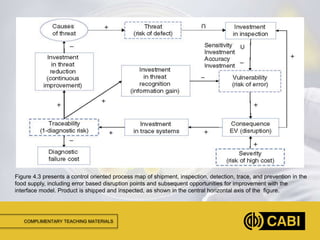
Figure 4.3 presents a control oriented process map of shipment, inspection, detection, trace, and prevention in the
food supply, including error based disruption points and subsequent opportunities for improvement with the
interface model. Product is shipped and inspected, as shown in the central horizontal axis of the figure.
COMPLIMENTARY TEACHING MATERIALS
Because more encompassing, more accurate and timelier
inspections presumably increase costs, managers will assess
the risk of these disruptions relative to those costs.
Because the cost of a false positive may be low (no illness or
deaths) relative to other types of disruptions, managers may
accept the cost of these disruptions rather than improving the
inspection system to prevent food risks.
Microbial Outbreaks and Impact on the Food
Systems
COMPLIMENTARY TEACHING MATERIALS
These food risks are characterized by class I, II, and III recalls
by the Food and Drug Administration (FDA):
Class I recall is food product will cause serious adverse health
consequences or death.
Class II recall is food product may cause temporary or
medically reversible adverse health consequences.
Class III recall is food product is not likely to cause adverse
health consequences (FDA, 2009).
COMPLIMENTARY TEACHING MATERIALS
This framework has four major components:
a) To identify the role and synergies from multiple
stakeholders (governmental agencies and private
entities);
b) To establish procedures to detect threats and
vulnerability along the food supply chain;
c) To identify incentives for management to adopt and
implement control oriented risk mitigation plans;
d) To develop a feedback system for response and
continuous improvement. These components are
discussed in detail on the next slide.
Control Oriented Framework and Response to
Food Risks
COMPLIMENTARY TEACHING MATERIALS
Mitigating food risks is a very complex task involving several agencies and stakeholders,
especially for a cross-border food supply chain.
For example, imported foods require the intervention of several agencies to control for
food safety problems. These include:
• USDA initiates inspections to comply with quality and grading standards at the farms
in foreign countries and at their packing and processing facilities.
• The Food and Drug Administration (FDA) conducts pathogen testing at the POE.
• Custom Border Protection (CBP) and USDA work together to implement the 24-hour
e-manifest rule (US Department of Homeland Security, 2003).
• Animal and Plant Health Inspection Service (APHIS) focus on pest control.
Synergies from Multiple Stakeholders
COMPLIMENTARY TEACHING MATERIALS
A major challenge with having multiple Agencies and
stakeholders is how to identify synergies.
Figure 4.3 proposes a conceptual model which provides
a systemic view of costs and risks and the relationships
between them.
COMPLIMENTARY TEACHING MATERIALS
The risk analysis model provides a framework for
stakeholders to channel information to policy makers, to
design efficient control, and to minimize food risks.
The interphase model could be used to explain how microbes
become risks to humans, with type II disruptions that have
consequences like making people sick or killing them. Private
and public partnerships and information sharing are important
ways to mitigate foodborne illness risks and costs.
Summary
COMPLIMENTARY TEACHING MATERIALS
THANK YOU
Name: Charlene Wolf-Hall & William Nganje
Email: charlene.hall@ndsu.edu & William.Nganje@ndsu.edu

Microbial-Food-Safety.pptx

  • 1.
    COMPLIMENTARY TEACHING MATERIALS MICROBIALFOOD SAFETY A FOOD SYSTEMS APPROACH Charlene Wolf-Hall and William Nganje
  • 2.
    COMPLIMENTARY TEACHING MATERIALS Chapter4: Humans and Microbes – Risk Analysis
  • 3.
    COMPLIMENTARY TEACHING MATERIALS What is risk analysis?  How do microbial hazards become risks to humans?  How do lapses in policies result in type I and type II food risks?  How do microbial foodborne disease outbreaks impact food systems? Key Questions
  • 4.
    COMPLIMENTARY TEACHING MATERIALS Usedto examine why food safety problems could occur and how to control food risk. Introduction to the Risk Analysis Model Figure 4.1 is a Schematic Presentation of the Interface Model.
  • 5.
    COMPLIMENTARY TEACHING MATERIALS Whatis the probability that hazardous foods will become food safety risks to humans? 1. Hazard identification; 2. Hazard assessment; 3. Dose-response; 4. Exposure analysis; 5. Economic outcome assessment and risk measurement. Risk Assessment and Responsibilities for Food Safety Risks
  • 6.
    COMPLIMENTARY TEACHING MATERIALS Figure4.2 shows a summary of the risk assessment for a hypothetical hazardous food. The risk assessment process has transition from the traditional qualitative inspection system to a quantitative process.
  • 7.
    COMPLIMENTARY TEACHING MATERIALS Fordetermining what action to take to reduce or eliminate food safety risks – Avoid or eliminate risk – Decrease or modify the risky activity – Decrease the magnitude or frequency of risk – Decrease vulnerability of exposed people or property Risk Management and Responsibilities for Food Safety Risks
  • 8.
    COMPLIMENTARY TEACHING MATERIALS Exchangeof information, between concerned parties, about levels of health or environmental risk, the significance and meaning of those risks, and the decisions – Risk = Hazard + Outrage – When hazard is high and outrage is low; scientists are concerned. – When hazard is low and outrage is high; the public is concerned. Risk Communication and Responsibilities for Food Safety Risks
  • 9.
    COMPLIMENTARY TEACHING MATERIALS 1.Use simple, graphical material; 2. Provide opportunity for learning; 3. Put risks into perspective; 4. Relate on a personal level; 5. Understand qualitative concerns; 6. Recognize impacts of subtle changes in problem formulation; 7. Identify specific target audiences; 8. Generate involvement; 9. Avoid high threat campaigns; 10. Use multiple channels and media; 11. Use peer and social relationships; and 12. Be inventive. Risk Communication and Responsibilities for Food Safety Risks
  • 10.
    COMPLIMENTARY TEACHING MATERIALS Reasonsfor an effective tool to mitigate food risks: 1. Complexity of food supply networks; 2. Limitations with information sharing among stakeholders and agencies; 3. Limitations with adequate resources; 4. Ineffective policy response, that is timely and targeted. Information Sharing and Policies Response in Mitigating Type I and Type II Risks
  • 11.
    COMPLIMENTARY TEACHING MATERIALS Toassist policy makers design systems to detect, prevent, and respond to food safety/defense risks in the food supply networks it is critical to understand control oriented systems. We proposed that control oriented systems differ fundamentally from systems designed to respond to protect against disruptions caused by uncontrollable rare events such as hurricanes, strikes or quakes. This type of problem is thus qualitatively distinct and it is further complicated by the complexity of the supply network system. Policy Response to Minimize Error Based Disruptions
  • 12.
    COMPLIMENTARY TEACHING MATERIALS In1996, the Food Safety Inspection Service (FSIS) introduced new mandatory food safety regulations following repeated discoveries of E. coli and Salmonella in the US food supply in the 1980s and early 1990s. By 2000 these regulations had been adopted by meat and poultry processors. Pathogen levels have decreased after the adoption of mandatory PR/HACCP in meat and poultry processing (CDC FoodNet 2010; reported by Marler). Voids in Control Measures in the United States
  • 13.
    COMPLIMENTARY TEACHING MATERIALS Figure4.3 presents a control oriented process map of shipment, inspection, detection, trace, and prevention in the food supply, including error based disruption points and subsequent opportunities for improvement with the interface model. Product is shipped and inspected, as shown in the central horizontal axis of the figure.
  • 14.
    COMPLIMENTARY TEACHING MATERIALS Becausemore encompassing, more accurate and timelier inspections presumably increase costs, managers will assess the risk of these disruptions relative to those costs. Because the cost of a false positive may be low (no illness or deaths) relative to other types of disruptions, managers may accept the cost of these disruptions rather than improving the inspection system to prevent food risks. Microbial Outbreaks and Impact on the Food Systems
  • 15.
    COMPLIMENTARY TEACHING MATERIALS Thesefood risks are characterized by class I, II, and III recalls by the Food and Drug Administration (FDA): Class I recall is food product will cause serious adverse health consequences or death. Class II recall is food product may cause temporary or medically reversible adverse health consequences. Class III recall is food product is not likely to cause adverse health consequences (FDA, 2009).
  • 16.
    COMPLIMENTARY TEACHING MATERIALS Thisframework has four major components: a) To identify the role and synergies from multiple stakeholders (governmental agencies and private entities); b) To establish procedures to detect threats and vulnerability along the food supply chain; c) To identify incentives for management to adopt and implement control oriented risk mitigation plans; d) To develop a feedback system for response and continuous improvement. These components are discussed in detail on the next slide. Control Oriented Framework and Response to Food Risks
  • 17.
    COMPLIMENTARY TEACHING MATERIALS Mitigatingfood risks is a very complex task involving several agencies and stakeholders, especially for a cross-border food supply chain. For example, imported foods require the intervention of several agencies to control for food safety problems. These include: • USDA initiates inspections to comply with quality and grading standards at the farms in foreign countries and at their packing and processing facilities. • The Food and Drug Administration (FDA) conducts pathogen testing at the POE. • Custom Border Protection (CBP) and USDA work together to implement the 24-hour e-manifest rule (US Department of Homeland Security, 2003). • Animal and Plant Health Inspection Service (APHIS) focus on pest control. Synergies from Multiple Stakeholders
  • 18.
    COMPLIMENTARY TEACHING MATERIALS Amajor challenge with having multiple Agencies and stakeholders is how to identify synergies. Figure 4.3 proposes a conceptual model which provides a systemic view of costs and risks and the relationships between them.
  • 19.
    COMPLIMENTARY TEACHING MATERIALS Therisk analysis model provides a framework for stakeholders to channel information to policy makers, to design efficient control, and to minimize food risks. The interphase model could be used to explain how microbes become risks to humans, with type II disruptions that have consequences like making people sick or killing them. Private and public partnerships and information sharing are important ways to mitigate foodborne illness risks and costs. Summary
  • 20.
    COMPLIMENTARY TEACHING MATERIALS THANKYOU Name: Charlene Wolf-Hall & William Nganje Email: charlene.hall@ndsu.edu & William.Nganje@ndsu.edu