Microbial Biodiesel
Production
By
K.MadhuJegathish
BTE-12-021
Introduction to biodiesel
History
Rudolf diesel was the inverter of biodiesel, estimated nearly 100
years ago. It was developed in the year 1890s.
What is Biodiesel?
• Alternative fuel for diesel engines
• Madefrom vegetable oil, animal fat, microbes
• Lower emissions, High flash point (>300°F), Safer
• Biodegradable, Essentially non-toxic.
Fatty Acid
Alcohol
Glycerin
Vegetable Oil
BiodieselFA
FAFA
FA
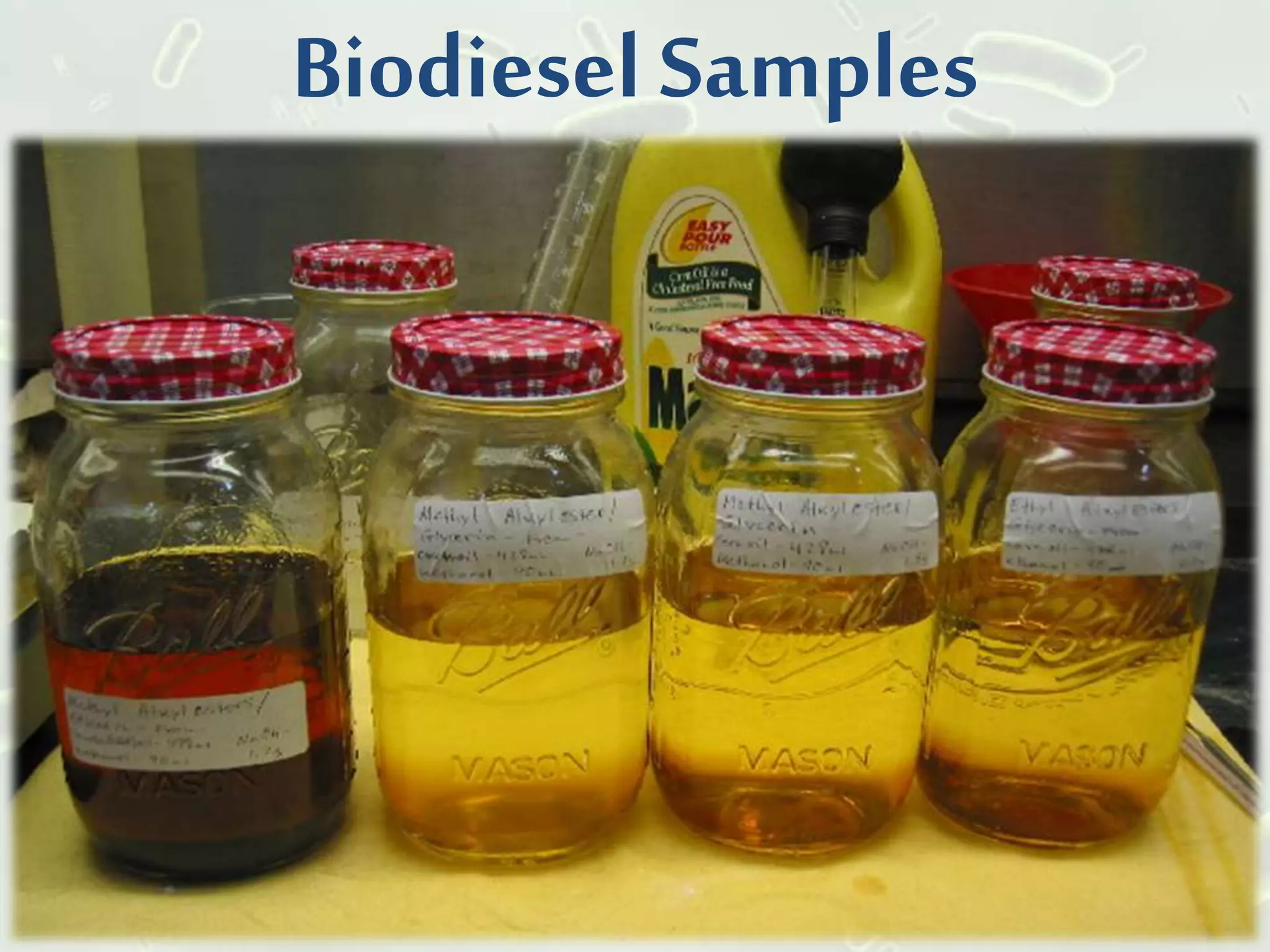
Biodiesel Samples
Characteristics Of Biodiesel
Liquidvarying in color
Immiscible inwater
Highboiling point of 360–640°F (182–338°C)
Low vapor pressure: < 2 mmHg
Specific gravity between0.86 & 0.90
Vapor density > 1
Less hazardous in terms of flammability
Biodiesel As Lubricant And Solvent
Biodiesel can be used straightas a
machinery lubricant.
Biodiesel’s solvent properties may be
used to clean dirty or greasy engine
or other machine parts.
Advantages of Biodiesel
Renewable energy source
Less polluting
Utilizes excess production of
soybeans for manufacture
Can distribute through
existing diesel fuel pumps
Can use in existing oil
heating systems and diesel
engines
Can be mixed with
petroleum diesel at any
concentration and time
Disadvantages Of Biodiesel
More expensive
Could harm rubber hoses in engines
Requires energy to:
Produce biodiesel from soy crops & sow, fertilize
and harvest
Requires frequent filter changing
Requires improvement in distribution infrastructure
Relative Greenhouse GasEmissions
0 20 40 60 80 100 120 140 160
Gasoline
CNG
LPG
Diesel
Ethanol 85%
B20
Diesel Hybrid
Electric
B100
B100 = 100% Biodiesel
B20 = 20% BD + 80% PD
Relative emissions: Diesel and Biodiesel
0 20 40 60 80 100 120
Total Unburned HCs
CO
Particulate Matter
**NOx
Sulfates
PAHs
n-PAHs
Mutagenicity
CO2
Percent
B100 **
B20
Diesel
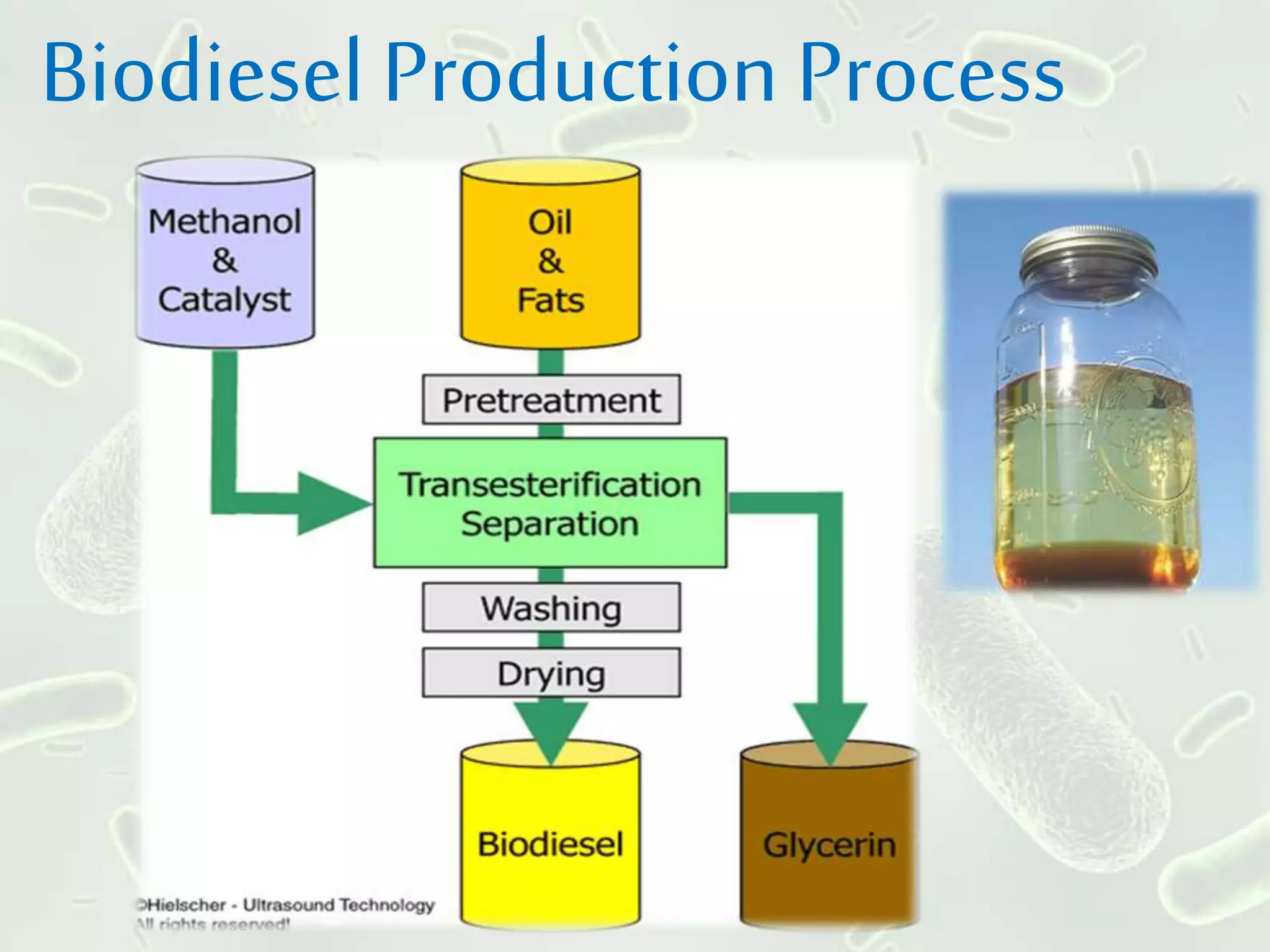
Biodiesel Production Process
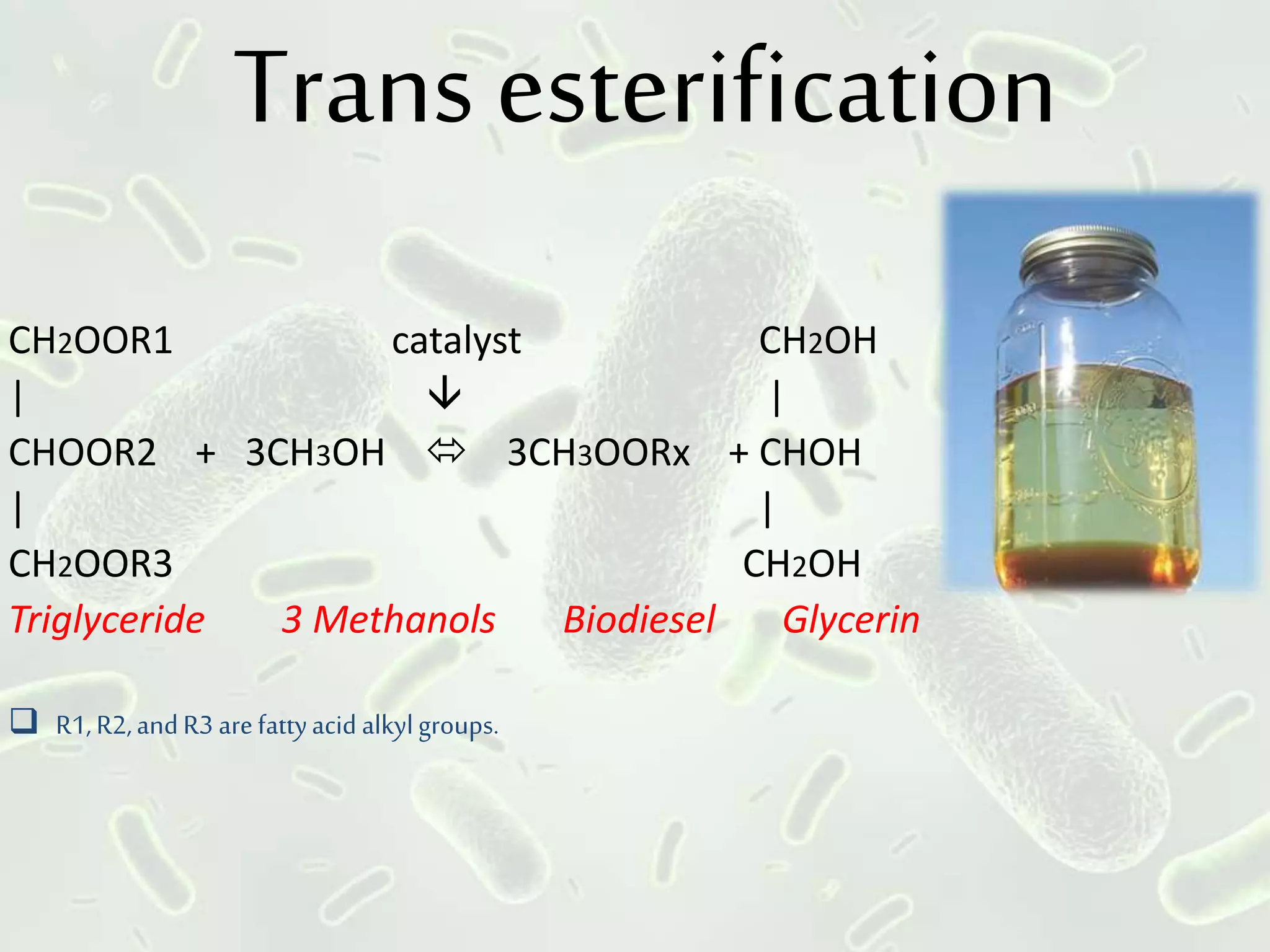
Trans esterification
CH2OOR1 catalyst CH2OH
|  |
CHOOR2 + 3CH3OH  3CH3OORx + CHOH
| |
CH2OOR3 CH2OH
Triglyceride 3 Methanols Biodiesel Glycerin
 R1,R2,andR3arefattyacid alkylgroups.
Biodiesel production by alkaliprocess
Enzymatic BiodieselProduction
Trans esterification
Washing
Biodiesel Reaction
Vegetable Oil or
Animal Fat
(100 lbs.)
+
Methanol or
Ethanol
(10 lbs.)
Biodiesel
(100 lbs.)
+
Glycerin
(10 lbs.)
In the presence of a catalyst
Combining Yields
NRRaje Feb 06
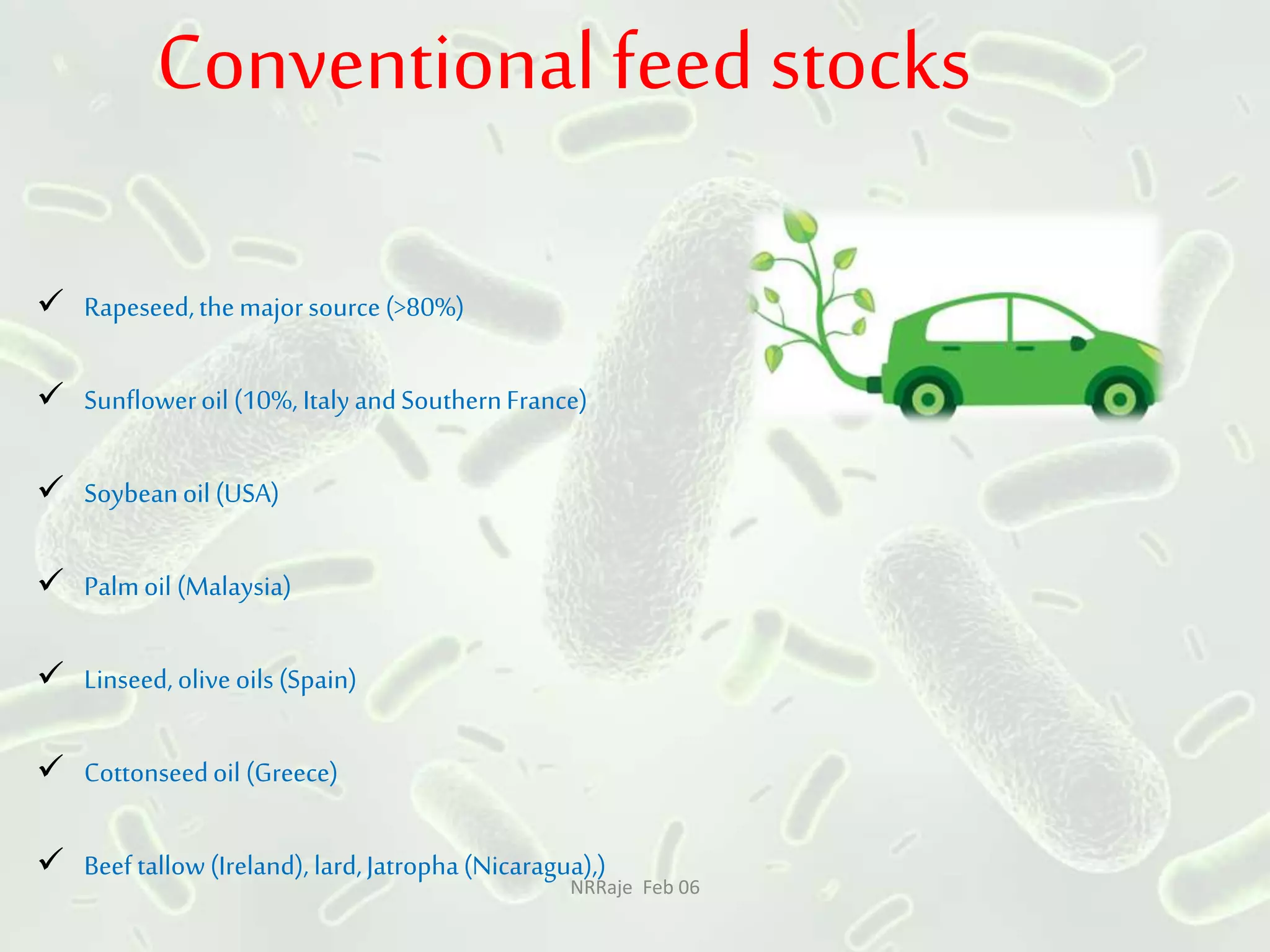
Conventional feed stocks
 Rapeseed,themajorsource(>80%)
 Sunfloweroil (10%, ItalyandSouthernFrance)
 Soybeanoil (USA)
 Palmoil (Malaysia)
 Linseed,oliveoils (Spain)
 Cottonseedoil (Greece)
 Beef tallow(Ireland), lard,Jatropha(Nicaragua),)
Microorganisms available for biodieselproduction
 Microalgae
 Bacteria
 Fungi
 Yeast
 Biodiesel production using microbial lipids, which is named as single cell oils (SCO),
has attracted great attention in the whole world.
Lipidsfromall cannotbeconverted into
biodiesel mainly dueto less yield
 Oleaginous microorganisms are able to accumulate lipids above the 20% of their
biomass, on dry basis.
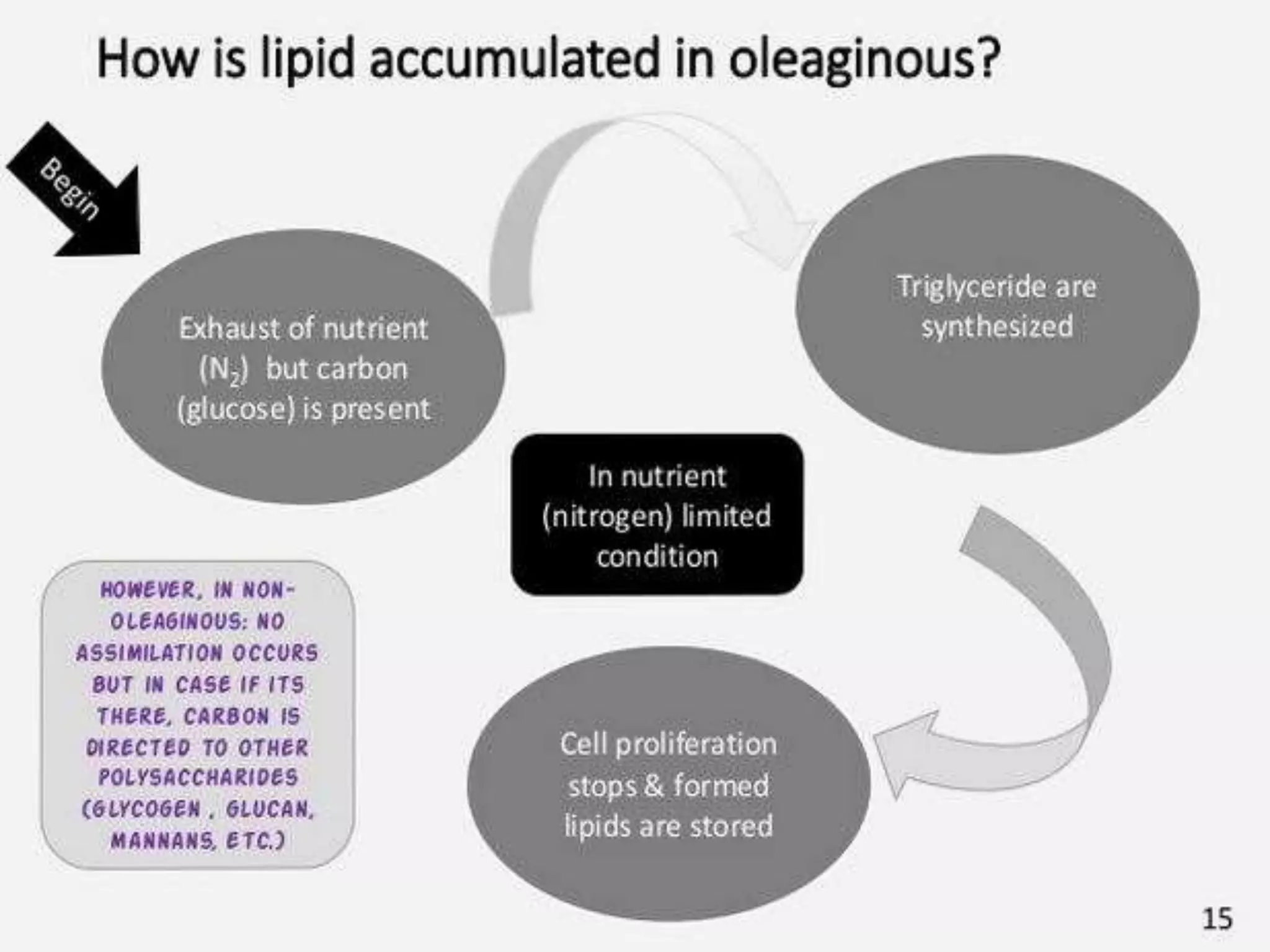
Stagesof Lipid accumulation
...
Cells reach limit of obesity → stop accumulating.
Lipid accumulation → cells expand
Cells convert C → storage lipid (intracellular)
Exhaustion of N, cells stop divide
Microorganisms grow and multiply until a certain time
Prepare medium: high Carbon, low Nitrogen
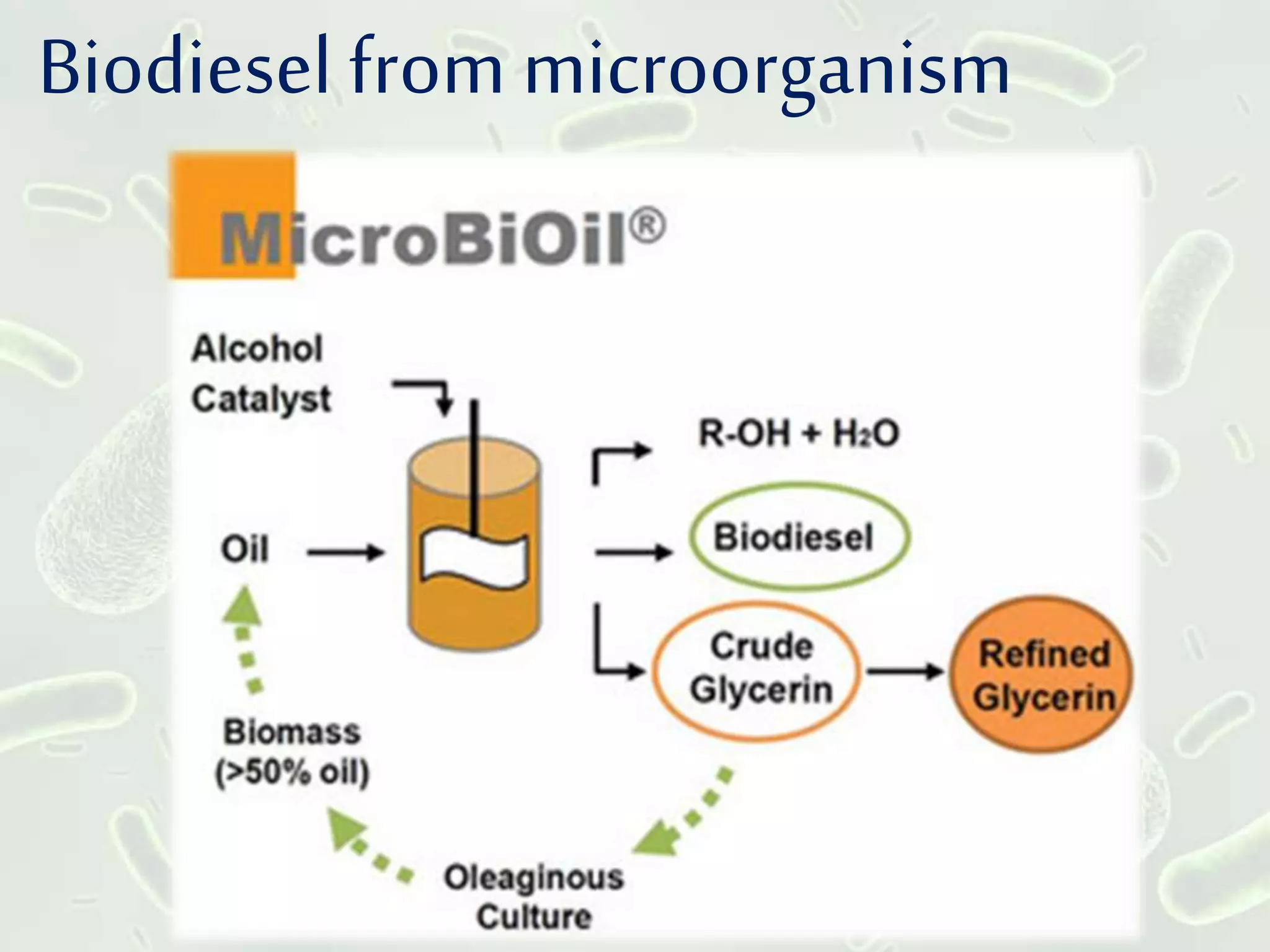
Biodiesel from microorganism
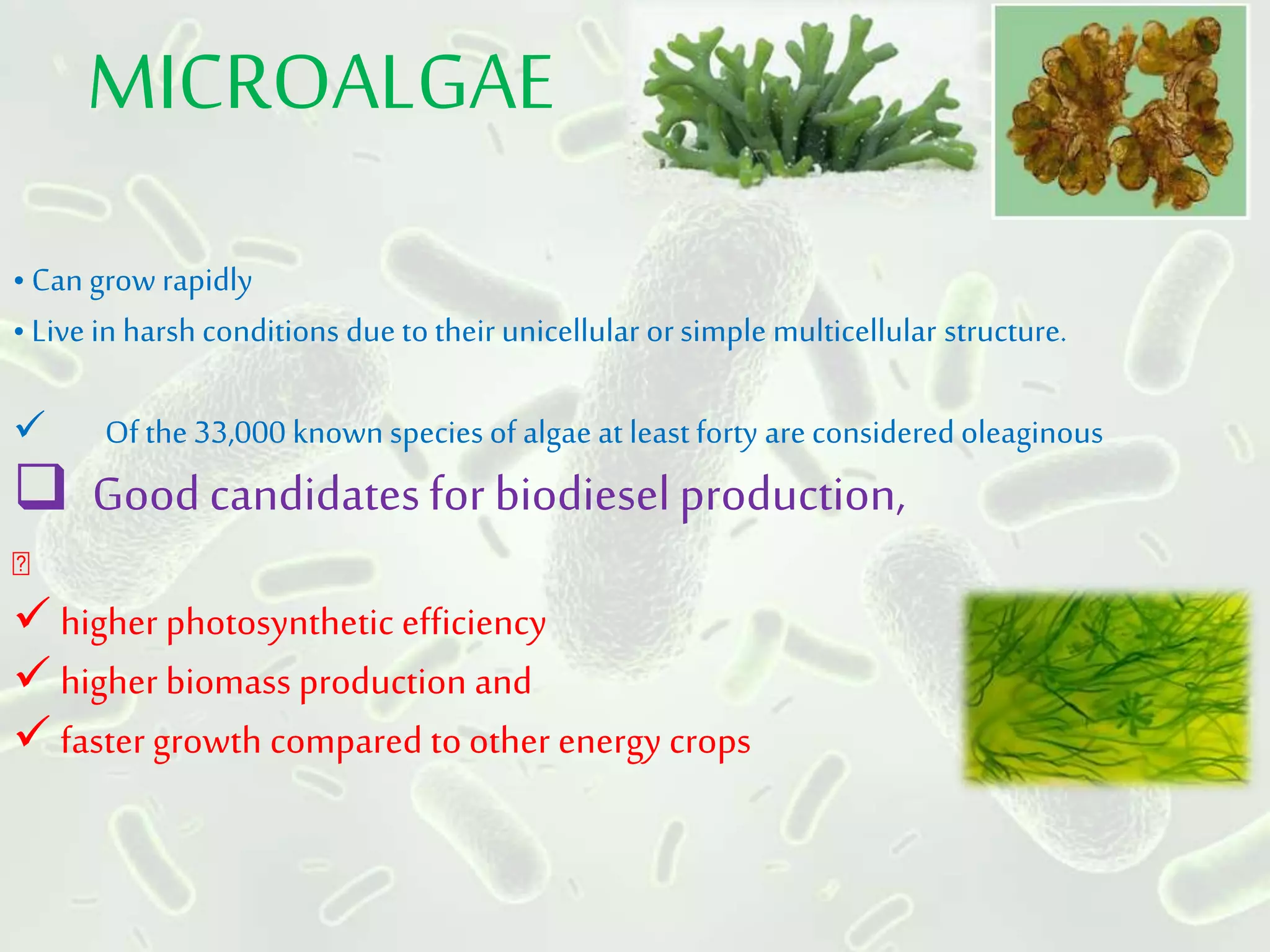
• Can growrapidly
• Live in harsh conditions due to their unicellular orsimple multicellular structure.
 Of the 33,000 known species of algae at least forty are considered oleaginous
 Goodcandidatesfor biodieselproduction,
 higher photosynthetic efficiency
 higher biomass production and
 faster growth compared to other energy crops
MICROALGAE
continue..
• Can beinduced to accumulate substantial quantities of lipids thus contributing to a high oil
yield.
• Someofthe common algae
chlorella, crypthecodinium, cylindrotheca, dunaliella, isochrysis, nannochloris,
nannochloropsis, neochloris, nitzschia, phaeodactylum, porphyridium, schizochytrium,
tetraselmis, etc,….
average lipid content- (1-70%)
maximum- 90%
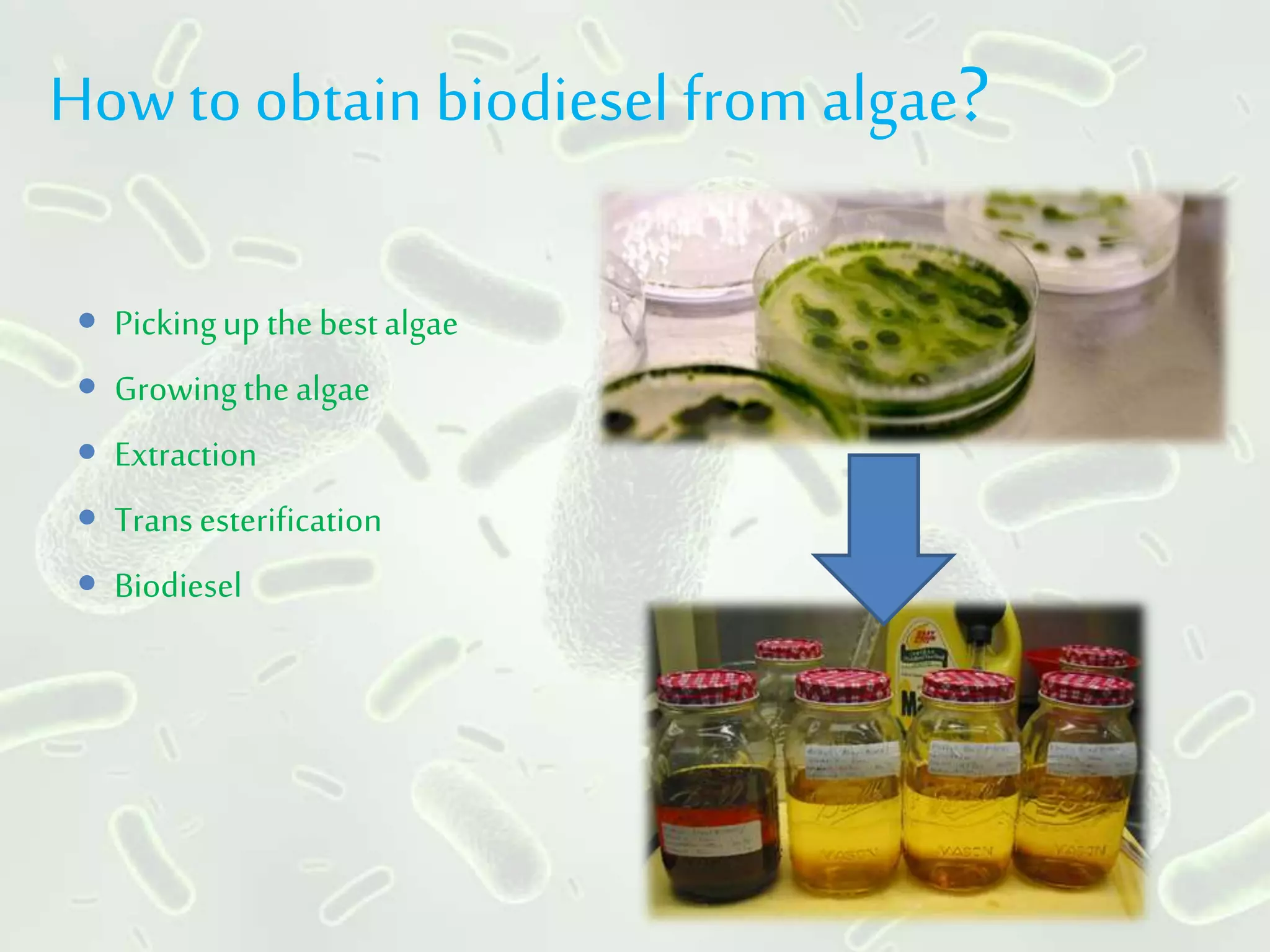
How to obtain biodiesel from algae?
 Pickingupthebestalgae
 Growingthealgae
 Extraction
 Transesterification
 Biodiesel
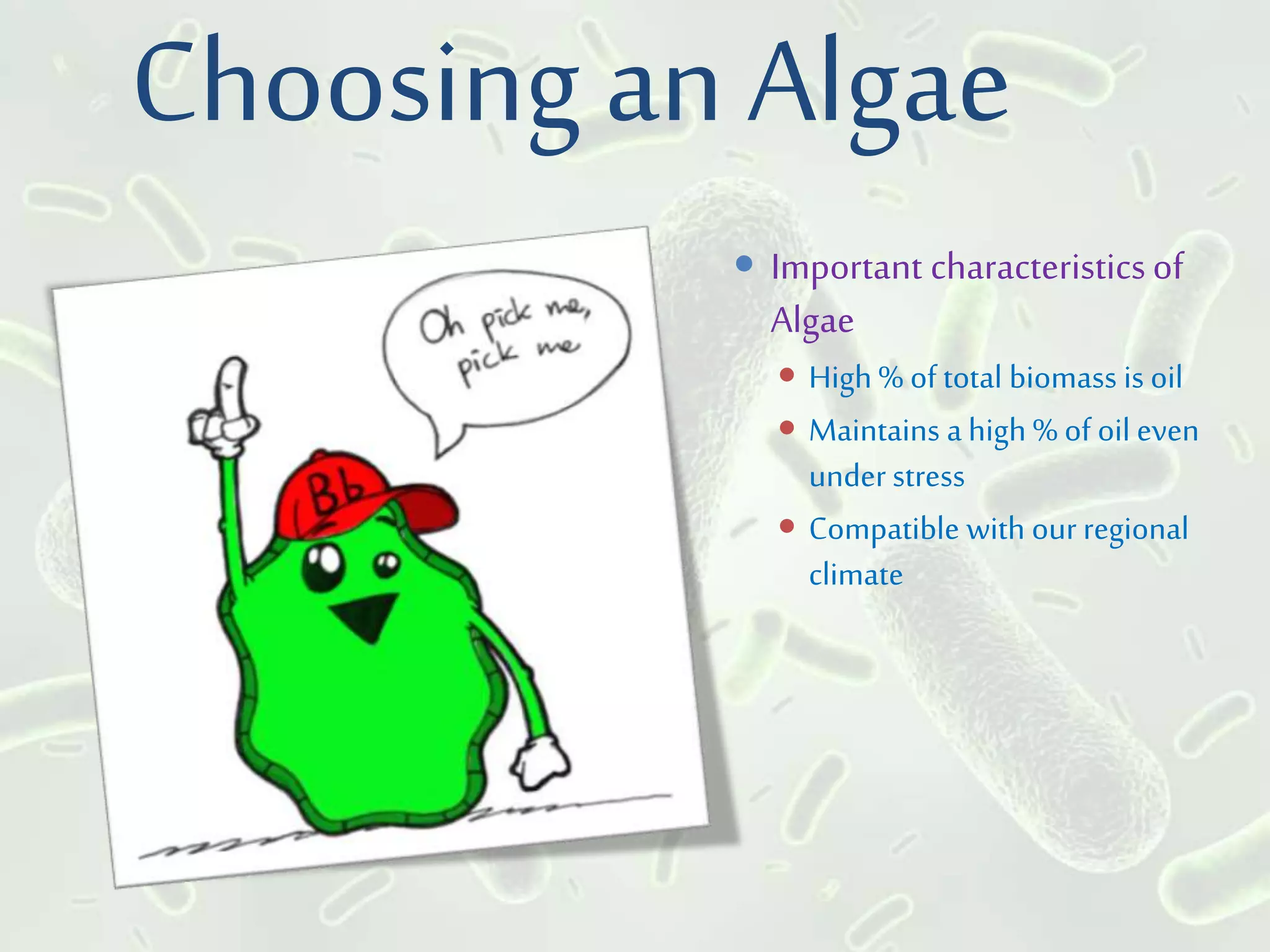
Choosing an Algae
 Important characteristicsof
Algae
 High % oftotal biomass is oil
 Maintains a high % of oil even
under stress
 Compatible with ourregional
climate
Where To Grow It
 Extensionsonto our water treatmentplants
 Clean up our waste and generate fuel
 Agriculture runoff
 Water ponds
 Algae could well grow on salty water aswell assoft water
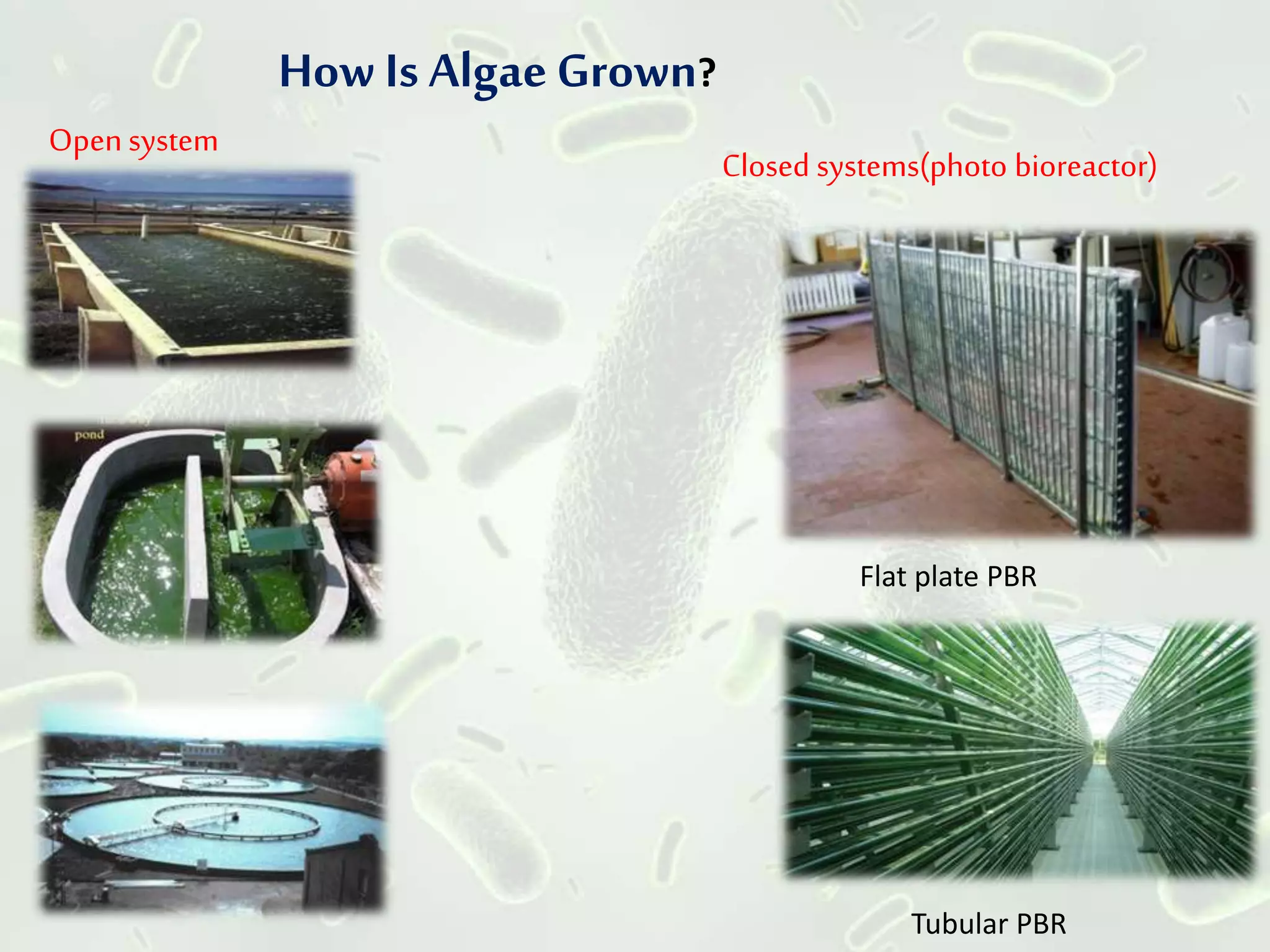
How Is AlgaeGrown?
Opensystem
Tubular PBR
Flat plate PBR
Closed systems(photo bioreactor)
Extraction
Solvent extraction
Mechanical extraction
Super criticalfluid extraction
Mechanical Extraction
Solventextraction
Supercritical fluid extraction
DIFFERENCE B/W BIODIESEL FROM ALGAE AND OTHER
PLANT/VEGETABLE OILS
• The yield
• According to some estimation,
theyield (per acre) of oilfrom algaeis over 200 times theyield
from the best-performingplant/vegetable oils.
ADVANTAGES OF MICROALGAE AS A SOURCE OF BIODIESEL
• High Yield
-low cost ofproduction
• Algae can grow
–In places away from farm land
(Nodestruction tofood chain)
–Sewages
–Near to power plants
(takes CO2from smokestacks and yields oil)
• Oil Productivity
–Greaterthan bestproducing oil crops
• Higher grade protein→Animal Feed
• Balanced N: P ratio→Organic Fertilizers
Biodiesel from Fungus
Oleaginous fungi hasalso been considered as potential oilsources for biodiesel
production because they accumulate large amounts of lipids
Among these microorganisms, particular attention has beendedicated to various
oleaginous zygomycetes species, such as
Mortierella isabelina and
Cunninghamella echinulata,
which may accumulate up to 86% and 57% of lipids in the dry biomass, respectively
Biodiesel from Fungus
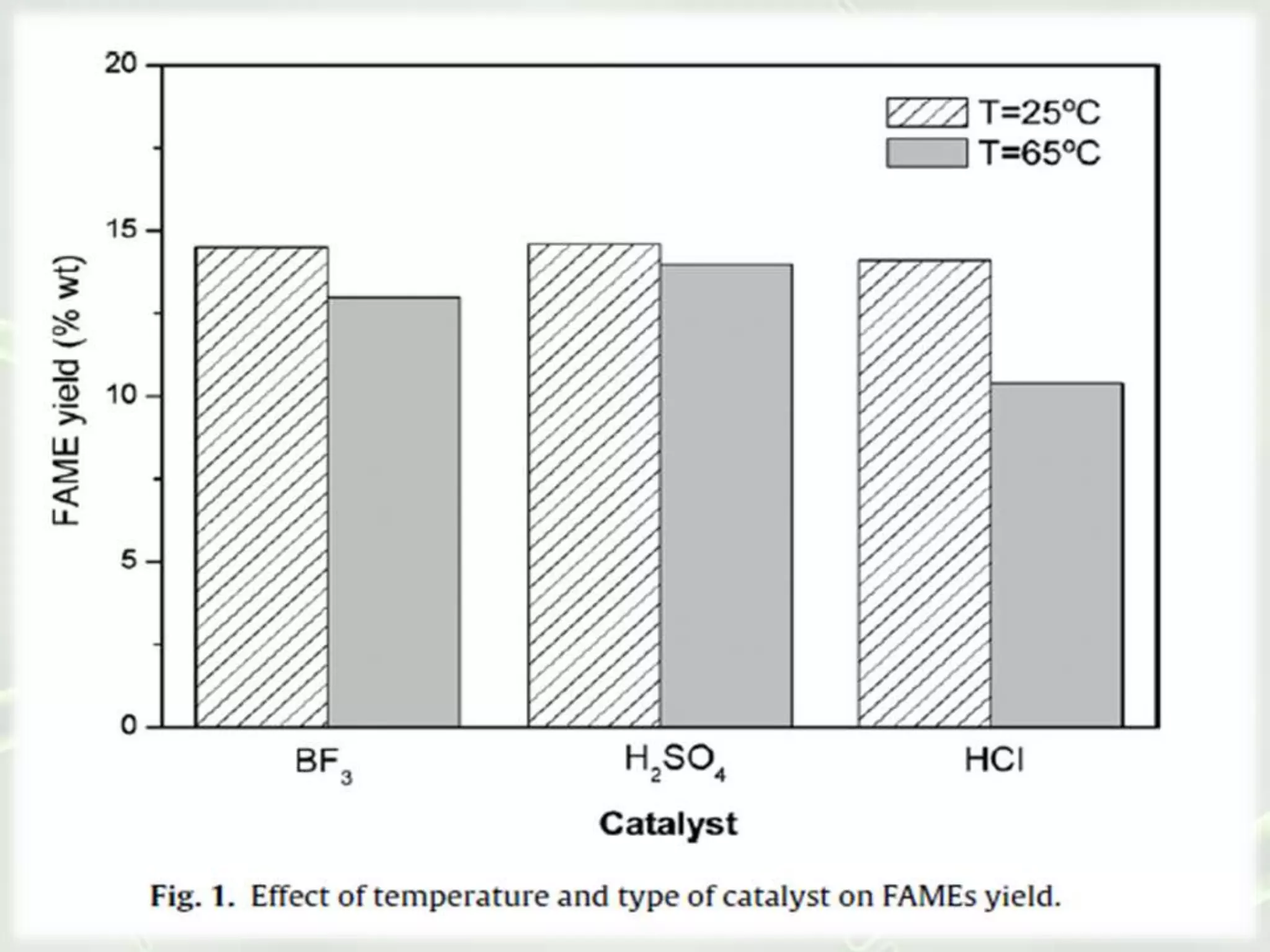
Fungal Bio Mass Mucorcircinelloides
Three Different Solvent Systems:
Chloroform:Methanol (C:M),
Chloroform:Methanol:Water (C:M:W)
n-hexane
Acid Catalyst (BF3, H2SO4 and HCl )
Materials
Biodiesel from Fungal Bio Mass
Extraction oflipids
Solvent +Dried biomass
Mixture
Ultrasonication
Centrifugation
RotaryEvaporation
Lipids
Biodiesel from Fungal Bio Mass
Rhodosporidium sp.,
Rhodotorula sp.and
Lipomyces s
species can accumulateintracellular lipids as high as 70% of their biomass dry weight.
•Cryptococcus curvatus
oleaginous yeast Accumulate storage lipid up to >60% ona dry weight basis)
Biodiesel from yeasts
Media
Freezedrying
Lipid extraction
Tran esterification
Biodiesel
Media
Pre-culture
YM medium wasusedaspre-culturetocultivateoleaginous yeastcells
o glucose as a carbon source
o Peptone
o yeast extract
Sterlisation - 120ºC temperaturefor20minutes
Semi-synthetic medium was usedas mainculturetogrowoleaginousyeasts
o Glucose, xyloseor a mixture of both were used as carbon sources
o nitrogen sources (NH4Cl)
o phosphate buffer (KH2PO4)
o Mineral-elementsolution (CaCl2×2H2O ,FeSO4×7H2O ,citric acid×H2O)
MediumpH - 5.8
Main culture
Freeze drying
o Collected samples were centrifuged at 10 min andwashed with sterile water once, then
centrifuged again
o Thepellets weretransferred into pre-weighed vials and kept at -50°C until freezedrying
Lipid extraction
Chloroform- MethanolMethod
Adding Choroform: Methanol mixture
Centrifugation
Freezedried pellets + HCL and incbated at 55° C
Solvent Evaporation
Extracted lipids
Extracted lipids
Trans esterification
biodiesel
methanol
glycerin
catalyst
Biodiesel from Bacteria
Bacteria can accumulateoilof about 20-40% of dry biomass
Arthrobactersp.-40%
Acinetobactercalcoaceticus-38%
Have a superiority in the production of biodiesel dueto
 Highest growthrate(reachhuge biomassonlyneed 12–24h)
 Easyculturemethod.
Actinomycetegroup high amountoffattyacids (up to70%ofthe cellular dryweight) using glucose
undergrowth-restrictedcondition
Downside
• Veryfewareoil producer
• Only a fewbacteria accumulate complicated lipoid.
• It is difficult toextract becausethese lipoid aregenerated in the outer membrane
• So there is no industrial significance in the actual production of biodiesel by using oleaginous
bacteria as raw material
Quality ofbiodiesel from microbes
• Biodiesel fuel, in the form of FAME, is nowmanufactured in many countries.
• Relevant standard to assessbiodiesel are;
 ASTMD6751( In USA)
 EN14214(In EU, intended for vehicle use)
 EN14213(In EU, for use as heatingoil)
Conclusion
•At presentplant oil is the main feedstock for biodiesel production.
• However, at present biodiesel is not competitive with conventional fuels in the whole
world duetohigh cost of production.
• Production of microbial based diesel can be an economical beneficial.
• However, it still needs lots of improvement which could be done using the various
biotechnological techniques and methods.
• Developing high lipid content microorganisms for biodiesel production from microbes
are promising option in future and opens a possibility for academic research
Thankyou

Microbial biodiesel production

  • 1.
  • 2.
    Introduction to biodiesel History Rudolfdiesel was the inverter of biodiesel, estimated nearly 100 years ago. It was developed in the year 1890s.
  • 3.
    What is Biodiesel? •Alternative fuel for diesel engines • Madefrom vegetable oil, animal fat, microbes • Lower emissions, High flash point (>300°F), Safer • Biodegradable, Essentially non-toxic. Fatty Acid Alcohol Glycerin Vegetable Oil BiodieselFA FAFA FA
  • 4.
  • 5.
    Characteristics Of Biodiesel Liquidvaryingin color Immiscible inwater Highboiling point of 360–640°F (182–338°C) Low vapor pressure: < 2 mmHg Specific gravity between0.86 & 0.90 Vapor density > 1 Less hazardous in terms of flammability
  • 6.
    Biodiesel As LubricantAnd Solvent Biodiesel can be used straightas a machinery lubricant. Biodiesel’s solvent properties may be used to clean dirty or greasy engine or other machine parts.
  • 7.
    Advantages of Biodiesel Renewableenergy source Less polluting Utilizes excess production of soybeans for manufacture Can distribute through existing diesel fuel pumps Can use in existing oil heating systems and diesel engines Can be mixed with petroleum diesel at any concentration and time
  • 8.
    Disadvantages Of Biodiesel Moreexpensive Could harm rubber hoses in engines Requires energy to: Produce biodiesel from soy crops & sow, fertilize and harvest Requires frequent filter changing Requires improvement in distribution infrastructure
  • 9.
    Relative Greenhouse GasEmissions 020 40 60 80 100 120 140 160 Gasoline CNG LPG Diesel Ethanol 85% B20 Diesel Hybrid Electric B100 B100 = 100% Biodiesel B20 = 20% BD + 80% PD
  • 10.
    Relative emissions: Dieseland Biodiesel 0 20 40 60 80 100 120 Total Unburned HCs CO Particulate Matter **NOx Sulfates PAHs n-PAHs Mutagenicity CO2 Percent B100 ** B20 Diesel
  • 11.
  • 12.
    Trans esterification CH2OOR1 catalystCH2OH |  | CHOOR2 + 3CH3OH  3CH3OORx + CHOH | | CH2OOR3 CH2OH Triglyceride 3 Methanols Biodiesel Glycerin  R1,R2,andR3arefattyacid alkylgroups.
  • 13.
    Biodiesel production byalkaliprocess Enzymatic BiodieselProduction Trans esterification
  • 14.
  • 15.
    Biodiesel Reaction Vegetable Oilor Animal Fat (100 lbs.) + Methanol or Ethanol (10 lbs.) Biodiesel (100 lbs.) + Glycerin (10 lbs.) In the presence of a catalyst Combining Yields
  • 16.
    NRRaje Feb 06 Conventionalfeed stocks  Rapeseed,themajorsource(>80%)  Sunfloweroil (10%, ItalyandSouthernFrance)  Soybeanoil (USA)  Palmoil (Malaysia)  Linseed,oliveoils (Spain)  Cottonseedoil (Greece)  Beef tallow(Ireland), lard,Jatropha(Nicaragua),)
  • 17.
    Microorganisms available forbiodieselproduction  Microalgae  Bacteria  Fungi  Yeast  Biodiesel production using microbial lipids, which is named as single cell oils (SCO), has attracted great attention in the whole world. Lipidsfromall cannotbeconverted into biodiesel mainly dueto less yield  Oleaginous microorganisms are able to accumulate lipids above the 20% of their biomass, on dry basis.
  • 19.
    Stagesof Lipid accumulation ... Cellsreach limit of obesity → stop accumulating. Lipid accumulation → cells expand Cells convert C → storage lipid (intracellular) Exhaustion of N, cells stop divide Microorganisms grow and multiply until a certain time Prepare medium: high Carbon, low Nitrogen
  • 20.
  • 21.
    • Can growrapidly •Live in harsh conditions due to their unicellular orsimple multicellular structure.  Of the 33,000 known species of algae at least forty are considered oleaginous  Goodcandidatesfor biodieselproduction,  higher photosynthetic efficiency  higher biomass production and  faster growth compared to other energy crops MICROALGAE
  • 22.
    continue.. • Can beinducedto accumulate substantial quantities of lipids thus contributing to a high oil yield. • Someofthe common algae chlorella, crypthecodinium, cylindrotheca, dunaliella, isochrysis, nannochloris, nannochloropsis, neochloris, nitzschia, phaeodactylum, porphyridium, schizochytrium, tetraselmis, etc,…. average lipid content- (1-70%) maximum- 90%
  • 23.
    How to obtainbiodiesel from algae?  Pickingupthebestalgae  Growingthealgae  Extraction  Transesterification  Biodiesel
  • 24.
    Choosing an Algae Important characteristicsof Algae  High % oftotal biomass is oil  Maintains a high % of oil even under stress  Compatible with ourregional climate
  • 25.
    Where To GrowIt  Extensionsonto our water treatmentplants  Clean up our waste and generate fuel  Agriculture runoff  Water ponds  Algae could well grow on salty water aswell assoft water
  • 26.
    How Is AlgaeGrown? Opensystem TubularPBR Flat plate PBR Closed systems(photo bioreactor)
  • 27.
  • 28.
  • 29.
  • 30.
  • 31.
    DIFFERENCE B/W BIODIESELFROM ALGAE AND OTHER PLANT/VEGETABLE OILS • The yield • According to some estimation, theyield (per acre) of oilfrom algaeis over 200 times theyield from the best-performingplant/vegetable oils.
  • 32.
    ADVANTAGES OF MICROALGAEAS A SOURCE OF BIODIESEL • High Yield -low cost ofproduction • Algae can grow –In places away from farm land (Nodestruction tofood chain) –Sewages –Near to power plants (takes CO2from smokestacks and yields oil) • Oil Productivity –Greaterthan bestproducing oil crops • Higher grade protein→Animal Feed • Balanced N: P ratio→Organic Fertilizers
  • 33.
    Biodiesel from Fungus Oleaginousfungi hasalso been considered as potential oilsources for biodiesel production because they accumulate large amounts of lipids Among these microorganisms, particular attention has beendedicated to various oleaginous zygomycetes species, such as Mortierella isabelina and Cunninghamella echinulata, which may accumulate up to 86% and 57% of lipids in the dry biomass, respectively
  • 34.
    Biodiesel from Fungus FungalBio Mass Mucorcircinelloides Three Different Solvent Systems: Chloroform:Methanol (C:M), Chloroform:Methanol:Water (C:M:W) n-hexane Acid Catalyst (BF3, H2SO4 and HCl ) Materials
  • 35.
    Biodiesel from FungalBio Mass Extraction oflipids Solvent +Dried biomass Mixture Ultrasonication Centrifugation RotaryEvaporation Lipids
  • 36.
  • 38.
    Rhodosporidium sp., Rhodotorula sp.and Lipomycess species can accumulateintracellular lipids as high as 70% of their biomass dry weight. •Cryptococcus curvatus oleaginous yeast Accumulate storage lipid up to >60% ona dry weight basis) Biodiesel from yeasts
  • 39.
    Biodiesel from yeasts Media Freezedrying Lipidextraction Tran esterification Biodiesel
  • 40.
    Media Pre-culture YM medium wasusedaspre-culturetocultivateoleaginousyeastcells o glucose as a carbon source o Peptone o yeast extract Sterlisation - 120ºC temperaturefor20minutes Semi-synthetic medium was usedas mainculturetogrowoleaginousyeasts o Glucose, xyloseor a mixture of both were used as carbon sources o nitrogen sources (NH4Cl) o phosphate buffer (KH2PO4) o Mineral-elementsolution (CaCl2×2H2O ,FeSO4×7H2O ,citric acid×H2O) MediumpH - 5.8 Main culture
  • 41.
    Freeze drying o Collectedsamples were centrifuged at 10 min andwashed with sterile water once, then centrifuged again o Thepellets weretransferred into pre-weighed vials and kept at -50°C until freezedrying
  • 42.
    Lipid extraction Chloroform- MethanolMethod AddingChoroform: Methanol mixture Centrifugation Freezedried pellets + HCL and incbated at 55° C Solvent Evaporation Extracted lipids
  • 43.
  • 44.
    Biodiesel from Bacteria Bacteriacan accumulateoilof about 20-40% of dry biomass Arthrobactersp.-40% Acinetobactercalcoaceticus-38% Have a superiority in the production of biodiesel dueto  Highest growthrate(reachhuge biomassonlyneed 12–24h)  Easyculturemethod. Actinomycetegroup high amountoffattyacids (up to70%ofthe cellular dryweight) using glucose undergrowth-restrictedcondition
  • 45.
    Downside • Veryfewareoil producer •Only a fewbacteria accumulate complicated lipoid. • It is difficult toextract becausethese lipoid aregenerated in the outer membrane • So there is no industrial significance in the actual production of biodiesel by using oleaginous bacteria as raw material
  • 46.
    Quality ofbiodiesel frommicrobes • Biodiesel fuel, in the form of FAME, is nowmanufactured in many countries. • Relevant standard to assessbiodiesel are;  ASTMD6751( In USA)  EN14214(In EU, intended for vehicle use)  EN14213(In EU, for use as heatingoil)
  • 48.
    Conclusion •At presentplant oilis the main feedstock for biodiesel production. • However, at present biodiesel is not competitive with conventional fuels in the whole world duetohigh cost of production. • Production of microbial based diesel can be an economical beneficial. • However, it still needs lots of improvement which could be done using the various biotechnological techniques and methods. • Developing high lipid content microorganisms for biodiesel production from microbes are promising option in future and opens a possibility for academic research
  • 49.