EFFICIENT BIODIESEL PRODUCTION FROM
JATROPHA CURCUS OIL USING NATURAL
CATALYST
GUIDED BY
Mr. A. AJISH, M.E.,
Assistant Professor
Department of mechanical
Engineering
PRESENTED BY
STEBIN J R 960318114049
AKIL RAJ T 960318114301
FENN R L 960318114302
JERRIN JEBA WILLS G M 960318114303
BETHLAHEM INSTITUTE OF ENGINEERING
KARUNGAL -629157
ABSTRACT
 The world is presently confronted with the twin crisis of fossil
fuel depletion and environmental degradation.
 We need to produce a alternative fuel that must be readily
available and environmental friendly.
 Biodiesel from Jatropha oil has high potential to become
alternative fuel to replace diesel fuel.
 Initially the Jatropha oil has high viscosity which cannot be
directly used in the diesel engines.
 There are different methods to reduce the viscosity of Jatropha
oil. In this project transesterification process is used to reduce
 Because of high free fatty acids in Jatropha oil two step acid-
base catalyst transesterification processes is used for producing
the biodiesel.
 And the results based on physical properties of biodiesel
produced from Jatropha oil were close to the properties of
diesel and efficiency test will be carried out.
INTRODUCTION
 Due to diminishing petroleum reserves and the deleterious
environmental consequences of exhaust gases from fossil-based
fuels, research on renewable and environment friendly fuels has
received a lot of impetus in recent years.
 The current alternative diesel fuel can be termed as biodiesel.
Biodiesel seems to be a viable choice, but the most significant
drawback is the cost of crop oils that account for 70-95% of the
total operating cost, used for the biodiesel production (Demirbas
2007).
 Biodiesel is usually produced from oleaginous crops, such as,
rapeseed, soybean, sunflower and palm.
ALGAE TECHNOLOGY
 The availability of oil crops which serve as source for biodiesel
production is limited (Chisti 2008). Therefore, it is necessary to
find new feedstock, suitable for biodiesel production, which does
not drain on the edible vegetable oil supply.
 One alternative to the conventional oil crop is algae, because they
contain oil, suitable for esterification/transesterification reaction
for biodiesel production. Biodiesel production from algae is
widely considered as one of the most efficient method.
REVIEW OF LITERATURE
Macroalgal biomass is suitable feedstock for the production of
biodiesel (Maceiras et al 2011; Singh and Olsen 2011; Zhou et al
2010). Many efforts have been dedicated toward producing biofuels
from microalgae (Brennan and Owende 2010). However, less effort
has been reported about macroalgae. Table 2.1 shows the historical
attempts of macroalgae as a feedstock for various purposes. Aresta
et al (2005a) produced biodiesel from a green macroalgae
Chaetomorpha linum by a comparison of two techniques:
supercritical carbon dioxide and thermochemical liquefaction at
250-395°C. The results indicated that thermochemical liquefaction
was more efficient, although the yield was still low.
Zhou et al (2010) investigated the possibility of using
macroalgae Enteromorpha prolifera for bio-oil production by
hydrothermal liquefaction. Effects of the temperature, reaction
time, and alkali catalyst on product yields were studied and the
characters of liquid and solid products were analyzed using
multiple analysis methods, such as, elemental analysis, Fourier
Transform Infrared (FTIR) spectroscopy, GC-MS, and 1H NMR.
Maceiras et al (2011) has proven that macroalgae is a feasible raw
material for biodiesel production. Their work has been divided
into three main sections. The first step on this research consisted
of macroalgae characterization in order to determine the best type
to carry out the transesterification process.
MATERIALS AND METHODS
MATERIALS
Sulphuric acid (H2SO4) was used as acid catalysts, methanol, ethanol were
purchased from associate laboratory, Nagercoil for oil extraction and acid value
estimation. Organic solvents of the analytical grade (Extra pure 99%) were
purchased from Merck Ltd., Mumbai, India. They were reused after preliminary
distillation.
SELECTION OF MACRO ALGAL SPECIES
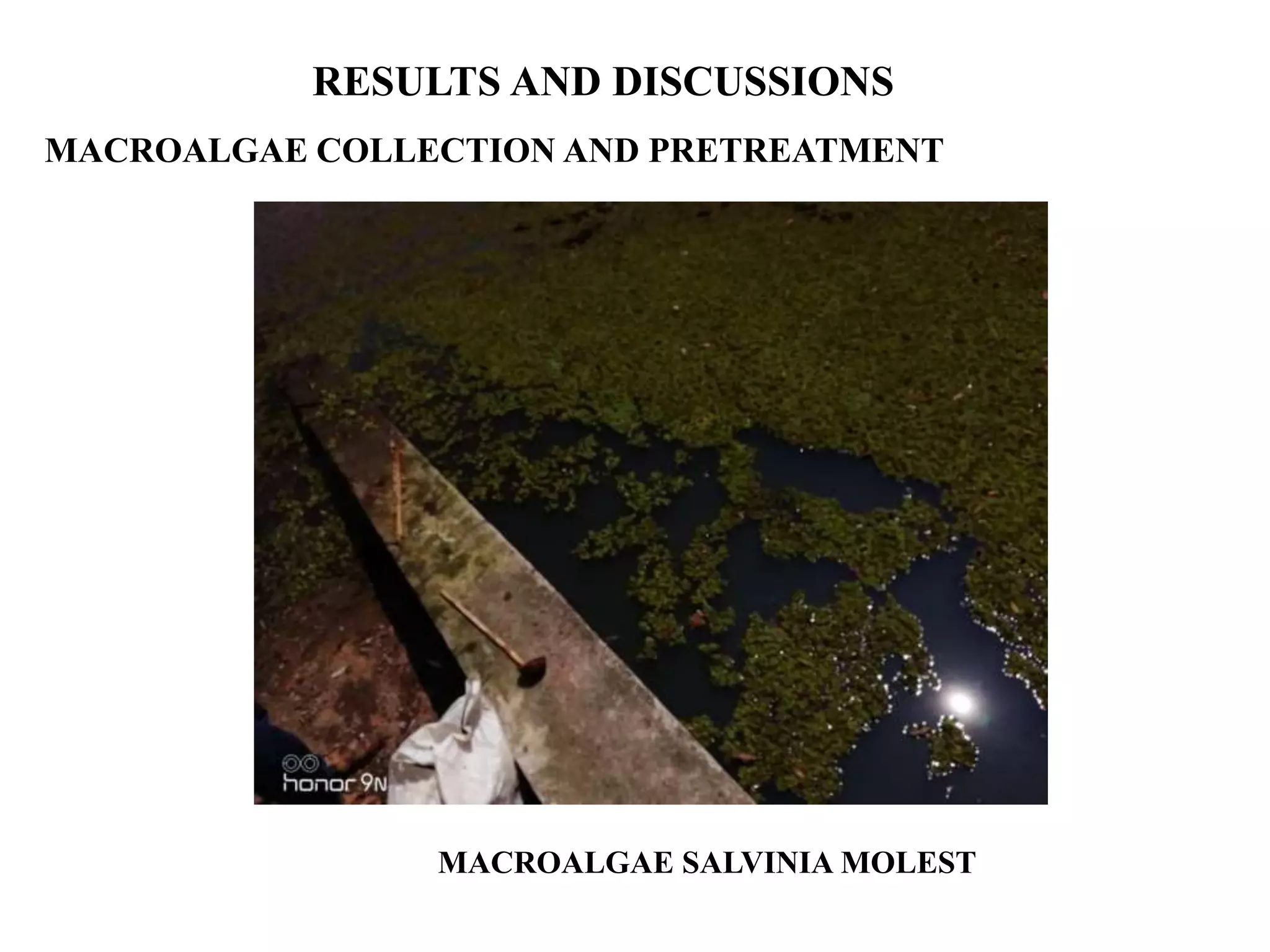
Macroalgae species such as Salvinia molesta was selected, based on their
lipid content, availability, lucrative and annual production rate.
COLLECTION OFALGAL SAMPLE
Macroalgae species were collected from Rajakkamangalam, Melpuram,
Swamiyarmadam, Kanyakumari District, Tamilnadu, India. . The macroalgae
were collected by hand picking from the fresh water pond regions.
PREPARATION OFALGAL BIOMASS
The collected algae were brought to the laboratory and washed with fresh
water followed by distilled water to separate the potential contaminants such as
adhering impurities, sand particles, epiphytes and animal castings. The algal
biomass were dried in shade and in an oven at 60-70°C and then pulverized. The
particle size distribution was determined using a sieve analyzer as per the
American Society for Testing and Materials (ASTM) standards.
EXTRACTION OF OIL FROM MACROALGAL BIOMASS
Pre-treatment of Algal Biomass
 Dry algal biomass along with water (water to biomass ratio as 3:1)
was taken in a conical flask. In order to compare the oil extraction
yield with direct extraction using a solvent, the following methods
for the destruction of algal cells were tested: i) ultrasonic
irradiation was implemented using an ultrasonic probe at 24 kHz
at a constant temperature (50° C ±1) for 5 min, ii) heat treatment
was executed using an auto clave.
 The experimental conditions for autoclave method were
maintained at a temperature of 121°C, pressure of 15 lbs and time
duration of 5 min (Kasai et al 2003),
 deep freezing pre-treatment was carried out using the deep
freezer. The algal biomass sample was placed under freezing
conditions at – 20° C
 microwave pre-treatment was conducted in the microwave oven
for 5 min time duration at 100° C, 500 W and 2455 MHz (Lee et
al 2010),
 lyophilization was performed at 4°C under vacuum pressure (14
Pascal) using a lyophilizer and
 bead-beater pre-treatment was performed with 1 mm glass beads
at a high speed of 1500 rpm.
RESULTS AND DISCUSSIONS
MACROALGAE COLLECTION AND PRETREATMENT
MACROALGAE SALVINIA MOLEST
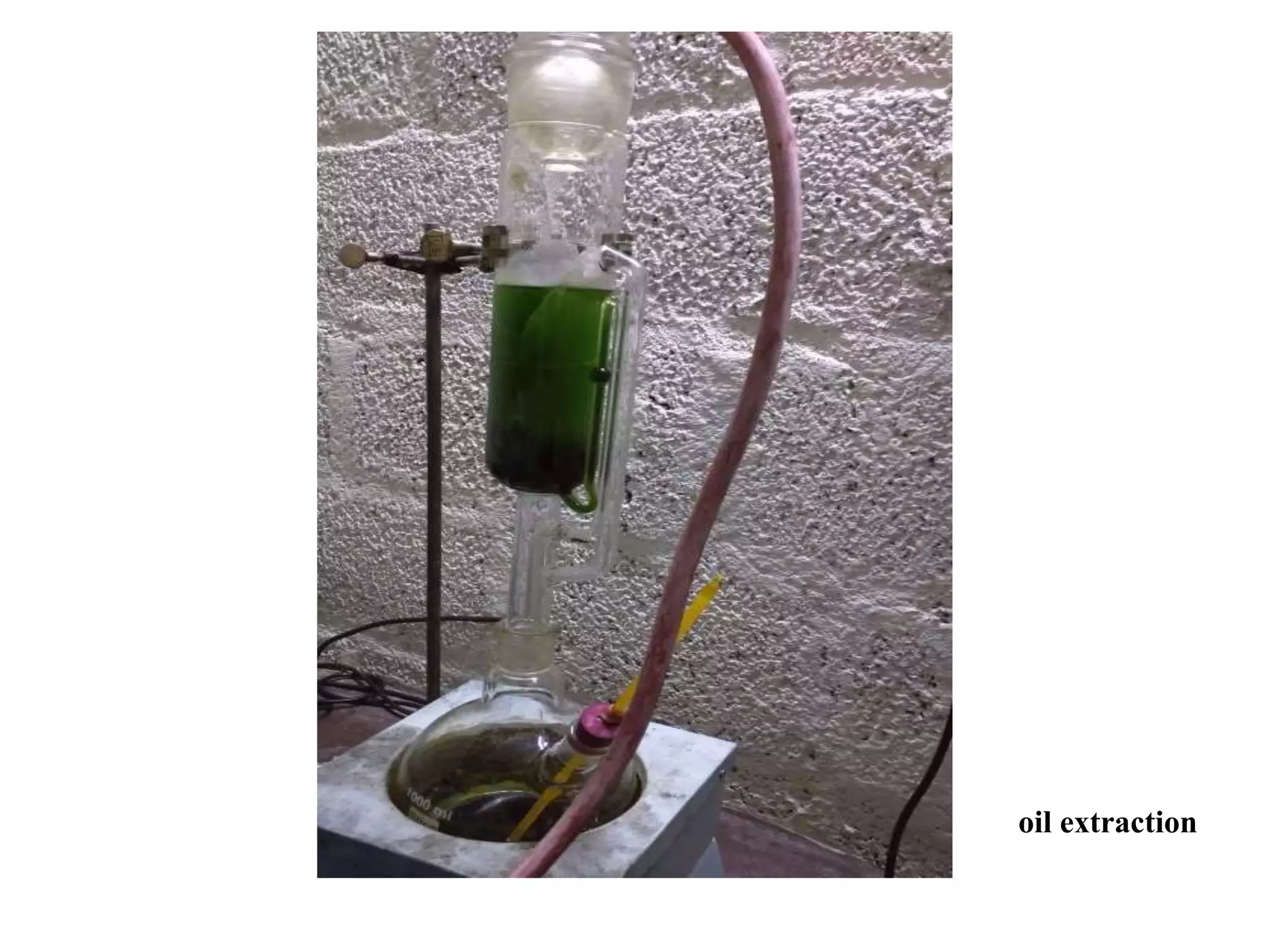
oil extraction
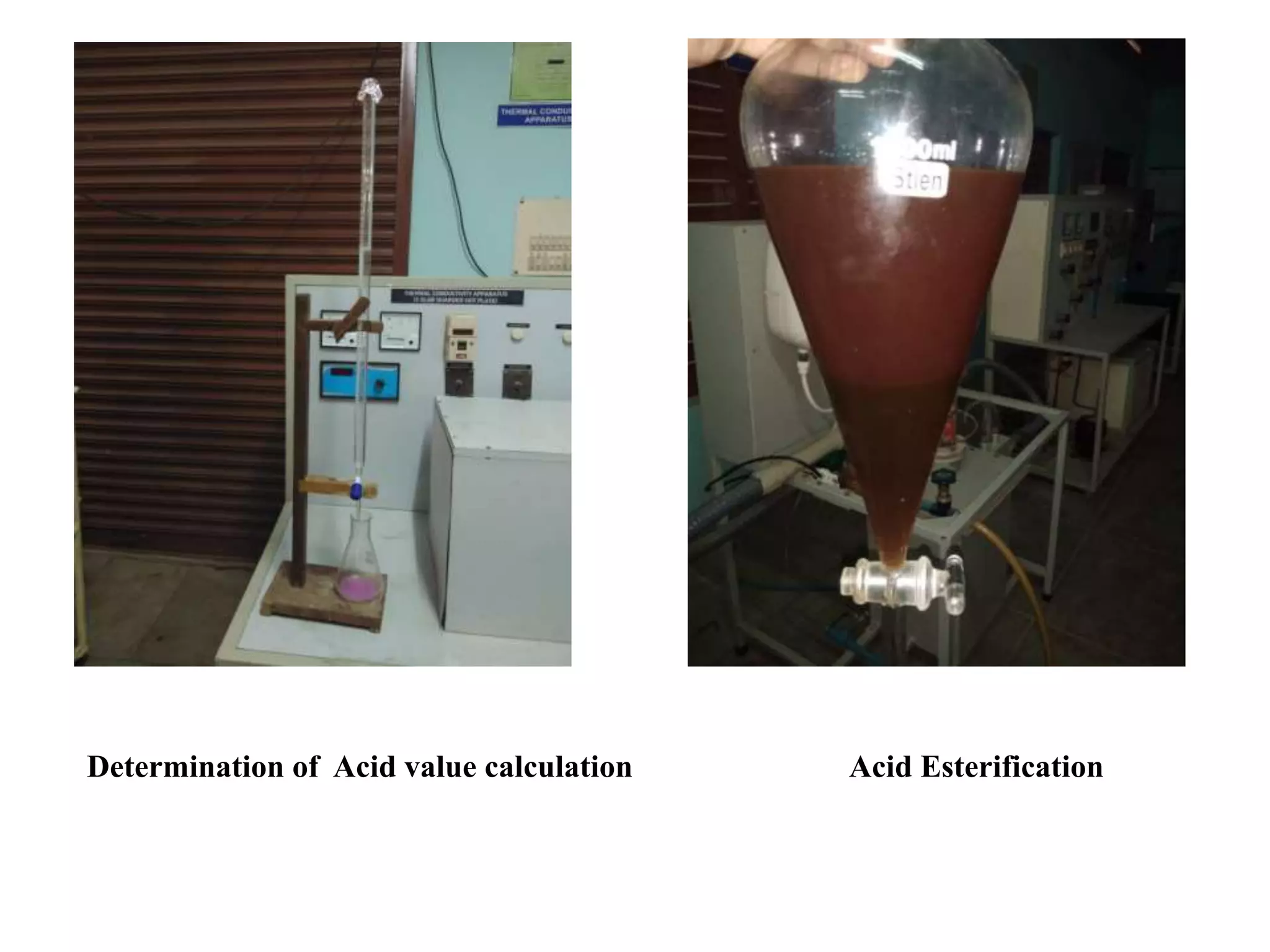
Determination of Acid value calculation Acid Esterification
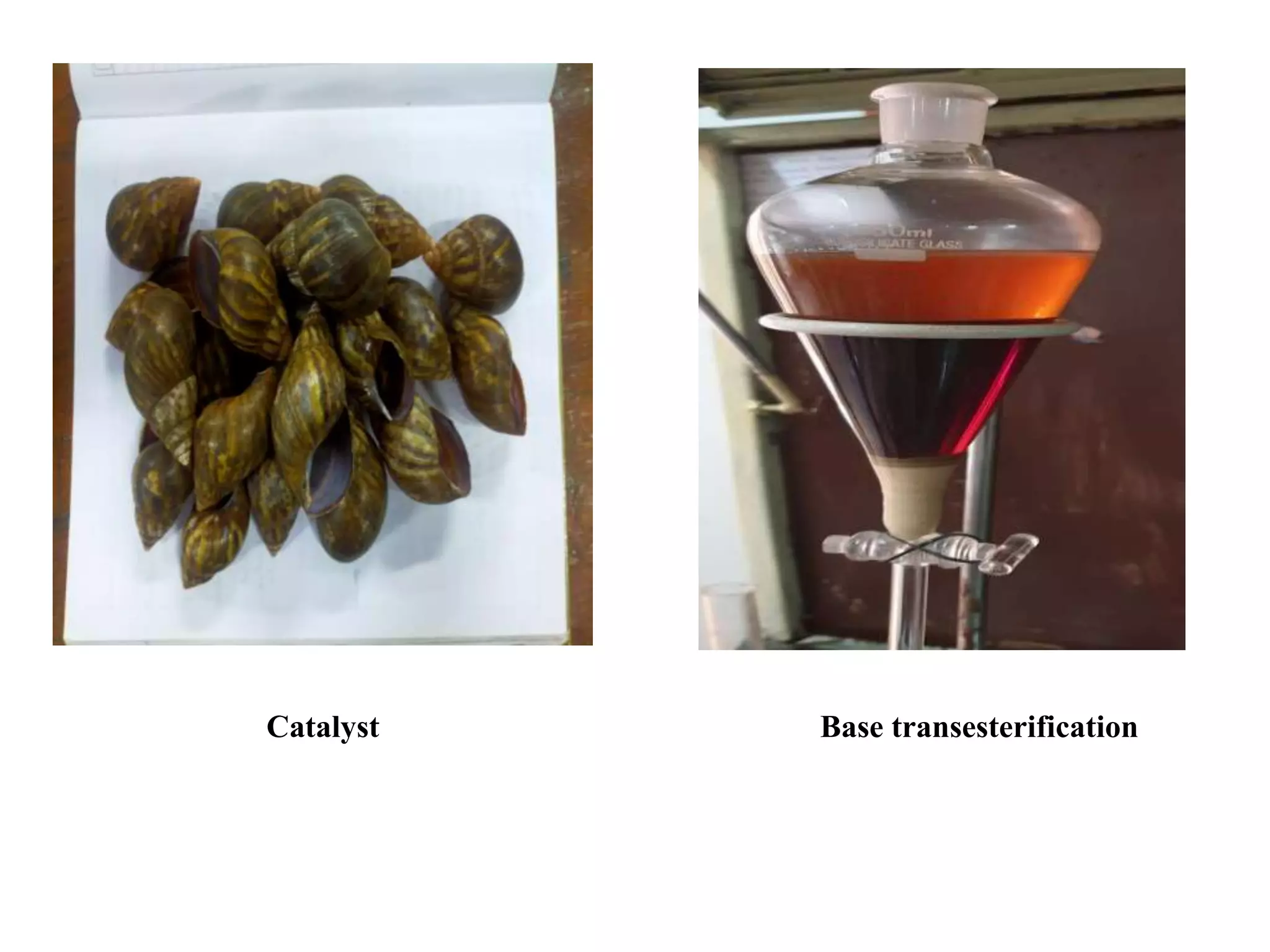
Catalyst Base transesterification
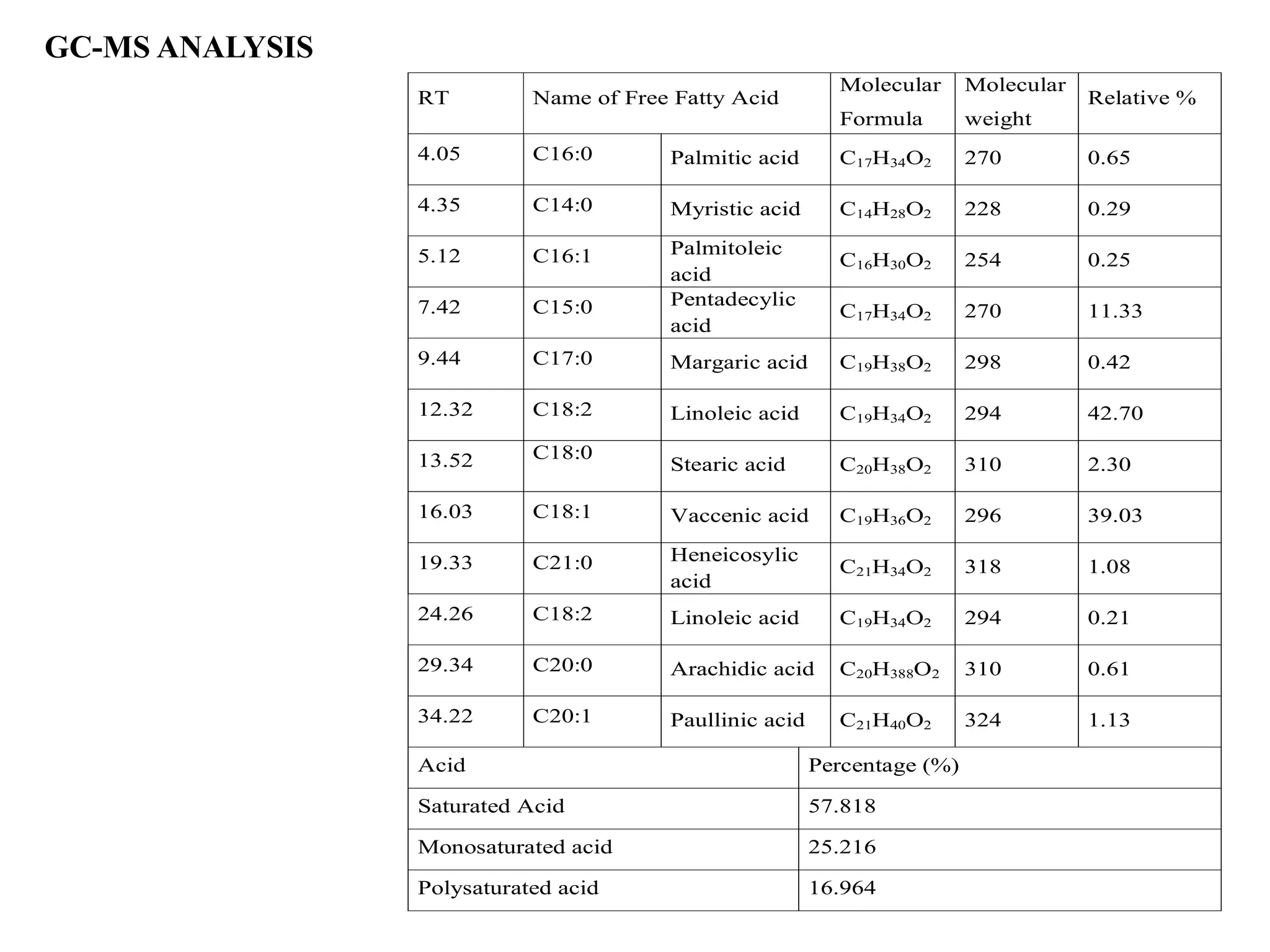
GC-MS ANALYSIS
RT Name of Free Fatty Acid
Molecular
Formula
Molecular
weight
Relative %
4.05 C16:0 Palmitic acid C17H34O2 270 0.65
4.35 C14:0 Myristic acid C14H28O2 228 0.29
5.12 C16:1 Palmitoleic
acid
C16H30O2 254 0.25
7.42 C15:0 Pentadecylic
acid
C17H34O2 270 11.33
9.44 C17:0 Margaric acid C19H38O2 298 0.42
12.32 C18:2 Linoleic acid C19H34O2 294 42.70
13.52 C18:0
Stearic acid C20H38O2 310 2.30
16.03 C18:1 Vaccenic acid C19H36O2 296 39.03
19.33 C21:0 Heneicosylic
acid
C21H34O2 318 1.08
24.26 C18:2 Linoleic acid C19H34O2 294 0.21
29.34 C20:0 Arachidic acid C20H388O2 310 0.61
34.22 C20:1 Paullinic acid C21H40O2 324 1.13
Acid Percentage (%)
Saturated Acid 57.818
Monosaturated acid 25.216
Polysaturated acid 16.964
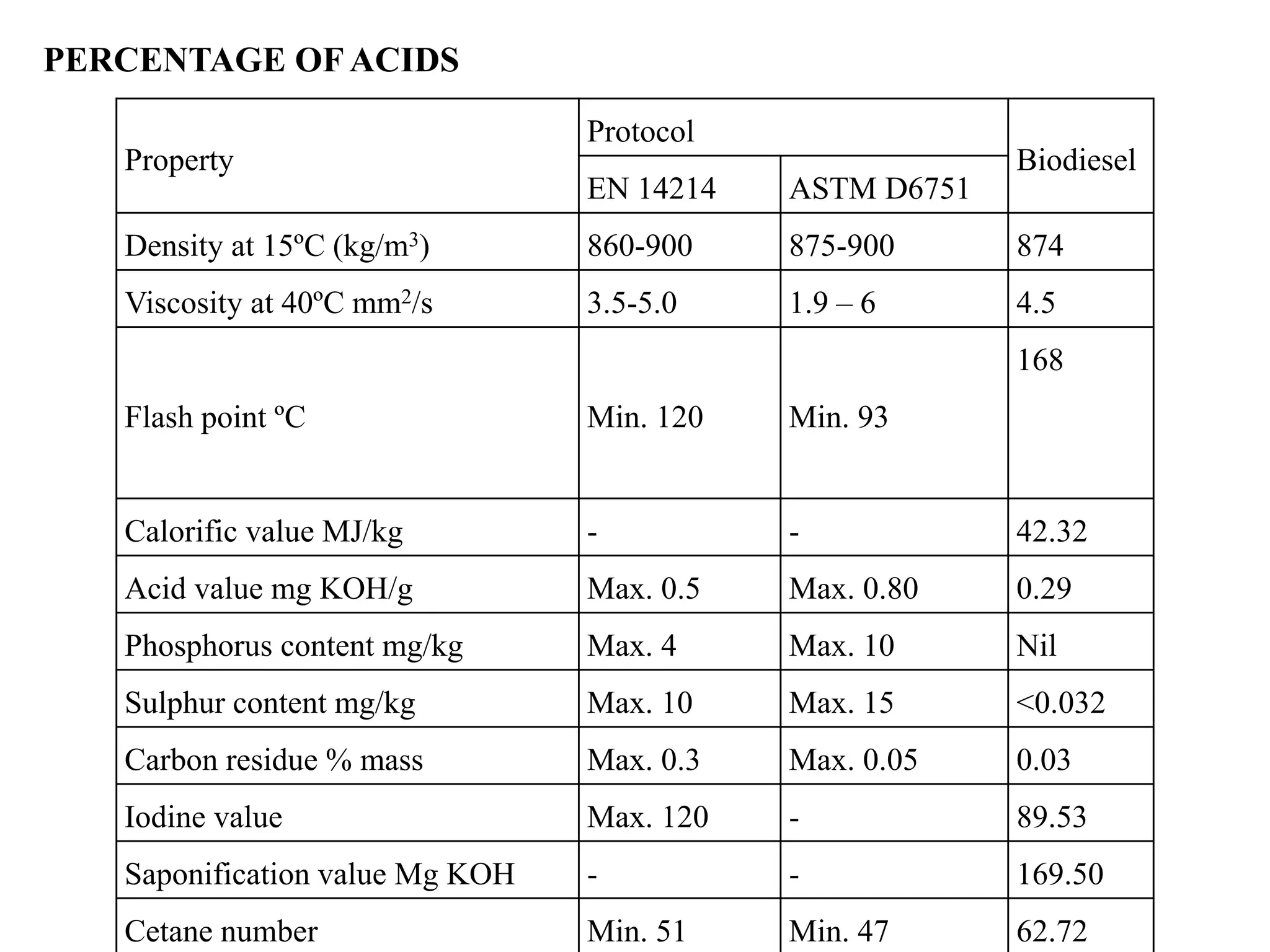
PERCENTAGE OFACIDS
Property
Protocol
Biodiesel
EN 14214 ASTM D6751
Density at 15ºC (kg/m3) 860-900 875-900 874
Viscosity at 40ºC mm2/s 3.5-5.0 1.9 – 6 4.5
Flash point ºC Min. 120 Min. 93
168
Calorific value MJ/kg - - 42.32
Acid value mg KOH/g Max. 0.5 Max. 0.80 0.29
Phosphorus content mg/kg Max. 4 Max. 10 Nil
Sulphur content mg/kg Max. 10 Max. 15 <0.032
Carbon residue % mass Max. 0.3 Max. 0.05 0.03
Iodine value Max. 120 - 89.53
Saponification value Mg KOH - - 169.50
Cetane number Min. 51 Min. 47 62.72
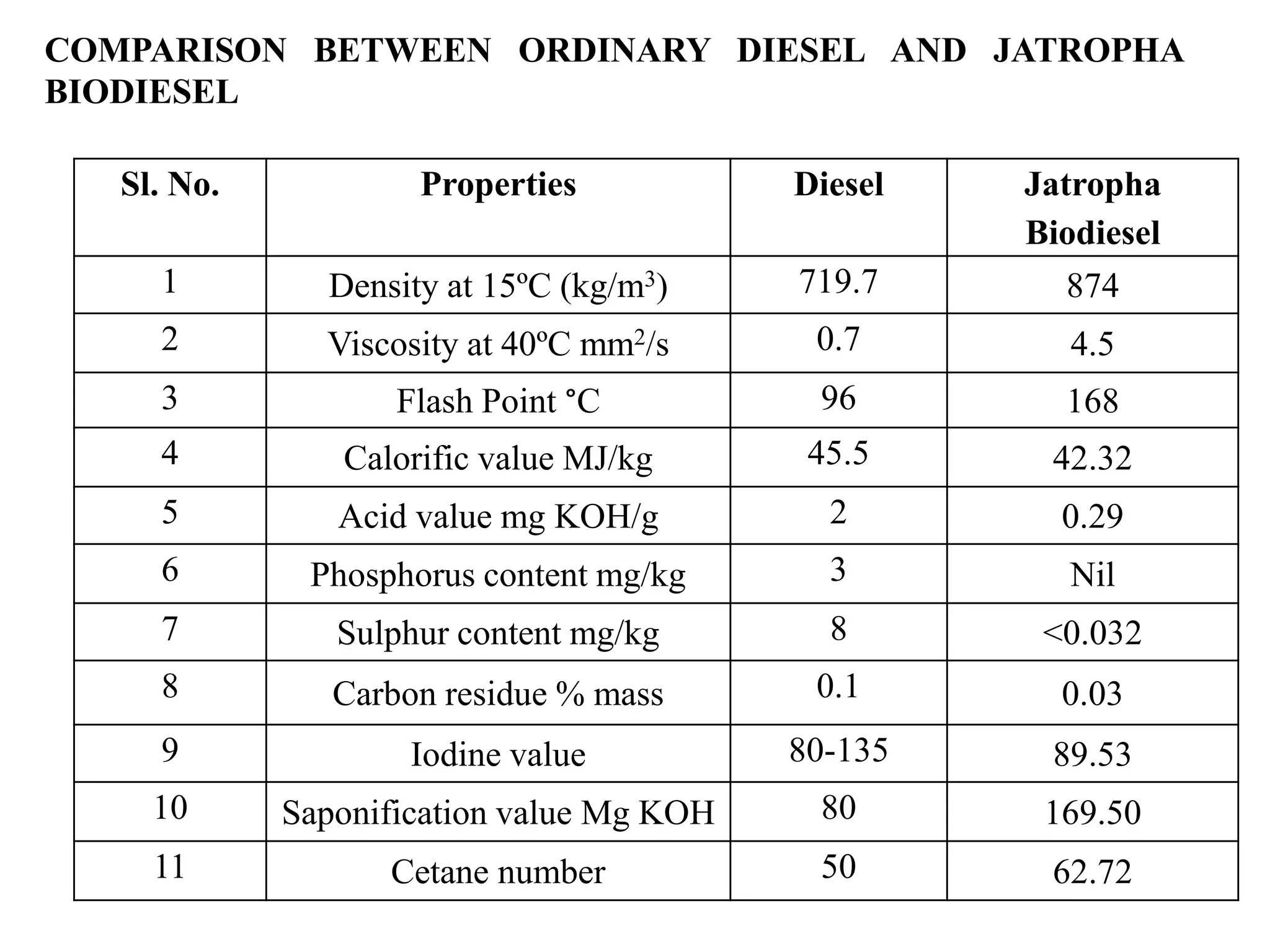
COMPARISON BETWEEN ORDINARY DIESEL AND JATROPHA
BIODIESEL
Sl. No. Properties Diesel Jatropha
Biodiesel
1 Density at 15ºC (kg/m3) 719.7 874
2 Viscosity at 40ºC mm2/s 0.7 4.5
3 Flash Point °C 96 168
4 Calorific value MJ/kg 45.5 42.32
5 Acid value mg KOH/g 2 0.29
6 Phosphorus content mg/kg 3 Nil
7 Sulphur content mg/kg 8 <0.032
8 Carbon residue % mass 0.1 0.03
9 Iodine value 80-135 89.53
10 Saponification value Mg KOH 80 169.50
11 Cetane number 50 62.72
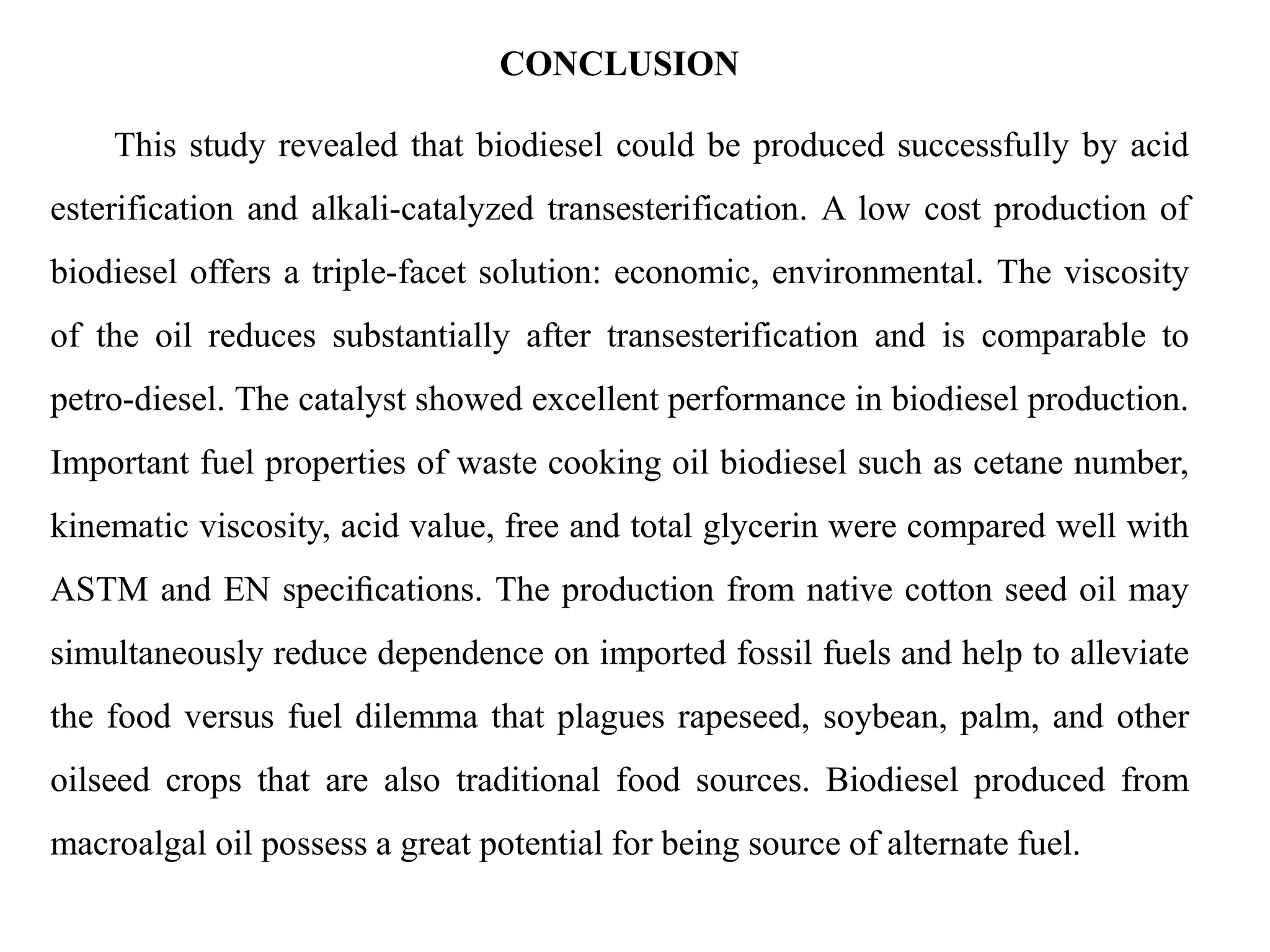
CONCLUSION
This study revealed that biodiesel could be produced successfully by acid
esterification and alkali-catalyzed transesterification. A low cost production of
biodiesel offers a triple-facet solution: economic, environmental. The viscosity
of the oil reduces substantially after transesterification and is comparable to
petro-diesel. The catalyst showed excellent performance in biodiesel production.
Important fuel properties of waste cooking oil biodiesel such as cetane number,
kinematic viscosity, acid value, free and total glycerin were compared well with
ASTM and EN specifications. The production from native cotton seed oil may
simultaneously reduce dependence on imported fossil fuels and help to alleviate
the food versus fuel dilemma that plagues rapeseed, soybean, palm, and other
oilseed crops that are also traditional food sources. Biodiesel produced from
macroalgal oil possess a great potential for being source of alternate fuel.
REFERENCES
1. Adams, C., Peters, J., Rand, M., Schroer, B. and Ziemke, M.
“Investigation of soybean oil as a diesel fuel extender: Endurance
tests”, J. Am. Oil Chem. Soc., Vol 60, pp.1574-1579, 1983.
2. Adewuyi, Y.G. “Sonochemistry: Environmental science and engineering
applications”, Ind. Eng. Chem. Res., Vol.40, pp.4681-4715, 2001.
3. Adeyemi, N.A., Mohiuddin, A.K.M. and Jameel, A.T. “Biodiesel
production: A mini review”, Int. Energy J., Vol.12, pp.15-28, 2011.
4. Ahiekpor, J.C. and Kuwornoo, D.K. “Kinetics of palm kernel oil and
ethanol transesterification”, IJEE, Vol.1, pp.1097-1108, 2010.
5. Ahmad, A.L., Yasin, N.H.M., Derek, C.J.C. and Lim, J.K. “Microalgae
as a sustainable energy source for biodiesel production: A review”,
Renew. Sustain. Energy Rev., Vol.15, pp.584-593, 2011.
THANK YOU

FINAL REVIEW.pptx

  • 1.
    EFFICIENT BIODIESEL PRODUCTIONFROM JATROPHA CURCUS OIL USING NATURAL CATALYST GUIDED BY Mr. A. AJISH, M.E., Assistant Professor Department of mechanical Engineering PRESENTED BY STEBIN J R 960318114049 AKIL RAJ T 960318114301 FENN R L 960318114302 JERRIN JEBA WILLS G M 960318114303 BETHLAHEM INSTITUTE OF ENGINEERING KARUNGAL -629157
  • 2.
    ABSTRACT  The worldis presently confronted with the twin crisis of fossil fuel depletion and environmental degradation.  We need to produce a alternative fuel that must be readily available and environmental friendly.  Biodiesel from Jatropha oil has high potential to become alternative fuel to replace diesel fuel.  Initially the Jatropha oil has high viscosity which cannot be directly used in the diesel engines.  There are different methods to reduce the viscosity of Jatropha oil. In this project transesterification process is used to reduce
  • 3.
     Because ofhigh free fatty acids in Jatropha oil two step acid- base catalyst transesterification processes is used for producing the biodiesel.  And the results based on physical properties of biodiesel produced from Jatropha oil were close to the properties of diesel and efficiency test will be carried out.
  • 4.
    INTRODUCTION  Due todiminishing petroleum reserves and the deleterious environmental consequences of exhaust gases from fossil-based fuels, research on renewable and environment friendly fuels has received a lot of impetus in recent years.  The current alternative diesel fuel can be termed as biodiesel. Biodiesel seems to be a viable choice, but the most significant drawback is the cost of crop oils that account for 70-95% of the total operating cost, used for the biodiesel production (Demirbas 2007).  Biodiesel is usually produced from oleaginous crops, such as, rapeseed, soybean, sunflower and palm.
  • 5.
    ALGAE TECHNOLOGY  Theavailability of oil crops which serve as source for biodiesel production is limited (Chisti 2008). Therefore, it is necessary to find new feedstock, suitable for biodiesel production, which does not drain on the edible vegetable oil supply.  One alternative to the conventional oil crop is algae, because they contain oil, suitable for esterification/transesterification reaction for biodiesel production. Biodiesel production from algae is widely considered as one of the most efficient method.
  • 6.
    REVIEW OF LITERATURE Macroalgalbiomass is suitable feedstock for the production of biodiesel (Maceiras et al 2011; Singh and Olsen 2011; Zhou et al 2010). Many efforts have been dedicated toward producing biofuels from microalgae (Brennan and Owende 2010). However, less effort has been reported about macroalgae. Table 2.1 shows the historical attempts of macroalgae as a feedstock for various purposes. Aresta et al (2005a) produced biodiesel from a green macroalgae Chaetomorpha linum by a comparison of two techniques: supercritical carbon dioxide and thermochemical liquefaction at 250-395°C. The results indicated that thermochemical liquefaction was more efficient, although the yield was still low.
  • 7.
    Zhou et al(2010) investigated the possibility of using macroalgae Enteromorpha prolifera for bio-oil production by hydrothermal liquefaction. Effects of the temperature, reaction time, and alkali catalyst on product yields were studied and the characters of liquid and solid products were analyzed using multiple analysis methods, such as, elemental analysis, Fourier Transform Infrared (FTIR) spectroscopy, GC-MS, and 1H NMR. Maceiras et al (2011) has proven that macroalgae is a feasible raw material for biodiesel production. Their work has been divided into three main sections. The first step on this research consisted of macroalgae characterization in order to determine the best type to carry out the transesterification process.
  • 8.
    MATERIALS AND METHODS MATERIALS Sulphuricacid (H2SO4) was used as acid catalysts, methanol, ethanol were purchased from associate laboratory, Nagercoil for oil extraction and acid value estimation. Organic solvents of the analytical grade (Extra pure 99%) were purchased from Merck Ltd., Mumbai, India. They were reused after preliminary distillation. SELECTION OF MACRO ALGAL SPECIES Macroalgae species such as Salvinia molesta was selected, based on their lipid content, availability, lucrative and annual production rate. COLLECTION OFALGAL SAMPLE Macroalgae species were collected from Rajakkamangalam, Melpuram, Swamiyarmadam, Kanyakumari District, Tamilnadu, India. . The macroalgae were collected by hand picking from the fresh water pond regions.
  • 9.
    PREPARATION OFALGAL BIOMASS Thecollected algae were brought to the laboratory and washed with fresh water followed by distilled water to separate the potential contaminants such as adhering impurities, sand particles, epiphytes and animal castings. The algal biomass were dried in shade and in an oven at 60-70°C and then pulverized. The particle size distribution was determined using a sieve analyzer as per the American Society for Testing and Materials (ASTM) standards.
  • 10.
    EXTRACTION OF OILFROM MACROALGAL BIOMASS Pre-treatment of Algal Biomass  Dry algal biomass along with water (water to biomass ratio as 3:1) was taken in a conical flask. In order to compare the oil extraction yield with direct extraction using a solvent, the following methods for the destruction of algal cells were tested: i) ultrasonic irradiation was implemented using an ultrasonic probe at 24 kHz at a constant temperature (50° C ±1) for 5 min, ii) heat treatment was executed using an auto clave.  The experimental conditions for autoclave method were maintained at a temperature of 121°C, pressure of 15 lbs and time duration of 5 min (Kasai et al 2003),
  • 11.
     deep freezingpre-treatment was carried out using the deep freezer. The algal biomass sample was placed under freezing conditions at – 20° C  microwave pre-treatment was conducted in the microwave oven for 5 min time duration at 100° C, 500 W and 2455 MHz (Lee et al 2010),  lyophilization was performed at 4°C under vacuum pressure (14 Pascal) using a lyophilizer and  bead-beater pre-treatment was performed with 1 mm glass beads at a high speed of 1500 rpm.
  • 12.
    RESULTS AND DISCUSSIONS MACROALGAECOLLECTION AND PRETREATMENT MACROALGAE SALVINIA MOLEST
  • 13.
  • 14.
    Determination of Acidvalue calculation Acid Esterification
  • 15.
  • 16.
    GC-MS ANALYSIS RT Nameof Free Fatty Acid Molecular Formula Molecular weight Relative % 4.05 C16:0 Palmitic acid C17H34O2 270 0.65 4.35 C14:0 Myristic acid C14H28O2 228 0.29 5.12 C16:1 Palmitoleic acid C16H30O2 254 0.25 7.42 C15:0 Pentadecylic acid C17H34O2 270 11.33 9.44 C17:0 Margaric acid C19H38O2 298 0.42 12.32 C18:2 Linoleic acid C19H34O2 294 42.70 13.52 C18:0 Stearic acid C20H38O2 310 2.30 16.03 C18:1 Vaccenic acid C19H36O2 296 39.03 19.33 C21:0 Heneicosylic acid C21H34O2 318 1.08 24.26 C18:2 Linoleic acid C19H34O2 294 0.21 29.34 C20:0 Arachidic acid C20H388O2 310 0.61 34.22 C20:1 Paullinic acid C21H40O2 324 1.13 Acid Percentage (%) Saturated Acid 57.818 Monosaturated acid 25.216 Polysaturated acid 16.964
  • 17.
    PERCENTAGE OFACIDS Property Protocol Biodiesel EN 14214ASTM D6751 Density at 15ºC (kg/m3) 860-900 875-900 874 Viscosity at 40ºC mm2/s 3.5-5.0 1.9 – 6 4.5 Flash point ºC Min. 120 Min. 93 168 Calorific value MJ/kg - - 42.32 Acid value mg KOH/g Max. 0.5 Max. 0.80 0.29 Phosphorus content mg/kg Max. 4 Max. 10 Nil Sulphur content mg/kg Max. 10 Max. 15 <0.032 Carbon residue % mass Max. 0.3 Max. 0.05 0.03 Iodine value Max. 120 - 89.53 Saponification value Mg KOH - - 169.50 Cetane number Min. 51 Min. 47 62.72
  • 18.
    COMPARISON BETWEEN ORDINARYDIESEL AND JATROPHA BIODIESEL Sl. No. Properties Diesel Jatropha Biodiesel 1 Density at 15ºC (kg/m3) 719.7 874 2 Viscosity at 40ºC mm2/s 0.7 4.5 3 Flash Point °C 96 168 4 Calorific value MJ/kg 45.5 42.32 5 Acid value mg KOH/g 2 0.29 6 Phosphorus content mg/kg 3 Nil 7 Sulphur content mg/kg 8 <0.032 8 Carbon residue % mass 0.1 0.03 9 Iodine value 80-135 89.53 10 Saponification value Mg KOH 80 169.50 11 Cetane number 50 62.72
  • 19.
    CONCLUSION This study revealedthat biodiesel could be produced successfully by acid esterification and alkali-catalyzed transesterification. A low cost production of biodiesel offers a triple-facet solution: economic, environmental. The viscosity of the oil reduces substantially after transesterification and is comparable to petro-diesel. The catalyst showed excellent performance in biodiesel production. Important fuel properties of waste cooking oil biodiesel such as cetane number, kinematic viscosity, acid value, free and total glycerin were compared well with ASTM and EN specifications. The production from native cotton seed oil may simultaneously reduce dependence on imported fossil fuels and help to alleviate the food versus fuel dilemma that plagues rapeseed, soybean, palm, and other oilseed crops that are also traditional food sources. Biodiesel produced from macroalgal oil possess a great potential for being source of alternate fuel.
  • 20.
    REFERENCES 1. Adams, C.,Peters, J., Rand, M., Schroer, B. and Ziemke, M. “Investigation of soybean oil as a diesel fuel extender: Endurance tests”, J. Am. Oil Chem. Soc., Vol 60, pp.1574-1579, 1983. 2. Adewuyi, Y.G. “Sonochemistry: Environmental science and engineering applications”, Ind. Eng. Chem. Res., Vol.40, pp.4681-4715, 2001. 3. Adeyemi, N.A., Mohiuddin, A.K.M. and Jameel, A.T. “Biodiesel production: A mini review”, Int. Energy J., Vol.12, pp.15-28, 2011. 4. Ahiekpor, J.C. and Kuwornoo, D.K. “Kinetics of palm kernel oil and ethanol transesterification”, IJEE, Vol.1, pp.1097-1108, 2010. 5. Ahmad, A.L., Yasin, N.H.M., Derek, C.J.C. and Lim, J.K. “Microalgae as a sustainable energy source for biodiesel production: A review”, Renew. Sustain. Energy Rev., Vol.15, pp.584-593, 2011.
  • 21.