ISLAMIC MANAGEMENT
CHAPTER ONE: INTRODUCTION
Prepared by:
MGT113 – Hh GROUP 1
INTRODUCTION
• Islam was revealed more than 1,400 years ago which consists
a full system of life that is compatible for human being of all
ages.
• The revelation from Allah and the teachings of Prophet
(s.a.w) is not confined to the belief and moral systems, but
also includes the law that is suitable to be implemented to
mankind.
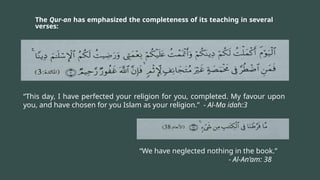
The Qur-an has emphasized the completeness of its teaching in several
verses:
“This day, I have perfected your religion for you, completed. My favour upon
you, and have chosen for you Islam as your religion.” - Al-Ma idah:3
“We have neglected nothing in the book.”
- Al-An’am: 38
TWO DIFFERENT CONCEPTIONS OF
LAW
1. Islamic Law ( Divine Origin)
2. Man-made Law
• Man-made law is the basis of most modern legislation.
• The Islamic concept of Law can be understood when the question of how to
understand Good and Evil is asked.
• These two concepts (good and evil) are called by the Muslim scholars Husn (good,
beauty), and Qubh ( bad, ugliness).
• The basis of the Shari’ah Law is that “what is morally acceptable and good must be
done; and what is morally reprehensible must not be done. “
WHAT IS ABSOLUTELY AND INDUBITABLY HUSN AND QUBH ?
• Qur-an – This contains the very
words of Allah.
• Sunnah - the records of the actions
and sayings of the Prophet (s.a.w).
These two are the tools, which must
be referred to and implemented in
order to determine what is Husn and
Qubh.
However, if the answer is not found in
these two, then the dictates of reason
in accordance with certain definite
principles have to be followed.
.
THE SHARI’AH
• The word “Shari’ah” is derived from
the root of shin ra’ayn which literally
means “the road to the watering place,
the straight path to be followed”.
• As a technical term, it is also defined
by al-Qurtubi as the canon law of
Islam, all the different
commandments of Allah to
mankinds.
.
• A comprehensive definition of Shari’ah is, “it is the sum
total of Islamic teaching and system, which was revealed
to the Prophet recorded in the Qur-an as well as deducible
from the Prophet’s divinely guided lifestyle called Sunnah.
“
- (sanctions relating to beliefs) such as the belief in Allah and the Day of
Judgement.
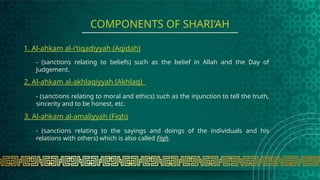
COMPONENTS OF SHARI’AH
1. Al-ahkam al-i’tiqadiyyah (Aqidah)
2. Al-ahkam al-akhlaqiyyah (Akhlaq)
- (sanctions relating to moral and ethics) such as the injunction to tell the truth,
sincerity and to be honest, etc.
3. Al-ahkam al-amaliyyah (Fiqh)
- (sanctions relating to the sayings and doings of the individuals and his
relations with others) which is also called Fiqh.
What is FIQH?
• Fiqh is the name given to the whole science of jurisprudence
because it implies the exercise of intelligence in deciding a
point of law in the absence of a binding text of the Qur-an
and Sunnah.
• It is derived from the root word of fa qa ha which means
comprehension or true understanding.
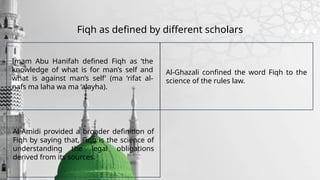
Fiqh as defined by different scholars
Imam Abu Hanifah defined Fiqh as ‘the
knowledge of what is for man’s self and
what is against man’s self’ (ma ‘rifat al-
nafs ma laha wa ma ‘alayha).
Al-Amidi provided a broader definition of
Fiqh by saying that, Fiqh is the science of
understanding the legal obligations
derived from its sources.
Al-Ghazali confined the word Fiqh to the
science of the rules law.
The majority of Islamic authorities defined Fiqh in terms of its four
basic sources and it can, therefore, be defined as follows:
“Fiqh or the science of Islamic Law is the knowledge of one’s rights and
obligations derived from the Qur-an or Sunnah of the Prophet, or the
consensus of opinions among the learned (ijma) or analogical reasoning
(qiyas). “
This is the classic definition of Fiqh founded on the following famous
tradition of Mu’adh.
FIQH
TWO KINDS OF FIQH RULINGS
1.) Rulings that are deduced from the decisive evidence from the Qur-an or
Sunnah
This kind of ruling cannot be changed according to the change of time and place
or circumstance. All the rulings related to ‘ibadah falls under this category.
2.) Rulings that are deduced by the scholars from their understanding and
interpretation of the Qur-an or Sunnah and from other various sources.
This kind of rulings depends largely on the ability of the jurists to utilize the power
of reasoning in deciding a certain Fiqhi issue. Most of the rulings related to
mu’amalah falls under this category and they are flexible and can be changed
according to the changes of time and place or circumstance.
THE DISTINCTION
BETWEEN
SHARI’AH AND
FIQH
THERE ARE SEVERAL OBVIOUS DIFFERENCES
BETWEEN THESE TWO TERM, AMONG THEM ARE;
1. Shari’ah is the wider circle, but Fiqh is confined to what are commonly understood as human acts as far as their
legality and illegality are concerned.
2. Shari’ah is the body of revealed injunctions found both in the Qur’an and Sunnah, includes the following three
main component; sanctions relating to beliefs, sanctions relating to moral and ethics, and sanctions relating to the
sayings and doings of the individuals and his relations with others; which is also called Fiqh; Fiqh is one component
of Shari’ah.
3. Shari’ah is fixed and unchangeable whereas certain ruling of Fiqh changes according to the changes of the
circumstances under which it is applied.
4. Shari’ah is based on revelations, but in Fiqh, the power of reasoning is stressed, and deduction based upon
knowledge are continuously referred to with approval.
5. In Fiqh, an action is either legal or illegal but in the Shari’ah there are various degree of approval and disapproval.
Note: It is not clearly drawn, and very often Muslim Scholars used these two term interchangeably.
THE POSITION AND COMPONENTS OF
FIQH
• The subject matter of Shari'ah can generally be divided into three category; First, Al-ahkam
Al-Ittiqadiyya or Aqid h (sanctions relating to beliefs. Second, Al-ahkam Al-akhlaaqiyyah
ā
(sanctions relating to moral and ethics). Third, Al-ahkam Al-amaliyyah (sanctions relating to
sayings and doings of individuals and his relations with others) ;which is also called Fiqh.
• Without the existence of Islamic Law, there will be no rules and regulations that govern the
affairs of human being and the result is chaotic situations in the society.
• Fiqh covers various aspect of human life.
FIQH CAN GENERALLY BE DEVIDED
INTO TWO MAIN CATEGORIES:
1. FIQH AL- IBĀDAH, it covers the rulings the govern the relationship between man and Allah. (Ibādah) ;This
category can be further devided into four sections; Rulings related to prayers, Rulings related to fasting, Rulings
related to almsgiving, and Rulings related to Hajj
2. FIQH AL-MU'ĀMALAH it covers the rulings between man and man and man and other creatures of Allah.
(Most topics of Fiqh) ;This category can be devided into several sections which cover the entire ruling vital for
mankind; Ff; Rulings related to family law, Rulings governing the commercial transactions between the parties
involved in the transactions, Rulings concerning the management of finance of the state or economic system of
the Islamic state, Rulings related to the Administration of justice in Islam, Rulings governing the rights of non-
muslims in an Islamic state, Rulings determining the relationship between an Islamic Government and a Foreign
Givernment,The Criminal Law of Islam, and Other laws governing the relationship between man and other
allah's creatures.
FIQH RULINGS
This contains into five categories (Al-ahkam al-khamsah);
• Fard or Wajib (Compulsory, Obligatory) refers to absolute command which is supported by decisive proof,
disobedience to it without any legal excuse is a sin. It is of two kind; AYN and KIFAYAH. FARD AYN refers to individual
obligations. While FARD KIFAYAH refers to the collective responsibilities in the sense that if a group of people
undertake to do the obligation, the rest will not be held responsible for it, but if no one carries out this duty then, the
whole community or nation will bear the sin for commiting it.
• Sunnah (recommended act)refers to deeds that are recommended to be undertaken by the Muslims. It is of two
kind;
• 1. Sunnah Mu-akkada, highly recommended for Muslims to emulate. It is also called Mandub (highly recommended
act).
• 2. Sunnah gayr Mu-akkadah, this kind of action is the action that is recommended. It is also called mustahab
(praiseworthy).
• Haram (prohibited, unlawful) This is an act that is
prohibited by a decisive evidence (adillah qat’iyyah)
from the Qur’an or Sunnah. Commiting such an act
is punishable and its omission is rewarded. e.g. riba
• Makruh (abominable, undesirable) It is the act
whose omission is undesirable; nearer to
permissible, and near to haram.
• Mubah (permissible, indifferent) It is also called ja-
iz or halal.This refers to an act whose both
commission and omission neither merits any
reward nor entails any punishment.
USUL AL-FIQH
Scholars of Islamic Law divide the science of Fiqh into two main divisions; The
Usul which literally means the roots or foundations and the Furu; the branches of
the law.The science of usul deals with the methods by which the rules of Fiqh are
deduced from their sources and the science of Furu delas with the particular
injunctions (ahkam) are the results of the science of Usul.
Usul al-Fiqh or the origin of Islamic Law explain the indications and methods by
which the rules of Fiqh are deduced from their sources. These indications are
found mainly in the Qur’an and Sunnah which are the principal sources of Islamic
Law.TH rules of Fiqh are derived from the Qur’an and Sunnah and other sources
which are collectively known as Usul al-Fiqh.
The methodology of Usul al-fiqh refers to ijtihad (methods of reasoning) such as qiyas
(analogy), Istihsan (juristic preference), Istislah (public interest), Istishab (presumption
of continuity), Urf (customary practice), Amal ahlal Madenah (practice of al-madenah
people) and Sadda al-dhara’i (blocking the means to evil).These are all considered as
assistance to the correct understanding of the sources and tools of Ijtihad. Thus, Fiqh
as such , is the end product of Usul al-fiqh. However, the two are separate disciplines.
Ibn khaldun (d.808AH/1406CE) emphasized the importance of usul al-fiqh when he
said: (it is) one of the greatest sciences of the Shari’ah, the powerful and beneficial
science. Fakhr al-Din al-Razi (d.606AH/1209CE) also stressed the importance of this
science in his work Al-Mahsul when he said that it is the most important science for
the Mujtahid.
The General Objectives of Shari'ah (Maqasid al-Shariah 'Àmmah)
The primary objective of the Shariah is the realization of benefit to the people, concerning to their
affairs both in this world and the hereafter. It is generally held that the Shariah in all of its parts
aims at securing a benefit for the people or protecting them against corruption and evil.
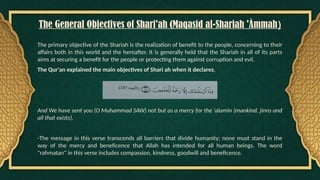
The Qur'an explained the main objectives of Shari ah when it declares,
And We have sent you (O Muhammad SAW) not but as a mercy for the 'alamin (mankind, jinns and
all that exists).
-The message in this verse transcends all barriers that divide humanity; none must stand in the
way of the mercy and beneficence that Allah has intended for all human beings. The word
"rahmatan" in this verse includes compassion, kindness, goodwill and beneficence.
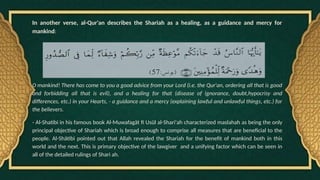
In another verse, al-Qur'an describes the Shariah as a healing, as a guidance and mercy for
mankind:
O mankind! There has come to you a good advice from your Lord (i.e. the Qur'an, ordering all that is good
and forbidding all that is evil), and a healing for that (disease of ignorance, doubt,hypocrisy and
differences, etc.) in your Hearts, - a guidance and a mercy (explaining lawful and unlawful things, etc.) for
the believers.
- Al-Shatibi in his famous book Al-Muwafagät fi Usül al-Shari'ah characterized maslahah as being the only
principal objective of Shariah which is broad enough to comprise all measures that are beneficial to the
people. Al-Shätibi pointed out that Allah revealed the Shariah for the benefit of mankind both in this
world and the next. This is primary objective of the lawgiver and a unifying factor which can be seen in
all of the detailed rulings of Shari ah.
Further examination of the verses of al-Qur'än and Sunnah will prove the above claim that the Shariah was revealed
with the main objective of providing benefit and preventing harm (jalb al-masalih wa dar al-mafäsid) from
mankind. All the benefits are for mankind and Allah will not gain and does not need to gain anything from these
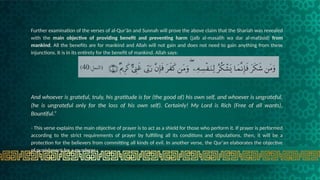
injunctions. It is in its entirety for the benefit of mankind. Allah says:
And whoever is grateful, truly, his gratitude is for (the good of) his own self, and whoever is ungrateful,
(he is ungrateful only for the loss of his own self). Certainly! My Lord is Rich (Free of all wants),
Bountiful.“
- This verse explains the main objective of prayer is to act as a shield for those who perform it. If prayer is performed
according to the strict requirements of prayer by fulfilling all its conditions and stipulations, then, it will be a
protection for the believers from committing all kinds of evil. In another verse, the Qur'an elaborates the objective
of punishment for a murderer :
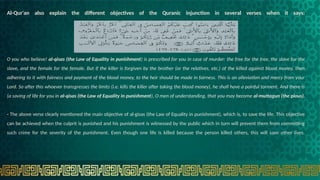
Al-Qur'an also explain the different objectives of the Quranic injunction in several verses when it says:
O you who believe! al-qisas (the Law of Equality in punishment) is prescribed for you in case of murder: the free for the free, the slave for the
slave, and the female for the female. But if the killer is forgiven by the brother (or the relatives, etc.) of the killed against blood money, then
adhering to it with fairness and payment of the blood money, to the heir should be made in fairness. This is an alleviation and mercy from your
Lord. So after this whoever transgresses the limits (i.e. kills the killer after taking the blood money), he shall have a painful torment. And there is
(a saving of life for you in al-qisas (the Law of Equality in punishment), O men of understanding, that you may become al-muttagun (the pious).
- The above verse clearly mentioned the main objective of al-gisas (the Law of Equality in punishment), which is, to save the life. This objective
can be achieved when the culprit is punished and his punishment is witnessed by the public which in turn will prevent them from committing
such crime for the severity of the punishment. Even though one life is killed because the person killed others, this will save other lives.
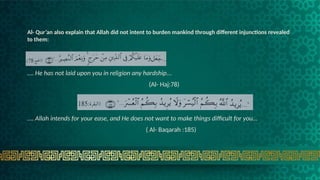
Al- Qur’an also explain that Allah did not intent to burden mankind through different injunctions revealed
to them:
…. He has not laid upon you in religion any hardship…
(Al- Haj:78)
…. Allah intends for your ease, and He does not want to make things difficult for you…
( Al- Baqarah :185)
The Different Categories of the Objectives of Shariah
 Essentials (daruriyyat) - are the matters on which the religion and worldly affairs of the people depend upon,
their neglect will lead to total disruption and disorder and it could lead to evil ending.
The essentials (darriyyat), can be further divided into the protection of the five fundamental values (al-daruriyyah,
al-khamsah), which are necessary to human life. These are:
 Protection of Al-Din
 Protection of Life (Al-Nafs)
 Protection of Dignity or Lineage (Al-’Ird)
 Protection of Intellect (Al-’Aql)
 Protection of Property (Al-mal)
- Al-Din is the most important values that must
be protected by the Muslims. It is obligatory
upon each and every Muslims to protect his al-
din at personal level and at every level. The
protection of al-din at personal level is
achieved through the observance of the
different kind ibadah, such as performing the
five prayers, fasting, paying of zakah and
performing hajj.
1. Protection of Al-Din
2) PROTECTION OF
LIFE IN ISLAM ( Al- nafs )
• This excerpt emphasizes the Islamic
principle of protecting life as sacred and
valuable, regardless of social status or
religious beliefs. Taking a life is forbidden
except for just causes, and the Quran
stresses equal protection for all. The text
highlights the severe consequences of
killing, both in this life and the afterlife, and
underscores the importance of self-defense.
It introduces the concept of Qisas, the Law of
Equality, which prescribes retribution for murder. It
emphasizes that while taking a life is a grave
offense, the punishment aims to deter future crimes
and protect the sanctity of life. importance of saving
a life, even at the expense of others, but
emphasizes that saving a drowning person is a
compulsory act.
3) Protection of Dignity and Lineage (Al-Ird)
It underscores the importance of privacy,
respectful relationships, and the severe
consequences of false accusations,
particularly against women.
Protecting Dignity and Regulating Relationships in
Islam
It emphasizes protecting dignity and regulates
relationships between men and women. It
emphasizes the importance of avoiding free mixing,
encouraging marriage as a means of safeguarding
honor, and prohibiting the exploitation of women for
commercial gain.
Prohibition of Adultery in Islam
It focuses on the severe consequences of adultery
in Islam. adultery is considered a grave sin,
leading to social problems. punishment for
unmarried adulterers, which includes flogging, while
the punishment for married adulterers is stoning to
death. It also mentions that taking the life of an
adulterer is not permissible.
4) Protection of the Intellect or Mind
(Al-Aql)
It emphasizes importance of protecting the intellect
as a gift from Allah. It encourages tolerance, respect
for differences in opinions, and using sound
evidence and logic in forming beliefs. The Prophet
Muhammad (PBUH) is presented as a model for
allowing diverse viewpoints and working together to
solve problems.
Protecting the Mind and Forbidding
Intoxicants
The importance of protecting the mind from harmful
substances, specifically focusing on the prohibition
of intoxicants (liquor, gambling, etc.). It highlights
that Islam encourages seeking knowledge and
striving for the best opinion based on Quran and
Sunnah. It emphasizes the severity of the
punishment for consuming intoxicants, which
includes 80 lashes.
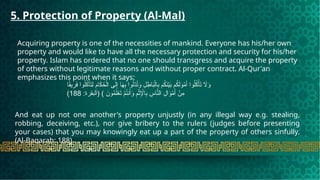
5. Protection of Property (Al-Mal)
Acquiring property is one of the necessities of mankind. Everyone has his/her own
property and would like to have all the necessary protection and security for his/her
property. Islam has ordered that no one should transgress and acquire the property
of others without legitimate reasons and without proper contract. Al-Qur'an
emphasizes this point when it says:
‫ا‬ً
‫ق‬‫ي‬ِ
‫ر‬َ
‫ف‬ ‫وا‬ُ‫ل‬ُ
‫ك‬ْ‫أ‬َ
‫ت‬ِ‫ل‬ ِ
‫ام‬َ
‫ك‬ُ
‫ح‬ْ‫ال‬ ‫ى‬َ‫ل‬ِ‫إ‬ ‫ا‬َ
‫ه‬ِ
‫ب‬ ‫وا‬ُ‫ْل‬
‫د‬ُ
‫ت‬َ
‫و‬ ِ
‫ل‬ ِ
‫اط‬َ
‫ب‬ْ‫ال‬ِ
‫ب‬ ‫م‬ُ
‫ك‬َ
‫ن‬ْ‫ي‬َ
‫ب‬ ‫م‬ُ
‫ك‬َ‫ل‬َ
‫و‬ْ
‫م‬َ‫أ‬ ‫وا‬ُ‫ل‬ُ
‫ك‬ْ‫أ‬َ
‫ت‬ ‫اَل‬َ
‫و‬
:‫(البقرة‬ ) َ
‫ون‬ُ
‫م‬َ‫ل‬ْ
‫ع‬َ
‫ت‬ ْ
‫م‬ُ
‫ت‬‫ن‬َ‫أ‬َ
‫و‬ ِ
‫م‬ْ‫ث‬ِ‫إْل‬‫ا‬ِ
‫ب‬ ِ
‫اس‬َّ
‫الن‬ ِ
‫ال‬َ
‫و‬ْ
‫م‬َ‫أ‬ ْ
‫ِن‬
‫م‬
188
)
And eat up not one another's property unjustly (in any illegal way e.g. stealing,
robbing, deceiving, etc.), nor give bribery to the rulers (judges before presenting
your cases) that you may knowingly eat up a part of the property of others sinfully.
(Al-Baqarah: 188)
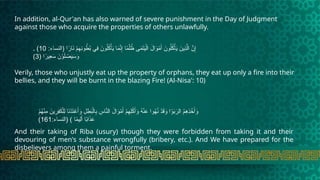
In addition, al-Qur'an has also warned of severe punishment in the Day of Judgment
against those who acquire the properties of others unlawfully.
. :‫(النساء‬ ‫ا‬ً
‫ار‬َ
‫ن‬ ْ
‫م‬ِ
‫ِه‬
‫ن‬‫و‬ ُ
‫ط‬ُ
‫ب‬ ‫ِي‬
‫ف‬ َ
‫ون‬ُ‫ل‬ُ
‫ك‬ْ‫أ‬َ
‫ي‬ ‫ا‬َ
‫م‬َّ
‫ن‬ِ‫إ‬ ‫ا‬ً
‫م‬ْ‫ل‬ ُ
‫ظ‬ ‫ى‬َ
‫م‬َ
‫ت‬َ
‫ي‬ْ‫ال‬ َ
‫ال‬َ
‫و‬ْ
‫م‬َ‫أ‬ َ
‫ون‬ُ‫ل‬ُ
‫ك‬ْ‫أ‬َ
‫ي‬ َ
‫ِين‬
‫ذ‬َّ‫ال‬ َّ
‫ن‬ِ‫إ‬
10
)
( ‫ا‬ً
‫ِير‬
‫ع‬َ
‫س‬ َ
‫ن‬ْ
‫و‬َ‫ل‬ ْ
‫ص‬َ
‫ي‬َ
‫س‬َ
‫و‬
3
)
Verily, those who unjustly eat up the property of orphans, they eat up only a fire into their
bellies, and they will be burnt in the blazing Fire! (Al-Nisa': 10)
ْ
‫م‬ُ
‫ه‬ْ‫ن‬ِ
‫م‬ َ
‫ين‬ِ
‫ِر‬
‫ف‬َ
‫ك‬ْ‫ِل‬‫ل‬ ‫ا‬َ
‫ن‬ْ
‫د‬َ
‫ت‬ ْ
‫ع‬َ‫أ‬َ
‫و‬ ِ
‫ل‬ ِ
‫ط‬َ
‫ب‬ْ‫ال‬ِ
‫ب‬ ِ
‫اس‬َّ
‫الن‬ َ
‫ال‬َ
‫و‬ْ
‫م‬َ‫أ‬ ْ
‫م‬ِ
‫ِه‬‫ل‬ْ
‫ك‬َ‫أ‬َ
‫و‬ ُ
‫ه‬ْ‫ن‬َ
‫ع‬ ‫وا‬ُ
‫ه‬ُ
‫ن‬ ْ
‫د‬َ
‫ق‬َ
‫و‬ ‫ا‬ْ
‫و‬َ
‫ب‬َ
‫الر‬ ُ
‫م‬ِ
‫ِه‬
‫ذ‬ ْ
‫خ‬َ‫أ‬َ
‫و‬
:‫(النساء‬ ) ‫ا‬ً
‫م‬‫ِي‬‫ل‬َ‫أ‬ ‫ا‬ً
‫ب‬‫ا‬َ
‫ذ‬َ
‫ع‬
161
)
And their taking of Riba (usury) though they were forbidden from taking it and their
devouring of men's substance wrongfully (bribery, etc.). And We have prepared for the
disbelievers among them a painful torment.
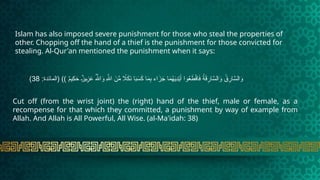
Islam has also imposed severe punishment for those who steal the properties of
other. Chopping off the hand of a thief is the punishment for those convicted for
stealing. Al-Qur'an mentioned the punishment when it says:
:‫(المائدة‬ )) ٌ
‫م‬‫ِي‬
‫ك‬َ
‫ح‬ ٌ
t‫ز‬‫ي‬ِ
t
‫ز‬َ
‫ع‬ ُ‫هَّلل‬‫ا‬َ
‫و‬ ِ‫هَّلل‬‫ا‬ َ
‫ن‬ِّ
‫م‬ ‫اًل‬َ
‫ك‬َ
‫ن‬ ‫ا‬َ
‫ب‬َ
‫س‬َ
‫ك‬ ‫ا‬َ
‫م‬ِ
‫ب‬ ‫اء‬َ
‫ز‬َ
‫ج‬ ‫ا‬َ
‫م‬ُ
‫ه‬َ
‫ي‬ِ
‫د‬ْ‫ي‬َ‫أ‬ ‫وا‬ُ
‫ع‬ َ
‫ط‬ْ‫ق‬‫ا‬َ
‫ف‬ ُ
‫ة‬َ
‫ق‬ِ
‫ار‬َّ
‫الس‬َ
‫و‬ ُ
‫ق‬ِ
‫ار‬َّ
‫الس‬َ
‫و‬
38
)
Cut off (from the wrist joint) the (right) hand of the thief, male or female, as a
recompense for that which they committed, a punishment by way of example from
Allah. And Allah is All Powerful, All Wise. (al-Ma'idah: 38)
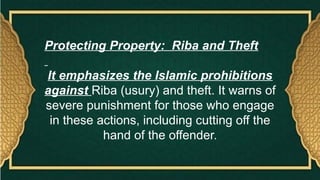
Protecting Property: Riba and Theft
It emphasizes the Islamic prohibitions
against Riba (usury) and theft. It warns of
severe punishment for those who engage
in these actions, including cutting off the
hand of the offender.
The Complementary (Al-Hajiyyat)
The complementary interests or al-hajiyyah on the whole supplement to the five
essential interests and it refers to those kind of interests whose neglect leads to
hardship of the individual or community although it does not lead to the total
disruption of normal life. There are many examples of al-hajiyyat such as the
despensations or legal excuses (rukhsah) that the Shari'ah has granted in
regards to 'ibadah for the travelers and the sick. Travelers are allowed to
combine and shorten their five obligatory prayers (al-jam' wa qasr) and break
their fast in ramadan. A sick person is allowed to pray in sitting or sleeping
position and break his fast in ramadan. In the area of mu'amalah, the ban of
profiteering (iḥtikar) for example, or the sale of alcohol so as to prevent its
consumption, and concessions, all fall under the category of hajjiyyat. In
addition, the basic permissibility (ibahah) regarding the enjoyment of victuals
and hunting also fall under this category.
The Embellishments (Al-Tahsiniyyat)
The embellishments or al-tahsiniyyat
refer to interests whose realization lead
to improvement and the attainment of
that which is desirable. Therefore, the
observance of cleanliness in personal
appearance and in ‘ibadah, moral values
virtues, avoiding extravagance and
measures that are designed to prevent
proliferation of false claims in the courts,
etc., falls under the catefory of al-
tahsiniyyat. The disappearance of
tahsiniyyat may not interrupt the normal
life, but it might lead to the lack of
Other General Objectives of Shari’ah
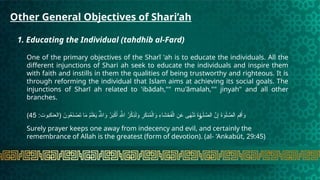
1. Educating the Individual (tahdhib al-Fard)
One of the primary objectives of the Sharĩ 'ah is to educate the individuals. All the
different injunctions of Shari ah seek to educate the individuals and inspire them
with faith and instills in them the qualities of being trustworthy and righteous. It is
through reforming the individual that Islam aims at achieving its social goals. The
injunctions of Sharī ah related to 'ibādah,"" mu'ãmalah,"" jinyah" and all other
branches.
:‫(العنكبوت‬ َ
‫ون‬ُ
‫ع‬َ
‫ن‬ ْ
‫ص‬َ
‫ت‬ ‫ا‬َ
‫م‬ ُ
‫م‬َ‫ل‬ْ
‫ع‬َ
‫ي‬ ُ‫هَّلل‬‫ا‬َ
‫و‬ ُ
‫ر‬َ
‫ب‬ْ
‫ك‬َ‫أ‬ ِ‫هَّلل‬‫ا‬ ُ
‫ر‬ْ
‫ك‬ِ
‫ذ‬َ‫ل‬َ
‫و‬ ِ
‫ر‬َ
‫ك‬‫ن‬ُ
‫م‬ْ‫ال‬َ
‫و‬ ِ
‫ء‬‫ا‬َ
‫ش‬ ْ
‫ح‬َ
‫ف‬ْ‫ال‬ ِ
‫ن‬َ
‫ع‬ ‫ى‬َ
‫ه‬ْ‫ن‬َ
‫ت‬ َ
‫ة‬ َ‫ل‬ َّ
‫الص‬ َّ
‫ن‬ِ‫إ‬ َ
‫ة‬َ
‫و‬َ‫ل‬ َّ
‫الص‬ ِ
‫ِم‬
‫ق‬َ‫أ‬َ
‫و‬
ٰ‫و‬
45
)
Surely prayer keeps one away from indecency and evil, and certainly the
remembrance of Allah is the greatest (form of devotion). (al- 'Ankabüt, 29:45)
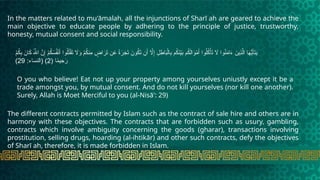
In the matters related to mu'āmalah, all the injunctions of Sharī ah are geared to achieve the
main objective to educate people by adhering to the principle of justice, trustworthy,
honesty, mutual consent and social responsibility.
ْ
‫م‬ُ
‫ك‬ِ
‫ب‬ َ
‫ان‬َ
‫ك‬ َ‫هَّلل‬‫ا‬ َّ
‫ن‬ِ‫إ‬ ْ
‫م‬ُ
‫ك‬َ
‫س‬ُ
‫ف‬ْ‫ن‬َ‫أ‬ ‫وا‬ُ‫ل‬ُ
‫ت‬ْ‫ق‬َ
‫ت‬ ‫اَل‬َ
‫و‬ ْ
‫م‬ُ
‫ك‬‫ِن‬
‫م‬ ٍ
‫اض‬َ
‫ر‬َ
‫ت‬ ‫ن‬َ
‫ع‬ ً
‫ة‬َ
‫ر‬َ
‫ج‬َ
‫ت‬ َ
‫ون‬ُ
‫ك‬َ
‫ت‬ ‫ن‬َ‫أ‬ ‫اَّل‬ِ‫إ‬ ِ
‫ل‬ ِ
‫اط‬َ
‫ب‬ْ‫ال‬ِ
‫ب‬ ‫م‬ُ
‫ك‬َ
‫ن‬ْ‫ي‬َ
‫ب‬ ‫م‬ُ
‫ك‬َ‫ل‬‫ا‬َ
‫و‬ْ
‫م‬َ‫أ‬ ‫وا‬ُ‫ل‬ُ
‫ك‬ْ‫أ‬َ
‫ت‬ ‫اَل‬ ‫وا‬ُ
‫ن‬َ
‫م‬‫ا‬َ
‫ء‬ َ
‫ِين‬
‫ذ‬َّ‫ال‬ ‫ا‬َ
‫ه‬ُّ
‫ي‬َ
‫أ‬َ
‫ت‬َ
‫ي‬
( ‫ا‬ً
‫م‬‫ي‬ِ
‫ح‬َ
‫ر‬
2
:‫(النساء‬ )
29
)
O you who believe! Eat not up your property among yourselves uniustly except it be a
trade amongst you, by mutual consent. And do not kill yourselves (nor kill one another).
Surely, Allah is Moet Merciful to you (al-Nisā': 29)
The different contracts permitted by Islam such as the contract of sale hire and others are in
harmony with these objectives. The contracts that are forbidden such as usury, gambling,
contracts which involve ambiguity concerning the goods (gharar), transactions involving
prostitution, selling drugs, hoarding (al-ihtikār) and other such contracts, defy the objectives
of Sharī ah, therefore, it is made forbidden in Islam.
َ
‫ون‬ُ
‫ن‬ِ
‫م‬ْ
‫ؤ‬ُ
‫ت‬ ْ
‫م‬ُ
‫ت‬‫ن‬ُ
‫ك‬ ‫ن‬ِ‫إ‬ ِ‫هَّلل‬‫ا‬ ِ
‫ِين‬
‫د‬ ‫ِي‬
‫ف‬ ٌ
‫ة‬َ
‫ف‬ْ‫أ‬َ
‫ر‬ ‫ا‬َ
‫م‬ِ
‫ه‬ِ
‫ب‬ ‫م‬ُ
‫ك‬ْ
‫ذ‬ُ
‫خ‬ْ‫أ‬َ
‫ت‬ ‫اَل‬َ
‫و‬ ٍ
‫ة‬َ
‫د‬ْ‫ل‬َ
‫ج‬ َ
‫ة‬َ
‫ئ‬‫ِا‬
‫م‬ ‫ا‬َ
‫م‬ُ
‫ه‬ْ
‫ن‬ِ
‫م‬ ٍ
‫د‬ِ
‫اح‬َ
‫و‬ َّ
‫ل‬ُ
‫ك‬ ‫ُوا‬
‫د‬ِ
‫ل‬ ْ
‫اج‬َ
‫ف‬ ‫ِي‬
‫ن‬‫ا‬َّ
‫الز‬َ
‫و‬ ُ
‫ة‬َ
‫ي‬ِ
‫ن‬‫ا‬َّ
‫لز‬
( َ
‫ِين‬
‫ن‬ِ
‫م‬ْ
‫ؤ‬ُ
‫م‬ْ‫ل‬‫ا‬ َ
‫ِن‬
‫م‬ ٌ
‫ة‬َ
‫ف‬ِ
‫ئ‬‫ا‬َ
‫ط‬ ‫ا‬َ
‫م‬ُ
‫ه‬َ
‫ب‬‫ا‬َ
‫ذ‬ َ
‫ع‬ ْ
‫د‬َ
‫ه‬ ْ
‫ش‬َ
‫ي‬ْ‫ل‬َ
‫و‬ ِ
‫ر‬ِ
‫خ‬ ‫آْل‬‫ا‬ ِ
‫م‬ْ
‫و‬َ
‫ي‬ْ‫ل‬‫ا‬َ
‫و‬ ِ‫هَّلل‬‫ا‬ِ
‫ب‬
3
: ‫(النور‬ )
2
)
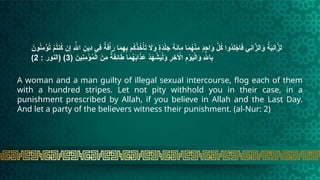
A woman and a man guilty of illegal sexual intercourse, flog each of them
with a hundred stripes. Let not pity withhold you in their case, in a
punishment prescribed by Allah, if you believe in Allah and the Last Day.
And let a party of the believers witness their punishment. (al-Nur: 2)
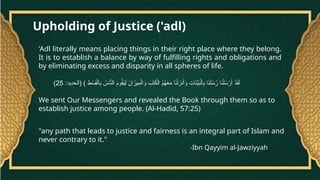
Upholding of Justice ('adl)
'Adl literally means placing things in their right place where they belong.
It is to establish a balance by way of fulfilling rights and obligations and
by eliminating excess and disparity in all spheres of life.
:‫(الحديد‬ ) ِ
‫ط‬ ْ
‫ِس‬
‫ق‬ْ‫ال‬ِ
‫ب‬ ُ
‫اس‬َّ
‫الن‬ َ
‫م‬‫و‬ُ
‫ق‬َ
‫ي‬ِ‫ل‬ َ
‫ان‬َ
‫ِيز‬
‫م‬ْ‫ال‬َ
‫و‬ َ
‫ب‬َ
‫ت‬َ
‫ك‬ْ‫ال‬ ُ
‫م‬ُ
‫ه‬َ
‫ع‬َ
‫م‬ ‫ا‬َ
‫ن‬ْ‫ل‬َ
‫نز‬َ‫أ‬َ
‫و‬ ِ
‫ات‬َ
‫ن‬ِّ
‫ي‬َ
‫ب‬ْ‫ال‬ِ
‫ب‬ ‫ا‬َ
‫ن‬َ‫ل‬ُ
‫س‬ُ
‫ر‬ ‫ا‬َ
‫ن‬ْ‫ل‬َ
‫س‬ْ
‫ر‬َ‫أ‬ ْ
‫د‬َ
‫ق‬َ‫ل‬
25
)
We sent Our Messengers and revealed the Book through them so as to
establish justice among people. (Al-Hadid, 57:25)
"any path that leads to justice and fairness is an integral part of Islam and
never contrary to it."
-Ibn Qayyim al-Jawziyyah
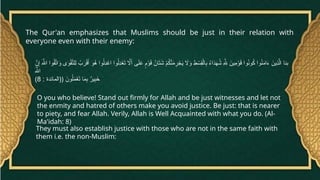
The Qur'an emphasizes that Muslims should be just in their relation with
everyone even with their enemy:
َّ
‫ن‬ِ‫إ‬ َ‫هَّلل‬‫ا‬ ‫وا‬ُ
‫ق‬َّ
‫ات‬َ
‫و‬ ‫ى‬َ
‫و‬ْ‫ق‬َّ
‫ِلت‬‫ل‬ ُ
‫ب‬َ
‫ر‬ْ‫ق‬َ‫أ‬ َ
‫و‬ُ
‫ه‬ ‫وا‬ُ‫ِل‬
‫د‬ ْ
‫اع‬ ‫وا‬ُ‫ِل‬
‫د‬ْ
‫ع‬َ
‫ت‬ ‫اَّل‬َ‫أ‬ ‫ى‬َ‫ل‬َ
‫ع‬ ٍ
‫م‬ْ
‫و‬َ
‫ق‬ ُ
‫ان‬َ
‫ت‬َ
‫ش‬ ْ
‫م‬ُ
‫ك‬َّ
‫ن‬َ
‫م‬ِ
‫ر‬ ْ
‫ج‬َ
‫ي‬ ‫اَل‬َ
‫و‬ ِ
‫ط‬ ْ
‫ِس‬
‫ق‬ْ‫ال‬ِ
‫ب‬ ُ
‫ء‬‫ا‬َ
‫د‬َ
‫ه‬ُ
‫ش‬ ِ‫هَّلِل‬ َ
‫ِين‬
‫م‬ْ
‫و‬َ
‫ق‬ ‫وا‬ُ
‫ن‬‫و‬ُ
‫ك‬ ‫وا‬ُ
‫ن‬َ
‫م‬‫ا‬َ
‫ء‬ َ
‫ِين‬
‫ذ‬َّ‫ال‬ ‫بنا‬
َ‫هَّلل‬‫ا‬
: ‫((المائدة‬ َ
‫ون‬ُ‫ل‬َ
‫م‬ْ
‫ع‬َ
‫ت‬ ‫ا‬َ
‫م‬ِ
‫ب‬ ٌ
‫ير‬ِ
‫ب‬َ
‫خ‬
8
)
O you who believe! Stand out firmly for Allah and be just witnesses and let not
the enmity and hatred of others make you avoid justice. Be just: that is nearer
to piety, and fear Allah. Verily, Allah is Well Acquainted with what you do. (Al-
Ma'idah: 8)
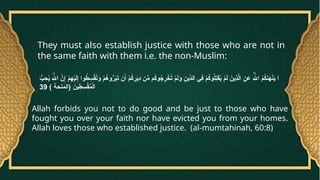
They must also establish justice with those who are not in the same faith with
them i.e. the non-Muslim:
They must also establish justice with those who are not in
the same faith with them i.e. the non-Muslim:
ُّ
‫ب‬ِ
‫ح‬ُ
‫ي‬ َ‫هَّلل‬‫ا‬ َّ
‫ن‬ِ‫إ‬ ْ
‫م‬ِ
‫ه‬ْ
‫ي‬َ
‫ل‬ِ‫إ‬ ‫وا‬ُ
‫ط‬ ِ
‫س‬ْ
‫ق‬ُ
‫ت‬َ
‫و‬ ْ
‫م‬ُ
‫وه‬ُّ
‫ر‬َ
‫ب‬َ
‫ت‬ ‫ن‬َ‫أ‬ ْ
‫م‬ُ
‫ك‬ِ
‫ر‬َ
‫ي‬ِ
‫د‬ ‫ن‬ِّ
‫م‬ ‫م‬ُ
‫ك‬‫و‬ُ
‫ج‬ِ
‫ر‬ ْ
‫خ‬ُ
‫ت‬ ْ
‫م‬َ
‫ل‬َ
‫و‬ ِ
‫ِّين‬
‫الد‬ ‫ِي‬
‫ف‬ ْ
‫م‬ُ
‫ك‬‫و‬ُ
‫ل‬ِ
‫ت‬َ
‫ق‬ُ
‫ي‬ ْ
‫م‬َ
‫ل‬ َ
‫ِين‬
‫ذ‬َّ
‫ل‬‫ا‬ ِ
‫ن‬ َ
‫ع‬ ُ‫هَّلل‬‫ا‬ ُ
‫م‬ُ
‫ك‬‫ن‬َ
‫ه‬ْ
‫ن‬َ
‫ي‬ ‫ا‬
) ‫(المنحة‬ َ
‫ين‬ِ
‫ط‬ ِ
‫س‬ْ
‫ق‬ُ
‫م‬ْ‫ل‬‫ا‬
39
Allah forbids you not to do good and be just to those who have
fought you over your faith nor have evicted you from your homes.
Allah loves those who established justice. (al-mumtahinah, 60:8)
CHARACTERISTICS
OF SHARI’AH
THE SHARI’AH IS A DIVINE REVELATION, HAS ITS
OWN CHARACTERISTICS AND ADVANTAGES.
1. Shari’ah is Divining Origin (Al-Rabbaniyyah)
 Islam as a whole is a divine revelation. Shari’ah is the fact that it comes
only form Allah and it has religious elements. The source of the Shari’ah is
divine revelation, unlike other systems of law. Allah Who created man
knows what is the system that is best to suit all the need of mankind.
THE IMPLICATIONS OF THE FACT THAT THE
SHARI’AH IS FROM ALLAH ARE:
i. Shari’ah Law is free from discrepancies and shortcomings
 Shari’ah Law is the product of Allah the Creator of mankind. Allah has no
vested interests when he revealed the Shari’ah, therefore it is purely
revealed for the interest and benefit of mankind. The principle of equality
in Islam is a perfect example to manifest that it is free from any
discrepancies. According to this principle, all human beings are equal in the
eye of the law, which implies that in the implementation of Islamic law
there shouldn’t be any discrimination or favoritism. It should be applied to
everyone regardless of his or her status and position in society or in other
word no one is above the law.
The Shari’ah is free from any error or
inaccuracy because it is the revelation from
Allah. Allah Almighty who creates mankind
knows what is the best rulings that can
assure the harmonious and safe life for
everyone.
ii. Respecting, Honoring, and Obeying its Commandments
 People will have the sense of respect in obeying the commandment of Allah
as it is a divine order and is different from any other’s commandment which
come from man. It is part of the aqidah of a Muslim to believe and obey all
the commandments of Allah as implementing them are part of ibadah.
 The attitude of the companions in respecting and obeying the commandment
of Allah and His Prophet (s.a.w) can be observed during the revelation
concerning the prohibition of the consumption of liquor, even though it was
their habit and part of their life to consume such drink. It was narrated that
the streets of al-Madinah was filled with discarded liquor when the
prohibition was declared.
 Muslim women adopted a similar stand during
the time of the Prophet (s.a.w) with regard to
hijab. When the commandment of Allah
regarding hijab was revealed, they immediately
abided by this directive from Allah.
 2. Shari’ah is Universal, Realistic, And Contemporary (al-
Waqi’iyyah)
 The Shari’ah in all its components is universal, realistic, and
contemporary. The belief system in Islam is realistic in the sense
that Allah (s.w.t) have ordered the Muslims to worship Him alone
and He has provided many evidences in the Qur’an and Sunnah
about His existence. In addition, all the unseen matters which are
the pillars of Islam such as the belief in the angels of Allah,
Messengers, Books, the Day of Judgment and belief in the divine
decree is simple and understandable to the average mind.
 The moral system in Islam is practical and sensible it encourages all
the good deeds and forbids everything that can bring harm to
individual, society or the entire universe.
 The Shari’ah revealed by Allah is universal in the sense that it is
suitable to be implemented at any time, any place and in all
situations.
SHARI’AH
PROPAGATES THE
PROTECTION OF
INTEREST AND
REJECTION OF EVIL
SHARI’AH PROPAGATES THE PROTECTION OF
INTEREST AND REJECTION OF EVIL
 This is evident in all rulings of the Shari’ah which were revealed
for the benefit of mankind at all time. An example of the ruling
related to a person who has killed another person intentionally.
The punishment for this crime is the accused shall forfeit his life
unless he obtains pardon from the deceased heirs.
 This ruling was revealed to protect the life and interest of
people in the society. In the implementation of such
punishment, there is a lesson to be learnt for other members so
as not to commit such crimes.
 Shari'ah, Islamic law, incorporates
exceptional principles known as rukhsah,
allowing flexibility in its implementation.
SHARI’AH CONTAINS EXCEPTIONAL
PRINCIPLES IN THE IMPLEMENTATION OF
ITS LAWS
• The rukhsah principle permits exceptions in Islamic practices to
accommodate specific situations:
o An individual unable to stand can pray in a sitting or sleeping
position.
o Travelers are allowed to combine and shorten obligatory prayers
during journeys.
o In emergency situations (darura), actions typically forbidden in
Islam, like consuming prohibited foods, are permitted to save one's
life.
SHARI’AH CONTAINS EXCEPTIONAL
PRINCIPLES IN THE IMPLEMENTATION OF
ITS LAWS
 The guiding principle underlying these exceptions is
"Necessity renders prohibited things permissible,"
showcasing the practicality of Islamic teachings and
providing solutions during challenging circumstances.
 These exceptional principles demonstrate the adaptability
of Islam and its ability to address difficulties effectively by
allowing deviations from the standard rules in specific
scenarios.
SHARI’AH CONTAINS EXCEPTIONAL
PRINCIPLES IN THE IMPLEMENTATION OF
ITS LAWS
 Shari'ah, the Islamic law, contains both fixed and flexible principles, making it adaptable and
suitable for implementation at all times.
 Fixed injunctions, derived from the Qur'an and the Sunnah of the Prophet, can be categorized into
beliefs ('aqidah), worship ('ibādah), and ethics (akhlāq).
o Belief-related injunctions, such as faith in Allah and His Messenger, are fundamental and
unchangeable.
o Worship-related injunctions, like prayer orders and timings, are also fixed and must be
adhered to.
o Ethical injunctions, concerning moral values like respecting parents, are universal and
immutable.
 Some explicit injunctions, like the punishment for theft as prescribed in the Qur'an, are clear and
non-negotiable due to their importance and relevance across time and place.
SHARI’AH CONTAINS FLEXIBLE PRINCIPLES
 In contrast, Shari'ah injunctions related to human interactions (mu’malah) are flexible
and can evolve based on changing circumstances, customs, and societal needs.
 The flexible nature of Shari'ah allows for adaptation to different situations, ensuring its
applicability and relevance over time.
 Pre-Islamic customs recognized by Shari'ah, such as certain commercial practices like
the contract of salam, demonstrate its flexibility when beneficial to society without
violating Islamic principles.
SHARI’AH CONTAINS FLEXIBLE PRINCIPLES
I. SHARI’AH CONTAINS UNIVERSAL PRINCIPLES
 Shari'ah, the Islamic law, encompasses universal principles that provide essential guidance for
regulating and accommodating the needs of mankind.
 Key universal principles in Shari'ah include:
i. Principle of Shūrā (Mutual Consultation):
 The Qur'an advocates mutual consultation in decision-making processes related to public
interest, be it political, economic, or other matters.
 This principle emphasizes the importance of seeking advice and consensus in governance
and societal affairs.
ii. Principle of Equality (Al-Musāwā):
 Islam upholds the principle of equality before the law, ensuring that all individuals,
regardless of status, are treated fairly and justly.
 This principle promotes justice and impartial impartiality in the application of Islamic law.
iii. Principle of Justice (Al-'Adālah):
 Justice is a core value in Islam, emphasized in the Qur'an to ensure fair dealings and
ethical conduct.
Upholding justice is essential for maintaining societal order, with individuals urged to act justly and
avoid wrongdoing.
i. Principle of “No Harm Shall Be Inflicted Nor Reciprocated” (La Darar
Wa Lā Dirār):
 This Hadith underscores the importance of preventing harm and
fostering well-being, both at an individual and societal level.
 It emphasizes the avoidance of actions that cause harm and the
promotion of peace and stability within communities.
 These universal principles serve as moral and ethical foundations in in Islam,
applicable across time and place, and neglecting them can lead to societal
discord and instability.
I. SHARI’AH CONTAINS UNIVERSAL PRINCIPLES
Rewards and Punishments in Shari'ah: This
World and the Hereafter
Shari'ah, like any legal system, incorporates
measures to deter crime and educate individuals
about the consequences of breaking the law.
However, a key distinction of Shari'ah is its emphasis
on both worldly and otherworldly consequences.
This dual approach aims to cultivate a sense of self-
restraint and accountability in Muslims.
THE REWARD AND PUNISHMENTS IN SHARI’AH IS
IN THIS WORLD AND IN THE HEREAFTER
Punishments in this World:
 Shari'ah prescribes specific punishments for offenses outlined in
the Qur'an and Sunnah. These punishments, while serving as
deterrents, are also seen as opportunities for repentance and
redemption.
 The example of Mā'iz, who confessed to adultery and accepted the
prescribed punishment of had, illustrates this principle. He chose to
face the worldly consequence, knowing that a more severe
punishment awaited him in the hereafter if he had denied his
actions.
THE REWARD AND PUNISHMENTS IN SHARI’AH IS
IN THIS WORLD AND IN THE HEREAFTER
Punishments in the Hereafter:
 The concept of punishment in the hereafter is central to Islamic belief,
serving as a strong motivator for moral conduct.
 The Qur'an, in Surah An-Nisa', clearly outlines the consequences of
obedience and disobedience to Allah and His Messenger, emphasizing
the eternal punishment in hellfire for those who transgress His limits.
[1]
 The severity of punishment in the hereafter is often emphasized to
underscore the importance of seeking forgiveness and striving for a
righteous life.
THE REWARD AND PUNISHMENTS IN SHARI’AH IS
IN THIS WORLD AND IN THE HEREAFTER
Rewards in this World and the Hereafter:
 While the text focuses primarily on punishments, it's important to
note that Shari'ah also emphasizes rewards for righteous actions.
These rewards can manifest in this world through blessings, peace
of mind, and societal harmony.
 The ultimate reward, however, lies in the hereafter, where believers
are promised eternal bliss in Paradise. [1]
THE REWARD AND PUNISHMENTS IN SHARI’AH IS
IN THIS WORLD AND IN THE HEREAFTER
The Role of Repentance:
 Islam recognizes the human capacity for error and emphasizes
the importance of repentance.
 While those who commit sins may face worldly consequences,
the possibility of forgiveness and redemption through sincere
repentance remains open.
 This emphasis on repentance underscores the merciful nature of
Allah and the importance of seeking His forgiveness.
THE REWARD AND PUNISHMENTS IN SHARI’AH IS
IN THIS WORLD AND IN THE HEREAFTER
 Shari'ah, Islamic law, is a comprehensive system that addresses all
aspects of life, fulfilling the needs of mankind.
 The Qur'an confirms the completeness of Shari'ah in verses like Surah
al-Ma'idah 5:3, stating that Allah has perfected religion and completed
His favor upon humanity by choosing Islam as their way of life.
 The Qur'an further emphasizes the comprehensiveness of Islamic
teachings in Surah al-An'am 6:38, stating that nothing has been
omitted from the Book (the Qur'an).
THE COMPLETENESS OF SHARI’AH
 Shari'ah encompasses all facets of life, including:
i. Al-Ahkām Al-I'tiqāidiyyah (Sanctions Relating to Beliefs):
 This encompasses the complete belief system in Islam, including faith in
the six pillars of 'iman (faith) and matters unseen.
ii. Al-Ahkām Al-Akhlāqiyyah (Sanctions Relating to Moral and Ethics):
 This includes all good moral values to be upheld, such as sincerity,
responsibility, and caring, and bad moral principles to be avoided, such as
lying, backbiting, and harming others.
THE COMPLETENESS OF SHARI’AH
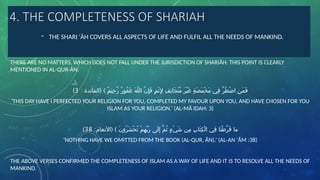
4. THE COMPLETENESS OF SHARIAH
- THE SHARI 'ÀH COVERS ALL ASPECTS OF LIFE AND FULFIL ALL THE NEEDS OF MANKIND.
THERE ARE NO MATTERS, WHICH DOES NOT FALL UNDER THE JURISDICTION OF SHARIĀH. THIS POINT IS CLEARLY
MENTIONED IN AL-QUR-ÀN:
: ( )
‫المائدة‬ ٌ‫م‬‫ِي‬‫ح‬َّ‫ر‬ ٌ‫ر‬‫ُو‬‫ف‬َ‫غ‬ َ‫ه‬َّ‫ل‬‫ال‬ َّ‫ن‬ِ‫إ‬َ‫ف‬ ٍ‫م‬ْ‫ث‬ِ ‫إِل‬ ِ‫ف‬ِ‫ئ‬‫َا‬‫ج‬َ‫ت‬ُ‫م‬ َ‫ر‬ْ‫ي‬َ‫غ‬ ٍ‫ة‬َ‫ص‬َ‫م‬ْ‫خ‬َ‫م‬ ‫ِي‬‫ف‬ َّ‫ر‬ُ‫ط‬ْ‫ض‬‫ا‬ ِ‫ن‬َ‫م‬َ‫ف‬
3
)
‘THIS DAY HAVE I PERFECTED YOUR RELIGION FOR YOU, COMPLETED MY FAVOUR UPON YOU, AND HAVE CHOSEN FOR YOU
ISLAM AS YOUR RELIGION.’ (AL-MÃ IDAH: 3)
: ( )
‫األنعام‬ َ‫ن‬‫ُو‬‫ر‬َ‫ش‬ْ‫ح‬ُ‫ت‬ ْ‫م‬ِ‫ه‬ِّ‫ب‬َ‫ر‬ ‫َى‬‫ل‬ِ‫إ‬ َّ‫م‬ُ‫ث‬ ٍ‫ء‬ْ‫ي‬َ‫ش‬ ‫ِن‬‫م‬ ِ‫ب‬‫َا‬‫ت‬ِ‫ك‬ْ‫ل‬‫ا‬ ‫ِي‬‫ف‬ ‫َا‬‫ن‬ْ‫ط‬َّ‫ر‬َ‫ف‬ ‫ما‬
38
)
‘NOTHING HAVE WE OMITTED FROM THE BOOK (AL-QUR, ĂN).’ (AL-AN 'ĂM :38)
THE ABOVE VERSES CONFIRMED THE COMPLETENESS OF ISLAM AS A WAY OF LIFE AND IT IS TO RESOLVE ALL THE NEEDS OF
MANKIND.
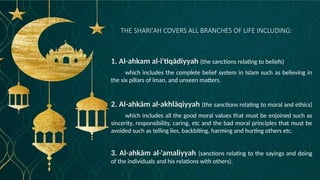
THE SHARI'AH COVERS ALL BRANCHES OF LIFE INCLUDING:
1. Al-ahkam al-i'tiqādiyyah (the sanctions relating to beliefs)
which includes the complete belief system in Islam such as believing in
the six pillars of īman, and unseen matters.
2. Al-ahkām al-akhlāqiyyah (the sanctions relating to moral and ethics)
which includes all the good moral values that must be enjoined such as
sincerity, responsibility, caring, etc and the bad moral principles that must be
avoided such as telling lies, backbiting, harming and hurting others etc.
3. Al-ahkām al-'amaliyyah (sanctions relating to the sayings and doing
of the individuals and his relations with others).
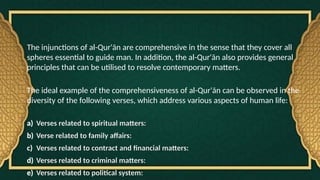
The injunctions of al-Qur'ān are comprehensive in the sense that they cover all
spheres essential to guide man. In addition, the al-Qur'ān also provides general
principles that can be utilised to resolve contemporary matters.
The ideal example of the comprehensiveness of al-Qur'ān can be observed in the
diversity of the following verses, which address various aspects of human life:
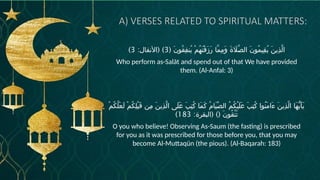
a) Verses related to spiritual matters:
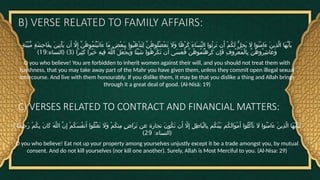
b) Verse related to family affairs:
c) Verses related to contract and financial matters:
d) Verses related to criminal matters:
e) Verses related to political system:
A) VERSES RELATED TO SPIRITUAL MATTERS:
( َ‫ن‬‫ُو‬‫ق‬ِ‫ف‬‫ُن‬‫ي‬ ْ‫م‬ُ‫ه‬َ‫ن‬ْ‫ق‬َ‫ز‬َ‫ر‬ ‫َّا‬‫م‬ِ‫م‬َ‫و‬ َ‫ة‬ ‫َّاَل‬‫ص‬‫ال‬ َ‫ن‬‫ُو‬‫م‬‫ِي‬‫ق‬ُ‫ي‬ َ‫ن‬‫ِي‬‫ذ‬َّ‫ل‬‫ا‬
3
: ( )
‫األنفال‬
3
)
Who perform as-Salāt and spend out of that We have provided
them. (Al-Anfal: 3)
ْ‫م‬ُ‫ك‬َّ‫ل‬َ‫ع‬َ‫ل‬ ْ‫م‬ُ‫ك‬ِ‫ل‬ْ‫ب‬َ‫ق‬ ‫ِن‬‫م‬ َ‫ن‬‫ِي‬‫ذ‬َّ‫ل‬‫ا‬ ‫َى‬‫ل‬َ‫ع‬ َ‫ب‬ِ‫ت‬ُ‫ك‬ ‫َا‬‫م‬َ‫ك‬ ُ‫م‬‫َا‬‫ي‬ِّ‫ص‬‫ال‬ ُ‫م‬ُ‫ك‬ْ‫ي‬َ‫ل‬َ‫ع‬ َ‫ب‬ِ‫ت‬ُ‫ك‬ ‫ُوا‬‫ن‬َ‫م‬‫َا‬‫ء‬ َ‫ن‬‫ِي‬‫ذ‬َّ‫ل‬‫ا‬ ‫َا‬‫ه‬ُّ‫ي‬َ‫أ‬َ‫ي‬
: ( )(
‫البقرة‬ َ‫ن‬‫ُو‬‫ق‬َّ‫ت‬َ‫ت‬
183
)
O you who believe! Observing As-Saum (the fasting) is prescribed
for you as it was prescribed for those before you, that you may
become Al-Muttaqūn (the pious). (Al-Baqarah: 183)
B) VERSE RELATED TO FAMILY AFFAIRS:
ٍ‫ة‬َ‫ن‬ِّ‫ي‬َ‫ب‬ُّ‫م‬ ٍ‫ة‬َ‫ش‬ِ‫ح‬‫َا‬‫ف‬ِ‫ب‬ َ‫ن‬‫ِي‬‫ت‬ْ‫أ‬َ‫ي‬ ‫ن‬َ‫أ‬ ‫اَّل‬ِ‫إ‬ َّ‫ن‬ُ‫ه‬‫ُو‬‫م‬ُ‫ت‬ْ‫ي‬َ‫ت‬‫َا‬‫ء‬ ‫َا‬‫م‬ ٍ‫ض‬ْ‫ع‬َ‫ب‬ِ‫ب‬ ‫ُوا‬‫ب‬َ‫ه‬ْ‫ذ‬َ‫ت‬ِ‫ل‬ َّ‫ن‬ُ‫ه‬‫ُو‬‫ل‬ُ‫ض‬ْ‫ع‬َ‫ت‬ ‫َاَل‬‫و‬ ‫ًا‬‫ه‬ْ‫ر‬َ‫ك‬ َ‫ء‬‫َا‬‫س‬ِّ‫ن‬‫ال‬ ‫ُوا‬‫ث‬ِ‫ر‬َ‫ت‬ ‫ن‬َ‫أ‬ ْ‫م‬ُ‫ك‬َ‫ل‬ ُّ‫ل‬ِ‫ح‬َ‫ي‬ ‫اَل‬ ‫ُوا‬‫ن‬َ‫م‬‫َا‬‫ء‬ َ‫ن‬‫ِي‬‫ذ‬َّ‫ل‬‫ا‬ ‫َا‬‫ه‬ُّ‫ي‬َ‫أ‬َ‫ي‬
( ‫ًا‬‫ر‬‫ِي‬‫ث‬َ‫ك‬ ‫ًا‬‫ر‬ْ‫ي‬َ‫خ‬ ِ‫ه‬‫ِي‬‫ف‬ ُ‫ه‬َّ‫ل‬‫ال‬ َ‫ل‬َ‫ع‬ْ‫ج‬َ‫ي‬َ‫و‬ ‫ًا‬‫ئ‬ْ‫ي‬َ‫ش‬ ‫ُوا‬‫ه‬َ‫ر‬ْ‫ك‬َ‫ت‬ ‫ن‬َ‫أ‬ ‫َى‬‫س‬َ‫ع‬َ‫ف‬ َّ‫ن‬ُ‫ه‬‫ُو‬‫م‬ُ‫ت‬ْ‫ه‬ِ‫ر‬َ‫ك‬ ‫ِن‬‫إ‬َ‫ف‬ ِ‫ف‬‫ُو‬‫ر‬ْ‫ع‬َ‫م‬ْ‫ل‬‫ِا‬‫ب‬ َّ‫ن‬ُ‫ه‬‫ُو‬‫ر‬ِ‫ش‬‫َا‬‫ع‬َ‫و‬
3
: ( )
‫النساء‬
19
)
O you who believe! You are forbidden to inherit women against their will, and you should not treat them with
harshness, that you may take away part of the Mahr you have given them, unless they commit open illegal sexual
intercourse. And live with them honourably. If you dislike them, it may be that you dislike a thing and Allah brings
through it a great deal of good. (Al-Nisā: 19)
C) VERSES RELATED TO CONTRACT AND FINANCIAL MATTERS:
) ‫ًا‬‫م‬‫ِي‬‫ح‬َ‫ر‬ ْ‫م‬ُ‫ك‬ِ‫ب‬ َ‫ن‬‫َا‬‫ك‬ َ‫ه‬َّ‫ل‬‫ال‬ َّ‫ن‬ِ‫إ‬ ْ‫م‬ُ‫ك‬َ‫س‬ُ‫ف‬‫ن‬َ‫أ‬ ‫ُوا‬‫ل‬ُ‫ت‬ْ‫ق‬َ‫ت‬ ‫َاَل‬‫و‬ ْ‫م‬ُ‫ك‬‫ِن‬‫م‬ ٍ‫ض‬‫َا‬‫ر‬َ‫ت‬ ‫عن‬ ‫تجارة‬ َ‫ن‬‫ُو‬‫ك‬َ‫ت‬ ‫ن‬َ‫أ‬ ‫اَّل‬ِ‫إ‬ ِ‫ل‬ِ‫ط‬‫َا‬‫ب‬ْ‫ل‬‫ِا‬‫ب‬ ‫ُم‬‫ك‬َ‫ن‬ْ‫ي‬َ‫ب‬ ‫ُم‬‫ك‬َ‫ل‬‫َا‬‫و‬ْ‫م‬َ‫أ‬ ‫ُوا‬‫ل‬ُ‫ك‬ْ‫أ‬َ‫ت‬ ‫اَل‬ ‫ُوا‬‫ن‬َ‫م‬‫َا‬‫ء‬ َ‫ن‬‫ِي‬‫ذ‬َّ‫ل‬‫ا‬ ‫َا‬‫ه‬ُّ‫ي‬َ‫أ‬َ‫ت‬َ‫ي‬
: (
‫النساء‬
29
)
O you who believe! Eat not up your property among yourselves unjustly except it be a trade amongst you, by mutual
consent. And do not kill yourselves (nor kill one another). Surely, Allah is Most Merciful to you. (Al-Nisa: 29)
ُ‫ه‬َ‫م‬َّ‫ل‬َ‫ع‬ ‫َا‬‫م‬َ‫ك‬ َ‫ب‬ُ‫ت‬ْ‫ك‬َ‫ي‬ ‫ن‬َ‫أ‬ ٌ‫ب‬ِ‫ت‬‫َا‬‫ك‬ َ‫ب‬ْ‫أ‬َ‫ي‬ ‫َاَل‬‫و‬ ِ‫ل‬ْ‫د‬َ‫ع‬ْ‫ل‬‫ِا‬‫ب‬ ٌ‫ب‬ِ‫ت‬‫َا‬‫ك‬ ْ‫م‬ُ‫ك‬َ‫ن‬ْ‫ي‬َ‫ب‬ ‫ُب‬‫ت‬ْ‫ك‬َ‫ي‬ْ‫ل‬َ‫و‬ ُ‫ه‬‫ُو‬‫ب‬ُ‫ت‬ْ‫ك‬‫َا‬‫ف‬ ‫ًّى‬‫م‬َ‫س‬ُّ‫م‬ ٍ‫ل‬َ‫ج‬َ‫أ‬ ‫َى‬‫ل‬ِ‫إ‬ ِ‫ن‬ْ‫ي‬َ‫د‬ِ‫ب‬ ‫ُم‬‫ت‬‫َن‬‫ي‬‫َا‬‫د‬َ‫ت‬ ‫َا‬‫ذ‬ِ‫إ‬ ‫ُوا‬‫ن‬َ‫م‬‫َا‬‫ء‬ َ‫ن‬‫ِي‬‫ذ‬َّ‫ل‬‫ا‬ ‫َا‬‫ه‬ُّ‫ي‬َ‫أ‬َ‫ي‬
‫اَل‬ ْ‫و‬َ‫أ‬ ‫ًا‬‫ف‬‫ِي‬‫ع‬َ‫ض‬ ْ‫و‬َ‫أ‬ ‫َا‬‫ه‬‫ِي‬‫ف‬َ‫س‬ ُّ‫ق‬َ‫ح‬ْ‫ل‬‫ا‬ ِ‫ه‬ْ‫ي‬َ‫ل‬َ‫ع‬ ‫ِي‬‫ذ‬َّ‫ل‬‫ا‬ َ‫ن‬‫َا‬‫ك‬ ‫ِن‬‫إ‬َ‫ف‬ ‫ًا‬‫ئ‬ْ‫ي‬َ‫ش‬ ُ‫ه‬ْ‫ن‬ِ‫م‬ ْ‫س‬َ‫خ‬ْ‫ب‬َ‫ي‬ ‫َاَل‬‫و‬ ُ‫ه‬َّ‫ب‬َ‫ر‬ َ‫ه‬َّ‫ل‬‫ال‬ ِ‫ق‬َّ‫ت‬َ‫ي‬ْ‫ل‬َ‫و‬ ُّ‫ق‬َ‫ح‬ْ‫ل‬‫ا‬ ِ‫ه‬ْ‫ي‬َ‫ل‬َ‫ع‬ ‫ِي‬‫ذ‬َّ‫ل‬‫ا‬ ِ‫ل‬ِ‫ل‬ْ‫م‬ُ‫ي‬ْ‫ل‬َ‫و‬ ْ‫ب‬ُ‫ت‬ْ‫ك‬َ‫ي‬ْ‫ل‬َ‫ف‬ ُ‫ه‬َّ‫ل‬‫ال‬
‫َّن‬‫م‬ِ‫م‬ ِ‫ن‬‫َا‬‫ت‬َ‫َأ‬‫ر‬ْ‫م‬‫َا‬‫و‬ ٌ‫ل‬ُ‫ج‬َ‫ر‬َ‫ف‬ ِ‫ن‬ْ‫ي‬َ‫ل‬ُ‫ج‬َ‫ر‬ ‫َا‬‫ن‬‫ُو‬‫ك‬َ‫ي‬ ْ‫م‬َّ‫ل‬ ‫ِن‬‫إ‬َ‫ف‬ ْ‫م‬ُ‫ك‬ِ‫ل‬‫َا‬‫ج‬ِ‫ر‬ ‫ِن‬‫م‬ ِ‫ن‬ْ‫ي‬َ‫د‬‫ِي‬‫ه‬َ‫ش‬ ‫ُوا‬‫د‬ِ‫ه‬ْ‫ش‬َ‫ت‬ْ‫س‬‫َا‬‫و‬ ِ‫ل‬ْ‫د‬َ‫ع‬ْ‫ل‬‫ِا‬‫ب‬ ُ‫ه‬ُّ‫ي‬ِ‫ل‬َ‫و‬ ْ‫ل‬ِ‫ل‬ْ‫م‬ُ‫ي‬ْ‫ل‬َ‫ف‬ َ‫و‬ُ‫ه‬ َّ‫ل‬ِ‫م‬ُ‫ي‬ ‫ن‬َ‫أ‬ ُ‫ع‬‫ِي‬‫ط‬َ‫ت‬ْ‫س‬َ‫ي‬
ْ‫و‬َ‫أ‬ ‫ًا‬‫ر‬‫ِي‬‫غ‬َ‫ص‬ ُ‫ه‬‫ُو‬‫ب‬ُ‫ت‬ْ‫ك‬َ‫ت‬ ‫ن‬َ‫أ‬ ‫ُوا‬‫م‬َ‫ت‬ْ‫س‬َ‫ت‬ ‫َاَل‬‫و‬ ‫ُوا‬‫ع‬ُ‫د‬ ‫َا‬‫م‬ ‫َا‬‫ذ‬ِ‫إ‬ ُ‫ء‬‫َا‬‫د‬َ‫ه‬ُّ‫ش‬‫ال‬ َ‫ب‬ْ‫أ‬َ‫ي‬ ‫َاَل‬‫و‬ ٰ‫ى‬َ‫ر‬ْ‫خ‬ُ ‫أْل‬‫ا‬ ‫َا‬‫م‬ُ‫ه‬َ‫ن‬َ‫د‬ْ‫ح‬ِ‫إ‬ َ‫ر‬ِّ‫ك‬َ‫ذ‬ُ‫ت‬َ‫ف‬ ‫َا‬‫م‬ُ‫ه‬َ‫ن‬َ‫د‬ْ‫ح‬ِ‫إ‬ َّ‫ل‬ِ‫ض‬َ‫ت‬ ‫ن‬َ‫أ‬ ِ‫ء‬‫َا‬‫د‬َ‫ه‬ُّ‫ش‬‫ال‬ َ‫ن‬ِ‫م‬ َ‫ن‬ْ‫و‬َ‫ض‬ْ‫ر‬َ‫ت‬
: َ‫س‬ْ‫ي‬َ‫ل‬َ‫ف‬ ْ‫م‬ُ‫ك‬َ‫ن‬ْ‫ي‬َ‫ب‬ ‫َا‬‫ه‬َ‫ن‬‫ُو‬‫ر‬‫ِي‬‫د‬َ‫ت‬ ً‫ة‬َ‫ر‬ِ‫ض‬‫َا‬‫ح‬ ً‫ة‬َ‫ر‬‫َا‬‫ج‬ِ‫ت‬ َ‫ن‬‫ُو‬‫ك‬َ‫ت‬ ‫ن‬َ‫أ‬ ‫اَّل‬ِ‫إ‬ ‫ُوا‬‫ب‬‫َا‬‫ت‬ْ‫ر‬َ‫ت‬ ‫اَّل‬َ‫أ‬ ‫َى‬‫ن‬ْ‫د‬َ‫َأ‬‫و‬ ِ‫ة‬َ‫د‬‫َا‬‫ه‬َّ‫ش‬‫ِل‬‫ل‬ ُ‫م‬َ‫و‬ْ‫ق‬َ‫َأ‬‫و‬ ِ‫ه‬َّ‫ل‬‫ال‬ َ‫د‬‫ِن‬‫ع‬ ُ‫ط‬َ‫س‬ْ‫ق‬َ‫أ‬ ْ‫م‬ُ‫ك‬ِ‫ل‬َ‫ذ‬ ِ‫ه‬ِ‫ل‬َ‫ج‬َ‫أ‬ ‫َى‬‫ل‬ِ‫إ‬ ‫ًا‬‫ر‬‫ِي‬‫ب‬َ‫ك‬
َ‫ت‬ ‫ن‬ِ‫إ‬َ‫و‬ ٌ‫د‬‫ِي‬‫ه‬َ‫ش‬ ‫َاَل‬‫و‬ ٌ‫ب‬ِ‫ت‬‫َا‬‫ك‬ َ‫ر‬‫َا‬‫ض‬ُ‫ي‬ ُ‫م‬ُ‫ك‬ُ‫م‬ِّ‫ل‬َ‫ع‬ُ‫ي‬َ‫و‬ َ‫ه‬َّ‫ل‬‫ال‬ ‫ُوا‬‫ق‬َّ‫ت‬‫َا‬‫و‬ ْ‫م‬ُ‫ك‬ِ‫ب‬ ٌ‫ق‬‫ُو‬‫س‬ُ‫ف‬ ُ‫ه‬َّ‫ن‬ِ‫إ‬َ‫ف‬ ‫ُوا‬‫ل‬َ‫ع‬ْ‫ف‬َ‫ت‬ ‫َاَل‬‫و‬ ْ‫م‬ُ‫ت‬ْ‫ع‬َ‫ي‬‫َا‬‫ب‬َ‫ت‬ ‫َا‬‫ذ‬ِ‫إ‬ ‫ُوا‬‫د‬ِ‫ه‬ْ‫ش‬َ‫َأ‬‫و‬ ‫َا‬‫ه‬‫ُو‬‫ب‬ُ‫ت‬ْ‫ك‬َ‫ت‬ ‫اَّل‬َ‫أ‬ ٌ‫ح‬‫َا‬‫ن‬ُ‫ج‬
: ( ) .
‫البقرة‬ ٌ‫م‬‫ِي‬‫ل‬َ‫ع‬ ٍ‫ء‬ْ‫ي‬َ‫ش‬ ِّ‫ل‬ُ‫ك‬ِ‫ب‬ ُ‫ه‬َّ‫ل‬‫َال‬‫و‬ ُ‫ه‬َّ‫ل‬‫ال‬ ْ‫م‬ُ‫ك‬ْ‫ي‬َ‫ل‬َ‫ع‬
282
)
O you who believe! When you contract a debt for a fixed period, write it down. Let a scribe write it down in
justice between you. Let not the scribe refuses to write as Allah has taught him, so let him write. Let him (the
debtor) who incurs the liability dictate, and he must fear Allah, his Lord, and diminish not anything of what he
owes. But if the debtor is of poor understanding, or weak, or is unable himself to dictate, then let his guardian
dictate in justice. And get two witnesses out of your own men. And if there are not two men (available), then a
man and two women, such as you agree for witnesses, so that if one of them (two women) errs, the other can
remind her. And the witnesses should not refuse when they are called on (for evidence). You should not
become weary to write it (your contract), whether it be small or big for its fixed term, that is more just in Allah;
more solid as evidence, and more convenient to prevent doubts among yourselves, save when it is a present
trade which you carry out on the spot among yourselves, then there is no sin on you if you do not write it
down. But take witnesses whenever you make a commercial contract. Let neither scribe nor witness suffer any
harm, but if you do (such harm), it would be wickedness in you. So be afraid of Allah; and Allah teaches you.
And Allah is the All-Knower of each and everything. (Al-Baqarah: 282)
ِ‫ه‬ِ‫ل‬‫ُو‬‫س‬َ‫ر‬َ‫و‬ ِ‫ه‬َّ‫ل‬‫ال‬ َ‫ن‬ِ‫م‬ ٍ‫ب‬ْ‫ر‬َ‫ح‬ِ‫ب‬ ‫ُوا‬‫ن‬َ‫ذ‬ْ‫أ‬َ‫ف‬ ‫ُوا‬‫ل‬َ‫ع‬ْ‫ف‬َ‫ت‬ ْ‫م‬َّ‫ل‬ ‫ِن‬‫إ‬َ‫ف‬ َ‫ن‬‫ِي‬‫ن‬ِ‫م‬ْ‫ؤ‬ُّ‫م‬ ‫ُم‬‫ت‬‫ُن‬‫ك‬ ‫ن‬ِ‫إ‬ ‫ِّبوا‬‫ر‬‫ال‬ َ‫ن‬ِ‫م‬ َ‫ي‬ِ‫ق‬َ‫ب‬ ‫َا‬‫م‬ ‫ُوا‬‫ر‬َ‫ذ‬َ‫و‬ َ‫ه‬َّ‫ل‬‫ال‬ ‫ُوا‬‫ق‬َّ‫ت‬‫ا‬ ‫ُوا‬‫ن‬َ‫م‬‫َا‬‫ء‬ َ‫ن‬‫ِي‬‫ذ‬َّ‫ل‬‫ا‬ ‫َا‬‫ه‬ُّ‫ي‬َ‫أ‬َ‫ي‬
: (
‫البقرة‬ َ‫ن‬‫ُو‬‫م‬َ‫ل‬ْ‫ظ‬ُ‫ت‬ ‫َاَل‬‫و‬ َ‫ن‬‫ُو‬‫م‬ِ‫ل‬ْ‫ظ‬َ‫ت‬ ‫اَل‬ ْ‫م‬ُ‫ك‬ِ‫ل‬َ‫و‬ْ‫م‬َ‫أ‬ ُ‫س‬‫ُو‬‫ء‬ُ‫ر‬ ْ‫م‬ُ‫ك‬َ‫ل‬َ‫ف‬ ْ‫م‬ُ‫ت‬ْ‫ب‬ُ‫ت‬ ‫ن‬ِ‫إ‬َ‫و‬
278
279
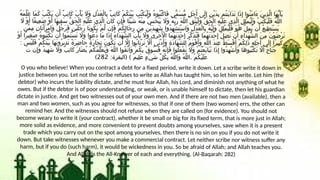
)
O you who believe! Be afraid of Allah and give up what remains (due to you) from Ribā (usury) (from now
onward), if you are (really) believers. And if you do not do it, then take a notice of war from Allah and His
Messenger but if you repent, you shall have your capital sums. Deal not unjustly (by asking more than
your capital sums), and you shall not be dealt with unjustly by receiving less than your capital sums).(Al-
Baqarah: 278-279)
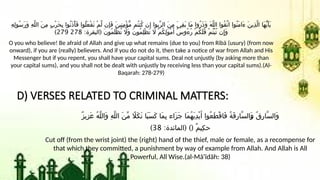
D) VERSES RELATED TO CRIMINAL MATTERS:
ٌ‫ز‬‫ِي‬‫ز‬َ‫ع‬ ُ‫ه‬َّ‫ل‬‫َال‬‫و‬ ِ‫ه‬َّ‫ل‬‫ال‬ َ‫ن‬ِّ‫م‬ ‫َاًل‬‫ك‬َ‫ن‬ ‫َا‬‫ب‬َ‫س‬َ‫ك‬ ‫َا‬‫م‬ِ‫ب‬ ‫َاء‬‫ز‬َ‫ج‬ ‫َا‬‫م‬ُ‫ه‬َ‫ي‬ِ‫د‬ْ‫ي‬َ‫أ‬ ‫ُوا‬‫ع‬َ‫ط‬ْ‫ق‬‫َا‬‫ف‬ ُ‫ة‬َ‫ق‬ِ‫ر‬‫َّا‬‫س‬‫َال‬l
‫و‬ ُ‫ق‬ِ‫ر‬‫َّا‬‫س‬‫َال‬‫و‬
: ( )(
‫المائدة‬ ٌ‫م‬‫ِي‬‫ك‬‫ح‬
38
)
Cut off (from the wrist joint) the (right) hand of the thief, male or female, as a recompense for
that which they committed, a punishment by way of example from Allah. And Allah is All
Powerful, All Wise.(al-Mā'īdāh: 38)
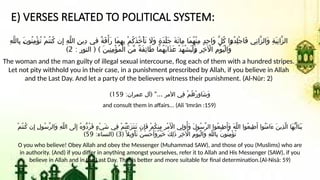
E) VERSES RELATED TO POLITICAL SYSTEM:
ِ‫ه‬َّ‫ل‬‫ِال‬‫ب‬ َl
‫ن‬‫ُو‬‫ن‬ِ‫م‬ْ‫ؤ‬ُ‫ت‬ ْ‫م‬ُ‫ت‬‫ُن‬‫ك‬ ‫ن‬ِ‫إ‬ ِ‫ه‬َّ‫ل‬‫ال‬ ِ‫ن‬‫ِي‬‫د‬ ‫في‬ ٌ‫ة‬َ‫ف‬ْ‫َأ‬‫ر‬ ‫َا‬‫م‬ِ‫ه‬ِ‫ب‬ ْ‫م‬ُ‫ك‬َ‫ذ‬ُ‫خ‬ْ‫أ‬َ‫ت‬ ‫َاَل‬‫و‬ ٍ‫ة‬َ‫د‬ْ‫ل‬َ‫ج‬ َ‫ة‬َ‫ئ‬‫ِا‬‫م‬ ‫َا‬‫م‬ُ‫ه‬ْ‫ن‬ِ‫م‬ ٍ‫د‬ِ‫ح‬‫َا‬‫و‬ َّ‫ل‬ُ‫ك‬ ‫ا‬l
‫و‬ُ‫د‬ِ‫ل‬ْ‫ج‬‫َا‬‫ف‬ ‫ِي‬‫ن‬‫َّا‬‫ز‬‫َال‬‫و‬ ِ‫ة‬َ‫ي‬ِ‫ن‬‫َّا‬‫ز‬‫ال‬
: ( )
‫النور‬ َ‫ن‬‫ِي‬‫ن‬ِ‫م‬ْ‫ؤ‬ُ‫م‬ْ‫ل‬‫ا‬ َ‫ن‬ِّ‫م‬ ٌ‫ة‬َ‫ف‬ِ‫ئ‬‫َا‬‫ط‬ ‫َا‬‫م‬ُ‫ه‬َ‫ب‬‫َا‬‫ذ‬َ‫ع‬ ْ‫د‬َ‫ه‬ْ‫ش‬َ‫ي‬ْ‫ل‬َl
‫و‬ ِ‫ر‬ِ‫خ‬ ‫آْل‬‫ا‬ ِ‫م‬ْ‫و‬َ‫ي‬ْ‫ل‬‫َا‬‫و‬
2
)
The woman and the man guilty of illegal sexual intercourse, flog each of them with a hundred stripes.
Let not pity withhold you in their case, in a punishment prescribed by Allah, if you believe in Allah
and the Last Day. And let a party of the believers witness their punishment. (Al-Nūr: 2)
: ( "...
‫عمران‬ ‫آل‬ ‫األمر‬ ‫ِي‬‫ف‬ ْ‫م‬ُ‫ه‬ْ‫ر‬ِ‫و‬‫َا‬‫ش‬َ‫و‬
159
)
and consult them in affairs... (Ali 'Imrān :159)
ْ‫م‬ُ‫ت‬‫ُن‬‫ك‬ ‫ن‬ِ‫إ‬ ِ‫ل‬‫ُو‬‫س‬َّ‫ر‬‫َال‬‫و‬ ِ‫ه‬َّ‫ل‬‫ال‬ ‫َى‬‫ل‬ِ‫إ‬ ُ‫ه‬‫ُّو‬‫د‬ُ‫ر‬َ‫ف‬ ٍ‫ء‬ْ‫ي‬َ‫ش‬ ‫ِي‬‫ف‬ ْ‫م‬ُ‫ت‬ْ‫ع‬َ‫ز‬َ‫ت‬‫َن‬‫ت‬ ‫ِن‬‫إ‬َ‫ف‬ ْ‫م‬ُ‫ك‬‫ِن‬‫م‬ ِ‫ر‬ْ‫م‬َ ‫أْل‬‫ا‬ ‫ِي‬‫ل‬‫و‬ُ‫َأ‬‫و‬ َ‫ل‬‫ُو‬‫س‬َّ‫ر‬‫ال‬ ‫ُوا‬‫ع‬‫ِي‬‫ط‬َ‫َأ‬‫و‬ َ‫ه‬َّ‫ل‬‫ال‬ ‫ُوا‬‫ع‬‫ِي‬‫ط‬َ‫أ‬ ‫ُوا‬‫ن‬َ‫م‬‫َا‬‫ء‬ َ‫ن‬‫ِي‬‫ذ‬َّ‫ل‬‫ا‬ ‫َا‬‫ه‬ُّ‫ي‬َ‫َاأ‬‫ن‬َ‫ي‬
( ً‫ِيال‬‫و‬ْ‫أ‬َ‫ت‬ ُ‫ن‬َ‫س‬ْ‫ح‬َ‫َأ‬‫و‬ٌ‫ر‬ْ‫ي‬َ‫خ‬ َ‫ك‬ِ‫ل‬َ‫ذ‬ ِ‫ر‬ِ‫خ‬ ‫اآْل‬ ِ‫م‬ْ‫و‬َ‫ي‬ْ‫ل‬‫َا‬‫و‬ ِ‫ه‬َّ‫ل‬‫ِال‬‫ب‬ َ‫ن‬‫ُو‬‫ن‬ِ‫م‬ْ‫ؤ‬ُ‫ت‬
3
: ( )
‫النساء‬
59
)
O you who believe! Obey Allah and obey the Messenger (Muhammad SAW), and those of you (Muslims) who are
in authority. (And) if you differ in anything amongst yourselves, refer it to Allah and His Messenger (SAW), if you
believe in Allah and in the Last Day. That is better and more suitable for final determination.(Al-Nisā: 59)
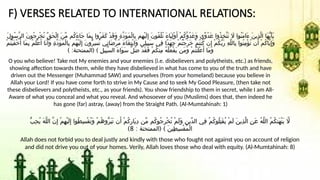
F) VERSES RELATED TO INTERNATIONAL RELATIONS:
َ‫ل‬‫ُو‬‫س‬َّ‫ر‬‫ال‬ َ‫ن‬‫ُو‬‫ج‬ِ‫ر‬ْ‫خ‬ُ‫ت‬ ِّ‫ق‬َ‫ح‬ْ‫ل‬‫ا‬ َ‫ن‬ِّ‫م‬ ‫ُم‬‫ك‬َ‫ء‬‫َا‬‫ج‬ ‫َا‬‫م‬ِ‫ب‬ ‫ُوا‬‫ر‬َ‫ف‬َ‫ك‬ ْ‫د‬َ‫ق‬َ‫و‬ ِ‫ة‬َّ‫د‬َ‫و‬َ‫م‬ْ‫ل‬‫ِا‬‫ب‬ ‫ِم‬‫ه‬ْ‫ي‬َ‫ل‬ِ‫إ‬ َ‫ن‬‫ُو‬‫ق‬ْ‫ل‬ُ‫ت‬ َ‫ء‬‫َا‬‫ي‬ِ‫ل‬ْ‫و‬َ‫أ‬ ْ‫م‬ُ‫ك‬َّ‫و‬ُ‫د‬َ‫ع‬َ‫و‬ ‫ِّي‬‫و‬ُ‫د‬َ‫ع‬ ‫ُوا‬‫ذ‬ِ‫خ‬َّ‫ت‬َ‫ت‬ ‫اَل‬ ‫ُوا‬‫ن‬َ‫م‬‫َا‬‫ء‬ َ‫ن‬‫ِي‬‫ذ‬َّ‫ل‬‫ا‬ ‫َا‬‫ه‬ُّ‫ي‬َ‫أ‬َ‫ي‬
ْ‫م‬ُ‫ت‬ْ‫ي‬َ‫ف‬ْ‫خ‬َ‫أ‬ ‫َا‬‫م‬ِ‫ب‬ ُ‫م‬َ‫ل‬ْ‫ع‬َ‫أ‬ ‫َا‬‫ن‬َ‫َأ‬‫و‬ ِ‫ة‬َّ‫د‬َ‫و‬َ‫م‬ْ‫ل‬‫ِا‬‫ب‬ ‫ُم‬‫ه‬ْ‫ي‬َ‫ل‬ِ‫إ‬ َ‫ن‬‫ُّو‬‫ر‬ِ‫س‬ُ‫ت‬ ‫ِي‬‫ت‬‫َا‬‫ض‬ْ‫ر‬ُ‫م‬ َ‫ء‬‫َا‬‫غ‬ِ‫ت‬ْ‫ب‬‫َا‬‫و‬ ‫ِي‬‫ل‬‫ِي‬‫ب‬َ‫س‬ ‫ِي‬‫ف‬ ‫ًا‬‫د‬َ‫ه‬ِ‫ج‬ ْ‫م‬ُ‫ت‬ْ‫ج‬َ‫ر‬َ‫خ‬ ْ‫م‬ُ‫ت‬‫ُن‬‫ك‬ ‫ن‬ِ‫إ‬ ْ‫م‬ُ‫ك‬ِّ‫ب‬َ‫ر‬ ِ‫ه‬َّ‫ل‬‫ِال‬‫ب‬ ‫ُوا‬‫ن‬ِ‫م‬ْ‫ؤ‬ُ‫ت‬ ‫ن‬َ‫أ‬ ْ‫م‬ُ‫ك‬‫َّا‬‫ي‬ِ‫إ‬َ‫و‬
) : ( )
‫الممتحنة‬ ِ‫ل‬‫ِي‬‫ب‬َّ‫س‬‫ال‬ َ‫ء‬‫َا‬‫و‬َ‫س‬ َّ‫ل‬َ‫ض‬ ْ‫د‬َ‫ق‬َ‫ف‬ ْ‫م‬ُ‫ك‬‫ِن‬‫م‬ ُ‫ه‬ْ‫ل‬َ‫ع‬ْ‫ف‬َ‫ي‬ ‫َن‬‫م‬َ‫و‬ ْ‫م‬ُ‫ت‬ْ‫ن‬َ‫ل‬ْ‫ع‬َ‫أ‬ ‫َا‬‫م‬َ‫و‬
O you who believe! Take not My enemies and your enemies (i.e. disbelievers and polytheists, etc.) as friends,
showing affection towards them, while they have disbelieved in what has come to you of the truth and have
driven out the Messenger (Muhammad SAW) and yourselves (from your homeland) because you believe in
Allah your Lord! If you have come forth to strive in My Cause and to seek My Good Pleasure, (then take not
these disbelievers and polytheists, etc., as your friends). You show friendship to them in secret, while I am All-
Aware of what you conceal and what you reveal. And whosoever of you (Muslims) does that, then indeed he
has gone (far) astray, (away) from the Straight Path. (Al-Mumtahinah: 1)
ُّ‫ب‬ِ‫ح‬ُ‫ي‬ َ‫ه‬َّ‫ل‬‫ال‬ َّ‫ن‬ِ‫إ‬ ْ‫م‬ِ‫ه‬ْ‫ي‬َ‫ل‬ِ‫إ‬ ‫ُوا‬‫ط‬ِ‫س‬ْ‫ق‬ُ‫ت‬َ‫و‬ ْ‫م‬ُ‫ه‬‫ُّو‬‫ر‬َ‫ب‬َ‫ت‬ ‫ن‬َ‫أ‬ ْ‫م‬ُ‫ك‬ِ‫ر‬‫َا‬‫ي‬ِ‫د‬ ‫ِّن‬‫م‬ ‫ُم‬‫ك‬‫ُو‬‫ج‬ِ‫ر‬ْ‫خ‬ُ‫ت‬ ْ‫م‬َ‫ل‬َ‫و‬ ِ‫ن‬‫ِّي‬‫د‬‫ال‬ ‫ِي‬‫ف‬ ْ‫م‬ُ‫ك‬‫ُو‬‫ل‬ِ‫ت‬َ‫ق‬ُ‫ي‬ ْ‫م‬َ‫ل‬ َ‫ن‬‫ِي‬‫ذ‬َّ‫ل‬‫ا‬ ِ‫ن‬َ‫ع‬ ُ‫ه‬َّ‫ل‬‫ال‬ ُ‫م‬ُ‫ك‬‫َن‬‫ه‬ْ‫ن‬َ‫ي‬ ‫اَّل‬
: ( )
‫الممتحنة‬ َ‫ن‬‫ِي‬‫ط‬ِ‫س‬ْ‫ق‬ُ‫م‬ْ‫ل‬‫ا‬
8
)
Allah does not forbid you to deal justly and kindly with those who fought not against you on account of religion
and did not drive you out of your homes. Verily, Allah loves those who deal with equity. (Al-Mumtahinah: 8)
THANK YOU!
Prepared by:
MGT113 – Hh GROUP 1
Ali, Farhanah
Aluyodan, Faidah
Ambor, Inchira
Amerol, Nor-hanesa
Anwar, Habiba
Bayabao, Hanna
Daco, Harisa
Dibaratun, Amil

MGT113-Chapter -1GROUP-1 Reportingg.pptx

  • 1.
    ISLAMIC MANAGEMENT CHAPTER ONE:INTRODUCTION Prepared by: MGT113 – Hh GROUP 1
  • 2.
    INTRODUCTION • Islam wasrevealed more than 1,400 years ago which consists a full system of life that is compatible for human being of all ages. • The revelation from Allah and the teachings of Prophet (s.a.w) is not confined to the belief and moral systems, but also includes the law that is suitable to be implemented to mankind.
  • 3.
    The Qur-an hasemphasized the completeness of its teaching in several verses: “This day, I have perfected your religion for you, completed. My favour upon you, and have chosen for you Islam as your religion.” - Al-Ma idah:3 “We have neglected nothing in the book.” - Al-An’am: 38
  • 4.
    TWO DIFFERENT CONCEPTIONSOF LAW 1. Islamic Law ( Divine Origin) 2. Man-made Law • Man-made law is the basis of most modern legislation. • The Islamic concept of Law can be understood when the question of how to understand Good and Evil is asked. • These two concepts (good and evil) are called by the Muslim scholars Husn (good, beauty), and Qubh ( bad, ugliness). • The basis of the Shari’ah Law is that “what is morally acceptable and good must be done; and what is morally reprehensible must not be done. “
  • 5.
    WHAT IS ABSOLUTELYAND INDUBITABLY HUSN AND QUBH ? • Qur-an – This contains the very words of Allah. • Sunnah - the records of the actions and sayings of the Prophet (s.a.w). These two are the tools, which must be referred to and implemented in order to determine what is Husn and Qubh. However, if the answer is not found in these two, then the dictates of reason in accordance with certain definite principles have to be followed.
  • 6.
    . THE SHARI’AH • Theword “Shari’ah” is derived from the root of shin ra’ayn which literally means “the road to the watering place, the straight path to be followed”. • As a technical term, it is also defined by al-Qurtubi as the canon law of Islam, all the different commandments of Allah to mankinds. . • A comprehensive definition of Shari’ah is, “it is the sum total of Islamic teaching and system, which was revealed to the Prophet recorded in the Qur-an as well as deducible from the Prophet’s divinely guided lifestyle called Sunnah. “
  • 7.
    - (sanctions relatingto beliefs) such as the belief in Allah and the Day of Judgement. COMPONENTS OF SHARI’AH 1. Al-ahkam al-i’tiqadiyyah (Aqidah) 2. Al-ahkam al-akhlaqiyyah (Akhlaq) - (sanctions relating to moral and ethics) such as the injunction to tell the truth, sincerity and to be honest, etc. 3. Al-ahkam al-amaliyyah (Fiqh) - (sanctions relating to the sayings and doings of the individuals and his relations with others) which is also called Fiqh.
  • 8.
    What is FIQH? •Fiqh is the name given to the whole science of jurisprudence because it implies the exercise of intelligence in deciding a point of law in the absence of a binding text of the Qur-an and Sunnah. • It is derived from the root word of fa qa ha which means comprehension or true understanding.
  • 9.
    Fiqh as definedby different scholars Imam Abu Hanifah defined Fiqh as ‘the knowledge of what is for man’s self and what is against man’s self’ (ma ‘rifat al- nafs ma laha wa ma ‘alayha). Al-Amidi provided a broader definition of Fiqh by saying that, Fiqh is the science of understanding the legal obligations derived from its sources. Al-Ghazali confined the word Fiqh to the science of the rules law.
  • 10.
    The majority ofIslamic authorities defined Fiqh in terms of its four basic sources and it can, therefore, be defined as follows: “Fiqh or the science of Islamic Law is the knowledge of one’s rights and obligations derived from the Qur-an or Sunnah of the Prophet, or the consensus of opinions among the learned (ijma) or analogical reasoning (qiyas). “ This is the classic definition of Fiqh founded on the following famous tradition of Mu’adh. FIQH
  • 11.
    TWO KINDS OFFIQH RULINGS 1.) Rulings that are deduced from the decisive evidence from the Qur-an or Sunnah This kind of ruling cannot be changed according to the change of time and place or circumstance. All the rulings related to ‘ibadah falls under this category. 2.) Rulings that are deduced by the scholars from their understanding and interpretation of the Qur-an or Sunnah and from other various sources. This kind of rulings depends largely on the ability of the jurists to utilize the power of reasoning in deciding a certain Fiqhi issue. Most of the rulings related to mu’amalah falls under this category and they are flexible and can be changed according to the changes of time and place or circumstance.
  • 12.
  • 13.
    THERE ARE SEVERALOBVIOUS DIFFERENCES BETWEEN THESE TWO TERM, AMONG THEM ARE; 1. Shari’ah is the wider circle, but Fiqh is confined to what are commonly understood as human acts as far as their legality and illegality are concerned. 2. Shari’ah is the body of revealed injunctions found both in the Qur’an and Sunnah, includes the following three main component; sanctions relating to beliefs, sanctions relating to moral and ethics, and sanctions relating to the sayings and doings of the individuals and his relations with others; which is also called Fiqh; Fiqh is one component of Shari’ah. 3. Shari’ah is fixed and unchangeable whereas certain ruling of Fiqh changes according to the changes of the circumstances under which it is applied. 4. Shari’ah is based on revelations, but in Fiqh, the power of reasoning is stressed, and deduction based upon knowledge are continuously referred to with approval. 5. In Fiqh, an action is either legal or illegal but in the Shari’ah there are various degree of approval and disapproval. Note: It is not clearly drawn, and very often Muslim Scholars used these two term interchangeably.
  • 14.
    THE POSITION ANDCOMPONENTS OF FIQH • The subject matter of Shari'ah can generally be divided into three category; First, Al-ahkam Al-Ittiqadiyya or Aqid h (sanctions relating to beliefs. Second, Al-ahkam Al-akhlaaqiyyah ā (sanctions relating to moral and ethics). Third, Al-ahkam Al-amaliyyah (sanctions relating to sayings and doings of individuals and his relations with others) ;which is also called Fiqh. • Without the existence of Islamic Law, there will be no rules and regulations that govern the affairs of human being and the result is chaotic situations in the society. • Fiqh covers various aspect of human life.
  • 15.
    FIQH CAN GENERALLYBE DEVIDED INTO TWO MAIN CATEGORIES: 1. FIQH AL- IBĀDAH, it covers the rulings the govern the relationship between man and Allah. (Ibādah) ;This category can be further devided into four sections; Rulings related to prayers, Rulings related to fasting, Rulings related to almsgiving, and Rulings related to Hajj 2. FIQH AL-MU'ĀMALAH it covers the rulings between man and man and man and other creatures of Allah. (Most topics of Fiqh) ;This category can be devided into several sections which cover the entire ruling vital for mankind; Ff; Rulings related to family law, Rulings governing the commercial transactions between the parties involved in the transactions, Rulings concerning the management of finance of the state or economic system of the Islamic state, Rulings related to the Administration of justice in Islam, Rulings governing the rights of non- muslims in an Islamic state, Rulings determining the relationship between an Islamic Government and a Foreign Givernment,The Criminal Law of Islam, and Other laws governing the relationship between man and other allah's creatures.
  • 16.
    FIQH RULINGS This containsinto five categories (Al-ahkam al-khamsah); • Fard or Wajib (Compulsory, Obligatory) refers to absolute command which is supported by decisive proof, disobedience to it without any legal excuse is a sin. It is of two kind; AYN and KIFAYAH. FARD AYN refers to individual obligations. While FARD KIFAYAH refers to the collective responsibilities in the sense that if a group of people undertake to do the obligation, the rest will not be held responsible for it, but if no one carries out this duty then, the whole community or nation will bear the sin for commiting it. • Sunnah (recommended act)refers to deeds that are recommended to be undertaken by the Muslims. It is of two kind; • 1. Sunnah Mu-akkada, highly recommended for Muslims to emulate. It is also called Mandub (highly recommended act). • 2. Sunnah gayr Mu-akkadah, this kind of action is the action that is recommended. It is also called mustahab (praiseworthy).
  • 17.
    • Haram (prohibited,unlawful) This is an act that is prohibited by a decisive evidence (adillah qat’iyyah) from the Qur’an or Sunnah. Commiting such an act is punishable and its omission is rewarded. e.g. riba • Makruh (abominable, undesirable) It is the act whose omission is undesirable; nearer to permissible, and near to haram. • Mubah (permissible, indifferent) It is also called ja- iz or halal.This refers to an act whose both commission and omission neither merits any reward nor entails any punishment.
  • 18.
    USUL AL-FIQH Scholars ofIslamic Law divide the science of Fiqh into two main divisions; The Usul which literally means the roots or foundations and the Furu; the branches of the law.The science of usul deals with the methods by which the rules of Fiqh are deduced from their sources and the science of Furu delas with the particular injunctions (ahkam) are the results of the science of Usul. Usul al-Fiqh or the origin of Islamic Law explain the indications and methods by which the rules of Fiqh are deduced from their sources. These indications are found mainly in the Qur’an and Sunnah which are the principal sources of Islamic Law.TH rules of Fiqh are derived from the Qur’an and Sunnah and other sources which are collectively known as Usul al-Fiqh.
  • 19.
    The methodology ofUsul al-fiqh refers to ijtihad (methods of reasoning) such as qiyas (analogy), Istihsan (juristic preference), Istislah (public interest), Istishab (presumption of continuity), Urf (customary practice), Amal ahlal Madenah (practice of al-madenah people) and Sadda al-dhara’i (blocking the means to evil).These are all considered as assistance to the correct understanding of the sources and tools of Ijtihad. Thus, Fiqh as such , is the end product of Usul al-fiqh. However, the two are separate disciplines. Ibn khaldun (d.808AH/1406CE) emphasized the importance of usul al-fiqh when he said: (it is) one of the greatest sciences of the Shari’ah, the powerful and beneficial science. Fakhr al-Din al-Razi (d.606AH/1209CE) also stressed the importance of this science in his work Al-Mahsul when he said that it is the most important science for the Mujtahid.
  • 20.
    The General Objectivesof Shari'ah (Maqasid al-Shariah 'Àmmah) The primary objective of the Shariah is the realization of benefit to the people, concerning to their affairs both in this world and the hereafter. It is generally held that the Shariah in all of its parts aims at securing a benefit for the people or protecting them against corruption and evil. The Qur'an explained the main objectives of Shari ah when it declares, And We have sent you (O Muhammad SAW) not but as a mercy for the 'alamin (mankind, jinns and all that exists). -The message in this verse transcends all barriers that divide humanity; none must stand in the way of the mercy and beneficence that Allah has intended for all human beings. The word "rahmatan" in this verse includes compassion, kindness, goodwill and beneficence.
  • 21.
    In another verse,al-Qur'an describes the Shariah as a healing, as a guidance and mercy for mankind: O mankind! There has come to you a good advice from your Lord (i.e. the Qur'an, ordering all that is good and forbidding all that is evil), and a healing for that (disease of ignorance, doubt,hypocrisy and differences, etc.) in your Hearts, - a guidance and a mercy (explaining lawful and unlawful things, etc.) for the believers. - Al-Shatibi in his famous book Al-Muwafagät fi Usül al-Shari'ah characterized maslahah as being the only principal objective of Shariah which is broad enough to comprise all measures that are beneficial to the people. Al-Shätibi pointed out that Allah revealed the Shariah for the benefit of mankind both in this world and the next. This is primary objective of the lawgiver and a unifying factor which can be seen in all of the detailed rulings of Shari ah.
  • 22.
    Further examination ofthe verses of al-Qur'än and Sunnah will prove the above claim that the Shariah was revealed with the main objective of providing benefit and preventing harm (jalb al-masalih wa dar al-mafäsid) from mankind. All the benefits are for mankind and Allah will not gain and does not need to gain anything from these injunctions. It is in its entirety for the benefit of mankind. Allah says: And whoever is grateful, truly, his gratitude is for (the good of) his own self, and whoever is ungrateful, (he is ungrateful only for the loss of his own self). Certainly! My Lord is Rich (Free of all wants), Bountiful.“ - This verse explains the main objective of prayer is to act as a shield for those who perform it. If prayer is performed according to the strict requirements of prayer by fulfilling all its conditions and stipulations, then, it will be a protection for the believers from committing all kinds of evil. In another verse, the Qur'an elaborates the objective of punishment for a murderer :
  • 23.
    Al-Qur'an also explainthe different objectives of the Quranic injunction in several verses when it says: O you who believe! al-qisas (the Law of Equality in punishment) is prescribed for you in case of murder: the free for the free, the slave for the slave, and the female for the female. But if the killer is forgiven by the brother (or the relatives, etc.) of the killed against blood money, then adhering to it with fairness and payment of the blood money, to the heir should be made in fairness. This is an alleviation and mercy from your Lord. So after this whoever transgresses the limits (i.e. kills the killer after taking the blood money), he shall have a painful torment. And there is (a saving of life for you in al-qisas (the Law of Equality in punishment), O men of understanding, that you may become al-muttagun (the pious). - The above verse clearly mentioned the main objective of al-gisas (the Law of Equality in punishment), which is, to save the life. This objective can be achieved when the culprit is punished and his punishment is witnessed by the public which in turn will prevent them from committing such crime for the severity of the punishment. Even though one life is killed because the person killed others, this will save other lives.
  • 24.
    Al- Qur’an alsoexplain that Allah did not intent to burden mankind through different injunctions revealed to them: …. He has not laid upon you in religion any hardship… (Al- Haj:78) …. Allah intends for your ease, and He does not want to make things difficult for you… ( Al- Baqarah :185)
  • 25.
    The Different Categoriesof the Objectives of Shariah  Essentials (daruriyyat) - are the matters on which the religion and worldly affairs of the people depend upon, their neglect will lead to total disruption and disorder and it could lead to evil ending. The essentials (darriyyat), can be further divided into the protection of the five fundamental values (al-daruriyyah, al-khamsah), which are necessary to human life. These are:  Protection of Al-Din  Protection of Life (Al-Nafs)  Protection of Dignity or Lineage (Al-’Ird)  Protection of Intellect (Al-’Aql)  Protection of Property (Al-mal)
  • 26.
    - Al-Din isthe most important values that must be protected by the Muslims. It is obligatory upon each and every Muslims to protect his al- din at personal level and at every level. The protection of al-din at personal level is achieved through the observance of the different kind ibadah, such as performing the five prayers, fasting, paying of zakah and performing hajj. 1. Protection of Al-Din
  • 27.
    2) PROTECTION OF LIFEIN ISLAM ( Al- nafs ) • This excerpt emphasizes the Islamic principle of protecting life as sacred and valuable, regardless of social status or religious beliefs. Taking a life is forbidden except for just causes, and the Quran stresses equal protection for all. The text highlights the severe consequences of killing, both in this life and the afterlife, and underscores the importance of self-defense.
  • 28.
    It introduces theconcept of Qisas, the Law of Equality, which prescribes retribution for murder. It emphasizes that while taking a life is a grave offense, the punishment aims to deter future crimes and protect the sanctity of life. importance of saving a life, even at the expense of others, but emphasizes that saving a drowning person is a compulsory act.
  • 29.
    3) Protection ofDignity and Lineage (Al-Ird) It underscores the importance of privacy, respectful relationships, and the severe consequences of false accusations, particularly against women.
  • 30.
    Protecting Dignity andRegulating Relationships in Islam It emphasizes protecting dignity and regulates relationships between men and women. It emphasizes the importance of avoiding free mixing, encouraging marriage as a means of safeguarding honor, and prohibiting the exploitation of women for commercial gain.
  • 31.
    Prohibition of Adulteryin Islam It focuses on the severe consequences of adultery in Islam. adultery is considered a grave sin, leading to social problems. punishment for unmarried adulterers, which includes flogging, while the punishment for married adulterers is stoning to death. It also mentions that taking the life of an adulterer is not permissible.
  • 32.
    4) Protection ofthe Intellect or Mind (Al-Aql) It emphasizes importance of protecting the intellect as a gift from Allah. It encourages tolerance, respect for differences in opinions, and using sound evidence and logic in forming beliefs. The Prophet Muhammad (PBUH) is presented as a model for allowing diverse viewpoints and working together to solve problems.
  • 33.
    Protecting the Mindand Forbidding Intoxicants The importance of protecting the mind from harmful substances, specifically focusing on the prohibition of intoxicants (liquor, gambling, etc.). It highlights that Islam encourages seeking knowledge and striving for the best opinion based on Quran and Sunnah. It emphasizes the severity of the punishment for consuming intoxicants, which includes 80 lashes.
  • 34.
    5. Protection ofProperty (Al-Mal) Acquiring property is one of the necessities of mankind. Everyone has his/her own property and would like to have all the necessary protection and security for his/her property. Islam has ordered that no one should transgress and acquire the property of others without legitimate reasons and without proper contract. Al-Qur'an emphasizes this point when it says: ‫ا‬ً ‫ق‬‫ي‬ِ ‫ر‬َ ‫ف‬ ‫وا‬ُ‫ل‬ُ ‫ك‬ْ‫أ‬َ ‫ت‬ِ‫ل‬ ِ ‫ام‬َ ‫ك‬ُ ‫ح‬ْ‫ال‬ ‫ى‬َ‫ل‬ِ‫إ‬ ‫ا‬َ ‫ه‬ِ ‫ب‬ ‫وا‬ُ‫ْل‬ ‫د‬ُ ‫ت‬َ ‫و‬ ِ ‫ل‬ ِ ‫اط‬َ ‫ب‬ْ‫ال‬ِ ‫ب‬ ‫م‬ُ ‫ك‬َ ‫ن‬ْ‫ي‬َ ‫ب‬ ‫م‬ُ ‫ك‬َ‫ل‬َ ‫و‬ْ ‫م‬َ‫أ‬ ‫وا‬ُ‫ل‬ُ ‫ك‬ْ‫أ‬َ ‫ت‬ ‫اَل‬َ ‫و‬ :‫(البقرة‬ ) َ ‫ون‬ُ ‫م‬َ‫ل‬ْ ‫ع‬َ ‫ت‬ ْ ‫م‬ُ ‫ت‬‫ن‬َ‫أ‬َ ‫و‬ ِ ‫م‬ْ‫ث‬ِ‫إْل‬‫ا‬ِ ‫ب‬ ِ ‫اس‬َّ ‫الن‬ ِ ‫ال‬َ ‫و‬ْ ‫م‬َ‫أ‬ ْ ‫ِن‬ ‫م‬ 188 ) And eat up not one another's property unjustly (in any illegal way e.g. stealing, robbing, deceiving, etc.), nor give bribery to the rulers (judges before presenting your cases) that you may knowingly eat up a part of the property of others sinfully. (Al-Baqarah: 188)
  • 35.
    In addition, al-Qur'anhas also warned of severe punishment in the Day of Judgment against those who acquire the properties of others unlawfully. . :‫(النساء‬ ‫ا‬ً ‫ار‬َ ‫ن‬ ْ ‫م‬ِ ‫ِه‬ ‫ن‬‫و‬ ُ ‫ط‬ُ ‫ب‬ ‫ِي‬ ‫ف‬ َ ‫ون‬ُ‫ل‬ُ ‫ك‬ْ‫أ‬َ ‫ي‬ ‫ا‬َ ‫م‬َّ ‫ن‬ِ‫إ‬ ‫ا‬ً ‫م‬ْ‫ل‬ ُ ‫ظ‬ ‫ى‬َ ‫م‬َ ‫ت‬َ ‫ي‬ْ‫ال‬ َ ‫ال‬َ ‫و‬ْ ‫م‬َ‫أ‬ َ ‫ون‬ُ‫ل‬ُ ‫ك‬ْ‫أ‬َ ‫ي‬ َ ‫ِين‬ ‫ذ‬َّ‫ال‬ َّ ‫ن‬ِ‫إ‬ 10 ) ( ‫ا‬ً ‫ِير‬ ‫ع‬َ ‫س‬ َ ‫ن‬ْ ‫و‬َ‫ل‬ ْ ‫ص‬َ ‫ي‬َ ‫س‬َ ‫و‬ 3 ) Verily, those who unjustly eat up the property of orphans, they eat up only a fire into their bellies, and they will be burnt in the blazing Fire! (Al-Nisa': 10) ْ ‫م‬ُ ‫ه‬ْ‫ن‬ِ ‫م‬ َ ‫ين‬ِ ‫ِر‬ ‫ف‬َ ‫ك‬ْ‫ِل‬‫ل‬ ‫ا‬َ ‫ن‬ْ ‫د‬َ ‫ت‬ ْ ‫ع‬َ‫أ‬َ ‫و‬ ِ ‫ل‬ ِ ‫ط‬َ ‫ب‬ْ‫ال‬ِ ‫ب‬ ِ ‫اس‬َّ ‫الن‬ َ ‫ال‬َ ‫و‬ْ ‫م‬َ‫أ‬ ْ ‫م‬ِ ‫ِه‬‫ل‬ْ ‫ك‬َ‫أ‬َ ‫و‬ ُ ‫ه‬ْ‫ن‬َ ‫ع‬ ‫وا‬ُ ‫ه‬ُ ‫ن‬ ْ ‫د‬َ ‫ق‬َ ‫و‬ ‫ا‬ْ ‫و‬َ ‫ب‬َ ‫الر‬ ُ ‫م‬ِ ‫ِه‬ ‫ذ‬ ْ ‫خ‬َ‫أ‬َ ‫و‬ :‫(النساء‬ ) ‫ا‬ً ‫م‬‫ِي‬‫ل‬َ‫أ‬ ‫ا‬ً ‫ب‬‫ا‬َ ‫ذ‬َ ‫ع‬ 161 ) And their taking of Riba (usury) though they were forbidden from taking it and their devouring of men's substance wrongfully (bribery, etc.). And We have prepared for the disbelievers among them a painful torment.
  • 36.
    Islam has alsoimposed severe punishment for those who steal the properties of other. Chopping off the hand of a thief is the punishment for those convicted for stealing. Al-Qur'an mentioned the punishment when it says: :‫(المائدة‬ )) ٌ ‫م‬‫ِي‬ ‫ك‬َ ‫ح‬ ٌ t‫ز‬‫ي‬ِ t ‫ز‬َ ‫ع‬ ُ‫هَّلل‬‫ا‬َ ‫و‬ ِ‫هَّلل‬‫ا‬ َ ‫ن‬ِّ ‫م‬ ‫اًل‬َ ‫ك‬َ ‫ن‬ ‫ا‬َ ‫ب‬َ ‫س‬َ ‫ك‬ ‫ا‬َ ‫م‬ِ ‫ب‬ ‫اء‬َ ‫ز‬َ ‫ج‬ ‫ا‬َ ‫م‬ُ ‫ه‬َ ‫ي‬ِ ‫د‬ْ‫ي‬َ‫أ‬ ‫وا‬ُ ‫ع‬ َ ‫ط‬ْ‫ق‬‫ا‬َ ‫ف‬ ُ ‫ة‬َ ‫ق‬ِ ‫ار‬َّ ‫الس‬َ ‫و‬ ُ ‫ق‬ِ ‫ار‬َّ ‫الس‬َ ‫و‬ 38 ) Cut off (from the wrist joint) the (right) hand of the thief, male or female, as a recompense for that which they committed, a punishment by way of example from Allah. And Allah is All Powerful, All Wise. (al-Ma'idah: 38)
  • 37.
    Protecting Property: Ribaand Theft It emphasizes the Islamic prohibitions against Riba (usury) and theft. It warns of severe punishment for those who engage in these actions, including cutting off the hand of the offender.
  • 38.
    The Complementary (Al-Hajiyyat) Thecomplementary interests or al-hajiyyah on the whole supplement to the five essential interests and it refers to those kind of interests whose neglect leads to hardship of the individual or community although it does not lead to the total disruption of normal life. There are many examples of al-hajiyyat such as the despensations or legal excuses (rukhsah) that the Shari'ah has granted in regards to 'ibadah for the travelers and the sick. Travelers are allowed to combine and shorten their five obligatory prayers (al-jam' wa qasr) and break their fast in ramadan. A sick person is allowed to pray in sitting or sleeping position and break his fast in ramadan. In the area of mu'amalah, the ban of profiteering (iḥtikar) for example, or the sale of alcohol so as to prevent its consumption, and concessions, all fall under the category of hajjiyyat. In addition, the basic permissibility (ibahah) regarding the enjoyment of victuals and hunting also fall under this category.
  • 39.
    The Embellishments (Al-Tahsiniyyat) Theembellishments or al-tahsiniyyat refer to interests whose realization lead to improvement and the attainment of that which is desirable. Therefore, the observance of cleanliness in personal appearance and in ‘ibadah, moral values virtues, avoiding extravagance and measures that are designed to prevent proliferation of false claims in the courts, etc., falls under the catefory of al- tahsiniyyat. The disappearance of tahsiniyyat may not interrupt the normal life, but it might lead to the lack of
  • 40.
    Other General Objectivesof Shari’ah 1. Educating the Individual (tahdhib al-Fard) One of the primary objectives of the Sharĩ 'ah is to educate the individuals. All the different injunctions of Shari ah seek to educate the individuals and inspire them with faith and instills in them the qualities of being trustworthy and righteous. It is through reforming the individual that Islam aims at achieving its social goals. The injunctions of Sharī ah related to 'ibādah,"" mu'ãmalah,"" jinyah" and all other branches. :‫(العنكبوت‬ َ ‫ون‬ُ ‫ع‬َ ‫ن‬ ْ ‫ص‬َ ‫ت‬ ‫ا‬َ ‫م‬ ُ ‫م‬َ‫ل‬ْ ‫ع‬َ ‫ي‬ ُ‫هَّلل‬‫ا‬َ ‫و‬ ُ ‫ر‬َ ‫ب‬ْ ‫ك‬َ‫أ‬ ِ‫هَّلل‬‫ا‬ ُ ‫ر‬ْ ‫ك‬ِ ‫ذ‬َ‫ل‬َ ‫و‬ ِ ‫ر‬َ ‫ك‬‫ن‬ُ ‫م‬ْ‫ال‬َ ‫و‬ ِ ‫ء‬‫ا‬َ ‫ش‬ ْ ‫ح‬َ ‫ف‬ْ‫ال‬ ِ ‫ن‬َ ‫ع‬ ‫ى‬َ ‫ه‬ْ‫ن‬َ ‫ت‬ َ ‫ة‬ َ‫ل‬ َّ ‫الص‬ َّ ‫ن‬ِ‫إ‬ َ ‫ة‬َ ‫و‬َ‫ل‬ َّ ‫الص‬ ِ ‫ِم‬ ‫ق‬َ‫أ‬َ ‫و‬ ٰ‫و‬ 45 ) Surely prayer keeps one away from indecency and evil, and certainly the remembrance of Allah is the greatest (form of devotion). (al- 'Ankabüt, 29:45)
  • 41.
    In the mattersrelated to mu'āmalah, all the injunctions of Sharī ah are geared to achieve the main objective to educate people by adhering to the principle of justice, trustworthy, honesty, mutual consent and social responsibility. ْ ‫م‬ُ ‫ك‬ِ ‫ب‬ َ ‫ان‬َ ‫ك‬ َ‫هَّلل‬‫ا‬ َّ ‫ن‬ِ‫إ‬ ْ ‫م‬ُ ‫ك‬َ ‫س‬ُ ‫ف‬ْ‫ن‬َ‫أ‬ ‫وا‬ُ‫ل‬ُ ‫ت‬ْ‫ق‬َ ‫ت‬ ‫اَل‬َ ‫و‬ ْ ‫م‬ُ ‫ك‬‫ِن‬ ‫م‬ ٍ ‫اض‬َ ‫ر‬َ ‫ت‬ ‫ن‬َ ‫ع‬ ً ‫ة‬َ ‫ر‬َ ‫ج‬َ ‫ت‬ َ ‫ون‬ُ ‫ك‬َ ‫ت‬ ‫ن‬َ‫أ‬ ‫اَّل‬ِ‫إ‬ ِ ‫ل‬ ِ ‫اط‬َ ‫ب‬ْ‫ال‬ِ ‫ب‬ ‫م‬ُ ‫ك‬َ ‫ن‬ْ‫ي‬َ ‫ب‬ ‫م‬ُ ‫ك‬َ‫ل‬‫ا‬َ ‫و‬ْ ‫م‬َ‫أ‬ ‫وا‬ُ‫ل‬ُ ‫ك‬ْ‫أ‬َ ‫ت‬ ‫اَل‬ ‫وا‬ُ ‫ن‬َ ‫م‬‫ا‬َ ‫ء‬ َ ‫ِين‬ ‫ذ‬َّ‫ال‬ ‫ا‬َ ‫ه‬ُّ ‫ي‬َ ‫أ‬َ ‫ت‬َ ‫ي‬ ( ‫ا‬ً ‫م‬‫ي‬ِ ‫ح‬َ ‫ر‬ 2 :‫(النساء‬ ) 29 ) O you who believe! Eat not up your property among yourselves uniustly except it be a trade amongst you, by mutual consent. And do not kill yourselves (nor kill one another). Surely, Allah is Moet Merciful to you (al-Nisā': 29) The different contracts permitted by Islam such as the contract of sale hire and others are in harmony with these objectives. The contracts that are forbidden such as usury, gambling, contracts which involve ambiguity concerning the goods (gharar), transactions involving prostitution, selling drugs, hoarding (al-ihtikār) and other such contracts, defy the objectives of Sharī ah, therefore, it is made forbidden in Islam.
  • 42.
    َ ‫ون‬ُ ‫ن‬ِ ‫م‬ْ ‫ؤ‬ُ ‫ت‬ ْ ‫م‬ُ ‫ت‬‫ن‬ُ ‫ك‬ ‫ن‬ِ‫إ‬ِ‫هَّلل‬‫ا‬ ِ ‫ِين‬ ‫د‬ ‫ِي‬ ‫ف‬ ٌ ‫ة‬َ ‫ف‬ْ‫أ‬َ ‫ر‬ ‫ا‬َ ‫م‬ِ ‫ه‬ِ ‫ب‬ ‫م‬ُ ‫ك‬ْ ‫ذ‬ُ ‫خ‬ْ‫أ‬َ ‫ت‬ ‫اَل‬َ ‫و‬ ٍ ‫ة‬َ ‫د‬ْ‫ل‬َ ‫ج‬ َ ‫ة‬َ ‫ئ‬‫ِا‬ ‫م‬ ‫ا‬َ ‫م‬ُ ‫ه‬ْ ‫ن‬ِ ‫م‬ ٍ ‫د‬ِ ‫اح‬َ ‫و‬ َّ ‫ل‬ُ ‫ك‬ ‫ُوا‬ ‫د‬ِ ‫ل‬ ْ ‫اج‬َ ‫ف‬ ‫ِي‬ ‫ن‬‫ا‬َّ ‫الز‬َ ‫و‬ ُ ‫ة‬َ ‫ي‬ِ ‫ن‬‫ا‬َّ ‫لز‬ ( َ ‫ِين‬ ‫ن‬ِ ‫م‬ْ ‫ؤ‬ُ ‫م‬ْ‫ل‬‫ا‬ َ ‫ِن‬ ‫م‬ ٌ ‫ة‬َ ‫ف‬ِ ‫ئ‬‫ا‬َ ‫ط‬ ‫ا‬َ ‫م‬ُ ‫ه‬َ ‫ب‬‫ا‬َ ‫ذ‬ َ ‫ع‬ ْ ‫د‬َ ‫ه‬ ْ ‫ش‬َ ‫ي‬ْ‫ل‬َ ‫و‬ ِ ‫ر‬ِ ‫خ‬ ‫آْل‬‫ا‬ ِ ‫م‬ْ ‫و‬َ ‫ي‬ْ‫ل‬‫ا‬َ ‫و‬ ِ‫هَّلل‬‫ا‬ِ ‫ب‬ 3 : ‫(النور‬ ) 2 ) A woman and a man guilty of illegal sexual intercourse, flog each of them with a hundred stripes. Let not pity withhold you in their case, in a punishment prescribed by Allah, if you believe in Allah and the Last Day. And let a party of the believers witness their punishment. (al-Nur: 2)
  • 43.
    Upholding of Justice('adl) 'Adl literally means placing things in their right place where they belong. It is to establish a balance by way of fulfilling rights and obligations and by eliminating excess and disparity in all spheres of life. :‫(الحديد‬ ) ِ ‫ط‬ ْ ‫ِس‬ ‫ق‬ْ‫ال‬ِ ‫ب‬ ُ ‫اس‬َّ ‫الن‬ َ ‫م‬‫و‬ُ ‫ق‬َ ‫ي‬ِ‫ل‬ َ ‫ان‬َ ‫ِيز‬ ‫م‬ْ‫ال‬َ ‫و‬ َ ‫ب‬َ ‫ت‬َ ‫ك‬ْ‫ال‬ ُ ‫م‬ُ ‫ه‬َ ‫ع‬َ ‫م‬ ‫ا‬َ ‫ن‬ْ‫ل‬َ ‫نز‬َ‫أ‬َ ‫و‬ ِ ‫ات‬َ ‫ن‬ِّ ‫ي‬َ ‫ب‬ْ‫ال‬ِ ‫ب‬ ‫ا‬َ ‫ن‬َ‫ل‬ُ ‫س‬ُ ‫ر‬ ‫ا‬َ ‫ن‬ْ‫ل‬َ ‫س‬ْ ‫ر‬َ‫أ‬ ْ ‫د‬َ ‫ق‬َ‫ل‬ 25 ) We sent Our Messengers and revealed the Book through them so as to establish justice among people. (Al-Hadid, 57:25) "any path that leads to justice and fairness is an integral part of Islam and never contrary to it." -Ibn Qayyim al-Jawziyyah
  • 44.
    The Qur'an emphasizesthat Muslims should be just in their relation with everyone even with their enemy: َّ ‫ن‬ِ‫إ‬ َ‫هَّلل‬‫ا‬ ‫وا‬ُ ‫ق‬َّ ‫ات‬َ ‫و‬ ‫ى‬َ ‫و‬ْ‫ق‬َّ ‫ِلت‬‫ل‬ ُ ‫ب‬َ ‫ر‬ْ‫ق‬َ‫أ‬ َ ‫و‬ُ ‫ه‬ ‫وا‬ُ‫ِل‬ ‫د‬ ْ ‫اع‬ ‫وا‬ُ‫ِل‬ ‫د‬ْ ‫ع‬َ ‫ت‬ ‫اَّل‬َ‫أ‬ ‫ى‬َ‫ل‬َ ‫ع‬ ٍ ‫م‬ْ ‫و‬َ ‫ق‬ ُ ‫ان‬َ ‫ت‬َ ‫ش‬ ْ ‫م‬ُ ‫ك‬َّ ‫ن‬َ ‫م‬ِ ‫ر‬ ْ ‫ج‬َ ‫ي‬ ‫اَل‬َ ‫و‬ ِ ‫ط‬ ْ ‫ِس‬ ‫ق‬ْ‫ال‬ِ ‫ب‬ ُ ‫ء‬‫ا‬َ ‫د‬َ ‫ه‬ُ ‫ش‬ ِ‫هَّلِل‬ َ ‫ِين‬ ‫م‬ْ ‫و‬َ ‫ق‬ ‫وا‬ُ ‫ن‬‫و‬ُ ‫ك‬ ‫وا‬ُ ‫ن‬َ ‫م‬‫ا‬َ ‫ء‬ َ ‫ِين‬ ‫ذ‬َّ‫ال‬ ‫بنا‬ َ‫هَّلل‬‫ا‬ : ‫((المائدة‬ َ ‫ون‬ُ‫ل‬َ ‫م‬ْ ‫ع‬َ ‫ت‬ ‫ا‬َ ‫م‬ِ ‫ب‬ ٌ ‫ير‬ِ ‫ب‬َ ‫خ‬ 8 ) O you who believe! Stand out firmly for Allah and be just witnesses and let not the enmity and hatred of others make you avoid justice. Be just: that is nearer to piety, and fear Allah. Verily, Allah is Well Acquainted with what you do. (Al- Ma'idah: 8) They must also establish justice with those who are not in the same faith with them i.e. the non-Muslim:
  • 45.
    They must alsoestablish justice with those who are not in the same faith with them i.e. the non-Muslim: ُّ ‫ب‬ِ ‫ح‬ُ ‫ي‬ َ‫هَّلل‬‫ا‬ َّ ‫ن‬ِ‫إ‬ ْ ‫م‬ِ ‫ه‬ْ ‫ي‬َ ‫ل‬ِ‫إ‬ ‫وا‬ُ ‫ط‬ ِ ‫س‬ْ ‫ق‬ُ ‫ت‬َ ‫و‬ ْ ‫م‬ُ ‫وه‬ُّ ‫ر‬َ ‫ب‬َ ‫ت‬ ‫ن‬َ‫أ‬ ْ ‫م‬ُ ‫ك‬ِ ‫ر‬َ ‫ي‬ِ ‫د‬ ‫ن‬ِّ ‫م‬ ‫م‬ُ ‫ك‬‫و‬ُ ‫ج‬ِ ‫ر‬ ْ ‫خ‬ُ ‫ت‬ ْ ‫م‬َ ‫ل‬َ ‫و‬ ِ ‫ِّين‬ ‫الد‬ ‫ِي‬ ‫ف‬ ْ ‫م‬ُ ‫ك‬‫و‬ُ ‫ل‬ِ ‫ت‬َ ‫ق‬ُ ‫ي‬ ْ ‫م‬َ ‫ل‬ َ ‫ِين‬ ‫ذ‬َّ ‫ل‬‫ا‬ ِ ‫ن‬ َ ‫ع‬ ُ‫هَّلل‬‫ا‬ ُ ‫م‬ُ ‫ك‬‫ن‬َ ‫ه‬ْ ‫ن‬َ ‫ي‬ ‫ا‬ ) ‫(المنحة‬ َ ‫ين‬ِ ‫ط‬ ِ ‫س‬ْ ‫ق‬ُ ‫م‬ْ‫ل‬‫ا‬ 39 Allah forbids you not to do good and be just to those who have fought you over your faith nor have evicted you from your homes. Allah loves those who established justice. (al-mumtahinah, 60:8)
  • 46.
  • 47.
    THE SHARI’AH ISA DIVINE REVELATION, HAS ITS OWN CHARACTERISTICS AND ADVANTAGES. 1. Shari’ah is Divining Origin (Al-Rabbaniyyah)  Islam as a whole is a divine revelation. Shari’ah is the fact that it comes only form Allah and it has religious elements. The source of the Shari’ah is divine revelation, unlike other systems of law. Allah Who created man knows what is the system that is best to suit all the need of mankind.
  • 48.
    THE IMPLICATIONS OFTHE FACT THAT THE SHARI’AH IS FROM ALLAH ARE: i. Shari’ah Law is free from discrepancies and shortcomings  Shari’ah Law is the product of Allah the Creator of mankind. Allah has no vested interests when he revealed the Shari’ah, therefore it is purely revealed for the interest and benefit of mankind. The principle of equality in Islam is a perfect example to manifest that it is free from any discrepancies. According to this principle, all human beings are equal in the eye of the law, which implies that in the implementation of Islamic law there shouldn’t be any discrimination or favoritism. It should be applied to everyone regardless of his or her status and position in society or in other word no one is above the law.
  • 49.
    The Shari’ah isfree from any error or inaccuracy because it is the revelation from Allah. Allah Almighty who creates mankind knows what is the best rulings that can assure the harmonious and safe life for everyone.
  • 50.
    ii. Respecting, Honoring,and Obeying its Commandments  People will have the sense of respect in obeying the commandment of Allah as it is a divine order and is different from any other’s commandment which come from man. It is part of the aqidah of a Muslim to believe and obey all the commandments of Allah as implementing them are part of ibadah.  The attitude of the companions in respecting and obeying the commandment of Allah and His Prophet (s.a.w) can be observed during the revelation concerning the prohibition of the consumption of liquor, even though it was their habit and part of their life to consume such drink. It was narrated that the streets of al-Madinah was filled with discarded liquor when the prohibition was declared.
  • 51.
     Muslim womenadopted a similar stand during the time of the Prophet (s.a.w) with regard to hijab. When the commandment of Allah regarding hijab was revealed, they immediately abided by this directive from Allah.
  • 52.
     2. Shari’ahis Universal, Realistic, And Contemporary (al- Waqi’iyyah)  The Shari’ah in all its components is universal, realistic, and contemporary. The belief system in Islam is realistic in the sense that Allah (s.w.t) have ordered the Muslims to worship Him alone and He has provided many evidences in the Qur’an and Sunnah about His existence. In addition, all the unseen matters which are the pillars of Islam such as the belief in the angels of Allah, Messengers, Books, the Day of Judgment and belief in the divine decree is simple and understandable to the average mind.  The moral system in Islam is practical and sensible it encourages all the good deeds and forbids everything that can bring harm to individual, society or the entire universe.  The Shari’ah revealed by Allah is universal in the sense that it is suitable to be implemented at any time, any place and in all situations.
  • 53.
  • 54.
    SHARI’AH PROPAGATES THEPROTECTION OF INTEREST AND REJECTION OF EVIL  This is evident in all rulings of the Shari’ah which were revealed for the benefit of mankind at all time. An example of the ruling related to a person who has killed another person intentionally. The punishment for this crime is the accused shall forfeit his life unless he obtains pardon from the deceased heirs.  This ruling was revealed to protect the life and interest of people in the society. In the implementation of such punishment, there is a lesson to be learnt for other members so as not to commit such crimes.
  • 55.
     Shari'ah, Islamiclaw, incorporates exceptional principles known as rukhsah, allowing flexibility in its implementation. SHARI’AH CONTAINS EXCEPTIONAL PRINCIPLES IN THE IMPLEMENTATION OF ITS LAWS
  • 56.
    • The rukhsahprinciple permits exceptions in Islamic practices to accommodate specific situations: o An individual unable to stand can pray in a sitting or sleeping position. o Travelers are allowed to combine and shorten obligatory prayers during journeys. o In emergency situations (darura), actions typically forbidden in Islam, like consuming prohibited foods, are permitted to save one's life. SHARI’AH CONTAINS EXCEPTIONAL PRINCIPLES IN THE IMPLEMENTATION OF ITS LAWS
  • 57.
     The guidingprinciple underlying these exceptions is "Necessity renders prohibited things permissible," showcasing the practicality of Islamic teachings and providing solutions during challenging circumstances.  These exceptional principles demonstrate the adaptability of Islam and its ability to address difficulties effectively by allowing deviations from the standard rules in specific scenarios. SHARI’AH CONTAINS EXCEPTIONAL PRINCIPLES IN THE IMPLEMENTATION OF ITS LAWS
  • 58.
     Shari'ah, theIslamic law, contains both fixed and flexible principles, making it adaptable and suitable for implementation at all times.  Fixed injunctions, derived from the Qur'an and the Sunnah of the Prophet, can be categorized into beliefs ('aqidah), worship ('ibādah), and ethics (akhlāq). o Belief-related injunctions, such as faith in Allah and His Messenger, are fundamental and unchangeable. o Worship-related injunctions, like prayer orders and timings, are also fixed and must be adhered to. o Ethical injunctions, concerning moral values like respecting parents, are universal and immutable.  Some explicit injunctions, like the punishment for theft as prescribed in the Qur'an, are clear and non-negotiable due to their importance and relevance across time and place. SHARI’AH CONTAINS FLEXIBLE PRINCIPLES
  • 59.
     In contrast,Shari'ah injunctions related to human interactions (mu’malah) are flexible and can evolve based on changing circumstances, customs, and societal needs.  The flexible nature of Shari'ah allows for adaptation to different situations, ensuring its applicability and relevance over time.  Pre-Islamic customs recognized by Shari'ah, such as certain commercial practices like the contract of salam, demonstrate its flexibility when beneficial to society without violating Islamic principles. SHARI’AH CONTAINS FLEXIBLE PRINCIPLES
  • 60.
    I. SHARI’AH CONTAINSUNIVERSAL PRINCIPLES  Shari'ah, the Islamic law, encompasses universal principles that provide essential guidance for regulating and accommodating the needs of mankind.  Key universal principles in Shari'ah include: i. Principle of Shūrā (Mutual Consultation):  The Qur'an advocates mutual consultation in decision-making processes related to public interest, be it political, economic, or other matters.  This principle emphasizes the importance of seeking advice and consensus in governance and societal affairs. ii. Principle of Equality (Al-Musāwā):  Islam upholds the principle of equality before the law, ensuring that all individuals, regardless of status, are treated fairly and justly.  This principle promotes justice and impartial impartiality in the application of Islamic law. iii. Principle of Justice (Al-'Adālah):  Justice is a core value in Islam, emphasized in the Qur'an to ensure fair dealings and ethical conduct. Upholding justice is essential for maintaining societal order, with individuals urged to act justly and avoid wrongdoing.
  • 61.
    i. Principle of“No Harm Shall Be Inflicted Nor Reciprocated” (La Darar Wa Lā Dirār):  This Hadith underscores the importance of preventing harm and fostering well-being, both at an individual and societal level.  It emphasizes the avoidance of actions that cause harm and the promotion of peace and stability within communities.  These universal principles serve as moral and ethical foundations in in Islam, applicable across time and place, and neglecting them can lead to societal discord and instability. I. SHARI’AH CONTAINS UNIVERSAL PRINCIPLES
  • 62.
    Rewards and Punishmentsin Shari'ah: This World and the Hereafter Shari'ah, like any legal system, incorporates measures to deter crime and educate individuals about the consequences of breaking the law. However, a key distinction of Shari'ah is its emphasis on both worldly and otherworldly consequences. This dual approach aims to cultivate a sense of self- restraint and accountability in Muslims. THE REWARD AND PUNISHMENTS IN SHARI’AH IS IN THIS WORLD AND IN THE HEREAFTER
  • 63.
    Punishments in thisWorld:  Shari'ah prescribes specific punishments for offenses outlined in the Qur'an and Sunnah. These punishments, while serving as deterrents, are also seen as opportunities for repentance and redemption.  The example of Mā'iz, who confessed to adultery and accepted the prescribed punishment of had, illustrates this principle. He chose to face the worldly consequence, knowing that a more severe punishment awaited him in the hereafter if he had denied his actions. THE REWARD AND PUNISHMENTS IN SHARI’AH IS IN THIS WORLD AND IN THE HEREAFTER
  • 64.
    Punishments in theHereafter:  The concept of punishment in the hereafter is central to Islamic belief, serving as a strong motivator for moral conduct.  The Qur'an, in Surah An-Nisa', clearly outlines the consequences of obedience and disobedience to Allah and His Messenger, emphasizing the eternal punishment in hellfire for those who transgress His limits. [1]  The severity of punishment in the hereafter is often emphasized to underscore the importance of seeking forgiveness and striving for a righteous life. THE REWARD AND PUNISHMENTS IN SHARI’AH IS IN THIS WORLD AND IN THE HEREAFTER
  • 65.
    Rewards in thisWorld and the Hereafter:  While the text focuses primarily on punishments, it's important to note that Shari'ah also emphasizes rewards for righteous actions. These rewards can manifest in this world through blessings, peace of mind, and societal harmony.  The ultimate reward, however, lies in the hereafter, where believers are promised eternal bliss in Paradise. [1] THE REWARD AND PUNISHMENTS IN SHARI’AH IS IN THIS WORLD AND IN THE HEREAFTER
  • 66.
    The Role ofRepentance:  Islam recognizes the human capacity for error and emphasizes the importance of repentance.  While those who commit sins may face worldly consequences, the possibility of forgiveness and redemption through sincere repentance remains open.  This emphasis on repentance underscores the merciful nature of Allah and the importance of seeking His forgiveness. THE REWARD AND PUNISHMENTS IN SHARI’AH IS IN THIS WORLD AND IN THE HEREAFTER
  • 67.
     Shari'ah, Islamiclaw, is a comprehensive system that addresses all aspects of life, fulfilling the needs of mankind.  The Qur'an confirms the completeness of Shari'ah in verses like Surah al-Ma'idah 5:3, stating that Allah has perfected religion and completed His favor upon humanity by choosing Islam as their way of life.  The Qur'an further emphasizes the comprehensiveness of Islamic teachings in Surah al-An'am 6:38, stating that nothing has been omitted from the Book (the Qur'an). THE COMPLETENESS OF SHARI’AH
  • 68.
     Shari'ah encompassesall facets of life, including: i. Al-Ahkām Al-I'tiqāidiyyah (Sanctions Relating to Beliefs):  This encompasses the complete belief system in Islam, including faith in the six pillars of 'iman (faith) and matters unseen. ii. Al-Ahkām Al-Akhlāqiyyah (Sanctions Relating to Moral and Ethics):  This includes all good moral values to be upheld, such as sincerity, responsibility, and caring, and bad moral principles to be avoided, such as lying, backbiting, and harming others. THE COMPLETENESS OF SHARI’AH
  • 69.
    4. THE COMPLETENESSOF SHARIAH - THE SHARI 'ÀH COVERS ALL ASPECTS OF LIFE AND FULFIL ALL THE NEEDS OF MANKIND. THERE ARE NO MATTERS, WHICH DOES NOT FALL UNDER THE JURISDICTION OF SHARIĀH. THIS POINT IS CLEARLY MENTIONED IN AL-QUR-ÀN: : ( ) ‫المائدة‬ ٌ‫م‬‫ِي‬‫ح‬َّ‫ر‬ ٌ‫ر‬‫ُو‬‫ف‬َ‫غ‬ َ‫ه‬َّ‫ل‬‫ال‬ َّ‫ن‬ِ‫إ‬َ‫ف‬ ٍ‫م‬ْ‫ث‬ِ ‫إِل‬ ِ‫ف‬ِ‫ئ‬‫َا‬‫ج‬َ‫ت‬ُ‫م‬ َ‫ر‬ْ‫ي‬َ‫غ‬ ٍ‫ة‬َ‫ص‬َ‫م‬ْ‫خ‬َ‫م‬ ‫ِي‬‫ف‬ َّ‫ر‬ُ‫ط‬ْ‫ض‬‫ا‬ ِ‫ن‬َ‫م‬َ‫ف‬ 3 ) ‘THIS DAY HAVE I PERFECTED YOUR RELIGION FOR YOU, COMPLETED MY FAVOUR UPON YOU, AND HAVE CHOSEN FOR YOU ISLAM AS YOUR RELIGION.’ (AL-MÃ IDAH: 3) : ( ) ‫األنعام‬ َ‫ن‬‫ُو‬‫ر‬َ‫ش‬ْ‫ح‬ُ‫ت‬ ْ‫م‬ِ‫ه‬ِّ‫ب‬َ‫ر‬ ‫َى‬‫ل‬ِ‫إ‬ َّ‫م‬ُ‫ث‬ ٍ‫ء‬ْ‫ي‬َ‫ش‬ ‫ِن‬‫م‬ ِ‫ب‬‫َا‬‫ت‬ِ‫ك‬ْ‫ل‬‫ا‬ ‫ِي‬‫ف‬ ‫َا‬‫ن‬ْ‫ط‬َّ‫ر‬َ‫ف‬ ‫ما‬ 38 ) ‘NOTHING HAVE WE OMITTED FROM THE BOOK (AL-QUR, ĂN).’ (AL-AN 'ĂM :38) THE ABOVE VERSES CONFIRMED THE COMPLETENESS OF ISLAM AS A WAY OF LIFE AND IT IS TO RESOLVE ALL THE NEEDS OF MANKIND.
  • 70.
    THE SHARI'AH COVERSALL BRANCHES OF LIFE INCLUDING: 1. Al-ahkam al-i'tiqādiyyah (the sanctions relating to beliefs) which includes the complete belief system in Islam such as believing in the six pillars of īman, and unseen matters. 2. Al-ahkām al-akhlāqiyyah (the sanctions relating to moral and ethics) which includes all the good moral values that must be enjoined such as sincerity, responsibility, caring, etc and the bad moral principles that must be avoided such as telling lies, backbiting, harming and hurting others etc. 3. Al-ahkām al-'amaliyyah (sanctions relating to the sayings and doing of the individuals and his relations with others).
  • 71.
    The injunctions ofal-Qur'ān are comprehensive in the sense that they cover all spheres essential to guide man. In addition, the al-Qur'ān also provides general principles that can be utilised to resolve contemporary matters. The ideal example of the comprehensiveness of al-Qur'ān can be observed in the diversity of the following verses, which address various aspects of human life: a) Verses related to spiritual matters: b) Verse related to family affairs: c) Verses related to contract and financial matters: d) Verses related to criminal matters: e) Verses related to political system:
  • 72.
    A) VERSES RELATEDTO SPIRITUAL MATTERS: ( َ‫ن‬‫ُو‬‫ق‬ِ‫ف‬‫ُن‬‫ي‬ ْ‫م‬ُ‫ه‬َ‫ن‬ْ‫ق‬َ‫ز‬َ‫ر‬ ‫َّا‬‫م‬ِ‫م‬َ‫و‬ َ‫ة‬ ‫َّاَل‬‫ص‬‫ال‬ َ‫ن‬‫ُو‬‫م‬‫ِي‬‫ق‬ُ‫ي‬ َ‫ن‬‫ِي‬‫ذ‬َّ‫ل‬‫ا‬ 3 : ( ) ‫األنفال‬ 3 ) Who perform as-Salāt and spend out of that We have provided them. (Al-Anfal: 3) ْ‫م‬ُ‫ك‬َّ‫ل‬َ‫ع‬َ‫ل‬ ْ‫م‬ُ‫ك‬ِ‫ل‬ْ‫ب‬َ‫ق‬ ‫ِن‬‫م‬ َ‫ن‬‫ِي‬‫ذ‬َّ‫ل‬‫ا‬ ‫َى‬‫ل‬َ‫ع‬ َ‫ب‬ِ‫ت‬ُ‫ك‬ ‫َا‬‫م‬َ‫ك‬ ُ‫م‬‫َا‬‫ي‬ِّ‫ص‬‫ال‬ ُ‫م‬ُ‫ك‬ْ‫ي‬َ‫ل‬َ‫ع‬ َ‫ب‬ِ‫ت‬ُ‫ك‬ ‫ُوا‬‫ن‬َ‫م‬‫َا‬‫ء‬ َ‫ن‬‫ِي‬‫ذ‬َّ‫ل‬‫ا‬ ‫َا‬‫ه‬ُّ‫ي‬َ‫أ‬َ‫ي‬ : ( )( ‫البقرة‬ َ‫ن‬‫ُو‬‫ق‬َّ‫ت‬َ‫ت‬ 183 ) O you who believe! Observing As-Saum (the fasting) is prescribed for you as it was prescribed for those before you, that you may become Al-Muttaqūn (the pious). (Al-Baqarah: 183)
  • 73.
    B) VERSE RELATEDTO FAMILY AFFAIRS: ٍ‫ة‬َ‫ن‬ِّ‫ي‬َ‫ب‬ُّ‫م‬ ٍ‫ة‬َ‫ش‬ِ‫ح‬‫َا‬‫ف‬ِ‫ب‬ َ‫ن‬‫ِي‬‫ت‬ْ‫أ‬َ‫ي‬ ‫ن‬َ‫أ‬ ‫اَّل‬ِ‫إ‬ َّ‫ن‬ُ‫ه‬‫ُو‬‫م‬ُ‫ت‬ْ‫ي‬َ‫ت‬‫َا‬‫ء‬ ‫َا‬‫م‬ ٍ‫ض‬ْ‫ع‬َ‫ب‬ِ‫ب‬ ‫ُوا‬‫ب‬َ‫ه‬ْ‫ذ‬َ‫ت‬ِ‫ل‬ َّ‫ن‬ُ‫ه‬‫ُو‬‫ل‬ُ‫ض‬ْ‫ع‬َ‫ت‬ ‫َاَل‬‫و‬ ‫ًا‬‫ه‬ْ‫ر‬َ‫ك‬ َ‫ء‬‫َا‬‫س‬ِّ‫ن‬‫ال‬ ‫ُوا‬‫ث‬ِ‫ر‬َ‫ت‬ ‫ن‬َ‫أ‬ ْ‫م‬ُ‫ك‬َ‫ل‬ ُّ‫ل‬ِ‫ح‬َ‫ي‬ ‫اَل‬ ‫ُوا‬‫ن‬َ‫م‬‫َا‬‫ء‬ َ‫ن‬‫ِي‬‫ذ‬َّ‫ل‬‫ا‬ ‫َا‬‫ه‬ُّ‫ي‬َ‫أ‬َ‫ي‬ ( ‫ًا‬‫ر‬‫ِي‬‫ث‬َ‫ك‬ ‫ًا‬‫ر‬ْ‫ي‬َ‫خ‬ ِ‫ه‬‫ِي‬‫ف‬ ُ‫ه‬َّ‫ل‬‫ال‬ َ‫ل‬َ‫ع‬ْ‫ج‬َ‫ي‬َ‫و‬ ‫ًا‬‫ئ‬ْ‫ي‬َ‫ش‬ ‫ُوا‬‫ه‬َ‫ر‬ْ‫ك‬َ‫ت‬ ‫ن‬َ‫أ‬ ‫َى‬‫س‬َ‫ع‬َ‫ف‬ َّ‫ن‬ُ‫ه‬‫ُو‬‫م‬ُ‫ت‬ْ‫ه‬ِ‫ر‬َ‫ك‬ ‫ِن‬‫إ‬َ‫ف‬ ِ‫ف‬‫ُو‬‫ر‬ْ‫ع‬َ‫م‬ْ‫ل‬‫ِا‬‫ب‬ َّ‫ن‬ُ‫ه‬‫ُو‬‫ر‬ِ‫ش‬‫َا‬‫ع‬َ‫و‬ 3 : ( ) ‫النساء‬ 19 ) O you who believe! You are forbidden to inherit women against their will, and you should not treat them with harshness, that you may take away part of the Mahr you have given them, unless they commit open illegal sexual intercourse. And live with them honourably. If you dislike them, it may be that you dislike a thing and Allah brings through it a great deal of good. (Al-Nisā: 19) C) VERSES RELATED TO CONTRACT AND FINANCIAL MATTERS: ) ‫ًا‬‫م‬‫ِي‬‫ح‬َ‫ر‬ ْ‫م‬ُ‫ك‬ِ‫ب‬ َ‫ن‬‫َا‬‫ك‬ َ‫ه‬َّ‫ل‬‫ال‬ َّ‫ن‬ِ‫إ‬ ْ‫م‬ُ‫ك‬َ‫س‬ُ‫ف‬‫ن‬َ‫أ‬ ‫ُوا‬‫ل‬ُ‫ت‬ْ‫ق‬َ‫ت‬ ‫َاَل‬‫و‬ ْ‫م‬ُ‫ك‬‫ِن‬‫م‬ ٍ‫ض‬‫َا‬‫ر‬َ‫ت‬ ‫عن‬ ‫تجارة‬ َ‫ن‬‫ُو‬‫ك‬َ‫ت‬ ‫ن‬َ‫أ‬ ‫اَّل‬ِ‫إ‬ ِ‫ل‬ِ‫ط‬‫َا‬‫ب‬ْ‫ل‬‫ِا‬‫ب‬ ‫ُم‬‫ك‬َ‫ن‬ْ‫ي‬َ‫ب‬ ‫ُم‬‫ك‬َ‫ل‬‫َا‬‫و‬ْ‫م‬َ‫أ‬ ‫ُوا‬‫ل‬ُ‫ك‬ْ‫أ‬َ‫ت‬ ‫اَل‬ ‫ُوا‬‫ن‬َ‫م‬‫َا‬‫ء‬ َ‫ن‬‫ِي‬‫ذ‬َّ‫ل‬‫ا‬ ‫َا‬‫ه‬ُّ‫ي‬َ‫أ‬َ‫ت‬َ‫ي‬ : ( ‫النساء‬ 29 ) O you who believe! Eat not up your property among yourselves unjustly except it be a trade amongst you, by mutual consent. And do not kill yourselves (nor kill one another). Surely, Allah is Most Merciful to you. (Al-Nisa: 29)
  • 74.
    ُ‫ه‬َ‫م‬َّ‫ل‬َ‫ع‬ ‫َا‬‫م‬َ‫ك‬ َ‫ب‬ُ‫ت‬ْ‫ك‬َ‫ي‬‫ن‬َ‫أ‬ ٌ‫ب‬ِ‫ت‬‫َا‬‫ك‬ َ‫ب‬ْ‫أ‬َ‫ي‬ ‫َاَل‬‫و‬ ِ‫ل‬ْ‫د‬َ‫ع‬ْ‫ل‬‫ِا‬‫ب‬ ٌ‫ب‬ِ‫ت‬‫َا‬‫ك‬ ْ‫م‬ُ‫ك‬َ‫ن‬ْ‫ي‬َ‫ب‬ ‫ُب‬‫ت‬ْ‫ك‬َ‫ي‬ْ‫ل‬َ‫و‬ ُ‫ه‬‫ُو‬‫ب‬ُ‫ت‬ْ‫ك‬‫َا‬‫ف‬ ‫ًّى‬‫م‬َ‫س‬ُّ‫م‬ ٍ‫ل‬َ‫ج‬َ‫أ‬ ‫َى‬‫ل‬ِ‫إ‬ ِ‫ن‬ْ‫ي‬َ‫د‬ِ‫ب‬ ‫ُم‬‫ت‬‫َن‬‫ي‬‫َا‬‫د‬َ‫ت‬ ‫َا‬‫ذ‬ِ‫إ‬ ‫ُوا‬‫ن‬َ‫م‬‫َا‬‫ء‬ َ‫ن‬‫ِي‬‫ذ‬َّ‫ل‬‫ا‬ ‫َا‬‫ه‬ُّ‫ي‬َ‫أ‬َ‫ي‬ ‫اَل‬ ْ‫و‬َ‫أ‬ ‫ًا‬‫ف‬‫ِي‬‫ع‬َ‫ض‬ ْ‫و‬َ‫أ‬ ‫َا‬‫ه‬‫ِي‬‫ف‬َ‫س‬ ُّ‫ق‬َ‫ح‬ْ‫ل‬‫ا‬ ِ‫ه‬ْ‫ي‬َ‫ل‬َ‫ع‬ ‫ِي‬‫ذ‬َّ‫ل‬‫ا‬ َ‫ن‬‫َا‬‫ك‬ ‫ِن‬‫إ‬َ‫ف‬ ‫ًا‬‫ئ‬ْ‫ي‬َ‫ش‬ ُ‫ه‬ْ‫ن‬ِ‫م‬ ْ‫س‬َ‫خ‬ْ‫ب‬َ‫ي‬ ‫َاَل‬‫و‬ ُ‫ه‬َّ‫ب‬َ‫ر‬ َ‫ه‬َّ‫ل‬‫ال‬ ِ‫ق‬َّ‫ت‬َ‫ي‬ْ‫ل‬َ‫و‬ ُّ‫ق‬َ‫ح‬ْ‫ل‬‫ا‬ ِ‫ه‬ْ‫ي‬َ‫ل‬َ‫ع‬ ‫ِي‬‫ذ‬َّ‫ل‬‫ا‬ ِ‫ل‬ِ‫ل‬ْ‫م‬ُ‫ي‬ْ‫ل‬َ‫و‬ ْ‫ب‬ُ‫ت‬ْ‫ك‬َ‫ي‬ْ‫ل‬َ‫ف‬ ُ‫ه‬َّ‫ل‬‫ال‬ ‫َّن‬‫م‬ِ‫م‬ ِ‫ن‬‫َا‬‫ت‬َ‫َأ‬‫ر‬ْ‫م‬‫َا‬‫و‬ ٌ‫ل‬ُ‫ج‬َ‫ر‬َ‫ف‬ ِ‫ن‬ْ‫ي‬َ‫ل‬ُ‫ج‬َ‫ر‬ ‫َا‬‫ن‬‫ُو‬‫ك‬َ‫ي‬ ْ‫م‬َّ‫ل‬ ‫ِن‬‫إ‬َ‫ف‬ ْ‫م‬ُ‫ك‬ِ‫ل‬‫َا‬‫ج‬ِ‫ر‬ ‫ِن‬‫م‬ ِ‫ن‬ْ‫ي‬َ‫د‬‫ِي‬‫ه‬َ‫ش‬ ‫ُوا‬‫د‬ِ‫ه‬ْ‫ش‬َ‫ت‬ْ‫س‬‫َا‬‫و‬ ِ‫ل‬ْ‫د‬َ‫ع‬ْ‫ل‬‫ِا‬‫ب‬ ُ‫ه‬ُّ‫ي‬ِ‫ل‬َ‫و‬ ْ‫ل‬ِ‫ل‬ْ‫م‬ُ‫ي‬ْ‫ل‬َ‫ف‬ َ‫و‬ُ‫ه‬ َّ‫ل‬ِ‫م‬ُ‫ي‬ ‫ن‬َ‫أ‬ ُ‫ع‬‫ِي‬‫ط‬َ‫ت‬ْ‫س‬َ‫ي‬ ْ‫و‬َ‫أ‬ ‫ًا‬‫ر‬‫ِي‬‫غ‬َ‫ص‬ ُ‫ه‬‫ُو‬‫ب‬ُ‫ت‬ْ‫ك‬َ‫ت‬ ‫ن‬َ‫أ‬ ‫ُوا‬‫م‬َ‫ت‬ْ‫س‬َ‫ت‬ ‫َاَل‬‫و‬ ‫ُوا‬‫ع‬ُ‫د‬ ‫َا‬‫م‬ ‫َا‬‫ذ‬ِ‫إ‬ ُ‫ء‬‫َا‬‫د‬َ‫ه‬ُّ‫ش‬‫ال‬ َ‫ب‬ْ‫أ‬َ‫ي‬ ‫َاَل‬‫و‬ ٰ‫ى‬َ‫ر‬ْ‫خ‬ُ ‫أْل‬‫ا‬ ‫َا‬‫م‬ُ‫ه‬َ‫ن‬َ‫د‬ْ‫ح‬ِ‫إ‬ َ‫ر‬ِّ‫ك‬َ‫ذ‬ُ‫ت‬َ‫ف‬ ‫َا‬‫م‬ُ‫ه‬َ‫ن‬َ‫د‬ْ‫ح‬ِ‫إ‬ َّ‫ل‬ِ‫ض‬َ‫ت‬ ‫ن‬َ‫أ‬ ِ‫ء‬‫َا‬‫د‬َ‫ه‬ُّ‫ش‬‫ال‬ َ‫ن‬ِ‫م‬ َ‫ن‬ْ‫و‬َ‫ض‬ْ‫ر‬َ‫ت‬ : َ‫س‬ْ‫ي‬َ‫ل‬َ‫ف‬ ْ‫م‬ُ‫ك‬َ‫ن‬ْ‫ي‬َ‫ب‬ ‫َا‬‫ه‬َ‫ن‬‫ُو‬‫ر‬‫ِي‬‫د‬َ‫ت‬ ً‫ة‬َ‫ر‬ِ‫ض‬‫َا‬‫ح‬ ً‫ة‬َ‫ر‬‫َا‬‫ج‬ِ‫ت‬ َ‫ن‬‫ُو‬‫ك‬َ‫ت‬ ‫ن‬َ‫أ‬ ‫اَّل‬ِ‫إ‬ ‫ُوا‬‫ب‬‫َا‬‫ت‬ْ‫ر‬َ‫ت‬ ‫اَّل‬َ‫أ‬ ‫َى‬‫ن‬ْ‫د‬َ‫َأ‬‫و‬ ِ‫ة‬َ‫د‬‫َا‬‫ه‬َّ‫ش‬‫ِل‬‫ل‬ ُ‫م‬َ‫و‬ْ‫ق‬َ‫َأ‬‫و‬ ِ‫ه‬َّ‫ل‬‫ال‬ َ‫د‬‫ِن‬‫ع‬ ُ‫ط‬َ‫س‬ْ‫ق‬َ‫أ‬ ْ‫م‬ُ‫ك‬ِ‫ل‬َ‫ذ‬ ِ‫ه‬ِ‫ل‬َ‫ج‬َ‫أ‬ ‫َى‬‫ل‬ِ‫إ‬ ‫ًا‬‫ر‬‫ِي‬‫ب‬َ‫ك‬ َ‫ت‬ ‫ن‬ِ‫إ‬َ‫و‬ ٌ‫د‬‫ِي‬‫ه‬َ‫ش‬ ‫َاَل‬‫و‬ ٌ‫ب‬ِ‫ت‬‫َا‬‫ك‬ َ‫ر‬‫َا‬‫ض‬ُ‫ي‬ ُ‫م‬ُ‫ك‬ُ‫م‬ِّ‫ل‬َ‫ع‬ُ‫ي‬َ‫و‬ َ‫ه‬َّ‫ل‬‫ال‬ ‫ُوا‬‫ق‬َّ‫ت‬‫َا‬‫و‬ ْ‫م‬ُ‫ك‬ِ‫ب‬ ٌ‫ق‬‫ُو‬‫س‬ُ‫ف‬ ُ‫ه‬َّ‫ن‬ِ‫إ‬َ‫ف‬ ‫ُوا‬‫ل‬َ‫ع‬ْ‫ف‬َ‫ت‬ ‫َاَل‬‫و‬ ْ‫م‬ُ‫ت‬ْ‫ع‬َ‫ي‬‫َا‬‫ب‬َ‫ت‬ ‫َا‬‫ذ‬ِ‫إ‬ ‫ُوا‬‫د‬ِ‫ه‬ْ‫ش‬َ‫َأ‬‫و‬ ‫َا‬‫ه‬‫ُو‬‫ب‬ُ‫ت‬ْ‫ك‬َ‫ت‬ ‫اَّل‬َ‫أ‬ ٌ‫ح‬‫َا‬‫ن‬ُ‫ج‬ : ( ) . ‫البقرة‬ ٌ‫م‬‫ِي‬‫ل‬َ‫ع‬ ٍ‫ء‬ْ‫ي‬َ‫ش‬ ِّ‫ل‬ُ‫ك‬ِ‫ب‬ ُ‫ه‬َّ‫ل‬‫َال‬‫و‬ ُ‫ه‬َّ‫ل‬‫ال‬ ْ‫م‬ُ‫ك‬ْ‫ي‬َ‫ل‬َ‫ع‬ 282 ) O you who believe! When you contract a debt for a fixed period, write it down. Let a scribe write it down in justice between you. Let not the scribe refuses to write as Allah has taught him, so let him write. Let him (the debtor) who incurs the liability dictate, and he must fear Allah, his Lord, and diminish not anything of what he owes. But if the debtor is of poor understanding, or weak, or is unable himself to dictate, then let his guardian dictate in justice. And get two witnesses out of your own men. And if there are not two men (available), then a man and two women, such as you agree for witnesses, so that if one of them (two women) errs, the other can remind her. And the witnesses should not refuse when they are called on (for evidence). You should not become weary to write it (your contract), whether it be small or big for its fixed term, that is more just in Allah; more solid as evidence, and more convenient to prevent doubts among yourselves, save when it is a present trade which you carry out on the spot among yourselves, then there is no sin on you if you do not write it down. But take witnesses whenever you make a commercial contract. Let neither scribe nor witness suffer any harm, but if you do (such harm), it would be wickedness in you. So be afraid of Allah; and Allah teaches you. And Allah is the All-Knower of each and everything. (Al-Baqarah: 282)
  • 75.
    ِ‫ه‬ِ‫ل‬‫ُو‬‫س‬َ‫ر‬َ‫و‬ ِ‫ه‬َّ‫ل‬‫ال‬ َ‫ن‬ِ‫م‬ٍ‫ب‬ْ‫ر‬َ‫ح‬ِ‫ب‬ ‫ُوا‬‫ن‬َ‫ذ‬ْ‫أ‬َ‫ف‬ ‫ُوا‬‫ل‬َ‫ع‬ْ‫ف‬َ‫ت‬ ْ‫م‬َّ‫ل‬ ‫ِن‬‫إ‬َ‫ف‬ َ‫ن‬‫ِي‬‫ن‬ِ‫م‬ْ‫ؤ‬ُّ‫م‬ ‫ُم‬‫ت‬‫ُن‬‫ك‬ ‫ن‬ِ‫إ‬ ‫ِّبوا‬‫ر‬‫ال‬ َ‫ن‬ِ‫م‬ َ‫ي‬ِ‫ق‬َ‫ب‬ ‫َا‬‫م‬ ‫ُوا‬‫ر‬َ‫ذ‬َ‫و‬ َ‫ه‬َّ‫ل‬‫ال‬ ‫ُوا‬‫ق‬َّ‫ت‬‫ا‬ ‫ُوا‬‫ن‬َ‫م‬‫َا‬‫ء‬ َ‫ن‬‫ِي‬‫ذ‬َّ‫ل‬‫ا‬ ‫َا‬‫ه‬ُّ‫ي‬َ‫أ‬َ‫ي‬ : ( ‫البقرة‬ َ‫ن‬‫ُو‬‫م‬َ‫ل‬ْ‫ظ‬ُ‫ت‬ ‫َاَل‬‫و‬ َ‫ن‬‫ُو‬‫م‬ِ‫ل‬ْ‫ظ‬َ‫ت‬ ‫اَل‬ ْ‫م‬ُ‫ك‬ِ‫ل‬َ‫و‬ْ‫م‬َ‫أ‬ ُ‫س‬‫ُو‬‫ء‬ُ‫ر‬ ْ‫م‬ُ‫ك‬َ‫ل‬َ‫ف‬ ْ‫م‬ُ‫ت‬ْ‫ب‬ُ‫ت‬ ‫ن‬ِ‫إ‬َ‫و‬ 278 279 ) O you who believe! Be afraid of Allah and give up what remains (due to you) from Ribā (usury) (from now onward), if you are (really) believers. And if you do not do it, then take a notice of war from Allah and His Messenger but if you repent, you shall have your capital sums. Deal not unjustly (by asking more than your capital sums), and you shall not be dealt with unjustly by receiving less than your capital sums).(Al- Baqarah: 278-279) D) VERSES RELATED TO CRIMINAL MATTERS: ٌ‫ز‬‫ِي‬‫ز‬َ‫ع‬ ُ‫ه‬َّ‫ل‬‫َال‬‫و‬ ِ‫ه‬َّ‫ل‬‫ال‬ َ‫ن‬ِّ‫م‬ ‫َاًل‬‫ك‬َ‫ن‬ ‫َا‬‫ب‬َ‫س‬َ‫ك‬ ‫َا‬‫م‬ِ‫ب‬ ‫َاء‬‫ز‬َ‫ج‬ ‫َا‬‫م‬ُ‫ه‬َ‫ي‬ِ‫د‬ْ‫ي‬َ‫أ‬ ‫ُوا‬‫ع‬َ‫ط‬ْ‫ق‬‫َا‬‫ف‬ ُ‫ة‬َ‫ق‬ِ‫ر‬‫َّا‬‫س‬‫َال‬l ‫و‬ ُ‫ق‬ِ‫ر‬‫َّا‬‫س‬‫َال‬‫و‬ : ( )( ‫المائدة‬ ٌ‫م‬‫ِي‬‫ك‬‫ح‬ 38 ) Cut off (from the wrist joint) the (right) hand of the thief, male or female, as a recompense for that which they committed, a punishment by way of example from Allah. And Allah is All Powerful, All Wise.(al-Mā'īdāh: 38)
  • 76.
    E) VERSES RELATEDTO POLITICAL SYSTEM: ِ‫ه‬َّ‫ل‬‫ِال‬‫ب‬ َl ‫ن‬‫ُو‬‫ن‬ِ‫م‬ْ‫ؤ‬ُ‫ت‬ ْ‫م‬ُ‫ت‬‫ُن‬‫ك‬ ‫ن‬ِ‫إ‬ ِ‫ه‬َّ‫ل‬‫ال‬ ِ‫ن‬‫ِي‬‫د‬ ‫في‬ ٌ‫ة‬َ‫ف‬ْ‫َأ‬‫ر‬ ‫َا‬‫م‬ِ‫ه‬ِ‫ب‬ ْ‫م‬ُ‫ك‬َ‫ذ‬ُ‫خ‬ْ‫أ‬َ‫ت‬ ‫َاَل‬‫و‬ ٍ‫ة‬َ‫د‬ْ‫ل‬َ‫ج‬ َ‫ة‬َ‫ئ‬‫ِا‬‫م‬ ‫َا‬‫م‬ُ‫ه‬ْ‫ن‬ِ‫م‬ ٍ‫د‬ِ‫ح‬‫َا‬‫و‬ َّ‫ل‬ُ‫ك‬ ‫ا‬l ‫و‬ُ‫د‬ِ‫ل‬ْ‫ج‬‫َا‬‫ف‬ ‫ِي‬‫ن‬‫َّا‬‫ز‬‫َال‬‫و‬ ِ‫ة‬َ‫ي‬ِ‫ن‬‫َّا‬‫ز‬‫ال‬ : ( ) ‫النور‬ َ‫ن‬‫ِي‬‫ن‬ِ‫م‬ْ‫ؤ‬ُ‫م‬ْ‫ل‬‫ا‬ َ‫ن‬ِّ‫م‬ ٌ‫ة‬َ‫ف‬ِ‫ئ‬‫َا‬‫ط‬ ‫َا‬‫م‬ُ‫ه‬َ‫ب‬‫َا‬‫ذ‬َ‫ع‬ ْ‫د‬َ‫ه‬ْ‫ش‬َ‫ي‬ْ‫ل‬َl ‫و‬ ِ‫ر‬ِ‫خ‬ ‫آْل‬‫ا‬ ِ‫م‬ْ‫و‬َ‫ي‬ْ‫ل‬‫َا‬‫و‬ 2 ) The woman and the man guilty of illegal sexual intercourse, flog each of them with a hundred stripes. Let not pity withhold you in their case, in a punishment prescribed by Allah, if you believe in Allah and the Last Day. And let a party of the believers witness their punishment. (Al-Nūr: 2) : ( "... ‫عمران‬ ‫آل‬ ‫األمر‬ ‫ِي‬‫ف‬ ْ‫م‬ُ‫ه‬ْ‫ر‬ِ‫و‬‫َا‬‫ش‬َ‫و‬ 159 ) and consult them in affairs... (Ali 'Imrān :159) ْ‫م‬ُ‫ت‬‫ُن‬‫ك‬ ‫ن‬ِ‫إ‬ ِ‫ل‬‫ُو‬‫س‬َّ‫ر‬‫َال‬‫و‬ ِ‫ه‬َّ‫ل‬‫ال‬ ‫َى‬‫ل‬ِ‫إ‬ ُ‫ه‬‫ُّو‬‫د‬ُ‫ر‬َ‫ف‬ ٍ‫ء‬ْ‫ي‬َ‫ش‬ ‫ِي‬‫ف‬ ْ‫م‬ُ‫ت‬ْ‫ع‬َ‫ز‬َ‫ت‬‫َن‬‫ت‬ ‫ِن‬‫إ‬َ‫ف‬ ْ‫م‬ُ‫ك‬‫ِن‬‫م‬ ِ‫ر‬ْ‫م‬َ ‫أْل‬‫ا‬ ‫ِي‬‫ل‬‫و‬ُ‫َأ‬‫و‬ َ‫ل‬‫ُو‬‫س‬َّ‫ر‬‫ال‬ ‫ُوا‬‫ع‬‫ِي‬‫ط‬َ‫َأ‬‫و‬ َ‫ه‬َّ‫ل‬‫ال‬ ‫ُوا‬‫ع‬‫ِي‬‫ط‬َ‫أ‬ ‫ُوا‬‫ن‬َ‫م‬‫َا‬‫ء‬ َ‫ن‬‫ِي‬‫ذ‬َّ‫ل‬‫ا‬ ‫َا‬‫ه‬ُّ‫ي‬َ‫َاأ‬‫ن‬َ‫ي‬ ( ً‫ِيال‬‫و‬ْ‫أ‬َ‫ت‬ ُ‫ن‬َ‫س‬ْ‫ح‬َ‫َأ‬‫و‬ٌ‫ر‬ْ‫ي‬َ‫خ‬ َ‫ك‬ِ‫ل‬َ‫ذ‬ ِ‫ر‬ِ‫خ‬ ‫اآْل‬ ِ‫م‬ْ‫و‬َ‫ي‬ْ‫ل‬‫َا‬‫و‬ ِ‫ه‬َّ‫ل‬‫ِال‬‫ب‬ َ‫ن‬‫ُو‬‫ن‬ِ‫م‬ْ‫ؤ‬ُ‫ت‬ 3 : ( ) ‫النساء‬ 59 ) O you who believe! Obey Allah and obey the Messenger (Muhammad SAW), and those of you (Muslims) who are in authority. (And) if you differ in anything amongst yourselves, refer it to Allah and His Messenger (SAW), if you believe in Allah and in the Last Day. That is better and more suitable for final determination.(Al-Nisā: 59)
  • 77.
    F) VERSES RELATEDTO INTERNATIONAL RELATIONS: َ‫ل‬‫ُو‬‫س‬َّ‫ر‬‫ال‬ َ‫ن‬‫ُو‬‫ج‬ِ‫ر‬ْ‫خ‬ُ‫ت‬ ِّ‫ق‬َ‫ح‬ْ‫ل‬‫ا‬ َ‫ن‬ِّ‫م‬ ‫ُم‬‫ك‬َ‫ء‬‫َا‬‫ج‬ ‫َا‬‫م‬ِ‫ب‬ ‫ُوا‬‫ر‬َ‫ف‬َ‫ك‬ ْ‫د‬َ‫ق‬َ‫و‬ ِ‫ة‬َّ‫د‬َ‫و‬َ‫م‬ْ‫ل‬‫ِا‬‫ب‬ ‫ِم‬‫ه‬ْ‫ي‬َ‫ل‬ِ‫إ‬ َ‫ن‬‫ُو‬‫ق‬ْ‫ل‬ُ‫ت‬ َ‫ء‬‫َا‬‫ي‬ِ‫ل‬ْ‫و‬َ‫أ‬ ْ‫م‬ُ‫ك‬َّ‫و‬ُ‫د‬َ‫ع‬َ‫و‬ ‫ِّي‬‫و‬ُ‫د‬َ‫ع‬ ‫ُوا‬‫ذ‬ِ‫خ‬َّ‫ت‬َ‫ت‬ ‫اَل‬ ‫ُوا‬‫ن‬َ‫م‬‫َا‬‫ء‬ َ‫ن‬‫ِي‬‫ذ‬َّ‫ل‬‫ا‬ ‫َا‬‫ه‬ُّ‫ي‬َ‫أ‬َ‫ي‬ ْ‫م‬ُ‫ت‬ْ‫ي‬َ‫ف‬ْ‫خ‬َ‫أ‬ ‫َا‬‫م‬ِ‫ب‬ ُ‫م‬َ‫ل‬ْ‫ع‬َ‫أ‬ ‫َا‬‫ن‬َ‫َأ‬‫و‬ ِ‫ة‬َّ‫د‬َ‫و‬َ‫م‬ْ‫ل‬‫ِا‬‫ب‬ ‫ُم‬‫ه‬ْ‫ي‬َ‫ل‬ِ‫إ‬ َ‫ن‬‫ُّو‬‫ر‬ِ‫س‬ُ‫ت‬ ‫ِي‬‫ت‬‫َا‬‫ض‬ْ‫ر‬ُ‫م‬ َ‫ء‬‫َا‬‫غ‬ِ‫ت‬ْ‫ب‬‫َا‬‫و‬ ‫ِي‬‫ل‬‫ِي‬‫ب‬َ‫س‬ ‫ِي‬‫ف‬ ‫ًا‬‫د‬َ‫ه‬ِ‫ج‬ ْ‫م‬ُ‫ت‬ْ‫ج‬َ‫ر‬َ‫خ‬ ْ‫م‬ُ‫ت‬‫ُن‬‫ك‬ ‫ن‬ِ‫إ‬ ْ‫م‬ُ‫ك‬ِّ‫ب‬َ‫ر‬ ِ‫ه‬َّ‫ل‬‫ِال‬‫ب‬ ‫ُوا‬‫ن‬ِ‫م‬ْ‫ؤ‬ُ‫ت‬ ‫ن‬َ‫أ‬ ْ‫م‬ُ‫ك‬‫َّا‬‫ي‬ِ‫إ‬َ‫و‬ ) : ( ) ‫الممتحنة‬ ِ‫ل‬‫ِي‬‫ب‬َّ‫س‬‫ال‬ َ‫ء‬‫َا‬‫و‬َ‫س‬ َّ‫ل‬َ‫ض‬ ْ‫د‬َ‫ق‬َ‫ف‬ ْ‫م‬ُ‫ك‬‫ِن‬‫م‬ ُ‫ه‬ْ‫ل‬َ‫ع‬ْ‫ف‬َ‫ي‬ ‫َن‬‫م‬َ‫و‬ ْ‫م‬ُ‫ت‬ْ‫ن‬َ‫ل‬ْ‫ع‬َ‫أ‬ ‫َا‬‫م‬َ‫و‬ O you who believe! Take not My enemies and your enemies (i.e. disbelievers and polytheists, etc.) as friends, showing affection towards them, while they have disbelieved in what has come to you of the truth and have driven out the Messenger (Muhammad SAW) and yourselves (from your homeland) because you believe in Allah your Lord! If you have come forth to strive in My Cause and to seek My Good Pleasure, (then take not these disbelievers and polytheists, etc., as your friends). You show friendship to them in secret, while I am All- Aware of what you conceal and what you reveal. And whosoever of you (Muslims) does that, then indeed he has gone (far) astray, (away) from the Straight Path. (Al-Mumtahinah: 1) ُّ‫ب‬ِ‫ح‬ُ‫ي‬ َ‫ه‬َّ‫ل‬‫ال‬ َّ‫ن‬ِ‫إ‬ ْ‫م‬ِ‫ه‬ْ‫ي‬َ‫ل‬ِ‫إ‬ ‫ُوا‬‫ط‬ِ‫س‬ْ‫ق‬ُ‫ت‬َ‫و‬ ْ‫م‬ُ‫ه‬‫ُّو‬‫ر‬َ‫ب‬َ‫ت‬ ‫ن‬َ‫أ‬ ْ‫م‬ُ‫ك‬ِ‫ر‬‫َا‬‫ي‬ِ‫د‬ ‫ِّن‬‫م‬ ‫ُم‬‫ك‬‫ُو‬‫ج‬ِ‫ر‬ْ‫خ‬ُ‫ت‬ ْ‫م‬َ‫ل‬َ‫و‬ ِ‫ن‬‫ِّي‬‫د‬‫ال‬ ‫ِي‬‫ف‬ ْ‫م‬ُ‫ك‬‫ُو‬‫ل‬ِ‫ت‬َ‫ق‬ُ‫ي‬ ْ‫م‬َ‫ل‬ َ‫ن‬‫ِي‬‫ذ‬َّ‫ل‬‫ا‬ ِ‫ن‬َ‫ع‬ ُ‫ه‬َّ‫ل‬‫ال‬ ُ‫م‬ُ‫ك‬‫َن‬‫ه‬ْ‫ن‬َ‫ي‬ ‫اَّل‬ : ( ) ‫الممتحنة‬ َ‫ن‬‫ِي‬‫ط‬ِ‫س‬ْ‫ق‬ُ‫م‬ْ‫ل‬‫ا‬ 8 ) Allah does not forbid you to deal justly and kindly with those who fought not against you on account of religion and did not drive you out of your homes. Verily, Allah loves those who deal with equity. (Al-Mumtahinah: 8)
  • 78.
    THANK YOU! Prepared by: MGT113– Hh GROUP 1 Ali, Farhanah Aluyodan, Faidah Ambor, Inchira Amerol, Nor-hanesa Anwar, Habiba Bayabao, Hanna Daco, Harisa Dibaratun, Amil