Dr. Riri Murniati, M.Si
credit to:
Abdel-Baset Mohamed Ahmed
Design, Synthesis and Properties of
Materials
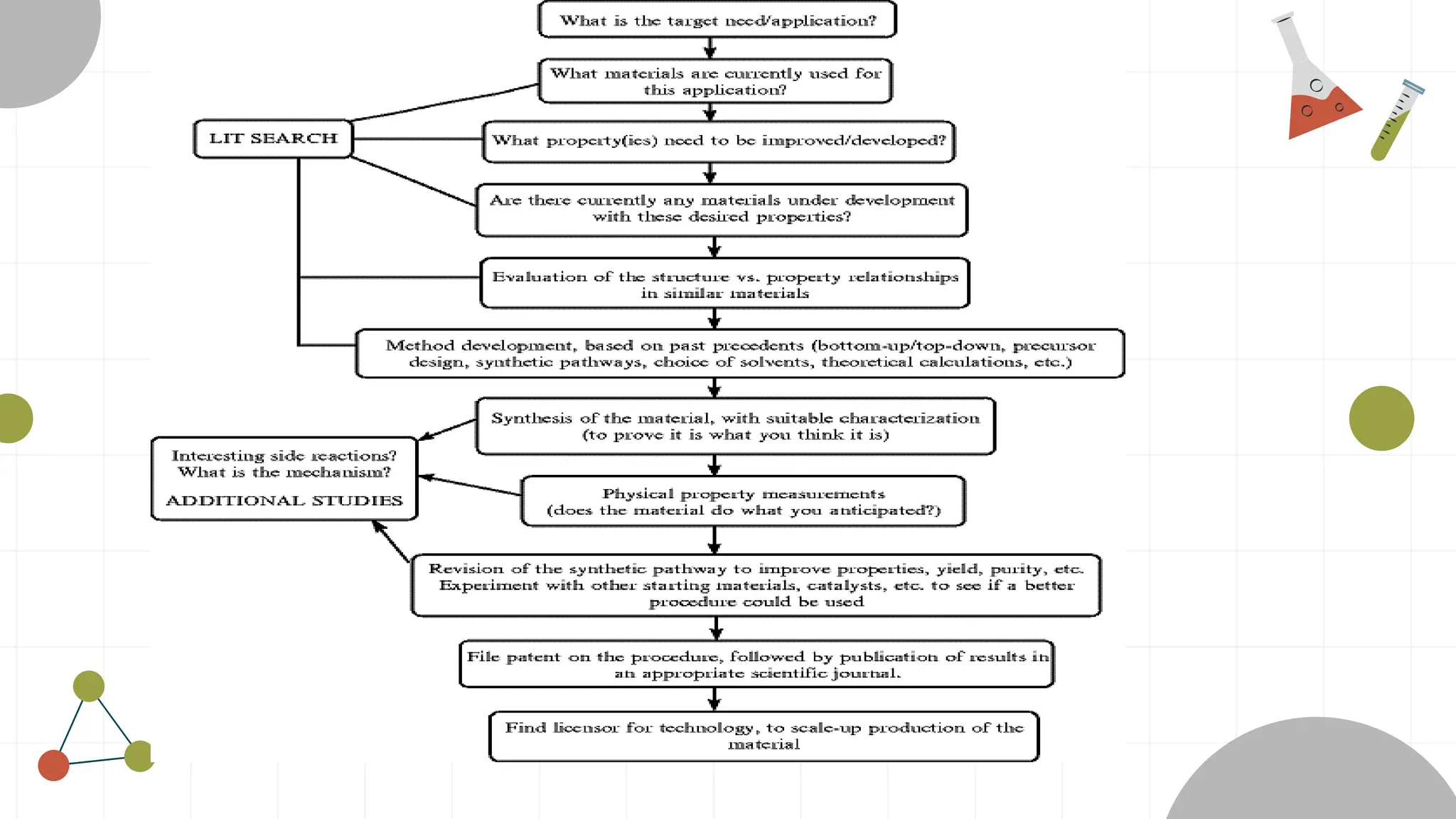
Design a new material
● Material design is the process of creating new materials or modifying
existing ones to achieve specific properties and functions.
● Material design can involve combining different elements, altering the
structure and composition, or applying external stimuli such as heat,
pressure, or light.
What is Materials Science?
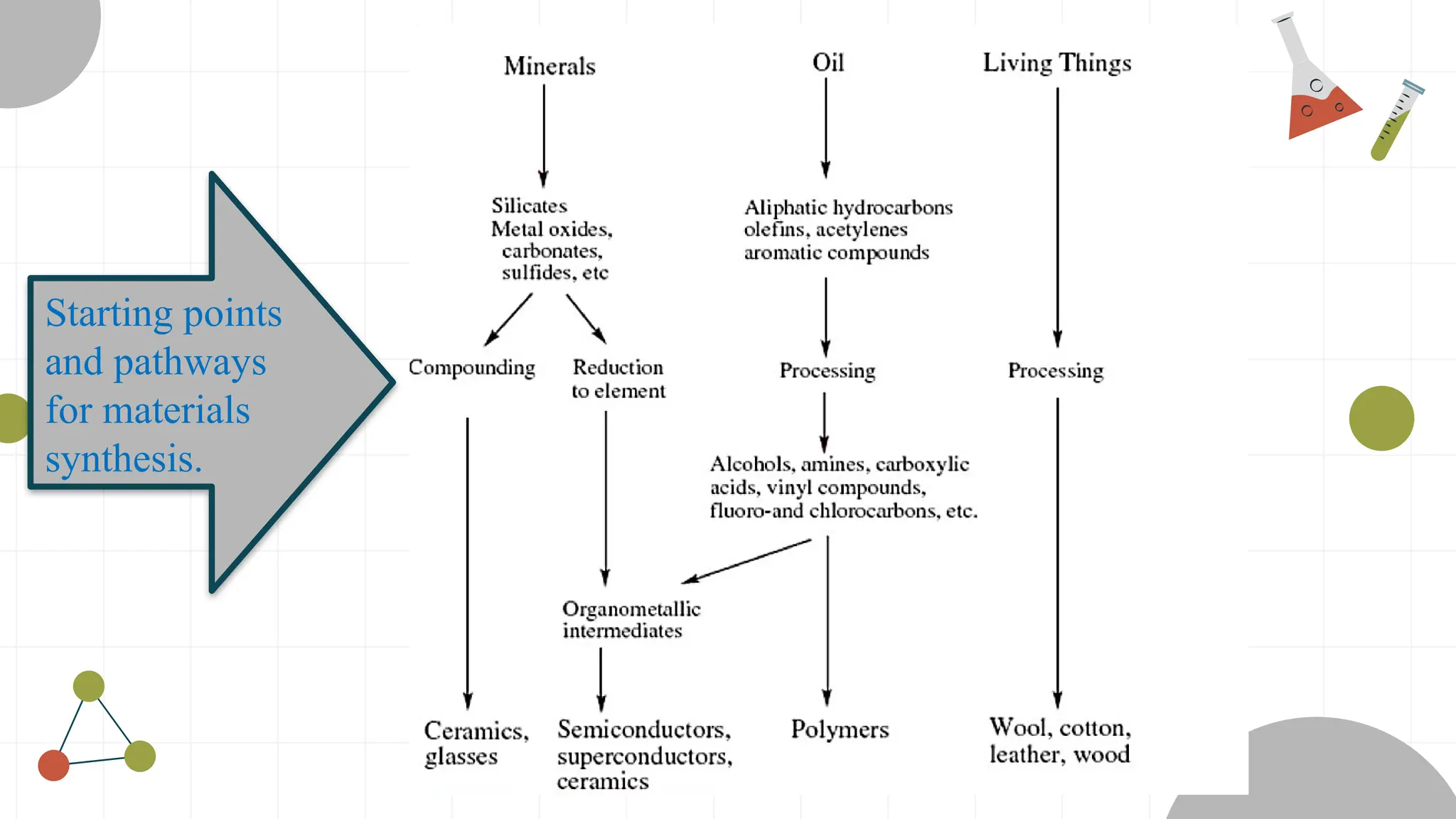
Starting points
and pathways
for materials
synthesis.
Bottom –up
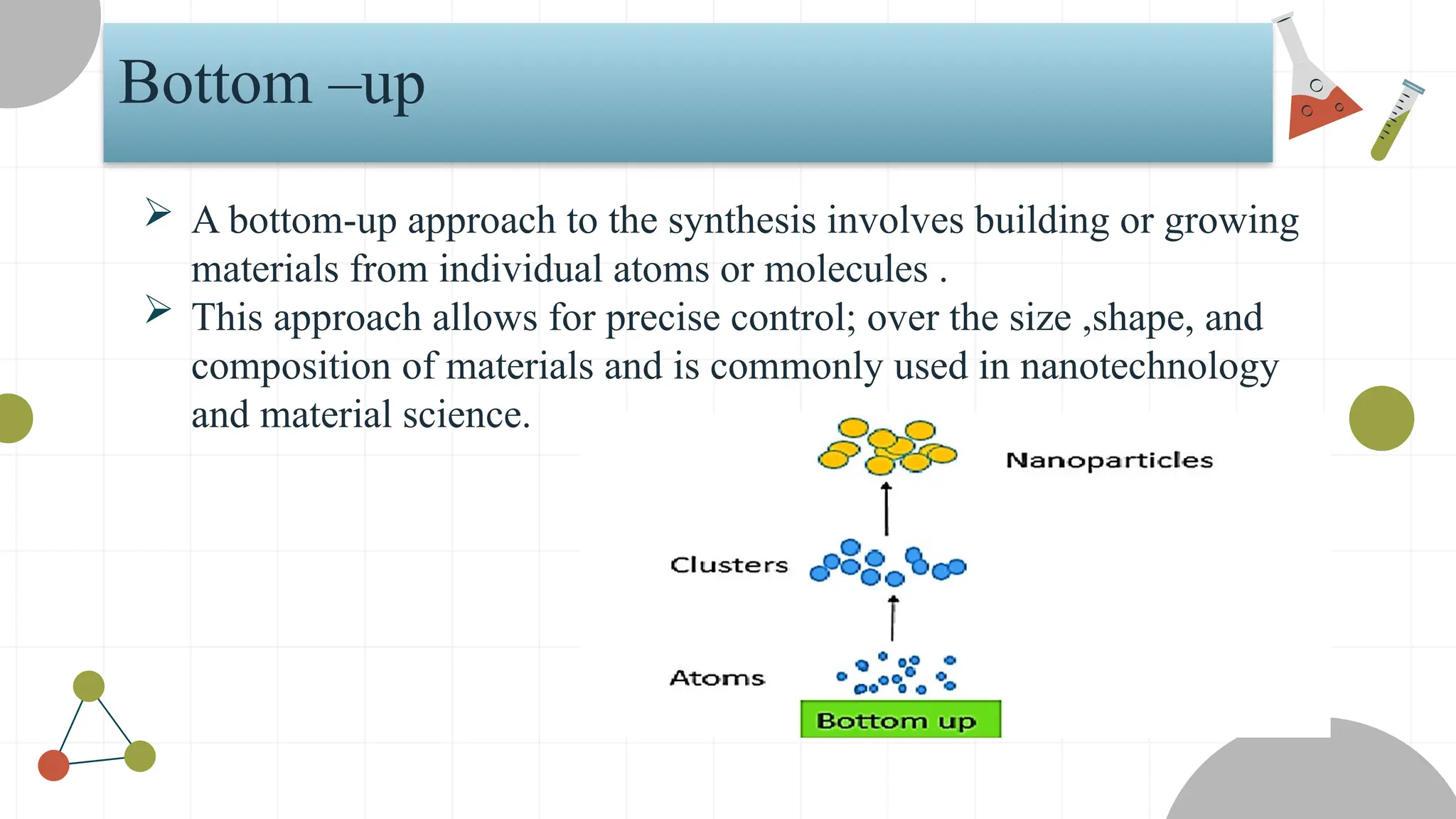
 A bottom-up approach to the synthesis involves building or growing
materials from individual atoms or molecules .
 This approach allows for precise control; over the size ,shape, and
composition of materials and is commonly used in nanotechnology
and material science.
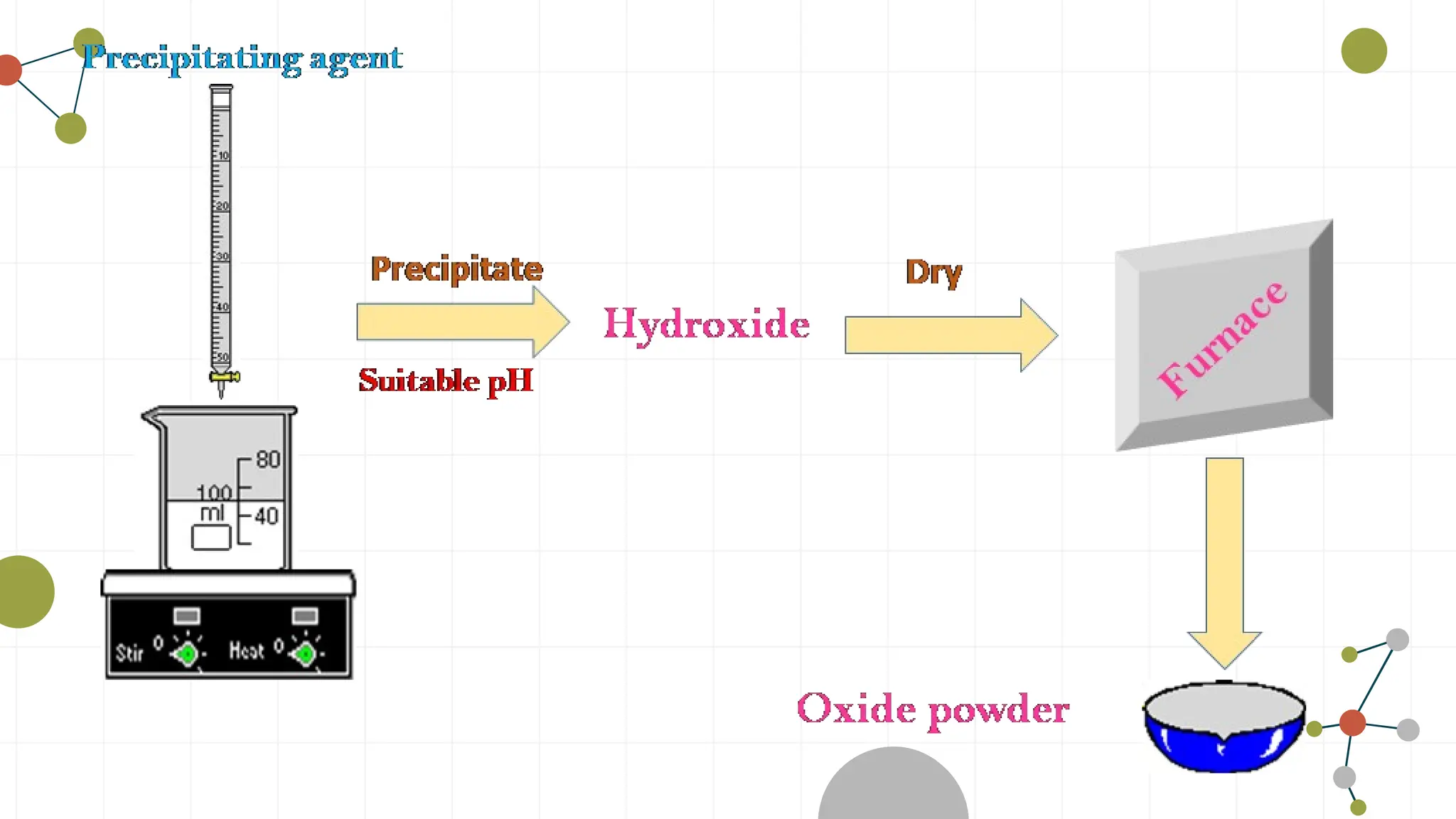
1- Chemical Precipitation
● In this methods, materials are formed by the precipitation of ions from a
solution to create solid particles.
● A reagent : reducing agent or a precipitating agent is added to the
precursors solution. The reagent induces a chemical reaction, causing the
metal ion to undergo a precipitation reaction and form solid material .
● As the reaction proceeds, solid materials form and precipitate out of the
solution. The materials are then separated from the solution through
processes like centrifugation or filtration.
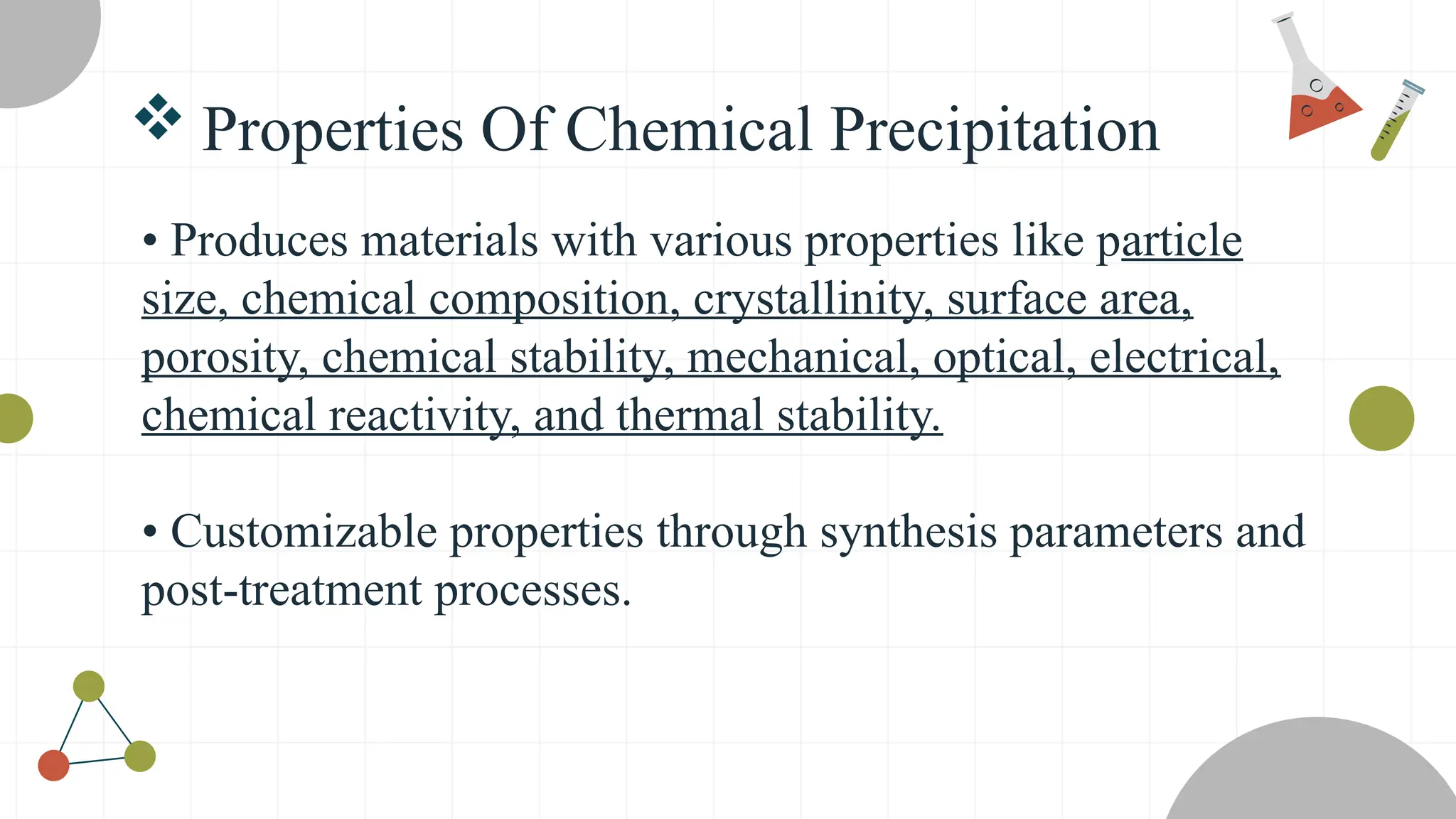
• Produces materials with various properties like particle
size, chemical composition, crystallinity, surface area,
porosity, chemical stability, mechanical, optical, electrical,
chemical reactivity, and thermal stability.
• Customizable properties through synthesis parameters and
post-treatment processes.
 Properties Of Chemical Precipitation
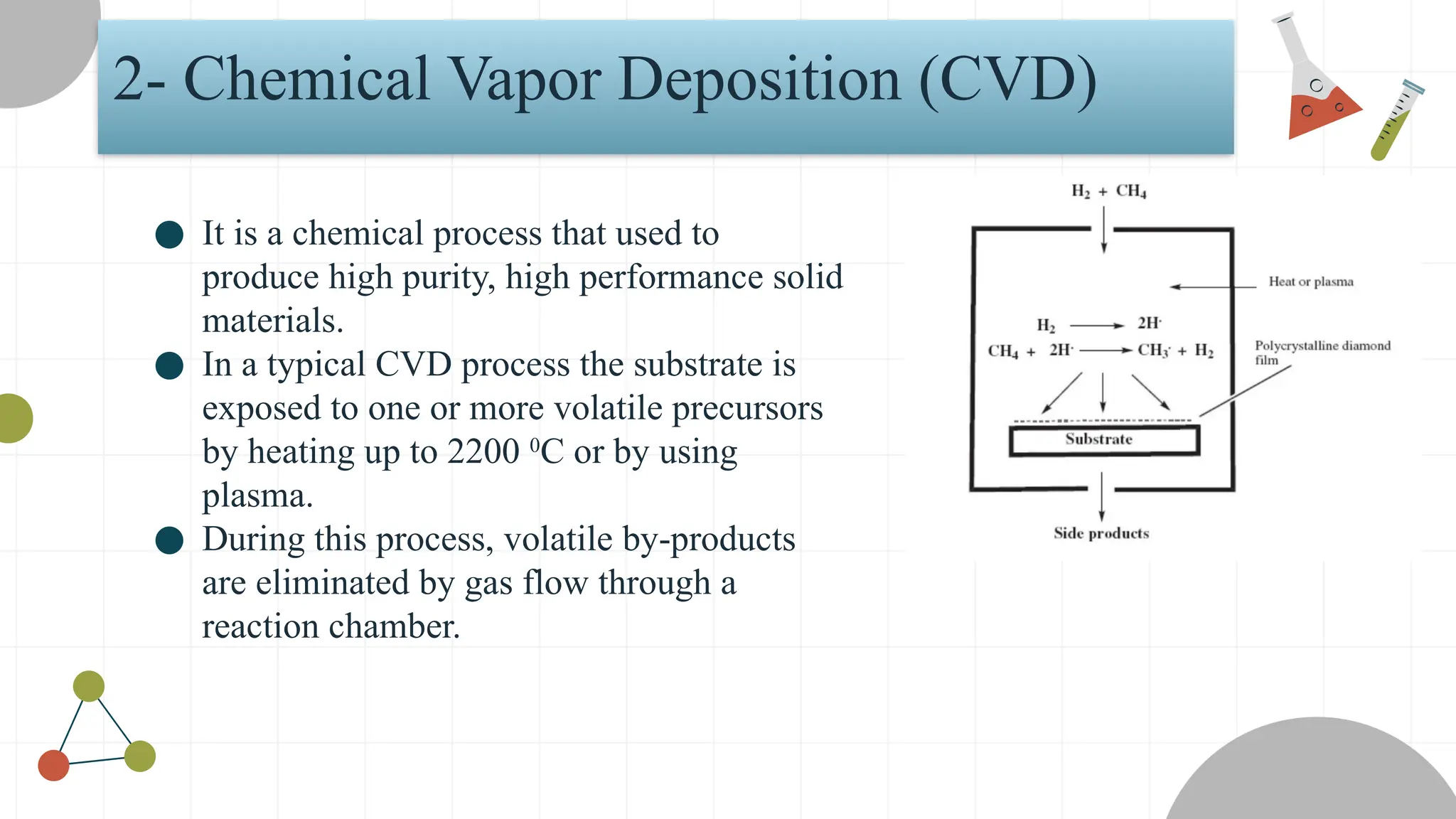
2- Chemical Vapor Deposition (CVD)
● It is a chemical process that used to
produce high purity, high performance solid
materials.
● In a typical CVD process the substrate is
exposed to one or more volatile precursors
by heating up to 2200 0
C or by using
plasma.
● During this process, volatile by-products
are eliminated by gas flow through a
reaction chamber.
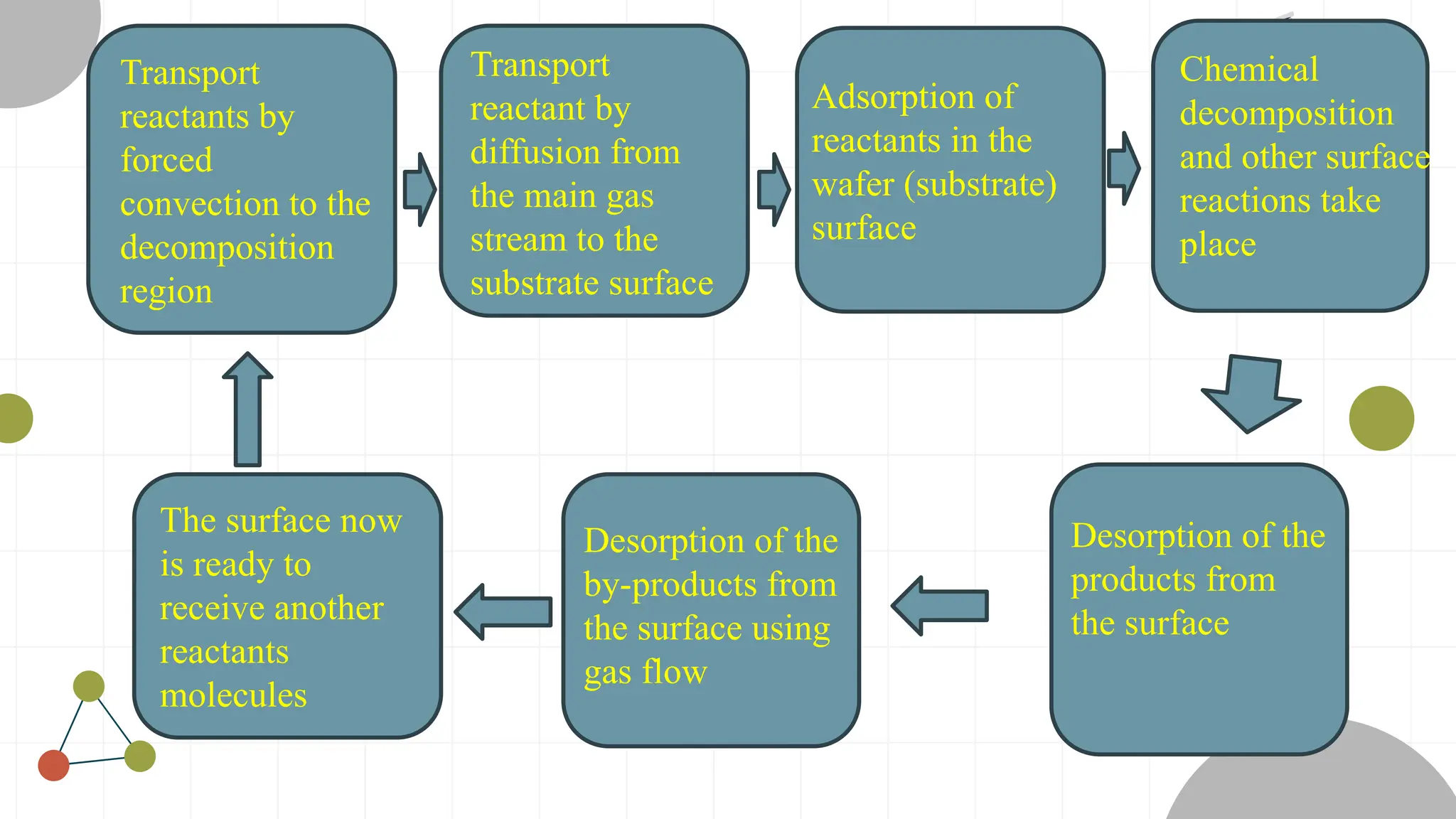
Transport
reactants by
forced
convection to the
decomposition
region
Transport
reactant by
diffusion from
the main gas
stream to the
substrate surface
Adsorption of
reactants in the
wafer (substrate)
surface
Chemical
decomposition
and other surface
reactions take
place
Desorption of the
products from
the surface
Desorption of the
by-products from
the surface using
gas flow
The surface now
is ready to
receive another
reactants
molecules
A characteristic feature of the CVD technique is:
1. It is excellent throwing power.
2. enabling the production of coatings of uniform thickness and
properties with a low porosity even on substrates of complicated
shape.
3- Sol-Gel Method (solution-gelation)
●A sol is a stable dispersion of particles or
polymers in a solvent. The particles may be
amorphous or crystalline.
●A gel consists of a three dimensional continuous
network, which encloses a liquid phase.
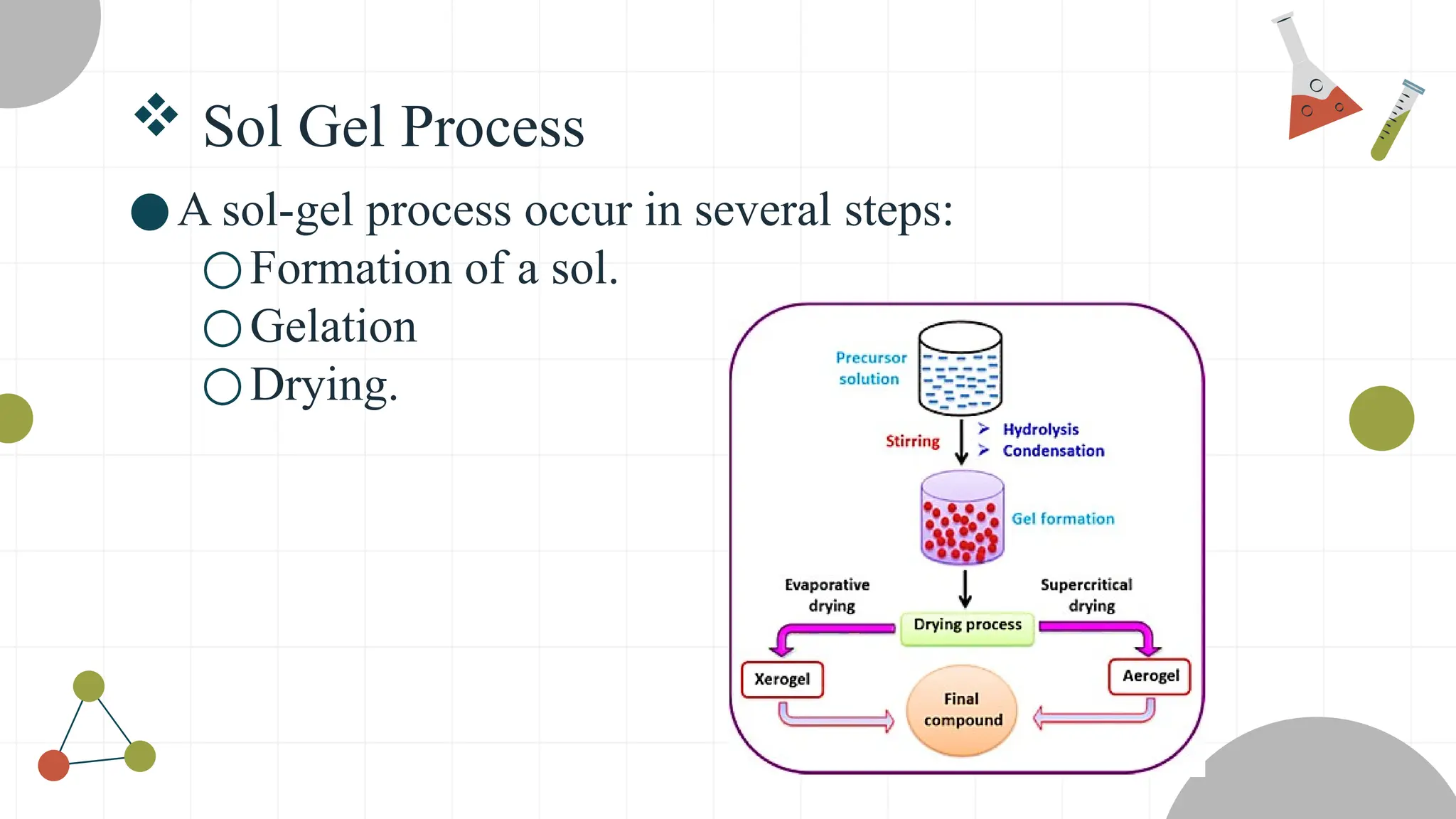
 Sol Gel Process
●A sol-gel process occur in several steps:
○Formation of a sol.
○Gelation
○Drying.
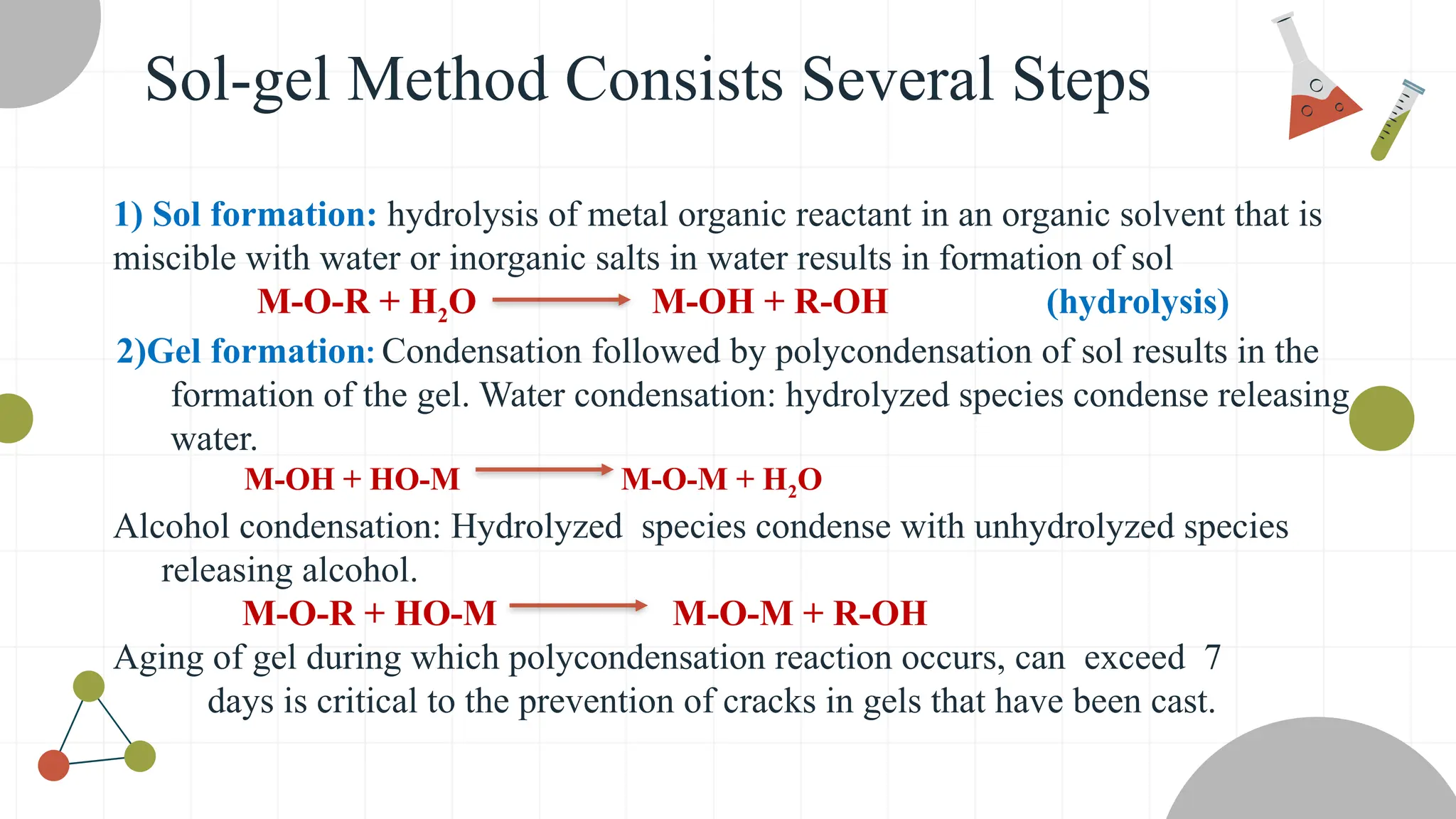
1) Sol formation: hydrolysis of metal organic reactant in an organic solvent that is
miscible with water or inorganic salts in water results in formation of sol
M-O-R + H2O M-OH + R-OH (hydrolysis)
2)Gel formation: Condensation followed by polycondensation of sol results in the
formation of the gel. Water condensation: hydrolyzed species condense releasing
water.
M-OH + HO-M M-O-M + H2O
Alcohol condensation: Hydrolyzed species condense with unhydrolyzed species
releasing alcohol.
M-O-R + HO-M M-O-M + R-OH
Aging of gel during which polycondensation reaction occurs, can exceed 7
days is critical to the prevention of cracks in gels that have been cast.
Sol-gel Method Consists Several Steps
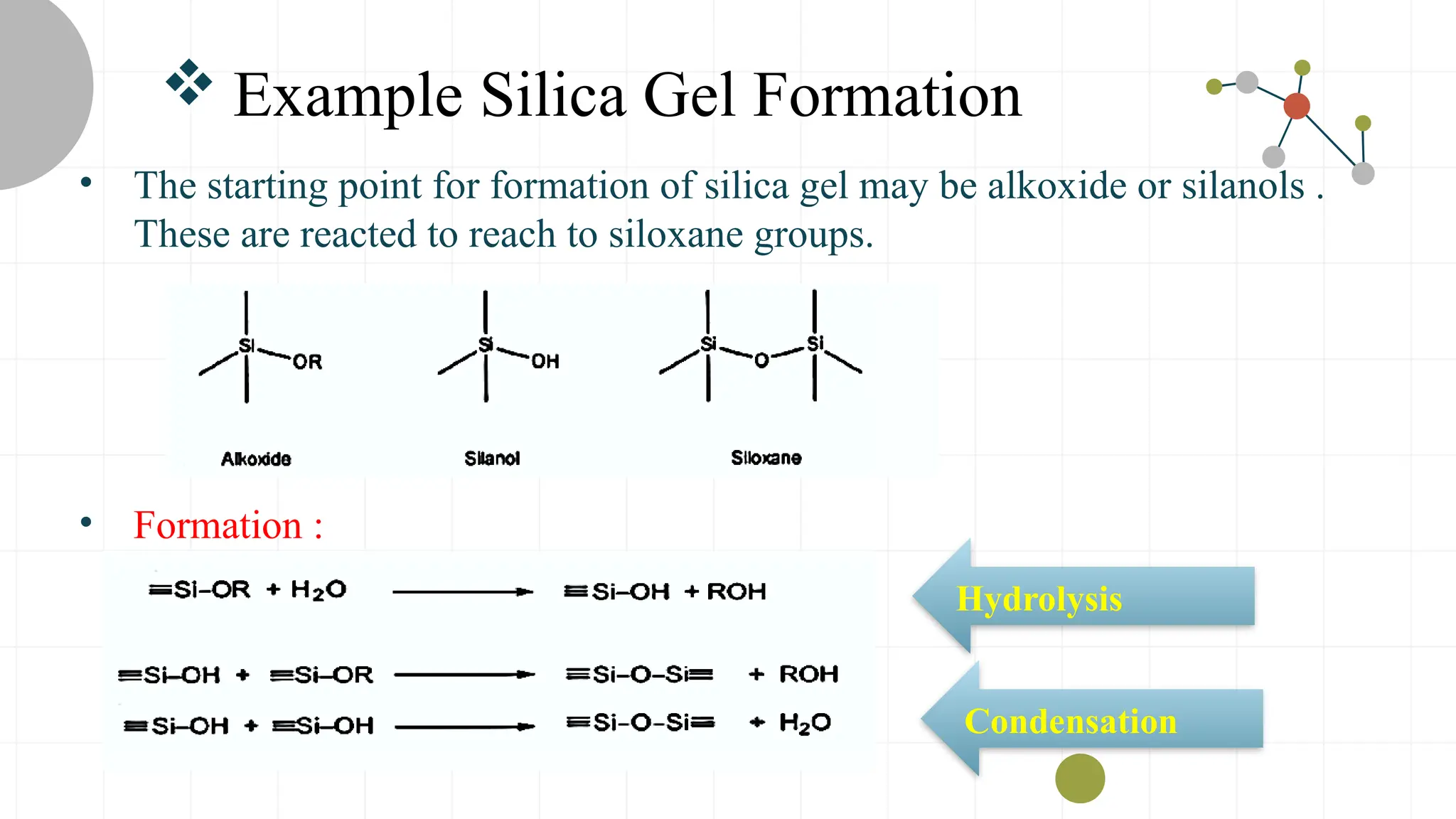
 Example Silica Gel Formation
• The starting point for formation of silica gel may be alkoxide or silanols .
These are reacted to reach to siloxane groups.
• Formation :
Hydrolysis
Condensation
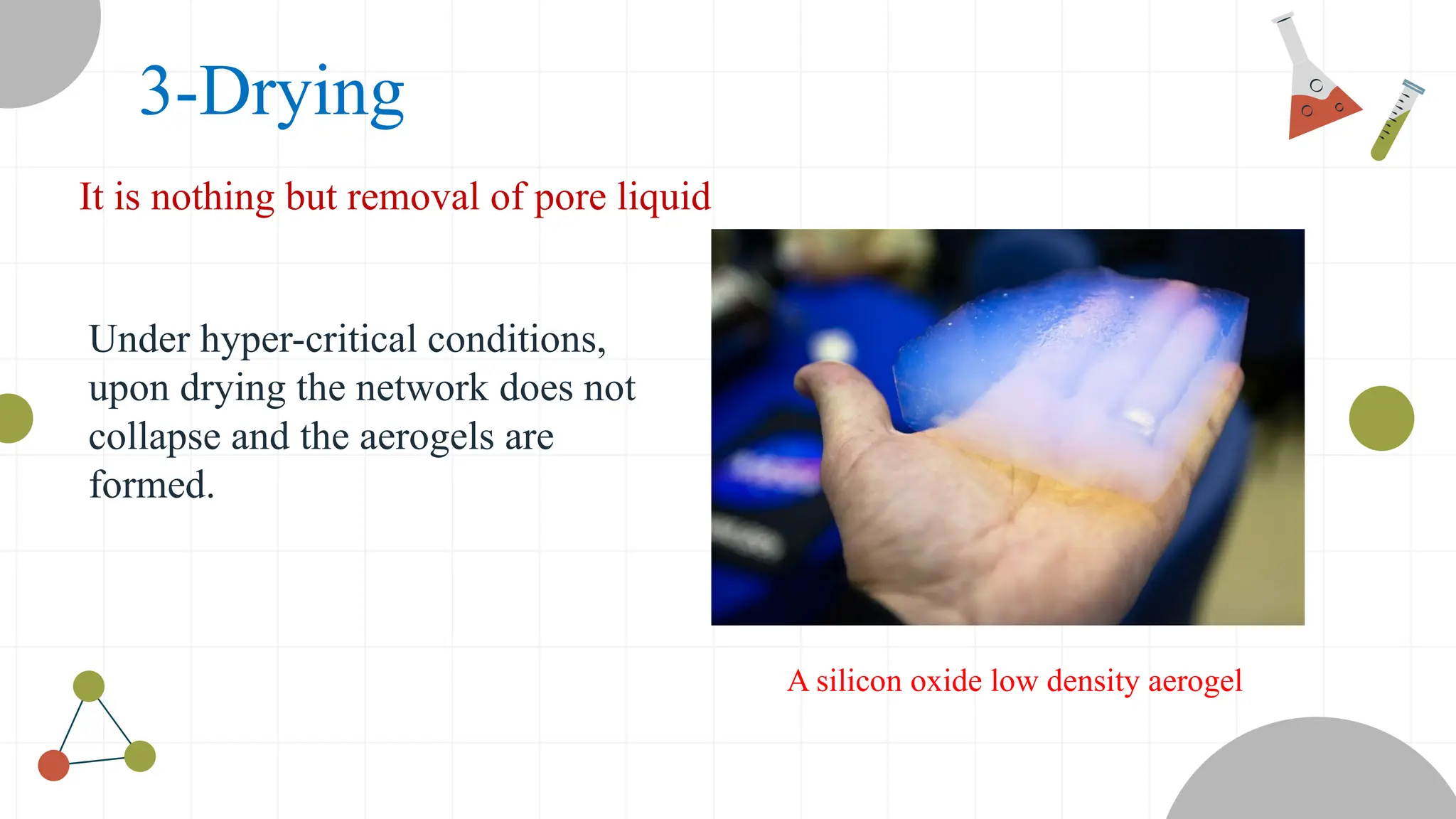
A silicon oxide low density aerogel
Under hyper-critical conditions,
upon drying the network does not
collapse and the aerogels are
formed.
3-Drying
It is nothing but removal of pore liquid
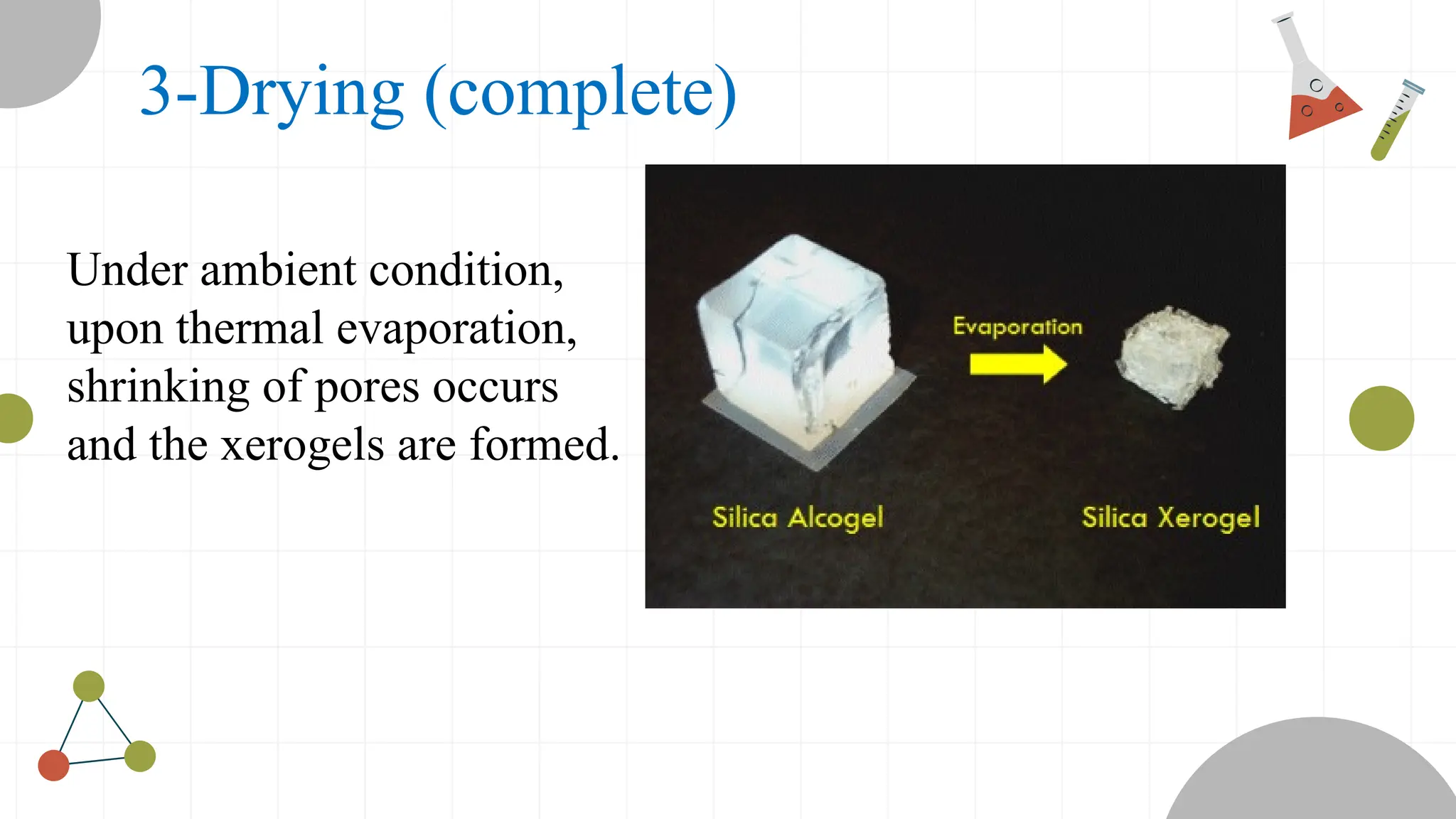
Under ambient condition,
upon thermal evaporation,
shrinking of pores occurs
and the xerogels are formed.
3-Drying (complete)
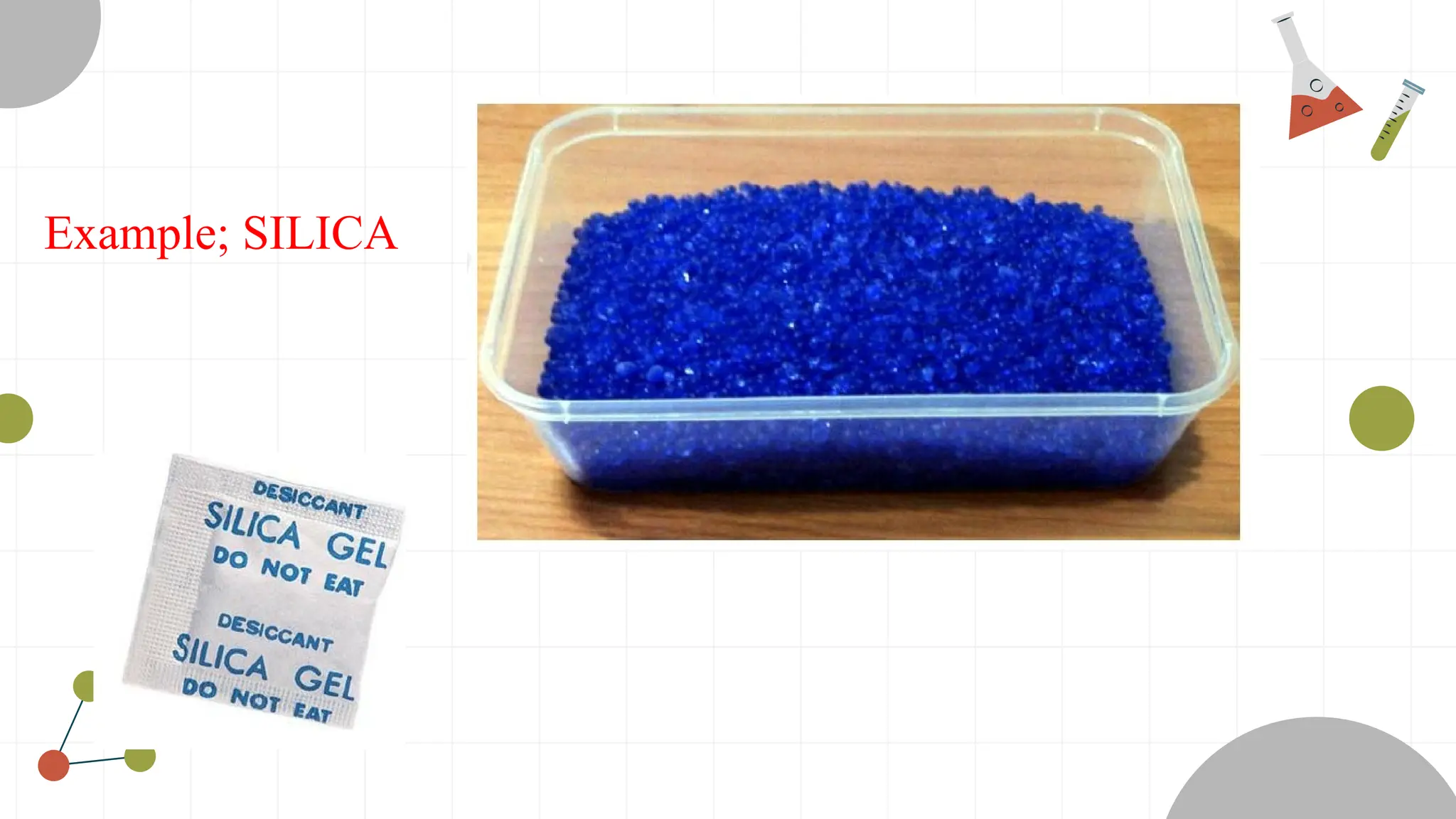
Example; SILICA
 Advantages Of Sol Gel Method
a)Mono sized nano particles are produced by this
method.
b)It is useful for the synthesis of glasses , glass
ceramics or ceramic materials at lower
temperature
 Disadvantages Of Sol Gel Method
●Metal alkoxides are the most preferred precursor.
But they are expensive.
●Formation of a gel is slow process, which makes
sol gel a time consuming fabrication techniques
as compared to combustion synthesis.
 Properties of Sol-Gel Materials
• Chemical Composition. Any metal oxide can be prepared by the sol-
gel process if the corresponding precursor exists. ...
• Chemical Stability. ...
• Surface Reactivity. ...
• Compatibility with Processing Techniques. ...
• Optical and Mechanical Properties. ...
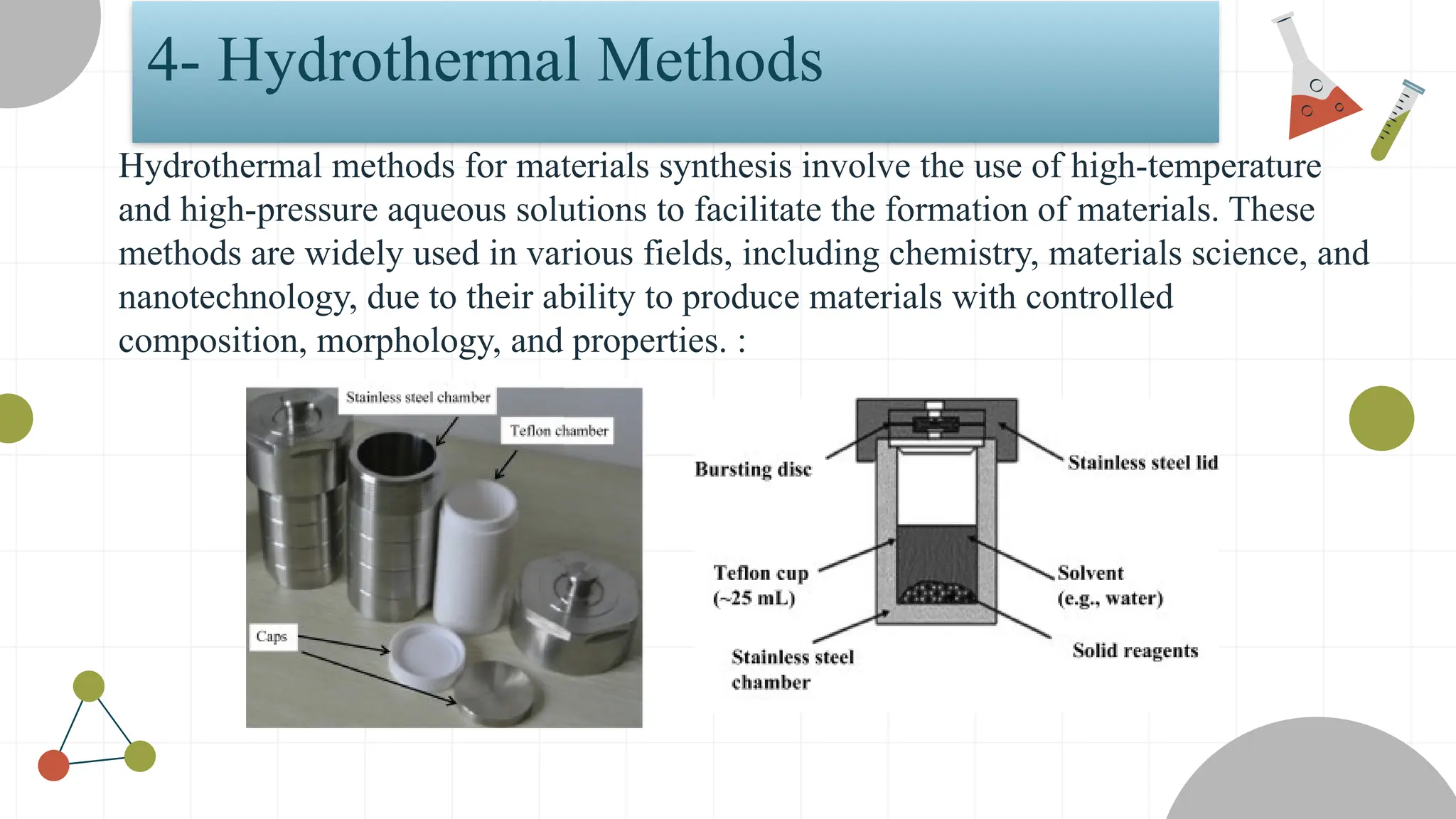
4- Hydrothermal Methods
Hydrothermal methods for materials synthesis involve the use of high-temperature
and high-pressure aqueous solutions to facilitate the formation of materials. These
methods are widely used in various fields, including chemistry, materials science, and
nanotechnology, due to their ability to produce materials with controlled
composition, morphology, and properties. :
 Benefits Of Hydrothermal Synthesis
1. Controlled Growth: Hydrothermal methods allow for the controlled
growth of materials by adjusting parameters such as temperature,
pressure, pH, and reaction time. This control enables the synthesis of
materials with specific sizes, shapes, and structures.
2. Wide Range of Materials: Hydrothermal synthesis can be used to
produce a wide range of materials, including metal oxides, sulfides,
hydroxides, carbonates, zeolites, and nanomaterial.
 Benefits Of Hydrothermal Synthesis
3. High Purity and Homogeneity: The use of aqueous solutions in hydrothermal
synthesis often results in materials with high purity and homogeneity.
4. Green Synthesis: Hydrothermal methods are generally considered
environmentally friendly because they use water as a solvent and operate under
moderate reaction conditions.
 Benefits Of Hydrothermal Synthesis
7. Nanomaterial Synthesis: Hydrothermal methods are particularly
well-suited for the synthesis of nanomaterials due to their ability to
control particle size and morphology at the nanoscale. Nanoparticles,
nanorods, nanowires, and other nanostructures can be synthesized using
hydrothermal techniques.
Overall, hydrothermal methods offer a versatile and effective approach for the
synthesis of a wide range of materials with tailored properties, making them
valuable tools in materials research and development.
5- Microwave Methods
●Technique: Microwave energy is used to heat reaction mixtures
rapidly and uniformly, leading to faster reaction rates and potentially
different product distributions compared to conventional heating
methods.
● Chemicals involved: Same as conventional synthesis methods,
but reactions are accelerated using microwave irradiation.
 Advantages
Including:
i. faster reaction rates
ii. higher yields
iii. improved selectivity
iv. energy efficiency
v. green chemistry benefits
This approach finds applications across various fields of
chemistry, including organic, inorganic, and materials chemistry,
by enabling rapid and efficient synthesis of a wide range of
compounds and materials.
6- Template-Assisted Synthesis
Chemicals involved: Templating agents (e.g., surfactants, block
copolymers, biological molecules).
Technique: Materials are synthesized in the presence of templating
agents, which direct the assembly of atoms or molecules into desired
structures.
These techniques offer precise control over the composition, structure,
and properties of materials at the atomic or molecular level, enabling
the creation of advanced materials with tailored functionalities for
various applications.
Top-down
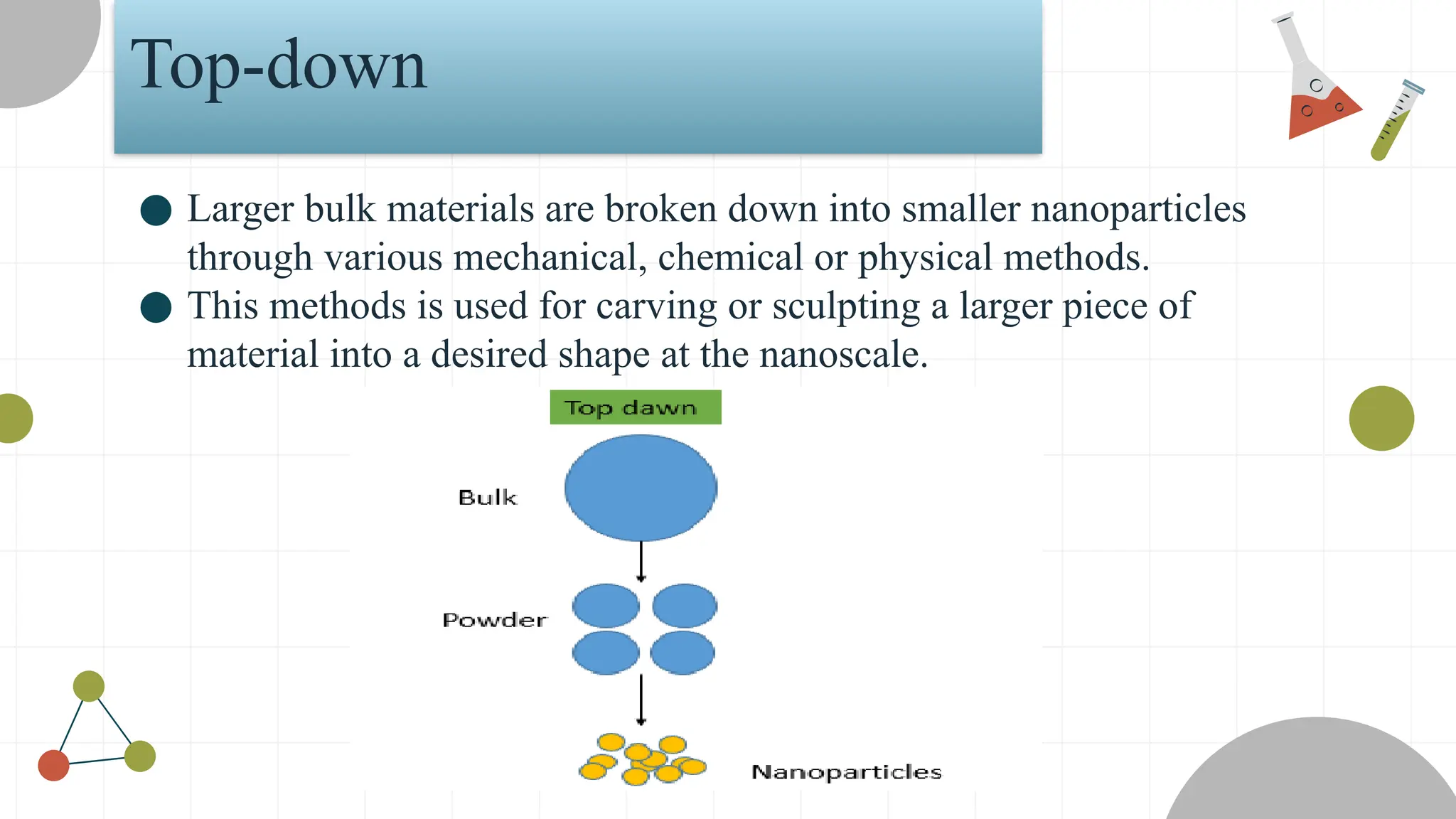
● Larger bulk materials are broken down into smaller nanoparticles
through various mechanical, chemical or physical methods.
● This methods is used for carving or sculpting a larger piece of
material into a desired shape at the nanoscale.
1- Photolithography
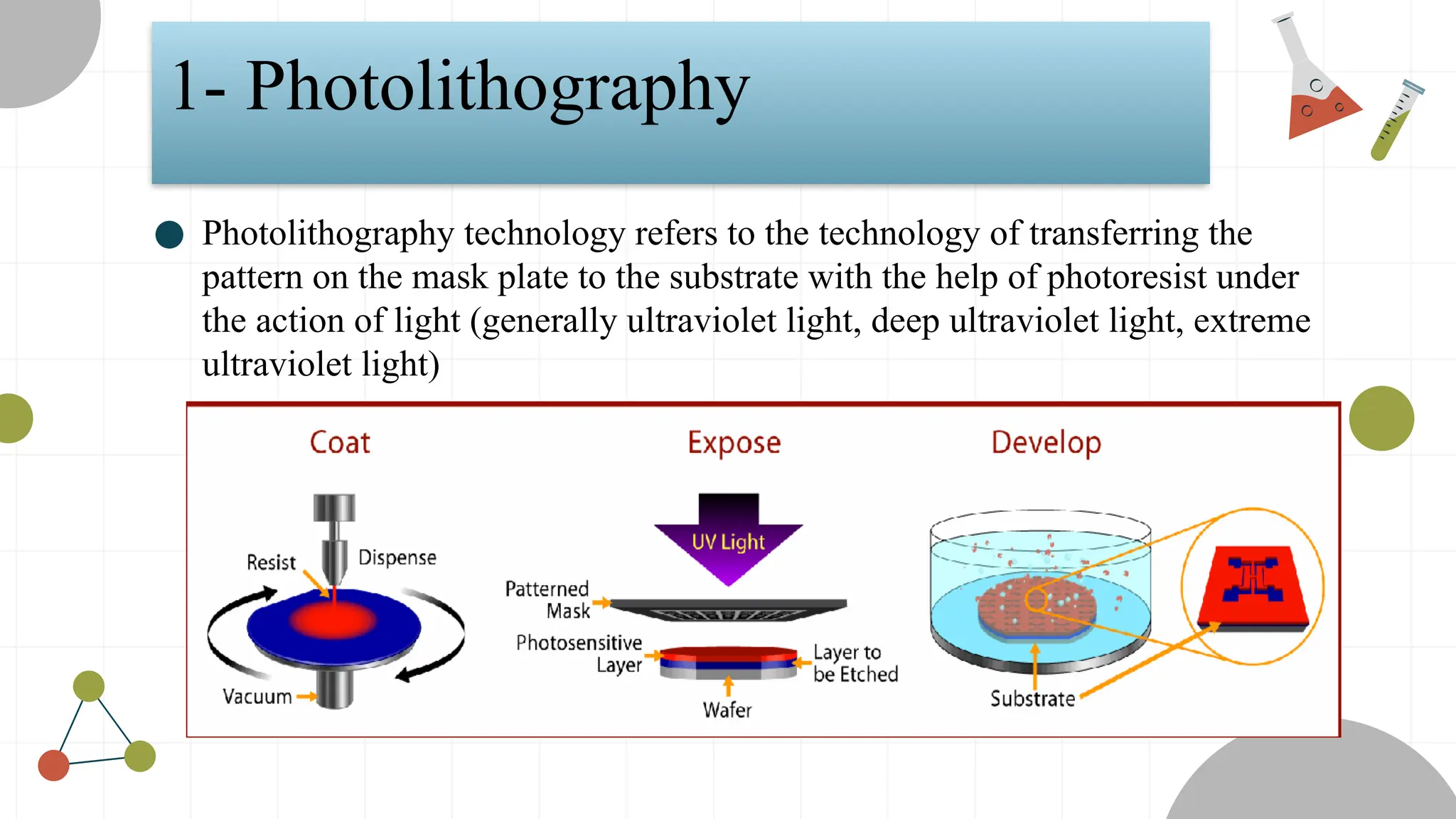
● Photolithography technology refers to the technology of transferring the
pattern on the mask plate to the substrate with the help of photoresist under
the action of light (generally ultraviolet light, deep ultraviolet light, extreme
ultraviolet light)
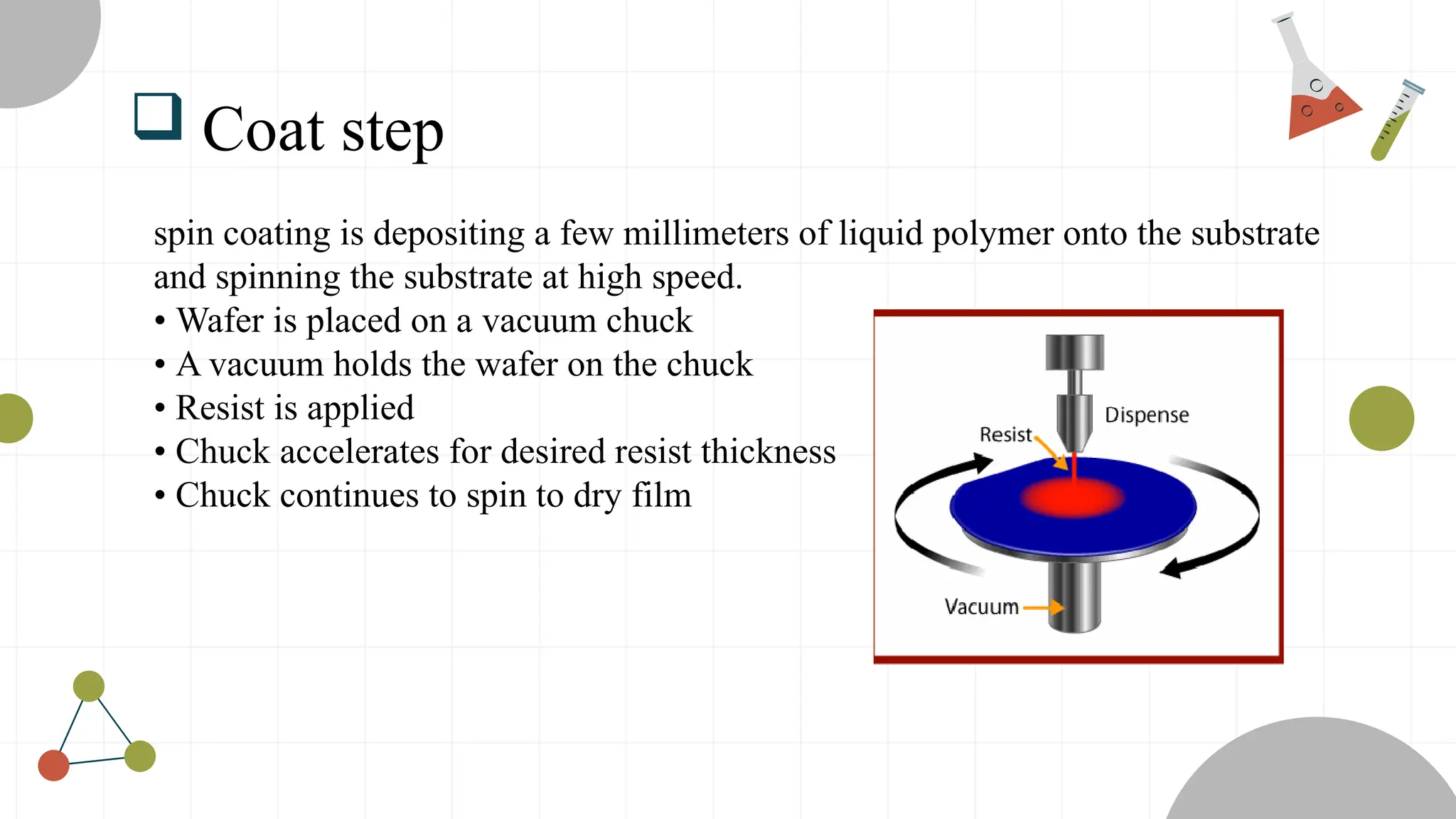
 Coat step
spin coating is depositing a few millimeters of liquid polymer onto the substrate
and spinning the substrate at high speed.
• Wafer is placed on a vacuum chuck
• A vacuum holds the wafer on the chuck
• Resist is applied
• Chuck accelerates for desired resist thickness
• Chuck continues to spin to dry film
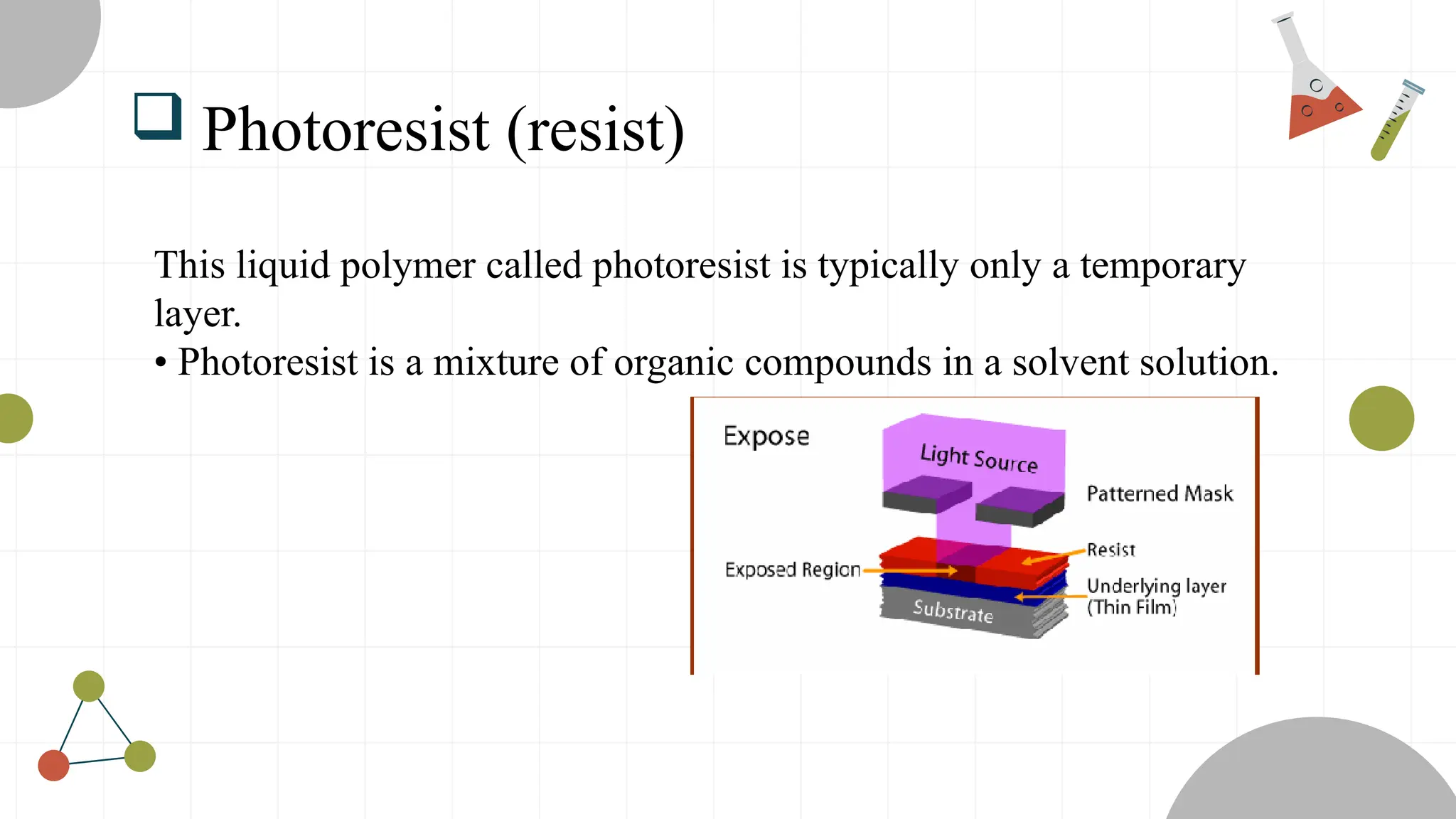
 Photoresist (resist)
This liquid polymer called photoresist is typically only a temporary
layer.
• Photoresist is a mixture of organic compounds in a solvent solution.
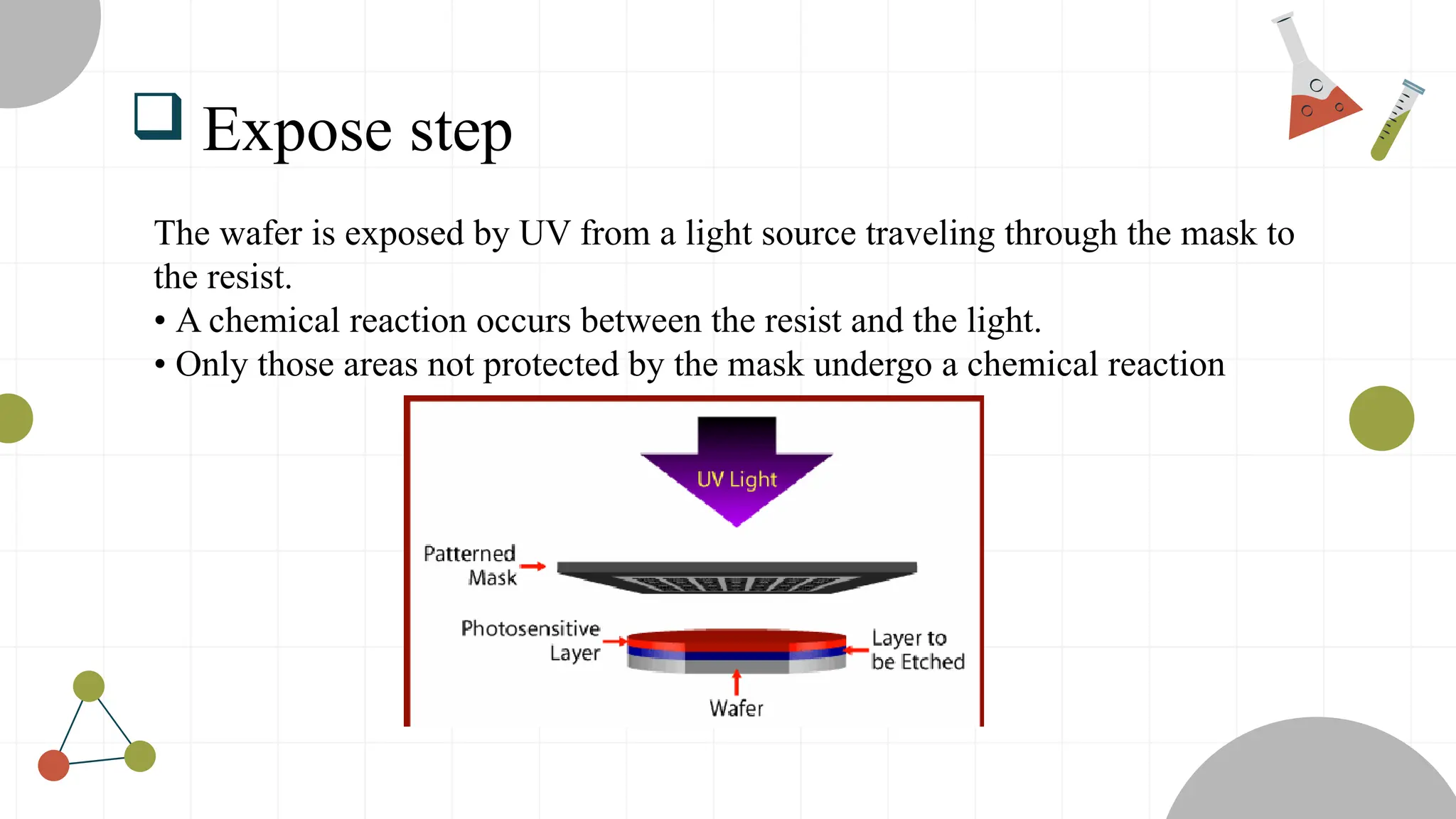
 Expose step
The wafer is exposed by UV from a light source traveling through the mask to
the resist.
• A chemical reaction occurs between the resist and the light.
• Only those areas not protected by the mask undergo a chemical reaction
● It provides precise control of the shape and size of the objects it creates. It
can create patterns over an entire wafer in a single step, quickly and with
relatively low cost.
● Photolithography is commonly used to produce computer chips
3- Ball-Mill Method
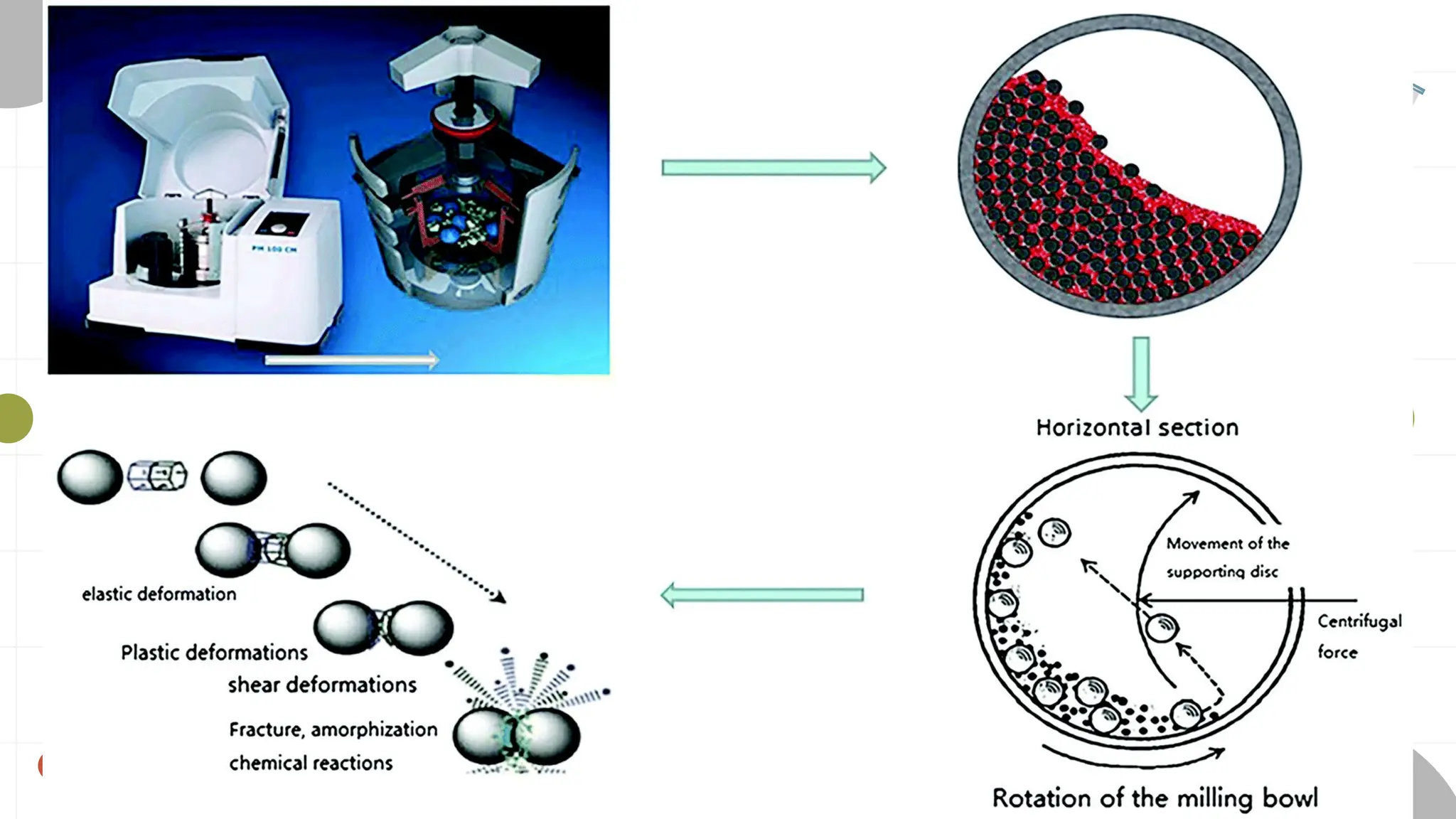
Ball mill principle work on Impact and Attrition. Both are responsible
for size reduction, rapidly moving balls are used for reducing the size of
brittle materials.
● Impact: Impact mean pressure exerted by two heavy objects.
● Attrition: Reduced the size of the materials when they colloid by
heavy weight (Ball).
 Construction
● The ball mill grinder consists following Parts:
1. Cylinder: cylinder is made of a hollow metal that moves about its horizontal
axis. the cylinder can be made of porcelain, metal, and rubber. the length of
the cylinder slightly higher than its diameter.
2. Ball: The ball lies in cylinders, which are made up of stainless steel, the size
of the ball depends on the cylinder diameter. The ball covers 30 to 50% area
in the cylinder.
 Advantages
i. Minimum loss of materials
ii. suitable for the wet and dry grinding process
iii.Particles size is easy to reduce
iv. Less energy consumed
v. Easy to clean
vi.Required less space to install
 Disadvantages
i. It is a slow process
ii. Produced strong vibration and sound and less in case of rubber ball
usage.
iii.Can not reduce soft, tacky, and fibers materials
iv. Wear occurs inside the cylinders hence chances of possible
contamination are high
v. Less capacity, do not handle the large quantity.
Differentiable Material Synthesis Is Amazing!
Watch!
Materials Science and Engineering at Cornell
What is Materials Engineering? - YouTube
THANK YOU

Metode design synthesis Materials properties

  • 1.
    Dr. Riri Murniati,M.Si credit to: Abdel-Baset Mohamed Ahmed Design, Synthesis and Properties of Materials
  • 2.
    Design a newmaterial ● Material design is the process of creating new materials or modifying existing ones to achieve specific properties and functions. ● Material design can involve combining different elements, altering the structure and composition, or applying external stimuli such as heat, pressure, or light. What is Materials Science?
  • 4.
  • 5.
    Bottom –up  Abottom-up approach to the synthesis involves building or growing materials from individual atoms or molecules .  This approach allows for precise control; over the size ,shape, and composition of materials and is commonly used in nanotechnology and material science.
  • 6.
    1- Chemical Precipitation ●In this methods, materials are formed by the precipitation of ions from a solution to create solid particles. ● A reagent : reducing agent or a precipitating agent is added to the precursors solution. The reagent induces a chemical reaction, causing the metal ion to undergo a precipitation reaction and form solid material . ● As the reaction proceeds, solid materials form and precipitate out of the solution. The materials are then separated from the solution through processes like centrifugation or filtration.
  • 8.
    • Produces materialswith various properties like particle size, chemical composition, crystallinity, surface area, porosity, chemical stability, mechanical, optical, electrical, chemical reactivity, and thermal stability. • Customizable properties through synthesis parameters and post-treatment processes.  Properties Of Chemical Precipitation
  • 9.
    2- Chemical VaporDeposition (CVD) ● It is a chemical process that used to produce high purity, high performance solid materials. ● In a typical CVD process the substrate is exposed to one or more volatile precursors by heating up to 2200 0 C or by using plasma. ● During this process, volatile by-products are eliminated by gas flow through a reaction chamber.
  • 10.
    Transport reactants by forced convection tothe decomposition region Transport reactant by diffusion from the main gas stream to the substrate surface Adsorption of reactants in the wafer (substrate) surface Chemical decomposition and other surface reactions take place Desorption of the products from the surface Desorption of the by-products from the surface using gas flow The surface now is ready to receive another reactants molecules
  • 11.
    A characteristic featureof the CVD technique is: 1. It is excellent throwing power. 2. enabling the production of coatings of uniform thickness and properties with a low porosity even on substrates of complicated shape.
  • 12.
    3- Sol-Gel Method(solution-gelation) ●A sol is a stable dispersion of particles or polymers in a solvent. The particles may be amorphous or crystalline. ●A gel consists of a three dimensional continuous network, which encloses a liquid phase.
  • 13.
     Sol GelProcess ●A sol-gel process occur in several steps: ○Formation of a sol. ○Gelation ○Drying.
  • 14.
    1) Sol formation:hydrolysis of metal organic reactant in an organic solvent that is miscible with water or inorganic salts in water results in formation of sol M-O-R + H2O M-OH + R-OH (hydrolysis) 2)Gel formation: Condensation followed by polycondensation of sol results in the formation of the gel. Water condensation: hydrolyzed species condense releasing water. M-OH + HO-M M-O-M + H2O Alcohol condensation: Hydrolyzed species condense with unhydrolyzed species releasing alcohol. M-O-R + HO-M M-O-M + R-OH Aging of gel during which polycondensation reaction occurs, can exceed 7 days is critical to the prevention of cracks in gels that have been cast. Sol-gel Method Consists Several Steps
  • 15.
     Example SilicaGel Formation • The starting point for formation of silica gel may be alkoxide or silanols . These are reacted to reach to siloxane groups. • Formation : Hydrolysis Condensation
  • 16.
    A silicon oxidelow density aerogel Under hyper-critical conditions, upon drying the network does not collapse and the aerogels are formed. 3-Drying It is nothing but removal of pore liquid
  • 17.
    Under ambient condition, uponthermal evaporation, shrinking of pores occurs and the xerogels are formed. 3-Drying (complete)
  • 18.
  • 19.
     Advantages OfSol Gel Method a)Mono sized nano particles are produced by this method. b)It is useful for the synthesis of glasses , glass ceramics or ceramic materials at lower temperature
  • 20.
     Disadvantages OfSol Gel Method ●Metal alkoxides are the most preferred precursor. But they are expensive. ●Formation of a gel is slow process, which makes sol gel a time consuming fabrication techniques as compared to combustion synthesis.
  • 21.
     Properties ofSol-Gel Materials • Chemical Composition. Any metal oxide can be prepared by the sol- gel process if the corresponding precursor exists. ... • Chemical Stability. ... • Surface Reactivity. ... • Compatibility with Processing Techniques. ... • Optical and Mechanical Properties. ...
  • 22.
    4- Hydrothermal Methods Hydrothermalmethods for materials synthesis involve the use of high-temperature and high-pressure aqueous solutions to facilitate the formation of materials. These methods are widely used in various fields, including chemistry, materials science, and nanotechnology, due to their ability to produce materials with controlled composition, morphology, and properties. :
  • 23.
     Benefits OfHydrothermal Synthesis 1. Controlled Growth: Hydrothermal methods allow for the controlled growth of materials by adjusting parameters such as temperature, pressure, pH, and reaction time. This control enables the synthesis of materials with specific sizes, shapes, and structures. 2. Wide Range of Materials: Hydrothermal synthesis can be used to produce a wide range of materials, including metal oxides, sulfides, hydroxides, carbonates, zeolites, and nanomaterial.
  • 24.
     Benefits OfHydrothermal Synthesis 3. High Purity and Homogeneity: The use of aqueous solutions in hydrothermal synthesis often results in materials with high purity and homogeneity. 4. Green Synthesis: Hydrothermal methods are generally considered environmentally friendly because they use water as a solvent and operate under moderate reaction conditions.
  • 25.
     Benefits OfHydrothermal Synthesis 7. Nanomaterial Synthesis: Hydrothermal methods are particularly well-suited for the synthesis of nanomaterials due to their ability to control particle size and morphology at the nanoscale. Nanoparticles, nanorods, nanowires, and other nanostructures can be synthesized using hydrothermal techniques. Overall, hydrothermal methods offer a versatile and effective approach for the synthesis of a wide range of materials with tailored properties, making them valuable tools in materials research and development.
  • 26.
    5- Microwave Methods ●Technique:Microwave energy is used to heat reaction mixtures rapidly and uniformly, leading to faster reaction rates and potentially different product distributions compared to conventional heating methods. ● Chemicals involved: Same as conventional synthesis methods, but reactions are accelerated using microwave irradiation.
  • 27.
     Advantages Including: i. fasterreaction rates ii. higher yields iii. improved selectivity iv. energy efficiency v. green chemistry benefits This approach finds applications across various fields of chemistry, including organic, inorganic, and materials chemistry, by enabling rapid and efficient synthesis of a wide range of compounds and materials.
  • 28.
    6- Template-Assisted Synthesis Chemicalsinvolved: Templating agents (e.g., surfactants, block copolymers, biological molecules). Technique: Materials are synthesized in the presence of templating agents, which direct the assembly of atoms or molecules into desired structures. These techniques offer precise control over the composition, structure, and properties of materials at the atomic or molecular level, enabling the creation of advanced materials with tailored functionalities for various applications.
  • 29.
    Top-down ● Larger bulkmaterials are broken down into smaller nanoparticles through various mechanical, chemical or physical methods. ● This methods is used for carving or sculpting a larger piece of material into a desired shape at the nanoscale.
  • 30.
    1- Photolithography ● Photolithographytechnology refers to the technology of transferring the pattern on the mask plate to the substrate with the help of photoresist under the action of light (generally ultraviolet light, deep ultraviolet light, extreme ultraviolet light)
  • 31.
     Coat step spincoating is depositing a few millimeters of liquid polymer onto the substrate and spinning the substrate at high speed. • Wafer is placed on a vacuum chuck • A vacuum holds the wafer on the chuck • Resist is applied • Chuck accelerates for desired resist thickness • Chuck continues to spin to dry film
  • 32.
     Photoresist (resist) Thisliquid polymer called photoresist is typically only a temporary layer. • Photoresist is a mixture of organic compounds in a solvent solution.
  • 33.
     Expose step Thewafer is exposed by UV from a light source traveling through the mask to the resist. • A chemical reaction occurs between the resist and the light. • Only those areas not protected by the mask undergo a chemical reaction
  • 34.
    ● It providesprecise control of the shape and size of the objects it creates. It can create patterns over an entire wafer in a single step, quickly and with relatively low cost. ● Photolithography is commonly used to produce computer chips
  • 35.
    3- Ball-Mill Method Ballmill principle work on Impact and Attrition. Both are responsible for size reduction, rapidly moving balls are used for reducing the size of brittle materials. ● Impact: Impact mean pressure exerted by two heavy objects. ● Attrition: Reduced the size of the materials when they colloid by heavy weight (Ball).
  • 36.
     Construction ● Theball mill grinder consists following Parts: 1. Cylinder: cylinder is made of a hollow metal that moves about its horizontal axis. the cylinder can be made of porcelain, metal, and rubber. the length of the cylinder slightly higher than its diameter. 2. Ball: The ball lies in cylinders, which are made up of stainless steel, the size of the ball depends on the cylinder diameter. The ball covers 30 to 50% area in the cylinder.
  • 38.
     Advantages i. Minimumloss of materials ii. suitable for the wet and dry grinding process iii.Particles size is easy to reduce iv. Less energy consumed v. Easy to clean vi.Required less space to install
  • 39.
     Disadvantages i. Itis a slow process ii. Produced strong vibration and sound and less in case of rubber ball usage. iii.Can not reduce soft, tacky, and fibers materials iv. Wear occurs inside the cylinders hence chances of possible contamination are high v. Less capacity, do not handle the large quantity.
  • 40.
    Differentiable Material SynthesisIs Amazing! Watch! Materials Science and Engineering at Cornell What is Materials Engineering? - YouTube
  • 41.