Best Practices
Scaling Agile Projects
@Inflectra | #InflectraCon
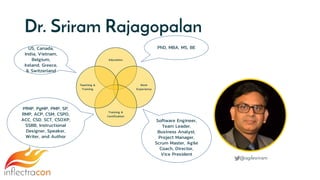
Dr. Sriram Rajagopalan
Education
Work
Experience
Training &
Certification
Teaching &
Training
PhD, MBA, MS, BE
PfMP, PgMP, PMP, SP,
RMP, ACP, CSM, CSPO,
ACC, CSD, SCT, CSOXP,
SSBB, Instructional
Designer, Speaker,
Writer, and Author
Software Engineer,
Team Leader,
Business Analyst,
Project Manager,
Scrum Master, Agile
Coach, Director,
Vice President
US, Canada,
India, Vietnam,
Belgium,
Ireland, Greece,
& Switzerland
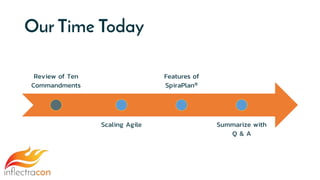
Our Time Today
Review of Ten
Commandments
Scaling Agile
Features of
SpiraPlan®
Summarize with
Q & A
Review of Ten Commandments
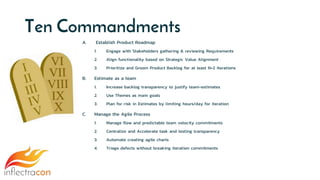
Ten Commandments
A. Establish Product Roadmap
1. Engage with Stakeholders gathering & reviewing Requirements
2. Align functionality based on Strategic Value Alignment
3. Prioritize and Groom Product Backlog for at least N+2 iterations
B. Estimate as a team
1. Increase backlog transparency to justify team-estimates
2. Use Themes as main goals
3. Plan for risk in Estimates by limiting hours/day for iteration
C. Manage the Agile Process
1. Manage flow and predictable team velocity commitments
2. Centralize and Accelerate task and testing transparency
3. Automate creating agile charts
4. Triage defects without breaking iteration commitments
Scaling Agile
Best Practices
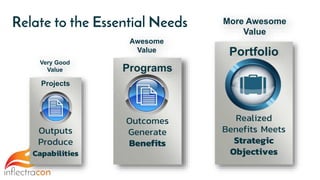
More Awesome
Value
Very Good
Value
Awesome
Value
Projects
Outputs
Produce
Capabilities
Portfolio
Realized
Benefits Meets
Strategic
Objectives
Programs
Outcomes
Generate
Benefits
Relate to the Essential Needs
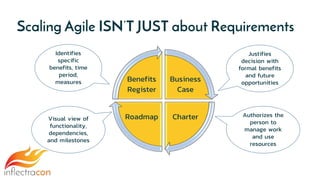
Scaling Agile ISN’T JUST about Requirements
Business
Case
CharterRoadmap
Benefits
Register
Justifies
decision with
formal benefits
and future
opportunities
Authorizes the
person to
manage work
and use
resources
Identifies
specific
benefits, time
period,
measures
Visual view of
functionality,
dependencies,
and milestones
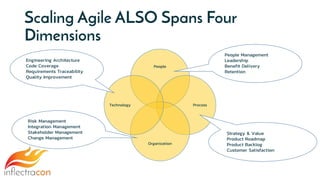
Scaling Agile ALSO Spans Four
Dimensions
People
Process
Organization
Technology
People Management
Leadership
Benefit Delivery
Retention
Engineering Architecture
Code Coverage
Requirements Traceability
Quality Improvement
Strategy & Value
Product Roadmap
Product Backlog
Customer Satisfaction
Risk Management
Integration Management
Stakeholder Management
Change Management
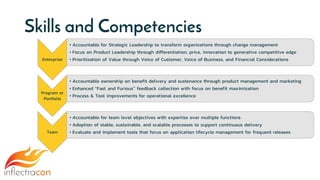
Skills and Competencies
Enterprise
• Accountable for Strategic Leadership to transform organizations through change management
• Focus on Product Leadership through differentiation, price, innovation to generative competitive edge
• Prioritization of Value through Voice of Customer, Voice of Business, and Financial Considerations
Program or
Portfolio
• Accountable ownership on benefit delivery and sustenance through product management and marketing
• Enhanced “Fast and Furious” feedback collection with focus on benefit maximization
• Process & Tool improvements for operational excellence
Team
• Accountable for team level objectives with expertise over multiple functions
• Adoption of stable, sustainable, and scalable processes to support continuous delivery
• Evaluate and implement tools that focus on application lifecycle management for frequent releases
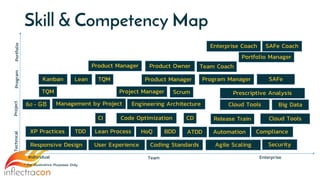
Skill & Competency Map
Coding StandardsUser Experience
XP Practices TDD Lean Process
CI Code Optimization
Engineering Architecture
Responsive Design
HoQ
CD
Agile Scaling
Cloud Tools
Cloud Tools
ComplianceATDDBDD
Big Data
Prescriptive Analysis
Security
Individual Team Enterprise
Automation
TechnicalProjectProgramPortfolio
Management by Project
Scrum
Product OwnerProduct Manager
Product Manager
Project Manager
Program ManagerKanban Lean TQM
TQM
6σ - GB
Release Train
Enterprise Coach
SAFe
Team Coach
SAFe Coach
Portfolio Manager
* For Illustrative Purposes Only
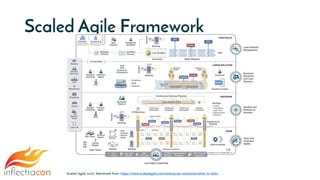
Scaled Agile Framework
Scaled Agile (n.d.). Retrieved from https://www.scaledagile.com/enterprise-solutions/what-is-safe/
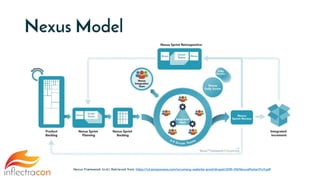
Nexus Model
Nexus Framework (n.d.). Retrieved from https://s3.amazonaws.com/scrumorg-website-prod/drupal/2016-09/NexusPoster17x11.pdf
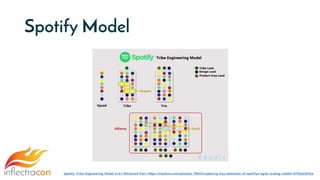
Spotify Model
Spotify Tribe Engineering Model (n.d.) Retrieved from https://medium.com/@media_75624/exploring-key-elements-of-spotifys-agile-scaling-model-471d2a23d7ea
Basics of Scaling Agile
Always start with a strategic MVP
Build an adaptive team culture
Centralize an unified transparent product backlog
Develop an agile methodolgoy that fits
Explore Kaizen mindset
Scaling Agile with SpiraPlan
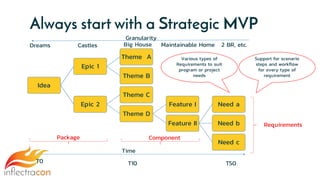
Always start with a Strategic MVP
Idea
Epic 1
Theme A
Theme B
Epic 2
Theme C
Theme D
Feature I
Feature II
Need a
Need b
Need c
T0 T10 T50
Time
Dreams Castles
Granularity
Big House Maintainable Home 2 BR, etc.
Package Component
Requirements
Various types of
Requirements to suit
program or project
needs
Support for scenario
steps and workflow
for every type of
requirement
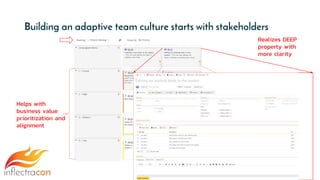
Building an adaptive team culture starts with stakeholders
Helps with
business value
prioritization and
alignment
Realizes DEEP
property with
more clarity
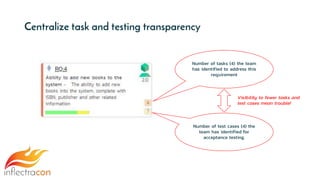
Centralize task and testing transparency
Number of tasks (4) the team
has identified to address this
requirement
Number of test cases (4) the
team has identified for
acceptance testing.
Visibility to fewer tasks and
test cases mean trouble!
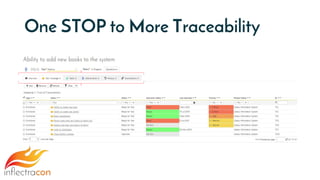
One STOP to More Traceability
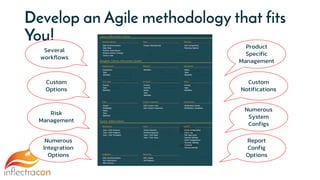
Develop an Agile methodology that fits
You!
Custom
Options
Risk
Management
Several
workflows
Custom
Notifications
Numerous
System
Configs
Product
Specific
Management
Numerous
Integration
Options
Report
Config
Options
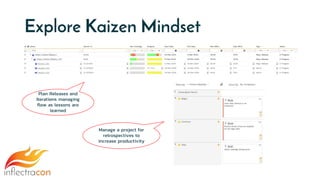
Explore Kaizen Mindset
Plan Releases and
Iterations managing
flow as lessons are
learned
Manage a project for
retrospectives to
increase productivity
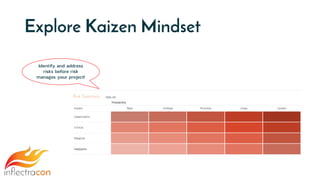
Explore Kaizen Mindset
Identify and address
risks before risk
manages your project!
Summary
• Always Start with a Strategic MVP
• Build adaptive team culture with
stakeholders
• Centralize task and testing
transparency
• Develop an agile methodology that
fits you
• Explore Kaizen Mindset

Methodologies 2: Scaling Agile

  • 1.
    Best Practices Scaling AgileProjects @Inflectra | #InflectraCon
  • 2.
    Dr. Sriram Rajagopalan Education Work Experience Training& Certification Teaching & Training PhD, MBA, MS, BE PfMP, PgMP, PMP, SP, RMP, ACP, CSM, CSPO, ACC, CSD, SCT, CSOXP, SSBB, Instructional Designer, Speaker, Writer, and Author Software Engineer, Team Leader, Business Analyst, Project Manager, Scrum Master, Agile Coach, Director, Vice President US, Canada, India, Vietnam, Belgium, Ireland, Greece, & Switzerland
  • 3.
    Our Time Today Reviewof Ten Commandments Scaling Agile Features of SpiraPlan® Summarize with Q & A
  • 4.
    Review of TenCommandments
  • 5.
    Ten Commandments A. EstablishProduct Roadmap 1. Engage with Stakeholders gathering & reviewing Requirements 2. Align functionality based on Strategic Value Alignment 3. Prioritize and Groom Product Backlog for at least N+2 iterations B. Estimate as a team 1. Increase backlog transparency to justify team-estimates 2. Use Themes as main goals 3. Plan for risk in Estimates by limiting hours/day for iteration C. Manage the Agile Process 1. Manage flow and predictable team velocity commitments 2. Centralize and Accelerate task and testing transparency 3. Automate creating agile charts 4. Triage defects without breaking iteration commitments
  • 6.
  • 7.
    More Awesome Value Very Good Value Awesome Value Projects Outputs Produce Capabilities Portfolio Realized BenefitsMeets Strategic Objectives Programs Outcomes Generate Benefits Relate to the Essential Needs
  • 8.
    Scaling Agile ISN’TJUST about Requirements Business Case CharterRoadmap Benefits Register Justifies decision with formal benefits and future opportunities Authorizes the person to manage work and use resources Identifies specific benefits, time period, measures Visual view of functionality, dependencies, and milestones
  • 9.
    Scaling Agile ALSOSpans Four Dimensions People Process Organization Technology People Management Leadership Benefit Delivery Retention Engineering Architecture Code Coverage Requirements Traceability Quality Improvement Strategy & Value Product Roadmap Product Backlog Customer Satisfaction Risk Management Integration Management Stakeholder Management Change Management
  • 10.
    Skills and Competencies Enterprise •Accountable for Strategic Leadership to transform organizations through change management • Focus on Product Leadership through differentiation, price, innovation to generative competitive edge • Prioritization of Value through Voice of Customer, Voice of Business, and Financial Considerations Program or Portfolio • Accountable ownership on benefit delivery and sustenance through product management and marketing • Enhanced “Fast and Furious” feedback collection with focus on benefit maximization • Process & Tool improvements for operational excellence Team • Accountable for team level objectives with expertise over multiple functions • Adoption of stable, sustainable, and scalable processes to support continuous delivery • Evaluate and implement tools that focus on application lifecycle management for frequent releases
  • 11.
    Skill & CompetencyMap Coding StandardsUser Experience XP Practices TDD Lean Process CI Code Optimization Engineering Architecture Responsive Design HoQ CD Agile Scaling Cloud Tools Cloud Tools ComplianceATDDBDD Big Data Prescriptive Analysis Security Individual Team Enterprise Automation TechnicalProjectProgramPortfolio Management by Project Scrum Product OwnerProduct Manager Product Manager Project Manager Program ManagerKanban Lean TQM TQM 6σ - GB Release Train Enterprise Coach SAFe Team Coach SAFe Coach Portfolio Manager * For Illustrative Purposes Only
  • 12.
    Scaled Agile Framework ScaledAgile (n.d.). Retrieved from https://www.scaledagile.com/enterprise-solutions/what-is-safe/
  • 13.
    Nexus Model Nexus Framework(n.d.). Retrieved from https://s3.amazonaws.com/scrumorg-website-prod/drupal/2016-09/NexusPoster17x11.pdf
  • 14.
    Spotify Model Spotify TribeEngineering Model (n.d.) Retrieved from https://medium.com/@media_75624/exploring-key-elements-of-spotifys-agile-scaling-model-471d2a23d7ea
  • 15.
    Basics of ScalingAgile Always start with a strategic MVP Build an adaptive team culture Centralize an unified transparent product backlog Develop an agile methodolgoy that fits Explore Kaizen mindset
  • 16.
  • 17.
    Always start witha Strategic MVP Idea Epic 1 Theme A Theme B Epic 2 Theme C Theme D Feature I Feature II Need a Need b Need c T0 T10 T50 Time Dreams Castles Granularity Big House Maintainable Home 2 BR, etc. Package Component Requirements Various types of Requirements to suit program or project needs Support for scenario steps and workflow for every type of requirement
  • 18.
    Building an adaptiveteam culture starts with stakeholders Helps with business value prioritization and alignment Realizes DEEP property with more clarity
  • 19.
    Centralize task andtesting transparency Number of tasks (4) the team has identified to address this requirement Number of test cases (4) the team has identified for acceptance testing. Visibility to fewer tasks and test cases mean trouble!
  • 20.
    One STOP toMore Traceability
  • 21.
    Develop an Agilemethodology that fits You! Custom Options Risk Management Several workflows Custom Notifications Numerous System Configs Product Specific Management Numerous Integration Options Report Config Options
  • 22.
    Explore Kaizen Mindset PlanReleases and Iterations managing flow as lessons are learned Manage a project for retrospectives to increase productivity
  • 23.
    Explore Kaizen Mindset Identifyand address risks before risk manages your project!
  • 24.
    Summary • Always Startwith a Strategic MVP • Build adaptive team culture with stakeholders • Centralize task and testing transparency • Develop an agile methodology that fits you • Explore Kaizen Mindset