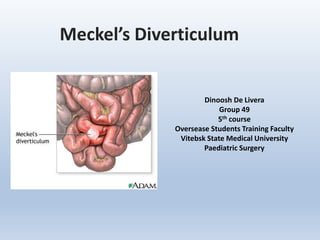
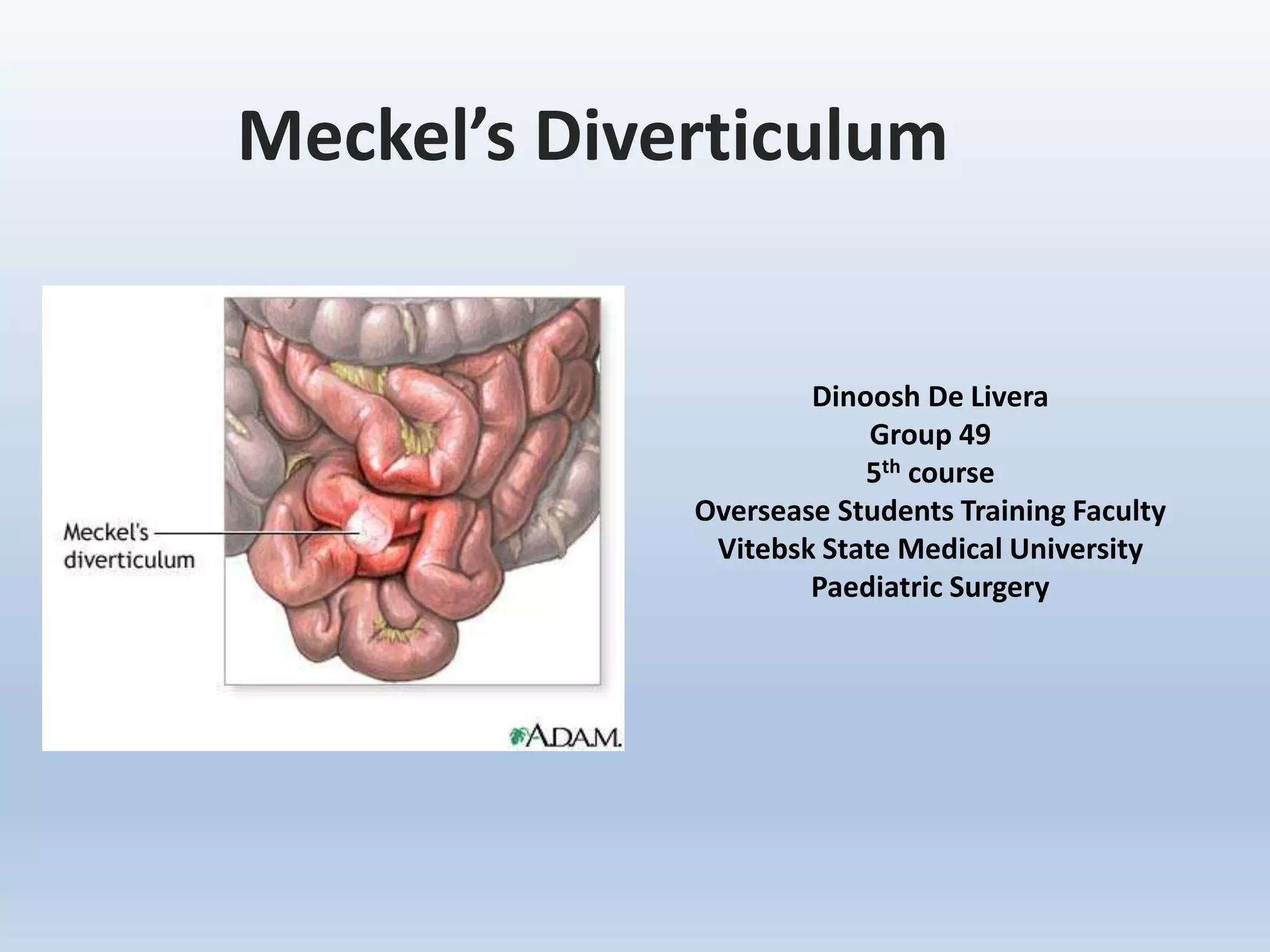

Meckel’s Diverticulum
Dinoosh De Livera
Group 49
5th course
Oversease Students Training Faculty
Vitebsk State Medical University
Paediatric Surgery
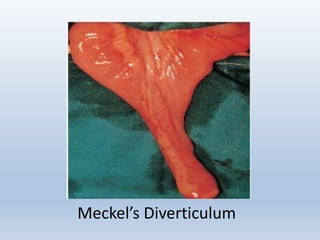
Meckel’s Diverticulum
Definition: It is a congenital diverticulum arising
from the antimesenteric border of terminal ileum
• During the eighth week of gestation, the
omphalomesenteric (vitelline) duct normally
undergoes obliteration
• Failure or incomplete obliteration of vitelline duct
results in some congenital abnormalities, the
most common of which is Meckel's diverticulum.
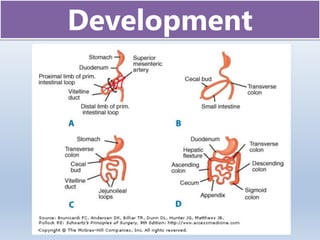
Development
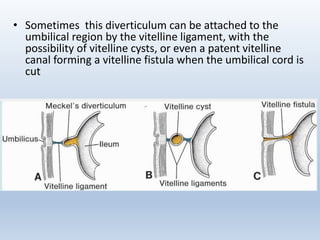
• Sometimes this diverticulum can be attached to the
umbilical region by the vitelline ligament, with the
possibility of vitelline cysts, or even a patent vitelline
canal forming a vitelline fistula when the umbilical cord is
cut
• Most common congenital abnormality of the
gastrointestinal tract
• Contains all three layers of bowel with
independent blood supply
• Often contains heterotropic tissue- gastric,
occasionally pancreatic
• If the Meckel’s Diverticulum is found in an
inguinal or femoral sac – Littre’s hernia
Meckel's diverticulum is the most prevalent
congenital anomaly of the GI tract
• 2% of the general population
• 2% prevalence, 2:1 male predominance
• 2 ft proximal to the ileocecal valve in adults
• 50% symptomatic under 2 years
• Heterotropic tissue
 Gastric mucosa
 Pancreatic acini
Epidemiology
Rule of 2’s
• 2% of the population
• Usually found 2 feet proximal to the ileocecal valve
• About 2 inches long
• 2 times more common in males than females
• Symptomatic mostly before 2 years of age
• In adult patients it symptomatic in only about 2%
Clinical presentations
• Majority of Meckel’s diverticuli are clinically
silent (Asymptomatic)
• Symptoms in order of frequencies—
a) Severe haemorrhage
b) Intussuception
c) Meckel’s Diverticulitis
d) Chronic peptic ulceration
e) Intestinal obstruction
Pathophysiology
• Severe Hemorrhage
-painless per rectal bleeding, maroon colored
Hemorrhage may be caused by:
• Ectopic gastric or pancreatic mucosa: When
diverticulum contains embryonic remnants of mucosa
of other tissue types.
• Secretion of gastric acid or alkaline pancreatic juice
from the ectopic mucosa leads to ulceration in the
adjacent ileal mucosa i.e. peptic or pancreatic ulcer
• Perforation and bleeding from ulcer
Meckel’s Diverticulitis
Inflammation of the diverticulum can mimic symptoms
of appendicitis
Diverticulitis results from-
• Peptic ulceration resulting from ectopic gastric mucosa
of the diverticulum
• Following perforation by trauma or ingested food
residue
• Luminal obstruction due to tumors, foreign body,
causing stasis or bacterial infection
• During perforation, the symptoms may
resemble those of a perforated duodenal ulcer
• Whether perforated or not, urgent surgery is
required
• In non perforated cases, an inflamed
diverticulum should be sought as soon as it
has been demonstrated that the appendix and
fallopian tubes are not at fault
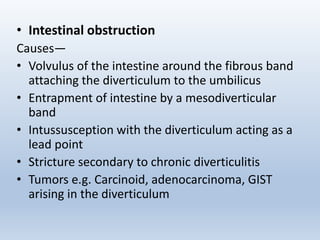
• Intestinal obstruction
Causes—
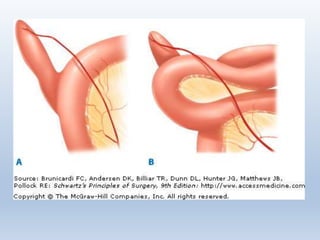
• Volvulus of the intestine around the fibrous band
attaching the diverticulum to the umbilicus
• Entrapment of intestine by a mesodiverticular
band
• Intussusception with the diverticulum acting as a
lead point
• Stricture secondary to chronic diverticulitis
• Tumors e.g. Carcinoid, adenocarcinoma, GIST
arising in the diverticulum
Diagonosis
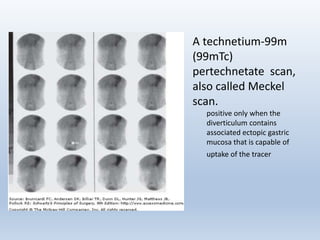
• A technetium-99m (99mTc) pertechnetate scan, also
called Meckel scan.
positive only when the diverticulum contains
associated ectopic gastric mucosa that is capable of
uptake of the tracer
• Laparoscopy
• Enteroclysis/ small bowel enema under fluoroscopy
• CT scan
• Angiography
A technetium-99m
(99mTc)
pertechnetate scan,
also called Meckel
scan.
positive only when the
diverticulum contains
associated ectopic gastric
mucosa that is capable of
uptake of the tracer
1) Intestinal obstruction
2) Hematochezia
3) Appendicitis
4) Intussusception
5) Lower GI bleeding
6) Angiodysplasias
7) Malignancy
8) Arteriovenous malformations
Differential diagnosis
Complications of Meckel Diverticulum
• Ulceration
• Hemorrhage
• Small intestinal obstruction
• Diverticulitis
• Perforation
Indication for surgery
Symptomatic Meckel diverticulum
- hemorrhage
- intestinal obstruction
- diverticulitis
- umbilico-ileal fistulas
Indication for surgery
Incidentally discovered Meckel diverticulum
- Patients younger than 40 years
- Diverticula longer than 2cm
- Diverticula with narrow necks
- Diverticula with fibrous bands
- Suspected ectopic gastric tissue
- Inflamed, thickened diverticula
Management
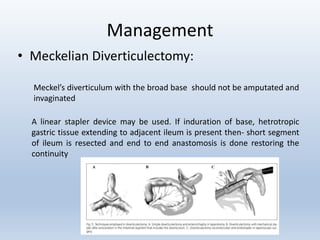
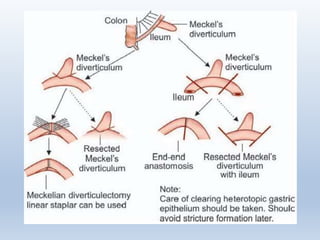
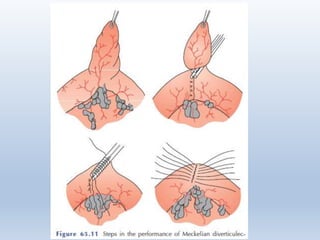
• Meckelian Diverticulectomy:
Meckel’s diverticulum with the broad base should not be amputated and
invaginated
A linear stapler device may be used. If induration of base, hetrotropic
gastric tissue extending to adjacent ileum is present then- short segment
of ileum is resected and end to end anastomosis is done restoring the
continuity
1. Schwartz’s principles of surgery, 9th
edition. Mc Graw-Hill, 2009.
2. Medscape http://emedicine.medscape.com
References
THANK YOU!

Merkel's diverticulum

  • 1.
    Meckel’s Diverticulum Dinoosh DeLivera Group 49 5th course Oversease Students Training Faculty Vitebsk State Medical University Paediatric Surgery
  • 2.
  • 3.
    Definition: It isa congenital diverticulum arising from the antimesenteric border of terminal ileum • During the eighth week of gestation, the omphalomesenteric (vitelline) duct normally undergoes obliteration • Failure or incomplete obliteration of vitelline duct results in some congenital abnormalities, the most common of which is Meckel's diverticulum.
  • 4.
  • 5.
    • Sometimes thisdiverticulum can be attached to the umbilical region by the vitelline ligament, with the possibility of vitelline cysts, or even a patent vitelline canal forming a vitelline fistula when the umbilical cord is cut
  • 6.
    • Most commoncongenital abnormality of the gastrointestinal tract • Contains all three layers of bowel with independent blood supply • Often contains heterotropic tissue- gastric, occasionally pancreatic • If the Meckel’s Diverticulum is found in an inguinal or femoral sac – Littre’s hernia
  • 7.
    Meckel's diverticulum isthe most prevalent congenital anomaly of the GI tract • 2% of the general population • 2% prevalence, 2:1 male predominance • 2 ft proximal to the ileocecal valve in adults • 50% symptomatic under 2 years • Heterotropic tissue  Gastric mucosa  Pancreatic acini Epidemiology
  • 8.
    Rule of 2’s •2% of the population • Usually found 2 feet proximal to the ileocecal valve • About 2 inches long • 2 times more common in males than females • Symptomatic mostly before 2 years of age • In adult patients it symptomatic in only about 2%
  • 9.
    Clinical presentations • Majorityof Meckel’s diverticuli are clinically silent (Asymptomatic) • Symptoms in order of frequencies— a) Severe haemorrhage b) Intussuception c) Meckel’s Diverticulitis d) Chronic peptic ulceration e) Intestinal obstruction
  • 10.
    Pathophysiology • Severe Hemorrhage -painlessper rectal bleeding, maroon colored Hemorrhage may be caused by: • Ectopic gastric or pancreatic mucosa: When diverticulum contains embryonic remnants of mucosa of other tissue types. • Secretion of gastric acid or alkaline pancreatic juice from the ectopic mucosa leads to ulceration in the adjacent ileal mucosa i.e. peptic or pancreatic ulcer • Perforation and bleeding from ulcer
  • 11.
    Meckel’s Diverticulitis Inflammation ofthe diverticulum can mimic symptoms of appendicitis Diverticulitis results from- • Peptic ulceration resulting from ectopic gastric mucosa of the diverticulum • Following perforation by trauma or ingested food residue • Luminal obstruction due to tumors, foreign body, causing stasis or bacterial infection
  • 12.
    • During perforation,the symptoms may resemble those of a perforated duodenal ulcer • Whether perforated or not, urgent surgery is required • In non perforated cases, an inflamed diverticulum should be sought as soon as it has been demonstrated that the appendix and fallopian tubes are not at fault
  • 13.
    • Intestinal obstruction Causes— •Volvulus of the intestine around the fibrous band attaching the diverticulum to the umbilicus • Entrapment of intestine by a mesodiverticular band • Intussusception with the diverticulum acting as a lead point • Stricture secondary to chronic diverticulitis • Tumors e.g. Carcinoid, adenocarcinoma, GIST arising in the diverticulum
  • 15.
    Diagonosis • A technetium-99m(99mTc) pertechnetate scan, also called Meckel scan. positive only when the diverticulum contains associated ectopic gastric mucosa that is capable of uptake of the tracer • Laparoscopy • Enteroclysis/ small bowel enema under fluoroscopy • CT scan • Angiography
  • 16.
    A technetium-99m (99mTc) pertechnetate scan, alsocalled Meckel scan. positive only when the diverticulum contains associated ectopic gastric mucosa that is capable of uptake of the tracer
  • 17.
    1) Intestinal obstruction 2)Hematochezia 3) Appendicitis 4) Intussusception 5) Lower GI bleeding 6) Angiodysplasias 7) Malignancy 8) Arteriovenous malformations Differential diagnosis
  • 18.
    Complications of MeckelDiverticulum • Ulceration • Hemorrhage • Small intestinal obstruction • Diverticulitis • Perforation
  • 19.
    Indication for surgery SymptomaticMeckel diverticulum - hemorrhage - intestinal obstruction - diverticulitis - umbilico-ileal fistulas
  • 20.
    Indication for surgery Incidentallydiscovered Meckel diverticulum - Patients younger than 40 years - Diverticula longer than 2cm - Diverticula with narrow necks - Diverticula with fibrous bands - Suspected ectopic gastric tissue - Inflamed, thickened diverticula
  • 21.
    Management • Meckelian Diverticulectomy: Meckel’sdiverticulum with the broad base should not be amputated and invaginated A linear stapler device may be used. If induration of base, hetrotropic gastric tissue extending to adjacent ileum is present then- short segment of ileum is resected and end to end anastomosis is done restoring the continuity
  • 24.
    1. Schwartz’s principlesof surgery, 9th edition. Mc Graw-Hill, 2009. 2. Medscape http://emedicine.medscape.com References
  • 25.

Editor's Notes

  • #4 the narrowed connection between the intraembryonic gut and the yolk sac
  • #7 As the vitelline duct is made up of pluripotent cell lining, Meckel’s diverticulum may harbor abnormal tissues, containing embryonic remnants of other tissue types.
  • #12 Inflammation of this Meckel's diverticulum may mimic appendicitis. Therefore during appendectomy, ileum should be checked for the presence of Meckel's diverticulum
  • #14 it can be attached to the umbilical region by the vitelline ligament, The mesodiverticular band is an embryologic remnant of the vitelline circulation
  • #16 Radionuclide scans (99mTc-pertechnetate) can be helpful in the diagnosis of Meckel's diverticulum; this test is, however, positive only when the diverticulum contains associated ectopic gastric mucosa that is capable of uptake of the tracer Enteroclysis is associated with an accuracy of 75%, but usually is not applicable during acute presentations of complications related to Meckel's diverticula Angiography can localize the site of bleeding during acute hemorrhage related to Meckel's diverticula
  • #21 Soltero & Bill, 1976 lifetime risk of complications from Meckel diverticulum is 4.2%, with the risk decreasing with age