College of Natural and computational sciences
Center for food science and nutrition
Program: PhD in food sciences and human nutrition
Course: Special topic I in food science and Human nutrition
(FSHN8317)
1
By: Megersa Bayisa…. ID: GSR/0632/17
Course instructor: Dr. Ashagrie Zewdu Addis Ababa university ,Addis Ababa
Ethiopia
20 January 2025
Seminar paper: The role of Artificial intelligence (AI) in food science and
nutrition.
Out lines of presentation
2
 Introduction
 Back ground rational of the AI study
 The objective of the seminar
 Literature Review
 Importance of AI in Crop production
 The importance of AI in postharvest processing
 Importance of AI technology Food production and processing
 The Role of AI in improve quality and efficiency along food value
chain
 Importance of Using AI in food science and nutrition
 Types of AI used in food science and human nutrition
 Methodology of the study
Strength, challenges and limitations of AI in food science and nutrition
 Summary and conclusion
 Recommendations
3
1.1 Definitions of Artificial Intelligence (AI)
What is AI?
 It is not surprising that AI is so difficult to
define clearly.
1. Introduction
AI is, after all, an imitation or
simulation of something we do
not yet fully understand
ourselves/human
intelligence(Sheikh et al., 2023).
 Artificial intelligence (AI) is a set of technologies that allow computers
to perform tasks that typically require human intelligence.
 AI systems can learn, set reason, plan, and make decisions.
 Artificial intelligence (AI) refers to systems that display intelligent
behaviour by analysing their environment and taking actions with
some degree of autonomy to achieve specific goals.(Sheikh et al.,
2023)
 AI Agents can guide us through crafting Specific, Measurable,
Achievable, Relevant, and Time-bound goals (Vinuesa et al., 2020).
4
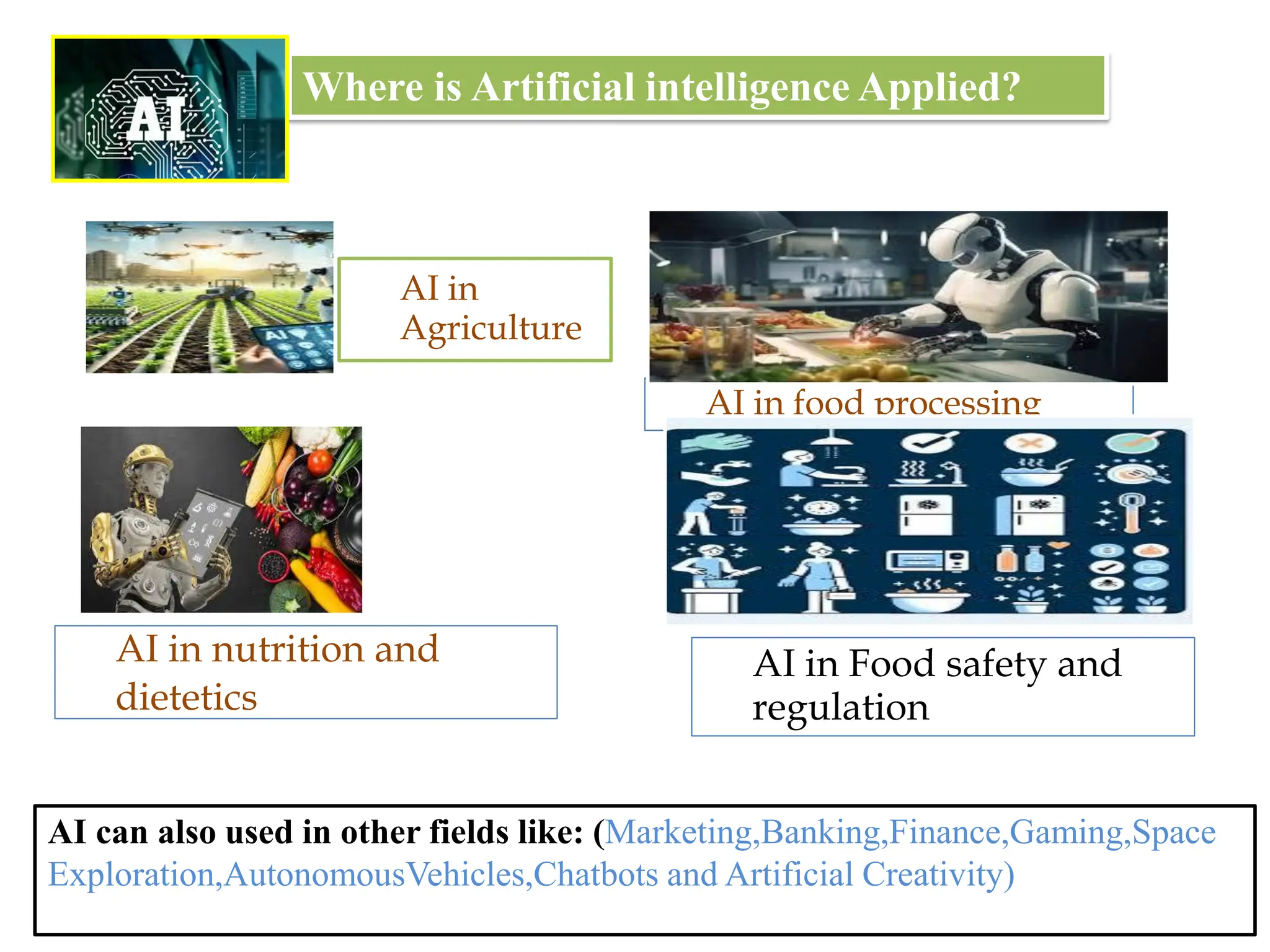
Where is Artificial intelligence Applied?
AI can also used in other fields like: (Marketing,Banking,Finance,Gaming,Space
Exploration,AutonomousVehicles,Chatbots and Artificial Creativity)
AI in
Agriculture
AI in food processing
AI in nutrition and
dietetics
AI in Food safety and
regulation
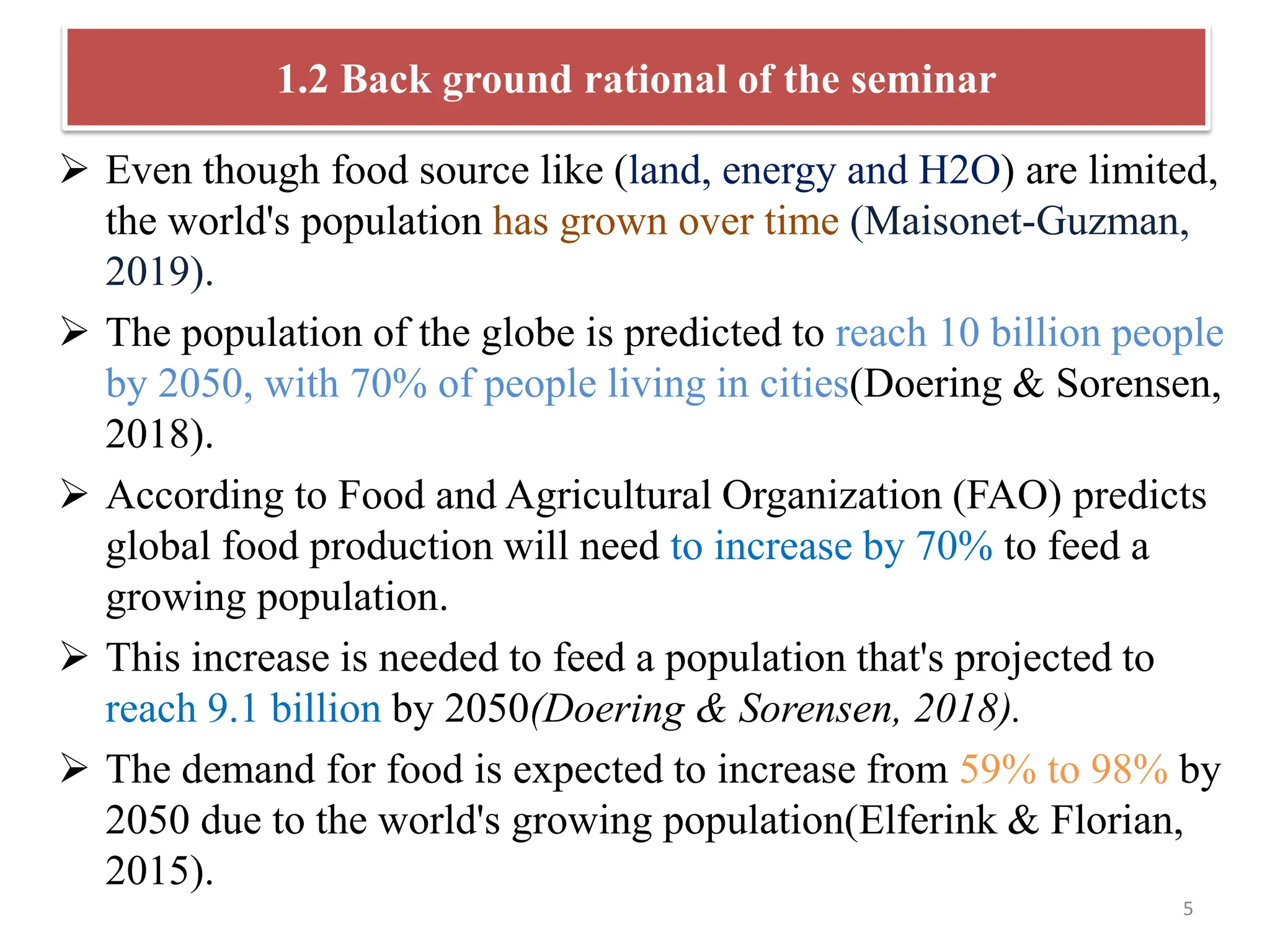
1.2 Back ground rational of the seminar
 Even though food source like (land, energy and H2O) are limited,
the world's population has grown over time (Maisonet-Guzman,
2019).
 The population of the globe is predicted to reach 10 billion people
by 2050, with 70% of people living in cities(Doering & Sorensen,
2018).
 According to Food and Agricultural Organization (FAO) predicts
global food production will need to increase by 70% to feed a
growing population.
 This increase is needed to feed a population that's projected to
reach 9.1 billion by 2050(Doering & Sorensen, 2018).
 The demand for food is expected to increase from 59% to 98% by
2050 due to the world's growing population(Elferink & Florian,
2015).
5
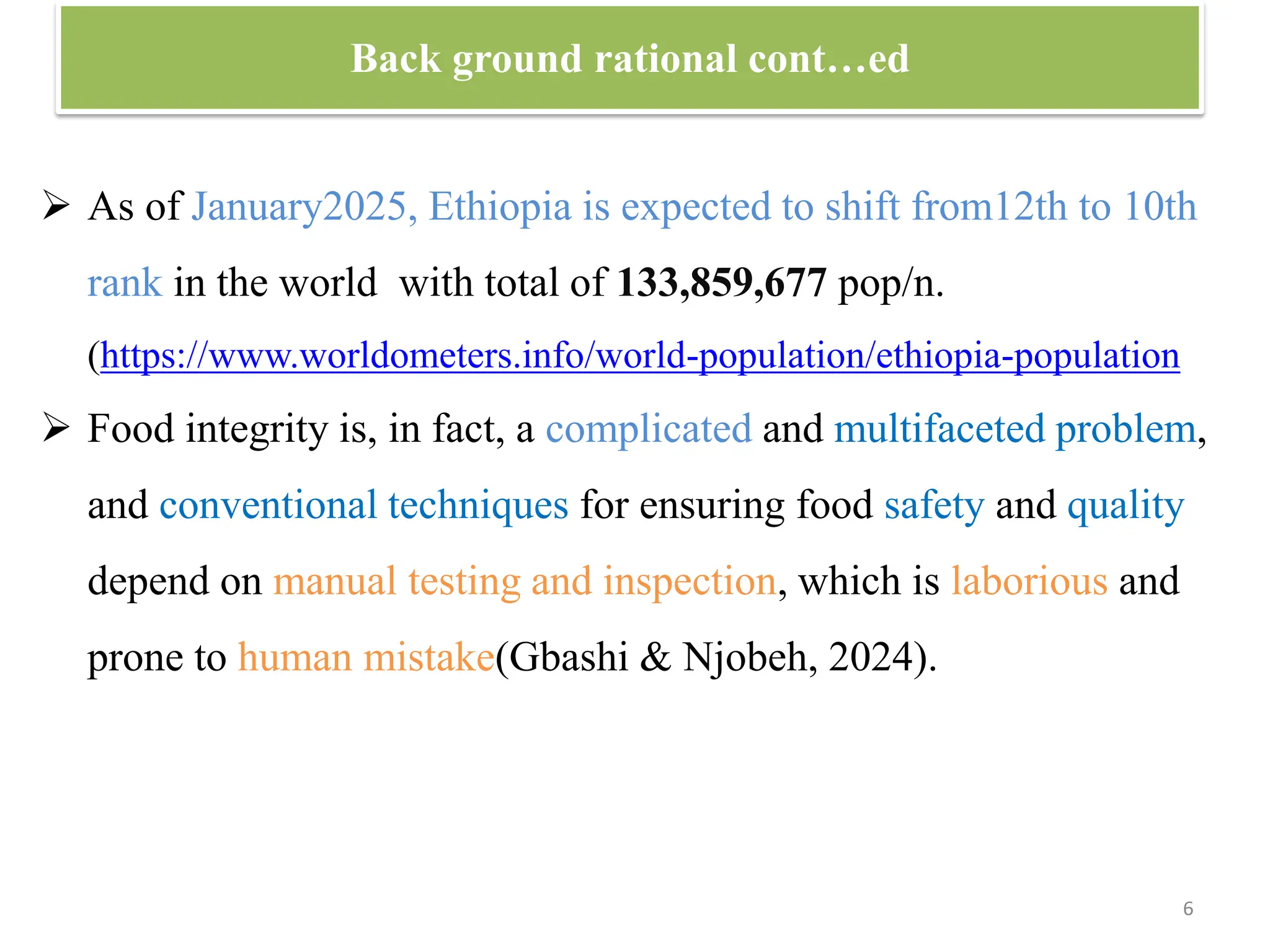
Back ground rational cont…ed
6
 As of January2025, Ethiopia is expected to shift from12th to 10th
rank in the world with total of 133,859,677 pop/n.
(https://www.worldometers.info/world-population/ethiopia-population
 Food integrity is, in fact, a complicated and multifaceted problem,
and conventional techniques for ensuring food safety and quality
depend on manual testing and inspection, which is laborious and
prone to human mistake(Gbashi & Njobeh, 2024).
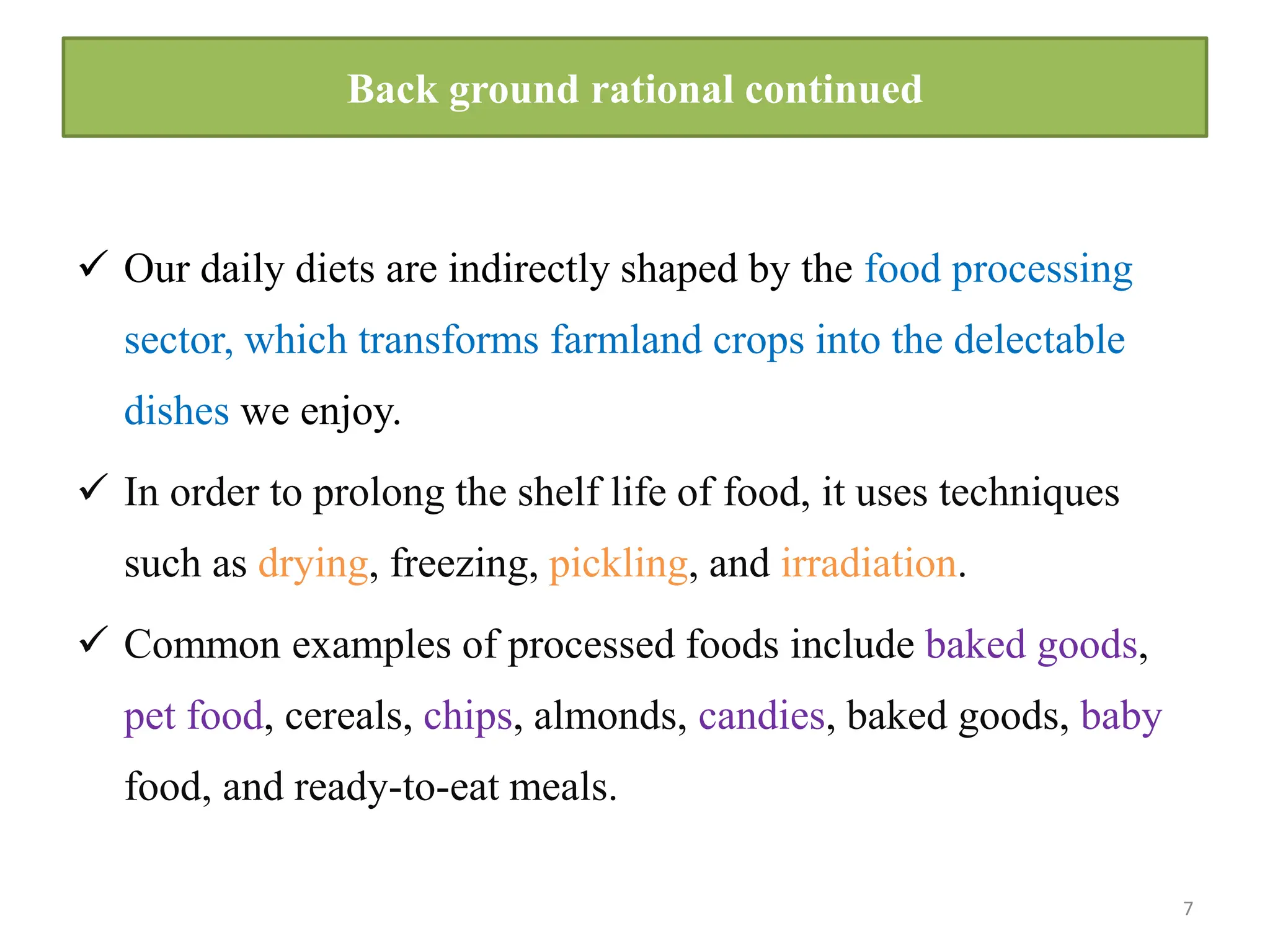
Back ground rational continued
 Our daily diets are indirectly shaped by the food processing
sector, which transforms farmland crops into the delectable
dishes we enjoy.
 In order to prolong the shelf life of food, it uses techniques
such as drying, freezing, pickling, and irradiation.
 Common examples of processed foods include baked goods,
pet food, cereals, chips, almonds, candies, baked goods, baby
food, and ready-to-eat meals.
7
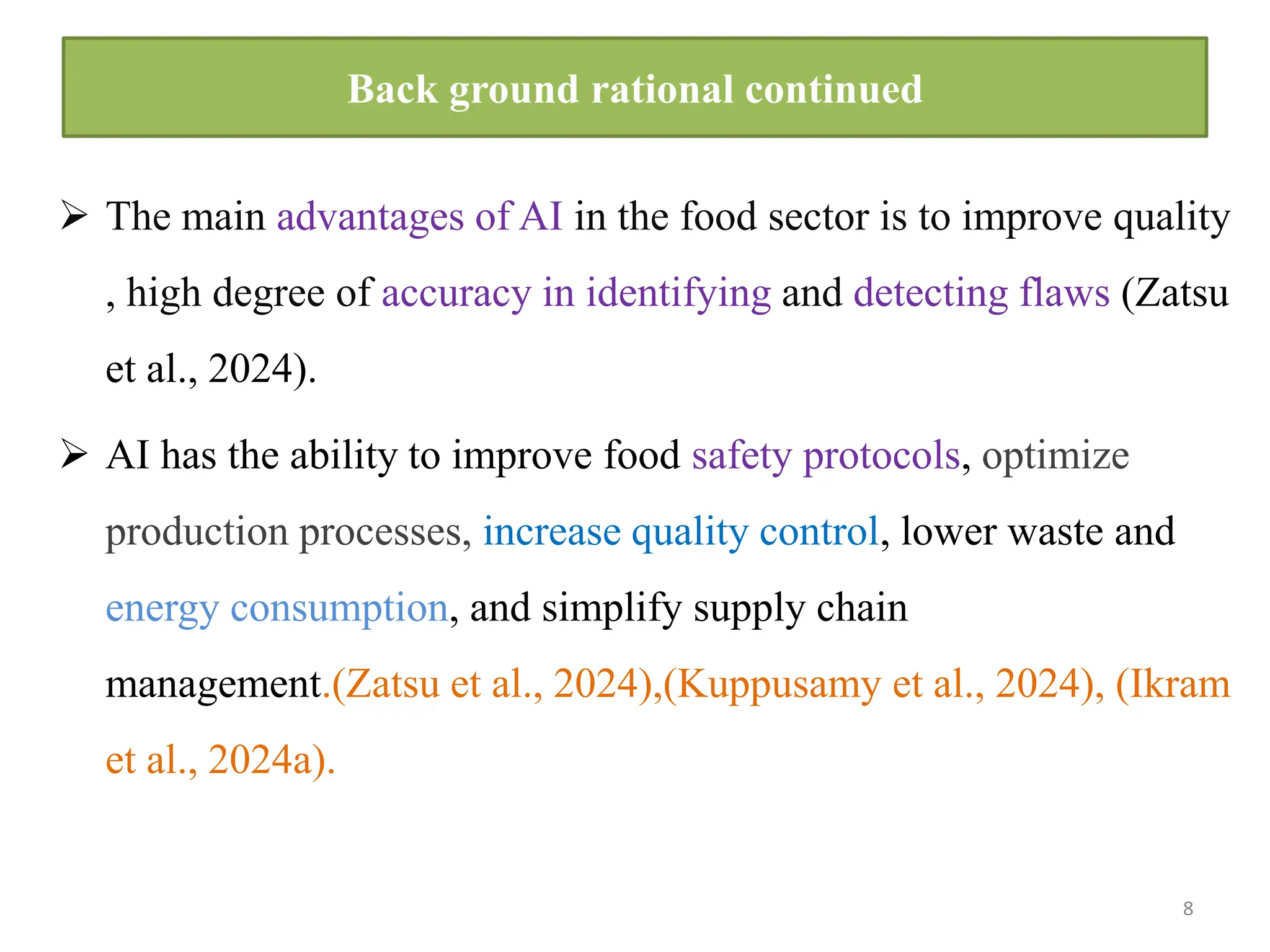
 The main advantages of AI in the food sector is to improve quality
, high degree of accuracy in identifying and detecting flaws (Zatsu
et al., 2024).
 AI has the ability to improve food safety protocols, optimize
production processes, increase quality control, lower waste and
energy consumption, and simplify supply chain
management.(Zatsu et al., 2024),(Kuppusamy et al., 2024), (Ikram
et al., 2024a).
8
Back ground rational continued
Interestingly, nowadays, processed foods account for 25% to
60% of many people's daily energy intake worldwide. With the
demand for processed foods increasing, AI offers a great
solution for streamlining food processing and boosting
innovation across the sector.
Hence this seminar was initiated to address type of AI
contributed for food science and nutrition.
9
Rational continued
1.3 The objective of the seminar:
General Objectives:
 To address the current role of AI in food science and nutrition while it
helps for readers to gain information on the relevance of AI in feature
food industry.
Specific objective:
 To address common AI involved in food science and nutrition sector
development
 To address key importance, strength and limitation of AI technology in
food science and nutrition.
10
2. Literature Review
2.1 Importance of AI in Crop production
Artificial intelligence (AI) can:
11
improve farming processes
 Predicting crop yields and
spot possible hazards
AI algorithms examine past data
weather trends
 soil conditions moisture
 Soil nutrients
illnesses and pest
infestations early
Optimize
resources(input)
Manage weeds
Authors: (Talaviya et al., 2020), (Kariyanna & Sowjanya, 2024), (Javaid et al.,
2023), (Mana et al., 2024), (Zhang et al., 2024)and(Karanth et al., 2023).
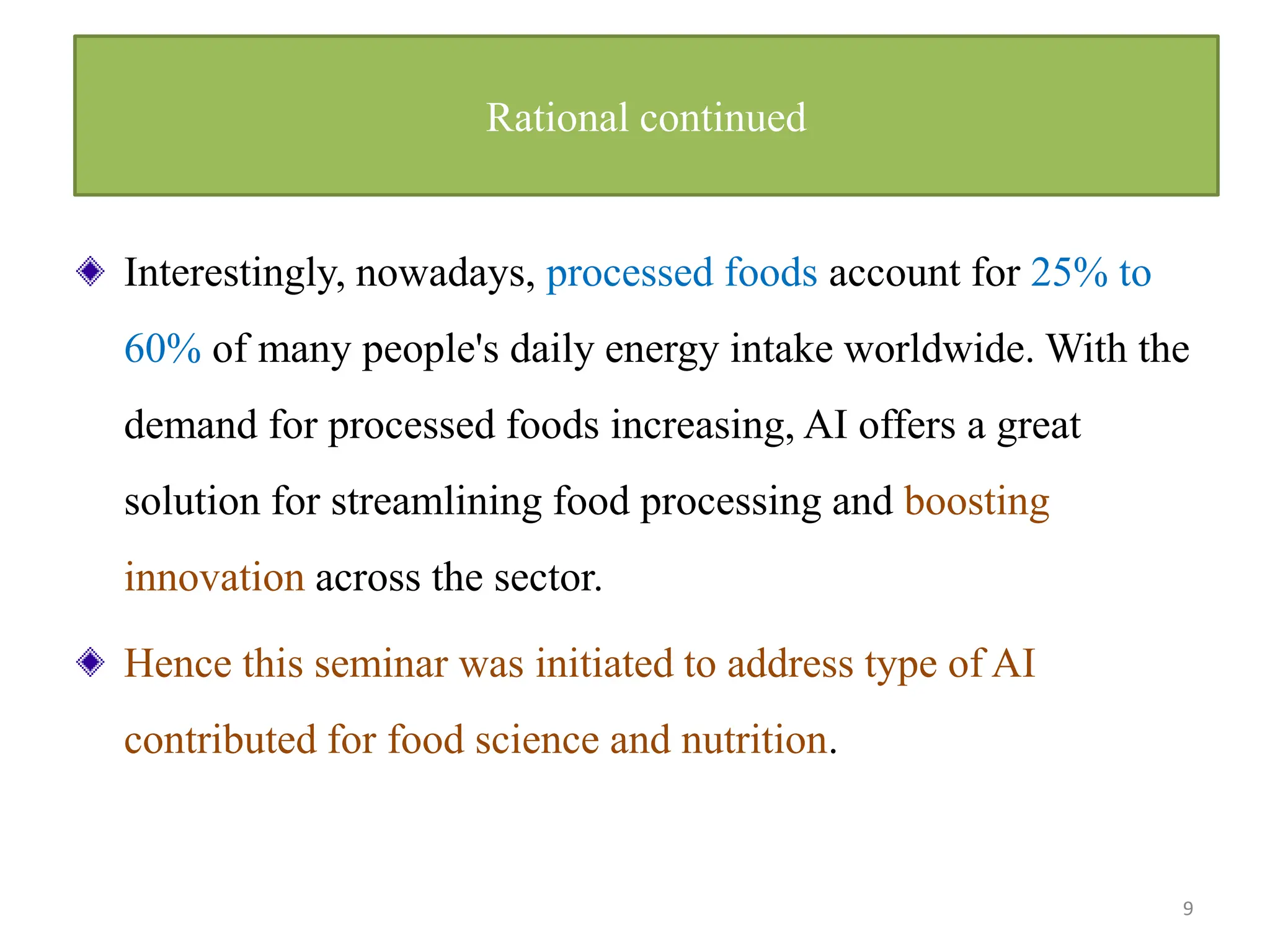
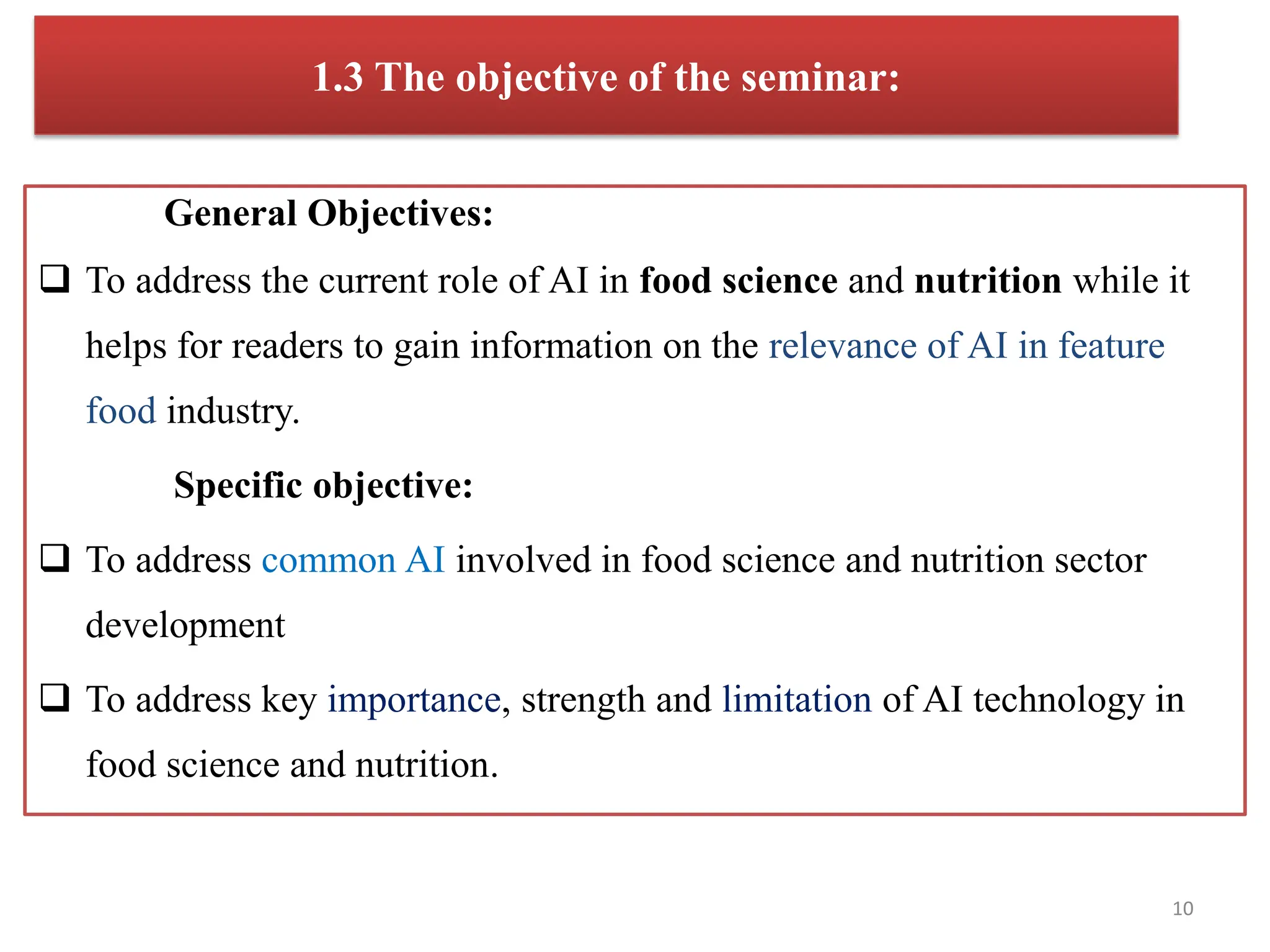
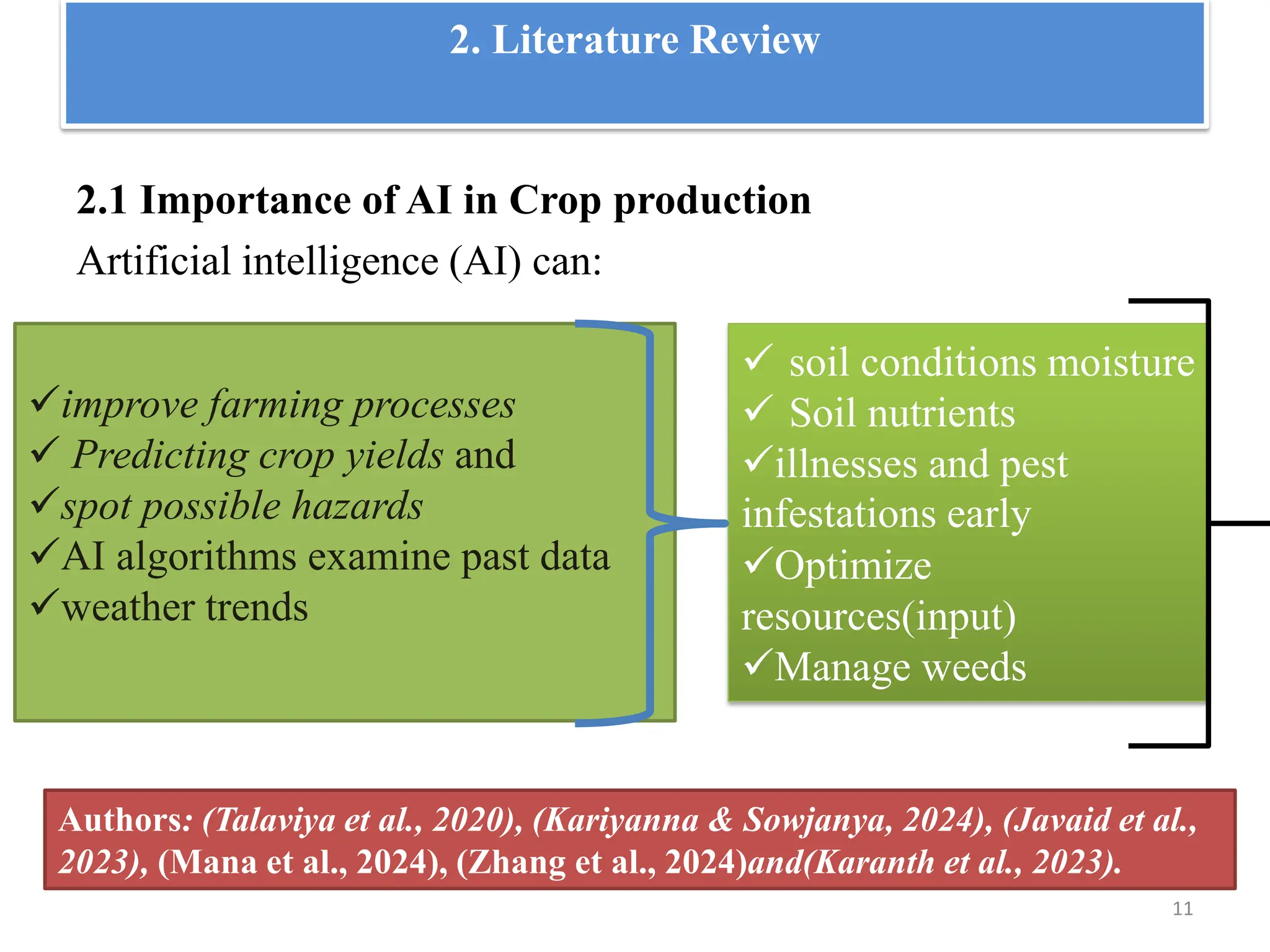
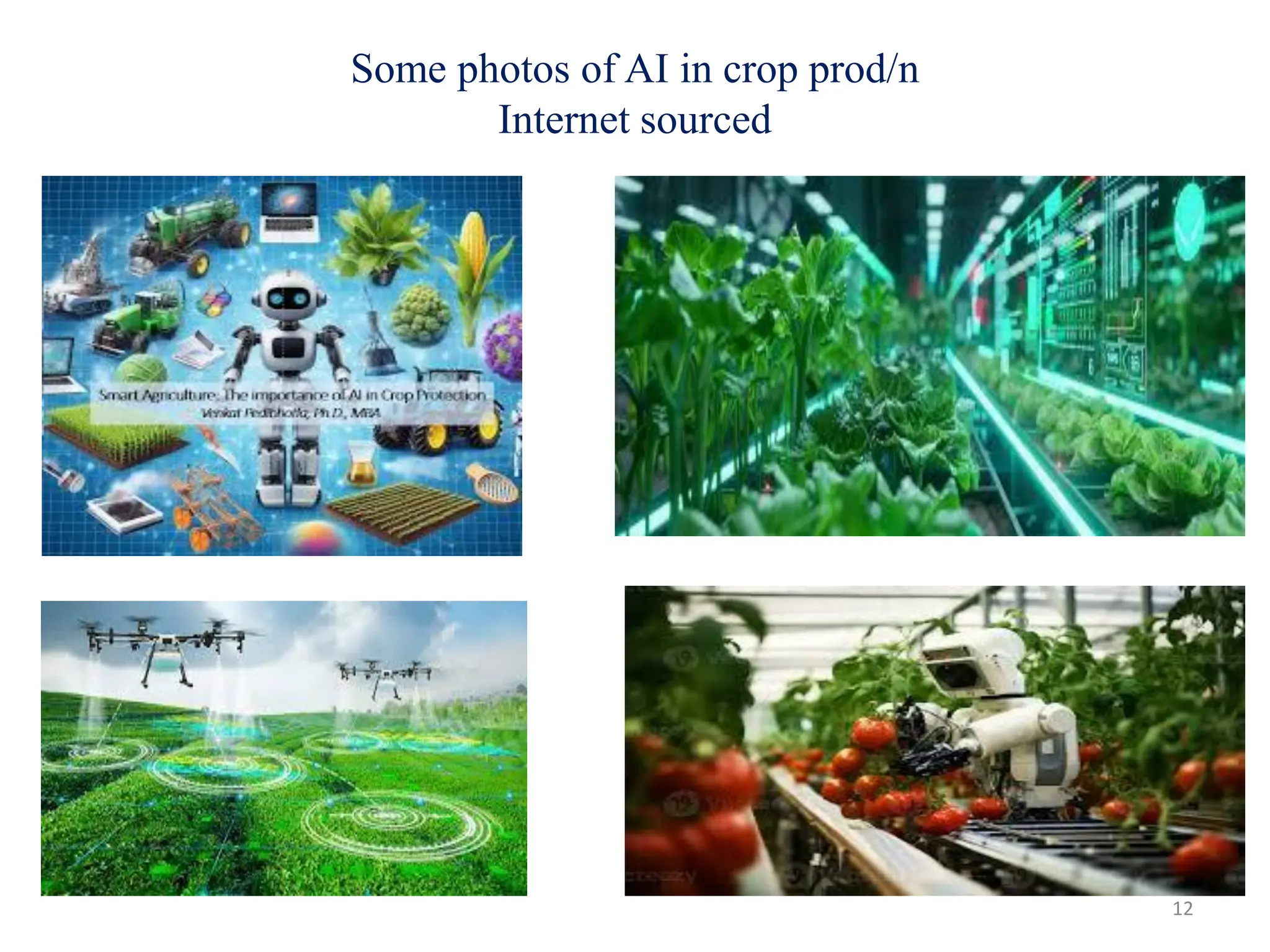
Some photos of AI in crop prod/n
Internet sourced
12
2.2 The importance of AI in postharvest processing
13
Minimizing product
damage
Food manufacturing
Keep precision
E-commerce
consistent package
Process quality
Give placement
Picking
sealing
Process quality
wholesale distribution
Remove contaminant
Grading by(size, shape, or
color).
Improve shelf life
Authors: (Bird et al., 2020), standards(Sps, 2011), (Javaid et al., 2021), (Arachchige et
al., 2022), life(Kuppusamy et al., 2024) and (Pandey & Mishra, 2024).
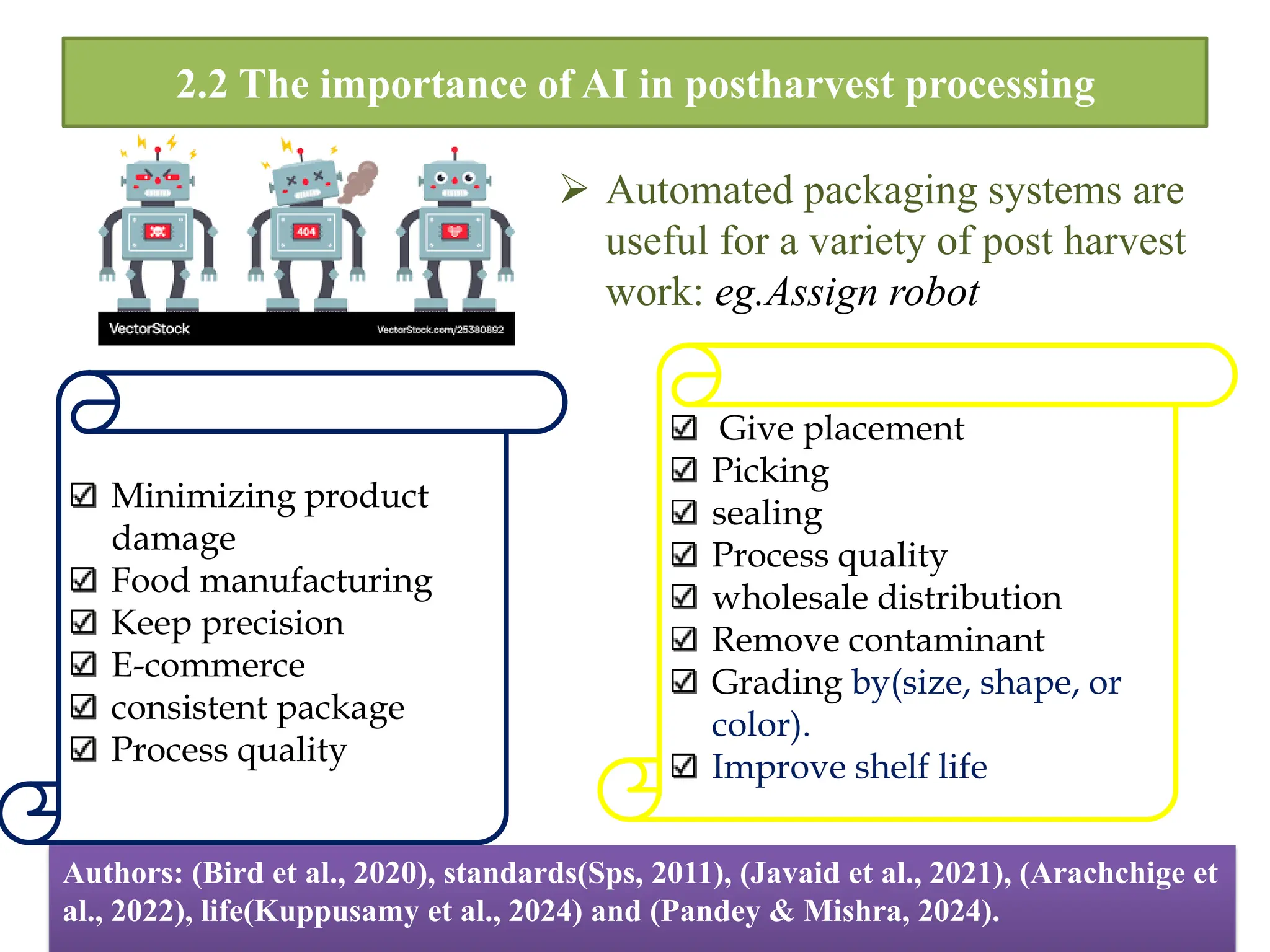
 Automated packaging systems are
useful for a variety of post harvest
work: eg.Assign robot
2.3 Importance of AI technology Food production and processing
 Artificial intelligence is transforming the food sector by increse
production efficiency, improved quality control, waste reduction,
tailored nutrition, and supply chain transparency.
(Zatsu et al., 2024), (Konfo et al., 2023)
 Additionally, by utilizing data-driven insights on customer trends,
flavor preferences, and ingredient combinations, (AI) helps food
makers create novel and inventive goods(Shad & Potter, 2024).
14
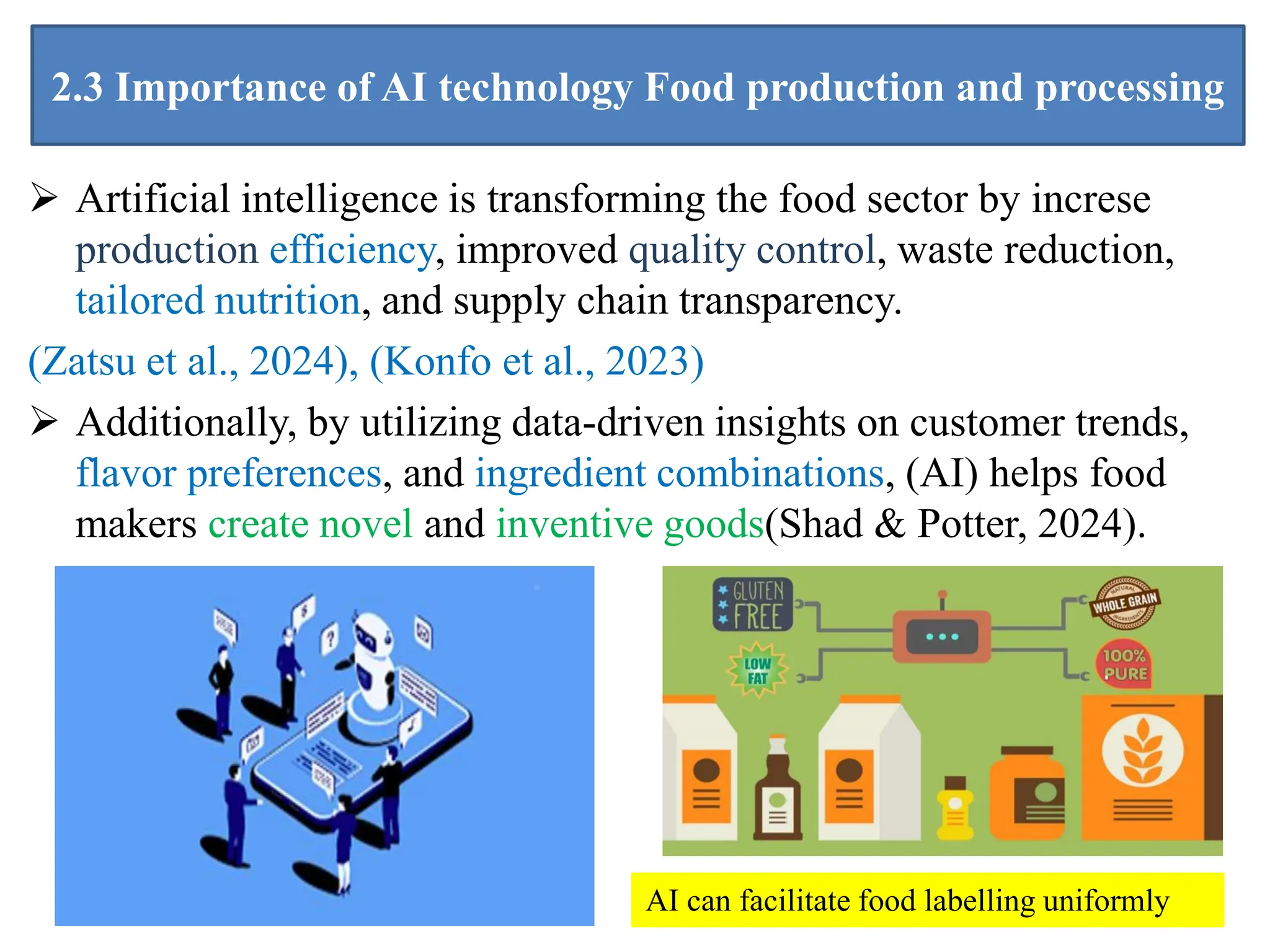
AI can facilitate food labelling uniformly
2.4 The Role of AI in improve quality and efficiency along food
value chain
 AI help to detection of food contaminants by decreasing
human error and increasing accuracy.
 Processes food, Control quality with computer vision can
be very helpful in maintaining quality standards and laws.
 Spotting contamination, looking for flaws in the
packaging, and making sure labels adhere to
regulations(Hemamalini et al., 2022).
 YOLO11 can track and crop the label as each item moves
through the camera's field of vision. Optical Character
Recognition (OCR) can then be used to read the clipped
label.
15
16
 Without interfering with the production process, this help
product is appropriately branded.
 Labeling accuracy may be preserved using real-time tracking
and OCR, ensuring regulatory compliance even in hectic
settings(Alif, 2024).
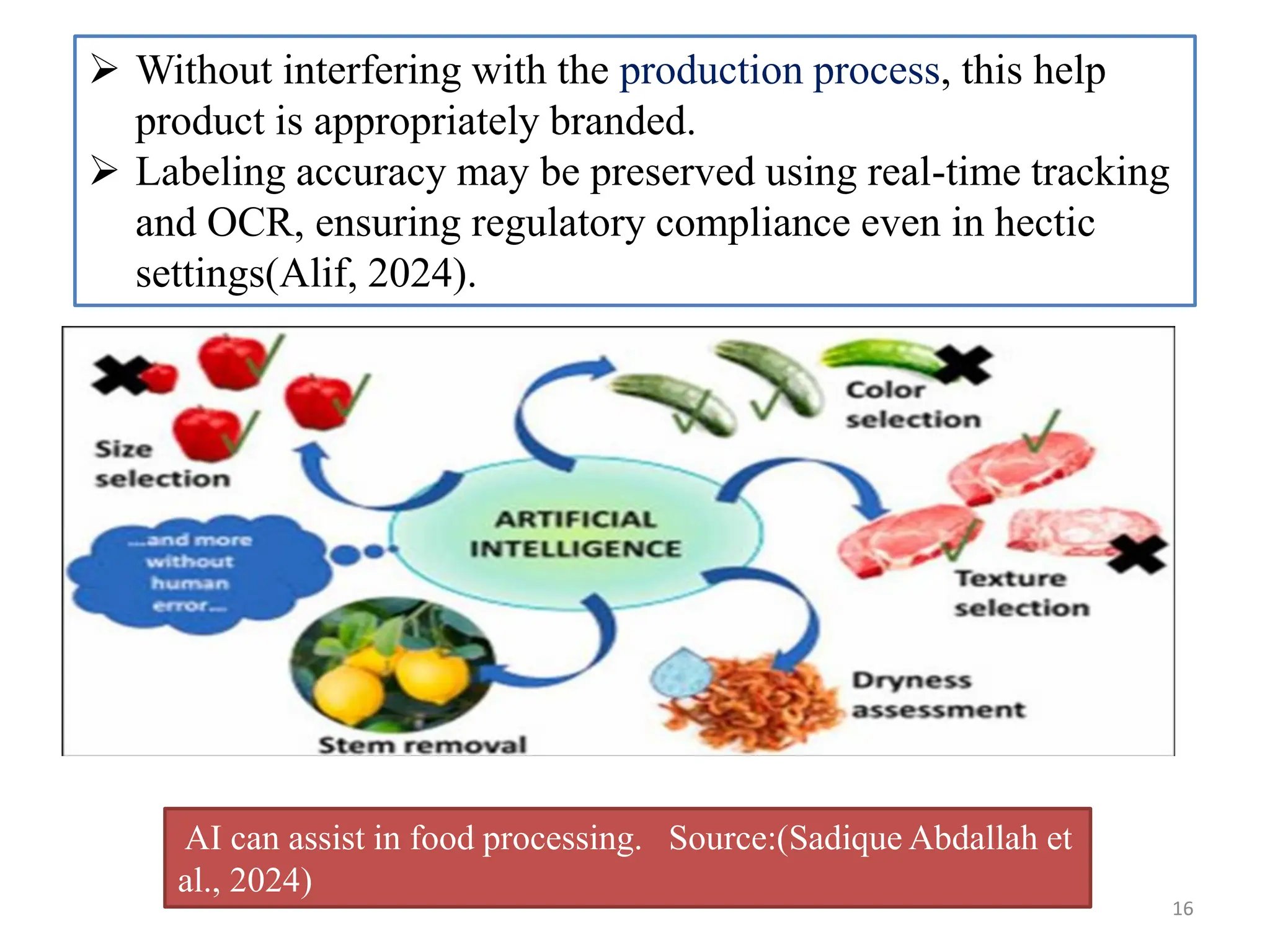
AI can assist in food processing. Source:(Sadique Abdallah et
al., 2024)
2.5 Importance of Using AI in food science and nutrition
 AI is developing swiftly and has the potential to completely
transform the field of nutrition and clinical nutrition(Kassem et
al., 2025).
 AI's core function in nutrition is to provide dietary assessment,
with a smaller focus on lifestyle interventions, diet-related
diseases, and malnutrition prediction(Sosa-Holwerda et al.,
2024).
 Maintaining a nutritious diet is essential for lowering the risk
of chronic illnesses like cancer, heart disease, and stroke
(Neuhouser, 2019).
17
2.6 Types of AI used in food science and human nutrition
 ML is a branch of AI that deals with algorithms that automatically get
better with practice. Mathematical models for decision-making could
be produced by ML algorithms. These models are constructed without
programming using big collections of training data(Logeshwaran et al.,
2024).
18
2.6.1 Machine Learning (ML)
19
 Monitor soil moisture
 Detect soil type
 receive real-time
 When and how use input
 weather data information
ML can contributed to food and nutrition by
providing:
Authors:(Menichetti et al., 2023), (Logeshwaran et al., 2024),
learning(Kirk et al., 2022) and (Sosa-Holwerda et al., 2024).
 Minimize waste
 Forecast demand
 Optimize sell
 Inventory control
 Detect nutrition related
issues (Obesity, metabolic
health and malnutrition)
2.6.2 Artificial Neural Networks (ANNs)
 An Artificial Neural Network (ANN) is a computational model
that mimics the functioning of biological neurons(Demirci et
al., 2016), (Soori et al., 2023).
 ANNs are used to solve complex environmental systems.
helpful tools for food safety and quality analyses, by
predicting physical, chemical, functional, and sensory
qualities of different food products during processing and
distribution, interpreting spectroscopic data, and
modeling microbial growth and using that information to
predict food safety(Guiné, 2019), (Huang et al., 2007).
20
2.6.3 Internet of Things (IoT)
 IoT gather information of variables, like temperature, humidity,
nutrient levels, and soil moisture, carbon dioxide, heavy metals,
shipping schedules, and storage conditions(Xu et al.,
2022),(Bigliardi et al., 2022).
 Age, gender, degree of physical activity, and many other
characteristics can be checked to nourishment for an individual.
2.6.4 The Role of Computer Vision in Food Processing
 Computer vision systems process and analyze images or videos in
real time using high-resolution cameras and algorithms(Gao et al.,
2020).
 production line, identify defects, and keep an eye on the quality of
the final product(Naif Alsharabi, 2023), (Ikram et al., 2024b).
21
22
3. Methodology of the study
This study was conducted by reviewing and synthesizing different
recent and subject based scientific research journal, proceeding, books
other web based material to address the role of current artificial
intelligence (AI) in food science and nutrition sectors.
Strength Using of AI:
Task automation and enhanced quality control by analyzing visual
indicators such as texture, moisture content, and signs of temperature
exposure,
AI systems can forecast the shelf life of food products.
 AI can increasing output and reducing labor costs.
Able to perform repetitive tasks more rapidly, accurately, and
reliably than humans.
Consistent product quality by removing batch variance and
guaranteeing that objects satisfy standards.
Challenges and limitation of AI include:
 AI has the potential to displace human labor, which result in
job losses and changes to employment prospects.
 A World Economic Forum analysis estimates that by 2025,
artificial intelligence would have generated 133 million new
employment while also displacing 75 million jobs
worldwide(Wang & Lu, 2025).
 Large volumes of data are gathered and analyzed by AI
systems, which may cause consumers to worry about their
privacy.
23
 AI usage conforms with data protection regulations(Ye et al., 2024).
 In case technical problems or system malfunctions, restaurants that rely
on AI may get operational disruptions(Geske et al., 2024), (Rojek et al.,
2023).
 The expense of deploying AI may be a hurdle for smaller companies. To
deploy and oversee AI systems, qualified experts are required.
 Data quality and Complexity of food systems can be a
challenge(Matchaya et al., 2023).
 For optimal performance require a steady and regulated environment
(appropriate lighting, temperature, etc.). It can be challenging to install
such systems in food processing facilities because of the different
environmental conditions (freezers, cooking areas, storage spaces,
etc.)(Zhu et al., 2021).
 Maintaining accuracy and performance requires routine hardware
maintenance, software upgrades, and calibration.
 AI systems mis-identify pollutants, which results in wasteful spending
or overlooked safety hazards(Bird et al., 2020).
24
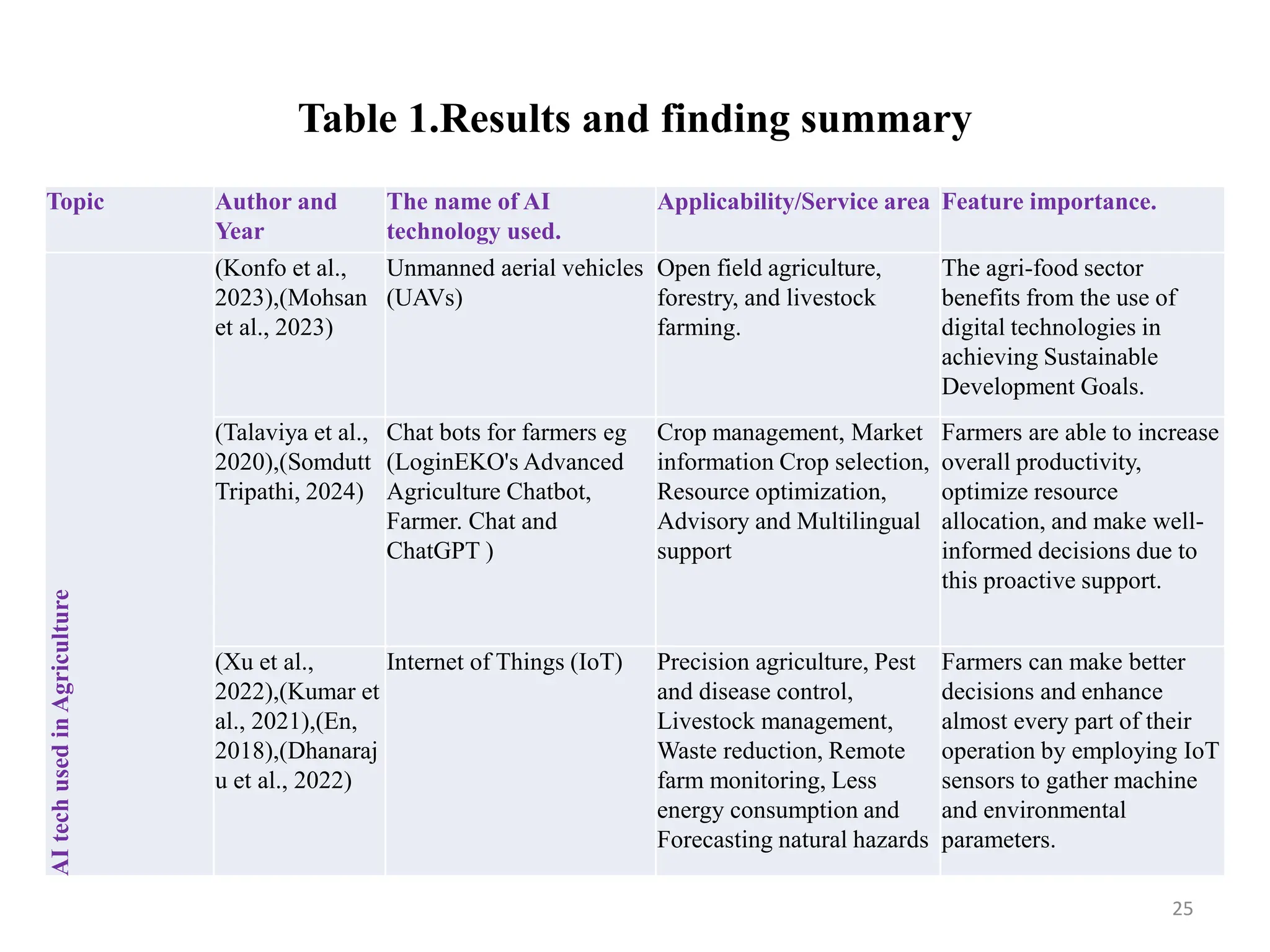
Table 1.Results and finding summary
Topic Author and
Year
The name of AI
technology used.
Applicability/Service area Feature importance.
AI
tech
used
in
Agriculture
(Konfo et al.,
2023),(Mohsan
et al., 2023)
Unmanned aerial vehicles
(UAVs)
Open field agriculture,
forestry, and livestock
farming.
The agri-food sector
benefits from the use of
digital technologies in
achieving Sustainable
Development Goals.
(Talaviya et al.,
2020),(Somdutt
Tripathi, 2024)
Chat bots for farmers eg
(LoginEKO's Advanced
Agriculture Chatbot,
Farmer. Chat and
ChatGPT )
Crop management, Market
information Crop selection,
Resource optimization,
Advisory and Multilingual
support
Farmers are able to increase
overall productivity,
optimize resource
allocation, and make well-
informed decisions due to
this proactive support.
(Xu et al.,
2022),(Kumar et
al., 2021),(En,
2018),(Dhanaraj
u et al., 2022)
Internet of Things (IoT) Precision agriculture, Pest
and disease control,
Livestock management,
Waste reduction, Remote
farm monitoring, Less
energy consumption and
Forecasting natural hazards
Farmers can make better
decisions and enhance
almost every part of their
operation by employing IoT
sensors to gather machine
and environmental
parameters.
25
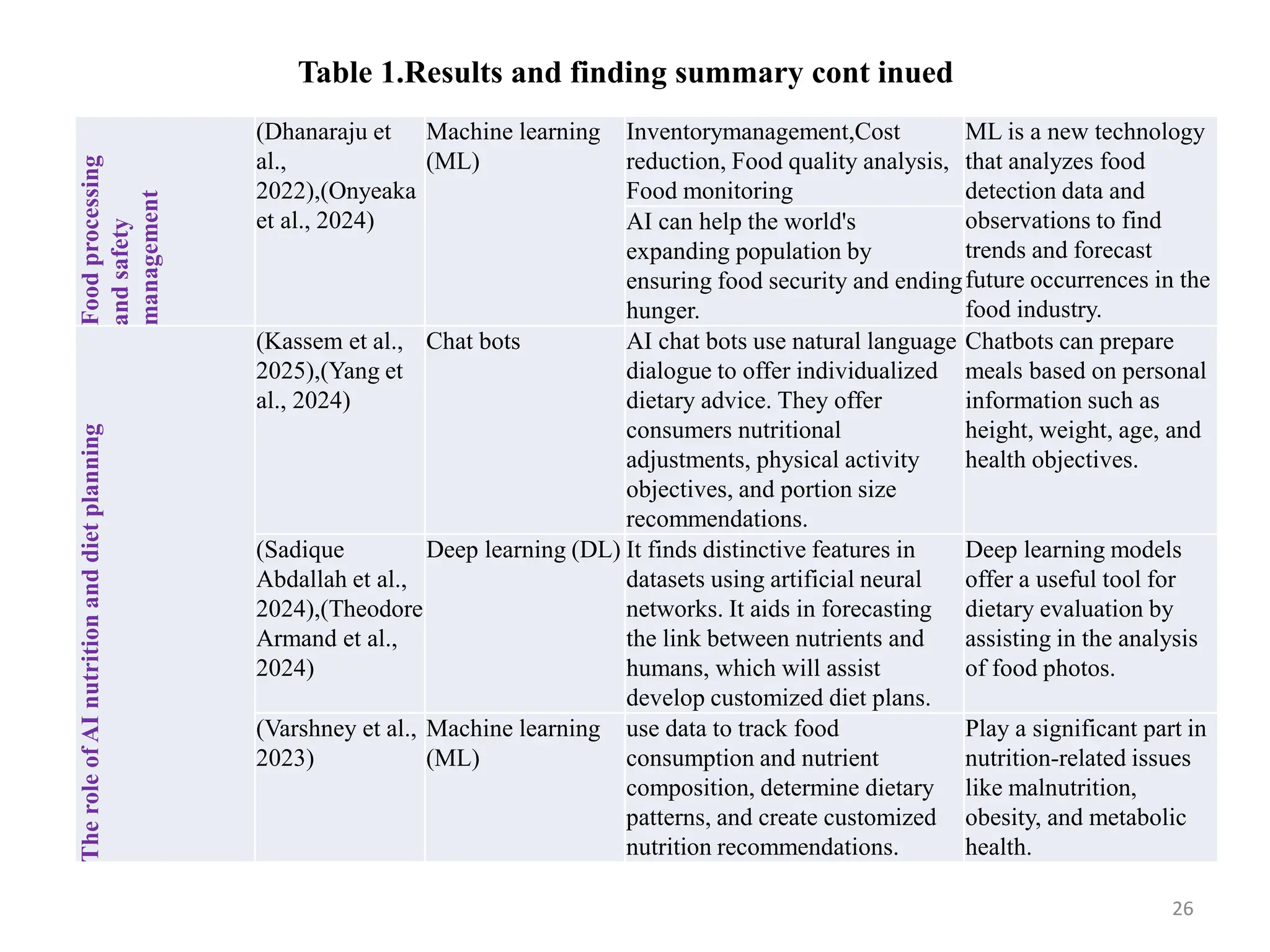
Food
processing
and
safety
management
(Dhanaraju et
al.,
2022),(Onyeaka
et al., 2024)
Machine learning
(ML)
Inventorymanagement,Cost
reduction, Food quality analysis,
Food monitoring
ML is a new technology
that analyzes food
detection data and
observations to find
trends and forecast
future occurrences in the
food industry.
AI can help the world's
expanding population by
ensuring food security and ending
hunger.
The
role
of
AI
nutrition
and
diet
planning
(Kassem et al.,
2025),(Yang et
al., 2024)
Chat bots AI chat bots use natural language
dialogue to offer individualized
dietary advice. They offer
consumers nutritional
adjustments, physical activity
objectives, and portion size
recommendations.
Chatbots can prepare
meals based on personal
information such as
height, weight, age, and
health objectives.
(Sadique
Abdallah et al.,
2024),(Theodore
Armand et al.,
2024)
Deep learning (DL) It finds distinctive features in
datasets using artificial neural
networks. It aids in forecasting
the link between nutrients and
humans, which will assist
develop customized diet plans.
Deep learning models
offer a useful tool for
dietary evaluation by
assisting in the analysis
of food photos.
(Varshney et al.,
2023)
Machine learning
(ML)
use data to track food
consumption and nutrient
composition, determine dietary
patterns, and create customized
nutrition recommendations.
Play a significant part in
nutrition-related issues
like malnutrition,
obesity, and metabolic
health.
26
Table 1.Results and finding summary cont inued
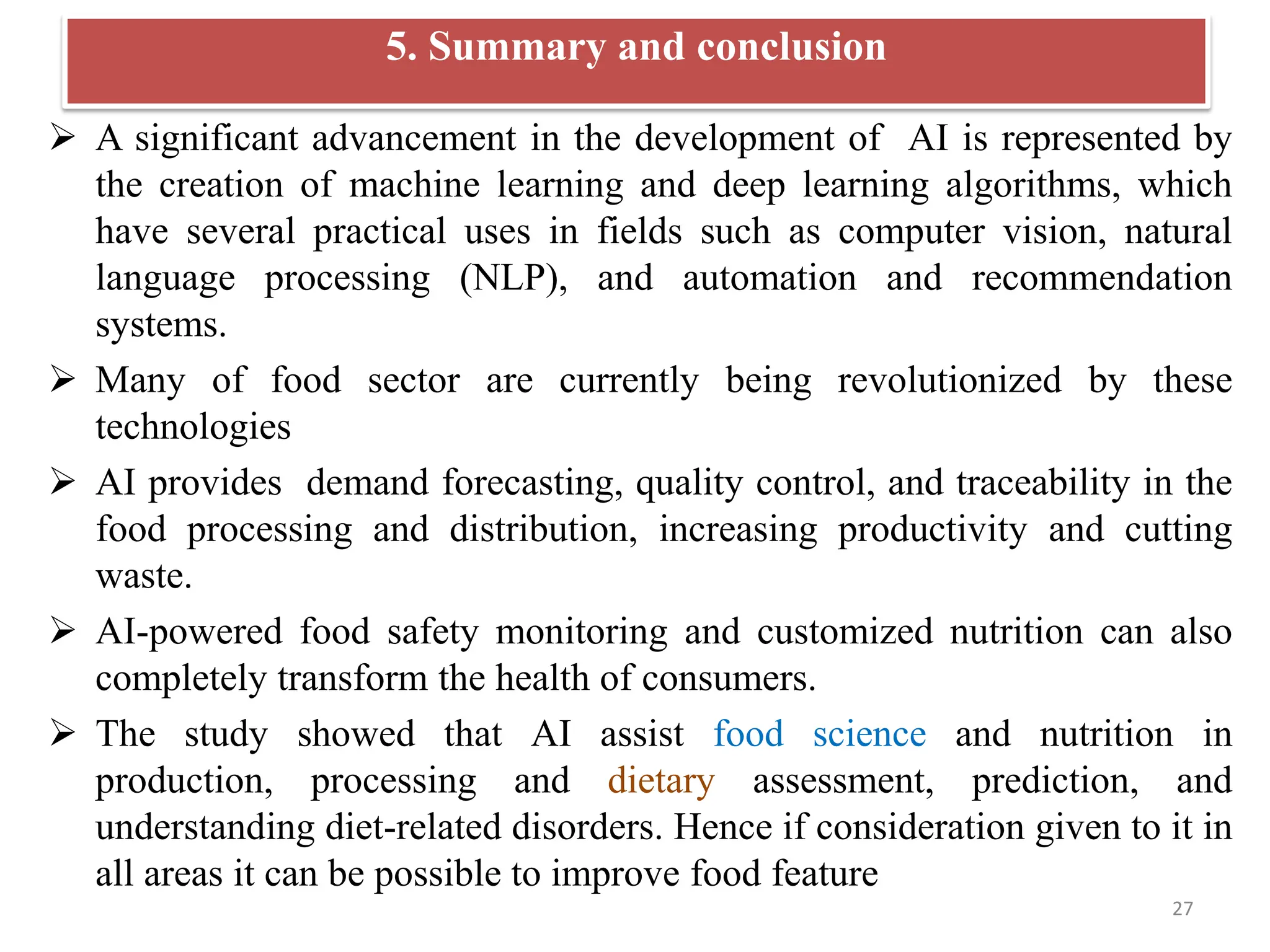
5. Summary and conclusion
 A significant advancement in the development of AI is represented by
the creation of machine learning and deep learning algorithms, which
have several practical uses in fields such as computer vision, natural
language processing (NLP), and automation and recommendation
systems.
 Many of food sector are currently being revolutionized by these
technologies
 AI provides demand forecasting, quality control, and traceability in the
food processing and distribution, increasing productivity and cutting
waste.
 AI-powered food safety monitoring and customized nutrition can also
completely transform the health of consumers.
 The study showed that AI assist food science and nutrition in
production, processing and dietary assessment, prediction, and
understanding diet-related disorders. Hence if consideration given to it in
all areas it can be possible to improve food feature
27
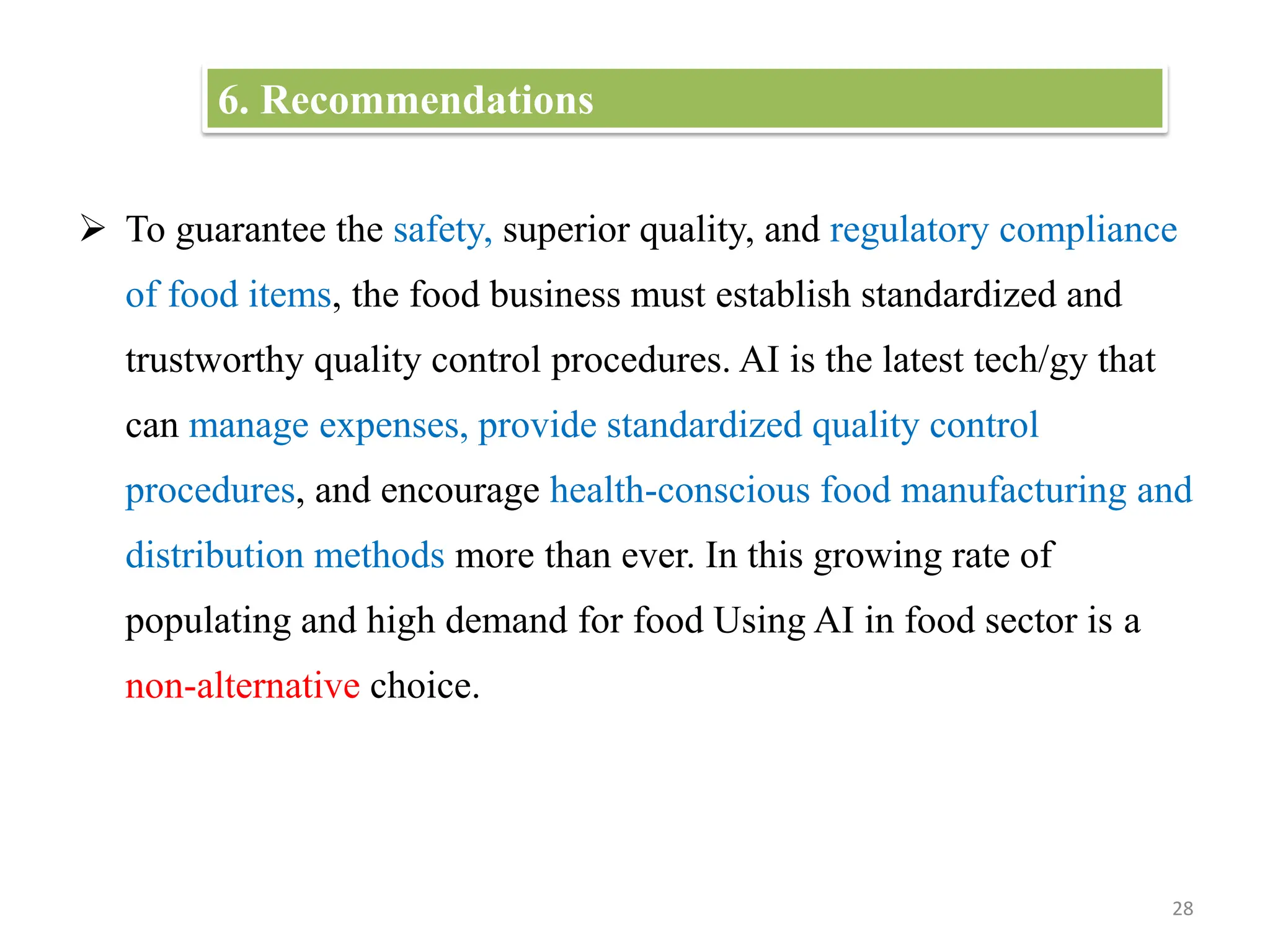
 To guarantee the safety, superior quality, and regulatory compliance
of food items, the food business must establish standardized and
trustworthy quality control procedures. AI is the latest tech/gy that
can manage expenses, provide standardized quality control
procedures, and encourage health-conscious food manufacturing and
distribution methods more than ever. In this growing rate of
populating and high demand for food Using AI in food sector is a
non-alternative choice.
28
6. Recommendations
Acknowledgments
 Dr.Ashagrie Zewudu (Course instructor) for his guidance
starting from title selection ,during preparation up to
presentation of the course .
 Addis Ababa University, Food science and human
nutrition program and different scholars cited in
references of this seminar help me read more about the
area.
29
30
Thank you for your attention

Importance of Artificial intellegence from farm to fork!

  • 1.
    College of Naturaland computational sciences Center for food science and nutrition Program: PhD in food sciences and human nutrition Course: Special topic I in food science and Human nutrition (FSHN8317) 1 By: Megersa Bayisa…. ID: GSR/0632/17 Course instructor: Dr. Ashagrie Zewdu Addis Ababa university ,Addis Ababa Ethiopia 20 January 2025 Seminar paper: The role of Artificial intelligence (AI) in food science and nutrition.
  • 2.
    Out lines ofpresentation 2  Introduction  Back ground rational of the AI study  The objective of the seminar  Literature Review  Importance of AI in Crop production  The importance of AI in postharvest processing  Importance of AI technology Food production and processing  The Role of AI in improve quality and efficiency along food value chain  Importance of Using AI in food science and nutrition  Types of AI used in food science and human nutrition  Methodology of the study Strength, challenges and limitations of AI in food science and nutrition  Summary and conclusion  Recommendations
  • 3.
    3 1.1 Definitions ofArtificial Intelligence (AI) What is AI?  It is not surprising that AI is so difficult to define clearly. 1. Introduction AI is, after all, an imitation or simulation of something we do not yet fully understand ourselves/human intelligence(Sheikh et al., 2023).  Artificial intelligence (AI) is a set of technologies that allow computers to perform tasks that typically require human intelligence.  AI systems can learn, set reason, plan, and make decisions.  Artificial intelligence (AI) refers to systems that display intelligent behaviour by analysing their environment and taking actions with some degree of autonomy to achieve specific goals.(Sheikh et al., 2023)  AI Agents can guide us through crafting Specific, Measurable, Achievable, Relevant, and Time-bound goals (Vinuesa et al., 2020).
  • 4.
    4 Where is Artificialintelligence Applied? AI can also used in other fields like: (Marketing,Banking,Finance,Gaming,Space Exploration,AutonomousVehicles,Chatbots and Artificial Creativity) AI in Agriculture AI in food processing AI in nutrition and dietetics AI in Food safety and regulation
  • 5.
    1.2 Back groundrational of the seminar  Even though food source like (land, energy and H2O) are limited, the world's population has grown over time (Maisonet-Guzman, 2019).  The population of the globe is predicted to reach 10 billion people by 2050, with 70% of people living in cities(Doering & Sorensen, 2018).  According to Food and Agricultural Organization (FAO) predicts global food production will need to increase by 70% to feed a growing population.  This increase is needed to feed a population that's projected to reach 9.1 billion by 2050(Doering & Sorensen, 2018).  The demand for food is expected to increase from 59% to 98% by 2050 due to the world's growing population(Elferink & Florian, 2015). 5
  • 6.
    Back ground rationalcont…ed 6  As of January2025, Ethiopia is expected to shift from12th to 10th rank in the world with total of 133,859,677 pop/n. (https://www.worldometers.info/world-population/ethiopia-population  Food integrity is, in fact, a complicated and multifaceted problem, and conventional techniques for ensuring food safety and quality depend on manual testing and inspection, which is laborious and prone to human mistake(Gbashi & Njobeh, 2024).
  • 7.
    Back ground rationalcontinued  Our daily diets are indirectly shaped by the food processing sector, which transforms farmland crops into the delectable dishes we enjoy.  In order to prolong the shelf life of food, it uses techniques such as drying, freezing, pickling, and irradiation.  Common examples of processed foods include baked goods, pet food, cereals, chips, almonds, candies, baked goods, baby food, and ready-to-eat meals. 7
  • 8.
     The mainadvantages of AI in the food sector is to improve quality , high degree of accuracy in identifying and detecting flaws (Zatsu et al., 2024).  AI has the ability to improve food safety protocols, optimize production processes, increase quality control, lower waste and energy consumption, and simplify supply chain management.(Zatsu et al., 2024),(Kuppusamy et al., 2024), (Ikram et al., 2024a). 8 Back ground rational continued
  • 9.
    Interestingly, nowadays, processedfoods account for 25% to 60% of many people's daily energy intake worldwide. With the demand for processed foods increasing, AI offers a great solution for streamlining food processing and boosting innovation across the sector. Hence this seminar was initiated to address type of AI contributed for food science and nutrition. 9 Rational continued
  • 10.
    1.3 The objectiveof the seminar: General Objectives:  To address the current role of AI in food science and nutrition while it helps for readers to gain information on the relevance of AI in feature food industry. Specific objective:  To address common AI involved in food science and nutrition sector development  To address key importance, strength and limitation of AI technology in food science and nutrition. 10
  • 11.
    2. Literature Review 2.1Importance of AI in Crop production Artificial intelligence (AI) can: 11 improve farming processes  Predicting crop yields and spot possible hazards AI algorithms examine past data weather trends  soil conditions moisture  Soil nutrients illnesses and pest infestations early Optimize resources(input) Manage weeds Authors: (Talaviya et al., 2020), (Kariyanna & Sowjanya, 2024), (Javaid et al., 2023), (Mana et al., 2024), (Zhang et al., 2024)and(Karanth et al., 2023).
  • 12.
    Some photos ofAI in crop prod/n Internet sourced 12
  • 13.
    2.2 The importanceof AI in postharvest processing 13 Minimizing product damage Food manufacturing Keep precision E-commerce consistent package Process quality Give placement Picking sealing Process quality wholesale distribution Remove contaminant Grading by(size, shape, or color). Improve shelf life Authors: (Bird et al., 2020), standards(Sps, 2011), (Javaid et al., 2021), (Arachchige et al., 2022), life(Kuppusamy et al., 2024) and (Pandey & Mishra, 2024).  Automated packaging systems are useful for a variety of post harvest work: eg.Assign robot
  • 14.
    2.3 Importance ofAI technology Food production and processing  Artificial intelligence is transforming the food sector by increse production efficiency, improved quality control, waste reduction, tailored nutrition, and supply chain transparency. (Zatsu et al., 2024), (Konfo et al., 2023)  Additionally, by utilizing data-driven insights on customer trends, flavor preferences, and ingredient combinations, (AI) helps food makers create novel and inventive goods(Shad & Potter, 2024). 14 AI can facilitate food labelling uniformly
  • 15.
    2.4 The Roleof AI in improve quality and efficiency along food value chain  AI help to detection of food contaminants by decreasing human error and increasing accuracy.  Processes food, Control quality with computer vision can be very helpful in maintaining quality standards and laws.  Spotting contamination, looking for flaws in the packaging, and making sure labels adhere to regulations(Hemamalini et al., 2022).  YOLO11 can track and crop the label as each item moves through the camera's field of vision. Optical Character Recognition (OCR) can then be used to read the clipped label. 15
  • 16.
    16  Without interferingwith the production process, this help product is appropriately branded.  Labeling accuracy may be preserved using real-time tracking and OCR, ensuring regulatory compliance even in hectic settings(Alif, 2024). AI can assist in food processing. Source:(Sadique Abdallah et al., 2024)
  • 17.
    2.5 Importance ofUsing AI in food science and nutrition  AI is developing swiftly and has the potential to completely transform the field of nutrition and clinical nutrition(Kassem et al., 2025).  AI's core function in nutrition is to provide dietary assessment, with a smaller focus on lifestyle interventions, diet-related diseases, and malnutrition prediction(Sosa-Holwerda et al., 2024).  Maintaining a nutritious diet is essential for lowering the risk of chronic illnesses like cancer, heart disease, and stroke (Neuhouser, 2019). 17
  • 18.
    2.6 Types ofAI used in food science and human nutrition  ML is a branch of AI that deals with algorithms that automatically get better with practice. Mathematical models for decision-making could be produced by ML algorithms. These models are constructed without programming using big collections of training data(Logeshwaran et al., 2024). 18 2.6.1 Machine Learning (ML)
  • 19.
    19  Monitor soilmoisture  Detect soil type  receive real-time  When and how use input  weather data information ML can contributed to food and nutrition by providing: Authors:(Menichetti et al., 2023), (Logeshwaran et al., 2024), learning(Kirk et al., 2022) and (Sosa-Holwerda et al., 2024).  Minimize waste  Forecast demand  Optimize sell  Inventory control  Detect nutrition related issues (Obesity, metabolic health and malnutrition)
  • 20.
    2.6.2 Artificial NeuralNetworks (ANNs)  An Artificial Neural Network (ANN) is a computational model that mimics the functioning of biological neurons(Demirci et al., 2016), (Soori et al., 2023).  ANNs are used to solve complex environmental systems. helpful tools for food safety and quality analyses, by predicting physical, chemical, functional, and sensory qualities of different food products during processing and distribution, interpreting spectroscopic data, and modeling microbial growth and using that information to predict food safety(Guiné, 2019), (Huang et al., 2007). 20
  • 21.
    2.6.3 Internet ofThings (IoT)  IoT gather information of variables, like temperature, humidity, nutrient levels, and soil moisture, carbon dioxide, heavy metals, shipping schedules, and storage conditions(Xu et al., 2022),(Bigliardi et al., 2022).  Age, gender, degree of physical activity, and many other characteristics can be checked to nourishment for an individual. 2.6.4 The Role of Computer Vision in Food Processing  Computer vision systems process and analyze images or videos in real time using high-resolution cameras and algorithms(Gao et al., 2020).  production line, identify defects, and keep an eye on the quality of the final product(Naif Alsharabi, 2023), (Ikram et al., 2024b). 21
  • 22.
    22 3. Methodology ofthe study This study was conducted by reviewing and synthesizing different recent and subject based scientific research journal, proceeding, books other web based material to address the role of current artificial intelligence (AI) in food science and nutrition sectors. Strength Using of AI: Task automation and enhanced quality control by analyzing visual indicators such as texture, moisture content, and signs of temperature exposure, AI systems can forecast the shelf life of food products.  AI can increasing output and reducing labor costs. Able to perform repetitive tasks more rapidly, accurately, and reliably than humans. Consistent product quality by removing batch variance and guaranteeing that objects satisfy standards.
  • 23.
    Challenges and limitationof AI include:  AI has the potential to displace human labor, which result in job losses and changes to employment prospects.  A World Economic Forum analysis estimates that by 2025, artificial intelligence would have generated 133 million new employment while also displacing 75 million jobs worldwide(Wang & Lu, 2025).  Large volumes of data are gathered and analyzed by AI systems, which may cause consumers to worry about their privacy. 23
  • 24.
     AI usageconforms with data protection regulations(Ye et al., 2024).  In case technical problems or system malfunctions, restaurants that rely on AI may get operational disruptions(Geske et al., 2024), (Rojek et al., 2023).  The expense of deploying AI may be a hurdle for smaller companies. To deploy and oversee AI systems, qualified experts are required.  Data quality and Complexity of food systems can be a challenge(Matchaya et al., 2023).  For optimal performance require a steady and regulated environment (appropriate lighting, temperature, etc.). It can be challenging to install such systems in food processing facilities because of the different environmental conditions (freezers, cooking areas, storage spaces, etc.)(Zhu et al., 2021).  Maintaining accuracy and performance requires routine hardware maintenance, software upgrades, and calibration.  AI systems mis-identify pollutants, which results in wasteful spending or overlooked safety hazards(Bird et al., 2020). 24
  • 25.
    Table 1.Results andfinding summary Topic Author and Year The name of AI technology used. Applicability/Service area Feature importance. AI tech used in Agriculture (Konfo et al., 2023),(Mohsan et al., 2023) Unmanned aerial vehicles (UAVs) Open field agriculture, forestry, and livestock farming. The agri-food sector benefits from the use of digital technologies in achieving Sustainable Development Goals. (Talaviya et al., 2020),(Somdutt Tripathi, 2024) Chat bots for farmers eg (LoginEKO's Advanced Agriculture Chatbot, Farmer. Chat and ChatGPT ) Crop management, Market information Crop selection, Resource optimization, Advisory and Multilingual support Farmers are able to increase overall productivity, optimize resource allocation, and make well- informed decisions due to this proactive support. (Xu et al., 2022),(Kumar et al., 2021),(En, 2018),(Dhanaraj u et al., 2022) Internet of Things (IoT) Precision agriculture, Pest and disease control, Livestock management, Waste reduction, Remote farm monitoring, Less energy consumption and Forecasting natural hazards Farmers can make better decisions and enhance almost every part of their operation by employing IoT sensors to gather machine and environmental parameters. 25
  • 26.
    Food processing and safety management (Dhanaraju et al., 2022),(Onyeaka et al.,2024) Machine learning (ML) Inventorymanagement,Cost reduction, Food quality analysis, Food monitoring ML is a new technology that analyzes food detection data and observations to find trends and forecast future occurrences in the food industry. AI can help the world's expanding population by ensuring food security and ending hunger. The role of AI nutrition and diet planning (Kassem et al., 2025),(Yang et al., 2024) Chat bots AI chat bots use natural language dialogue to offer individualized dietary advice. They offer consumers nutritional adjustments, physical activity objectives, and portion size recommendations. Chatbots can prepare meals based on personal information such as height, weight, age, and health objectives. (Sadique Abdallah et al., 2024),(Theodore Armand et al., 2024) Deep learning (DL) It finds distinctive features in datasets using artificial neural networks. It aids in forecasting the link between nutrients and humans, which will assist develop customized diet plans. Deep learning models offer a useful tool for dietary evaluation by assisting in the analysis of food photos. (Varshney et al., 2023) Machine learning (ML) use data to track food consumption and nutrient composition, determine dietary patterns, and create customized nutrition recommendations. Play a significant part in nutrition-related issues like malnutrition, obesity, and metabolic health. 26 Table 1.Results and finding summary cont inued
  • 27.
    5. Summary andconclusion  A significant advancement in the development of AI is represented by the creation of machine learning and deep learning algorithms, which have several practical uses in fields such as computer vision, natural language processing (NLP), and automation and recommendation systems.  Many of food sector are currently being revolutionized by these technologies  AI provides demand forecasting, quality control, and traceability in the food processing and distribution, increasing productivity and cutting waste.  AI-powered food safety monitoring and customized nutrition can also completely transform the health of consumers.  The study showed that AI assist food science and nutrition in production, processing and dietary assessment, prediction, and understanding diet-related disorders. Hence if consideration given to it in all areas it can be possible to improve food feature 27
  • 28.
     To guaranteethe safety, superior quality, and regulatory compliance of food items, the food business must establish standardized and trustworthy quality control procedures. AI is the latest tech/gy that can manage expenses, provide standardized quality control procedures, and encourage health-conscious food manufacturing and distribution methods more than ever. In this growing rate of populating and high demand for food Using AI in food sector is a non-alternative choice. 28 6. Recommendations
  • 29.
    Acknowledgments  Dr.Ashagrie Zewudu(Course instructor) for his guidance starting from title selection ,during preparation up to presentation of the course .  Addis Ababa University, Food science and human nutrition program and different scholars cited in references of this seminar help me read more about the area. 29
  • 30.
    30 Thank you foryour attention